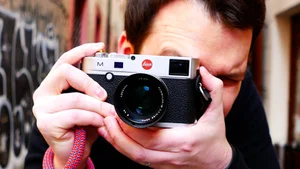
Samuel Lintaro: Timeless photos are beautiful but I also try to document the times we are living in
Hello fellow photographers. In this episode I am talking with Samuel Lintaro Hopf (aka Samuel Streetlife ) about street photography, gear, tips for taking photos, YouTube and much more. Thank you so much for joing me/us on this episode. Make sure you are subscribed if you want to be notified when I post a new episode. There is one thing I would love you to do. I would be very thankful if you could go and give this podcast five star rating and the review. If you like this content and you think other people might enjoy it as well feel free to take a screenshot and through it out on your instagram story or share it with your friends. In case you would like to listen to shorter episodes more frequently there is a new podcast called Best of About Photography and it is updated daily with highlights from the interviews.
Follow Samuel:
Youtube: www.youtube.com/channel/UCcyHGNAjMTWAJ_ztX8JbGgQ
Instagram: www.instagram.com/lin.taro
Website: www.lintaro.de
Listen on Apple Podcasts: apple.co/36TS6kC
Listen on Google Podcasts: bit.ly/2UHwbun
Listen on Spotify: spoti.fi/3rrYMA0
Listen on SoundCloud: https://soundcloud.com/user-228441570
You can also subscribe to Best of About Photography podcast for shorter episodes more often.
Listen on Apple Podcasts: bit.ly/BestOfAboutPhotography
Listen on Spotify: spoti.fi/3fcf9M7
Listen on SoundCloud: @user-499230514
In case YOUR Podcast Directory is missing, please let me know in the comments bellow and I will add that. Thank you!
If you want to follow me on social media
Index:
0:00:00 - Hello there!
0:01:30 - Introduction
0:02:09 - How did pandemic change street photography in Germany
0:06:00 - How different is street photography in Japan in contrast with street photography in Germany
0:10:16 - What is the best city and country for street photography
0:13:56 - Is street photography the most difficult genre?
0:19:20 - Do you have a plan before going out with your camera?
0:28:18 - What is your process after you come back from photowalk
0:29:31 - How much editing is too much editing? How does Samuel edit his images
0:32:58 - Dated versus timeless photographs
0:39:45 - A year of taking only Black and white pictures (a year without color)
0:45:13 - Why does image work in black and white?
0:51:35 - Do you have favourite style of street photography?
0:53:30 - Is 28mm the best focal length for street photography?
0:56:16 - Prime VS Zoom - How to find a focal length that works for you?
0:58:53 - How do you keep education yourself and improving your photography
1:01:12 - Should every photograph have a story?
1:04:25 - How does someone develop style?
1:08:43 - How do you stand out on social media? Are social media necessary for photographers?
1:16:16 - How to present your portfolio
1:20:26 - Genesis of Samuel Streetlife
1:28:45 - Income stream of freelancer on YouTube
1:39:29 - The difference between Patreon and YouTube membership
1:45:16 - Samuel Farmlife?
1:48:40 - What is the influence of YouTube algorithm?
1:50:32 - Best camera for street photography? Samuel’s Streetlife opinion on best street photography camera
1:53:19 - The balance between one camera one lens and too many cameras
1:56:11 - What is it like to be a Ricoh GR ambassador? Should you become one?
2:10:11 - Lets talk about Leica
2:19:03 - What about covering the red dot
2:20:33 - Q&A from chat and Instagram
2:20:43 - Should I wait for Ricoh GR 4? When does Ricoh GR IV come up?
2:21:15 - What are your ethics wehn doing street photography?
2:26:31 - The last/best bonus question - only watch this if you watched the whole interview (also subscribe to the channel :) )
2:29:36 - The end - Thank you for watching!
How are you doing today?
Good, good. This is a rare opportunity for me to have some free time, since becoming a father tends to make free time very precious.
I'd like to start with photography. You've been taking pictures throughout the pandemic, and of course before it too. Now that things are settling back toward normal, what's the state of street photography in Germany, and is it any different from how it used to be?
Of course, the scenery has changed. The things I usually look for simply aren't happening as often. People aren't doing as much on the streets. Everything here in Germany is fairly open again now, so this is actually the best time since last year to do street photography in Germany. But I've just moved out of the city, I don't live there anymore, and I just became a father, so my time these days goes mostly into changing diapers. I suppose this is a natural pause from that side of my work.
Last year, like a lot of other photographers, I mostly documented what was going on around me: my neighbourhood, and the city I was living in at the time, Hamburg. So I was already taking different photos than I usually take. This year isn't all that different. I try to shoot, but I'm not really looking at what's going on in the city or in the world the way I was. I mean, of course I still follow what's happening, but I'm not really part of it at the moment, so I can't document it the way I did last year.
Last year I spent most of my weekends in the city, not during the strictest lockdowns, but there was so much going on everywhere, in the country and in the world. I photographed a lot of protests and whatever else was happening in the city, and there was always something unique to capture. This year, I think everyone is tired and has gotten used to the new normal, and everyone just wants to enjoy life the way they used to. So even if I were in the city right now, I don't think I'd be thinking much about capturing something unique to 2021, because there hasn't been much, aside from maybe the Olympics or the elections coming up in Germany. That could be interesting, but not for me at the moment, because I'm out in nature now. I don't have people around me. I live in a small village of about fifteen hundred people, so I could probably meet everyone within a week. I don't know yet how that will change my photography, but at the moment I'm not really doing any street photography at all. Mostly I'm getting used to our ten backyard chickens, the apple trees, the hazelnut bushes, and the squirrels that keep stealing from them. Maybe I should focus on nature instead.
You came back from Japan not long ago. How would you compare street photography in Germany and in Japan, and which do you prefer?
The easy answer is that I prefer Japan, because Japan has such a strong camera culture. You see so many people carrying cameras, and they're usually fine with you taking photos. In Germany, it's a bit harder to photograph openly. You have to be smarter about it, not sneaky, that's not the way to do it here, but it is harder. I think for anyone who's visited Germany coming from Japan, or from other Asian countries, they've always told me it feels a lot harder here, that you get asked more often what you're doing.
Personally, I've maybe been asked about it once in my life here in Germany, because of the way I take pictures. I use a GR, and it's so small that I look like a tourist taking a photo on a phone. I usually go to places that are a bit more crowded, but I also enjoy shooting in my own neighbourhood. So yes, I definitely prefer Japan, because you can be more relaxed there, and you meet other street photographers.
In Germany, it's getting more and more popular. I have a feeling there are more street photographers now in my hometown, or my former hometown, than there were two or three years ago, but you still don't usually run into other photographers on any given day, so you always feel like you're on your own, on your own mission. I actually prefer meeting other photographers, not necessarily shooting in groups, that never really works out, but having one good friend I can meet up with, go to the same location, maybe split up, and then come back together to talk about the spots we found. That's easier in Japan. When I go to, say, Shibuya in Tokyo, I'll always run into another street photographer, and we usually know each other, so I can ask how the day's been, whether something's going on in a certain area I should check out. You get all these local tips. Here in Germany, it's more of a solo mission.
I'll say this, though, without making the answer too long: German people, and European people in general, tend to show their emotions more openly. If they're angry with you, they show it. If they like you, they show it too, though usually the anger shows more. In Japan, hardly anyone speaks to you unless they have to. You don't really talk to people in convenience stores, you just go in, buy what you need, and leave. In Germany, you can always strike up a conversation with a restaurant owner, or with street musicians. So Japan is easier in some ways, but it's also lonely in a different way, because in Germany and Europe you get that open expression of emotion. I wish people in Japan were a bit more open like that. It would make shooting there even more fun.
You travelled a lot before the pandemic. What's the best city or country for street photography, or your personal favourite?
I usually say London. I really love it, there's a great street photography community there, and aesthetically I like how the city looks: the buildings, the architecture, the people, who are often dressed quite sharply. Very British. I think British people genuinely love their country, and I enjoy visiting countries where people are proud of where they're from. In Germany, we have this thing, I don't know the exact English word for it, a kind of national guilt. You're not really supposed to be too proud of the country. I think it's good to remember history, but I also think it's healthy to look at the good sides of a country and be proud of where you come from. I like the Oktoberfest in Germany for that reason, even with all the tourists. I like countries that celebrate their culture.
London is just a very easy city to take photos in. But honestly, I think there are better cities out there, I just haven't discovered them yet. I've always wanted to go to Russia or Eastern Europe, I've never been to Russia, I keep saying I will and never do. I've been to New York, but everyone takes photos in New York, so as a tourist there's not much new ground to cover. Paris is also very photogenic, and the people are very, well, very French. I'd say definitely Paris and London, then Tokyo, maybe a Russian city, and other Japanese cities like Kyoto.
My wife is from Osaka, so I go there often, or to Tokyo, I was actually born in the Tokyo area myself, in Kanagawa Prefecture. Honestly, I think I prefer Osaka at the moment. Tokyo is so busy, everyone's rushing to work, and no one really has time to relax. Osaka is a little different. It's a food city, with a lot of delicious street food, and fashion is also big there. At night it has a bit of a steampunk, cyberpunk feel, it's a very cool city, and people are more open, quite different from people in Tokyo. I like Osaka more than Tokyo these days. I feel more like a local there than I do in Tokyo.
Is street photography the most difficult genre of photography?
That's the easy part, honestly. You just need a nice wall, and then you wait for someone to enter the frame and capture the best moment. I think street photography is easy to get into. It's very easy to start with. Anyone who owns a camera can do it. But getting good at it, or just feeling comfortable doing it, is a different story. A lot of beginners find it hard to feel comfortable with street photography. That takes time and practice. So I'd say it's a very accessible, easy genre to start with.
But compare it to wedding photography. I've shot a few weddings myself, I'm actually shooting one this Saturday, after a long break. Weddings are brutally hard. I've always said wedding photography is the hardest job there is, along with wedding filmmaking. Street photography is hard too, but at least when you miss a shot on the street, no one gets upset with you. At a wedding, you can't afford to miss the shot, so the pressure is much higher. In a lot of ways the two genres are comparable: like a wedding photographer, you have to stay aware of everything happening around you and anticipate what's coming next. I honestly don't know which is more difficult. I'd say very good street photography is extremely hard, but wedding photography is right up there too, because of the pressure. It's all about capturing a moment you only get once, the bride and groom exchanging rings, say. On the street, if you miss it, you can wait and try again. But I think that's what's interesting about photography: you're often chasing things that don't make sense at first, and then trying to make sense of them, and when it comes together, that's a real skill. A wedding photographer could probably do street photography too. I see street photography as another form of documentary photography, really. A lot of street photographers actually dislike the term itself, it's a strange word. It sounds like you're only taking photos on the street, but people shoot in restaurants, on the subway, of buildings, and it's still called street photography.
So, going back to my original question: is street photography the most difficult genre?
Yes, I think it is, if you actually want to become good at it. It's hard to develop your own voice within street photography. It's much easier to start with, say, fashion or portrait photography, and build a portfolio there, because it's easier to develop a style or an aesthetic once you already know what your subject is. On the street, you first have to find your subjects, get good at capturing them, and have solid social skills if you want to work close up and intimately with people. There's a lot attached to it beyond just taking the picture. In that sense, I think street photography is hard and complex, though it also depends a lot on the person doing it. Some people are naturally social and outgoing, and an introvert might struggle more with it. I consider myself an introvert, so it's harder for me to be up close with people all the time. But it can still be learned. So yes, the answer is yes.
When you go out, do you have a plan in mind for what you're going to do, or do you just go outside and see what happens?
I wish I could say I always go out with a plan or a project in mind, but honestly, up until now I've always just gone out and seen what happens. That's actually what I like about street photography, I don't need a plan. The world just opens up for me, and I get to see what I come away with. That search is what makes it so exciting. At the same time, I know it's harder to grow a body of work with a cohesive message or vision if you're just wandering around on random days taking random pictures. But the flip side is that you can do exactly that, and later reflect on what you're drawn to, and build a project out of what you've already been capturing. I find it hard to come up with a project or an idea before I've even started. A lot of people just photograph their own city without any specific project in mind, and if you keep at it long enough, you end up with at least the makings of a book about that city.
That's something I've tried to do with my own hometown, though I also travel too much, that's the problem. I wish I could say I have ongoing projects running, but what I did last year I'd consider one, in a loose sense: I was documenting the changes happening in my city. It's not a unique project, plenty of photographers were doing the same thing, but it's something I was able to follow through on. For street photographers looking for a sense of purpose, the question is really why you'd want a project at all. You could do it because you want a nice body of work for your website. But from my point of view, street photography is also a kind of documentation of the times you're living through. So even when I don't have a project in mind on a given day, if I see something that might be interesting in the future, I'll photograph it, even if it isn't a particularly striking photo in itself. For me, street photography is very much about observing, capturing, documenting, and then later seeing what I can make out of it. I think something will eventually come out of what I've been shooting. At the moment, since I'm not really doing street photography, I've been thinking more about project ideas, and that's actually one regret I have: not having had some side projects already running by now.
When it comes to location, do you have places you like to go back to, or times when you just can't get into the zone and aren't sure you'll take any pictures at all? Do you research locations beforehand, the way some people check Google Street View so they know what to expect?
Yes, I definitely do that, if I'm in a city I've never visited. I need to know roughly where I have to go. When I arrive in a new city, I usually go to the busiest place first, just to get a feel for how busy the city can get, so I understand its rhythm. Then I look for other places that feel more personal and have more character, because every city has its main tourist spot, usually something like a town hall. In Hamburg, my former hometown, that was the town hall, but it's not really where the locals go, and the pictures you get there aren't especially unique to the city. If you're visiting Hamburg, you really need to go to the fish market or the harbour, not just the city centre. If you don't know that going into a new city, you'll probably end up at the most touristy spots, since that's where the streets are busiest, but I tend to look for areas with more character instead. I still go to the touristy places first, though, just to get those photos out of the way. Talking to locals when you meet them helps too. Researching beforehand really matters, especially because walking around all day takes a toll. My feet hurt a lot by the end of the day, I have flat feet and need insoles, and I still deal with an old ankle injury from my skateboarding years, so I can't walk for long stretches. I don't want to spend a whole day walking through areas where nothing is happening, even though there's always something happening somewhere, and letting the day flow and just exploring has its own kind of fun. But because my feet aren't in great shape anymore, I try to research where to go beforehand, and then leave myself some room to explore other areas. That's my strategy.
Do you check for photogenic spots, or famous photographs that have been taken there before, whether historically or on Instagram, just to save some time?
Sometimes, yes. If I don't know of any famous photo from an area, that might actually be better, because then I don't carry any preconceived notions about the place. I don't want to arrive in a new city already having a fixed image of it in my head. I wouldn't call it a shortlist exactly, but I might write down a few specific characteristics of the city I want to explore, not something as literal as "a silhouette at this train station at this time of day," but more like "winter vibes in Canada," something that sounds exciting to explore rather than a specific shot I'm hunting for.
When you get back from a walk, or from working on a project, what's your process? Do you edit right away, or let the photos sit for a while first?
Honestly, there isn't much of a ritual. I usually just come home and put the camera away, that's it. If I've had an amazing, productive day and I know I have the best shot of my life on the card, then of course I'll check it and back it up right away, but that doesn't happen very often, there are maybe two photos on my wall I'm genuinely proud of. Usually I only come back to my photos once the memory card is full, that's typically when I sit down and look through everything. But it takes a while for my SD cards to fill up. So that's my process, more or less.
When you do edit your photography, do you have any rules about how much editing is too much, straightening a photo, changing the colour scheme, that kind of thing?
At the moment I shoot mostly, almost exclusively, black and white. When I do shoot in colour, I'm quite picky about how the colours look. I used to slap presets on everything, a Kodak Portra preset, for instance, but looking at those photos now, I find them overly edited, they don't look realistic to me anymore. What I like is simply good colour, I don't want someone looking at my photos and thinking, "nicely edited," that's not what I'm going for. Of course I still want to optimise the photograph: usually that means straightening the horizon, checking the tone curve, maybe adding some contrast. I like deep blacks and almost crushed whites in the frame, and in black and white I like a lot of tonal range. Black and white takes a bit more time, since I'm converting from a colour file and can play around with the colour channels. Generally, I choose my cameras based on what the sensor produces straight out of camera. If you like what a Fuji gives you, for example, you probably don't edit much. That's the case for me with my GR III, I can talk about that now. I used to own a Leica M262, I sold it, unfortunately or fortunately, it had amazing colours, and I do regret letting it go a little. When I'm happy with a camera, I don't edit much. I might spend five or ten minutes on a photo until it's ready for print, or finished, and then I save both the DNG and the JPEG. To be honest, I'm also a bit lazy when it comes to editing, lately I've just been using the JPEGs straight out of my cameras and adding a touch more contrast or adjusting the tone curve. When I really want to spend time on a photo, I'll use Silver Efex on the black and white images, and that can take fifteen to twenty minutes per photo, but I only do that for images that are part of a project or a series. Otherwise, it's five or ten minutes, at most.
Looking back at some of your older pictures, do you think photographs develop character over time? Take pictures with cars, for example: the more dated a photo gets, the more we notice those old cars when we look back at pictures taken a long time ago, and the photographer taking the shot back then was probably thinking exactly what I think now, that the cars are getting in the way. I look at smartphones the same way today. So what's your take on dated photographs, and on people who chase so-called timeless photographs?
I haven't been doing street photography long enough to speak to that from much experience. If I look back at my first photographs, I can already see some changes, people used to use different smartphones when I started out, though I've been doing photography in general for much longer than that. But when I look at photos from ten or twenty years ago, I definitely notice differences, fashion changes, city architecture changes. I think it's most obvious comparing pre-COVID and post-COVID photos, that's where you really see a shift on the street. I've always been drawn to photographing people using their smartphones, it's simply part of how our society is now. Do I wish I could travel back and photograph people in Brazil, or Paris, being ordinary, social people without a phone in hand? Sure, that's a nice dream, but it isn't realistic. That comes back to what street photography is for me, a documenting process. I capture whatever I see. If people are on their phones, they're on their phones, I don't wait for them to look up. That's how the streets actually look now. It's the same with masks, we do lose facial expressions in photos because of them, and honestly I don't love seeing masks in photographs either, but that's how things are right now, and I think it's worth capturing anyway.
I was asking because those two photographs behind you, the one of the boy, and the one of people going for a swim in the lake, look pretty much timeless.
Oh, thanks. Yeah, that's a very kitsch, romantic photograph, one that could really have been taken at almost any time. If you manage to capture a timeless photograph, it doesn't matter when you show it to someone, it will always stir up some emotion. I'd say those two count as timeless moments, in the sense that they're hard to date. But I do also try to look for photos that include something of the times we're living in, some element that dates the picture. As I said, I'm not really out there chasing a visually interesting photo for its own sake. Of course I want to take good-looking photographs, but I'm more interested in something that documents what's actually happening around me. Honestly, I think we all take pictures because, first of all, we want to remember our lives and what's happened to us, and photography does exactly that. I think we also take pictures because we know that once we leave a place, we leave behind whatever we saw there, for our families, for whoever comes after. For me, if I'm completely honest, yes, I do want to leave something behind. I don't want to be forgotten. I think that's something humans feel deep down, this need to leave something behind rather than just being someone who lived, consumed, and spent money, and that's it. So a dated photo speaks to your artistry, your aesthetic maybe, but I think photos that can be dated also add to your legacy, if you want to put it that way. Because I want to show my photos and basically say, look what I saw. I don't want to explain the photograph, I want people to look at it and connect it to some emotion, or some chapter of their own life, the same way people relate to photos of a newborn if they've had children themselves. I'm going to be taking a lot of pictures of my son now, and those are mostly for myself, but later on someone might look at them and reflect on what it's like to be a small child. That was a long answer, but I like photos that can be dated, and I like photos that are timeless too.
One of your recent projects was a year of taking pictures only in black and white. What were your takeaways? Do you think it was a good idea?
Wait for my upcoming video about it. It started as a New Year's resolution at the end of 2019. I wanted some kind of challenge for myself going into the next year, the way some people do three hundred and sixty five photos a year, one picture every single day. I'd tried that once before, a long time ago, and failed after two hundred and sixty four days. So I thought it would be fun to set myself some kind of limitation for the coming year, little did I know 2020 was about to change all our lives anyway. The idea came from the fact that I'd always shot both colour and black and white, and I felt I needed to find one visual voice rather than several. Colour and black and white can work together sometimes, for me, but more often they look too different to sit comfortably in the same project. I've always admired photographers who commit fully to one thing, one specific film, only black and white, only colour, only high contrast. I guess you could say I was having a bit of an identity crisis about my own photography. When I looked back, all my personal favourite photographs turned out to be black and white, even though there are colour photos of mine I like too. So the idea was to shoot only black and white through 2020, to see if I could learn something from it, and if nothing else, at least have something to share with other people. Honestly, it's now July 2021 and I'm still not entirely sure what to make of it. I started filming a video about it, and I also put together a book, though I'm not fully happy with it yet and I'm reworking it. I called the project A Year Without Colour, since the pandemic hit right around the same time, and black and white ended up fitting the mood of 2020 perfectly.
Did you ever regret it? Did you see something and think it would have looked so much better in colour? How hard were you on yourself about it, since you're not shooting with a dedicated monochrome camera, so you're still working from colour DNG files underneath?
In the beginning, that happened a lot, yes. But I built a preset in Lightroom, and during import I made sure the black and white preset was applied before I even saw the photos in colour. So I don't really regret it. I think it was important for me to commit to one thing, because with social media, and everyone showing so much work all the time, people don't really commit to anything anymore. I have the same problem myself, since I'm also on YouTube, reviewing lenses now and then, or covering whatever new camera comes out, so on my own channel I'm constantly switching between different gear, and I shot some video work in colour last year too. But for my personal work, I only shot black and white. I wish I could give you a clean answer on exactly how it changed me, but I think it's still an ongoing process, and I don't think one year was really enough. A year sounds like a long time, but there are photographers out there, Jesse Marlow, for instance, who spent ten years working on a single book. Ten years is a genuinely long time, so one year is nothing in comparison. I think I need to keep shooting this way. I do feel like I got noticeably better at it over the course of the year. So, watch out for the video, it'll come out eventually, though I couldn't tell you exactly when.
Why does an image work in black and white for you? Do you have any rules, or anything you found out through this project?
I actually wrote down some of the basic things that separate black and white from colour. In black and white, you're looking at shapes, light, and contrast. With colour, you're looking more at colour combinations and the mood a colour creates. Colour can help enhance a specific mood in a way that's harder to pull off in black and white, black and white relies more on subject matter and light. What I look for in a black and white photograph, and I hate how cheesy this sounds, is that it helps capture the soul of something. It doesn't happen every time, but a good black and white photograph lets you forget you're even looking at black and white versus colour, you just see the subject, and it speaks to you. On the technical side, I think a successful black and white photo is rich in tones, not just pure black and white, but the full range of greys in between.
One thing I learned last year: with colour, I'll sometimes add a slight vignette to draw more attention to a subject in the centre, but with black and white I actually do the opposite, an inverted vignette that brightens the edges instead. If you've got, say, trees in the background, or a cityscape full of power lines, the kind you get a lot of in Tokyo, adding that kind of vignette adds contrast to those busy, distracting elements. I usually do this in camera when I'm shooting black and white, adding a stop or two of extra exposure just at the edges of the frame. Done carefully, it helps the subject stand out a little more. There are other tricks too, though I don't use them much myself, adding more contrast to your subject and reducing it elsewhere, a bit like dodging and burning, but done purely through contrast. You can do the same thing in colour, of course. On a foggy, misty day, black and white nearly always looks beautiful, because everything melts into the background and whatever's in front of you really stands out. You can enhance that a little by lowering the contrast in some areas or brightening others, though most of the time I don't actually need to. In the end, it has to speak to me, it has to evoke some emotion, I have to feel it. With a colour photograph, it's easy to end up with, say, a woman in a red dress, and think, the photographer was clearly drawn to that colour. With black and white, you need to be a bit more precise about where you want to direct the viewer's attention.
That really makes me want to shoot black and white.
That's good, that's good. It's always my problem too, I talk to a photographer and think, yeah, I should do that. Just yesterday I was listening to Andre D. Wagner, you probably know him, he shoots mostly film and believes he should only ever shoot black and white. Whenever I see his photos, in that very traditional black and white style, I'm a big fan. Listening to him talk about it yesterday, I thought, yeah, you're completely right, I'll shoot black and white forever. But then I'll listen to a colour photographer, someone like Steve McCurry, and think, yeah, actually, this makes so much more sense in colour. I also talk to a friend of mine from New Zealand, a photographer who shoots a lot of black and white, and he'll actually be part of my upcoming video on this. He doesn't even really consider colour part of his artistic process, he does take colour photos, but mostly just to remember something, an object or a moment. He always reaches for black and white first. I'm getting there myself, though I still get distracted by colour sometimes.
Do you have a favourite style of street photography? Are you drawn more toward someone like Daido Moriyama, or more toward Henri Cartier-Bresson?
I have to say Andre Wagner again, though you could also call it very Gary Winogrand influenced. I shoot 28mm myself, so I really like that aesthetic personally, so yes, definitely his work. At the very beginning I was a huge Matt Stuart fan, I think my first real street photograph was his pigeon photo, that's when it clicked for me, oh, this is street photography, and I explored it more and more from there. I'm not a huge fan of Daido Moriyama, if I'm honest, it's not a style I personally love, though I can appreciate it, I do like his early film work more than his digital work. But you're asking most photographers this, and I think a lot of us would give a similar answer. I'm also a fan of another New York photographer who works in a very similar 28mm style to Andre Wagner. That's the style I feel most comfortable working in, but I actually want to explore outside of it, and I've been trying different focal lengths lately, since I live out in the countryside now.
Do you think someone starting out in street photography should begin with a 28mm lens?
I could talk about 28mm all day. What I really like about it is this: everyone says that when you shoot wide angle, you need to get close, there's that quote, I think it was Robert Capa, something like, if your photos aren't good enough, you're not close enough. That makes sense if you're always thinking purely in terms of the subject. But I found out last year, shooting mostly 28mm through the pandemic, that when I look back at my old photos, or other people's old photos, the subject on its own actually becomes less interesting over time. Say you photographed a Black Lives Matter protest, we had a lot of them last year, and there's one photo of someone screaming in a dramatic pose. In ten or twenty years, we'll still recognise the story instantly: people protesting. But I think you'll actually find yourself looking more at what's outside that central subject. That's what happens when you look at Gordon Parks' photographs today: yes, you get the subject and the message right away, but it's fascinating to study the scene in the background, what people are holding in their hands, all of that. What I like about 28mm is that you get more in the frame, which makes it harder for the photographer to organise the composition, but I think that's actually fine, because it only adds to what you might call the rewatch value of a photograph. Later on, it becomes more interesting to come back to these photos and notice all the details in the background. Last year, with social distancing and everything, you couldn't really get up close anyway, or people didn't want you to, so I kept shooting 28mm, just with people smaller in the frame, and that turned out to be an interesting perspective in itself. So yeah, I think 28mm is more versatile than people give it credit for. It's not just a focal length for getting close.
How does someone decide what focal length actually works for them? Would starting with a zoom lens be a good way in?
I think a prime lens is always more helpful in the beginning, because with a zoom you just have more options, right, you never really settle into one focal length. If you're shooting a 24 to 70, say, you've got so many focal lengths available that it's much harder to actually feel the benefits of something like a 50mm or a 35mm. So for beginners, I'd recommend shooting on a prime. My first DSLR, and my only lens for that first year, was a 50mm, on an APS-C body, so effectively closer to an 80mm field of view. That lens taught me to compose within that field of view, and only afterward did I start exploring other focal lengths, a 35 here, a 28 there. In the beginning, I think you should find whichever focal length can do most of what you want, and just stick with it. I've been doing photography since I was about thirteen, I'm thirty three now, so that's twenty years, and it took me all twenty of them to find the focal length I can always come back to and actually enjoy. Now I actually want to explore zoom lenses again, I think I've reached a point where I understand focal lengths well enough to go back to them. I want to explore zooms now precisely because I know how different focal lengths feel and what each of them is good for. But for a beginner, a 35mm is probably the best choice for street photography. It's hard to go wrong with a 35.
How do you keep educating yourself and improving your photography?
When it comes to actively teaching myself something new, or improving my photography, I mostly just try to keep shooting more, which sounds so basic. With things like running a YouTube channel, I don't actually take as many pictures as I'd like, most of my time ends up going into editing at the computer. So simply going out and taking pictures improves my photography every time. Last year, for instance, I did a project with Ricoh and the GR, where I spent a full week in a different city shooting with just that one camera. I got so much better at using it, partly because I wasn't switching between different gear, I was just repeating the same things, adjusting, trying new approaches. For me, I learn the most just by doing something consistently.
That said, I do wish I'd gone to more photography workshops. I've never really had the experience of getting feedback from someone who's been doing this much longer than me. Even at university, I had a photography teacher who never gave me much useful criticism, it was always just, nice, nice job, good, while he gave more substantial feedback to other students, maybe ones who were more clearly beginners. So I regret not spending money on workshops. I was actually about to attend a photographers' workshop in Rome last year, I'd already booked the flight and the workshop itself, and then it got cancelled because of COVID. So yes, I'm self taught. I get inspiration from pretty much everything, but mostly I get better simply by shooting more.
There's this idea, especially in street photography, that a picture should tell a story. You wrote something along those lines on your own website, if I can quote it: otherwise the pictures swim in the endless stream of cool pictures that tell nothing about their makers, except that they want to be cool. So story is always a question I have about the images photographers show me, and one question that matters a lot to me is: what does this story actually have to do with you?
Yeah, of course. I mean, it depends on who's looking at the photograph, and whether it even matters to have a message or a story behind it. But mainly, what I'd say to people is that your photograph should have a story, otherwise other people simply won't connect with it. Why even take the photo if it isn't clear to the viewer what you wanted it to say? Last year, a lot of photographers' work changed quite a bit, and I found a lot of it became more personal, and I think my own work became a little more personal too. I think that's what's genuinely interesting to look at, because anyone can take a decent, nicely composed photograph, anyone can capture the right moment, especially now, you can just shoot twelve frames a second and you'll land on a good one somewhere in there. That's a skill in itself, but a strong photograph, for me, also has some personality in it, and ideally someone else should be able to feel that through the photograph too. I'm not saying every photograph needs a literal story, but it needs something personal in it from the photographer. If it's a photograph shot mainly for documentary purposes, then its purpose should at least be clear. But even shooting a wedding, where you might use compositions you've seen other photographers use, there's still always a bit of your own vision in there somewhere. That's what I like to see. If I look at a photograph and get nothing from it, I feel like the photographer didn't really put themselves into it.
So, talking about style in photography, how does someone actually develop a style?
I don't have a step by step instruction for that. I can only tell you what I've noticed watching other photographers develop their own. My friend Ulysses Aoki, shout out to him, you've had him on your podcast too, when we first met, his photos were very much in that Gary Winogrand style of street photography, and now his work has changed so much, in a really good way. His aesthetic has become very much his own, and it's genuinely great to watch. I think the key is probably just to trust your gut. And honestly, who decides what your style even is? I think other people end up telling you that. I can't really describe my own style, or what I'm looking for, but other people will interpret my photographs in their own way. So if you're searching for your own style, it can help to ask other people how they feel about your photographs, because it's hard to see your own style from the inside. You might not even realise you're echoing another photographer's style, which is very common, and not a bad thing at all, you just add your own flavour to it over time. But having a style does matter if you want to be recognised for a specific vision, whether you want to become known for one particular style, or become a commercial photographer, ultimately you want to stand out. And if you want to sell your photographs, there's not much point otherwise. Maybe one day AI will be able to replicate any style instantly, and then we'll all have to find a new way to think about this, but for now, that's how it works.
In my experience, you develop a style just by continuing to put work out there and trying new things, because that's how you find out what isn't your style. Shooting black and white versus colour can be part of it, and then maybe you experiment with low contrast versus high contrast, or a more aggressive approach versus a cleaner one. Eventually you reach a point where you're comfortable taking pictures without overthinking them, and I think that's usually around the time other people start recognising your style too. But if you're constantly reinventing yourself, it's hard to say you have one, even though everyone technically has a style, even if it isn't obvious yet, what you're putting out might just be a phase, an experiment. So it's not simple, but the advice is really just to listen to your gut, whatever feels most natural to you.
Take a photographer like Tatsuo Suzuki, from Tokyo. Most people know him as this very in your face, high contrast black and white photographer, but he didn't start out that way. I believe he actually began by photographing models, much cleaner, more polished work. Then he wanted more emotion in his photographs, and his style developed from there. Now he can shoot almost anything because he's found his style. So whatever makes you feel most comfortable shooting, that's your style.
And how do you stand out in what you called that flood of cool pictures on social media? You recently talked about Instagram, how it shapes photographers, and how it treats your images versus how you'd actually want them treated. What's your advice for people who want to stand out on social media?
It's a trap. It really is, or, how should I put it, a double edged sword. On one side, you pretty much need to be on social media to be seen these days, that's unfortunately just how it is, even though not every platform showcases your work in the best way. But to be discovered by other people, there's really no way around it. You can avoid social media entirely, of course, and just work on your projects, and maybe twenty years down the line publish a book, and if the project is compelling enough, people will start to recognise you through that. But personally, I've had a lot of problems with Instagram too, especially recently. I've realised my own photographs, not drastically, but definitely, ended up shaped by the fact that I have to present my work a certain way there. Photos with a strong, clear subject and good contrast do great on Instagram.
Take an example: a couple of days ago, Sean Tucker posted a photo on his Instagram, a black and white, vertical photograph of a town scene with a little boy jumping. Normally people would shoot a tight close up of the action, but he shot the whole scene instead, and because it's also a portrait crop, it reads even smaller on a phone screen. I know that photo printed large, or seen on a big screen, would look incredible. But it just doesn't work as well shrunk down for Instagram, and that's a shame. I think the real danger of Instagram is that you start taking photos that are optimised for how people scroll past your photos, which is something you almost have to do if you're chasing likes and followers. After the video I made about this, I got comments from people saying, well, what else can I do, there's no other way, I just have to play the game, or no one will see my photos. That's kind of true, and you can still play it, but you have to stay mindful. You can't just open an Instagram account and never reflect on what you're actually doing there, because the platform is designed to change you in the first place. We all know social media is built to manipulate behaviour, that's already well understood. But I think we forget how much it changes our creative work too. For some people it's a genuine blessing, they become well known, they're able to sell photo books, do gallery exhibitions, all because of Instagram. So it has real upsides and real downsides.
For my own photography, because I can afford not to post regularly, I honestly don't worry much about Instagram anymore. I'm still not sure if I should just delete all my old posts. The only feature I really use now is Stories, just to give quick updates or share little clips. And we've recently seen the direction Instagram is heading in, photographers clearly aren't the platform's main target audience anymore. That's just how it is. So I'm generally in favour of having your own website, though I know that doesn't guarantee people will actually see your work. I'd also encourage people to try YouTube, it's helped me a lot. I never really planned on YouTube, I just started it to see how it would go, and just about all my Instagram followers now come from YouTube, no question. So if you're after followers and likes, or simply want more people to see your photos, YouTube might actually work better than Instagram, because you can target people directly through searchable tags and titles. You can also fold your photography into something like a gear review, using your own photos to show what a camera can do. I do that myself. But there are downsides on YouTube too. If you do it long enough, you become known as a YouTube photographer, and people start judging your photography based on whatever you show in a given video, which, if you shot it specifically for that video, probably isn't your best work. So if your photography itself is the most important thing to you, stay off social media. But if you want to pursue a life in photography, maybe even make a living from it, there's really no way around being on social media in some form, even if you're doing local client work, you could technically make a living purely from a website and word of mouth in your own town, but it would be pretty short sighted not to at least have a website, or some social media presence, if you want to be discovered. That's just how things are right now.
With a website, and building a portfolio on it, do you have any tips on how to present your work? Should you present one dedicated style, or your best shots across a range of styles?
For a portfolio website, you generally want to show only your absolute best photographs, the ones that describe the kind of work you're doing now and want to keep doing in the future, because future clients will hire you for whatever they see you doing. If you post work you don't actually want to keep doing, you'll end up getting hired for exactly that kind of work instead. If you're a street photographer, then just show that work. In the beginning, I actually had city pages on my site, showing photos from different places, since I was travelling a lot at the time.
Honestly, though, don't take my own website as a great example. I used to run a very professional, video production oriented photography website, complete with client logos and a full showreel. These days, since I mostly do my own work on YouTube, or occasionally for Ricoh, my website is more of a landing page, with a handful of photos on it. I do think I need to build out a proper portfolio there. Right now it's honestly too cluttered, too many photos. I'd say limit your front page to around ten photos, maybe fewer, that should be plenty. Then, if you have specific bodies of work, you can build dedicated project pages for those.
You brought up something I apparently said on a podcast a while back, that you should treat your Instagram as a portfolio. I honestly don't remember saying that, and it sounds a bit off to me now. I think I meant it more in the context of, say, being approached on the street, where you can pull up your Instagram and people immediately get a sense of what you're about. In that situation, the first six photos on your page really do matter, since that's what people see first. But generally, I think of Instagram more as a diary, something that shows your progress over time. I can still scroll back to some of my earliest photography, and it looks very different from my work now, and I like leaving it up there, just to see how much I've changed. But as a portfolio, that inconsistency is a real weakness. So I'd say your photographs deserve a proper website, and Instagram can show newer, more current work. You can also repost your classics, your best of, alongside new work, some people do that, and it does work well for keeping an Instagram page feeling like a portfolio. In my case, though, reposting the same one or two photos over and over wouldn't really work.
You've been a full time freelancer since 2012, and photography is clearly a big part of that, though you've done other things too to make it work. So, finally, let's get to your genesis story: how did all of this actually begin?
As I mentioned, I originally wanted to become a photojournalist. I was studying communication design, graphic design really, and I'd applied with a photography portfolio. What really pulled me toward documentary photography was one of my teachers at the time, who was, and I believe still is, a photojournalist himself. He always shot very wide, and for me that opened up a whole new world. Then I watched the film War Photographer, about James Nachtwey, and it inspired me enormously. I started shooting wide angle myself and began my own documentary projects. I wasn't sure it was the right career path, but I felt I had to at least try. I knew becoming a conflict photographer wasn't for me, that much was clear, but I did want to capture stories and document the world around me. My photography teacher encouraged me a lot, he told me that if I really wanted to do it, I should, freelancing had been the best decision of his life, and he was genuinely selling it, not just to me but to other students too. For us, the choice always seemed to be: go work at an advertising agency, or become a freelancer.
I actually got offered an internship at a very large advertising agency, but the advertising world just wasn't for me. I didn't want to spend my time on things that, to put it politely, don't really matter much in the world, who cares about a shampoo brand, and I didn't want to be designing things for a company like McDonald's. That would have been my future if I'd accepted. So instead I thought, fine, let's become a photojournalist, even though I had no prior experience, which in hindsight was a bit reckless. My teacher actually helped me get signed with a photo agency called Visa Images, which used to be something like the German equivalent of Magnum, a very renowned agency in its day. By the time I applied and showed them my work, though, it had shrunk down to three guys working out of one small office. They accepted me anyway, and I was officially part of the system.
The first thing I tried was going out and covering local events, horse races, that kind of thing, for magazines or newspapers. But even back then, stock photography subscription sites were already undercutting that market. I never sold a single image. I was only twenty four, I didn't even have a car, so I was always the last to get my photos in. The other photojournalists had backpacks full of transmitters, they could shoot and get an image straight to the agency or newspaper almost instantly. I had a little Pentax, since I couldn't afford a Canon, so I simply couldn't compete on that level.
I then thought I'd try finding interesting stories and pitching them directly to magazines. I actually got close with GEO, a German magazine, a sub brand of National Geographic, I'd worked on a project and they told me that once I finished it, I could present it to them. I was thrilled, and then it just turned out to be unrealistic. The truth is, to succeed as a photojournalist today, you generally need money behind you, to finance your own trips and projects, to see a project through to completion, ideally write about it too, and then package all of that to sell to a magazine or newspaper, or turn into an exhibition. I didn't have any money. I was working part time in a coffee shop, which felt like such a cliché, fresh out of graphic design school and working in a coffee shop. So it just didn't work out.
That was my first real step into freelancing, though. My teacher kept helping me along the way, showing me how to get a press pass, sort out insurance, that kind of thing. But I eventually realised the real money was in video production. My teacher actually asked me to assist him on some corporate headshots, and later on interview based video work, since he knew I had some video experience too. That's when I realised I was actually much better at corporate video work than I was at trying to become the next James Nachtwey with no money behind me. So that's how I moved into video production, starting out on my own, with a few friends freelancing alongside me. A friend of mine, Bello, invited me to join the production company he'd started. I also started my own production company with my father, which didn't work out particularly well either. So I went back to freelancing on my own, and then YouTube happened.
For a while, part of me thought I didn't need to bother with any of that other work anymore. But actually, I do want to go back to doing more freelance work, because I'm not sure how sustainable it is to rely purely on YouTube. I don't fully trust that income staying steady, since it's currently my main source of income, so I need to find myself a proper plan B.
As a freelancer, what are your income streams? You don't need to give exact numbers, but for people thinking about making the same jump into freelancing, especially in photography, how big a part do things like YouTube ad revenue, memberships, and workshops actually play?
Tip number one, seriously: marry someone with a stable job.
Is that what you did?
Yeah, that's exactly what I did, and it definitely helped. Beyond that, as a freelancer it's always good to have multiple income streams, I always knew that in theory, I just had no idea how you actually build passive income. I do want to be clear about something here, because I don't think I talk about it enough: I'm definitely not living some above average life. I can tell you honestly, I just make a living. I have debt like anyone else, especially since I took out a mortgage for this house, it's not paid off. For me, it's more about being able to cover my basic needs, that's the actual goal, I don't need to get rich, and I don't really want influence or status either, though I suppose that comes along on its own if your channel grows. If I could just do what I want and cover my basic needs, that was always the real goal. If you'd asked me three or four years ago, I would have said I didn't think I could ever get there. And I am a realist, I know that even though things are okay right now, it could all fall apart in a few months, honestly I don't even have enough savings to get through more than three months without income. That's just how I live. It's a bit reckless, but at the same time, I think it's also the only way to actually make it work, because if you're always thinking you need a fallback plan, a stable job first, and your real work, your art, second, then maybe it works out for you eventually, in your fifties or sixties, but by then you're basically retired anyway, so of course you can afford it then.
A lot of my friends from university who also considered going freelance mostly ended up taking whatever offer an agency gave them, and they're still at that agency, or another one. From what they tell me, they're not particularly fulfilled or happy where they are. The money's decent, but you're often doing work that isn't really yours, especially if you're not the lead designer on a team, just doing repetitive tasks because you have the skill, without much of yourself in it. It's hard to feel passionate about something you're doing for someone else, that's probably why companies invest so heavily in team building and trying to keep people motivated. I could never imagine sitting in an office all day myself. I actually tried it once, hired as a freelancer for about a month in an office, showing up every day like a regular employee, just to know what it felt like, and I was always relieved to leave, especially with all the drama between coworkers, all that pointless stuff. I've had genuinely rough stretches too, weeks where I couldn't really afford food, living off rice and whatever else I could scrape together. But in the end, this was the only path that made sense for me, and it happened to work out through YouTube.
To actually answer your question about income streams: I don't get paid by outside clients anymore, since I don't really do work outside my own channel, aside from occasional videos for Ricoh. If you follow what they're doing, I'll sometimes make a video for them, and if it involves real production work, they need to pay properly for that, otherwise they'd just be taking advantage of you, and Ricoh does pay me for that work, though it's not a regular, stable income. Then there's YouTube ad revenue, AdSense, which covers my rent, which is a nice milestone to hit. Once your channel is generating enough to cover rent and the basic bills, electricity and so on, everything past that you can save or reinvest in yourself. YouTube pays enough that I can cover my rent, but not a lot more than that. I also have some Amazon affiliate links under my videos, though honestly, I make maybe a hundred euros a month from those now, it used to be more like three or four hundred, but I haven't been pushing those links much, since I don't want to turn my channel into constant product reviews.
People also reach out to me for advice sometimes, so I offer Skype or Zoom consulting sessions, portfolio feedback, or feedback for someone working on a photo book, that happens occasionally. I sell a few prints too, not a lot, these are all smaller things on the side. And, honestly, I also sell presets. Presets are a genuinely big business right now, it's a bit crazy how many photographers push their own presets, and how many people buy them. I made mine originally because I wanted to recreate the look of my GR combined with a specific film stock, and there wasn't a preset out there that nailed it, I got close to the look I wanted, but not quite the same as the original. Still, when I put them out, the money came in surprisingly fast. People really underestimate how much money there is in presets. Whenever you see a big YouTuber promoting a preset pack, they're making serious money from it, either right then or from having done it previously. I haven't updated mine in about two years now, but they still bring in maybe three or four hundred euros a month, it used to be quite a bit more.
At the moment, it's mostly YouTube ad revenue, those small consulting sessions, the occasional job for Ricoh, and sponsorships, though I nearly forgot sponsorships entirely, I haven't done many lately. I did a Skillshare sponsorship at one point. Squarespace also approached me, but I just couldn't do it, I used to run my own sites on Squarespace, but I don't anymore, so I didn't feel right advertising it to my audience. But sponsorships are a big deal, if you want to make real money on YouTube, at some point you generally need sponsors, unless you're pulling in millions of views like MrBeast.
I know you also had a Patreon, but recently switched over to YouTube memberships. What are the benefits of each, and why did you make the switch?
Mainly, it's just easier to manage everything on one platform. For anyone who doesn't know how YouTube memberships work: some channels let viewers become paying members on top of just subscribing, and members get access to exclusive content, and you set your own price for it, mine is four ninety nine. Patreon, I think, is great for smaller creators or artists with a small, passionate core group of fans who want to support you, precisely because they know you don't have a lot of resources yet to grow. I had a lot of support there early on, and I'm genuinely grateful for that. But the issue was, the more my channel grew, the more ambitious I wanted my videos to be, working on several projects at once, becoming a bit more professional about the whole thing, the less time I had to deliver on all the perks I'd promised my patrons. So from time to time, patrons would drop off and move on, which is completely understandable. But Patreon meant logging into a separate account just to see what someone had written to you, and because they're paying supporters, I wanted to prioritise responding to them before even getting to the public comments on YouTube, and I just couldn't keep up with both. I didn't want to keep charging people for things I couldn't actually deliver on. So I moved everything over to YouTube, since I'm already there checking things every day anyway. Before, whenever I made something for Patreon, I'd have to upload it unlisted to YouTube first and then post it separately to Patreon, which just doubled the work. Now on YouTube I can upload a video, mark it members only, write a short community post about it, and all my members see it right away. I actually put out at least one members only video every month now, so I can genuinely keep my promises, and it's a lot of fun.
The thing is, the bigger you get on something like YouTube, the higher people's expectations get, and the harder it becomes to experiment. Get one thing wrong and suddenly people are asking what's going on with the channel, are they leaving. In the early days, with ten thousand subscribers or so, you can still experiment freely and try things out. For me now, it's a bit harder, I have to lean more toward things that reliably work, while still trying to stay myself. But for my members, I genuinely don't care how I look on camera or how I'm dressed, since it's not public content, it's just for however many members I have, updates from wherever I happen to be, being able to watch streams, that kind of thing is nice for them. Sometimes it's outtakes too. I'll edit a video down and realise it's over an hour long, far too long, and I have to cut things out, and it always hurts a little, because I know my core fans would genuinely enjoy the full version. But I have to be more careful now, since this is my business, I can't stop thinking about the channel's growth. YouTube pushes me toward things I don't always love. For instance, a video coming out today is really just a behind the scenes vlog of some friends and I having fun, but on its own, nobody's clicking on that if they don't already know us. So I titled it around why I love the Fujifilm X-E4 for video, when really it's just a casual showcase of hanging out and shooting with that camera. I have to do that sometimes to reach new people, that's just how it works. But for my members, I do whatever I actually want, and that part is genuinely fun.
There's a rumour floating around about your channel that I'd like to address first: are you planning to change the name of the channel to something like Farmlife?
Probably not, though it is very tempting to just open a second channel to explore that side of things. I'm honestly not sure, and I can't really answer that properly, because I don't know what the future of my channel looks like yet. With my son born now, I can't put out as many videos, and I'm travelling again at the moment too. I know what works well on my channel, the longer format videos where I interview other photographers, and I want to get back to doing more of those, but I need to actually make the time, and travel, for it.
Actually, after watching your episode with Eric Kim, that was genuinely fun to listen to. I'd always wondered what he was up to, because he was a huge inspiration for starting my own channel. I used to watch his GoPro vlogs, meeting other street photographers, that kind of thing, and honestly a lot of what I do is more or less inspired by what he was doing, maybe with better production value now. What I really loved about him was that he was never chasing views, he'd just share whatever random thing was going on. That's what I try to do with the casual vlogs on my own channel, just sharing what's happening around me, meeting people. I think that's ultimately what it comes down to if you want to grow on YouTube or any platform, it's about you, as an individual, as a character. The photographers I follow closely all tend to be interesting characters with passions outside photography too, and I'd like to make a video about that myself one day. I don't think I can talk only about photography all the time, sometimes I have to show, look, I've got a small chicken farm now, here's the fairly quiet village I live in. Life changes, and I want to share that somehow, even though maybe the name Streetlife doesn't quite fit that side of things as well anymore.
I noticed you dropped one of the Ls in the middle of Streetlife. Was that on purpose, going for something shorter, or was it something else?
No, it was mostly because people had already started calling my channel Samuel Street for short anyway, so I just went with it. Part of it also has to do with my Japanese name, I think, shorter just tends to work better.
Do you feel like the YouTube algorithm influences what you create? You do a fair number of gear reviews, and I wouldn't assume that's just because you love every camera, there are channels out there that do nothing but gear reviews, which might be one way to break through on YouTube these days.
I generally only review things I already personally use, or genuinely want to use and see if they can actually help me. When I review a product or a piece of camera gear that's been sent to me, I think first about whether I'd use it myself. I'm not usually high on the list when a brand launches something new. Fujifilm actually included me with the X-E4 last year, or this year, I honestly can't remember, and that was the first time I'd ever been included for a brand new camera release. I said yes because I was genuinely looking for a small camera for my videos at the time, and I had a feeling it could become my new YouTube camera, and it has, it's actually my main camera now. So as long as I'm covering things I'm personally interested in and want to learn more about, I'll keep doing that, but I probably won't turn this into a full review channel, it's simply too much work.
Is there such a thing as the best camera for street photography, if you had to pick just one?
Why are you asking me that?
Because it'll make a good title.
Good, good, nice clickbait title: Samuel Streetlife's opinion on the best street photography camera, revealing what a surprising answer that'll be. Okay, so maybe the real question should be, why is the Ricoh GR III the best camera? How many times do I have to repeat myself, I haven't even sold you on it yet.
I already sold myself on it. I bought one after watching your video with Sean Tucker in London, I remember thinking, I really need this.
You definitely do. Everyone needs a GR. So, in my opinion, it really is the best street photography camera, and to be clear, I'm not saying that because I'm paid to use it, I'm not. I started out in street photography with the GR I, which Ricoh also provided to me, but I'd actually been a Ricoh ambassador even before that, going back to my Pentax DSLR days. I worked with them right up until the GR came along, and they basically said, here, do you want to try this, do you want to become an ambassador shooting this camera. I'd wanted to try one out for a long time already, and it became my favourite camera. I travelled through my twenties with my GR, and captured things with it I could never show in daylight. I always say it's easy to replace something like an X-T2, an X-Pro3, or a Canon body, but it's hard to replace a small compact camera, because no other compact I've tried or tested comes close to the GR.
Where's the balance between having too much gear on one hand, and just one camera, one lens, on the other? Do you keep all the gear you use? I mean for your personal work, not necessarily your YouTube work, I'd imagine you need more gear for lighting and things like that on the video side.
When I started out, I never had enough money to buy everything I felt I needed, so I always had to buy only what was truly necessary. My first camera for video, for example, didn't have the most versatile lens, no autofocus, no built in microphone, so I had to buy a microphone next, and my gear just slowly accumulated piece by piece from there. I only have one or two LED lights that I use occasionally, I could probably afford more, but I try to only keep gear I actually use. It's hard sometimes to find the right balance. All the cameras I currently own are ones I'm actually using, if I don't touch a camera for three or four weeks, I start feeling the urge to sell it, because not using something just makes me feel bad about owning it. That's why I have no issue swapping out my main camera. The GR stays my street camera, but I used to own a 5D that I used for more professional work, and once I felt I didn't need it anymore, I sold it. I own a few other cameras too, but I don't get too attached to my gear. The moment something feels like it's not really for me, I'd rather sell it than let it sit around unused, if I don't like something, it has to go. So everything I currently own, I'm still actually using. I am still thinking about overhauling my gear though, I'm actually considering ditching my Fuji gear for Canon. It never really ends, I'm always thinking about gear. But for my personal work, I pretty much already know what I want to shoot with, that part's settled. Anything beyond that, I'm still experimenting.
You mentioned being a Ricoh GR ambassador. Can you tell me more about how that actually works? Are there any restrictions, are you free to say what you want in a review, for instance, if you don't like something, can you still use other brands on your channel?
Before I get into my own situation, I should say it's a bit different from a typical ambassadorship. Traditionally, with something like an Olympus or a Sony ambassador, the brand wants that photographer using only their gear. With Ricoh, it's a bit different, they also own Pentax, they're the same company, though I don't really care about Pentax anymore, but the GR itself is a pocket camera, built for documenting your life, for snapshots. It's a snapshot camera, they can't realistically expect me to shoot only with that as my one and only camera. They know it's a camera for a photographer who already owns other gear and wants something small enough that they don't have to carry everything else around too. So from the very start, I knew it wasn't going to be a problem that I also used other gear.
I actually can't take full credit for that, shout out to the product manager for Ricoh Germany, who helped make that clear early on. A bit of backstory: every country tends to have its own local ambassadors, brands usually want people on the ground who represent them locally, so in Germany people would come into contact with me, or with another German ambassador. When the wider ambassador programme was announced, since I was already an ambassador in Germany, the product manager there suggested me to the team in Japan, which is of course where Ricoh is from. From what I understand, the reaction out of Japan was something like, anyone but this guy. Why? Because at the time I was still shooting with an X100F, the camera I'd actually built my channel around. I only owned that camera because my previous one had broken and I needed a new street camera, and Ricoh hadn't put out anything new at that point, so I thought, fine, I'll just buy something else. But eventually, I think they realised there weren't really any better options out there, so they gave me the camera anyway.
In the end, I think the pitch that won them over was this: isn't it actually better to have someone who isn't fully locked into one brand? I don't want to sound like I'm trashing brand loyalty, but think about it, when you see a brand ambassador doing one of those talks about how much they love, say, Fuji, are you sure that's always their fully honest opinion? Maybe, maybe not, because you never really hear them talk about other gear, or say anything negative about the brand at all. I always wanted to protect my own authenticity, and I felt like, up until the GR came along, people valued my opinion precisely because I wasn't constantly flattering brands. I didn't want to change that once I had the GR either, so I told Ricoh, let's actually make this a strength, a benefit of me using other cameras too, showing that this is my pocket camera, not my only camera. In my first impressions video, I actually pointed out a bug I'd found, the snap focus didn't work properly in that first version of the firmware. I was a little nervous about saying it, but Ricoh Japan hadn't even known about the issue until they saw my video, and then they fixed it, and told me it was actually good that I was being that honest about the camera. They've been genuinely great about it.
And you mentioned they don't pay you for this, so I assume they just provide the gear?
Right, they don't pay me to be an ambassador, but honestly, no camera brand really pays photographers to be ambassadors, unless maybe you're talking about someone like Steve McCurry, where there might be some kind of arrangement to show up with certain gear. You never actually see him working with, say, an SL, and then suddenly he has one. Before Instagram, before social media really, camera companies would just list professional photographers doing genuinely professional work with their gear on their website as ambassadors, that's how it always worked, and nobody cared much about follower counts. It was enough to have a professional photographer with a solid reputation listed on the site. These days, of course, brands do also look at follower counts, but back then reputation alone was enough. I think most people want to become an ambassador because they assume it comes with some kind of status, some fame. I'm actually planning to make a video about this, because so many people ask me how to become an ambassador, and honestly, I don't think most of them are asking for the right reasons.
The real benefits for a photographer are things like being able to borrow equipment for a long stretch, for a project, say. It's rare for a brand to actually hand you a camera to keep outright. I don't think Sony does that. From what I've heard from Fujifilm ambassadors, they actually have to pay for their cameras. I'd guess the GR is just affordable enough, compared to a full system camera, that Ricoh can actually let ambassadors keep it. So that's one real benefit, worth it if it's a camera you'd want for your main work anyway. Another benefit is that it gives you another way to share your work, since the brand takes what you shoot and shares it, on their website, or, for example, when Photokina was held in Germany, they printed some of my photos really large, which was genuinely exciting, and I got to keep the prints afterward. I actually had to throw away a large print recently, from a Pentax 645 file, a skateboarding photo of my brother, when I was moving and simply had no space for it. It was a genuinely nice print, and I regret it now, because good prints aren't cheap to make.
And then, if you're a photographer who wants to run workshops, it definitely helps to already have a reputation as someone worth learning from. If people can already see your client work and your body of work, that alone might be enough, but if they also see you listed as, say, a Canon ambassador, it tends to make that trust come a bit more easily. Ricoh runs workshops out of their showrooms in Japan, if I lived there, I'd probably be teaching some myself, and I was actually in the middle of planning a workshop tour through Germany with Ricoh at one point. So that's part of the real benefit of having a brand behind you. But again, you don't get paid to be an ambassador, and the brand really only cares about the image of the product. If you're difficult to work with, not a particularly nice person to be around, or you've got a bad reputation, they won't want you as an ambassador at all, however good your photography is. How you communicate, publicly and with other photographers, matters a lot.
For anyone trying to become an ambassador themselves, I always ask them first, why do you actually want to be one? Usually the answer is something like, I want free stuff, or, it seems like a cool thing to be. But they're not thinking about it from the brand's side. A brand doesn't care about showcasing your work for its own sake, they care about selling cameras. So what they want to know first is whether you already love the camera enough to sell it honestly, without sounding fake or oversold. A brand needs to see that you already love the thing, that you'd genuinely go to bat for it. So the most important thing, if you want to become a brand ambassador, is that you already love the camera enough to be using it for your own photography anyway. Ideally, your work has already been seen and recognised within your own community too.
In my own case, I mostly just provided the work Ricoh needed for Photokina, for catalogues, for ads, whenever they needed images. I didn't have a big following at the time, I had about four hundred followers on Instagram back then. I'd also started shooting with Canon gear around that point. Because of my YouTube channel, though, and this ties back to why Ricoh Japan was initially against the idea, publicly I was known as the Fuji guy, since nobody really knew about my history with Ricoh. Technically, though, I was still a Ricoh GR ambassador the whole time. I always wanted to go back to the GR, so I had to convince Ricoh I was still genuinely into it, I asked to use it again, to properly test it, and I fell back in love with it. All the other GR related projects you might have seen came out of my own ideas about how to do something interesting with the camera. For example, they once asked if I'd be up for visiting other GR ambassadors and interviewing them, they didn't really have a concept for it themselves, and they told me, if you've got a good idea, let us know and maybe we can build something around it on your channel. That's how I came up with Traveling with the GR, because that's genuinely what I love doing, travelling to new places, meeting other photographers, so I just did what I already loved doing, with this particular camera in hand.
So really, the most important thing is to love the camera first. I wouldn't even recommend reaching out to brands directly, they get approached by photographers constantly, and mostly they listen to their existing ambassadors. There's usually someone in marketing, or another photographer already involved, who's actively looking out for new talent. Generally, you just need to be a genuinely open fan of the brand, have some visible level of success, and be someone whose outlook actually fits the brand's message.
I'd like to talk about Leica for a bit too. I know you admire it, but also poke a little fun at it. It's a camera brand that seems to be quite polarising online. Why do so many people seem to hate Leica, and feel this need to write about it on the internet?
I can only speak for myself here, but I think Eric Kim put it really well on your last episode with him, it's funny because it's so true: anyone who gets into street photography has to try a Leica at some point in their career, because we associate street photography and photojournalism so strongly with it, especially the M. So I always knew I'd have to try one myself, just to see what the hype was about. I'd owned a film Minolta rangefinder before that, so I already had some sense of what shooting a rangefinder felt like, and that made me even more curious. I bought myself a Leica Q first, I'm honestly not sure why, probably because it was the cheapest digital Leica you could get at the time. But I wasn't fully satisfied, I wanted the actual rangefinder experience, so I bought an M262. Honestly, it took me a while to adjust to it, but it's really about the experience of shooting more than the results themselves. People talk a lot about the Leica look, but I think that mostly comes down to the lenses.
There's actually a question about that in the comments: could you explain what exactly a Leica look is? It's a difficult thing to describe, is it micro contrast, maybe colour rendition?
I think it's a bit of all three of those. People say they can pick out a photo shot on a Q just scrolling through an Instagram feed, they'll just know, that's a Q photo. I think some of the lenses genuinely have a very specific look. With something like the Noctilux, people mostly know it for that crazy bokeh. But I think it's a combination of things, the lens quality being one, some of them have genuinely excellent micro contrast, my 28mm Elmarit, for instance, is a tiny lens, but out of everything I've owned, it had the best contrast, the best micro contrast, whatever micro contrast even really means. When you shoot through that lens, it genuinely doesn't feel like you're shooting through glass, it's that transparent, that clear. I think that's part of the Leica look, along with the colour pop, the contrast, the way the bokeh renders, all of it. Is it the most important thing in a photo? I don't know, but it's clearly something people really appreciate, that's about all I can say.
Honestly, I think I'm starting to come out of my Leica phase a little, but that's probably a topic for another time. They're expensive, and for the right kind of person, they're worth every bit of it, but if you're honest, if you don't care much about that specific rangefinder experience, there are other cameras that can probably do a better job on paper, the digital side of things is actually a bit behind other brands. But it really is all about the lenses, and the lenses are wonderful. And nobody else really makes rangefinders anymore, so Leica has that market entirely to itself, this might genuinely be the one case where, if you need something specific, a full frame rangefinder, fully manual, with nothing else getting in the way, there's simply nothing else quite like it.
That said, when I used to own the M, it was great if you were fully set up for the shot, prepared for it. But often enough it got in the way of grabbing a quick one, because on the street I don't always want my camera up at my eye and ready to go, it's just not that convenient, sometimes I'm busy doing other things. There's also the fact that you always have to pre focus. Where I live, the weather isn't always great, it's not always sunny, so I really had to learn to judge distance manually, and I did get pretty good at it eventually, but it's still annoying, sitting somewhere at f/2.8, guessing the distance to a subject, shooting almost blind, and then checking the screen and realising, I didn't get it. With the GR, I can just take the photo. Even on my bike, I can shoot one handed, pre focus the lens with one hand, lift the camera, take the shot. But if something suddenly appears right in front of me on the M, I have to readjust the focus all over again.
So it's maybe more about the experience, like you said. It's a tool that just fits, it's such a cliché, but it genuinely feels like an instrument, like you're playing it, and it's deeply satisfying when you land the shot. I did get some good photographs out of it, and it's a lot of fun. But I do feel like Leica should develop something new. Look at what they did with the Q, for instance, it's so popular precisely because it has autofocus, so you get that Leica look without giving up speed. I think they should keep the M system going for the fans, for the heritage, all of that, but maybe also build something more modern alongside it, some kind of rangefinder style hybrid. Because I doubt someone like Gary Winogrand, working today, would necessarily reach for an M if he had other options, I don't think most people would use one purely out of habit if they could get the shot faster with a smaller camera. If you're really focused on the end result, there are better options out there now.
What do you think about people who cover up the red dot on their Leica? Isn't that a little hypocritical, buying the camera and then covering up the logo?
It doesn't really matter to me what other people do with theirs, but I usually cover the logo on my own cameras, I just don't like how it looks. Even on my Canon, on my Fuji, I always cover the branding. It's not just the white text either, there's a red dot too, and I think that's just a bit much.
But isn't that part of why people buy it in the first place?
For some people, definitely, they want to show what camera they're shooting with, and I get that, some people want to know, and want others to know, what they're using. I'm just not a fan of how the red dot sits right in the middle of the M's body, on the side it would honestly look much better. It's part of the design, sure, but at the end of the day, I always prefer the M without the red dot showing.
There's a question about the next GR model, people are wondering if, and when, there'll be another one. And relatedly: should someone get the GR III now, or wait for a GR IV?
I was really hoping this question wouldn't come up today. Even if I knew the answer, I wouldn't be allowed to tell you. But honestly, truly, I don't know.
What are your ethics when it comes to street photography?
For me, to feel comfortable on the street, I need to know why I'm doing it. My personal mission out there is to document the street. It's not that I go out hunting for specific images, I just want to document whatever comes in front of my lens. So I always have an answer ready if someone asks me why I'm doing this: I tell them I want to capture and document the streets, because in ten or twenty years, we might want to remember what it was like living in a place like Hamburg, or Tokyo, or wherever. I approach it from more of a documentary point of view. Of course, I still put something of myself into the image, I lean toward certain motifs. But my general rule is not to leave anyone with a negative experience because of me. If I can be invisible, I choose to be invisible, and the way I shoot is generally very discreet. At a bigger event, or in an open public space, I can afford to be a bit more open about it. But I never hide my camera, it's always visible, in my hand, often even with the GR, even though it has no viewfinder, I'll walk around a city holding it down at my side rather than up in front of me, because holding it up like that actually reads as sneakier. When I do need to get in close, I might glance at the screen, which can look like I'm just checking photos, or checking my phone. I like shooting that way, it feels almost like shooting with your own eye, since it matches your actual point of view. So, in short, I don't hide my camera in public, and I'm always ready to tell anyone who asks exactly why I'm doing this.
Are there subjects you avoid photographing?
Only if I feel like it's going to make that person genuinely uncomfortable. Say there's a disabled person in a wheelchair, maybe with an unusual expression, and I still want to photograph the scene because it's visually interesting as a whole, I might take that photo. But the moment I feel like it's becoming specifically about that one person, I try to avoid making them uncomfortable, I'd rather just ask them directly for a portrait. Sometimes I just sense it. It's often with children, I really love photographing children, but sometimes you can tell the parents are already wary, protective, suspicious, and you just have to read the atmosphere. I was in Cologne recently, and there was a guy blowing bubbles while children played around him, I could photograph that whole scene freely, because it's interesting for everyone in it, and it isn't really about the children specifically, or about disability, or about homelessness. If a photo does start becoming specifically about one person, then I'd rather take an actual portrait, or talk to them directly, because I usually treat people as part of a larger scene rather than as the main subject, so this doesn't come up often for me, everyone's just part of the bigger picture. So the one thing I really try to avoid is making a photo feel like it's specifically about someone in a way that could make their day worse, where they might start thinking, is he only photographing me because I'm in a wheelchair, or whatever it might be. If I don't say anything to them, I'm going purely on instinct at that point, but my gut feeling is usually right, so I trust it. I think of myself more as an observer, a photographer of street scenes, really.
I saved my last question for the very end. What's the hardest part of taking care of chickens?
Honestly, the hardest part is getting used to waking up early enough to let them out of the coop. I actually bought an automatic coop door this year, it opens on a timer and has a light sensor, so that's helped a lot.
How do you get them back in at night?
I'm still learning that part myself. In the morning you just open it and they run straight outside, but in the evening, they just head back in on their own, you just wait for them and then close the door behind them. That part's actually easy.
Do you buy any special feed for them?
No, I just use whatever I inherited from the previous owners of the house, and the chickens. It's a very simple feeder you fill with grain. I'll sometimes feed them extra during the day too, more as a treat, dried mealworms, that kind of thing, just a snack for them.
Can you actually pet them, tame them?
Yeah, to some extent. I don't think they love me exactly, but the younger, smaller ones know I'm the one feeding them, so they come over to me, and they'll even jump up onto my hand. And they give us wonderful eggs, a lot of yolk, less egg white. We used to buy eggs, now we always have plenty of our own.
Any chance the chickens end up in one of your videos?
They'll probably show up as test subjects at some point.
Thank you so much for joining me today, I really enjoyed this.
Thank you, it was a lot of fun.