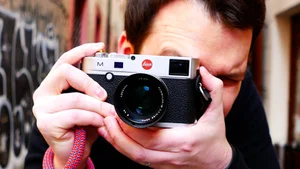
Dotan Saguy - Street & documentary photography, Leica cameras, career, skills, breaking rules & more
In this episode I am talking with Dotan Saguy about his photography journey, photography projects, published books, Leica cameras and much more. Thank you so much for joing us on this episode. If you like this content and want to see more consider subscribing and sharing it with your friends, it really helps producing more videos like this one and if you really want to get notified use the bell icon.

Dotan was also very kind and made a special discount code for his Street Photography Masterclass for your viewers: "ABOUT20"
The info and sign-up for the class are at http://courses.dotansaguy.com
Follow Dotan:
Website: https://www.dotansaguy.com
Instagram: https://www.instagram.com/dotansaguy/
Facebook: https://www.facebook.com/dotan
In case YOUR Podcast Directory is missing, please let me know in the comments bellow and I will add that. Thank you!
If you want to follow me on social media
Get the Artlist Music: http://bit.ly/ArtlistAboutPhotography (get 2 extra months)
Get the Artgrid Videos: http://bit.ly/ArtgridAboutPhotograph (get 2 extra months)
Index:
0:00:00 - Hello there!
0:00:20 - Introduction
0:01:46 - Photography career - Ideas VS reality
0:03:11 - Is photography career doable if you don’t already have another successful career?
0:08:24 - Is it worth it to study photography in school or university?
0:11:07 - The most and least impactful investments for improving photography skill
0:15:20 - What do you do to improve your photography
0:22:44 - different methods of working the scene
0:23:23 - Following a character in street photography
0:27:55 - Dotan’s system
0:32:49 - Types of street photography
0:36:56 - What are the subject you avoid
0:40:03 - How to correctly break the photography rules?
0:49:02 - What is your camera settings
0:54:55 - Do you have a schedule?
0:57:07 - How many shots do you need for a book
0:58:18 - What is your process after you come back from photoshoot
1:00:50 - Is black and white your style?
1:03:38 - Do you only take horizontal pictures?
1:05:58 - Changing aspect ration VS staying consistent
1:08:34 - Cooperating with a lot of people
1:10:14 - The hardest part of publishing a book
1:14:36 - How difficult it is to adapt new environment?
1:17:19 - When do you create a shot list?
1:21:32 - Schedule during the project with the subject
1:27:16 - Awkward moments in the bus?
1:28:51 - Dream photography project
1:30:12 - How to get deep in your photography project
1:31:03 - Is it better to have a project in mind?
1:33:54 - Photography goals?
1:35:38 - How profitable it is to publish photography book
1:36:46 - How to find your price when you start selling prints?
1:39:21 - Do you need signed consent or permission when selling your street photographs? Things you can NOT do..
1:43:41 - Self publishing or using a publisher. What is more profitable?
1:45:12 - Relationship with Leica
1:46:51 - Why is Leica worth it?
1:50:46 - Is Leica M Monochrom better than your normal camera set to black and white?
1:56:22 - Advice for someone who is thinking about starting a professional photography career
1:58:11 - the end - thank you for watching
Let me start with a little recap of your photography career. You'd been taking pictures for over twenty years as a hobby when you decided, six years ago, to transition into professional photography. Looking back now, after those six years, was everything as you'd planned? What idea did you have at the beginning, and how do you see it now?
Oh my god, no, I don't think I planned anything, really. For one thing, it was mostly about having fun. I wanted to dedicate more time to my passion for photography, which I'd always had but never had as much time for. My first goal was just to have fun with it. I'd already had a successful career in another field, in technology, so I didn't have much in the way of expectations for the photography side. I just wanted to have fun with it and see where it could take me.
Looking back, it's gone extremely smoothly, or fast, however you want to put it. I've done a lot more than I thought I would in this amount of time, so it's been very successful from that standpoint, and from the fun standpoint too. I've enjoyed every project I've picked and worked on, and it keeps going to this day. I'm just loving the whole thing.
That actually pairs well with my second question, because a lot has changed in documentary photography over time, and in how magazines work now. So I'm wondering, is a photography career doable if you're not transitioning from another successful career?
That's a great question. I'm a huge fan of many documentary photographers out there who shoot for Magnum and National Geographic, and some of them have become friends. It's incredible what they're able to do and how they're able to make a career out of it. I have to say, doing it the normal, first-career way is extremely difficult. You have to be ready to make a lot of sacrifices, travel a lot, be very flexible, either have a family that's very understanding or not have one at all and push that further down the road in your life. It's just really tough. I didn't take that route, so I can't speak to exactly how hard it is, I can only witness how tough it looks for other people. And obviously it's extremely competitive, budgets for magazines and so on are much lower now, so I can really only speak to my own side of things, which isn't that route.
What doing it as a second career allowed me to do, not having the financial pressure, really accelerated things for me, because I was able to choose my own projects. When you're a work-for-hire photographer, purely freelance, looking for the next assignment, you have to spend a lot of time marketing yourself and trying to land those assignments. It takes a lot of work, not necessarily behind the camera, more behind the computer, doing research and so on, and you encounter a lot of no's. Mostly no's, sometimes a yes, but it's hard on people.
In my case, I was able to really choose the projects that grabbed me, and I believe, at least for me, that I do my best work when I'm truly passionate about a project, when I wake up in the morning craving to go shoot it, when I have ideas for it. It's a personal decision, something I'm willing to connect with for the long term, and that's much harder to do if somebody calls you and says, hey, would you be interested in working on this topic you've never even heard of. That's a lot harder, and my work probably wouldn't be as good if I were just working on someone else's idea.
Which brings me back to somebody I really admire. If I had to pick one name as a kind of idol in that world of work-for-hire, someone who also produced phenomenal personal projects, it would be Jonas Bendiksen. His work, I mean, he's a Magnum photographer now, and he's done phenomenal documentary work. He's a huge inspiration for me. He took the first-career route and was able to climb all the way to Magnum doing what he does. I actually have one of his prints, from when Magnum runs their square print sale.
Weren't you tempted to start as an assistant to a photographer, or something like that, to get into photography that way?
No. I'd been shooting my whole adult life, pretty much, so by the time I decided to make it a professional thing, I'd already gone through a whole bunch of photography genres, landscape, portrait, many phases, before I got to street photography and photojournalism. I felt I already had enough technique behind me. I did actually go back to school for a bit, I did a semester at a community college studying photojournalism, because I really wanted to learn the craft, the ethics, how professional photojournalists actually work. That was very helpful. But after that, I decided I'd learn faster just doing my own projects, really digging in and doing the work. I think that's how you learn best.
Do you believe, with photography being the art it is today, that the path of going to school is worth it, or would you rather recommend self-directed study? As advice for someone younger, maybe someone considering university?
It's hard for me to say, because I didn't go that route myself, I just did one semester, and fairly late in life at that. I think it's good to have some basic training, if you haven't acquired that yourself through books and so on, everybody learns differently. But going to college, paying full price just to learn photojournalism, I think that's hard to justify at this point, especially if you take on debt. It must be really hard to catch up on that, because people in this field live on very little when they start out, especially if they want to progress quickly in their career and take on personal projects. It's just really hard, unless you go into something like wedding photography, which is a different, more lucrative path. In photojournalism and documentary work, it's genuinely hard to make a living, so going to college just for that is hard to justify.
I also think there's a lot to be said for learning on the job. Nothing teaches you more than actually doing your own personal project. I did a talk once about personal projects, about how to find your own, and a lot of people come to me asking about workshops, and of course I'll encourage them to do one, since I have my own methodology that I teach, and I think it's good for everybody to take a workshop once in a while. But if anything, I think people do too many workshops. If they could alternate, do a workshop, then take on a personal project and see it through before the next workshop, I think that's a much wiser way to learn. You get to really apply things, instead of learning from one person, then another, then another, ending up with all these tips you're never quite sure what to do with, and never really applying them to something meaty you can sink your teeth into. So I highly recommend personal projects.
Interesting, because I know when you made the jump, you invested money, not only into gear, but mainly into yourself. Assuming some of it was trial and error, what were the most and least impactful investments you made, in terms of workshops and that kind of thing?
I didn't really make too many mistakes, I didn't take that many workshops, and the ones I did take weren't especially pricey. There are two workshops I took that I think had the most impact on me, and they were probably also the cheapest I've ever taken, but they were juried, you had to get in, you couldn't just sign up. One was the Missouri Photo Workshop, which I highly recommend. I think it's the oldest documentary photo workshop in existence, they're at their seventieth year or more now. It's run by the University of Missouri, which has one of the best photojournalism programs, though you don't have to be a student there, it's a completely separate workshop. Every year they pick a different small town in Missouri, and the workshop goes to that town to document some aspect of it. When you're there, you actually have to find your own topic, they throw you into the town and you go door to door figuring out what your story is going to be. Then, over the next four or five days, you shoot that story, with coaches and faculty who are amazing, people from National Geographic, the Washington Post, the New York Times. It's incredible to learn from them. And that one is practically free, it's heavily subsidized, not expensive at all.
The other is the Eddie Adams Workshop. Eddie Adams was the legendary Vietnam photojournalist who worked all his life in photojournalism and took that very famous photo of the Saigon execution, the one everybody knows, the gun to the head. He created this workshop, he passed away a while ago, but his wife still runs it. It's in upstate New York, and the workshop itself is free, you just have to pay for your way there, they host you and feed you. Same thing, an amazing faculty. The tough part is they only pick a hundred people worldwide each year, some people apply several years running before they get in. But if you're really interested in photojournalism, it's another one where you'll meet incredible people. Those were both great.
As for mistakes, I won't name the photographer, because it's someone whose work I love and I don't want to tarnish his name, but my bit of caution when picking a workshop is to choose one not only with someone whose work you admire, but who also genuinely enjoys teaching and knows how to. It's not the same skill set. You can be an amazing photographer and not really be a people person, not really love teaching, some photographers teach because they have to, for their livelihood, and it's important to them financially, but it's not something they love doing. So my advice, if you pick a famous photographer for a workshop, make sure it's one who also loves to teach. There are some who do, this particular one I went to wasn't one of them.
Nowadays, having been through that many workshops and learned so much, how do you keep learning and educating yourself? What works for you now, since I imagine once you've learned the basics, you don't need to learn them again?
At this point, I really do it through projects. I pick projects I find myself passionate about, and that I think might bring new challenges I can grow from. I'll give you an example. Right now I'm working on a project that's a little outside my comfort zone, outside the usual street photography some people might know me for. I live part time now in the mountains, in the Eastern Sierra of California, near Mammoth Lakes, and I've been looking for projects around there. I found one in a ghost town I've been shooting, which you could argue is on the edge of street photography, since there are streets, it's a ghost town, and there are still buildings standing.
It's about catching traces of people, people who used to live there, the landscape they lived in, and the interiors of the homes, with all the objects left behind. So it's about traces of people, more than the people themselves, which is very different from the work I've done before. It deals with reflections, glass, that kind of thing, so I'm stretching the boundaries of what I've been shooting, just by picking a project that's a little different.
Do you share the work with someone, take a critique on it?
Yes, I do. I share the work with some peers, people I've connected with over the years at different events, at Paris Photo, at various art book fairs, portfolio reviews, and things like that. I have a group of people I've been connecting with and sharing work with, and they share theirs with me, so it's nice to get feedback that way, also from publishers. When I first start a project, I'm not always sure whether it's worth doing, or what people will think of it, so I tend to share pictures and get feedback that way. It's really important to build that little community of people you trust, and who you trust not to be too nice to you. The people I tend to send work to aren't necessarily critical, but they give me their honest opinion about the work, maybe some tips about where to take it, or things I hadn't thought of.
That's another way I learn. And another way, frankly, is when things come up, like, I'll cite Jonas Bendiksen again, Magnum has these hundred-dollar online classes. Some of them honestly aren't worth the hundred bucks, they're nice to watch, you get inspired, but they don't teach you all that much. Jonas Bendiksen has one that I highly recommend for anyone who wants to do documentary work, he really spells it out, his technique, how to find projects, how to execute them. It's fairly new, and I got it because I love his work and I know he's a very good teacher, very candid and honest about his own process, how he feels, he's not trying to elevate himself, he's just telling you how it is. That's also very helpful. It's not often something like that comes along, but for a hundred bucks, it's a steal.
There's also a street photography one, more of an overview across genres, maybe ten minutes per photographer, still worth it for a hundred bucks, but it's more of an overview of the genre than something practical you can apply. It's more inspirational and informative, good if you're new to street photography and want to educate yourself, but if you already know a lot about it and are fairly advanced technically, I'd say it's borderline. It shows you style, you can see Martin Parr with his flash, or his zoom lines, and other people, that kind of thing.
What I really enjoy, and it's something I try to do myself as a teacher, when I teach workshops, or through my online master class, and I'm working on maybe publishing a book about my methodology, is finding people who give you more than just inspiration. It's nice to hear be yourself, trust your instincts, get out there, we all need that from time to time, but what I try to do is really give people a method. You get out in the street, here's what you do, here's how you find your subject, here's how you know if a scene is going to work out or has no chance of working, here's how you approach the scene. I give them a methodology they can actually go and follow.
What I often see instead is books that are either purely inspirational, like I mentioned, or a long series of tips, if this, then that. If you're in the Mission district, choose this lens and shoot it this way, if this happens then that, this huge laundry list of situations to keep in mind. It's just not bearable, I've seen students go through that kind of material and forget it by the time they've finished reading it, so it doesn't do them any good. I try to have a method that's easy to remember, that people can actually follow, so they're not lost once they're out on the street, so they know what to do next. That's the key for me.
I actually wanted to ask you about this. I know that when you teach your workshops, you teach different methods for pursuing a scene. Can you tell me a bit more about those, and why they're important?
Sure. When we're talking purely about the framework of street photography, there are three or four different types of situations I've categorized in my method, and depending on which category your subject falls into, there's a different approach you take.
I'll give you an example. One way of shooting street photography is to spot a character. A character can be defined as somebody dressed in an interesting way, someone acting in an interesting way, somebody with a really striking dog, or a child playing in a way that really stands out on the street. Any of those, in my mind, get categorized as characters. What I teach my students is, let's say you're walking down the street and you bump into a character. That character isn't necessarily going to be exactly where you want them, in terms of what's behind them, the background, the layering. And they're not necessarily going to be at the peak of a moment either, though characters do tend to lend themselves to moments, because they're characters, things happen around them, or they make things happen. But when you first encounter that person, it's very unlikely you'll be exactly there, at the right time, with the right background.
So what you do when you spot a character is you follow them. The word follow can sound a bit creepy, but it doesn't have to be. In most cases, when I follow somebody, I'll actually make contact with them first, and give them a heartfelt compliment about whatever it was that drew my eye, a great hat, say, and I'll ask them where they got it, and just start chatting about what first drew me to them, in a genuine way, so it doesn't feel fake at all, and it isn't. I'm being honest that something about them caught my eye, and I'm telling them what it was, there's nothing wrong with that, and usually a character like that, the whole reason they're wearing the hat is that they want the compliments, so they're very happy to have me come up and give them one.
Typically I'll connect with them, establish a bit of trust, and once I feel there's enough trust, I'll ask if I can follow them around for a bit, and I'll ask them to completely ignore me, which is sometimes hard for them at first, but after a while they really do, they kind of forget I'm there. It's genuine, they're not pretending I'm not there, they're actually forgetting I am. I'll usually offer to share the pictures with them too, always, actually. I'll tell them, is it okay if I follow you for a bit, I'll take some pictures, and if they ask why, I'll say I'm doing a project about this area and they fit right in, I'd love to have their picture as part of it, and I'm happy to share the pictures with them afterward. Some people refuse, but it's a very small percentage, usually people are happy about being the star of the show and getting pictures later, especially if they put that hat on in the first place hoping for attention.
That's how that particular technique typically unfolds. Once I've asked for permission and they've given it, I take them at their word, and if it's a really good subject that I feel is going to lead somewhere good, I might spend five, ten, fifteen minutes, half an hour with that person, until they're in the right spot with the right moment and something happens. So instead of working the scene, you're working the subject.
I believe those are the "four F's" you talked about in your B&H talk, fishing, following, farming...
Farming, exactly. That was one of the categories I outlined there, of course there's more to it, but it gives you a sense of it. What I find with my students is that they'll often go out on the street after a lecture to try to apply things, and they're stuck, not sure what to do next, overwhelmed. I teach in Venice Beach, in California, which is where the workshops usually are, and it's a very active street, so much happening, and they're not sure what they're supposed to be doing. Having those categories, and a method for each one, means they can decide, I'm going to go with a character and pick one out of the crowd, or I'm going to do this other thing, and they have a path to getting the photos they want, instead of just being lost and overwhelmed and not knowing what to do.
Which of those approaches were the most difficult for you? Which one do you think students have the most trouble with?
That's a great question. The fact that there are multiple ways of doing street photography doesn't mean everybody has to master all of them and be comfortable with all of them. I think it's nice to try each one to get a feel for it as a student, but after a while you figure out that some suit you better than others, that you do better at and enjoy more. It goes back to what we started this conversation with, I got into photography for enjoyment, and I think you really have to trust your heart in this, do the things you enjoy doing, and not force yourself into something just because Bruce Gilden does it, or Martin Parr does it, or Cartier-Bresson used to do it. It's one thing to admire other people's photography, but when it comes to your own work, you have to find what you love doing, and I think that's what ends up guiding us to our style. Style is this holy grail everybody thinks they need to go find, but no, you do what you enjoy, and the style finds you, that's more how it works, I think.
So, to your point, when you take those different methods for doing street photography, somebody might find they really enjoy the connection with people, engaging with them, following them, having it all be about the person. Other people might be more, and I don't know if people are familiar with him, he's been very much in people's minds lately, for good reason, Alan Schaller. He's another black-and-white photographer, but what he does is much more about composition and light, waiting in certain spots for people to pass through, that sort of thing, which is what I call fishing. Cartier-Bresson used to do a lot of that too. Fishing can be great for people who don't necessarily want to approach people, don't want to make contact, who'd rather stand a bit further back, waiting in a certain spot for something to happen, which can be very meditative, a completely different way of working.
At the end of the day, though, each person has to find what works for them, what they enjoy most, and it can even depend on the day. Sometimes I go out in a chatty mood, wanting to meet people, excited to talk to them, I'm normally more of an introvert, but sometimes I'm in that more extroverted mode, so I do more following, more farming, which is another approach in my methodology. Other times I find myself not wanting to talk to anybody, feeling a bit grumpy, so I'll do more fishing instead. I'm aware of that when I get out on the street, conscious of which mode I'm in, and I'll take the approach that fits. I think it's helpful to be introspective, to know what you like doing, what mood you're in, and then take the method that will bring you enjoyment, and results, that day. That's what works for me.
I like your take on how the photographer shouldn't necessarily be invisible, but can interact with the scene and still get candid shots after sticking with it for some time. Is that what you mean when you talk about sticking with a scene?
Yes. There's a whole school of thought around this, ranging from people who consider street portraits, posed pictures of people in the street, to be street photography, all the way to people who say unless nobody sees you, you're not really doing street photography, and everything in between. Personally, I feel street portraits are their own thing, and I don't really consider them street photography unless they're occasional, mixed in with regular street work here and there, a few portraits can be interesting, but if all you're doing is portraits, you're not really doing street photography, in my mind anyway.
I think it's great when you can remain invisible, a great thing to strive for, but unfortunately it's not always possible, and it doesn't always lead to the best results in terms of composition and so on, it can be discouraging. If that's the ideal you're holding onto, I'm not taking any photo unless I'm completely undetected, you're going to have a really hard time getting anything good, and you might not enjoy it as much, might not go out as much, and your results won't be as good. So I think there's a happy medium. I went to photojournalism school, I know the ethics, and I think you can get genuine, candid shots after having made contact. In fact, when you're doing documentary work as a photojournalist, that's exactly what you do, you have to establish trust with your subjects before you can photograph them.
The key, I think, isn't to be invisible, it's to manage to become invisible again, and that's an art in itself, making the initial contact, establishing the trust, and then waiting for the moment when people are genuinely no longer aware of you, no longer conscious of your presence, when they've gone back to themselves, to what they'd normally be doing if you weren't there. Then you get to have your cake and eat it too, you get to be there for the best moments, and it's still completely candid. Those moments, to me, are what lead to the most magical photos, because you can stay there for as long as you want, which is really the hardest part in street photography, when you only have that one moment and everything has to line up.
It does happen, some of the photos in my Venice book are like that, where I just came across something, it happened, I made no contact, got the shot, and it was perfect. But it would be very limiting if that were all I was doing. I think it's really nice to complement it with more documentary-style work, where I do establish contact, but then people forget about me, and I become the fly on the wall. Becoming that fly on the wall isn't easy, but it's very productive as a photographer.
Do you have your own rules about what you avoid photographing, subjects you stay away from?
Yes. People who are vulnerable on the street, who don't have anywhere else to go, homeless people, people with mental illness, I avoid photographing them unless I'm doing it in a way where I've engaged with them first, in conversation, acknowledging them, getting to know them, and they're okay with me photographing them. In that case, it's fine, and I do have some images like that in my Venice book, and in my next book, Nowhere to Go But Everywhere, which I made a couple of years ago, about a family who lives in a school bus. They wouldn't consider themselves homeless, they were houseless, I guess you could call it, but the book was really about them, and about how beautiful their life was inside that school bus.
I'm not saying you should never photograph anybody who doesn't have a home, but if you do, it shouldn't be a cheap shot, that's my point. It should be about them, and it should show them in a very humane way that people can relate to, not just, say, somebody sleeping drunk on the sidewalk because it makes an easy shot, since they're not going to move or come after you. Anyway, you get my point. I think that's really it, you don't want to take advantage of people just because it's easy, it has to be respectful. There are photographers I know, like Bruce Gilden, who stretch those boundaries, he has his own philosophy, he says he feels connected to these people and that's why he takes their photo, that's his thing, it's not really mine. I think everyone has to find their own ethics at the end of the day, but my general guideline is just to be respectful, don't take advantage of people, don't make fun of them, take photos they'd actually like to have, maybe something they'd hang on their wall, something even the people in the picture would be proud of.
Talking about rules, this is more a question about the actual craft of photography. How do I correctly break the rules, so I'm somewhere between my photo looking like everyone else's, and having no idea what I'm doing? How do I land in between?
I think with street photography, and pretty much any other form, the goal, and I think this is what you're getting at, is to show people something they don't normally see. If you show them something they see every day, a photo shot at eye level of a street scene, people passing by, and we see a lot of that on Instagram, people take those kinds of photos all the time, nobody's going to look at it for more than a second before scrolling on. It's not interesting, because it's what we see every day, with our own eyes, at our own height. It's a dime a dozen, an easy shot, nothing anyone hasn't seen before.
So you want to show people something that will stop them in their tracks, that's the goal. But what makes a photo do that, what will actually stop people, that's the million-dollar question. Going back to methodology, the way I teach this is that there are criteria for what makes a photo great. Of course there's always your own creativity in how you show people something they haven't seen, but there are ingredients you can put to work toward that. To me there are three: design, this is a whole category with a lot more methodology behind it, composition and so on, it's a deep topic, but at the top level, there's design. Then there's information, actually telling people what's happening, making it clear in the picture so the viewer can derive a story, that's the storytelling part. And finally, on top of that, if you can add a moment, or an emotion. Design, information, and moment are my three building blocks, and there's a lot I teach within each one about how to make it work.
I know that's a long-winded answer to your question, but I think this is another area where a lot of the literature and workshops out there offer inspirational, fluffy advice, follow your gut, be creative, and at the end of the day it's the same wide-eyed workshop student standing in the street not knowing what to do next. I can picture my own students after a fluffy lecture like that, going out and just not knowing what to do. So instead, I give people that set of criteria, with a method behind each one, here's how you make design work, here's how you know if a photo is going to work in terms of information and storytelling, here's how you know if it's a moment, or not quite a moment yet, or already past it. That's all built into the methodology, to figure out what makes a great shot. But at the end of the day, the guiding light is to make something people aren't used to seeing, something different from what they're used to.
What I'm wondering is whether that's kind of seasonal, in a sense. Let me explain, when you focus on things people aren't seeing often, that usually happens throughout history, right? I imagine the rule of thirds was, at some point, a new rule. People thought, if we put it here instead of there, that's something nobody does. And if I say, okay, I'm going to shoot everything from ground level, it feels like a lot of these things come in a loop, things people weren't doing, then start doing, then stop doing later.
It keeps evolving, but I don't think, just because the rule of thirds was something people used to do and some have now evolved past it into something else, that it isn't good anymore. I'll give you an example from my latest project, which again isn't really street photography anymore, it's more landscape, I'm not exactly sure what to call it. For people curious about it, if you look at my recent Instagram or Facebook posts, you'll see the pictures I've been taking in this ghost town, the ones with reflections layered together. I'm actually using the rule of thirds all the time in those, and other very obvious, established techniques, nothing inventive at all, completely textbook on some of the compositional aspects. But I'm adding one ingredient people haven't seen before, shooting reflections that are layered without any context. The key is that there's no window frame in the shot, I'm not giving the viewer a frame to tell them what they're looking at, I'm confusing them a little, on purpose. That's the bit of innovation I've baked into this project, but I'm also using a lot of very tried-and-true techniques alongside it.
So my point is, you don't have to innovate on everything. You can use some established things and add your own little flavor to make something new that people haven't seen. If everything is new, if you're not using the rule of thirds at all, not doing any of that, it becomes too far out there for people to actually grab onto, they'll look at it and think, what the hell is this, and move on to the next picture.
So you're thinking things like gestalt psychology, dynamic symmetry, figure-to-ground relationships, the golden ratio, those still work?
Absolutely, yeah, all of those things work. I think it's great to just experiment with each one, and I know I sound like a broken record, but see what feels good. See if you love the golden ratio and gravitate toward that, or if you love figure-to-ground, strong contrast between your subject and the background, subjects that pop, and so on. See what feels good, what you love doing, not necessarily because Alex Webb does it, or because someone else does it, just because it feels good to you, and that's how you find that style, you follow your heart at the end of the day. I know that sounds a bit fluffy, and I'm contradicting myself a little, but I think it's good to try all these techniques. It's a bit like how painters used to train, the whole school was, copy this artist, copy that artist, copy this. I think it's good to do that as a training exercise, try all the techniques that have been developed by people before you, and then, once you've mastered all of that, you get to innovate on top of it.
It's the same with cooking, I like to cook, and I'll make a recipe two or three times, then I get bored, and I think, I wonder what happens if I add garlic to this. That's the point when you start bending the rules, or adapting them to your own style, I suppose.
Exactly, exactly. I think you first have to try different things, see what feels good, and then adapt it to your own way of doing it.
Let's get more into your personal photography. What are your camera settings? Are you using zone focusing, since I know you shoot Leica, hyperfocal distance and that sort of thing?
Yes, it depends on what I'm doing. If I'm doing street photography, say in Venice Beach, my settings are, well, I'll show you. The first thing I do when I go out on the street is set my distance to three meters, about ten feet, my aperture to f/8, and I have auto ISO and auto shutter speed. That's it, very simple, and that's why I love these cameras, there's nothing to them, just the basics.
Then I adapt from there. For a follow situation, that setting often works right out of the box, about ten feet, f/8, because I'm not going to focus very precisely, I want to be ready for the moment. But if there's a scene where the subject needs to be closer, or I really need to get rid of a noisy background, then I start playing with the aperture and the distance. But my default is ten feet, three meters, f/8, auto ISO, auto shutter speed.
It's personal, I know Matt Stuart, a friend now, I took a workshop with him a long time ago, and he's completely different, he shoots fully manual, shutter speed and aperture, and he just knows, based on being in the shade or the sun, he'll change it constantly, super aware of his settings all the time. That doesn't work for me, I work differently. At the end of the day, I change my settings when I enter a scene, and then I stay with that. When I finish a scene, even if I've tweaked something along the way, I always come back to my defaults. What I love about the Leica is that I can just look down at the lens, I don't have to look through the viewfinder or at a screen, I look at it this way and I have all the information I need right there. I don't even turn on the screen.
Do you check a picture preview after you take a shot?
No, I don't. For one, it's distracting. I'll use it if there's a tricky lighting situation, or I'm not quite sure about something, I'll do a couple of test shots and look at those. But once I start shooting a scene, I won't look at the screen at all, I won't let it show me anything, it never comes up on its own. It's less distracting, and I also get a lot more out of my battery, I can shoot almost a whole day on one charge, because the battery isn't doing anything, there's no autofocus, it's not showing me photos, it's basically just driving the shutter, that's all it does.
The reason I ask is that, as much as I love auto ISO and auto shutter speed, sometimes what happens to me, especially when I try to shoot from the ground, is the camera exposes for the sky, or something like that. How do you deal with that, if you set everything on auto and then point the camera at the sky, you'll get everything black, right, if you're shooting in strong light?
I hear you, it doesn't always come out exactly the way I want. With how I shoot, I cut corners on my settings by letting the camera choose, and I know a few things going in. First, I'm shooting the Monochrom, and the dynamic range on that sensor is phenomenal, except if you lose the highlights, they're completely gone, you cannot recover them on this camera, because you're only seeing in black and white. So I underexpose by about two-thirds of a stop, and like you said, if I find myself in a situation where the camera has done something I didn't want, I'm almost always able to correct it in post, I can't even remember a case where I couldn't, because it's usually underexposed, sometimes way underexposed, but this camera's sensor has such deep blacks that I can always go and dig the detail back out of the shadows. The only real problem is if it's in the highlights and it's lost, but the way I underexpose, that almost never happens.
I imagine the projects you do are different, at least the results are different, than someone who just goes out and shoots two or three times a week. Do you have a schedule for that, like waking up at eight and going shooting, having lunch, that kind of thing? I'm not necessarily asking about that specifically, but how do you keep yourself on track with a project?
I'm sorry to bring this up again, but it's really all about it feeling good. I do projects because they feel good, because I really want to, because I'm passionate about them, and that's what gets me out there. At some point I actually tried doing projects more to do good, trying to help non-profits and things like that, and it felt good that I was helping, but I wasn't as passionate about the projects, and, to your point, it was hard to get out and do it regularly. I wasn't doing it right, so I stopped choosing those for now, unless I'm asked to do something as a favor, which I'll still do, but I don't choose those as ongoing projects, because unless I love what I'm doing, I'm not going to get up in the morning wanting to do it.
So working under pressure doesn't work for you? You're not forcing yourself, giving yourself an internal deadline, like this shouldn't take me ten years to finish?
No, I've never been good at that, at school or otherwise. I'd say, in terms of the length of a project, like how long it should take, it tends to come down to when I have enough material that I feel I can do a really solid edit. For a book, I like to have sixty to sixty-five images at the minimum, fifty or fifty-five at the very least. That doesn't mean I only have to have fifty pictures I like, to get to fifty selects, I usually have to shoot about three hundred that I really like, and then edit that down to fifty. It's distilling, panning for gold, you need to start with a lot to get to a little that's really powerful and works together. So typically, when I work on a project, I keep going until I feel I have that depth, two to three hundred images to choose from that I really like, and I mean images I've actually kept as four or five stars in Lightroom, not just the total number of frames shot. Then I squeeze that down to something like fifty or sixty.
That's a lot of images to sort through. What's your process, when you come back from a shoot, do you edit right away, or leave it for the weekend?
It's really hard. This goes back to things I teach as well. First off, I think when you get home and look at your pictures right away, which didn't used to be possible before digital, it's hard to keep any distance from them. You've just come back from that shoot, maybe there was a scene that felt really good, you connected with the people you were shooting, it was beautiful, and you're feeling good about having shot it, so you're biased by that feeling, and it's really hard to edit honestly while you're still under it. The longer time passes after the shoot, the more that emotional feeling fades, and the more honest you can be with yourself about how the pictures actually stand up on their own.
So I tend to wait a bit, at least, and even when I don't, I'll be honest, sometimes I come back from a shoot so excited I just want to see the pictures right away, but I'll be aware that I'm probably not being completely honest with myself looking at them in that moment. So what I do is rate them and put them in a folder that syncs to my phone through Lightroom, and I'll keep looking at them over the next month, maybe longer, whenever I'm in line somewhere, getting coffee, whatever, instead of scrolling Instagram I'll go back and look, and I'll change the star rating. I'll think, I gave this five stars, but it's really not growing on me, I'm getting bored of it, it's really more of a three star. Or the opposite, I thought this was a three star, but I've been showing it to a few people who really like it, and it's growing on me too, maybe it's really a four. I keep adjusting those ratings until they feel stable, that's my method. And then, of course, if a book is being published, I'll have an editor actually look at everything and give their own professional opinion too.
Would you say black and white is your style, or is it more project-related? I heard you say, and correct me if I'm wrong, that with Nowhere to Go But Everywhere you started with the idea of shooting it in color, but then decided it wouldn't work. Do you think you'll find a future project where you say, all right, I'm doing this one in color?
Yes, actually, there's one I'm about to start that I think will be in color. I have another camera I use for color, obviously, since the Monochrom won't do that. I feel color is important, especially in documentary work, when the information, the storytelling, is really key, sometimes the story is in the colors, they really help tell it, and I don't want to deprive the viewer of that element of information. So for those kinds of projects, I think it matters. The reason Nowhere to Go But Everywhere could have worked in color, and still might have, was that it was too complicated to shoot that way, it would have required artificial lighting, and I didn't want to bring lighting equipment into a small, cramped space, a vehicle that was already cramped with me and a family of four or five, three young kids jumping around, I didn't want lights and stands on top of all that. So that's why I went with black and white. But it could have worked great in color too, there were beautiful colors inside that bus.
The way we ended up bringing color into it was that the book's designer had the idea of interspersing my black-and-white photographs with what look almost like scans of the fabrics that were in the bus, with the stories I'd gathered through interviews printed on the back of those scans. So as you go through the book, you have the black and whites, and then you stumble on a little leaflet with a beautiful fabric texture, we found paper that actually had the texture of the fabric, and on the reverse side of that leaflet is where we printed the story. Then you go back to black and white, and later stumble on another leaflet with a different fabric. It was a fun way to bring color into the project without shooting it in color.
Talking about style, something I found interesting looking through your Venice Beach book is that there are a few square photographs, which I assume are cropped, one vertical, which might or might not be cropped, and the rest are horizontal. So my question is, are you more of a horizontal photographer, if that's even a term?
It is, and yes, definitely more horizontal. I think it's partly my photojournalistic training, from that semester I did studying photojournalism, they really hammered into us, unless you're shooting for the cover, shoot horizontal, since you're always shooting for a possible cover as a journalist, and you don't want to limit yourself with too much vertical work and not have a shot that works. I think, as humans, we tend to see horizontally, so unless the composition really calls for vertical, which does happen, somebody on a skateboard, say, where shooting horizontal might mean you don't even get the skateboard in frame, so you don't know what's going on, there are things you have to shoot vertical. But unless you have to, I think you should shoot horizontal, because in terms of publication, and how people view exhibits, horizontal is much more how people want to see photographs.
And the square ones, did you shoot with the intention of making them square later, or did you decide that in post? How do you approach changing formats while still wanting to stay consistent?
That was really a decision made more in post. When I was shooting the project, I was just trying to get the best moments, with the best storytelling and the best design. When it came to actually editing it into the book, and by editing, I should say, a lot of people use that word to mean changing things in Photoshop, but for me it's the photojournalistic term, just meaning selecting images, not any manipulation, just deciding, this is the picture. So when I was picking the pictures for the book, that's when I'd decide, this might look better cropped this way. I don't have anything against cropping, as long as it's not excessive, I've seen people crop way too much, to the point where you should just throw the photo out and try again, but cropping a little on one side or another, I think that's great.
You mentioned dynamic symmetry, I use the dynamic symmetry grid, not so much when I shoot, but when I edit and process my pictures, I use it as an overlay in Lightroom, so if I need to crop somewhere, I know how to do it in a way that emphasizes the dynamic symmetry. I think cropping is great for achieving a better composition, as long as you don't overdo it.
As for staying consistent, for the book, we made a decision with the designer to use three or four different formats, square, vertical, horizontal, a two-thirds horizontal, a five-by-seven, different aspect ratios, and we varied it deliberately, because in a book you don't want the reader to turn the pages and get bored, you want them to feel like each page turn brings a little surprise. So we played with the aspect ratios, and a bit with the placement and layout, to achieve that sense of surprise.
Something I admire, learning about your projects, is how many people you've reached out to and involved. Was that something you learned in your previous career, relying on people who are experts in specific parts of what you need?
You mean in terms of making the book, since there's a whole list of people you collaborated with? I feel like when I don't know something about doing a thing, like making a book, I try to associate myself with the best bookmaker I can, if I can get their attention and they're willing to work with me, because it's their thing, they've been doing it for years, and I let them teach me how it's done, I try to rely on their knowledge and learn from it. That's been my approach, but you're right, I probably picked that up from my business career, where I used to do the same thing, you get into something new, you don't know what you're doing, but somebody else does, and you want to work with them because they're the people you're going to learn the most from. In the case of my publisher, Kerber Verlag, the German publisher I've done both my books with, and might do more with, I love that they're real craftspeople, they just know their stuff, incredibly talented, not just in knowing how to do it, but in knowing how to innovate, they're always pushing the boundaries of bookmaking, and I love that about them.
If you had to do everything for your book yourself except one thing, what's the one thing you'd absolutely need help with?
Oh god, I don't think there's just one. Bookmaking is sequencing, printing, distribution, editing, all of it matters. I think, for any photographer at this point, the hardest thing might be distribution. And also, since I'm still early in my career, I think the reputation of a great book publisher helps get the word out, get the press to actually cover the book. So working with a really good, established publisher was important for distribution and everything else that comes with it, all the knowledge of how a book actually gets made. So if there's one thing, I'd say, go with the best publisher you can, it's like a whole package.
It is, but I also spoke to a lot of people before I picked mine, people who'd published books and had horror stories about reputable publishers they'd gone with and didn't have a great time with. So again, I'd go back to trusting your gut, talk to people about who they published with, whether they had a good experience, whether they still have a good relationship with those publishers. In the end, I went with Kerber because I heard so many people say they had the best relationship with them, that they're great people who know their stuff. That's why I went with them, and to this day I have the best relationship with them, and unless we don't see eye to eye on something, probably budget-related, I'll probably publish with them again. Once you find people you love working with, why not keep working with them.
With your experience now, having published two books, could you imagine self-publishing at this point?
Probably, yeah, I don't know, I haven't seriously looked into it. It's complicated to do well. Even if I self-published, I'd still want to hire a professional designer for the book, which would cost money to have someone seriously work on the design. I'd still have to do all the groundwork for distribution myself, which can get complicated, and I'd probably have to hire someone for PR too, which, if I did it myself, is a very involved, complicated thing, a lot of work and follow-up.
So do you sell mostly through the publisher, or through your own website and following?
Definitely through the publisher. I mean, I've sold a lot through Kickstarter too, but at the end of the day, if you look at the total numbers, it's mostly the publisher.
Well, thank you for supporting the podcast earlier when I spent a fortune on your Kickstarter. It's good, there are some really good books that are hard to find later if you missed the Kickstarter, once they're out, sometimes the press coverage makes them sell out quickly, and with the Kickstarter you usually get a signed book, maybe a print that came with it, it's a great way to get books and support the artist too, so I'm glad you did it, and I'm sure a lot of people did.
You've published two projects so far, Venice Beach, and Nowhere to Go But Everywhere, about the Reese family. During the Venice Beach work, you'd already photographed some interiors, in motorhomes, and then you went all in on interiors for the second book. What was the biggest challenge in changing that environment?
Oh yeah, it was a huge challenge at first, I wasn't even sure I was going to continue the project. First, in terms of establishing trust, you're talking about asking people to let you shoot inside their tiny house, which happens to be a vehicle they live in, so you're already an intruder, and on top of that, you're asking to photograph their most intimate moments inside their own home. So it took a lot of just building trust, spending time with people, that was challenging, it's called access in photojournalism, and getting the access was hard.
The other thing is, even once you have access, there's the lighting, how cramped the space is, and visual variety, another photojournalistic term, meaning you don't want all your photos to have the same background, shot from the same distance, with the same lens, the same angle. You want the project to stay interesting, not the same kind of photo over and over. That proved really challenging in such a small environment, with just one family. But it's all about problem solving, and that's part of the fun, I love solving problems, so it worked out, though it was a very hard problem to solve. I ended up figuring out different ways around it, varying my angles, shooting without looking through the viewfinder because the camera sometimes had to be pressed right up against the wall, or hanging from the ceiling, or shot from the floor, lots of movement, lots of ideas, looking at other people's work for inspiration, trying different things.
Talking about that variety of shots, at what point in the project do you make a shot list, and how do you decide what should be on it? Do you consult with someone, does someone give you input, like this might be an interesting angle, or you should spend a night with them, that kind of thing?
That's a great point. I think shot lists are great, I highly recommend having one if you're doing a project. I use mine almost as a note to myself, sometimes I'll be in the shower and think, oh my god, I don't have a shot of this situation, so I'll write it down, I use the Notes app on my phone, and I keep a shot list for each project, just bullet points, remember to do a night shot, remember to do this. So it's partly a reminder tool.
The other way I use a shot list, more for street photography, is when I'm at a location but the light isn't right, or the situation isn't quite there, but I feel like something else might happen at that spot, maybe there are a lot of skateboarders coming through, or people hanging out there, a great background, so I should come back regularly. I'll add that to the list, and I try to name the location something that resonates with me, so I don't forget about it.
As I get closer to the end of a project, that's where the night shot example comes in, I start editing, looking at what I have, and realizing where the gaps might be. Sometimes I use the eye of an editor, whoever's going to work with me on the book, we'll do an early editing session, not quite ready to edit the actual book yet, but just to see what's there and where the gaps are, and then I make a shot list out of that. I'll think, okay, I'm going to spend the next three months trying to get night situations, going out more at night, or early morning, or on weekends instead of weekdays. With the Reese family, I noticed I didn't have anybody eating a meal, which felt important, food is important, so I'd start making a shot list of situations that might be missing, and then try, not to set anything up, but to go at times when I'm most likely to catch it. So with the Reeses, I might say, let me know next time you're planning on grabbing pizza, or exploring a bit at night, and I'll tag along.
The one last thing I'd say about shot lists is, don't get too specific with them. A shot list is good for guiding you, but sometimes situations just don't happen, or aren't realistic, and it's fine if you don't get everything on it. It's a good thing to have to jog your memory when you're not sure what to do next, or when to go, a good guiding tool, but you shouldn't get too hung up on it either.
I might be repeating myself a bit, but I'm curious about scheduling, especially comparing the two projects. I imagine it doesn't matter much, except around local events and things like that, for Venice Beach, when you'd just go there, but with the Reese family, they were an actual functioning, working family, and the bus was able to just drive away. Did you call ahead, or just show up?
Whenever I was there, they knew I was just the fly on the wall, I might chat with them, but I told the kids especially, don't pose for the camera, usually I needed to be there a while so the kids would go off and play and forget about me, and then I could start shooting.
But to go back to your question about timing, I tend to be very strategic about when I shoot. For Venice, I know it's most active on weekends, and some of the most interesting characters show up then, since the area's been so gentrified that a lot of the interesting characters don't really live there anymore, but they come back on weekends. So I mostly go on weekends, even if I have time during the week, it's usually not as productive. I've noticed the peak tends to be afternoon into early evening, and I'm scientific enough about it that there's actually a webcam over the boardwalk, several actually, but there's one I like using that you can direct yourself, so I'll go online and check what the situation looks like before heading over, I don't live far, maybe twenty minutes with traffic, but I always check the activity level first to decide if it's worth going out.
For the Reese family, it was more that I'd text Izzy, the husband, and he'd say, yeah, now's a good time if you want to swing by, or, no, we're busy, or the kids are still asleep. I didn't want to impose. Sometimes I'd just drop by and knock, and they'd tell me if it was a good time or not, but I kind of learned their schedule after a while.
Did you stay overnight with them?
I didn't, but I did come by in the morning a couple of times, when they were waking up. I'd told them ahead of time I might do that, they knew I was coming. It's a very small space, not much room even for them to sleep, they have a bigger bus now, so I might actually be able to sleep over in the current one, but in the old bus there was no way, unless I slept on the floor. I didn't want to impose too much, especially since I never knew how long they'd stay in one place, since it's a motorhome, they can just start the engine and leave. Except the bus actually broke down and got stuck in one spot for several months.
I guess in a strange way that helped the project along?
It's true, I mean, the project might not have been completed if, right around the time they were thinking about leaving, the bus hadn't broken down the very next day. But I do think, for anyone listening, being strategic about when and where you go is really critical, it's something I teach as well. Even for the new project, the ghost town, I really like clouds in my reflections, so I look out the window before heading over to see if there are enough clouds in the sky. I also avoid weekends there, too many tourists, so my formula has been, go on a weekday, later in the day, when there are fewer people, better light, and clouds in the sky. I have a formula for when and where to go for each project, and I think that matters. There's this romantic myth around street photography, that you can just walk down the steps of your apartment, go out into the street, and shoot, and it doesn't matter when or where, as long as you're out there with your Leica, or your Fuji, or your Canon, it'll be great. I think that's a little too romantic. It sounds great, and it is fun, but if you actually want to be productive and get the shots you're after, you have to be a bit more strategic about where and when you go.
Were there awkward moments, times when nothing was really happening in the bus and you found yourself thinking, guys, please do something?
No, no, I would never tell them to do something. There were plenty of days where not much was happening, but it always goes back to enjoyment for me, I enjoyed spending time with them, just observing how they lived this life so different from mine, what it's like for people like them to live that way. So I wasn't really getting bored, but there were times I didn't shoot much, if anything, I'd just visit and hang out. Sometimes I'd think, nothing's really going to happen today, the mom has to go to the library, there's laundry to do, the kids aren't even around, they're at the park, and I don't see anything interesting that I don't already have. So I'd just say goodbye for now and go shoot some street photography in Venice instead. It's always good to have a couple of different projects going at once, so if one is slow, you have something else to fall back on and be excited about.
Apart from what you're currently working on, do you have a dream project you'd love to do, but maybe don't have the time, money, or it's somewhere far away?
Not really. I'm not much of a traveling photographer, I like to stay close to my family and my friends, so I tend to find projects close to my own community. At some point I was thinking about going to Cuba a few times, but I decided it wasn't really for me, for now, I might pick it up again someday. I just enjoy drilling into a community that's close to me, and sometimes things that seem very remote, very far from your own lifestyle, are right next door. The Reese family, living in their bus, is a good example. I'm actually looking into photographing a project about a Native American tribe from the area near Mammoth, where I spend half my time, that's also a very different lifestyle and history. And then there's the ghost town too, which is also a whole other world, without me having to travel very far.
I think that's important, to be able to do a project in depth, you need access, both in terms of being allowed in, and in terms of being able to go back frequently. A lot of people only shoot when they're traveling, they'll go to Bali, or Europe, take their camera along, and shoot there, which is nice for travel photography, but you can't really do an in-depth project that way, unless you can come back repeatedly, or live there for an extended time. So the best way to really go deep into a project is to do something close to you, even if it's not close to you culturally, but close in distance, so you can go back regularly.
So you think it's better to shoot with a project in mind, rather than just go around taking, I wouldn't say snapshots, but a lot of people don't have time to commit to something that complex either.
I'd say it comes down to what makes you happy. For some people, they love just going out into the street and taking single shots of whatever they find interesting that day, and that's what makes them happy. For me, it helps to be focused on something, even a street photography project. Right now in Venice, what I decided to work on is the dogs of Venice, since there are very interesting situations I've noticed involving dogs there, and the area used to be nicknamed Dogtown historically, not because of actual dogs, just a nickname it got, so I wanted to riff on that and do something about dogs in Venice. So when I go now, I specifically look for situations involving dogs. It helps me personally, I find myself more focused when I have a specific project in mind that I'm shooting for. But I think that's different for different people. Some photographers I know, including, I believe, Cartier-Bresson, would do their books and exhibitions looking back at their archive, they'd just take pictures of the street without much of a plan, and later they'd notice, oh, there's a theme here, or a theme there, and build different books around different topics that way.
Right, so you edit after the fact, once you already have a huge body of pictures?
Exactly, like Elliott Erwitt did a lot of books about dogs, he wasn't specifically doing a project about dogs, but he looked back at thirty, forty, fifty years of pictures and realized, oh my god, there are so many dog pictures here, I should do a dog book, or two, or three, I don't know exactly how many he ended up doing. He also said he had a few pictures of cats, but nothing like as many, so he never approached it that way for cats. So some photographers work retroactively like that, they look at what they have, see a pattern, and build a body of work by editing it out of their archive. I prefer to have a project first, partly because my archive isn't nearly as deep as some of these guys, I haven't been shooting professionally nearly as long, but also because I find myself more focused when I work on specific projects. That's just my way of doing it.
Apart from books, and you're also an academic teacher, do you have other photography goals, exhibitions, joining Magnum, that kind of thing?
No, I don't want to work for a photo agency. I mean, as prestigious as it is, I'd be incredibly flattered if they ever considered me, but it's not for me, because once you start working for an agency like that, you're working on assignments, you get assigned things and you have to do what you're assigned, and that's not what I want to do. I don't have the pressure to do that kind of work, I want to do what I want to do, and I prefer to do it not too far from where I am. It's pretty comfortable, the way I'm doing it right now, I'm working hard, but on things that are convenient for me, and I don't necessarily want to go work for an agency and do whatever they need done.
In terms of goals, though, I'd say more exhibitions would definitely be a great thing to have in the future. That hasn't really happened much, my last book, Nowhere to Go But Everywhere, came out right at the very early part of the pandemic, so several shows and exhibits I had planned all got cancelled. The book launch has passed a bit now, so I don't know, we'll probably get exhibited at some point, but I don't have any immediate plans. More exhibits would be good, and if anybody listening has opportunities, I'll take you up on it, I have a great printer, I can print very large, very quickly, super high quality.
Talking about books, I know you've said somewhere that these projects are more about breaking even, but if I'm not mistaken, there's already a second edition of Venice Beach, so I'd guess it's actually kind of profitable, isn't it?
Barely. It's profitable in the sense that I've sold some prints from it, and some of my workshop students found me through the book, so it's more of a prestigious kind of marketing thing, I'd say, from my work, it lets me show my work to a lot more people than even an exhibit would. I don't think many photographers actually make money from books, I don't think even the publishers make that much from them, at this point photographers need to contribute some money toward a book, even the most prestigious publishers won't do a book anymore unless you put up some of the funding yourself, through Kickstarter usually.
And with prints, how did you go about that, as someone who'd never sold prints before? How did you figure out pricing?
Oh my god, yeah, I went to some classes about that, asked friends and peers. I ended up developing what sizes I wanted, there's a whole bunch of criteria you have to decide on, and price-wise, you have to start somewhere and feel out where you're at, what you should be charging given where you are in your career. You can't charge what Sebastião Salgado charges for his prints, and you don't want to charge what the guy at the farmer's market charges for his either, so you have to find somewhere in between that feels honest, that doesn't undersell you, and it's a moving target, as your career evolves you readjust the pricing.
I also do limited editions, unless you're Salgado or Cartier-Bresson, someone who can afford to sell as many as will sell, unlimited. Mine are editioned, I have three sizes, the very large ones come in an edition of three, so I sell three prints, and then it's gone, nobody can buy it anymore. The medium size is an edition of seven, and the smaller size is ten. So across any single photograph, I never sell more than twenty, in those three different sizes. That's how I've set it up, but there are many different ways to do it, some people do editions of one, sell one print of one size of one photo, and that's it, or do a rotation, selling five images one year, then five different ones the next.
When it comes to selling prints and books, how does it work with consent and rights, and the profit that comes with it, with the people you photograph?
Well, for the book, you get into a book contract, but with the people I photograph, if it's photojournalism or documentary work, they're not models, so it's a different thing entirely. In this case, they're the subject of a documentary, and they're not compensated for participating in the project. Now, I try, obviously, it's taxing on their time and everything, so I'll give them some free books, and, for instance, one of the family members made jewelry, and I bought some for my wife because I liked it, so we built a relationship that isn't transactional, it's not, if you don't buy this much from me I won't participate, none of that. It's more of a normal relationship, and they like the fact that they're being photographed, they're honored to be part of the work, and in the end we just enjoyed spending time together, that's how it comes about. You can't do these projects and say, okay, when the book comes out, I'll give you this much money, that just doesn't work. People who know you actually let you photograph them.
When it comes to candid pictures, you probably know the famous Paris kiss photograph, and the lawsuit around it, when it turned out it had been staged. If someone comes to you after the fact and says, hey, I'm in your book, I never even knew you were there, and now I know, how do you deal with that?
There's really no dealing with it, unless it was shot in a private space, which I wouldn't be doing for street work. In the US, the law is that if it's in a public space, on the street, you don't have to ask for permission, and you don't need a model release. If they were in the street and I took their photo, that's my right, and I can publish it in the book. What I can't do without their consent, or without compensating them or having them sign a release, is use their photo commercially, sell it to, say, Coca-Cola for an ad. But if it's not a commercial thing, if they're not actually appearing in an advertisement, there's no problem doing it without a release.
For the Reese family, I did have them sign a model release, since it was their own private space, I didn't want them later deciding to sue over something we'd agreed to at the time. For the Venice book, I did get one release, for the cover, because I figured the cover might end up in some kind of ad down the line.
Did you go find the woman on the cover to get that release?
I did, I'd actually kept in touch with her and her son, because I wanted to find out what became of them, and later on they were actually evicted from their apartment, which became part of the story. She was fine with her photo being used, in fact she was proud of it, it was a great thing for her.
It's a great photo.
Thank you, thank you. That one's actually sold out, in the three large-format prints, that's the one we were talking about earlier with pricing, it's sold out, I can't make any more large prints of that photo, anyone who wants it in that size would have to buy it from someone who already owns one.
Money-wise, do you think it's better to self-publish a project, or still go through a publisher?
It's a tough call, it depends how big your following is. If you have a huge social media following, and distribution isn't going to be a problem for you, you're probably better off self-publishing, financially speaking. In terms of prestige, it's always better to go with an established publisher, but in terms of pure profit off the book, if you have a big following, and money is the main concern, you should self-publish. You have to figure out what your actual goal is, if this is a financial enterprise for you, and making a profit is the most important thing, you might make one set of decisions, but if your goal is to advance your career, have the prestige of a publisher behind you, get noticed by galleries, that might lead to a different decision, where the immediate financial benefit matters less. So you have to decide, do you want to make money off the book, or get more publicity and prestige out of it, and those two aren't always compatible.
You're also a Leica Akademie instructor, and you use the Monochrom. How did that relationship begin?
I originally got into it through what I'd call my gateway drug, Fujifilm, I shot the X-Pro1 and the X100 for a while. Then one day, in 2014 I want to say, this was very early in the Fuji X-Pro1 era, I was in Paris and rented an M9, with the goal, honestly, of proving to myself I didn't need a Leica, that my Fuji was better, had more features, that Leica was overrated, but that I needed to actually try one for a weekend to be sure. So I rented one for a holiday weekend, and by Monday, when it was time to return it, I was thinking, I'm screwed, my birthday's coming up, I have to get one. So I sold all my Fuji gear, and at the time I got, I think it was the original Monochrom first, honestly I don't completely remember, but from that point on, that was it, I've stuck with it ever since, and looking back, it's been a long time as a shooter with this system.
Leica is quite expensive. What is it that compensates for the high price?
Again, it goes back to fun and enjoyment, what actually gets you out the door. That's what I tell people about gear criteria for street photography, it's the whole first module of my online street photography master class, I start with gear. There are some criteria that make certain gear just not good for street photography, they're missing things that don't lend themselves well to it, but at the end of the day, there are quite a few choices out there that are probably equally good, from different brands, Sony, Fuji, now Nikon's getting into the game too, and at the end of the day it's about what's fun for you to use, and what erases itself enough for you.
When I think about shooting with a Leica on a project, I'm not thinking about the Leica at all, ever. I'm not shooting and thinking, this is great, I'm shooting with a Leica, I love it, the camera just isn't there, it feels like it's me, my subject, the project, and the camera kind of erases itself, feels like an extension of me, because it's so simple, the way I've set it up is about as basic as it gets, so it feels right to me, and I love using it because I almost forget I'm using it. For other people, it'll be a different camera that gives them that feeling. So what I recommend, when people aren't sure what's right for them, is to rent, or borrow, a couple of different cameras that seem like a good fit, and see what feels best. It's not really about the sensor, or how sharp the lens is, that's all kind of nonsense to me, I mean, to some extent, you don't want to use a camera from 2004, there's a floor, but within that floor there are so many good choices. People tend to obsess over charts, this one's slightly sharper than that one, less vignetting, and I actually add vignetting back into almost all my pictures in post, I like a little vignetting in a lens, I don't really care about eliminating it. So I think people over-focus on that stuff, instead of going out, a lot of people just stay home looking at charts. I say, go out and try it, see how it feels to you, not what people say online.
Talking about simplicity, where's the line for you? Is the Monochrom it, or could you see yourself getting something like the M-D, the one without a screen?
I like having the screen. I enjoy being able to test something occasionally, especially with this reflections project, I need the screen, because I often need to compose very precisely, and I don't always have the camera at eye level, sometimes I have to raise it above my head. So the M-D, the screenless one, isn't quite enough convenience for me. It goes back to what makes you happy, what feels right to you, it's not about being a purist, or having the sharpest lens, or the most megapixels, it's really about what makes you happy.
Having been a longtime Monochrom user, is it really better than another camera just set to shoot in black and white?
To me, yes. You can absolutely get gorgeous black and whites out of a color conversion, but there are two or three little caveats. One, when you convert from color to black and white, you lose roughly half your resolution, which doesn't matter in most cases, it really depends, but in my case, I like to print big for exhibits, sometimes up to forty by sixty inches, and not having gone through a conversion really helps those prints hold up at that size.
The other thing is the files out of the Monochrom, I find I can dig further into the shadows, the tonal range seems a bit better for black and white than a conversion, not a huge difference, but slightly better. And the third thing, which is more psychological than technical, is intention. When I go out with the Monochrom, I know I'm shooting black and white, I'm not going for color, because I'd be composing differently, looking for different subjects if I were shooting in color. So I'm committed to black and white the moment I pick it up, it's a different mindset.
I know what people listening will think, that they could just go out with their color camera and tell themselves they're shooting black and white today, and it's the same thing, and to the extent you can genuinely get yourself into that mode and commit, sure. But it's hard, there'll be some great color opportunity in front of you, and you'll be distracted by it, thinking, oh, but I could do this. With the Monochrom, there's no point thinking that way, I see a great color composition and just think, that's for another day, I'm in my black-and-white zone right now. So that one's more mental than real, but it does help me focus on my projects.
That said, if you can only afford one camera, and you'd shoot some things in color and some in black and white, I honestly wouldn't bother with a Monochrom, you can get results that are very close, close enough that I don't think anybody could tell the difference, especially printed at a reasonable size, not giant. But if you're really committed to black and white, if most of what you shoot is black and white, and you have another camera for the occasional color shot, then it's a really fun camera to shoot with. From a technical standpoint, there's probably no other camera that shoots black-and-white DNG files quite like it.
Maybe something like a Q Monochrom? Are you tempted by that?
What I like about the M is the rangefinder itself. The Q is close, but it's more of a point-and-shoot camera, lighter, smaller, great for travel, but twenty-eight millimeters isn't my focal length of choice. I've tried shooting 28, it's really not my thing, I'm much more of a 35mm person, so buying a Q or Q2 and cropping it down to a 35mm field of view doesn't really make sense for me. It's not the camera for me, but I know a lot of my students use the Q or Q2 and are very happy with it, it's a great camera.
So one camera, one lens for you, the M10 Monochrom and something like a Summicron or Summilux 35?
I have a 35 Summilux on there, that's the only lens I own for this camera. I know some people collect, they have the 21, the 24, the 28, the 35, all the way up to 120mm, I only use the 35. I've had other lenses before and sold them, I don't keep gear I don't use, I let other people use it instead. To your point about it being an expensive camera and an expensive lens, it is, but I actually have a lot less money invested in gear than most people I know, because that's genuinely all I use, those two things. I don't have a drawer full of lenses, or a stack of other camera bodies sitting in a corner, this is it. So it's a lot for each individual piece, but in total, it's really not that much compared to a lot of people.
My last question would be, for someone thinking about making the same jump you did into photography, what would be your advice? I think I might already know the answer, since you've touched on it a few times.
There's a joke I heard someone tell once, if you want to make a small fortune in wine, start with a big fortune. It's about the same in photography. If you want a career in it, as a second career especially, I'd say you really don't want to burden yourself too much with having to make money from it, at least initially. You have to count on it taking five to ten years before you can make decent money, unless you're willing to do a lot of work-for-hire, weddings, concerts, whatever projects people need, some product photography, but then you're spending a lot of time doing that instead of the photography you actually want to do. Some people find a balance, but it's genuinely hard, especially if you're relying on photography for income.
So my recommendation is that it's a real luxury to be able to do this without the pressure of earning a living, at least when you're starting out, because it lets you focus on what you actually want to do, which is usually what brings out the best in your photography. Focus on what you love, and give yourself the space to do that. That would be my advice.