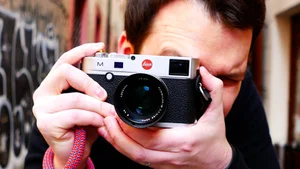
Thorsten Overgaard: A lot of great photographers did their best work when they didn't know how to do it
In this episode I am talking with Thorsten Overgaard ( Magic Of Light ) about his photography, Leica cameras and much more. Thank you so much for joing us on this episode. If you like this content and want to see more consider subscribing and sharing it with your friends, it really helps producing more videos like this one and if you really want to get notified use the bell icon. ou can find this podcast live on Youtube where you can ask questions in the real time or find us in your favorite podcast application.
Follow Thorsten
websites:
Instagram: https://www.instagram.com/thorstenovergaard
YouTube: https://www.youtube.com/c/MagicOfLight_ThorstenOvergaard
If you want to follow me on social media
YouTube Index:
0:00:00 - Hello there!
0:00:16 - Introduction
0:01:24 - How did Thorsten get into photography
0:06:19 - Did you imagine doing photography for living?
0:07:40 - How did you got back into photography?
0:08:48 - How to earn living with photography
0:09:12 - Why did Thorsten Overgaard pulled his archive from Getty Images?
0:11:18 - To be successful artist you have to be an entrepreneur
0:19:29 - Helmut Newton and Ansel Adams
0:23:24 - How many pictures does Thorsten von Overgaard take per year?
0:24:44 - I don’t always take pictures
0:27:59 - Editing process
0:29:51 - Is Thorsten ever nervous about taking a picture?
0:30:53 - Subjects Thorsten avoids
0:34:56 - The right way of starting as an artist
0:36:17 - Talking about commercial work
0:39:15 - Postcards by Thorsten von Overgaard
0:42:47 - Thorsten’s system to organise pictures
0:45:24 - How much editing is too much editing?
0:51:21 - How do you decide between horizontal and vertical picture and when to crop the image?
0:54:12 - Have you already taken your best image?
0:57:32 - Have you ever tried different styles of street photography?
0:58:13 - Finding your style
0:59:54 - Henri Cartier-Bresson and his portrait style
1:01:30 - Your style is unique
1:05:34 - Your first 10 000 photos are your worst
1:10:40 - What would be Thorsten’s one camera and one lens
1:11:01 - What is so magical about Leica?
1:14:23 - Is Leica M a luxury object?
1:16:35 - Could Leica M-D (or Leica Monochrom)be your only camera?
1:21:20 - What should be your first Leica camera?
1:22:00 - Leica Q3 with 35mm or 50mm Lens?
1:23:45 - Leica M12 wishlist?
1:25:04 - Have you ever wanted to become Leica ambassador?
1:26:31 - What about different cameras for street photography? iPhone, Ricoh GR, FUJI…
1:31:48 - How do workshops of Thorsten von Overgaard look like?
1:38:10 - How much can be learned and how much is a talent
1:41:54 - How to be original?
1:48:42 - What are you usually looking for when you are judging photography competitions?
1:52:53 - the end
You bought your first camera at eleven, and at fourteen you built your own six by six wooden camera. Was photography always something you were interested in, and can you tell me more about that camera?
I recently did a book where that whole story came up, because I was sitting one morning writing about it. I wanted a good opening, something like starting in a forest, and working out where the story actually began, I realised there were different phases to it. For years, whenever people asked in workshops how I got into photography, I used to say it was simple: I just carried a camera with me at school. There were about five of us who did, and we would take pictures and print them, and the girls in school wanted to see them. That is how it started, or so I thought.
Then, a few years later, I realised that explanation did not quite hold up, because it did not explain how I got the camera in the first place. My mother had a boyfriend at the time, and he had a Nikon with a 50mm f/1.4 lens. He was genuinely enthusiastic about photography. I could never really use his camera, but I saw his pictures, and they were beautiful. That is what pushed me to get my own first camera. From there I was completely absorbed in the subject. I already had a camera with me at school, and there were other boys who were into photography too. We had a darkroom club at school, and later I built one at home. I developed my own film and read a lot of photography magazines, mostly for the technical side of things. I borrowed books from the library as well.
I remember seeing a handful of photographs early on, maybe five or six, that really stood out to me. But I never wanted to know who took them. It felt almost taboo, like they belonged to some mysterious figure from the past. I still have a bit of that instinct today. When I look at photographs, I look at the photograph itself, not who made it. Sometimes afterwards I will wonder who took it, or what the story behind it was, but that is more out of professional curiosity, or because the process itself is interesting.
Around that time I also did an internship with a photographer who shot interiors, and I got to use a large format view camera for the first time. I was amazed. It was this huge thing on wheels in a studio, a bellows camera where you could adjust everything, shooting four by five, or five by ten, or ten by twelve centimetre negatives. Of course, all I had was a Hasselblad format in mind, six by six, which is what I really wanted. But as a teenager I could not afford one. So I built my own camera in the basement. I found some wood, put together the body, took a lens from a broken camera, and built my own ground glass focusing screen along with a film back. It even had tilt and shift movements. I shot some test rolls and developed them myself. I still have that camera somewhere, though it is a bit rickety now and would need to be put back together.
What really drove me was trying to understand how cameras and light actually work. What is a lens, technically, and what does it do? That fascination with gear and technique was the main thing in the beginning. Looking back, I still wonder sometimes why I wanted to photograph in the first place. I think it is simply something that was in me. It is like handing somebody a guitar: some people will keep playing and practising, and one day they become a guitarist, and then they get into writing music and everything that comes with it. That is roughly how it started for me.
Did you imagine you would do photography for a living?
As a teenager I did imagine it sometimes, but then I would think, no, I do not want to do that. I went back and forth on it, but it was never something I seriously considered as a career, even though I was completely absorbed in learning everything I could about it. I did not see myself having a job in it, or photography meaning something else for my life, and I am not sure why. Eventually I started an advertising agency when I was nineteen. That seemed like the smart thing to do at the time, so that is what I did. I did not get back to photographing seriously until I sold the agency in 2000. That is when I picked photography back up, and eventually I began writing about it too.
Of course, the whole world changed with the internet in the meantime. These days everything I do revolves around photography in one way or another, even though I work on many different things. But the core of it is still making pictures. What has changed enormously over the last twenty or twenty five years is the entire business model around being a photographer.
Since you did not only work in photography related business, how did you actually get back into it once you started doing different projects?
When I sold the advertising agency, the internet was taking off, and I got involved in various start up projects. At the same time, I wanted to take great photographs, the kind where you can see the soul of a person. I was writing about entrepreneurs at the time, and for those pieces I needed good photos, so I decided to take them myself. I had an idea in mind, something close to a large format look, shallow depth of field with the eyes slightly out of focus and the background blurred. I got a Leica with a 50mm f/1.2 lens for that, on film, along with a few other film cameras, and I kept working with that approach.
People started asking if I could photograph more for them, because they liked the results. That is how I gradually focused more on photography. And naturally, once I was doing it more, I had to figure out the business side: how do I make more of this, how do I make money from it, how do I keep doing what I want to do. For me, at least, taking a photograph is ultimately about publishing it. There is not much point in making a photo and not putting it out there.
So I started reaching out to more magazines and newspapers. I worked with a few Danish newspapers, and eventually I got into Getty Images, which must be the largest photo agency in the world. Photographers everywhere shoot fashion shows, news, everything, and it all goes into one pool that media outlets around the world can draw from, often just minutes after the photos are taken. I thought, this must be the way to become a photographer whose work reaches people worldwide. It worked for a while.
And you also pulled your images from Getty Images at some point, right?
Yes. The way it worked with Getty was roughly a fifty fifty split. Say Time magazine bought a picture: in the past, the price depended on things like size and whether it ran on the front page, so you might get three hundred dollars for a photo, split with the agency. Then Getty introduced micro payments, or microstock, selling the same pictures for four or eight dollars for unlimited use, with big media buying subscriptions instead. So a picture that once earned three hundred dollars from Time might now earn four or eight dollars. And then Getty decided they needed to make more money, so they changed the percentage they kept. I said no, I was not going to keep working under those terms, and I pulled out.
Do you think their system works, given that there are still plenty of people willing to sell their images for very little?
Yes, I would say it works, for them. Getty's mission is essentially to own all the pictures in the world, and they have more or less achieved that. They bought up one agency, one market, after another, so almost any historic photograph you look for, you will find through Getty. They sell it as microstock, and it is good enough business for them. As long as they have the content, they will always be in business. Being the one who supplies that content is not much fun, because you do not get properly paid for it.
It is very sad, in a way. That business model is basically dead now, at least for making a living purely from selling images that way. Of course you still have to make the pictures. The content itself is always going to be worth something, the challenge is figuring out how to get it out there and make a living from it.
Does that compare to what happened in the music industry, with everything moving from CDs and vinyl to streaming?
That is exactly it. To be an artist today, you have to be an entrepreneur. To earn the same from your music on Spotify as you did selling a CD, a listener would have to play the whole album something like four hundred times, which is unlikely. So you might end up making only a fraction of what you used to.
But does it also multiply your audience, now that people can listen for free instead of buying a CD?
Not really, in terms of income, no. But that is the interesting part, and why you need to be entrepreneurial about it. You can have a breakthrough now working entirely from your own computer. You can record music at home, put it out within days, and sell it worldwide. You just need to become known. That is the upside, but it is something you have to actively think about and work at.
There is also this idea that photography schools still teach as though the old career model still exists. You would spend three to five years in school learning the craft, get a piece of paper for it, then get hired by a newspaper that gives you a car, a camera, a salary, a pension, seven weeks of holiday in Denmark. That does not exist any more. It is funny that schools still operate that way, because for the last fifteen or twenty years, more than half of journalism graduates coming out of school end up as freelancers rather than staff employees. So it comes down to an entrepreneurial mindset versus working for a salary.
I have a story about that. I have twins, a boy and a girl. When they were about fourteen, my daughter came to me and said she wanted to make some money, and asked what she could do. I gave her a list: sort my CDs, clean this, do that, and check back with me in three days. My son came to me the same day wanting to make money too, so I gave him a similar list, and he immediately asked how much he would get paid. I was almost offended. I said, what is wrong with you, you are supposed to be entrepreneurial, not someone who just wants a salary for doing tasks. But that is what he wanted. For me it felt completely unnatural. If I want to build something, a house, a hotel, whatever, I just start, and I figure out along the way how to make a business out of it. I would not wait until I knew exactly how I would get paid before doing anything.
I think that is the real difference if you want to be a professional photographer: you have to be willing to travel that road without knowing exactly where the money will come from. You just know you like taking photos, and you believe in yourself, and figure it out as you go. That is true for any artist, I think. You see something, you decide you want to do it, and you go and do it. A lot of people have the same ideas but assume someone else will act on them one day. Sometimes you are the one who has to actually do it.
And it is often only once you start doing it that you find out this is not quite how it is done, and you adjust. Things keep changing too, the internet arrives, or the whole world shuts down for a year and a half, and you have to adapt to that as it comes. That is the entrepreneurial mindset.
That said, you do not need an entrepreneurial mindset just to decide to take photos. One of the wonderful things about being a photographer is that the desire to take pictures does not have to become a job. You can still take great photographs, maybe even build some kind of business around them if you want, or just make your own website, and do something else entirely for a living. Most of the people I actually work with are not professional photographers. There are a few who wanted to become professionals and did, but the majority already have a career, a company, a job in finance, or they are film directors, and photography is something they are passionate and ambitious about on the side.
So if you want to be successful making a living purely from photography, you have to be an entrepreneur?
Yes, I think there is hardly any other way.
One of the things I do is look closely at photographs, even though I would not call myself a fan of photography exactly, and I study their stories. Take people like Helmut Newton or Ansel Adams. I do not know Newton's full story in detail, but from what I understand, he was very much an entrepreneur too. One idea he had, for instance, was about depicting wealth visually: how do you show wealth in an image? Long legs. So he would find models with long legs, or make the legs look even longer and more striking. That is roughly how he developed that recognisable style of photographing women. He published books, worked with magazines, and was constantly working out how to make a living from his work. Sometimes someone would ask him to photograph something and it would lead somewhere unexpected that turned out to be interesting.
Ansel Adams is a similar story. If you read a biography of him, one written by his assistant, it is quite revealing. He started out very much in the artistic tradition of the time, when painting was considered real art and photography was not taken seriously. Because of that, a lot of early photographers added chemical treatments to their prints to make them look more like paintings. Adams went the opposite direction, toward what is called straight photography: you photograph with the camera, you do what you can in the darkroom, but you do not paint over the image. That was a major step for him, and it was controversial at the time. Reading old articles, it is clear people did not immediately recognise him as the genius we consider him today.
He then worked to establish himself as a serious artist, with galleries and agents representing him, selling expensive limited print portfolios, packages of ten, twenty, or thirty prints in editions of fifteen or twenty. That was fine, but it was not really something you could make a great living from. His real financial breakthrough came later, when he inherited a gallery in a national park in the United States, in his early thirties, and started selling postcards of his photographs, along with pens. I believe he ended up making more than a million dollars a year from that, which was the first time he really made serious money, and it came through something as modest as postcard distribution, not expensive fine art prints. That is a long way from the idea of signing one grand, valuable print. There is real hustle in that story too, and he kept doing many other things after that.
Really, that is the point about almost every great photographer, or artist in general. Someone has an idea, a beam of light hitting the ground, or the idea of a motorised vehicle, and the important thing is that they actually go and make it. You try something, you find out it is not quite how it should be done, you adjust, and eventually you find a model that works.
Let us talk about your own photography, since your camera is always with you. Do you know how many pictures you actually take every year?
I started counting in 2009, which is when I really got into it in a serious, ongoing way. Back then it worked out to about seventeen pictures a day on average. I counted again six or seven years later and it came out to almost exactly the same number, so that is roughly how many pictures I take in a year.
As for how many of those I edit down into finished pictures, I have never really counted precisely, maybe around twenty percent. I never put much stock in the idea of a hit rate. A lot of people I work with worry about that, the idea that with a roll of thirty six exposures you should be producing thirty six masterpieces. That is not how it works. Even a photographer who is genuinely well known might only have a handful of truly iconic images across an entire career, which still amounts to a very high hit rate once you consider it against thirty years of work. If you make one genuinely good photograph a month and keep that up for ten years, you have around a hundred and twenty. Keep it up for thirty years and you have far more than most people would call an accomplished body of work.
The main thing is that I am always working. Some days I decide I am not going to carry a camera, maybe because I am on holiday, and it is usually a bad idea. Occasionally it is fine, but often something happens and you do not have the camera to capture it, and you regret it. So maybe that is part of the training, learning when to take a photo and when not to, because you do not need to photograph everything that happens. I also have to be considerate of other people. My partner will sometimes say, take a picture of this, and I will say no, that is just not something I want to shoot, even though I have a camera on me.
I recently went to an exhibition here in Paris, one I had been avoiding for years, and it was fascinating, partly because I could see how the photographer developed. Early on, the work is clearly less accomplished. You can see him figuring things out, pointing the camera at things that do not quite work as photographs yet, just because there was an urge to photograph something even if it was not really a picture. It took years, maybe sixteen, before the work really came together, and it read very much like watching someone's process unfold. I am fairly sure he did not carry a camera with him every single day either. Even a lot of professional photographers I know do not carry a camera constantly unless they are being paid to go somewhere and produce a set of images. But I do think you should treat a camera the way you would treat a notebook and pen, something you always have with you to capture ideas, and I think that makes you far more productive.
One of the reasons I came back to Paris now is that it is a wonderful city for this. I already have a lot of strong photographs from here, more than I would have expected, probably more than from somewhere like New York or London. Paris seems to make it easy to find interesting things wherever you look.
When you take that many photos every day, what is your process? Do you edit every day, or come back to it once a week?
Here in Paris, for instance, the light stays until around ten at night, so I usually go out around half past seven and photograph until around half past nine. That is about two hours, and it is not always deliberate photographing either, sometimes I am just walking from a restaurant to somewhere else. I am not necessarily hunting for pictures, but I have found that time of day, as the sun gets low and the light turns beautiful heading into sunset, is a genuinely good window almost every day.
The next day I will get up, have breakfast, and go through what I shot. Sometimes it turns into a newsletter or something similar. I do not need to make one masterpiece a day exactly, but there is often something there. For example, one evening we were walking back to the hotel and passed a beautiful little alley, and there was a couple there kissing. At first I thought, no, I am not going to do this, and then I thought, actually, I am, and I went back. It turned out I had actually caught them not quite kissing the first time, so I asked if they would do it again, and they did. I showed them the photo afterwards, in black and white, and they loved it.
Do you ever get nervous in a situation like that, sensing it might cause trouble?
Not really. Sometimes you know you are about to take a photo and the person might be surprised, but you can usually handle it, you get a thumbs up or some sign that it is fine. I have never had anyone come at me with a knife or anything like that, or really lose their temper about it. People are generally fine.
Is that a conscious choice on my part, avoiding certain kinds of subjects, or just personality? It is more that I do not want to look at that kind of material myself. I do not watch television, I do not watch the news, and I do not like the way documentaries and news often manufacture drama out of very little. I disagree, for instance, with the instinct to photograph a country at war by focusing on the most extreme, upsetting images, the sense of loss and threat, which is typically what that kind of photojournalism goes for. I am the opposite. I want to show hope.
One of the projects I did early in my career was after the tsunami. That became a book, a DVD, and a website, and I gave lectures about it. I travelled to Southeast Asia about three weeks after the tsunami hit, in December. There were not bodies around any more by the time I got there, but there was devastation, entire areas reduced to concrete and debris. I did photograph the ruins, to show how bad it had been. But what I really wanted to document was the rebuilding: children going back to school, people rebuilding their houses. That is the side of it I wanted to tell. I have always felt you should play the music you want to hear, and that is the music I wanted to hear. It has never really been a difficult decision for me. It is partly a matter of personal integrity. I would not go into a warzone to make dramatic images of the world falling apart, because I do not agree with that approach.
You could see something similar during the pandemic. I do not think I photographed a single person wearing a mask, except once, a woman in Florida wearing one with a big smile printed on it, which made me smile too. I have been around plenty of places where people wore masks, but I did not feel any pull to use those images to make a point about people being required to wear them, since I disagreed with the whole situation. I know other photographers who did an entire book of people wearing masks during the pandemic, and that makes sense for them, since they come very much from a news photography background. But that is just not the kind of work I want to make.
I do think there is a real purpose behind that kind of photography for photographers who feel strongly about a cause, wanting to tell the world something needs to change. But I have also spent time in some of those difficult areas over the last twenty years, and it is sobering how little seems to change despite the photographs. That is just not my working area. I know that kind of work can be popular, it gets a lot of attention, but it is simply not for me.
If you want to think about being an entrepreneur as an artist, my advice is usually the same. You start out wanting to take the kind of photos that make you feel proud, that you are happy with. Only after that does a business model come into it, how do you get other people to see and buy these pictures. The wrong way round is deciding first, this is where the money is, I will become a wedding photographer, or I will do this or that because that is supposedly where the money is, or trying to copy someone else because you think that is how it is done.
That is one of the mistakes young photographers and assistants often make. They see someone who is known for a certain kind of work and assume that is where their income comes from, when often the real money comes from somewhere else entirely. It is the same in music: an artist might have sixteen million plays on Spotify, and from the outside it looks like that is where the money is, but it is actually sponsorship, touring, something else entirely.
So when you are hired for commercial work, is it usually the kind of work you would want to do anyway? Would you turn down something you did not agree with?
I would not take on something I disagreed with, no, though it is not as though I sit around on permanent holiday drinking coffee either. I did have some good experiences with newspapers and magazines. I remember working with the editor of one of the biggest newspapers in Denmark, who loved architecture and the local city. I told him I wanted to go around with a camera and do bigger, in depth stories rather than short pieces on whatever happened to be in the news that day, and he loved the idea. We ended up doing a whole magazine feature on a single building, top to bottom, eighteen pages. Nobody does eighteen page features in magazines any more, because everyone assumes readers will not sit with something that long. I completely disagree with that. If you are genuinely interested in something, you want to read about it properly. I found a real soulmate in that editor, since he agreed, and he was also the client.
Beyond that, I do not take on a lot of commercial work. Mostly I carry a camera, take pictures, and figure out afterwards what I am going to do with them, whether that is an agency, a magazine, or my own archive. I have thought about going back to something closer to how Magnum was originally set up: a handful of great photographers organising themselves so that, instead of a magazine hiring an individual photographer directly, they deal with an organisation that represents and sells the work. That is a smart model, because even as an individual artist, it helps to have something like a company standing behind you. People deal with the organisation rather than you personally, and you are not tossed around the way an individual photographer often is.
So my own model has become this: I make photographs, and they are valuable in themselves. I can use them in articles, put them on my blog, and so on. Recently I did a project making my own postcards, something like thirty different designs.
Did you also make a video about that on YouTube?
I did, yes. I made postcards because nobody else really was, and I had always liked writing postcards myself. I had known for four or five years that somebody needed to be making proper photography postcards, and eventually I just did it. I made around ten different designs, from Paris, Denmark, and elsewhere, and started placing them in hotels and shops. What I found is that it works, people respond to it as a genuine product. I would go to a hotel in Denmark and they would tell me, yes, we sell postcards, but what people mostly buy is a generic local postcard, or one with a castle on it. So there was clearly room for something better.
Some hotels started building nice displays for them, tied to the hotel's own history, and I had to remind them that they also need to sell stamps, because it is genuinely difficult these days to find somewhere to buy one, and a sign encouraging people to actually write on the postcard, since a lot of people do not realise that is the point any more, they just want to frame it. There is a whole quiet revival of the idea happening. I do not know exactly where it leads or how much money is in it, but it is interesting. The natural next request from people is always, you should make a poster too.
There is a nice story attached to this. I went to Skagen in Denmark, a town where artists used to gather about a hundred years ago, and spent a week there. It was not especially exciting, but I got a few photographs out of it. A family in Denmark saw one of those photos and asked if they could buy a large print. They ended up getting it enlarged and it is now the centrepiece in their living room, so I made several thousand dollars from a single photograph that nobody would ever have seen if I had not first put it on a postcard.
That is part of the model now, the postcard itself is almost like advertising, and people can then contact you for larger prints. I also use the postcards as a kind of business card. When I meet someone, I will hand them a postcard with my name and website on it. It is a nice object, some people send it, some keep it, and either way it is a good introduction. It is a better way to show your work than saying check out my Instagram, which does not really create the same connection.
It is actually how I first realised how many strong photographs I had from Paris, going through images to choose for postcards. That is part of why I am here now, this really is a wonderful place to make pictures. You have good food, good weather, beautiful buildings, you can walk around and shop, and take pictures the whole time. It is a great workflow.
You have a very coherent system for organising your photos, and you made a video about it. How long did it take you to figure it out? Did you ever lose a photo you regretted losing, or was the system there from the start?
I am still refining it, honestly, maybe that is just me, but from the moment you start scanning pictures, you have to figure out how to organise everything. Even back with slides and film, you needed a system, envelopes, markings for which ones you had printed, which ones you liked. So once you start scanning or digitising and you get to a few hundred images, it is manageable, but once you are into the thousands, you need a proper system or you simply cannot find anything. It was not so much that I lost pictures outright, more that things became a mess and I could not locate what I needed. That is when I started properly organising.
I ended up putting together what I call survival kits, guides on this. Maybe thirty percent of them cover the software itself, but the rest is about workflow: how to organise an archive, how to build in daily or batch editing, keywording, and so on, and how to make the whole system future proof. You have to actively maintain your archive. You cannot just drag files into a folder on some cloud service and assume it is taken care of, because those services do not actually know or care what your work means to you. The sooner you build a real system, the easier things stay, because otherwise you end up with years of documents, pictures, and emails piled up with no structure. Most people, if you gave them ten years of unsorted photos, would not be able to face it, it would be a week's worth of work they do not have time for.
Once you have selected the pictures you want to keep, maybe to post on your website or newsletter, how much editing is too much editing? How do you approach that?
I lean toward doing almost nothing, though that is not always realistic. I do have one camera that shoots raw files, and it can also shoot JPEG. I have actually met people who bought Leica's first monochrome camera, which produces beautiful tones straight out of camera, and they were completely happy shooting JPEG, no editing at all. Rather than downloading software, learning it, and spending time editing, they just thought, this looks great already. And in a way it does, even though it would look somewhat better with editing.
I recently took some pictures and sent them straight from the camera to my phone, posted them to Instagram, and they held up fine, though I will still edit them properly later for other uses. But the point is, it is not really the editing that makes a picture work. If the picture works, it works largely on its own.
When a picture works, how much of that is composition, and how much is good colour editing?
For me it always comes down to emotion. Some people respond emotionally to a red wall, a landscape, an elephant, a cat. For me, it is always light and people. That is most of it. Whether it is black and white or a beautiful colour rendering is also part of it, in the same way light is part of it, so it is a combination.
When I import my pictures, I select the ones I like and edit those. These days I edit two versions, colour and black and white, if the shot came from a colour camera, because you never know in advance which version fits the context better. I use Capture One now, which is intuitive and fast. Lightroom, by comparison, always felt slow and overloaded with distracting options that just make it more tedious to use. In Capture One I have built my own set of styles, four or five for black and white, four or five for colour. The nice thing about Capture One's styles is that they adapt to the picture rather than applying a fixed preset the way Lightroom does, so you get a starting point in the right direction rather than something you then have to fight with.
For a lot of assignments, say a portrait shoot where I am delivering around thirty photos, I will take the colour version, make a virtual copy, apply my preset, and I am done. I really like working that way, fast and simple. There is a general trend in this industry toward more and more complexity, higher resolution, more options, more filters, and you end up wondering, why bother, if the photograph is strong to begin with.
If there is a genuinely distracting colour in a photo, say a red sign in the background pulling attention where it should not, converting to black and white or desaturating that colour can help, but essentially it comes down to whether the tones and the light feel right. You look at the colour and black and white versions side by side and just go with the one that feels right, almost the way you would swipe through images on Instagram, this one, not that one. It has to be fast.
I talk about this a lot in my workshops and in the survival kits, that if you work quickly through an archive, even tired, the selections you make tend to be right. If you go back and revisit the same set of images years later, you will usually end up making the same selection. I had one photograph from Paris, called Woman in Red, black and white, and I initially straightened it and edited it carefully to look polished. But I ended up preferring an earlier version, almost exactly as it came out of the camera, with barely anything done to it. I tried five different tonal treatments of that image, and the simplest one, close to untouched, was the one that worked. I am planning to make a large print of it through a place here in Paris called Picto, a colour lab that used to be a darkroom, and I have already had a few prints made there.
I have noticed you sometimes crop and even change orientation, from horizontal to vertical. How do you decide whether a picture should be horizontal or vertical, at the moment you take it or later, in editing?
That is an interesting question. Sometimes, when I am walking down a street and I see someone, I already know it is going to be a good picture, and I know I need to work from a certain side to get the right background, or the right line, or the light falling correctly on the face. I do not consciously think it through, I just move toward that position because I want the light to fall a certain way, usually from the side or from behind, never directly from behind me. Light from behind the subject tends to create more definition around the edges. That instinct is just built in at this point, along with how close I need to be to frame it properly. Sometimes you will tilt the camera slightly and adjust as you go.
I also tend to leave more space in the frame than some photographers might, partly because of my background working with magazines, where you often need to leave space for layout. I have noticed that in a lot of magazine photography, an image of a celebrity might actually be a tight crop from a wider original, with, say, an ex partner or spouse cropped out because they are not relevant to the story, just the face left in frame, which draws attention on its own. Sometimes I look at that and think, that is a shame. If you crop something too tightly, you cannot easily go back to a wider version, but that is not really the goal anyway. The goal is to arrive at the final image. So I tend to leave myself that space, in case a picture is later needed for a magazine layout that requires cropping, but I do not put much thought into cropping or orientation as part of my own editing process.
Some traditionalists still insist you should be able to see the edge of the film frame in a scan, as proof nothing was cropped. I do not hold to that at all. Ironically, Henri Cartier Bresson's most famous photograph is cropped, with around twenty or twenty five percent removed from the left side, because it was just a fence in the original frame. And it is still one of the greatest photographs ever made, no doubt about it. What matters in the end is the final picture, not how it was made, how many attempts it took, or what camera was used.
Speaking of Cartier Bresson and his famous photograph of the man jumping over the puddle, which might be his most famous image, have you already taken your best photograph?
I hope not. But if you look at great photographers, and this is true in music too, a lot of them did their best work when they were young. I have written about this before. Look at Cartier Bresson's early work, when he had only been at it for two or three years and did not really know what he was doing yet. In a way, that work is all fumbling, figuring things out, but it is also full of pure enthusiasm, and that is actually the important thing, that is what makes something emotionally alive.
I remember looking at his photographs from that period and thinking, this must have taken real courage, because in his eyes it probably was not even a great photograph at the time, it was just enthusiasm carrying him forward. It is the same with music. You do not make something great by analysing it to death and assembling a team to help you get it technically right. You do it the way Bob Dylan reportedly did, sitting down with a guitar, writing something on a napkin, and it just happens. Nobody can fully explain why, he was simply in the mood. A lot of great photographers did their best work before they fully knew how to do it, because it was pure enthusiasm.
I think that might be the most important thing, keeping that enthusiasm alive. Part of why I always carry a camera is that it is not really about hunting for pictures. You are looking for toothpaste, or a restaurant, or a parking spot, and then something happens in front of you, and you take the picture. Like that kissing couple I mentioned earlier. The light was perfect, and the moment looked almost too good, almost staged, like it could have been shot in a studio.
Another example: we walked into a gallery once, an auction house, just to look around, and there was a man walking across the room with beautiful window light behind him, so I photographed that. Then, further along, there was a woman lying on a bed, and I photographed her too. None of it was planned, I was not even thinking about taking pictures at that moment, but something catches your eye and you become inspired, and suddenly you are in the mood, and the whole thing takes maybe a fifth of a second.
Your photography style is fairly slow paced, more about shapes and composition. There are other, faster styles in street photography, flash in the face, run and gun, zone focusing. Were you ever tempted to try those?
No, not really. When I was younger I looked at that kind of work sometimes and wondered why I was not doing it too. But I think I am probably a bit lazy, and I also know myself well enough to know what genuinely excites me. A cup of coffee on a table with a nice line to it, maybe some cigarette smoke, or a beautiful bouquet, that kind of quiet composition is what I love photographing. It is something that just comes naturally to me.
I think everyone can benefit from looking at their own body of work and asking, what do I actually like here, what do other people respond to, and then trying to identify the common thread. I have had to do that a lot, because people ask me why I did something a certain way, and one thing I noticed is that the light in my photographs almost always comes from behind and to the side, and it has been that way since the very first time I picked up a camera. There is no real explanation for it, it is just how I see. It is a bit like a painter who is drawn to earth tones, whatever colour palette or approach feels natural to them.
I also tend to favour portrait orientation more often than not, with space above the subject, not too tightly cropped. That has simply become part of my style.
Recently I was looking at a book of portraits by a photographer I admire, and even though I have always liked his work, I noticed something a little unusual about it, he often places the person off to one side of the frame, almost as though he is photographing the building behind them rather than the person. There was one image where the subject looks almost lost in thought, standing off to the side with the background dominating the frame, and it struck me as beautifully timed, catching a private, thinking moment rather than a posed portrait, even though it clearly was not candid in the strict sense either.
If you take a good look at your own photographs and try to identify what people respond to, whether it is the light, or a certain quality, and then look at someone else's work and notice how differently they see things, that comparison teaches you something. It could mean their work is simply better, or it could just mean it is different, and either way, the lesson is the same: keep doing what feels right to you.
It really comes down to simplicity. When you are out with a camera and something catches your eye, you take the picture right away, and often you know it is not quite perfect yet, so you try to improve it, moving to a different position, waiting, adjusting the frame. When you get home and look through, say, twelve variations, the first, imperfect one is often the one that has whatever it was that caught your attention in the first place, and the later, more perfected versions have lost something like eighty percent of that. That is something you have to learn to recognise. It does not have to be complicated. You walk, you see something, you take the picture, and that instinct comes from you, not from someone else's idea of what a good picture should be.
I think that is true across creative fields, music, architecture, whatever it is. Someone has an idea, this could be a nice building, this could be a good song, this could be a good photograph, and the important part is actually deciding to make it and following through, in a way that is true to how you actually see things.
There is a nice story about this. I once had a monk from Tokyo attend one of my workshops, invited by someone else, entirely new to photography. He looked at my portraits and told me, I can see you do not try that hard. And he was completely right. I just do it. At the time it could have sounded like an insult, or like I was not good enough, but that was not the point at all. That is actually when it really works, when you are not overthinking it, when you just do it, quickly, sometimes a bit rough around the edges, but true to yourself. That is also what is most unique about your work, because nobody else can copy that. Other people have their own version of not trying hard, their own instincts, and they should follow those instead of trying to imitate yours, or mine.
That is something I have tried to help people understand. It is not necessarily easy, but what you should take away from working with me is realising you are already good enough. If you carry a camera and take photographs, you are going to make photographs, not everything will work, maybe ten or twenty percent will, but you will make pictures. That is one path. The alternative, leaving the camera home while you study or read about photography, hoping that one day you will suddenly feel ready, does not really work the same way. Just carry a camera, take photos, and some of them will be great.
I believe it was Henri Cartier Bresson who said your first ten thousand pictures are your worst. That might have been true from his own point of view looking back, but I do not actually think it is true. His most iconic image was almost certainly among his first ten thousand, probably his first five thousand, if I had to guess. People love the idea that it takes ten thousand hours to become a professional at something, and in one sense that is right, and in another sense it is not. Musicians, for instance, often do their best work early on too, when they are full of outside influences and fresh ideas, and you see the same in film. Photography does not quite have that same institutional structure of early exposure, so it is a bit different, but the principle still holds in some ways and not in others. I still believe you can make something great at any stage, but the longer you do this, the easier certain things become. It is easy for me now to take a photograph without having to think hard about exposure, because I already know how it is going to look, I can already picture the tones and blacks the way they will come out.
Of course, you do not have that knowledge starting out, you might get exposure wrong, but over time it gets easier, in a good way. I remember doing a talk once called something like understanding photography in sixty seconds. One photographer I admire fumbled around early in his career, and had a phase of several years photographing nude women, clearly something he was working through personally at that time in his life. Then he moved into other subjects, things he thought were more important, and later went into portraiture and history focused work. He got extremely good at portraits, almost effortless at it, and then apparently grew bored, feeling like he was not doing what he was really meant to do, and went back to painting.
There is a similar story with a photographer I know personally who photographed Michael Jackson early in his career, and was one of the most sought after celebrity photographers in London, New York, and Los Angeles at the time. He told me he eventually felt he was cheating, that it had become too easy, and he wanted to be a painter instead, so that is what he does now.
I am actually working on a book about him, and about his work with Michael Jackson. One of the things I asked him was what his real breakthrough moment was, because most people find that surprisingly hard to pin down, they tend to credit something else. For him, it was a moment in his studio, with a well known name booked for the next day, someone significant, and he realised he was not actually nervous about it. He did not know exactly what he wanted to do with the shoot yet, but he trusted that once the person arrived, and once hair and makeup were done, he would figure it out on the spot, and he did, he was simply improvising with total confidence. That is exactly the kind of confidence that comes with experience, and it is very much how I feel now too. I know I am going to walk away with ten or fifteen good photographs. I do not need to bring four cameras and a full kit, one camera, one lens is enough. Tomorrow I could switch to a black and white camera somewhere else entirely and it would still work.
If you could have just one camera and one lens, what would it be?
Right now it would be the Leica M11 Monochrom, a twenty four megapixel sensor with a quiet shutter, compact and simple, paired with a 50mm f/1.4 lens.
How did you actually get into the Leica camera system?
I started out with Nikon as a teenager, then moved through a few other systems along the way. Later, while I was still running the advertising agency, I met a film director who always carried a small Minox camera in his coat pocket. It was a tiny film camera with a 40mm f/2.8 lens, beautifully quiet, and the lens was excellent. Seeing his photos made me want one for myself, so when I got the chance I drove to Germany to pick one up. I used that for a while.
A few years later, when I wanted to start photographing portraits and capturing something more of people's character, I picked up a Leica with a 50mm lens, and added more equipment from there. Digital did not arrive for me until around 2006 or 2007. What struck me most was how good the lenses were. For a while I actually used SLR type cameras first, since I had come from a background centred more on the lenses than the body.
When the Leica M9 came out in 2009, I was drawn to the feel of it, but at first I did not think I would actually use it as my primary professional system, I saw it more as a backup. I always carried two cameras and two memory cards for professional work, especially back then, when memory cards would sometimes fail for no obvious reason, which happens far less today. But when it came to selecting the final images, I noticed I preferred the pictures from the Leica, and my clients did too. Within less than a year, I decided to leave the rest of the kit at home, that whole Pelican case of gear, and just carry one camera, one lens, and work that way.
This is the camera I use these days, an M. I like to joke that if you go into a camera shop and just ask to hold one for sixty seconds, brass body, real heft to it, and then go home, the real test is whether you wake up the next morning still thinking about that feeling. If you do, you probably need a Leica. If you do not think about it at all, an M might not be for you.
Beyond the feel, the other thing that matters to me is the simplicity. The controls sit right on the outside of the body. I also have the Leica SL, the SL2, and the Q2, and the SL2 is a wonderful camera in many ways, but it is a fairly chunky, heavy body, so it does not have quite the same feeling. It is a bit like the difference between wanting to be a poet with a small notebook and a pen in your pocket versus carrying something bulkier. You can still do great work either way, but it is not the same experience.
What do you think about the Leica M being perceived as more of a luxury object?
In a sense it is a luxury item, but I do not think that is the right way to frame it, as if luxury just means excess. For me, luxury has more to do with something the founder of Mercedes once said, that luxury is something worth repairing. I really agree with that idea. If something is made well, you want to keep it, and repair it rather than replace it. That philosophy of built to last is not especially fashionable right now, given how the whole tech industry runs on upgrade cycles, replacing your phone every eighteen months or so, but it would be nice to have a phone you keep using for years the way you might use a Leica.
Of course, Leica does release new models regularly too, new cameras roughly every four years, with variants in between, and new lens designs, though the lenses themselves might stay in production for twenty years, redesigned only occasionally, whereas the cameras get refreshed more often. When the Leica M9 came out, it was the first full frame M, and interest in Leica exploded. I met so many people who got into it around then and were genuinely enthusiastic, and a lot of them are still shooting with that same M9 today. Naturally, when a new model comes out, you feel tempted to upgrade, and I do not think there is anything wrong with that instinct.
With the M10, they went in the opposite direction from the M9 in some ways, stripping things back rather than adding: no video, fewer buttons, simplifying it further, which is really closer to the original M philosophy, extremely simple and reliable. You can drop it, pick it up, and keep shooting.
Can you imagine the M D, or the Monochrom, being your only camera?
The M D, yes, I think it genuinely could be my only camera, the version without a screen. I had the first M D 262, and I was genuinely nervous when I got it, thinking, I have no idea what I am doing here. Then you go out and shoot, thinking, I really do not know if this is working, almost like shooting film. But then you get home, load it onto the computer, and realise, actually, that worked fine.
Without a screen, you cannot fully check your focus or review the shot in the moment, but what you learn is that you do not actually need the screen. That was genuinely fun to work with. Later I went back to a model with a screen, since the next M also had one, then came an M P version with a quieter shutter and a few refinements, and eventually another screenless M came along too. It is interesting, the same debate keeps repeating, do people want the pure, screenless experience, or do they want a screen back.
As for the Monochrom, that is its own interesting case. It is genuinely funny to me that Leica makes a black and white only camera that costs more than the colour version. And it says something about the kind of person drawn to that simplicity, people with the means to afford it who are specifically choosing to pay more for less, in a sense, and I find that quite admirable, actually. Most people, if you ask them what they want from a camera, will say more megapixels, more features, everything they can get for the money, using specs as the measurement. But that is a different mindset. In photography, the less you strictly need, the more valuable that restraint can be.
The technical case for the Monochrom, better tonality, and so on, is not really the whole point either, because you can achieve very similar results converting a colour file to black and white. As we discussed earlier, people are perfectly happy with an unedited JPEG straight from the camera, they do not know or care that it was not laboured over for hours, they just see a great photograph. What draws people to the Monochrom specifically is the simplicity of it, the fact that it puts you into a black and white mindset the moment you pick it up, almost like carrying a film camera from the fifties. If that mindset helps you make the kind of photographs you want to make, then it is doing exactly what it should.
Is that maybe a bit like reading on a Kindle versus reading on an iPad, where the Kindle only lets you read, so you are more focused, whereas the Monochrom keeps you focused on black and white?
Yes, I think that is a fair comparison. If you bring one physical book with you, that is the one you read. Bring a Kindle, you technically have others available, but it is still fairly focused. Bring your laptop or a tablet, and now you also have email, and everything else pulling at your attention. I think in terms of simplifying your life generally, that is genuinely valuable. I have gone back to reading physical books myself, and the same principle applies to carrying just a camera and one lens, no bag, maybe a spare battery in a pocket if I really need it. For longer trips you obviously have to think a bit more about logistics, but I like keeping things simple.
I also do not use flash, or artificial lighting generally. I appreciate the beauty you can create with a proper film lighting set up, but once you actually rent or buy that kind of gear, you end up needing an assistant, standing by power cables, suddenly there is a whole truck of equipment to load and unload, and by the time you are done you are exhausted and just want to go home and sleep. Whereas if you just take a camera and go, there is real freedom in that, and it suits how I like to work.
For someone considering getting into Leica, is it better to go straight for the M system, or start with something like the Q? Or is the Q just an expensive compact?
I think of the Q as a gateway drug. It is a wonderful camera, beautifully designed, simple, light, everything sits exactly where it should. It has a fixed 28mm lens, so you get that shallow depth of field look people like, and the lens itself is excellent.
Would you rather see a future Q with a 35mm or 50mm fixed lens instead of the 28mm?
Honestly, I do not have a strong preference either way. If they made a 50mm version, I would probably want that too, so it is not really a problem for me either way, I think it will happen eventually. Someone actually asked me just yesterday whether Leica should make a Q with a 35mm or 50mm option, and joked that then I would be forced to buy it alongside the versions I already own. I do not think there is a technical reason Leica could not do it, they made a decision early on about the size and the fixed 28mm lens, and it turned out to be a huge success, twenty eight megapixels, plenty of resolution to crop if needed, so it works exactly as designed. A different focal length would mean a different body proportion, which might feel strange at first.
In terms of price, it is around five and a half thousand for a Q, and for that money you could buy a secondhand M9 or an M240, put a good used lens on it, and still have money left over, and arguably a more real camera in some people's eyes. But I do not think that is really the point. People want the Q because of what it is on its own terms.
Do you have a wishlist for a future M, an M12?
Not really, no. I am not someone who is constantly wishing for the next model. I did not even get the M10 R, since I do not strictly need it, though I do think the new black paint version is genuinely beautiful, and part of me wants it, even though I know it would not really change anything for me, just larger files. I think a lot of people who bought the M9 stopped there and never felt the need to upgrade again, and Leica is aware of that, some people simply love what they have and see no reason to move on, while others do want each new generation. You can see that most of Leica's actual sales now come from the Q and SL lines and their other newer products, that is really where the business is, since Leica's job, after all, is producing cameras, not making photographs themselves. I think that is fine, that is their business, and photographers like me can just quietly go back to an old M9 and be perfectly happy, even though Leica does not make much money off someone doing that.
It seems like you have a special relationship with Leica, but you are not an ambassador. Have you ever wanted to be one?
Maybe early on I thought it would be nice if Leica sponsored me or gave me equipment. But over time I came to see the freedom in not being formally associated with them. I do not actually mind if someone I teach uses Nikon instead of Leica, even though I personally love Leica and that enthusiasm rubs off on people naturally. My business model has always been that I work for the people who pay for my work, so I am not selling a particular brand, I am teaching photography. I have had situations where a retailer wanted to work with me and wanted the whole engagement to be centred on promoting their camera specifically, and I said no, that is not what I do. So there is real freedom in that. I buy my own gear, I do not get a discount, I think I still get ten percent off repairs because I have a professional account, though I am not even sure about that any more. I used to get a Christmas card from Leica Singapore. In the grand scheme of what I actually do, whether I get a free tripod or camera or not makes no real difference to the business.
One of the advantages people often mention about the Leica M is its size, but is not it still fairly large compared to something like a Ricoh GR, or even an iPhone, for street photography?
I know some people make genuinely good work with an iPhone, but it is not for me. I do carry an iPhone, but if I actually want to take a real photograph, I want a real camera in my hand. I have never particularly felt drawn to Sony or Olympus either, even though I have plenty of professional photographer friends who have switched from SLR systems to smaller mirrorless cameras and find them wonderful. I did try Fujifilm at one point, and there are some nice design touches, like the visible light through the viewfinder mechanism, but somehow, for me, it just is not the same. What I want from a camera is something closer to a handful of lenses I already know well.
I think a lot of that comes down to familiarity, the same reason I recently downgraded from a larger iPhone to a smaller one, because I wanted the phone itself to feel as unimportant and unobtrusive as possible, even though I had used the larger one happily for years. That familiarity with your tools matters. A camera with an overly complicated menu system does not become an extension of you, it becomes a whole computer you have to actively think your way through every time you want to change a setting. Whereas a camera you use constantly should start to feel as simple and intuitive as using a hammer.
In general, I think you should pick the camera and lens you feel genuinely drawn to, not whatever someone tells you is the best buy right now. When people ask me for advice, I tell them to imagine walking into a camera shop with five cameras lined up in front of them. Whichever one you are drawn to pick up first, that is the one to get, regardless of megapixels or sensor size, because that is the one you will actually want to keep using and carrying with you.
You do not only take photographs, you also teach workshops. Can you tell me how it works when someone comes to one of your workshops?
The workshops started because people would ask me to teach them how to use their camera, or help them choose one. In the early days I probably overloaded people with everything there was to know about photography, before I realised it would be far more effective to simplify things, since ultimately photography is about light, and a camera is just a tool for controlling light. Once people wanted to actually shoot, we would also cover editing, since finishing the pictures matters too.
These days, the format is roughly this: on the first day, we simply walk around as a group and take photographs. It is genuinely relaxing for a lot of people, often the most relaxing thing they have done in years, since most of them come from jobs full of meetings, phone calls, and travel. Suddenly they just have to walk slowly and actually look at things, which people generally are not used to doing any more. Normally you are checking traffic lights, looking at a map, checking messages. On the workshop, you just have to notice, oh, there is a yellow wall, or whatever it might be. There is a lot of conversation and questions along the way, but it is a simple, unhurried process, and people end up taking quite a lot of photographs that first day.
On the second day, we go through workflow first, because that is genuinely important, organising your images properly. Most people struggle with the fact that they simply cannot find things any more, their archive is a mess, and they do not know where to start. Then we move into editing, and by the end of that day we go through a handful of images from each person. It is always interesting, people are often surprised by which images actually work and which do not. The key lesson, though, is realising that you are actually capable of making good pictures, and seeing your work alongside other people's who were in the exact same location shows you how differently everyone sees the same scene.
On the third day, we work on portraits, setting white balance and exposure manually, using reflectors, working with a real person as a subject, which for a lot of people is genuinely intimidating at first. But once you have worked through the technical basics, exposure, light, you realise it comes down to something simple, finding a spot with good light, and then when you are back at the computer, you barely need to do anything beyond selecting the shot where the timing and expression are right.
That is essentially the workshop, usually somewhere between seven and twelve people. It is a fairly compatible group of people, even though they come from very different backgrounds, because they tend to share certain underlying values, an appreciation for simplicity and quality, which usually reflects other parts of their life too. There is always a lot of conversation, laughter, and coffee.
What is interesting is that some people come back and do multiple workshops in the same year, some come back a couple of years later wanting fresh inspiration, and some come back with a specific project in mind, maybe they want to develop a black and white style, or work toward a print project, and want to build on what they learned before. Every group is different, even though the structure of the workshop stays the same.
I think it is genuinely one of the best experiences people can have, not in a one time only sense, since people do come back multiple times, but because it is rare in a good way. As an adult, finding other people who are also just discovering photography and realising, this is actually something I can do, it is not as difficult as I thought, is meaningful. That confidence is one of the biggest things people take away from it. It is not just an experience, like a nice dinner with good company, though it has that quality too, it is that you actually learn something, produce something, and take something concrete away with you, and you generally become more productive afterwards. Some people go on to sell prints. One person even opened his own gallery after doing the workshop. That confidence and momentum is really the point. The same is true of my books, I love hearing that someone read one and simply went out and took photographs afterwards. That is the best possible outcome, not that someone reads the whole book and never picks up a camera.
Having seen so many people go through your workshops, how much of photography is talent, and how much can actually be learned?
I think the main thing is self confidence, the willingness to actually go and do it, which comes back to what we talked about earlier, you observe something, you decide to act on it, and you do. Simply buying a camera because you think it looks nice is not enough if you never actually use it, you have to go out and do something with it.
One thing I have noticed over the years running workshops is that appearances can be deceiving. You might get someone who is clearly stylish, well dressed, maybe a designer or an architect, and you would assume they will naturally take great photographs. Then you get someone who looks more like an accountant, and you might assume, that is going to be uninspired work. But often it is the opposite, the person who looks unremarkable produces genuinely striking photographs, while the stylish person's work, despite good instincts for composition, does not quite connect emotionally in the same way.
Of course you can learn things, composition, technique, but there is still a particular kind of talent involved, and I think it comes down mostly to your ability to observe. If you do not actually look at the world around you, you are not going to make interesting photographs, regardless of money, style, or equipment.
I do not think there are strict rules you need to learn. The most important thing is being yourself and believing in yourself. The technical side of photography really is simple, it is about light. All you truly need to understand technically is exposure. The rest, the framing you choose, the way you want a shot composed, that is intuition. It is not something you learn from a book about what is correct, you simply learn to recognise when something looks right. And it does not take much imagination to preview roughly how a shot will look before you take it.
So if you trust your own instinct about how something should look, then in that sense, photography really is simple. After that, it is just carrying a camera and taking pictures. There are other things worth learning too, workflow, maybe some understanding of the business side, but those are separate skills layered on top. The core is, pick up the camera, carry it everywhere, and when you see something that feels like a photograph, take it without hesitation. Then decide afterwards which image you want to select, whether it is black and white or colour, what the final version looks like, and that is what you put out into the world. From there you find your audience and work out a business model, if that is what you want.
I think, ultimately, the more experience you gain, the simpler things should feel, not more complicated. That is the philosophy behind my own writing too, it is not about rules or long explanations, it is about keeping things as simple as possible. I would honestly love to write an entire book in just three lines, if I could.
In your book The Moment of Emotional Impact, you wrote that on dark days you can look at Elliott Erwitt's photographs and think you should add more dogs and humour to your own work, or look at Helmut Newton and think you should add a kinky twist, the way he always does, or look at Ralph Gibson and think you should be working with nude women, shadows, and texture the way he does. And then you wrote that none of that would actually work, because it would not be original, it would just be something manufactured, trying to imitate someone else. So how do you stay original while still learning from photographers who clearly influence you?
I think everyone goes through that, you get into photography, you look at other people's work, and you start wondering whether that is the direction you should go too. A lot of people are also driven by a need for security, wanting to find a formula that will land them work and let them keep it, and I think that instinct should be resisted, because it is not really what any of this is about.
You might look at someone whose work is full of dogs and playful humour and think, that is clearly working for him, I should try that. Or you look at someone with a signature style built around sharp geometric compositions and think you need to do the same. But that is not true. Even in Erwitt's case, the dog photos probably were not where his real personal success came from anyway, it was likely something else entirely.
For me personally, I am not Ralph Gibson, and I am not going to try to be. I could walk around with a 135mm lens photographing texture, light and shadow, the way he does, and technically produce something similar, but it would not mean anything to me, it would not bring me any life or energy doing it. He does it brilliantly because it is genuinely his, so why would I try to imitate that? That principle applies to everything in life, really, you need to find what genuinely excites you, what you actually want to be doing, and then work out the business side of that, rather than starting from what looks successful and working backward.
It is easier, maybe, to learn from your own mistakes, but is it better to learn from the mistakes and lessons of the photography masters? And how do you avoid becoming a copy of them while still learning from them? Do you still study photography, do you still buy photography books?
Yes, I would say I still look closely at things and take note. I was looking at a book of portraits again just yesterday, and I noticed things in the exhibitions I have seen recently too, that even a photographer widely regarded as a master was not always great. You can see the early work, where he is clearly working through the same struggles anyone starting out goes through, pointing the camera in the wrong places, producing things that feel a bit clichéd. But he grew into something remarkable over time, and looking at his portraits, you can genuinely ask, what is he actually doing here, and why does it work.
I always assumed a certain photographer just did not think that hard about his portraits, but there is actually a lot of deliberate style there, a very specific sense of timing that most people miss in portrait work. Most people think portraiture is just pointing a camera at someone, but a person's expression can completely change in a tenth of a second, so you have to catch the right instant, and also have a clear sense of who this person is and what you want to convey. He will also place his subject unusually within the frame, off to one side, almost as though photographing the space around them rather than the person directly, which at first glance can look almost accidental, but is not.
That is the kind of thing I try to analyse and learn from, not the specific choice of where in the frame someone sits, but the underlying principle, timing, and trying to capture some sense of the person's character or story. Those images often end up in an editorial context rather than as gallery prints, but they work because they make you think about the subject, wonder about them.
Fundamentally, I think the value of studying other photographers is not in copying technique, though you can certainly learn from making a technical copy, working out the lighting, the lens, the approach. That is useful on a mechanical level. But what you should really be taking from it is inspiration, that spark of, wow, that is a wonderful idea, I can connect with that. Ultimately I still do not fully understand everything about why certain choices work, but that not quite knowing is part of what keeps me looking, at other photographers, but also at architecture, film, anything visual.
I know you also judge photography competitions. What are you usually looking for as a judge, and does that change depending on the competition, or are you looking for the same things regardless?
The competition I have judged longest, close to ten years now, is ISO. I take on two of its categories, one for black and white and one that used to be called something like premium colour. Black and white obviously has to be genuinely black and white. What is consistent across both categories is that I judge purely on the image itself. I do not know who took the photo, there is no accompanying text about when or where it was taken, what equipment was used, none of that. It is purely the image on its own merits.
The way I judge composition really comes down to whether I personally respond to the picture, and that is about as simple as it sounds, it is a bit like choosing a partner, you play the music you want to hear. I approach photographs the same way, I know what appeals to me. There are styles of photography I do not respond to, and plenty of fine art work I do not connect with either, some of it feels too obscure to me, I just do not get it. But that is fine, it is the same principle, it has to make sense to me personally.
I think in general, when you look at photography competitions, they tend to communicate something specific about what they are looking for. A World Press Photo type competition, for instance, tends to want images with drama, loss, something clearly relevant to current events, race, conflict, the pandemic, whatever it might be. I am not especially interested in what a photo is technically communicating on that level, whether it references a particular event or place. What matters more to me is whether the image conveys something genuine, whether it works. It should not feel entirely abstract, but it also should not feel like a postcard. It should be the kind of image where you look at it and think, that is a genuinely great photograph. That is really the spirit of how I judge.
I actually wrote an article once about how to do well in photography competitions, and the advice was simple: look at past winners of a given competition rather than trying to research the judges individually. Look at what kind of work actually wins, what kind of photographers typically submit to it. If a competition tends toward fine art or highly artistic work, and your photography is more commercial, or vice versa, it is probably not the right fit, so do not submit there. Competitions each have their own identity in that sense.
It is a bit like the Eurovision Song Contest, if we are comparing it to music, a very specific kind of music that thrives in that context but that you would rarely hear anywhere else the rest of the year. Or the way Spotify has its own charts and most streamed lists. If you want to succeed within a particular platform or competition, you first have to understand what they are generally looking for, and then decide whether your work genuinely fits that, rather than forcing work that does not belong there.