How Anna Arendt Turned Silence, Memory, and War Into One of the Most Unforgettable Photo Books of the Year
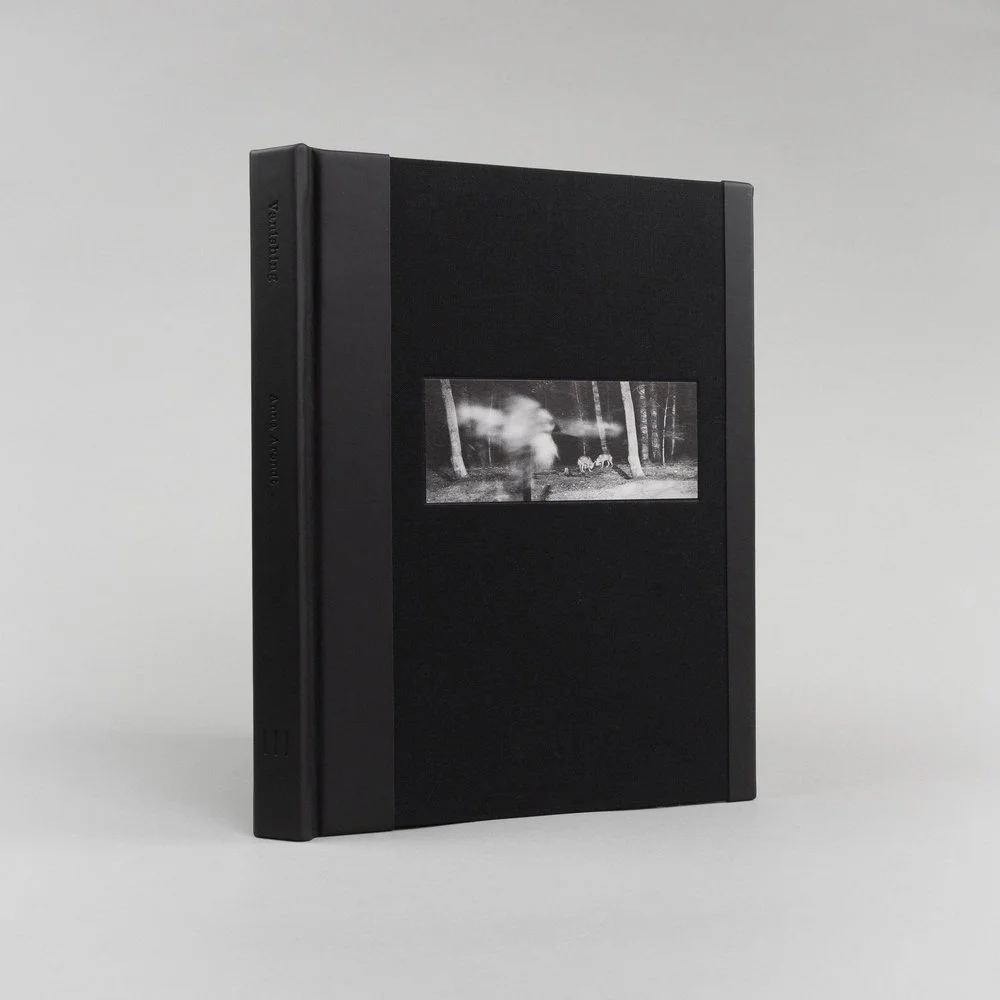
Welcome to this edition of [book spotlight]. Today, we uncover the layers of 'Vanishing,' by Anna Arendt (published by Charcoal Press). We'd love to read your comments below about these insights and ideas behind the artist's work.
Can photography capture what memory leaves unsaid?
Anna Arendt spent 15 years taking pictures to try to find out. She walked through forests, ruins, and old villages between Germany and Poland, looking for pieces of family and history that felt lost. Her work shows how photography can ask hard questions when words are not enough.
Vanishing is a search for truth in silence.
Some pictures come from a need that is stronger than words.
Anna started this journey after finding an old family photo that stayed in her mind for years. The book shows places and people touched by war, memory, and loss. The pictures feel like fragments of a dream where beauty and pain live side by side.
Can photography capture what memory leaves unsaid?
The Book
Vanishing is Anna Arendt’s first photo book and the result of 15 years of careful work. It began with one hidden family photo that filled her with questions. The picture showed her grandparents during the war. From that moment, she set out with her camera, looking for traces of the past that words could not explain. She walked through forests, fields, ruins, and villages across Germany and Poland, always searching for signs of what was lost.
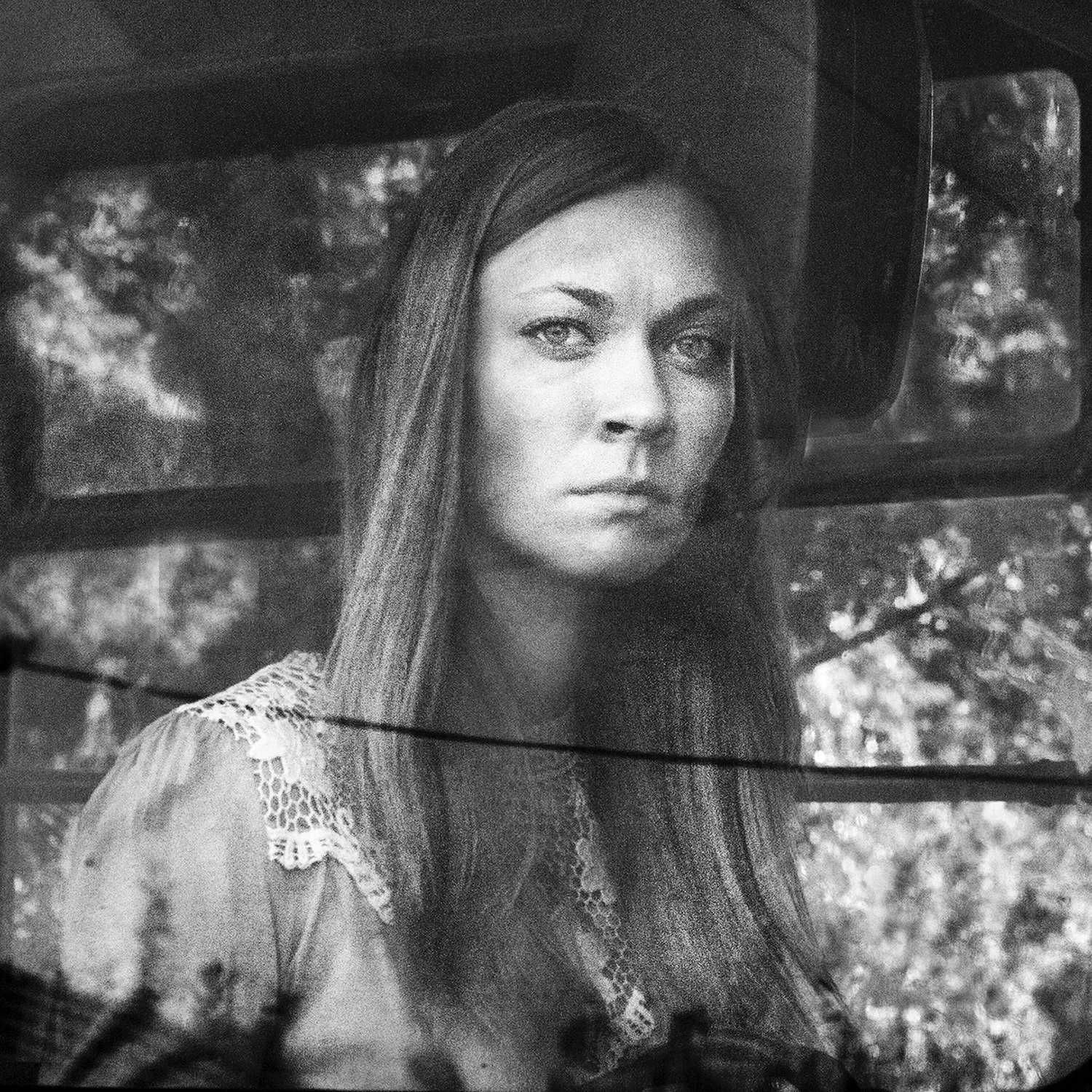
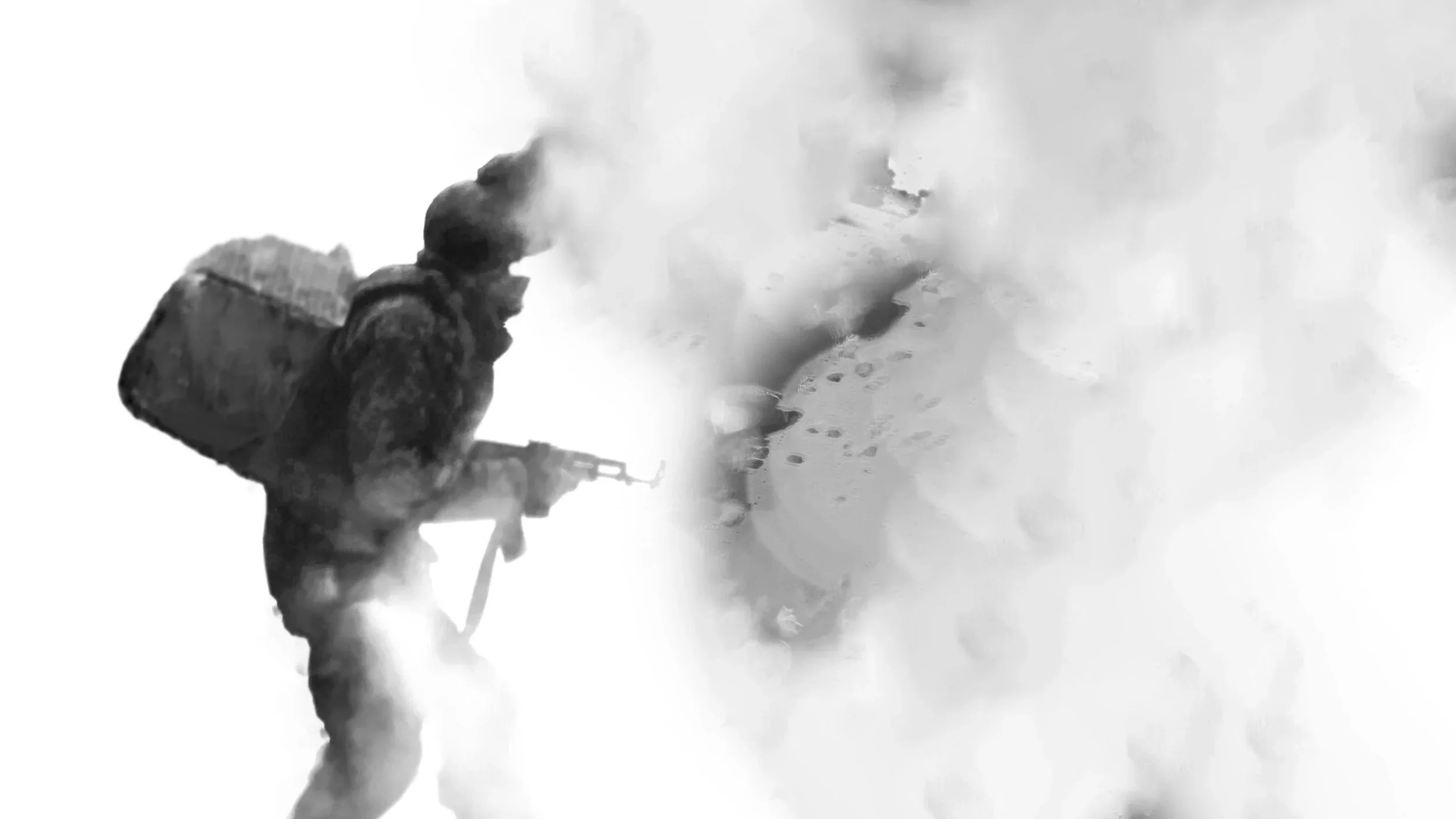
The black-and-white photographs in Vanishing show both beauty and pain. They capture empty places where history still feels close. They show people touched by war, memory, and silence. The book moves between personal stories and places marked by violence and loss. The pictures feel like pieces of a dream where time and space come together.
Vanishing is a journey into the spaces between memory and forgetting. (Charcoal Press)

My name is Anna Arendt.
But that isn’t the name my parents gave me when I was born.
I have chosen the first name of my grandmother, Anna.
And the last name of my grandfather, Arendt.
I was born and grew up in the German Democratic Republic. It was a dictatorship. Many of us lived in fear. The Stasi was everywhere. I was 24 when the wall fell. My daughter was 2. The Stasi was dissolved. But the fear remains. Both my parents were born in 1940. Both children of war. Both my grandfathers had been soldiers in Poland between 1940 and 1941. One came back 2 years after the war was over. The other one never came back home.
There were some questions that lived with me for a very long time, and I developed a big desire to find answers.
This brought me on a long journey. A journey full of contradictions, more questions, hope, fear, disappointments, surprises, wonders, miracles, moments of joy, dangerous moments, moments of sadness, and then hope again.
I developed a longing to find something to capture this all, to bring it in a form that can carry the value of experiences I made during my journey. The photo camera became my tool, my eye, my ear, my heart, my best companion, my friend.
Overview of the project: What inspired you to begin Vanishing?
I think I was inspired at first by pictures out of our family photo album that I found in a hidden shelf when I was about 8 years old. One picture showed a young woman sitting in a garden, in a chair, holding a baby. Behind her standing a young man looking down at the baby with a shy smile on his face. He wears a German uniform. I felt there was a secret in that picture, and I was very curious to find out what it was.
I remember the faces of my grandmothers, my mother, my father when I asked questions about the war.
I remember this first as a child, later as a young woman, then as a mother, and now as a grandmother myself. There were no answers. Only silence and tears. Over the years as I was digging, the more questions came up.
Sometimes it seems I get closer to some answers. But then there are still these “black holes“, that make me feel very alone. During my journeys, I met people that have similar questions with no answers. But even so, those questions need to be asked and shared. That way, we may be able to get closer to what lives in all of us - the question: Where are we coming from and where are we going to?
How did the project evolve over the 15 years you spent photographing?
I began consciously photographing during a time when I went through many changes in my life. I was around 45 years old.
My husband's father was Sid Grossman, a street photographer from New York. His family came from an area in Poland that once was part of the old Austro-Hungarian Empire. This was the same area my grandfathers were sent to during the war.
For more than 15 years, I travelled to these places both our families had been. I walked through cities and villages, forests and what was left of the concentration camps. Łódź, Wroclaw, Warsaw, the forest around Nowy Dwor, Białystok, Lublin, Krakow, Oświęcim, Katowice, Bytom, Gliwice. I saw Treblinka, Sobibor, Majdanek and Auschwitz.
I just knew the name of the village one of my grandfathers fell into. I found out that this name exists more than 40 times all over Poland and more often in Ukraine and Belarus. I went to many of them and never knew where the place would be that I was looking for.
During this time, I photographed strangers on my journeys and my family and friends back home in Berlin.
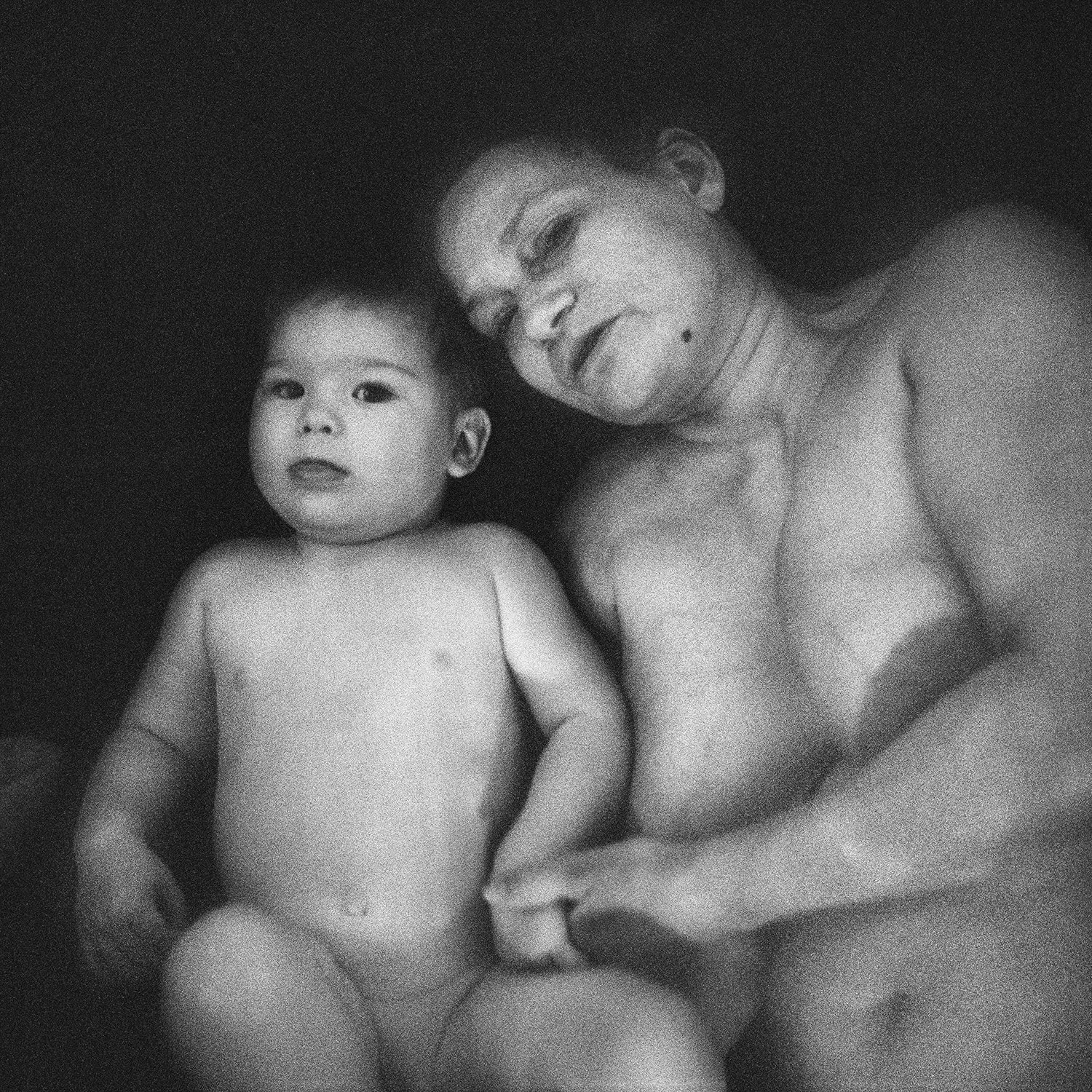
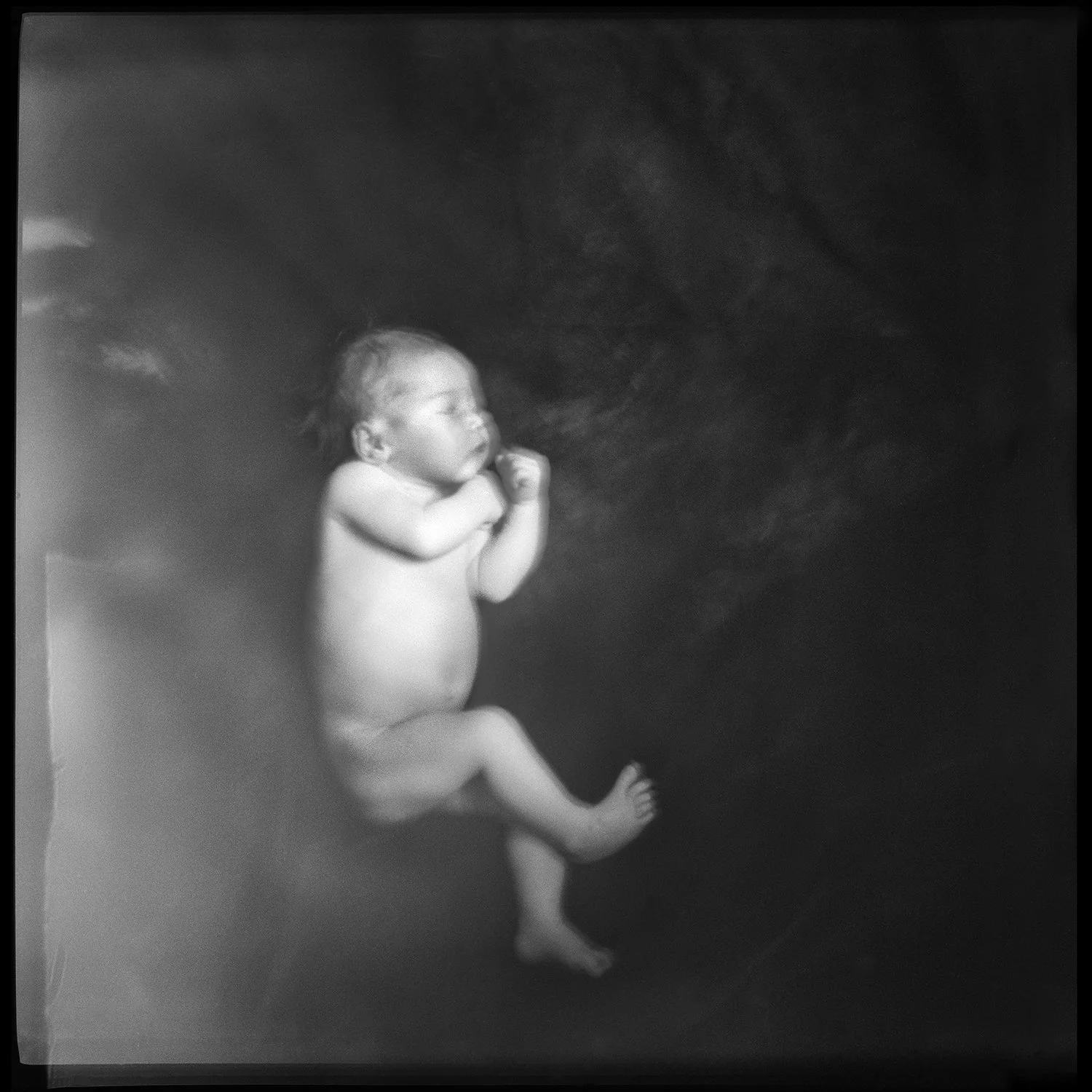
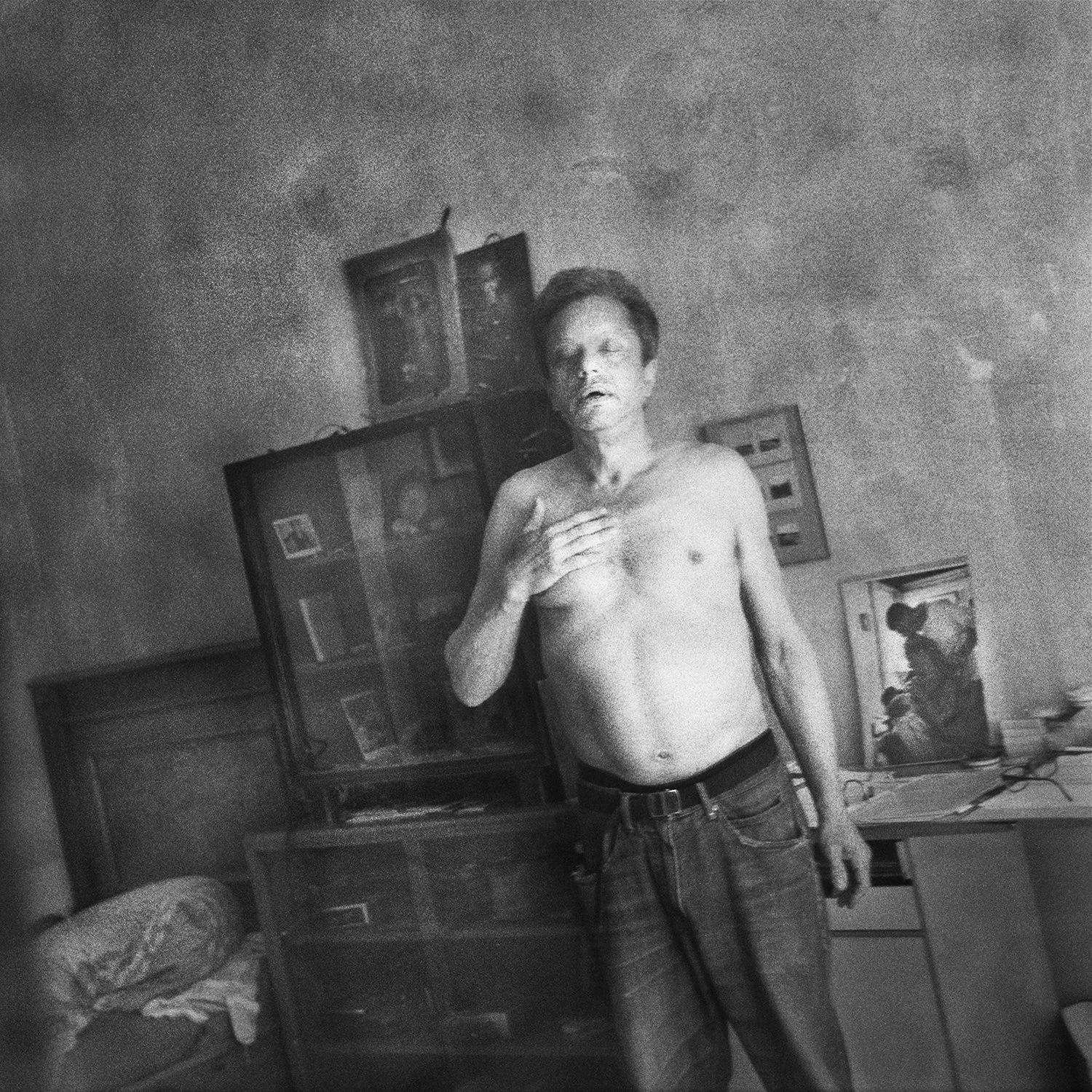
I photographed my friend Antje giving birth. I photographed her and her baby full of joy. And I photographed her last days on earth only four years later. I photographed tenderness and intimate moments of love with my husband, Adam. And I photographed his mother Miriam as she was passing away in New York only one month before Adam and I married.
I don't see Vanishing as a project. It is my life.
Intergenerational memory: How did your family’s history, particularly the silence and trauma surrounding your grandfathers’ experiences in the war, influence the emotional tone of the images?
I don't know. Maybe it became so much part of my own memory, my own feelings, my own way of existence, that I don’t have the distance to answer this question clearly. For sure it is influencing my whole life and all that I feel, I think, I do. And my images / pictures carry this memory.
I also think that intergenerational memory and trauma can carry the opportunity to bring up an equivalent, a balance, something that brings light from a different side and that can open doors that wouldn’t open if I didn’t face what is haunting me.
The role of silence: You write about the silence and tears that met your questions about the past. How did you try to photograph what cannot be said, only felt?
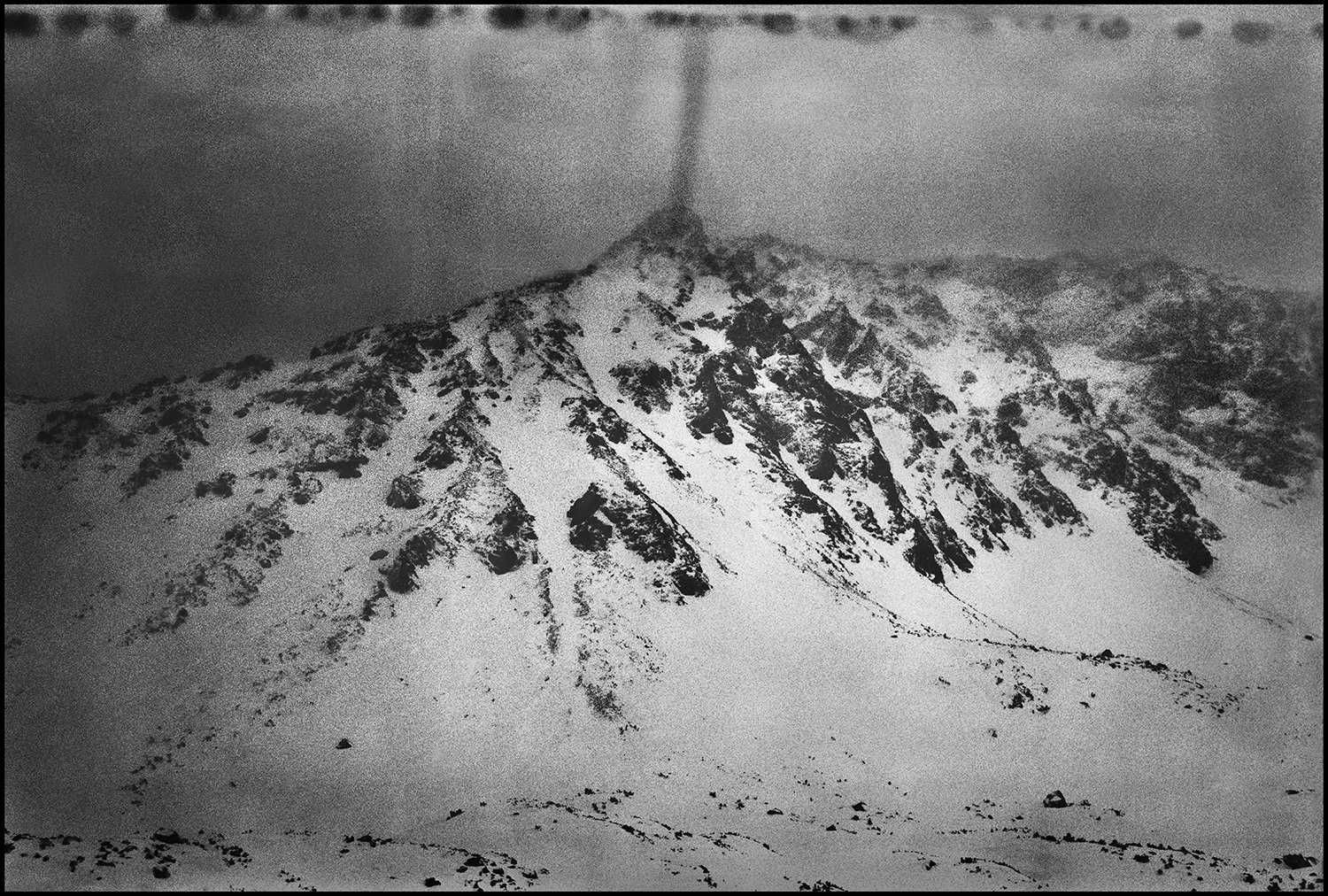
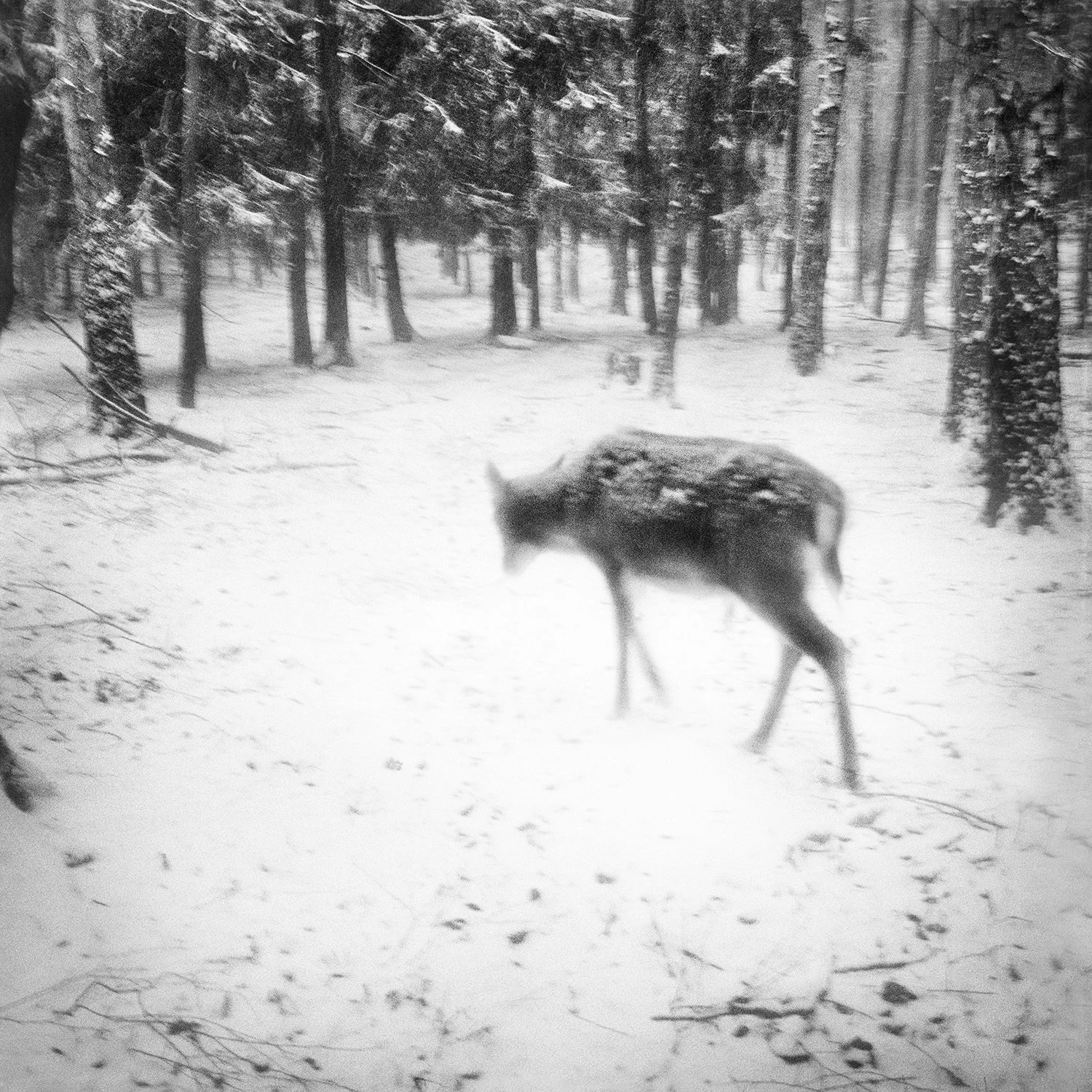
I spent many days out in nature. I went through mountains, forests and landscapes, mostly in winter.
Maybe the physical body is more open to experience feelings and to express feelings when words are absent.
Once I was lost in winter in the snow, in the mountains. I had five cameras in my rucksack and a bottle of water that was frozen. The darkness came and a storm. For good luck a group of young people found me and carried the rucksack and me up the hill to a cabin, where I found a bed and food and a warm oven. The storm that night was maybe the most beautiful moment I made during all the fifteen years.
Aesthetic of memory: Your black-and-white photographs feel like dream fragments. What guided your visual choices in creating this mood of suspended time?
The first step is taking images out of space and time. This has not much to do with thinking. It comes out of feeling, obsession and desire.
The second step is choosing images for a book or an exhibition or a personal photo album. The sequencing and designing is a very long process and depends on what I am building it for.
I try to remember the story behind the image when it was first taken and bring this image together with something I feel it is related to (mostly from a completely different time and place). The goal is to build a “red thread”, something new, something unique. This is never a linear "story". As you are saying, dream fragments, layers of time and space merge.
I also have an experimental wall in my room at home. Here I bring pictures together, tear them apart, frame some, cut some, write on them (on the back or on the front), colour them and so on. I always change this wall. This is my inside dialogue.
Advice for photographers dealing with personal or inherited trauma: What would you say to other photographers who want to explore family history or painful subjects, especially when much of it is silence, absence, or ambiguity?
Keep asking questions, keep looking from different angles, be open for surprises, build your own path to walk on, (even though you might at first seem to be building circles, they can sometimes actually turn out to be your own true path, the one you were meant to find). Never let yourself become too safe. Always walk on the edge. When you fall, get up and move on.
Combining personal and historical layers: Your images move between your own family, strangers, forests, and sites of historical violence. How do you decide when to photograph something personal and when to turn outward?
I actually cannot decide when something becomes outward or might become personal. I go out and maybe find something outward that resonates for me. And then it becomes, or I make it become something personal. This can change within seconds and it can be very exciting, sometimes a surprise, sometimes frustrating, sometimes sad, sometimes dangerous. I usually follow my instincts.
Sometimes I also "create" a situation. When you walk many kilometres, you might find nothing. And it gets boring. But all of a sudden, you might meet a person. You start to talk and then get invited somewhere. This could be the beginning of a good picture. Often the best picture comes to you when you are getting tired and want to put the camera away.
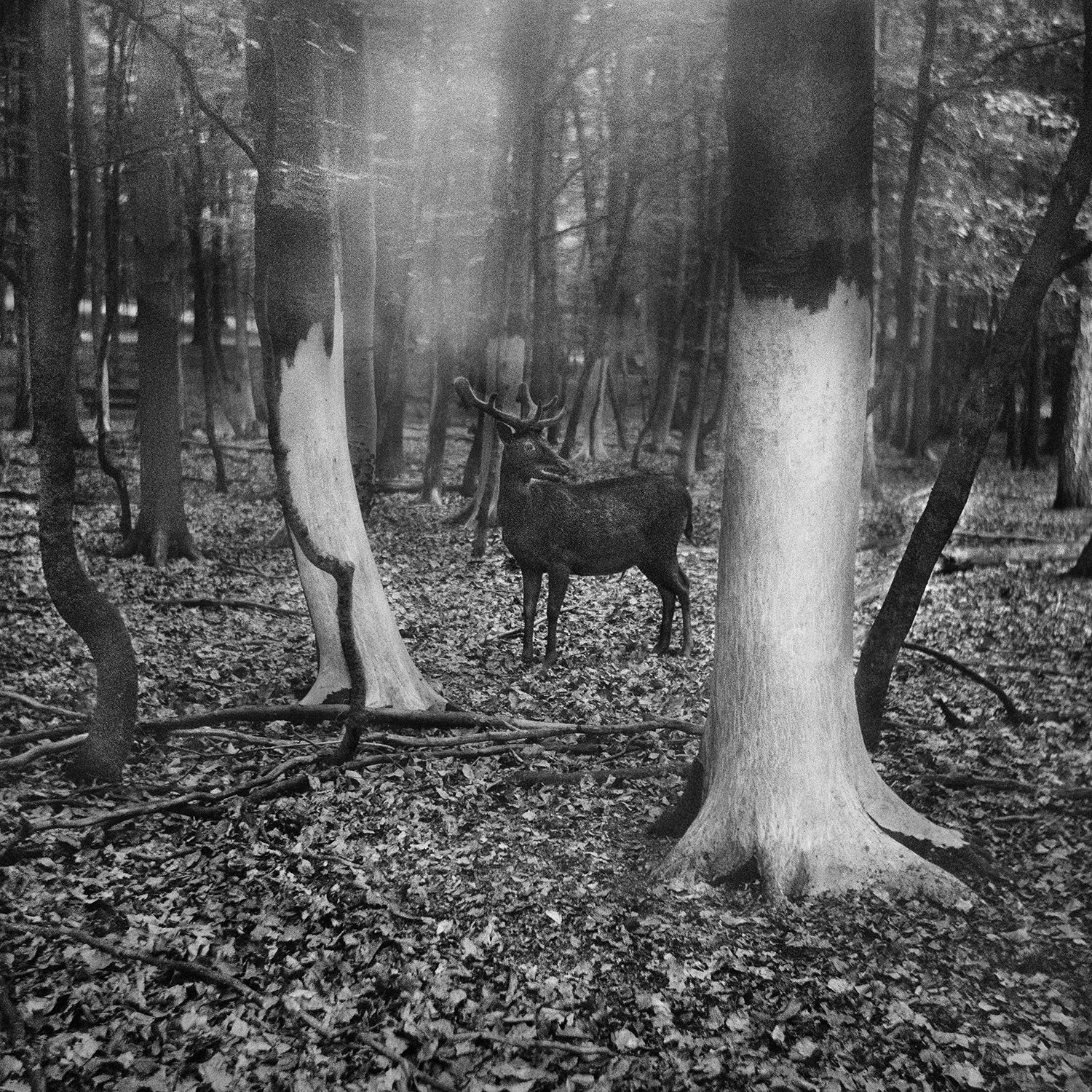
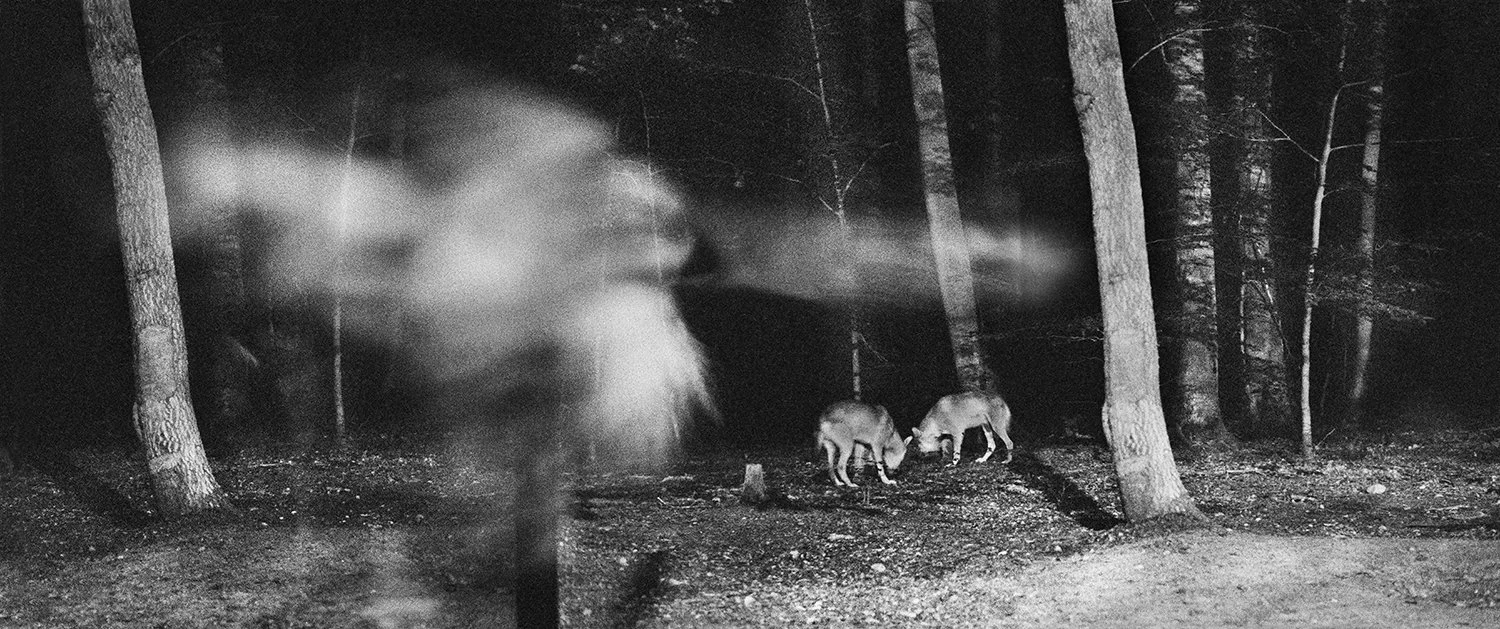
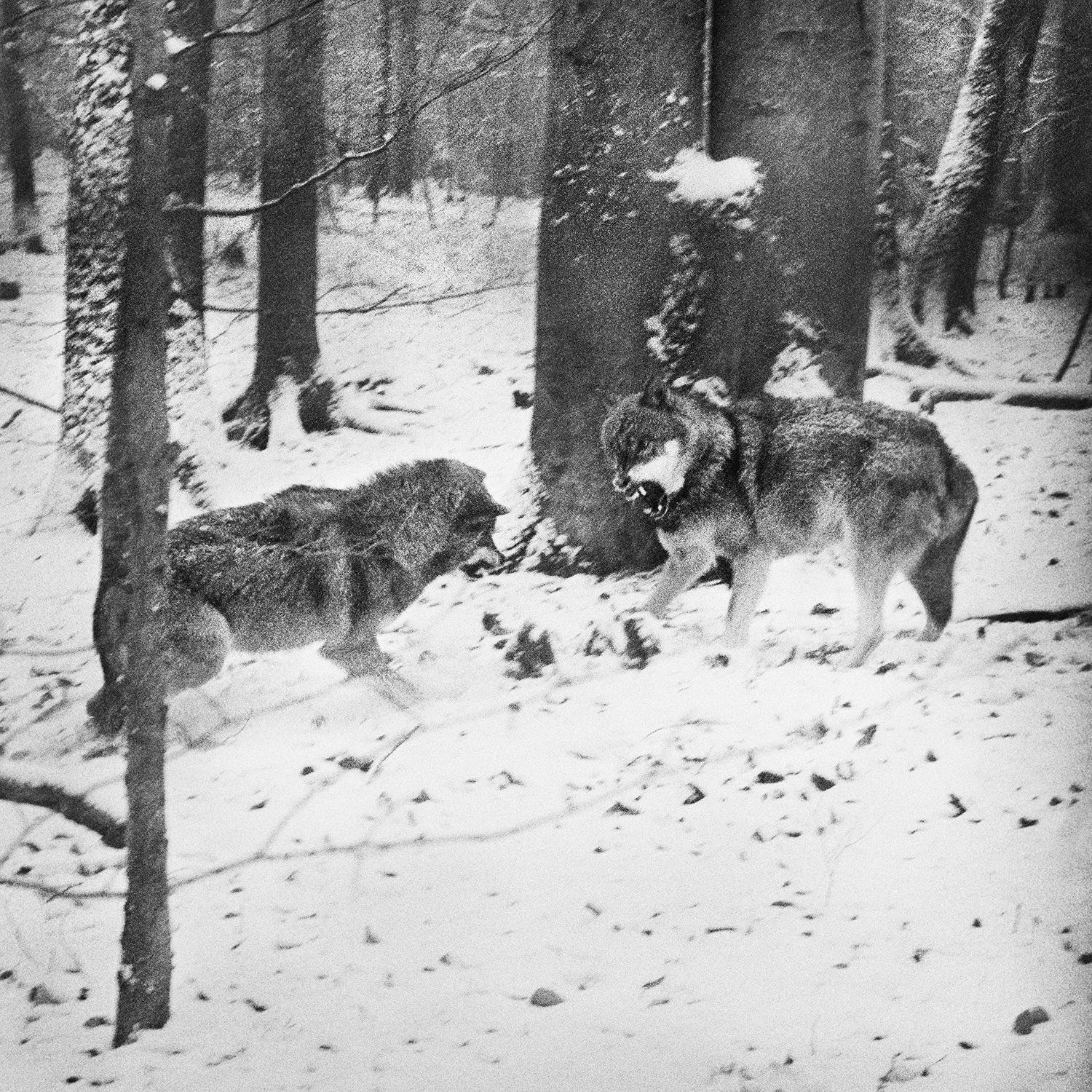
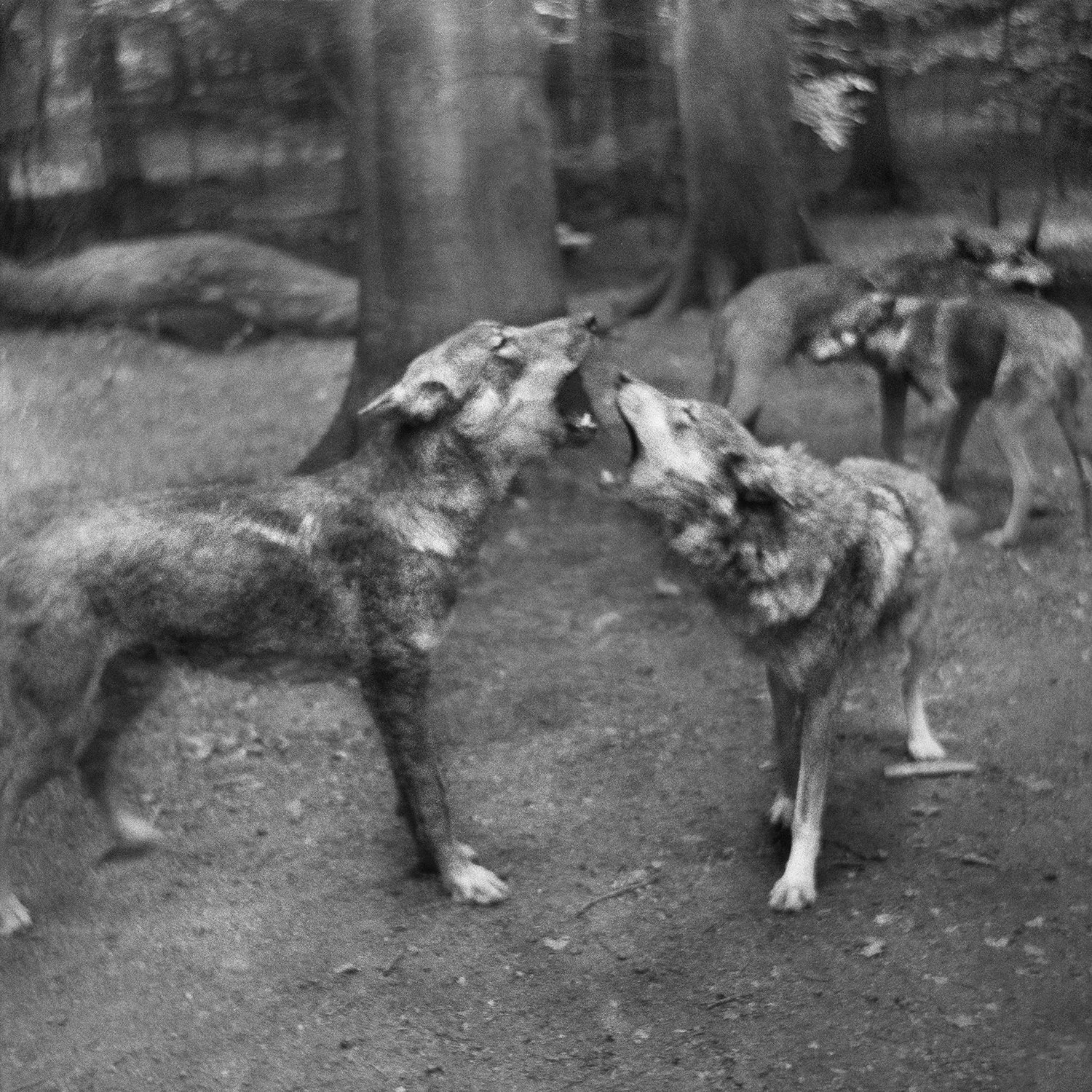
Symbolic elements: Wolves, forests, and birth recur throughout the work. What do these symbols mean to you, and how do they help shape the emotional arc of the project?
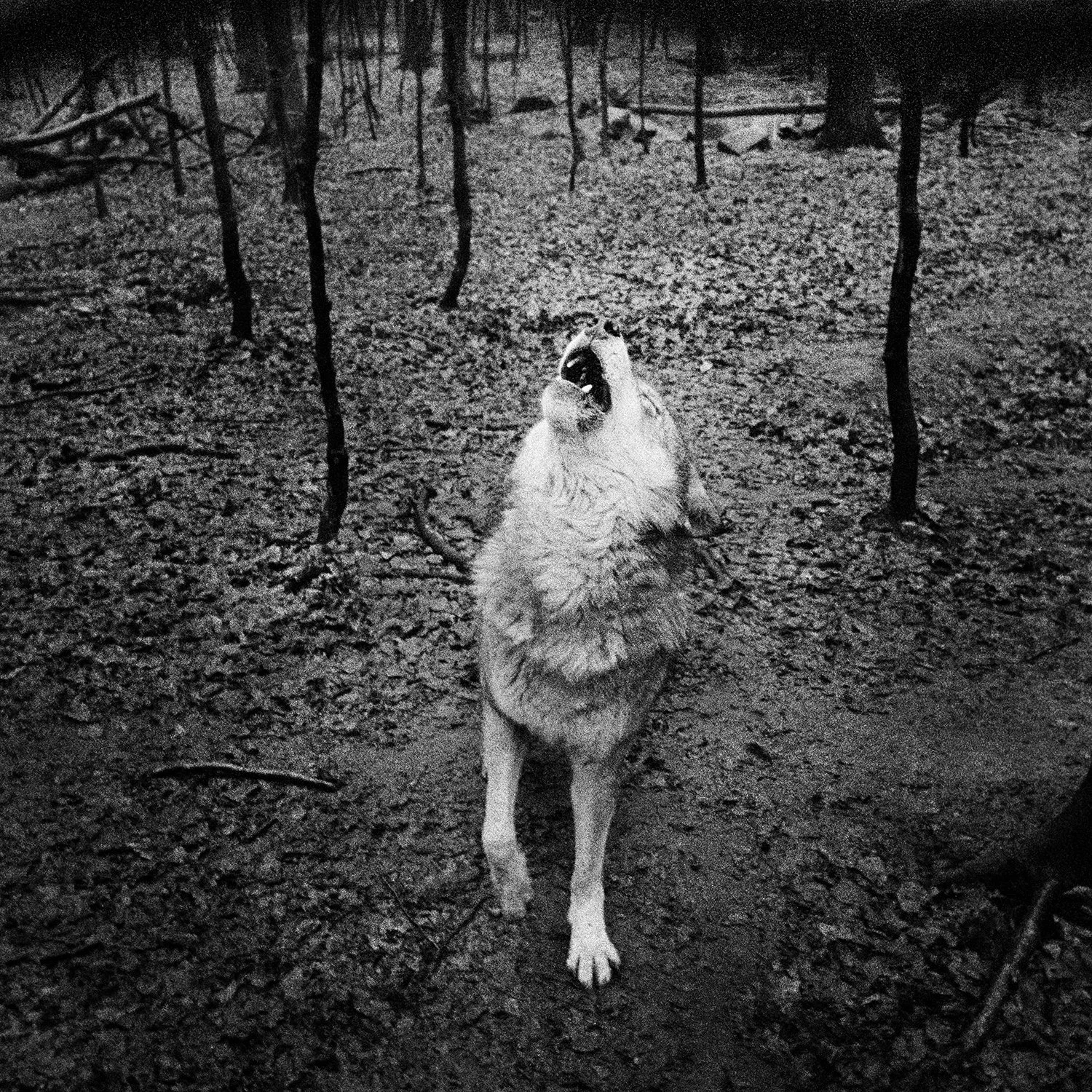
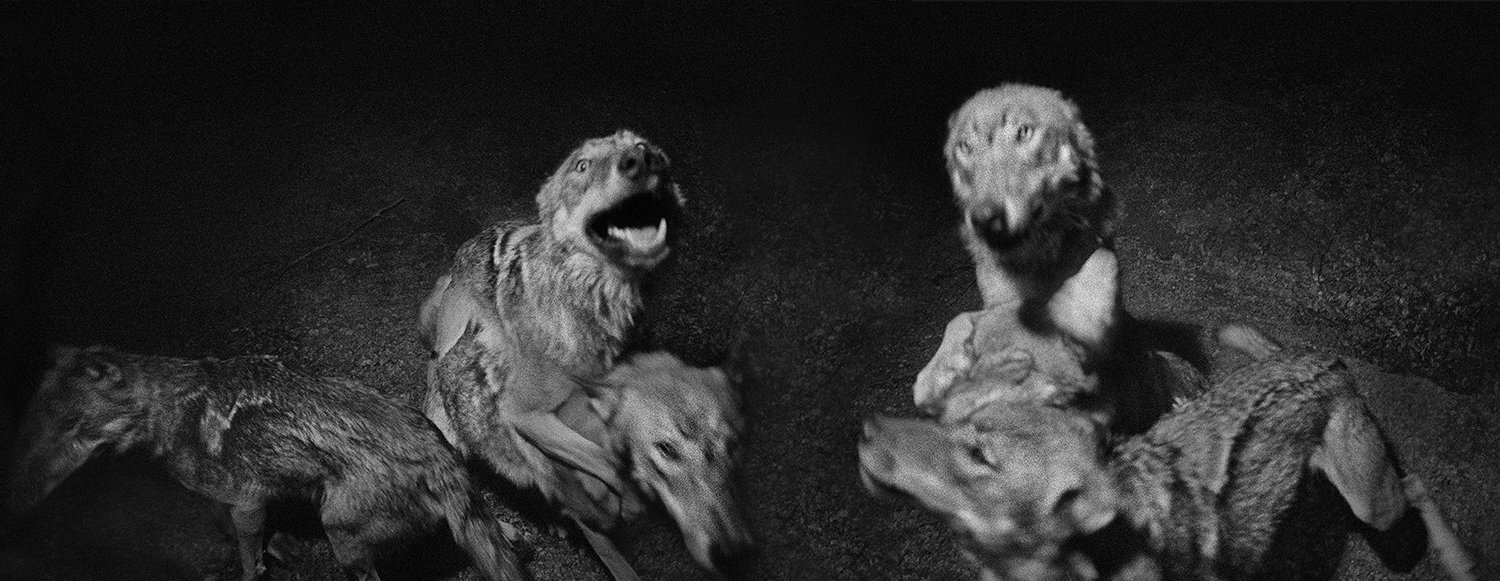
Since my childhood, I have loved to be in the forest. I love the smell, the noise of the trees, the wind, the colours and the rain. I feel my body doesn’t stop at my skin. Being in nature I feel one with all around me. It gives me rest and trust. Wolves, as much as crows and deer, I love to be surrounded with. They are beautiful creatures. They give me energy, good mood and joy. Looking into the eyes of a wild animal reminds me about reality, about beauty and brutality at the same time. Birth as much as death is a miracle. I cannot capture it with my logical thinking. But I try to photograph it. Later, in a book, they can be seen as symbols.
Advice on working slowly: You made this work over more than a decade. What advice would you give photographers who are used to fast projects but want to commit to something more long-term and emotionally deep?
Live with what you want to find out every day, everywhere, always ask questions, don’t be worried to wait. Let it come out of life, of your life. Don’t be afraid to get lost. Don’t expect quick success. Your truth comes out over time. Go further, never be satisfied easily, never let yourself be put down by other people's opinions, but be always open to criticism, to other points of view. Never give up. Enjoy your life.
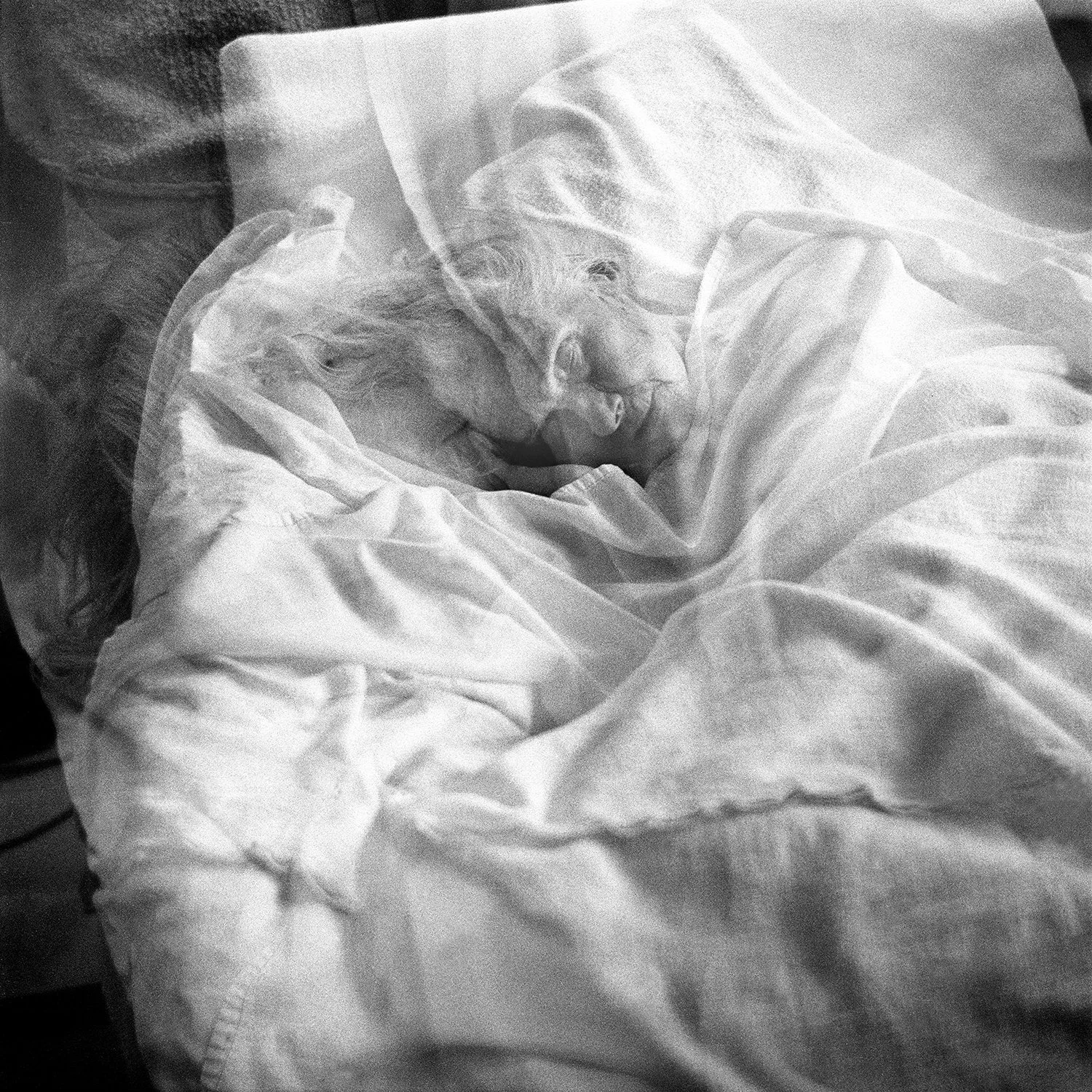
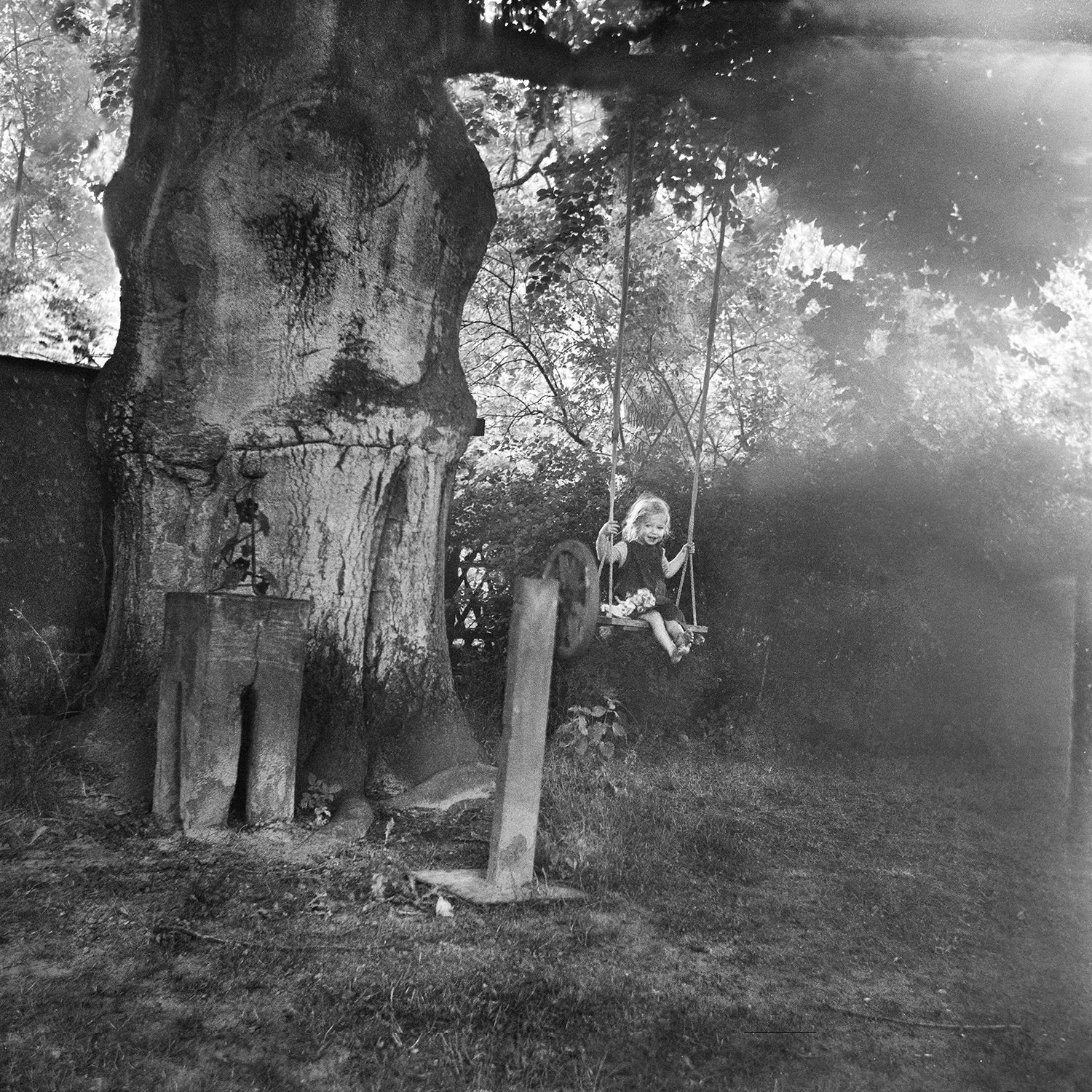
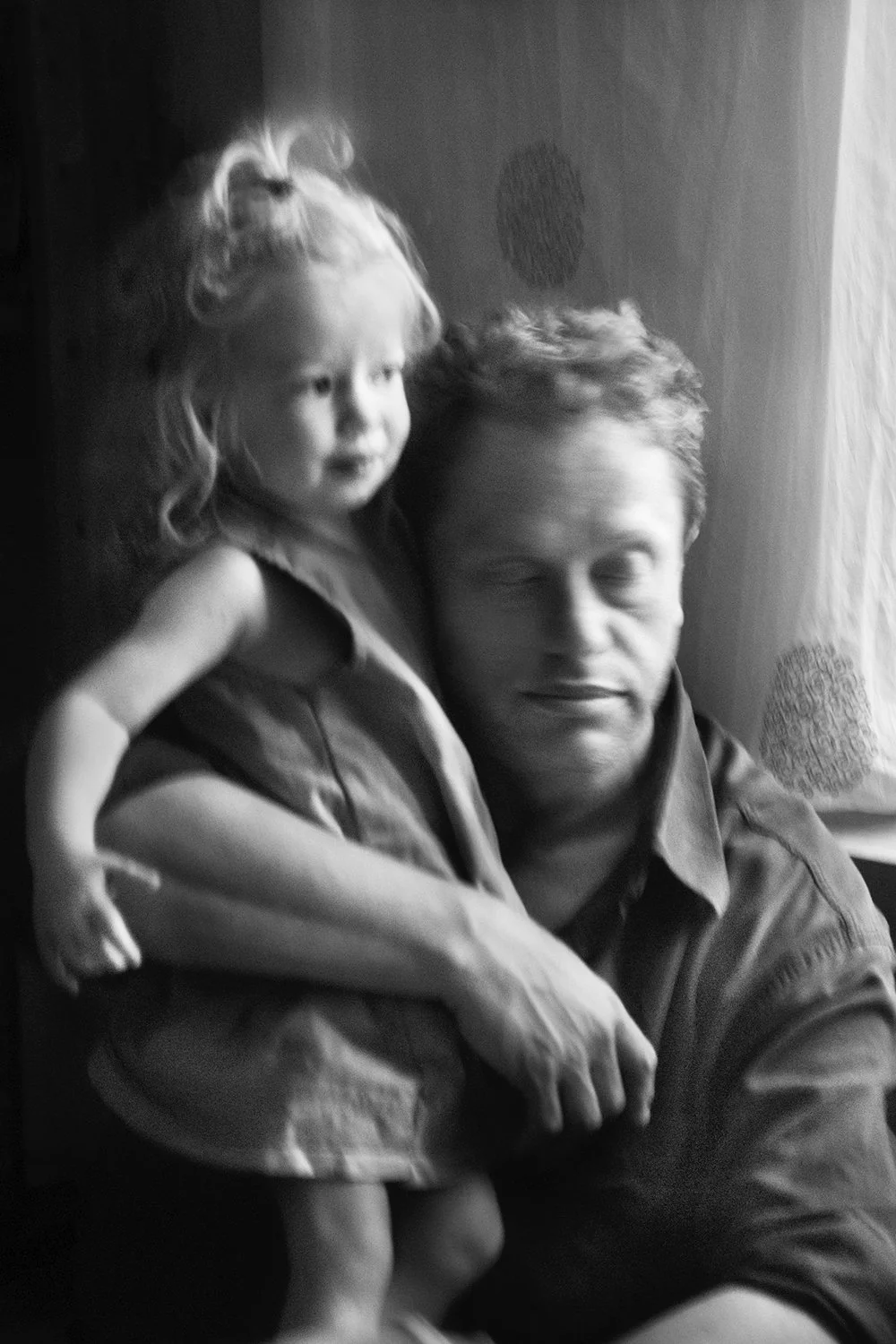
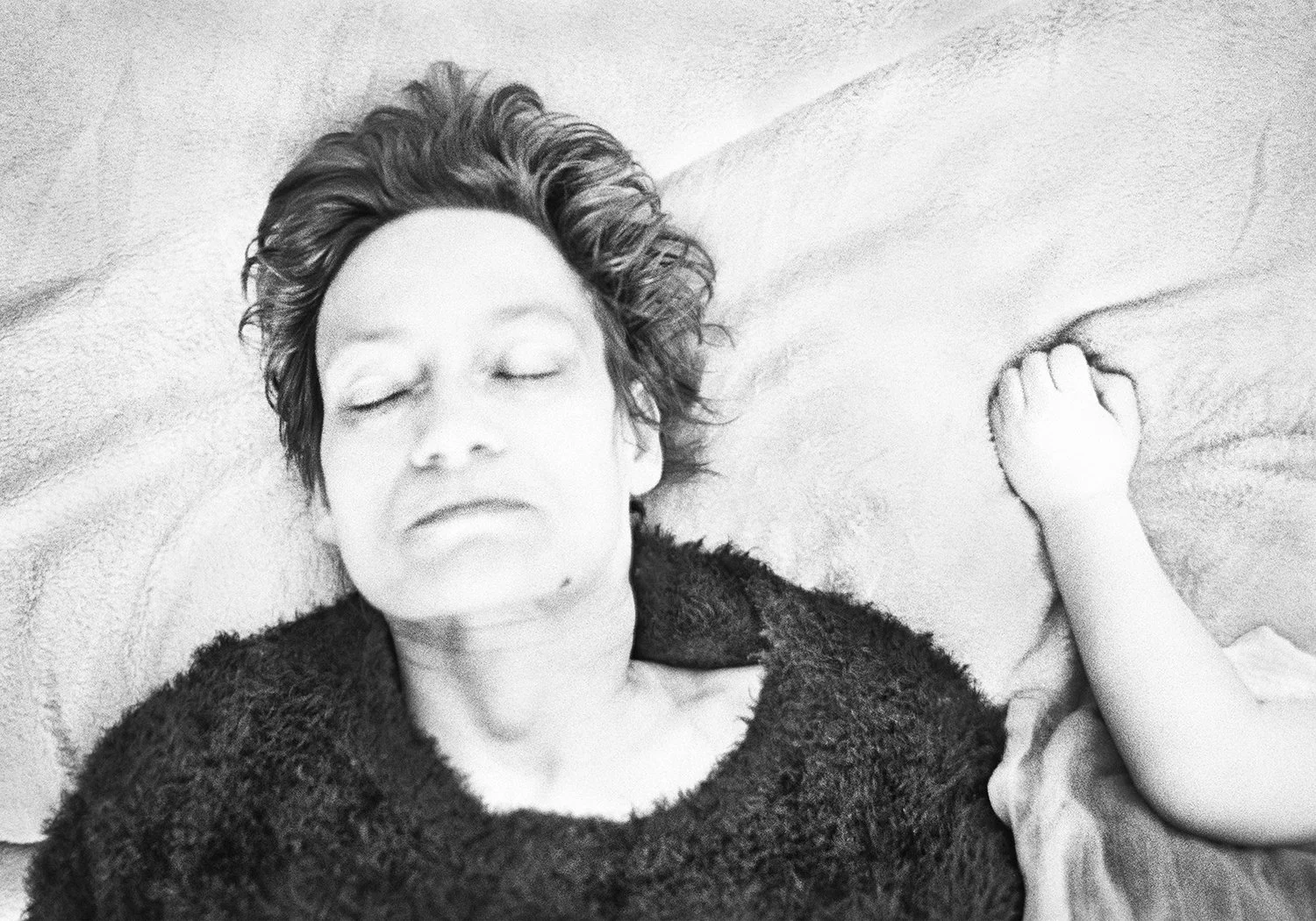
Photography as survival: You’ve said, “Making pictures is my way to move on.” Has this project helped you process memory and grief? What remains with you now that the work is finished?
It's never truly finished.
Going out with my camera, travelling to unknown places, meeting strangers, walking through mountains, forests and cities, going by buses and old trains - it all helped me to build new paths to walk on for my personal life as an artist. I met some wonderful people on my way. And I found places that I would never have seen if I had not made this journey. And my journey will go on. I hope.
PS:
When I was growing up, I saw what was left of the war.
The ruins were our playgrounds.
The ruins were speaking out of their skin, their bones, like enormous sculptures.
Those sculptures appeared as symbols of a time before me.
They were like magnets, like question marks, like something that will haunt me for all my life.
To discover more about this intriguing body of work and how you can acquire your own copy, you can find and purchase the book here. (Charcoal Press)
More photography books?
We'd love to read your comments below, sharing your thoughts and insights on the artist's work. Looking forward to welcoming you back for our next [book spotlight]. See you then!
Robin de Puy could no longer make this project alone. She first photographed Randy in Ely, Nevada, during a 2015 road trip and kept returning to him for more than ten years. Interviews