How Valery Rizzo Used Imperfect Cameras to Preserve a Brooklyn That Was Slipping Away
Welcome to this edition of [book spotlight]. Today, we uncover the layers of 'Wonderland: Brooklyn 2007 - 2023,' by Valery Rizzo (published by Kehrer Verlag). We'd love to read your comments below about these insights and ideas behind the artist's work.
What happens when imperfection becomes the most honest way to photograph?
Valery Rizzo began photographing Brooklyn with plastic toy cameras after an illness made movement difficult. The choice was not about style, but about survival, simplicity, and staying connected to the world outside. Over time, those imperfect photographs became a long record of a city changing year by year. The conversation that follows begins with a personal limitation and slowly opens into something much larger.
Brooklyn changed while she kept returning to the same streets.
From 2007 to 2023, Rizzo photographed neighborhoods as creativity, gentrification, and displacement unfolded side by side. The work reflects both public transformation and private experiences, including the loss of her family home. Rather than chasing perfection or speed, she stayed with the same place and accepted uncertainty. In this interview, photography becomes a way to hold on to memory when everything else is moving.
The Book
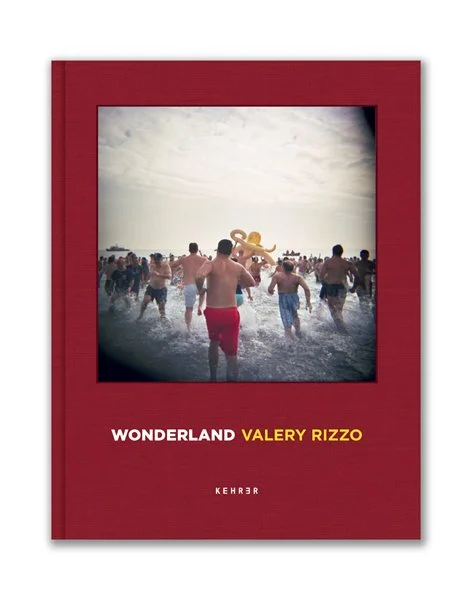
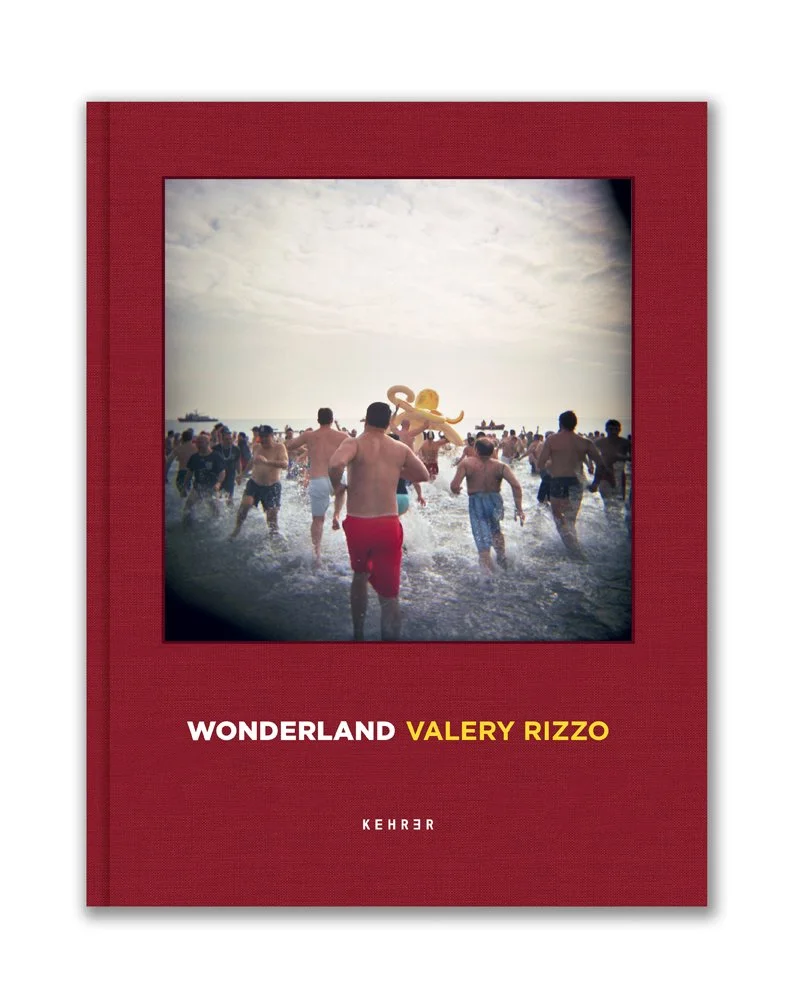
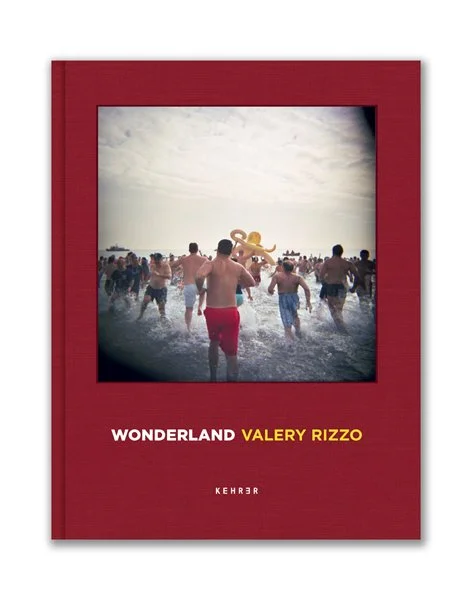
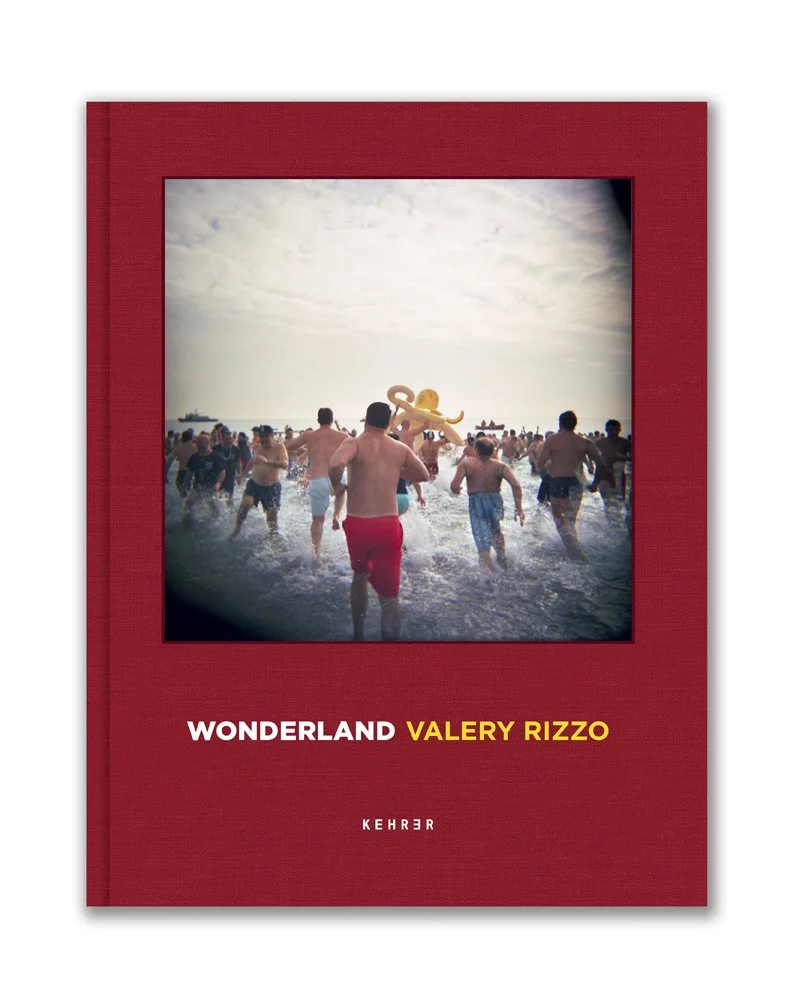
Wonderland: Brooklyn 2007–2023 by Valery Rizzo, published by Kehrer Verlag, brings together sixteen years of photographs made across Brooklyn during a period of intense change.
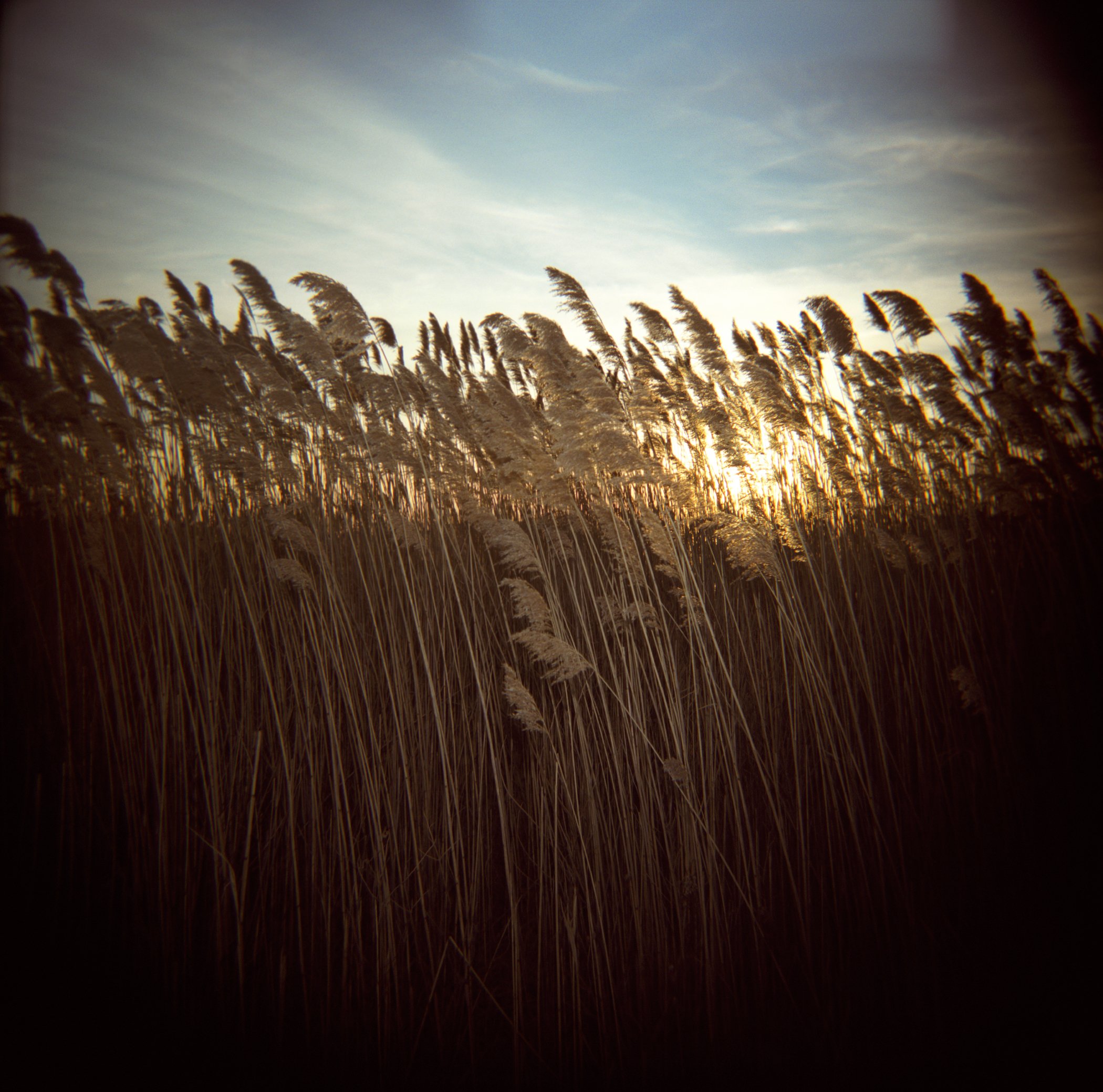
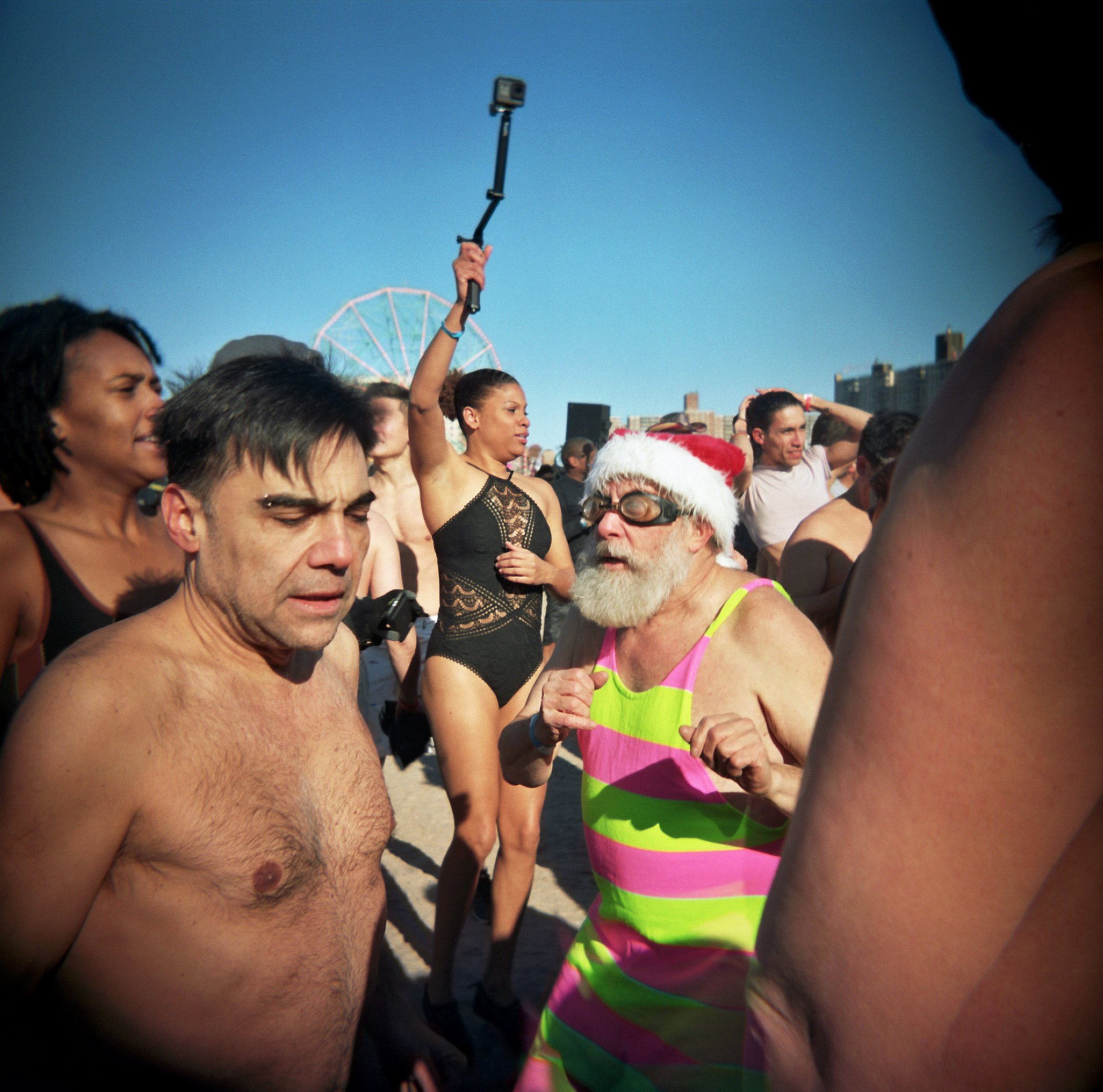
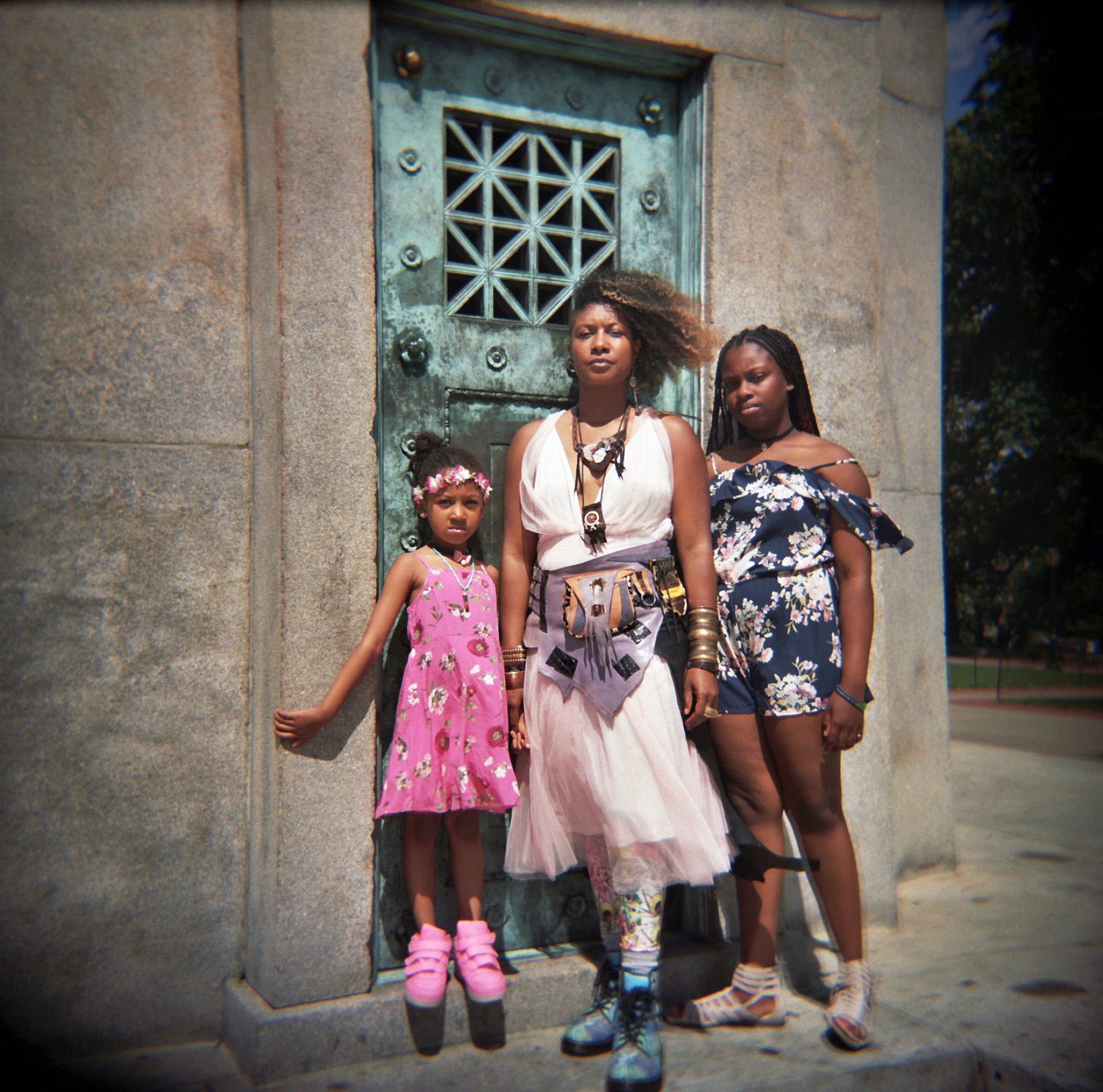
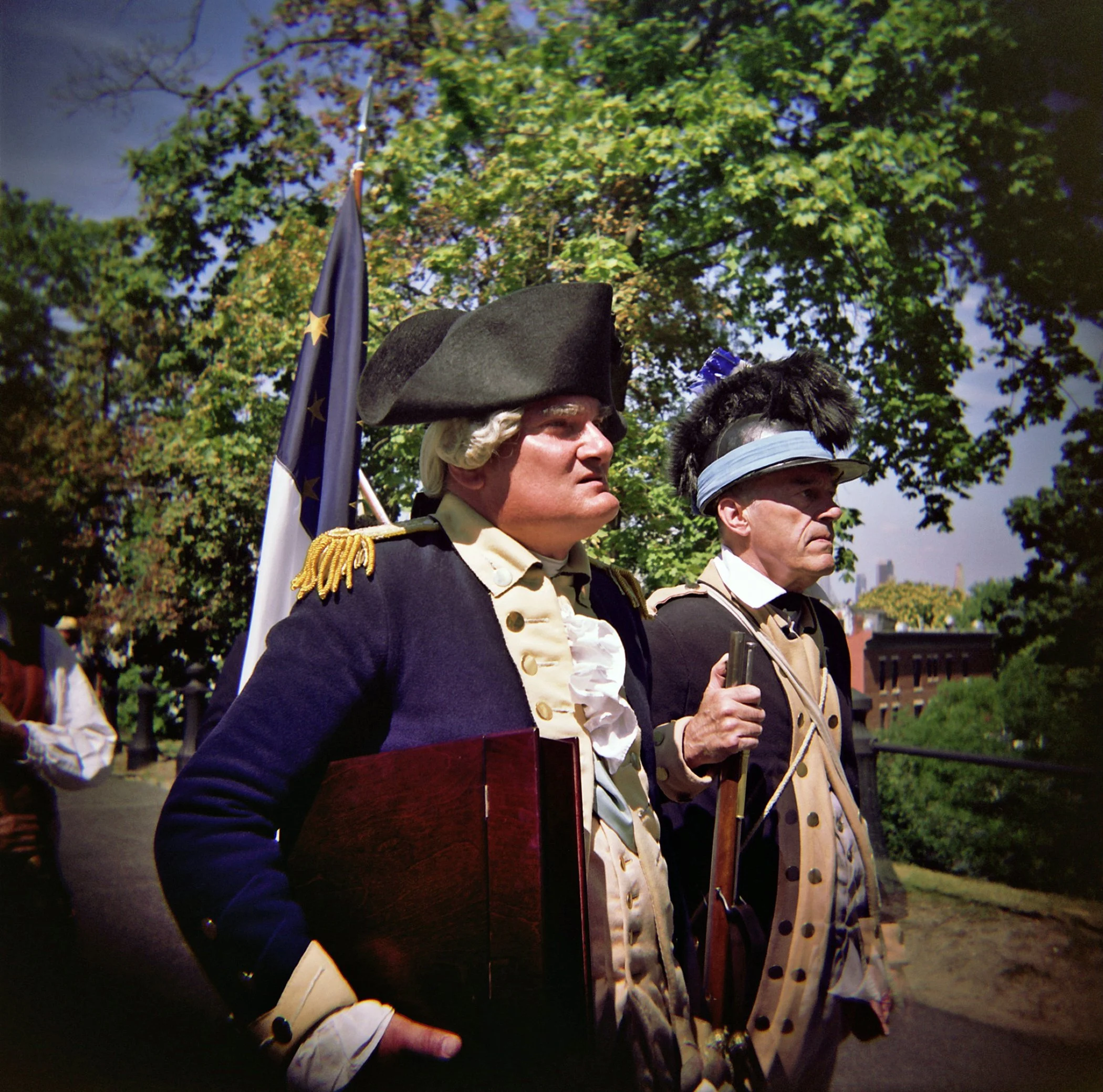
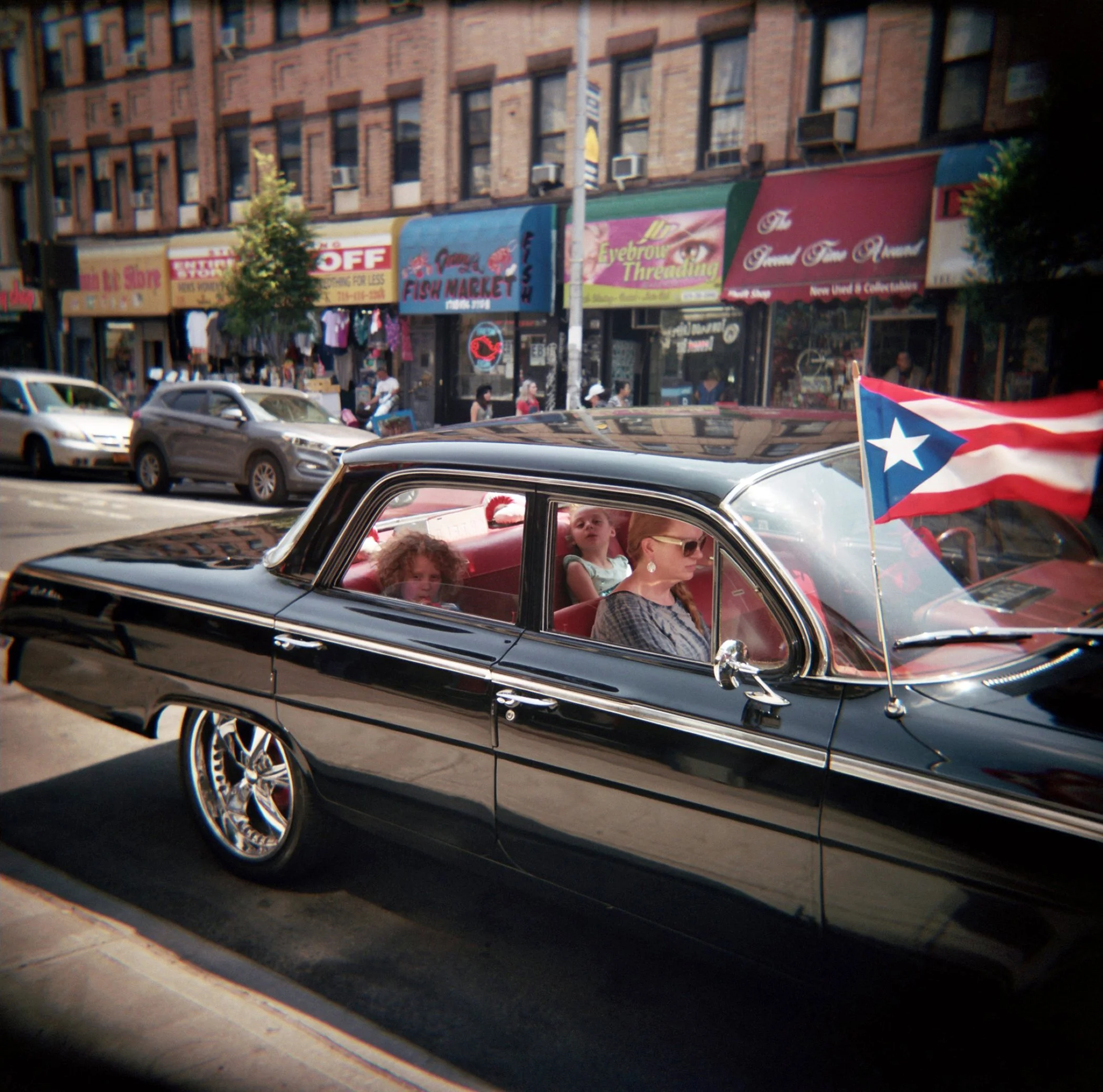
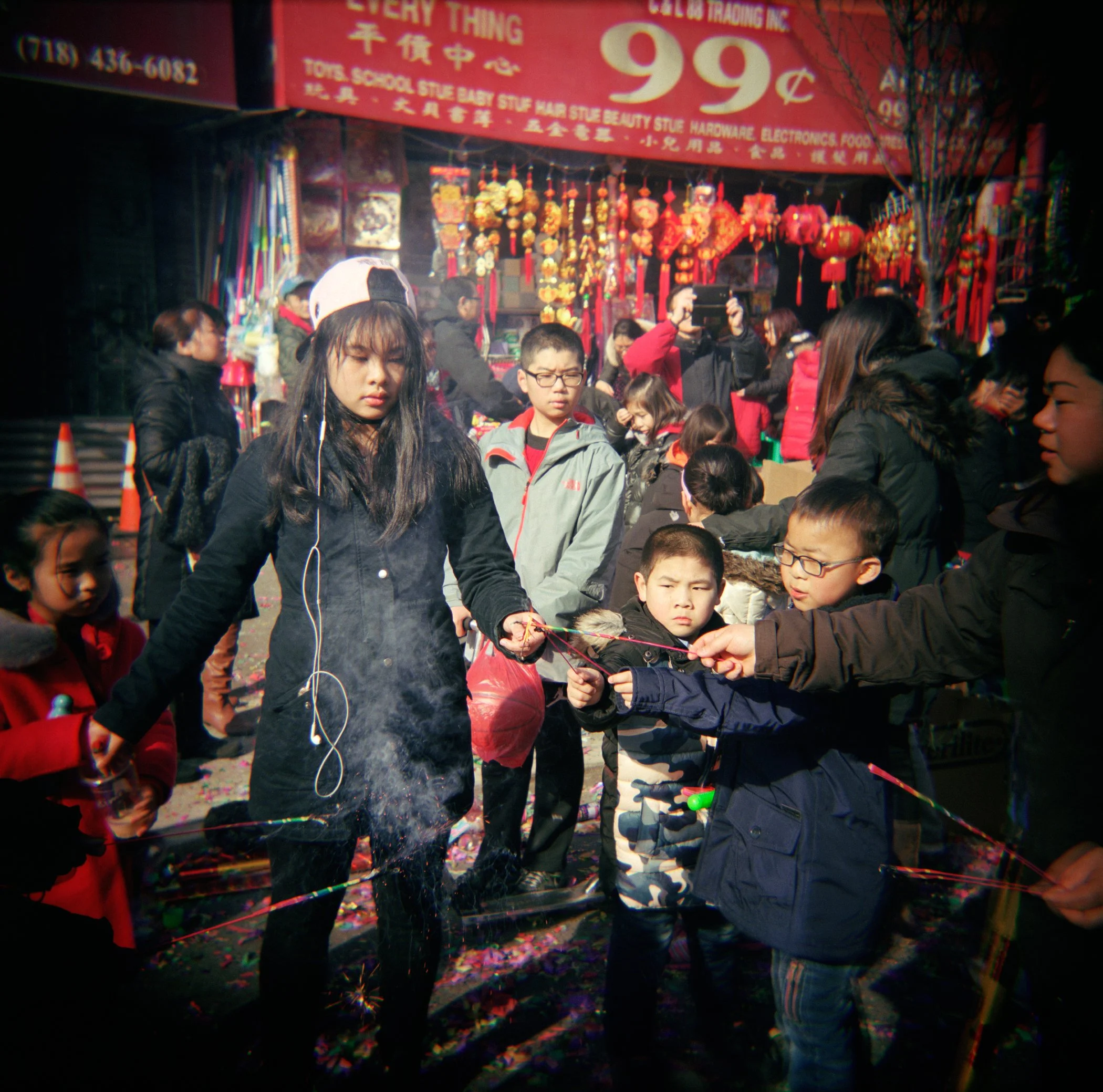
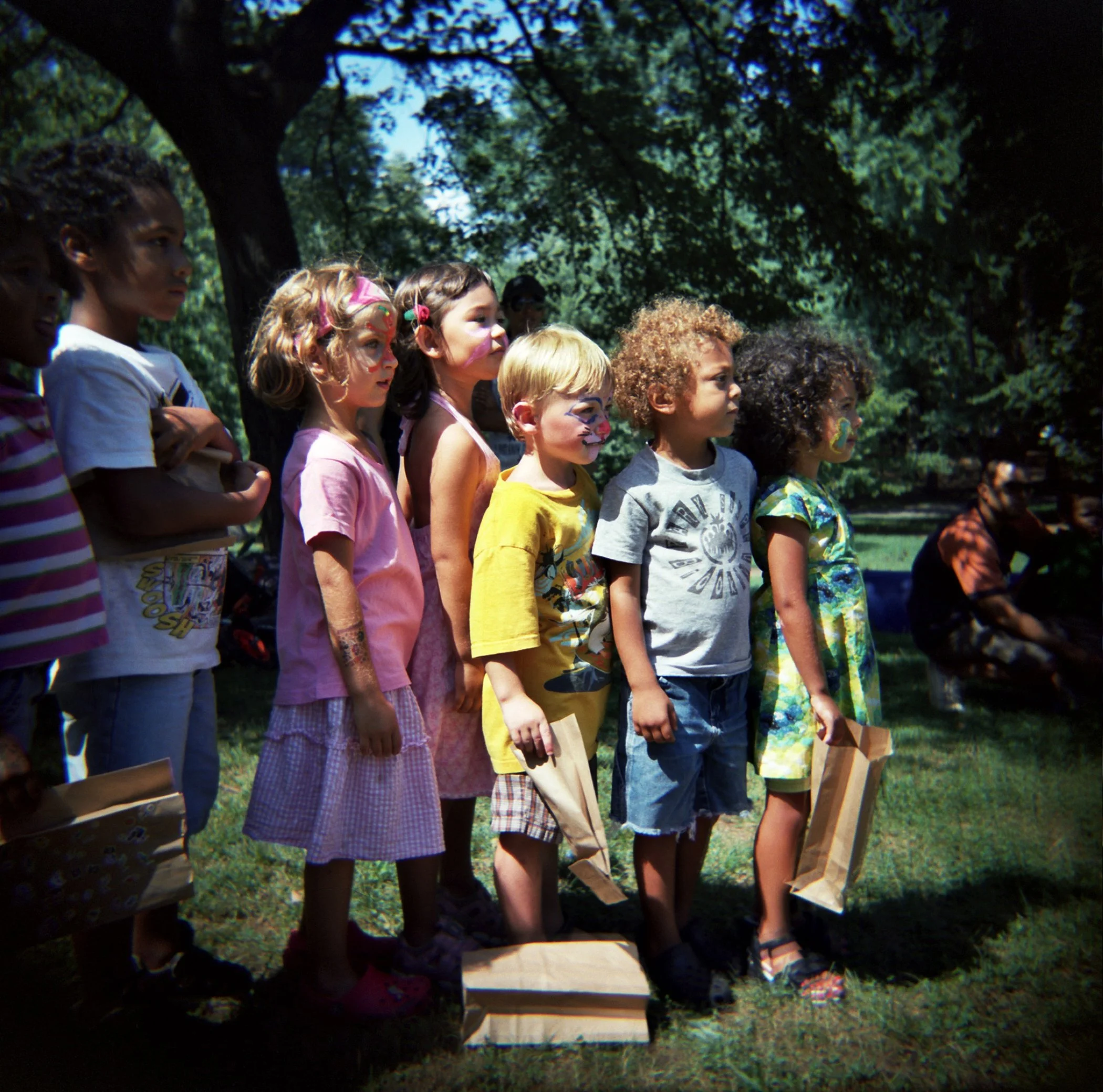
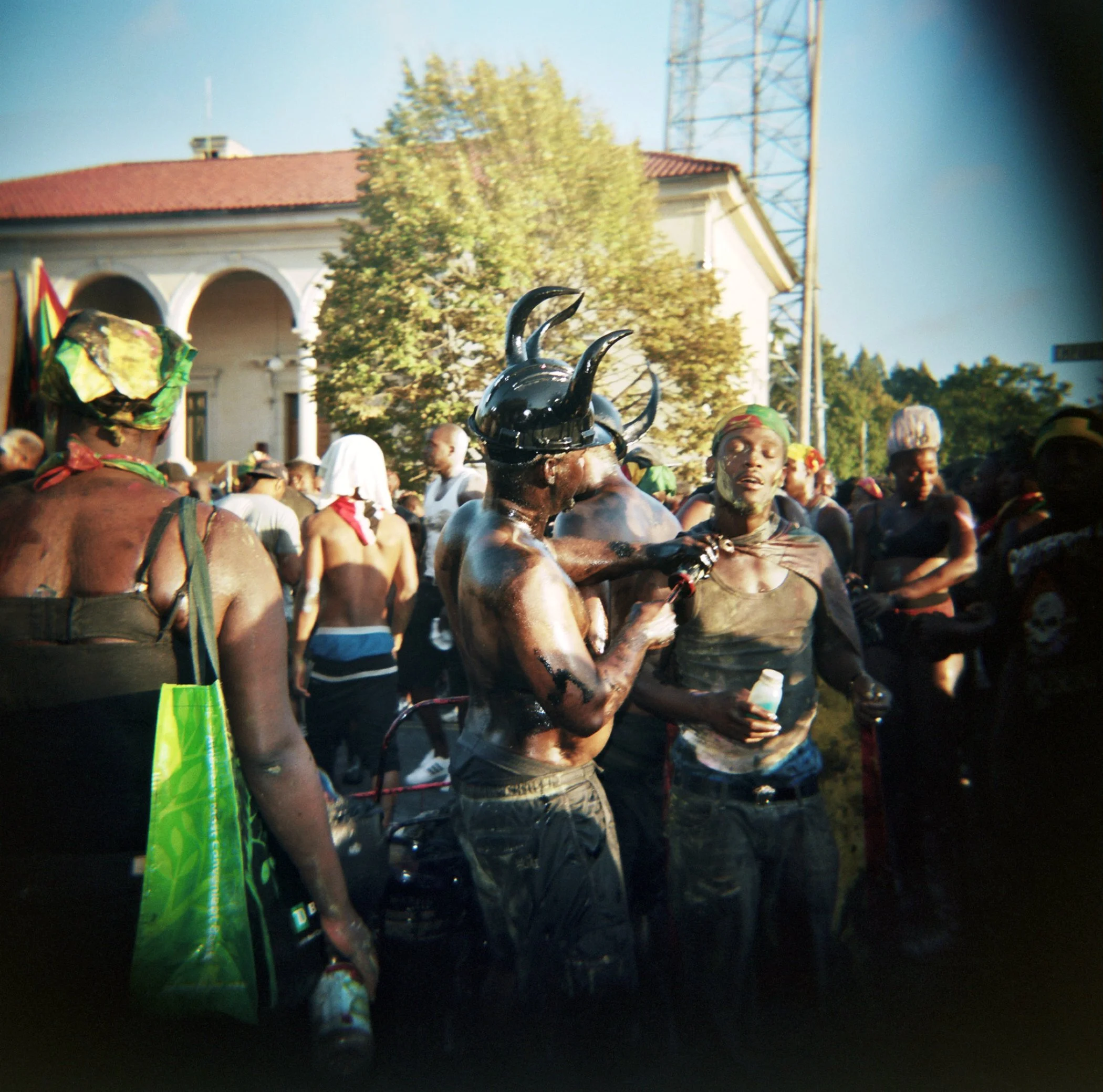
Shot with plastic Holga cameras on medium-format film, the work captures everyday life, street celebrations, and quiet moments as old and new Brooklyn existed side by side. The images feel intimate and unpredictable, shaped by light leaks, soft focus, and the limits of simple tools.
More than a document of a place, the book reflects time, perseverance, and the fragile balance between memory and transformation in a city that was slowly disappearing. (Kehrer Verlag, Amazon)
Project Start: Why did you choose toy cameras to photograph Brooklyn after your illness made it hard to move around?
In 2006, a virus left me with a chronic debilitating inner ear condition, very similar to, but also not a typical, Meniere’s disease. I was constantly nauseous and dizzy and I could hardly walk. Because I felt isolated and disconnected from the world and my work, on the weekends, my husband would take me for drives around Brooklyn, starting with Coney Island, so I could be outside and near the ocean. At the time, it seemed the easiest way for me to get back to photography was to bring a camera like a Holga. It’s a plastic, analogue, medium format film camera, with only a couple of settings and a few other things to consider, and it’s totally different from my heavy digital SLRs I normally shoot assignments with. It gave me the freedom to be creative without having to think about anything too technical, but most importantly it was light and inexpensive so I could easily go anywhere with it. Later on I started carrying two cameras along with two Leica flashes.
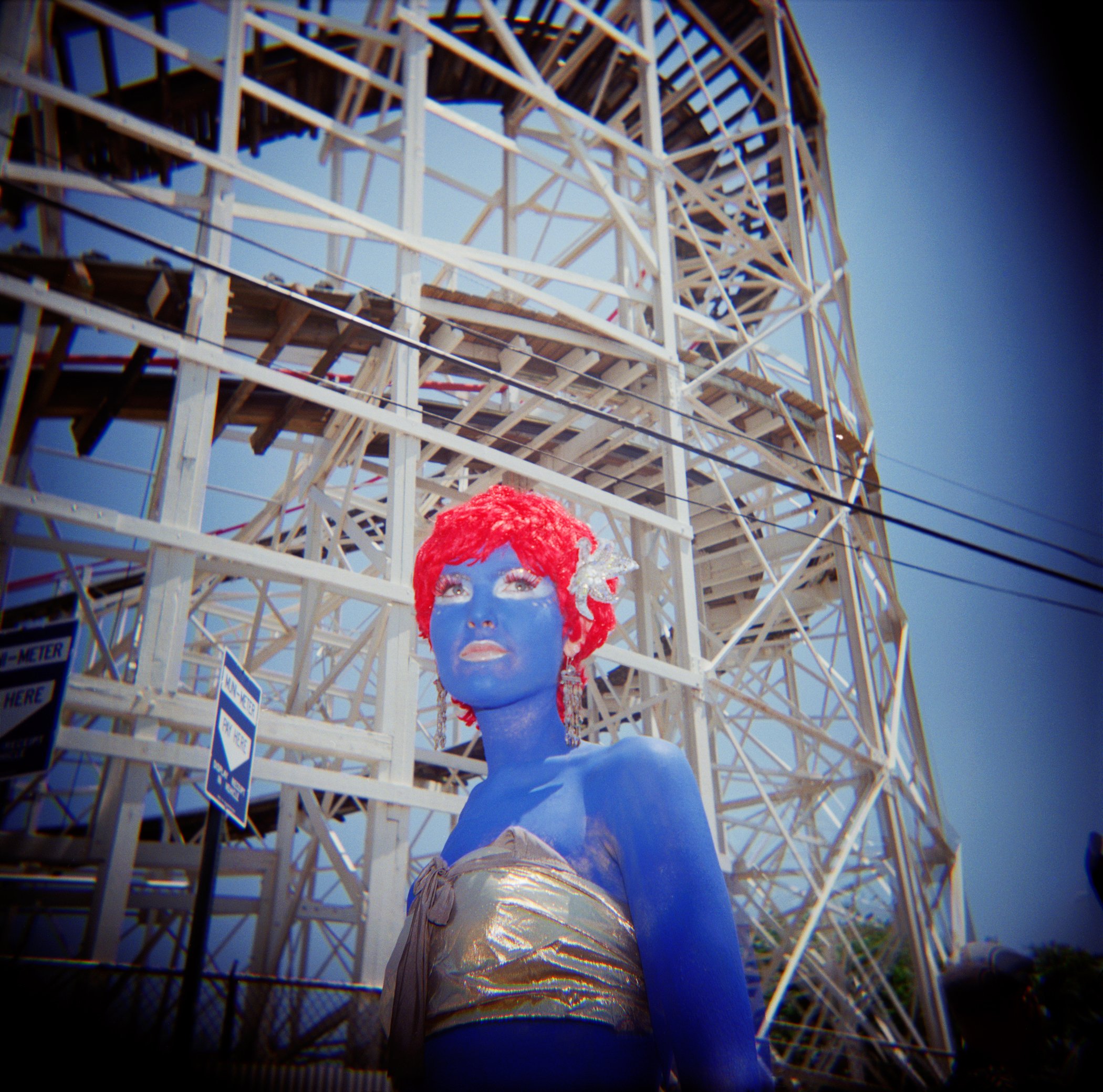
Blue Lady, Mermaid Parade, Coney Island, Brooklyn, 2007
Camera Choice: What makes a cheap plastic Holga camera better for capturing Brooklyn's character than an expensive professional camera?
I don’t necessarily think one is better than the other, but in my case, I first chose the Holga for its ease of use, which I needed at the time. I then later found myself documenting, during a period of transformation in Brooklyn, with the old and new living side by side, which is when I loved it the most. Later on, I started to see things disappear, and with that came the fear of things being replaced and a need to preserve those things or at least their memory.
Shooting with film and a Holga is very unpredictable; you never really know what you are going to get, from the focus to the framing, and then there are the light leaks. The unpredictability and spontaneous nature of shooting this way, I felt, matched the spirit of Brooklyn and its rebellious, uninhibited, and unique character. This is what I chose to focus on and what I wanted to express about Brooklyn as a place at that time.
I also really liked the intimate square frame and felt the quality of the medium-format film, together with the dreamy vignetting effect that the camera produced, contributed to the feeling I wanted to express.
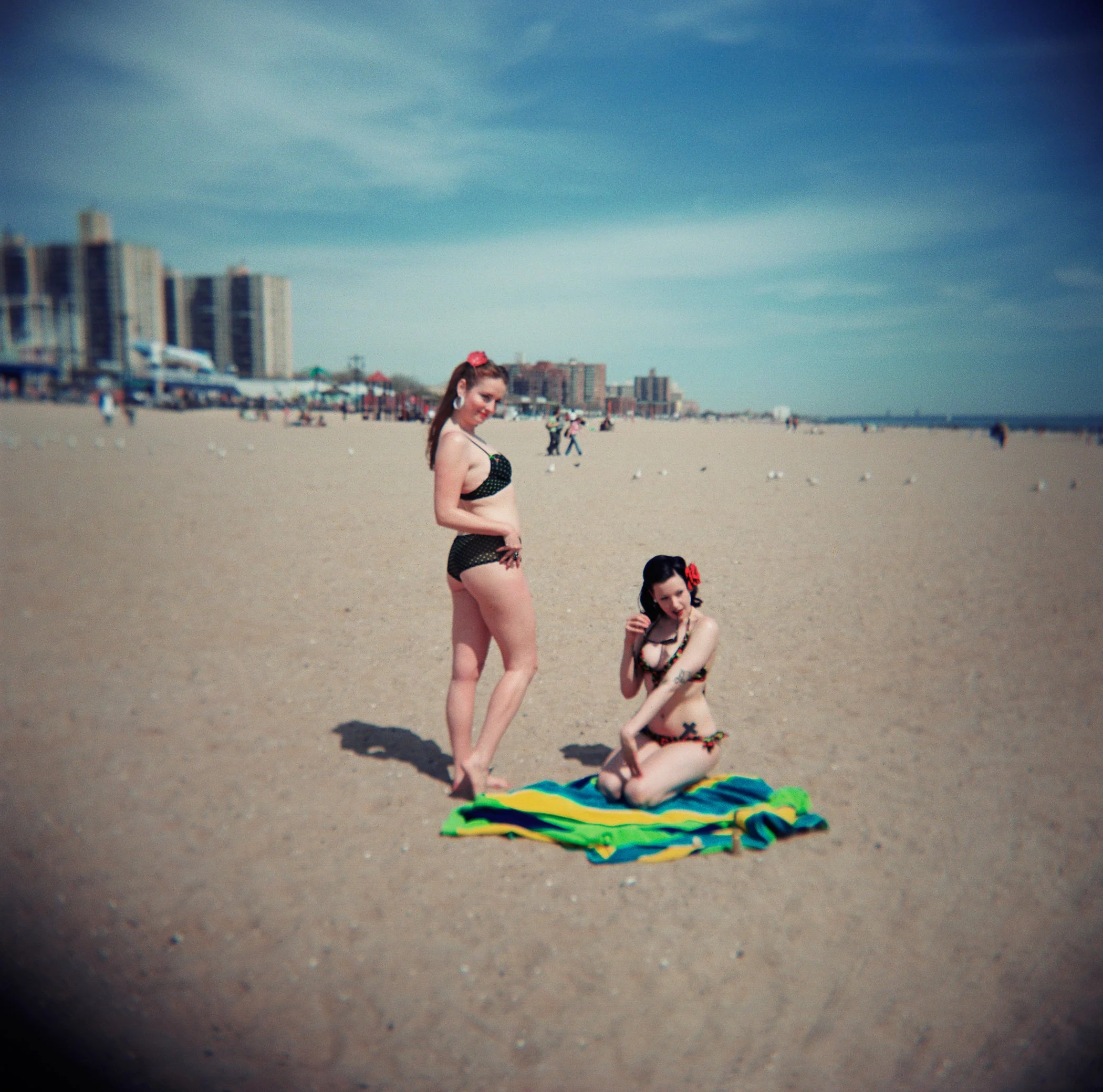
Pin-Up Girls, Coney Island, Brooklyn, 2007.
16-Year Journey: How did photographing the same place for 16 years change the way you see your hometown?
Growing up in Brooklyn, I always had an appreciation for my neighbourhood and living just across the bridge from Manhattan. I was a child of European art and philosophy students living in the neighbourhood of Clinton Hill, just on the border with Bed-Stuy, until we moved to Park Slope. My father was lucky enough to find an older couple who let my parents pay the mortgage directly to them monthly without involving a loan from a bank, something unheard of today.
Photographing through this time period, with the changes taking place, allowed me to explore neighbourhoods I would have never thought to visit in my childhood. It also made me revisit and appreciate the diversity of the people and neighbourhoods that were always around me. It was a time of rapid change but also a reminder of how things are always constantly changing, and I was witnessing parts of Brooklyn transform from what it was to what it was becoming.
As a city kid, I was intrigued with the arrival of rooftop farms and the influx of artisans from other parts of the country. This later became the focus of much of my other professional work. I had an appreciation for both the old and new Brooklyn.
Soon enough, the luxury developers arrived, and the notion of being priced out became very real. Since then, that has just snowballed into our current state of unaffordability.
This work is about Brooklyn, but it's also about my own perseverance in those years, mirroring experiences in my personal life, the loss of my family home in Brooklyn, and the fear of my own displacement as a Brooklynite.
Carlos with Tippler, Bushwick, Brooklyn, 2024 (Not included in book)
Technical Challenge: How do you work with light leaks and blurry edges from toy cameras instead of fighting against them?
I think I actually fight against the light leaks, haha. Is that bad? I also welcome the times when they happily surprise me, and the photos work even better because of them. Maybe for my next project, I should really be completely free and not tape or seal anything and welcome everything? The blurred edges are a characteristic and vary depending on the individual Holga you have. I use both the plastic and glass lens versions, my favourite being a Woca. Regarding the light leaks, there are a few places that let light in, and I seal those with bits of gaffer tape. I also carry my cameras in a shoulder tote with a changing bag, so my cameras are never exposed to the light. When I was a young child, my grandfather gave me my first camera, a plastic Diana, and he showed me how to tape up the entire camera, so maybe that stuck with me. I have always been interested in elevating LoFi or using it commercially. The work of fashion photographer Pauline St. Denis and her use of Holga for music and fashion was a big influence to me in this way. I guess that goes against the Holga’s nature, but I like the challenge. Even my book with its tipped-in photo and linen cover, I suppose, is meant to do that.
Spontaneous Moments: What's your trick for capturing quick street moments when your camera is so simple and unpredictable?
I actually do a bit of thinking ahead and set my camera appropriately. There are only a couple of things to consider. Although the camera has a set shutter speed that is somewhat fast, I do slow down and become still when capturing a moment.
I guess when photographing an event and it’s fast-paced or chaotic, I really have to think quickly, especially if I’m using flash as well, and you also need to add the time to advance the film to the next shot. This is where two cameras and sometimes two flashes come into play. I will often also take multiple shots to increase my chances of successfully capturing something or just hope for a happy surprise in the moment, if there’s no time for that.
Fire and Smoke, Sunset Park, Brooklyn, 2017
Brooklyn Changes: What differences did you notice between Brooklyn in 2007 versus 2023 through your viewfinder?
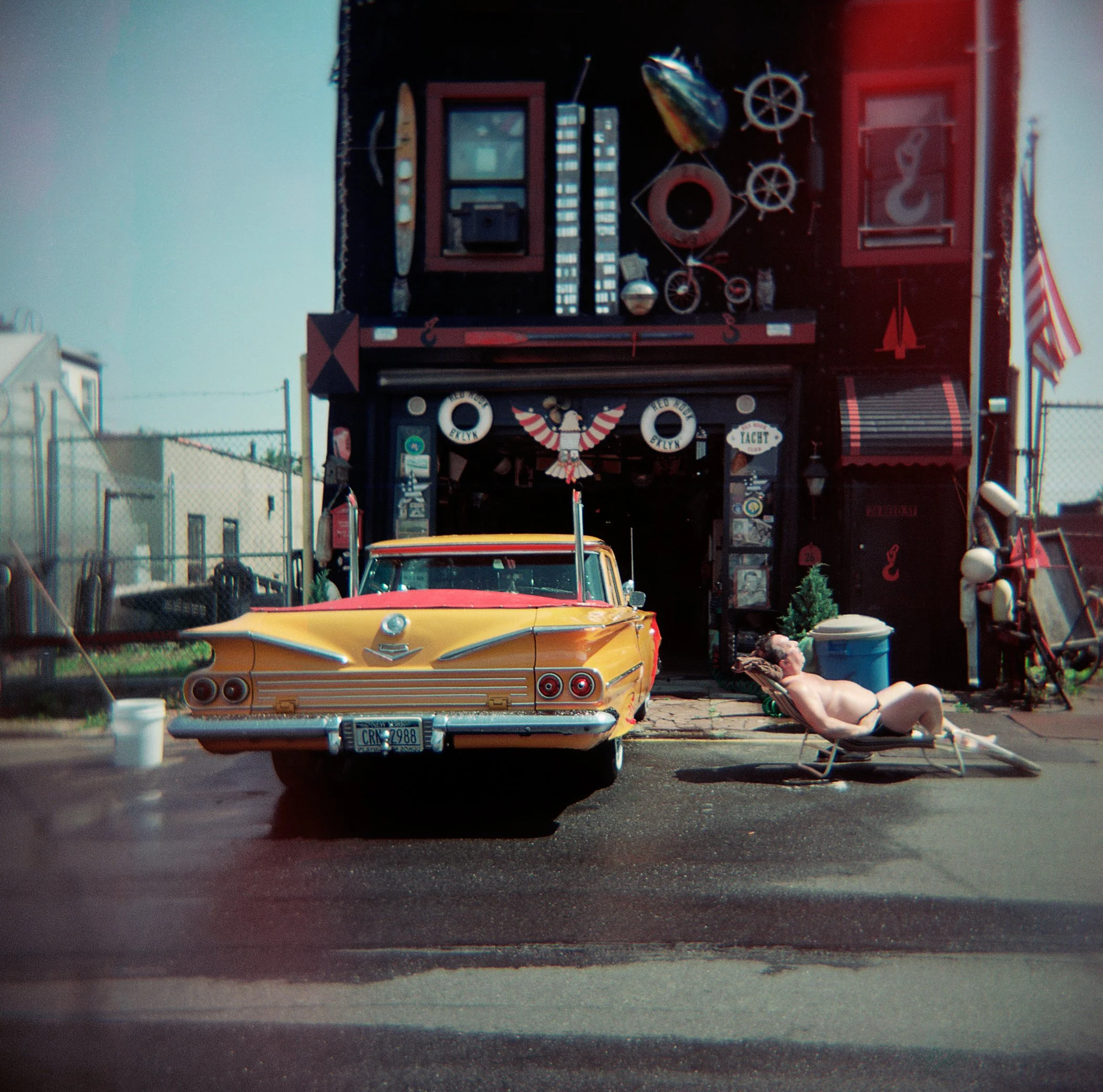
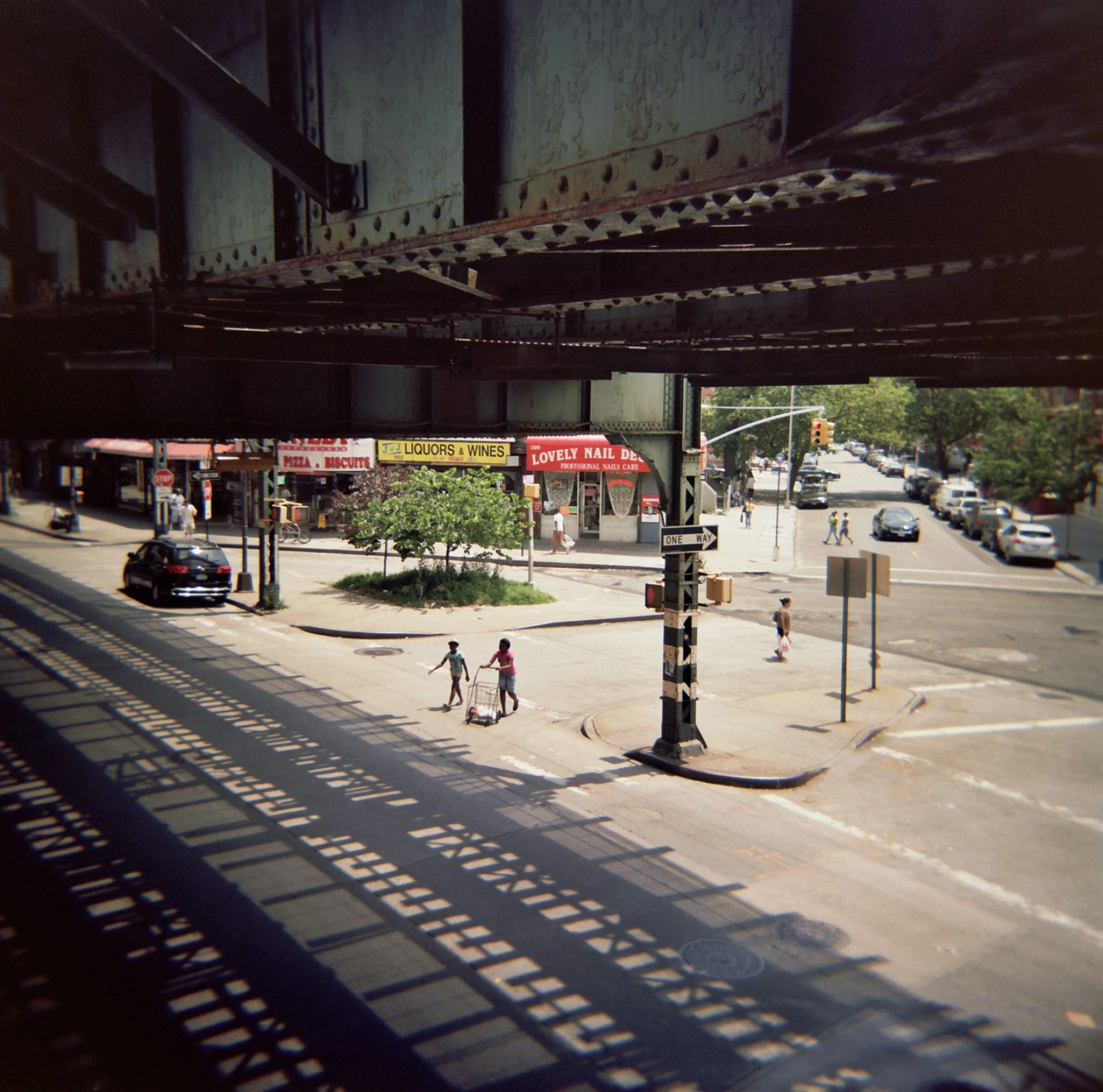
I would say the landscape was the most noticeable change during this period, and this has continued into the present day. I also witnessed a changing social and economic landscape, starting with a time of peak creativity, art, and excitement in the earlier years. I started to see urban farming taking over rooftops, and people of different backgrounds and ethnicities were living city life together. At the same time, big money started to move in, and desolate landscapes started to become developed. Streetscapes that were empty and spacious, years later, were surrounded or swallowed up by luxury development. As an example, a photograph I took of a house/garage in Red Hook, where the owner would have his vintage car parked outside and his friends could sunbathe in the middle of the street, years later was surrounded by Brooklyn Crab and Hometown Bar-B-Que restaurants, packed with tourists coming off the ferry from Manhattan. But at least his house still remains.
Sunbathing, Red Hook, Brooklyn, 2010
Film Choice: Why did you shoot on medium-format film instead of digital for a 16-year project?
I first chose the Holga camera, so medium-format film came with that choice. Also, when most of us start a project, we don’t know where it will lead or how long it will take to finish. I didn’t realise this as a project until later on, and I just liked the results and the enjoyment of shooting with film and figured I should continue with it and see where it goes. I also started getting a good response to this particular project, which was so different from the other work I did. When I started as a photographer, I was shooting slide film and developing black and white in a dark room. Soon after, everything became digital, so it was nice to have a project where I could slow down and work on it in my own time. I like the process of waiting to see what will reveal itself, maybe nothing or maybe something great.
Getting Close: How do you get people to feel comfortable when you photograph them at festivals and celebrations?
I find most people at festivals and events are actually expecting to be photographed, so they are already very comfortable with it. Overall, though, I think it’s about being courteous and respectful. I’ve seen some really rude photographers, and I think people are generally welcoming if you're kind and non-threatening. I’m always extremely grateful to those that let me photograph them; it’s like they are sharing a bit of themselves with me, and I’m doing the same with them. Sometimes I like to blend in as an observer, just happy to be included as a witness.
Oil, J’ouvert, Prospect Lefferts Gardens, Brooklyn, 2015.
Toy Camera Technique: What's the most important lesson you learned about making good photos with plastic cameras that other photographers could use?
Treat it just like any other camera, experiment with it, and have fun until you start to get the results you’re happy with. It’s really about creative joy and freedom. I think many people give up quickly with toy cameras because they are very limited with the amount of shots to a roll (12 if you are shooting square format with 120 film using a Holga), and until you learn how to shoot with them, you could easily be disappointed. If I get one great shot on a roll, I’m happy. Sometimes I get five great shots! and sometimes not one.
To discover more about this intriguing body of work and how you can acquire your own copy, you can find and purchase the book here. (Kehrer Verlag, Amazon)
More photography books?
We'd love to read your comments below, sharing your thoughts and insights on the artist's work. Looking forward to welcoming you back for our next [book spotlight]. See you then!
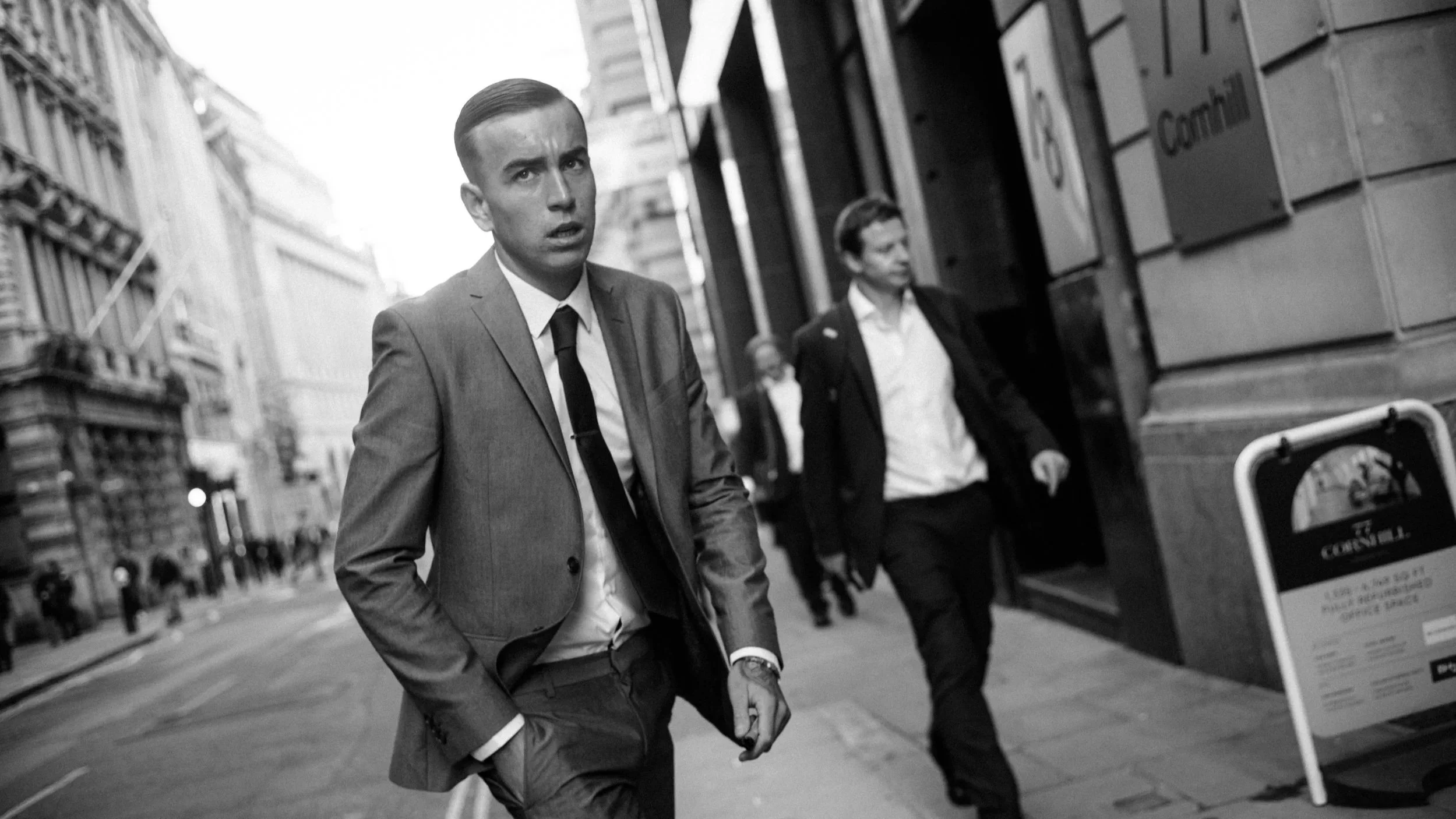
Lee Espinoza reminded Darren Vargas of his late grandfather. The photographer met the boxing coach in 2025, five years after his grandfather Esmael died. Photography Book Spotlight