AT A GLANCE
- Known for
- Photo sequences such as The Spirit Leaves the Body (1968) and Things Are Queer (1973), handwritten text on his prints, the series Empty New York, and portraits such as those of René Magritte
- Works in
- Small black and white gelatin silver prints, often in sequences, with multiple exposures and hand-applied text. Later he also painted on prints and made short films
- Also
- Portraits and fashion pictures for Vogue, Esquire, Mademoiselle and Life · lived in New York for decades with his partner, the architect Frederick Gorrée · first solo museum show at MoMA in 1970
- Agency
- DC Moore Gallery, New York
- Awards
- International Center of Photography Infinity Award for Art · ADC Hall of Fame (2004)
- Start with
- Storyteller: The Photographs of Duane Michals (Prestel, 2014)
- Links
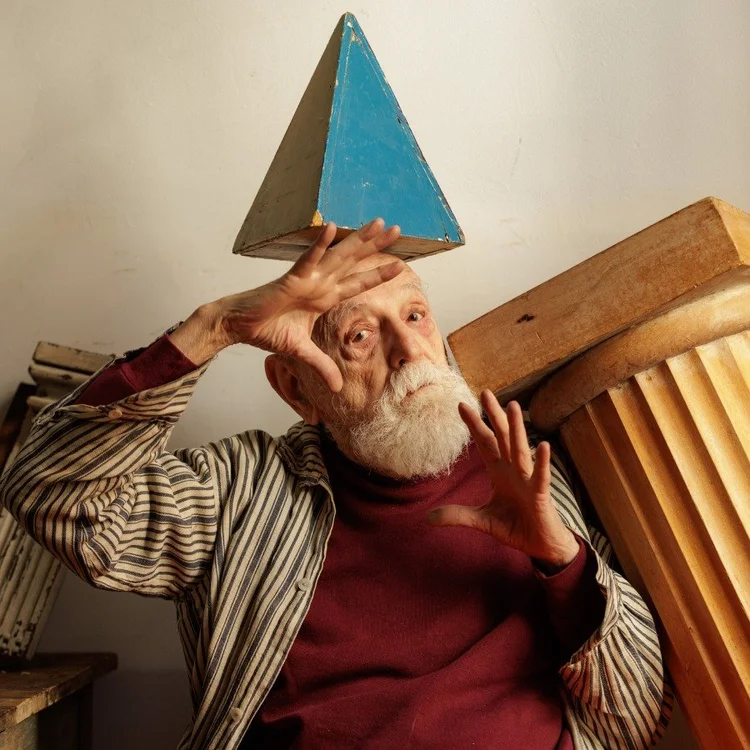
Duane Michals (1932 to 2026) was an American photographer. He was born in McKeesport, Pennsylvania, and lived in New York. He is best known for photo sequences, short series of pictures that tell a story, and for writing by hand on his prints. His best known works include The Spirit Leaves the Body (1968) and Things Are Queer (1973). He also made portraits, among them a well-known series of René Magritte.
The story
In 1958 Duane Michals was a magazine designer in New York, and a trip to the Soviet Union came his way. It was the height of the Cold War. He borrowed some money and packed a friend’s camera. The friend also wanted to lend him a light meter. Michals said no. “I refused because that meant I would be expected to take nice, serious pictures!”
So the friend explained a simple method for sunny, cloudy and indoor light. Michals used it, and the pictures turned out well. They were portraits of people he met on the street. Back in New York he made a dummy magazine from them and showed it to the art director Henry Wolf. Wolf asked who had taken the pictures. Michals said he had, and Wolf told him to become a photographer instead of a graphic designer. The art director of the New York Times soon reacted in the same way, and assignments followed.
But the street was not where he wanted to stay. His first show, at the Underground Gallery in New York in 1963, was not an easy one. Michals said later that half the people walked out. In 1964 he photographed empty diners, shops and streets in Empty New York. By the mid-1960s he had lost interest in plain documentation. So he began to stage his pictures and to link several of them into one story.
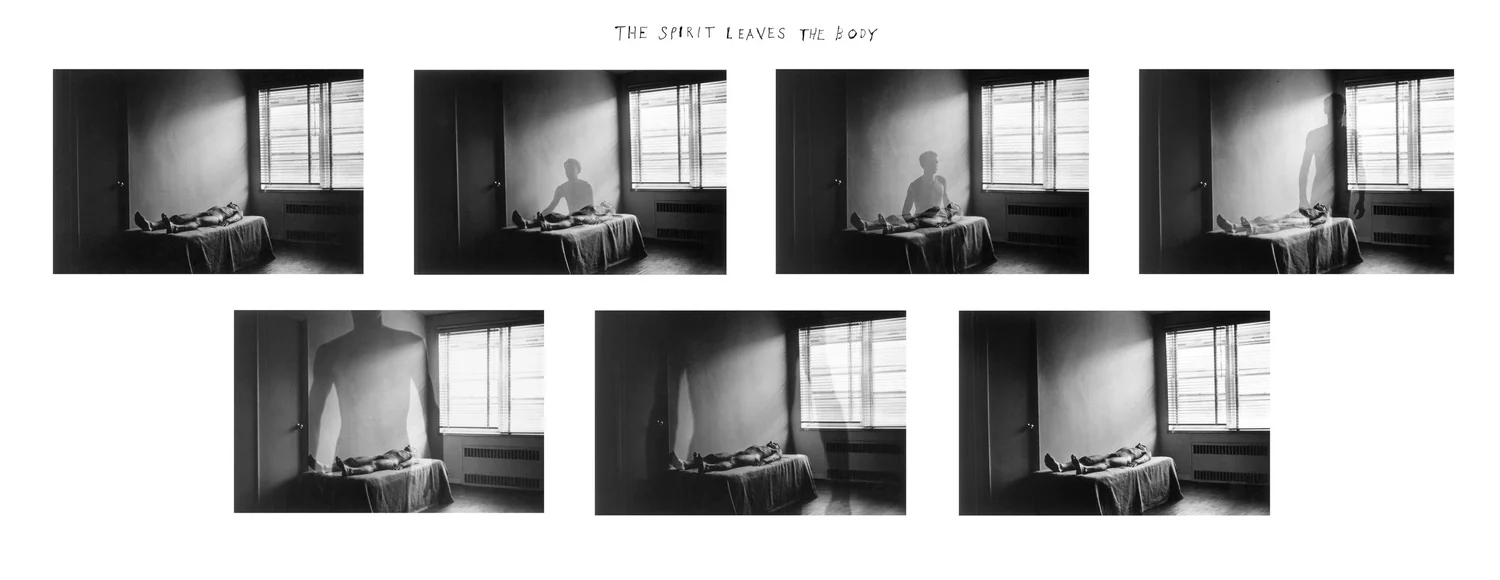
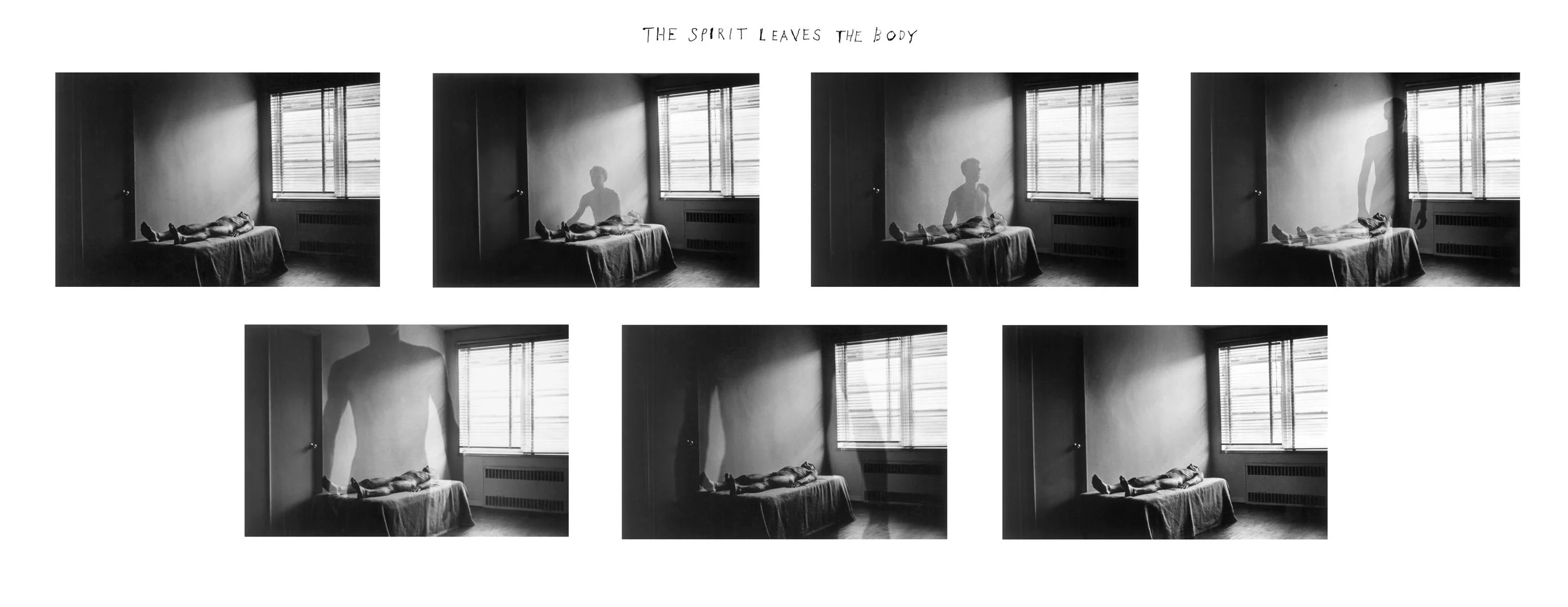
One of the first of these stories was The Spirit Leaves the Body (1968), seven pictures in a row. A ghostly form seems to rise from a man’s body and leave the room. Michals explained his aim in plain words. “I wanted to talk about life after death, of what happens when you die, so I started taking pictures that conveyed spirits leaving their bodies, because that is what I think that happens.” And he added, “I had to invent a way of expressing that idea.”
Soon he began to write on his prints as well. This worried some people. A teacher from the School of Visual Arts once asked him, alarmed, what this writing in photographs was about. Michals had an answer. A photograph describes very well, he said, but it cannot say everything. “Captions tell you what you are looking at, but my texts tell you what you can’t see.”
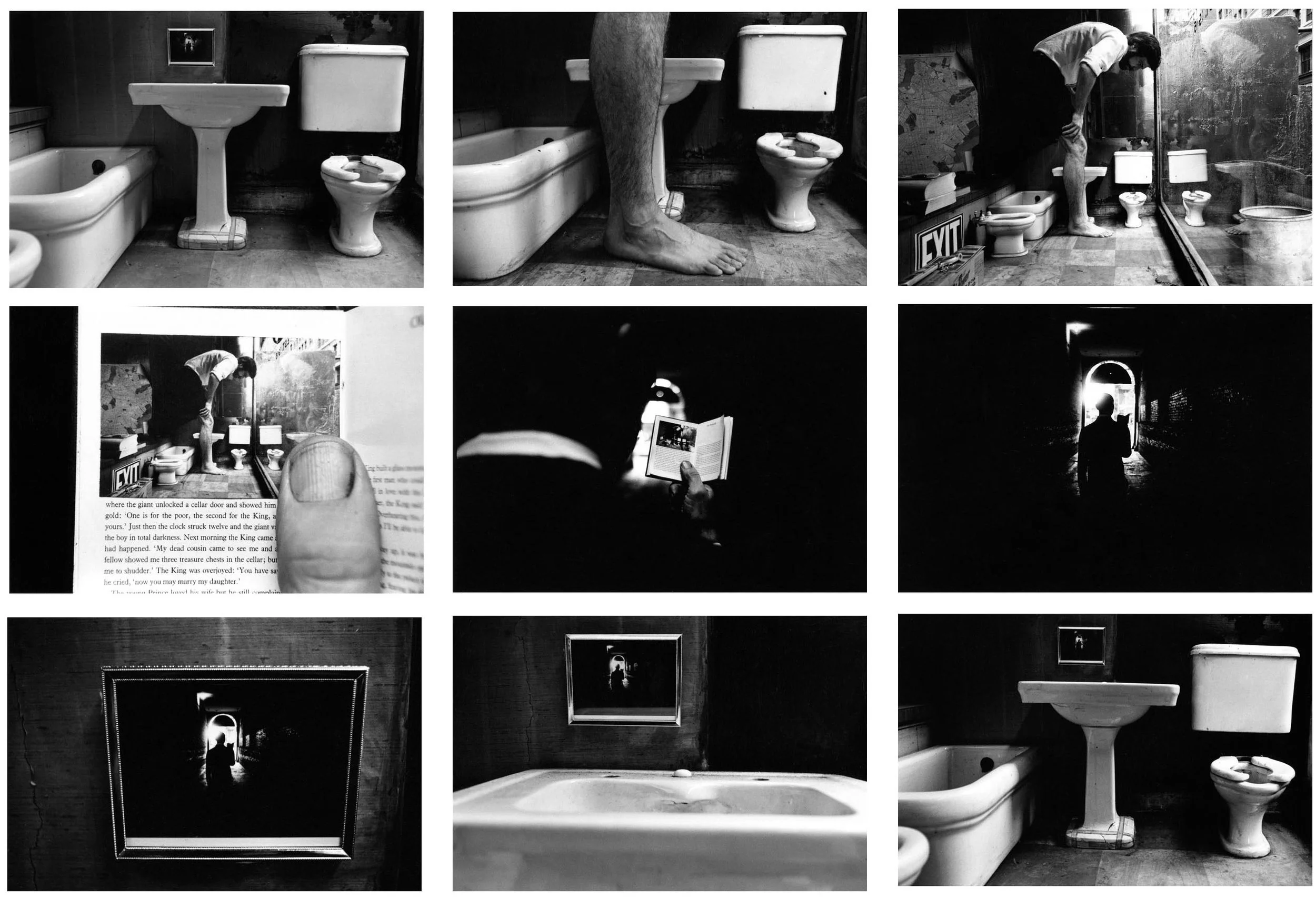
In 1973 he made Things Are Queer, nine pictures that begin and end with the same photograph. Over the years he painted on prints and made short films too. Late in life he named the one thing he wanted from a picture. “I want to know what something feels like, not what it looks like.”
The work
Michals came to photography without training and used that freedom. In 1964 he made Empty New York, early morning scenes of diners, subway cars and streets with no people in them. DC Moore Gallery says the series was inspired by Eugène Atget. Then he moved on to sequences, which borrow the frame-by-frame look of film. In Death Comes to the Old Lady (1969), a spectral form comes to an elderly woman in a rocking chair and leads her away. In Things Are Queer (1973), the first and last pictures are the same. Artforum notes that its title takes back a word that was then used as a slur.
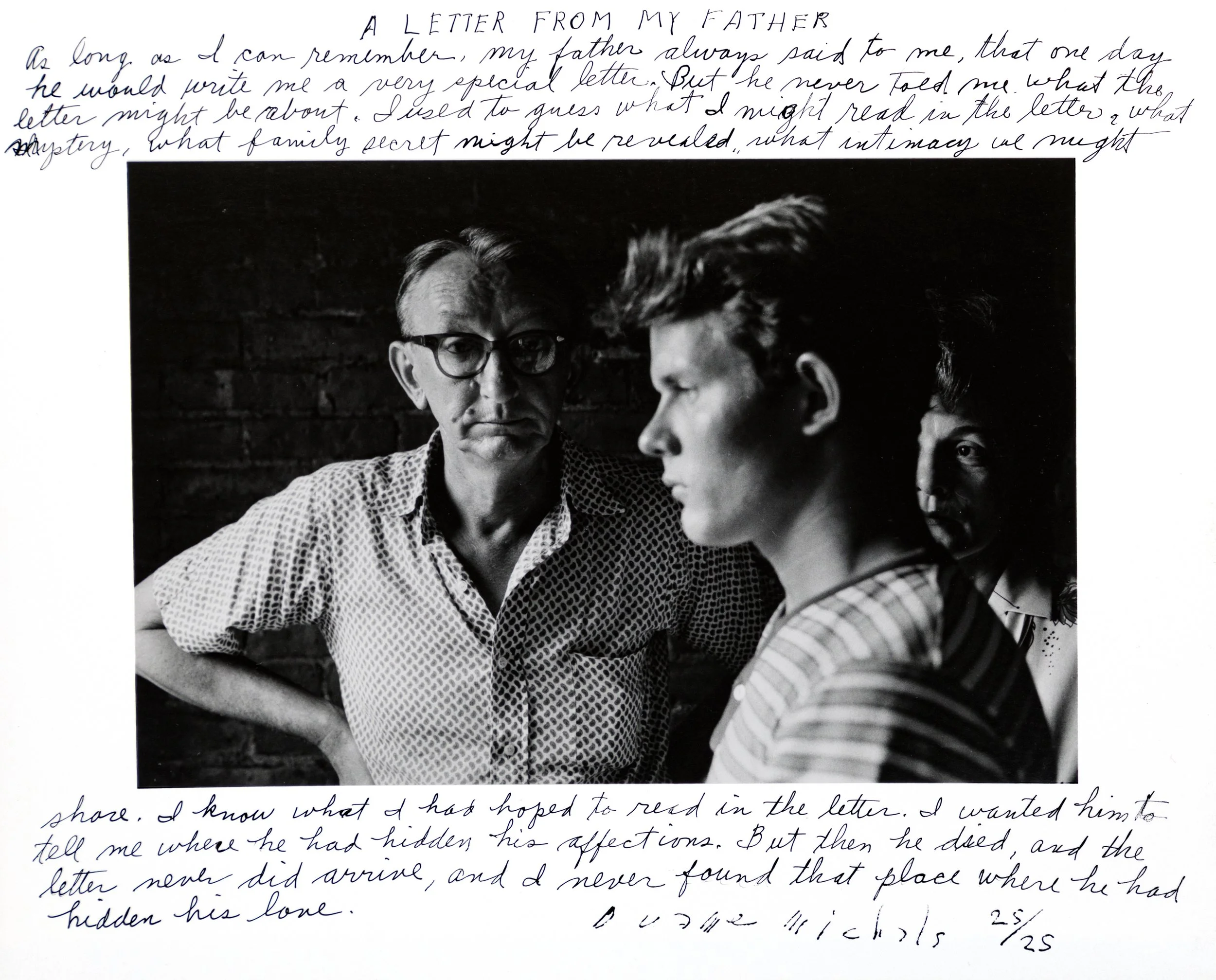
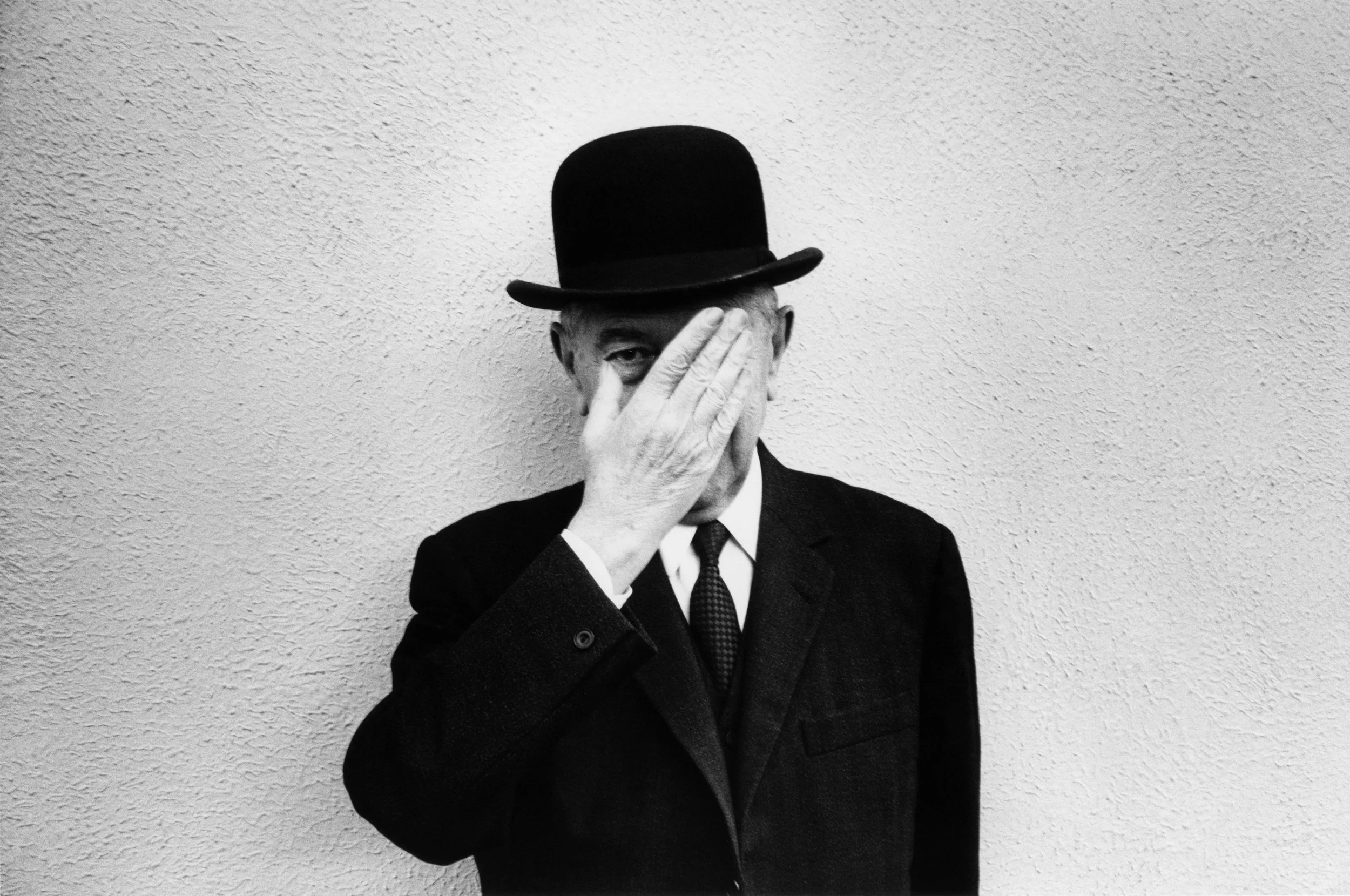
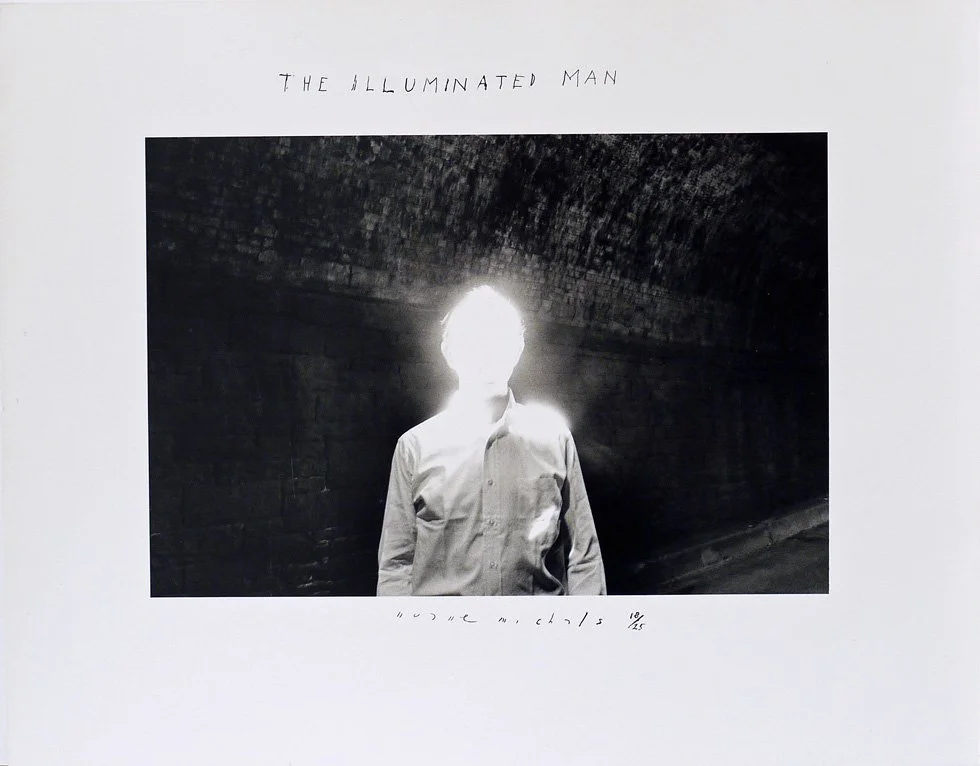
Text became part of the picture. In A Letter From My Father, 1975, and The Illuminated Man, 1968, handwriting appears on the print itself. His writing was poetic, funny and sometimes sad, often all at once. Portraits were a second thread. In 1965 he travelled to Brussels to visit René Magritte, whom he admired. They did not share a language, yet he stayed five days and made many portraits, including Magritte with Hand Over Face Exposing One Eye, 1965. They were later published in the book A Visit with Magritte (1981). Michals worked for Vogue, Esquire, Mademoiselle and Life, and he called his portraits of artists, actors and writers “prose portraits”.
He kept trying new things. He added oil paint to his gelatin silver prints and later painted on found tintypes. From 2015 he made short films with the writer and director Josiah Cuneo. DC Moore Gallery says he made more than 100 of them, and that they can be watched free on his Vimeo page. Retrospectives were held at the Carnegie Museum of Art in Pittsburgh in 2014 and 2015 and at the Morgan Library and Museum in New York in 2019.

- 1932Born in McKeesport, Pennsylvania
- 1958Travels to the Soviet Union with a borrowed camera and starts to photograph
- 1963First solo show, at the Underground Gallery in New York
- 1964Makes the series Empty New York, inspired by Eugène Atget
- 1965Visits René Magritte in Brussels and photographs him for five days
- 1968Makes the sequence The Spirit Leaves the Body
- 1970First solo exhibition at the Museum of Modern Art, New York
- 2014Storyteller retrospective opens at the Carnegie Museum of Art, Pittsburgh
- 2026Dies in New York on 9 June, aged 94
In his words
“Captions tell you what you are looking at, but my texts tell you what you can’t see.”
“I want to know what something feels like, not what it looks like.”
“I know what puddles look like. I want to know what I can’t see.”
“To photograph reality is to photograph nothing.”
“I wanted to talk about life after death, of what happens when you die, so I started taking pictures that conveyed spirits leaving their bodies, because that is what I think that happens.”
Photography, Reconsidered follows questions like this through the work of other photographers.
Gear
No camera or lens of Michals is stated by two sources, so none is listed here. These three things are documented.
Small gelatin silver prints in a row: DC Moore Gallery lists his sequences as sets of small gelatin silver prints, for example seven prints of 3 3/8 x 5 inches each for The Spirit Leaves the Body.
Multiple exposures: The Carnegie Museum of Art says Michals experimented with double and triple exposures. DC Moore Gallery names multiple exposures as one of the three marks of his work, with sequences and text.
Handwritten text on the print: Many of his works are listed as gelatin silver prints with hand-applied text. He wrote directly on the finished print.
Books
Storyteller: The Photographs of Duane Michals (Prestel, 2014). This book accompanied the Carnegie Museum of Art retrospective. It was written by the curator Linda Benedict-Jones, with essays by Allen Ellenzweig, Marah Gubar, Adam Ryan and Aaron Schuman. It shows more than 75 works, including early sequences such as The Spirit Leaves the Body, and has an annotated timeline of his life. It is a good first book for new readers.
Duane Michals: Portraits (Thames & Hudson, 2017). This 176-page book gathers his portraits of artists, actors, musicians and writers, among them Johnny Cash, Tilda Swinton, Andy Warhol and René Magritte. Many were not published in book form before. It also has Michals’s own comments and memories. It is for readers who like portraits and stories about the sitters.
Illusions of the Photographer: Duane Michals at the Morgan (The Morgan Library & Museum, 2019). This small paperback of 87 pages is a conversation between Michals and the Morgan curator Joel Smith. It was recorded in front of artworks in his studio and at the Morgan in the winter of 2019. It is for readers who want to hear him talk about his own work.



Kirk Truman is a British portrait and fine art photographer who works from his studio in Bloomsbury, London.