AT A GLANCE
- Known for
- Low aerial views of deserts, farms and cities, shot from a motorized paraglider
- Works in
- Color
- Camera
- Canon EOS 5DS R with a 24-70mm zoom; motorized paraglider and drones
- Also
- Long-time National Geographic photographer; trained in geophysics at Stanford; National Geographic Adventurer of the Year 2008
- Start with
- Desert Air (Abrams, 2012)
- Links
George Steinmetz (born 1957) is an American photographer who works from the air. He flies a motorized paraglider, and later also drones, low over deserts, farms and cities. He has made more than 30 major stories for National Geographic and several books, including Desert Air, The Human Planet and Feed the Planet.
The story
On a training flight in Arizona, George Steinmetz took off without trouble. Then he spent too much time taking pictures. Over Monument Valley, his motor ran out of gas, and he had to make an emergency landing in the desert. His travel companion was frantic when he found him walking out of a dry wash, still wearing all his flight gear. Steinmetz felt the opposite. “I was ecstatic: The worst-case scenario was not so bad after all,” he later wrote.
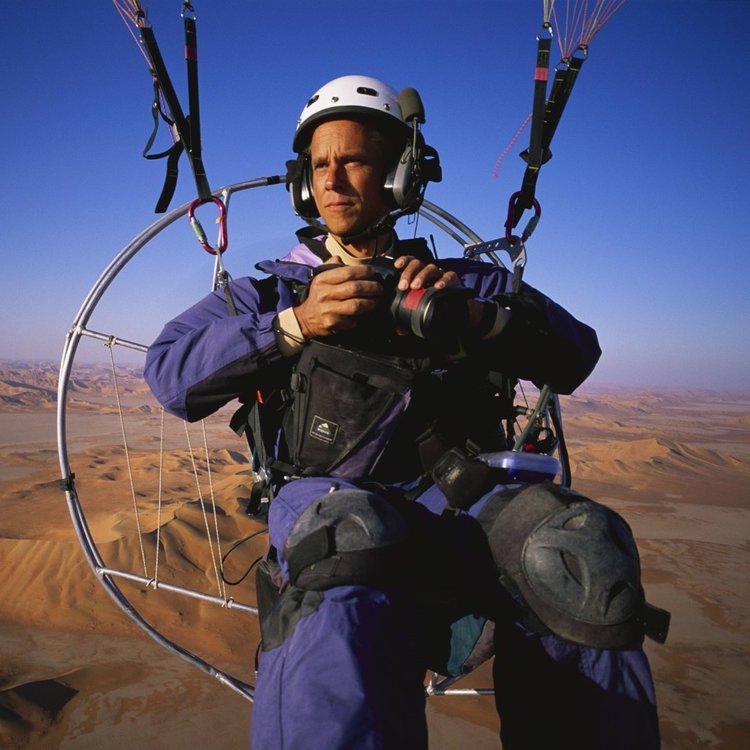
Africa had pulled him there. At 21 he hitchhiked across the Sahara with a borrowed 35mm camera. Even then, he dreamed of seeing the continent’s patterns from the sky. In 1996 National Geographic agreed to pay for a set of aerial photographs. But small planes move at about 60 miles an hour. “I had a hard time explaining to a pilot where my shooting eye told me to go,” he wrote. In 1997 his bush pilot for the Sahara backed out. So he learned to fly himself, in a motorized paraglider: a wing, a motor on his back and a single seat. He calls it his “flying lawn chair.”
His first assignment with it was a volcanic crater in the Sahara, about eight miles wide. He had to climb to almost 6,000 feet. “I was really nervous up there,” he said. What calmed him was the work itself. “I find whenever I get into a situation, taking pictures is very helpful because it helps me think about things I can control.”
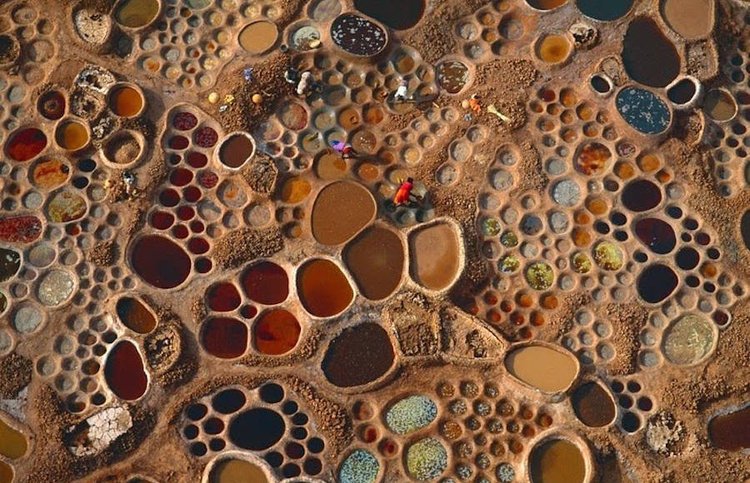
A few months after his lessons, he was flying over northern Niger. At Teguidda-n-Tessoumt, people make salt in clay pools of brine. From the air, the pools look like a mosaic in the desert floor.
The deserts became a long project. He prefers to fly only 100 to 500 feet up, low enough to see people and what they are doing. He calls it “street photography from the sky.” In 2004, near Wadi Mitan in Oman, he looked straight down on a herd of camels walking out to graze. Their long shadows stretch across the sand. Desert Air, his book on the world’s driest places, took 15 years.
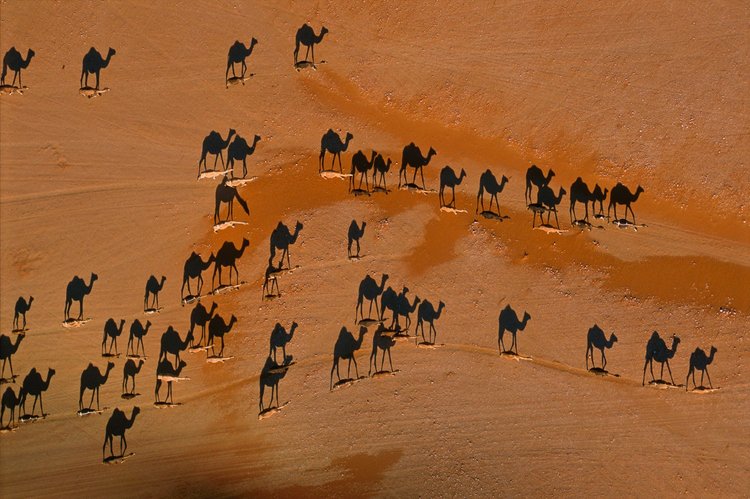
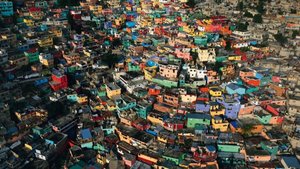
Later he turned to how people change the planet, and to how the world grows its food. That Arizona landing taught him he could survive a mistake in the air. It never made flying the point. “I’m a photographer who flies, not a pilot who takes pictures.”
The work


- 1957Born on October 1 in Beverly Hills, Los Angeles
- 1979Graduates from Stanford University in geophysics
- 1996National Geographic funds his aerial portfolio of Africa
- 1997Learns to fly a motorized paraglider and photographs Niger from the air
- 2008Named a National Geographic Adventurer of the Year
- 2012Publishes Desert Air, 15 years in the making
- 2020Publishes The Human Planet with Andrew C. Revkin
- 2024Publishes Feed the Planet
- 2025Receives the Figaro Magazine Lifetime Achievement Visa d’or at Visa pour l’Image
Lessons
Know your subject. Steinmetz studied geophysics, and his first National Geographic story was about oil exploration. He says knowledge matters more than photographic skill.
Find the right height. He likes to work a few hundred feet up. From there you see the big pattern and the people in it at the same time.
Let the picture explain. He wants each photograph to show how a landscape works, not only how it looks.
Try this: photograph one place from above, from a window, a bridge or a hill. Look for a pattern that you cannot see from the ground, and make sure one person or small detail gives it scale.
Gear
Motorized paraglider: his main aircraft since 1997. A wing, a motor worn on the back and a single seat. It flies at about 30 miles an hour and packs into three bags that travel as airline luggage.
Canon EOS 5DS R: a high-resolution DSLR. He says it lets him do with a 35mm camera what once needed medium format.
Canon EF 24-70mm f/4L IS USM: his favorite lens. He says he takes about three-quarters of his pictures with it.
Drones: for precise work at close range, such as parts of his climate and food projects.
Books
Desert Air (Abrams, 2012). The first big photographic collection of the world’s extreme deserts, the places that get almost no rain. Steinmetz worked on it for 15 years, flying over deserts such as the Gobi, the Sahara and Death Valley. Short texts tell the story of his hard expeditions. A good first book for anyone who loves landscape, pattern and the desert.
The Human Planet: Earth at the Dawn of the Anthropocene (Abrams, 2020). About 200 color photographs on 256 pages, with text by the science writer Andrew C. Revkin. It grew from a New York Times Magazine assignment to photograph climate change from the air on all seven continents, and from a new look at 30 years of his archive. It shows farms, mines, cities and wild places side by side. It came out for the 50th anniversary of Earth Day. For readers interested in how people reshape the Earth.
Feed the Planet: A Photographic Journey to the World’s Food (Abrams, 2024). A 256-page book with a foreword by Michael Pollan and an introduction and captions by the environmental journalist Joel K. Bourne Jr. Steinmetz spent about ten years photographing farming, fishing, aquaculture and meat production in more than 36 countries, from small traditional farms to huge agribusiness. It traces everyday food back to the land and sea. It won the 2025 Wainwright Prize for Illustrative Books. For anyone curious where their food comes from.
In his words
“I fly for pictures. If I don’t have a camera I don’t go flying.”
“What I love to do is take pictures of things that people haven’t ever seen before.”