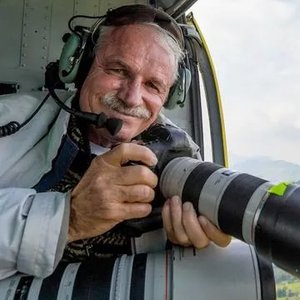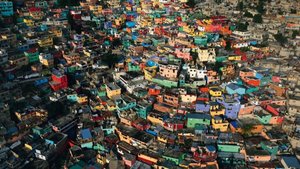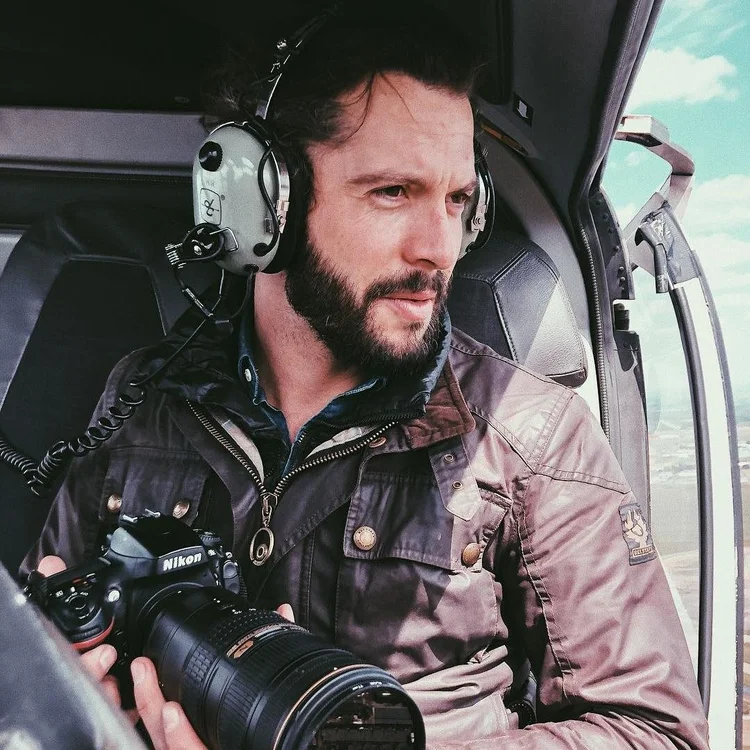
Tommy Clarke (born c. 1986) is a British aerial photographer. He is self-taught. Leaning out of doorless helicopters and small planes, he points his camera straight down, and beaches, boats and salt ponds turn into shapes and colours that look almost like paintings.
The story
In 2011, in Sydney, Tommy Clarke had saved enough money for exactly one hour in a helicopter. He asked the pilot of the small Robinson R44 to take off the passenger door. The tail end of a storm still hung over the beaches. But he could not afford to lose his deposit, so they flew. Below him, swimmers in an ocean race ran into the rough green sea. He pointed the camera straight down. “What I ended up with was a set of photos that changed my life,” he says.
Photography was never the plan. Born in Bournemouth, he spent much of his childhood on the beach. He rowed, dreamed of the Olympics and wanted to become a physiotherapist. Then, as a teenager, he broke his back in a snowboarding accident. To stay part of the team, he borrowed his mum’s old camera and photographed his friends in their boats. Later came school portraits, then fashion.
But in Sydney he felt stuck. He wanted a new challenge: beaches seen from above. Afterwards he sent a picture to the official Facebook page of Australia. It got 100,000 likes in 24 hours. Someone at Vodafone saw it and licensed the photo, which paid for that flight and a few more. “They were my love letter to the beach,” he told Marie Claire.
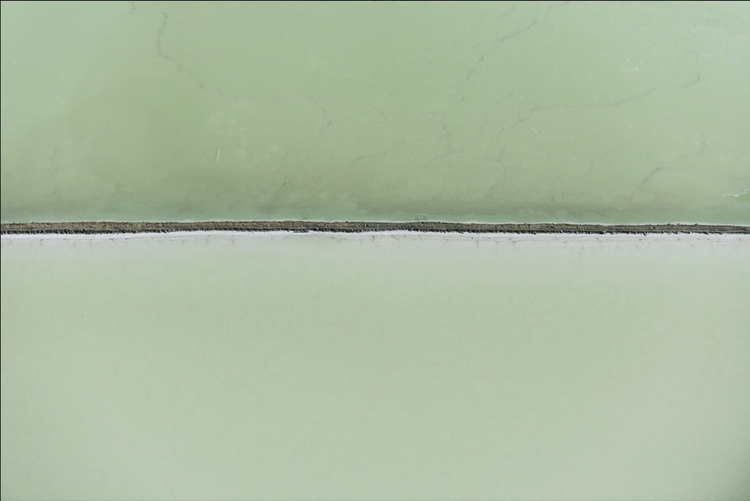
Since then he has flown over coasts from San Francisco to Gran Canaria. Before each shoot he studies satellite images, the angle of the sun and the tide times. He looks for places where the colour is already there, so he does not need Photoshop. The painters Mark Rothko and Barnett Newman led him to the salt ponds of Utah. Utah Green comes from that search.
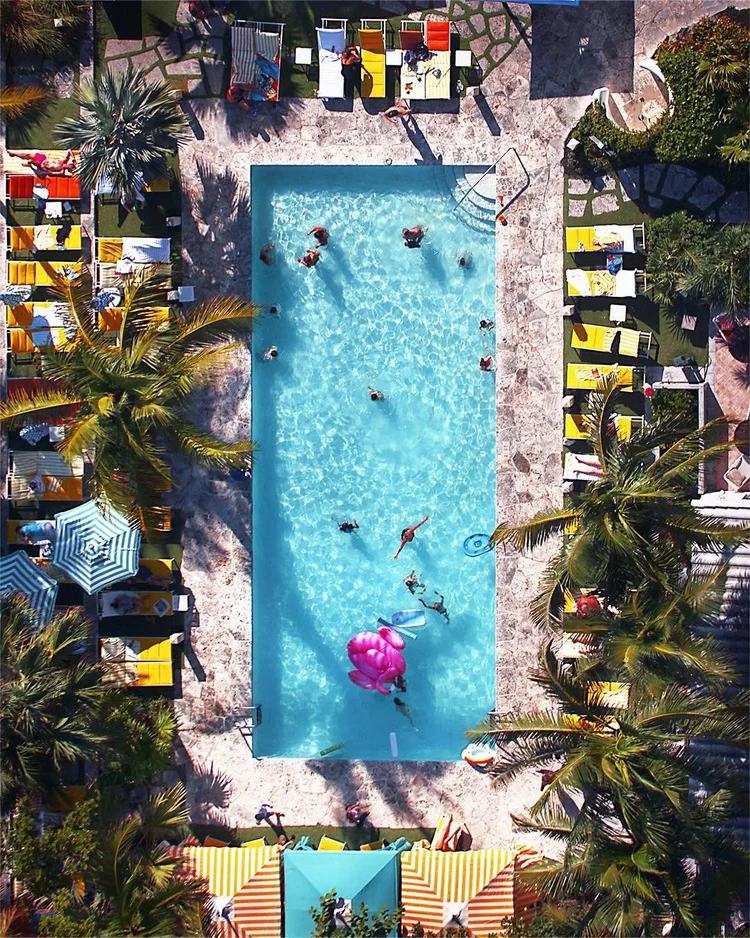
Over Miami in 2019, he looked down on a bright blue pool, its swimmers and one pink float. That picture is Miami Beach Pool.
One shoot in Iceland lasted eight hours, over glacial lakes and rivers full of swirling colour. His pilot, Haraldur, died in a crash not long after, while showing other travellers the island he loved. On that first flight in Sydney, there was no time to wait for better weather. Today Clarke is in no hurry. “I haven’t actually done a shoot since then – not because I’ve retired from aerial photography, but I think I’m just waiting for the next one to be perfect.”
The work


- c. 1986Born in Bournemouth, England
- 2011First aerial shoot, from a helicopter over Sydney’s beaches
- 2014Exhibition Ship to Shore in London
- 2015Exhibition Salt at Rosewood, London
- 2016Exhibition Up in the Air at The Old Truman Brewery, London
- 2017His aerial prints appear on a Marks & Spencer menswear collection
- 2017Exhibition Iceland at The Old Truman Brewery, London
- 2019Photographs Martinique from a small plane with the Leica SL2
- 2021Eight of his works join the Art Store of Samsung’s The Frame
Lessons
Plan with maps. Clarke planned his shoots with Google Earth and satellite images. He worked out the sun angle and checked the tides, because a low-tide beach with wet sand is not photogenic.
Find colour, don’t add it. He looks for places that bring colour and texture naturally, like salt ponds, instead of adding the wow factor in Photoshop.
Shoot straight down. Pointing the camera directly down takes away scale and perspective. The viewer is not sure at first if it is a painting or a photograph.
Try this: find a high place, like a bridge, a tower or an upper window, and point your camera straight down at a beach, a pool or a car park. Use a fast shutter speed, keep the horizon out of the frame and place your main subject off-centre, using the rule of thirds.
Gear
Clarke shoots by hand from aircraft with the doors removed. He has never switched to drones.
Nikon D800E: his main camera in the mid-2010s, after a D300 and a D3S. He has used Nikon for nearly 20 years, so he can change settings fast while hanging out of a helicopter.
Nikon 70-200mm f/2.8 VR: his go-to aerial lens. He recommends at least 1/500 sec, f/4 or higher and a low ISO.
Leica SL2: he used it with the 90-280mm SL lens to photograph Martinique from a small plane for Leica.
His first flight was in a Robinson R44 helicopter. For the Useless Loop salt mine series in Western Australia, he flew in an old 1960s Cessna with no doors.
In his words
“I was already a professional photographer shooting fashion editorial and commercial projects, but I wanted my photos to wow people without the need for filters or editing.”
“The colors may be the most important part of my photos. It’s what first catches the eye and it’s why my photos hang on walls around the world.”