AT A GLANCE
- Known for
- Joyful pictures of speed, sport, family life and fashionable Paris, many made as a boy and a teenager
- Also
- Painter; kept a diary all his life; first living French photographer to give his whole photographic work to the State (1979)
- Archive
- Donation Jacques Henri Lartigue; albums held by the Médiathèque du patrimoine et de la photographie (Ministry of Culture)
- Start with
- Jacques Henri Lartigue: The Invention of an Artist (Textuel, 2012)
- Links
Jacques Henri Lartigue (1894 to 1986) was a French photographer and painter. He began as a boy, taking pictures of cars, planes, sport and his family. He was almost unknown as a photographer until 1963, when the Museum of Modern Art in New York showed his work.
The story
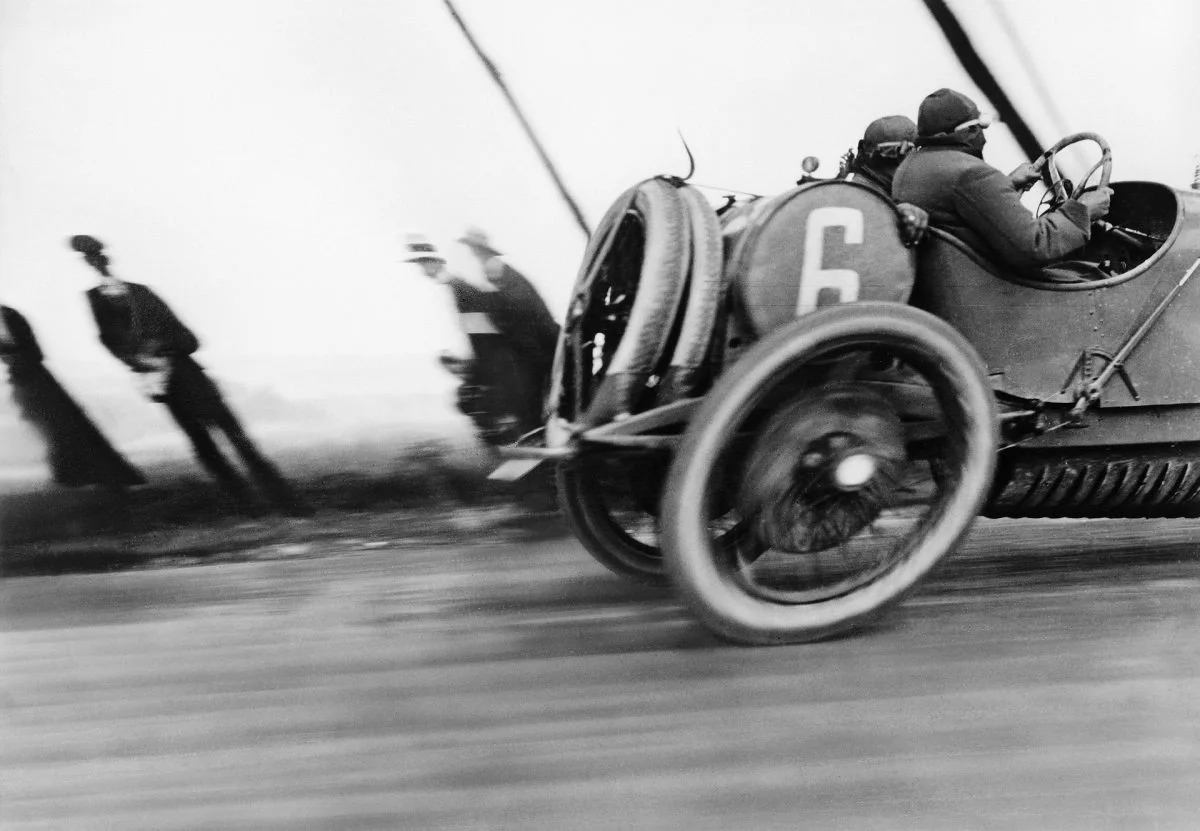
In June 1912, an 18-year-old stood at the side of a racing road near Le Tréport, in northern France. He had a camera. His tutor called out the car numbers, and others in the group noted the times.
In his diary he described the moment: “The second one is coming. It’s Boillot with Peugeot. I shoot as it speeds by at 180 and pan the camera to keep it in view. It’s the first time I’ve tried this!”
He wanted to keep the car in view, so he turned the camera with it. In the famous picture, the car is sharp. The road and the people beside it are not.
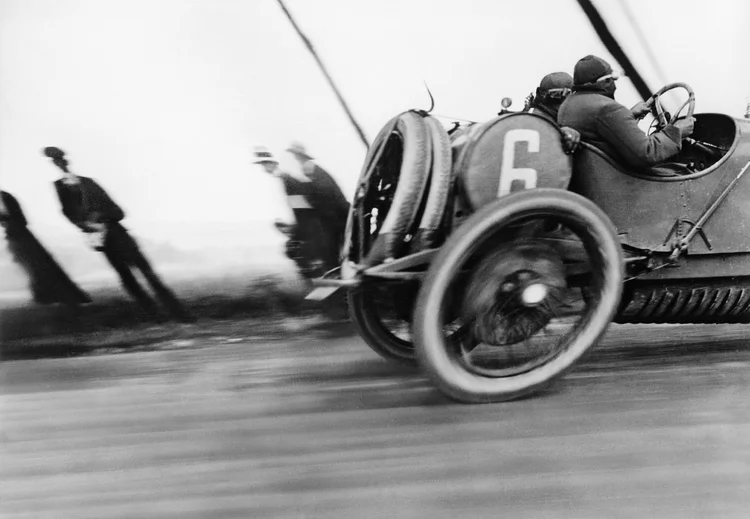
Lartigue did not think much of the result. The Donation Jacques Henri Lartigue says he found the image blurry, cropped and distorted, even a failure. Today it is seen as an icon of twentieth century photography.
The caption is less simple. In his album, Lartigue wrote under the print: Automobile Delage, Grand Prix de l’Automobile-Club de France, Le Tréport, 26 June 1912. The researcher David E. Junker says the car is a Théophile Schneider that raced in the 1913 Grand Prix. The Donation’s own later page calls the picture René Croquet on a Théo Schneider racing car, 1913, and says Lartigue labelled it with the 1912 Grand Prix. No explanation has been found in his journals.
The picture sat in albums for fifty years. Lartigue became a painter and showed his paintings in Paris from 1922. In 1962 he sailed to New York with his wife Florette. There he showed his early photographs to Charles Rado of the Rapho agency. Rado passed them to John Szarkowski, the newly appointed head of photography at the Museum of Modern Art.
In 1963 the museum gave him a solo show. That year Life magazine also printed a picture spread. Lartigue was in his late sixties, and he said later that it came as a surprise.
His love of capturing the moment started long before any camera. The 1963 museum catalogue quotes his own memory of a small boy who believed he had found a trick: by opening and shutting his eyes in a certain way, he could keep the pictures that pleased him. He remembered it like this: “It was a superhuman invention! I caught it all! the colors! the sounds, the true measure of things!”
The work
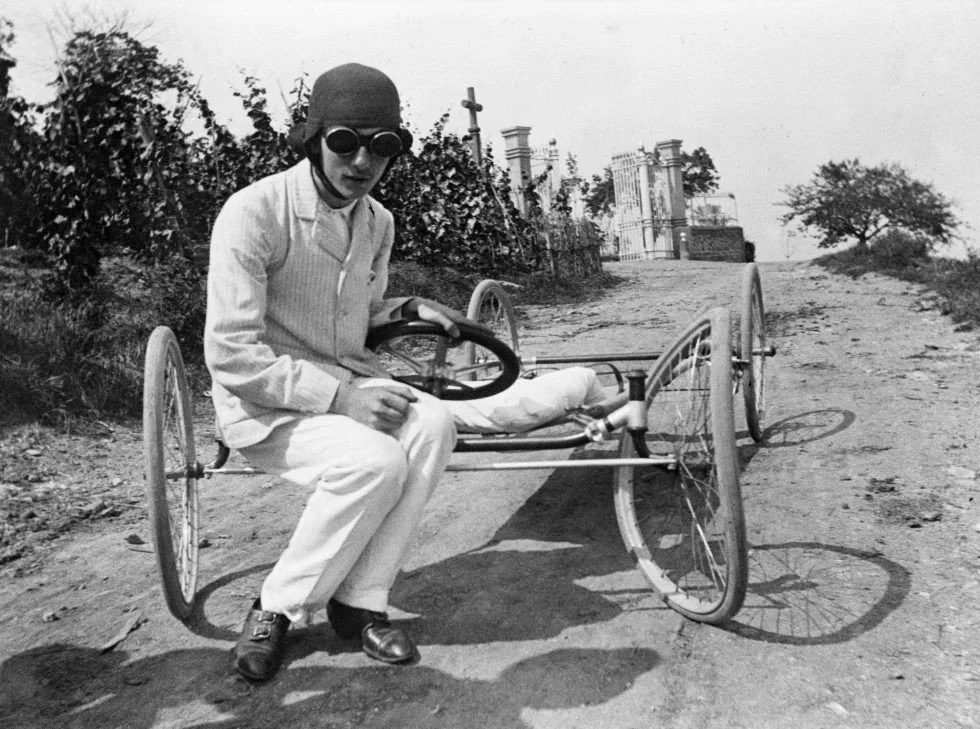
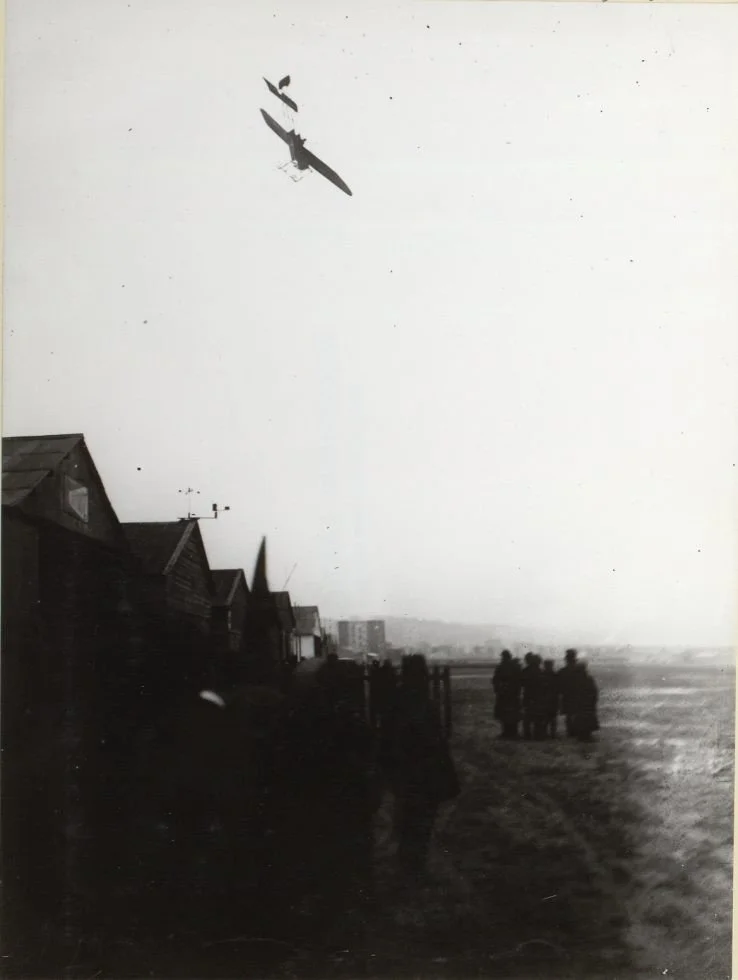
Lartigue photographed the life around him. His father and his older brother Maurice, called Zissou, were fascinated by cars, aviation and the sports of the day, and so was he. He photographed Zissou’s inventions, such as a bobsled on wheels at the family château of Rouzat. He photographed planes at Issy-les-Moulineaux, including one flown by Roland Garros.
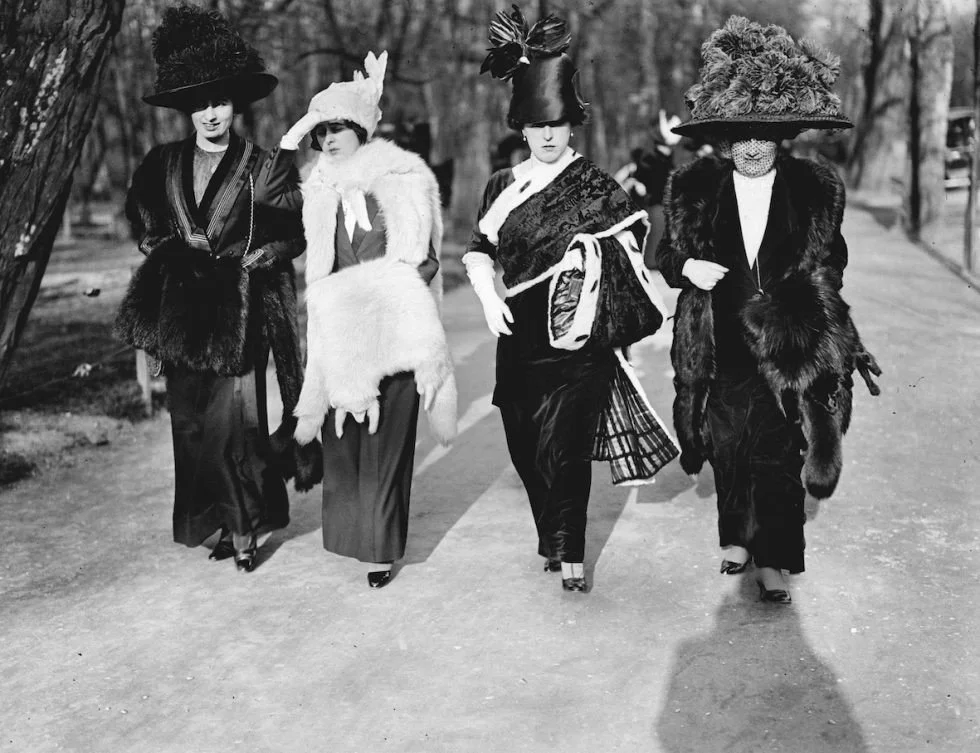
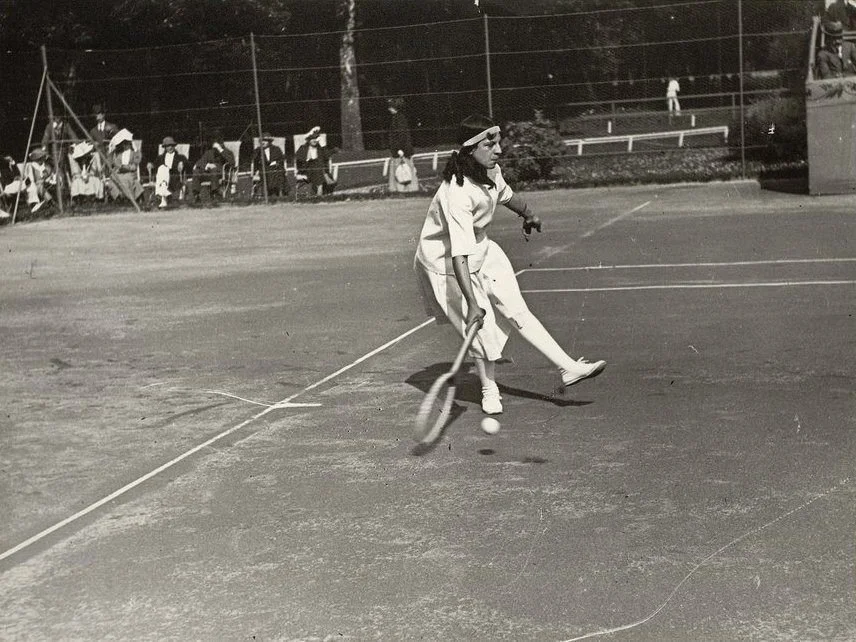
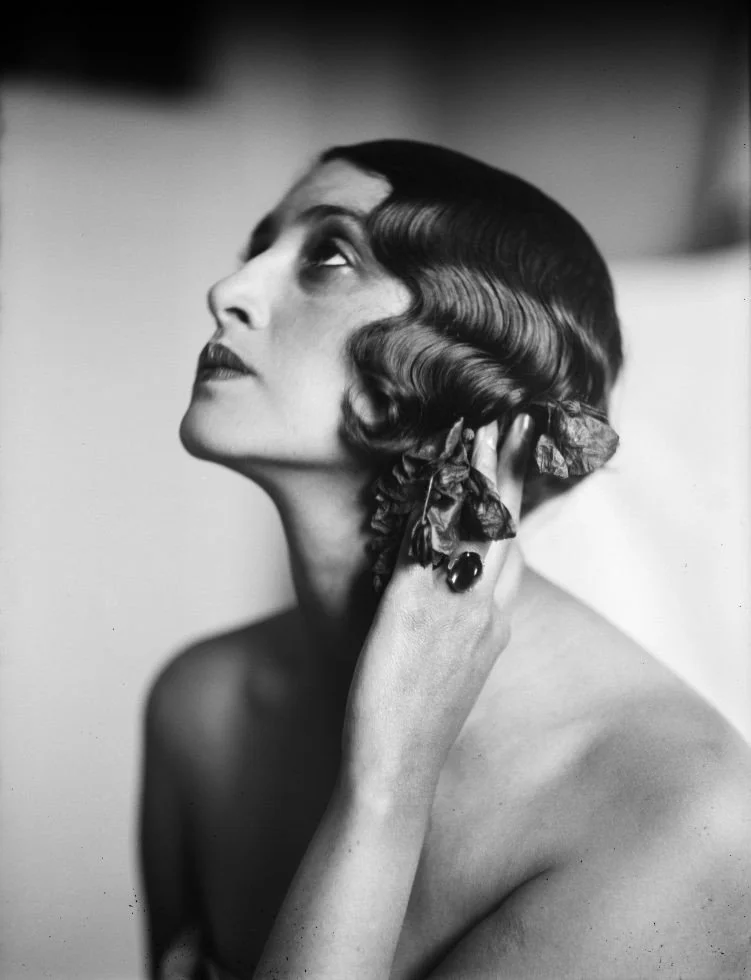
In Paris he walked in the Bois de Boulogne and photographed the fashionable women of the Avenue des Acacias in 1911. Later he photographed the tennis player Suzanne Lenglen at the French championships in 1914. In 1930 he met the model Renée Perle, who was his companion and favourite model for two years.
He also kept a diary and glued his prints into large albums, with captions. The French State now holds 126 of these albums. When he died he left more than 100,000 photographs, 7,000 diary pages and 1,500 paintings.
For many years he earned his living as a painter, not as a photographer. After 1963 his photographs travelled the world. In 1974 the French president Valéry Giscard d’Estaing asked him to make his official portrait.
- 1894Born on 13 June in Courbevoie, near Paris
- 1902Receives his first camera from his father, according to the Donation
- 1911Photographs the fashionable women of the Avenue des Acacias in Paris
- 1912Photographs a racing car at the Grand Prix of the Automobile Club of France, near Dieppe
- 1922Shows his paintings in Paris, the start of his career as a painter
- 1962Shows his early photographs to Charles Rado in New York, who passes them to John Szarkowski
- 1963Solo show at the Museum of Modern Art, New York, and a picture spread in Life
- 1979Gives all his photographic work to the French State
- 1986Dies in Nice
Lessons
Photograph what you love. Lartigue photographed cars, sport, his brother’s inventions and the women of the Bois de Boulogne. These were the things that excited him.
Try the new move, even if it may fail. At the 1912 race he tried panning for the first time. He later thought the result weak. It became his best known picture.
Write down what happened. He kept a diary and captioned his album pages all his life. Those notes now help us understand his pictures, and even question them.
Try this: Stand beside a road and follow a passing bicycle with your camera, turning your body with it. Take ten pictures. Pick one and write one line about what you tried, as Lartigue did in his diary.
Gear
The sources do not name one camera for the famous 1912 picture. What they state is simple.
Cameras from his father: Lartigue’s father Henri gave him cameras from childhood on. The Donation says his father gave him his first camera, and the 1963 museum catalogue also says he was given a new hand camera as a boy. Both sources say little about the exact models.
Books
Jacques Henri Lartigue: The Invention of an Artist (Textuel, 2012). Written by Kevin Moore and published in Paris by Textuel in 2012. It has 368 pages. It follows how Lartigue the family photographer became an artist. It suits readers who want a long and serious study.
Lartigue, Life in Color (Abrams, 2016). The English edition of a book first published by Éditions du Seuil in 2015, with texts by Martine d’Astier and Martine Ravache. It shows Lartigue’s colour work. It is a good choice for readers who know only the black and white pictures.
A Sporting Life (Actes Sud, with Hermès, 2013). Published in Arles in 2013 with texts by Thierry Terret and Anne-Marie Garat. It has 252 pages. It looks at Lartigue and sport, from cars to tennis. It is for readers who like his action pictures.
Lartigue, l’album d’une vie, 1894 à 1986 (Éditions du Seuil, 2003). Edited by Martine d’Astier, Quentin Bajac and Alain Sayag for the 2003 retrospective at the Centre Georges Pompidou. It is in French. It is for readers who want to understand his albums as life stories.
In his words
“The second one is coming. It’s Boillot with Peugeot. I shoot as it speeds by at 180 and pan the camera to keep it in view. It’s the first time I’ve tried this!”
“I was only a spectator, but secretly, deep inside me, I had made a wonderful discovery!”
“It was a superhuman invention! I caught it all! the colors! the sounds, the true measure of things!”
“Then how could one retain our bicycle races? our jumping contests; our little boat races on the river, and all the inventions that surged before our eyes every day?”