AT A GLANCE
- Known for
- Fashion pictures full of movement for Harper’s Bazaar and Vogue, and portraits against a plain white background
- Worked in
- Mostly black and white
- Camera
- A Rolleiflex from his father in 1942; an 8x10 Deardorff view camera for In the American West
- Also
- First staff photographer of The New Yorker (1992); books with Truman Capote and James Baldwin
- Start with
- In the American West (Abrams, 1985)
- Links
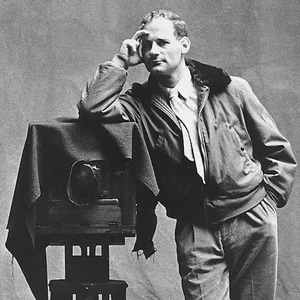
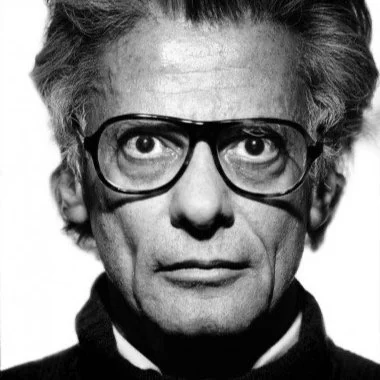
Richard Avedon (1923–2004) was an American photographer from New York. At Harper’s Bazaar and later Vogue, he let fashion models move, jump and laugh. His portraits against a plain white background, of famous artists and of working people in the American West, made him one of the great portrait photographers of his century.
The story
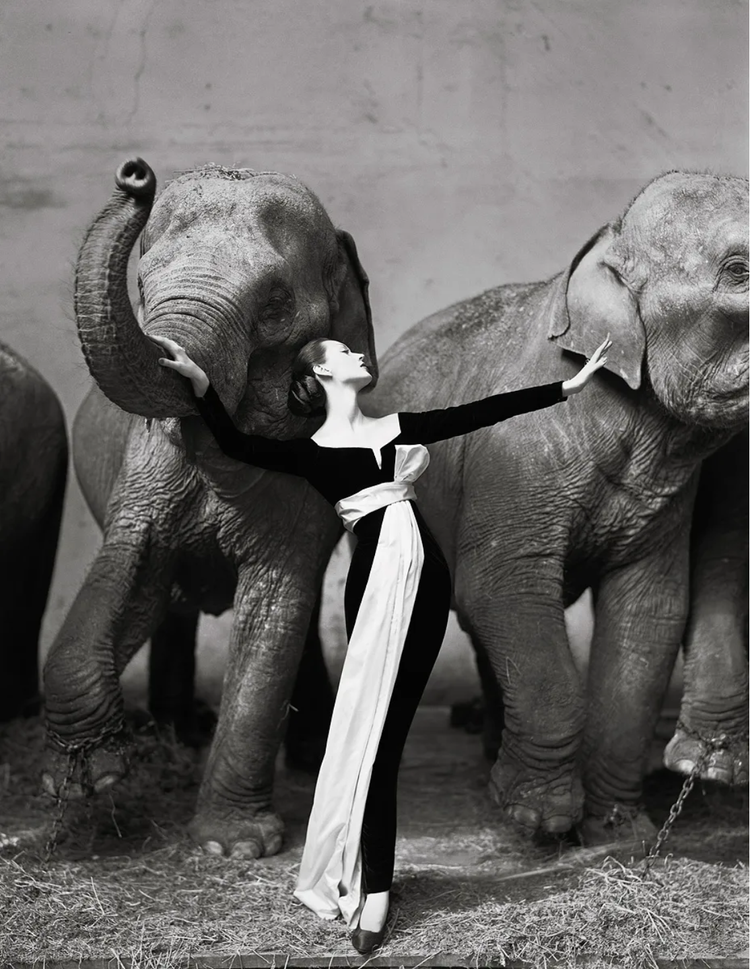
In August 1955 Richard Avedon was in Paris to photograph the fall collections for Harper’s Bazaar. At the Cirque d’Hiver he saw elephants standing in the light. He had no dress for them yet. The place came first. “I saw the elephants under an enormous skylight and in a second I knew that I then had to find the right dress,” he remembered. The model was Dovima, in a Dior evening dress. It ran as a full page in the September issue.
Avedon was 32 then. As a boy in New York he had joined a camera club at twelve. In 1942 he went into the Merchant Marine. His father gave him a Rolleiflex, and he used it to make identification photos of the crewmen. Back home, he showed his portfolio to the art director Alexey Brodovitch and the editor Carmel Snow at Harper’s Bazaar. They hired him at once, and his first pictures ran in 1944.
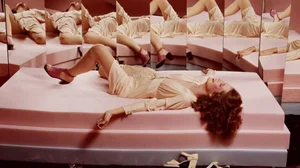
His models were rarely still. They walked and jumped in streets, nightclubs and circus arenas, a style inspired by the photographer Martin Munkácsi. But in the late 1950s Avedon moved into the studio and began to work with strobe light. More and more often, he placed people in front of a bright white background, with no props at all.
That plain white sheet later took him far from fashion. From 1979 to 1984 he worked for the Amon Carter Museum in Fort Worth, Texas, on a project called In the American West. In 189 towns in 13 states he photographed miners, drifters, ranch hands and waitresses, with an 8x10 Deardorff camera and seamless white paper. For one portrait he imagined a man in a haze of bees. So he placed a notice in a beekeepers’ magazine and chose Ronald Fischer, a beekeeper from Illinois. On a farm near Davis, California, the bee expert Norman Gary put queen bee scent on Fischer’s skin. Thousands of bees landed on him, and Avedon exposed more than a hundred sheets of film.
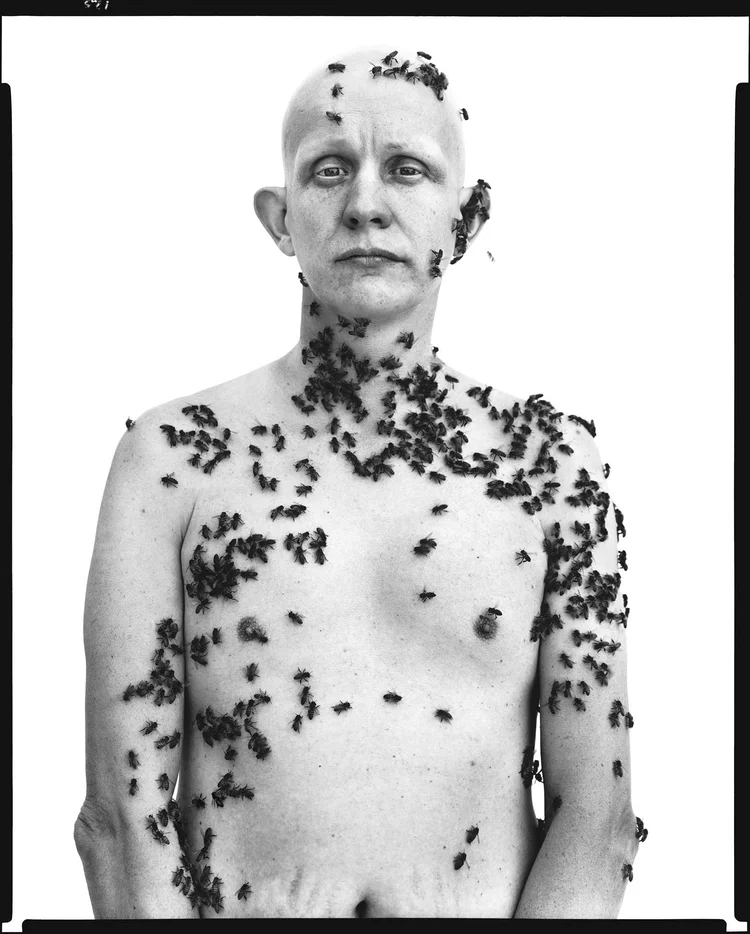
In Paris he had seen “the potential here for a kind of dream image.” In Davis there was only a man, the bees and white paper. Both times, everything he needed was on the outside, where the camera could see it. “My photographs don’t go below the surface. I have great faith in surfaces. A good one is full of clues,” he said.
The work


- 1923Born in New York City
- 1942Joins the Merchant Marine with a Rolleiflex from his father
- 1944First pictures published by Harper’s Bazaar
- 1955Dovima with elephants, Paris
- 1964Nothing Personal, with James Baldwin
- 1965Leaves Harper’s Bazaar, works with Vogue until 1988
- 1979Begins In the American West for the Amon Carter Museum
- 1992First staff photographer of The New Yorker
- 2004Dies in San Antonio, Texas
Lessons
Find the place first. In Paris he saw the elephants under the skylight and only then went looking for the dress.
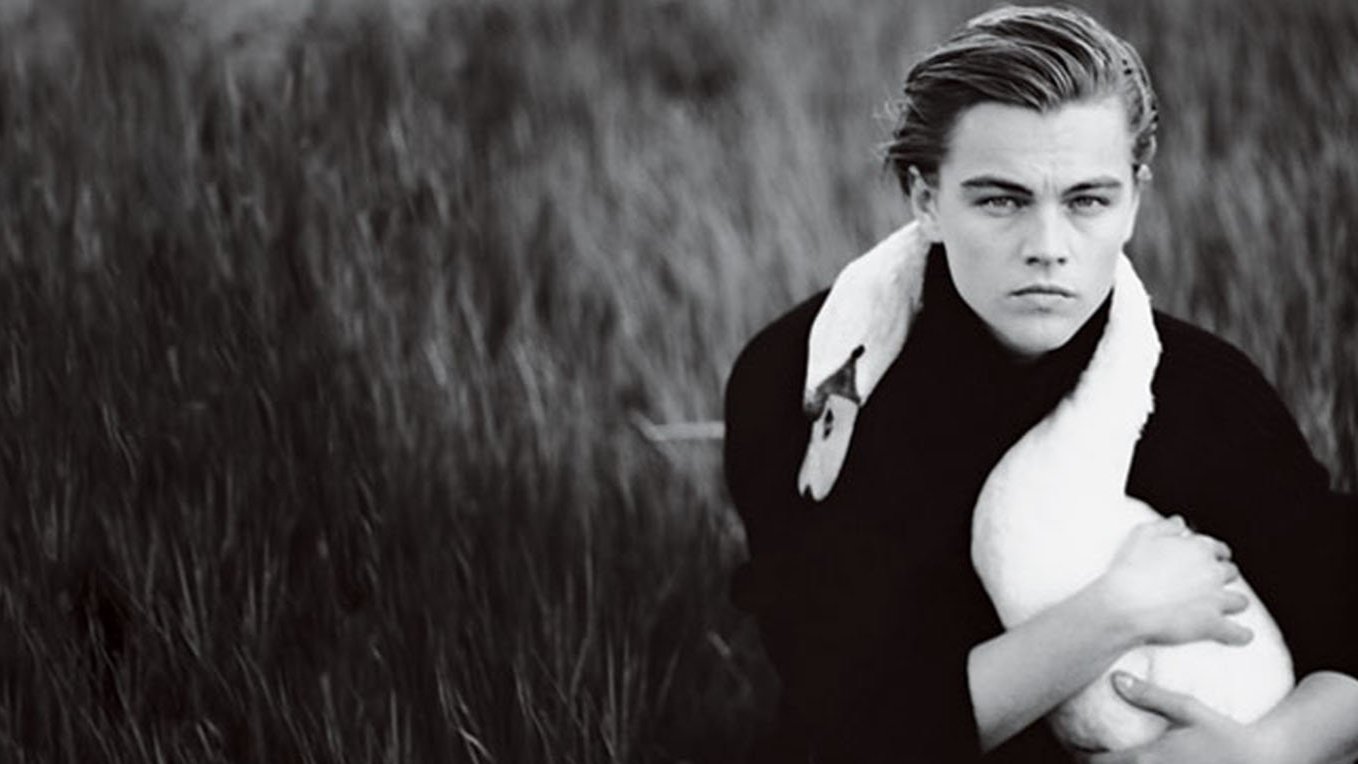
Take the background away. A plain white backdrop leaves only the person. He used it in the studio and on farms and streets across the American West.
Plan the hard picture. For the beekeeper portrait he placed a notice in a magazine, made sketches and brought in a bee expert.
Try this: hang a white sheet in the shade outdoors. Photograph five people against it, one at a time. Stand next to the camera, not behind it, and keep talking with them.
Gear
Avedon’s cameras are known from museum and news sources for two main stages of his work.
Twin-lens reflex camera: his father gave him a Rolleiflex in 1942, when he joined the Merchant Marine. He used it for the crew’s identification photos.
8x10 view camera: for In the American West (1979–1984) he used an 8x10 Deardorff with Kodak Tri-X film, outdoors in natural light, against seamless white paper.
Studio strobe lighting: in the late 1950s he moved from daylight to the studio and worked with strobe light.
Books
In the American West (Abrams, 1985; 20th-anniversary edition 2005). The book of his five-year project for the Amon Carter Museum, made from 752 sittings between 1979 and 1984. Ranch hands, roustabouts, miners, drifters and bar workers stand life-size against white paper. Avedon wrote an essay about his method and his ideas about portraits, and his assistant Laura Wilson added a journal of the project. The 2005 edition has a new foreword by curator John Rohrbach. Start here if you want to see how far a simple setup can go.
Nothing Personal (Atheneum, 1964; Taschen reissue, 2017). Made with James Baldwin, his friend from high school, who wrote a four-part essay for it after the death of President Kennedy. Avedon’s portraits range from Marilyn Monroe to the Daughters of the American Revolution, the former slave William Casby and patients in a mental hospital. The 2017 Taschen edition adds an introduction by the critic Hilton Als. A book for readers interested in America in the early 1960s.
Observations (Simon & Schuster, 1959). His first book: portraits of famous people of the time, such as Pablo Picasso, J. Robert Oppenheimer, Katharine Hepburn, Marilyn Monroe and Mae West, with comments by Truman Capote. It was designed by Alexey Brodovitch and printed in photogravure in Lucerne, Switzerland. First editions are now collector’s items, so look for it in a library.
Avedon Fashion 1944–2000 (Abrams, 2009). Made for the first big survey of his fashion work at the International Center of Photography in New York. In 372 pages it follows his fashion photographs from the early Harper’s Bazaar years to Vogue, Egoiste and The New Yorker. Essays by curator Carol Squiers and critic Vince Aletti, with an appreciation by Philippe Garner. The best single book for his fashion side.
In his words
“All photographs are accurate. None of them is the truth.”