AT A GLANCE
- Known for
- Portraits of musicians, actors and public figures for Rolling Stone, Vanity Fair and Vogue
- Works in
- Color and black and white
- Camera
- Medium format for many years, including the Mamiya RZ67; later digital cameras
- Also
- Chief photographer of Rolling Stone from 1973; member of the Académie des Beaux-Arts in Paris since 2024
- Start with
- Annie Leibovitz at Work (Phaidon, 2018)
- Links
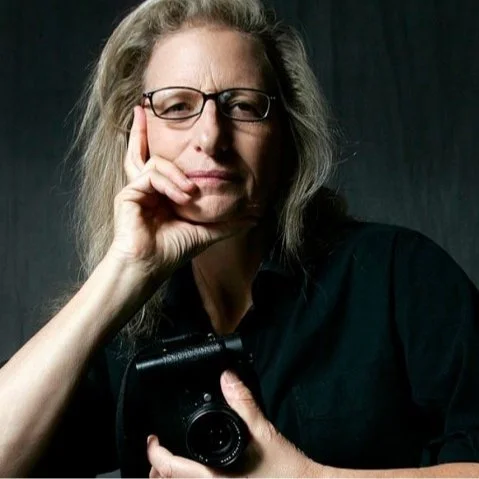
Annie Leibovitz (born 1949) is an American portrait photographer. She began at Rolling Stone in 1970 and has worked for Vanity Fair since 1983 and for Vogue since 1998. Her subjects range from rock musicians to Queen Elizabeth II, and her own family.
The story
In the summer of 1968, Annie Leibovitz travelled to Japan with her mother and her brother and sisters. She was 18 and a painting student in San Francisco. In Japan she got her first camera, a Minolta SR-T101, and carried it all the way up Mount Fuji. “The camera felt like it weighed a ton,” she later wrote. “It got heavier the higher we went.”
Back in San Francisco, she took a night class in photography, and soon it became her major. In 1969, on the way home from a kibbutz in Israel, she stopped in Paris. Crossing the Pont des Arts, she felt as if she were walking inside a photograph by Henri Cartier-Bresson.
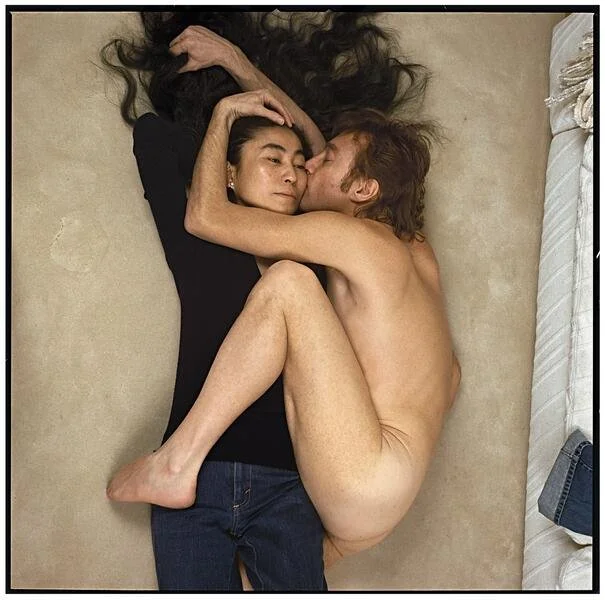
Her pictures got her work at Rolling Stone, a young San Francisco magazine. In November 1970, at 21, she had her first assignment: Grace Slick of Jefferson Airplane. That same year she flew to New York with the editor, Jann Wenner, to photograph John Lennon. Her picture made the cover. “Especially in the early days of ‘Rolling Stone,’ it was such a raw, young canvas and no one there ever told me what to do, so we sort of learned and grew up together,” she said. By 1973 she was the chief photographer.
In the early years she worked alone. Later the shoots grew, and she moved “the stage, the lights, the backdrop, sandbags, fans. And moved them again. And again.”
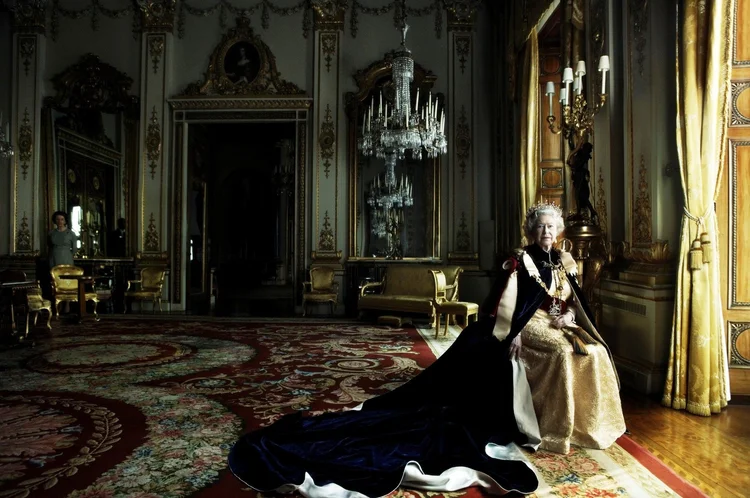
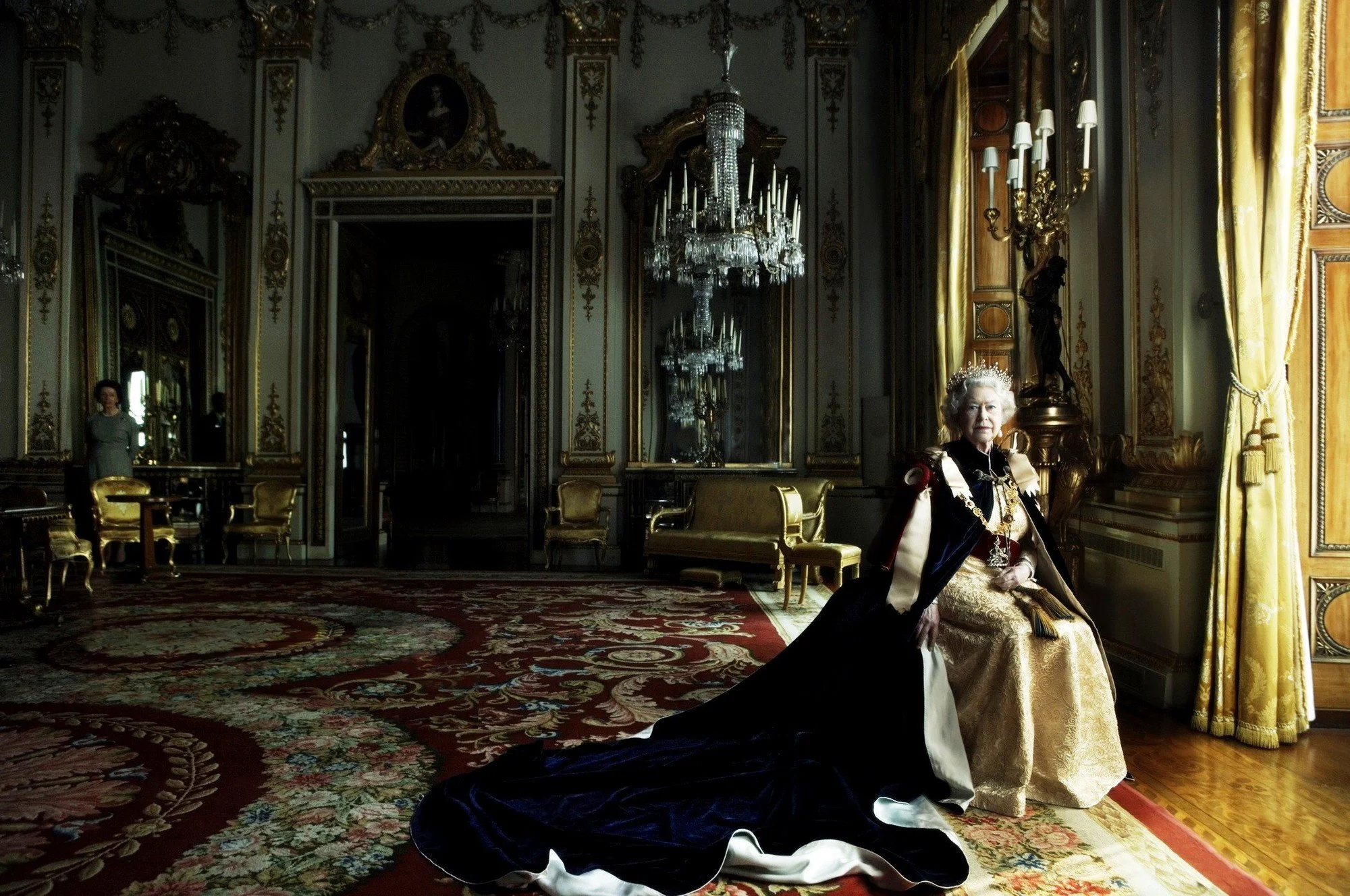
In 2007 the Royal Household asked her to photograph Queen Elizabeth II before a state visit to the United States. “I thought that this would be my only chance to photograph the queen, and I was allotted less than half an hour,” she wrote. She studied Cecil Beaton’s royal portraits and chose a long gold dress, with robes to go on top. Then the Queen arrived in a tiara, which was not in the plan. Leibovitz asked for something “less dressy.” The answer came at once: “Less dressy! What do you think this is?” The tiara stayed. In the first portrait she sits in the robes of the Order of the Garter, lit by a window.
Since that climb up Mount Fuji, the camera has gone everywhere with her: on rock tours, into palaces and into her own family life. “I don’t have two lives,” she says. “This is one life, and the personal pictures and the assignment work are all part of it.”
The work
- 1949Born in Waterbury, Connecticut
- 1968Gets her first camera in Japan and switches from painting to photography
- 1970First assignment for Rolling Stone, then a John Lennon cover
- 1973Becomes chief photographer of Rolling Stone
- 1983Joins Vanity Fair; publishes her first book
- 1991Exhibition at the National Portrait Gallery in Washington
- 1999Publishes Women, with Susan Sontag
- 2007Photographs Queen Elizabeth II at Buckingham Palace
- 2024Joins the Académie des Beaux-Arts in Paris
Lessons
Prepare, then adapt. For the Queen she studied old portraits and picked the clothes in advance. When the tiara appeared, she worked with it.
Learn from the masters. Cartier-Bresson and Robert Frank shaped how she looked at the world when she was starting out.
Photograph your own life too. Her book A Photographer’s Life puts family pictures next to magazine work, as one story.
Try this: plan a portrait in detail, then give yourself only 20 minutes to make it. When something goes off plan, keep shooting.
Gear
Leibovitz has changed cameras many times over five decades, and she rarely talks about brands. What is known comes from her own book and from press reports.
35mm SLR: her first camera was a Minolta SR-T101, bought on a trip to Japan in 1968.
Medium-format camera: for many years she is reported to have worked with a Mamiya RZ67, and also with Hasselblad cameras.
Digital camera: later she moved to digital. Cameras reported in her hands include the Canon 5D Mark II, the Nikon D810 and, in 2024, a Sony Alpha 1.
Books
Women (Random House, 1999). A large book of portraits of American women, with an essay by Susan Sontag, who calls it “an anthology of destinies and disabilities and new possibilities.” Inside are politicians, first ladies, artists, athletes and movie stars, such as Madeleine Albright, Venus and Serena Williams and Oprah Winfrey, next to less famous women, a series on Las Vegas showgirls and portraits of women who survived domestic violence. A good book for anyone interested in how portraits show who we are.
A Photographer’s Life, 1990–2005 (Random House, 2006). A 472-page book that mixes her magazine work with private photographs of her family, Susan Sontag and their travels, in roughly chronological order. Landscapes connect the sections. It includes the birth of her daughters and the last days of Sontag and of her father. Leibovitz said the book “came out of grief.” It went with a large exhibition that opened at the Brooklyn Museum in October 2006. For readers who want to see the person behind the famous covers.
Annie Leibovitz at Work (Random House, 2008; revised edition Phaidon, 2018). Leibovitz explains how some of her best-known pictures were made, from her first assignments for Rolling Stone to the Queen, John Lennon and Yoko Ono, and Demi Moore. She writes about photojournalism, studio work, dancers and athletes, working with writers, and the move from film to digital. She wanted to “take the glamour out of” photography and show that it is work. Written for young photographers and anyone curious about what a photographer really does.
Pilgrimage (Random House, 2011). Introduction by the historian Doris Kearns Goodwin. Here she photographs places and objects instead of people: Georgia O’Keeffe’s homes in New Mexico, Ansel Adams’s darkroom, Emily Dickinson’s only surviving dress, Elvis Presley’s motorcycle and Niagara Falls. She began the project after a hard time in her life, travelling to places linked to people who mattered to her. A quiet book for readers who know only her celebrity portraits.
In her words
“This life isn’t so different. Birth, life, death. It’s what we all go through.”