How Alexis Martino Turned 30 Years of Photographs Into a Dreamlike Map of Intimacy
Welcome to this edition of [book spotlight]. Today, we uncover the layers of '101 PENNIES,' by Alexis Martino (published by Fall Line Press). We'd love to read your comments below about these insights and ideas behind the artist's work.
Some images explain less and reveal more.
In 101 Pennies, Alexis Martino brings together photographs made across 30 years of looking, remembering, and returning to the same emotional questions. The work moves between people, animals, objects, and landscapes, but it is held together by something quieter than subject matter. It is about intimacy, longing, ritual, and the fragile ways people try to belong.
The project did not begin as a finished idea.
Martino describes it as something that revealed itself slowly, through accumulation, chance encounters, and images that kept returning to her over time. What first looked like separate moments became part of one unfinished conversation.
In this interview, Martino speaks about the kind of photographs that stay open.
She explains why some images were removed because they said too much, how sequencing can create meaning between pictures, and why the book became a different experience from the original 101-image installation. For anyone building a long-term body of work, 101 Pennies shows how a project can find its shape slowly, not by forcing a story, but by listening to what keeps repeating.
The Book
101 Pennies by Alexis Martino, published by Fall Line Press, brings together three decades of photographs exploring intimacy, loss, longing, ritual, and the desire to belong. Moving between people, animals, objects, and landscapes, the book creates a quiet emotional world where meaning is never fully fixed. Originally conceived as a 101-image installation, the photobook becomes a more intimate version of the project, allowing the images to unfold slowly through sequence, memory, and emotional association. (Fall Line Press, Amazon)
Project genesis: The images in “101 Pennies” come from three decades of work. Was there a specific moment when you realized these pictures belonged together, or did the project take shape slowly over time?
There was not a single moment where I recognized the work as a unified project. For years, I was simply responding to people, places, and a feeling I did not yet have language for. The connection came later, almost like overhearing the same sentence whispered across decades. When I began laying the images beside one another, I realized they were all circling the same questions: intimacy, exile, longing, ritual, and the fragile ways we try to belong to one another.
The project did not begin as 101 Pennies; it revealed itself slowly through accumulation, repetition, and chance encounters that no longer felt accidental. The photographs became less like individual works and more like fragments of an unfinished conversation, diary entries, gestures, traces of shared fantasies between myself and the people I encountered along the way.
Because I come from a background shaped by movement, assimilation, and the feeling of existing between places, I think I have always been drawn to stories that remain unresolved. The images hold that incompleteness. They ignite, disappear, then resurface years later in another body, another landscape, another ritual. Individually they are fleeting moments; together they begin to form a kind of choral narrative, not a fixed story, but a tapestry of emotional linkages stitched together over time. In many ways, the project taught me what it was about long before I could articulate it myself.
Editing: With 30 years of photographs to choose from, how did you decide which 101 images made it into the final selection, and what did you leave out?
The editing process felt largely instinctive. As I moved through thirty years of images, certain photographs continued to return to me, not because they were definitive, but because they carried something unresolved. They existed in-between moments, suspended states, fragments of rituals or gestures that seemed to linger long after I looked away.
I was searching for images that could exist independently yet transform in conversation with the photographs around them. Meaning became fluid through sequencing. An image could shift emotionally depending on what came before or after it. Anything that felt overly explanatory, overly fixed, or too certain about its meaning gradually fell away.
Over time, the work began separating itself from my commercial and documentary practice. It felt closer to a collection of diary entries or half-remembered dreams, quiet encounters that carried emotional residue without fully disclosing themselves. I became more interested in atmosphere, sensation, and emotional linkage than in narrative clarity.
The final 101 images earned their place because they remained open. They continued to ask questions rather than answer them. Even after years of living with them, they still resisted resolution, and that resistance felt essential to the spirit of the work.
Editing: What kinds of images did you remove because they were too symbolic, too pretty, or too clearly “about” intimacy?
There were definitely images I removed because they felt too literal or too resolved, photographs that explained themselves too quickly or became overly symbolic in an obvious way. Some were beautiful images, even emotionally charged ones, but they felt too aware of what they were trying to say.
I am much more interested in the in-between moment, the image that hovers rather than declares itself. Often the final selection came from the same shoot as the more obvious frame, but it was the quieter image that stayed with me. Maybe the subject looked away, maybe the gesture became distracted, maybe something entered the frame unexpectedly and disrupted the clarity of the moment.
I am drawn to photographs where something slips slightly out of reach, where there is almost a veil over the image emotionally or psychologically. Those interruptions allow the photograph to remain open and unstable, which feels much closer to memory or desire itself.
Once an image becomes too clearly “about” intimacy, it can lose the tension I am searching for. I want the photographs to suggest emotion rather than illustrate it.
Editing: When an image felt emotionally open, what visual traits usually helped create that openness?
When an image felt emotionally open, it usually carried the sensation of an in-between moment, something fleeting and slightly unstable, as though the photograph had captured something it was not entirely supposed to witness.
During a shoot, there are often more literal images where the subject is consciously conveying something. But the photographs I return to are usually the ones that happen just after that moment, when the energy shifts and something unintended slips through. Maybe the person is beginning to walk away, maybe their expression dissolves for a second, maybe the body falls out of pose and back into itself.
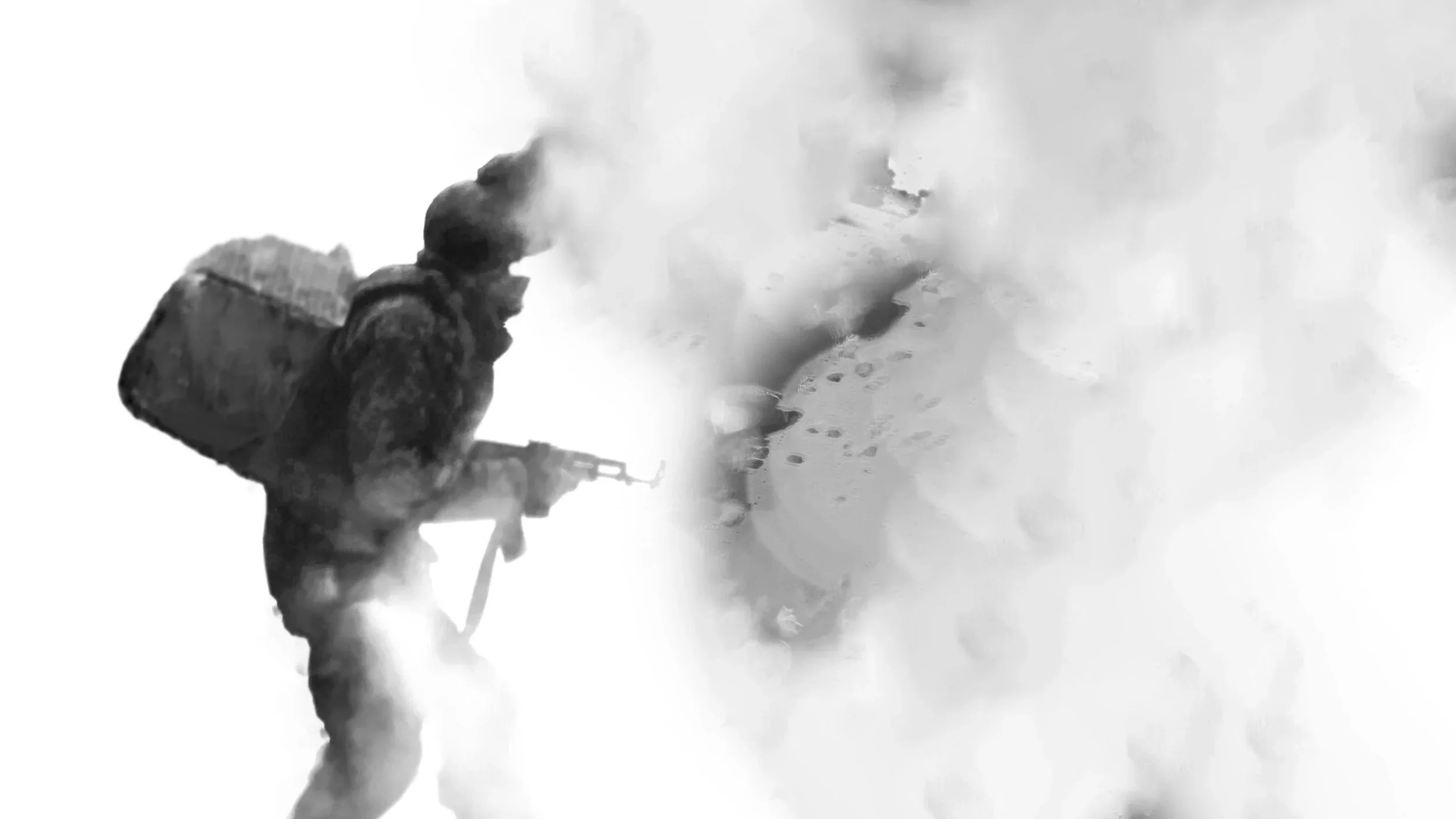
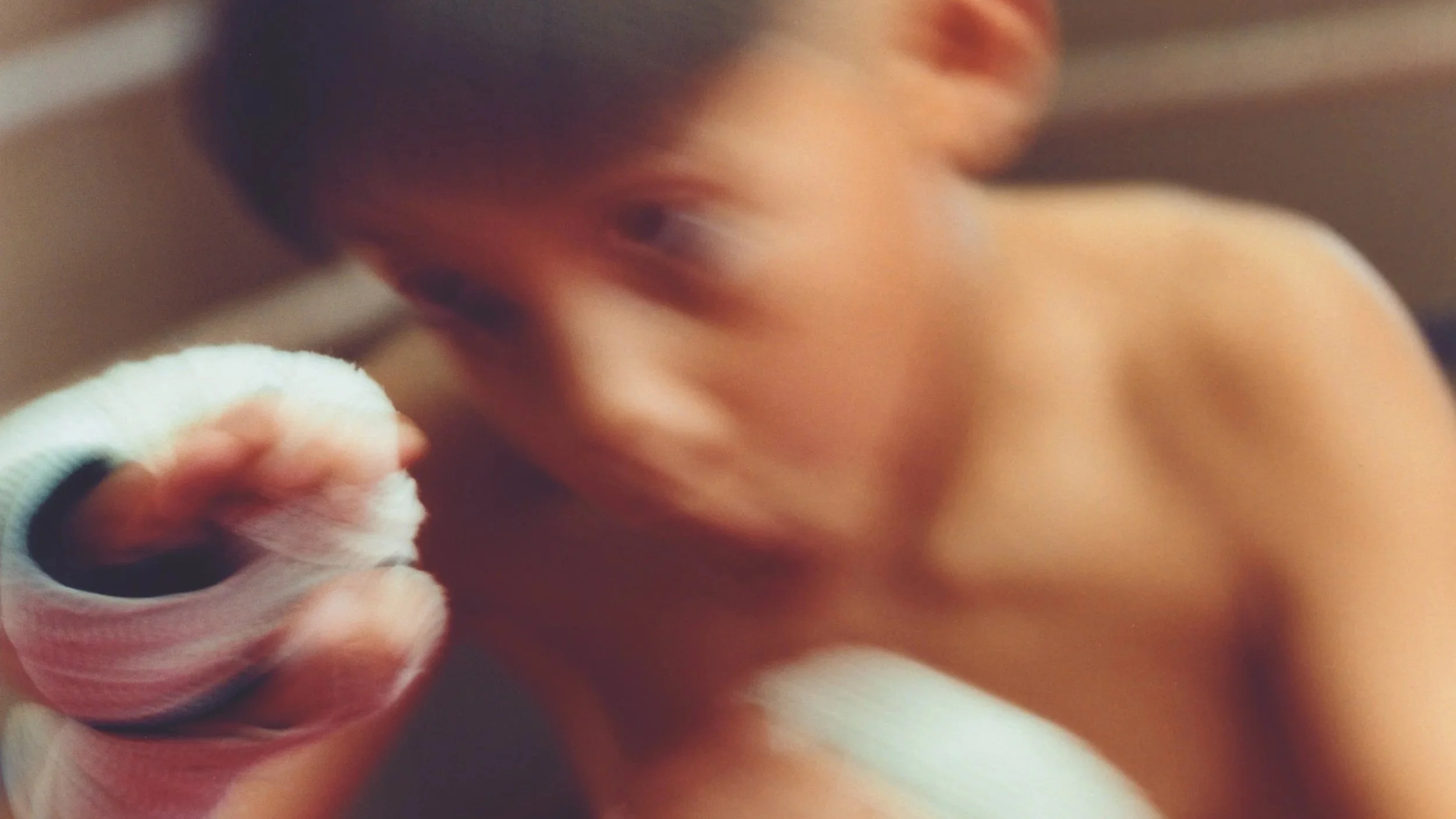
Those transitional moments often contain visual traces that create openness within the image. Motion blur becomes important because it introduces softness and instability, a sense that the moment is still unfolding rather than fully fixed. Sometimes the frame feels fragmented or imperfect, almost as though the photograph itself is hesitating.
I think those imperfections allow the image to breathe. They create emotional space for projection, memory, and ambiguity.
Subject matter: The work moves between people, animals, objects, and landscapes as different ways of exploring the same desire for closeness. How do you decide which kind of subject can carry that emotional weight in a single frame?
I do not really decide in a calculated way. Most of the work is instinctual. The subjects reveal themselves, and I respond to whatever tension or intimacy already exists within the moment.
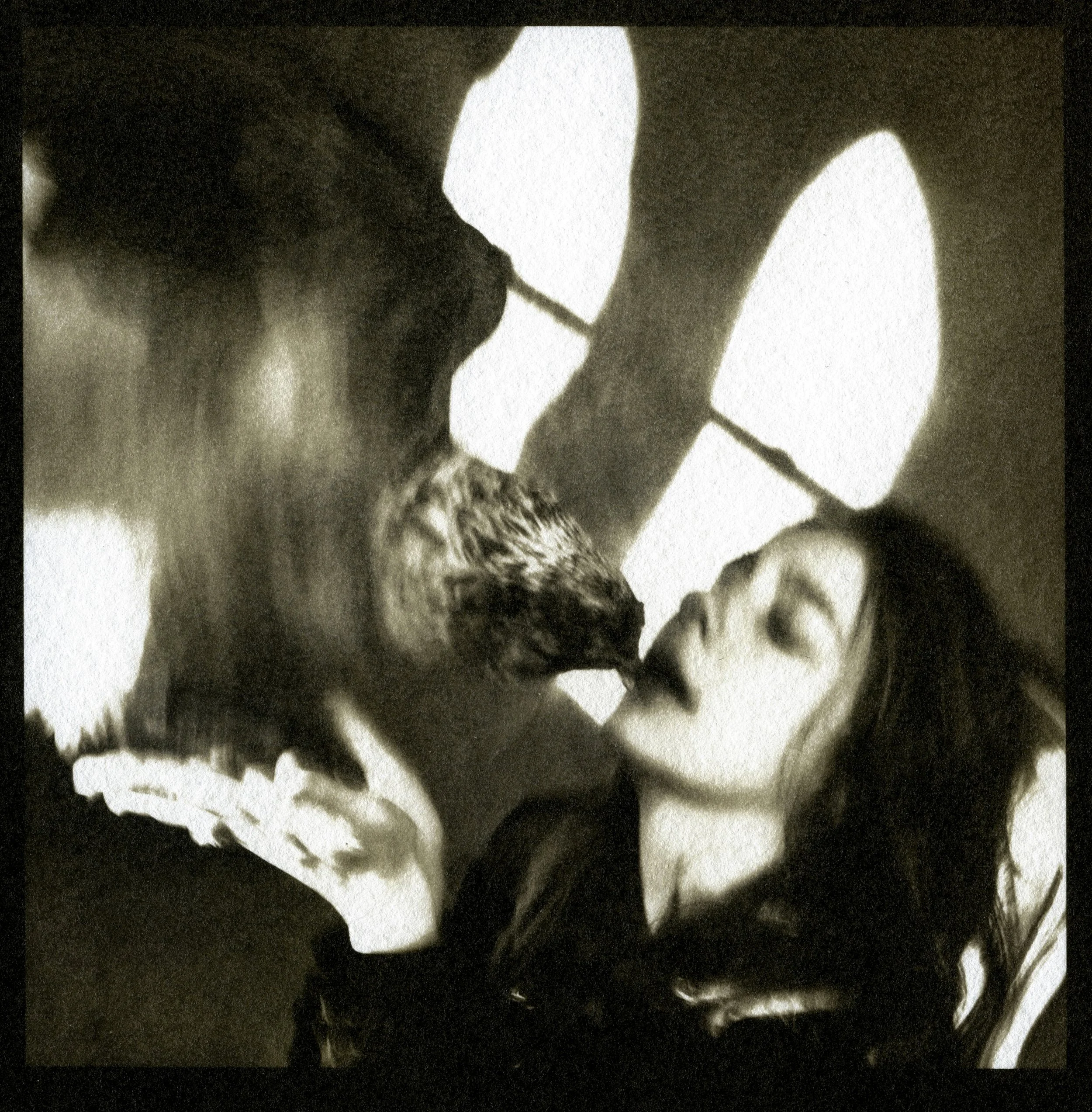
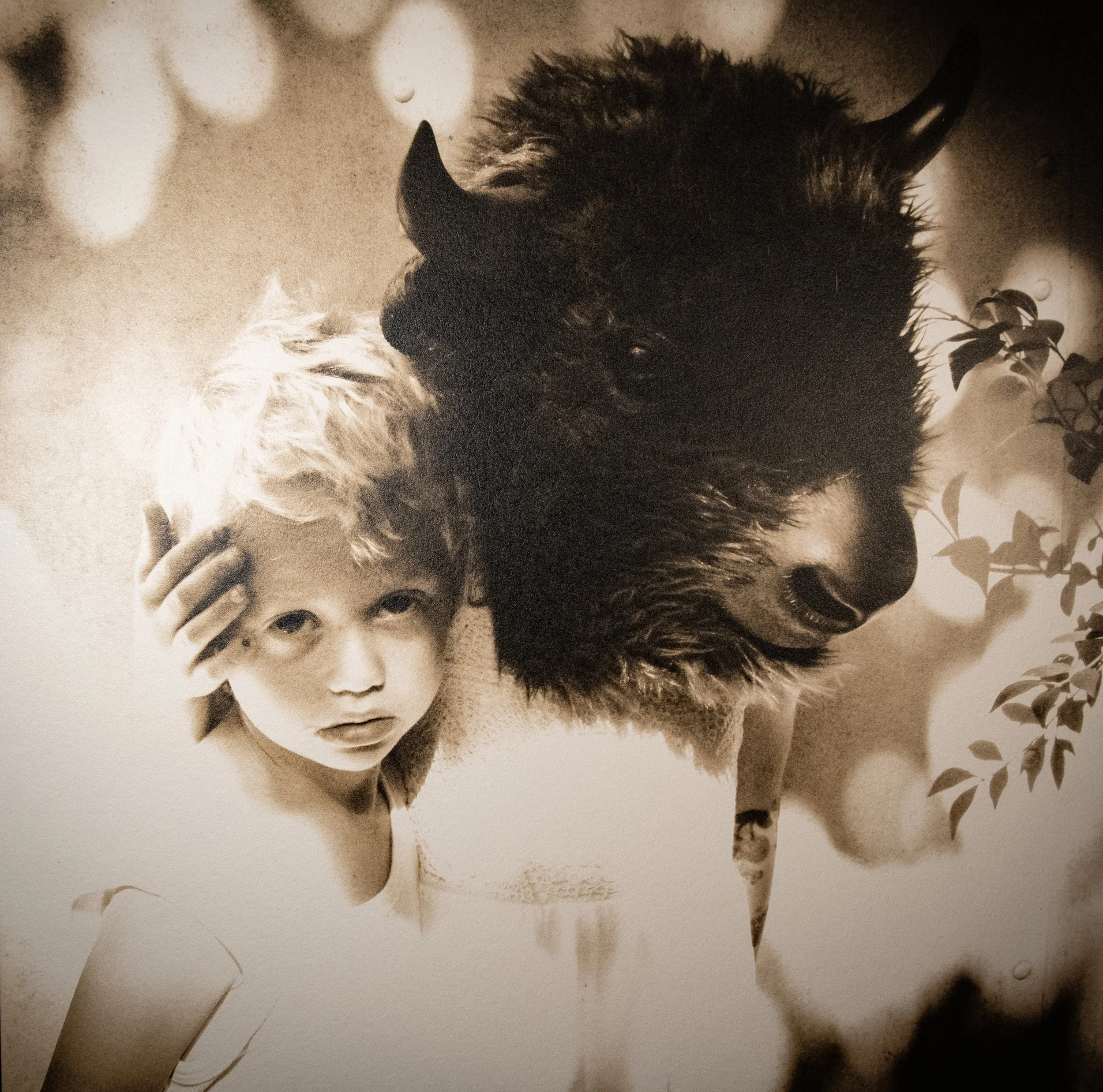
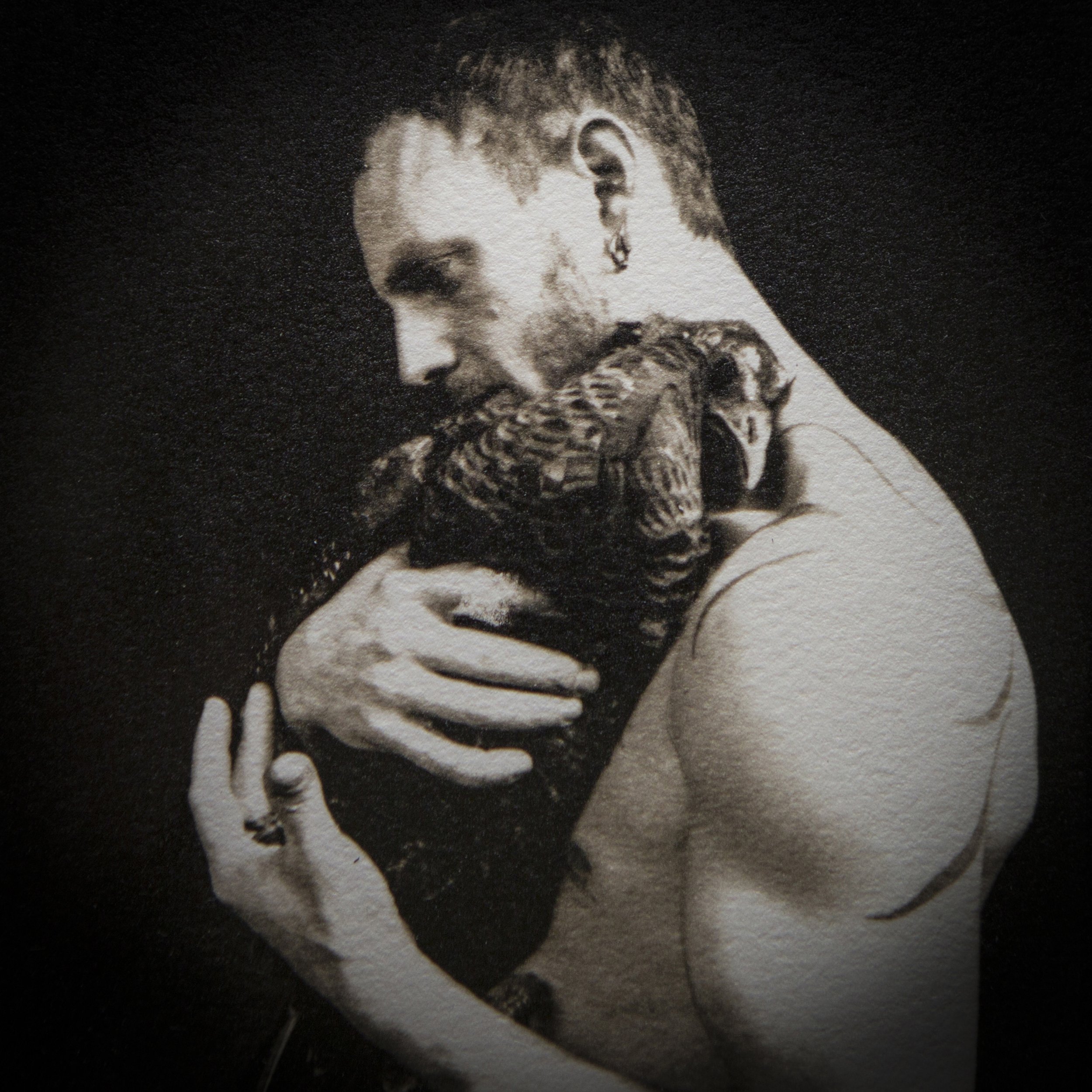
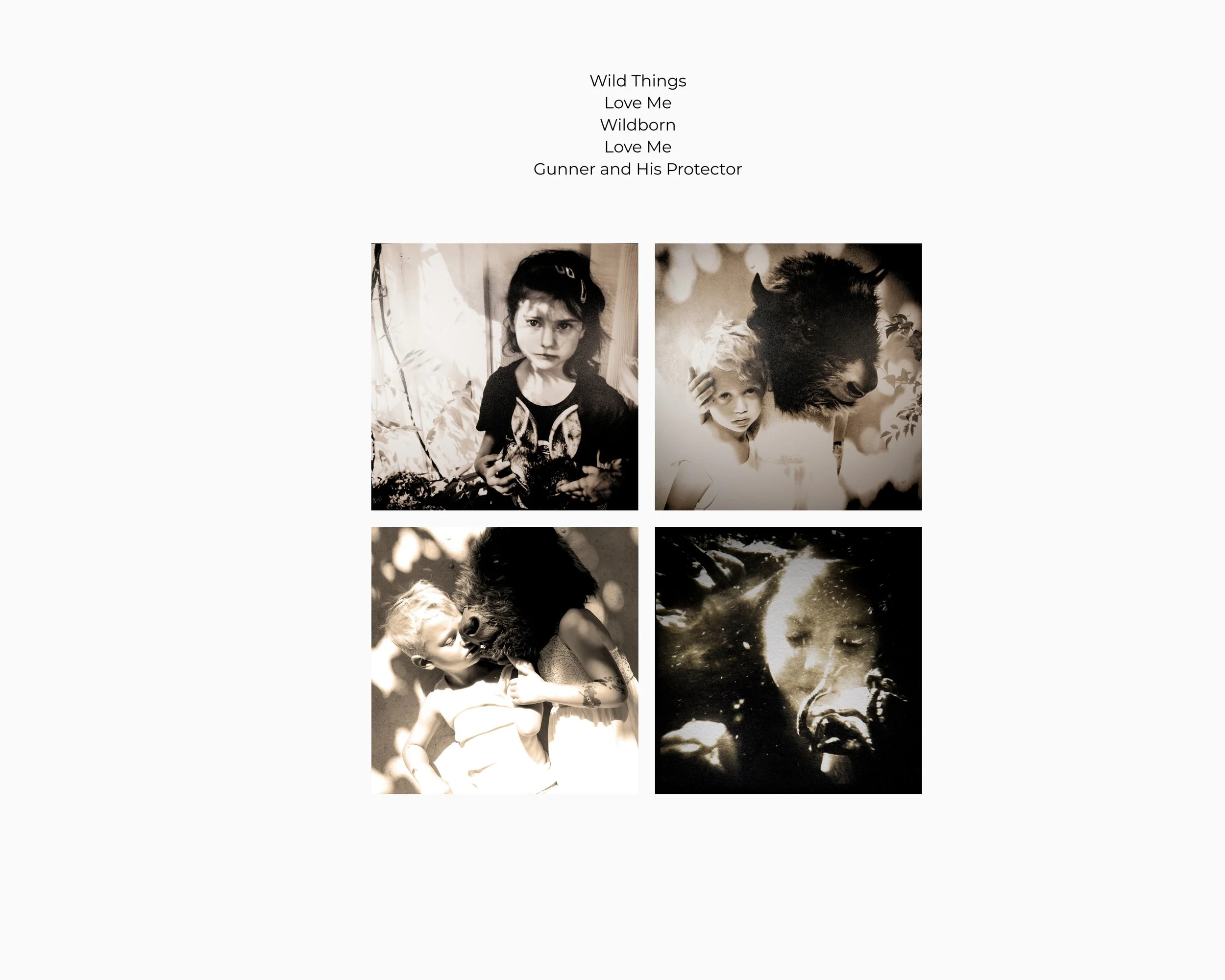
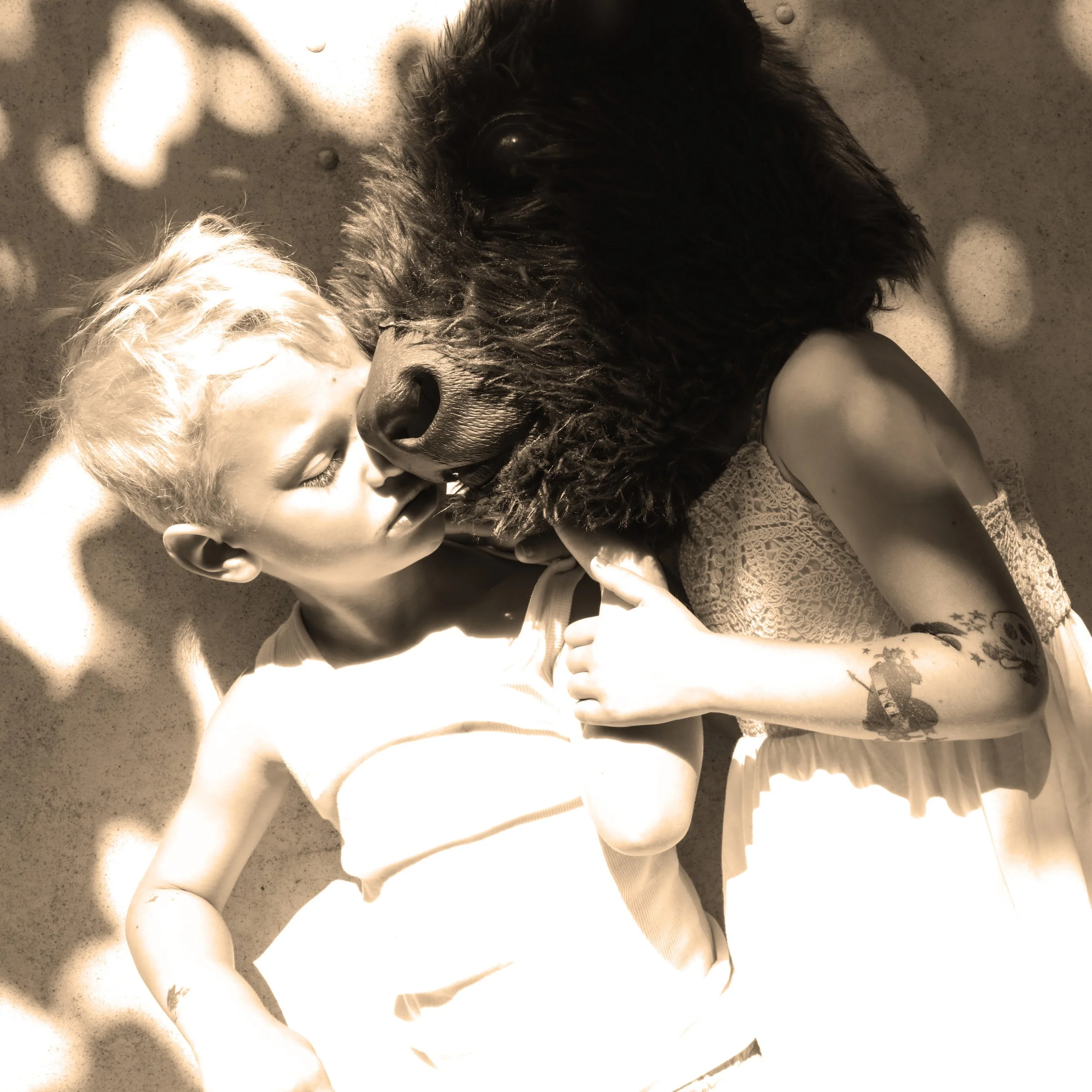
Sometimes it is a person, sometimes an animal, sometimes an object. For me, the subject itself is almost secondary. What matters is whether the image holds a certain emotional charge, a sense of closeness, vulnerability, or something slightly unresolved. The photograph of me kissing the chicken is a good example. It was a friend’s chicken, and the moment unfolded naturally. There was something both tender and strange about it, something intimate but also slightly unsettling. I am very drawn to that space in between affection and discomfort, ritual and absurdity.
I think I am always searching for a feeling more than a specific subject. Certain objects or animals can sometimes carry emotion more openly than people can. A landscape can feel lonely. An object can feel devotional. A body can become symbolic rather than individual. If the image contains a kind of emotional residue, an awkwardness, a longing, or an unexpected intimacy, then it begins to carry weight for me.
Locations: The photographs were made in places as different as Kenya, Zimbabwe, Bali, and Shelter Island. How do you keep a project feeling unified when the settings are so far apart?
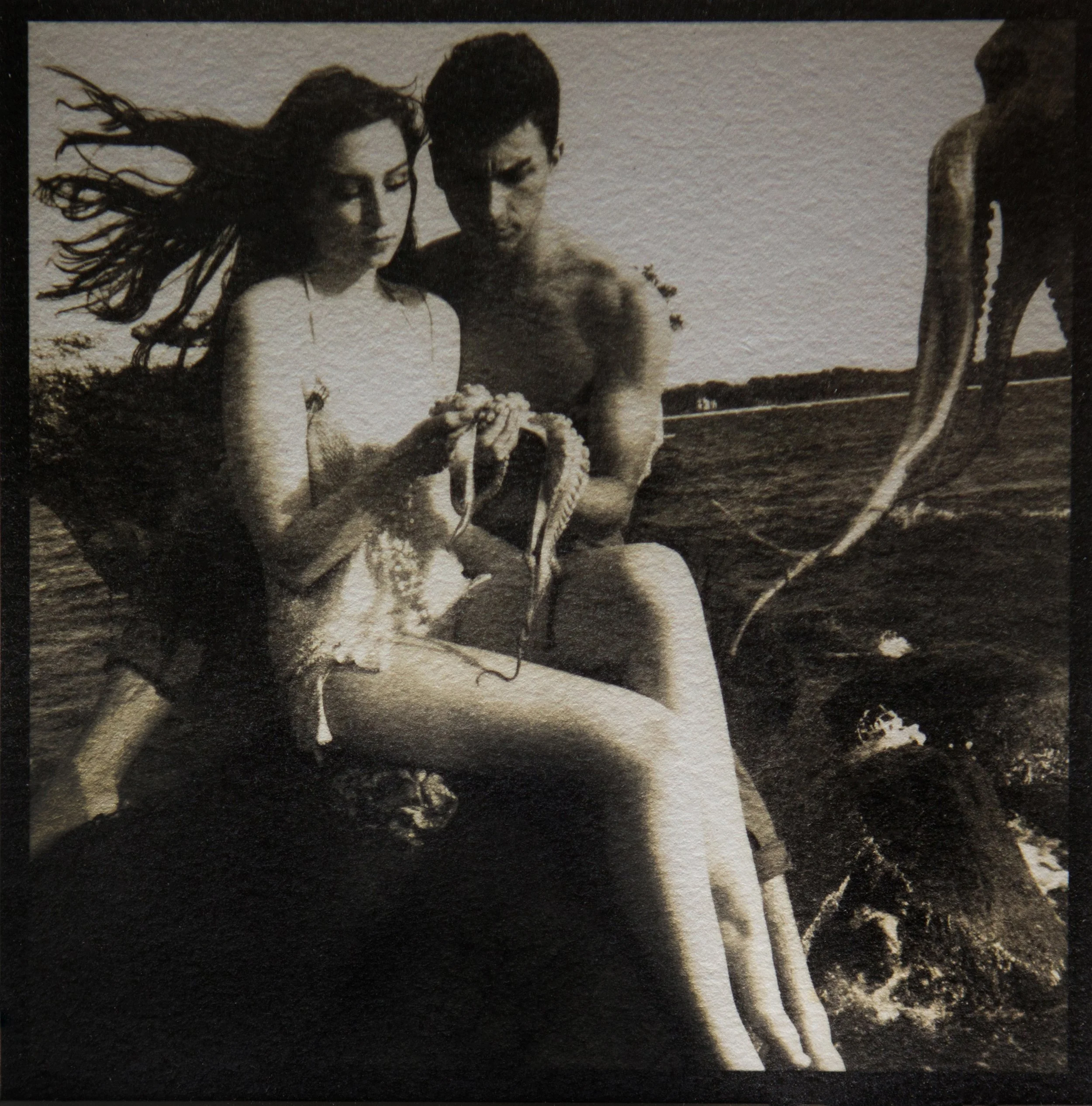
There are a few things that unify the work. First, my way of seeing remains fairly constant regardless of where I am. I am always drawn toward similar emotional spaces, gestures, and fragments of experience. Whether I am photographing in Kenya, Bali, or Shelter Island, I am still searching for the same underlying tensions between intimacy, memory, ritual, and belonging.
The other major element is the darkroom. Everything ultimately returned to that space, where the images were translated into a shared visual language. I standardized the negatives to the same size and printed them all through the same physical process. Afterward, I sepia toned the prints using a light bleach so the blacks would remain rich while the tonal shifts introduced a kind of warmth and fragility.
That process allowed me to bring together images made across completely different mediums, including 4x5 film, digital files, and Polaroids, and give them a shared surface and atmosphere. The unity comes less from geography and more from the act of transformation. The darkroom became a place where disparate moments, countries, and periods of my life could begin speaking to one another in the same visual voice.
Sequencing: How did you approach sequencing the images, and what kind of relationships were you looking for between them?
Sequencing was deeply instinctual. Once the images were laid out together, certain photographs simply began to find one another. Connections would emerge through rhythm, tension, gesture, or atmosphere. Sometimes one image would complete another; other times it would completely shift its meaning. I became interested in how photographs could speak across space, almost like fragments of a conversation overheard in pieces.
Within the larger sequence, smaller constellations began to appear. Some were tied together visually, others emotionally or conceptually. I started thinking of them as quiet sub-narratives moving beneath the surface of the larger work.
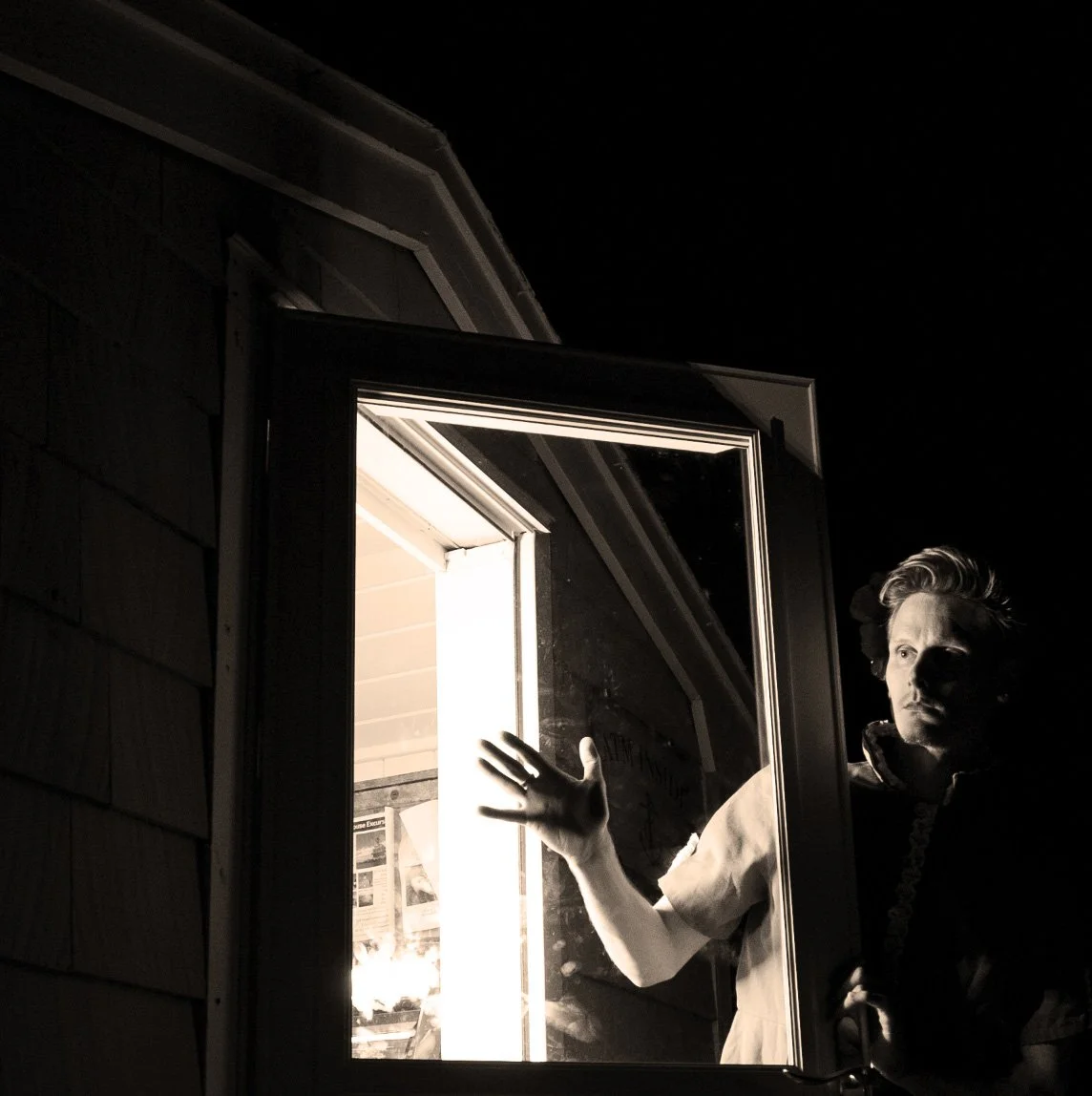
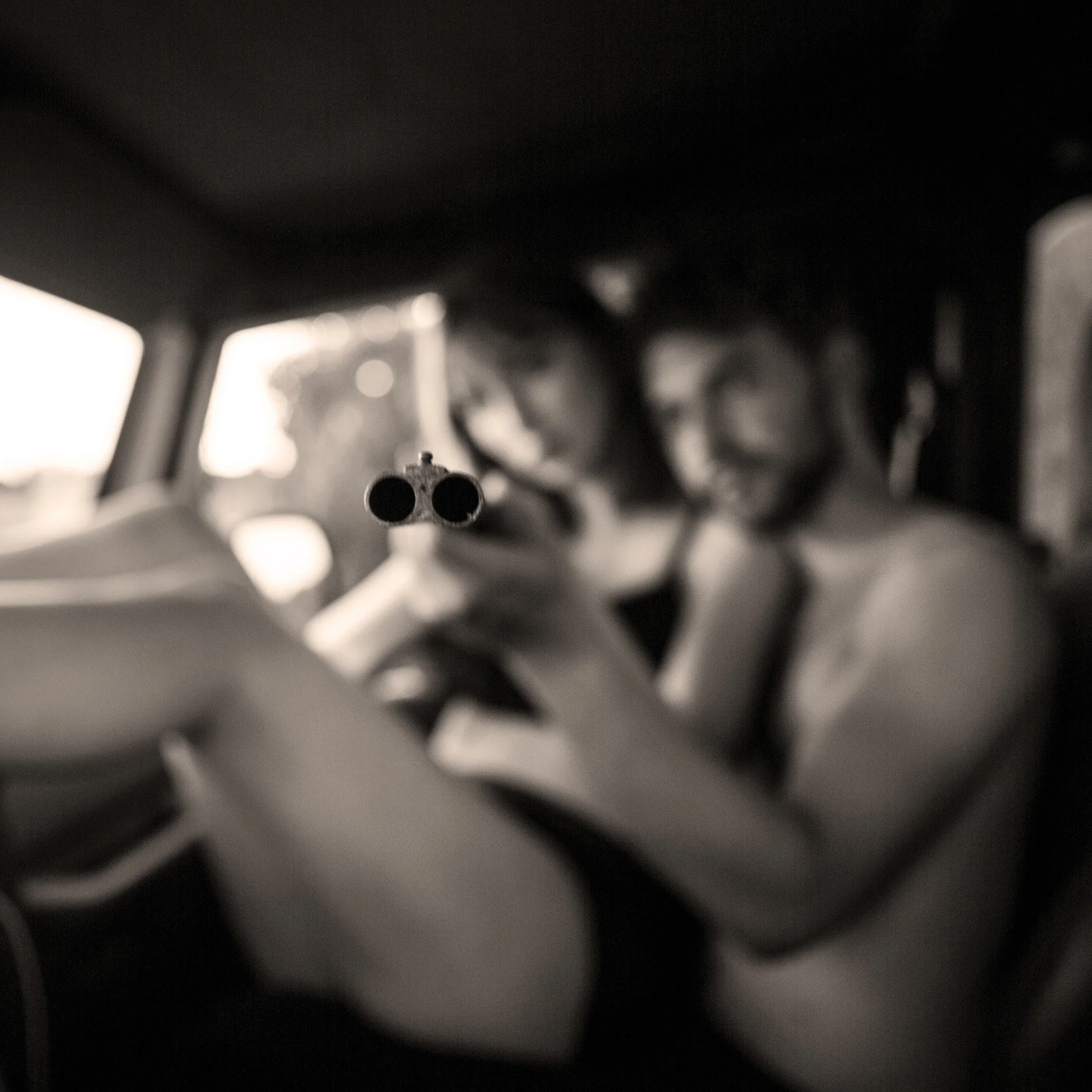
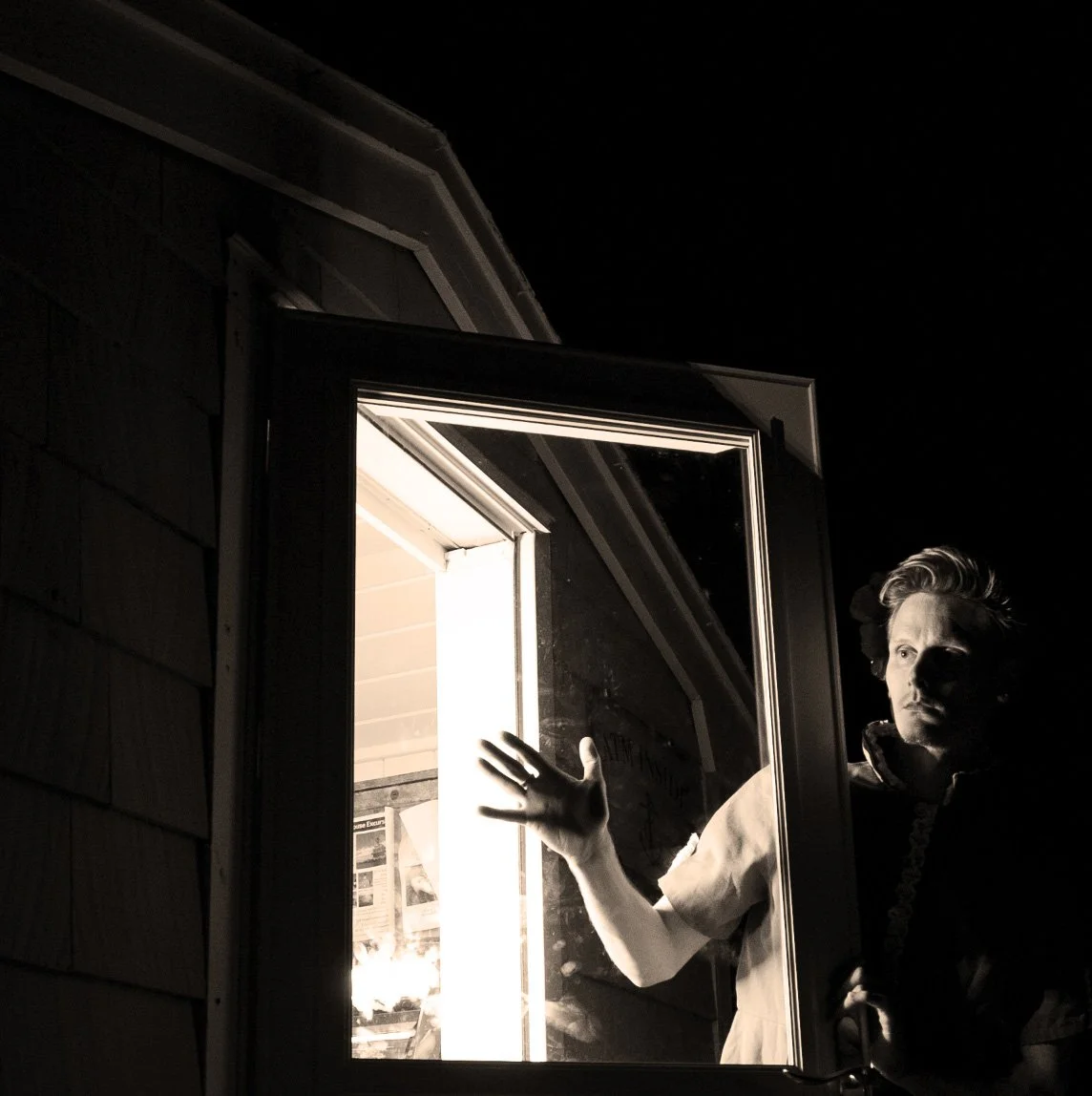
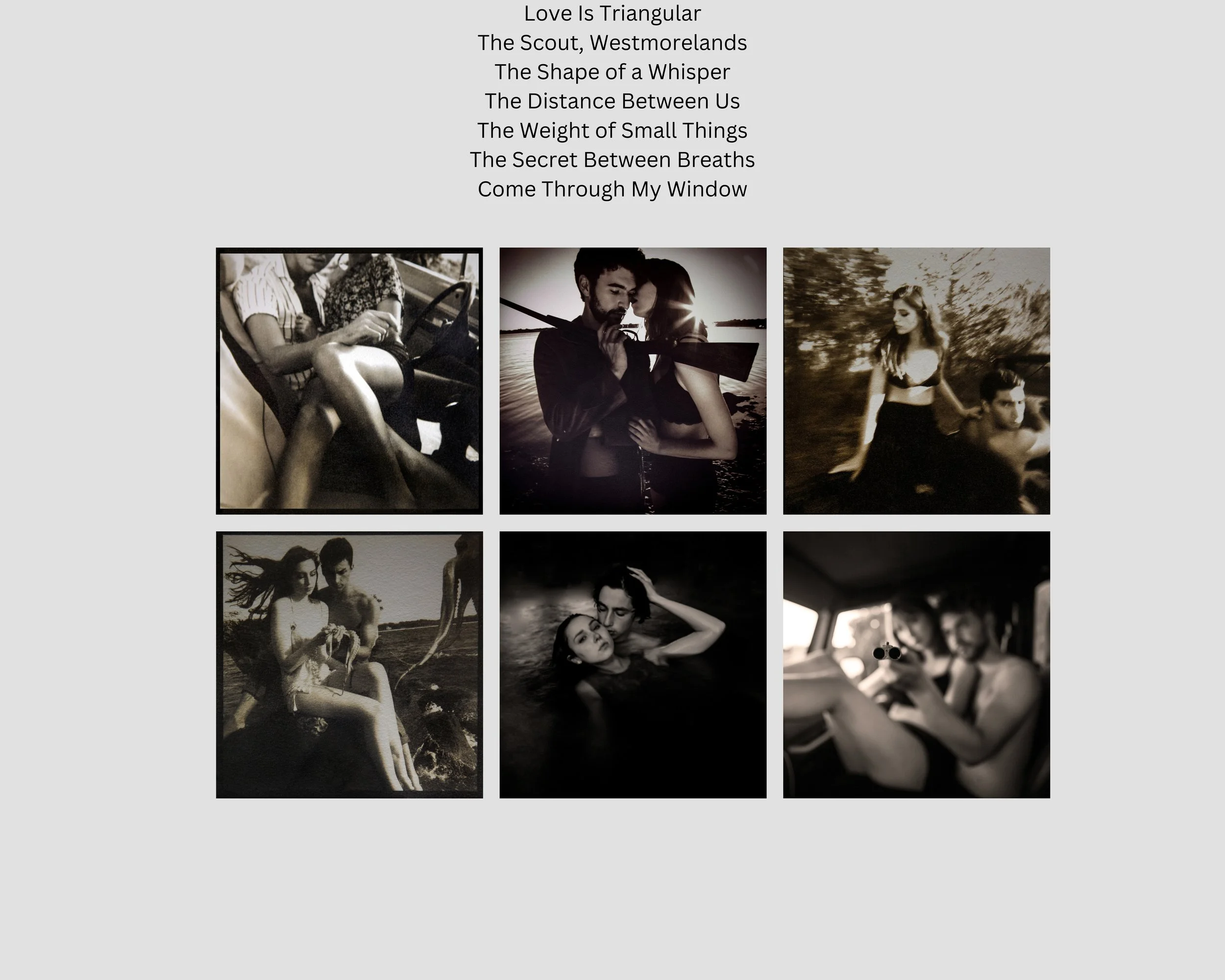
One grouping I think of as Love is Triangular, where the compositions repeatedly echo triangular forms and the relationships within the frame feel partially obstructed, as though intimacy is always interrupted by a third presence, a shadow, a distance, or an absence. Another grouping, Come Through My Window, revolves around windows, doorways, and thresholds that function almost like emotional escape hatches. They carry a double meaning, both literal and psychological, suggesting longing, transition, or the desire to move beyond oneself.
At the same time, I never wanted the sequence to become overly fixed or didactic. The images needed to remain fluid enough to move between meanings. A pairing felt successful when it created something unexpected, when the connection was not entirely logical but still carried emotional truth. I wanted the work to function more like memory or dreaming, where fragments continually rearrange themselves and produce new associations over time.
Sequencing: Can you describe one pairing where two ordinary images created a third meaning together that neither had alone?
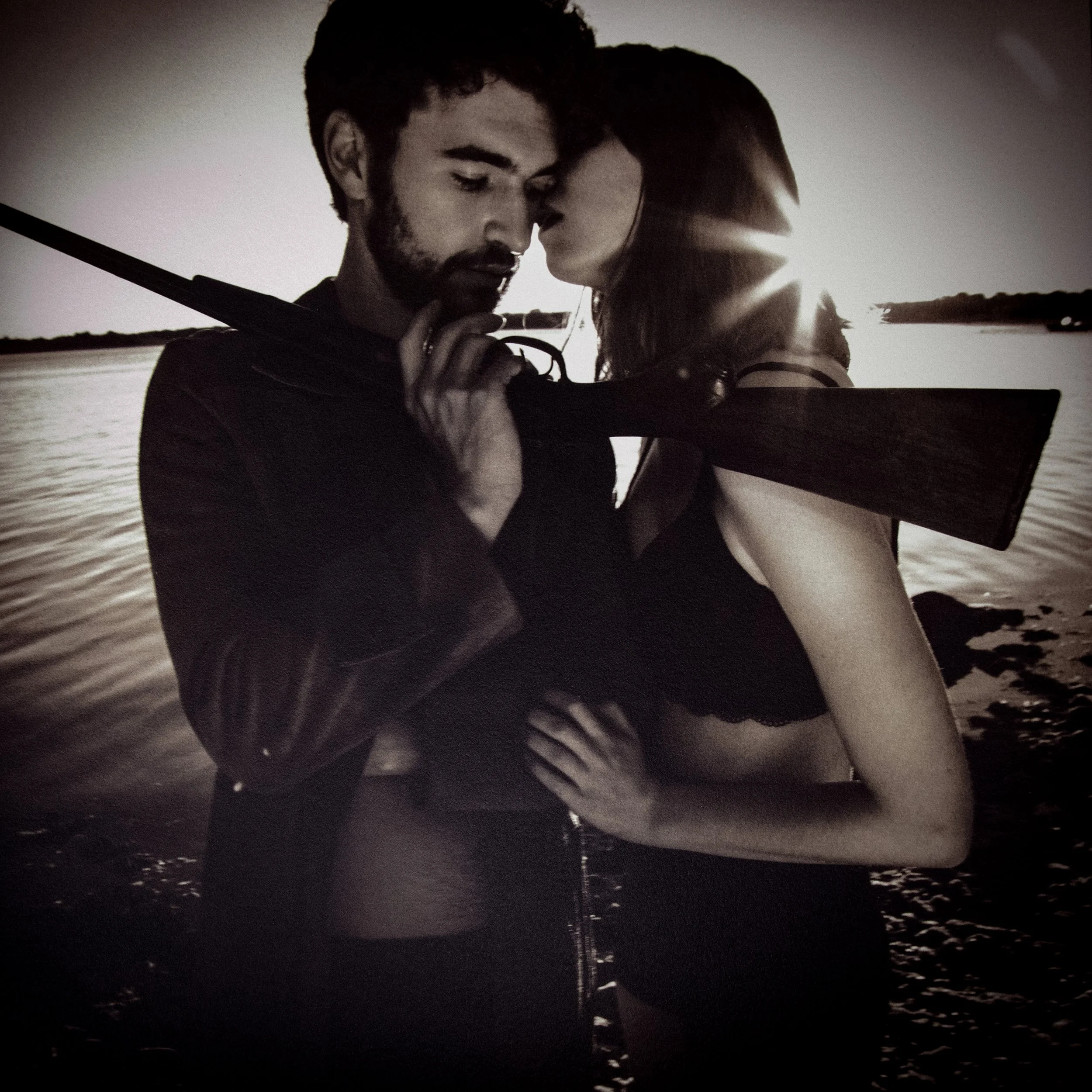
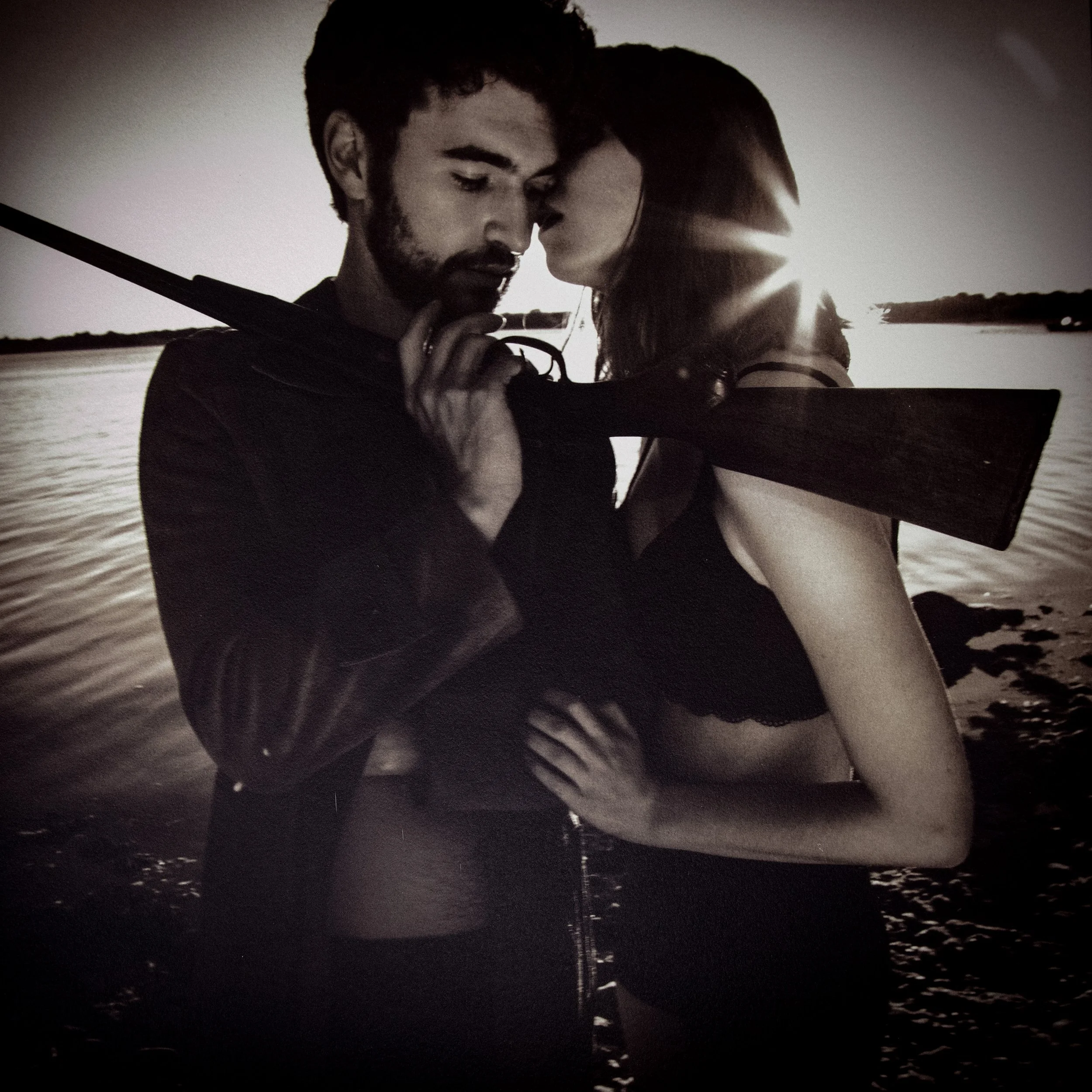
I think the grouping Love Is a Triangularity is a good example because, individually, many of the images speak to romance, desire, or intimacy in relatively familiar ways. On their own, they can feel tender, cinematic, even seductive. But once they are placed together, another layer begins to emerge and the emotional tone shifts.
Certain images introduce aggression or instability. Others suggest distance, performance, or the presence of an outside force pressing in on the relationship. There is a recurring tension between closeness and threat, intimacy and exposure.
What interests me is that the sequence begins creating a third meaning that does not fully exist in any single photograph alone. The images start speaking across one another. A romantic moment suddenly carries undertones of danger or emotional imbalance simply because of what surrounds it.
The story does not come from one decisive image. It emerges through accumulation, through emotional echoes and collisions between the photographs. That is where sequencing becomes important to me, because meaning starts to exist between the images rather than only inside them.
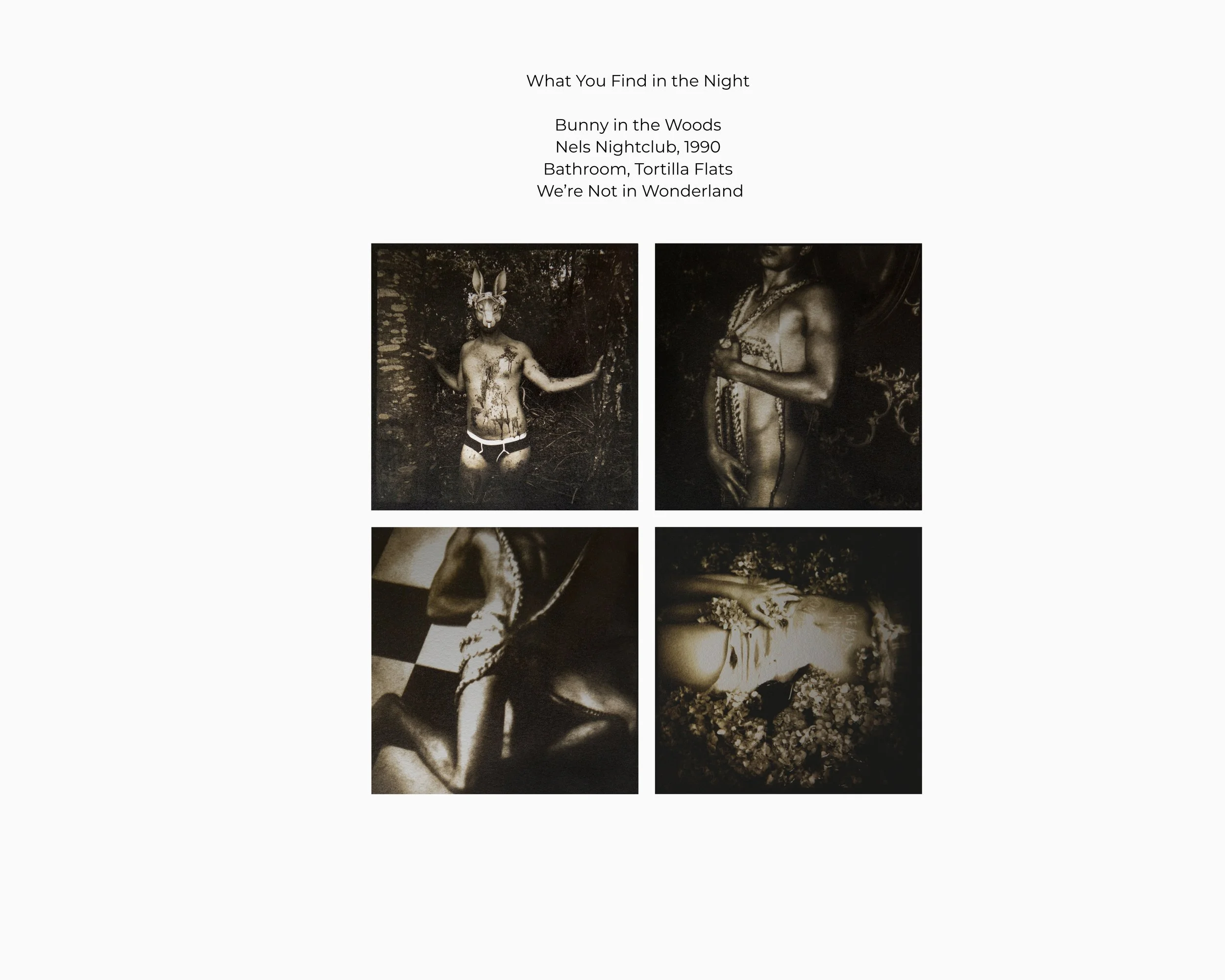
This grouping, What You Find in the Night, works in a similar way for me. Individually, each image contains only a fragment of the emotional narrative. On their own, they feel suggestive, strange, sensual, or slightly unsettling, but each photograph only reveals a sliver of the larger psychological space.
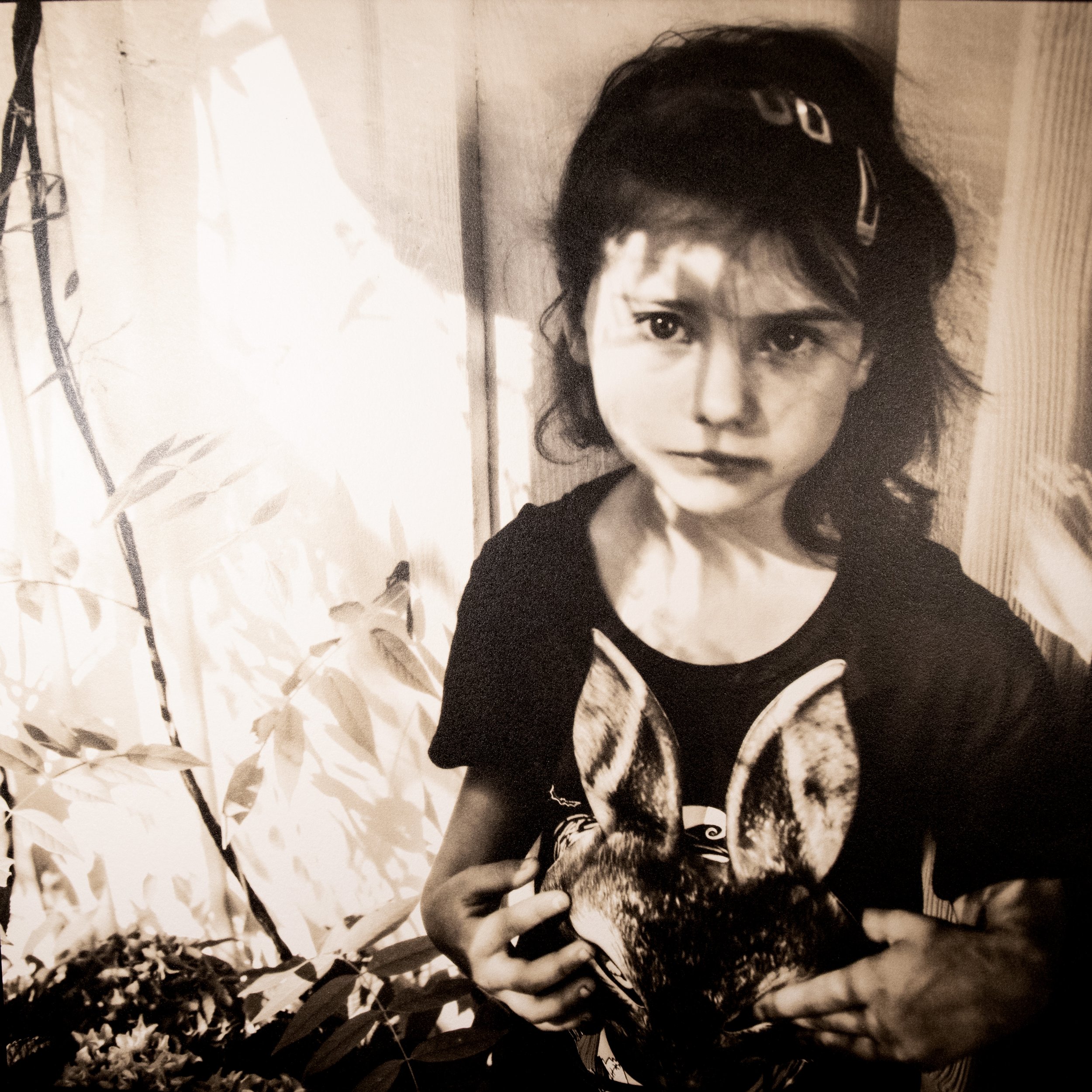
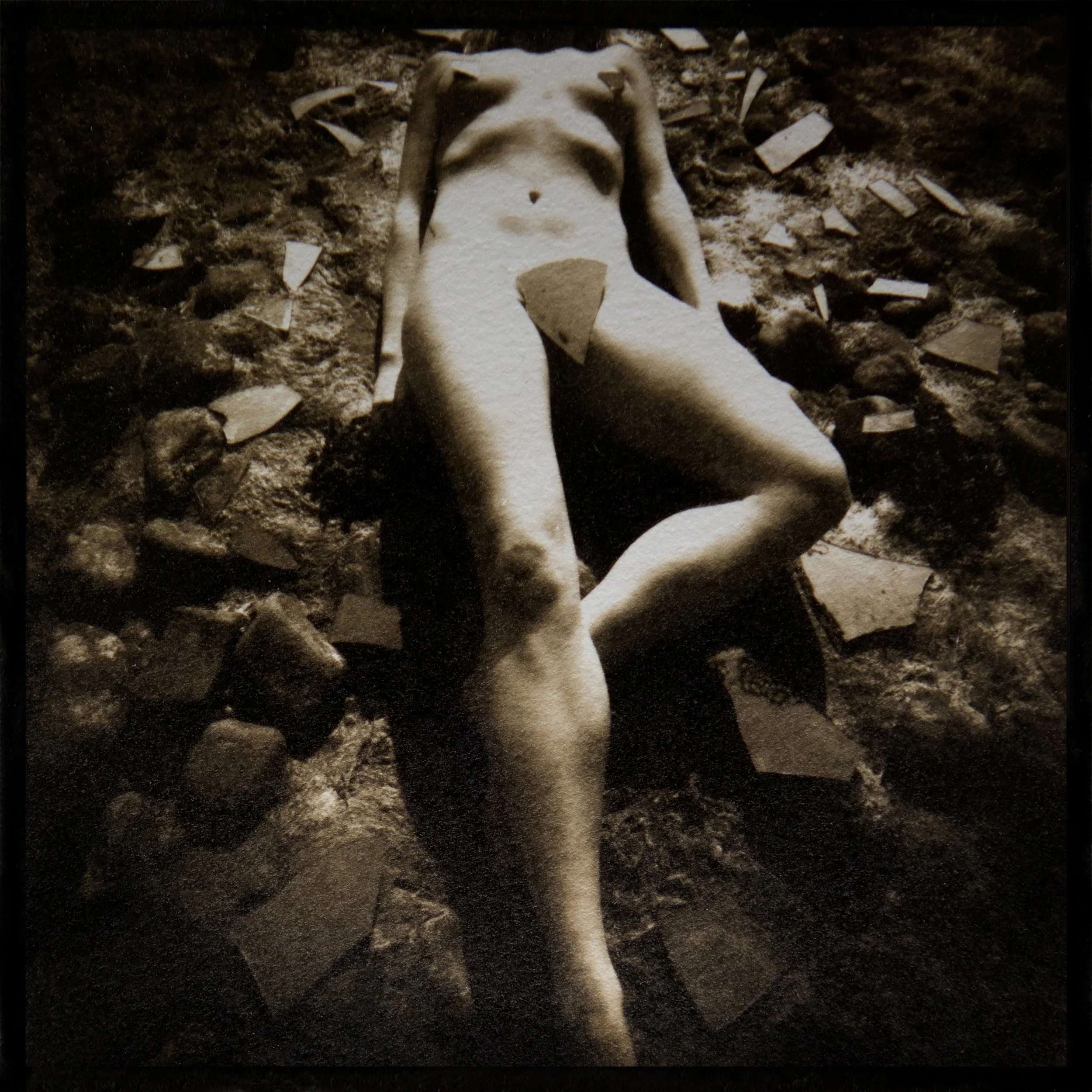
When the four images are placed together, the emotional tension deepens and becomes more layered. The sequence begins moving between seduction and aggression, vulnerability and performance, attraction and discomfort. The body shifts from something intimate into something almost theatrical or mythic. There is a sense of ritual running through the grouping, but also something feral and unstable beneath it.
What interests me is how the meaning becomes cumulative. The rabbit mask, the fragmented body, the reflective surfaces, the gestures, all begin echoing one another psychologically rather than narratively. The images stop functioning as individual moments and start operating more like fragments of a dream or traces of a shared hallucination.
There is also a push and pull between concealment and exposure. Certain figures appear empowered, while others feel vulnerable or objectified. That instability is important to me because it prevents the work from settling into a single interpretation. The tension lives in that unresolved space where desire, danger, fantasy, and intimacy begin collapsing into one another.
I think sequencing allows the photographs to activate hidden emotional undercurrents that might remain dormant if the images were seen alone. Together, they create a kind of emotional atmosphere that becomes larger and more psychologically charged than any individual frame could hold by itself.
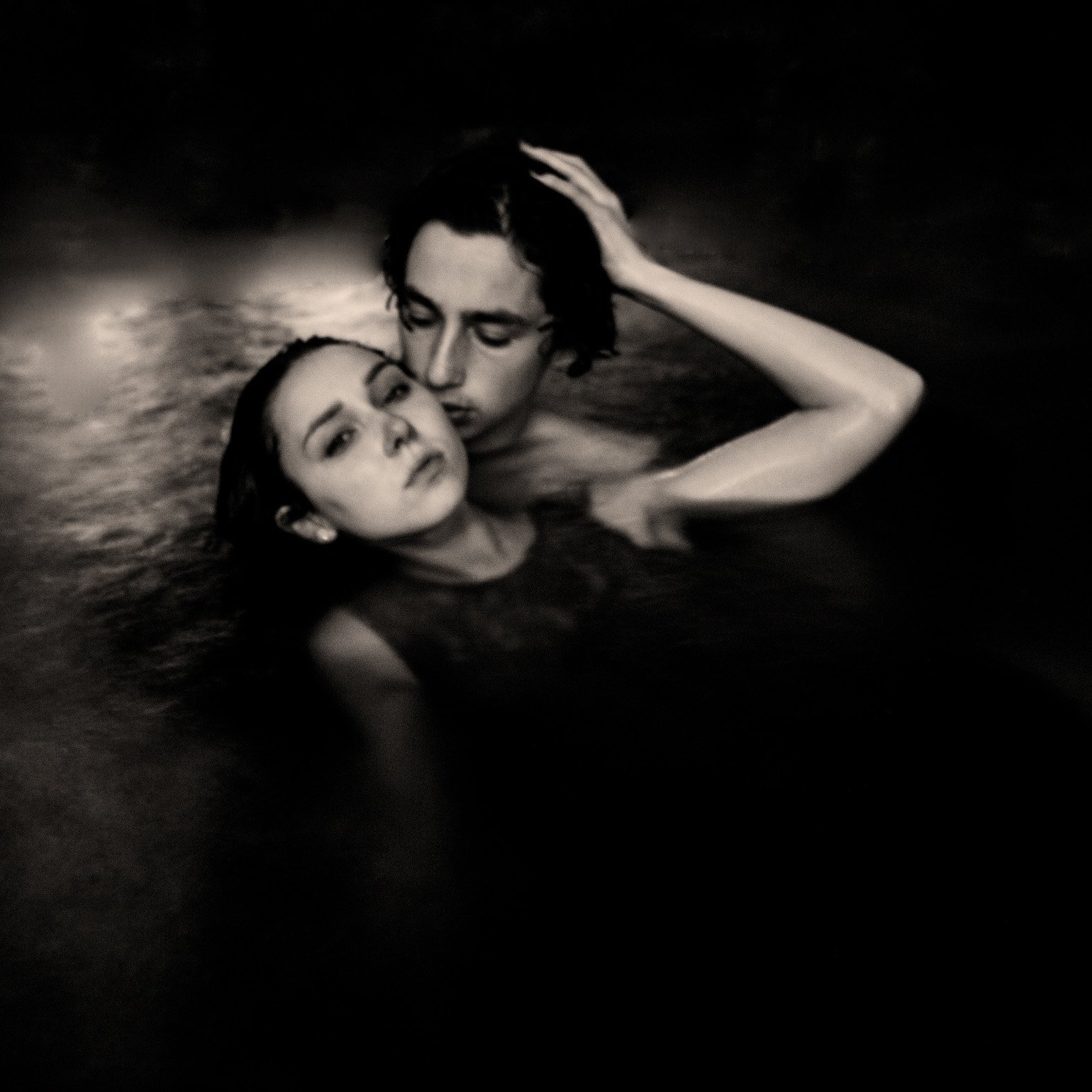
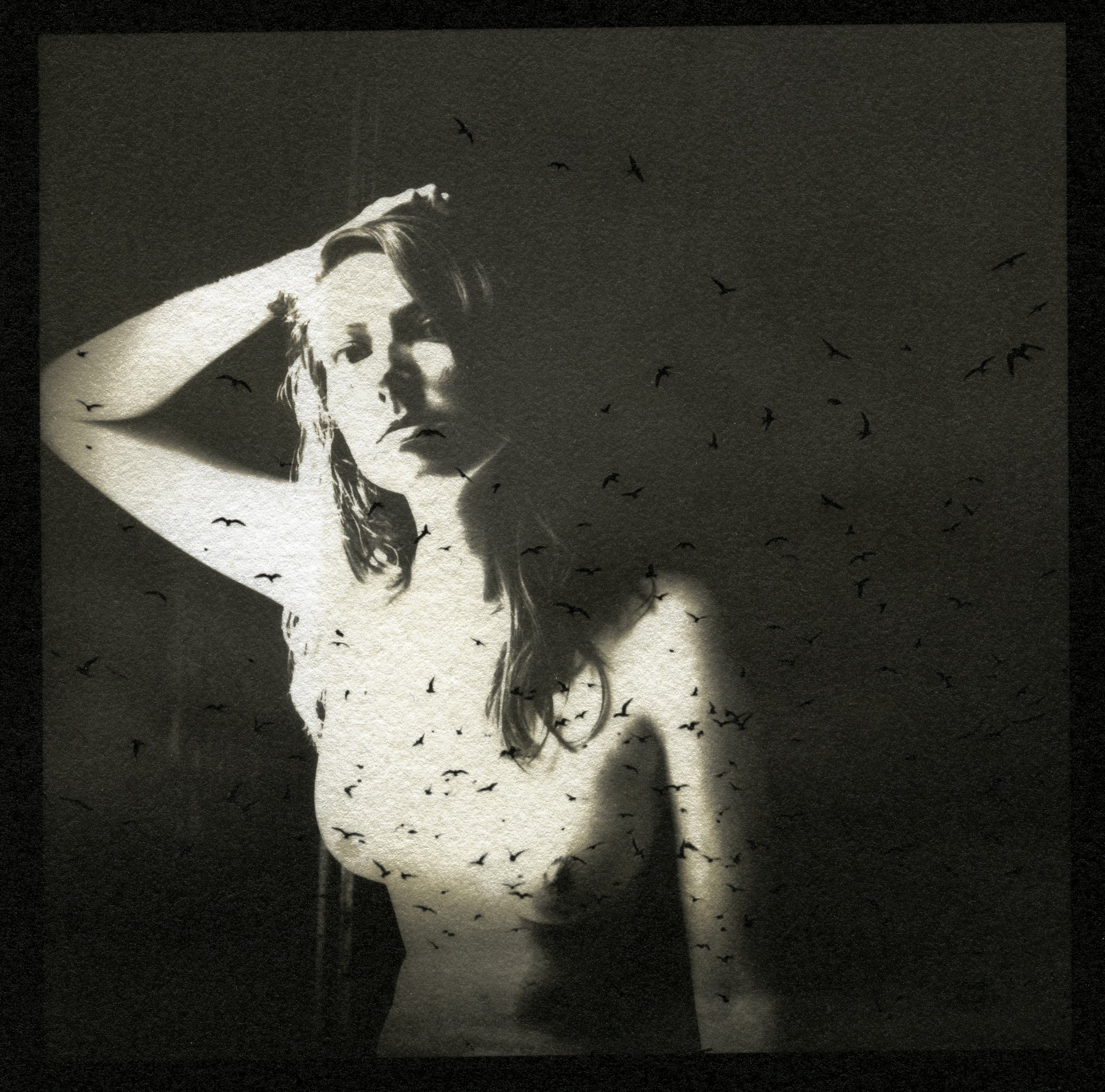
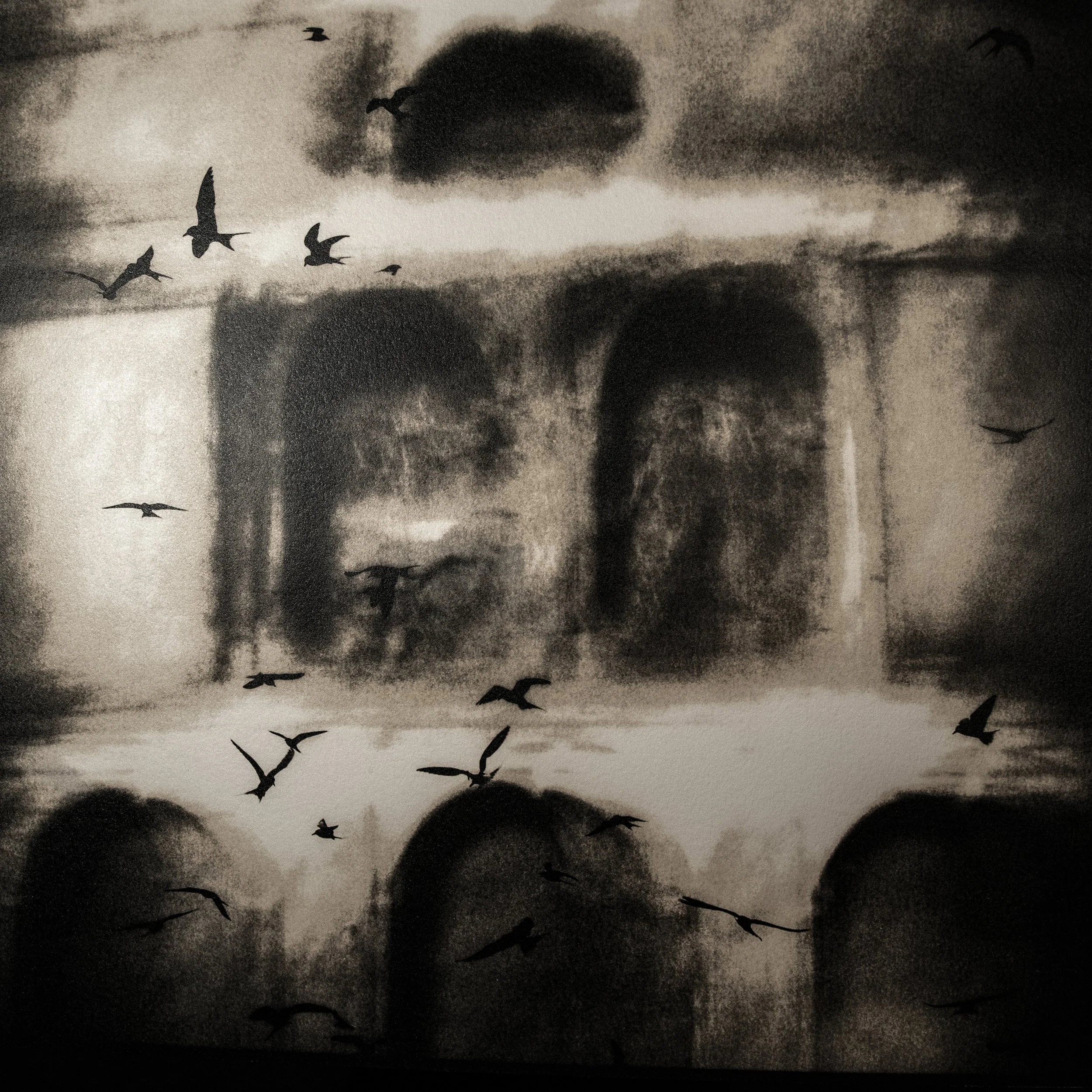
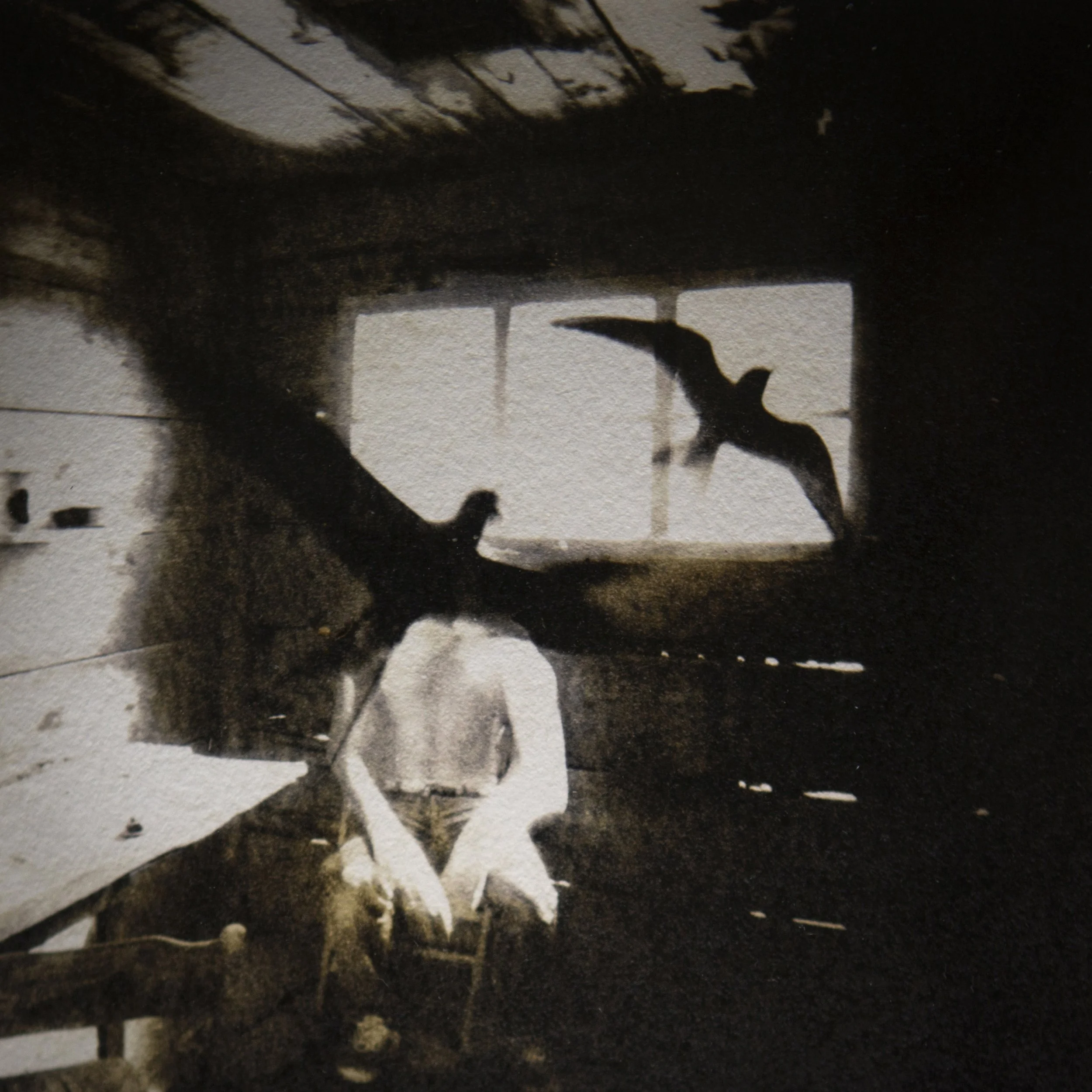
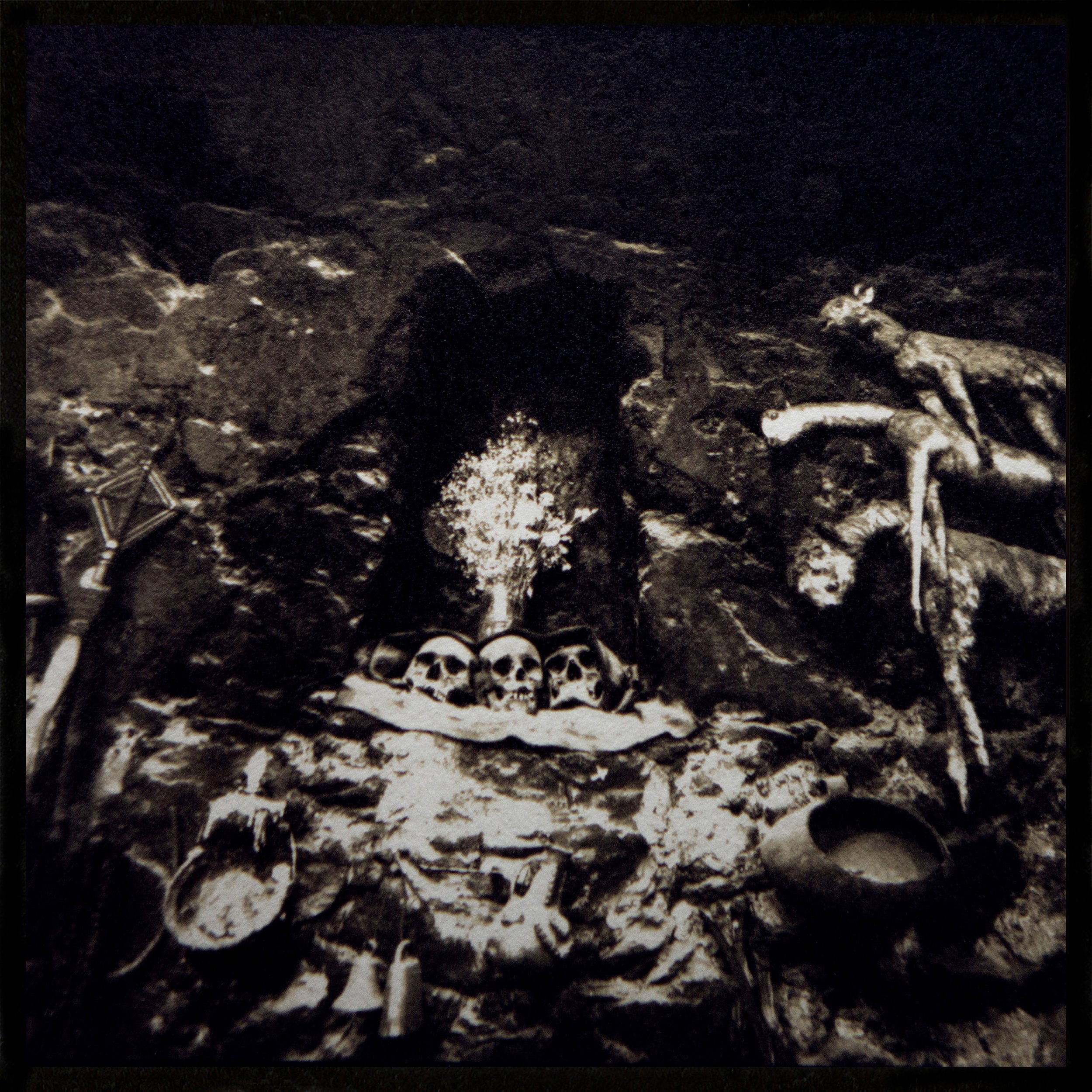
This grouping, The Ritual of Foreseen, comes together through a quieter and more psychological form of connection. At first glance, the images seem entirely unrelated. You have birds circling above Lalibela, the sacred religious site in Ethiopia. You have a fragmented altar of guinea pigs photographed in Peru. There is a figure emerging from dark water, almost like a shadow or apparition, alongside a bubble suspended inside glacial ice.
Individually, the photographs speak in very different visual languages. But together, they begin sharing the same emotional atmosphere. What connects them for me is a sense of reverence, anticipation, and ritual, as though each image is pointing toward something just beyond visibility or understanding.
There is a quiet spiritual tension running through the sequence. The images feel suspended between devotion and omen, between prayer and forewarning. The birds over Lalibela carry the weight of pilgrimage and collective belief, while the altar image feels ceremonial and fragmented at the same time, almost like an offering caught between beauty and decay. The figure in the water becomes ghostlike, emerging from darkness toward the viewer, while the bubble trapped in the glacier feels delicate and preserved, almost like breath held in suspension.
What interests me is that none of the images explain this feeling directly on their own. The meaning emerges through their accumulation and emotional resonance with one another. Sequencing allows the photographs to move beyond description and begin functioning more like fragments of myth, memory, or shared ritual.
I think the grouping ultimately becomes less about geography or subject matter and more about the sensation that something is about to happen, or perhaps already has. That feeling of anticipation, of standing at the threshold of something unknowable, is what binds the images together for me.
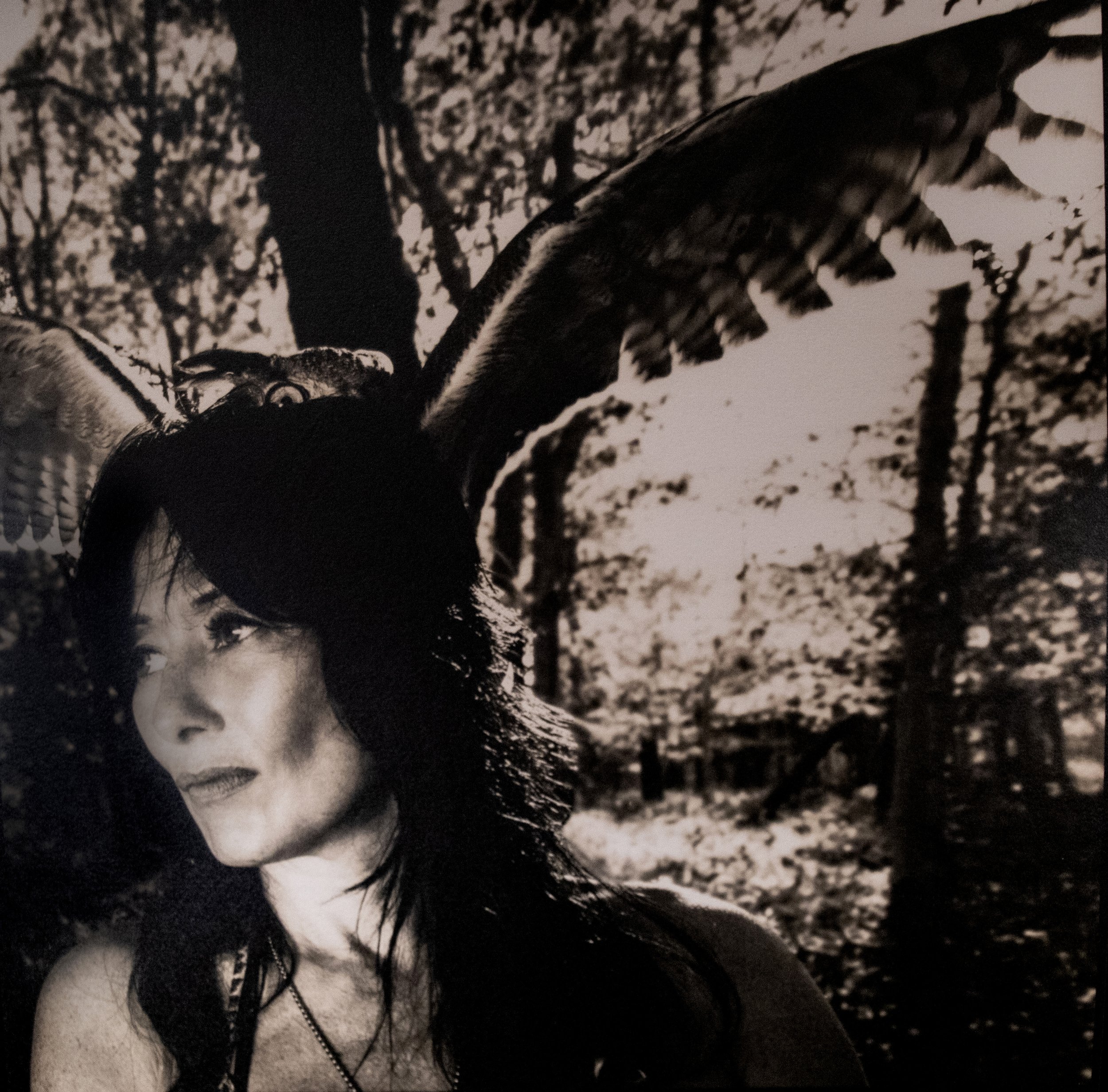
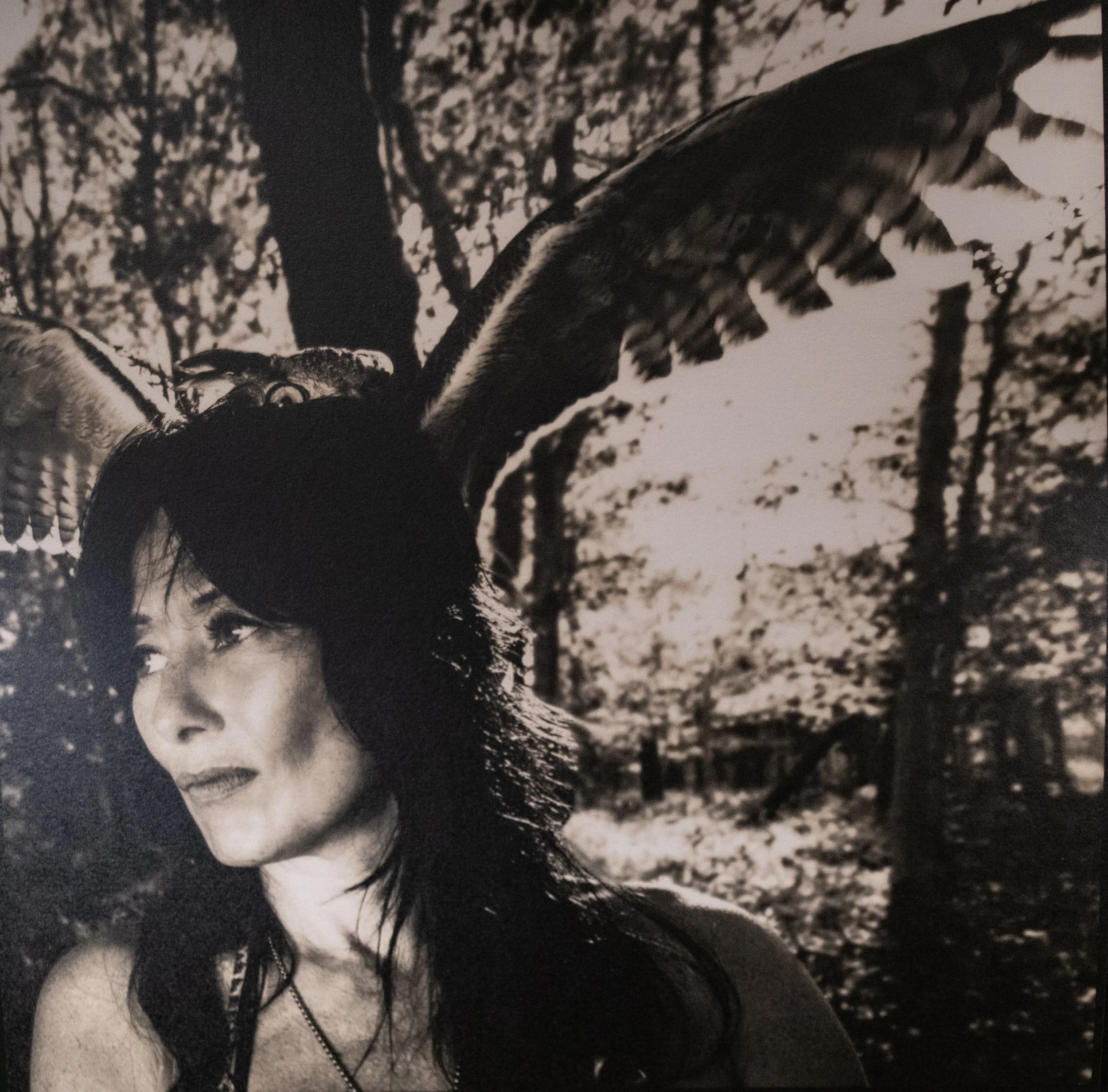
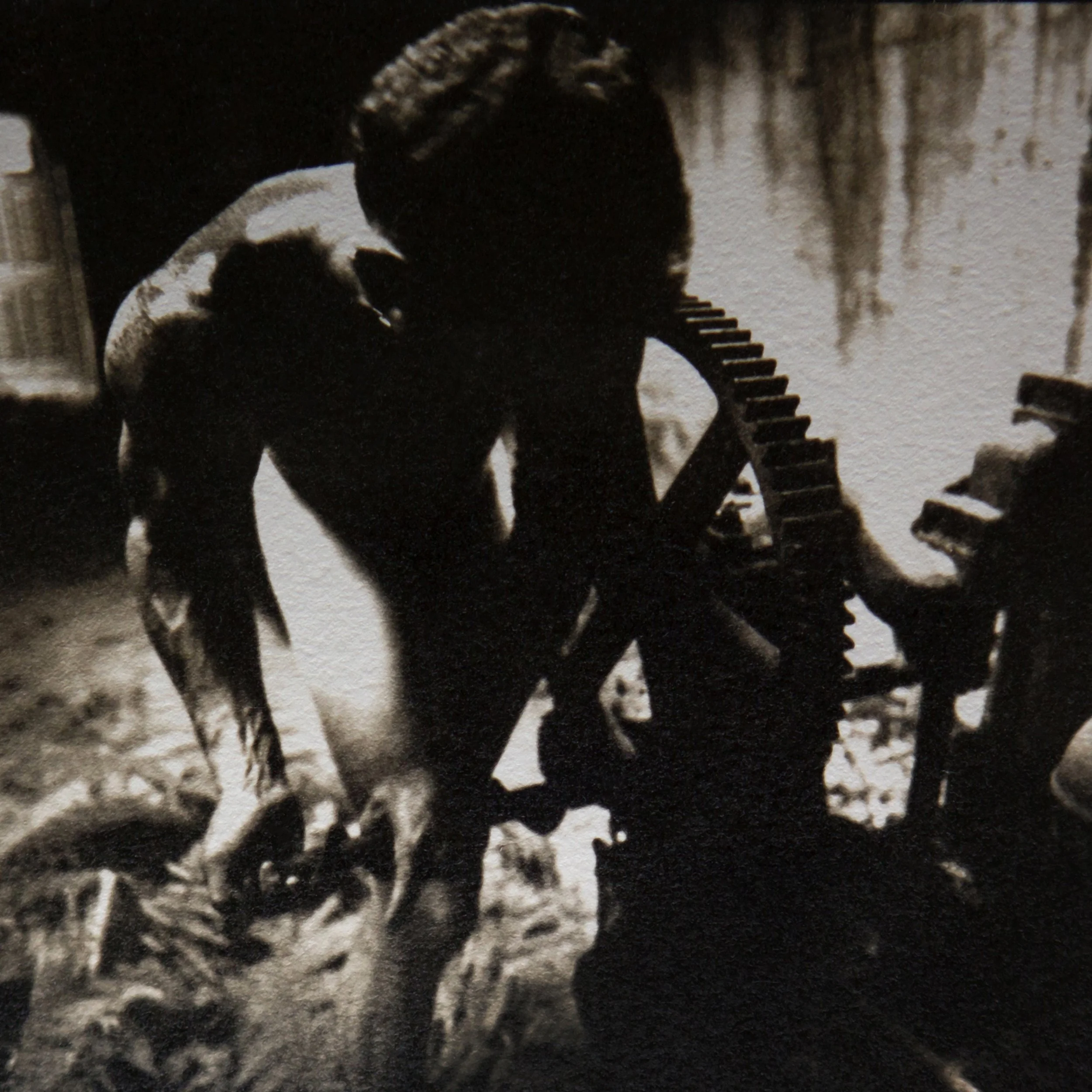
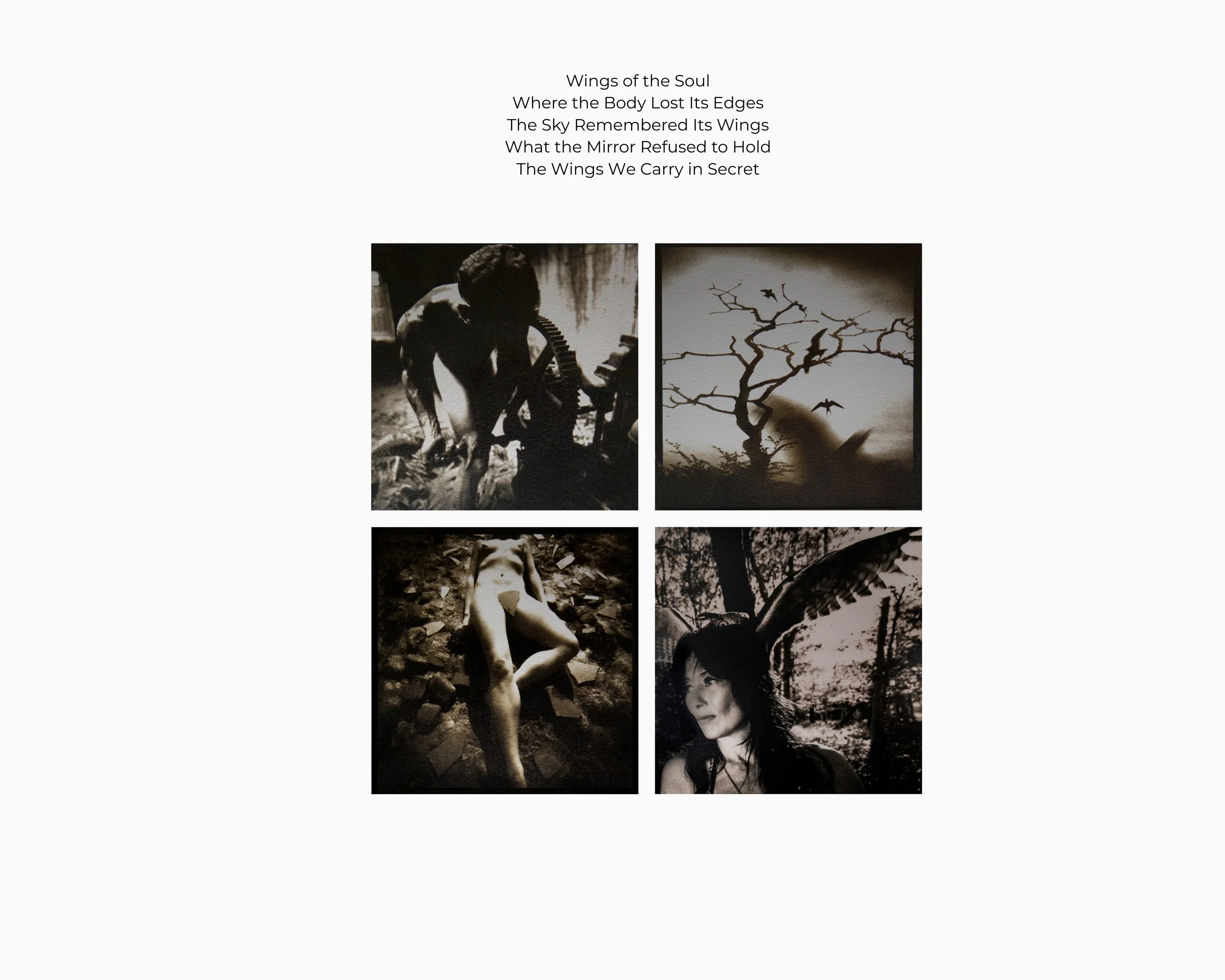
This grouping, Wings of the Soul, brings together images that were photographed across vastly different periods of my life. Some of them were made more than a decade apart. The image of Matt in the pump house is one of the earliest photographs in the sequence, while the portrait with the owl wings is among the most recent. Yet despite that distance in time, the images still seem to recognize one another emotionally and compositionally.
What connects them is partly the repetition of triangular forms throughout the sequence. Matt’s crouched body creates a triangular tension within the frame. The woman lying across the jagged beach forms another fractured triangular composition. The branches and birds in the Iceland image extend outward like wings, while the final portrait with the owl creates an almost mythic triangular structure behind the figure’s head and body.
But beyond composition, the images are connected through atmosphere and sensation. Each photograph carries a feeling of anticipation, transformation, or contact with something just beyond visibility. There is a tension between the physical world and something more psychological or spiritual lingering beneath it.
For me, the sequence becomes less about narrative and more about resonance. Even though the photographs were made decades apart and in entirely different locations, they still seem to exist within the same emotional frequency. They hold a similar quietness, a similar sense of waiting, almost as though each figure is listening or reaching toward something unseen.
That is one of the things I am most interested in within sequencing. Images made years apart can begin speaking to one another in ways I never could have planned consciously. They create emotional and symbolic echoes across time, allowing the work to feel interconnected beyond chronology or geography.
Installation: The original work was 101 framed 12x12 prints hung side by side with no gaps, creating something closer to sculpture than a wall of photographs. How does that physical experience change the way someone reads the work compared to the book?
101 Pennies exists somewhere between cinema, sculpture, and photography. In the installation, the 101 framed prints are hung edge to edge, creating a continuous visual field rather than a traditional photographic sequence. The work becomes less about individual images and more about accumulation, rhythm, and physical presence.
Each installation shifts slightly depending on the space, so the arrangement is never entirely fixed. I like that instability because it allows the work to renew itself each time it is shown. There is not one prescribed direction or singular narrative path. Viewers move through it intuitively, creating their own emotional and visual associations as they go.
In the gallery, the experience becomes immersive and almost overwhelming. You rarely stay with one image for long. Your eye drifts involuntarily from one moment into another, building emotional echoes and collisions along the way. It begins to feel less like reading photographs and more like being carried through a wave of fragmented memories, rituals, desires, and encounters.
In many ways, that structure mirrors the way I think and remember. Not linearly, but through flashes, fragments, repetitions, and emotional returns that slowly accumulate into something larger and more difficult to define.
The book creates an entirely different experience. It slows the work down and makes it intimate. The installation expands outward into physical space, while the book pulls the viewer inward into a quieter, more solitary encounter. Turning the pages creates pauses and moments of reflection that do not exist in the gallery.
There is also a point where the text and images begin to fold into one another. If a reader moves back and forth between the writing and the photographs, the two start creating a secondary narrative, something suspended between image and language. That space between the two feels very important to me because it allows the work to remain open, emotional, and unresolved.
The book: How did you decide which 55 images from the larger 101-image installation could carry the book on their own?
The selection of the 55 images for the book was shaped collaboratively with Fall Line Press. They had access to the larger edit from the 101-image installation before the final sequencing was completed, and together we began identifying the photographs that resonated most strongly within the quieter and more intimate structure of the book.
The installation and the book function very differently. In the installation, the images accumulate physically and emotionally through scale and repetition. The viewer experiences them almost all at once, moving through a field of fragments and sensations. The book required a different pacing and emotional rhythm.
Many of the photographs that remained were the ones that stayed emotionally open while still holding enough tension to sustain repeated viewing. The book ultimately became its own separate organism, not simply a reduction of the installation, but a retranslation of the work into a more intimate and contemplative form.
Portraiture: Your bio describes your portraits as film stills, moments that hold both a past and a future. What do you look for in a subject or a moment before you press the shutter?
For me, photographing someone is rarely about the first impression. The real moment usually arrives later, after time has passed and the performance of being looked at begins to dissolve. Often it happens in the final frames, when the energy softens and the person slowly falls back into themselves.
I am not especially interested in what people consciously present to the camera. I am waiting for something quieter and less guarded to emerge, something that exists just beneath the surface of performance or self-awareness. It often reveals itself in transitional moments, when someone drifts inward for a second, forgets they are being observed, or slips into a private thought.
There is a kind of vulnerability in those spaces, a small opening where the image stops feeling descriptive and begins to feel psychological. That is the moment I am searching for. A photograph that feels suspended, as though it contains both memory and anticipation at the same time, like a film still pulled from a larger narrative we never fully see.
I think that is why many of the portraits carry a sense of incompletion. They do not explain themselves entirely. They remain slightly open, as though the subject is still becoming something even as the photograph is being made.
Tension: You write about working in the space between representation and reality, and between opposing forces like horror and delight. How do you photograph something that abstract without it feeling forced or staged?
A lot of it comes down to patience. I am rarely trying to force meaning onto a situation. Instead, I am waiting for something to emerge naturally in that unstable space where reality begins to loosen and something more psychological or emotional starts to surface.
Sometimes it appears as a gesture, a glance, an awkward interaction, or a fleeting moment that feels strangely charged without fully explaining why. I often think of the images as fragments of sensation, almost like Polaroids of feelings, traces of rituals, or half-remembered sentences hovering just beneath language.
What interests me is that tension between beauty and discomfort, tenderness and estrangement, horror and delight. Life rarely exists in one emotional register, and I do not want the photographs to resolve into something singular or fixed. The most meaningful moments usually contain contradiction. They pull in opposing directions at once.
I am not constructing those tensions as much as recognizing them when they briefly reveal themselves. The challenge is allowing the image to remain open enough that the viewer can still feel that instability, that uncertainty between what is visible and what is emotionally sensed beneath it.
In many ways, the unresolved quality is the point. Once an image explains itself too clearly, some of the mystery disappears. I want the photographs to linger more like emotional residue than conclusions.
The book form: What does turning the pages of 101 Pennies offer that the original installation could not, and what did you have to give up in translation?
The book offers a different kind of intimacy. You can take it home, sit with it quietly, return to it over time. It allows for a slower and more interior experience. You can stay with a single image for as long as you need, move back and forth between the photographs and the text, and allow the emotional connections to unfold gradually rather than all at once.
In many ways, the book feels almost ritualistic to me. Turning the pages becomes a private act. The images and writing begin to echo one another, creating moments where memory, fiction, and sensation start to blur together. It asks for contemplation rather than immersion. The experience becomes less about spectacle and more about emotional accumulation, about living with the work slowly enough for it to begin opening itself over time.
The installation exists very differently in space. It is immersive, physical, and almost overwhelming. The 101 images arrive simultaneously, edge to edge, creating something closer to a visual wave than a traditional photographic exhibition. Your body experiences the work before your mind fully organizes it. You move through fragments, repetitions, gestures, and emotional collisions in real time.
Something inevitably shifts in the translation between those forms. The installation has a sculptural immediacy and a kind of sensory excess that the book cannot fully replicate. In the gallery, the images surround you and create a collective field of experience. In the book, the work becomes quieter, more solitary, and more psychological.
But I do not see one form as replacing the other. They reveal different emotional dimensions of the same work. The installation expands outward into space and movement, while the book pulls the viewer inward into reflection and intimacy. One washes over you; the other lingers slowly inside you.
To discover more about this intriguing body of work and how you can acquire your own copy, you can find and purchase the book here. (Fall Line Press, Amazon)
More photography books?
We'd love to read your comments below, sharing your thoughts and insights on the artist's work. Looking forward to welcoming you back for our next [book spotlight]. See you then!
Robin de Puy could no longer make this project alone. She first photographed Randy in Ely, Nevada, during a 2015 road trip and kept returning to him for more than ten years. Interviews