Deep Dive into A Room for the Night by Alex Yudzon
Welcome to this edition of [book spotlight]. Today, we uncover the layers of 'A Room for the Night,' by Alex Yudzon (published by Radius Books). We'd love to read your comments below about these insights and ideas behind the artist's work.
Great art often begins in the background, not the spotlight.
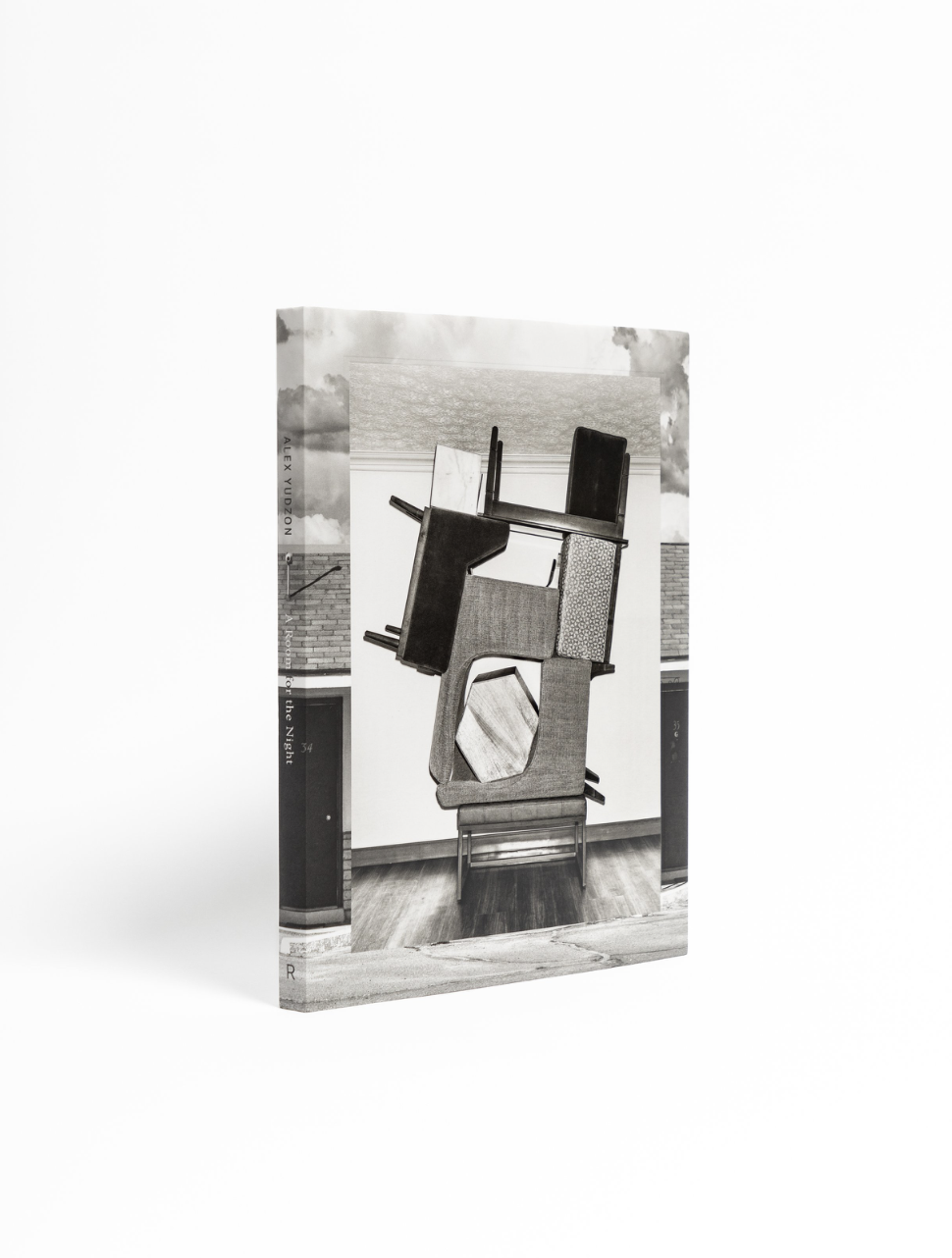
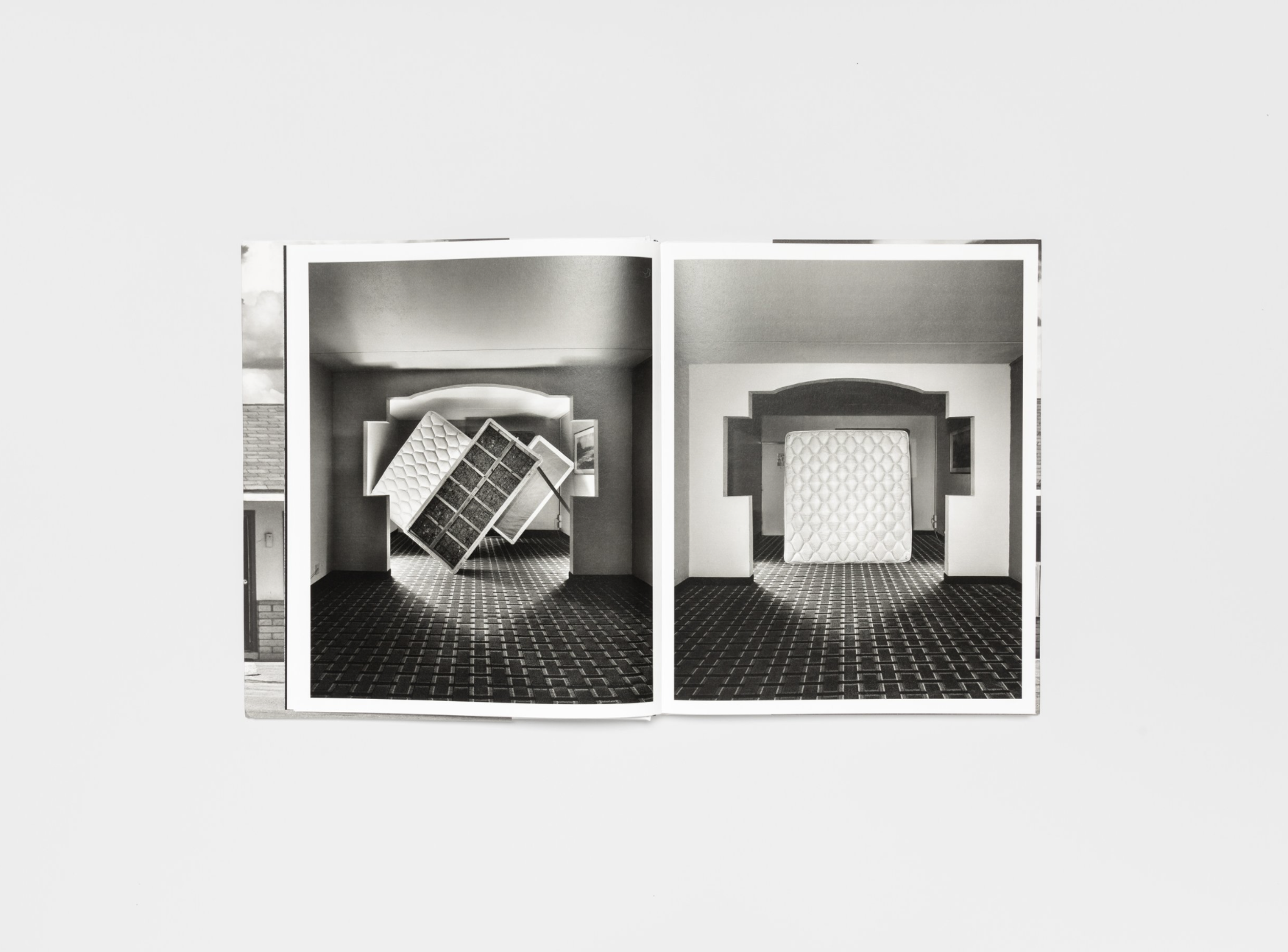
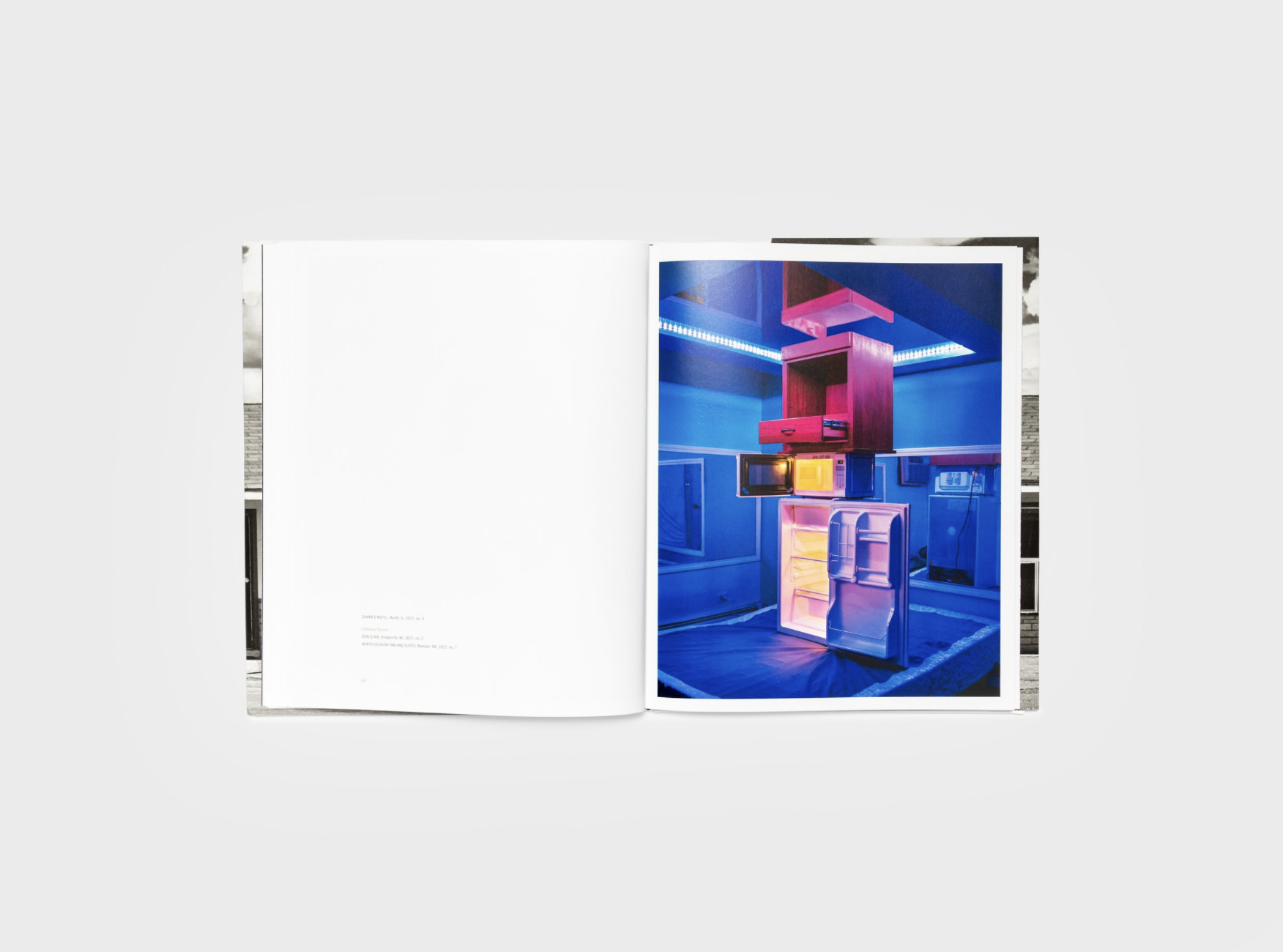
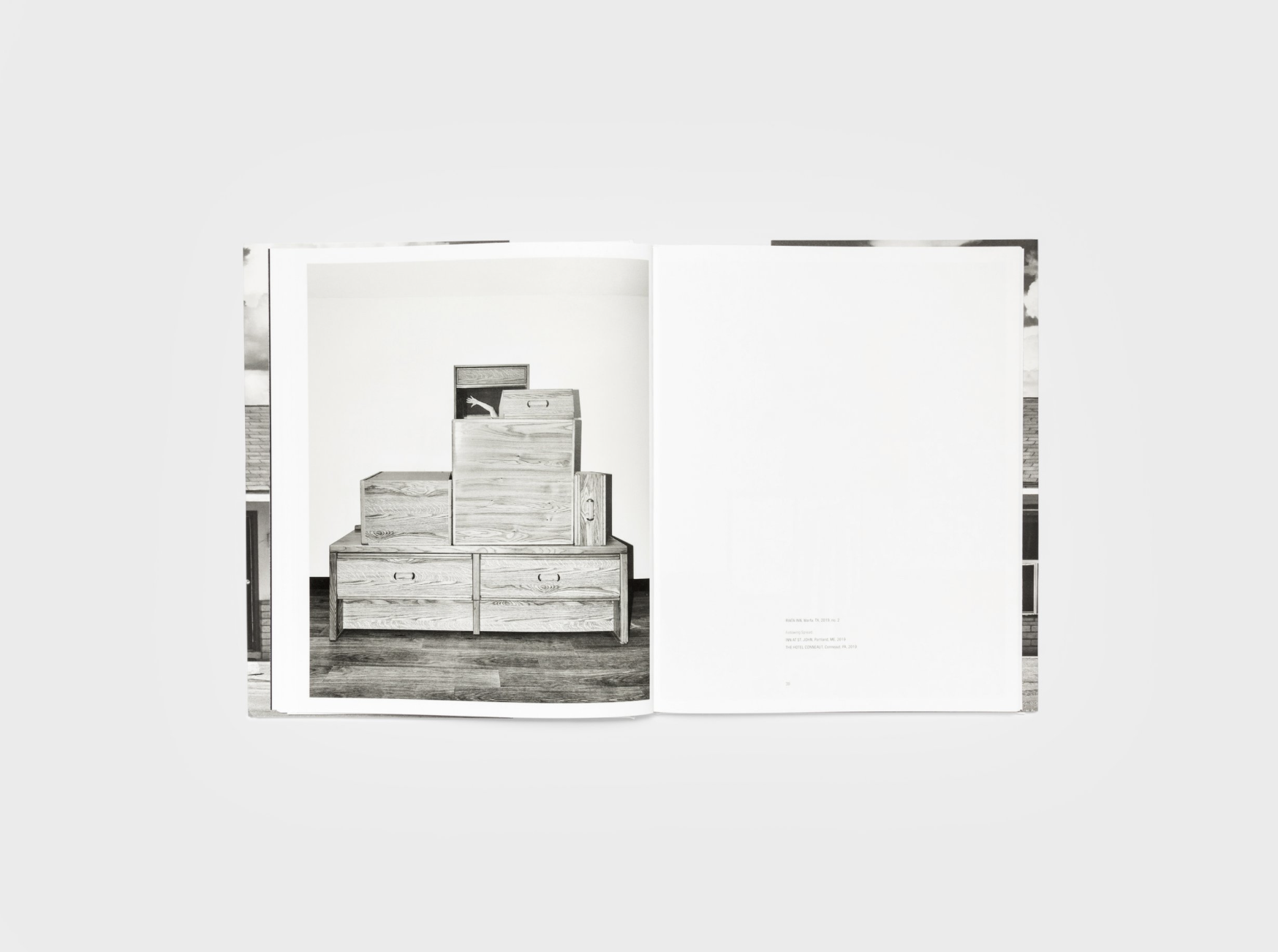
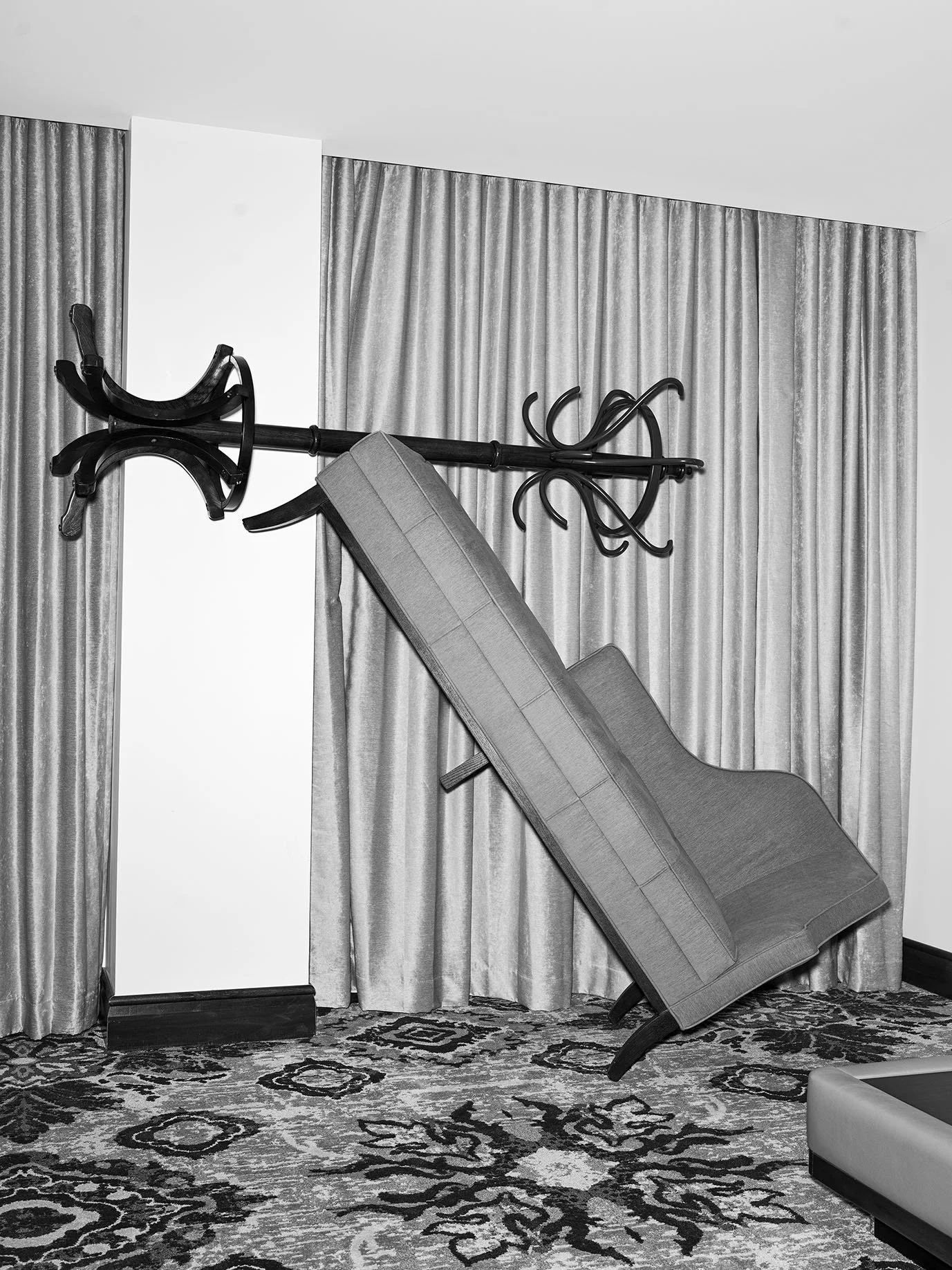
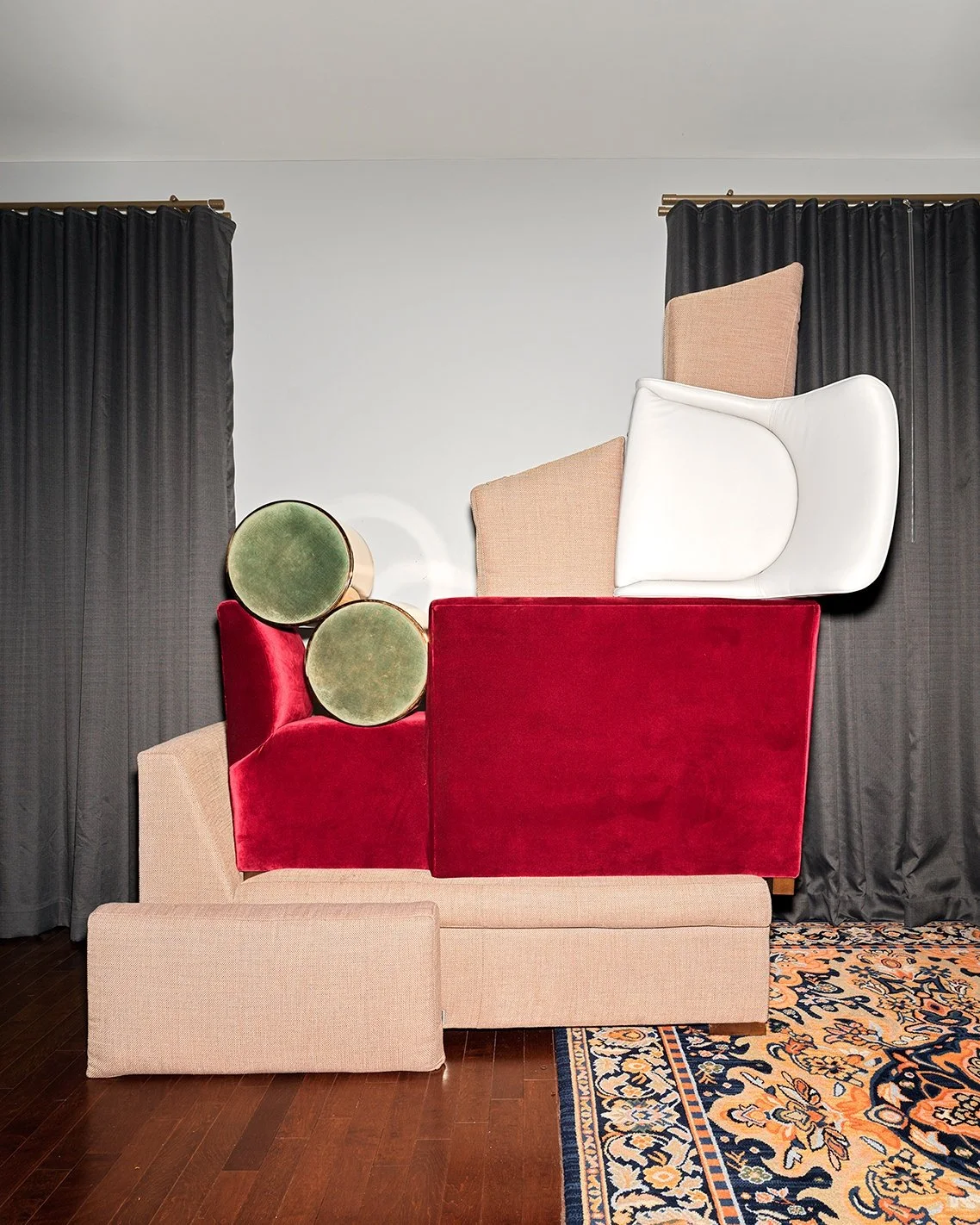
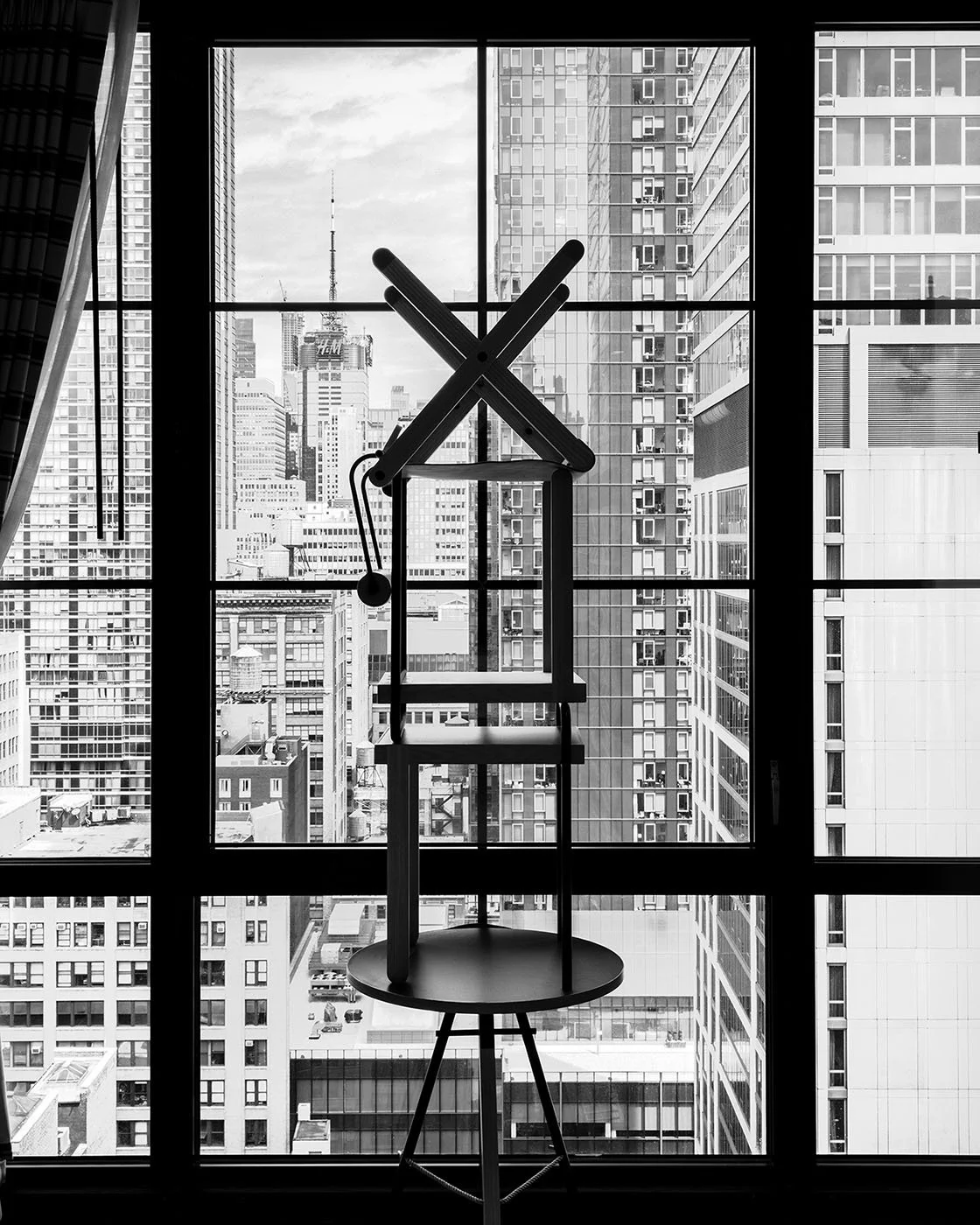
Alex Yudzon’s long-term project, A Room for the Night, takes place in quiet, ordinary hotel rooms. He travels across the United States, turning temporary spaces into sculptural installations using only the furniture inside. Each room becomes a short-lived collaboration between the artist and the space, then everything is put back exactly how it was. The only thing that remains is a single photograph.
It started with a childhood memory of migration.
Alex’s first memory of America was waking up in a brown hotel room after leaving Moscow with his family. That strange moment, between two countries and two lives, stayed with him for years without him knowing. Later, while traveling for work, he began rearranging furniture in hotels and taking photos, not as a plan, but as a creative instinct. Over time, the project became something deeper: a way to explore absence, presence, and the quiet beauty of spaces no one notices.
Alex is offering an exciting online workshop this October called "Creating Beyond Convention" - a 4-week intensive program designed for photographers and artists looking to push creative boundaries. The workshop explores innovative approaches used by artists across disciplines (photography, film, music, writing) and how to apply these insights to your own creative practice. Learn more and register here
The Book
A Room for the Night is a photographic monograph by New York–based artist Alex Yudzon. Alex began the series in 2014 while traveling abroad without creative work, to pass the time, he began using only the furniture in his hotel rooms to build ephemeral sculptural assemblages and then photographed them before dismantling everything and restoring the space .
Using only the objects found in each hotel room, he works alone and in secret, stacking, leaning, and balancing furniture into surreal configurations that feel suspended in defiance of gravity, visual gestures that unlock dormant emotions and questions about displacement and anonymity. The final photographs, reminiscent of crime scene documentation, become the only record of each intervention. Once the image is made, every trace of the event is erased.
Focused largely on American hotels, the book is framed as a meditation on our uneasy relationship with hotels as liminal spaces operating beyond social norms and personal identity. Through dark humor, quiet solitude, and creative obsession, the project reveals not just the installations themselves, but the lived experience surrounding them: the hotels, their operators, the guests, and the broader communities they exist within. (Amazon, Radius Books)
Martin: So tell me about what made you look at a hotel room and think this could be art.
Alex Yudzon: It's interesting. My first experience coming to America was when I immigrated with my family at eight years old. We had this expectation that we were heading to a magical place filled with hope and promise. We arrived in the middle of the night, and I don’t even remember the arrival because I was just a tired kid. My first memory of my new homeland was waking up in a hotel room.
I was completely disoriented. It was a small, dark room composed of different shades of brown. The curtains were drawn, and outside you could hear the constant rumble of traffic from the nearby highway. It was such a stark contrast to our beautiful apartment in Moscow, which was filled with colour, art, and books. I thought, "What is this place? Where am I?" There was this sense that my life had been interrupted. One homeland was left behind, and now there was another, one familiar place and another that was curious, new, and strange.
That contrast was something to be discovered and learned. Between those two spaces was this hotel room. It felt like a mediator, almost like a portal between two realities. I think that experience lodged itself somewhere in my consciousness and lay dormant for most of my adolescent and even young adult life.
Later, I found myself travelling for work and spending time away from my studio. I had a very nice camera, which I originally bought to photograph my paintings. I had it with me while I was travelling, and I happened to be staying not in a hotel room but in an Airbnb. However, it had mid-century modern furniture and, like a hotel room, was completely devoid of personal items. It wasn’t like a typical Airbnb filled with family photos or personal trinkets. It was specifically designed just as a rental, so it functioned very much like a hotel room in that sense.
I just started making this work, arranging the furniture and photographing it as a creative outlet. Being separated from my studio, I had this need to do something creative. It wasn’t until I returned to New York, printed those images, and had the chance to really look at them as a small body of work, only about 12 pieces, that I began to realise there was something there. They had a quality that intrigued me over time. They weren’t just fleeting; they held my interest far longer than I expected. In many ways, they were more interesting than the paintings I was making, which was a surprise.
A friend of mine visited the studio, saw the photos, and fell in love with them. I said, "I’m really intrigued by this work too. I just don’t know what to do with it. It’s only eight or ten pictures, not enough for a show, but I can’t just put them away in a drawer. They’re truly captivating." He suggested, "You should do this whenever you travel. Whenever you’re on the road and staying in hotels, make this work. It could be a wonderful project that only happens when you’re away from the studio."
I thought, "Yes, brilliant, you’re absolutely right." That’s how the project started. Over the past 12 years, it has taken on a life of its own.
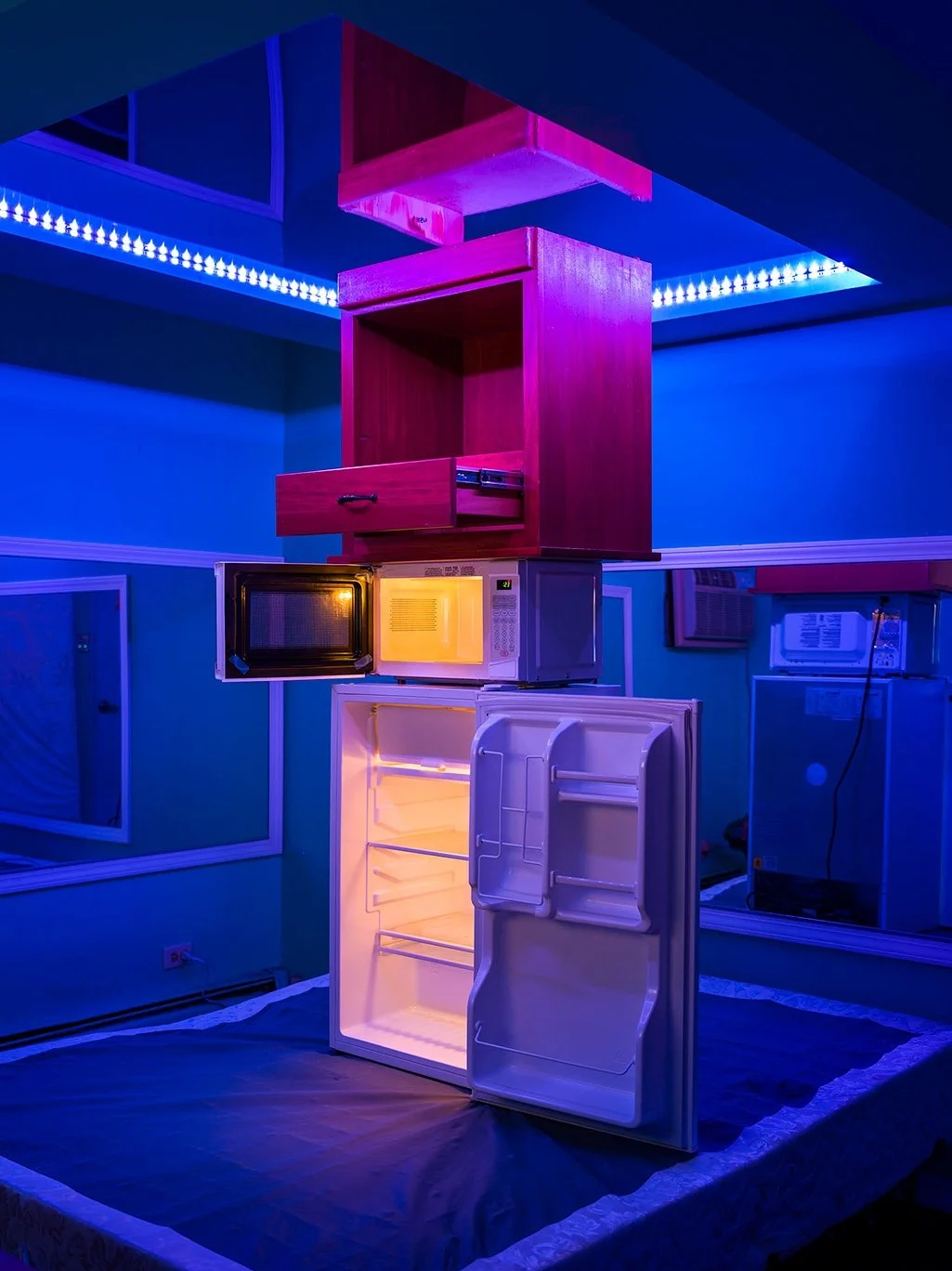
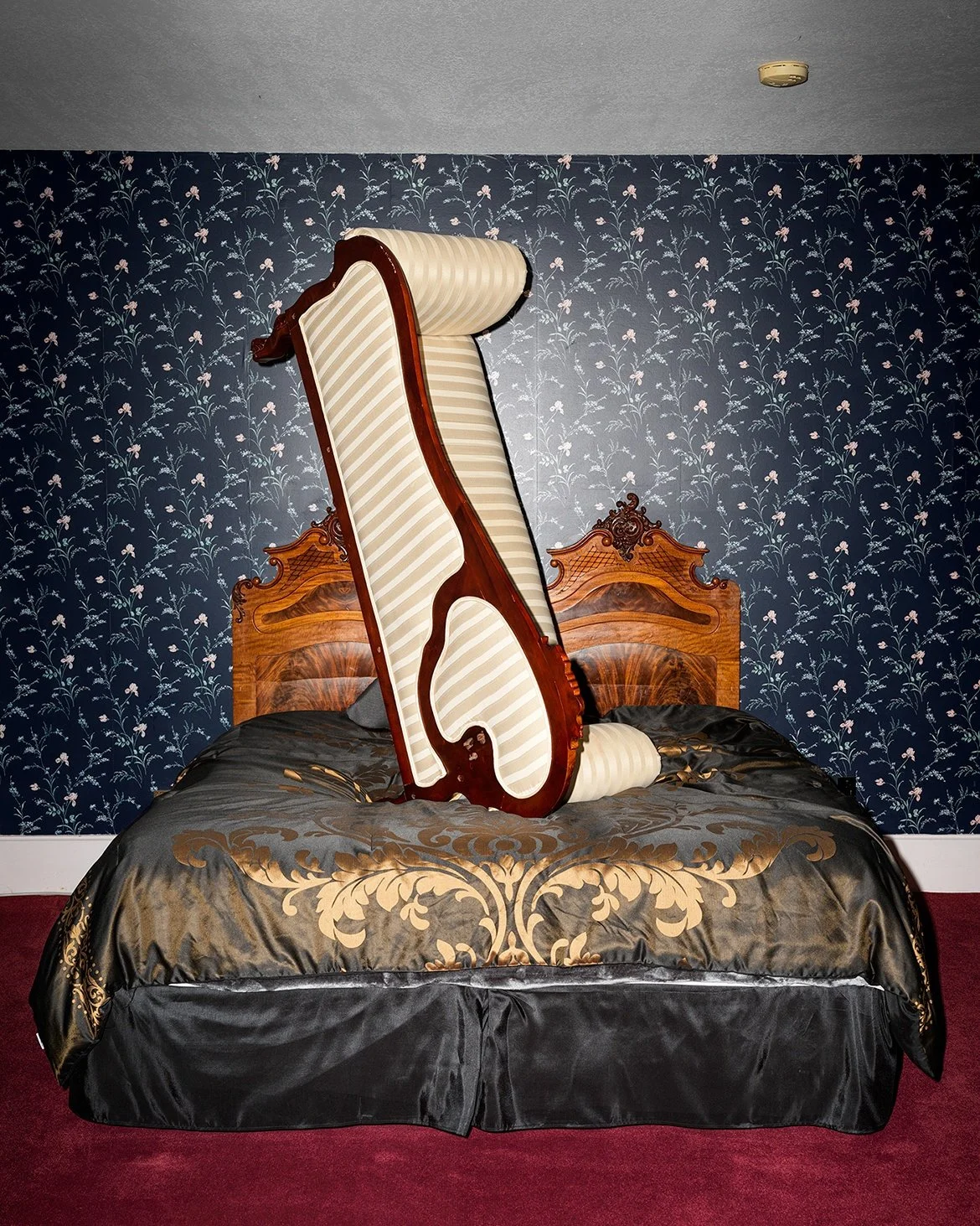
So at first, this was more of a side project while you were traveling around the US. But then, as you got deeper into it, you started traveling specifically for certain designs or hotels. I remember you said you even drove three hours just to photograph one particular room. Is that right?
Yeah. Hotels, for the most part, have lost the unique quality of the regions in which they're based. They've been taken over by large corporate entities. Those businesses are kind of like McDonald's. McDonald's wants their Big Mac to taste the same whether you're in New York, L.A., or London.
A Holiday Inn or any one of these chains wants your experience of the room to be the same wherever you are in the country. So it's all become very homogeneous. I quickly learned that I couldn't leave my experience of going to these hotels purely to chance because, more likely than not, I would just end up in the same hotel room over and over again, or a version of the same hotel room repeatedly.
So I started to research the spaces pretty extensively, going online on sites like Travelocity or Orbitz. Those sites are really good at showing images of the rooms, and you can look at different rooms. I quickly learned that, oftentimes, a suite might have better furniture or more interesting architecture than just the basic standard room you might get.
As I started to hunt for more interesting places to stay, just to give the project and myself variety as an artist, this sometimes resulted in travelling long distances. One time, I was having a really hard time in one region of America finding an interesting hotel. I finally found one, and the only thing interesting about it was that it had this fake brick paneling on one side of the room. I thought it was so bizarre to be in a hotel where an entire side of the room was composed of this very cheap fake brick. It just happened to be 300 miles away, so I got in the car and drove for the entire day just to see the brick paneling.
When I arrived, the woman at the front desk handed me the keys. I went into the room, and there was no brick. It was just a normal room. I rushed back to the office and said, "I'm sorry, do you have any rooms with the brick in it?" She looked at me like I was crazy and said, "Yeah, those are the old rooms. I just put you in one of the newly renovated rooms." I asked, "Can I stay in the old room?" She replied, "You can, but they're kind of gross and old. The carpet is all worn out, and there are cigarette burns on the bed." I said, "Okay, I get it. I don't care."
She just looked at me like I was a crazy person because I was so insistent that I needed to be in the room with the brick paneling, even though it was completely inferior. Things like that kind of pop up in the series.
When you first arrive and look around the room, what are you paying attention to before you start building the sculpture? And once it’s finished, what are you trying to capture in the final photograph? What exactly are you looking for?
I was just reading an interview with William Kentridge, and he mentioned this phrase that I love, peripheral thinking. He described how, when he gets to his studio, he likes to walk around, almost in circles, allowing his peripheral vision to take in the work surrounding him. This peripheral vision leads to peripheral thinking, which becomes a form of creativity. It's the beginning of his creative process: gathering these peripheral thoughts and letting them combine in interesting and unusual ways. That really struck a chord with me because I do something similar in hotel rooms.
I don't necessarily walk in circles, but the first thing I do is almost like a detective, I start walking around, looking at the furniture, turning things sideways. I do an inventory of the space, opening drawers, looking in closets, and developing a mental map of the room. I really like the idea that these rooms are an improvisational collaboration between myself and the space. The project isn’t purely about my own authorship; it’s a collaborative process with the spaces I occupy.
There’s an intuitive process involved, just being in the room, feeling the space, allowing it to speak to me. I listen to impulses about where things can be disrupted, sculpted, turned upside down, and inside out.
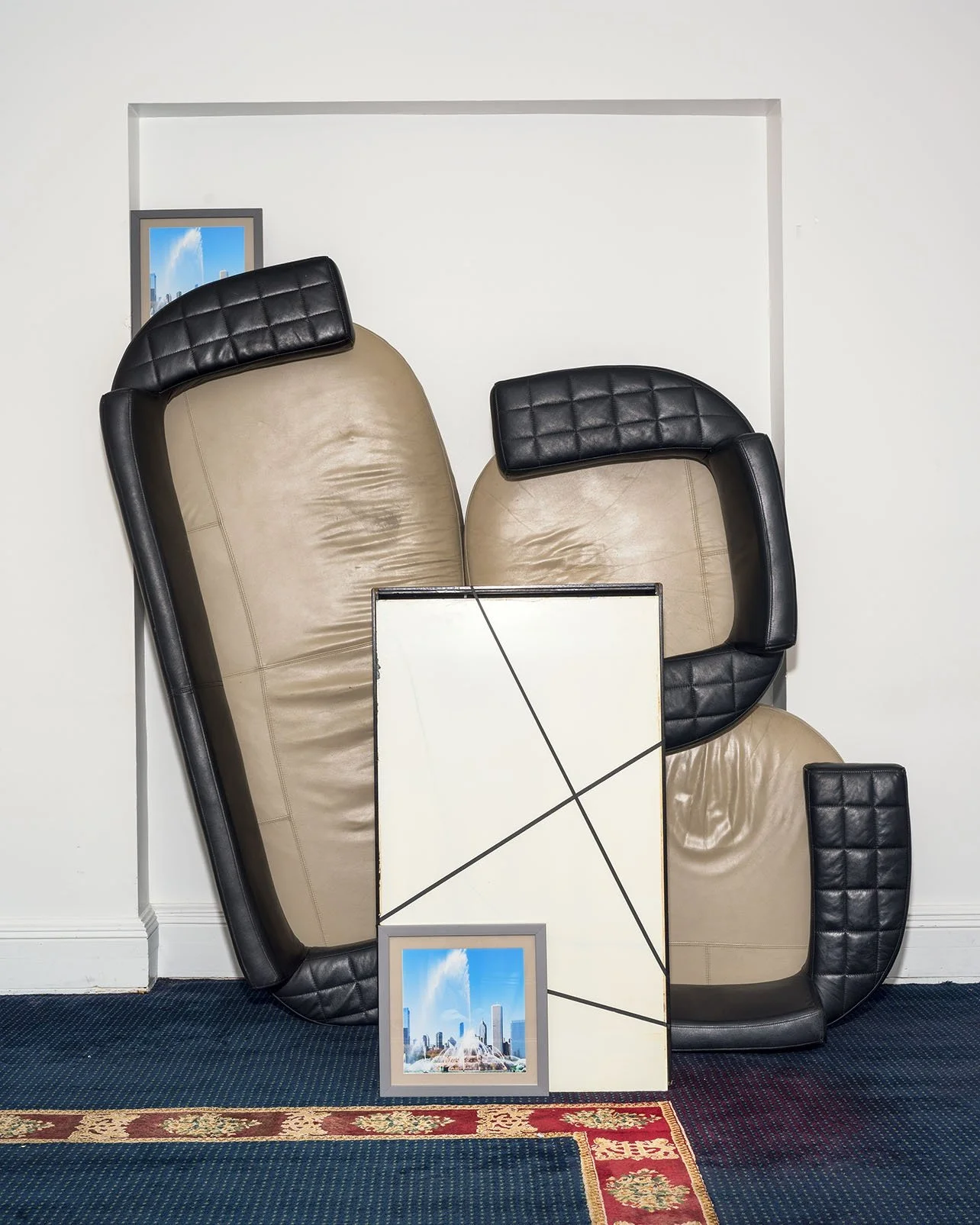
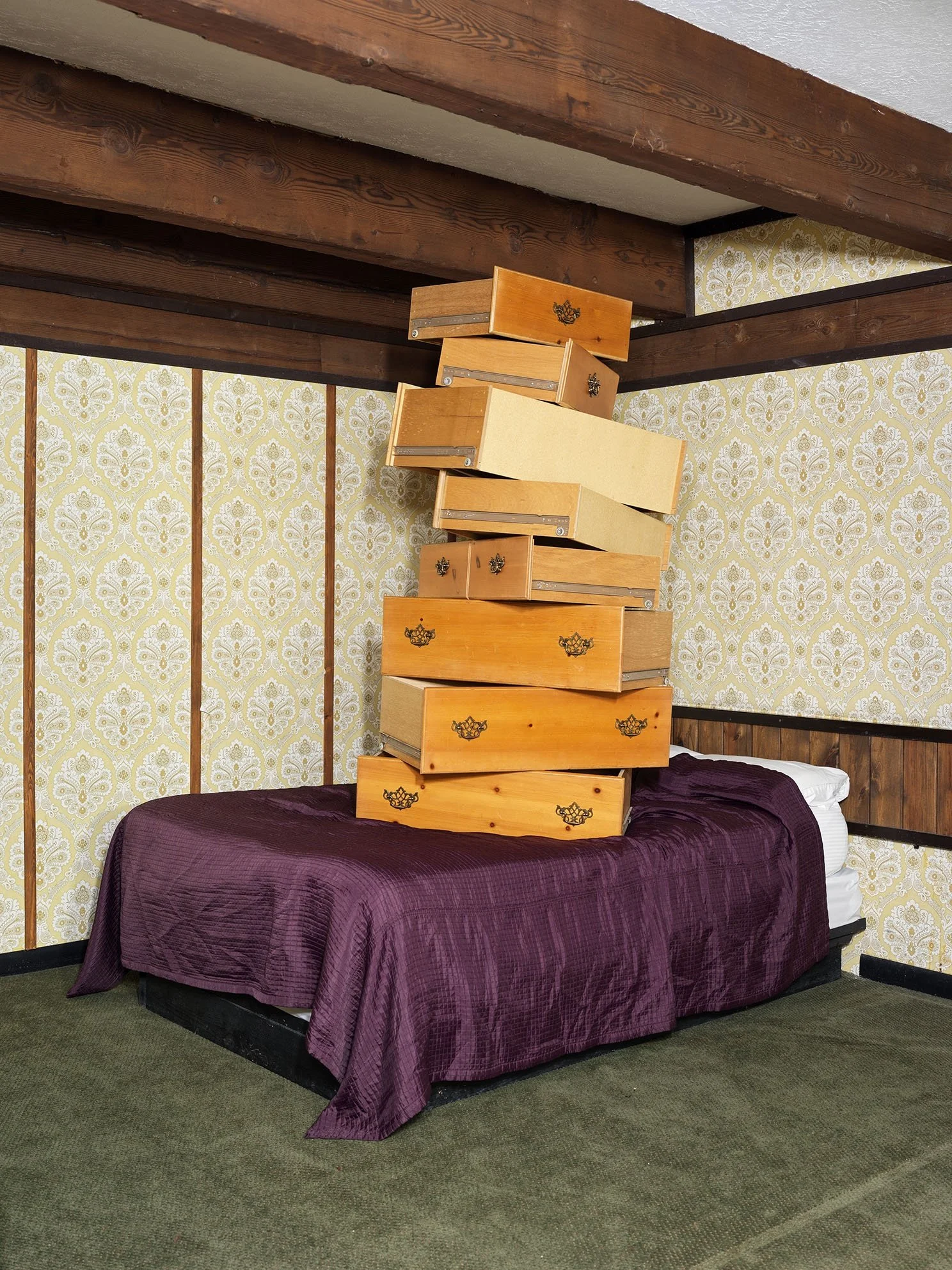
How does it feel when you leave the room, suitcase in hand, and take one last look back, seeing everything just as it was, as if you were never there? It’s almost like erasing your presence. What’s that moment like for you?
That's a great question.
You know, a lot of times I'm in such a rush to put everything back before checkout that I don't have time to fully appreciate or soak in this experience, the last kind of experience of the room, which is a shame. It's because I'm in these spaces for only two or three days, and then I have to leave. I'm always calling the front desk on the last day, begging them, like, "Can I have a late checkout?" and bargaining with them. They'll say, "Well, you can stay until 12," and I say, "Can I stay until two?" Then they say, "Well, you could stay until one," and I respond, "What if I give you an extra $50? Can I stay longer?" Just to have enough time to finish whatever thing I'm working on.
But to answer your question directly, I think because for me the process is so collaborative, at the end there is this relationship that forms with the room. And with each room, that relationship is very different. Some rooms have this wonderful generosity where everything feels like it flows, and it's almost like the room wants to be turned upside down, wants to have this creativity, wants to have this moment of playfulness inside of it. Other rooms are more resistant to that; it's a bit more of a struggle, and the furniture is heavy.
In those last minutes, I always try to focus on having a sense of gratitude for what the rooms have given me. It's kind of like a sense of gratitude and a sense of saying goodbye to someone that you've gotten to know in a way that nobody else will ever get to know.
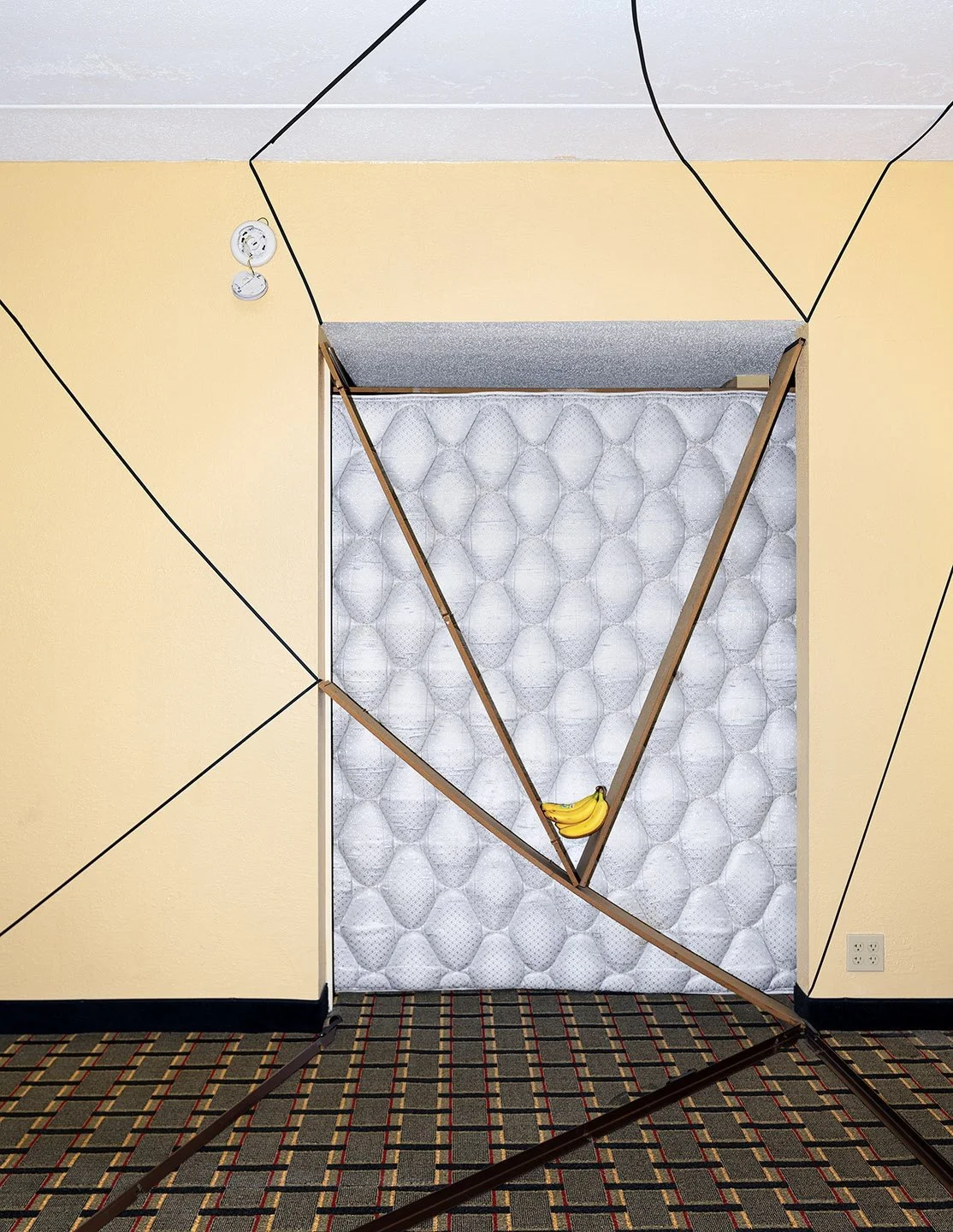

Is it a strange feeling to know that everything you created disappears once you leave, and that no one who comes into the room after you will experience it, except through the photographs? Is that part of the intention? I imagine you could leave the sculpture behind if you wanted to, even if it might feel a bit strange. Right?
Yes, exactly. For me, it's an essential component, conceptually, of the project.
Part of what I like about hotels is that they are repositories for hidden activity, the lives, dreams, desires, and perversions of all the people who have ever stayed there. Yet, all of that energy is trapped behind a very neat veneer, resistant to any access. Hotels lock in this information and refuse to disclose it, almost like safety deposit boxes for our lives.
I think that's one of the reasons why these spaces have such a wide range of uses. People go there to have love affairs, engage in criminal activities, escape from the law, or celebrate weddings. A hotel is such a weird, interesting place because it exists at this crossroads and is so good at keeping its secrets. We feel that when we go there, we have a degree of anonymity, that anything we do will be cleaned up after us and the next person will never know. I want the work to function within those parameters.
To me, the essential quality of the hotel is not that it's a temporary space, there are many temporary spaces, like people’s homes or couch-surfing spots. The essential quality of the hotel is the secrecy and the anonymity. That’s what really separates hotels from any other space available to us.
I love for the work to function within that: to be made, to be witnessed only by me, to be captured and documented in a photographic medium, and then returned to its original condition so that nobody is aware of what happened.


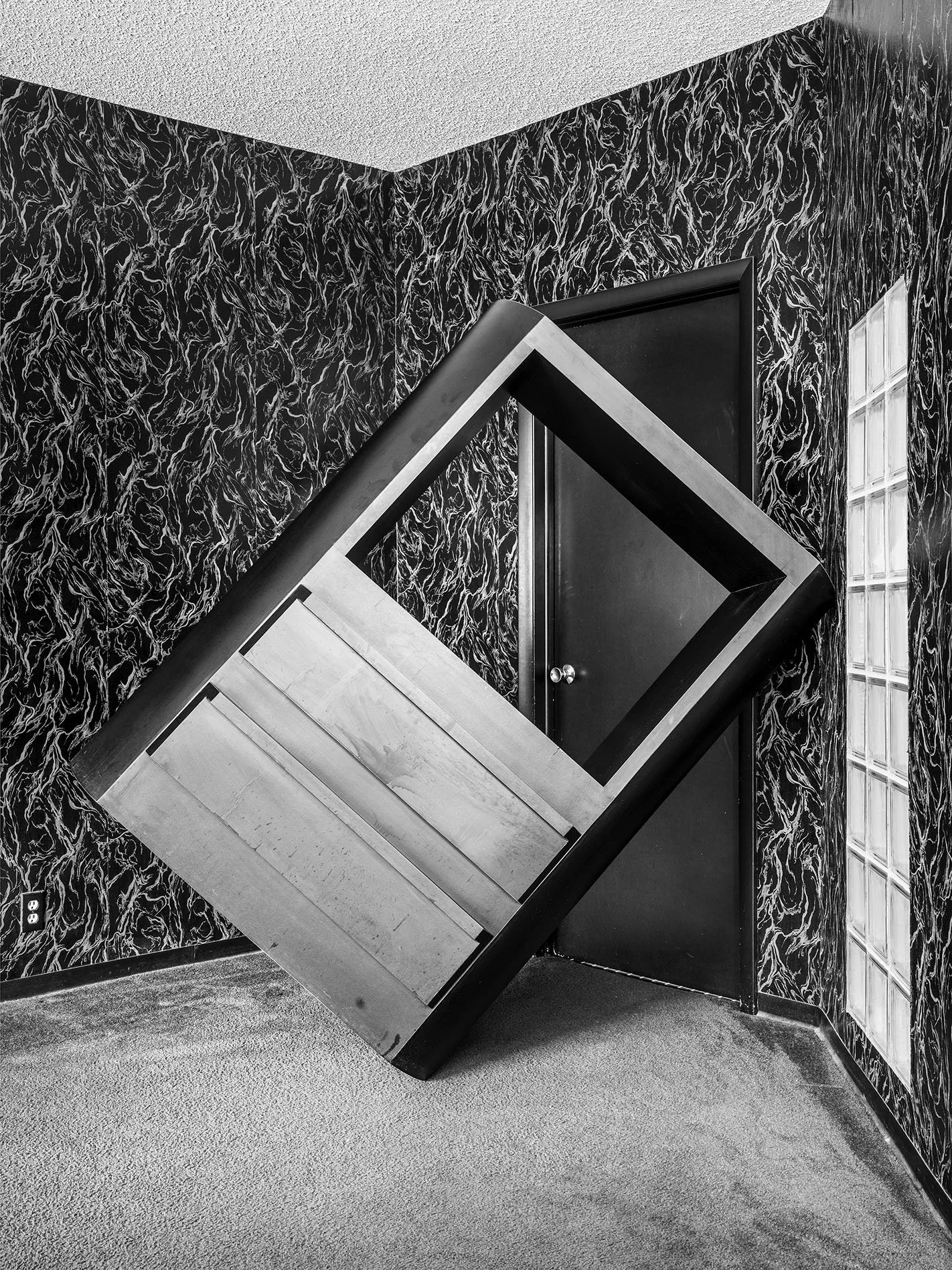
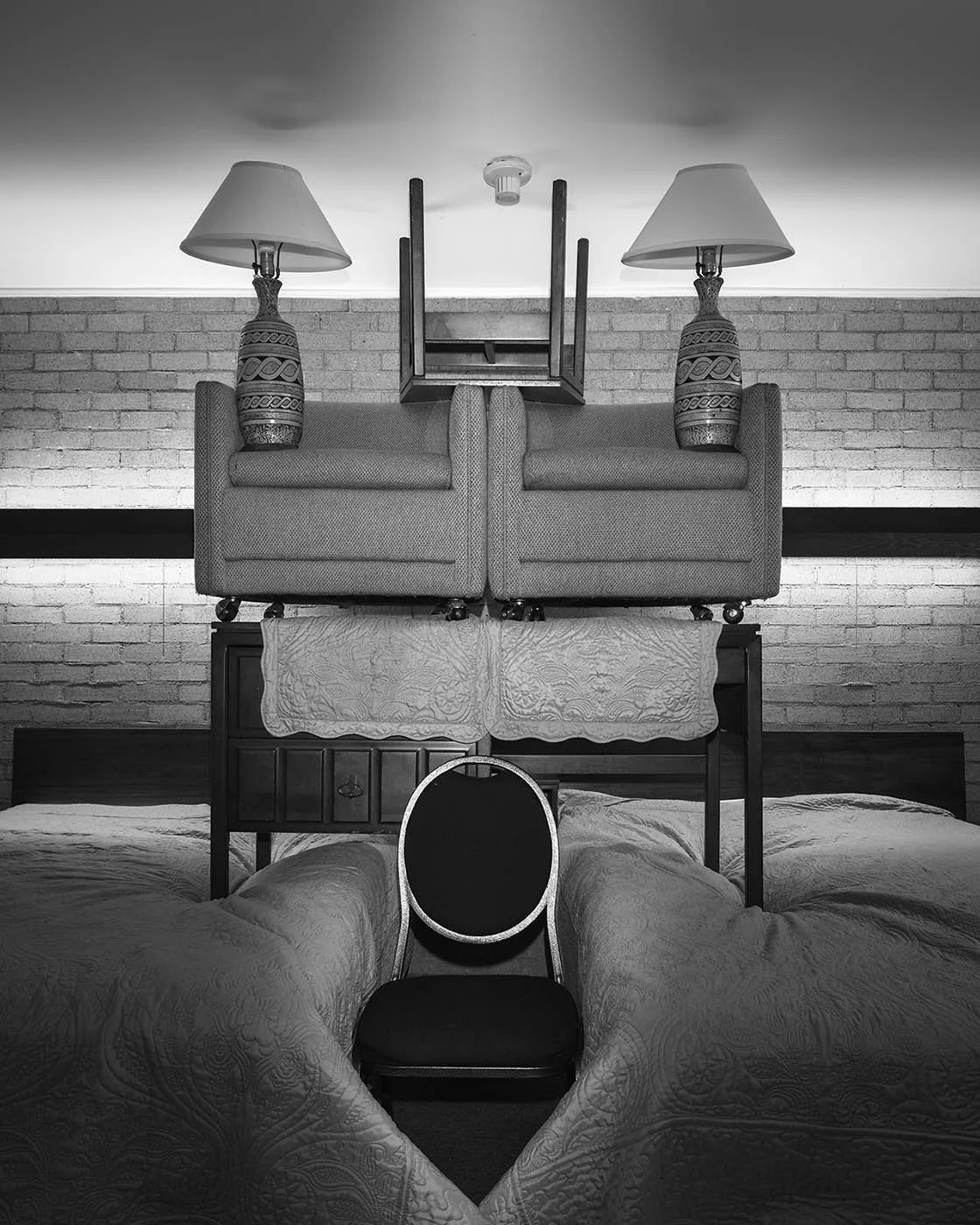
Is there something that surprised you after doing this in dozens of rooms?
Many things. I think the one thing that surprised me was the variety and the wide range of uses that hotels are put to. I came into the project aware of how people used hotels, but I came away with an even greater sense of just how diverse their purposes are.
People that you would never expect live in hotels for a variety of reasons. For some, it's a dead-end, a last resort in their lives. But for others, it's almost like a safe haven. I met this woman who was a recovering drug addict. She was three years out of jail and went to this hotel almost as a halfway home. She ended up becoming friends with the owner, who hired her to be the night manager. Now she lives in one of the rooms, manages the hotel at night, and has been three years sober. It amazes me that you can have someone with that experience in the same space as someone who's doing drugs in the next room. I think that part of it is really fascinating.
I've collected a lot of stories from the people that I've spoken to.
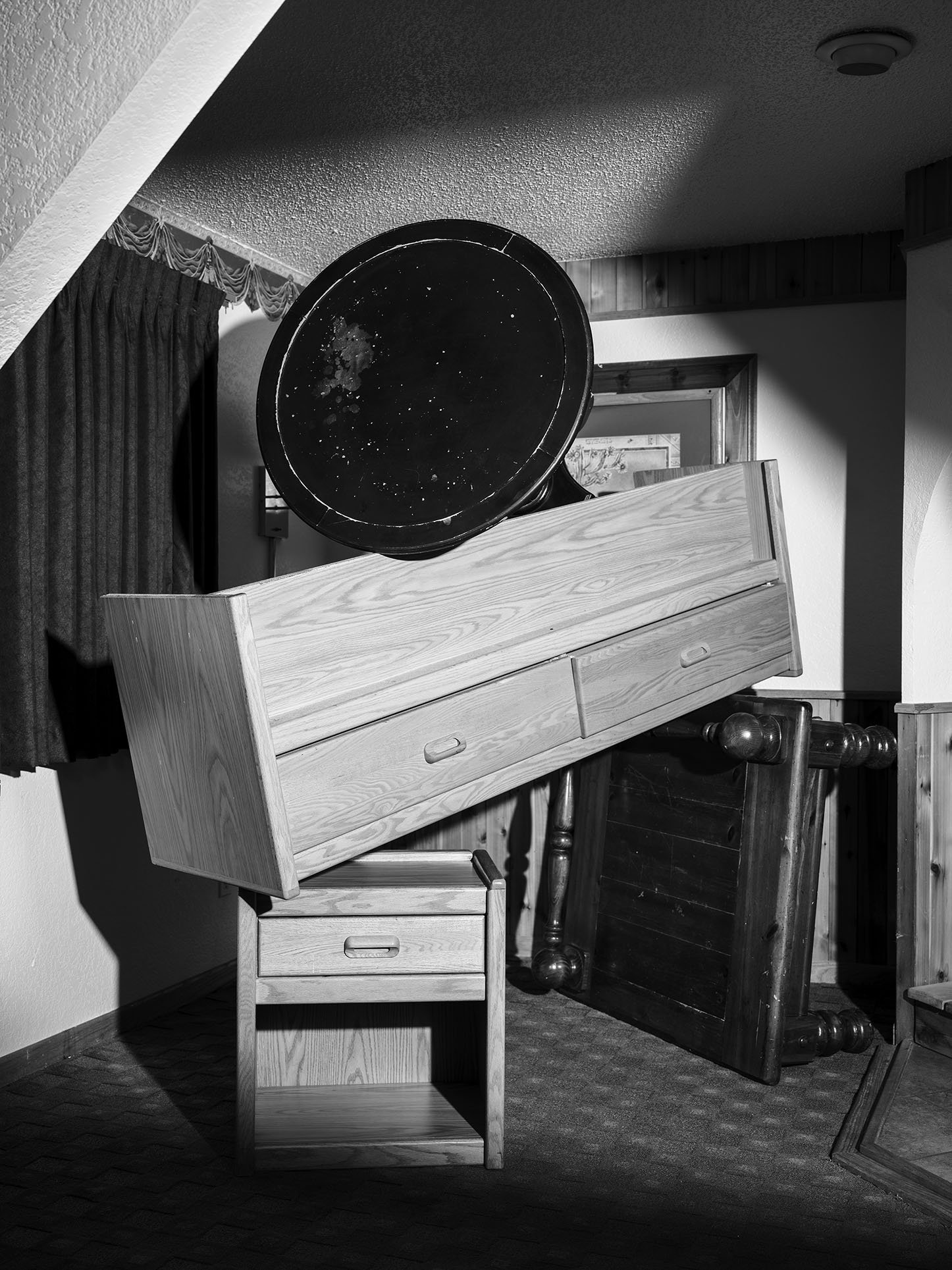
Do you have any especially interesting stories from guests or hotel owners?”
Yeah, I think the most interesting and maybe most intense story I heard was from a hotel owner. It didn’t happen at her hotel, but she had a friend who went on a business trip to Reno, Nevada, and brought her daughter along. They were there for a long weekend. The first night, they noticed a strange smell coming from the room. They complained, and while they were out shopping, the room was cleaned. When they came back, the smell was gone. They had dinner and went to sleep, but in the middle of the night, the smell returned, this time much stronger, way more pungent than before.
In the morning, they complained again. It was a very nice hotel, not one of those cheap roadhouses on the side of the interstate. It was a classy place. The hotel staff were incredibly embarrassed and very apologetic. They sent an entire team of maids and workers to disinfect, clean, and investigate. Eventually, they discovered a dead body lodged in the mattress. Someone had cut out the shape of the body from the foam on the bottom of the mattress, placed the body on the box spring, and then put the mattress on top, sandwiching it together so it wouldn’t create a bulge. Essentially, it was a crime scene with a rotting corpse, and they had been sleeping on it for two days without knowing.
It turned out there had been a couple staying in that very room for about two weeks. They had incredibly violent arguments, screaming at the top of their voices to the point where other guests complained. The hotel had to send staff to ask them to quiet down. Eventually, the fighting stopped, and the woman checked out, but the man she was with remained, lodged in the mattress.
This happened around 30 years ago, before the internet, maybe just at the very start of it. The hotel owner told me there was no way for her to follow up on it the way you can research things now. She doesn’t know if the woman was ever caught, if the crime was solved, or if their identities were ever uncovered. But her friend and her friend’s daughter still have nightmares about that weekend they spent in the hotel room, sleeping on top of a corpse.
Wow, that’s an intense story. And honestly, a pretty wild way to wrap things up. Alex, thanks so much for talking with me and for sharing all of this. It’s clear that what you’re doing goes way beyond just taking photos. You’re really seeing these spaces in a different way. I really appreciate the conversation.
Thanks, Martin. This was a lot of fun to talk about. I don’t usually get to share all the strange little stories behind the work, so I really enjoyed this.
To discover more about this intriguing body of work and how you can acquire your own copy, you can find and purchase the book here. (Amazon, Radius Books)
More photography books?

We'd love to read your comments below, sharing your thoughts and insights on the artist's work. Looking forward to welcoming you back for our next [book spotlight]. See you then!
Gosbert Gottmann wanted war photographs that resisted easy reading. In Freiheit Freedom Воля, he works with images connected to the war in Ukraine and changes them through abstraction, distortion and deformation. Photography Book Spotlight