Pia Guilmoth’s Flowers Drink the River: A Visual Journey Through Transition, Nature, and Community
Welcome to this edition of [book spotlight]. Today, we uncover the layers of 'Flowers Drink the River,' by Pia Guilmoth (published by STANLEY/BARKER). We'd love to read your comments below about these insights and ideas behind the artist's work.
What happens when a camera documents both fear and freedom?
Pia Guilmoth’s Flowers Drink the River started during a time of personal crisis. She had no job, no housing, and couldn’t safely come out as trans. Photography became a way to feel something again, to observe life without speaking. This book is the result of that period: quiet, raw, and honest.
It’s also about starting over in a new place.
After moving to Maine and finding a queer and trans community, Guilmoth began to rebuild her life. She picked up the camera again and began making work that felt personal and grounded. Every image in the book comes from that environment, real people, real landscapes, and real emotion. This interview goes behind the scenes of that process and what it meant for her.
The book
Flowers Drink the River is a deeply personal photographic project by Pia Guilmoth, published by STANLEY/BARKER. Made between 2022 and 2024 in rural Maine, the book captures a period of intense personal transformation as Guilmoth began her gender transition and rebuilt her life within a new community. Blending nocturnal landscapes, portraits, and moments of quiet intimacy, the work reflects themes of vulnerability, resilience, and reconnection with the natural world. The photographs are shot primarily at night using film and hand-built setups, creating images that feel both grounded in reality and suspended in time (STANLEY/BARKER, Amazon)
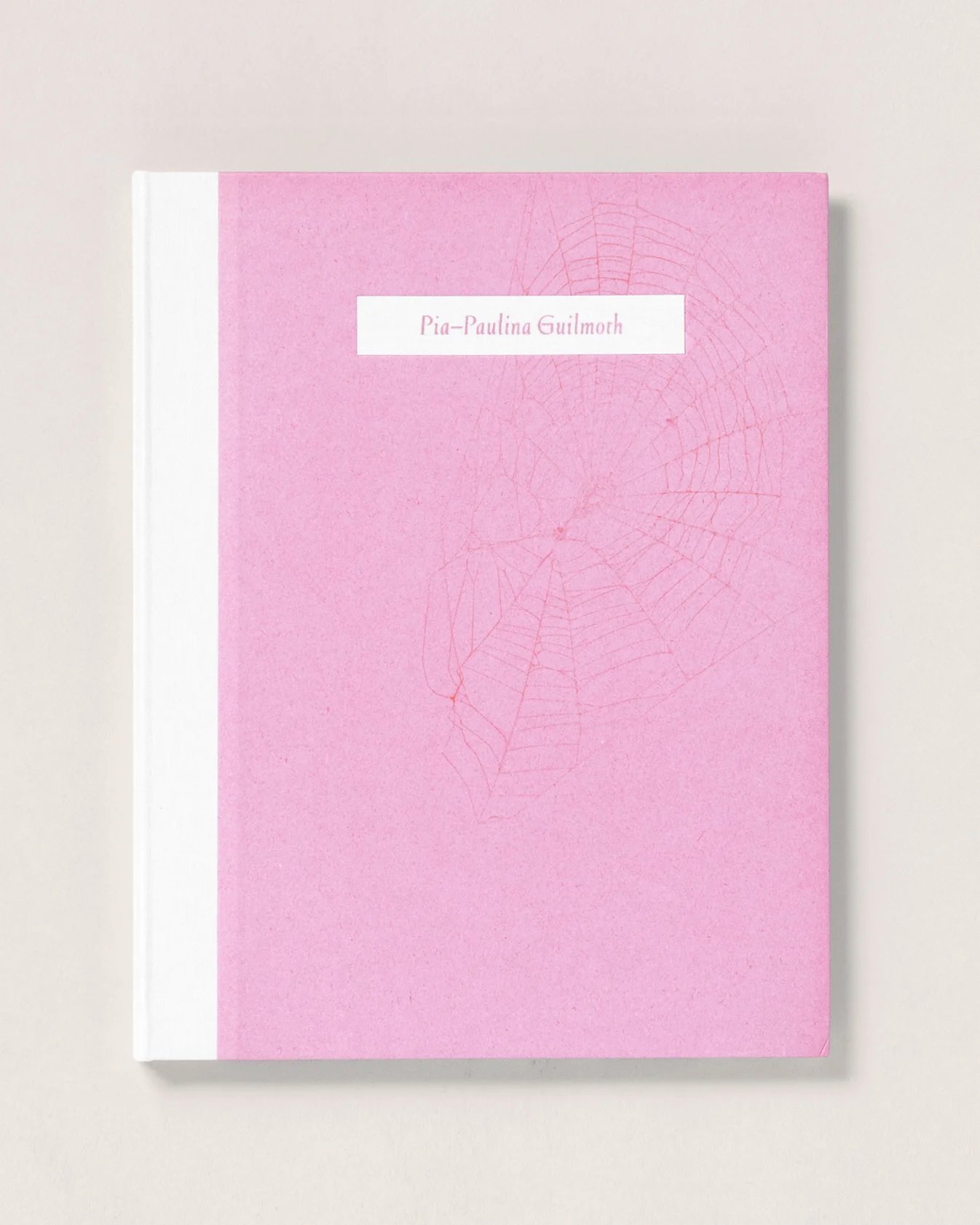
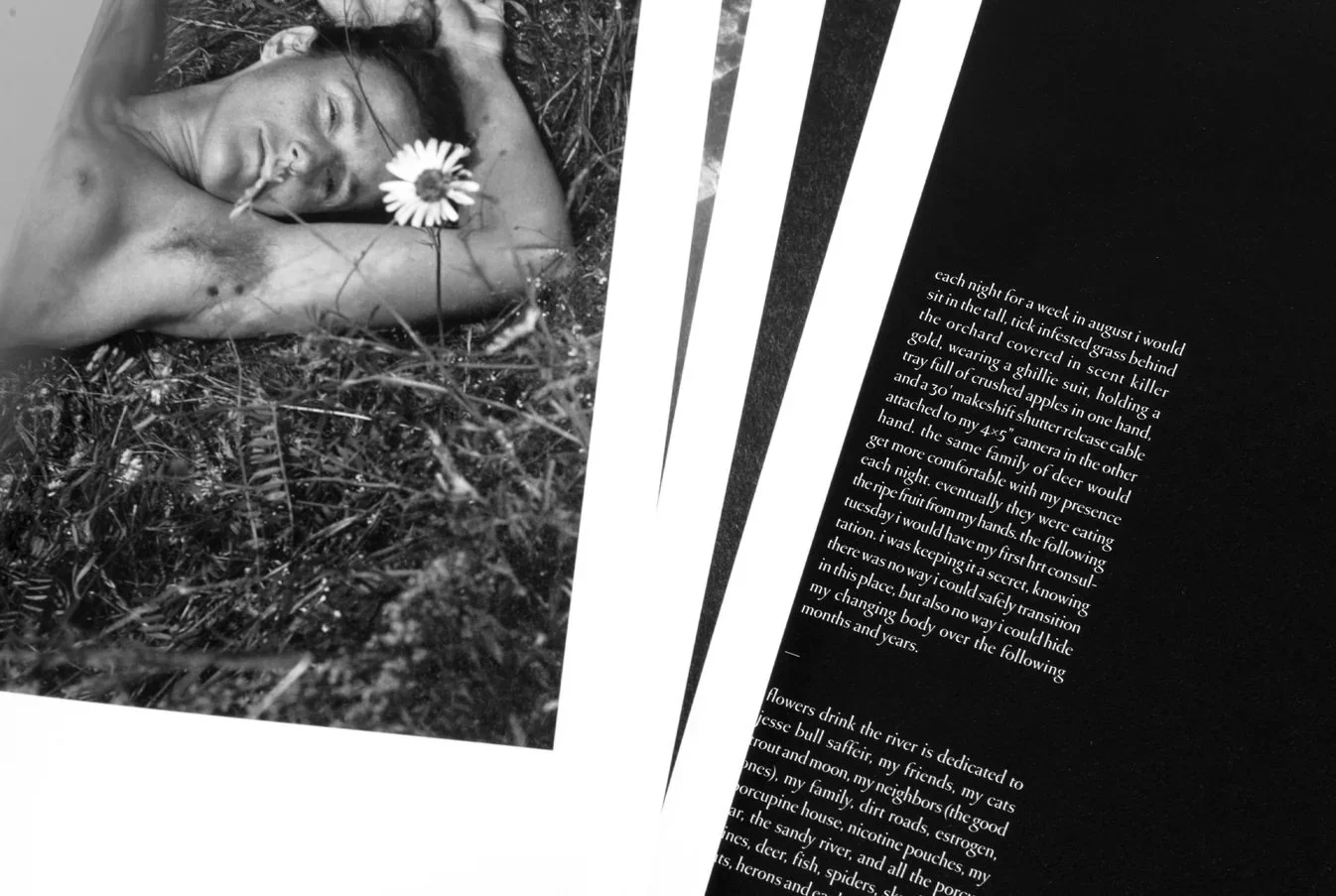
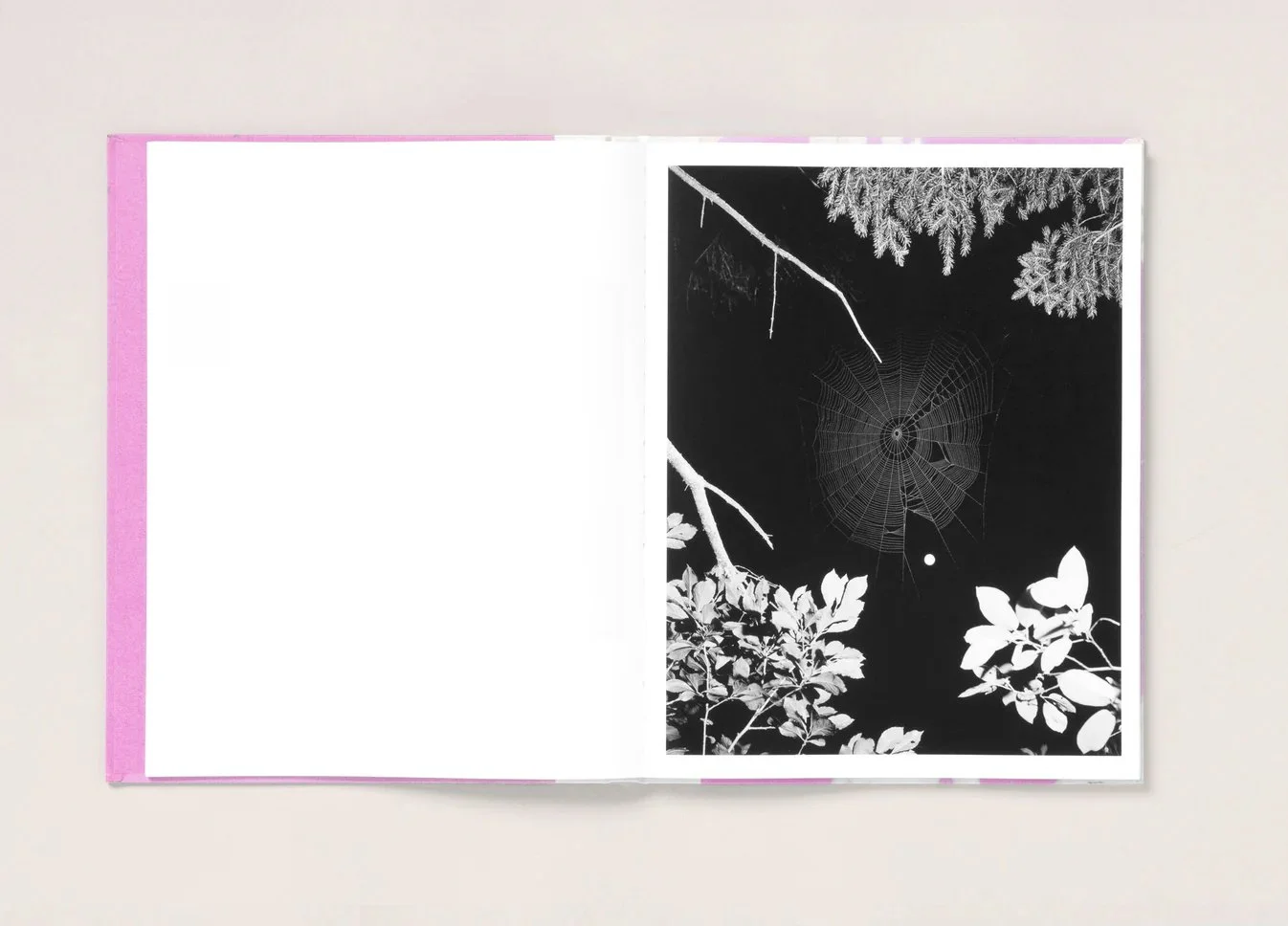
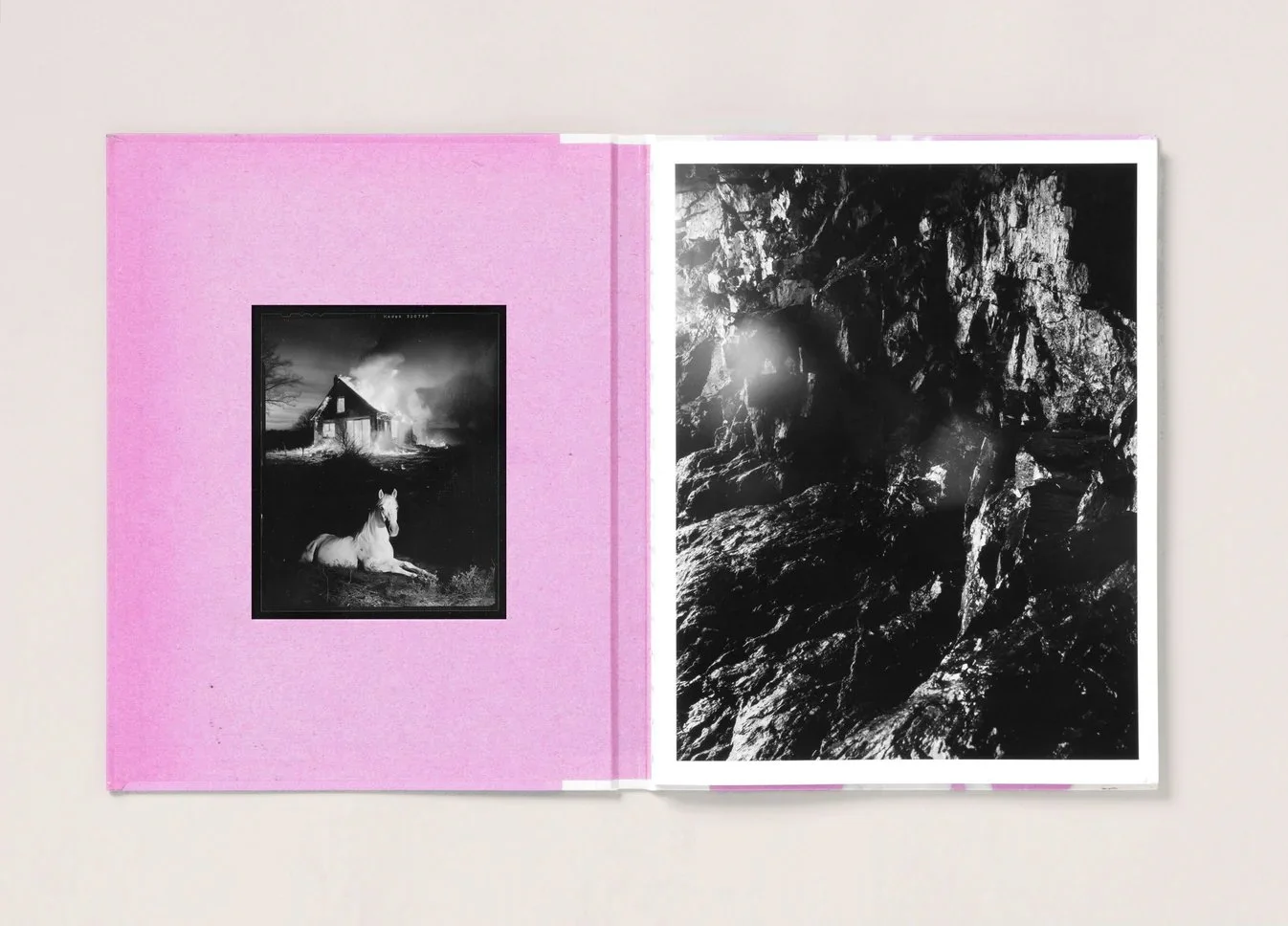
Martin: To begin, could you share an overview of the project? What inspired you to create Flowers Drink the River, and in what ways does it reflect your personal journey and your relationship with the natural world?
Pia: I guess I started the project in 2022, just a few months before I began my transition and started taking hormones. Before that, I had taken almost two years off from creating anything. I was in a really bad place, both mentally and physically. I didn’t have much of a community or any role models to look up to or turn to regarding transitioning.
I had lost my job, moved out of my housing, and was completely broke. I had to move back in with my parents in their small home in rural New Hampshire. I was living with both my parents and grandparents since they all shared the same house. It was a difficult time. I couldn’t come out to anyone because it wasn’t a safe environment to do so. I was living completely closeted, using a lot of substances, and just wasn’t in the right mindset to create art or do much of anything.
Then, in 2022, a friend called and offered me a place to live in central Maine. When I moved there, I was finally surrounded by queer and trans people. That environment gave me a new desire to live and grow. That’s when I started taking hormones and got health insurance. Being part of a community really pushed me to live as my true self and take the big, scary step of transitioning. It was overwhelming and scary. I lost a lot of people in my life through that process but also gained new friends and connections.
Flowers Drink the River starts from that point, moving to a new place, finding community, transitioning, and finally feeling able to live my life and my truth. A lot of the work stems from those initial steps. The book itself begins as soon as I moved to central Maine, where I live now. All the landscapes and people featured are those I’ve come to know, love, and consider family throughout my transition and while starting my life over again. In a way, it feels like a love letter to living my truth.
Did you take photos before, or was the transition something that sparked this artistic drive in you? Was that the reason you started taking photos?
I had been creating work before transitioning. I released a book in 2021 with Stanley Barker, and before that, I had published another book with Void a few years earlier. I've been making work since around 2011. But this new book feels like a new chapter in my life.
Would you say this is the first book influenced by your transition?
Yes, definitely. When I actually started transitioning, the book began to follow that timeline, from the first couple of months to the present day.
Do you remember the very first image you made for Flowers Dream Driver and how it set the tone for everything that followed?
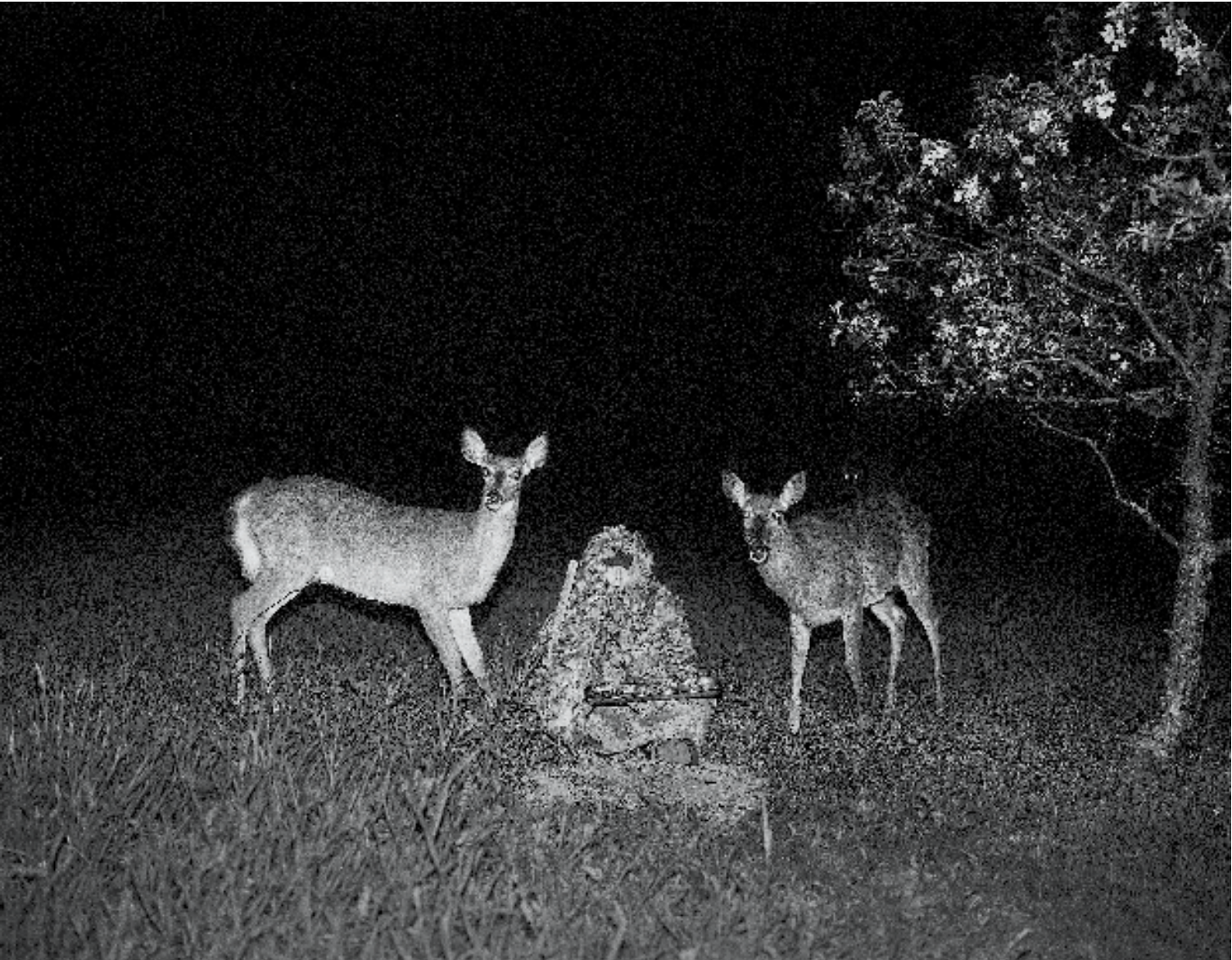
The first image I made was a few months before I started my transition, before moving to central Maine. I was still living at my parents' house. It’s the image of me with the deer in the apple orchard. I hadn’t taken any photos for about a year or a year and a half, and then I created that photograph. Once I received the news that I could move up here and begin my transition, I felt a spark of creativity. I finally had hope, something to look forward to. That first photograph in the series, of me sitting with the deer, foreshadowed what was to come in the following years.
Do you think the camera became a companion or even a witness during that process?
I think so, definitely. I was finally starting to document my life again. Before that, I was afraid to do so because I was filled with self-hatred and avoidance, trying to escape my reality. When I began to feel hope, the camera became like a companion. I was excited to capture my life and surroundings again because, for the first time in a while, I felt genuinely excited about my life.
Do you think your previous artistic experience influenced your choice of photography over other mediums like video, writing, or drawing?
Yes, I think I’ve always felt more comfortable with a camera than with any other medium. I really enjoy making music as well, but for me, cameras offer something immediate. I need that sense of immediacy in my life, something close to instant gratification with photography. Even though I shoot with film and have to develop it, that process is thrilling for me.
At this point in my photography journey, I usually have a good sense of when a photograph will turn out well technically speaking, in terms of lighting and exposure. It feels instantaneous because I can document my life as it unfolds without overthinking. That immediacy allows me to have a thought, capture it in a photograph, and move on to the next idea.

Were there any images you made that felt maybe too vulnerable or too raw to include? Or what makes an image feel like too much or not enough when the work is so personal?
I’ve always had this desire to photograph things in a way that makes them look more exciting than they do in real life. I’ll walk around during the day, sometimes with my flashlight, and not even have my camera with me. I’ll see something, get inspired by the way it looks, and later that night or another day, I’ll go back, find that thing, set my camera up, and really try to make it transcend reality with lighting and lens filters.
To the eye, it might be beautiful or interesting, but to me, it’s still just the real world. When I get my camera out, start to light it differently, expose it, add blur, or use lens filters, I think I can reach for something magical in the subject. Photography is the perfect way for me to do that. It’s a way to engage with the real world while creating something that has more magic, more nuance. Sometimes the camera will capture something that I didn’t even see when I was taking the photograph. That element of surprise is meaningful to me.
I’ve always tried to transcend my reality with photographs. As for images that felt too vulnerable, there were a couple of self-portraits that I didn’t include in the book. Being trans, I’ve always had a strong level of dysphoria and discomfort with my body. It’s been hard. I think it’s getting better over time, but a couple of years ago, I didn’t even want to look at a photograph of myself because it was painful. There were many self-portraits I tried to make that just didn’t feel right. I wasn’t happy with how I looked, or seeing them made me feel dysphoric. So, I didn’t include those. But there are a few self-portraits in the book that made it.
There were also a lot of things I photographed that I wish were in the book, but the images just fell flat. They didn’t transcend; they looked too much like real life for me to be excited about. Those photographs always ended up getting cut because they felt too mundane.
I was thinking about this because I was looking through the book, and the very last photo of the two women, it’s something that some people might consider too much to include in the work. Was this something you considered, or is there a purpose to using this image?
Yeah, I think that’s true. People are often scared of, or there’s something about a more pornographic image that might feel too sleazy for some. But for me, as a queer person, as a trans person, the human body and our body parts are just a part of us. There’s nothing intrinsically messy about them.
Culturally or socially, people tend to be a bit scared of showing intimacy. I think that the more I’ve become myself and the more I’ve transitioned, the more I’ve started to celebrate intimacy, celebrate my body, and celebrate bodies in general. They’re part of us.
I did have to think a little before including that photo because it’s a pretty punchy photograph. In a way, it felt like a good statement to include that photo in the book. If someone is offended by it or too afraid to look at that photograph, then maybe this isn’t the right book for them.
It does have this transgressive nature to it. But in reality, it’s just human bodies. Someone pissing, that’s just a basic human ability. It’s part of us, our fluids, our nudity. It’s natural.
Was there a specific idea about who the book is for? Is it something you just wanted to create, or is it aimed at a particular audience? Some people I interviewed mentioned their books are about trans people for people who are not trans, while others said their books are from trans people to trans people. Is there a general idea of who the book is for, who the audience is?
No, I mean, it's really about my life and my friends. But my work is for anyone and everyone who finds some amount of joy or meaning in it. I’ve had a lot of responses from queer and trans people who see the book and feel very seen or connected to it, which is important to me. I think authorship has a lot of meaning, and I hope queer and trans people can connect to the book and feel a sense of community through it.
Really, my work is for anyone who finds joy or meaning in it. It’s autobiographical, about my own experiences. Any project dealing with something personal always carries the risk that some people might not connect with it, might be offended, or might not have a personal relationship with it. That’s just the reality of all art. But I hope the book can connect with anyone, regardless of whether they’re queer or trans.
What's with the spider webs? Was it used as a metaphor, or was it something you just liked? What did you want to communicate with that?
I've always been pretty averse to metaphor. I don't think my brain really operates that way. For the spider web, for example, it's just something I see. Every single night and day, they're a part of my life. When I walk out of my house, I'm greeted by a spider web.
When I first discovered them, long ago, I’d go outside at night, shine my flashlight, and see a spider web, watching the spider build it right in front of me, I felt an immediate connection. It was a moment of leaving reality, completely engrossed in the experience of watching a spider construct its web. The simple beauty of it, the patience involved in that ritual, it captivated me.
I take photographs of things because I find them beautiful. That’s the most basic response I have, when I find something beautiful in nature, I want to photograph it, to showcase its beauty, to highlight the magic of that thing exactly as it is. There's usually no metaphor, no hidden meanings. It’s about capturing the beauty of the natural world and, hopefully, making a photograph that speaks to that beauty, perhaps even making it more apparent than I could have imagined.
You described this work as biographical. Did you carefully consider what to include in the nature photos to express your feelings and capture your vision, such as the deer or other animal images? Also, are most or all of them taken at night, or is that intentional?
When I go out to shoot, I feel like I enter a world where I leave my life behind for a moment. I set aside everything I’ve experienced, even just from that day. It’s a time for me to simply observe, appreciate my surroundings, and be completely immersed in the experience of being out in the woods.
While shooting, I’m not really thinking about my life or what’s happening. In fact, it’s the opposite. I go out to shoot to take a break from my life, from all the hard things. It feels like leaving my body, becoming fully present in nature.
When creating a photograph, I’m not focused on what’s happening in my life. I use photography and the camera as a release, an escape not in a desperate attempt to get away, but as a way for my mind to finally slow down. It helps me step out of my thoughts, out of mental loops or wormholes.
It’s a time to leave it all behind. But after finishing a project, when sequencing the book and images, I start to notice little moments or scenes. I realize, "Maybe that was about this thing," or I can see an image and connect it to what I was going through at the time. It’s something that happens in retrospect, where I see an image and begin piecing things together, finding where it fits into my life and its narrative.
So now the project is finished. Is there something you realized once it was done? Maybe advice you’d give yourself if you were starting over, or something you recognized during the process or at the end?
I’m sure there is, and I’m sure there will be. It feels like it encapsulates the last couple of years of my life in a meaningful and conclusive way. One thing I have regrets about is not being able to take portraits of every single person who’s been part of my life over the past few years. That was due to time constraints and deadlines, I simply ran out of time. There are people not included in this book whom I wish I had better photographs of, so they could be part of it.
The book is about community in many ways. There’s some regret in not including every single person who’s part of my life now. I would have tried harder to get everyone in there. But obviously, it’s not the end. I feel like this book or project isn’t really over. I’m still working on the same project, and though it will come out under a different name and be its own thing in the future, it feels like I’m never really done.
In a way, I feel like I’m always working on the same thing. The only things that separate the projects are a deadline and a book. Right now, I feel like I’m just continuing the same project with what I’m creating at the moment.
To discover more about this intriguing body of work and how you can acquire your own copy, you can find and purchase the book here. (STANLEY/BARKER, Amazon)
More photography books?
We'd love to read your comments below, sharing your thoughts and insights on the artist's work. Looking forward to welcoming you back for our next [book spotlight]. See you then!
Color entered Janelle Lynch’s photographs through painting. In Another Way of Looking at Love, she photographed plants and trees on her property in the Catskills. Photography Book Spotlight