Photographing Orwell’s Island: How Craig Easton Captured What Jura Feels Like
Welcome to this edition of [book spotlight]. Today, we uncover the layers of 'An Extremely Un-get-atable Place,' by Craig Easton (published by GOST Books - on Kickstarter right now). We'd love to read your comments below about these insights and ideas behind the artist's work.
Craig Easton’s new photobook, An Extremely Un-get-atable Place: George Orwell on Jura, is currently available for pre-order through a Kickstarter campaign that launched on May 7, 2025. The campaign offers special pre-order options and exclusive prints for supporters.
Most photos show what a place looks like. These show how it feels.
Craig Easton went to Jura, the remote Scottish island where George Orwell wrote 1984. He wanted to understand why Orwell chose this isolated place and what it might still hold for someone searching for focus, silence, or meaning. Instead of showing famous landmarks or dramatic views, he focused on small details: chipped teapots, old curtains, light on the wall. His goal was not just to document the island but to connect with the atmosphere that once surrounded Orwell. This is a book about memory, solitude, and what it means to return to a place with questions.
Orwell escaped to Jura to write. Easton returned with a camera.
Both were looking for space - mental, physical, and emotional. Easton walked for days with a large-format camera, stayed in the same house where Orwell once lived, and spent nights reading by the fire. The photos that came from this experience are quiet, thoughtful, and full of care. They are not about history in a traditional sense. They are about how a place can still carry the emotions of the past.
The Book
An Extremely Un-get-atable Place: George Orwell on Jura is a forthcoming photobook by award-winning British photographer Craig Easton. This project offers a poetic visual interpretation of George Orwell’s time on the remote Scottish island of Jura, where he wrote Nineteen Eighty-Four. Rather than documenting the island’s scenery, Easton’s photographs aim to capture the atmosphere and solitude that Orwell sought during his stay at Barnhill, the isolated farmhouse he rented.
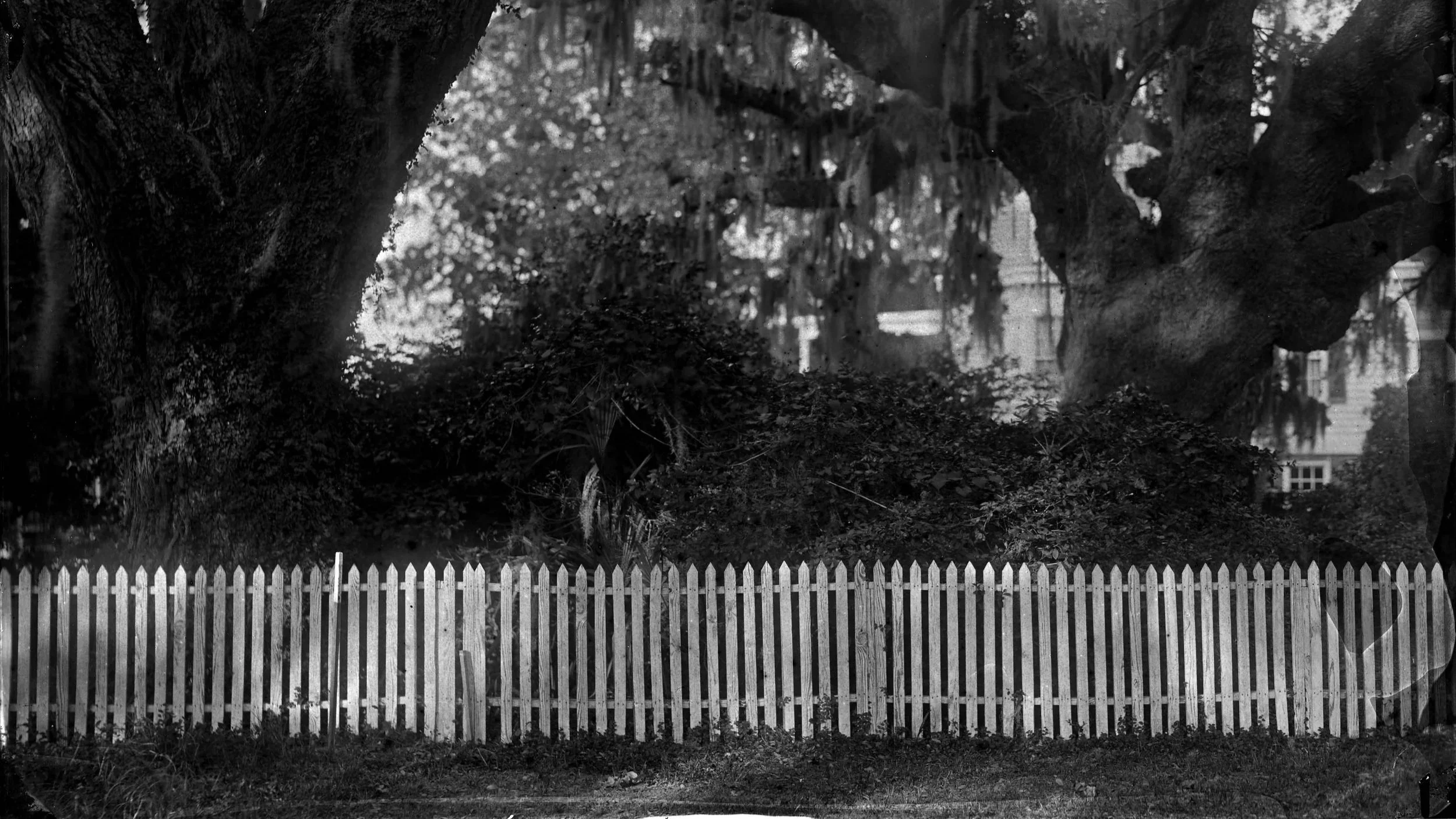
The book features images taken with a large-format camera, including tea-toned silver gelatin prints—a nod to Orwell’s own appreciation for tea. Easton’s approach emphasizes the emotional resonance of the landscape, focusing on subtle details that evoke the sense of isolation and introspection that characterized Orwell’s retreat. This work is the first in Easton’s planned “Island Trilogy,” exploring themes of place, memory, and creative solitude. (Kickstarter)
Overview of the project: What drew you to George Orwell’s time on Jura as the subject for this book, and how did the idea evolve into a photographic project?
I’ve spent a lot of time in the Western Isles of Scotland - and indeed this is book one of "An Island Trilogy", three books all made in The Hebrides to be published over the next two/three years. I’ve read Orwell extensively over many years, of course, and knew of his house - Barnhill - where he wrote Nineteen Eighty-Four, and so I’ve always been fascinated by his life on Jura and his decision to move there. The house is wildly remote - eight miles from the nearest public road - and it’s maybe something in all of us that wants to escape, to have time to make work, and in that sense, I feel like a kindred spirit. The need to get away to write is what drew him to the Hebrides - an escape from the pressures of his London life and a place to reflect after the end of the war and the untimely death of his wife, Eileen. He first mentioned it in his diaries as far back as 1940, so it had been a dream for a long time:
“Thinking always of my island in The Hebrides, which I suppose I shall never possess nor even see.” George Orwell, diary entry, 20th June 1940.
I was invited to stay at Barnhill - it is still in the same family that rented it to Orwell - and in many ways is unchanged from the time when he lived there. I found the place both challenging and restorative, an opportunity to regroup and refocus, and for me, the work I made there is about hope, a chance to find joy in the small things; the landscape, the weather (yes, even the Scottish weather in February!), the aesthetics of wind-blown trees or chipped teapots. For days and days, I walked and looked and photographed, then spent the night by the fireside imagining Orwell’s life there in the 1940s, reading and sipping some fine Jura whisky that the owners had kindly left for me.
Interpreting Orwell visually: Orwell’s writing is deeply political and personal. How did you translate his presence and legacy into visual form without relying on literal biography?
I think that’s what drew me to this work… I’ve always been a fan of Orwell and it is exactly that his writing is ‘deeply political and personal’ that attracts me… it feels akin to the way I work. My two most recent books, Bank Top and Thatcher’s Children, were both political with a small ‘p’, but my first publication, Fisherwomen, was perhaps more celebratory… I often joke that I do love songs as well as protest songs!
And Orwell was the same, he relished nature and quiet - whilst also entertaining a constant stream of visitors. It feels important - certainly in today’s political turmoil - to be able to celebrate the small things. There is a passage in his essay “Thoughts on the common toad” that resounds with me:
“Is it wicked to take a pleasure in Spring and other seasonal changes? To put it more precisely, is it politically reprehensible, while we are all groaning, or at any rate ought to be groaning, under the shackles of the capitalist system, to point out that life is frequently more worth living because of a blackbird’s song, a yellow elm tree in October, or some other natural phenomenon which does not cost?”
“I think that by retaining one’s childhood love of such things as trees, fishes, butterflies and – to return to my first instance – toads, one makes a peaceful and decent future a little more probable, and that by preaching the doctrine that nothing is to be admired except steel and concrete, one merely makes it a little surer that human beings will have no outlet for their surplus energy except in hatred and leader worship.”
You quoted Orwell’s line about blackbirds and elm trees. That sense of quiet observation really comes through in your own work too. Do you think making images like that can be a kind of political act in itself?
Thank you.
I don’t want to overstate it - and certainly I’m not as eloquent with words as Orwell - but I think that all forms of resistance to the abuse of power are political… whether that is personal acts of creativity or more directly political work, it’s all important to how we live as a society. WH Auden once said "The mere making of a work of art is itself a political act” - I like to think that’s true, but all we can do is keep making work and keep maintaining hope.
Photographing Jura: The Isle of Jura is remote and rugged. What was your experience photographing there, and how did the landscape shape the mood of the project?
It nearly killed me! Lugging a 10x8 plate camera around the wild and remote landscape was a challenge, but one that I thoroughly enjoyed and immersed myself in. As I say, it was an opportunity to use photography to connect with the place, to respond to the surroundings, the light, the landscape and the interior of the house… a kind of back to basics for me in a sense... to enjoy seeing and photographing as a restorative force. I do feel that the work is still deeply political though in that it was inspired by Orwell and my own feelings about what’s happening in the world. There is a wonderful quote from the Welsh writer Raymond Williams who said that to be radical was “to make hope possible rather than despair convincing.” I love that and think that’s what we all need right now.
Did that kind of physical effort change how you connected to the landscape, not just as a subject but as something you were part of?
Oh, I don’t know… I carry it a lot, I’m kind of used to it, but it does take an effort. I think it was more the isolation and quiet of north Jura that connected me most to the landscape. I did feel very much in tune with the place… but of course, I know that terrain and those islands well. Being alone there with nobody but the vast herds of deer for company does change the way you experience it, I’m sure. There were, of course, some longer walks - up to Corryvreckan for example - that were shot on 120… I’m hardy, but I’m not carrying that tripod 12 miles through boggy terrain where I would sometimes sink to my thighs in wet, muddy peat!
Balancing history and imagination: How did you navigate the line between historical fact and creative interpretation when reimagining Orwell’s time on the island?
I think that is what I’ve always done… all of my work is deeply rooted in research and tries to weave a narrative between contemporary experience and historical context. In this case, it is perhaps a bit more lyrical than other projects, but the process is the same… it’s just about using photography to explore my own feelings and express what I see and feel in the world. That’s why I talk about the work as being a work of imagination… there is nothing literal about it - it’s all made instinctively just by being in the place where Orwell lived and wrote and making the work I made as a natural response.
Were there moments when you felt Orwell’s presence in the house or in the landscape, almost like he was still there somehow?
Again… I’m not one to overanalyse these things and I’m not sure I believe in spirits, but I certainly felt an affinity with the place and I dare say it was a similar feeling that Orwell felt, a similar feeling that drew him there in the first place… I don’t think either of us was drawn to Jura by accident - it has a strange pull.
Advice for photographers working with literary subjects: What advice would you give to photographers who want to engage with literary or historical figures through their work?
Oh, I don’t know… I’m not sure there is a formula, other than to read. Read a lot, read every day. All my work is influenced by reading - both fiction and non-fiction - and although there isn't always an obvious or direct linear connection, it feels important for me to think as widely as possible around a subject, then to let it go and allow myself to respond naturally to what I find. Bank Top was informed by a lot of reading around the history of colonialism, but it’s not just books of course, Fisherwomen was inspired by the novels of Neil Gunn, but also by the paintings of Winslow Homer amongst other things.
Working with large format film: You’re known for using large format cameras. How did this choice affect your process on Jura, both technically and in terms of pacing?
I don’t work exclusively in large format, but you’re right, I am known for my 10x8 work and this time I wanted to stretch the way I use the medium to become more lyrical perhaps, more poetic. Moving away from the portraiture I’ve been doing in recent years and using the camera to try to capture what the place feels like, not just what it looks like. And a lot of the process was in the darkroom… I experimented a lot with different ways of realising the work then settled on strong tea as a toner - inspired of course by Orwell’s famous love of tea and his delightful essay extolling its virtues and setting out the proper way (as he saw it) of how to make and consume the stuff. It was months of experimenting, but I’m delighted with the results.
The role of solitude: Orwell sought solitude on Jura. Did working in such an isolated environment influence your own creative process or perspective?
Yes, I think so - see thoughts above… but really that's for others to decide, I think. Certainly, it was a challenge - it’s not an easy place to work, especially in winter - but it was that challenge, I think, that made me hone in on the essentials of what I was trying to do. I made more than one trip, of course, but the first trip in February and March was a real eye-opener.
Advice on long-term projects: This project seems to have unfolded over an extended period. What guidance would you offer to photographers embarking on long-term, place-based projects?
I never set out to do a 'long-term’ project; I set out with questions and with an open mind and see where it takes me. Sometimes projects fall away to nothing, sometimes they simmer for years, sometimes everything just falls into place. This work has been years in the making in terms of thinking and reading and research, and then the printing and toning - the actual on-the-ground shooting was only part of it. And it has been an interesting piece to put together in book form, but every project takes as long as it requires…short-term, long-term, it doesn’t matter (I wouldn’t dare show you all the ideas that never got beyond one or two pictures, but it’s the ones that stay with me, that I keep thinking about and coming back to, that eventually mean something and get published).
Final reflections: Now that the book is nearing completion, what do you hope readers and viewers take away from An Extremely Un-get-atable Place?
Again… one for the readers to decide, but if it steers people to read more Orwell, then that’s a good thing, and if, like it did for me, it can focus our minds on hope and seeing the beauty in life, then I’ll be delighted.
To discover more about this intriguing body of work and how you can acquire your own copy, you can find and purchase the book here. (Kickstarter)
More photography books?
We'd love to read your comments below, sharing your thoughts and insights on the artist's work. Looking forward to welcoming you back for our next [book spotlight]. See you then!
Lee Espinoza reminded Darren Vargas of his late grandfather. The photographer met the boxing coach in 2025, five years after his grandfather Esmael died. Photography Book Spotlight