How Charles Brooks Turns Musical Instruments Into Vast Architectural Worlds You Have Never Seen Before
Have you ever wondered what music looks like from within?
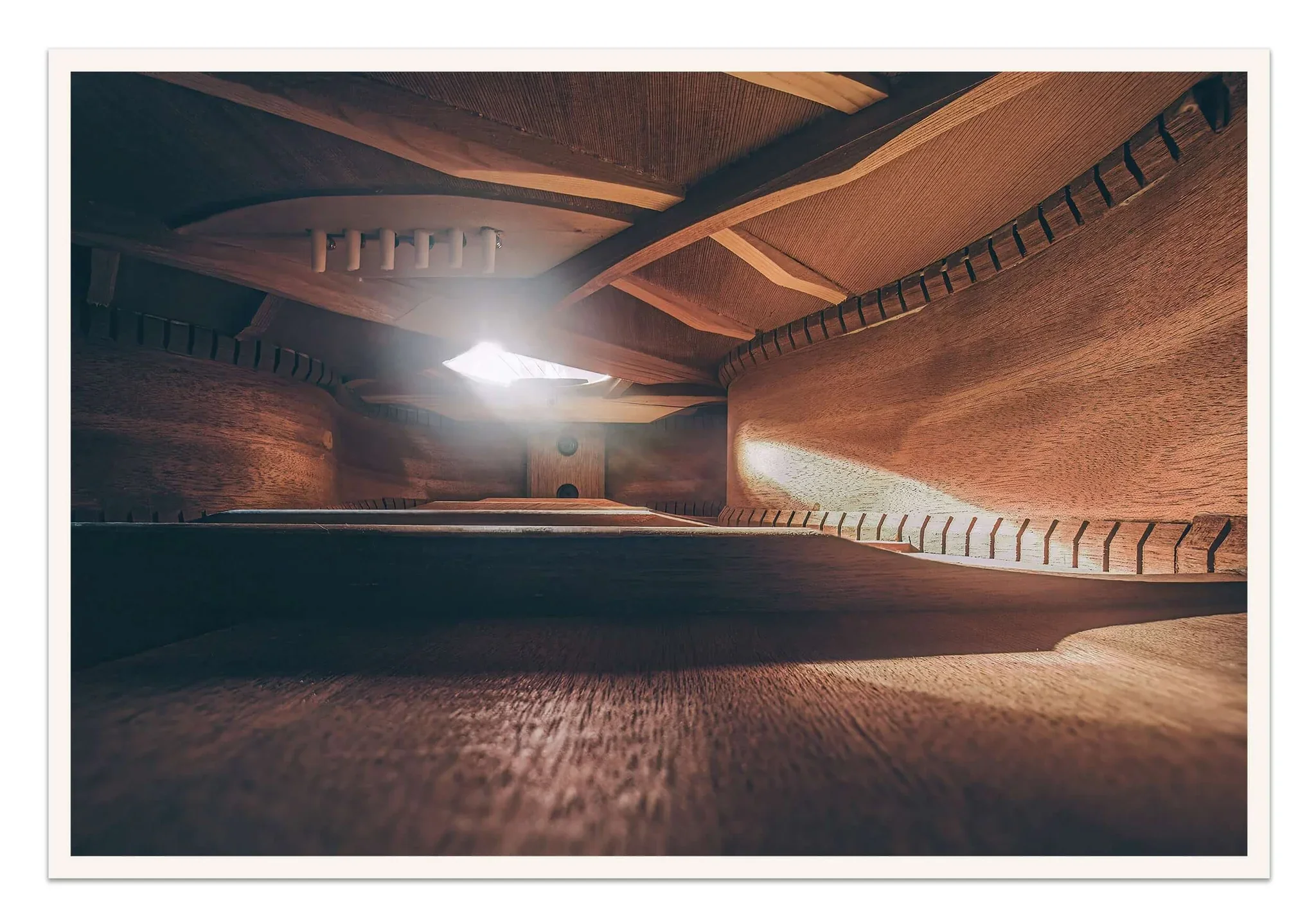
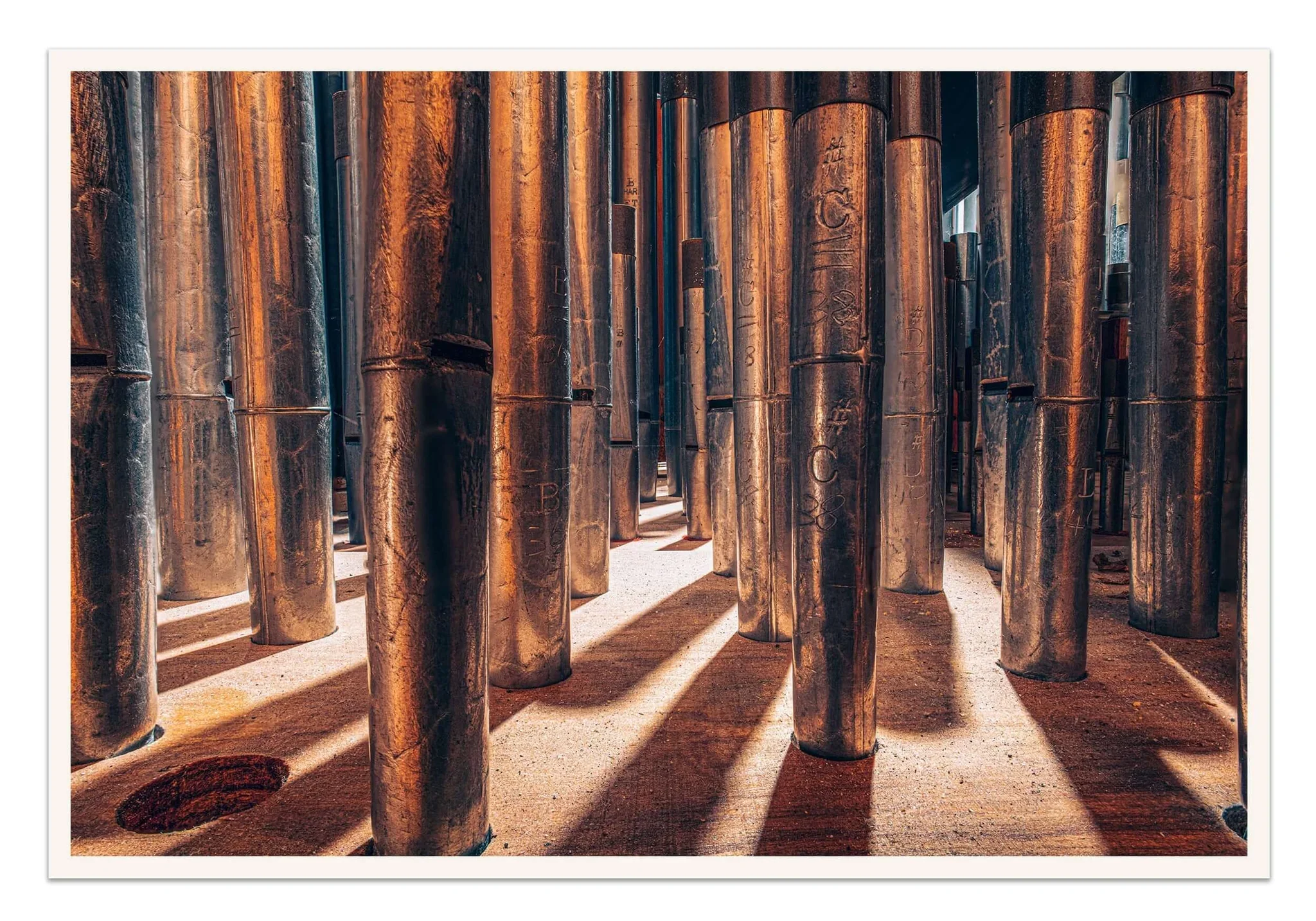
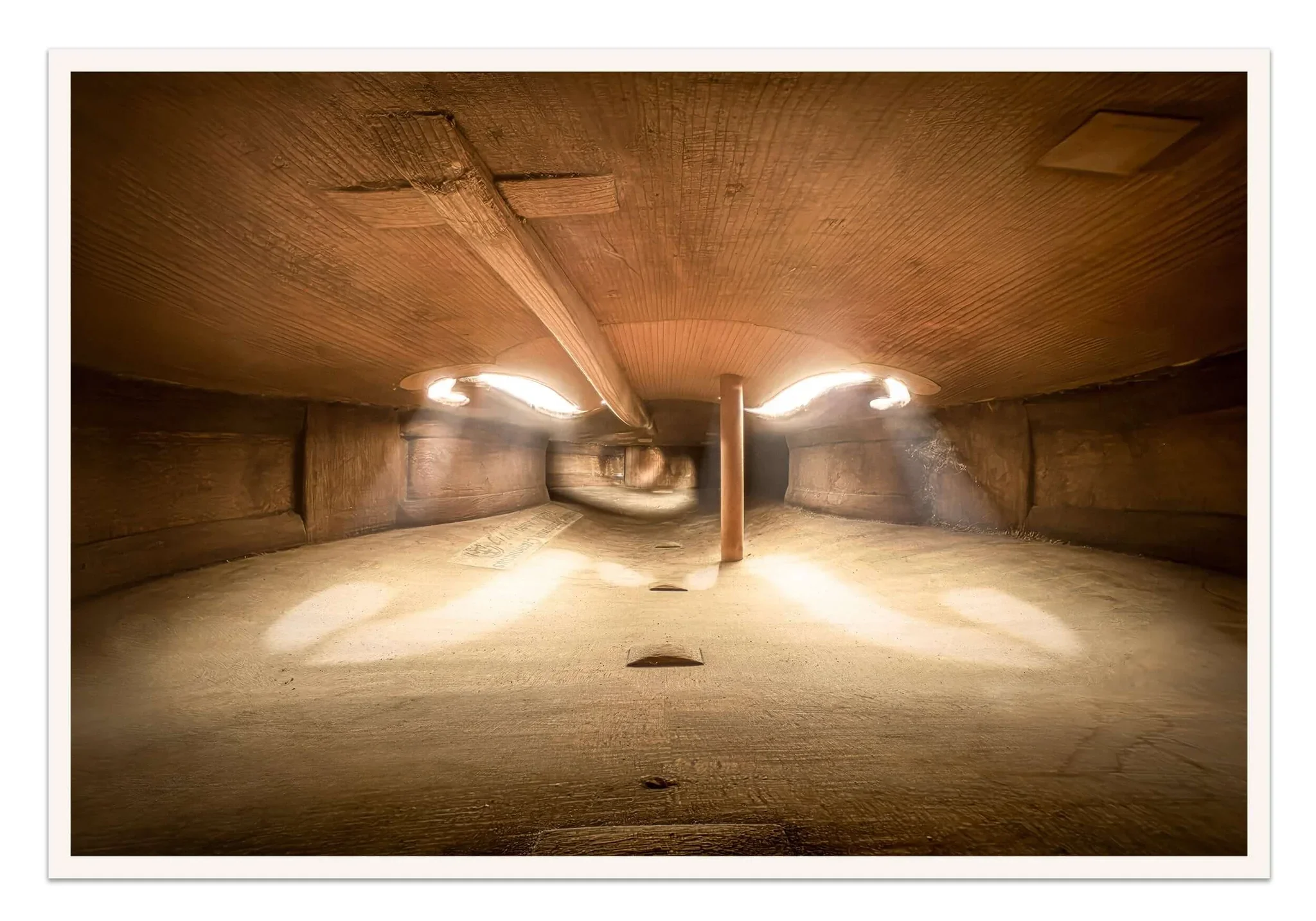
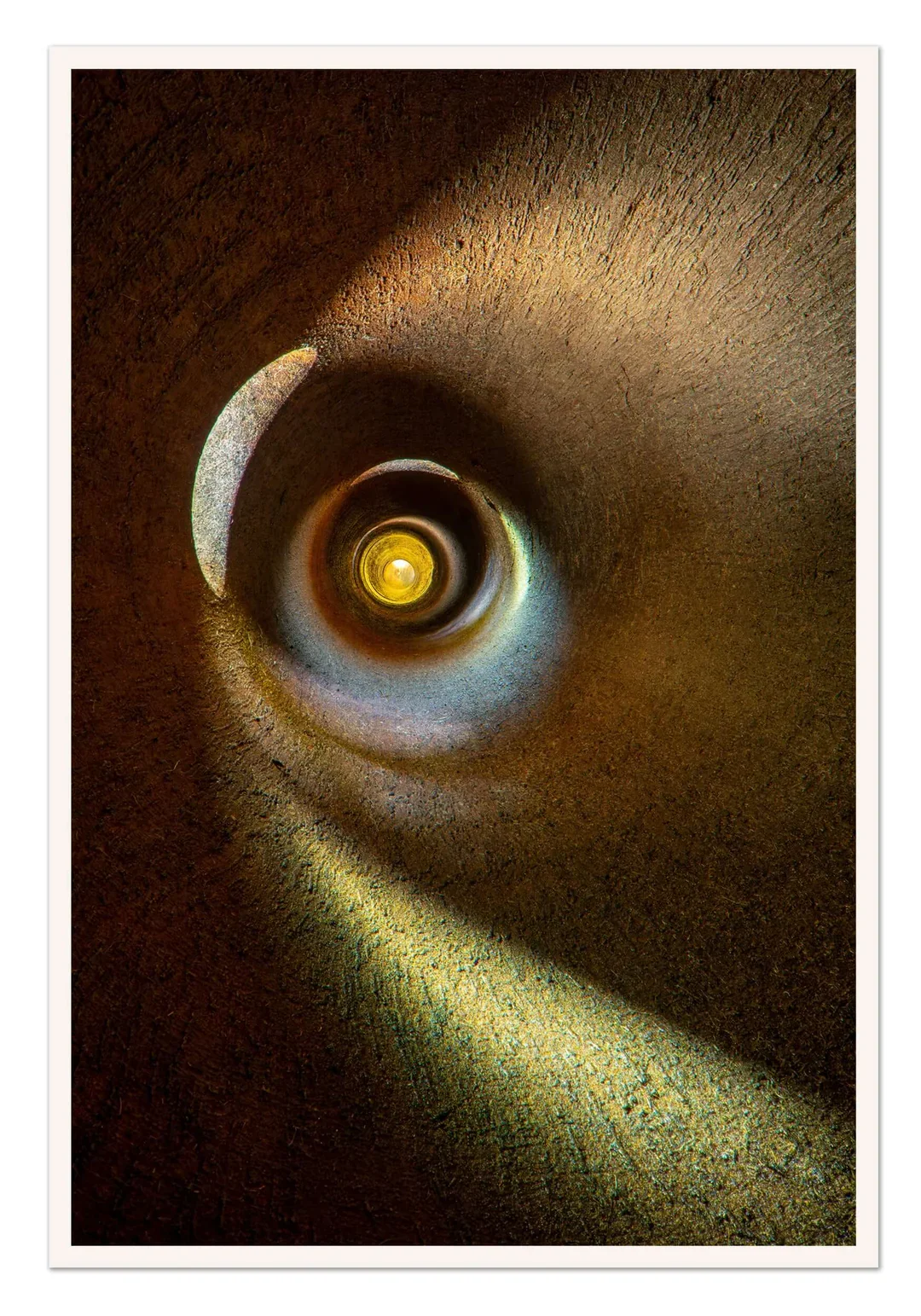
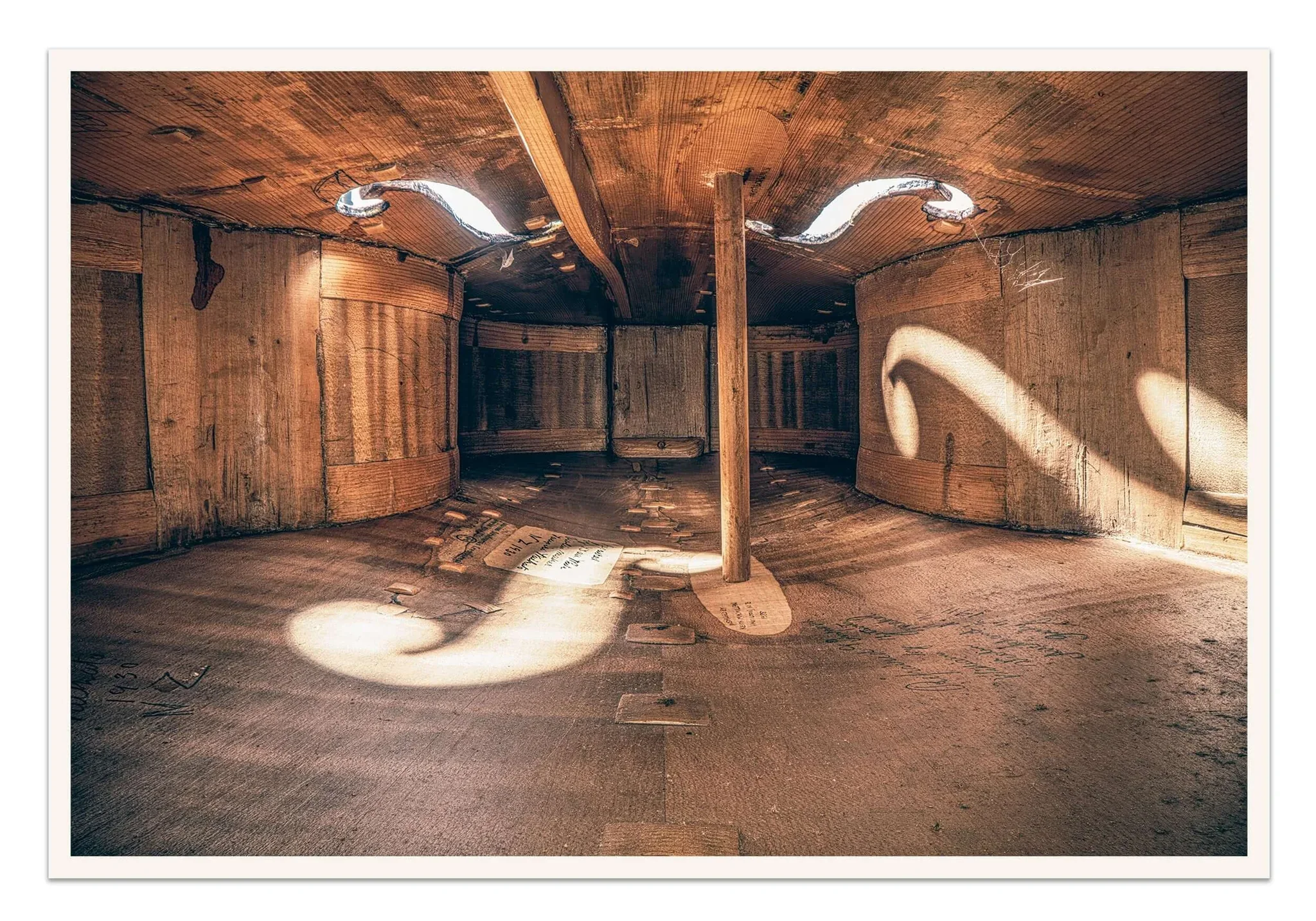
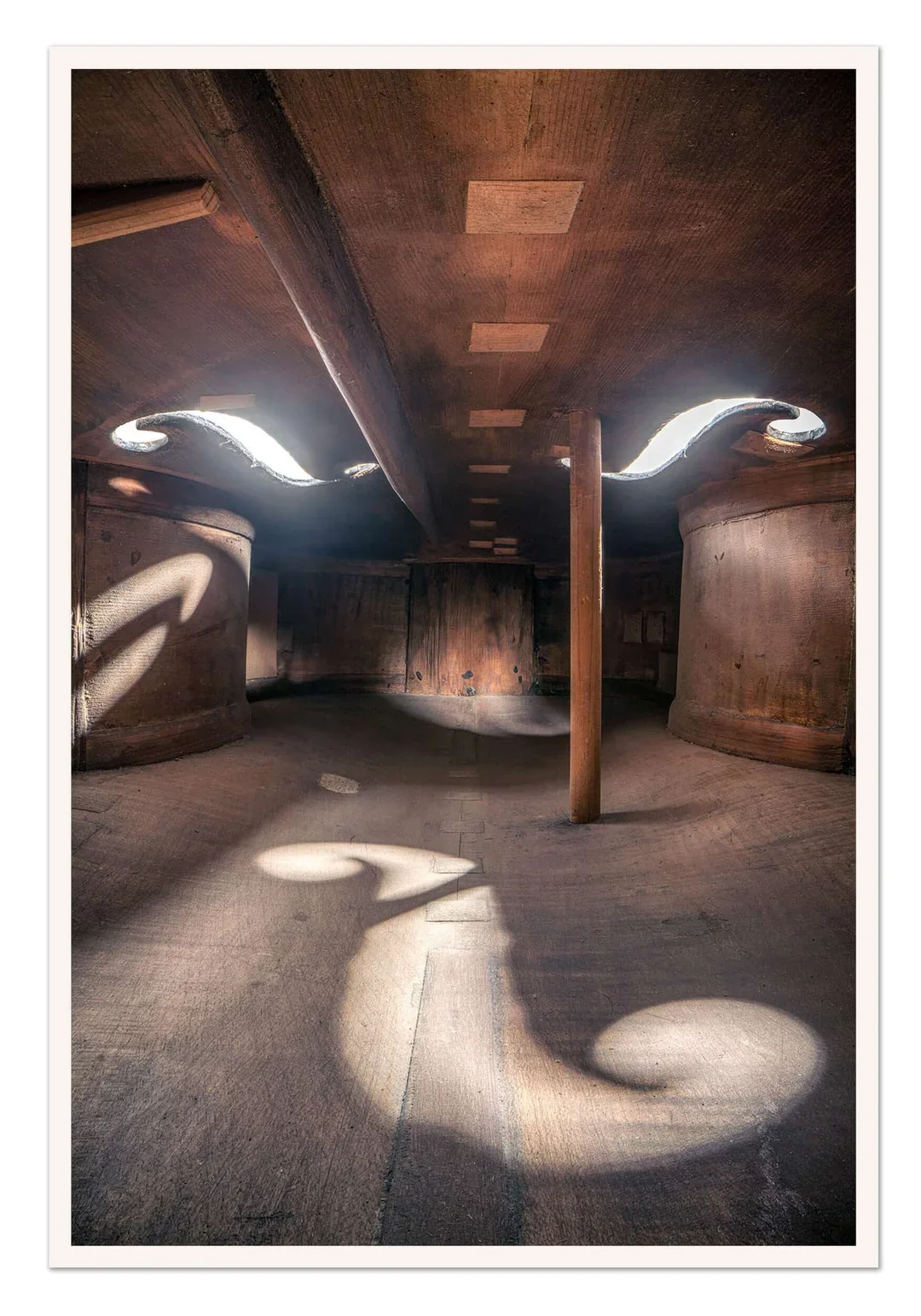
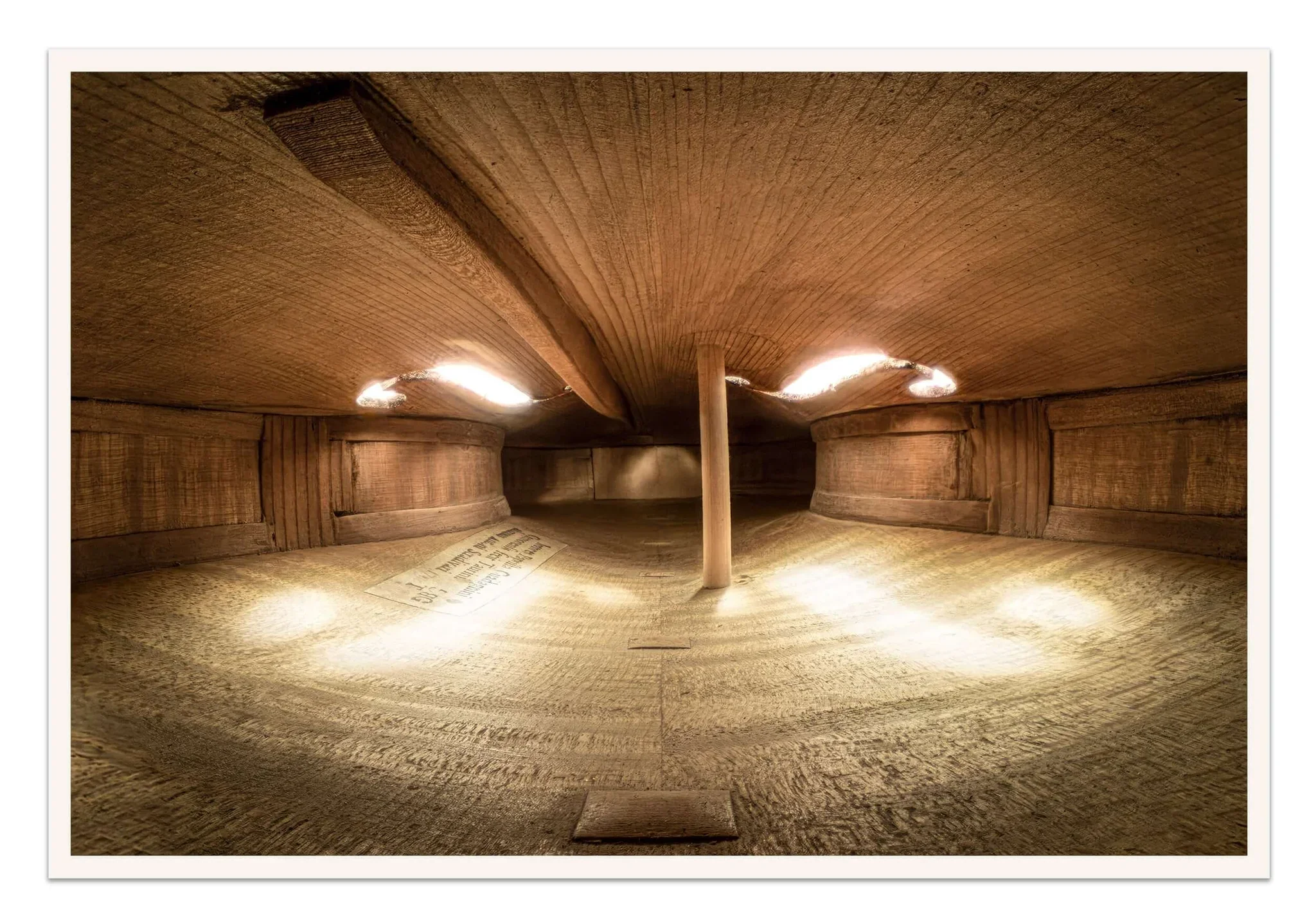
Most of us spend our lives hearing instruments without thinking about their hidden spaces. Charles Brooks spent twenty years as a cellist, so he knew these instruments better than most, yet even he had never seen the inside. His project Architecture In Music shows interiors that look like giant halls, tunnels, and cathedrals, created with careful technique and thousands of images. This interview explains how he makes these photos and why the results feel so surprising.
Now the question becomes: how does he actually capture these secret worlds?
Brooks works with medical probe lenses, focus stacking, and a slow, careful process to protect valuable instruments. He photographs shapes and marks that carry the physical memory of performance, revealing details only musicians usually sense. His approach opens a new way to look at instruments, not as objects, but as spaces shaped by time, craftsmanship, and sound. By the end of this interview, you will understand how this project came to life and what it shows about photography, patience, and creativity.
The Project
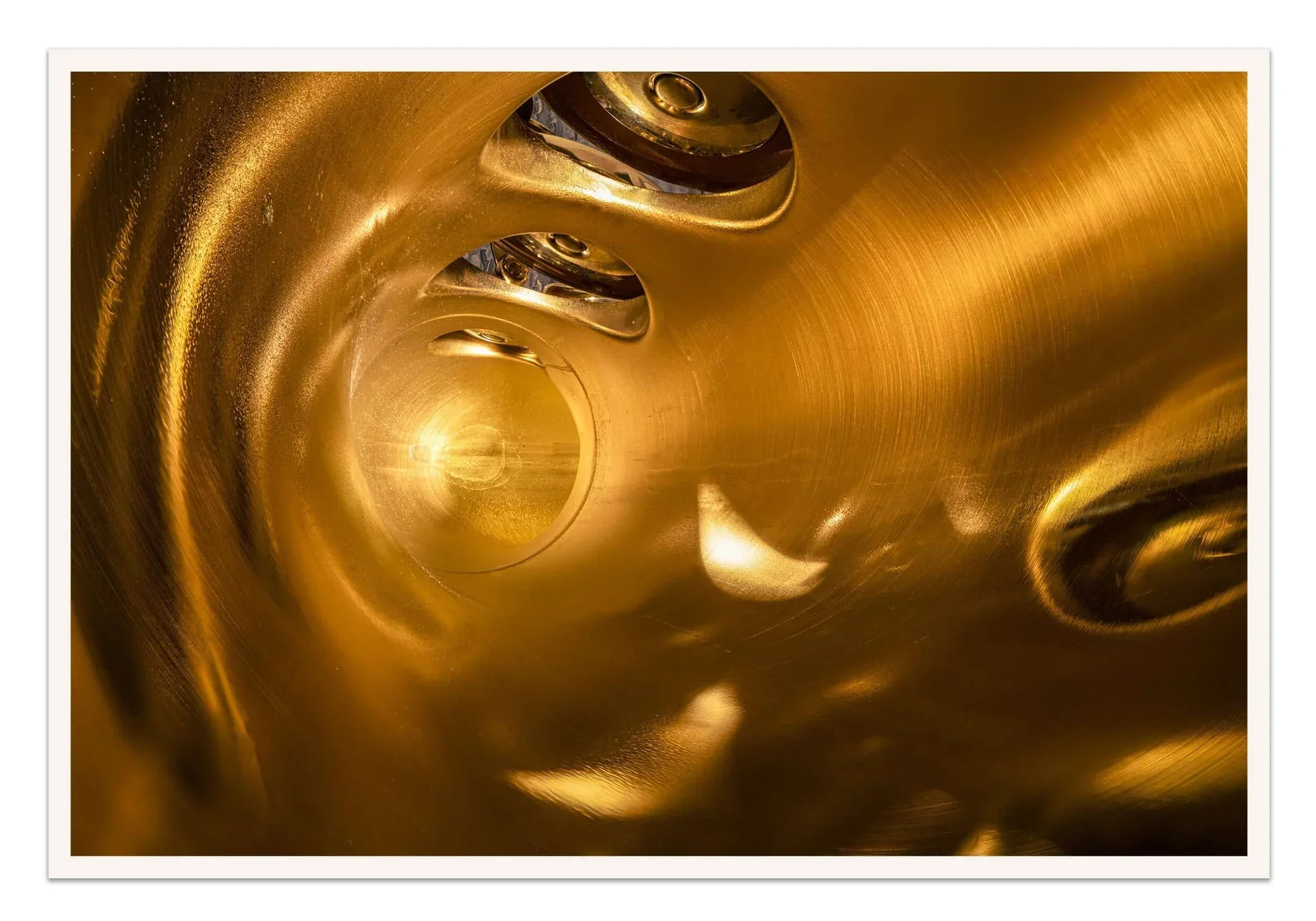
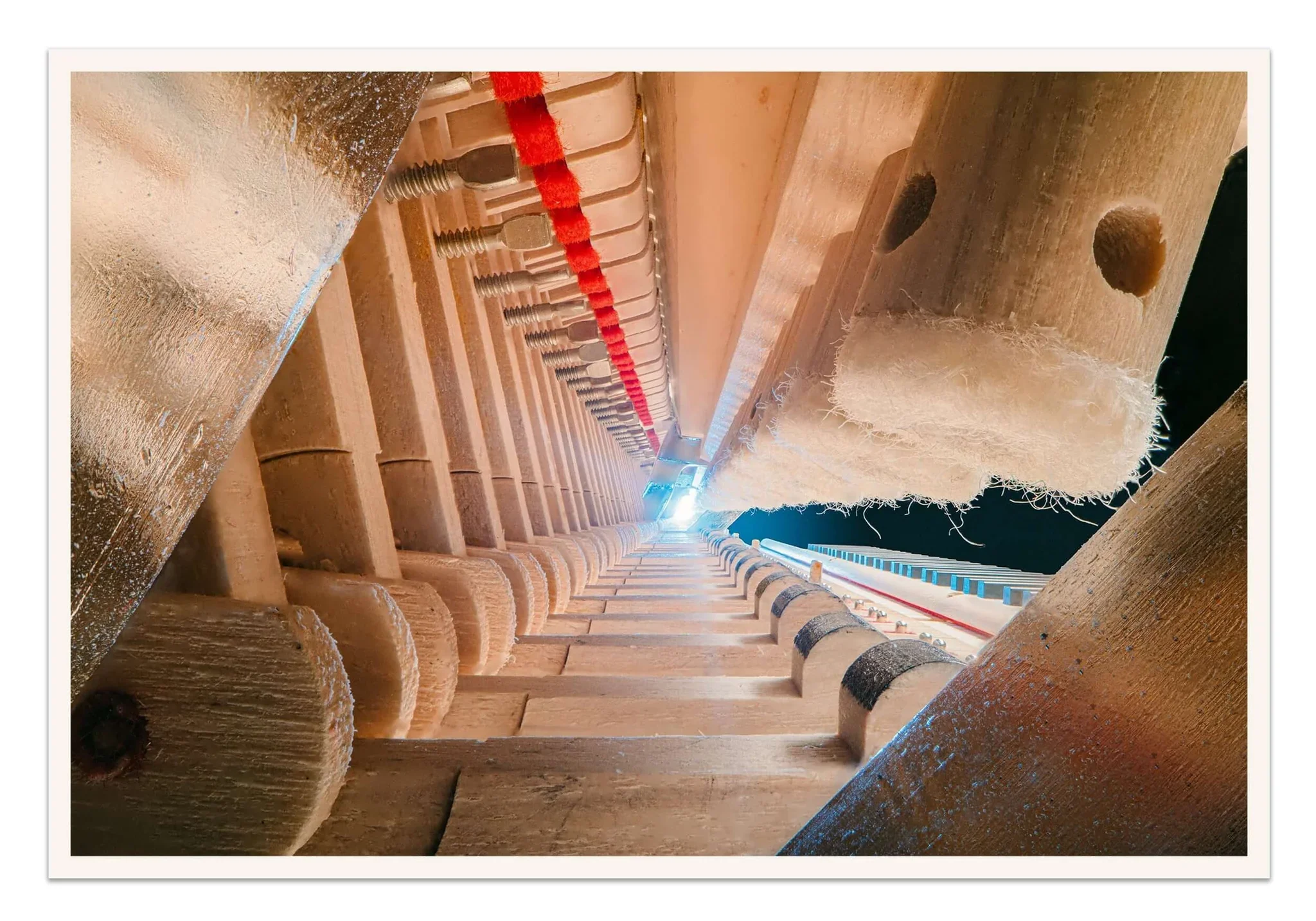
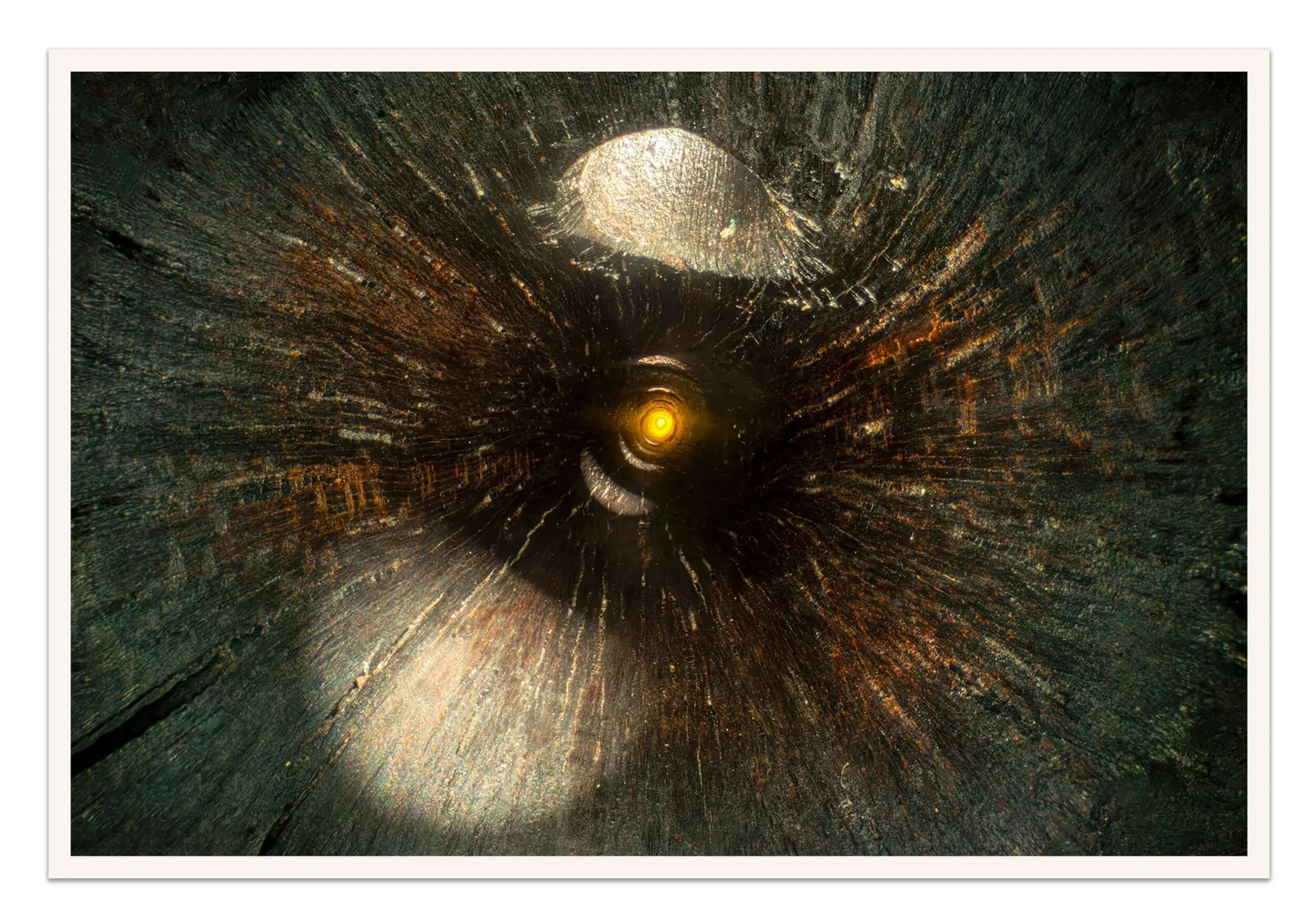
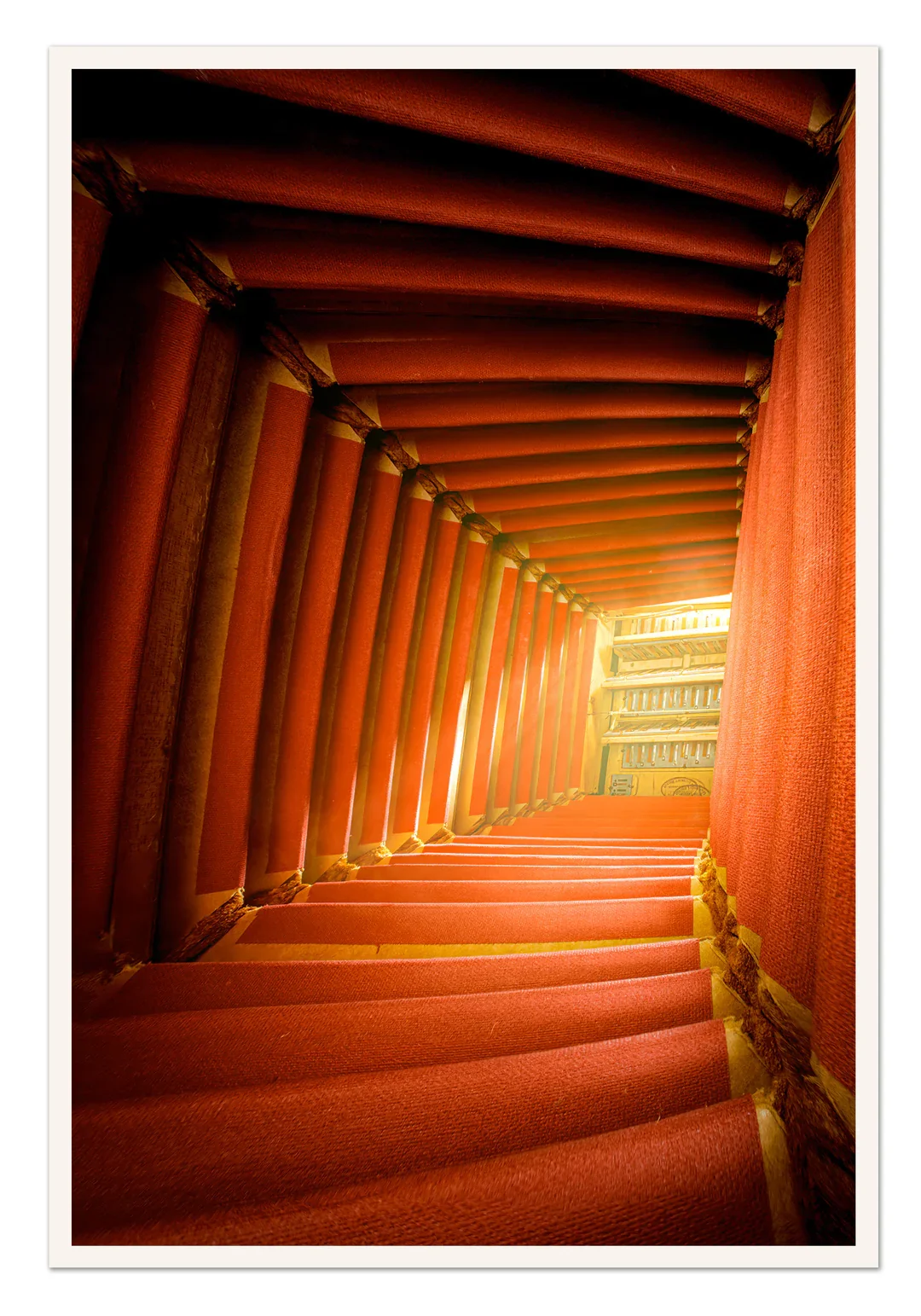
Architecture In Music is an ongoing photography project by Charles Brooks that reveals the hidden interiors of musical instruments. Using medical probe lenses, thousands of images, and advanced focus stacking, he transforms tiny spaces inside violins, flutes, cellos, and brass instruments into vast architectural scenes. The project shows the marks of craftsmanship, the traces of performance, and the surprising beauty found inside instruments that musicians play every day. (Buy prints)
Project Start: What made you decide to photograph instruments after 20 years as a cellist?
Like so many musicians, I was deeply familiar with the outside of my cello. I’d played it for ten hours a day for as long as I could remember, yet I’d only seen the inside twice, when it was at the luthier’s for major repairs. I wanted to know the interior as intimately as I knew the exterior. During my career as a cellist, I was always taking photographs, and I was fascinated by night and astrophotography. There’s a connection between those worlds; both reveal hidden scenes and spaces. I’d seen a few similar photos online, including a meme that said, “the inside of a guitar looks like an apartment I couldn’t afford,” and a wonderful small series from the Berlin Philharmonic showing cellos and double basses. I wanted to explore smaller spaces like violins and oboes, and instruments made by the great masters, but it would take many years before the right technology became available.
When you mention that meme about the guitar interior looking like an unaffordable apartment - was there a specific moment when you saw one of those images and thought “I need to do this myself, but better”?
I think both the guitar meme and the Berlin Philharmonic photos planted a seed. It was never about doing them better, those were already wonderful images that didn’t need improving. But I did want to explore further. I wanted to get inside more famous instruments, to see the tool marks of Stradivari as if standing in his workshop. And there were so many instruments that had never been photographed in this way. Violins were the most obvious, but I was also fascinated by the idea of exploring pianos, oboes, saxophones, and so many others. It felt as though we had only glimpsed a single drop in an entire ocean of possibilities.
Focus Stacking: You combine hundreds of photos for each image - how do you move the focus millimeter by millimeter without losing track?
Many of these photographs are made up of not just hundreds but thousands of individual frames. I’ve often thought about automating the process, but I still do it all by hand. It’s a matter of moving the focus ring the tiniest distance possible. The process is meditative. You slow your breathing and treat the lens like an instrument. It’s also slow work, as taking shots too quickly can cause the lights to heat the instrument. There’s a rhythm to it: moving the focus ring, triggering the shutter, listening to the lights recycle, viewing the tethered image, and repeating this cycle for many hours. It’s much like practising scales on a cello, and I think those years of patient, methodical practice have prepared me perfectly for this kind of work.
Probe Lenses: Why did you choose medical probe lenses instead of regular camera lenses for this work?
Regular camera lenses, even commercially available probe lenses, are simply too large to fit inside most instruments. I prefer not to take instruments apart beyond what would happen during a normal service. For example, I might remove the strings from a violin to access the small hole at the base, but I would never remove the top. The lid of a fine violin might come off only once a century, and only for a major repair. As beautiful as the photographs are, I never want to put an instrument at risk.
I began the series with a Laowa 24mm probe lens, which is about 2 cm wide. That worked for cellos and saxophones, but it was too large for violins and flutes. So I took a heat gun to the lens and melted off the casing to slim it down to about 11 mm. That helped, but it still wasn’t enough. Eventually, I began working with Storz, who make medical endoscopes that are just 4 mm across. They allowed me to reach the spaces I wanted, though adapting them for high-resolution photography took a lot of experimentation since they were designed for low-resolution video.
I’m always exploring new technology to reach even smaller areas. At the moment, I’m limited to rigid lenses because flexible ones create a visible pattern from the fibre bundles. I hope to solve that challenge soon.
Depth Challenge: How do you solve the problem of having less than 1 centimetre of sharp focus in these tiny spaces?
The smaller the instrument and the closer the lens, the less depth of focus there is. When photographing a flute, I might have only one or two millimetres in focus per frame.
This work depends on a convergence of technologies. When I began the series, probe lenses had just reached the market, allowing me to get close, while at the same time focus stacking software was making huge leaps. A Ukrainian programme called Helicon Focus is essential to my process. It analyses thousands of frames, finds the sharp areas, discards the blurred parts, and merges everything into a single crystal-clear image. It’s not perfect; I usually need to run it several times with different settings and then manually blend the results, but this would have been impossible in the pre-digital era.
Light Setup: What lighting tricks help you make small instrument interiors look like huge cathedral spaces?
The sense of vastness is an optical illusion created by several factors, not just lighting. The first is depth of focus. We instinctively associate small objects with shallow focus because that’s how our eyes see them. When everything is in sharp focus, the brain is tricked into thinking the space is larger than it is. The second is the use of wide-angle lenses or stitched panoramas, which exaggerate scale and perspective. Foreground details appear massive while the background recedes dramatically, much like looking at trees and distantmountains in nature.
Lighting completes the illusion. I often mimic sunlight, using hard light from above whenever the instrument’s openings allow it. This helps create the impression that you’re standing inside the space rather than looking into it.
Lighting is also the hardest part technically. The adapted medical lenses have an f-stop of around 240, not a typo, so they require a tremendous amount of light. I use many high-powered flashes but take only one shot every eight seconds to keep the temperature around 24°C and protect the instrument.
No Damage Rule: How do you photograph million-dollar instruments like Stradivarius violins without breaking them?
This is my most important rule: do no harm. When Daniel Dodds hands you his 20-million-dollar 1717 Stradivarius violin, you make sure of it. I work closely with trusted luthiers to remove the strings and clean the interior, since even a speck of dust appears enormous at this scale. I spend days testing and weighting every piece of equipment to ensure nothing can fall, rehearsing every step on less valuable instruments so that the Stradivarius spends as little time on the table as possible. I also carry a very substantial insurance policy.
Before that shoot, I spent a full month planning every possible contingency. By the time I began, I was a nervous wreck, haunted by a mental “Final Destination: Stradivarius” scenario. Fortunately, everything went perfectly, and it remains one of the photographs I’m most proud of.
When you say you spent a month planning for the Stradivarius shoot and were “a nervous wreck”, what was going through your mind the moment you actually inserted that probe lens? Was there a point where you just had to trust your preparation and let go?
That first glimpse on the preview monitor was an enormous relief. To most people, it probably looked like a blurry mess, but I could immediately judge the brightness, focus range, and overall exposure. I knew then that it would work. From that point, I just had to settle into the routine I had practised so many times before. I wouldn’t see a combined image for many hours, but by then, it was all about trust in the preparation and the process.
Processing Time: How many hours does it take to blend all those photos in Helicon Focus for one final image?
Helicon Focus itself runs fairly quickly, usually just a few minutes per pass, but preparing the files takes much longer. Each frame must be denoised because at this scale, the software can mistake noise for texture. That step alone can take a couple of days. I also adjust lighting and colour before stacking and increase texture to help the software detect detail. If I get that step wrong, I have to start again from scratch, which happens more often than I’d like. Since many of the final works are composed of multiple focus stacks stitched into panoramas, it typically takes around two weeks of work after the shoot to complete one image.
Musician’s Eye: What details do you see inside instruments now that regular photographers might miss?
People often comment that wind and brass instruments look dirty, which is an understandable reaction to seeing condensation marks up close. But I see something else. The instruments are always cleaned before I photograph them, yet older brass instruments in particular develop a beautiful green and gold patina. Every breath, every concert, every rehearsal leaves microscopic traces that become part of the instrument. Over time, it carries its own physical memory of performance, transformed note by note over the decades. I find that incredibly moving.
Have you ever photographed an instrument where you could actually trace specific moments in its history through those marks, like distinguishing between a practice session versus a concert hall performance?
There’s one extraordinary instrument that comes to mind. It’s a cello that was once hit by a train. It had been strapped to the roof of a car that got stuck on a level crossing in New Zealand in 1929. The cello was heavily damaged, and normally that would have been the end of its story, but for whatever reason, it was repaired. The luthier who restored it was proud enough to sign his name inside, and that began a tradition. Every luthier who worked on it afterwards added their signature too. The result is a kind of timeline etched inside the instrument, a string of signatures dating from 1911 through to 1988. It’s a beautiful record of luthiery in New Zealand across the decades.
Reader Tip: What’s one simple technique from your work that photography blog readers could try at home?
Use your camera to explore what the eye can’t see. Find something hidden, small, dark, or overlooked, an unusual angle, the inside of a cheese grater, or even a patch of night sky. There are endless scenes still waiting to be discovered. People often say that everything has already been photographed, but I hope this series proves otherwise. There is always more to see if you bring curiosity and a bit of ingenuity.

More photography books and interviews?
We'd love to read your comments below, sharing your thoughts and insights on the artist's work. Looking forward to welcoming you back for our next [book spotlight]. See you then!
Robin de Puy could no longer make this project alone. She first photographed Randy in Ely, Nevada, during a 2015 road trip and kept returning to him for more than ten years. Interviews