Richard Renaldi Photographed Fast Food in 2019 After Fight for $15 Took Off. Here’s What He Saw in the Landscape
Welcome to this edition of [book spotlight]. Today, we uncover the layers of 'Billions Served,' by Richard Renaldi (published by Deadbeat Club). We'd love to read your comments below about these insights and ideas behind the artist's work.
If you eat fast food, you’re already in this story.
Richard Renaldi went to fast food places and photographed the workers and the spaces around them. In this interview, he explains how the book Billions Served was made and why he photographed it in 2019.
Most people see a menu, pay, and leave.
Renaldi slowed everything down with a large format camera and a calm, direct approach. He talks about why some pictures are black and white, why others are in color, and what each choice was meant to show. If you are building your own long-term project, you will also get real process details: how he chose locations, how he worked with people, and how he edited the series. By the end, fast food will look less “normal” and more like a system you can finally read.
The Book
Billions Served is Richard Renaldi’s sixth monograph, a large-format survey of fast-food chains that asks you to slow down and really look at places most of us move through on autopilot. The title comes from the familiar line “Billions and billions served” and flips it into something more human: those billions of meals are served to and by billions of people.
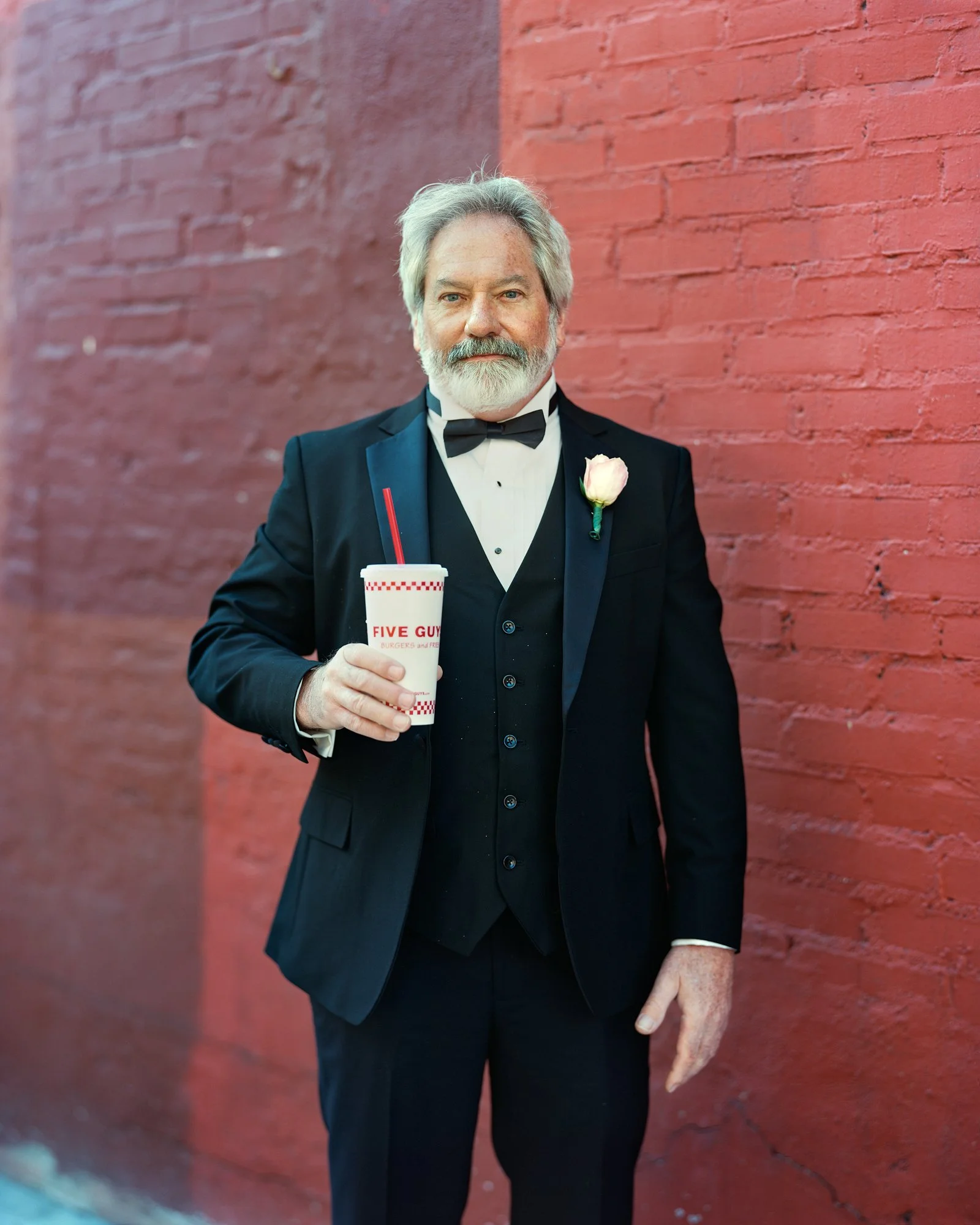
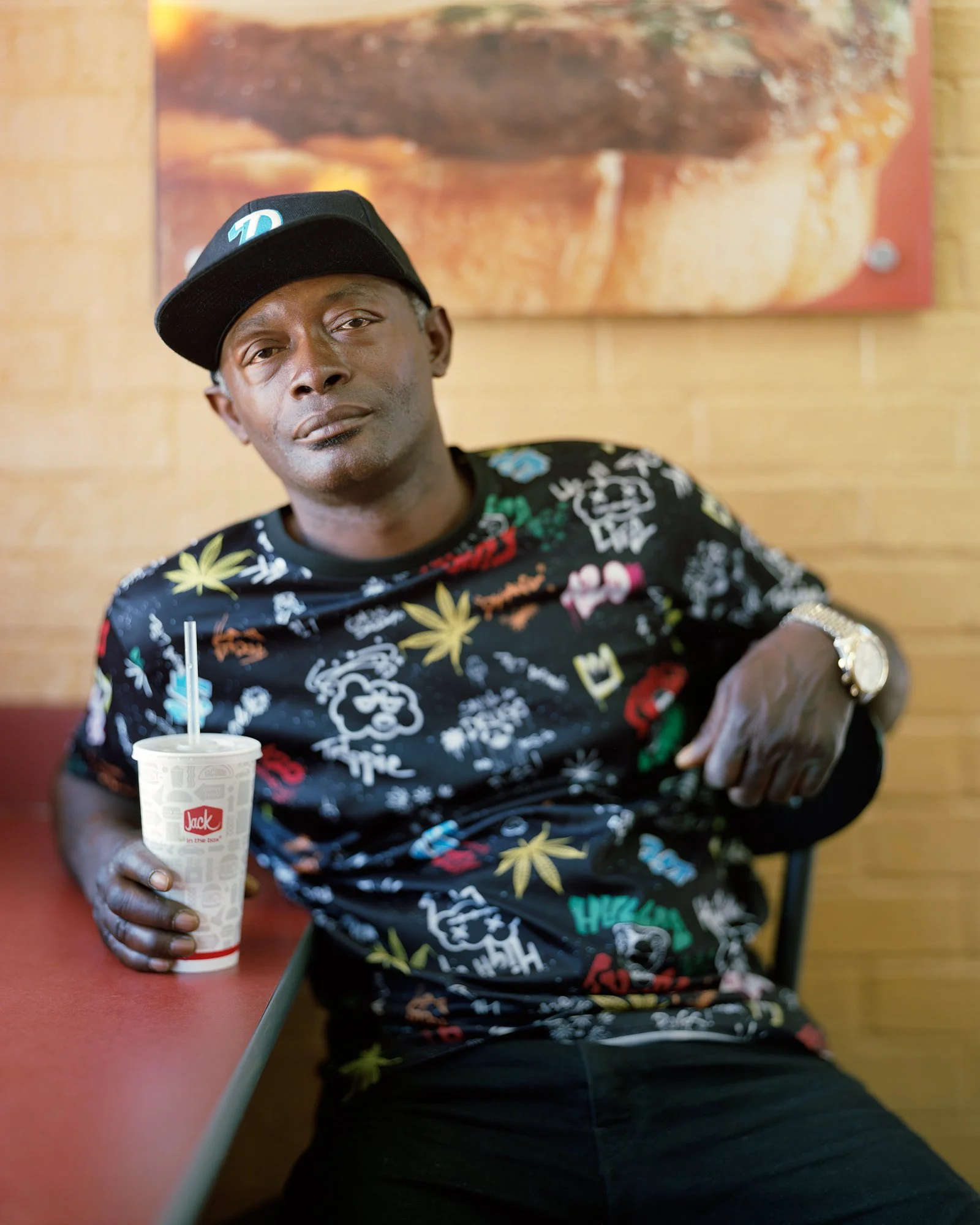
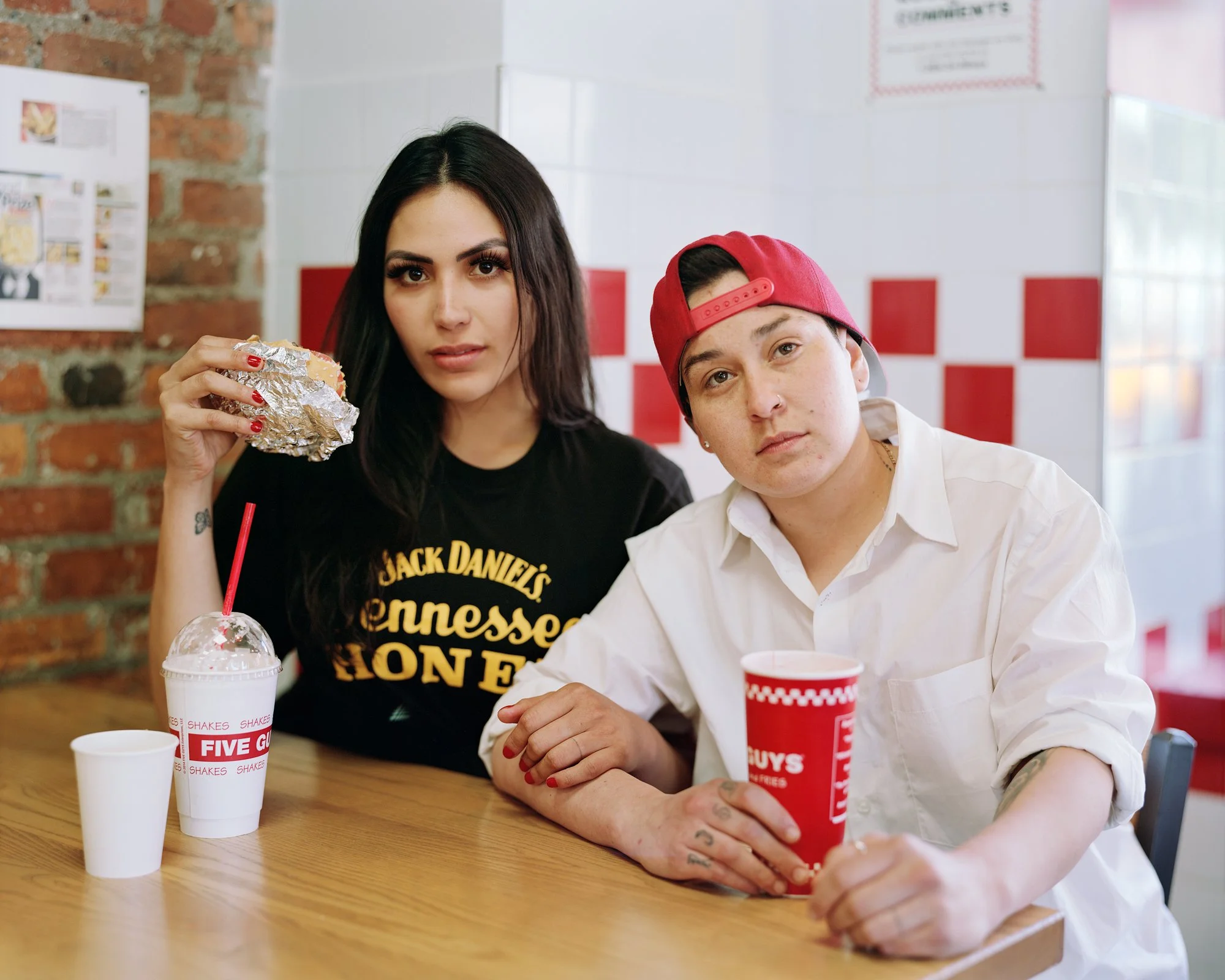
Renaldi works against the speed and sameness of these environments by making portraits that hold your attention. Black and white images quiet the loud colors that usually dominate these spaces, while the color photographs bring everyday patrons into the center, instead of leaving them in the background. The book becomes a calm but direct look at a huge cultural system, using portraiture to keep the focus on people.(Deadbeat Club, Amazon)
Project Genesis: What made you decide to photograph fast food locations across America for this project?
Starting in 1999, I began working with a large-format view camera. Over the course of several projects, many of which explored class as a subtext or structural condition, I noticed that portraits of fast-food workers appeared intermittently across different series. I made a mental note that one day I might want to develop those images into a project of their own.
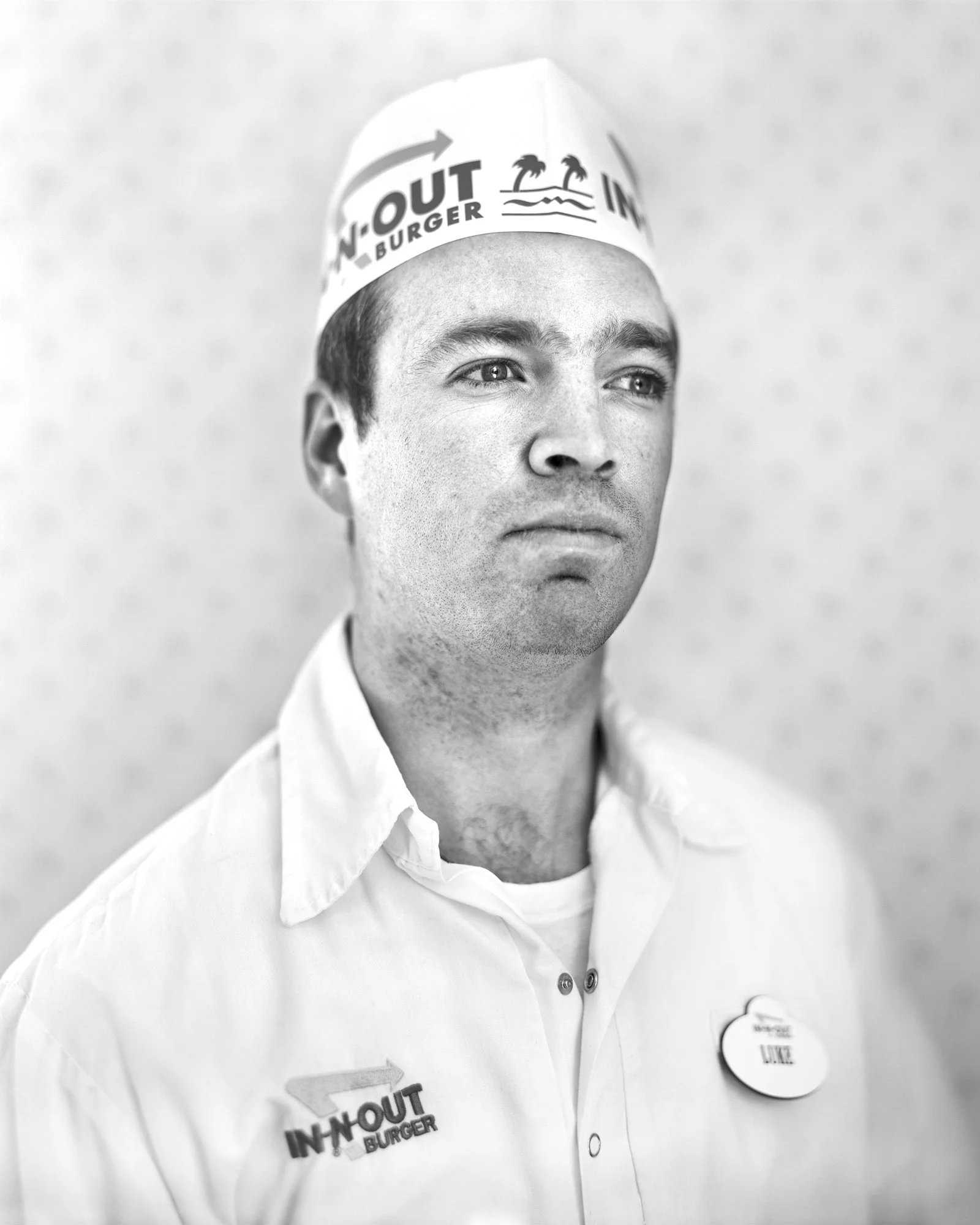
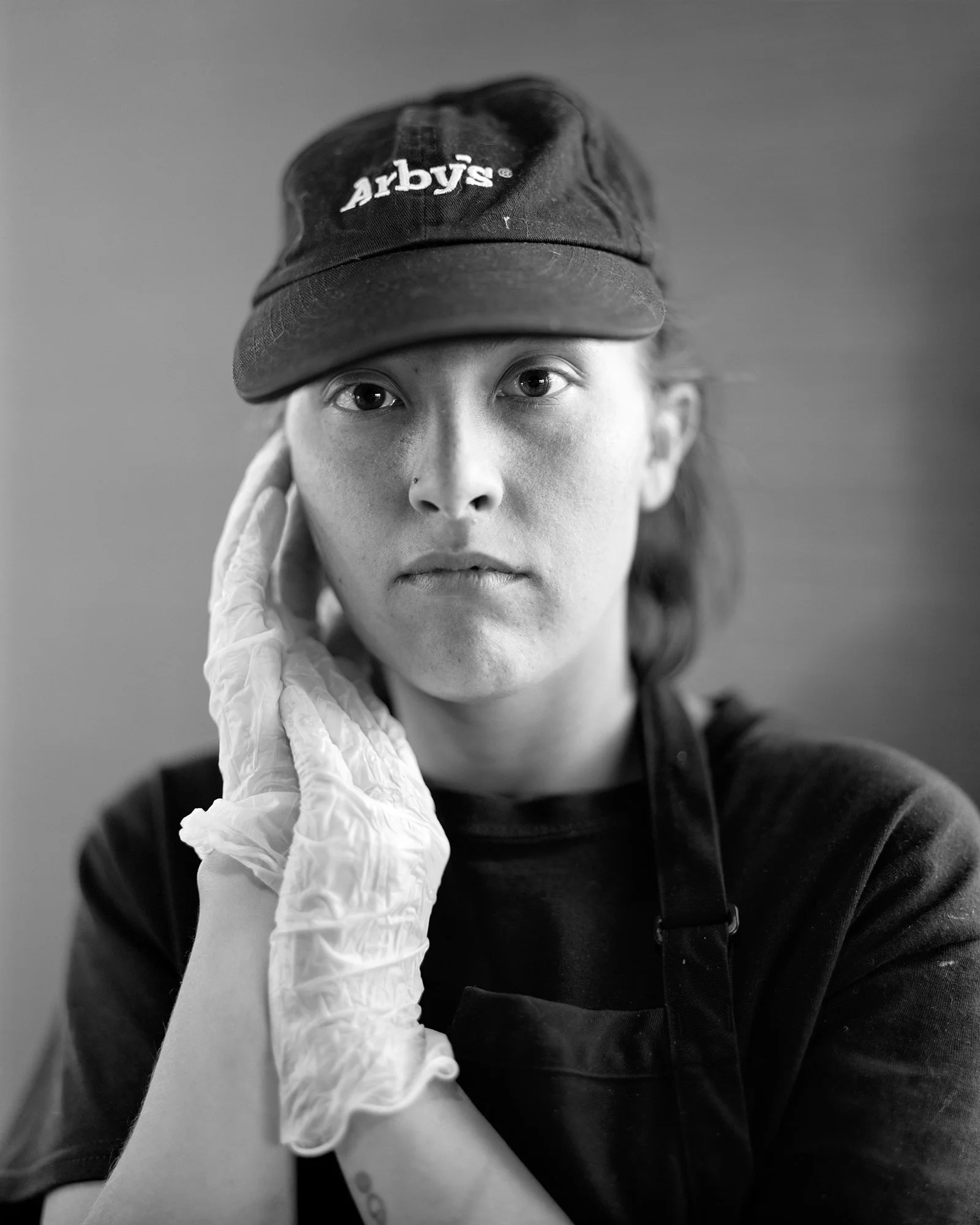
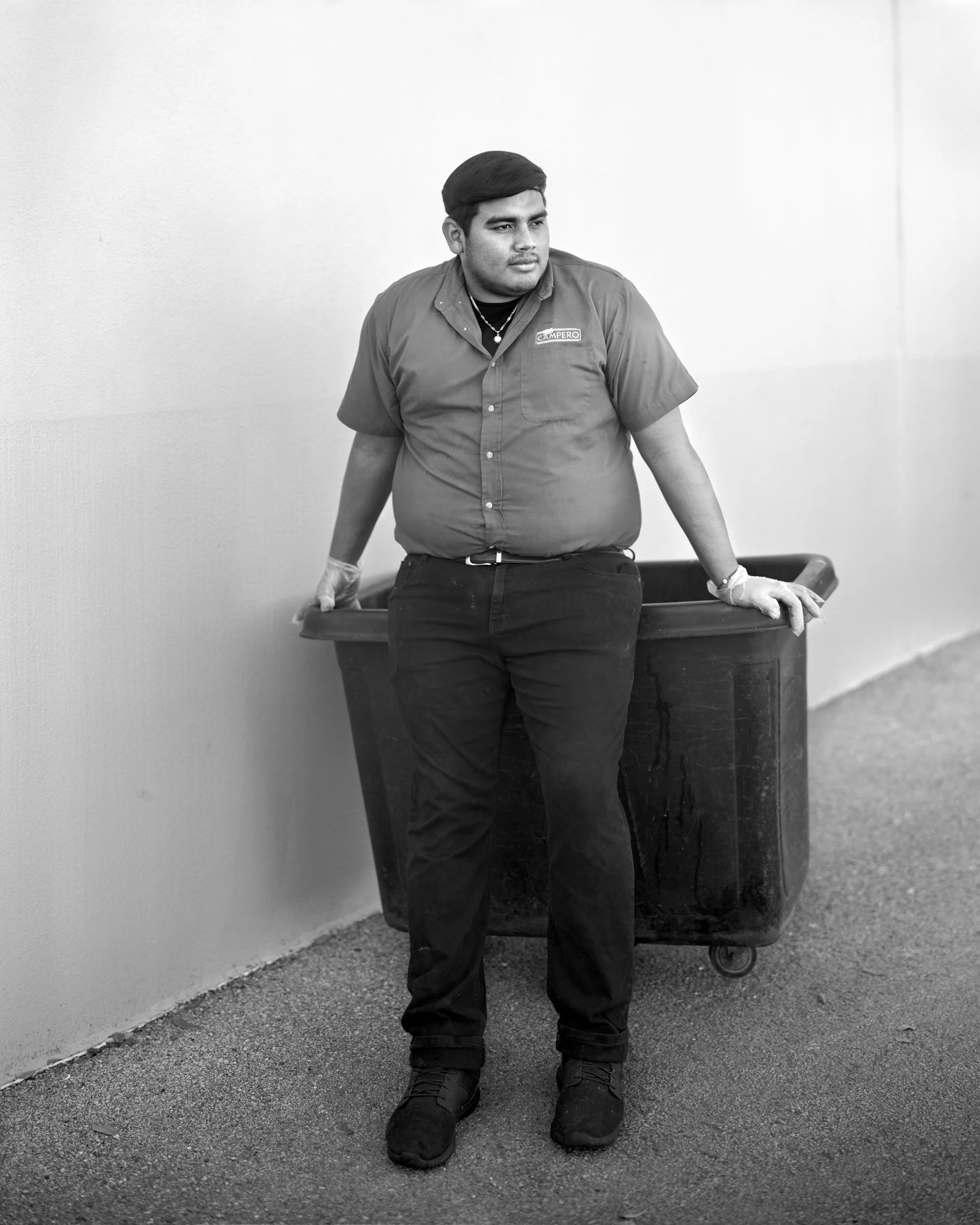
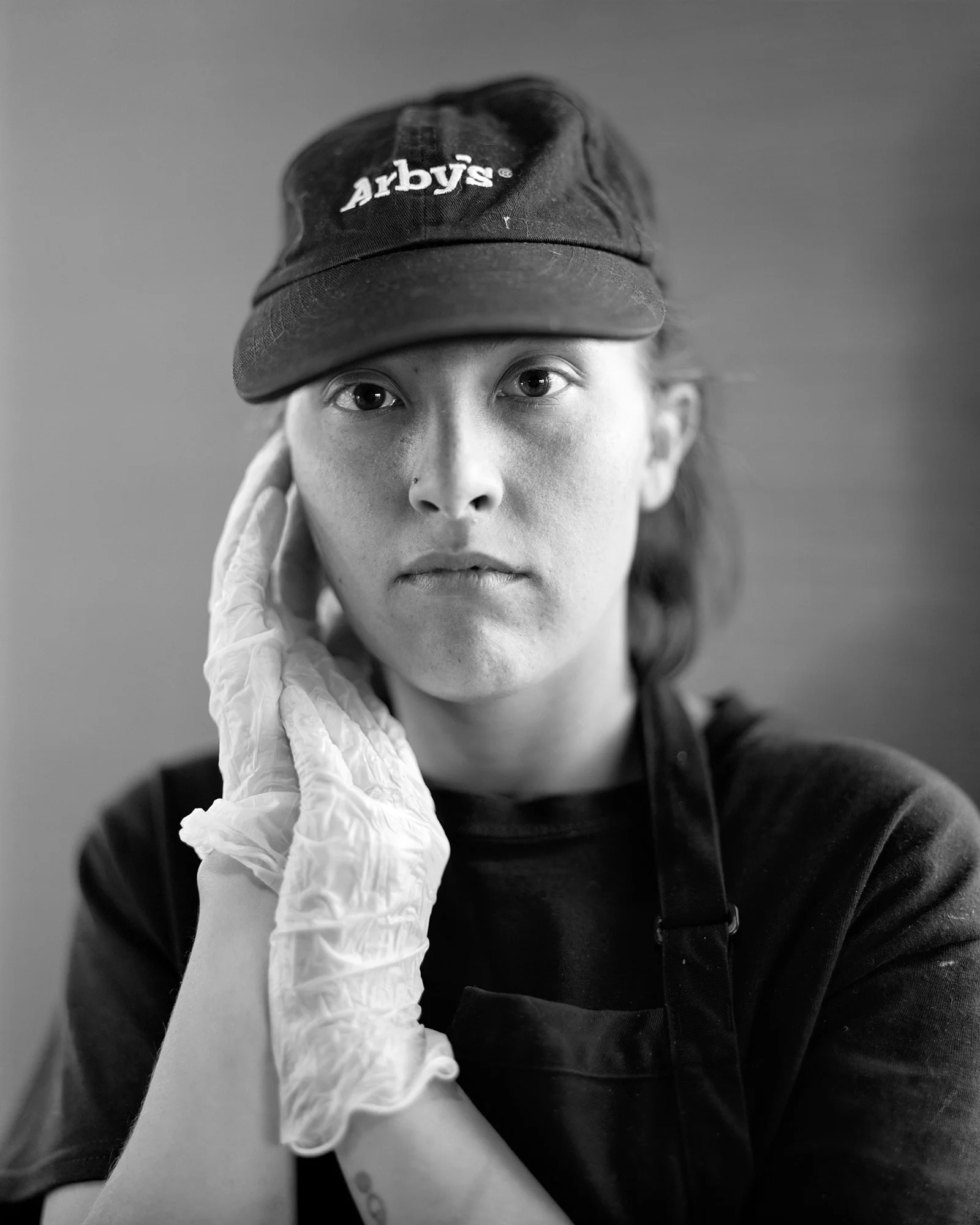
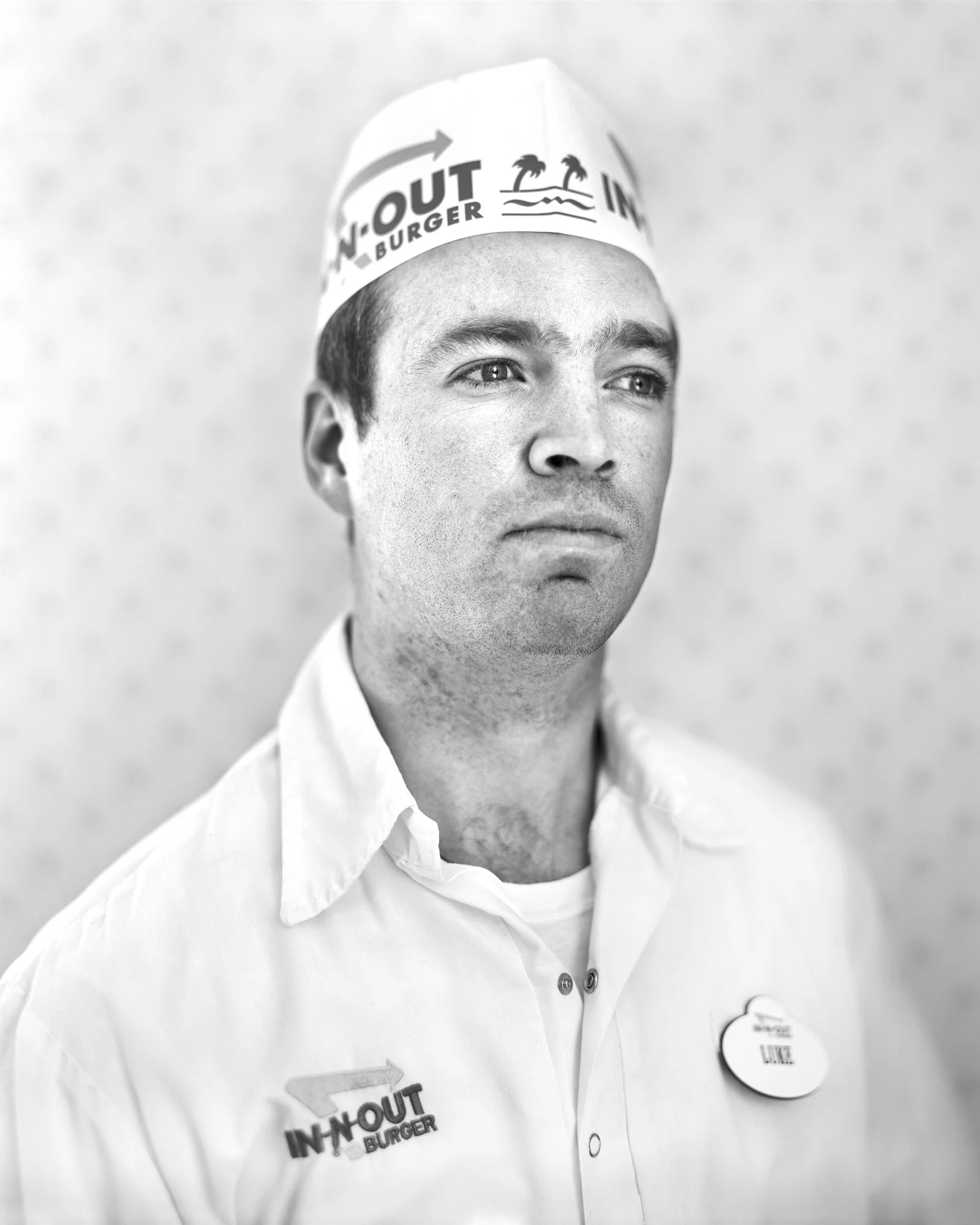
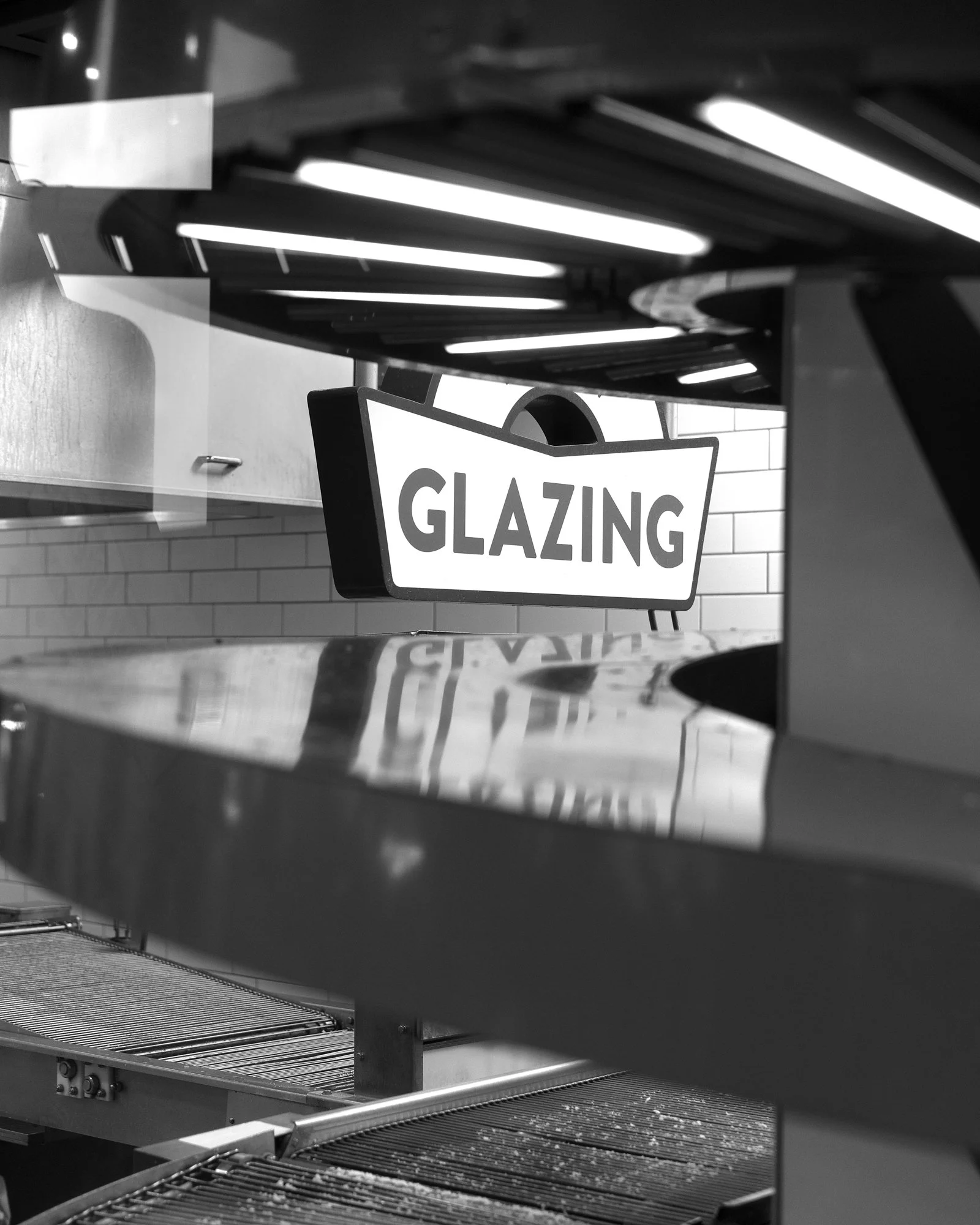
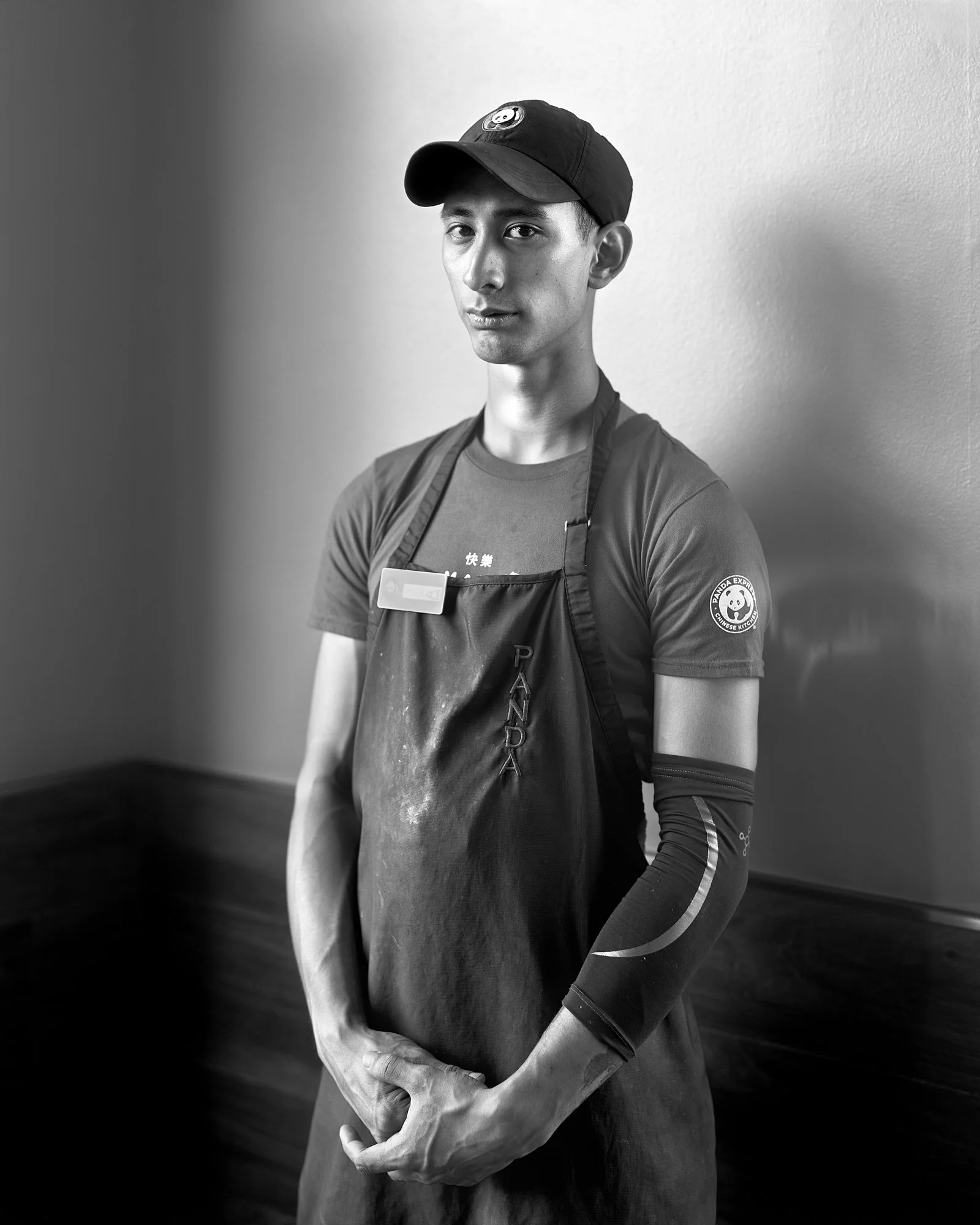
In 2012, in New York City, fast-food workers launched what became known as the Fight for $15, a broad social movement demanding a $15 minimum wage and the right to unionise in response to decades of wage stagnation and deepening economic inequality in the United States. As the movement gained national prominence, and as my sympathies lay with workers exploited by large fast-food corporations and franchises, it became clear that the moment was right to pursue this idea more seriously. I began the project on a photographic trip to South Texas in 2019, where I made the portrait of Ivan at Jack in the Box. I felt these workers needed to be photographed in black and white, allowing their individuality to come through unmediated by corporate branding.
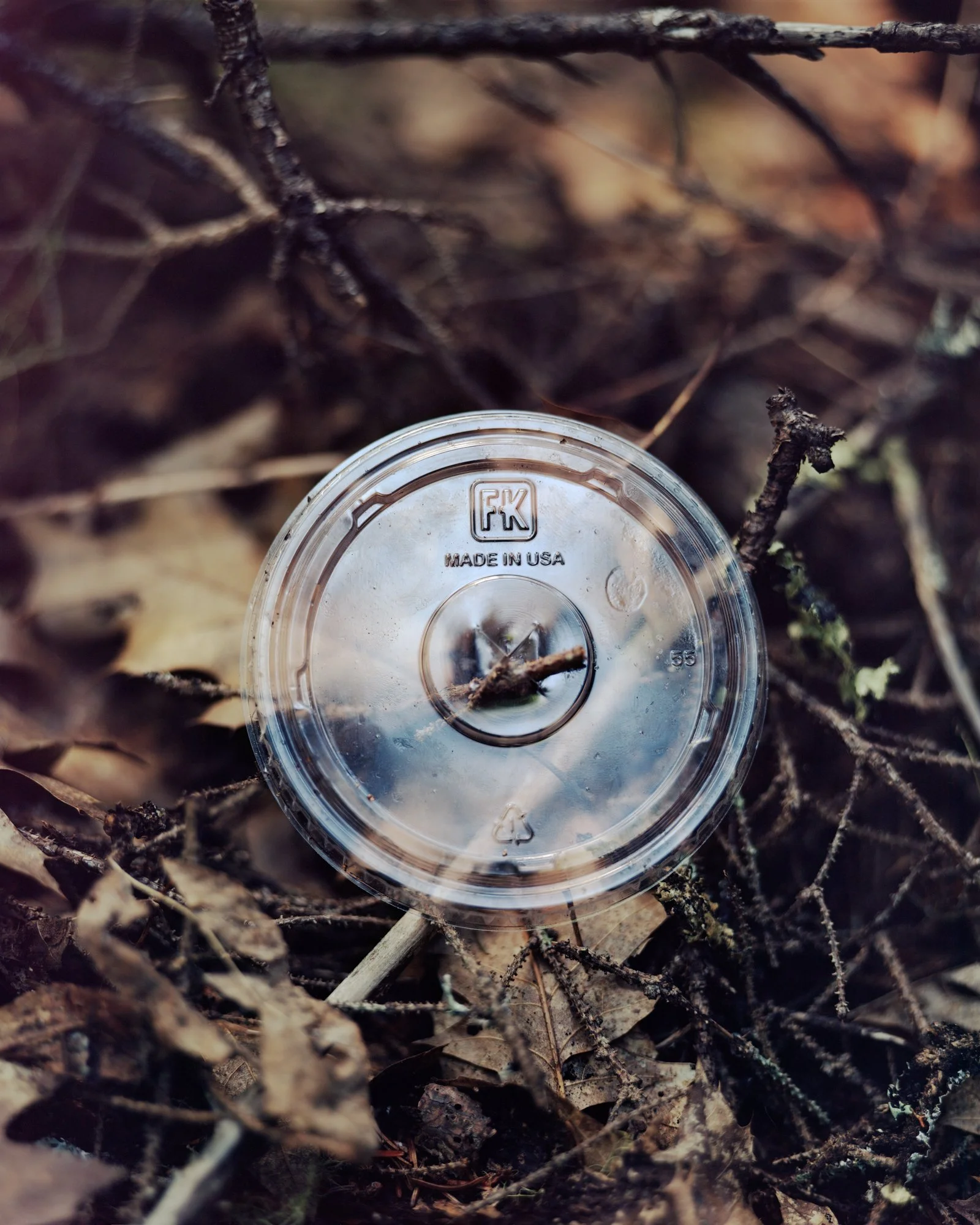
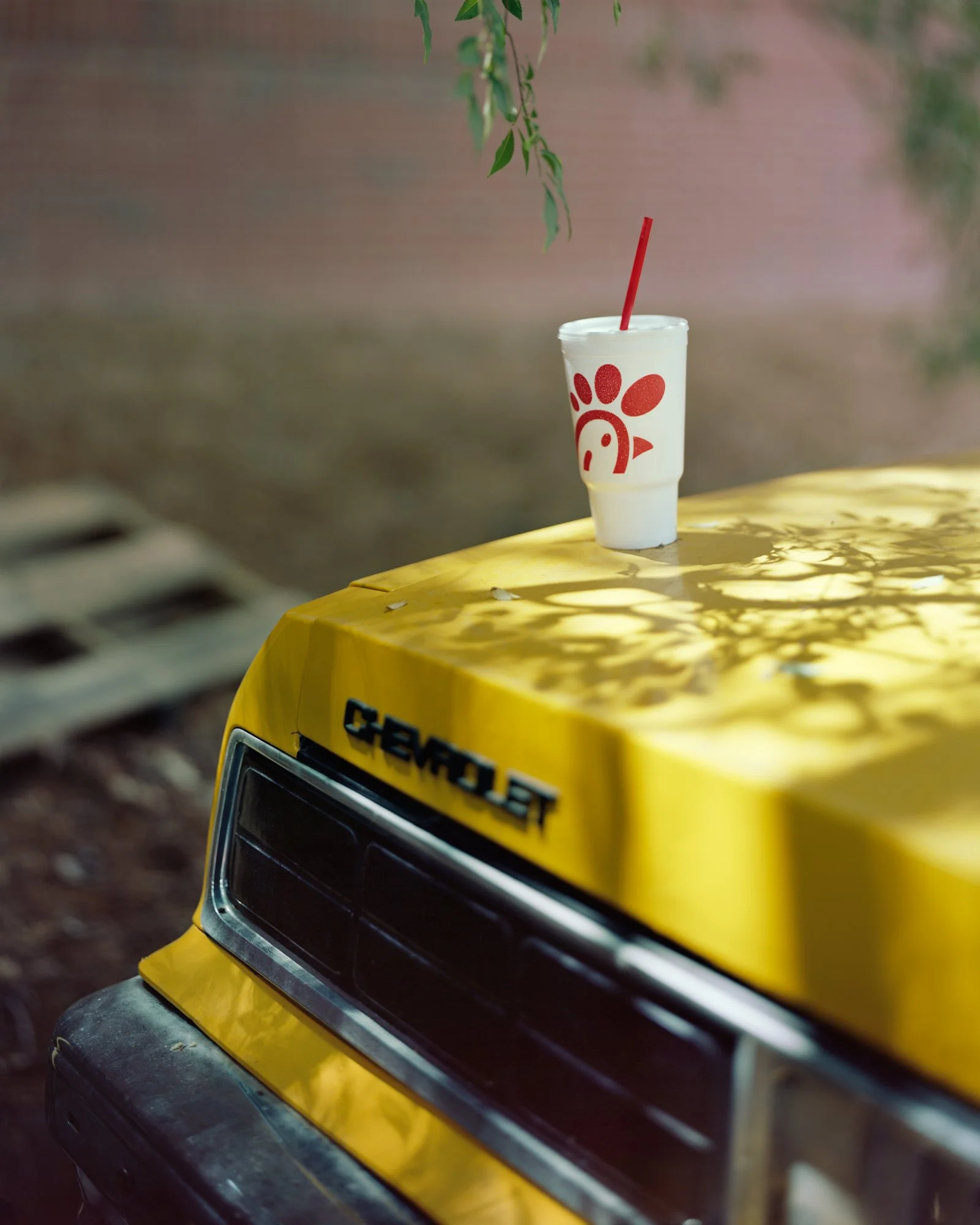
Eventually, I expanded the project to include portraits of customers, found garbage, and the surrounding architecture as well.
Subject Selection: How did you choose which fast food restaurants to photograph, and what made a location interesting enough to include?
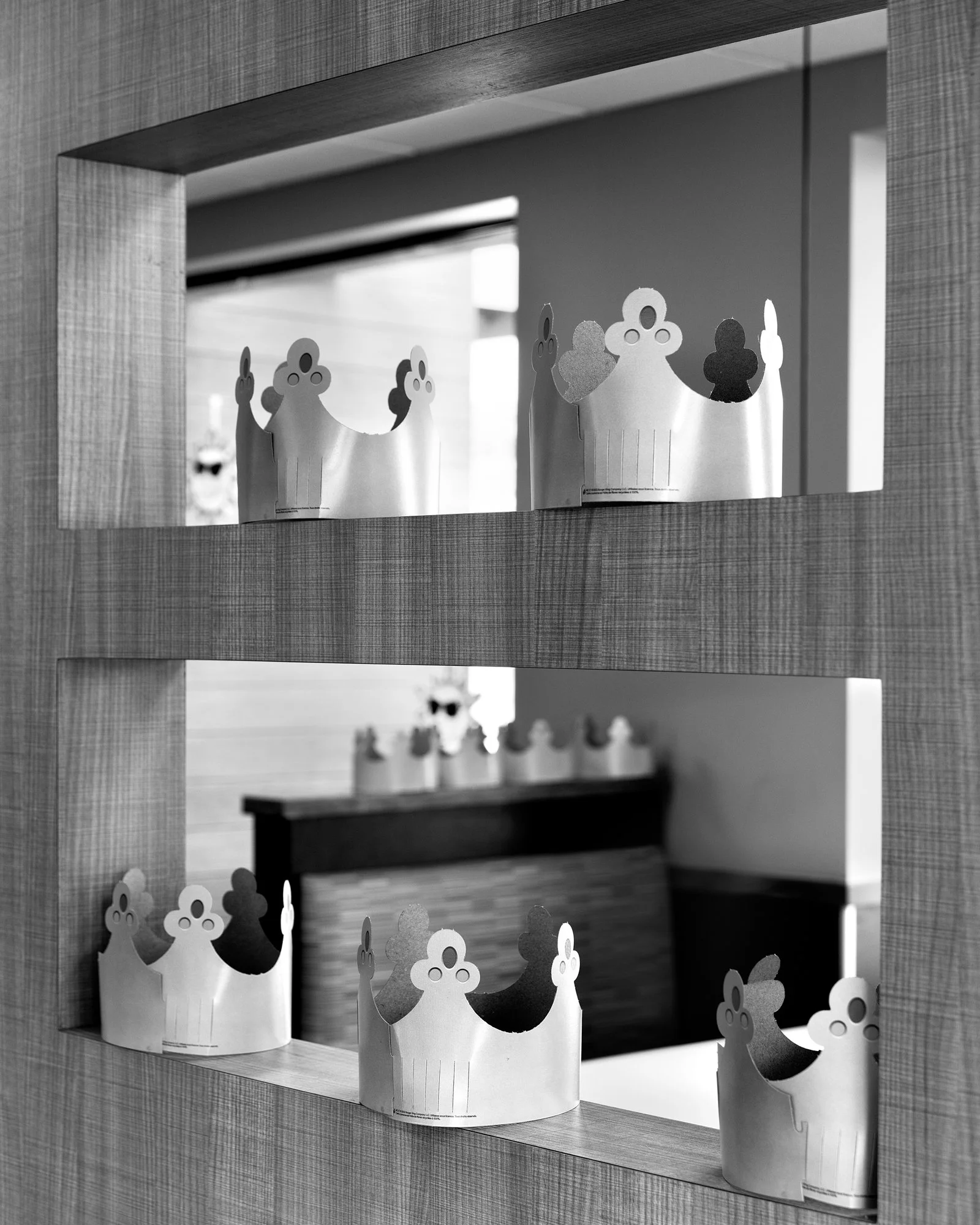
I knew I wanted a mix of international, national, and regional chains. That range was essential in order to convey the omnipresence and cultural reach of fast-food restaurants across the American landscape. Another criterion was breadth: I aimed to photograph as many different chains as possible, not only those that carried personal nostalgia. Most locations are not especially notable from an architectural standpoint, as much of the design is standardised and prefabricated. One exception was a Burger King in Holland, Michigan, which appeared almost unchanged since the 1970s, an anomaly I found particularly compelling.
Photographic Approach: You used large format film for this work - why did you choose this slower, more deliberate method instead of digital or smaller cameras?
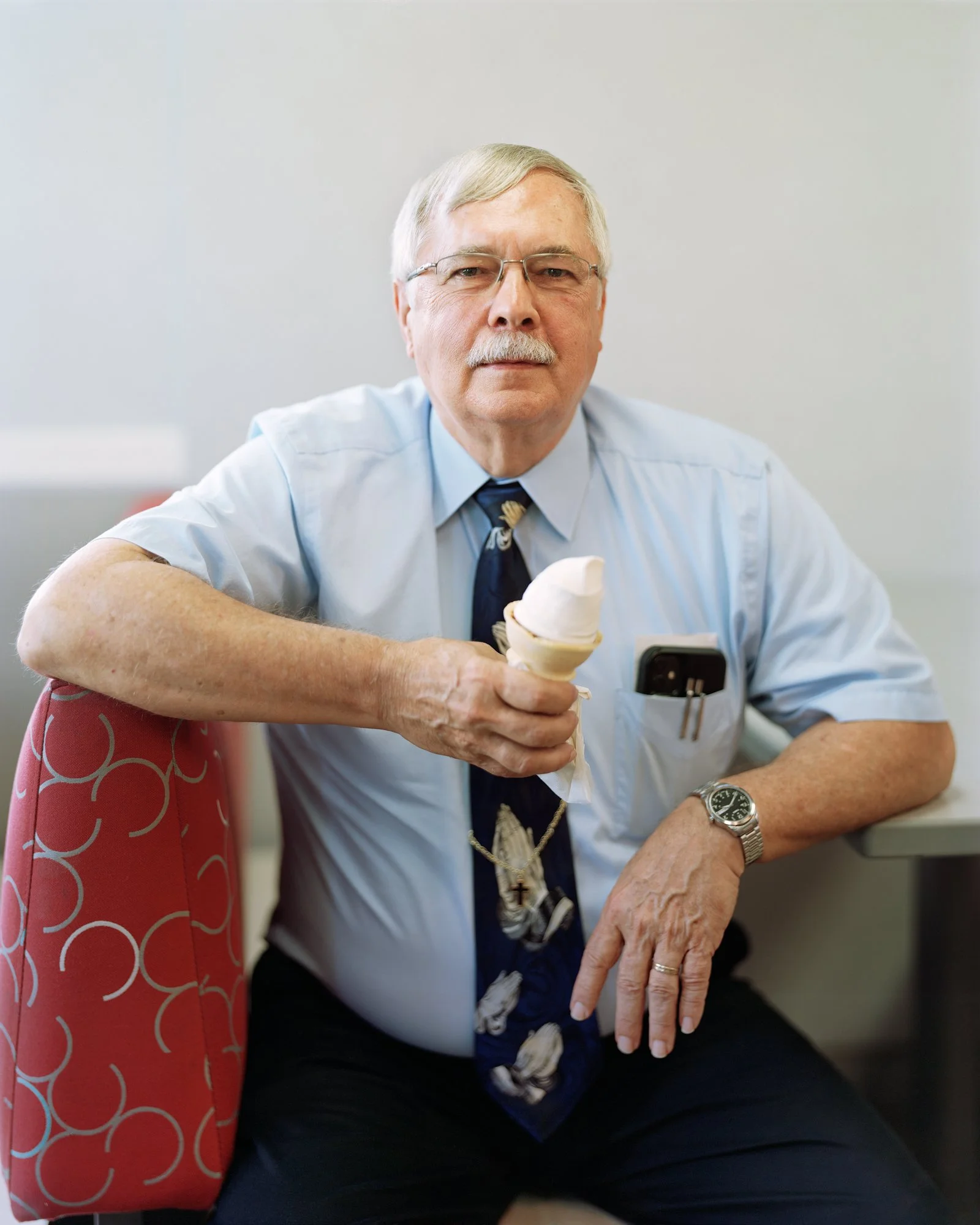
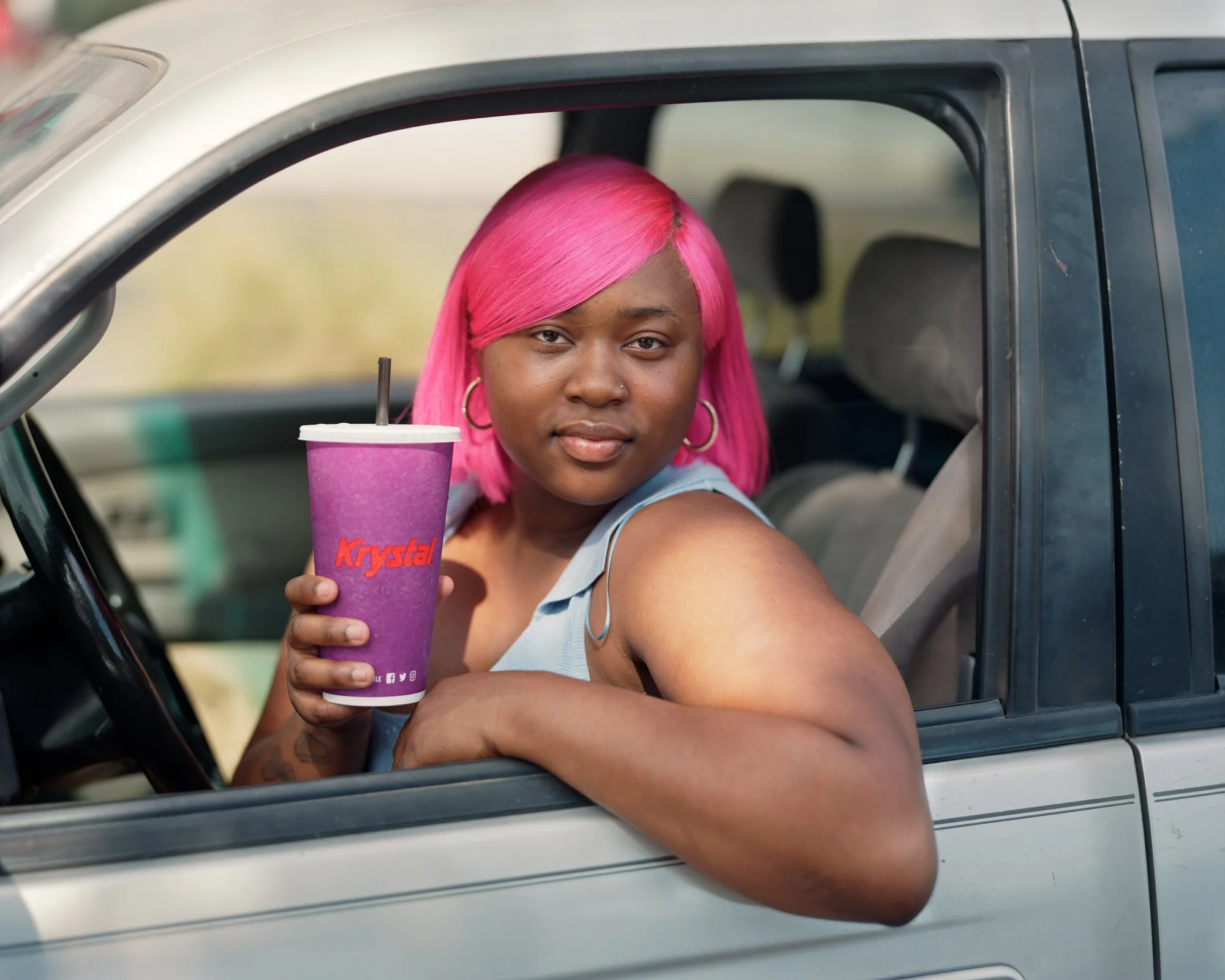
More than half of my projects are made with a view camera, and the subject matter with which I began, photographing workers, felt particularly suited to large-format portraiture. The isolation produced by a very shallow depth of field serves to elevate the subject. The slower, more deliberate pace of working with a view camera also creates a different kind of encounter, one that asks both photographer and subject to slow down and take the act of being photographed seriously.
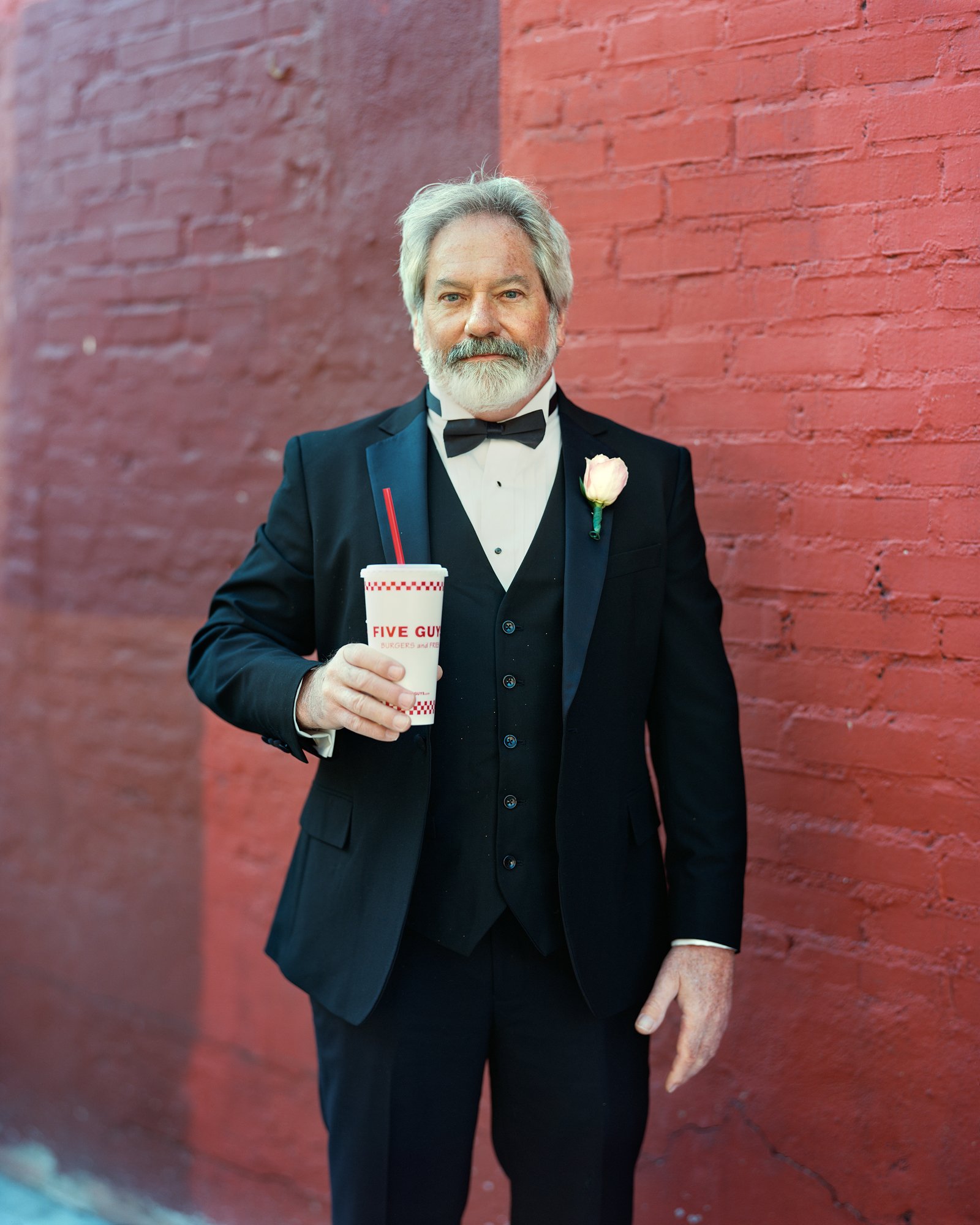
You made a clear choice to photograph workers in black and white but customers in colour because customers are participants rather than labour. Can you explain more about this difference? What does it mean to be a participant versus labour in these spaces, and how does that change what we see in the photograph?
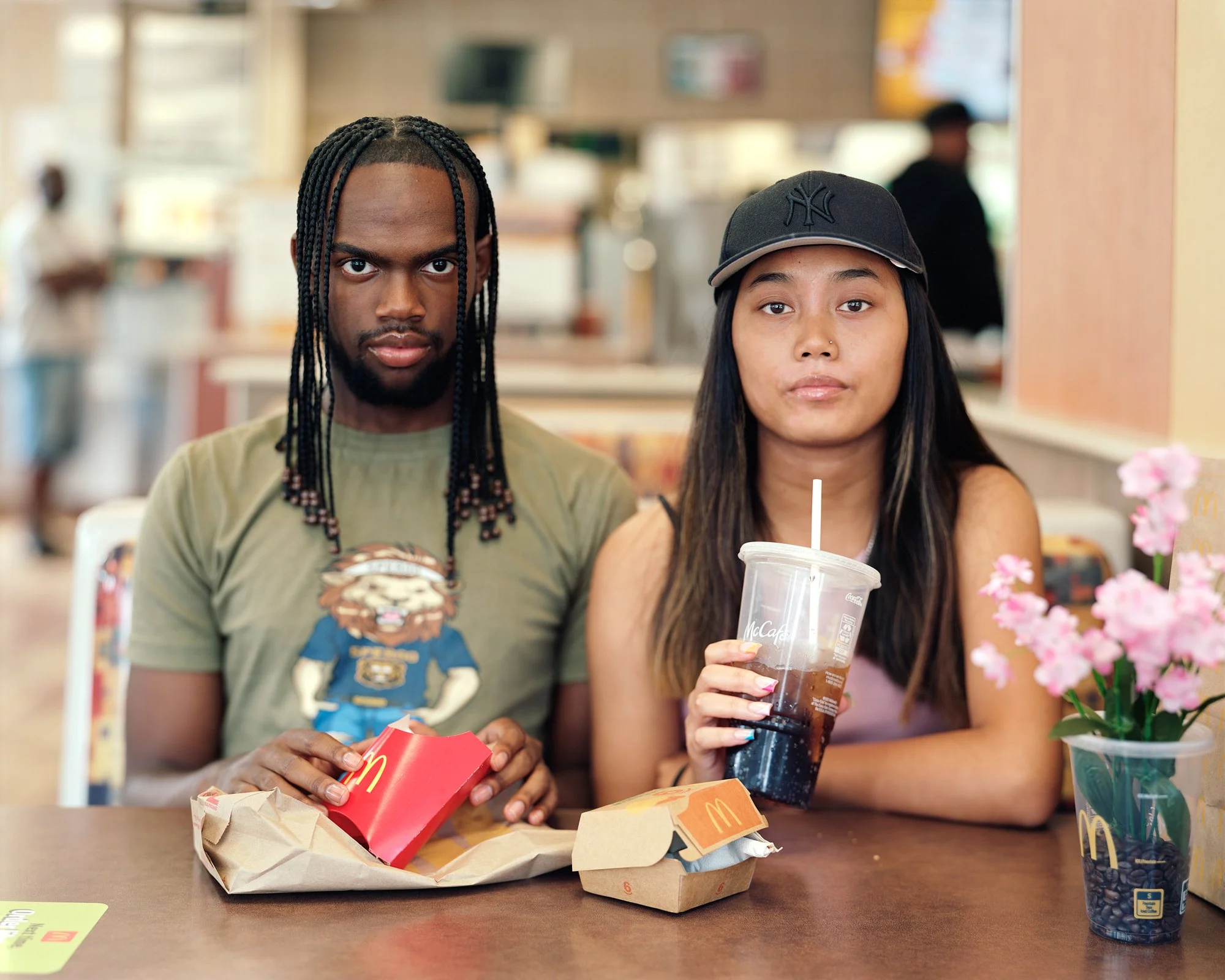
From early on, I knew that photographing the workers in black and white would help foreground their individuality by removing the distraction of corporate branding and environmental colour. When it came to customers, however, I felt no need to strip anything away. Allowing them to exist in colour felt appropriate, as they occupy the space as participants rather than as labour within it.
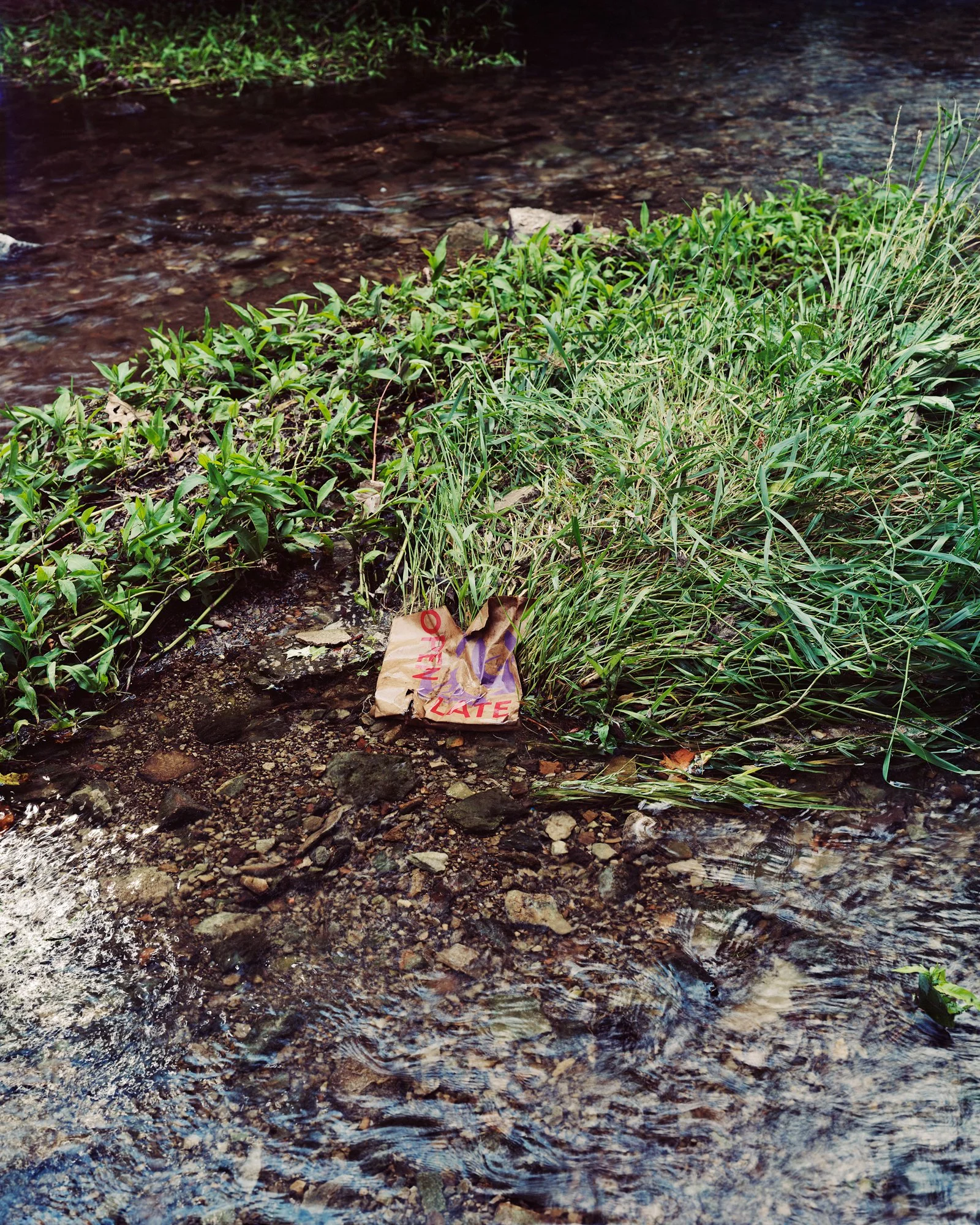
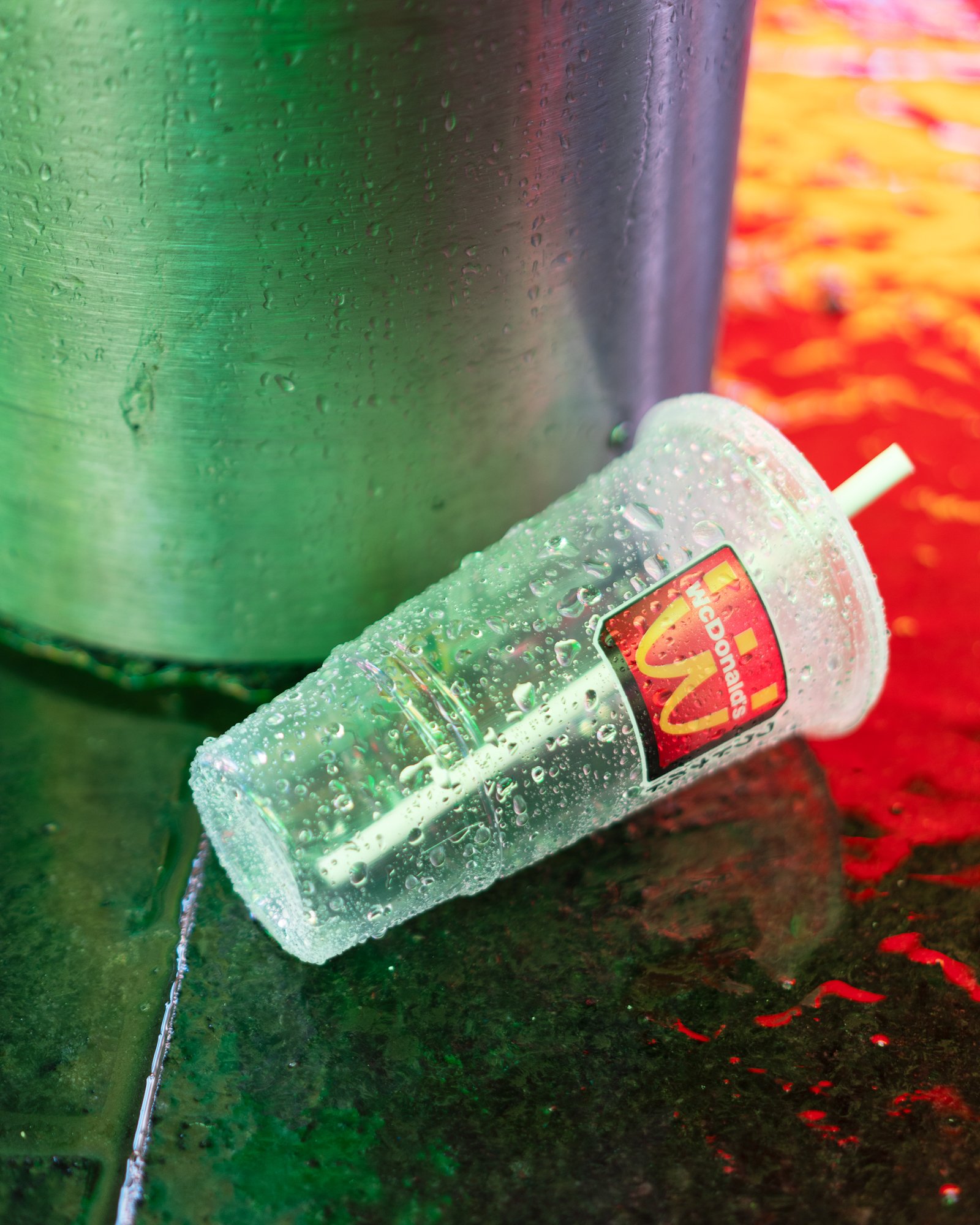
As I began photographing the detritus, it became clear that these images also needed to remain in colour. The trash is part of the visible, everyday world the project describes, and preserving its colour reinforces its material presence rather than abstracting it.
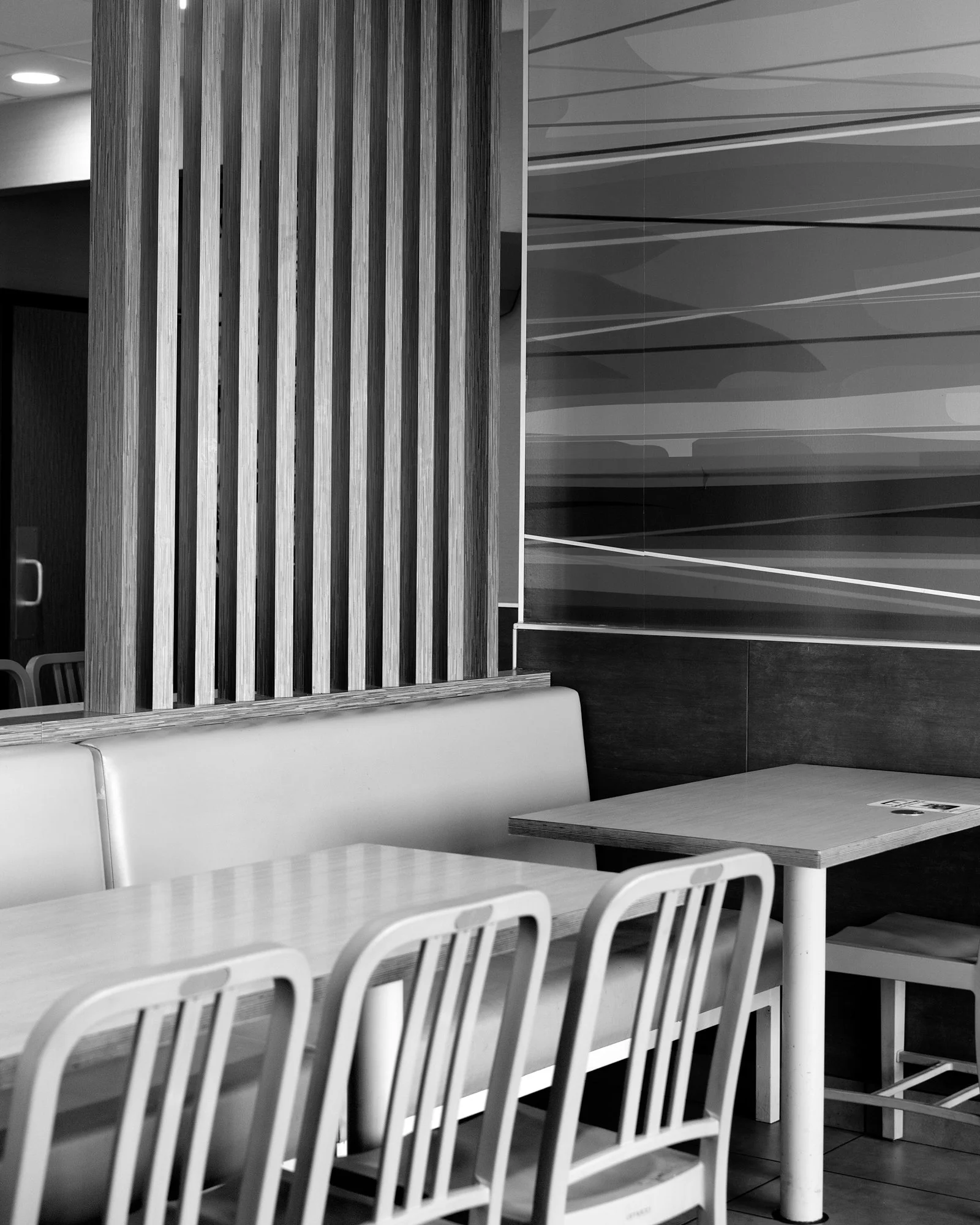
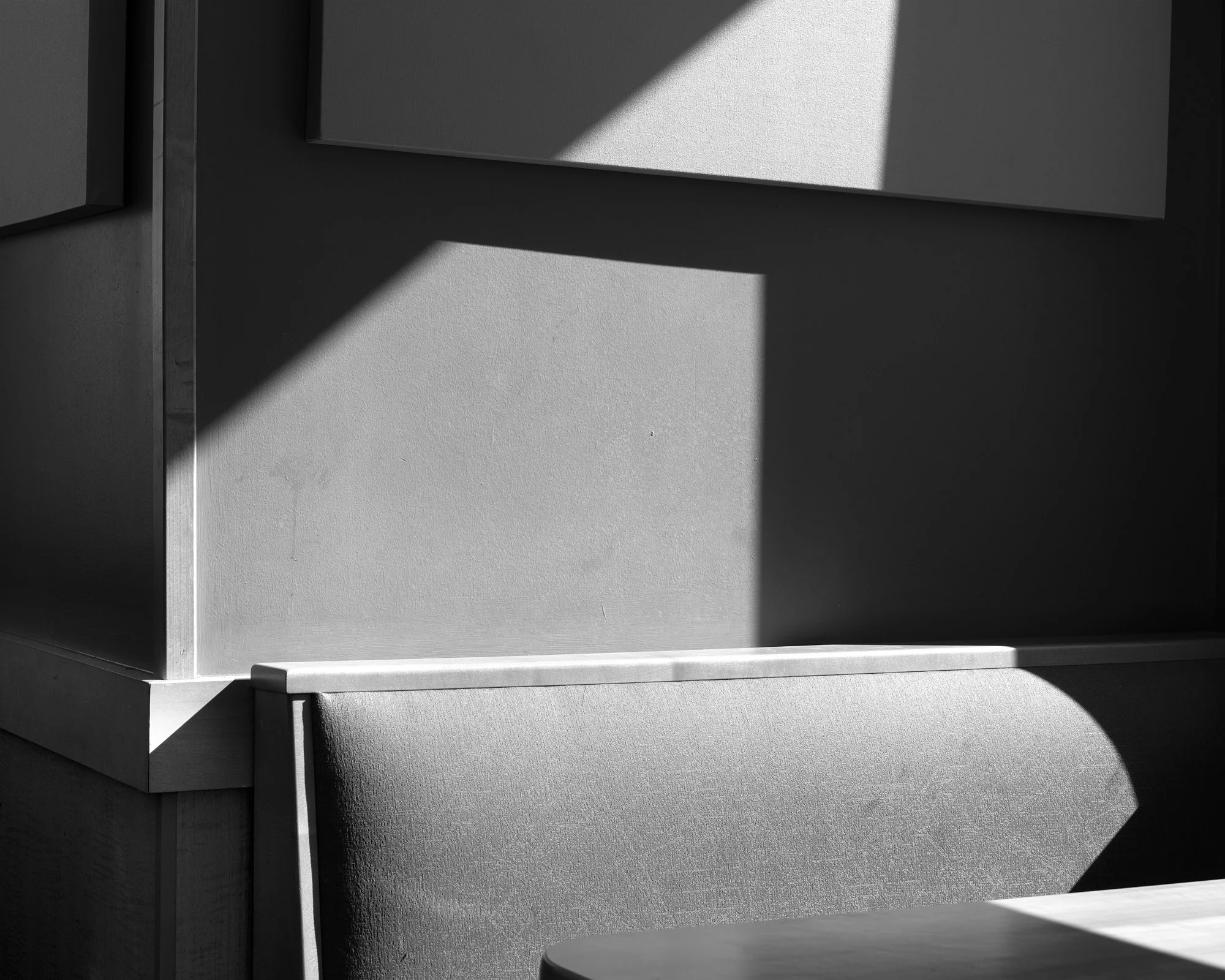
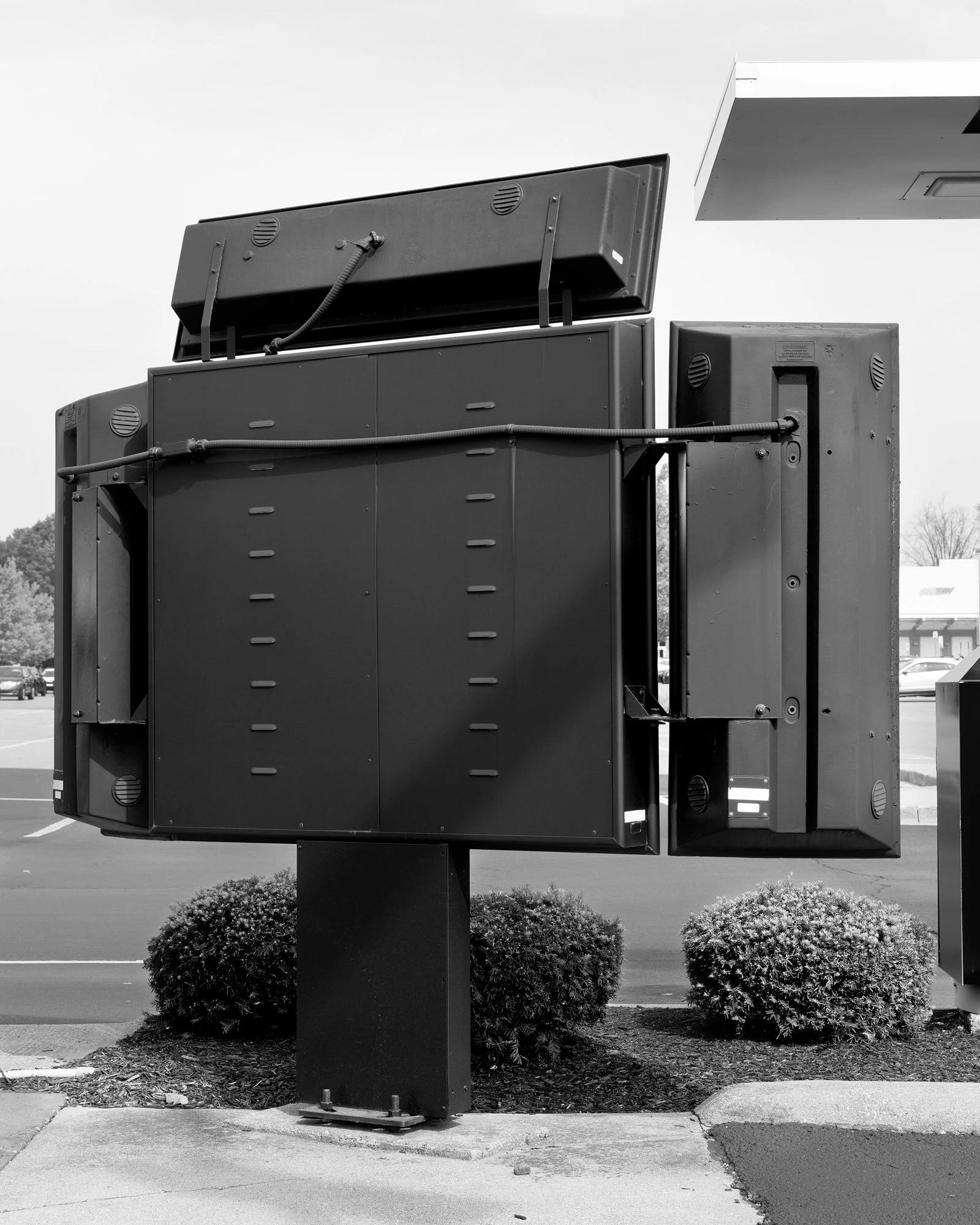
By the time I turned to the architecture, a structural logic for the project had already emerged: roughly half of the book would operate in black and white and half in colour. The architectural photographs follow that internal rhythm, reinforcing the project’s overall balance rather than functioning symbolically in isolation.
Composition Strategy: When photographing these buildings, what specific elements in the frame were you looking for to show fast food restaurants’ relationship with American culture?
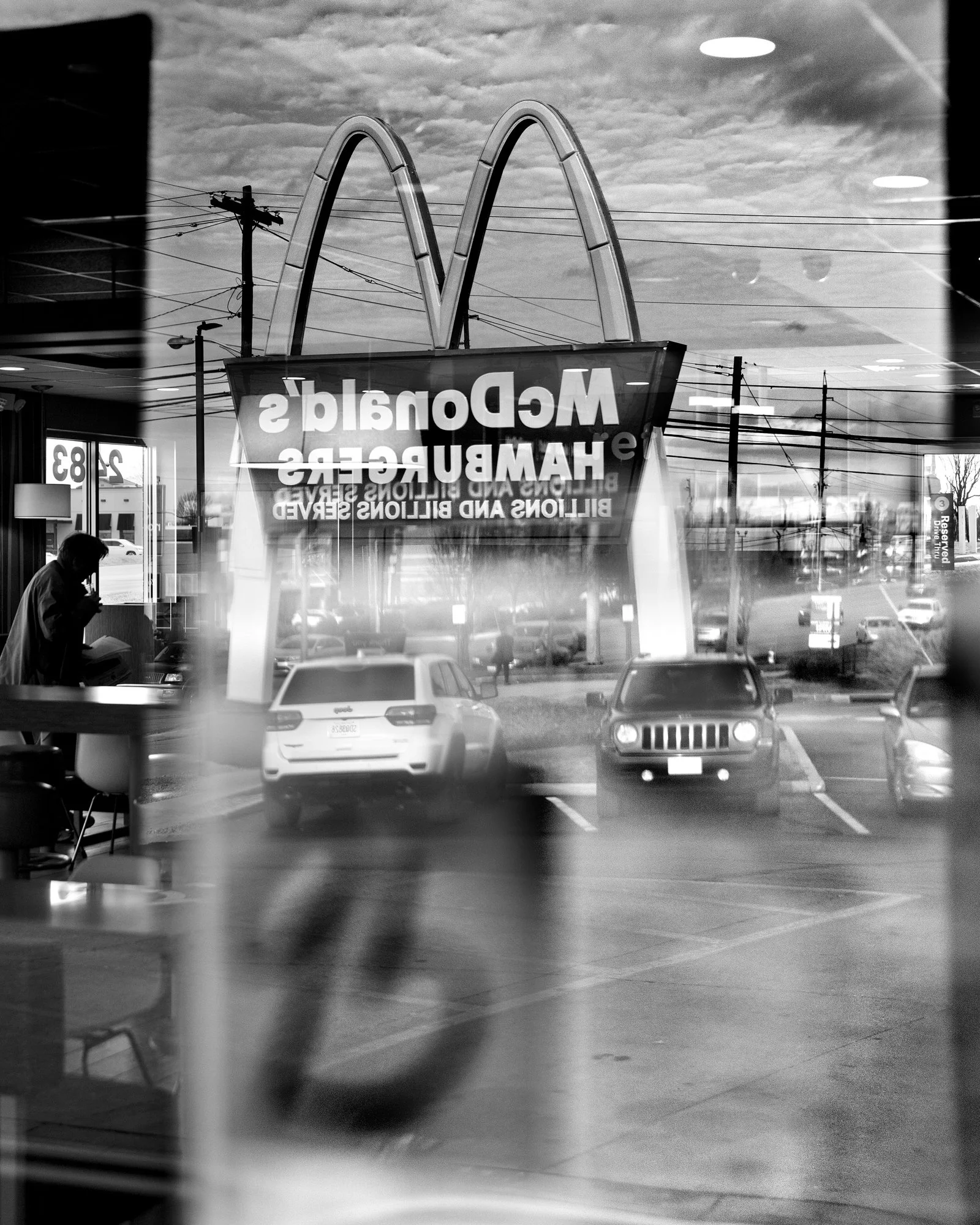
I wanted to frame these spaces to emphasise the sterile, liminal nature of their design and the effect such environments exert on the individuals within them. The corporate depersonalisation embedded in the architecture gestures toward a broader critique of capitalism, rather than a specifically American condition.
Light and Timing: What time of day did you prefer to shoot these locations, and how did lighting affect the mood you wanted to create?
Most of the work was made in the mid- to late-afternoon, and occasionally in the early evening. I gravitated towards more neutral lighting conditions, working primarily with a combination of available interior light and outdoor open shade or soft early-evening light. These conditions helped maintain a restrained, even tone that supported the mood I wanted to create.
Technical Challenge: Working with large format film on the road presents practical difficulties - what was your biggest technical obstacle during this project?
The biggest technical challenge was simply manoeuvring the view camera in unfamiliar and sometimes awkward spaces. Working on the road meant adapting the camera’s physical requirements to environments that weren’t designed for it, which required patience and improvisation.
Cultural Documentation: You've photographed the same McDonald's architecture appearing in very different American landscapes - what does this repetition reveal about how we build our communities?
The repetition highlights how standardised, often prefabricated corporate architecture overrides local context. These buildings are designed primarily for cost efficiency, which results in a lowest–common-denominator approach driven by profit rather than place. As a result, communities are shaped less by regional identity than by branding, efficiency, and economic logic.
When you were actually standing there with your camera in different parts of America, did you notice any small ways that local communities tried to push back against this sameness, even if the buildings themselves looked identical?
Very rarely, and not always in places I photographed directly, there are municipalities in the United States where commercial buildings are required to conform to uniform architectural and design standards. Examples include Santa Fe, New Mexico; certain towns on Cape Cod; Key West, Florida; and parts of the Hawaiian Islands.
In the places I did photograph, any resistance to sameness tended to appear in smaller, informal ways, personalised flourishes within fast-food interiors, such as plastic flowers on tables or wallpapers referencing regional culture, like a tulip motif in Holland, Michigan.
Project Evolution: Did your feelings about fast food restaurants or American consumer culture change while making these photographs over time?
What I hadn’t fully anticipated was the sheer ubiquity of the trash and detritus produced by this industry. The photographs made me more aware of how deeply this waste is embedded in the landscape, and it shifted my thinking about American consumer culture. I increasingly felt that there should be some form of reparative cost, an accountability for the environmental impact and the persistent litter these industries generate.
The trash you found really affected how you see American consumer culture now. You mentioned there should be some kind of accountability for this environmental impact. After spending all this time documenting these spaces and the people in them, what do you hope viewers take away when they look at these photographs?
I’m careful not to prescribe what viewers should take away from the work. My role is to look closely and to present what I encountered as clearly and honestly as possible.
If the work does anything, I hope it slows people down long enough to notice things they might normally overlook, the workers, the spaces, the remnants left behind, and to sit with those observations on their own terms. What meaning, discomfort, or recognition comes from that is ultimately the viewer’s responsibility, not mine.
To discover more about this intriguing body of work and how you can acquire your own copy, you can find and purchase the book here. (Deadbeat Club, Amazon)
More photography books?

We'd love to read your comments below, sharing your thoughts and insights on the artist's work. Looking forward to welcoming you back for our next [book spotlight]. See you then!
Robin de Puy could no longer make this project alone. She first photographed Randy in Ely, Nevada, during a 2015 road trip and kept returning to him for more than ten years. Interviews