Master Photographer Richard Misrach: How The "Cargo" Creator Still Finds Magic In Every Sunset After 50 Years
Welcome to this edition of [book spotlight]. Today, we uncover the layers of 'Cargo,' by Richard Misrach (published by Aperture). We'd love to read your comments below about these insights and ideas behind the artist's work.
Richard Misrach photographed the same view over and over again.
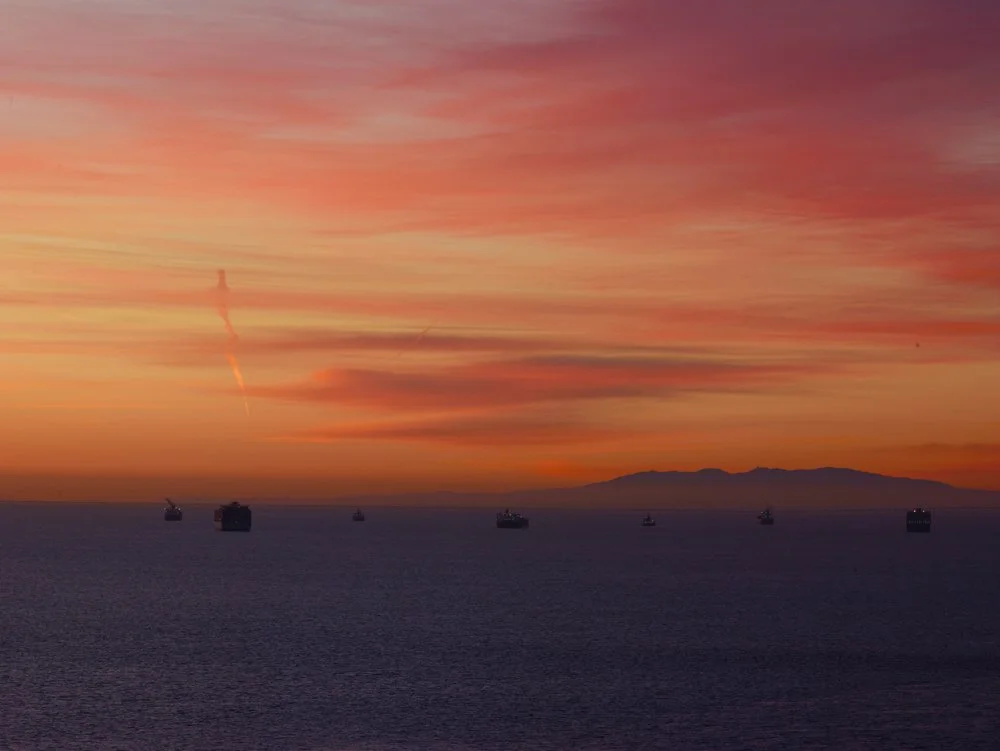
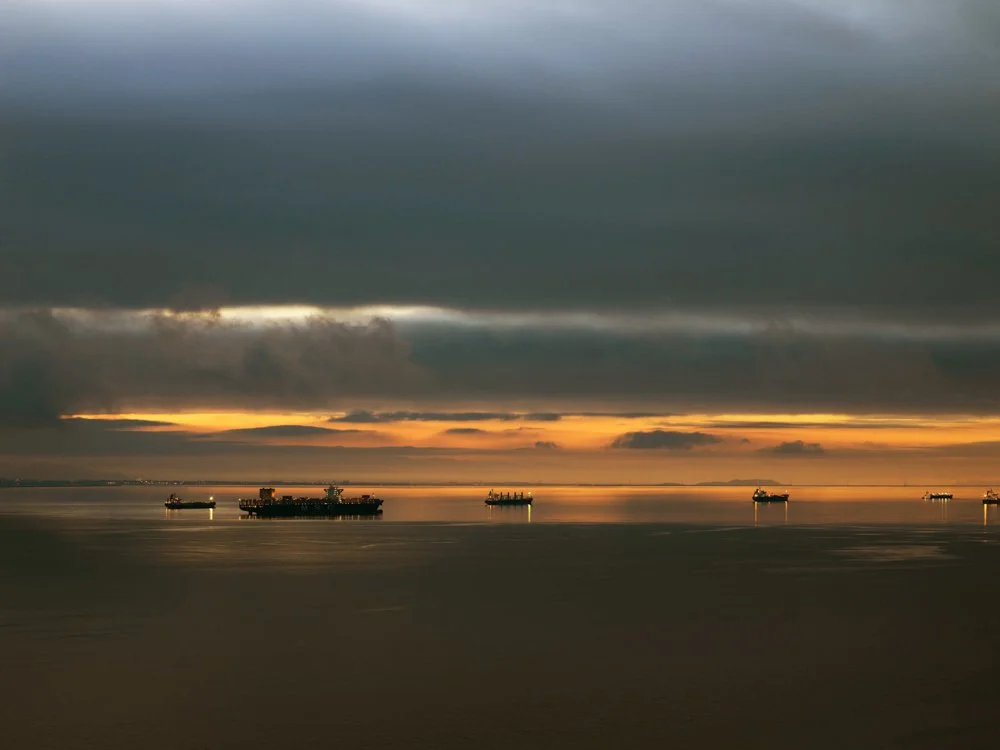
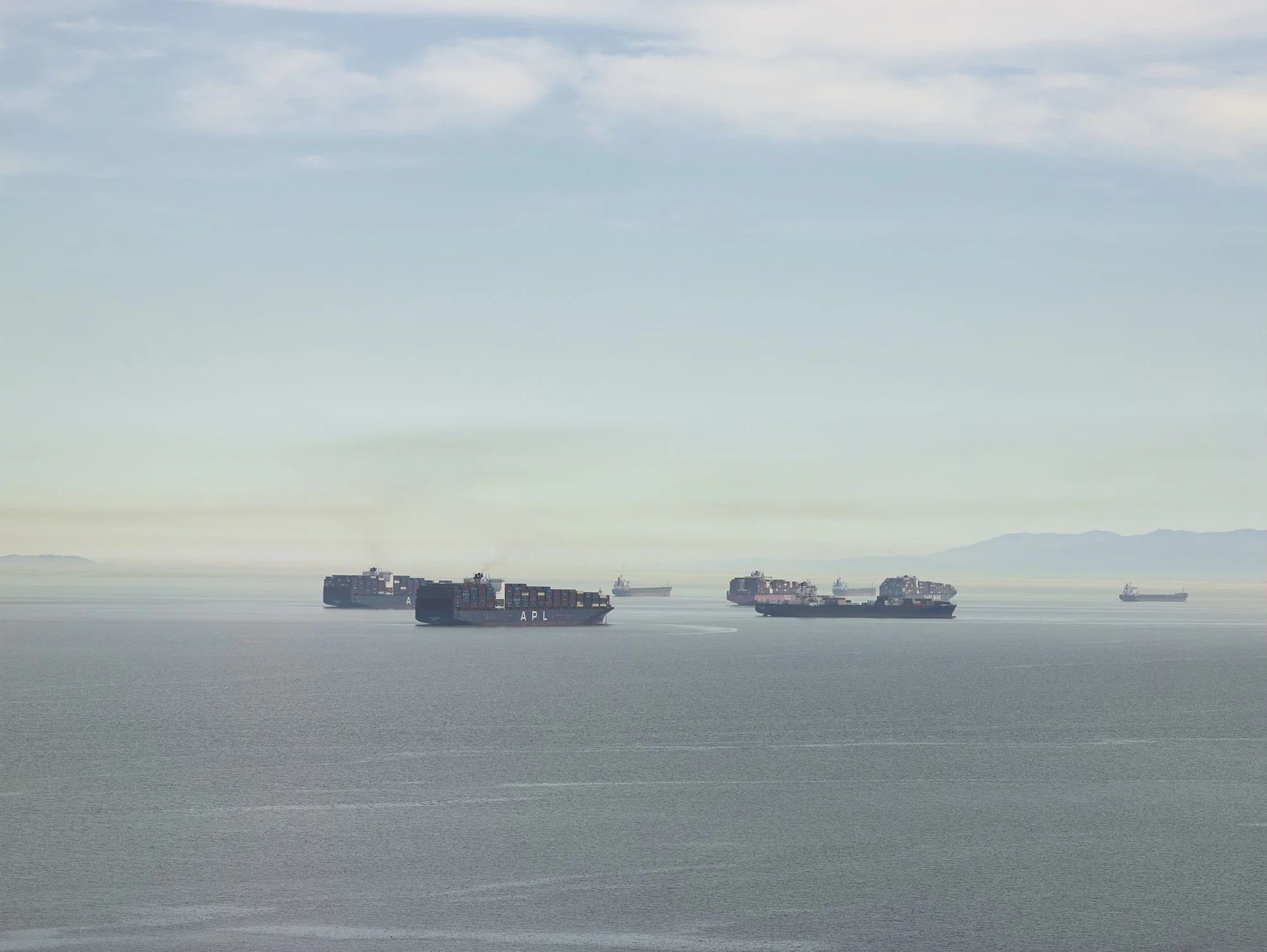
He stood in the exact same spot overlooking the Port of Oakland for four years starting in 2021. The legendary photographer captured cargo ships that everyone sees but nobody really notices. Most people walk past these massive container ships without thinking about them twice.
This became his most contemplative photography project yet.
Richard calls his method "aggressively receptive." He goes out with no plan and lets the world surprise him. After 50 years behind the camera, he still discovers something new in the same boring view. The ships change, the light shifts, but his position stays exactly the same.
This is how a master photographer finds magic in the mundane.
About Cargo
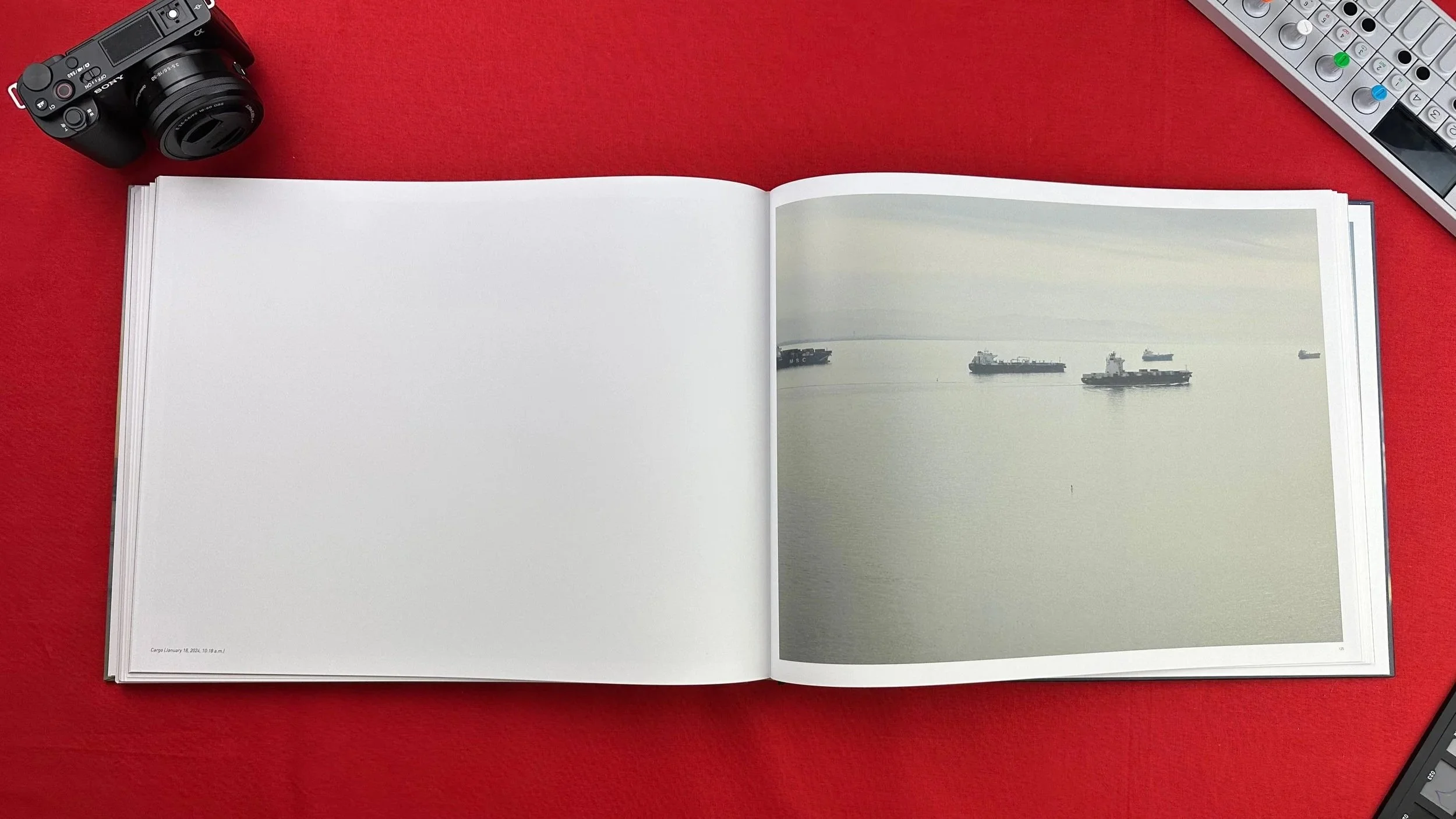
Cargo presents the acclaimed photographer's sublime meditation on the often-unseen patterns of global trade and commerce. In 2021, on the heels of the COVID-19 pandemic, which seemed to nearly halt the networks of international trade, Misrach began taking thousands of photographs of cargo ships as they moved to and from the Port of Oakland, California.
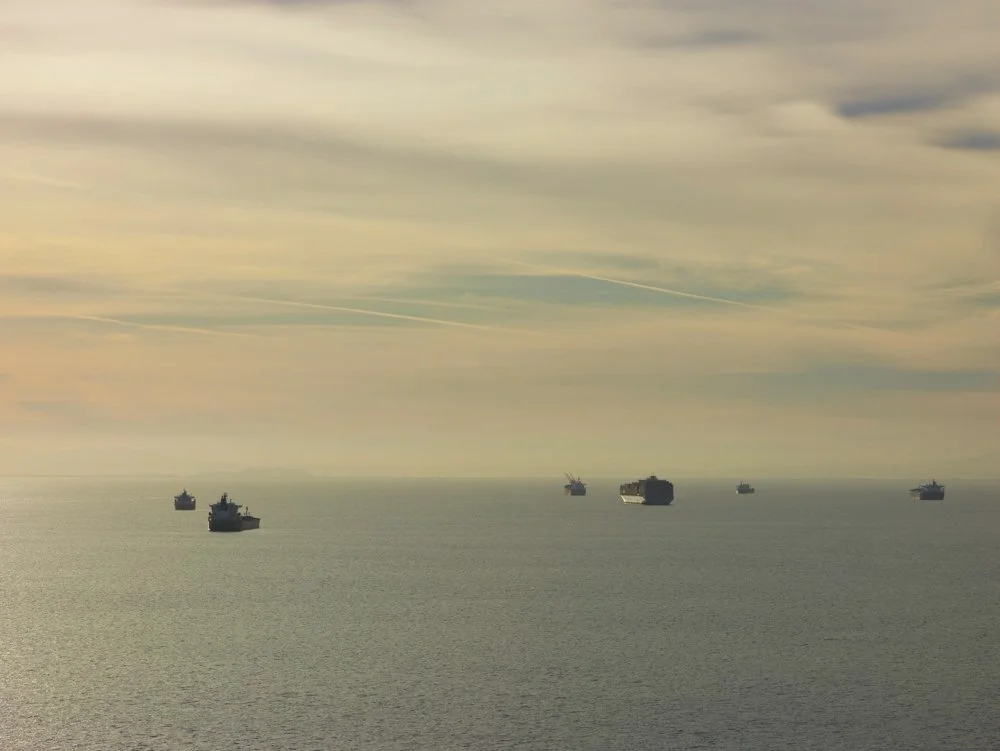
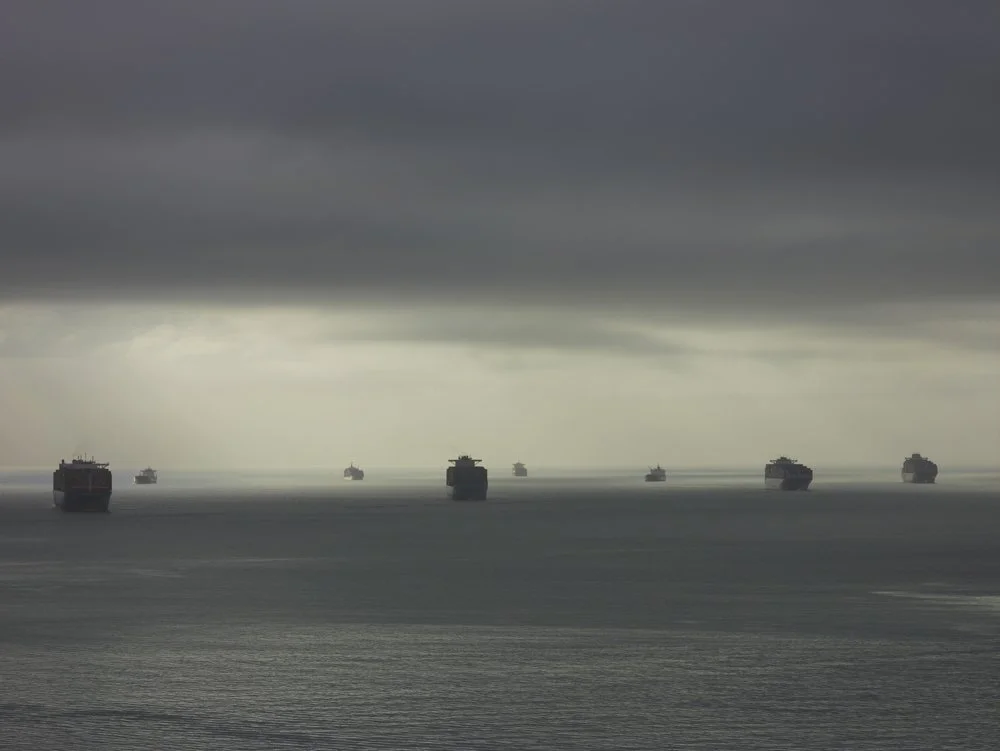
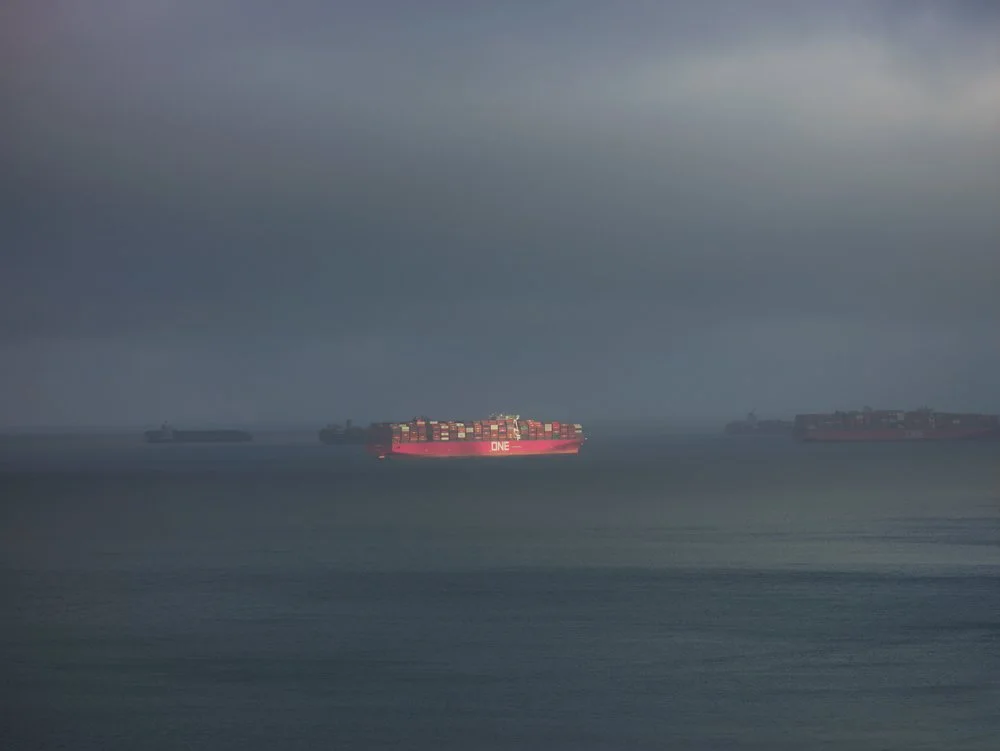
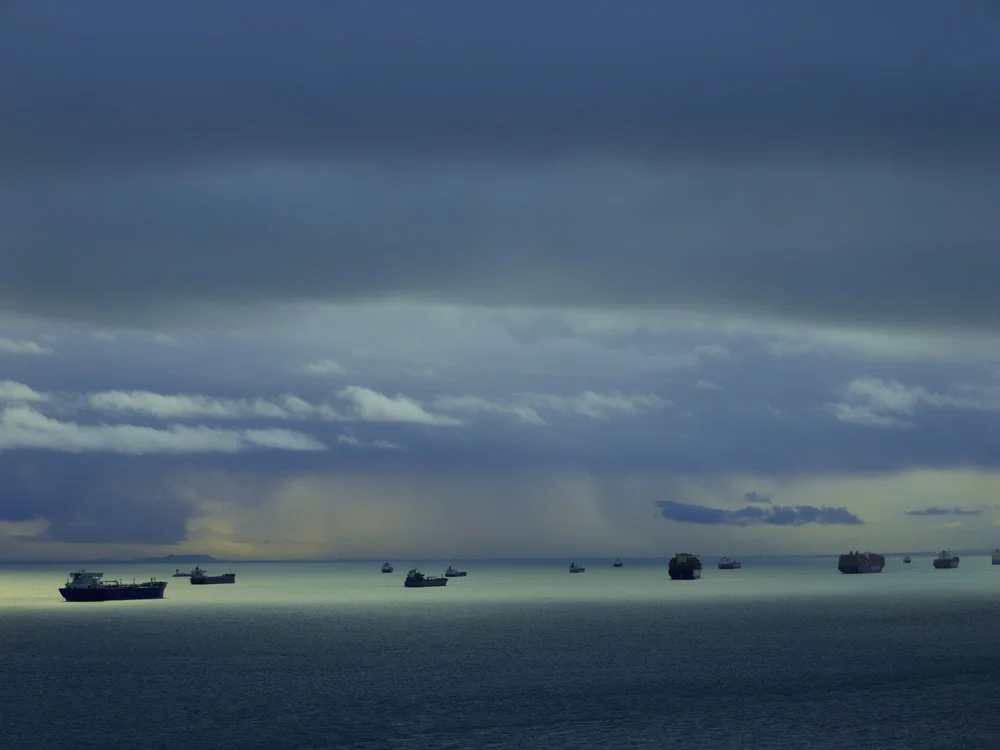
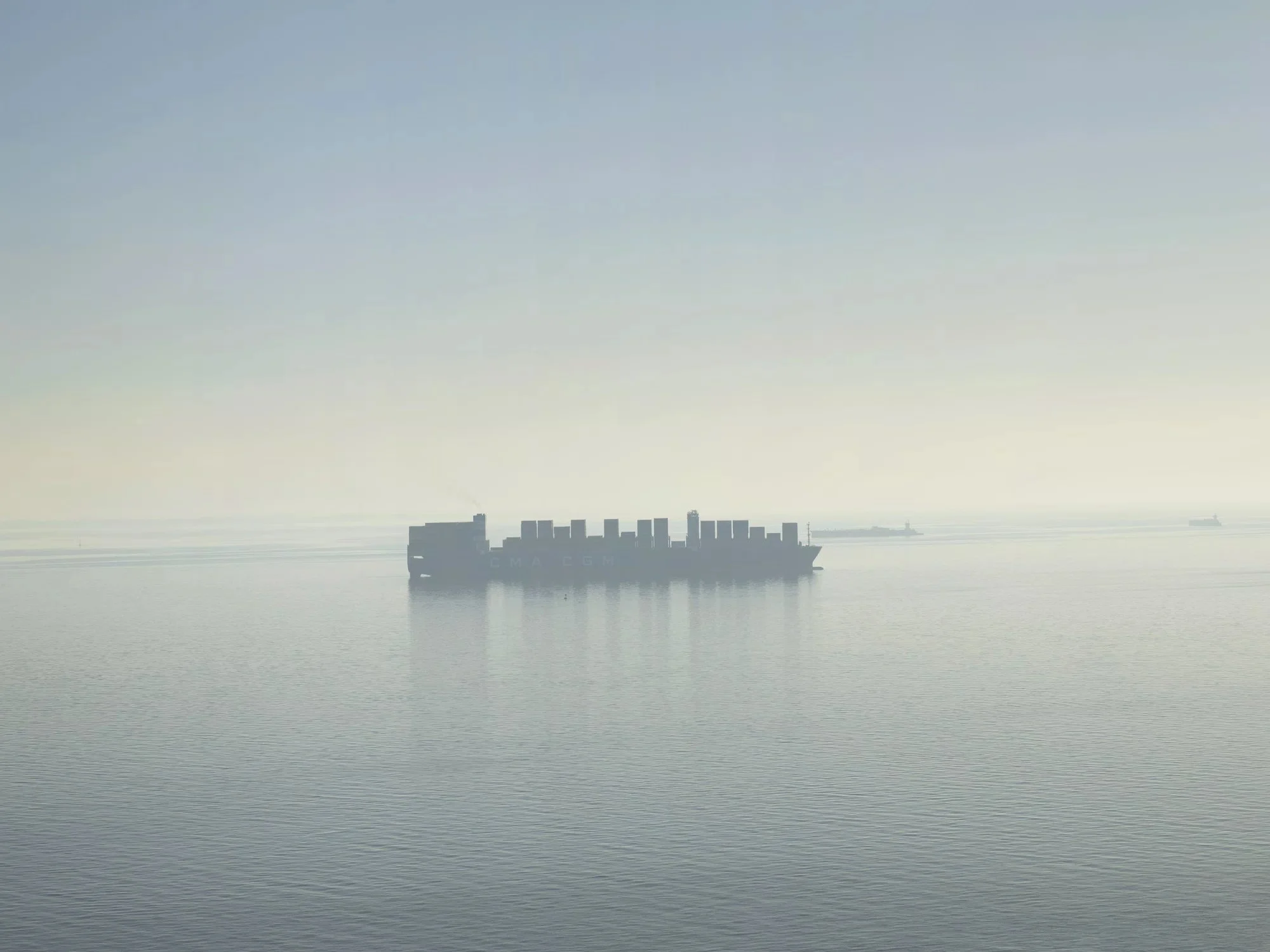
In these monumental seascapes, cargo ships appear frozen in time, diminutive but stalwart, within an expansive, richly colored confluence of sea, sky, and atmosphere. Eerie, sparse, and undeniably beautiful, Misrach's images abstractly trace multiple histories: the recent collapse and slow recovery of these seafaring trade routes, the confrontation of the human and natural environment in an era of climate disaster, and a rich lineage of maritime art.
The book features 64 photographs taken between 2021 and 2024, with accompanying text by acclaimed writer and activist Rebecca Solnit. Published by Aperture in 2025, the 156-page hardcover book captures what Rebecca Solnit refers to as "mysterious figures, like chess pieces" that represent the complex realities of global commerce and environmental impact. (Aperture, Amazon)
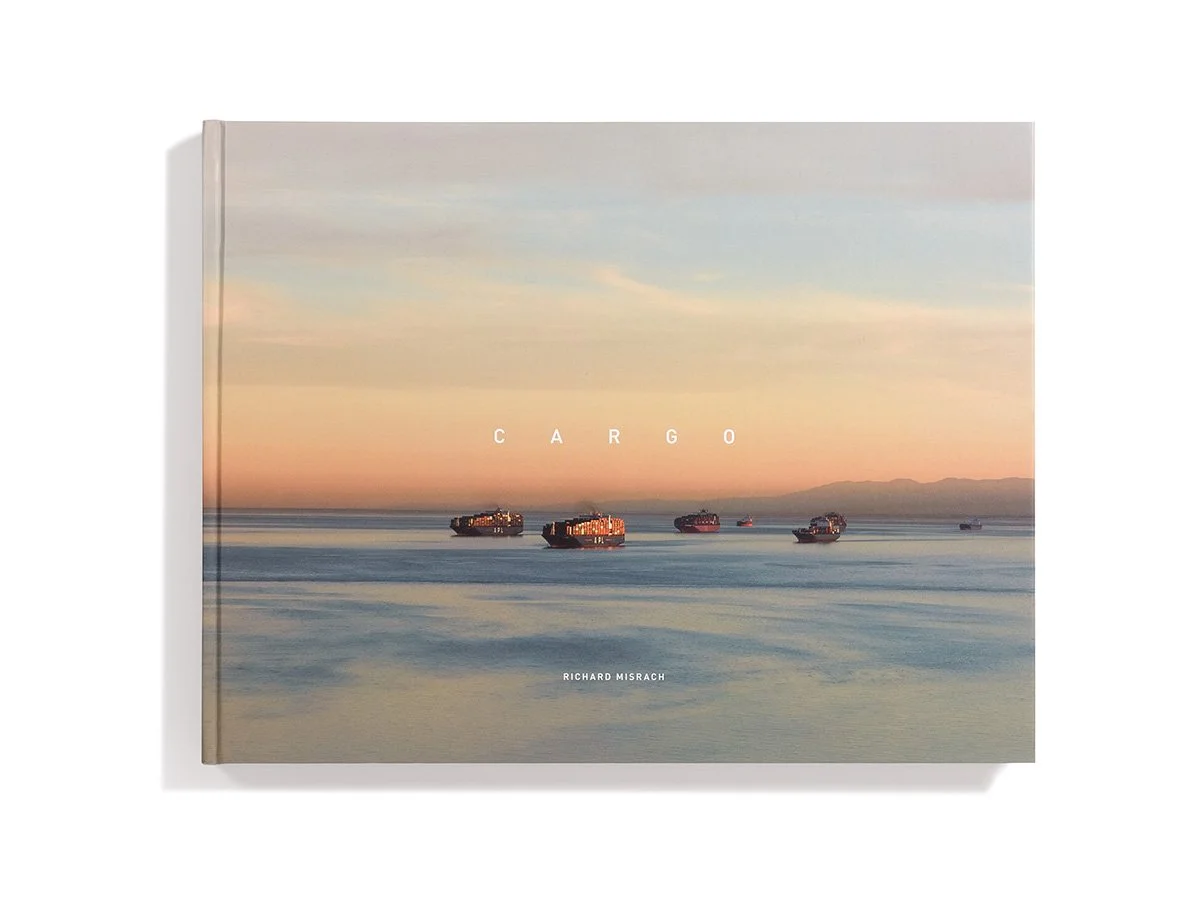
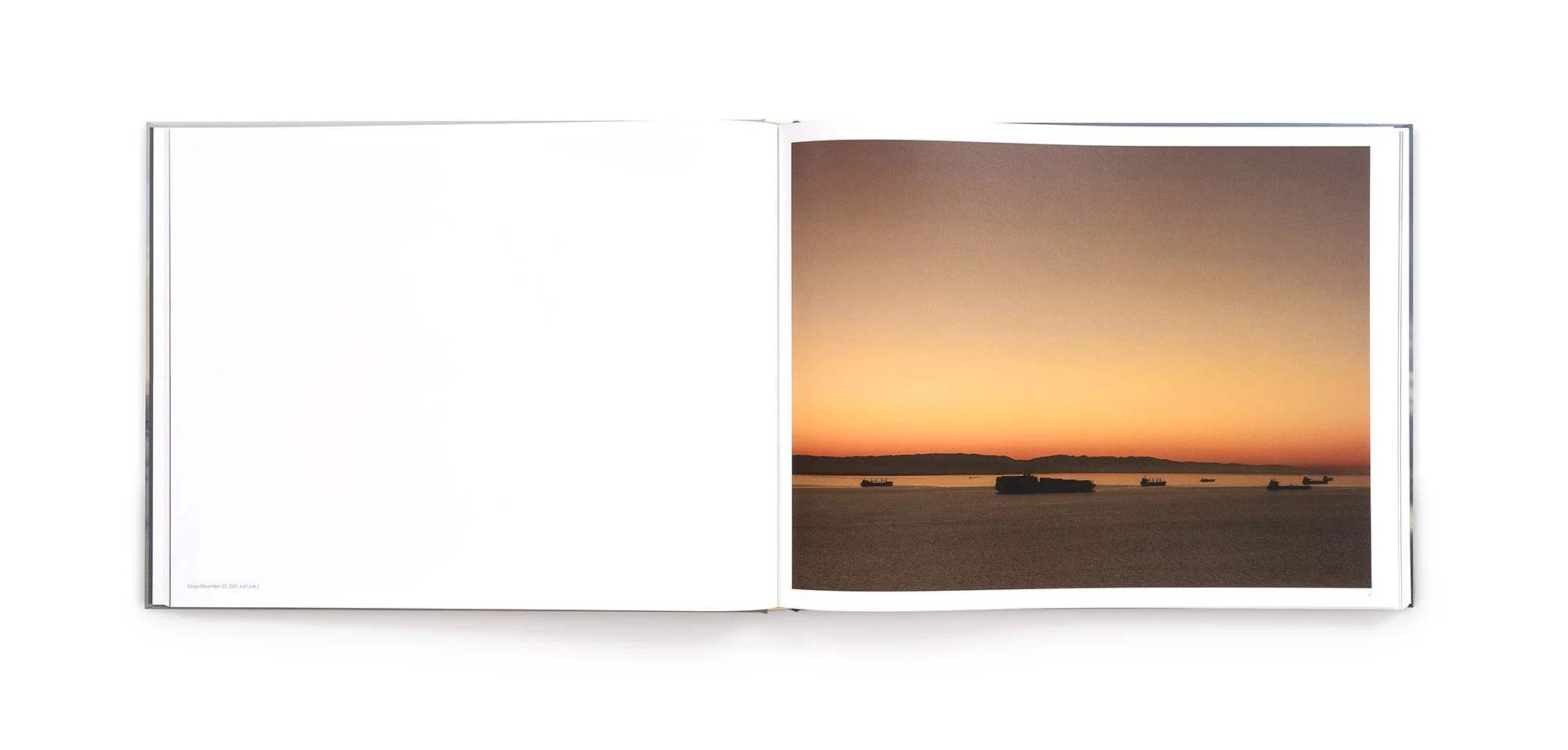
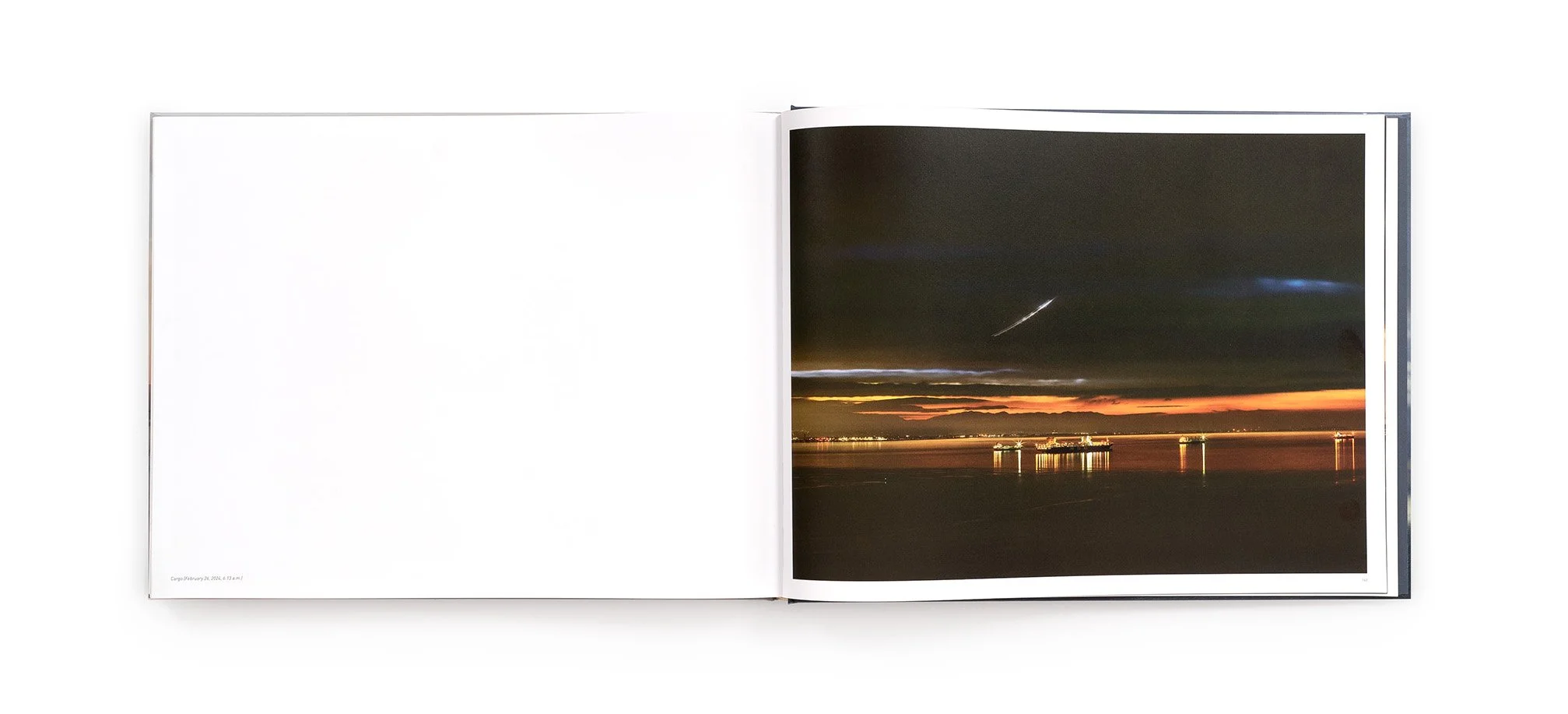
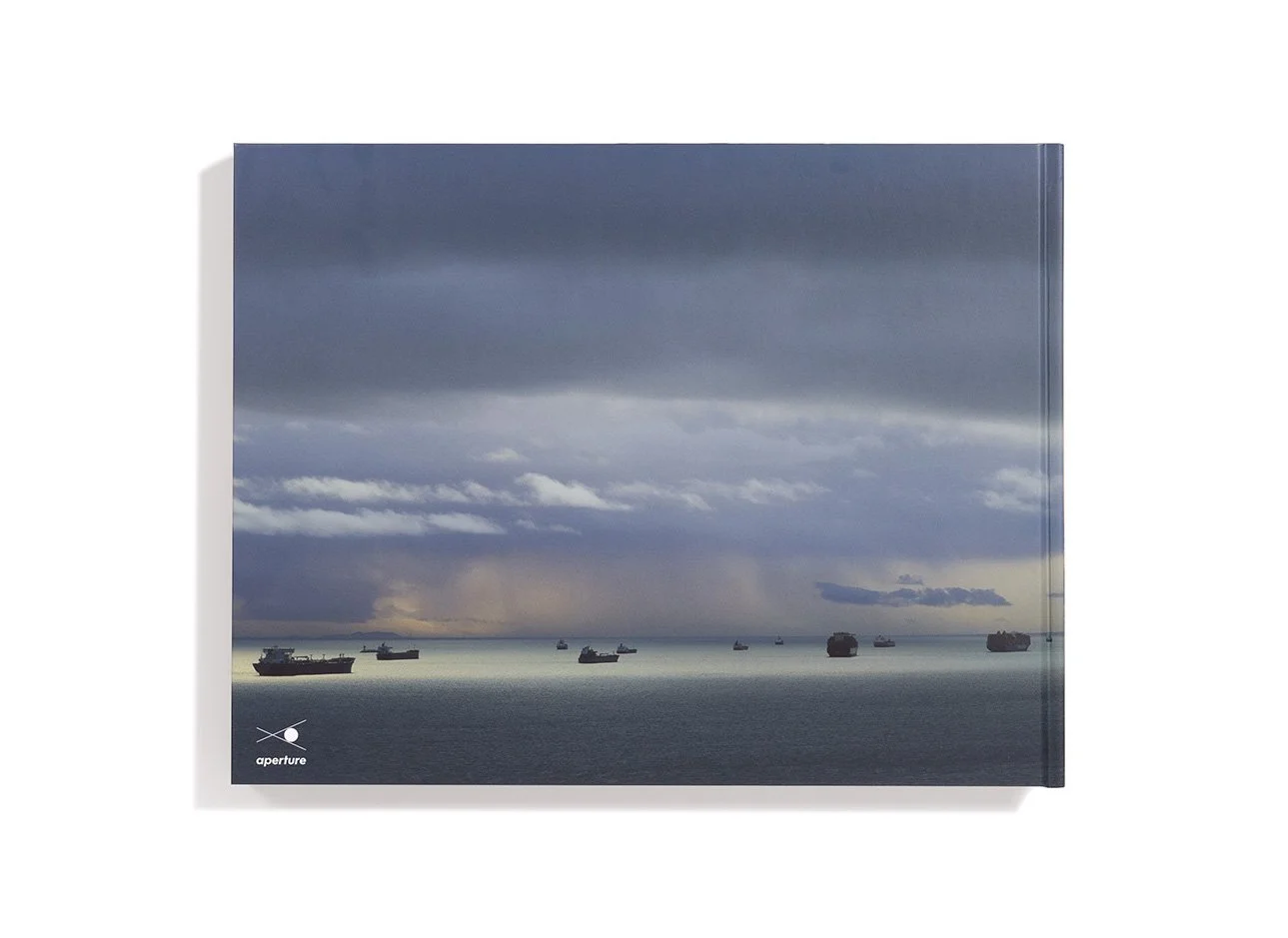
Courtesy of Pace Gallery, New York; Fraenkel Gallery, San Francisco and Marc Selwyn Fine Arts, Los Angeles. Images © Richard Misrach
Martin: How and why did you first start taking photos?
Richard: Early on in my life, I took family photos whenever we went on vacations, like skiing trips. My dad would hand me a movie camera or something similar. It started like that, nothing fancy, just something to do. Later, in college, I was first a math major, then switched to psychology. While studying at Berkeley, I discovered a studio and lab available to students. It included facilities for etching, lithography, ceramics, and photography.
I went into the photography lab, and they showed me how to properly develop film and print. I began printing my own photos and going on shooting trips while still a student. That’s when I fell in love with the medium.
Eventually, I was supposed to go to graduate school for psychology, but I decided to take a year off to focus more on photography. That year turned into a lifelong pursuit, and I've been doing it ever since. That was around 1971.
What made you realise you wanted to continue this and do it for life? Was there a particular moment that made you decide or realise that?
Yes, it was basically at the studio on the Berkeley campus. The director of the studio at the time was Roger Minick. On the back wall of the studio, where you could do printing and similar tasks, there was a space where we’d have small exhibitions. There was a show of about 10 to 15 of Roger Minick's black and white photographs displayed there.
Seeing those for the first time, I thought, "My God," it went straight to my soul. I realised then that this is a truly magical medium and process, and I wanted to be part of it. I wanted to make it my life. So, I started pursuing it, and it just kept growing. Looking back now, over half a century later, it’s been an incredible journey. I’ve had a blast and have no regrets.
For me, photography has been a tool to make sense of the world. Susan Sontag once said in her book on photography, she was quite critical of photographers, something along the lines of, when you put a camera between you and reality, you don’t truly experience the real world. I’m paraphrasing her, but I’d say it’s the opposite for me.
The camera became a way for me to make sense of the world, to pause and pay attention. Even when I look back at the photographs I’ve taken over the years, I think, "Wow, this moment is recreated just by looking at that photograph." It’s the same with family albums. My wife has been creating yearly family albums for the past 30 years, and we have shelves filled with them. Every New Year’s in January, we randomly pick one album. It could be from 1985, 1986, the year we met, or 1999. We go through it, and those snapshots transport us back to those moments, rekindling amazing memories.
The medium does that for me like no other. It’s been magical. I feel blessed to have discovered it early on because it has been so profound in my life. It’s helped me make sense of the world. And just the other day, I was looking at a sunset, the clouds, and I thought, after all these years, you’d think I’d be bored of looking at clouds and light. But no, it’s always different. The clouds are never the same. Nature constantly recreates different forms, light, and colours, all of which are magical. Even at my age, I’m still mesmerised by it. I feel very lucky to have discovered photography, especially since I was not initially inclined to be an artist. Photography just captured my heart and mind.
Do you carry your camera non-stop, or do you have some kind of differentiation between work and personal stuff?
Yes, I do both. I tend to be project-oriented, and early on I learned a trick that has served me very well, having multiple projects happening at the same time. For example, I might be working in the desert and then in Hawaii, going back and forth. One project helps cleanse the palate of the other. When I exhaust a series, like Desert Fires, there’s no lag time where I wonder, "What am I going to do now?" because I’m already working on something else in Hawaii. I might photograph body surfers in a specific spot, and when that’s done, I go back to the desert to continue photographing there. This back-and-forth keeps things fresh.
Generally, I take my camera with a tripod to specific places to focus on particular projects. But I also always have my cell phone with me. Since my first small camera pictures in 2005, taken with a four-megapixel digital camera, I’ve done numerous projects using my cell phone. For instance, my photographs along the US-Mexico border include several projects shot entirely with my phone. More recently, I worked on a project called Writing on the Wall in abandoned desert buildings. Because these locations were somewhat dangerous, I used my cell phone instead of setting up a camera on a tripod, which could have made me vulnerable. I snuck in quickly and worked fast with the phone.
The quality of cell phone cameras today is so good that you can produce decent prints. While I can’t make the large, giant prints like the ones behind me, I can create prints of a really good size with a lot of detail, and they look fantastic.
During the pandemic, you photographed cargo ships from your home. Why did you decide to start this project?
That's interesting. Back in 1991, I wanted to photograph cargo ships, mostly petroleum ships at that time, in the San Francisco Bay from the Bay Bridge. I took my 8x10 view camera on a tripod, and the highway patrol even cordoned off a lane for me so I could photograph there. I had permission to do it. But when I tried, the bridge was so shaky with the 8x10 camera that the pictures just weren’t very good. So, I gave up on that project, thinking it wasn’t going to work. That was before digital cameras.
During COVID, I became aware of the container ships and cargo ships in the Bay again, the same place. This time, I was thinking about them because, in the Long Beach harbors in Southern California, ships were getting backed up as workers weren’t coming to work due to COVID. The global supply chain came to a halt, and people couldn’t get the things they needed. I thought, "Wow, these ships have been here since 1991. They're there every single day in the San Francisco Bay." Because they’re always there, you stop paying attention. So, I decided to focus my camera on them, to meditate on them, contemplate them, study them. What are they doing? What are they about?
It was really during COVID, around 2021, when I started to revisit this idea. My first renewed attention to the issue was because of COVID and its impact on the global supply chain. But then, while photographing almost daily, or at least several times a week, I became fascinated by the extraordinary light of the Bay and these mysterious figures, like chess pieces, as Rebecca Solnit refers to them in the book. I didn’t want to capture just the beautiful Bay without the cargo ships. These container ships were an essential part of the story, especially as they were being backed up into the Bay.
Not long after, news broke about the Houthi rebels attacking container ships as a protest related to the Israel-Hamas war. Soon after that, a massive container ship collided with the Delaware Bridge in the United States, causing a terrible accident. Even after the book was released, with Donald Trump’s tariffs, I hadn’t seen a single container ship in the Bay for four months, they simply stopped coming. Rebecca Solnit pointed out in her text that global shipping is responsible for three percent of global warming.
What’s fascinating is how these seemingly mysterious chess pieces, these container ships, are loaded with implications, importance, and significance in our world, both good and bad. They keep products moving, food, automobiles, whatever we need, but they also cause big problems. Now, there are books being published about the unfair wages of people working on these ships. Then I stop and think: my God, look at the engineering of these ships. It’s remarkable. Someone designed and engineered these giant behemoths to carry thousands of automobiles across seas, through storms, without falling apart. It’s worthy of contemplation.
The book aims to be just that. Some of my past work, like the Bravo 20 Bombing Range, has been very documentary, very explicit. Other works are more lyrical. This project sits in between. It’s meant to be a beautiful study of these ships, a contemplation, rather than an explicit commentary on the specific harms or benefits they bring. It’s more complex than that. I wanted to leave it open, like a Rorschach test, for people to consider and interpret.

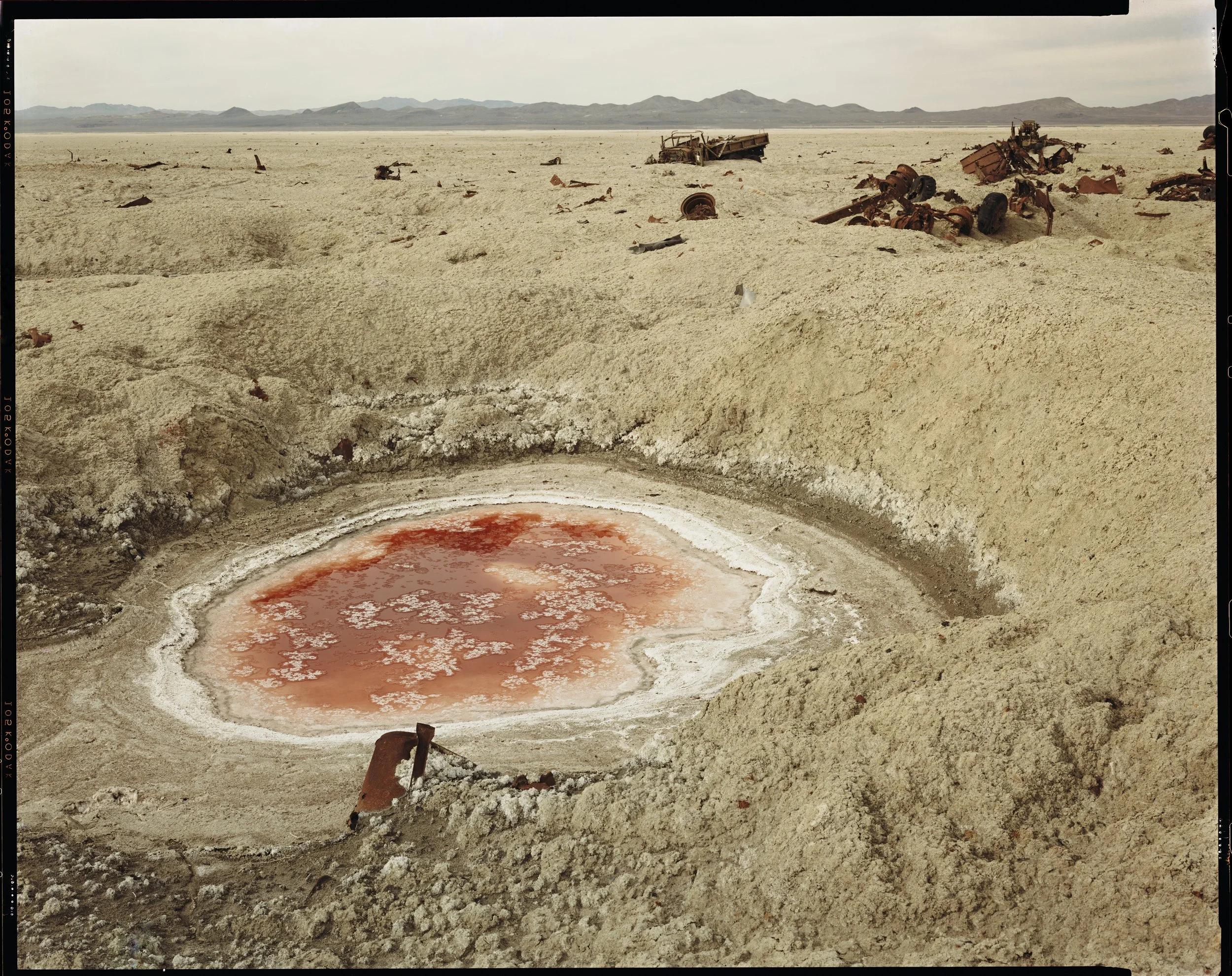
I think it carries a certain ambiguity because of the contrast between the subject and how it's portrayed. Was this something deliberate? Did you think, "I'm going to photograph this subject, which often receives negative attention, in the most beautiful way possible?"
No, at that point, it wasn't about that. I was more focused on how mysterious and enigmatic they were. They're present all the time, yet we don't really see them. That's something human beings do, we become so accustomed to things in our daily view that we stop paying attention.
It's like us standing on this planet, spinning through the cosmos. We do this every day, yet we rarely stop to think about it. When you consider it, it's astonishing, almost unbelievable, but that’s our reality. Human beings habituate. When we see things repeatedly, they fade into the background, even though they're right in front of us.
I was more interested in that phenomenon. I didn’t want to pin down or define the ‘evil’ of these ships. Rebecca Solnit, however, does unpack that. She discusses their contribution to global warming, about 3%, which is significant. It's important that people are aware of that, and I’m glad she highlights it.
While my photographs aren’t explicitly about that, Rebecca’s text anchors them. If you read her words, you’ll understand that context, but without it, people might interpret the images differently. Some approach the work considering environmental, political, or cultural issues. Others see architectural and engineering achievements, or the marvel of global trade.
Maybe 30 or 40 years ago, these ships would have been purely celebrated. But today, with the realities of global warming, we have to consider that impact. Rebecca’s work brings that into focus. The meaning isn’t fixed, like the ships themselves, momentarily anchored but always moving on.
What I find unique about this project is that it doesn't feature different types of images. When I first heard the project was named Cargo, I expected photos of containers, workers, and various related scenes. However, nearly all the photos are taken from the same viewpoint. Yet, they look remarkably different due to factors like light, different types of ships, and varying perspectives. How did observing the same view every day change the way you saw the world?
There have been three projects over the years where this approach applies. Most of my work involves driving a Volkswagen camper into the desert for two to three weeks, exploring and photographing different environments. However, in the last half-century, I’ve undertaken three projects where I remained in a fixed position, within just two feet of the same spot, without moving.
The first was On the Beach, which I began in 2002 after 9/11. Then there’s the Golden Gate series. And now, Cargo. For Cargo, I took all the photos from the exact same spot. I considered going to the Oakland terminal to capture close-ups or explore different perspectives inside the terminal. I thought that would be fascinating and even toyed with the idea of following up this project with a part two that would delve into that approach.
In the end, though, I realized I didn’t want to create a documentary. Some people have recently mentioned Allan Sekula’s book on ships and cargo, which he did back in the 1990s. I knew about it, I saw the show, I knew Allan Sekula, but I completely forgot about it while shooting Cargo. It wasn’t even on my mind, though people keep bringing it up now. Sekula’s work was a fascinating documentary exploration, but that’s not what I aimed to do here.
I wanted to leave Cargo more open-ended, to simply spend time with the beauty of the place itself. There’s a mystery to these ships that are always there. It was a very different approach from traditional documentary work. This isn’t a documentary; it feels more like an art project, perhaps even a meditation, than a documentary.
How do you find something new every time when the subject and the locations are the same?
Richard Misrach: It's purely accidental. I learned a long time ago that if I go out with an idea, early on, I thought, if I'm going to photograph the American desert, I need to go to Las Vegas because it has this unique cultural element. So, I went there, and the photographs turned out predictable and not very interesting.
I realised that if I just go out, stay open-minded, wander, and observe, I'll discover things. This approach has been vital for me over the last half-century. I even have a name for it: Being Aggressively Receptive. It means going out with a truly open mind, and since the world is so fascinating, you end up discovering remarkable things.
You have some sort of ideas about what the project is about, or how does your project usually originate?
It originates with me seeing something and thinking, "Ooh, that's visually compelling." I start wondering, what does that mean? Why is that so compelling to me? So, with the cargo ships, the photos were taken from a certain spot. I had gone to that spot for a week before and never even thought about it. Then suddenly, I saw the light and the cargo ships, the container ships out there, and thought, "God, that's really interesting."
But it wasn't a calculated intellectual thing. It was just something inside me, the photographer, responding to the light. It's kind of like a Henri Cartier-Bresson photograph, where you get a decisive moment. Or Gary Winogrand, I’ve looked at his contact sheets, and there are lots of street pictures that don’t work, then boom, there’s one that does. He’s working it. He’s not intellectually planning to get a specific configuration of people. No, it’s just about what it looks like. And it’s hard to explain because it’s not an intellectual process. It’s a really distinctive emotional response to the world.
Obviously, somewhere deep inside us, there’s an intellectual connection. All these thoughts about cargo ships come to the front once I start shooting. A dear friend of mine in Hawaii, we were on the phone when I first started photographing the cargo ships, said, "Wow, during COVID you’re doing this. Do you remember they used to call people with long COVID ‘long haulers’?" She nicknamed my cargo ship project "The Long Haulers" after COVID because that’s what sparked it. But it no longer means that. It’s not about COVID anymore. It’s really about these remarkable ships that continue to exist in our lives, no matter what’s happening out there. I keep coming back to that.
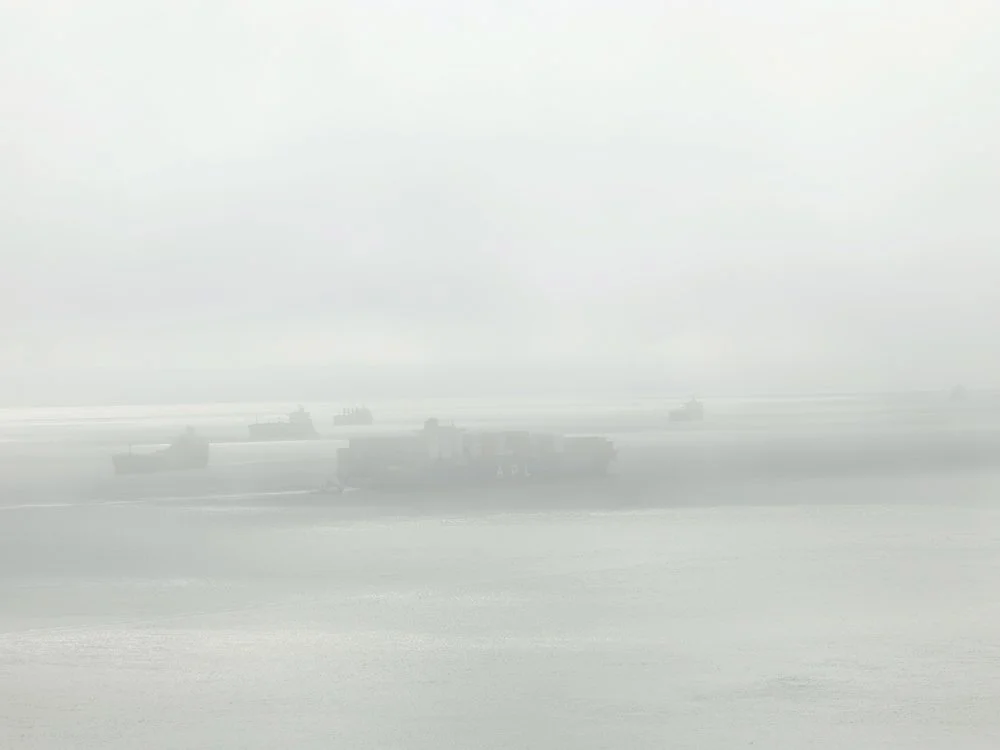
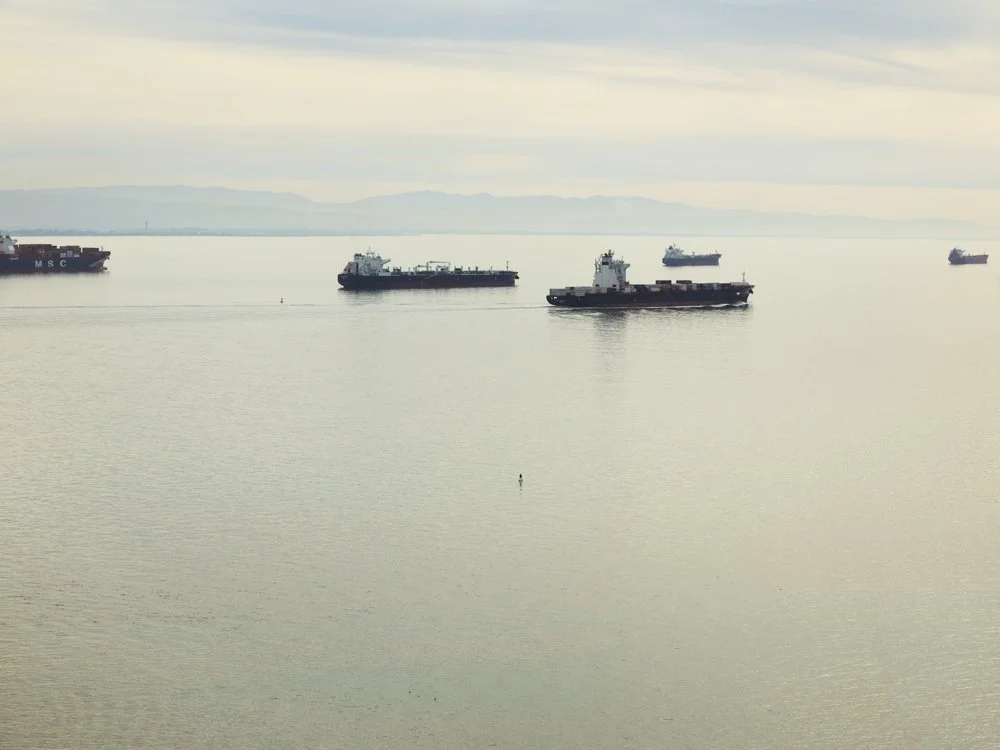
You mentioned that you take a photo when you see something beautiful. Do you have any specific criteria for recognising beauty? Is it just a feeling when you look at something?
Yes, there’s no specific criteria. It’s not like it has to feature a red or blue cloud. It’s purely a gut feeling. I think it's similar to what anyone feels when they witness a stunning sunset, that moment of awe when you think, "My God, I’ve never seen anything like this." Everyone’s experienced that. What I aim to do is capture that feeling.
I want to share it with others. The magnificence of the San Francisco Bay, the way the light plays over it, it’s extraordinary. Even when photographing the Golden Gate from the smae spot, it’s about how the light changes day after day, sometimes within minutes. Those changes are just astonishing.
That magic hasn’t faded for me. I’m not jaded; I still find it wonderful. It’s a celebration of our existence. But I didn’t just photograph the bay and its gorgeous light without including the ships. Including them was important, to make viewers question their presence.
The beauty is there, you don’t necessarily need the ships. The light and clouds are beautiful on their own. But including these "invisible" elements makes you engage differently. It’s instinctive for me. Recently, during an Aperture Zoom session, someone asked if I did extensive research, contacting companies or organisations to understand the environmental impact. I didn’t. That would have resulted in a very different, though equally valid, book.
What I was doing here was recreating the mystery of familiar places, things we see all the time. It’s like driving past something every day, briefly noticing it, and then moving on. That fleeting recognition is what I wanted to capture.
Do some photos change meaning over time? Maybe you initially like something, or you didn't like it at first but then realise it has a hidden meaning, or you find that you actually like it. Does that happen often?
That's normal. What I find is that when you photograph, you can get excited by something, and that excitement influences you, whether it's the moment, what you've discovered, or the whole experience. What I usually do is photograph, make some quick test prints, and then put them away, typically for about six months.
When I come back to look at them with that distance, I might think, "That doesn't hold up well at all," but another one might still resonate. This is a trick I learned a long time ago that's been really helpful. With every series, before I put it out into the world, I tend to put it away for about six months. Sometimes it's four months or eight months, but it's a good period where I focus on something else. When I return to the work, the initial excitement of discovering something has faded, and I can see if the picture itself holds the magic, separate from the experience of making it. That's a different thing altogether.
When you print, your prints are very large, sometimes even bigger than a person. What do you want people to feel when they stand in front of them?
The first thing I do after shooting the work is make small test prints, about that size, to check if they’re sharp. It’s a way for me to view them as print objects, not just files on a computer. Those are the prints I live with. Then I go large for certain works. Some of my cell phone images stay relatively small.
But scale is important. These ships are gigantic. I can’t even begin to describe how large these container ships are. Sometimes you see petroleum ships next to them, and the container ships dwarf them, even though petroleum ships are big too. The scale is unbelievable, and it’s significant for artworks.
Many great masterworks, like Picasso’s Guernica and Géricault’s The Raft of the Medusa, two of my favorites, are giant paintings of difficult subjects. Their scale draws me back repeatedly. I can look at those paintings over and over, even though they depict tragic, challenging subjects.
I love that photography can achieve that impact as well. Until the 1970s, large prints were rare. A 16 by 20 print by Ansel Adams was considered mammoth, huge by the standards of the time.
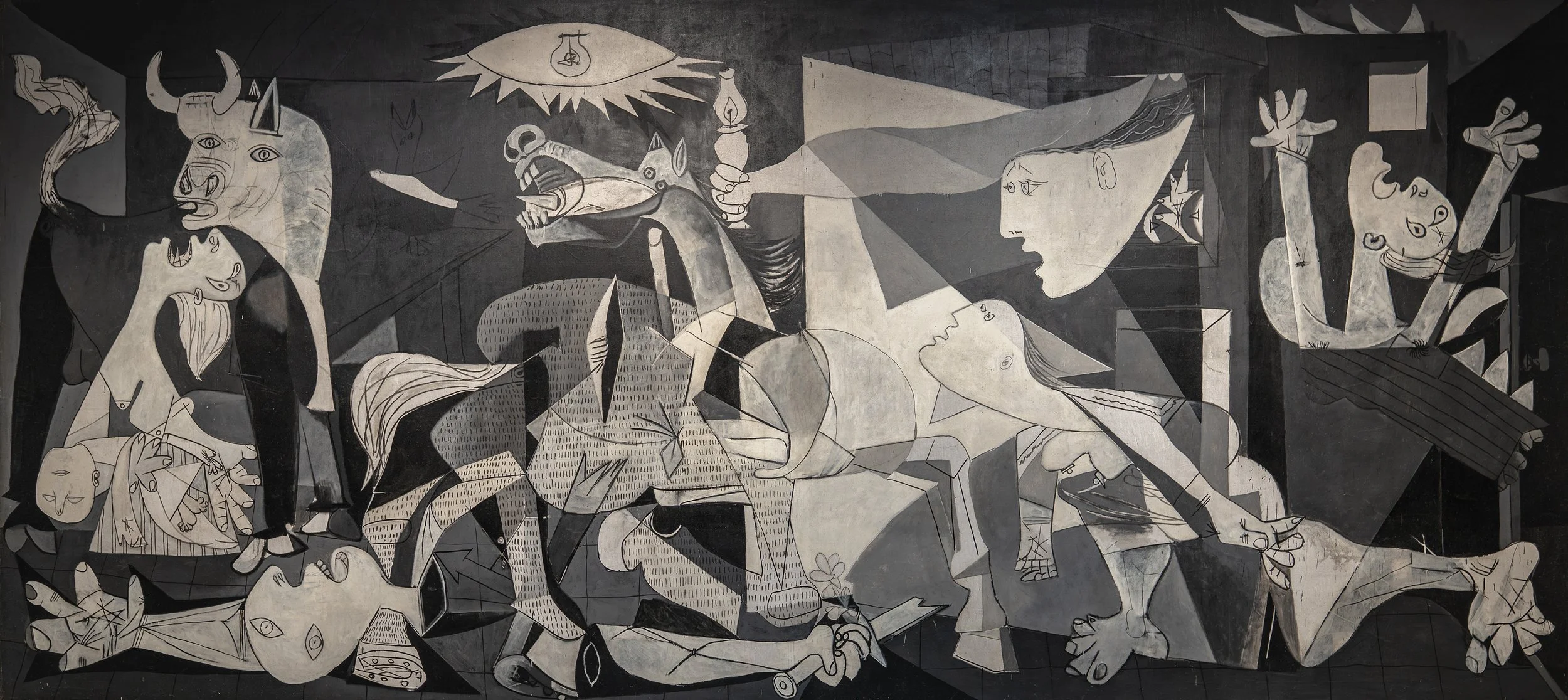

Do you think the size and format make a difference when publishing something on Instagram, making a print, hosting an exhibition, or creating a book? Do you think it affects how your photos impact people? Some photos seem to work better when they’re printed large for an exhibition, but they may work differently in a book. Is that something you’ve noticed?
Absolutely, that's a really good point. For exhibitions, when I do large works, for example, one of the pictures in the book with the fog, or another with a hydrofoil surfer on a board in the bay, the experience changes. In the book, you can’t even see the ship through the fog clearly, and with the hydrofoil surfer, I’ve included a second spread where you can open it up and see a blow-up to actually identify the figure. If it were just the size of a book page, you literally wouldn’t be able to recognise the hydrofoil surfer.
In a gallery print, it’s very clear and wonderful because the scale allows you to see this little figure dwarfed by the vast sea behind it. It’s two different experiences. In exhibitions, large prints are displayed for a month or two. But what I love about books, especially when they’re beautifully produced, like the cargo book printed by Trifolio in Italy, is that the book form becomes a different work of art. It’s not just about the individual print at scale; it’s a sequence, a very carefully considered sequence of images that build on each other and invite you to revisit them over and over again.
When beautifully printed and produced, a book allows you to return to it five, ten years later and experience it anew. An exhibition, on the other hand, might be a one-time event, the only chance you ever get to see that work in that way. A book offers a different kind of art form that you don’t get on Instagram or social media. On social media, images are tiny, lack detail, and disappear quickly, they’re here and gone in an instant. That’s a completely different experience. While someone can certainly create interesting art that works in that format, my work really finds its place in books. It’s an experience that’s very different from what social media can offer.

And you sometimes present your work in chapters, right? Like in the Notations.
In the Notations, I did that. With Cargo, I didn't, but in Notations, I created chapters, non-verbal chapters. They don't have titles, just numbers, because they're really about different things. One might focus on negative vegetation, another on negative clouds and birds. They are different sub-series that build up to one cohesive work. It's a way of non-verbally creating chapters.
You said everything you create has a conceptual foundation. What does that mean for you?
So much of what I do is instinctual, but once I start building, it takes on a conceptual framework. That's where the books come in. I've done around 25 to 30 books at this point, and they are framed by a conceptual idea. It's not a single sentence statement or a simple concept.
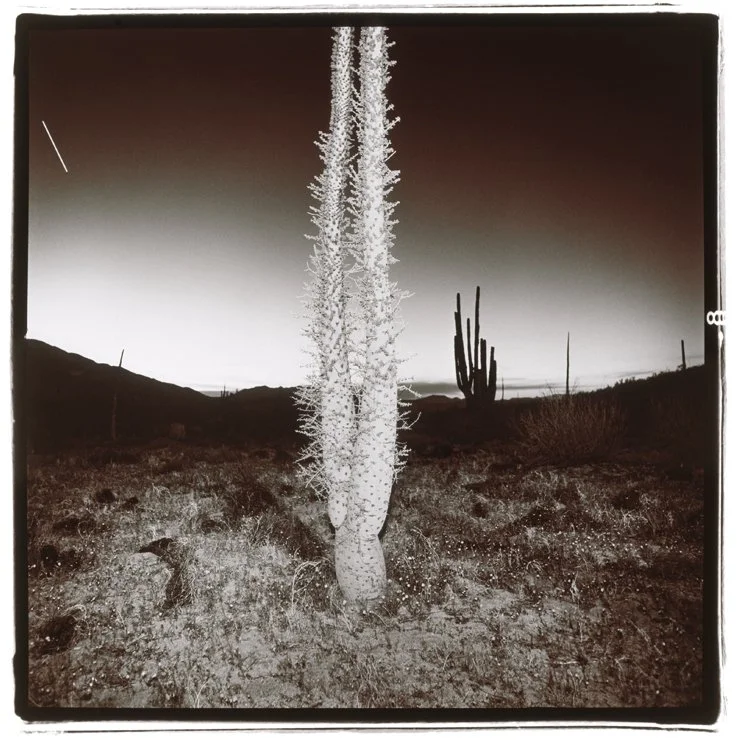
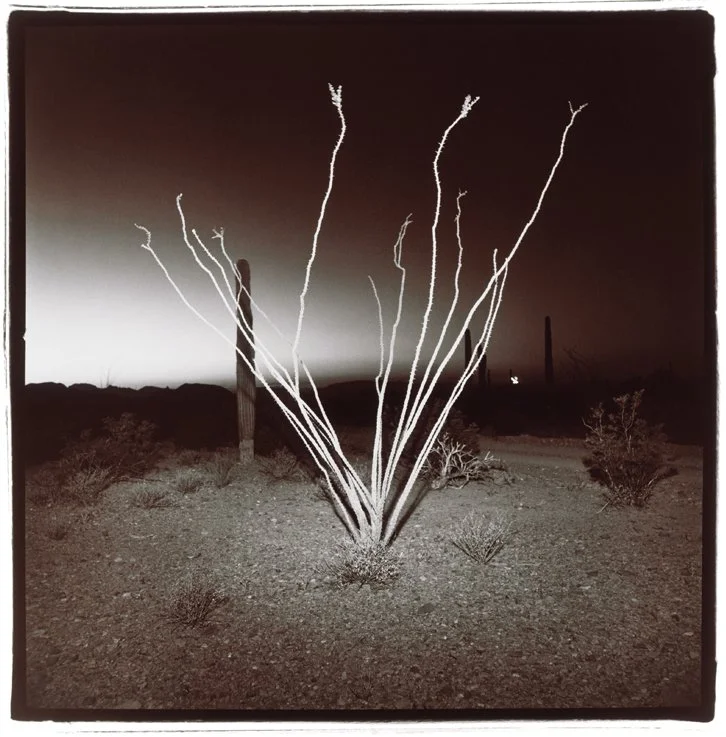
For example, in my early night desert book, I included no language. I wanted it to be strictly a photographic book, with no page numbers or titles. That was part of the conceptual framework that shaped how the images were presented. In contrast, "Notations" has a very different framework, as does "Cargo." There's a continuity concept that helps a book flow, from the first image to the last, from the front cover to the back.
However, my images are often brought together by intuition. It's about looking at the world and thinking, "That's amazing, that's stunning." Capturing that on film, experiencing something I've never seen before, even after half a century, is remarkable. You'd think you'd seen it all by now, but that's not the case. The medium allows me to continue experiencing the wonder of this planet.
Can you share an experiment that changed your perspective on your work or made you realise something?
It's been different experiences over the years, but an early model for me was when I did my documentary street photographs, Telegraph 3AM, between 1972 and 1974. After that, I read some mystical literature that talked about taking one day out of your life to do everything the opposite of how you normally do it.
I think it was Ouspensky or Gurdjieff, one of the Eastern mystics. They suggested that if you get up in the morning and brush your teeth with your right hand, try using your left instead. If you usually take the trash out that day, don’t. Doing this for just 24 hours makes you hyper-aware of all the things you take for granted. We all brush our teeth every morning and night, but when you switch hands, it feels strange, awkward, you notice what you're doing in a new way.
I applied that idea to photography. At the time, I was a very skilled black-and-white printer, working in a style similar to Ansel Adams. So I went into the darkroom and deliberately did everything wrong. I exposed the paper incorrectly, wrote on photographic paper with ink markers, which you’re not supposed to do, I put prints in the fixer first, turned on the darkroom lights while the prints were in the developer, all basic mistakes that you'd typically avoid.
By doing this, I made weird mistakes that led to new discoveries. I created a series in 1975 called The Pink Zen Suite. I think I've only shown one piece from it in an exhibit, but it was a transitional period. These bizarre, experimental images were so radically different that they broke open all my old habits.
The next series to come out of that experimentation was my night desert works. I created split-toned images using unusual chemical combinations I created in this experimental, rule-breaking period. That was a major breakthrough for me. Over the years, I’ve continued this approach. When I find myself falling into certain patterns, I shake things up. A good example is Notations, where instead of turning colour negatives into positives, I thought, what if I keep them as negatives? The colour negative, as a medium, is basically obsolete now, but historically, you'd make a negative to create a positive image. I flipped that process, turning positives back into negatives as an homage to the end of that era. Again, it was about doing things "wrong," and I found it fascinating. It helped me keep growing and evolving as an artist.
How do you approach the viewer? Do you create your work primarily for yourself, without considering the viewer?
Yes, absolutely. You have to because there's no way to predict how people will respond to or interpret your work. Ultimately, you are your own audience first and foremost. For me, that's been quite interesting. Take the Cargo series, for example. I can see how it could have been presented as a clear documentary.
Recently, someone at Aperture asked me about its relation to Petrochemical America. I hadn't considered that connection before. It got me thinking, if I decide to do a second edition of that book, I might collaborate again with Kate Orff, who worked with me on Petrochemical America, to unpack those ships. I can envision an entire series with her analyzing them. I think that's a brilliant idea. It wasn't originally mine, though it stems from my work. I just hadn’t thought about it in relation to this series until now.
Now that the idea has been planted, I can’t shake it. It’s a fantastic concept.
If you could give one piece of advice to young photographers about making work, what would it be?
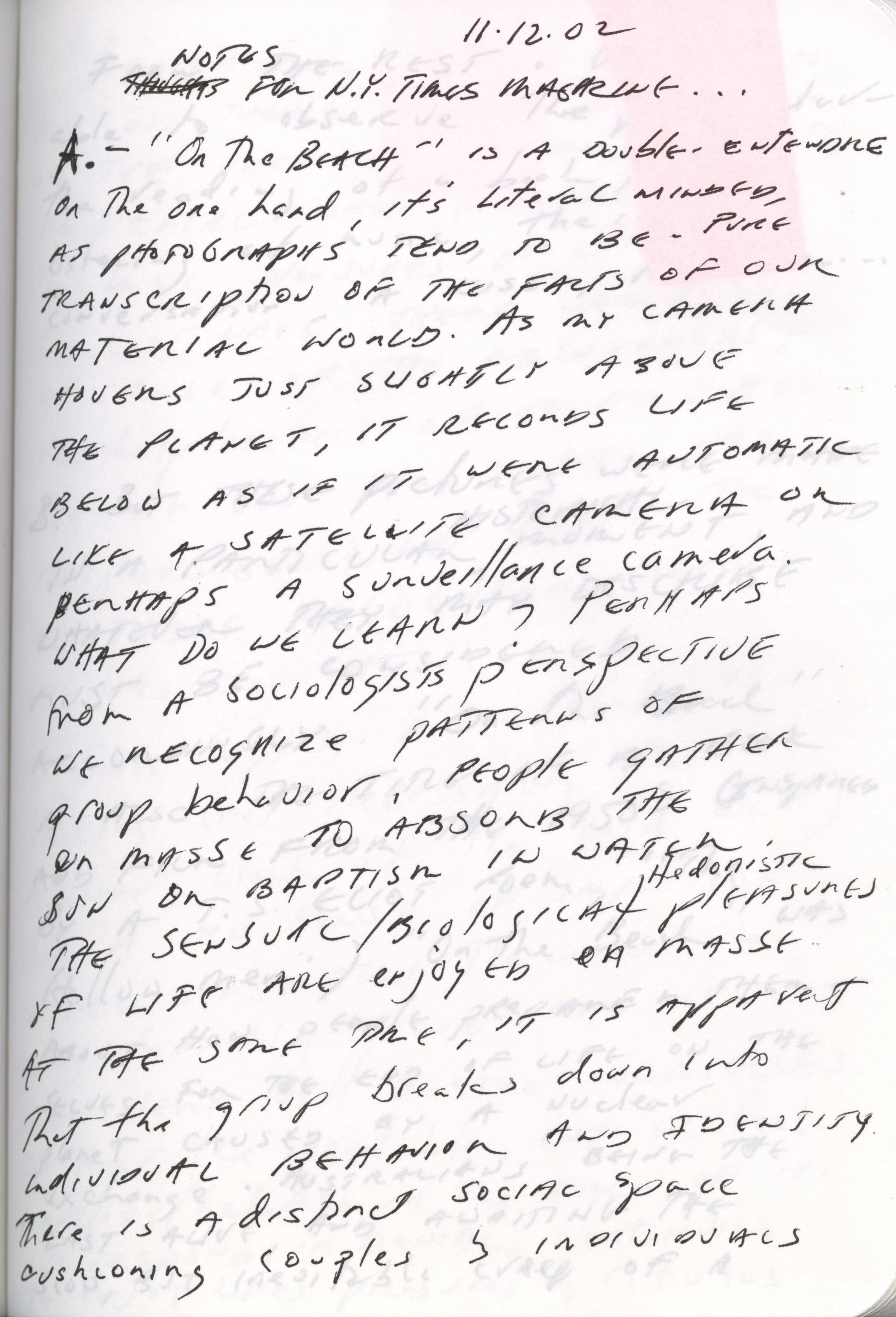
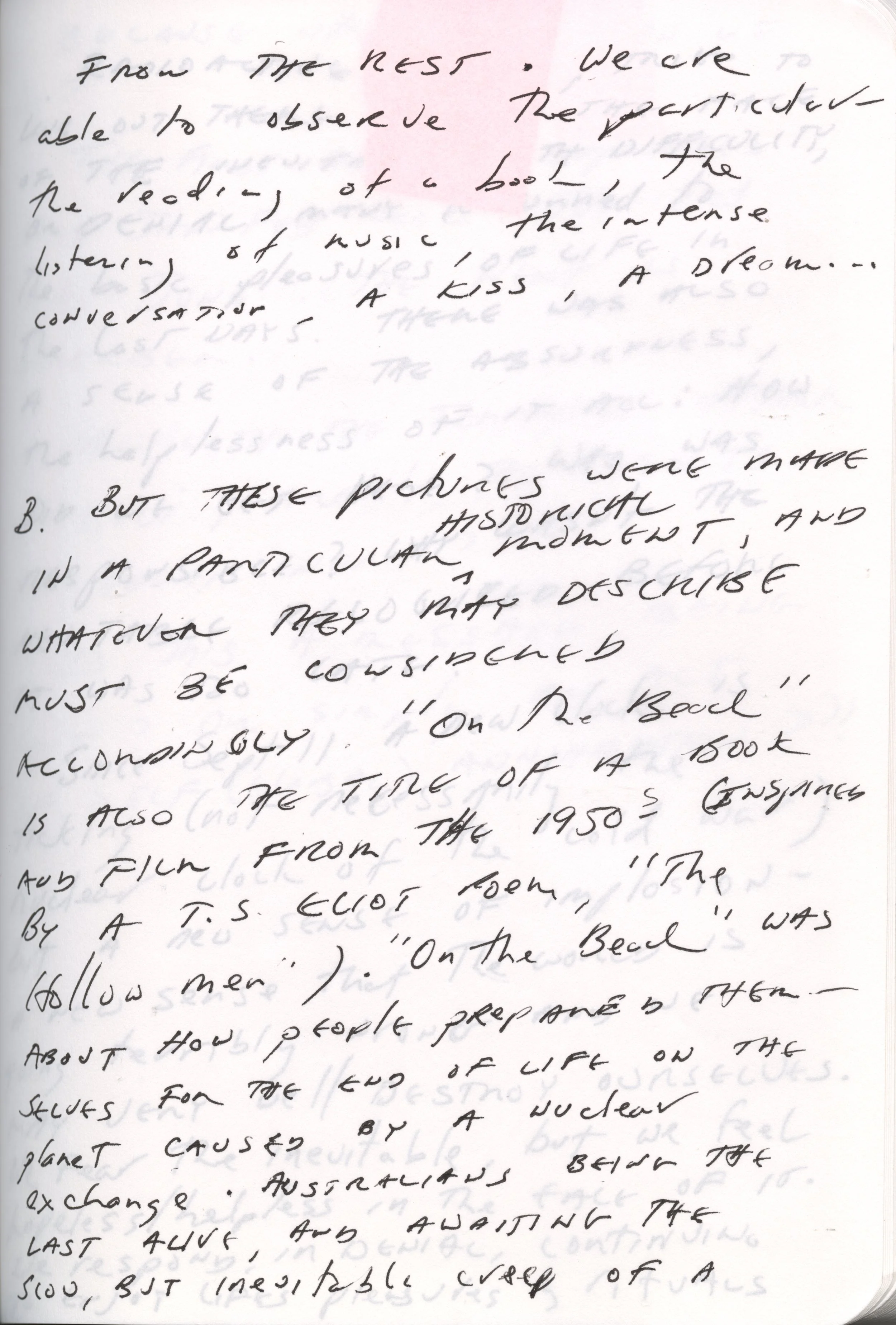
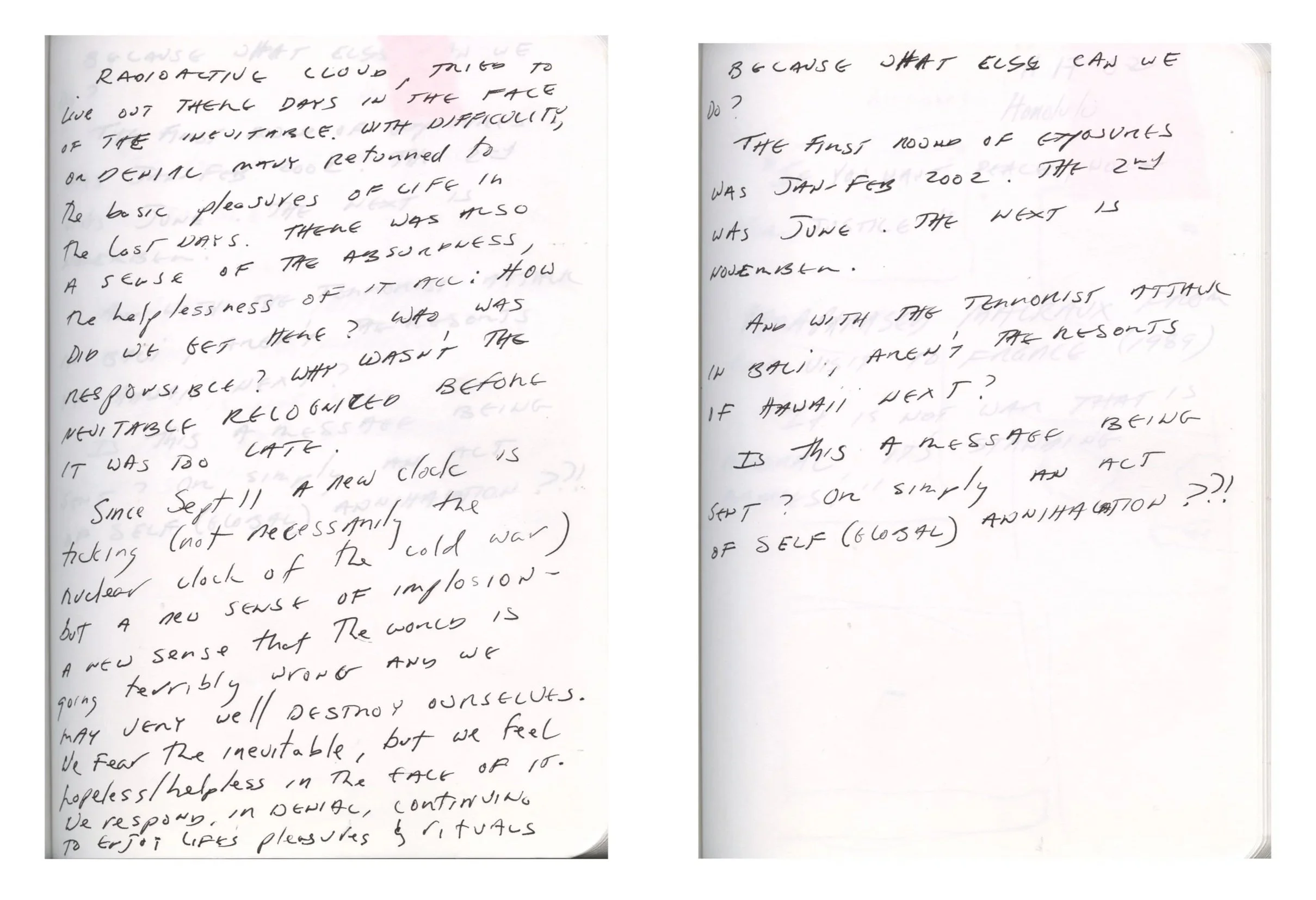
It wouldn’t necessarily be about making work directly. Recently, I’ve been going through my old journals and diaries, and I found a couple of things that were really profound for me. One is that I was very insecure back then. Nobody liked my work when I was first starting out. In my journals, I’d write about it, wondering what I was going to do, worrying that nobody really liked my work, questioning my future. I even considered pursuing music, not because I was particularly talented in it, but because I was uncertain about photography.
It was hard, but I ended up sticking with photography because I loved it so much. That proved to be a really good decision. Along those lines, I applied to graduate school at San Francisco State in photography. The two professors there, who were really kind, looked at my work and told me, "Hey, you know, you have no talent. We’re not saying this to upset you, but we think you should pursue a different career path because this just isn’t for you."
So, what I would say to someone young is this: if you love it, if you love making images, but you’re not getting the response you hoped for from people, don’t worry about it. Just keep going. Keep making work. It evolves.
Seeing my earlier self through those journal entries made me realize how far I’ve come. I’d also recommend keeping a journal. Keep a journal just for yourself, for nobody else’s eyes. I think it’s invaluable.
Like a written journal?
Yes. Like a diary, a journal, not photographic. You can include photographs, but I mean just for yourself, so that 10, 20, or 30 years from now, you can look back on your younger self. What I’ve learned is that I can’t believe who I was back then and where I came from. It’s actually fascinating and interesting to see that.
I think you'll value it later on. While you're doing it, you might wonder, "Why am I doing this?" But it proves to be a wonderful thing.

Perfect. Thank you. Enjoy the rest of the week. I’m looking forward to seeing more of your work.
Richard Misrach: Thank you. Bye bye.
Martin: Thank you. Bye bye.
More photography books?
We'd love to read your comments below, sharing your thoughts and insights on the artist's work. Looking forward to welcoming you back for our next [book spotlight]. See you then!
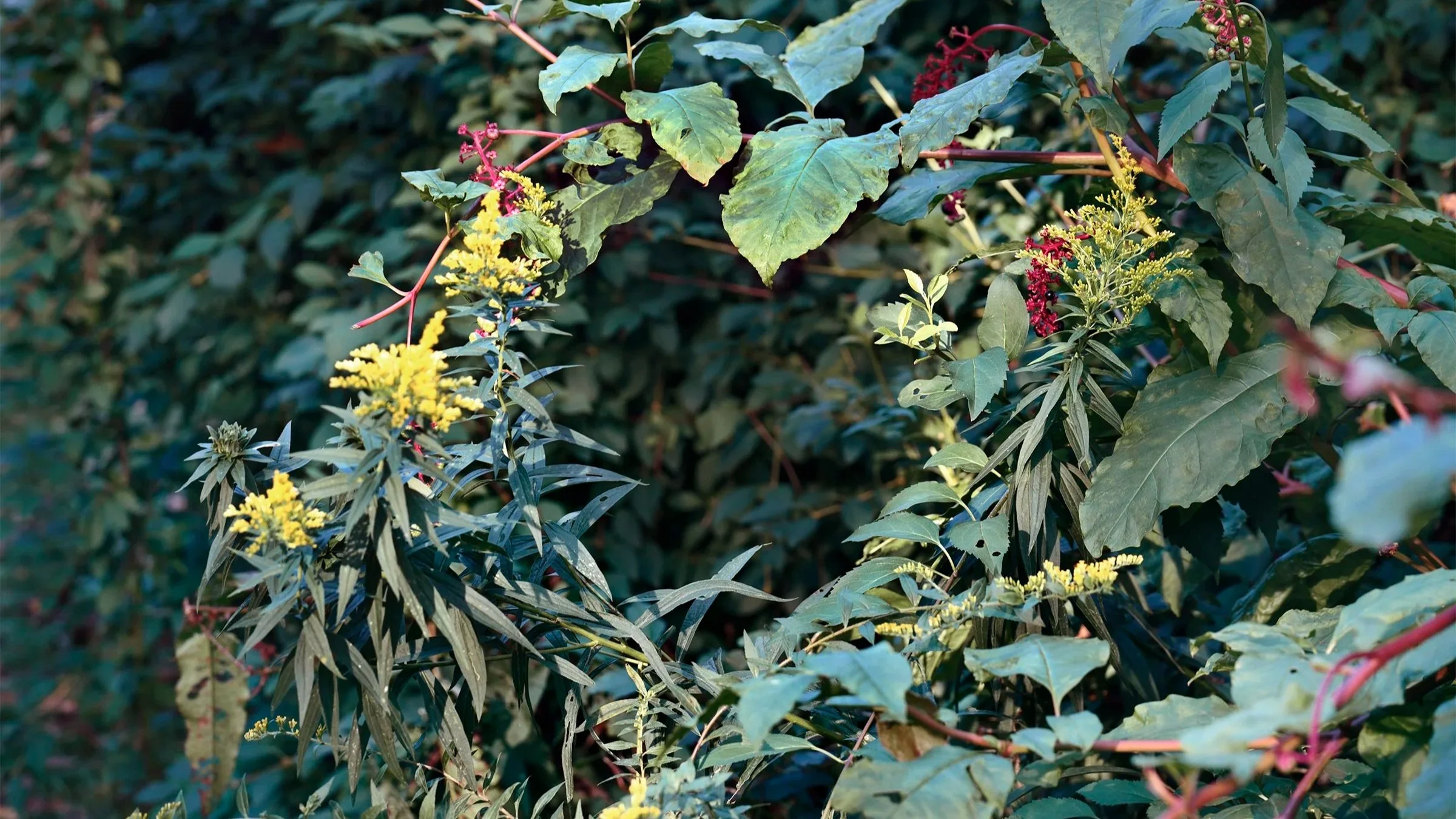
In a compelling exploration of the intersections between photography and the evocation of the unseen, Richard Misrach delves into the essence and transformative power of the negative image.