Inside the Quiet Turn in Rasmussen’s Work: Beauty That Pulls You Into Violence
(This is the story behind the photograph, a glimpse into the moment, the process, and the vision that brought it to life.)
The most powerful image sometimes isn’t the one you expect.
It can be the photograph that feels small, almost like a mistake. For Benjamin Rasmussen, it was a frame taken on the side, before the real action began, while he carried a second camera on his shoulder. That picture, soft and quiet, later became the center of his book The Good Citizen. It changed how he thinks about violence, beauty, and what photography can do.
Inside his story is a lesson about contrast.
Rasmussen discovered that showing direct violence often pushes people away. Working with editor Stuart Smith, he learned that beauty, even gentleness, can pull people in and make them face the harder truth. The “throwaway frame” of a couple in a car became proof of this.
And that is why this one image matters more than the hundreds he first thought were stronger.
Georgia, early 2010s. Benjamin Rasmussen traveled north of Atlanta to witness something that made him uncomfortable. A community was reenacting a lynching, not to celebrate it, but to remember it and demand justice.
In the early 1950s, two African-American couples were pulled from their car, tied up, and murdered. Everyone in the community knew who did it. It was an open secret. But no one was ever arrested. The case was never properly investigated.
Twenty-five years ago, people in the community started doing something unusual. They began reenacting this terrible event every year. It was their way of healing. It was also their way of putting pressure on the police to finally solve the crime.
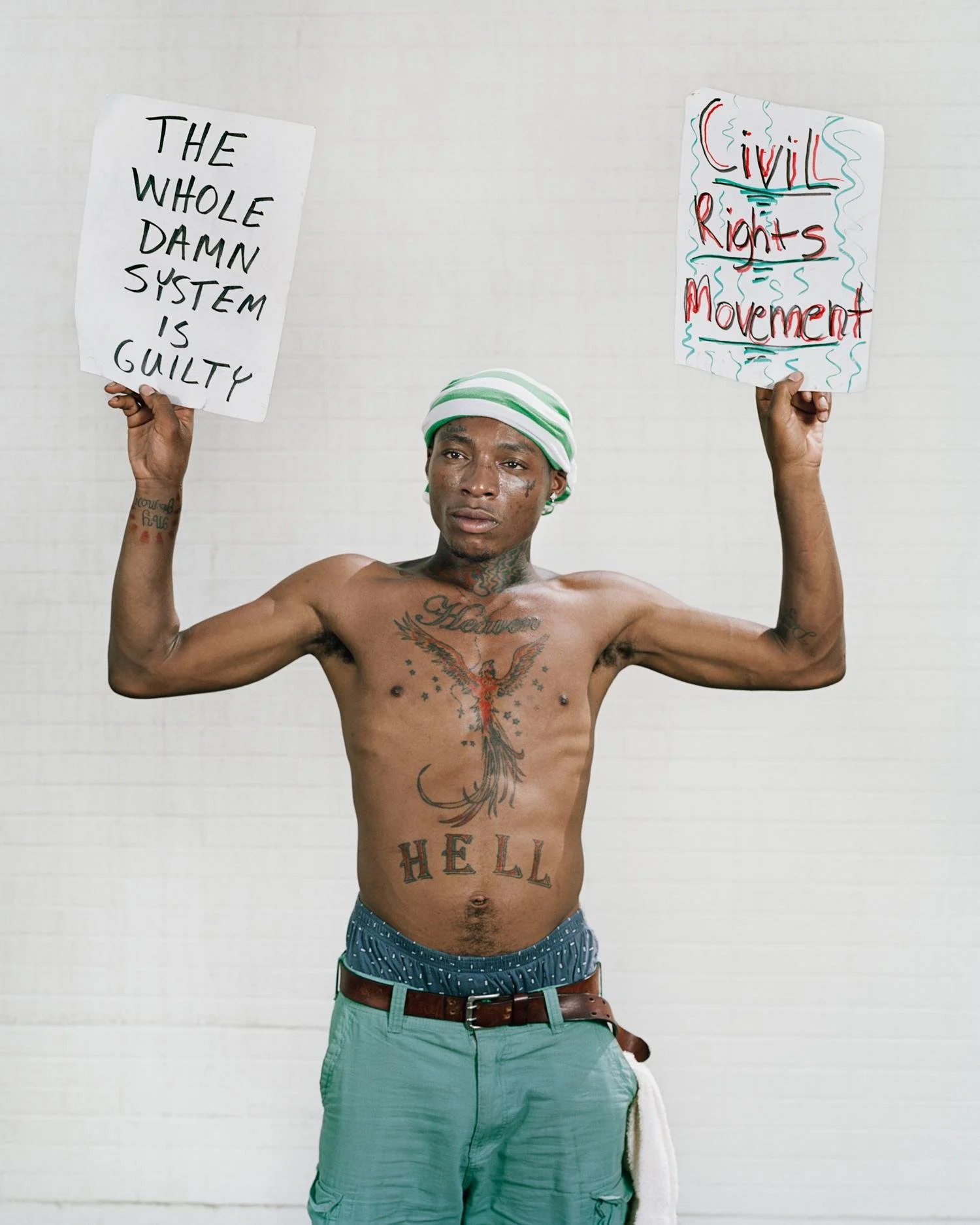
Rasmussen came with his cameras. He had been working on a long project about violence against Black people in America. It started with Michael Brown's killing in Ferguson, Missouri, and spread backwards through history. This reenactment in Georgia felt like an important piece of that story.
"I went to photograph this reenactment," Rasmussen explains. "I had originally, so I'm there, I photograph everything from kind of the people in period costume who are involved to the people being pulled out of the car and shot and there's fake blood, all of it. Kind of photograph this whole thing."
He worked the way he usually worked back then: carefully, formally. He used medium format and large format cameras. He tried to be subtle with his approach. He photographed the people in old-fashioned clothes. He photographed the moment they were pulled from the car. He photographed the fake blood and the staged violence.
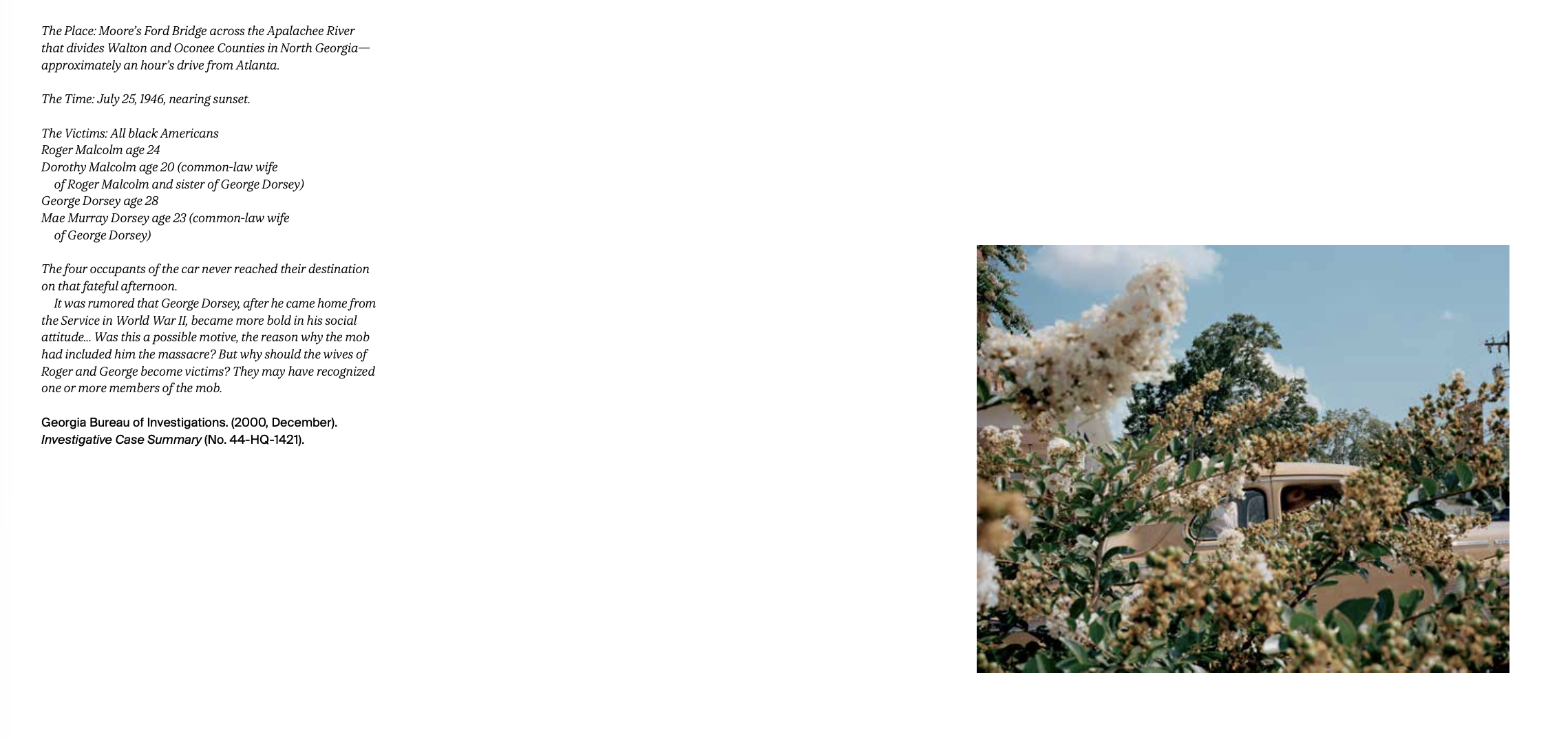
But there was one frame that wasn't part of his main plan. He had a smaller camera on his shoulder, a Mamiya 6x7, just to grab other moments. Before the reenactment started, he saw the couple dressed in period clothing getting into an old car. They would drive this car during the performance.
"This image was almost like a throwaway frame. Most of my time there was spent shooting formal large format pictures, but I also had a six by seven camera on my shoulder to capture other things."
A throwaway frame. That's what he thought at first. Just a moment before the real thing happened.
The Problem with Showing Violence
Rasmussen went home with hundreds of images. He started editing them for his book project, The Good Citizen. He chose the most powerful shots, the dramatic large-format images of the reenactment itself. The people falling as they were shot, captured with slow shutter speeds so the movement blurred. It wasn't too graphic, but it was clear what was happening.
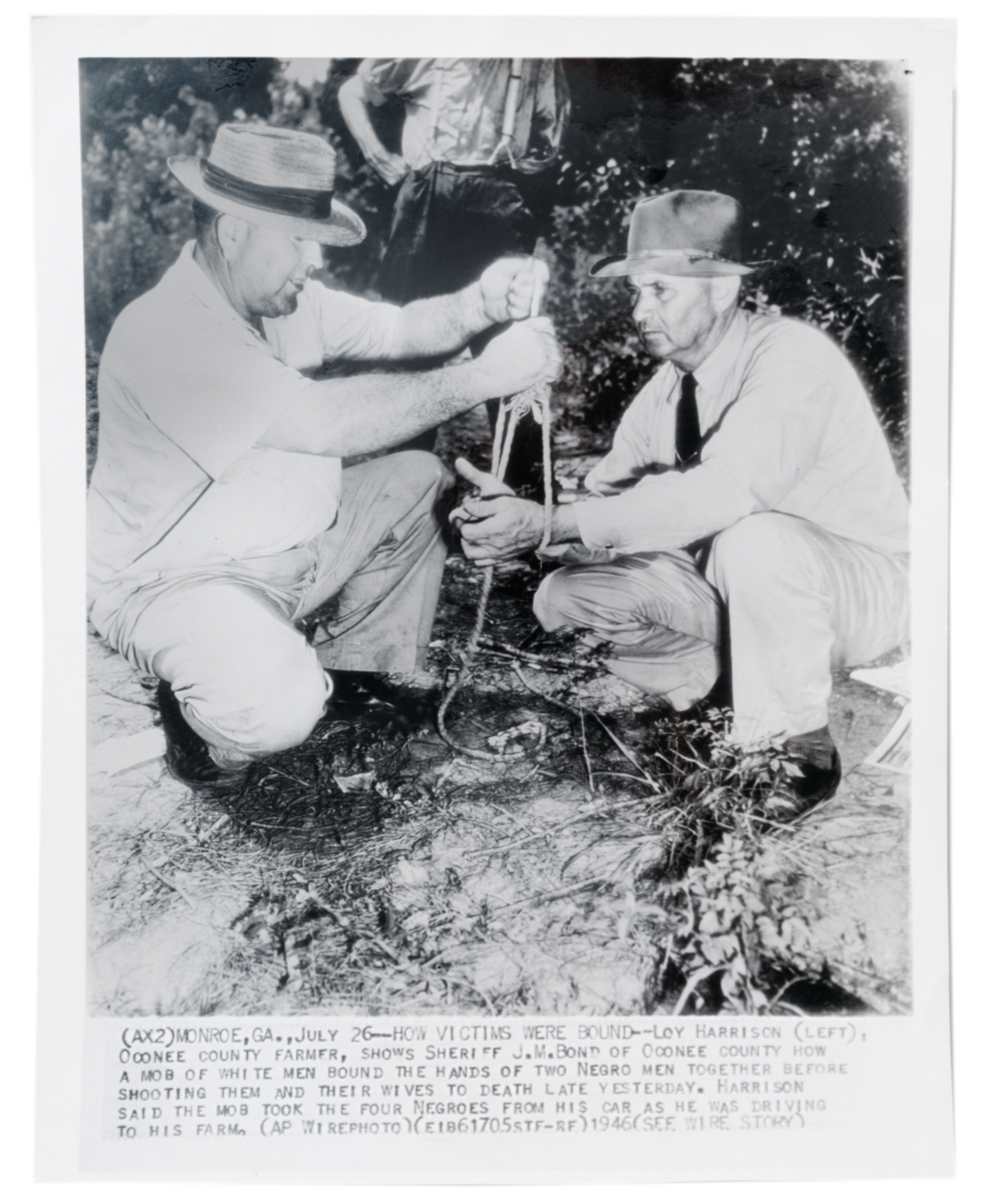
These images were going to be paired with text from FBI reports and Georgia Bureau of Investigation documents. Rasmussen had spent months researching, finding official reports about the case, about the investigations that never went anywhere.
But as he and his editor, Stuart Smith from GOST Books, kept working on the book, something felt wrong.
“As we edited, we realised that the depiction of even reenacted violence was ineffective. It created unnecessary trauma and was overly direct.”
The images of violence (even staged violence) weren't working. They were too obvious. They showed exactly what happened, but they didn't make people think deeper. The photographs were creating trauma just for the sake of showing trauma. And there were already so many images like this in the world.
Rasmussen realized he needed to do something different. He needed to create contrast.
"And within this idea, I decided that what I wanted to do was, in my research, I had found the FBI and the GBI, the Georgia Bureau of Investigation, reports on like their investigations that they had done. This sort of push to reopen the case, all of these things. And so I wanted to include text from that in with these images."
If the text was going to be difficult and heavy (full of official language about murder and injustice), then the image needed to be different. It needed to feel lighter at first. It needed to invite people in before hitting them with the truth.
"So I realized that we needed to have as much of a contrast as possible again between the difficulty of what people were looking at and the difficulty of the text."
The Image That Draws You In
That's when they went back to the throwaway frame. The one taken before anything happened.
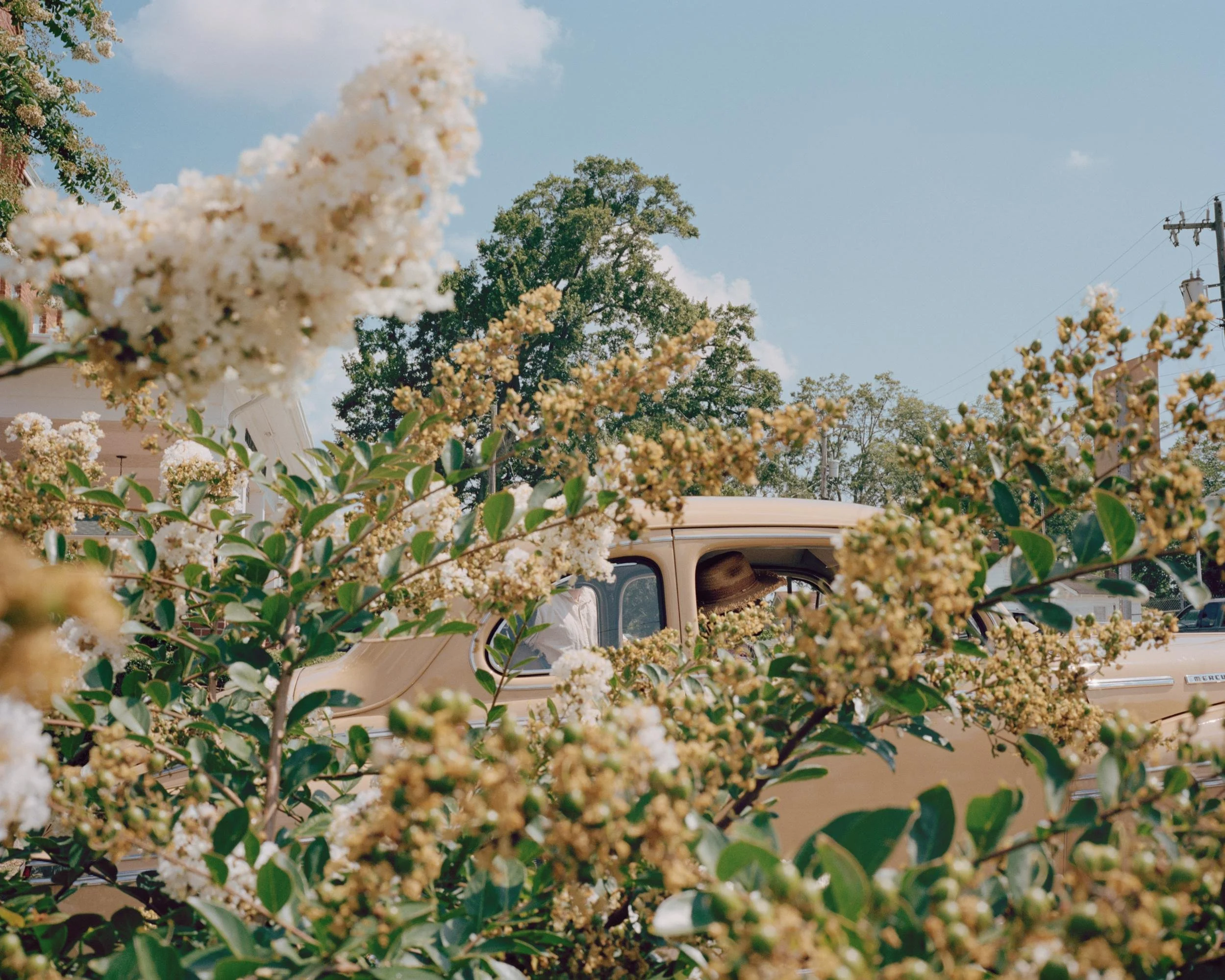
It showed two people in an old car. They were dressed in clothes from the 1950s. The light was soft. The colors were gentle. If you looked at it quickly, it could almost be a romantic photograph. It could be a couple going on a date. It could be from a old movie. It felt calm, almost beautiful.
"And so we ended up making this image that when you first approach it doesn't feel sort of heavy. It doesn't feel dark. It doesn't feel anything. It kind of like draws you in."
This was the key. The photograph didn't push you away. It invited you closer. It made you curious. It made you want to look.
And then, once you were looking, once you read the text beside it, everything changed.
"Once you realize what you're looking at. And once you engage with the text, it complicates it massively and it makes it feel sort of so much."
You realize these people are about to be murdered. You realize this soft, beautiful moment is the last peaceful moment before everything goes wrong. The FBI documents tell you what happened next. The investigation that went nowhere. The justice that never came.
"You sort of go through this movement of emotion as you sort of visually first engage with it and then as you sort of recognize the context."
A Decade of Learning
This shift didn't happen overnight. Rasmussen had been working on The Good Citizen for eight years. In the beginning, he would have never chosen an image like this. He would have thought it was too soft, too pretty. He would have wanted something more direct, more obviously about the violence.
“In earlier versions of the book, there was a large format image of people falling over as they were shot with a slow shutter speed, resulting in a blurred effect. While not overly graphic, it was still violent and too direct.”
But through years of making the work, of researching, of editing, his thinking changed. He learned that sometimes the gentlest approach can be the most powerful.
"This image became a focal point for this section because we realised its significance. It’s like the Tom Waits style of beautiful melody conveying terrible things, the more horrible the message. Often, a gentler approach is more effective."
Rasmussen's journey through this project taught him that showing everything directly isn't always the answer. Sometimes, the most powerful images are the ones that hold back. The ones that make you work a little. The ones that stay gentle even when the truth is hard.
The couple in the car. The soft light. The moment before. This throwaway frame became the image that mattered most, not because it showed the violence, but because it showed what came before the violence. The humanity. The ordinary moment that violence destroys.
And that, in the end, is what makes us care.
Sometimes the best project begins when the first idea fails. You arrive with a plan, but what you find does not fit it. Story Behind The Photograph