The Photograph That Changed How Eric Meola Sees Portraits Forever
(This is the story behind the photograph, a glimpse into the moment, the process, and the vision that brought it to life.)
One photograph changed how Eric Meola sees people.
It was not planned, commissioned, or carefully prepared. It happened during a spiritual ritual in Burma in 1995, far from the commercial world he was working in at the time. The moment forced him to slow down, stay longer, and witness a real transformation instead of just recording a scene.
This story is for anyone who thinks photography is more than technique.
It shows what can happen when you follow a moment instead of chasing an image. Eric Meola shares exactly what he saw, what he felt, and what almost went wrong as the light faded and the ritual began. The experience changed how he approaches people, portraits, and trust with a camera.
This portrait was not planned, and that’s why it mattered.
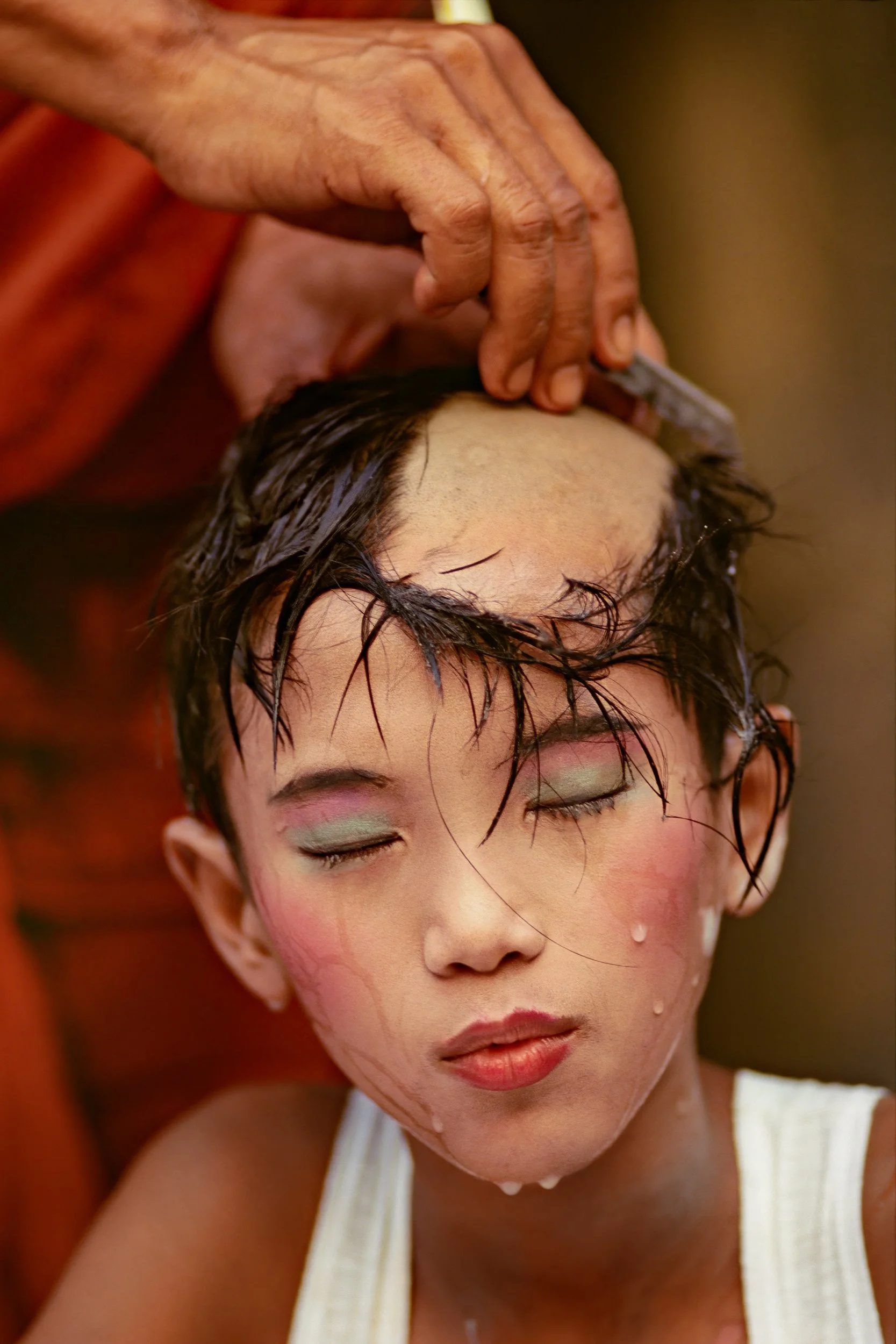
In early 1995, Eric Meola arrived in Southeast Asia carrying the weight of weeks spent under pressure. Just before this journey, he had been working on a large commercial shoot in California for Johnnie Walker. What was planned as a one-week assignment stretched into nearly five weeks because of historic storms. California was flooded with relentless rain, light appeared only in short breaks, and every day became a fight against weather, schedules, and expectations. When the shoot finally ended, Meola flew to Thailand with his wife, hoping to reset both his body and his mind.
Burma, now called Myanmar, was not originally part of the plan. But at that moment in history, the country had just reopened to Western travelers. Curious and cautious, Meola asked friends and even visited the US embassy for advice. Everyone told him the same thing. He should go. When he arrived in Rangoon, now Yangon, the change was immediate. Temples, monks, dust-filled air, and a sense of calm replaced the chaos he had just left behind.
“The plane landed and we were driving in a taxi to a hotel in Rangoon. It’s now called Yangon. And I saw a temple and I said to the driver, can you stop?”
Inside the temple, a Buddhist priest was praying. Meola began to photograph him, and something shifted. The storms, the commercial work, the pressure all fell away. He felt himself entering a different world, one shaped by ritual and silence rather than deadlines.
The next day, while visiting the Shwedagon Pagoda, Meola and his wife came across a ceremony by pure chance. Young boys, dressed in ornate and glittering clothes, were being led around the pagoda. Their outfits were bright, decorated, and symbolic of the material world they were about to leave.
“I asked our guide what was going on, and he said the boys were about to become monks. They were dressed in bejeweled, sequined vestments, not real jewels of course, and were about to give up the material world, shave their heads, and enter monastic life.”
The guide explained the ritual. The boys would return home, eat a final feast, and then kneel before a monk who would shave their heads. This moment marked their passage from childhood into a spiritual life. Meola wanted to see it. More than that, he felt he needed to be there.
They followed the procession through the streets of Rangoon until they reached one house. Inside, the afternoon light was already fading. Dust hung in the air, softening everything it touched. The light entered through side windows, warm and brown, a color Meola would forever associate with Burma.
“They were eating all this food, and I realized the light would be gone in about 20 to 30 minutes. I asked my guide what was going to happen next, and he said they would spend a couple of hours eating and talking, and then the little boy would kneel down and the monk would shave his head.”
Time became the enemy. The ritual was supposed to happen later, after hours of eating and talking. But instinct took over. Meola asked if the shaving could happen now. As soon as the question left his mouth, he regretted it. He knew he was interfering. Still, the guide spoke to the monk, and suddenly everything moved faster than expected.
“Before I could even prepare or think about it, the little boy kneeled down and the monk poured water over his head.”
There was no time to adjust or change equipment. Meola was using a 105mm lens. There was no autofocus, no image stabilization, and the light was low. His shutter speed was slow, around a thirtieth of a second. His hands were shaking. He leaned against the wall to steady himself, focusing as carefully as he could.
“I was nervous. I was worried that I might miss that moment.”
The monk did not hesitate. There were no test cuts. With one long movement, the razor passed across the boy’s head. In that instant, Meola released the shutter and captured a few frames.
“And in that split second, I managed to get a couple of shots.”
The boy closed his eyes. Water ran down his face. He was still wearing makeup, lipstick meant for the ceremony, and sequins from the life he was leaving behind. In the next moments, he would remove the jacket and stand in a simple t-shirt. Childhood and material life ended there.
“Just watching it changed me spiritually.”
Meola would not see the images until he returned home and developed the film. But he already knew something important had happened. Following the boy from the public ceremony into his private home transformed the experience.
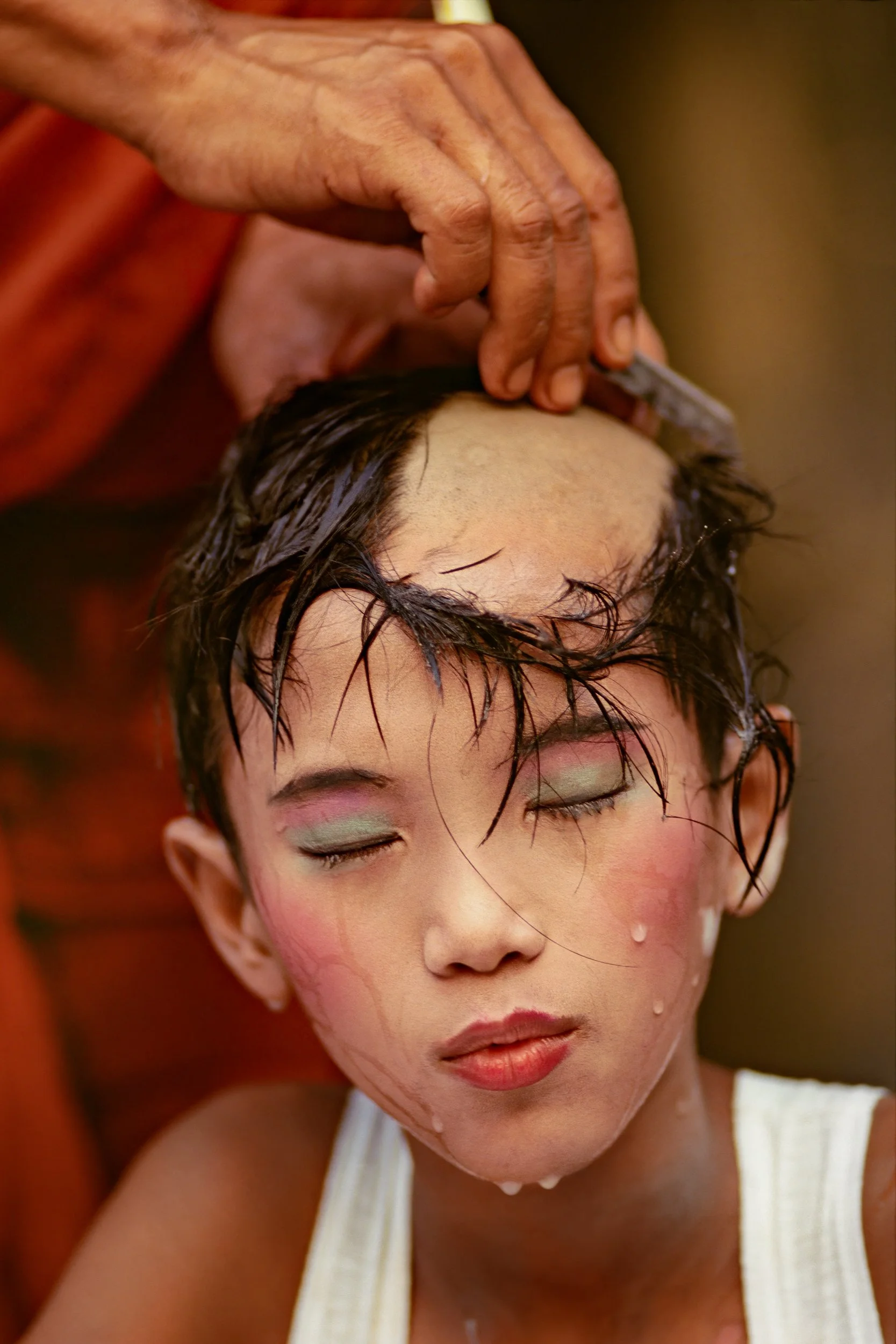
“That changed me in terms of how I take portraits and the way I look at people.”
The image marked a turning point in how Meola understood photography itself. Not as something taken quickly from the surface, but as something earned by staying, following, and witnessing life beyond the obvious moment.
Sometimes the best project begins when the first idea fails. You arrive with a plan, but what you find does not fit it. Story Behind The Photograph