What Lies Under the Blue Tarps of Japan? Norio Kobayashi on Chance, Intuition, and 30 Years of Looking
Welcome to this edition of [book spotlight]. Today, we uncover the layers of 'Japanese Blue,' by Norio Kobayashi (published by AKAAKA Art Publishing, sold by by shashasha). We'd love to read your comments below about these insights and ideas behind the artist's work.
Why photograph blue tarps for 30 years?
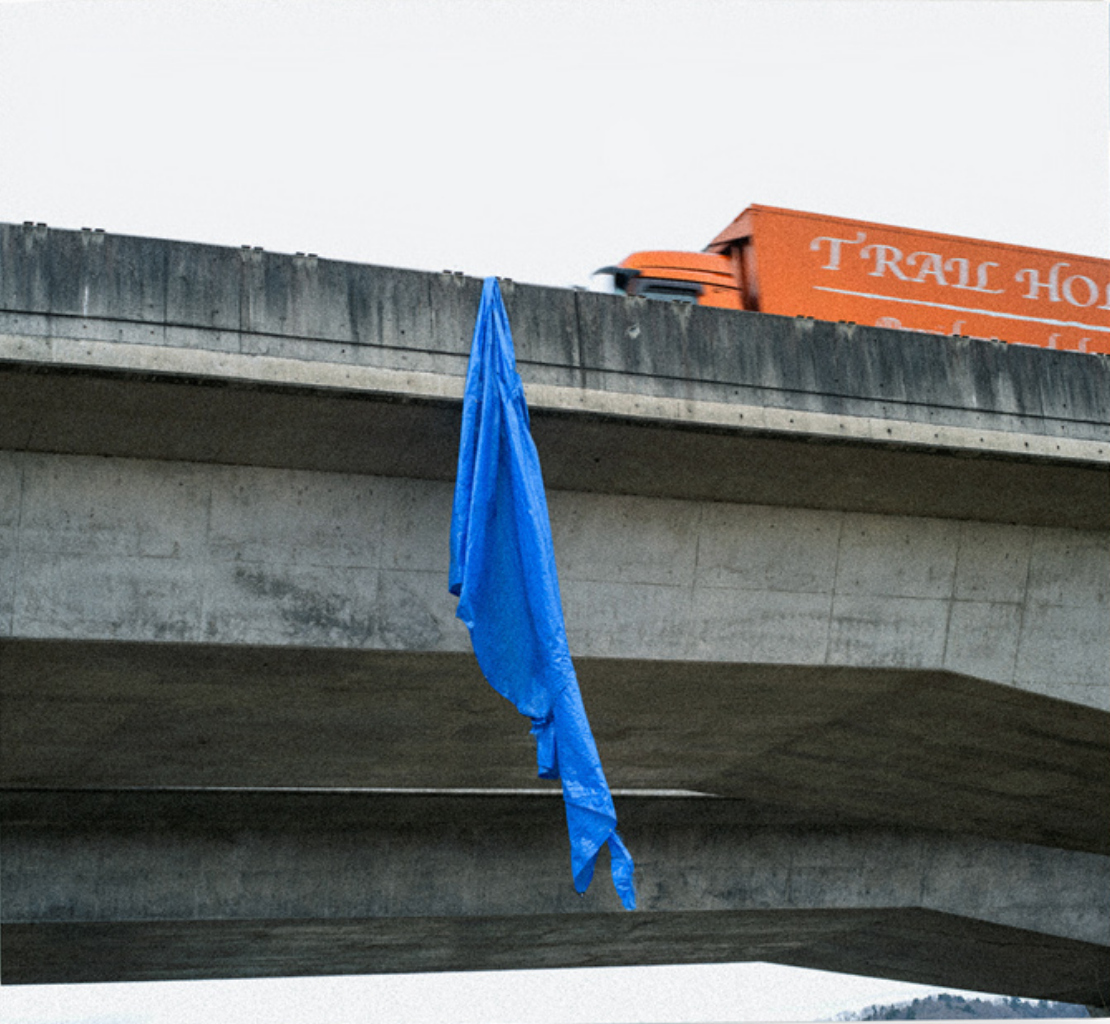
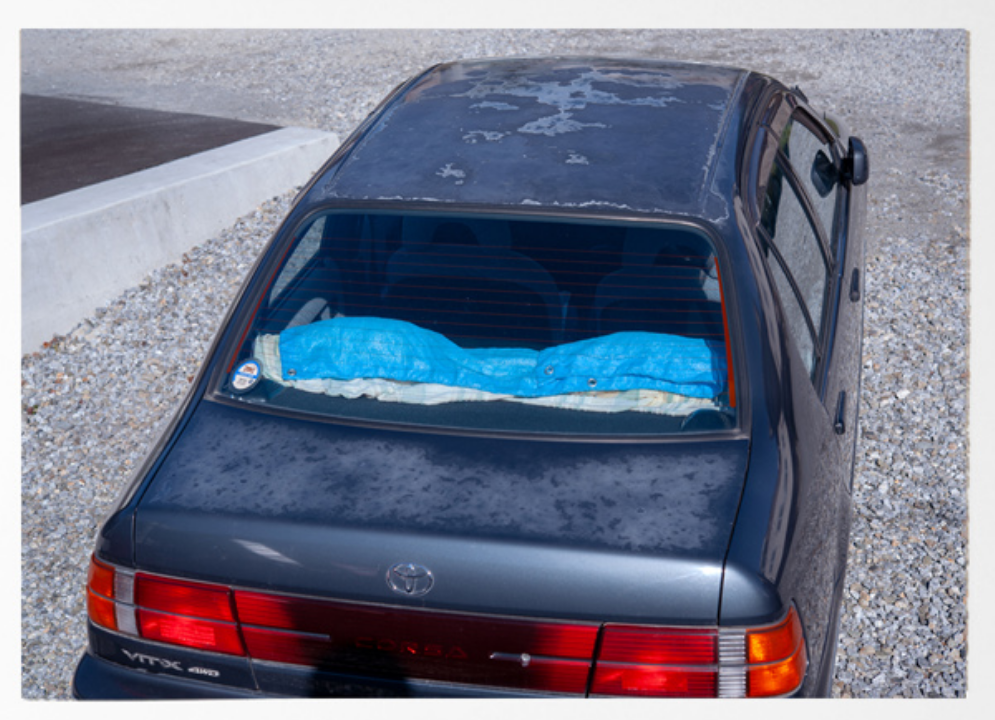
Japanese Blue follows Norio Kobayashi’s long attention to temporary blue sheets spread across Japan. Construction sites, covered objects, empty corners, and places people usually walk past become the center of the work. Over three decades, these small scenes slowly turn into a record of time, change, and disappearance. What you get here is a clear look at why staying with one simple subject can reveal much more than constant novelty.
The work is also deeply tied to how Kobayashi photographs.
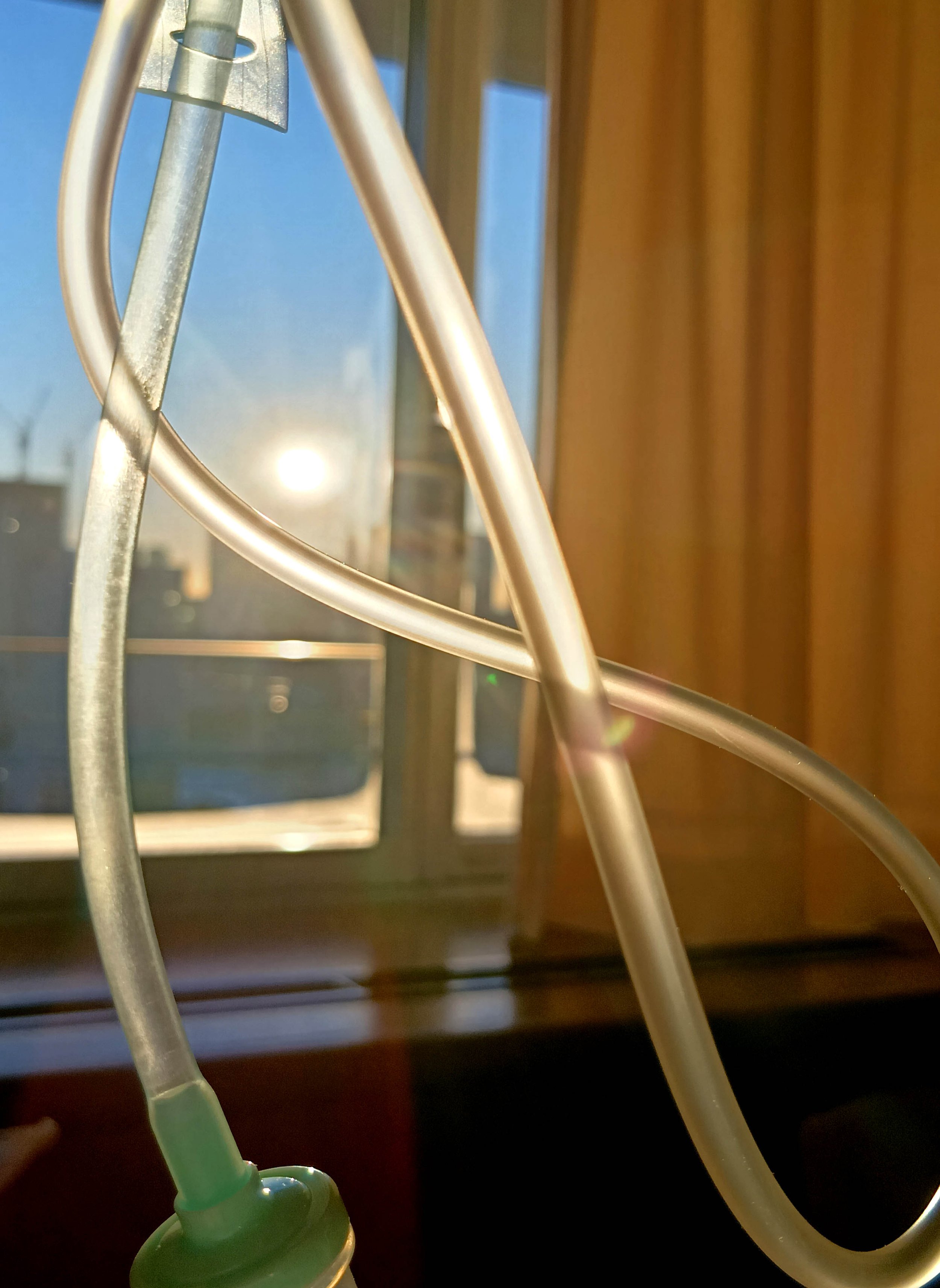
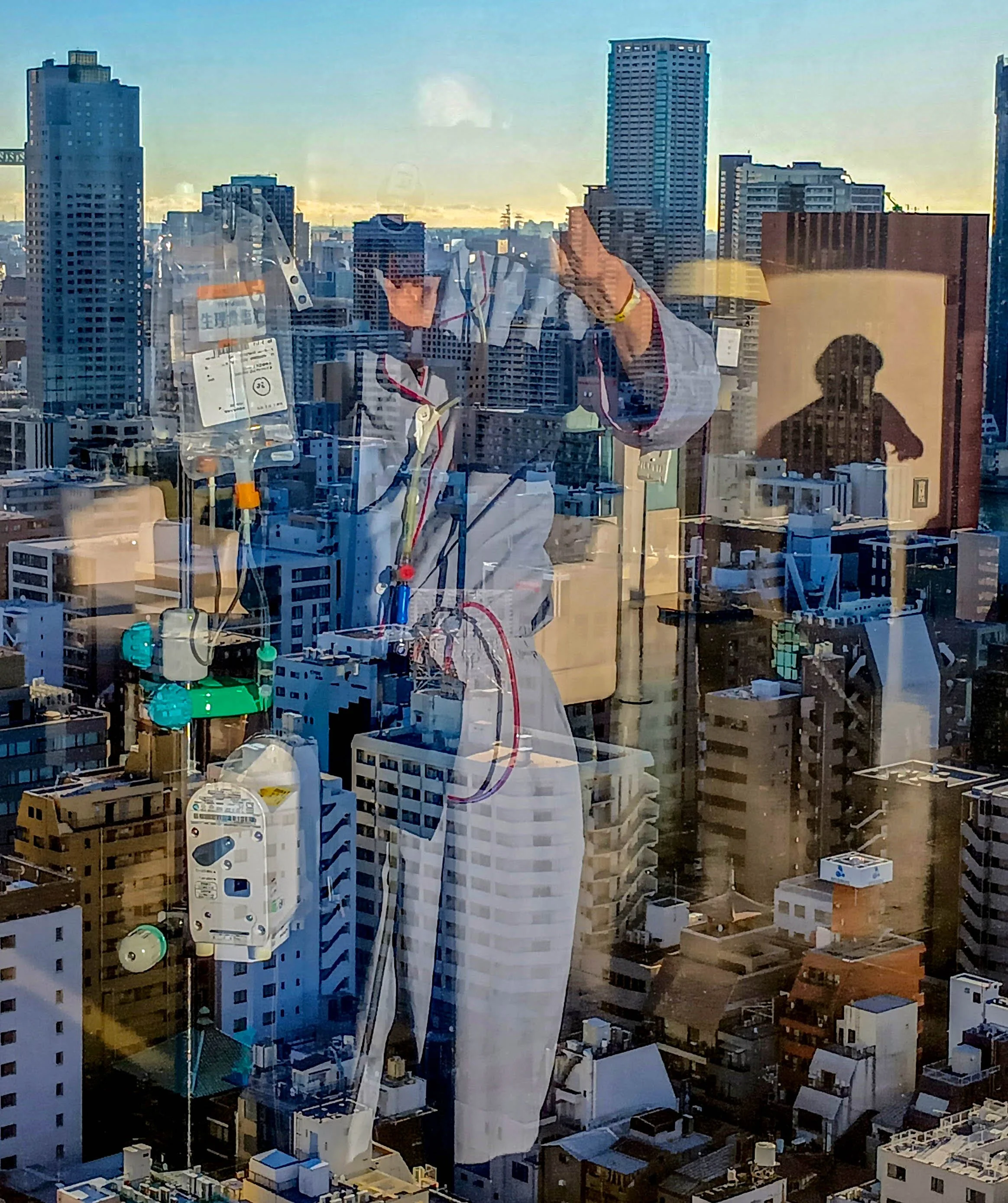
He relies on chance, intuition, and repeated visits rather than planning or waiting for perfect conditions. From large format film to early digital cameras, his technical choices reflect a desire to stay close to the act of seeing. Even during illness and hospital stays, photographing remained part of daily life, not separated from living. By the end, photography appears not as a project to finish, but as something inseparable from time itself.
The Book
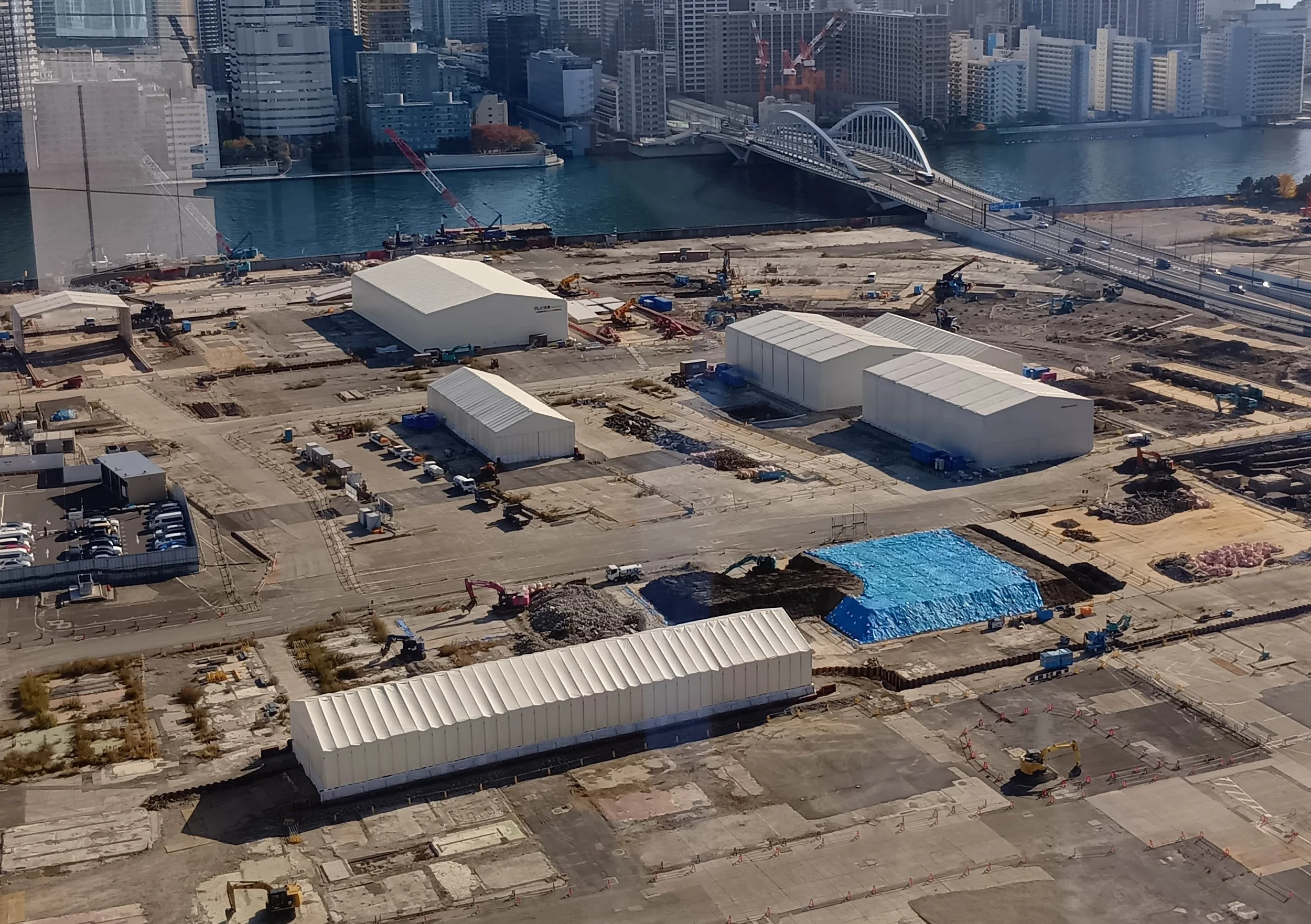
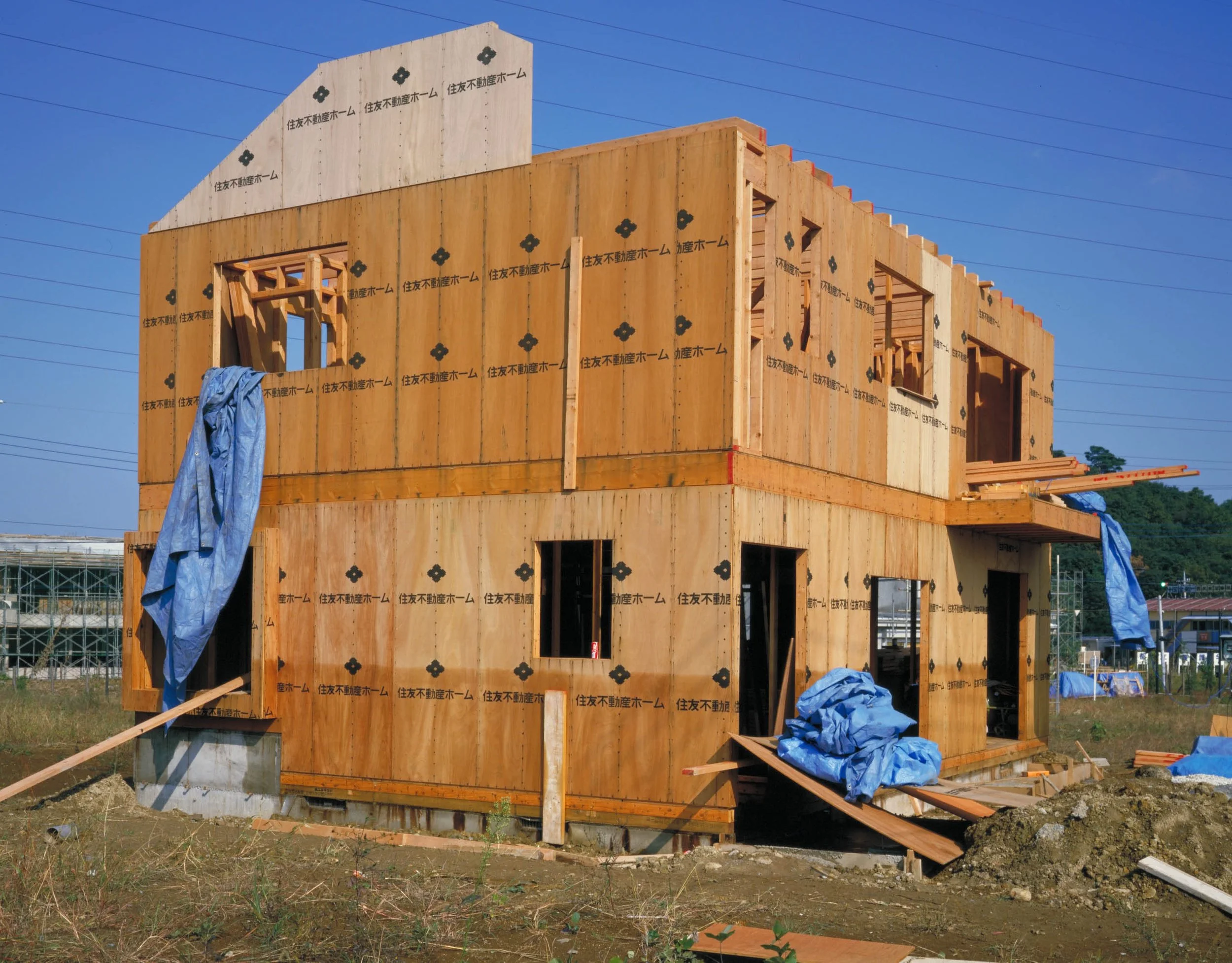
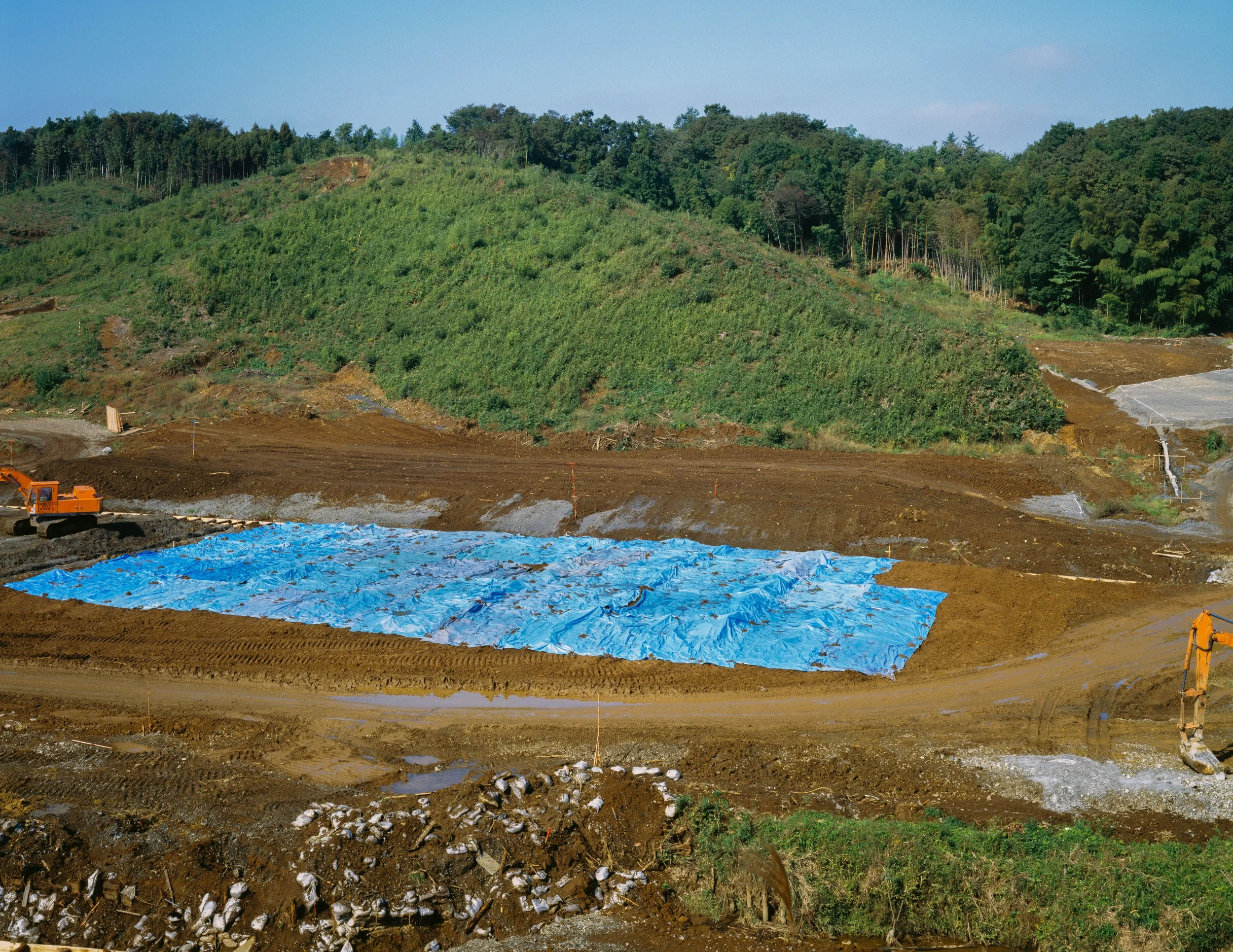
Japanese Blue is a photographic book by Norio Kobayashi that collects more than three decades of work focused on the humble blue tarp seen across Japan. From 1991 to 2024, Kobayashi photographed these everyday blue sheets used for shelter, farming, construction, and cover, capturing them in changing landscapes and conditions from new and taut to old and falling apart. The images do not tell a social story, but instead reveal how human intervention and chance encounters shape the environment, inviting viewers to see what is usually overlooked. Across 128 pages of medium-format film and digital photographs, the blue tarp becomes a visual anchor for time, presence, and change in Japanese space and culture. (AKAAKA Art Publishing, shashasha)
Project Genesis: You photographed blue tarps for over 30 years starting in 1991 - what first caught your attention about these temporary blue sheets in Japan's landscape?
In the early 1980s, while shooting my first photobook "LANDSCAPES" (published 1986), I was inspired by the blue tarps that naturally appeared in my photographs. I thought to myself that one day I'd like to focus on these blue sheets themselves. At the time, I was photographing construction sites and residential areas in Tama New Town and Kohoku New Town, using a 4×5 large format camera with color reversal film, riding my moped every day to shoot. Now it's a distant memory from my youth.
Finding Blue: When you travel around Japan, how do you decide which blue tarp to photograph and which one to pass by?
I follow where my heart leads, by intuition... it's always like that.
Film to Digital Change: You switched from medium and large format film cameras to digital cameras around 2003 - how did this technical change affect the way you frame blue tarps in your pictures?
I actually started using digital cameras in 1997. Since childhood, I'd built radios and enjoyed amateur radio as a hobby, so I was interested in digital camera photography with computers from early on. Back then, I used toy-like compact digital cameras from Casio and Fujifilm, coded my own HTML, and started presenting my work on homepages. At the time, I felt there was new potential in photography there. However, most photographers around me were negative about digital photography, with opinions like "digital is just an image" and "anything other than silver halide particles isn't photography" dominating the conversation.
For this photobook, I used various models - compact digital cameras, full-frame digital SLRs, and medium format digital SLRs. In the early days I used large and medium format film cameras, but after switching to digital, I feel there were subtle changes in composition. I became less conscious of the camera's presence... it's as if the camera moved closer to my retina, to my neural pathways.
How did you handle being so isolated in your belief that digital had potential?
At that time, I was so absorbed in digital photography that I never felt lonely. Starting in 1997, I began presenting work shot with digital cameras on my handmade homepage almost daily. I was convinced that the web, spreading like a network across the world, would surely bring new encounters. With the Digital Kitchen series, which I've been presenting on my homepage since 1999 and continue to this day, an art director from Russia became interested, and in 2004 a solo exhibition in Moscow was realized. I also had exchanges through the web with people from various other countries. Within Japan too, there were quite a few people interested in my activities, and I started receiving offers to work as a part-time instructor teaching mainly digital photography at Tokyo Zokei University, Musashino Art University, Tohoku University of Art and Design, and photography vocational schools. Later, this work was recognized and I served as a professor in the Department of Imaging Arts and Sciences at Musashino Art University for 16 years until age 70. The existence of my many students - including Kisara Okada, Sayuri Kanno, Tamami Terasaki, GOTO AKI, and many others who are now thriving as photographers - gave me the strength to live.
Camera Choice: Why did you move from using tripods with big cameras in the 1990s to handheld digital cameras later, and what did this freedom give you?
During the film era, I mainly used large format and medium format cameras, focusing on creating work that emphasized descriptive power. I was aiming for the exact opposite expression from the abstract, grainy, blurred photographs of Daido Moriyama and Takuma Nakahira in the 1970s. In other words, I was aiming for an expression that was an antithesis to the previous generation.
After switching to digital, I naturally shoot handheld with full-frame SLRs and compact digital cameras, but with medium format digital cameras like the PENTAX 645D, which is large and heavy, I also used a tripod. With the medium format digital camera I've been using recently, the FUJI GFX II, it's become smaller and has image stabilization, so I often use it handheld. Shooting handheld gives me more freedom in angles and is physically easier too.
Taking the Shot: The book mentions you photograph when light fills the space - can you describe what kind of light you wait for when shooting blue tarps?
I think that description reflects the critic's subjective interpretation. I myself am definitely not waiting for lighting conditions. Rather than waiting, everything is the result of chance encounters. I don't wait patiently in front of a subject until the lighting becomes optimal. I always enjoy the chance encounters of each moment while shooting. Naturally, there are days when I can shoot and days when I can't. That's why it takes time. I go out to the same location many times, changing the season and time of day. Intuition in each moment and chance encounters - that is everything in my photography.
Seeing Different Ways: The essay talks about how blue tarps can be both the main subject and the background at the same time - do you plan this effect or does it just happen naturally?
I'm not a planning type of person, so it happens naturally, by chance.
Temporary Places: You focus on construction sites and covered objects that most people walk past without looking - why is it important to document these forgotten corners of Japan?
Everything in this world is constantly changing. The landscape, myself, the universe - everything is changing. When I think about that, the scenery in the corners that I pass by becomes very dear to me.
Can you describe a specific blue tarp moment when you felt this?
Blue tarps that start out shiny and new become dirty over the years, tattered and torn, decomposing and disappearing. Just like myself, who somehow grew old without noticing... At such times, the blue tarp feels like a very dear existence to me.
Blue Color Meaning: Blue tarps became common in Japan after 1974 - what does this artificial blue color tell you about Japanese landscape over these 30 years?
When I participated in "FOTOGRAFIE BIENNALE ROTTERDAM" held in Rotterdam, Netherlands in 1992, I walked around paying attention to sheets in the Dutch streets, and for some reason they were all orange. Later, when I traveled to various parts of China, most were gray or light green sheets. In Japan, most are blue. Is it because Japanese people prefer blue? Or is it the result of expecting a psychological effect where the safe color of blue makes the existence of hidden things less noticeable? That's how the title "Japanese Blue" came about naturally.
Now blue sheets are overflowing everywhere - in cities and suburbs, construction sites, fields, crime scenes, disaster sites. What lies beneath those sheets? What meets the eye is only the flimsy surface reflecting emptily. That artificial surface too will eventually be burned by sunlight, decompose and disappear. Japanese blue - a fleeting, ephemeral landscape.
Staying with Blue: What keeps you returning to photograph blue tarps even after three decades working on this series?
I've been taking photographs continuously from age 9 until now at 73. Photography is my daily life itself, something like an instinct. I always find myself pressing the camera shutter. Even last year when I was hospitalized twice for cancer surgery, I was pressing the shutter every day from my hospital room. Living is photographing, photographing is living - that is my photography.
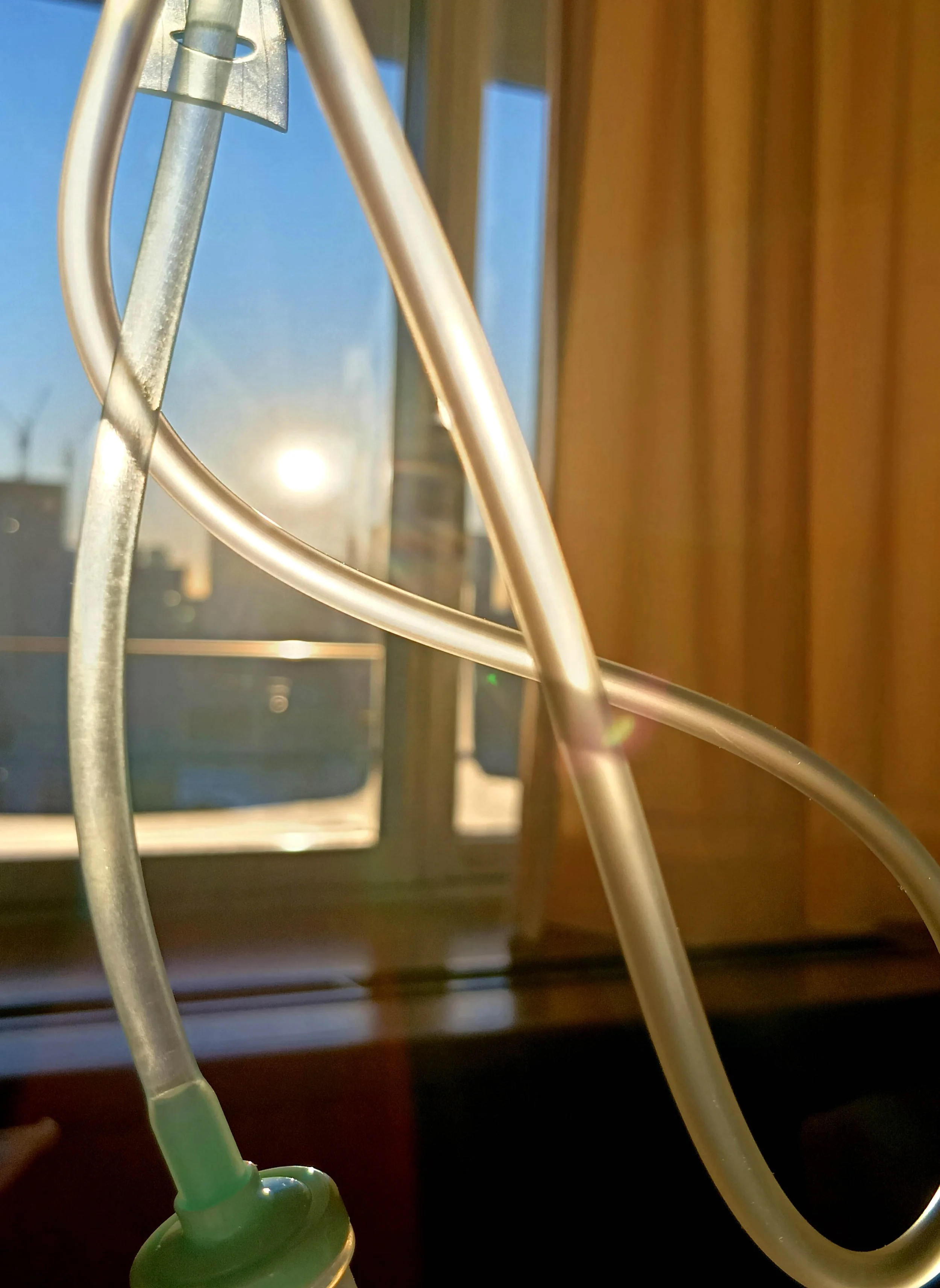
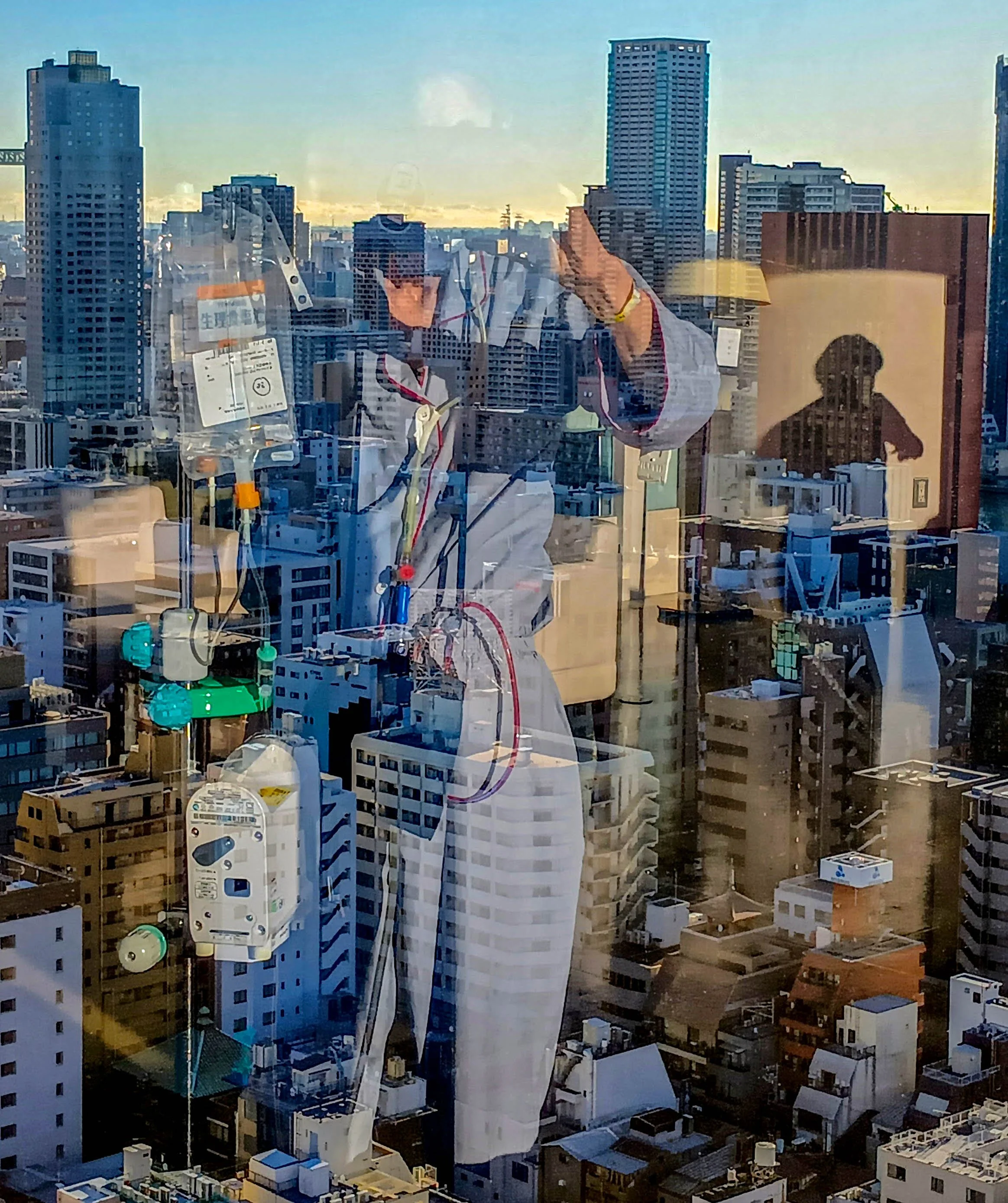
After 64 years with a camera, what has photography given you that nothing else could?
Amid the anxiety of battling illness, strangely only the moments when I was taking photographs brought peace and calm to my heart. I think taking photographs brought me a therapeutic role. I felt saved by photography.
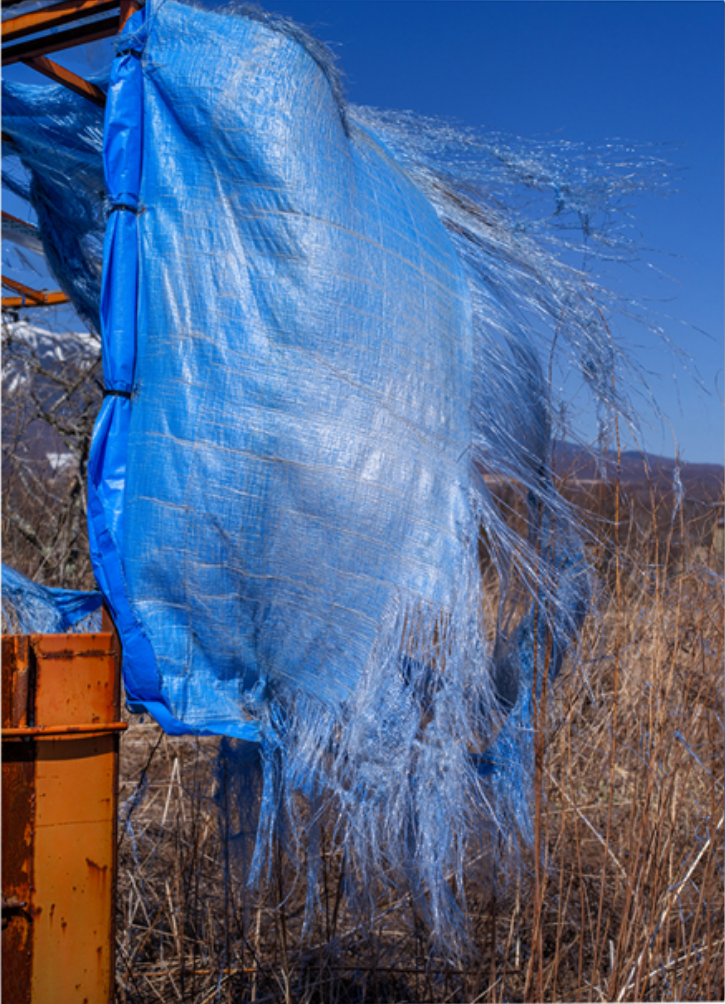
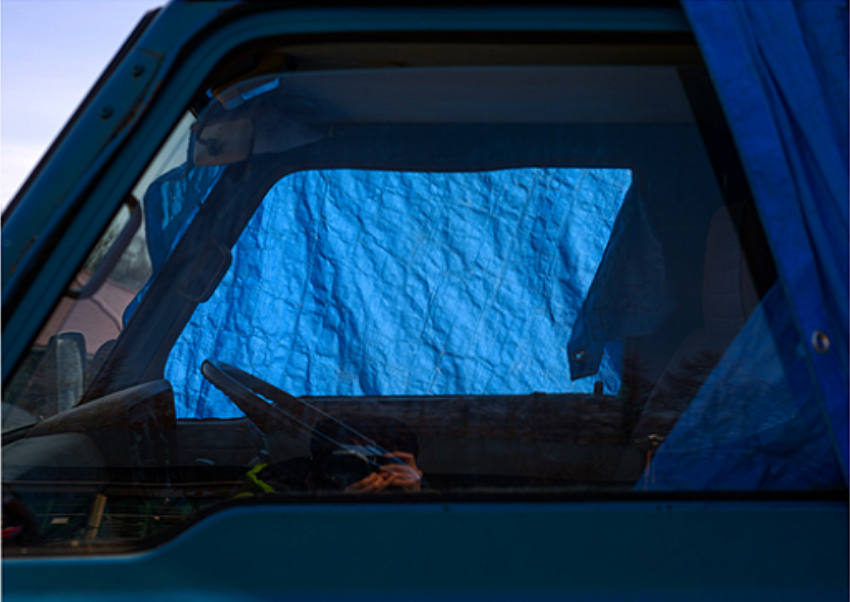
To discover more about this intriguing body of work and how you can acquire your own copy, you can find and purchase the book here. (AKAAKA Art Publishing ,shashasha, Amazon)
More photography books?
We'd love to read your comments below, sharing your thoughts and insights on the artist's work. Looking forward to welcoming you back for our next [book spotlight]. See you then!
The past became visible once Richards learned where to look. For The Inner Passage, Virginia McGee Richards spent fifteen years photographing a waterway in the South Carolina Lowcountry. Photography Book Spotlight