How Kathya Maria Landeros Spent 13 Years Photographing Immigrant Farm Communities to Rewrite the Story of the American West
Welcome to this edition of [book spotlight]. Today, we uncover the layers of 'Verdant Land,' by Kathya Maria Landeros (published by Dust Collective). We'd love to read your comments below about these insights and ideas behind the artist's work.
Verdant Land reframes immigrant labor through patience, trust, and time.
It looks at how long-term photography can show immigrant communities beyond work alone. Kathya Maria Landeros spent 13 years returning to agricultural towns in the American West. She photographed people, homes, and landscapes connected to her own family history. The work grew slowly, shaped by repetition, memory, and responsibility.
The interview moves between personal history and photographic decisions.
Landeros talks about family migration, building trust, and refusing fast images. Her approach comes from lived experience and long-term presence. She explains how time helped her avoid stereotypes and stay close to the people she photographed. The result is a way of photographing labor that centers dignity, care, and belonging.
The Book
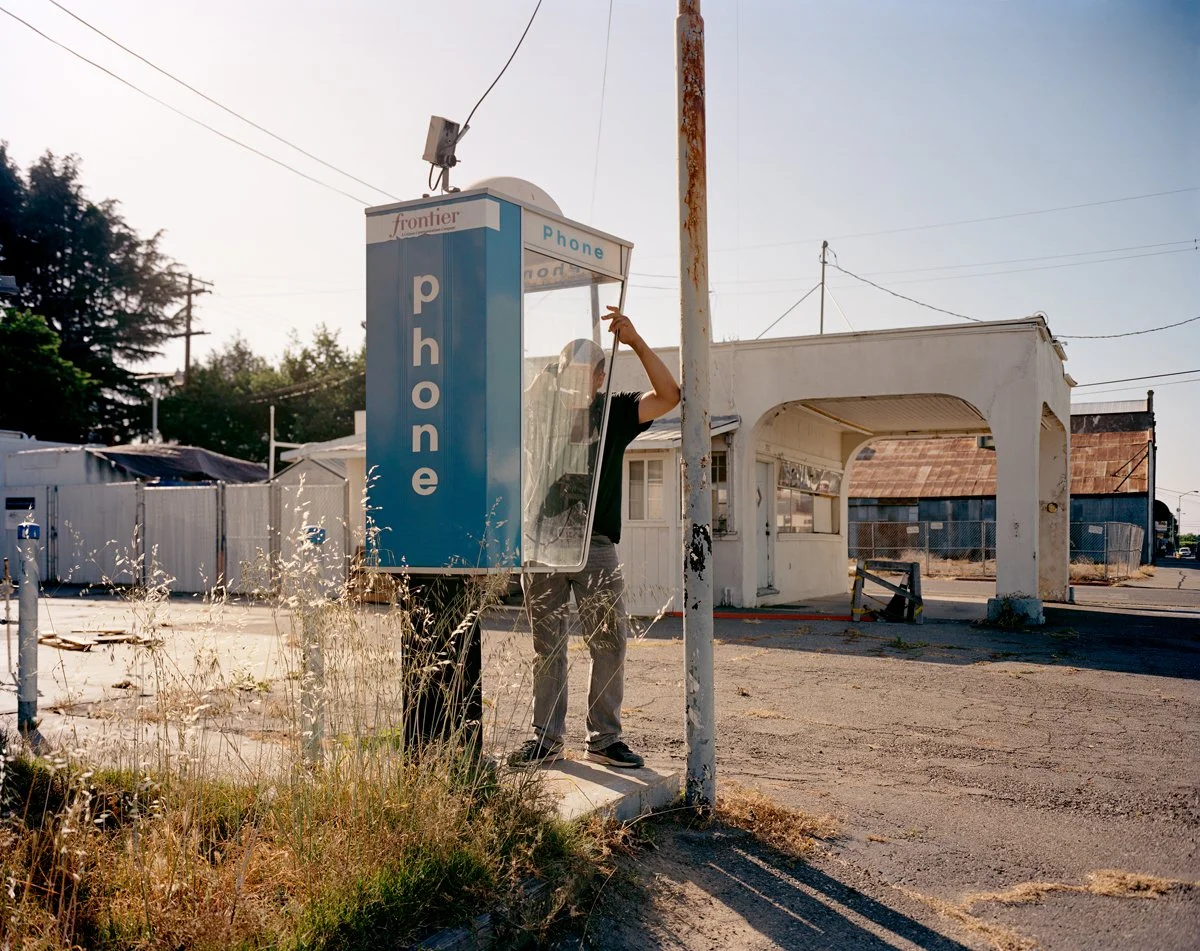
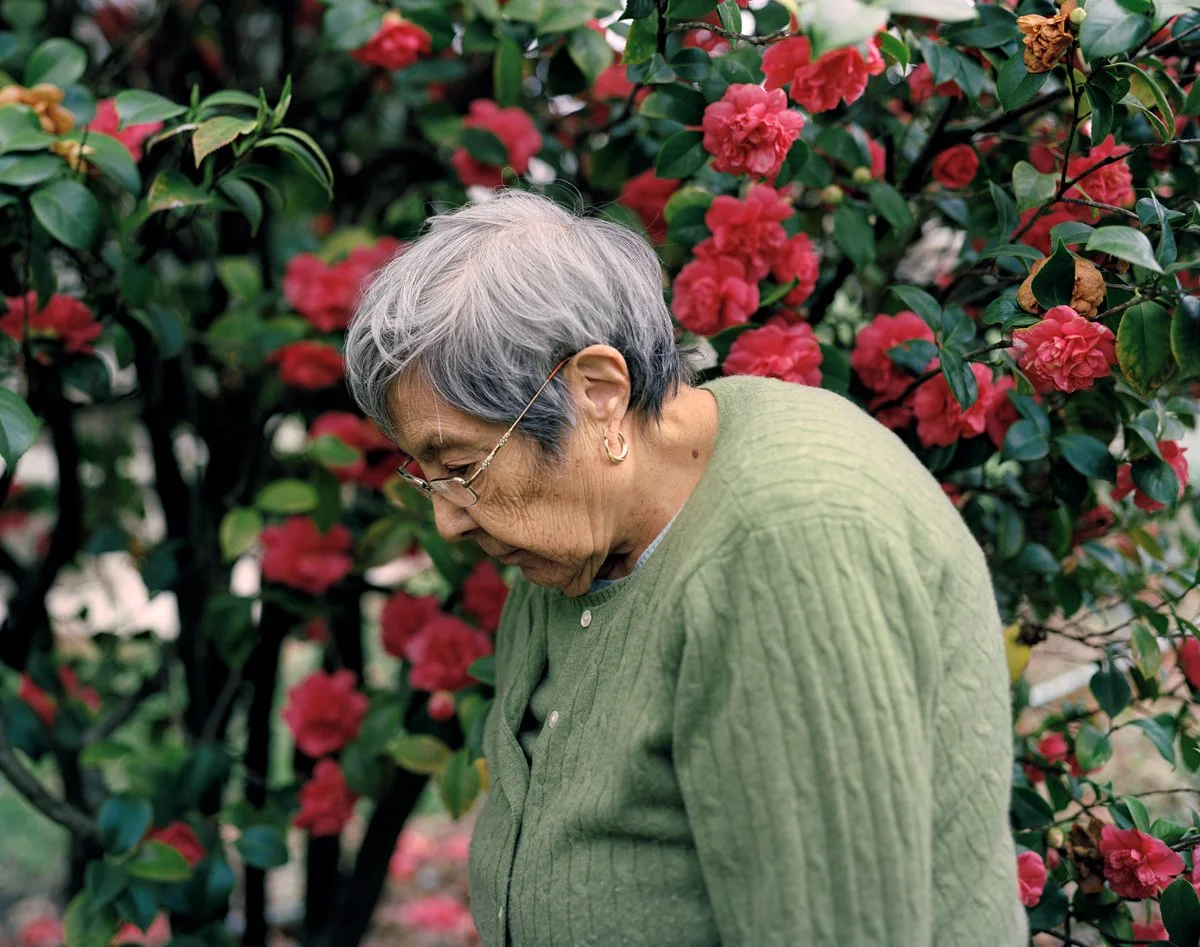
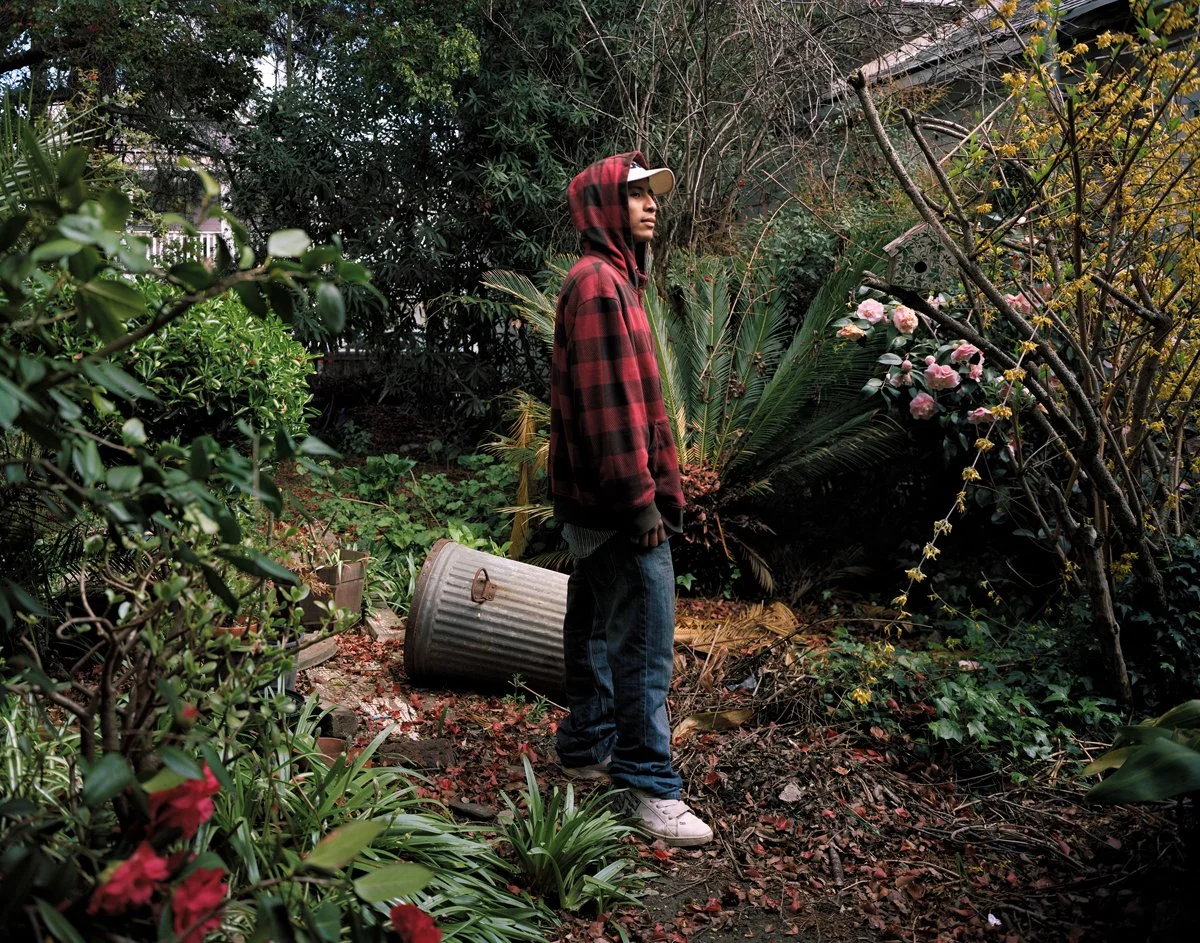
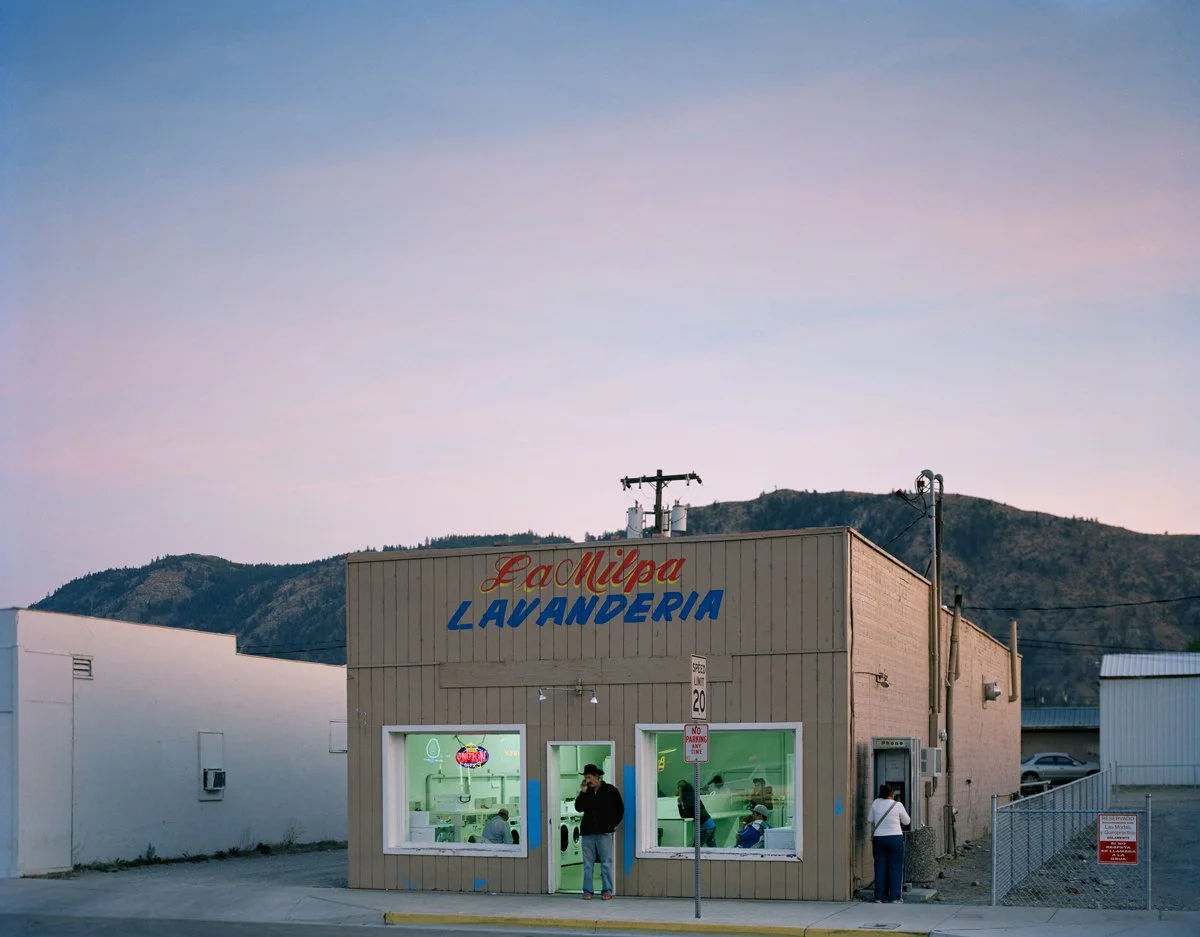
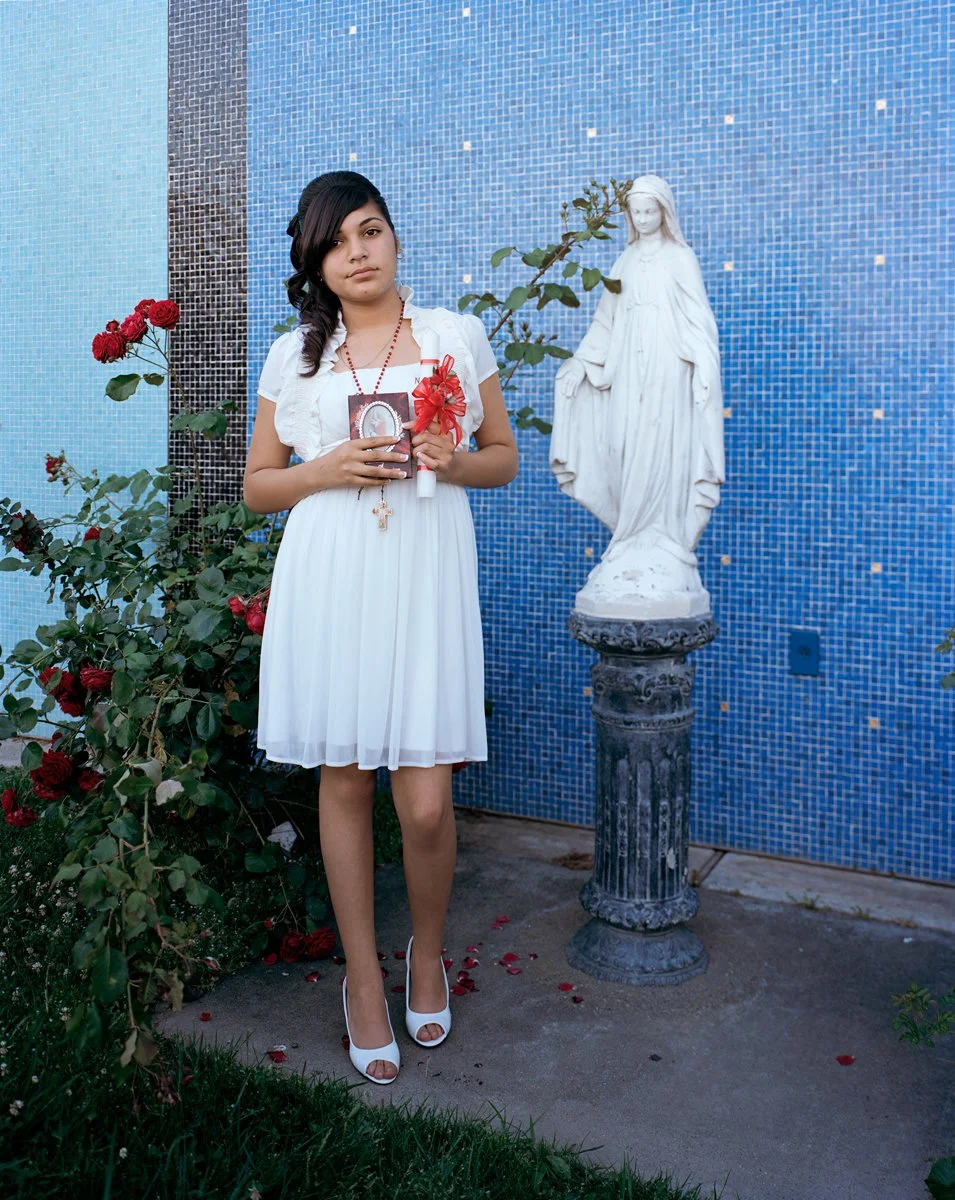
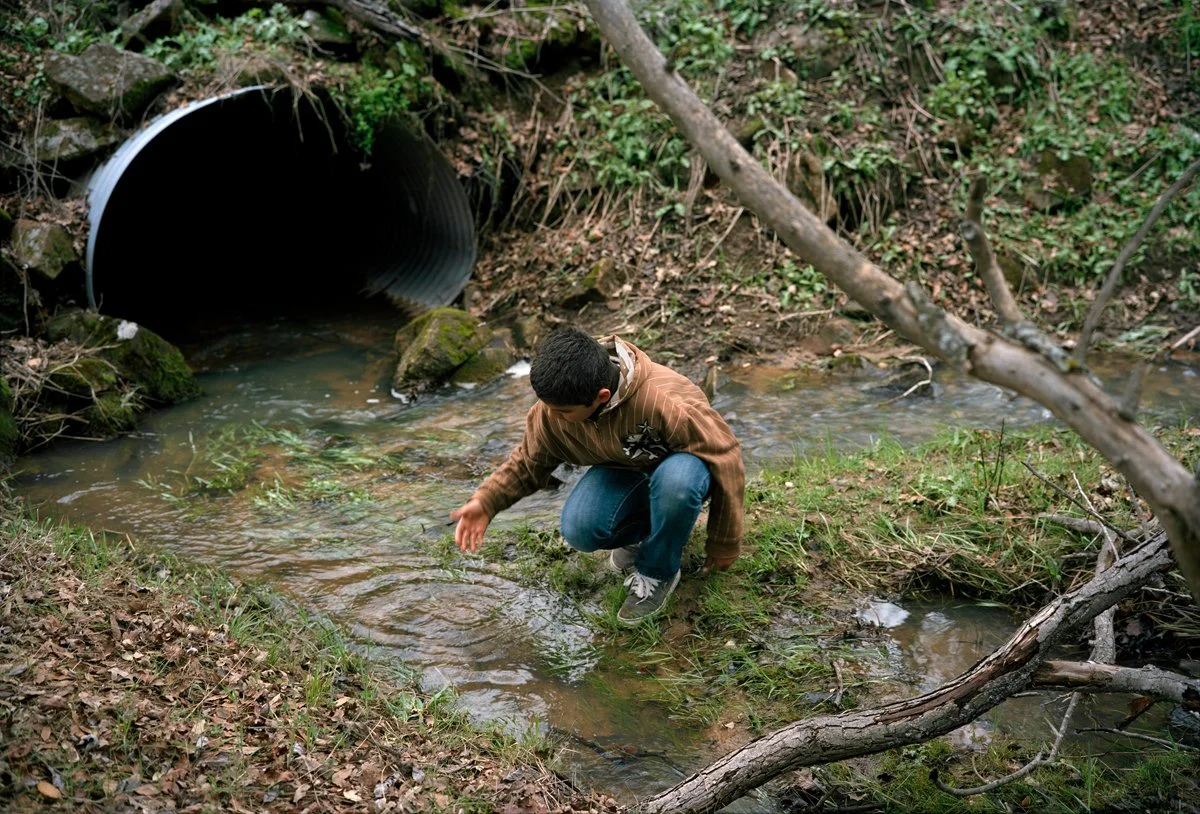
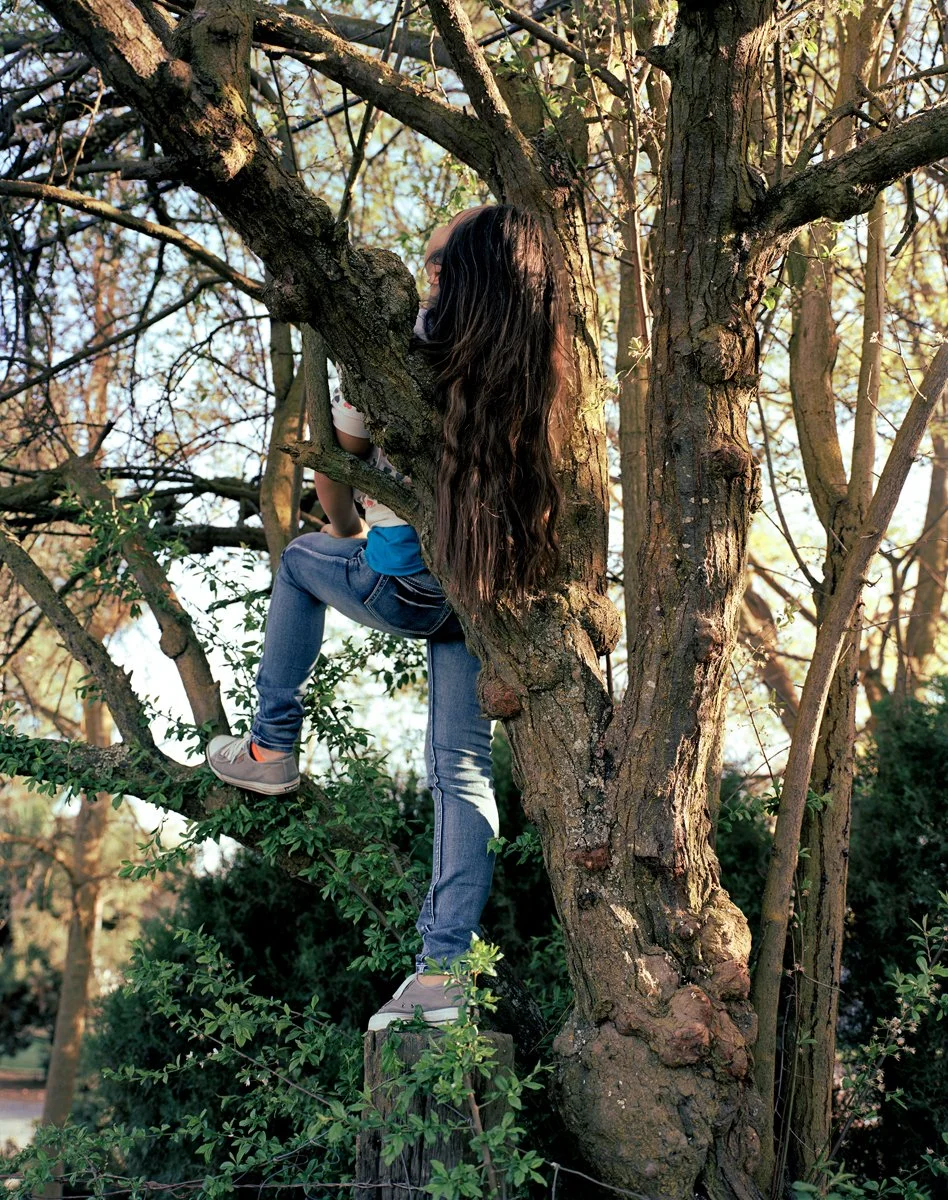
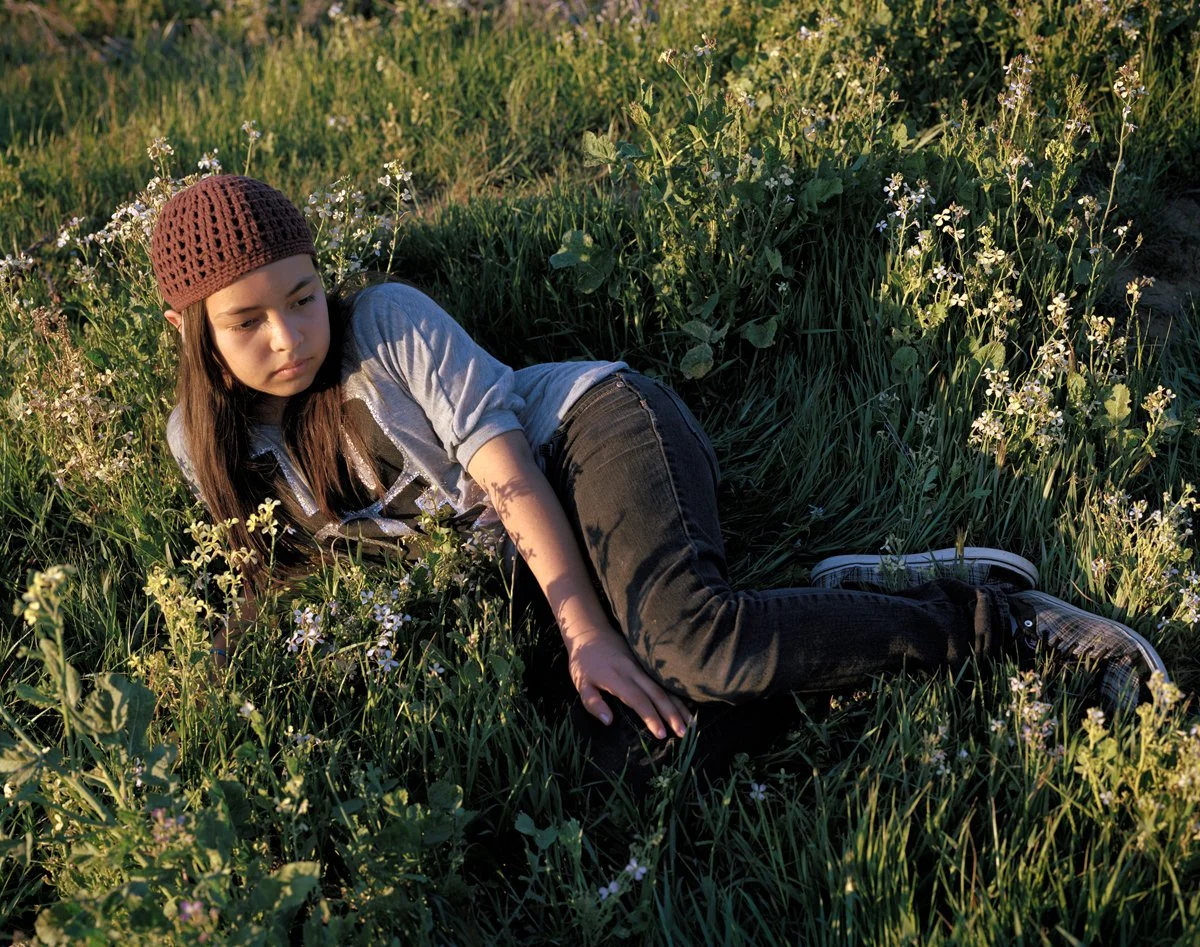
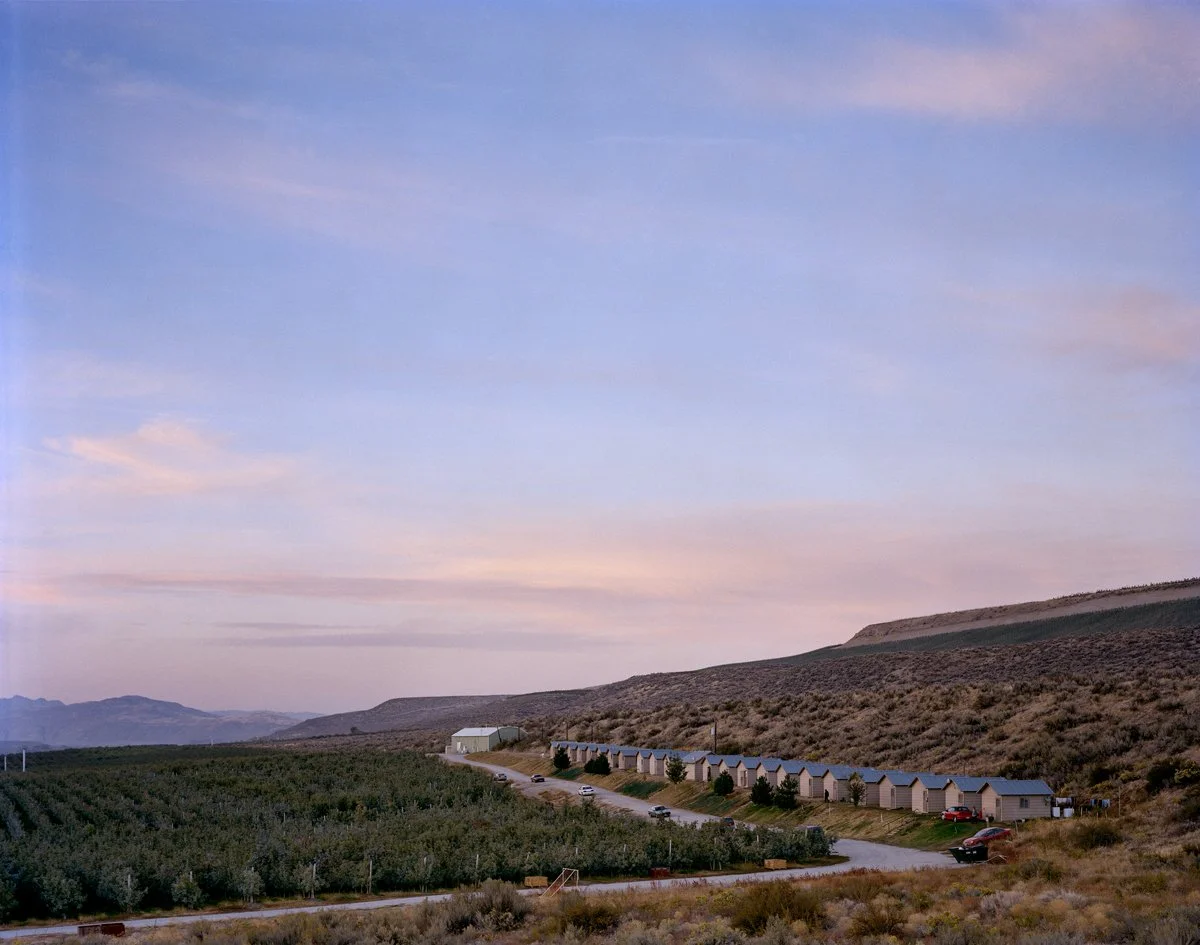
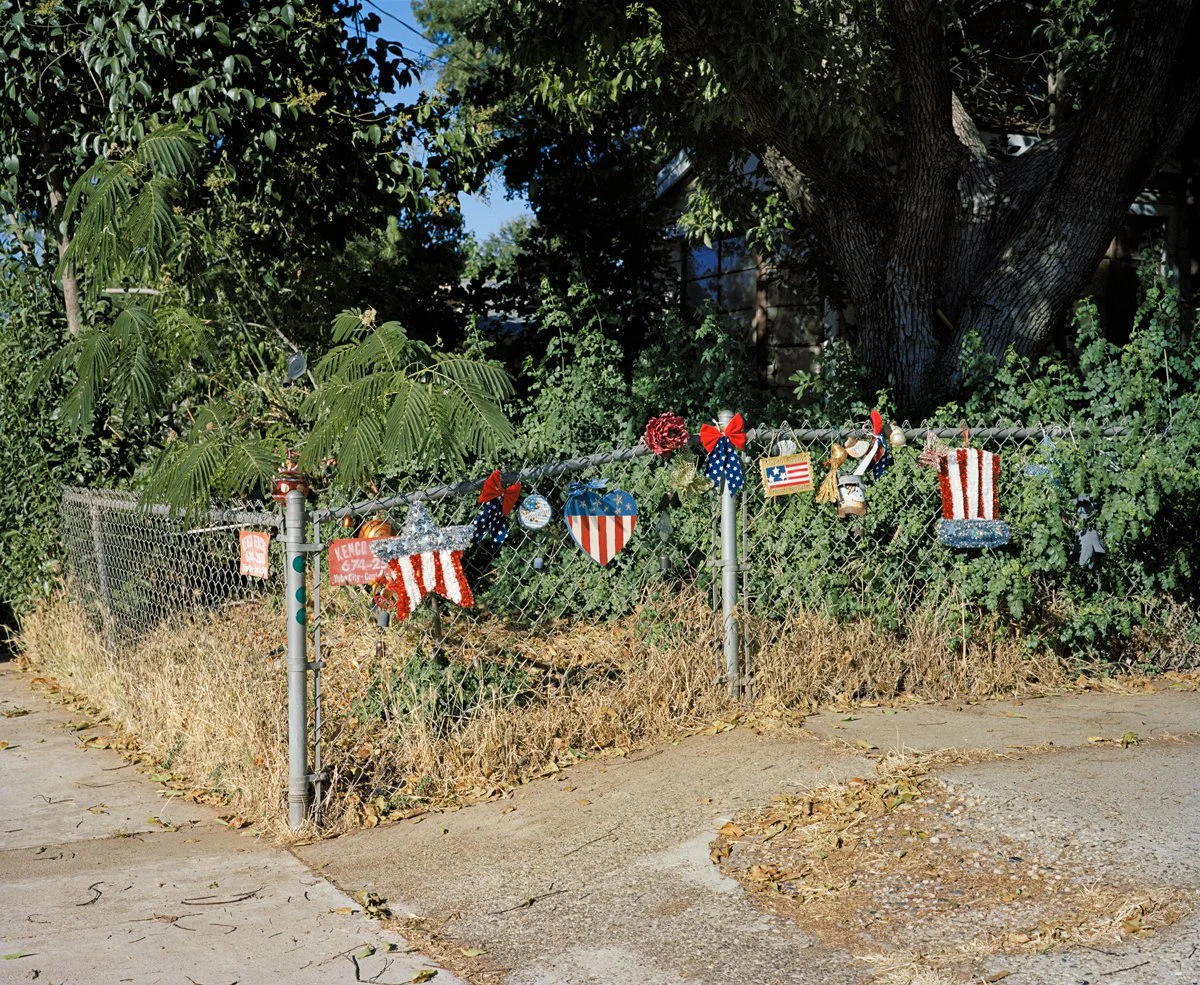
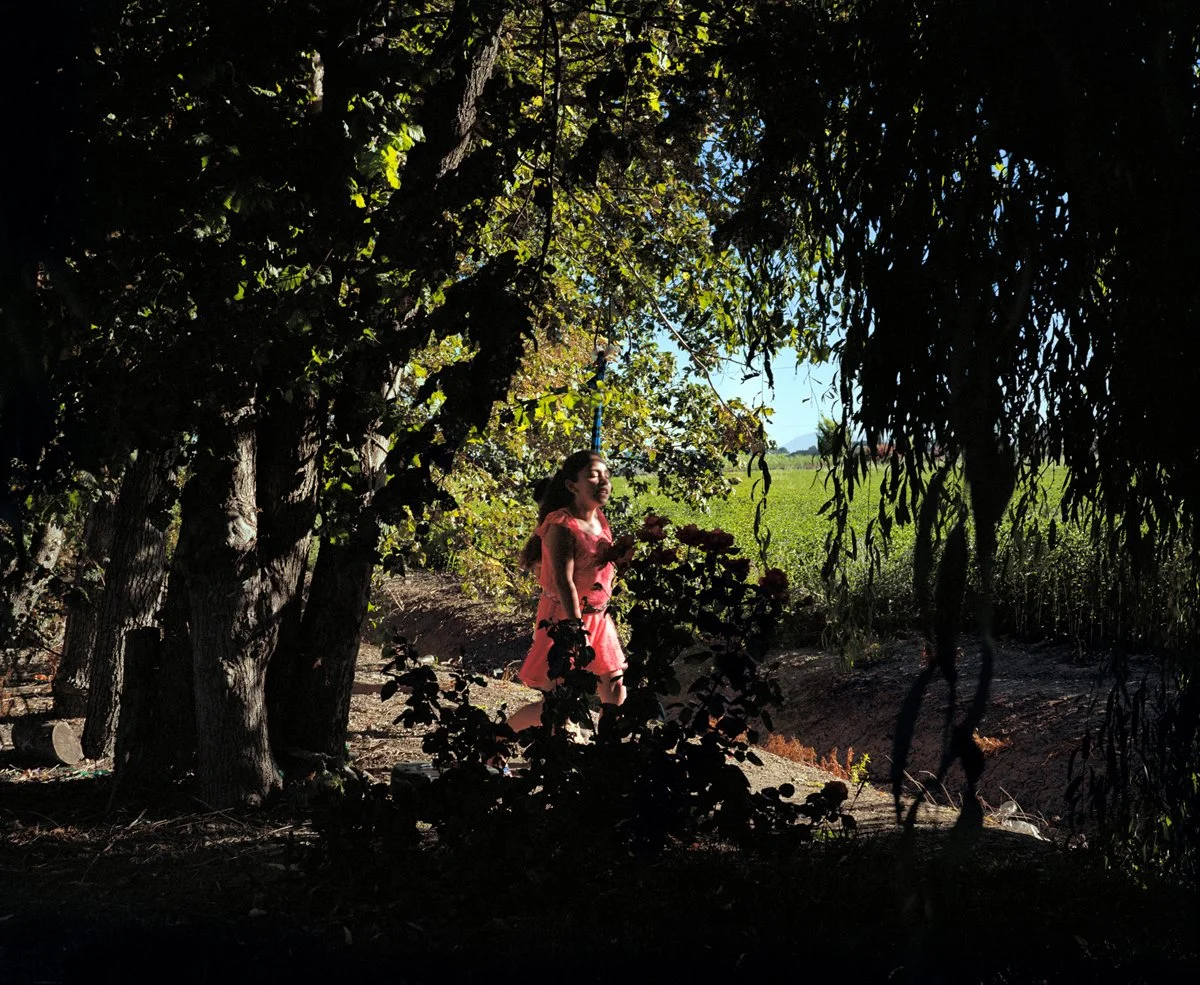
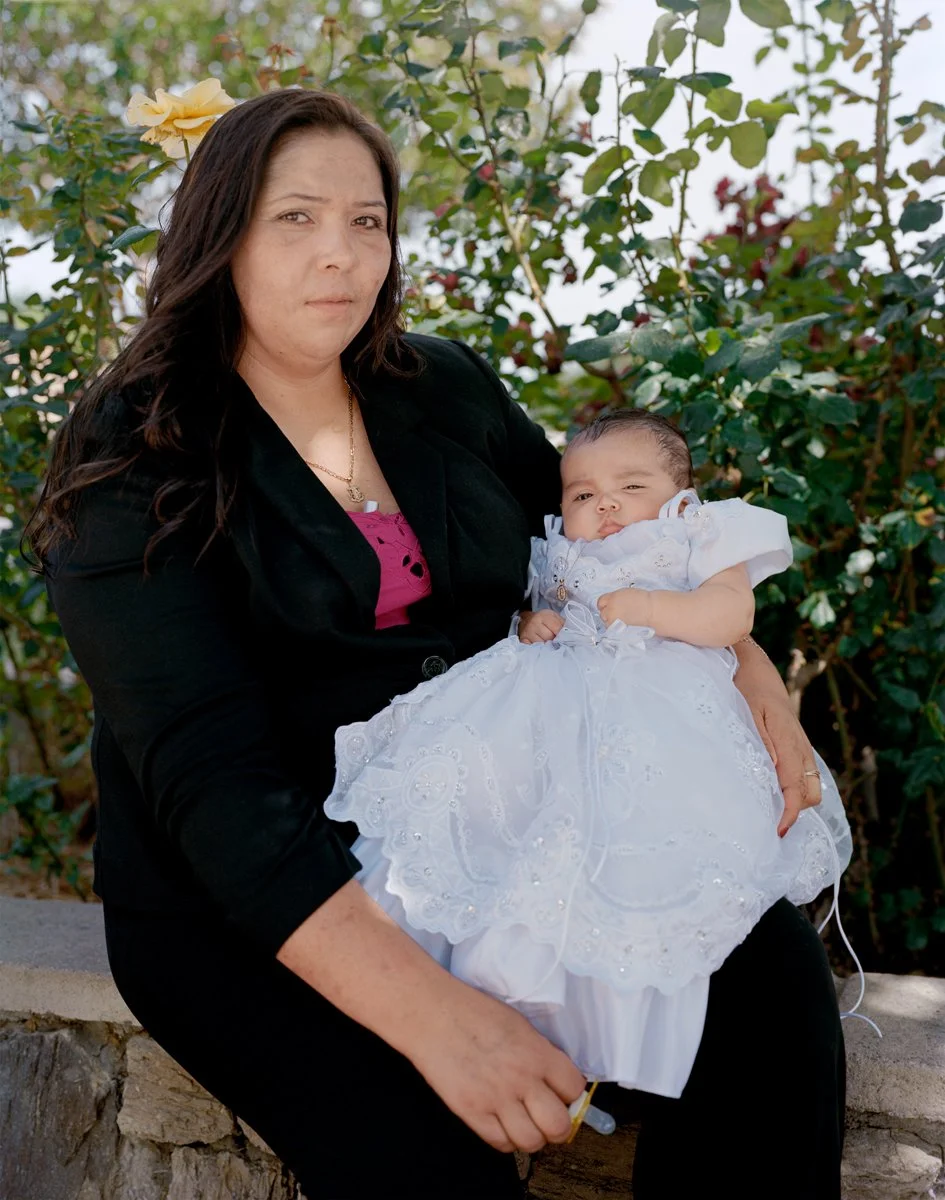
Verdant Land by Kathya Maria Landeros, published by Dust Collective, is a long-term photographic project shaped by family history, migration, and agricultural labor in the American West. Made over more than a decade, the book brings together portraits, landscapes, and vernacular family photographs to reflect a century of movement between Mexico and the United States. Rather than focusing on labor itself, Verdant Land centers presence, care, and the ways immigrant communities shape land, memory, and belonging across generations.(Dust Collective)
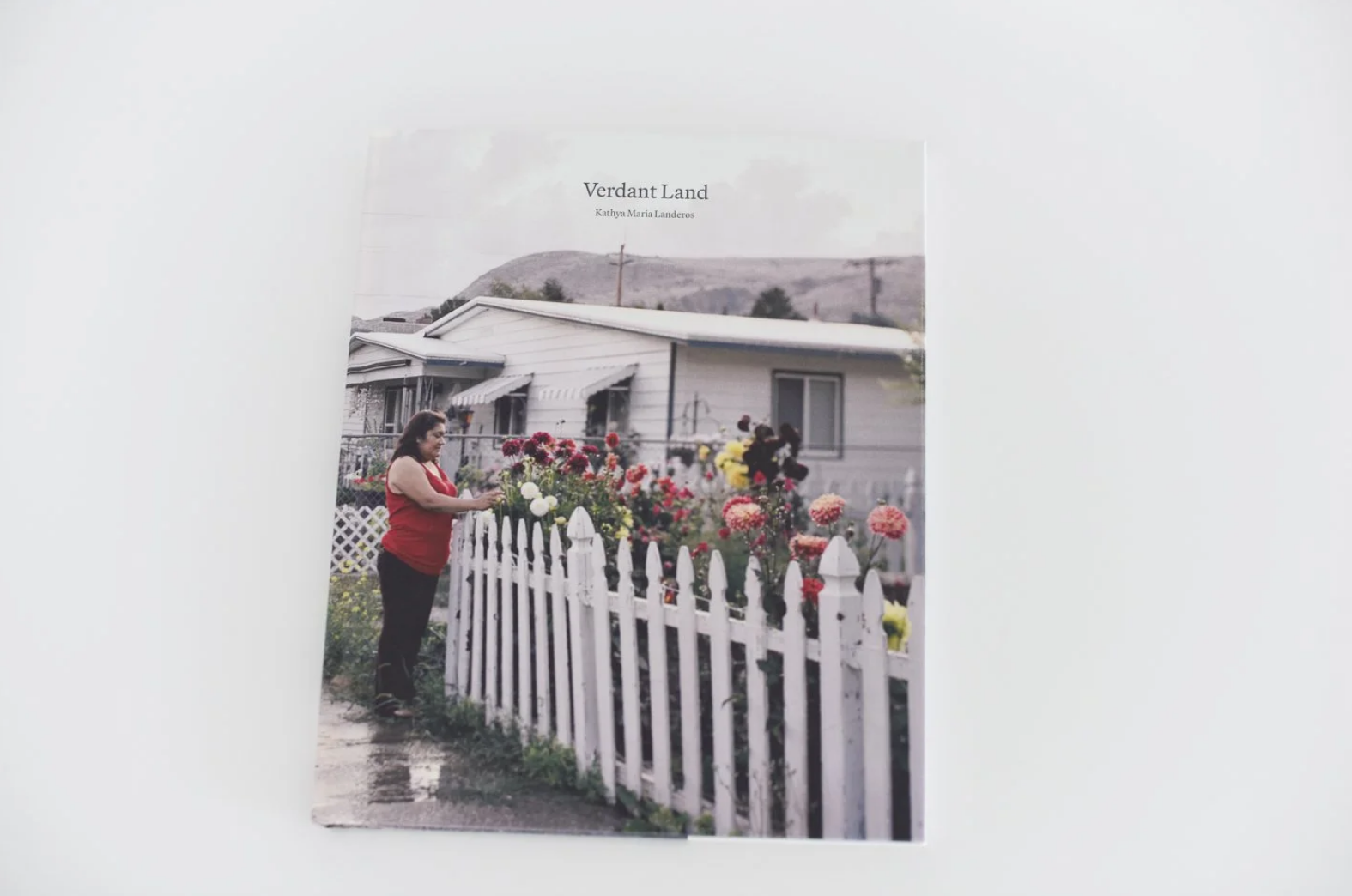
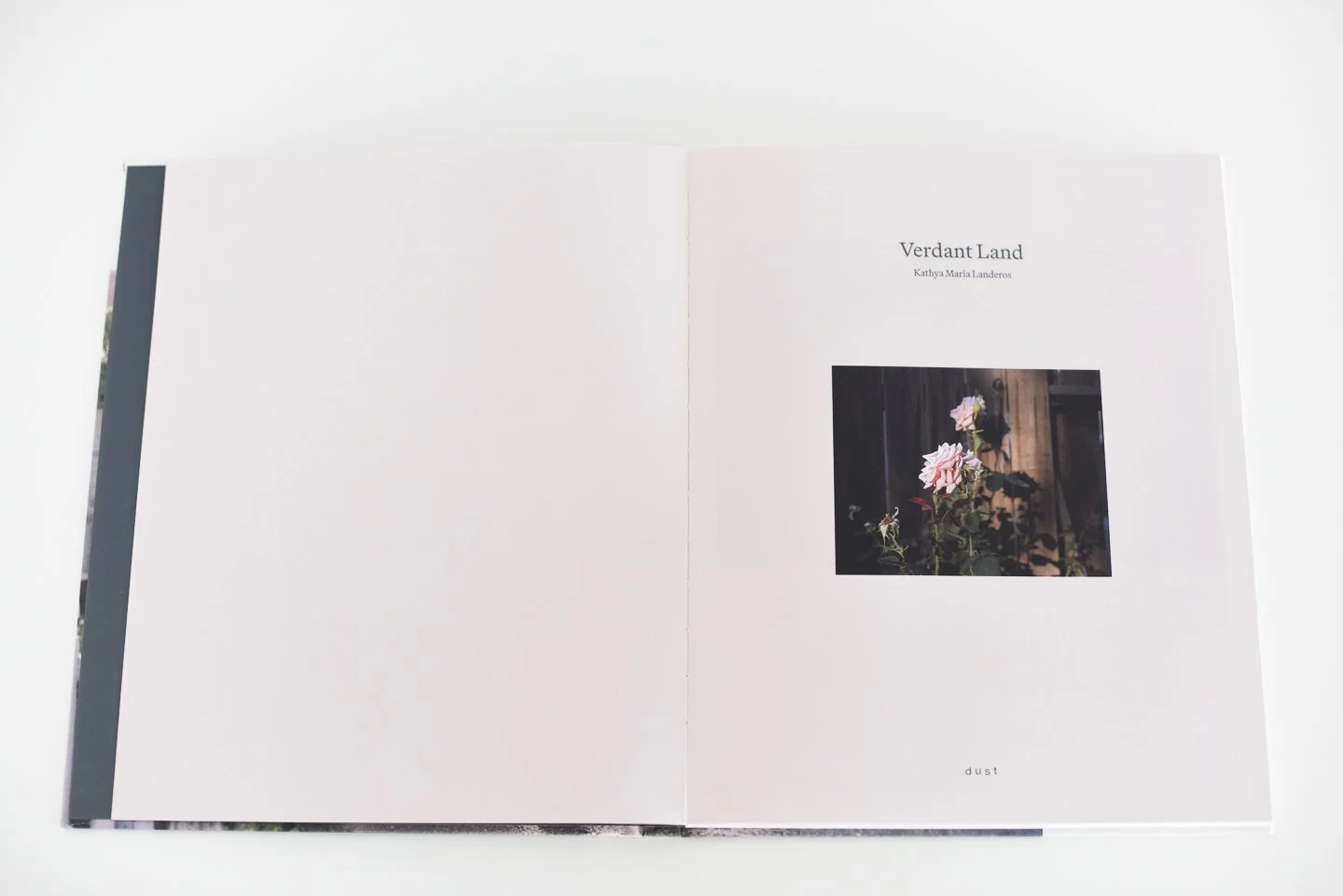
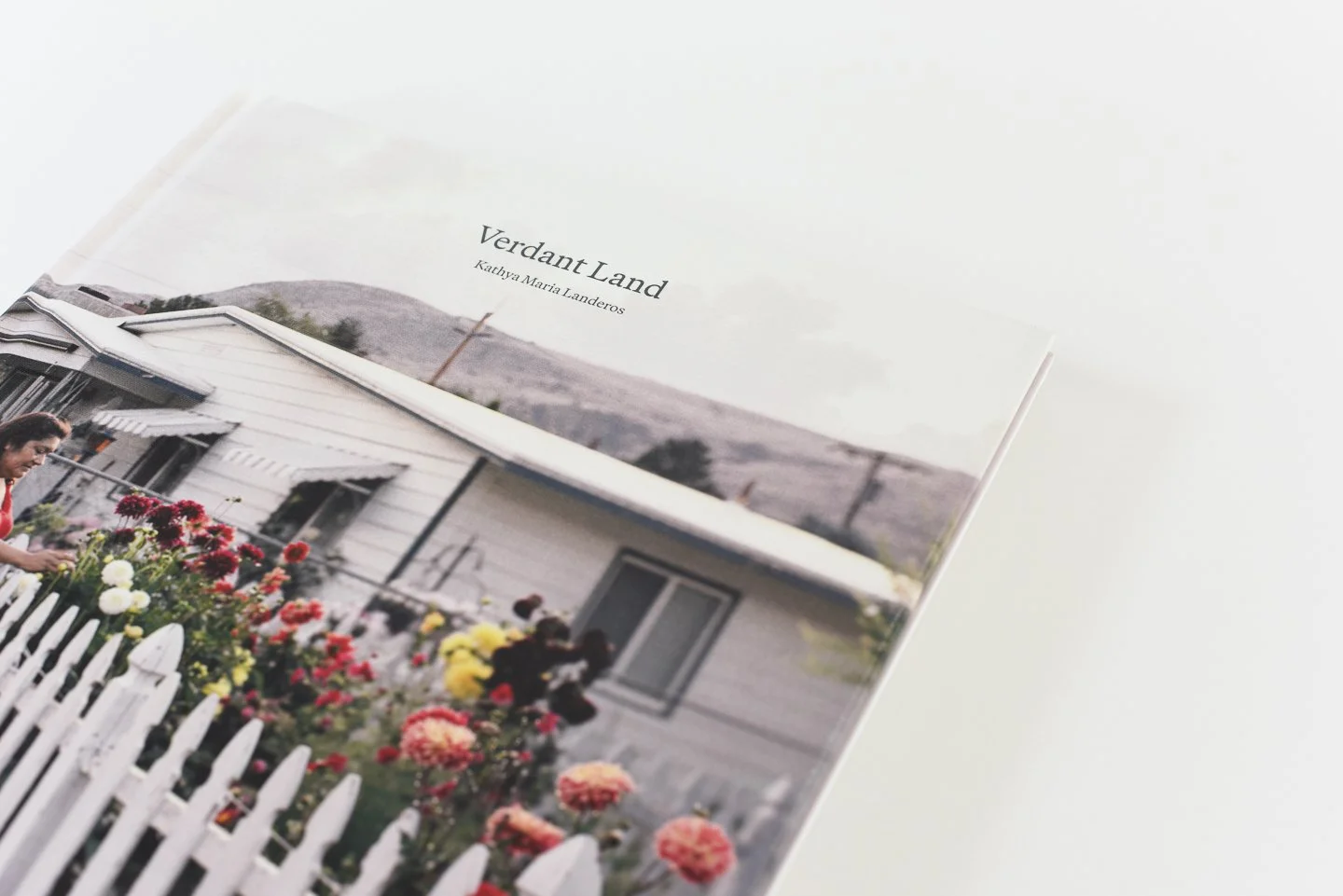
Project Genesis: What made you decide to spend 13 years photographing agricultural communities across the western United States for Verdant Land?
This has been a long-term project that is still ongoing, although it has evolved over time. It started in black and white, and then shifted to color and then to a larger format. The pictures in the book, Verdant Land, represent a chapter of work in agricultural communities, and bring closure to a part of this work, but I continue to make photographs and hope to do so for many, many years to come in the American West. It’s a place and a community I feel connected to because I was raised in the Central Valley, a place deeply rooted in agricultural labor.
Personal Connection: How did your own family history with your great-grandmother Mama Chuy and her work as a farm laborer influence the way you chose to photograph these communities?
My great grandmother was the matriarch of the family, and her father and husband were copper miners. It was my great grandmother’s children and then my parents who worked as farm laborers. My mother worked in the tomato and peach canneries in Sacramento when I was young, and I lived in a neighborhood surrounded by farmland. My grandmothers helped raise us while my parents, as immigrants, worked to provide for us. So I think all of these things have really shaped who I am.
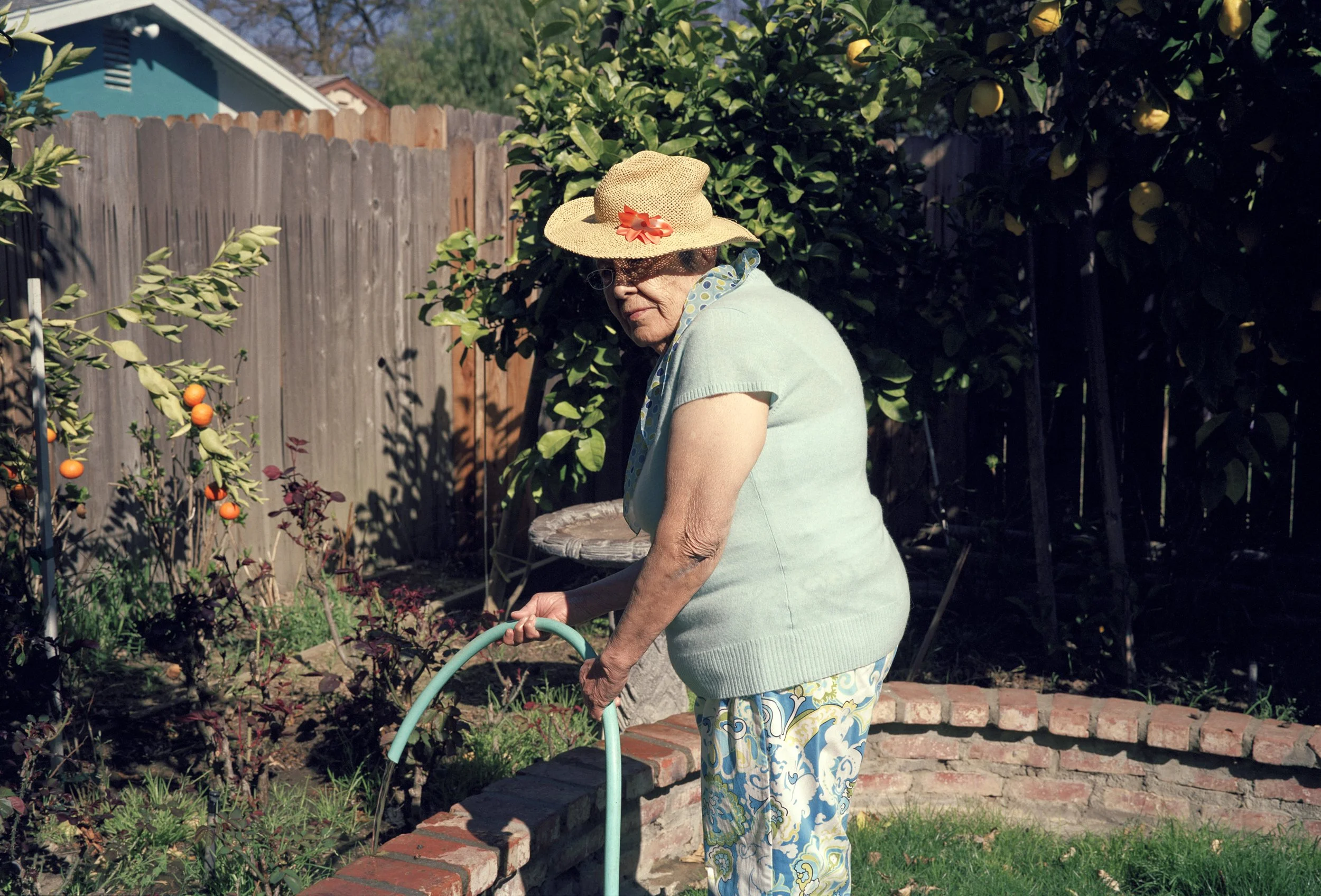
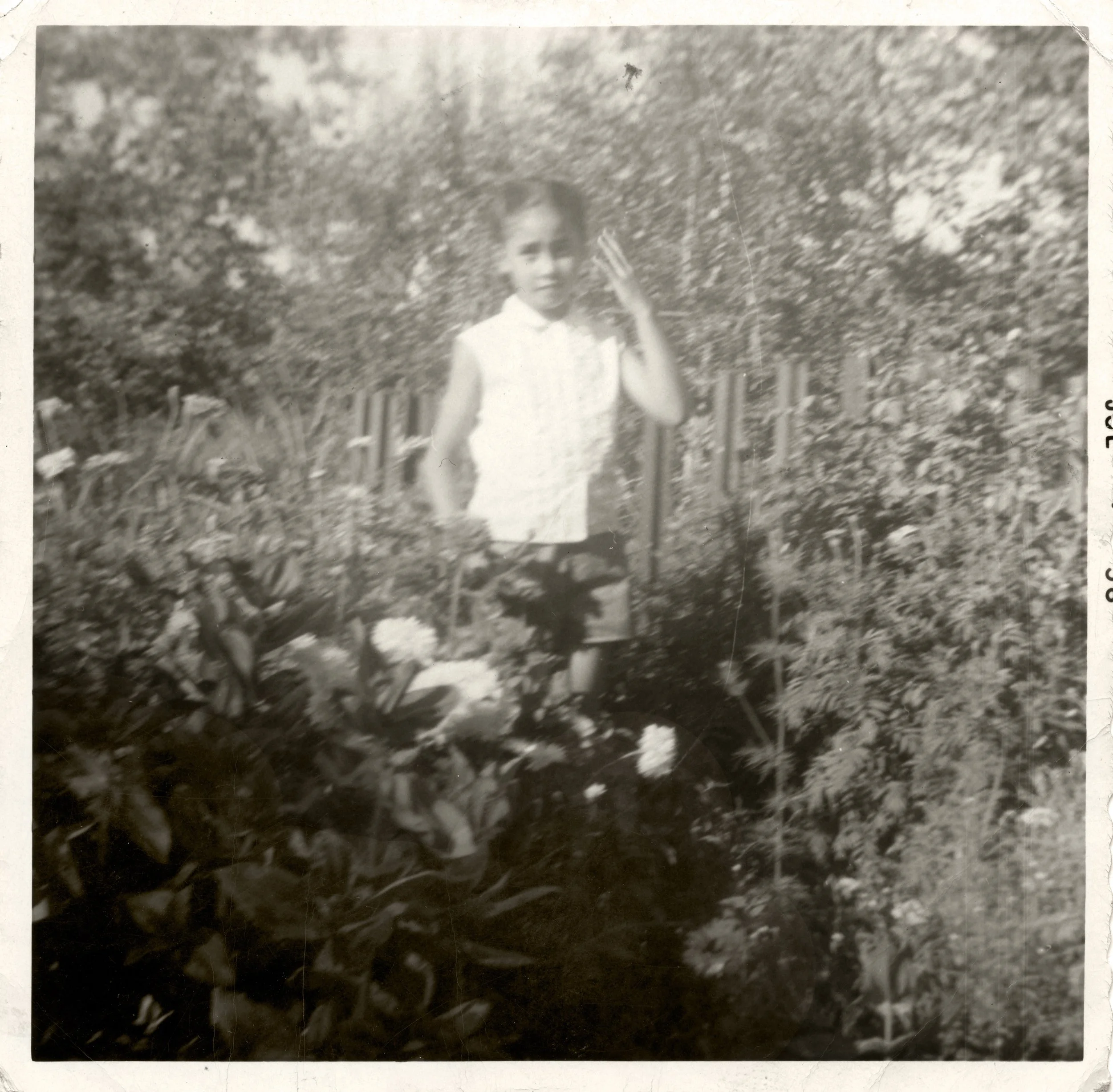
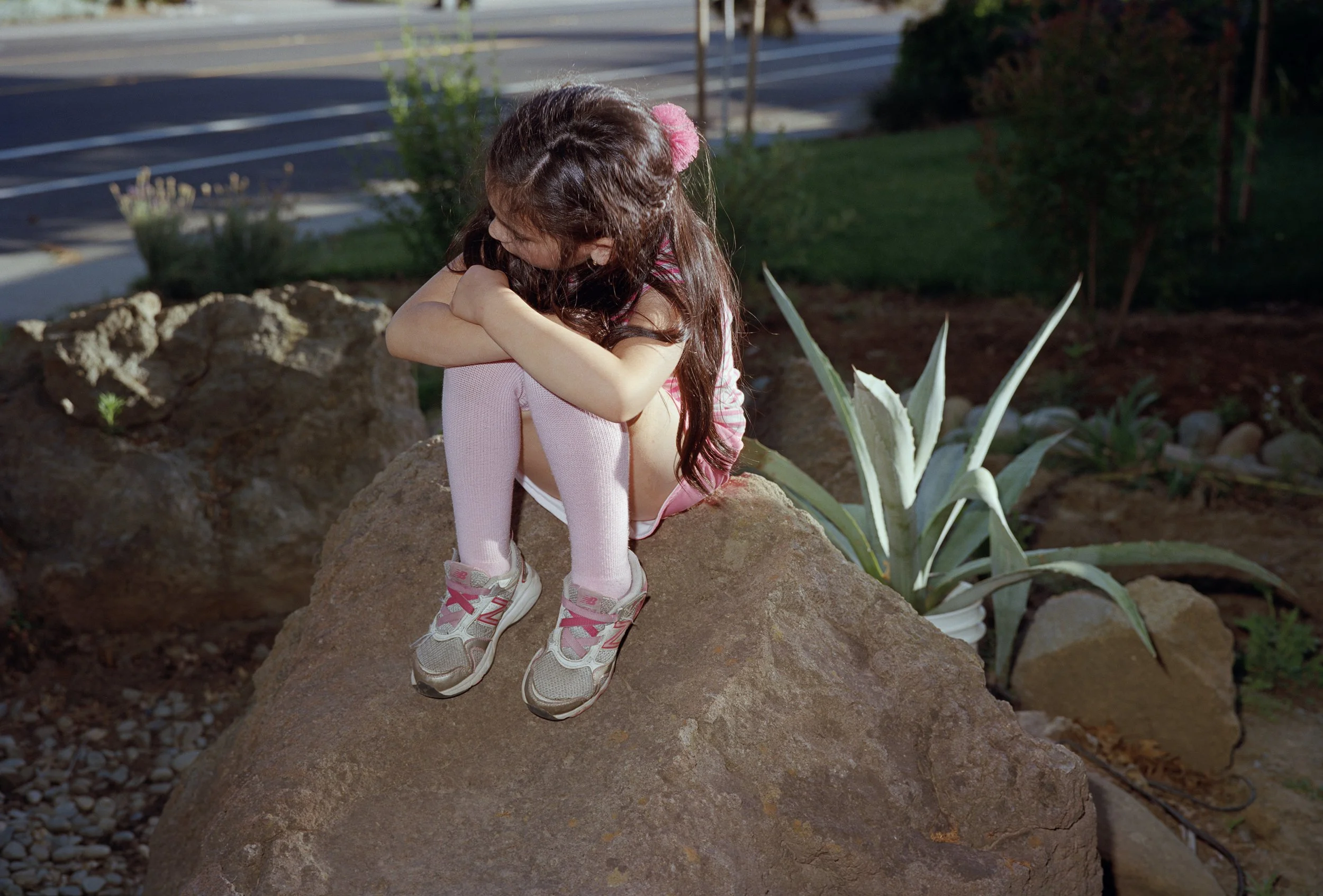
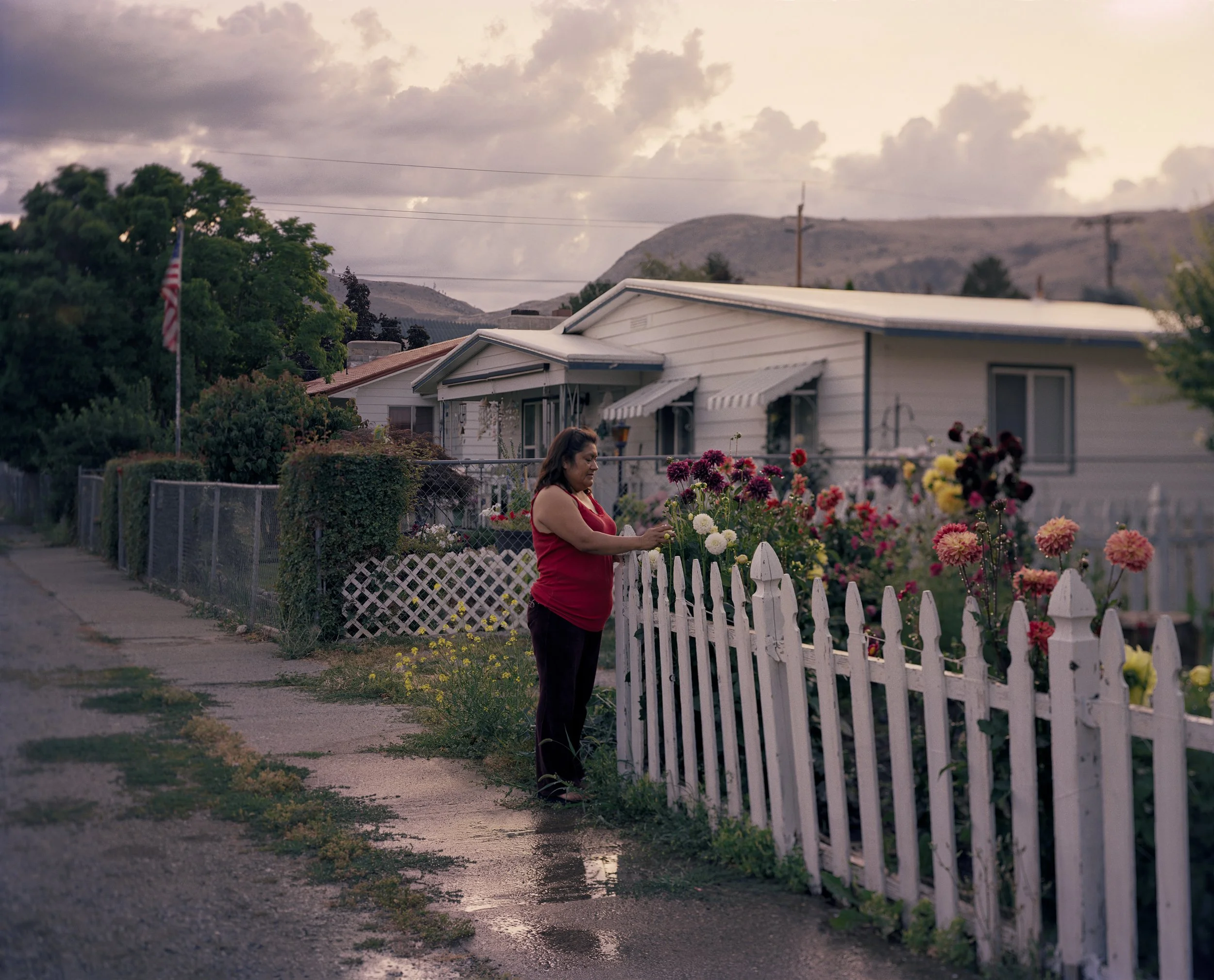
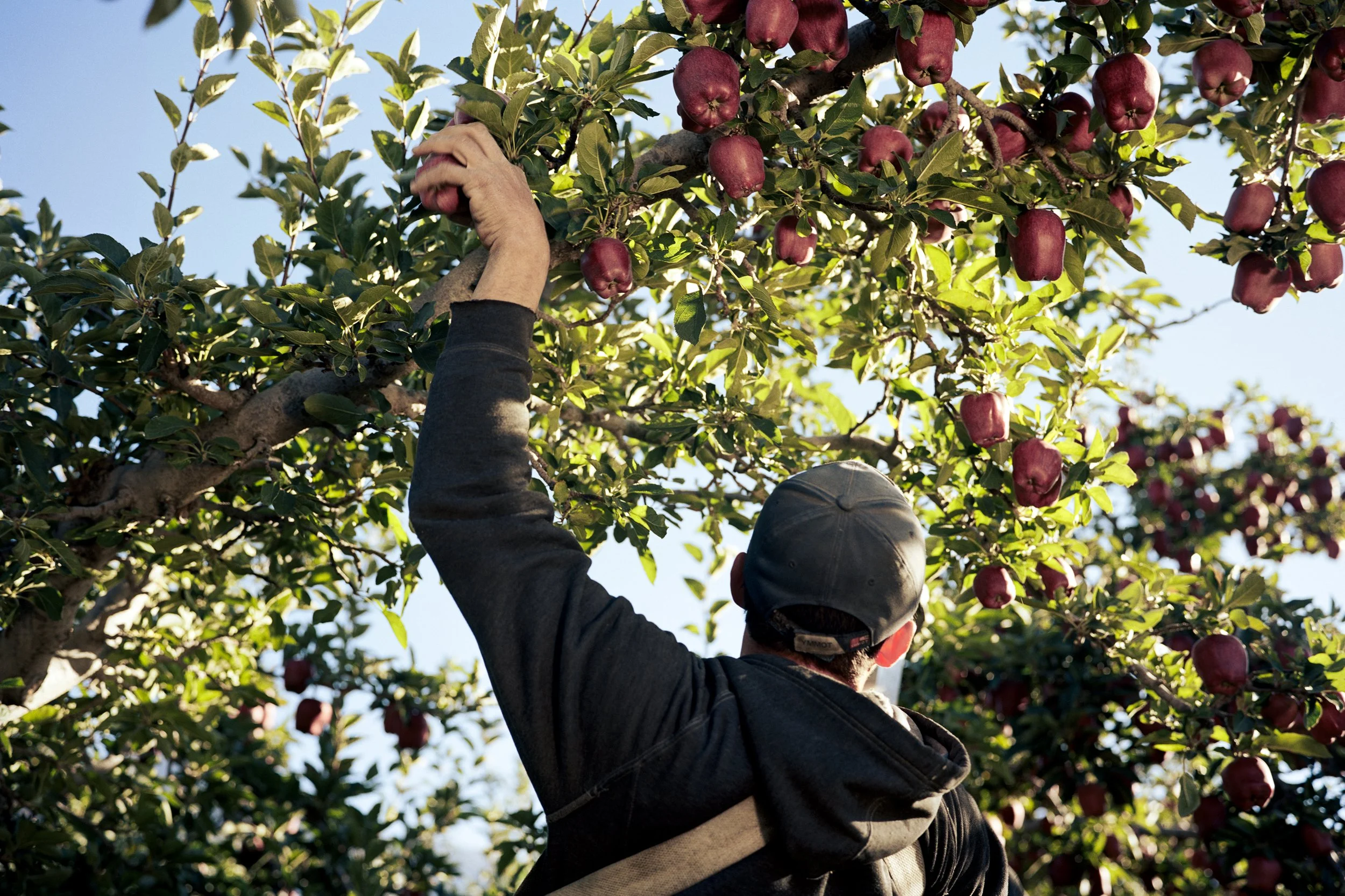
One of my favorite family photographs is of my mother as a young child in a northern California orchard, where she lived while her aunts and my grandmother, her mother, worked. She is surrounded by flowers in the garden, and the photograph is beautiful, capturing her on this farm camp, her home away from Mexico. In making pictures of people, I wanted to show them in a similar way, surrounded by the verdancy of the communities they lived in, and formed and cultivated, an extension of what it means to labor the land. I didn’t want to photograph the physical act of literally working the land as farm laborers, but the long-term contributions immigrants have made to a place, something I understood through my family’s history, generation after generation, they came to this country to work. The centrality of immigrant laborers to the formation of the American West, and the contributions they’ve made over generations, was something I wanted to see photographed with the same affection I saw in that photograph of my mother as a child, and in my own childhood, surrounded not by poverty and despair but by love and beauty and a presence. Can a photograph serve as an affirmation? An affirmation of our humanity? I think it can, which is why I keep going back to the pictures of my family.
Long-term Approach: What did working on this project from 2011 to 2024 teach you about building trust with the communities you photographed?
I’ve come to accept that I am someone who doesn’t do well under the pressures of a deadline or a definitive end goal in mind. It’s not what motivates me. On the contrary, it is nerve wracking to me. It’s finding a balance of going out in the world and not being afraid to interact with people but also not forcing a moment for the sake of a photograph. With this advice in mind, I’ve kept a steady dedication to getting outside of myself, of my own life, and interacting with people that allows me to make new friends and meet new people. That is a gift but only if you treat it as such.
How do you know when the right moment appears, and have there been times when you had to walk away without taking a picture?
Experience and time have taught me to intuit when it is appropriate to photograph. For example, when I am invited to someone’s home or to an event to photograph, I know it is okay to do so. But I still try to be respectful by engaging with people and talking to them to gauge whether they are comfortable before I start making pictures. And that comfort goes both ways. I typically use a large-format camera, so it draws attention. I’ve had situations outdoors where someone will stop to talk to me about my camera, and that has led to invitations to photograph. Although very rare, I have also found myself in situations where I have been verbally harassed, and that is when I know to walk away. I don’t want photography, or my engagement, to feel predatory in any way. It is the reason I enjoy using a large-format camera: there isn’t anything surreptitious about it. It is a slow, collaborative process. Yes, I have had to walk away or rethink what I am doing. Living in a post pandemic world, this moment in time, I think people’s comfort level in interacting with other people has also shifted and that has also changed my most recent work.
Balancing Stories: How did you mix portraits, landscapes, and street scenes to show both the personal stories and the bigger picture of immigrant farm workers?
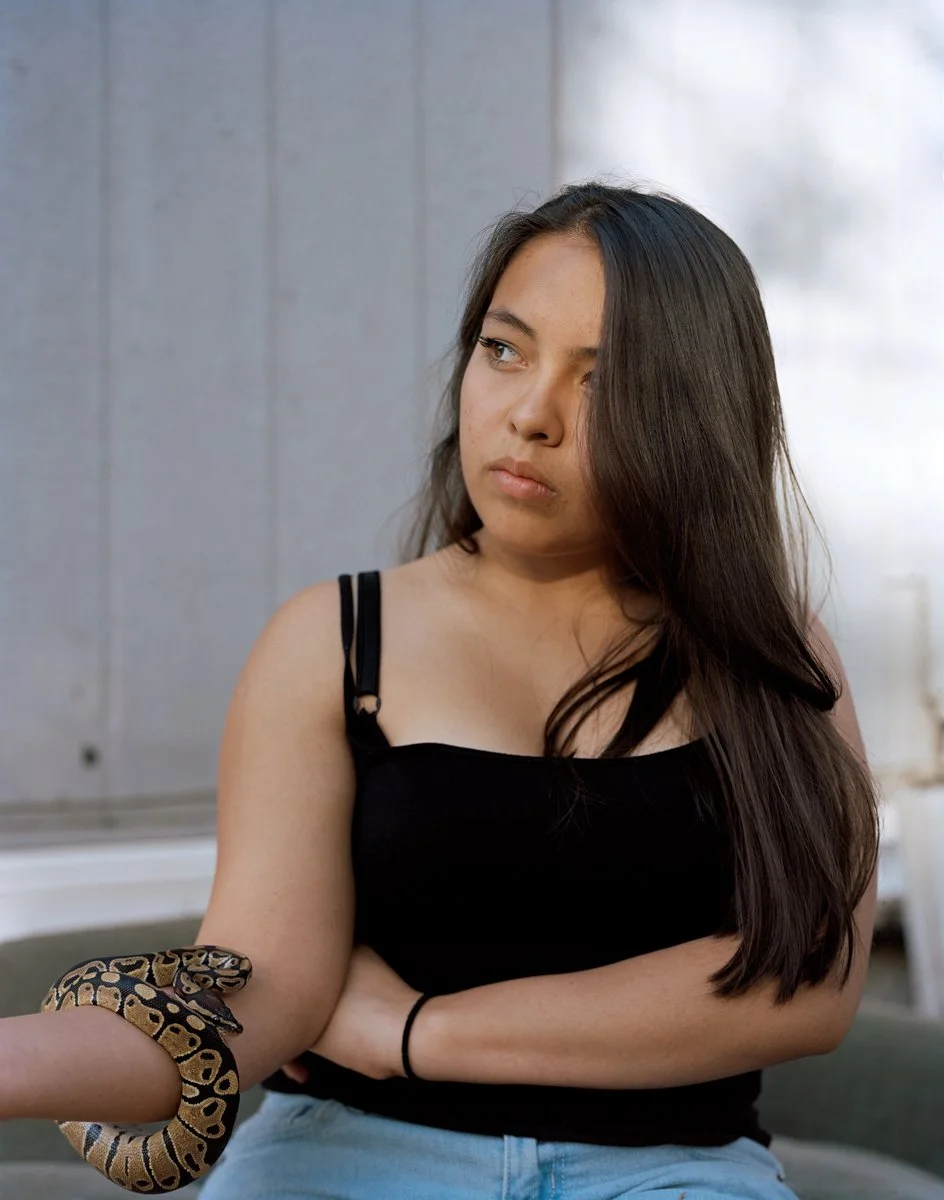
Verdant Land, the book, comprises three separate but similar longterm projects. To the credit of Emily Sheffer, the founder of Dust Collective and the book's publisher, she was able to weave a story. In Verdant Land, the photographic project, I focused more on formal portraits and careful studies, or what I saw as environmental still lifes. While in West, I photographed more sweeping landscapes. Dulce is primarily portraits, often seemingly more candid. In the end, I think the editing of Verdant Land as a book allows one to see the context of the environment and the larger studies of place, while also bringing in the intimacy of portrait photographs of people. In doing so, I hope that it also paints a multi-dimensional view of communities that span place and time. In my own family, our migration to and from the United States started in the beginning of the 20th century. It started in Arizona, then southern California and finally took us to the Sacramento Valley. So, there was a lot that I was unpacking and to Emily’s credit as an editor and publisher, she helped me make sense of this in a way that is both personal but also speaks to a larger history.
Book Design: Why did you include a family album with vernacular pictures at the back of the book, and how does this help tell the story?
The family pictures ground the work for me. They were the north star for me as I was trying to figure out why a photograph can be meaningful and how it serves as a testament to history and belonging. The story of my own family’s generational migration also offers a sustained example of how immigrants have shaped the United States.
Visual Language: How did you use light and composition to show the connection between the land and the people who work on it?
The light out West is magical. Living in New England now, it is one of the many things that I miss about living in California. I have also come to miss the flatness of space in Sacramento, unending farmland that is only punctuated by the horizon and the colors of the sky, especially in the summer late afternoon and evening light, when the days seem endless, and the heat envelops you. I can’t separate this light and geometry from my photographic compositions, but it’s probably more intuitive than cerebral for me when I make pictures – the connection between people and the landscape is innate.
Representation Challenge: What was most difficult about photographing Latino communities in a way that feels honest and avoids common stereotypes about farm workers?
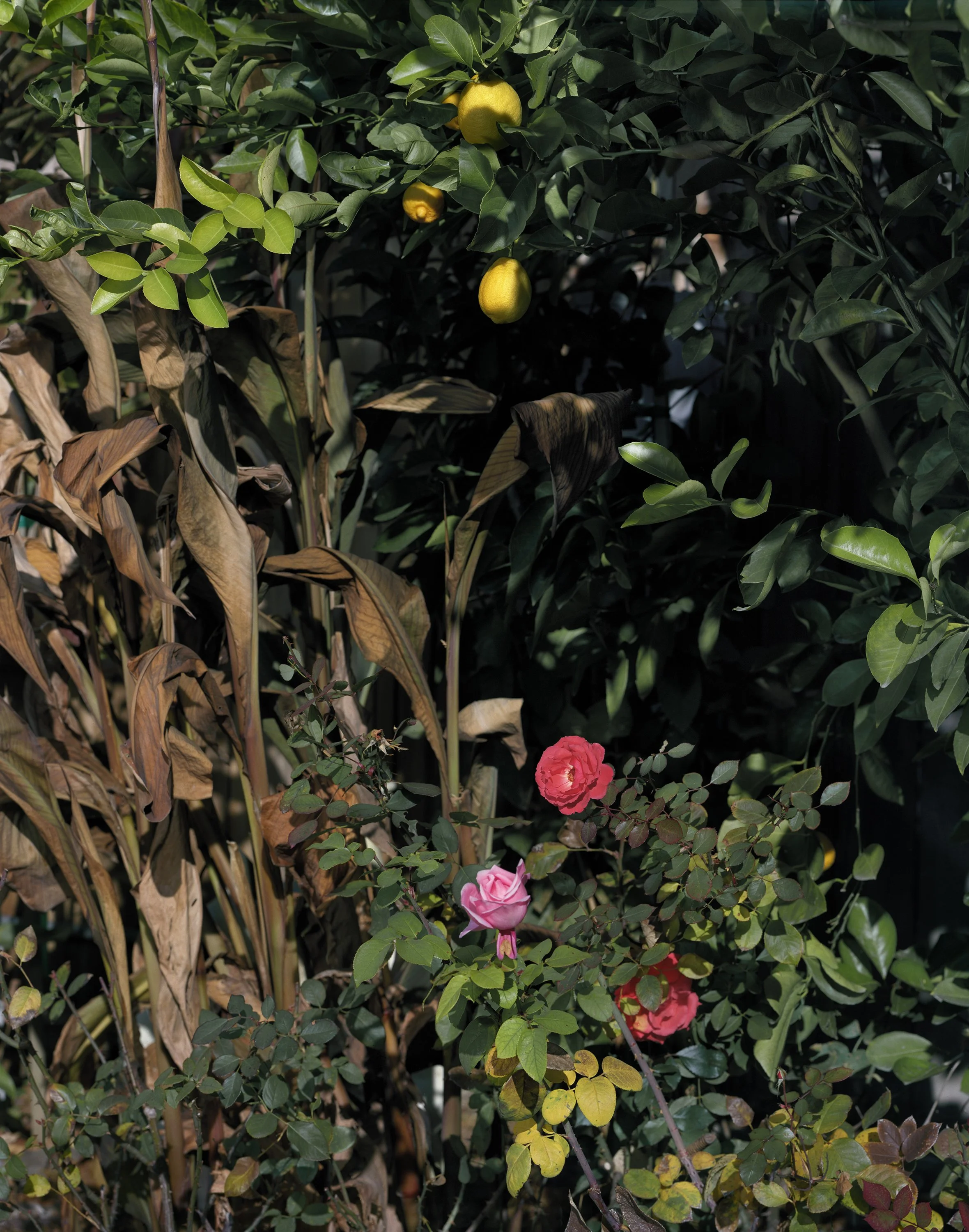
In making these photographs, I knew I had to avoid stereotypes about what it means to be a laborer. I come from a family of laborers, and although we did not grow up with monetary wealth, we were still surrounded by love, and joy and splendor. The images from my family are proof of that. I guess that is why I kept coming back to the idea of the garden and my mother and grandmother’s talent for growing flowers and their ability to nurture green spaces. They knew what it meant to cultivate beauty, and I also saw examples of this in all the families that I’ve visited and met with. There is pride in our homes, our families, the spaces we keep and the communities we tend to.
You talked about your mother and grandmother's talent for growing flowers and cultivating green spaces. Did you photograph any gardens in the communities you visited, and how did these spaces become part of your visual story?
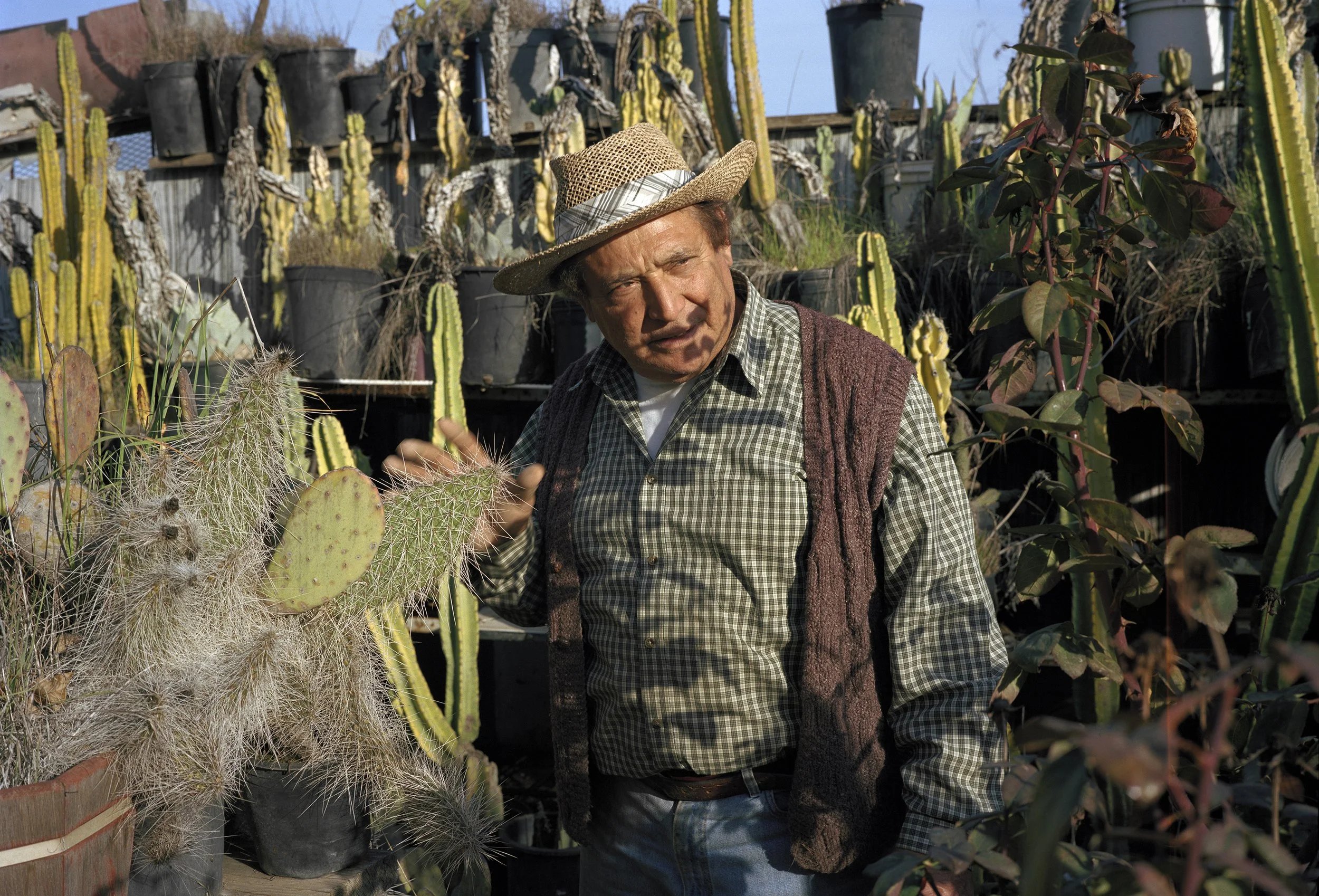
In Verdant Land, many of the portraits are taken in people’s green spaces. Nato in his cactus garden is one example of many, and one that made it to the final book edit. The cultivation of their garden spaces became part of the visual story, a metaphor for how they’ve rooted themselves in space and place.
Finding Locations: How did you choose which western states and agricultural areas to photograph while traveling through the region?
I gravitated toward areas with which I had a personal connection, either through family or friends, which also happened to be agricultural communities and farm work. Growing up in the Central Valley of California, it’s certainly a defining part of our economic and cultural landscape, and then through my husband’s side, I was introduced to communities in eastern Washington.
Exhibition Experience: How did creating the book at the Center for Photography at Woodstock residency change how you thought about organizing the images?
I was there in 2013, soon after I finished my MFA program, and it was my first artist residency. The time spent at the Center for Photography at Woodstock (CPW) was really transformative, providing a dedicated space and time to focus. While there, I learned to appreciate the book form as a mechanism for sharing work, and I was able to whittle it down to about 20 images to write a statement that has guided my work throughout the ensuing years. In working with Dust Collective, which has focused on exquisite, small editions and handmade artist books, my experience making a handmade book at CPW helped me better appreciate Emily’s attention to craft and bookmaking more than ten years later. More than the organization of images, there is an attention to the intimacy of the book form, and I feel fortunate to have worked with her and to have her bring such attention to detail to a book that incorporated additional work and is a larger edition of 350 copies. Yet, her appreciation for creating intimate objects remains, and that was important for me in moving this work forward as a book.
You spent over a decade on this work, starting at the Center for Photography at Woodstock in 2013 and finally publishing with Dust Collective in 2025. Now that the book is finished and out in the world, what does it feel like to close this chapter, and what are you hoping readers will take away from Verdant Land?
It's a gift to have this kind of closure on work and to be able to put something out in the world that has been so meaningful to my family and me. My parents were overwhelmed with emotion when they first saw the book. There are people in the book who have passed away, including my grandmother, and much has changed in how we interact with one another in a post-pandemic world. It is also a perilous time for many people I know, and it is difficult for me to make sense of how we treat immigrants in this country, that we rely on their labor and their contributions, but can also dismiss them in incomprehensible ways. It is a pattern in the history of this country, and this book, really my work, has always wanted to offer a perspective of value and respectful representation for Latine communities that I think is critical to have. Right now, at this moment in time, I hope people can connect with the work in some form and that it serves as a testament to the contributions im- migrants have made to this nation.
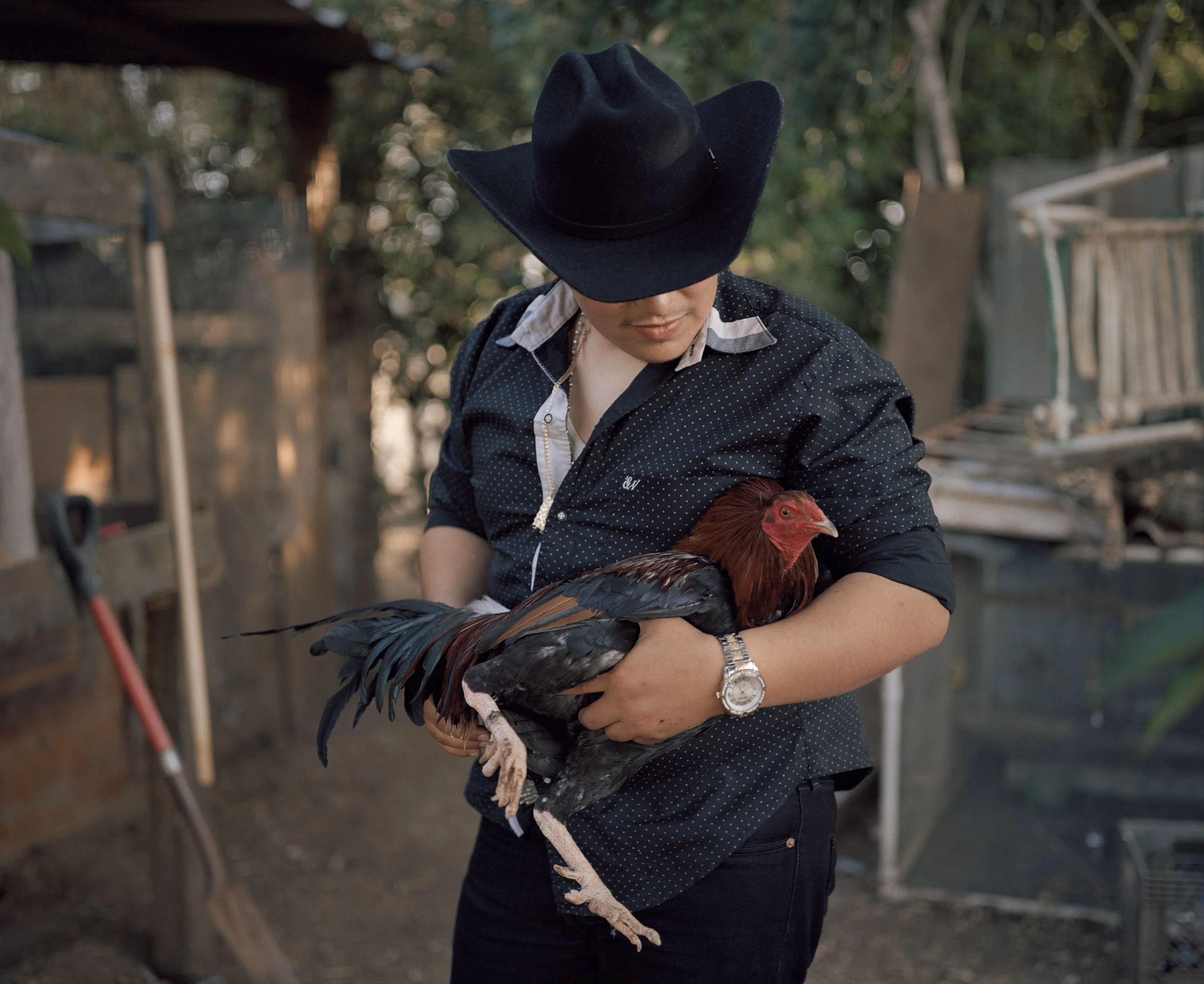

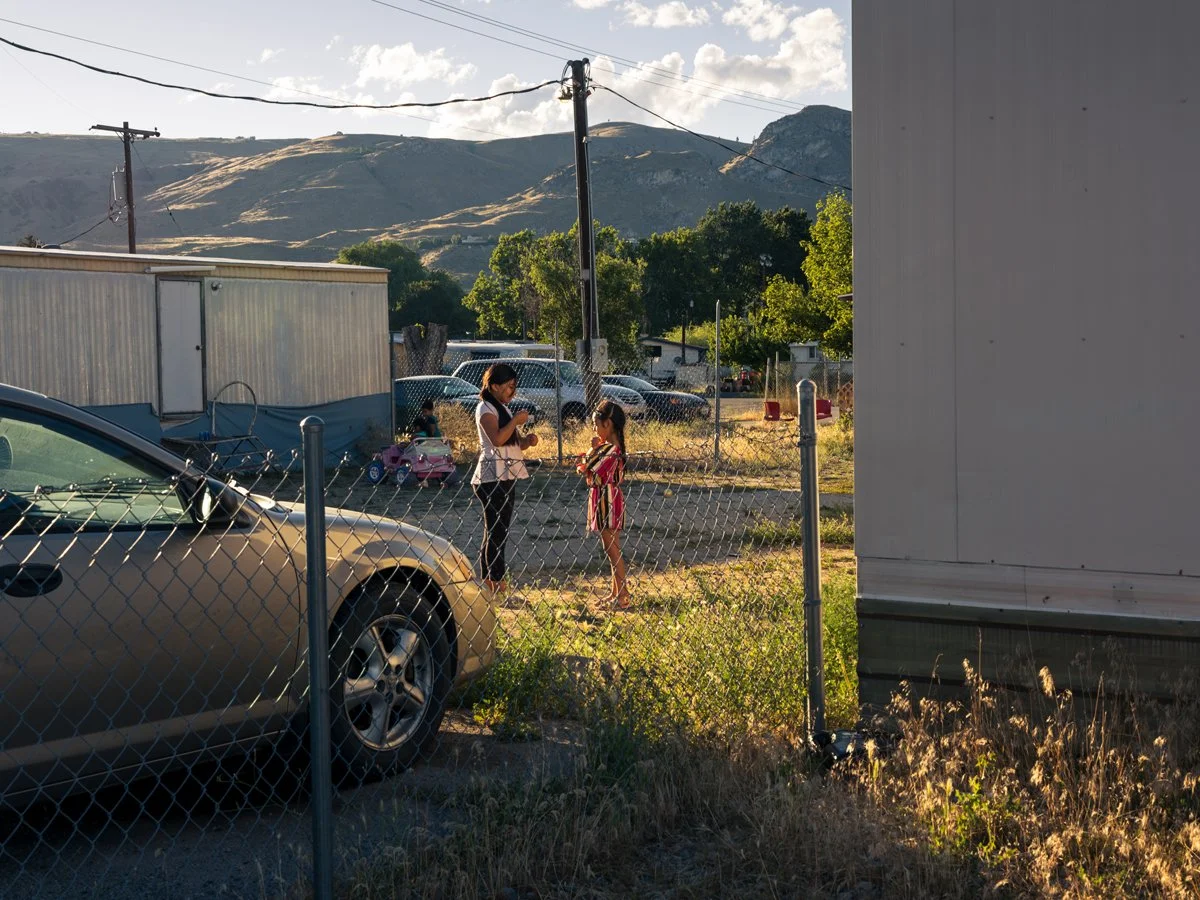
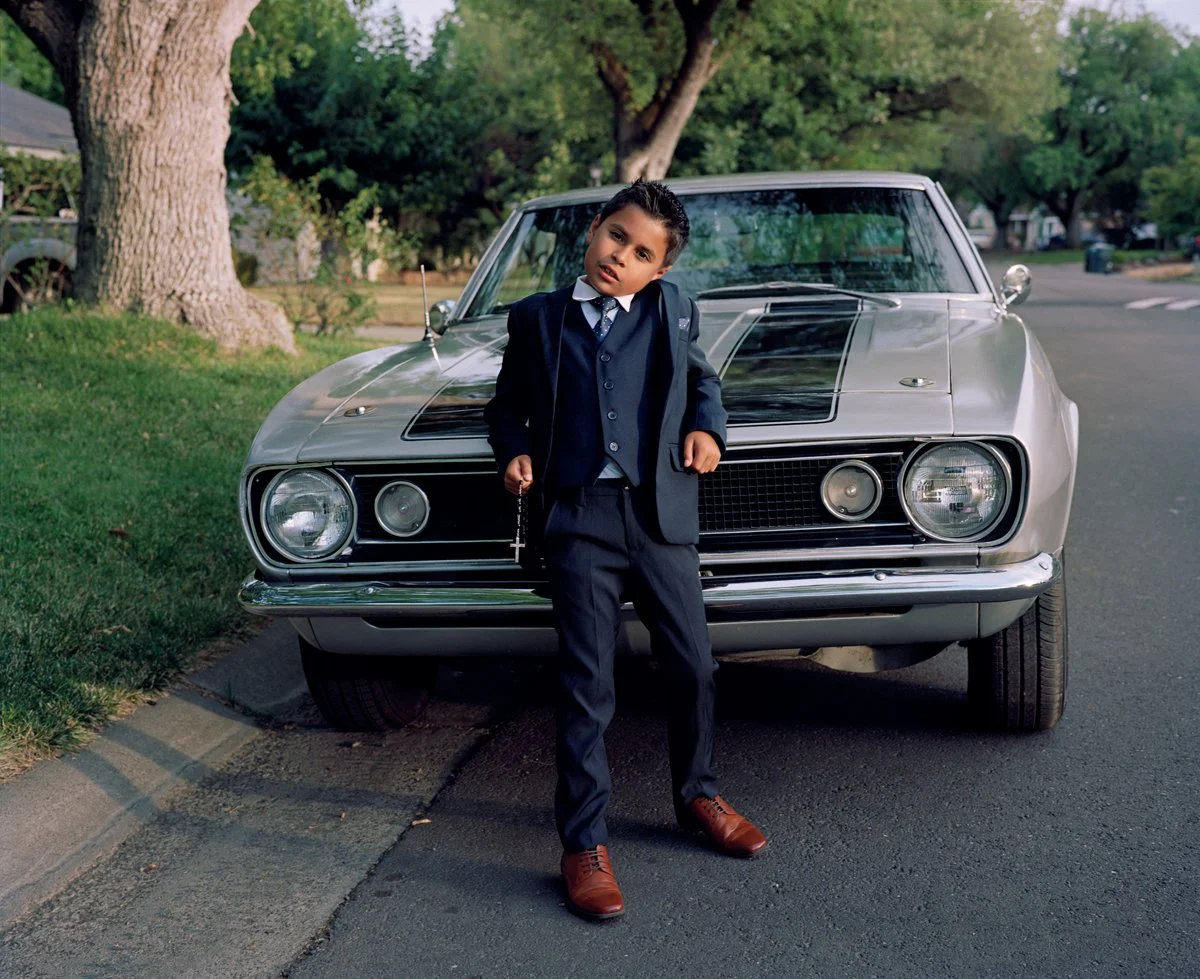
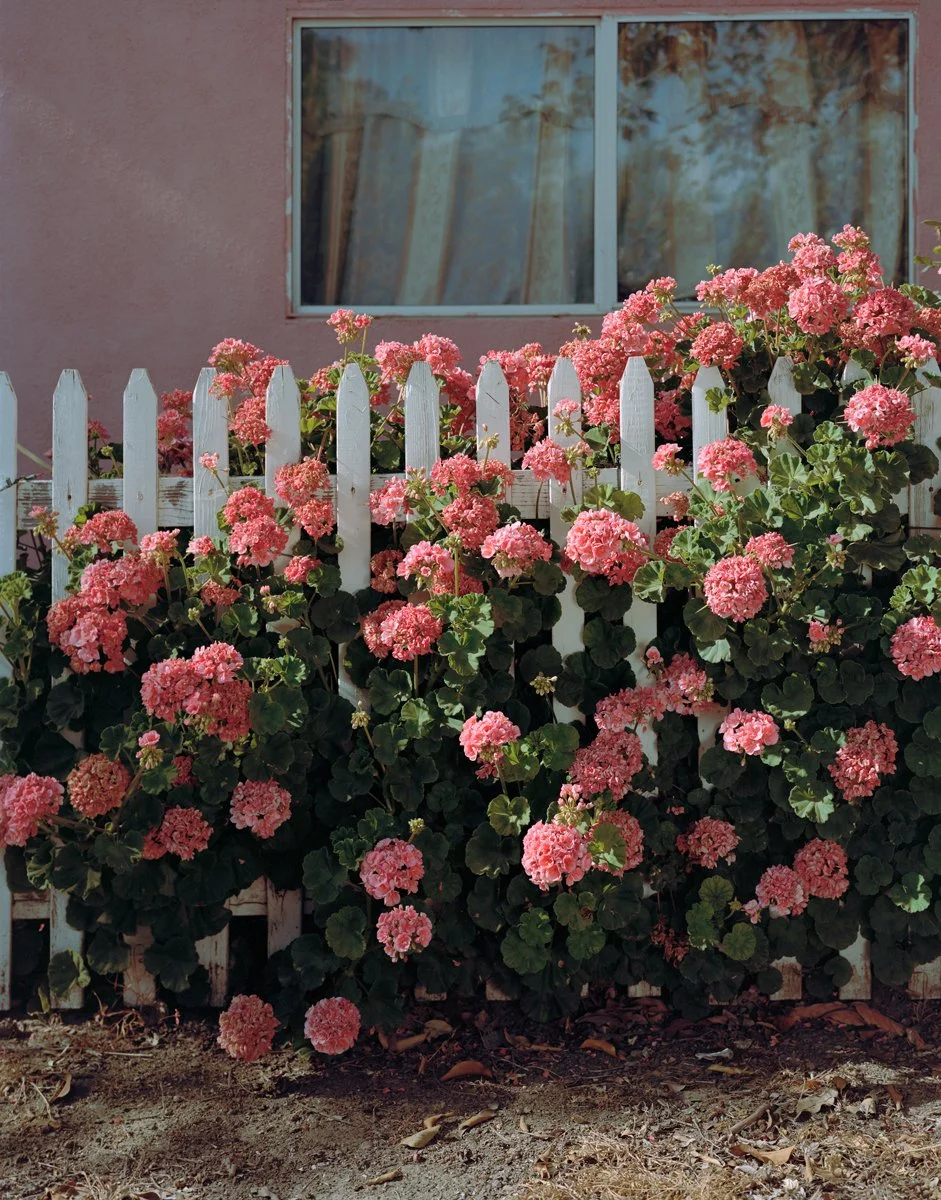

To discover more about this intriguing body of work and how you can acquire your own copy, you can find and purchase the book here. (Dust Collective)
More photography books?
We'd love to read your comments below, sharing your thoughts and insights on the artist's work. Looking forward to welcoming you back for our next [book spotlight]. See you then!
Robin de Puy could no longer make this project alone. She first photographed Randy in Ely, Nevada, during a 2015 road trip and kept returning to him for more than ten years. Interviews