The Storm, the Hill, and the Silence: How Olga Karlovac Captured Silence in Motion
(This is the story behind the photograph, a glimpse into the moment, the process, and the vision that brought it to life.)
One snowy night, Olga Karlovac turned silence into a photograph.
She walked alone on a small hill above Požega, the snow falling fast and the wind cutting through the dark. In just half an hour, she made four images that captured the quiet and the loneliness of the place, with almost no editing. The old wooden houses and empty vineyards around her were barely visible, but they became part of the story she wanted to tell. That night showed how a single moment, and a single camera, can turn cold darkness into something unforgettable.
The storm and the snow were stronger than she expected, but Olga did not stop.
Her boots slipped on the fresh snow and her clothes got wet, but she kept walking, looking for the right angles. The Ricoh GR camera in her hands captured shapes, shadows, and empty space in a way she had never experienced before. She trusted her feelings more than any plan, letting the night guide what the camera should see. By the time the storm passed, she had created a small set of images that would stay in her book forever.
Late March brought an unexpected return of snow to the hill above Požega, a quiet Croatian town. The town had already begun to think about spring, but the winter storm arrived for one last night. On the hilltop, only a few old wooden houses stood among empty vineyards. Most of the time, no one was there. It was the kind of place where a person could walk for hours without seeing another soul.
That night, Olga Karlovac left a party at a friend’s house. Outside, the wind cut through the darkness, and snow fell in thick sheets. She carried her Ricoh GR camera, but she hadn’t planned to go out. Something pulled her into the storm, away from warmth and laughter, into the lonely hill.
“It’s one of the images from this sequence, the hill, and the whole night was inspiring for me,” she says. “And those four images I’ve created within half an hour, which is very strange for me. So it’s one of them. It happened in a total darkness where the snow gave just enough light to really create this mood that I felt was completely in line with how I felt.”
Olga walked carefully through the storm, slipping on fresh snow, her camera wet in her hands. The few houses and vineyards were barely visible under the snow, but the shapes of the landscape were enough to guide her.
“These few old houses, few old vineyards, little bit of snow and it was late March which was time when you didn’t expect this. I think that these images really reflect the mood.”
She used her camera in high contrast mode. The blacks became very black, the whites very white, leaving almost no gray. She trusted her instincts more than technical precision.
“They are done with Ricoh GR and not much secret. They have been done with high contrast mode and not much post production as you can see. They are very much done this way and just a little bit of contrast and cropping has been done.”
The storm intensified. Snow swirled around her, the ground became slippery, and her clothes were soaked. Yet she continued shooting. The images captured a strange loneliness, the emptiness of the hill, the feeling that the place existed outside normal time.
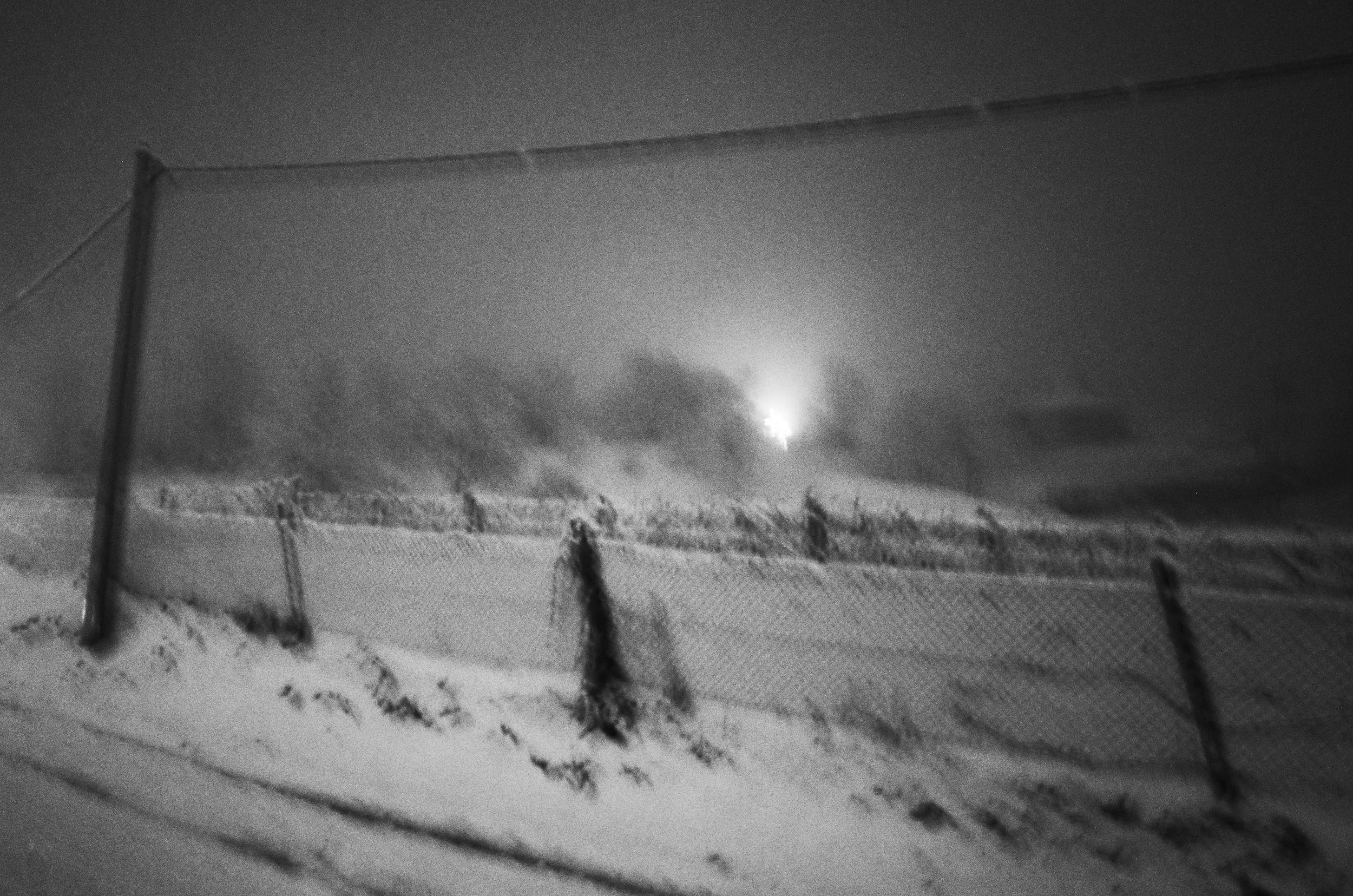
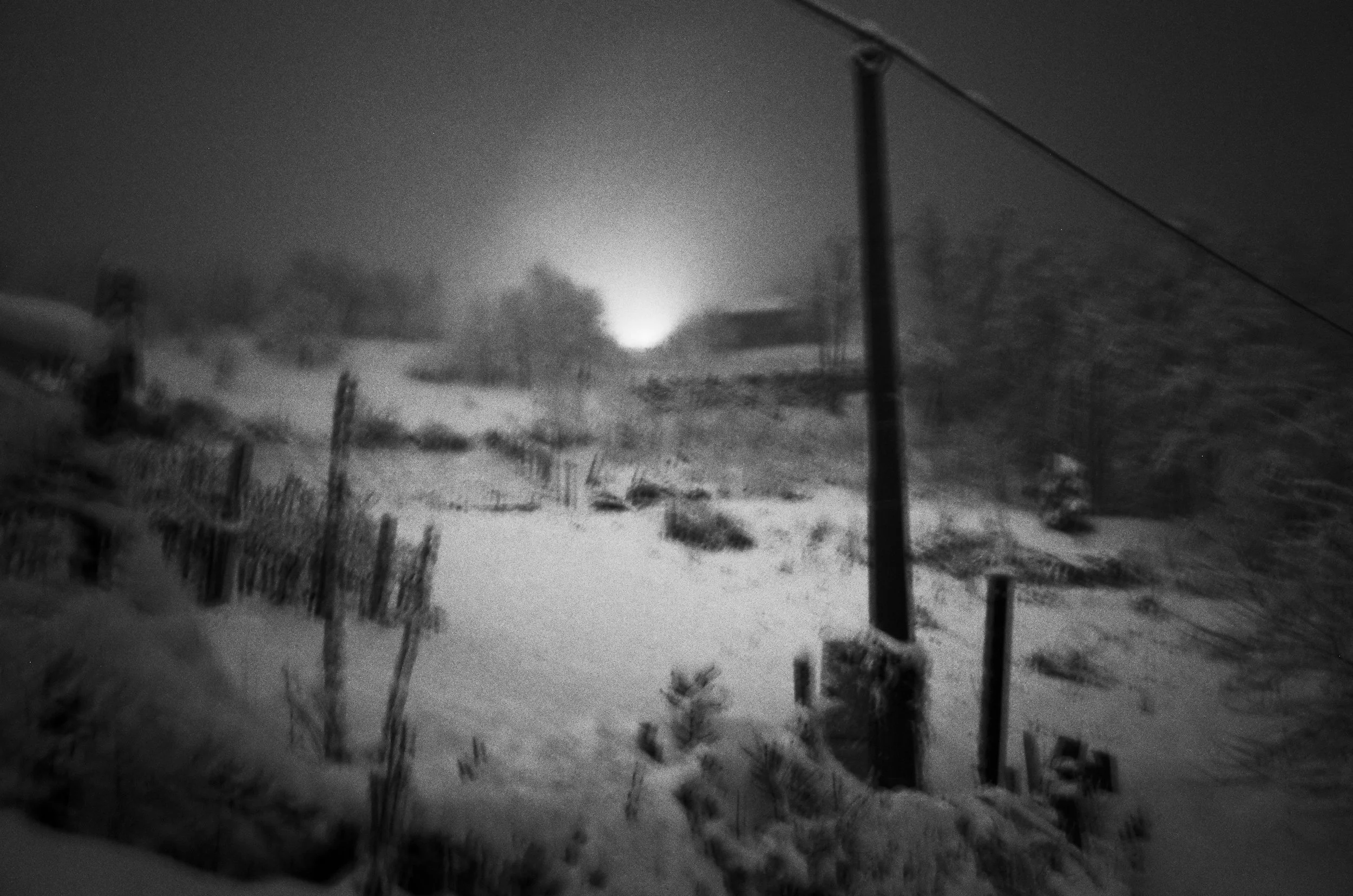
“And I think they tell a story, the story of the hill and the storm. And when you look at them, you get this feel of, I think, loneliness, of a where without people, without just a little bit of light and something, I would say, lot of negative space.”
“Something a little bit like out of the earth.”
The hill itself was simple, yet inspiring. “It’s a small hill above, small town where I was and called Požega and just a few old wooden houses and a lot of basically nothing. And it looks very rural. So it was very, in a way, even inspiring because it’s not regularly what you find and see on the street.”
Even though she worked alone in the middle of the night, Olga did not feel afraid. “I mean, I had friends in the house. They were having a party, but I just left. I mean, it’s a very secure place and no one is there. It’s safe.”
Out of around twenty images she took, only four or five were chosen for her book. For most photographers, hundreds of shots are needed to find a few usable images. But the storm, the hill, and the darkness made everything come together.
“The whole sequence reminds me on that night that was very special to me because it just intuitively happened and I never expected it. I was, I believe, the only time when I was shooting there and I’ve never came back to the area. And so many of them ended in the book. So it felt special, the night.”
She never returned to that hill. Perhaps she knew that some moments in photography cannot be repeated. The storm passed. Spring came. Snow melted. But the images stayed, frozen in time, showing a world that existed for only one night.
Sometimes, the best photographs happen when you stop planning, when you leave warmth and laughter behind, when you trust the snow to give enough light, and when you let the storm tell its story.
That is what Olga learned on the hill above Požega. That is what her images continue to say: about loneliness and peace, darkness and soft light, and a photographer who listened to something inside her and walked into the storm.
Sometimes the best project begins when the first idea fails. You arrive with a plan, but what you find does not fit it. Story Behind The Photograph