I Wonder What They're Thinking": Inside Oli Kellett's 'Cross Road Blues'
Welcome to this edition of [book spotlight]. Today, we uncover the layers of 'Cross Road Blues,' by Oli Kellett (published by Nazraeli Press). We'd love to read your comments below about these insights and ideas behind the artist's work.
A street corner can reveal more than a portrait studio.
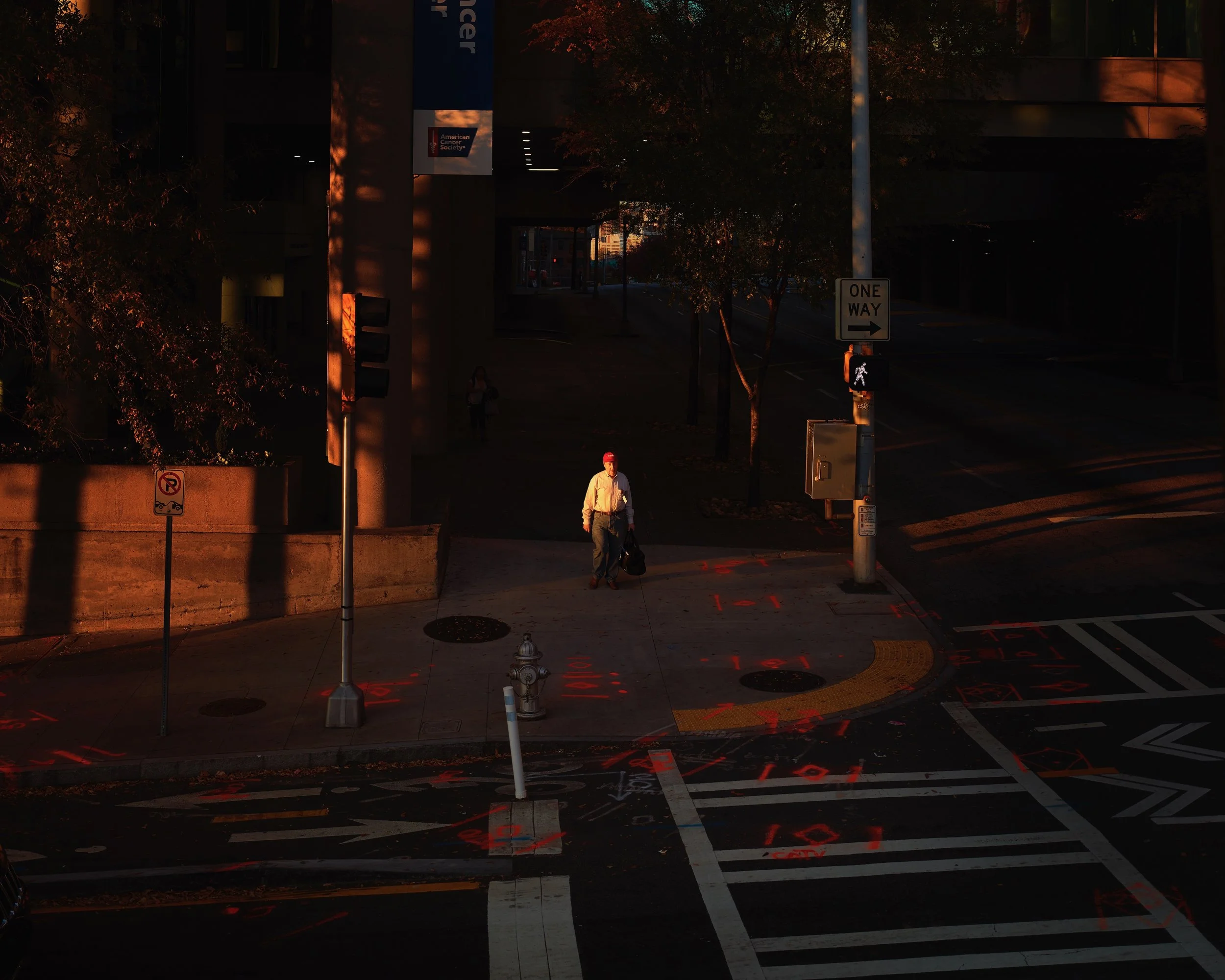
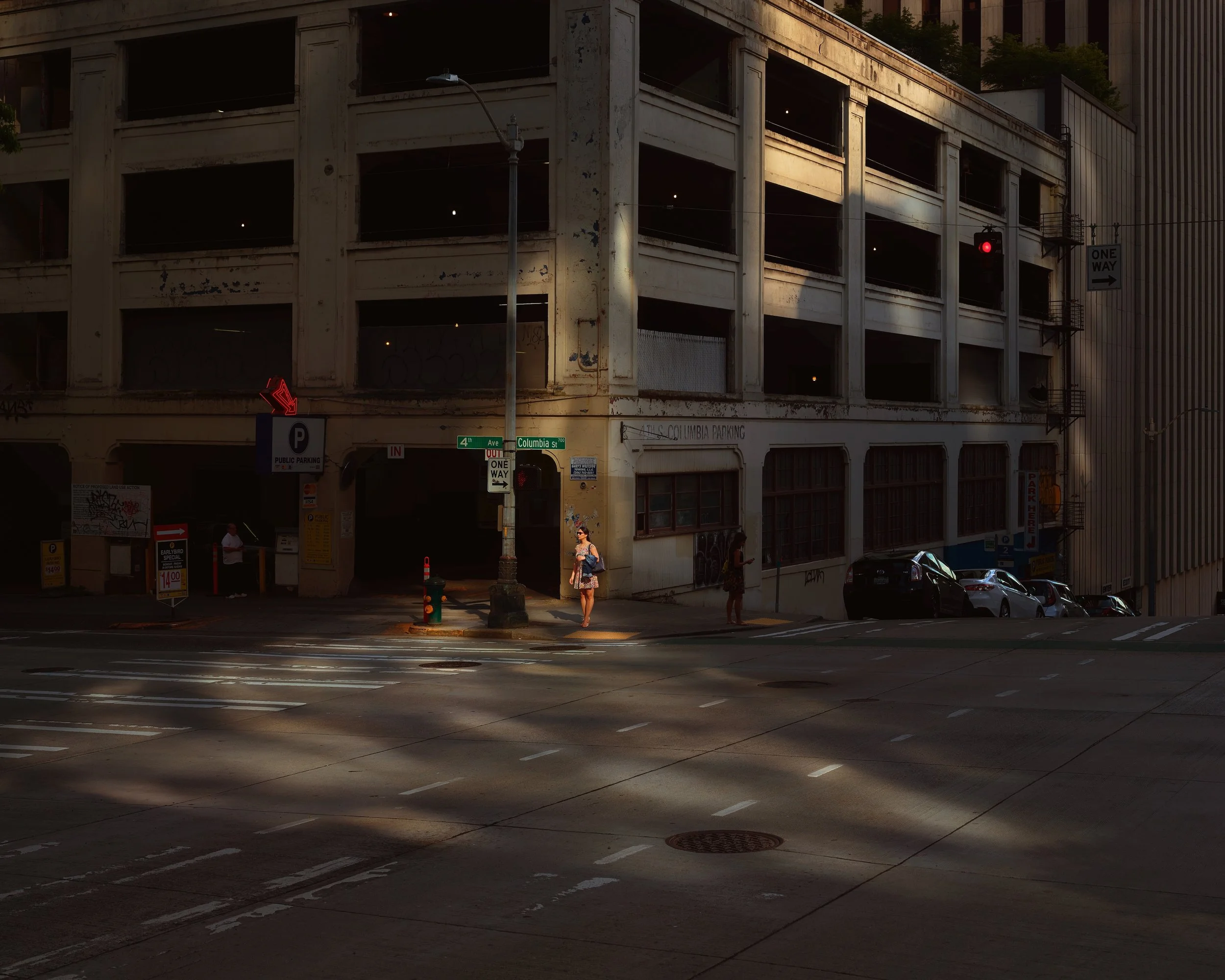
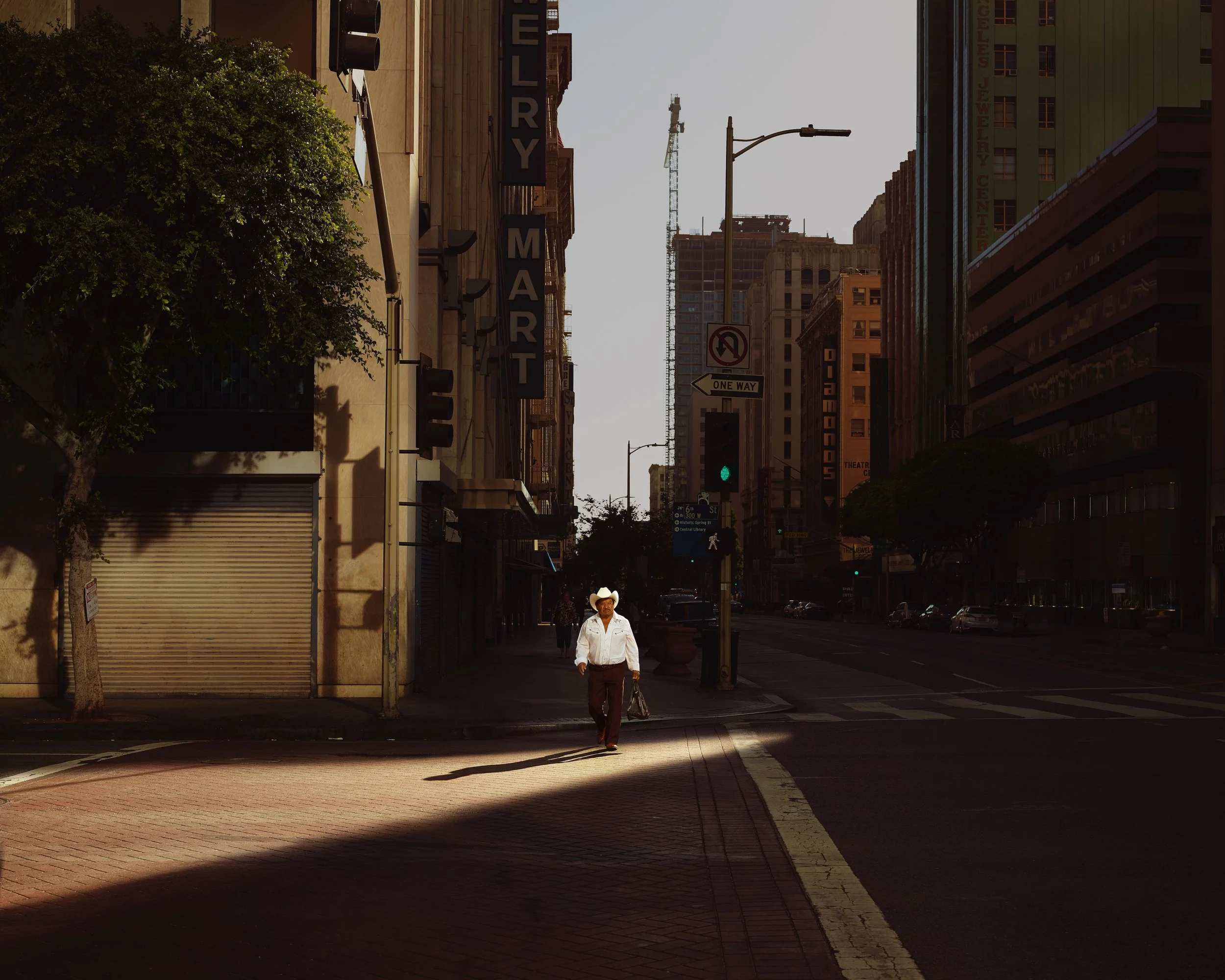
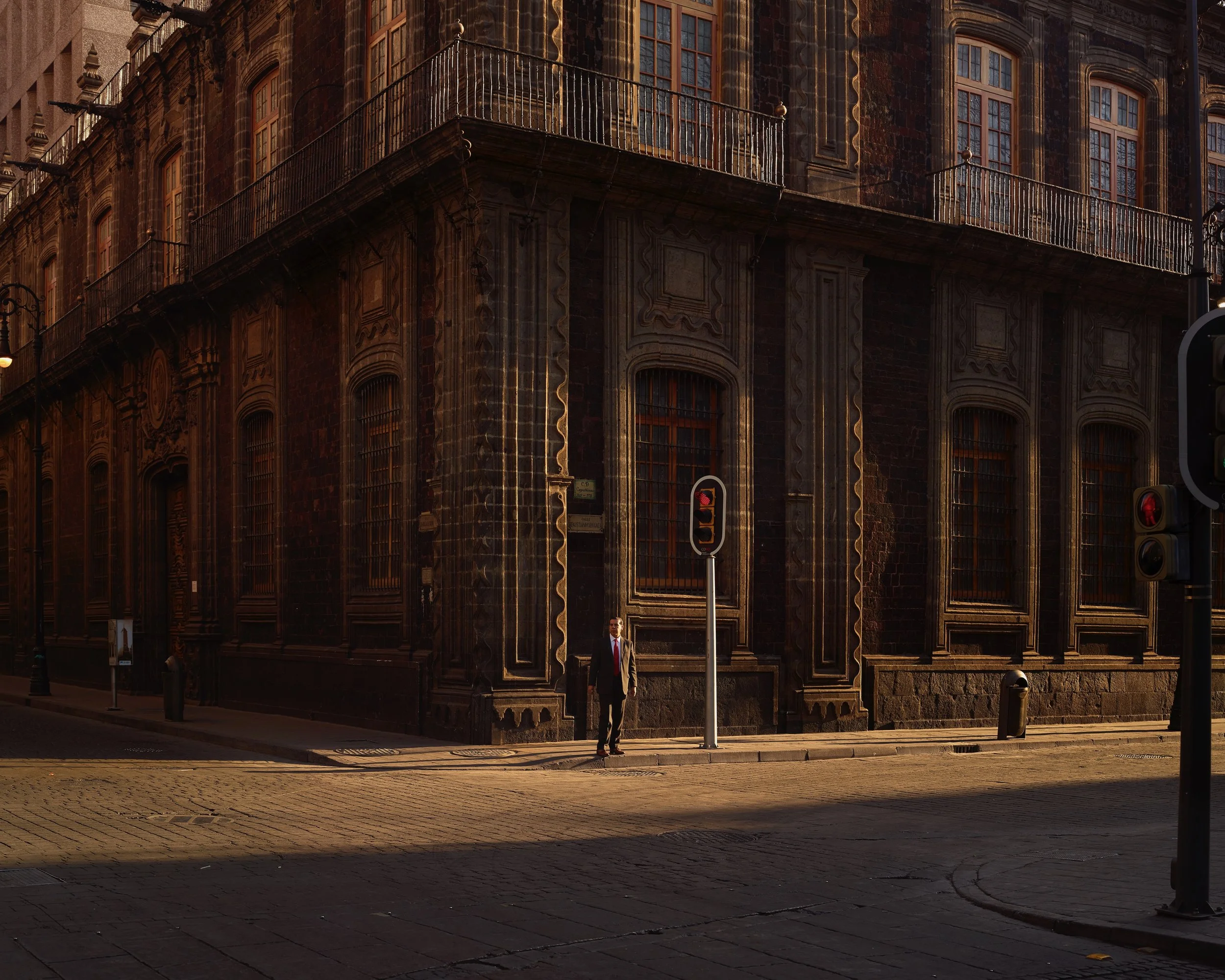
When photographer Oli Kellett sets up his large format camera at busy intersections, he waits for something no studio session can manufacture. For four years, he captured strangers at crossroads across six countries, from Los Angeles to Rio de Janeiro, creating his acclaimed photo book "Cross Road Blues." His images show people in moments of deep thought, alone with decisions that might change their lives.
Gallery visitors always ask the same question when they see his work.
"I wonder what they're thinking," they say, staring at solitary figures frozen in contemplation. Kellett spent over 1,000 hours walking city streets before dawn, waiting for these unguarded moments when people wrestle with big choices. His photographs reveal something studios never capture: the weight of real decision-making happening in public spaces. This is what happens when an artist abandons his original plan and discovers something far more universal about human nature.
About the Book
Cross Road Blues is a large-scale photography book published by Nazraeli Press featuring Oli Kellett's four-year documentation of strangers at urban crossroads. The series began in 2016 during Kellett's visit to Los Angeles amid the presidential election and evolved across six countries including Spain, Japan, Brazil, and Mexico.
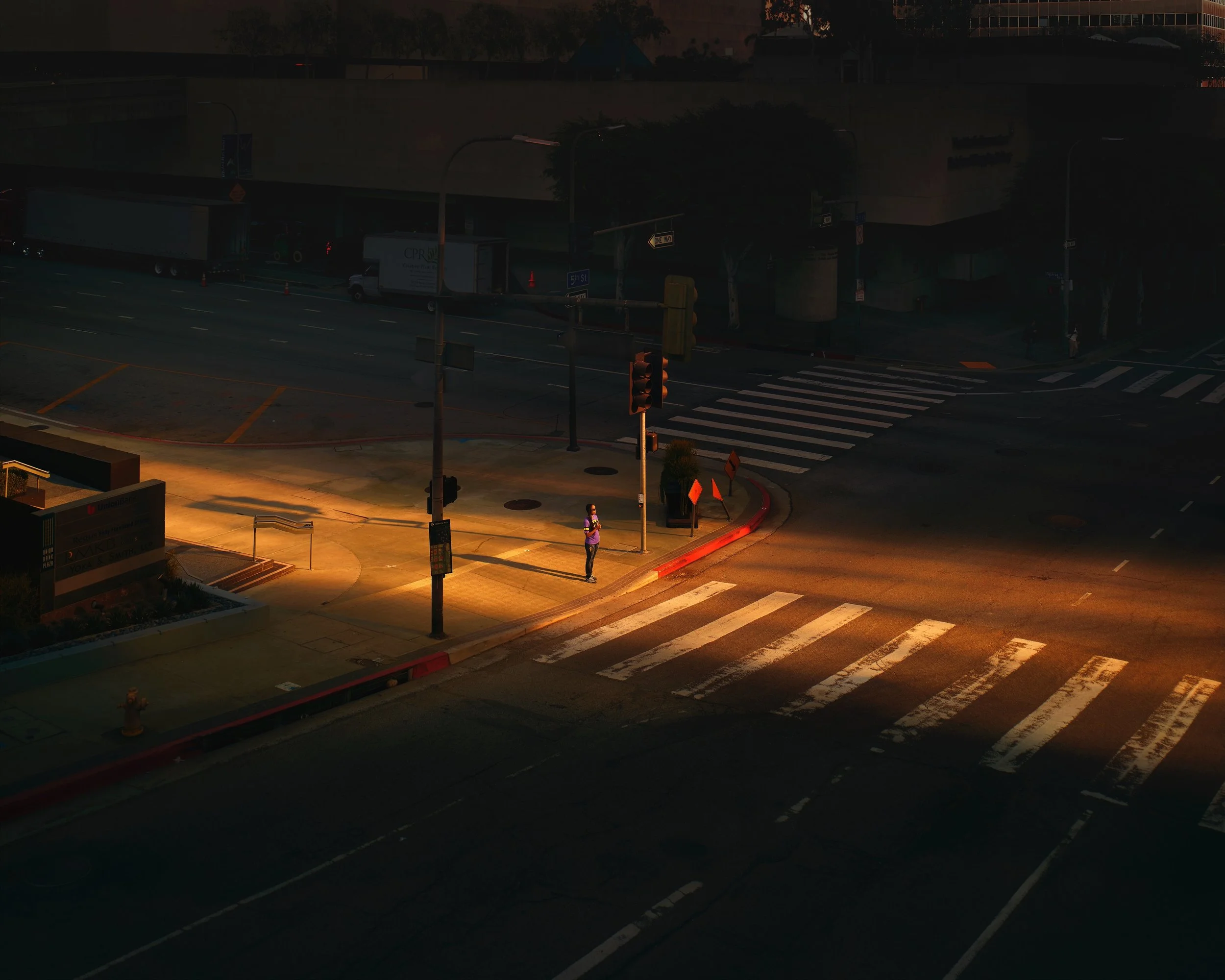
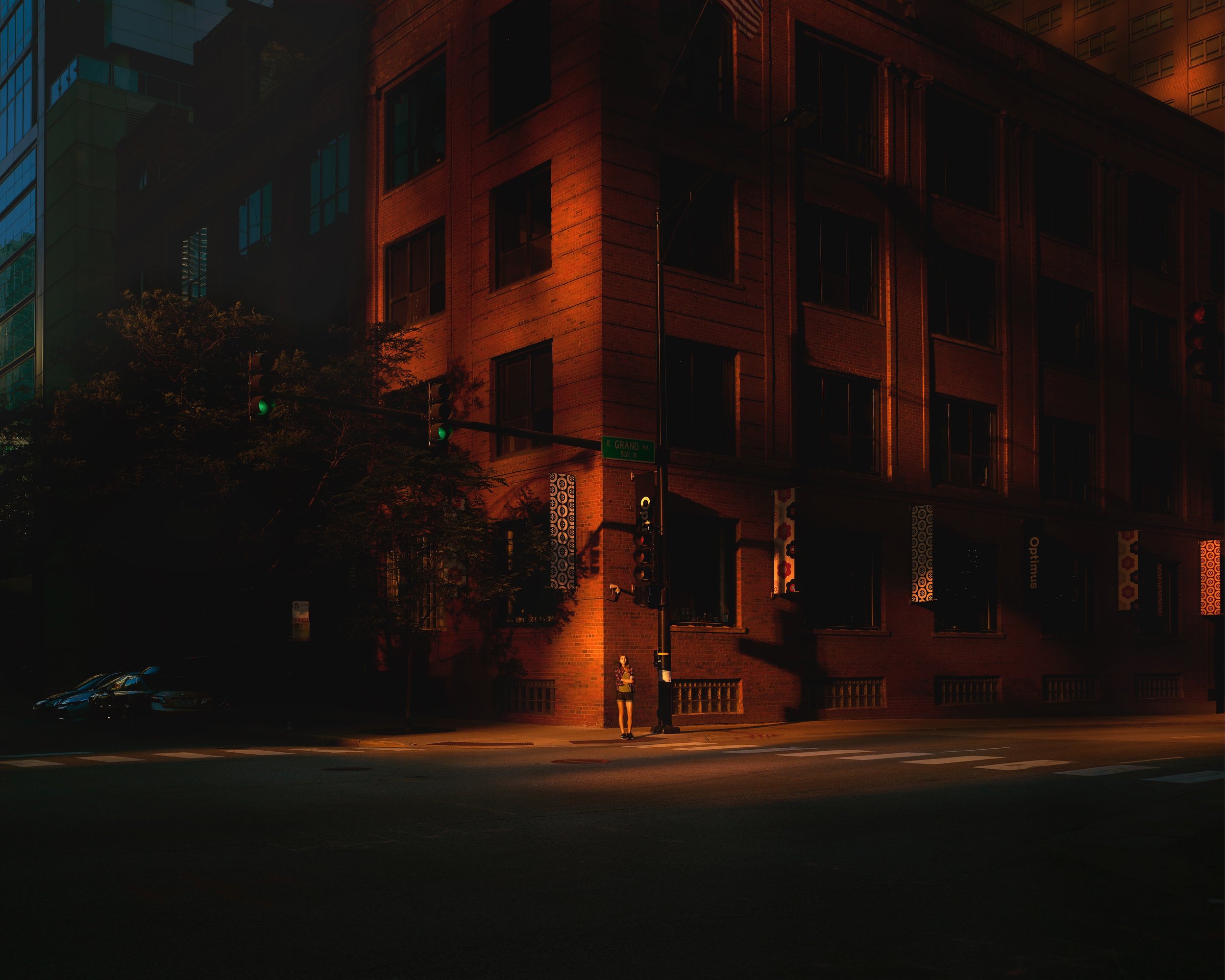
The book takes its title from Robert Johnson's blues song about selling one's soul to the devil, reflecting the moral weight of decision-making captured in each photograph. Shot with a large format architectural camera during golden hour lighting, the images show solitary figures and small groups caught in moments of contemplation at intersections from London to Mexico City.
The book includes an introductory essay by writer and philosopher Nigel Warburton, who writes that "the step each person is about to take seems far more momentous than simply crossing a street." Kellett's final photograph in the series, taken in 2019 on Avenida Almirante Barroso in Rio de Janeiro, shows two people looking skyward with gestures reminiscent of Raphael's "School of Athens," marking a natural conclusion to his exploration of guidance, morality, and the universal experience of life's crossroads.
The work transforms everyday urban moments into cinematic studies of human psychology, contrasting the anonymity of city spaces with deeply individual experiences of choice and uncertainty. (Setanta Books, Nazraeli Press, Amazon)
Conceptual Inspiration: What initially inspired you to begin the “Cross Road Blues” series during your visit to Los Angeles in 2016, and how did the political and social climate of that time influence your work?
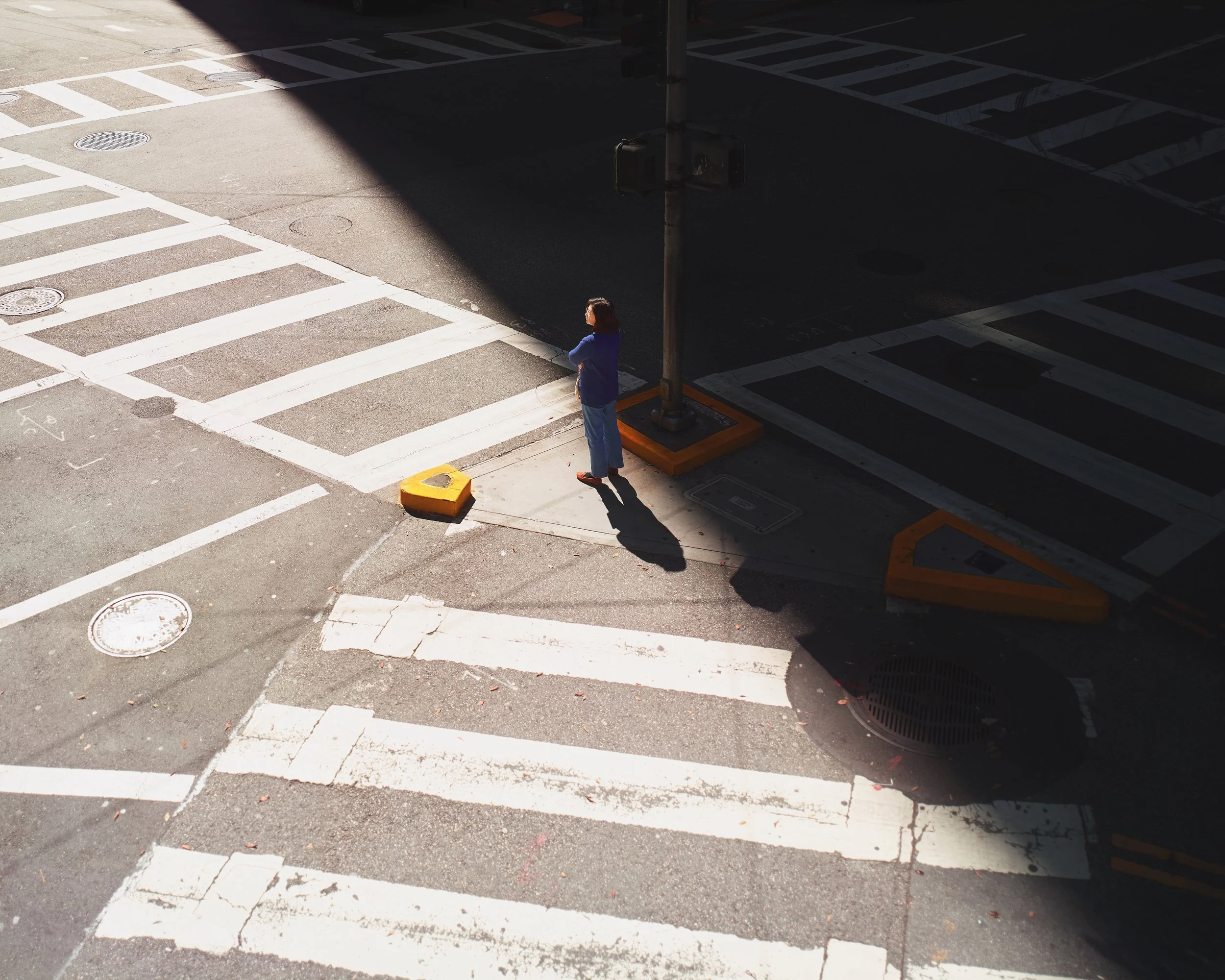
I went to LA in 2016 with the idea to make a series of photos about the US election. I had been attempting to photograph large numbers of people waiting at crossroads in London unsuccessfully, to represent a complete ‘cross section’ of society, a crossroads being a very democratic place. I went to LA in an attempt to make some images like I was trying to make in London. I quickly abandoned my plans when I realised just how much traffic there was in LA and getting a clear view of large groups at busy junctions was impossible. So I had to rethink and got on with just walking around and taking in the city. As I explored I was taking photos, on a tripod, of a mixture of city landscapes and portraits. One of these photos, a solitary woman standing at a crossroads, caught in a moment of what seems like contemplation, became one of the photos in the book.
The point of trying to photograph large groups all crammed together at a junction almost as a group in harmony was meant to act as a metaphor against the division proposed in politics in terms of Brexit in the UK and the Trump policies. It was just a starting point.
Symbolism of Crossroads: The setting of each photograph at a crossroads is a powerful metaphor. Can you elaborate on the symbolism of crossroads in your work and how it relates to the themes of choice, uncertainty, and intersection in contemporary life?
Initially, the image of a singular person waiting at a crossroads was meant to represent the question of direction about how one would vote in the 2016 elections in America. Much like being at the centre of a moral compass. The painting by ‘Man at the Cross Road’ by Diego Rivera was a big inspiration as it shows a single person at the centre of political ideologies and the struggles they face. But once the elections were over and the project continued, it became a far more universal idea of the weight of decision-making we all face at some point. It actually took me a while to realise this and took someone more distanced from the work to point this out. They mentioned it was about someone being at a crossroads in life, and I thought that quite profound and realised that was probably what the work had been about all along.
Once I began to focus specifically on crossroads, the research led me in some interesting directions. Firstly, the book takes its title from a Robert Johnson song, about a man who sells his soul to the devil in exchange for musical success. This seemed a suitable moral Faustian tale at the time in 2016.
But also, the crossroads have their own Greek goddess and were also the burial place for people who had committed awful crimes. This would have been a time before signposts, and people hoped that if they buried people at an un-signposted crossing, if they came back from the dead, they wouldn’t be sure which direction to take to return to their previous life and therefore not terrorise the community.
Photographic Techniques: Your images often feature a striking interplay of light and shadow. What specific techniques do you employ to achieve this effect, and how does it contribute to the overall mood and message of your photographs?
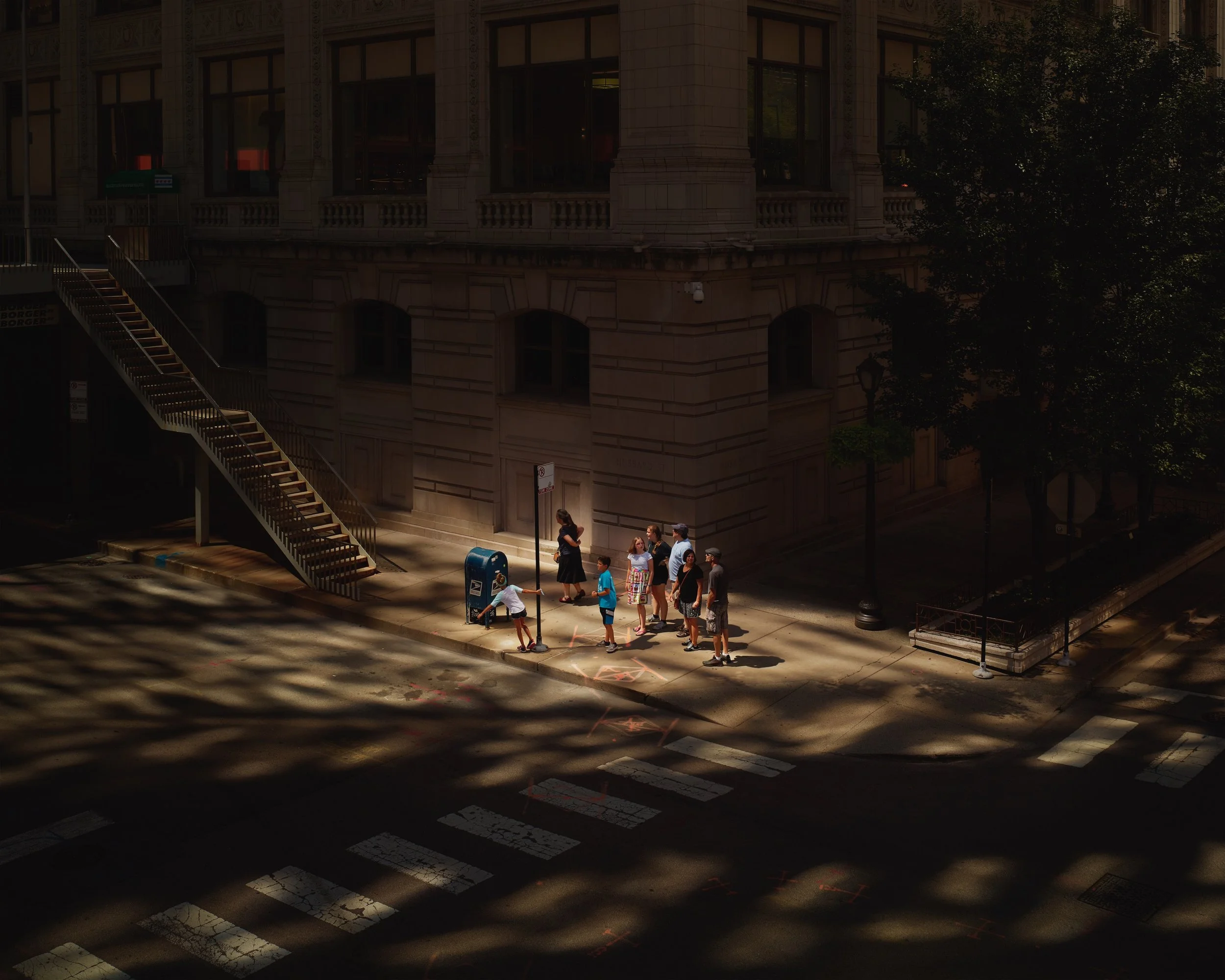
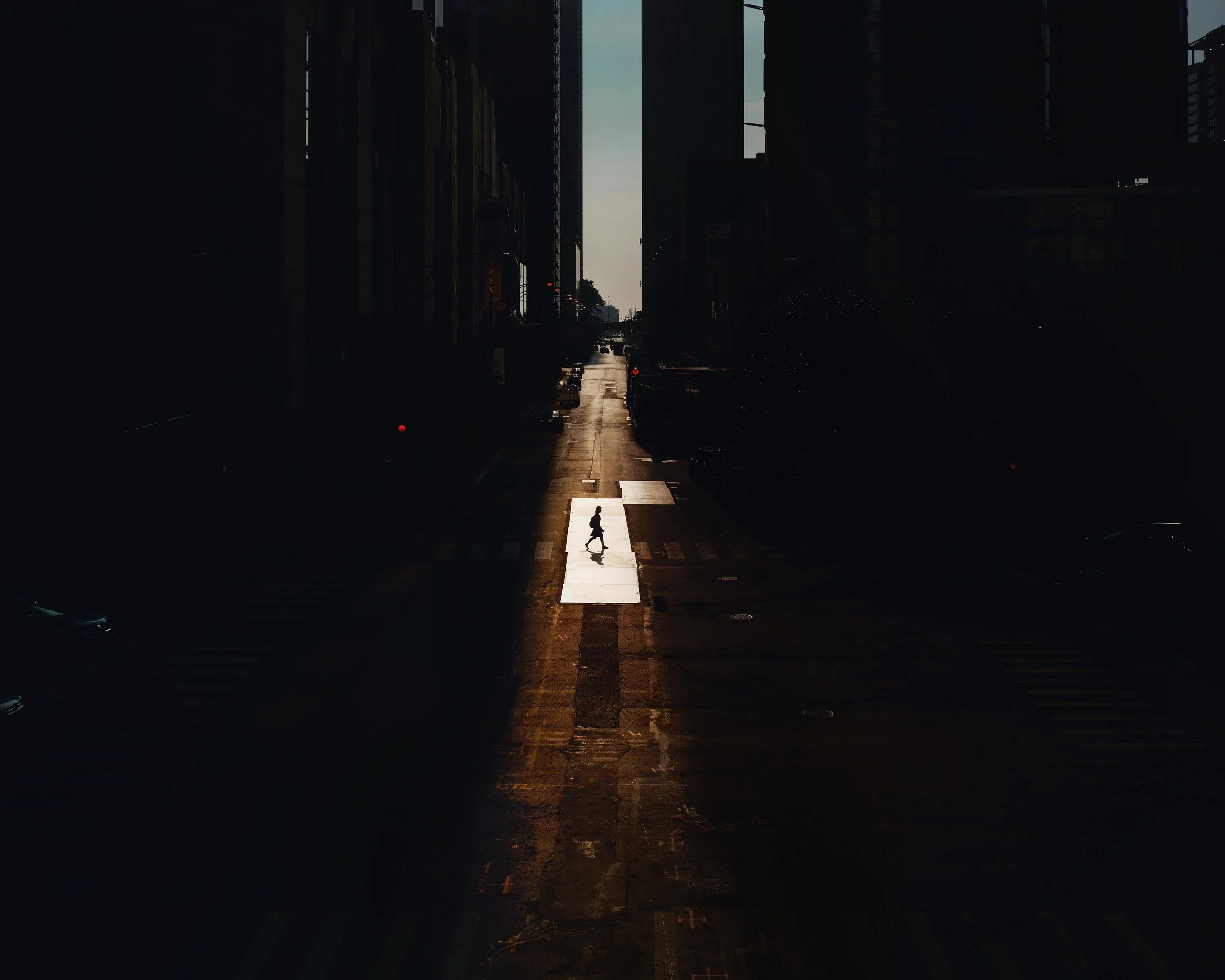
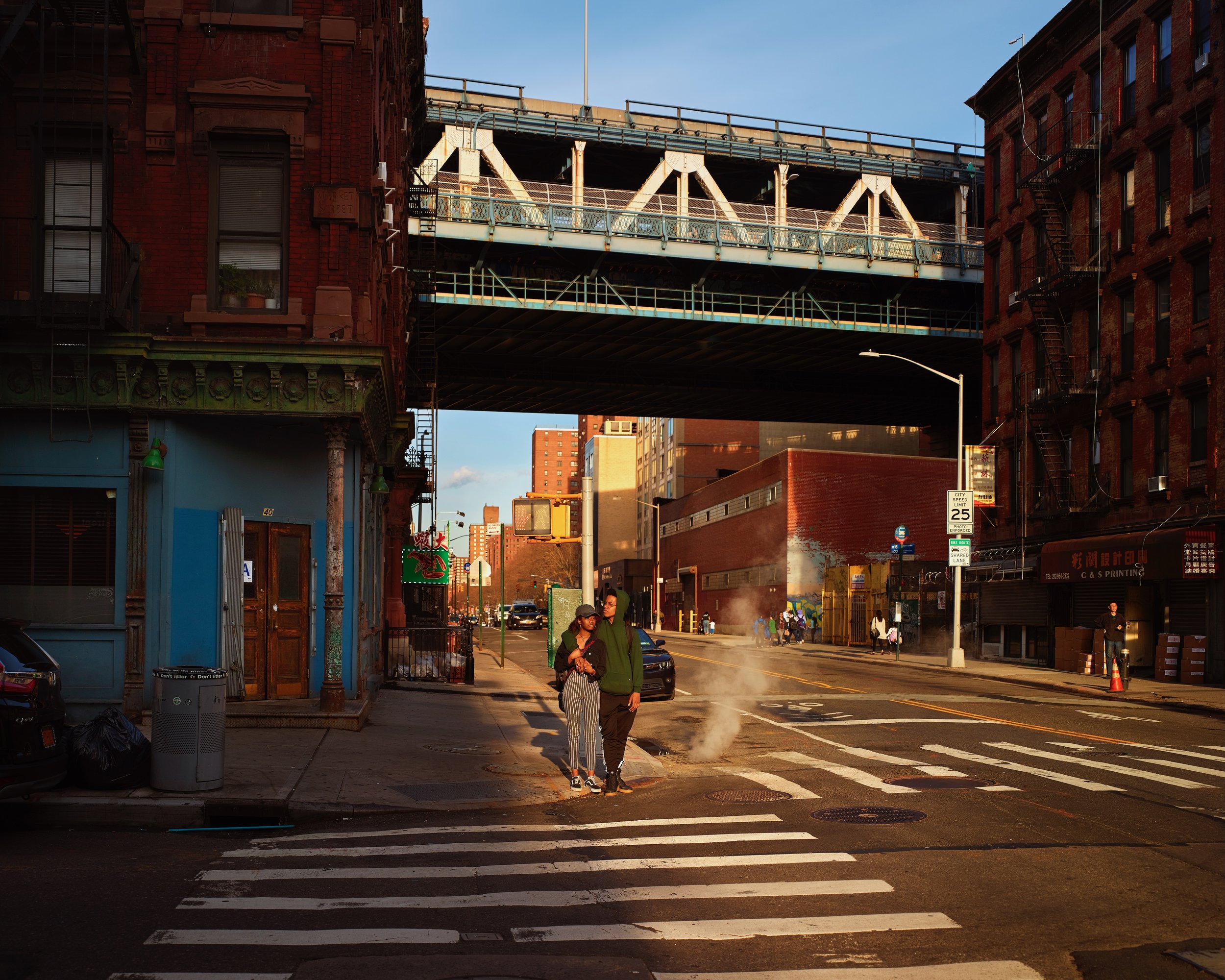
Making a successful photo really begins a few weeks earlier and is the result of decisions made when I’m not out with the camera. Generally, a city is chosen because of the amount of sun it receives at that time of year. I’ll have done some research about which intersections might work and so on. But when I arrive, I just try and get a better understanding of a city and its layout. Always by walking. I might take the camera with me and see what a location looks like and what time of day it will be in sunlight and from which direction. I’ll also go back to the same locations a few days in a row.
The ’golden hour’ sun really came out of necessity. It’s always been an effort to emphasise the people in the photos. But I struggled to make them stand out initially. It was only when they were highlighted by this intense low light that they stood out from the background. I needed that high level of contrast.
Cultural Contexts: You photographed in various countries including Spain, Japan, Brazil, and Mexico. How did the different cultural contexts and street environments shape your approach to capturing each scene, and what unique challenges did you encounter?
My daily routine didn’t really change. I get up before dawn, eat something, then leave. I’ll usually have an idea of where I am heading first. I’ll be set up for when the sun comes up. This is usually the most important time of the day for me. I’m happier working early. After I’ve got everything out of that location, I’ll pack up and carry on walking. I won’t have so much urgency anymore as the light will have gone a bit, so I feel less pressure. I’ll head back to the Airbnb for a couple of hours over lunch and have a nap and head out again for the evening. It’s just walking and waiting.
Different cities have different reputations, and I pay attention to what my gut is telling me about places within cities. I’ve been very lucky not to have any trouble. I’m always set up in such a way that I can pack up and walk away very quickly.
Universal Themes: Although “Cross Road Blues” started with a focus on the United States, it evolved to include a more universal meaning. How do you see the themes of your work resonating across different cultures and societies?
The weight of decision-making is a truly universal one, I think. As I mentioned, this was something which took a while for me to notice the work was about. Also, as mentioned, I was intending to take photos of large groups of people. When I have shown prints of the singular people and small groups side by side in a gallery setting, people tend to look longer and focus more on the photos featuring singular individuals. I’ve asked people about this, and it’s always because people tend to be able to see themselves mirrored in the photos of individuals instead of groups. This was quite a revelation to me.
Visual Storytelling: Can you discuss your process of visual storytelling in this series? How do you decide on the composition, subjects, and the moment to capture to convey the narrative you intend?
Firstly, it’s important for me to say each image stands alone as a singular work. The work was always made to be viewed as large prints on the wall. I believe in prints on a wall.
I’m always led by the location and the people who walk into frame. There was a posture I was looking for a lot of the time, like someone has been waiting to cross the road for YEARS and not just moments. Also, it was important they weren’t holding a mobile phone.
Other than that, I was very open to letting the days take their own directions.
Impact of Digital Era: In an era dominated by digital media and constant connectivity, how do your images, which often depict solitary moments in urban landscapes, comment on the experience of modern life and our interaction with public spaces?
We are told phones, tech, and social media make people’s lives better and more connected, but I feel the world is quickly unravelling out of control as social media dominates everything. I have a 13-year-old and an 11-year-old. We’ve not let either of them have a phone yet. We are the uncoolest parents in the class. I feel we have lost an entire generation to head down doom scrolling (while people make huge profits); we as humans are powerless to resist, and it’s terrible. It seems a very lonely time to be a teenager/young adult.

Audience Engagement: What do you hope viewers take away from “Cross Road Blues”? How do you want your audience to engage with and interpret the intersections and moments of pause depicted in your photographs?
I do hear people ask ‘I wonder what they’re thinking about’ when looking at one of the Cross Road Blues prints, and I think that’s a pretty decent thing to think about.
To discover more about this intriguing body of work and how you can acquire your own copy, you can find and purchase the book here. (Setanta Books, Nazraeli Press, Amazon)
More photography books?

We'd love to read your comments below, sharing your thoughts and insights on the artist's work. Looking forward to welcoming you back for our next [book spotlight]. See you then!
Robin de Puy could no longer make this project alone. She first photographed Randy in Ely, Nevada, during a 2015 road trip and kept returning to him for more than ten years. Interviews