How Ruth Kaplan Turned a Quiet Border Road Into a Powerful Photographic Record of Migration
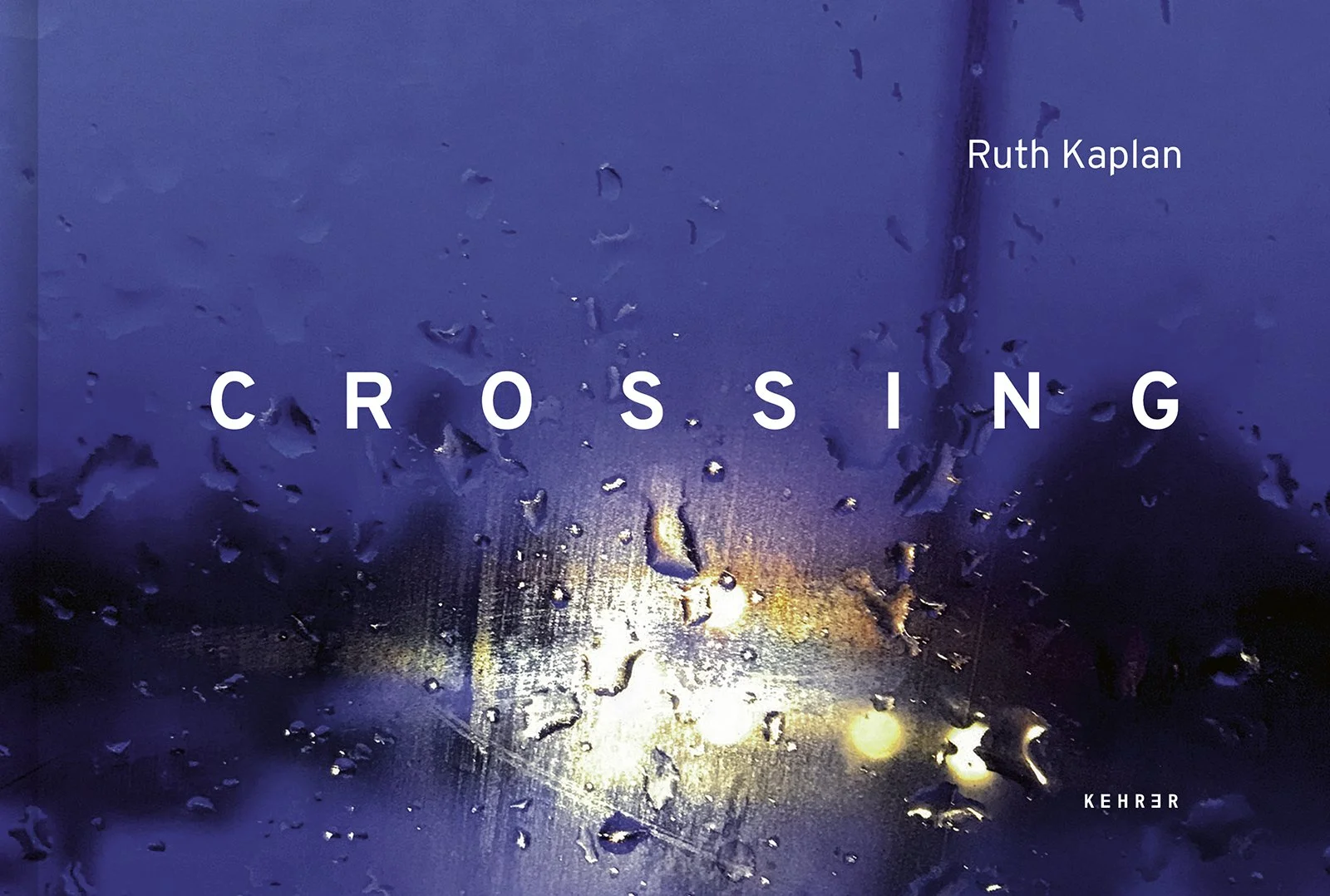
Welcome to this edition of [book spotlight]. Today, we uncover the layers of 'Crossing,' by Ruth Kaplan (published by Kehrer Verlag). We'd love to read your comments below about these insights and ideas behind the artist's work.
A quiet road became a stage for human migration.
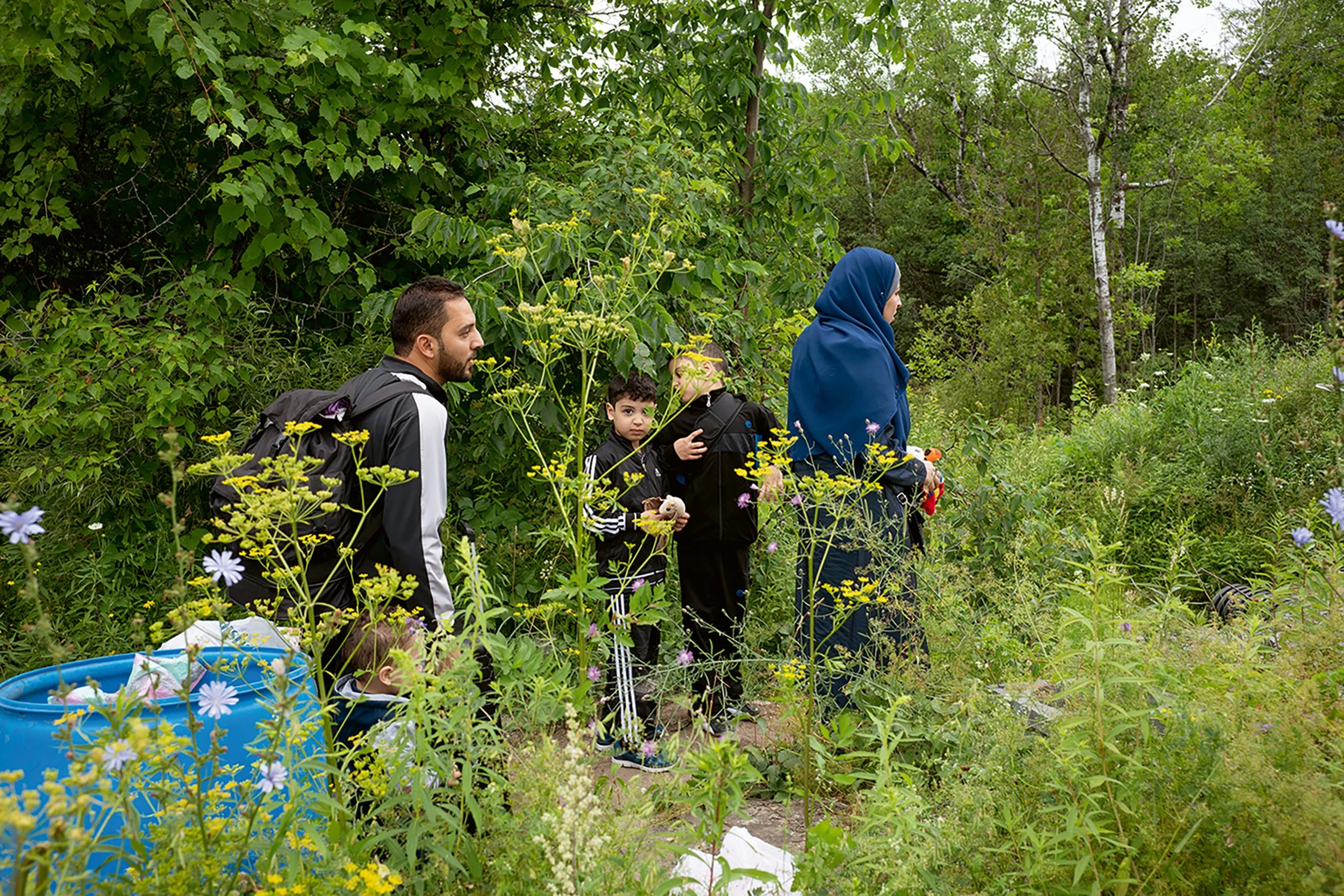
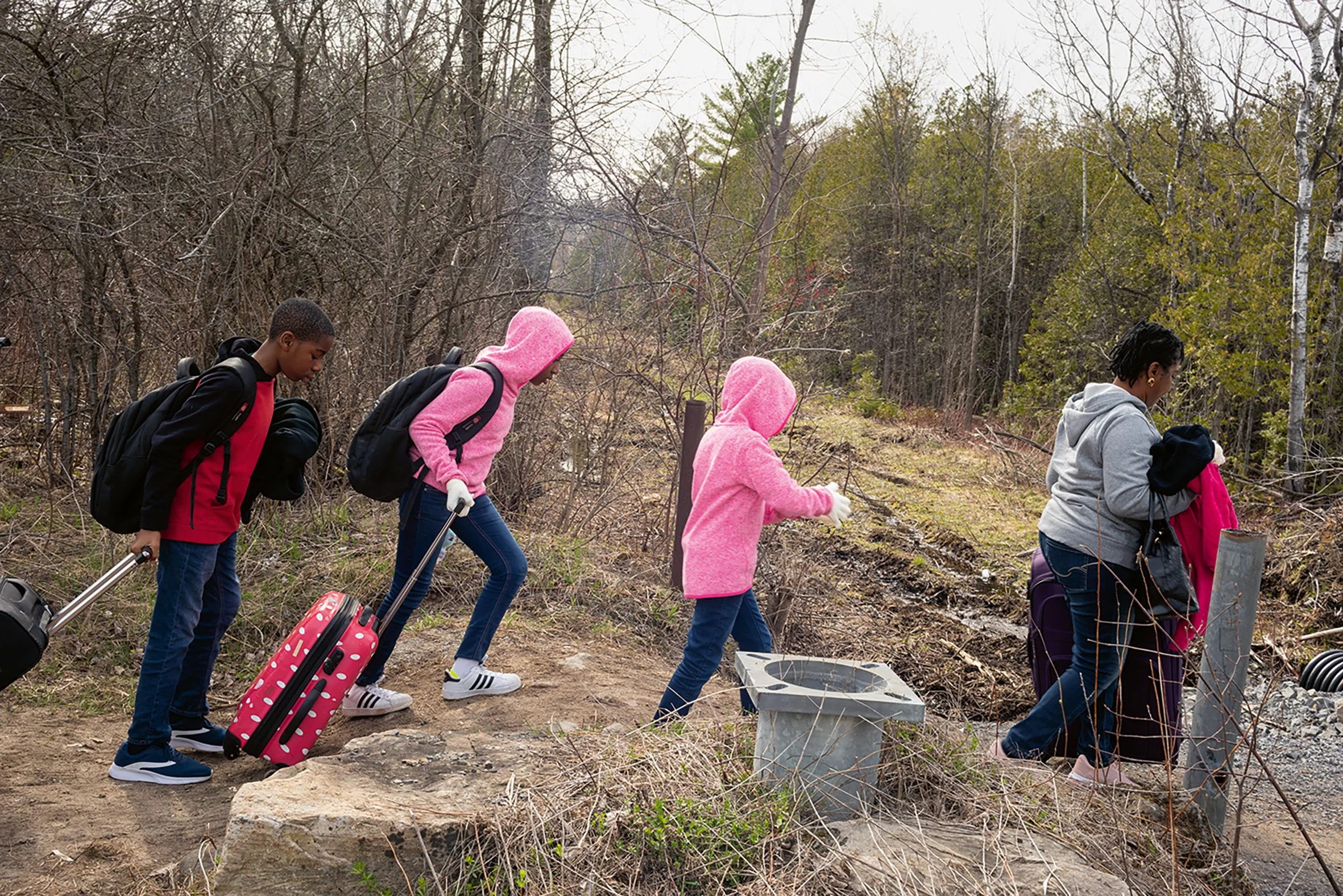
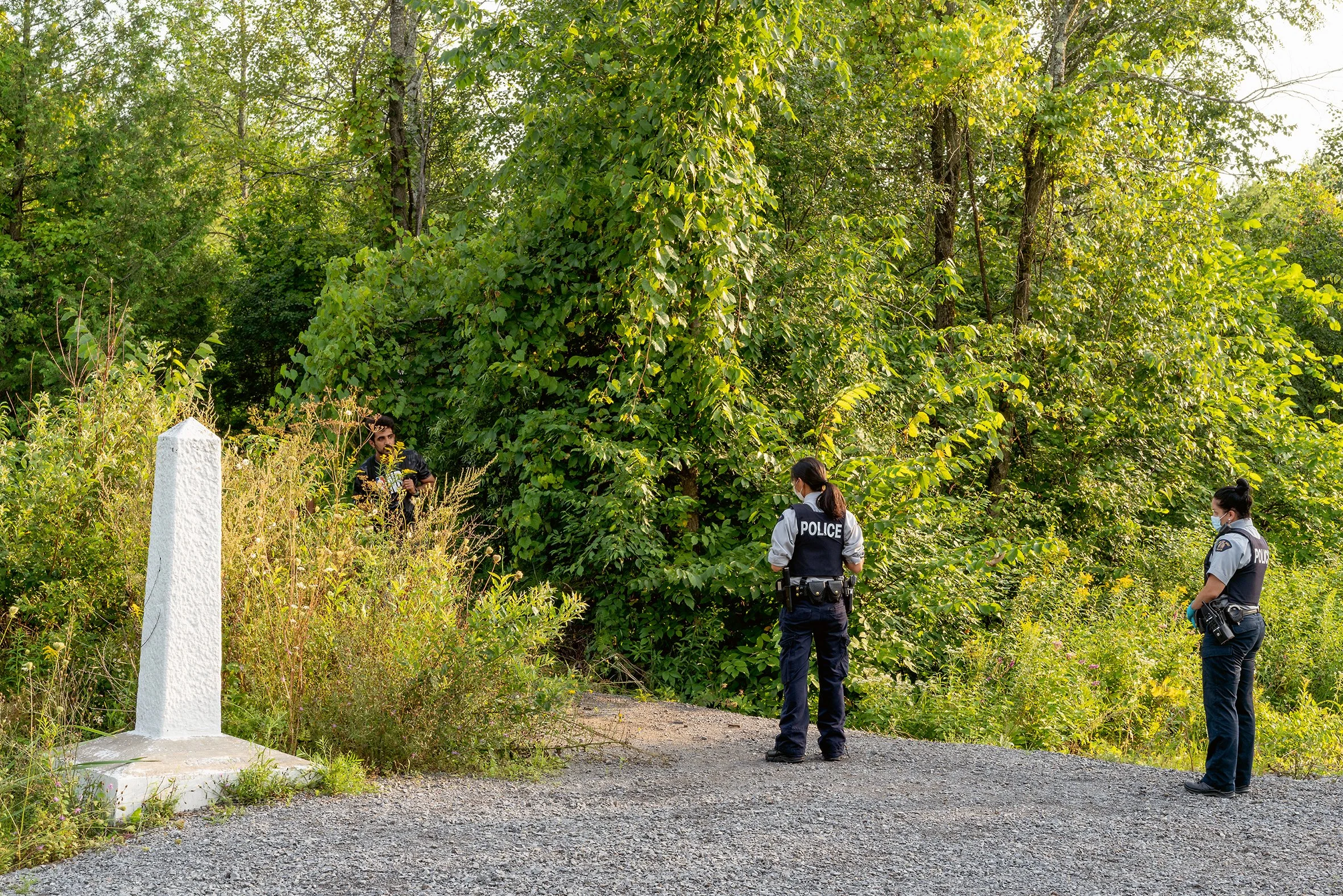
At Roxham Road, people arrive, wait, and cross in just minutes. Ruth Kaplan photographed this place over five years, returning again and again. She follows the journey from bus station to the moment people step across.
But the project is also about time and tension.
Most people only see the crossing, not what happens around it. Kaplan pays attention to waiting, uncertainty, and small gestures along the way. She keeps the story inside this moment, without showing before or after. This creates a feeling of not knowing that stays with you.
There is also something practical in how she works.
By staying longer and following the full sequence, she finds meaning in ordinary scenes. You can take this approach and start noticing what others usually miss.
This article looks at how a small place can carry a much larger story.
The Book
Crossing by Ruth Kaplan, published by Kehrer Verlag, is a long-term photographic project documenting Roxham Road, an unofficial border crossing between the United States and Canada. Created over five years, from 2018 to 2023, the book follows asylum seekers as they move from the Plattsburgh bus station to the moment they step into Canada, capturing a sequence that is usually reduced to a single image or headline. Through 126 colour photographs, Kaplan builds a layered view of a place where global migration becomes visible in a small, rural landscape.
Rather than focusing on dramatic moments, Crossing observes what happens in between: the waiting, the uncertainty, the taxi rides, and the brief but decisive act of crossing. The book combines images with fragments of testimony and field notes, creating a structure that reflects both movement and pause. By staying within this narrow timeframe and location, Kaplan presents migration not as an abstract issue, but as a lived experience shaped by time, place, and quiet human decisions. (Kehrer Verlag, Amazon)
© Steven Paneccasio / Creative Direction Luminosity Lab
Genesis: You photographed Roxham Road from 2018 to 2023. What made you first drive out to what looks like just a quiet country road and decide it was worth five years of your life?
I had been photographing refugee shelters on border towns between the USA and Canada for a few years (Buffalo, Detroit, Fort Erie as well as Toronto and Montreal), which explored the tenuous status of asylum seekers as they wait for hearing dates. Their lives were in limbo for an extended period of unknown length. I was interested in showing the slow passage of time in these environments and how people get through their day.
At a certain point, it seemed the project needed some drama to pull it together. Roxham Road had been in the local news since it became an active site with Trump’s first presidency, and I decided to go there to perhaps photograph once or twice, as a way of showing the concept of migration as a real event rather than an abstraction.
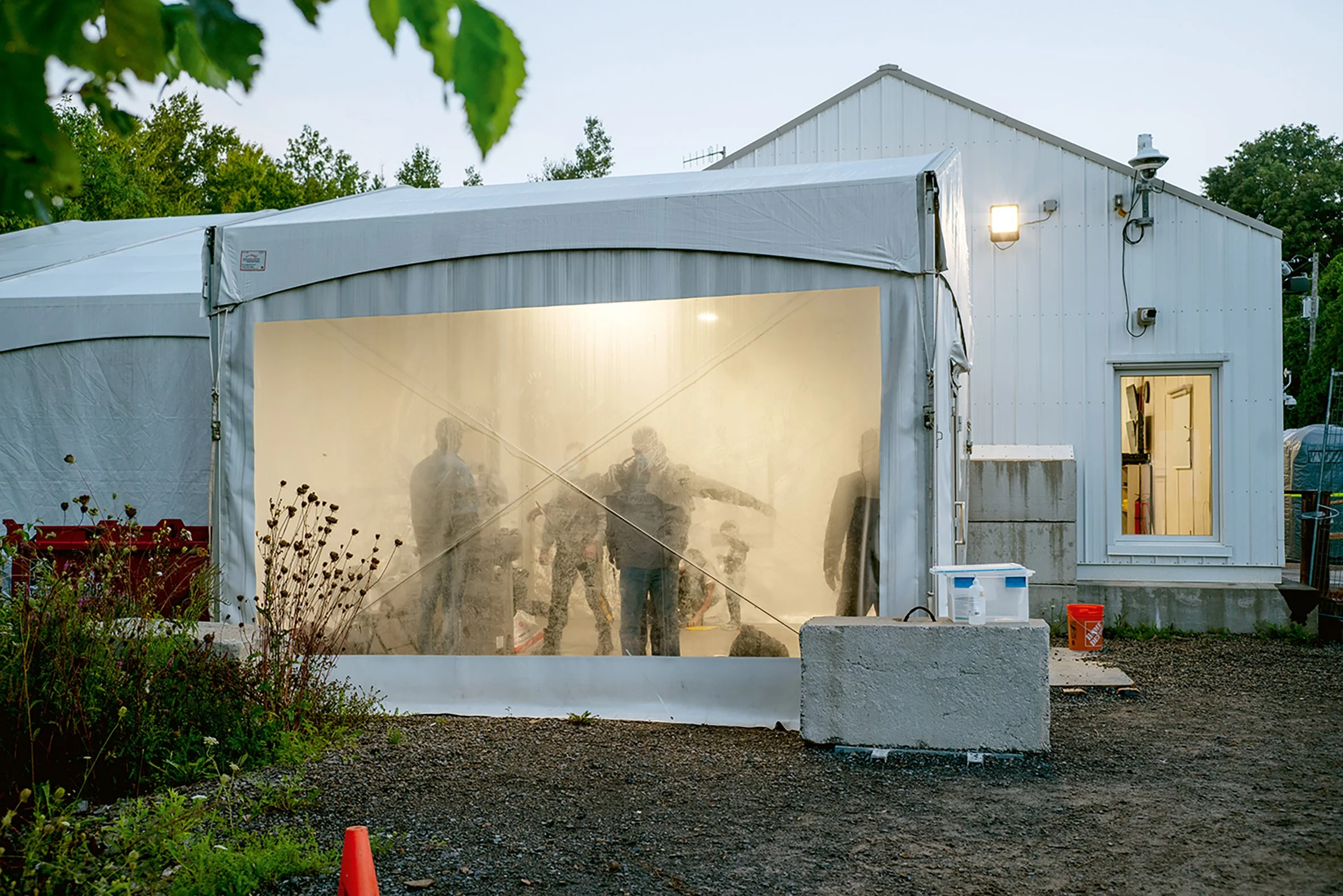
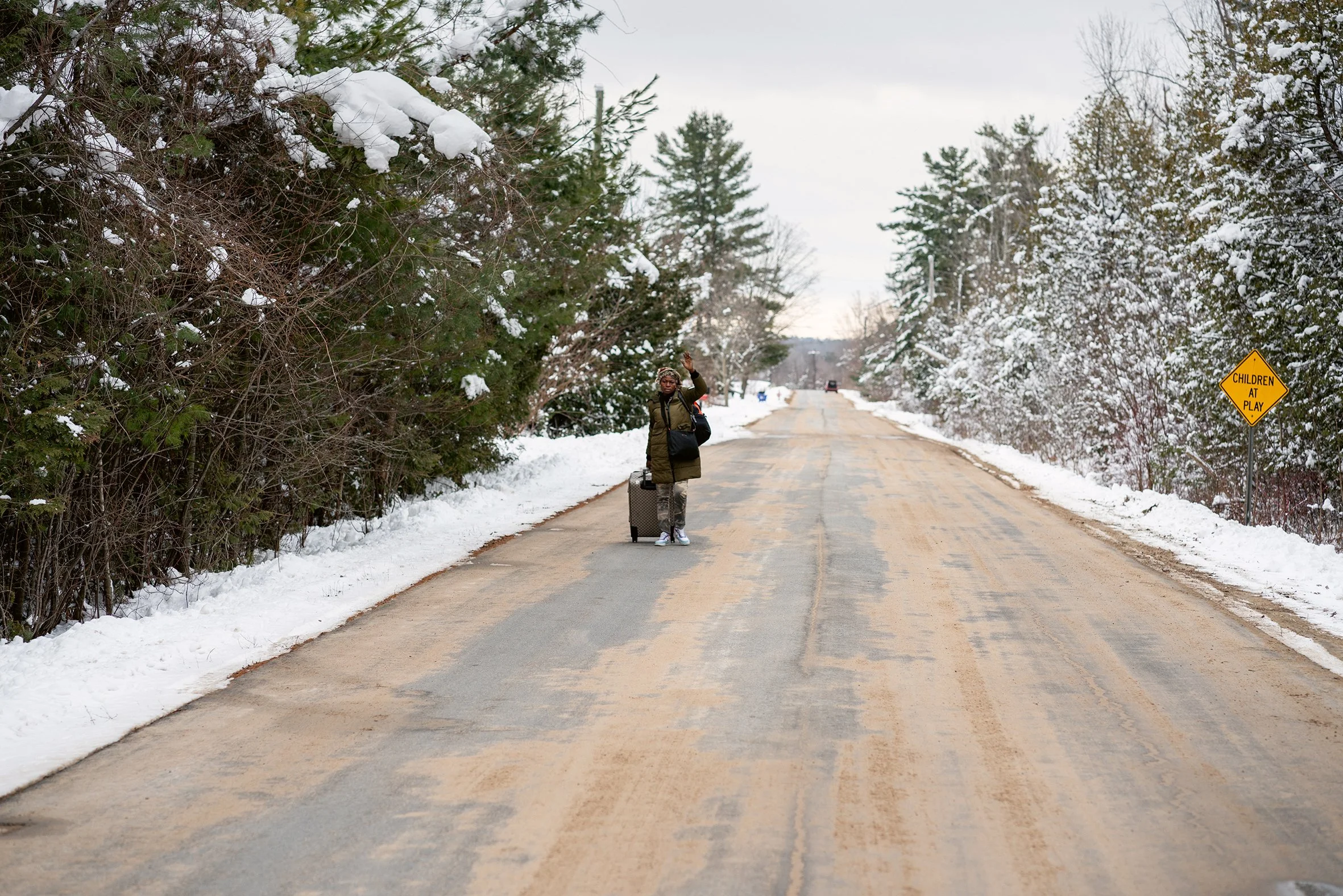
Once I went to the tiny site at the end of the road, it became fascinating as a landscape, which became a backdrop to these heightened events. It was like watching and being part of a play. The site echoed the global challenges of human migration but as a safe and effective process. It represented the epic as a microcosm.
Whole journey: Crossing follows people from the Plattsburgh bus station all the way to the Canadian border building. Why was it important to show the full journey, not just the moment of crossing?
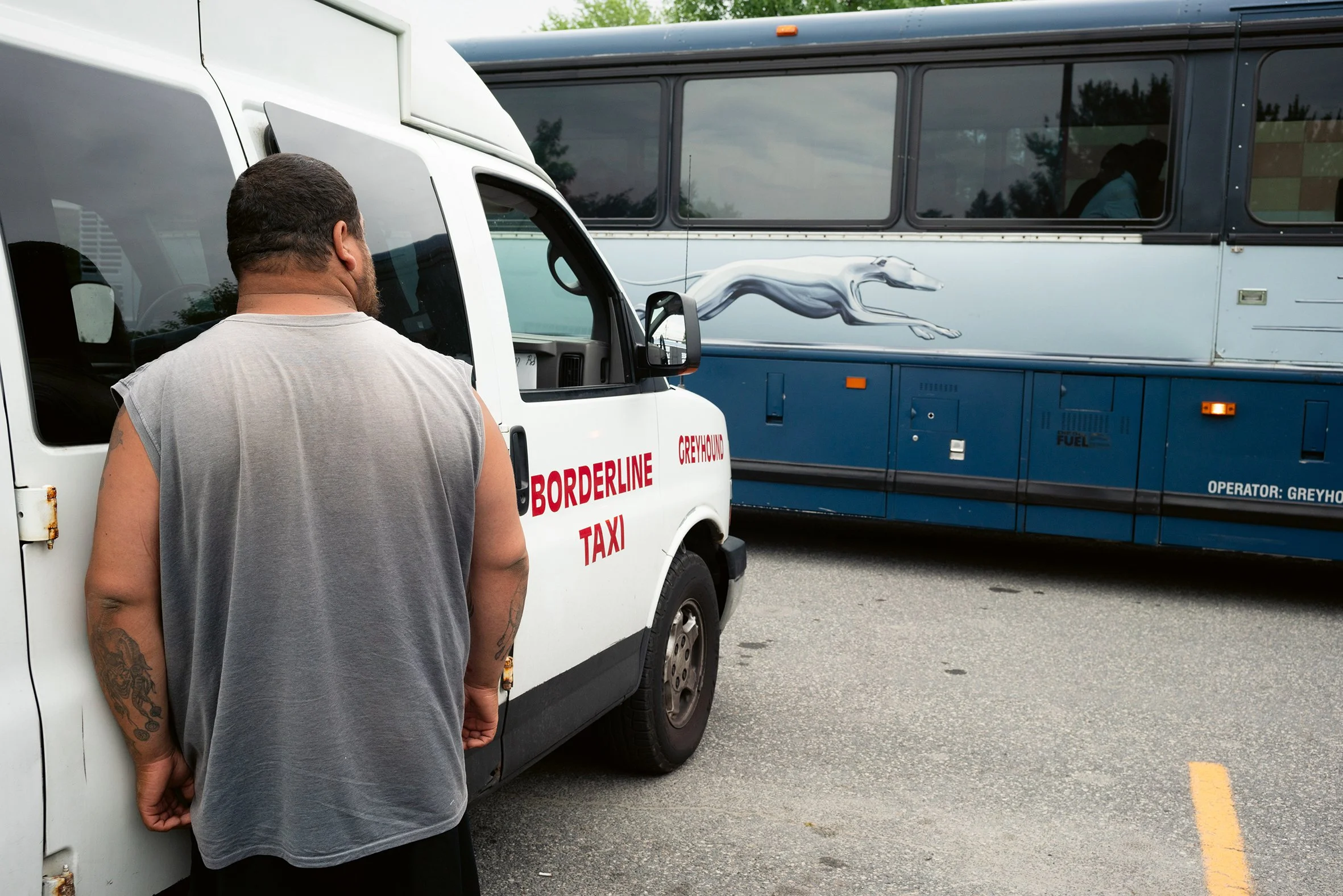
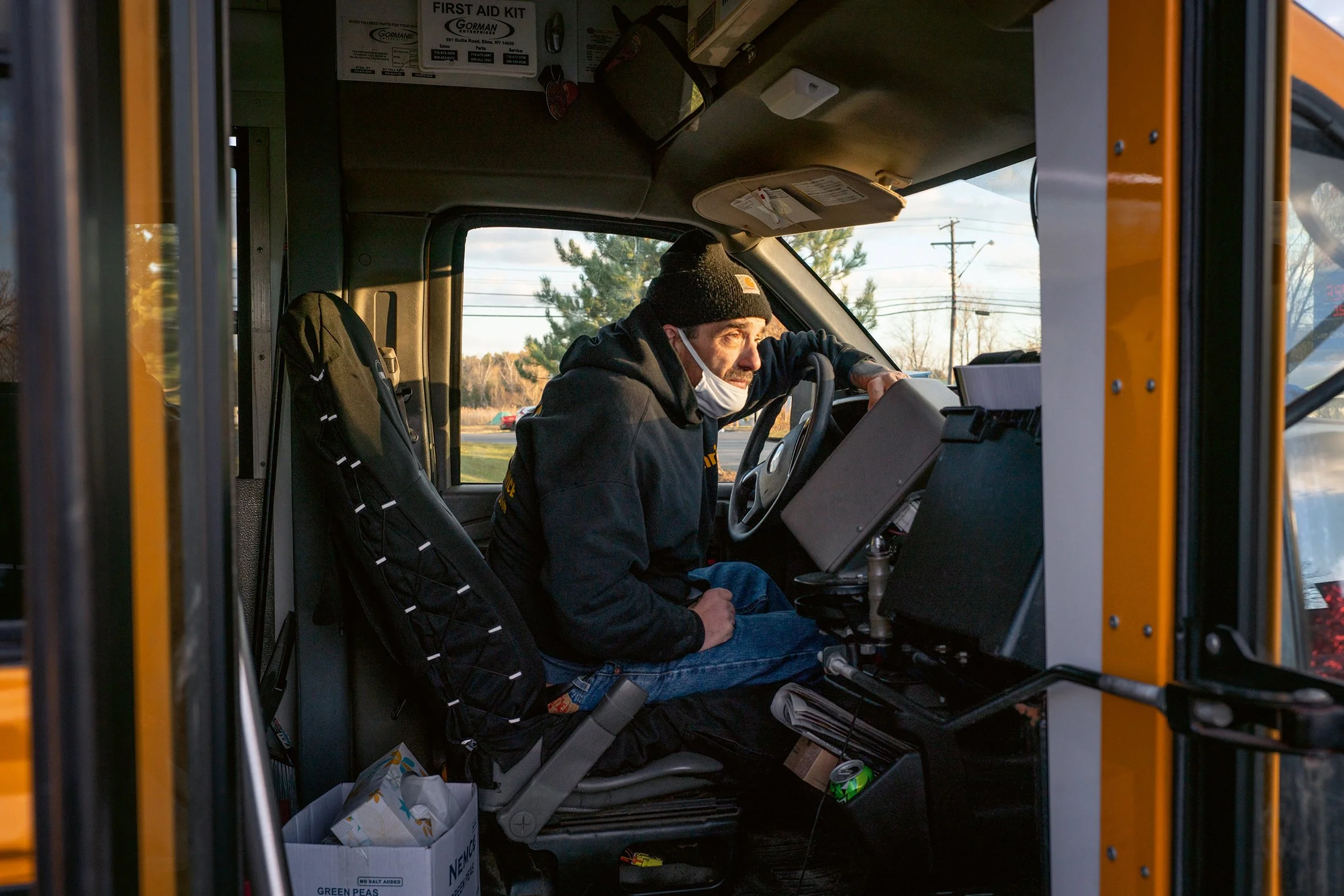
Part of Crossing is about the effects of this site on the local economy, the taxi business in particular. Most asylum seekers would arrive at the bus station to get an authorised cab to the border site. So this was the first interaction the refugees would have in Plattsburgh. I wanted the book to be subtly guided by the asylum-seeker journey and voice. The bus station and cab drivers are characters in the book (which could have been full stories in themselves). I had to create a balance of voices, a hierarchy, while keeping to the real sequence of events.
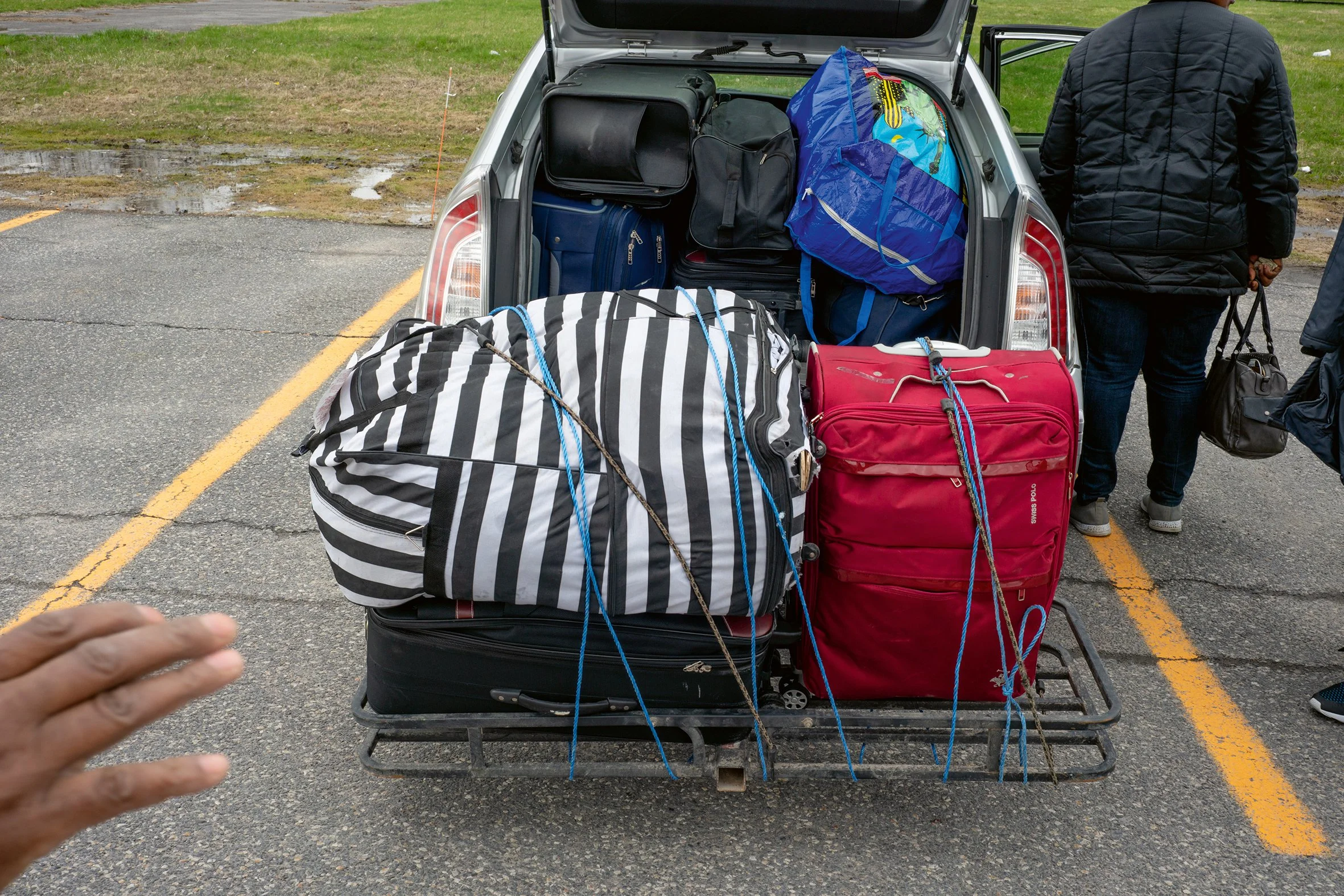
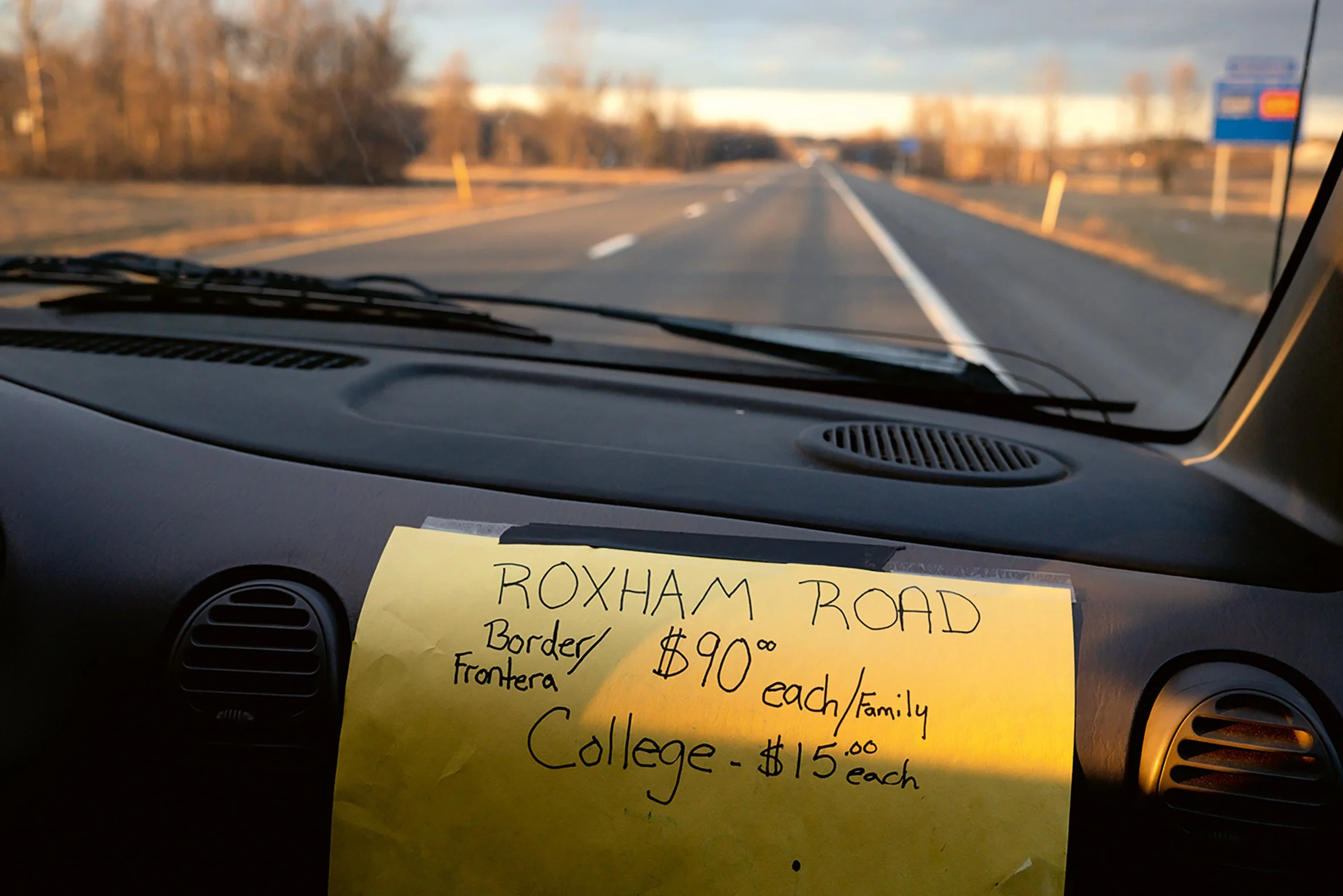
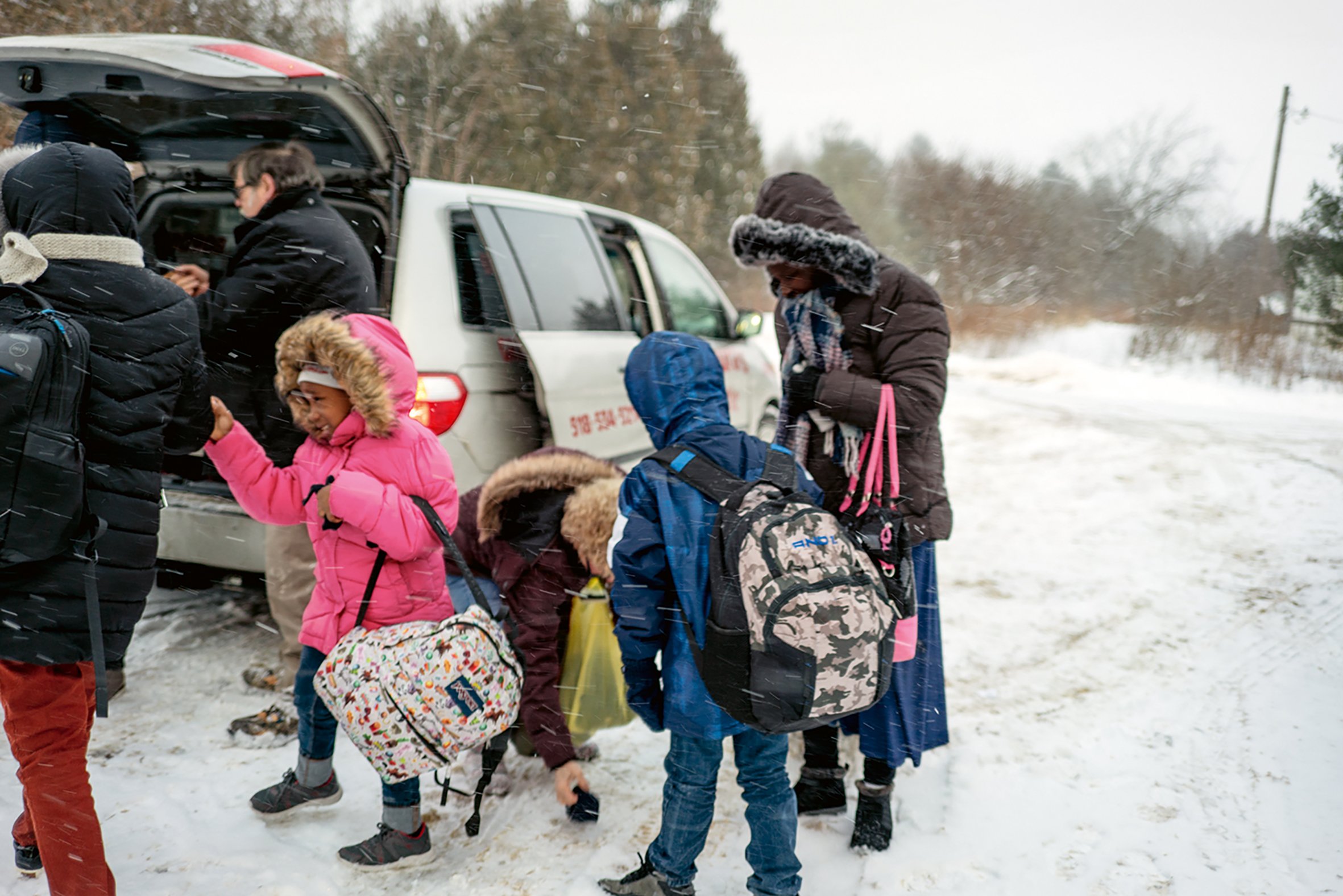
After the bus station, the drive to the border on Interstate 87 takes about half an hour. At times I was able to join the cabs. Often the asylum-seekers could relax somewhat during the trip but were also very tense and worried about what was coming… Are they being taken to the right place? How will the police interaction be? etc. The liminal aspect of the drive was important to include.
The book then reaches the American side of the border and finally the Canadian side. Including the full journey was a way of addressing the strangeness of time, how it stretches and how it suddenly shrinks.
Ordinary vs. extraordinary: Crossing describes Roxham Road as "a seemingly ordinary landscape." How do you photograph a place that looks unremarkable but carries so much weight?
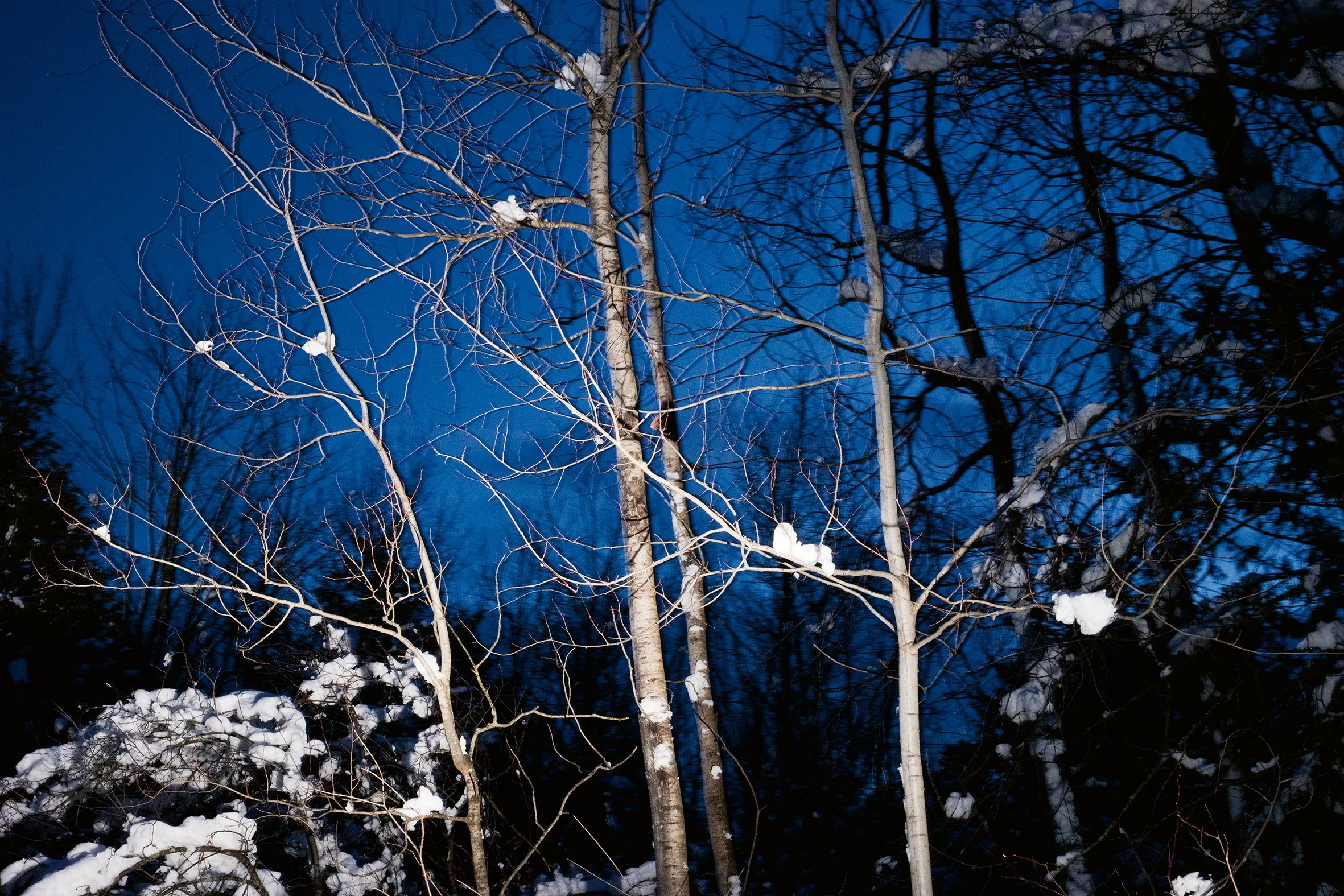
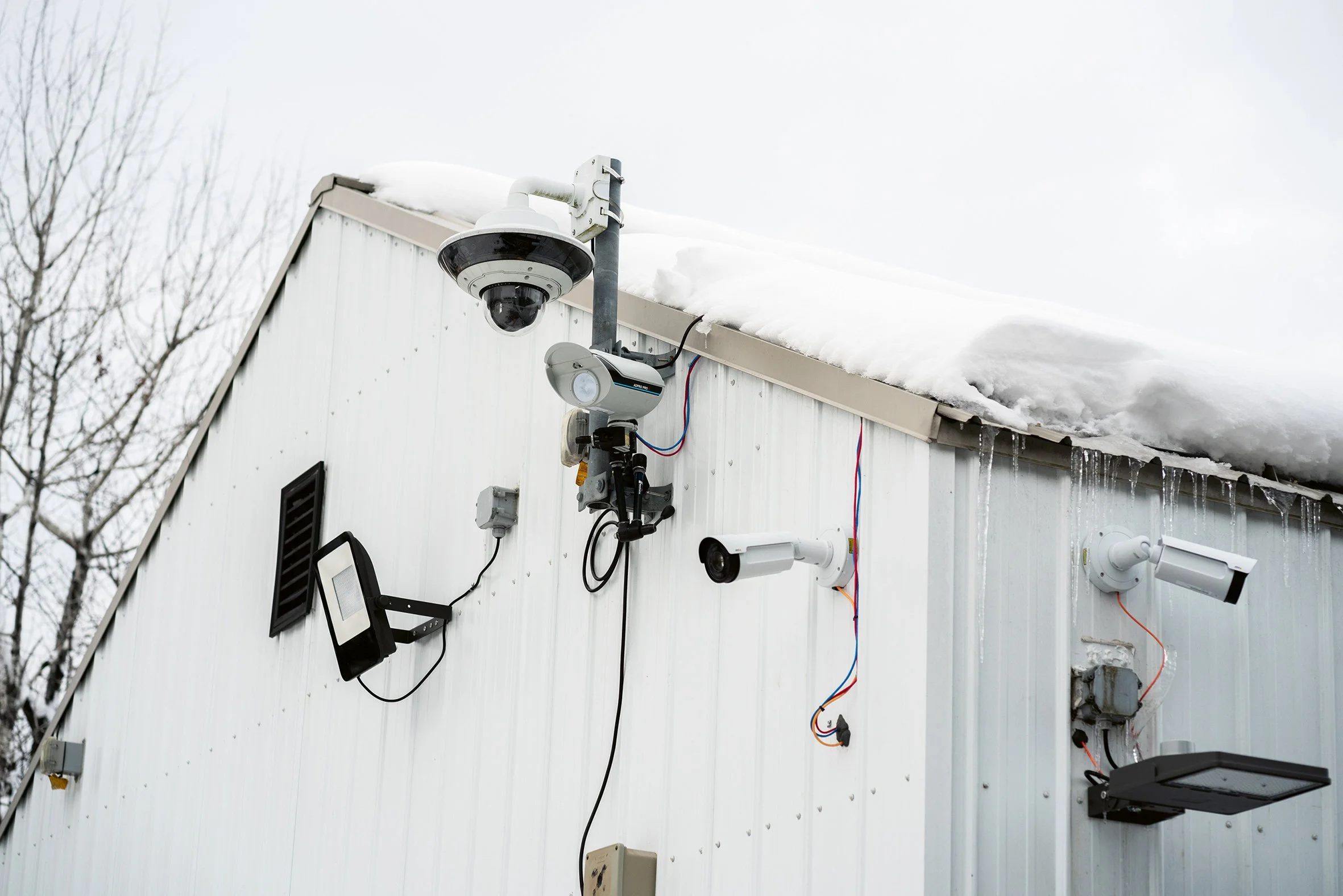
Through details, through the use of flash, through the drama of night, through the colours of each season. It was important to keep both elements present – the ordinariness and the beauty, the innocence of the landscape and how scary it might be if unfamiliar, especially at night. I found it very peaceful and meditative. In the summer I made audio recordings of the birds. But the site was fleeting for the asylum seekers, who were only there for five minutes or so. That’s why I was interested in what people remembered of it in the interviews.
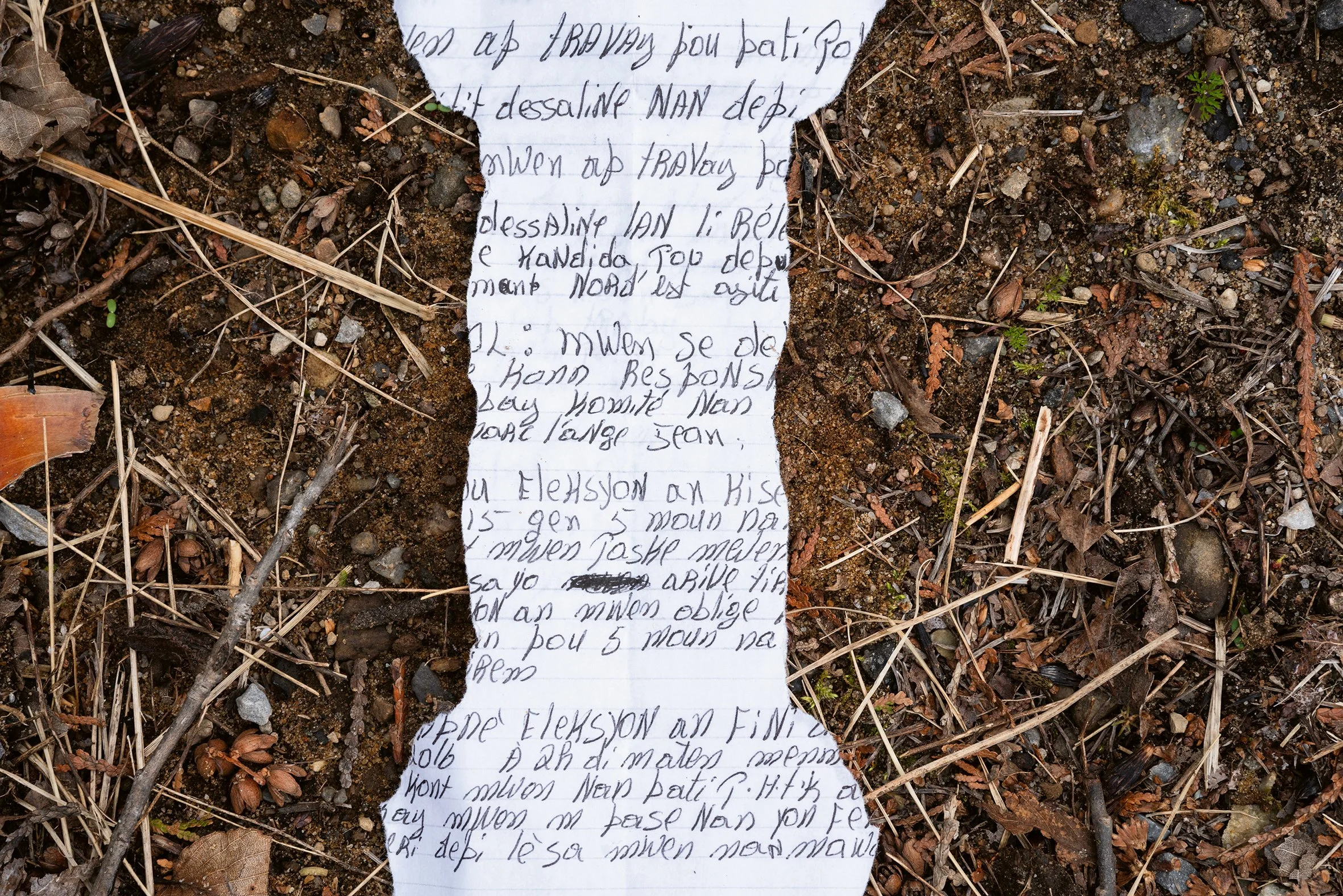
Left behind: One image in Crossing shows a handwritten note in Creole left in the bushes before the crossing. How do you decide when an object like that tells the story better than a person would?
I was struck by how the document was torn, in such a formal, precise way. There was the actual handwriting as the voice of a person we don’t see, and there was presumably that same person cutting the paper and discarding it. This intervention showed a playfulness and agency that was odd in that context.
Trust: People at Roxham Road were in one of the hardest moments of their lives. How did you get close enough to photograph families without making them feel like news stories?
Hmmm. By trying not to be aggressive, by being respectful, usually with few words. A lot of times I’m there not taking photos but observing. There was less direct interaction than in previous projects. Most of the people were there very briefly and focussed on crossing and the Canadian police; everything else going on was much less important.
Night and cold: Several images in Crossing were shot at night or in winter. How did you handle shooting in low light and freezing temperatures while also staying present to what was happening?
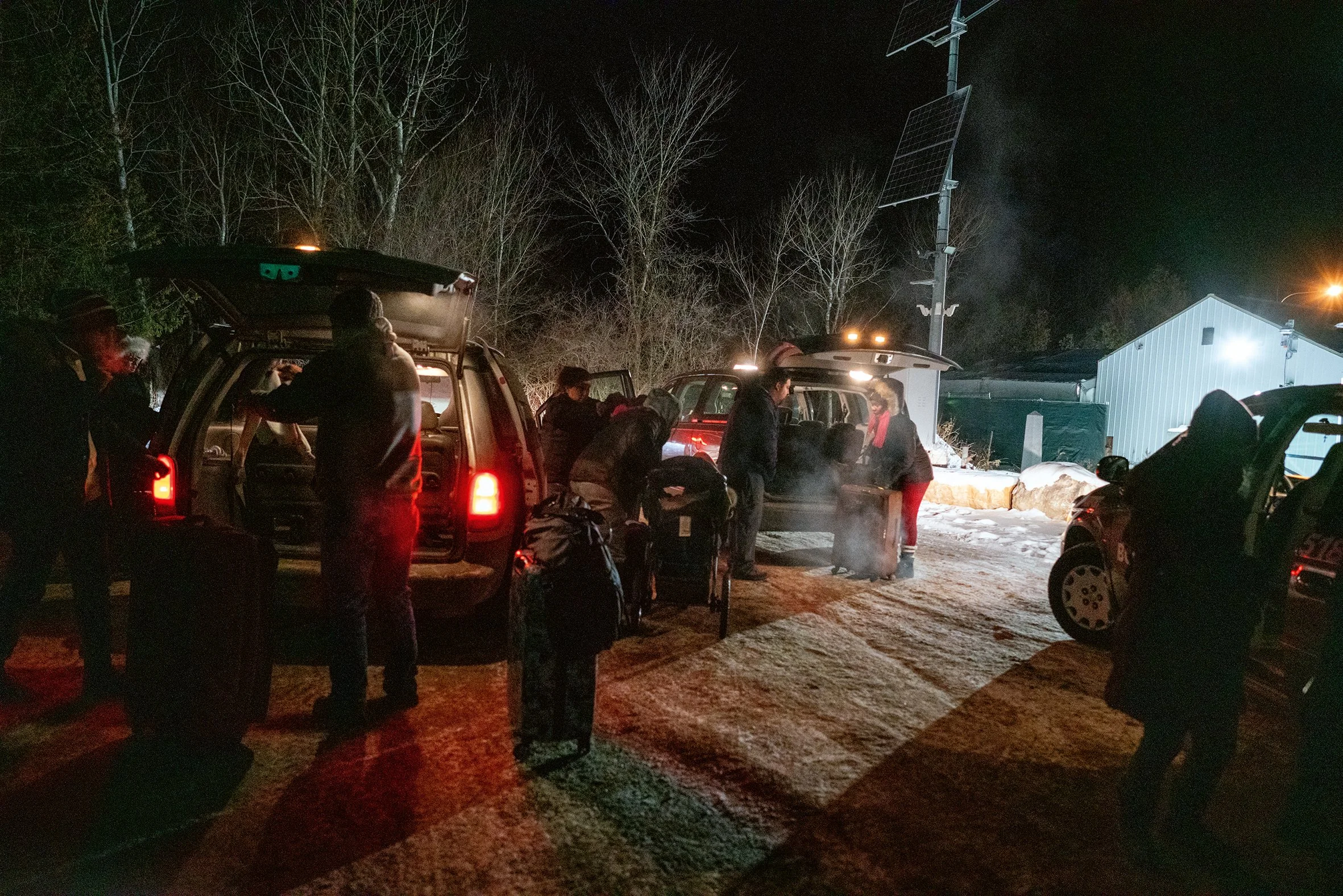
It got extremely cold there in winter, especially at 3 a.m. Growing up in Montreal, which is not too far, I’m familiar with those winters. When I’m holding the camera and working, those external things don’t bother me, as they do other times. Because of the night shoots, I used a digital camera that had good resolution in low light with very high ISO’s, sometimes 10,000. I didn’t want to use flash with people in this project, though I did start to use it with some of the night landscapes.
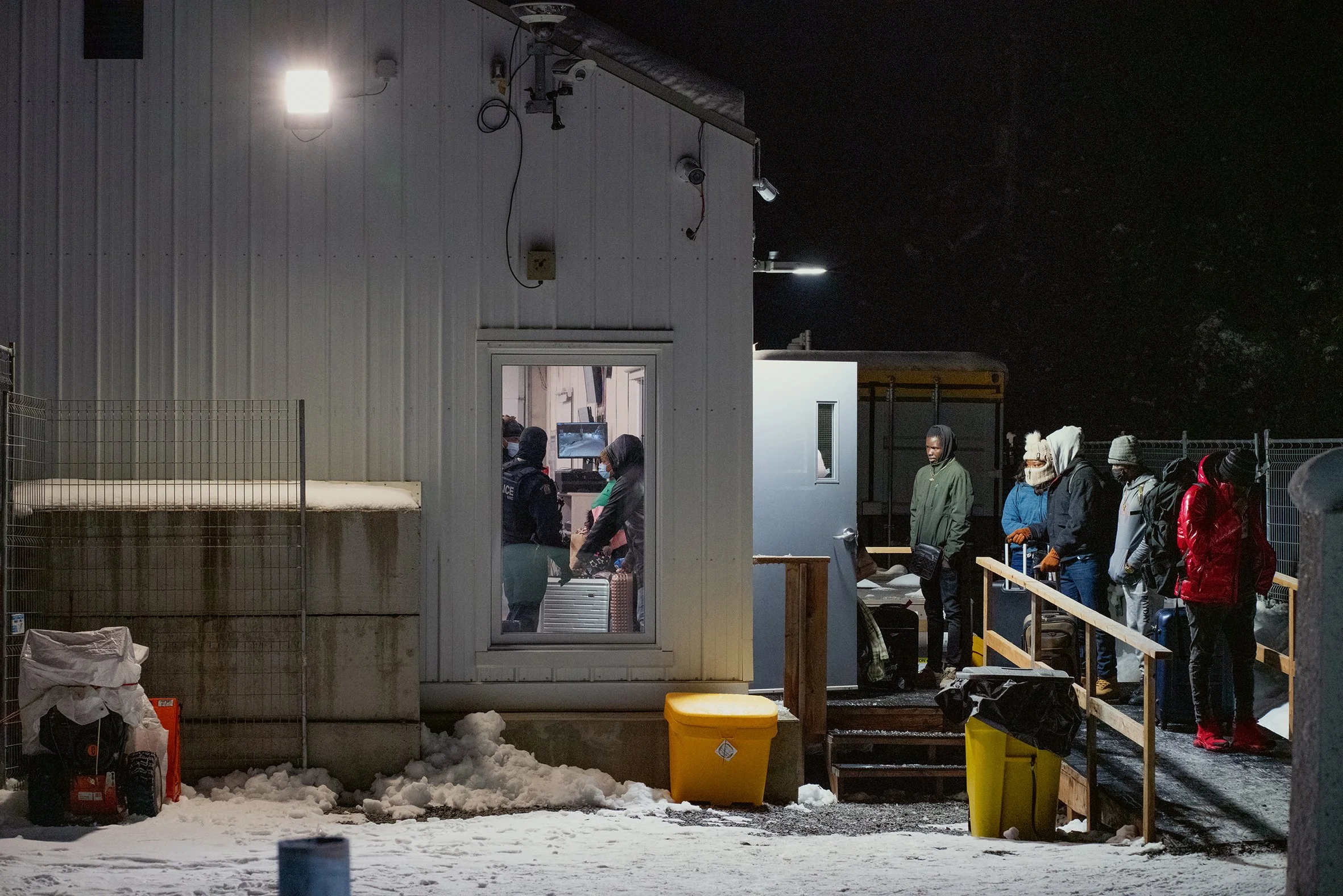
When there were many people arriving at the border from the same bus at night, it took a while for everyone to cross and enter the building. The asylum-seekers were often very cold no matter what coats and scarves they were wearing; often, they’d never experienced this kind of winter. I felt I couldn’t go back in the car while people were waiting outside, so I always waited until the last person entered the building before going into the car, as a kind of solidarity and sharing of the weather. Regarding the camera, I’d keep it under my coat or similar to keep it functioning. When the border got quiet, I’d go to a Dunkin’ Donuts nearby to recharge my battery and check the camera, and have an espresso.
Staying outside in the freezing cold until the last person entered the building, as a kind of solidarity. Did moments like that change the way you saw yourself in this project, not just as a photographer but as a witness?
That’s an interesting question. I related to the people and subject matter primarily because of my parents’ experiences. My mother was a Holocaust survivor taken in by relatives in America after the war until she met my father, who had fled Lithuania with his parents and siblings in 1939 and settled in Canada. So I grew up with stories of people running for their lives, suffering huge personal losses, and the aftermath of war, having to create anew. As a photographer making documentary work, there are various roles – observer, witness, advocate – that can overlap, but the level of awareness and consciousness are heavily influenced by your personal experiences. And in this case, standing out in the cold as a (privileged) witness, the imagined experiences of my parents and family were a presence that is always there, which caused me to identify with the situation this way.
Colour choice: Crossing uses 126 colour photographs. What does colour give you in a story like this that black and white could not?
That’s a tough question. I’m sure you could work either way. Working in colour still holds a lot of discovery for me, after using black and white analogue tools for over 30 years. It was a time to try and learn the challenges of colour, which are so different than those of black and white. I felt that colour has more realism, especially when printed large, in terms of evoking the place and trying to convey the experience, rather than translating it to black, white, and greys. Black and white has a different kind of interpretation… it goes to an emotional core very directly but also romanticises.
Sequence: Crossing moves from the bus station to the taxi ride to the road to the border building. How did you decide the order of images to make it feel like the reader is actually walking that route?
Editing from thousands of photographs was a long process done in various stages, but it always came back to the true sequence from Plattsburgh bus station in the US, ending at the Canadian side of the border site. I felt there were certain things that shouldn’t be tampered with, a responsibility to the way things played out there. Whenever I tried to mix it up visually, it didn’t hold, especially for people who weren’t familiar with the place.
You said you tried not to show anything about these people's lives before or after the border, and that felt like a responsibility. Was there ever a moment when you wanted to break that rule and follow someone further?
The responsibility was mostly about keeping to the real sequence of events in the geographical location. The reason I chose not to include broader testimonies or histories was that there are many of those narratives already in the public realm, forming part of the iconography of migration writing and art. I value those stories a great deal but didn’t see the point of repeating them in the book. I felt the book should represent this extracted moment in time. In that context, it was important for the reader to not know what happens, leaving the storytelling unresolved.
Personally, I was very interested and did learn fuller stories with the asylum seekers I interviewed after and in some of the cab rides when people felt like talking about their journeys. But I chose not to include that in the book experience so the viewer feels the tension of now knowing. When Habib Zahori and I began discussing what his writing might cover, I asked him not to include his full story, rather to try and convey what was going through his mind as he crossed.
The book is a traditional sequence in that sense. It was meant to convey the asylum-seeker’s journey who were there for the first and only time.
It was also important to me not to show anything about these people’s lives before or after the border. We don’t know what happens to them beyond entering the Canadian border building. I wanted to keep it about this liminal experience without a big resolution, as their status is not determined in one day by one action but often takes years and this is just one stage in that trajectory. That tension was important to maintain.
After closure: Roxham Road was shut down in March 2023. Does knowing the place no longer exists change how you feel about the photographs in Crossing now?
It’s strange being back at the site with nothing there. The fact that it’s closed makes what occurred there a tiny piece of history with the photographs becoming an archive. On a personal note, I wonder what happened to the people who crossed then. They would have had their hearings by now. Some would have been deported, and some would be on the path to permanent status in Canada. I also wonder about the cab drivers as the need for their services would have been greatly reduced.
You wonder what happened to the people who crossed, whether they were deported or found a path forward. Now that the book is finished and out in the world, does it feel like enough, or does it leave you with something unresolved?
The issues of global migration and the systems in place are full of inadequacies. The book doesn’t begin to address all the challenges. In a way, the book is a way to counter the huge statistics and epic scale we hear about, take it out of the realm of news media and sound bites, and try to bridge existing polarities. For me personally, I’m able to find out about some of the people and am friends with one of the families who crossed this way who are interviewed in the book.
But yes, I do wonder about the people in the photos. Many people who enter Canada and begin immigration applications prefer to let their past remain private until they’ve reached a more stable status. They’re reluctant to talk too much about it outside their families while daily life in a new country demands that they focus energy forward.
To discover more about this intriguing body of work and how you can acquire your own copy, you can find and purchase the book here. (Kehrer Verlag, Amazon)
More photography books?
We'd love to read your comments below, sharing your thoughts and insights on the artist's work. Looking forward to welcoming you back for our next [book spotlight]. See you then!
Ian Bates found his wildfire story after the fire. In 2014, he saw his first wildfire while visiting a friend in Eastern Washington. Photography Book Spotlight