Welcome to another captivating photo essay, this time by Corey Flint We'd love to hear your thoughts. Feel free to comment below and, if you're interested, share your photo essay with us. Your perspectives add valuable dimensions to our collective exploration.
People saw her illness. Kids saw her.
After his mother got sick, people started treating her differently. Conversations became slower, more careful, sometimes distant. It was not always intentional, but something clearly changed. Her grandchildren, however, did not seem to notice this change at all. They kept playing, talking, and sitting with her like before.
This difference became more visible over time.
While adults were adjusting their behavior, the children stayed the same. They did not ask questions about what happened or how things used to be. They simply related to her as she was in that moment. In this essay, Corey Flint reflects on what he observed and how it changed the way he pays attention.
It also gives a simple way to look at people differently.
Instead of focusing first on what changed, you can try to notice what is still there. Instead of reacting, you can spend more time just being present. This shift is small, but it can change how you connect with others.
The Essay
Just Gammy: How Children Can See Beyond the Surface
My mum has paraneoplastic cerebellar degeneration. It's rare enough that most people have never heard of it. Her immune system, in trying to fight ovarian cancer they found a few years ago, started attacking her cerebellum instead. Her balance, coordination, and speech all became severely impaired in a matter of months.
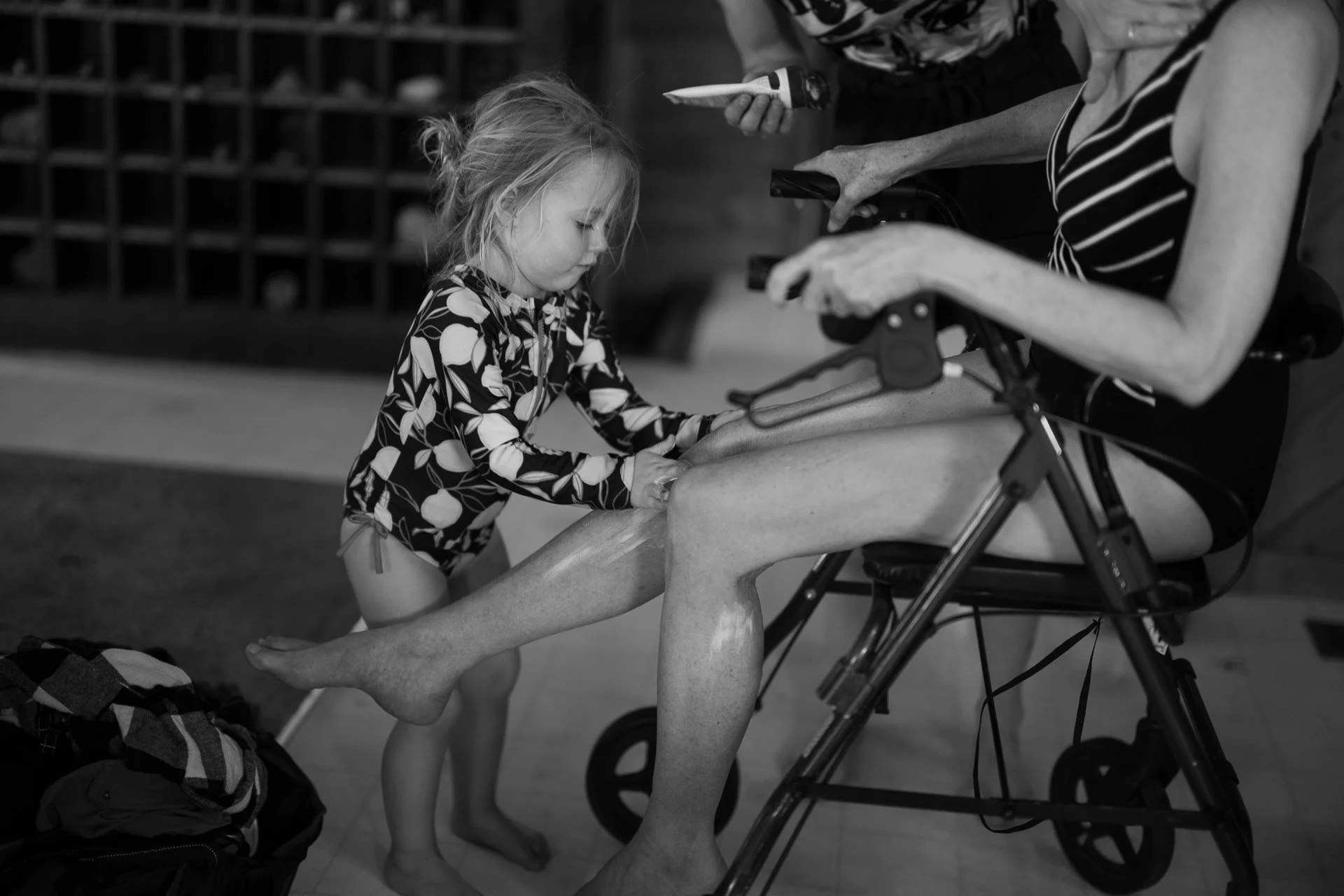
She uses a wheelchair now. Her words come out slowly, sometimes tangled. She can't do most of the things she could do two years ago.
When most people talk to her, something happens. A subtle recalibration. Eye contact gets careful. Conversations get smaller. Some people talk to her the way you talk to a child. Others just look away.
I don't do that exactly, but I have my own version of it.
I go into fix-it mode. Researching treatments, scanning studies, asking every doctor a follow-up question. Or I get stuck in the grief of it, the before-and-after, the distance between who she was and who she is now. I scroll. I manage. I leave. I do anything except just... sit there and be with her.
My kids don't have this problem.
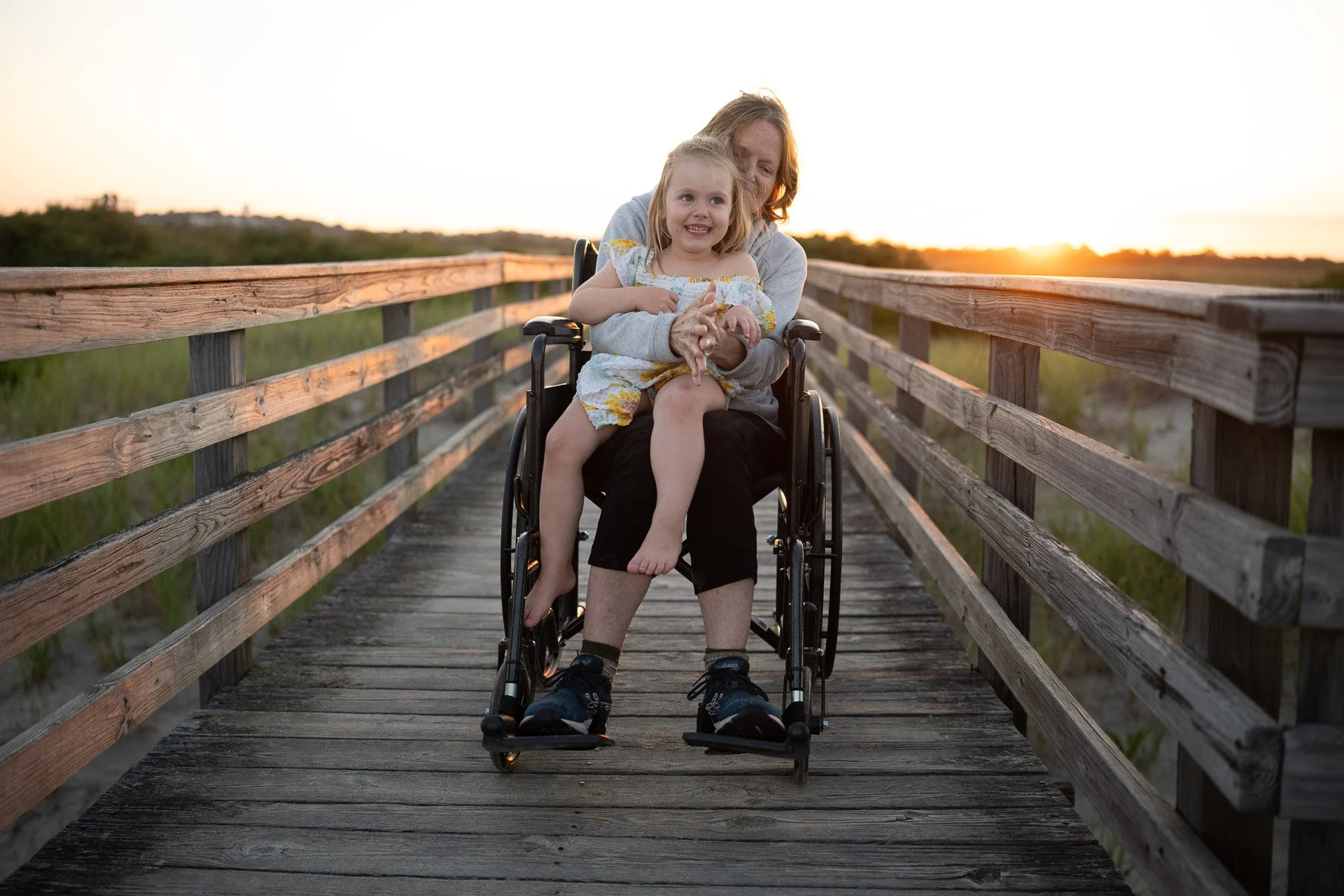
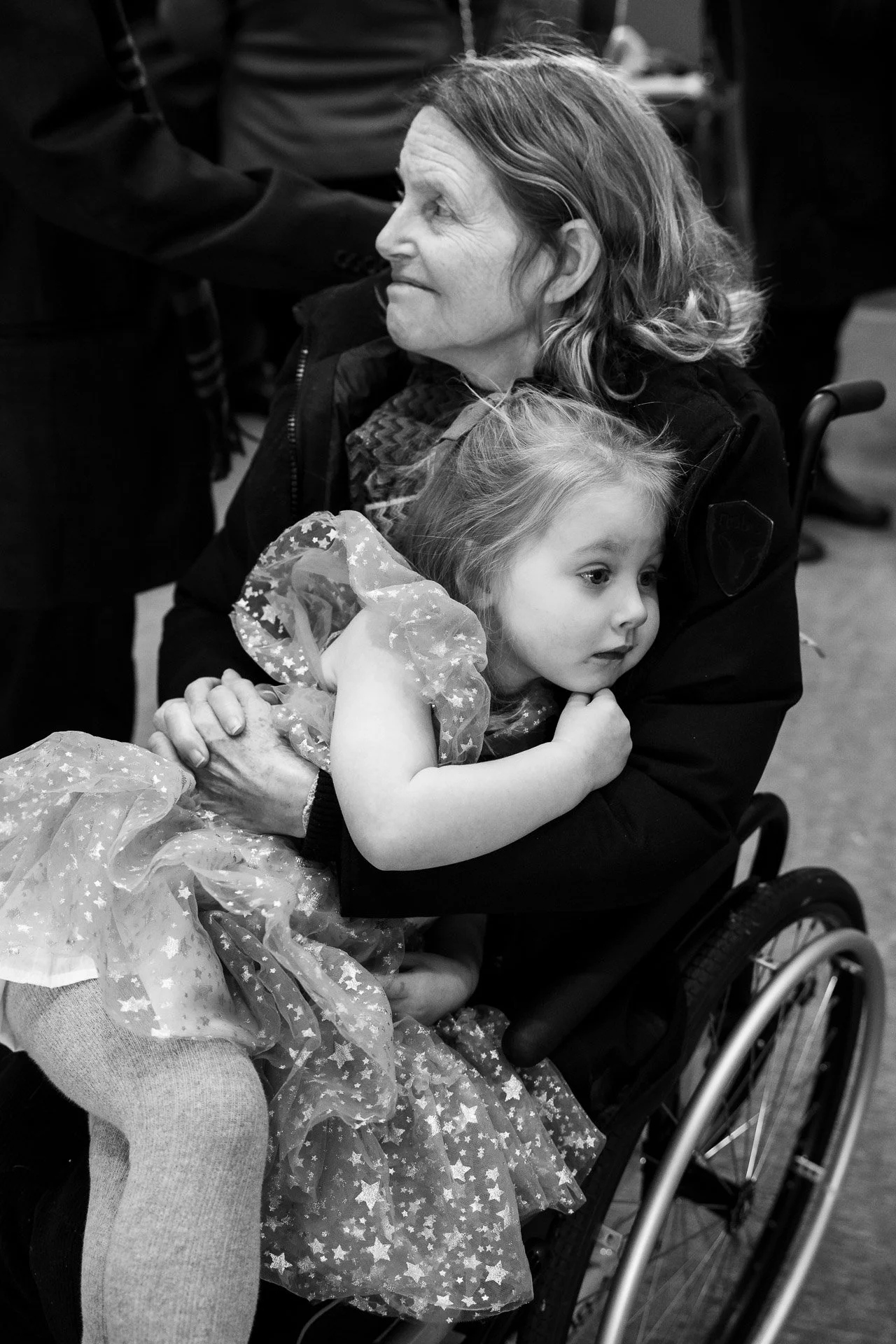
My four-year-old has never once asked why Gammy can't walk. This, from a child who asks “why” questions an average of 650 times per day. Why isn’t it Christmas tomorrow? Why doesn’t Elsa wear a coat outside? Why can’t I pee standing up like a boy? But the wheelchair? Never comes up. She just climbs in her lap.
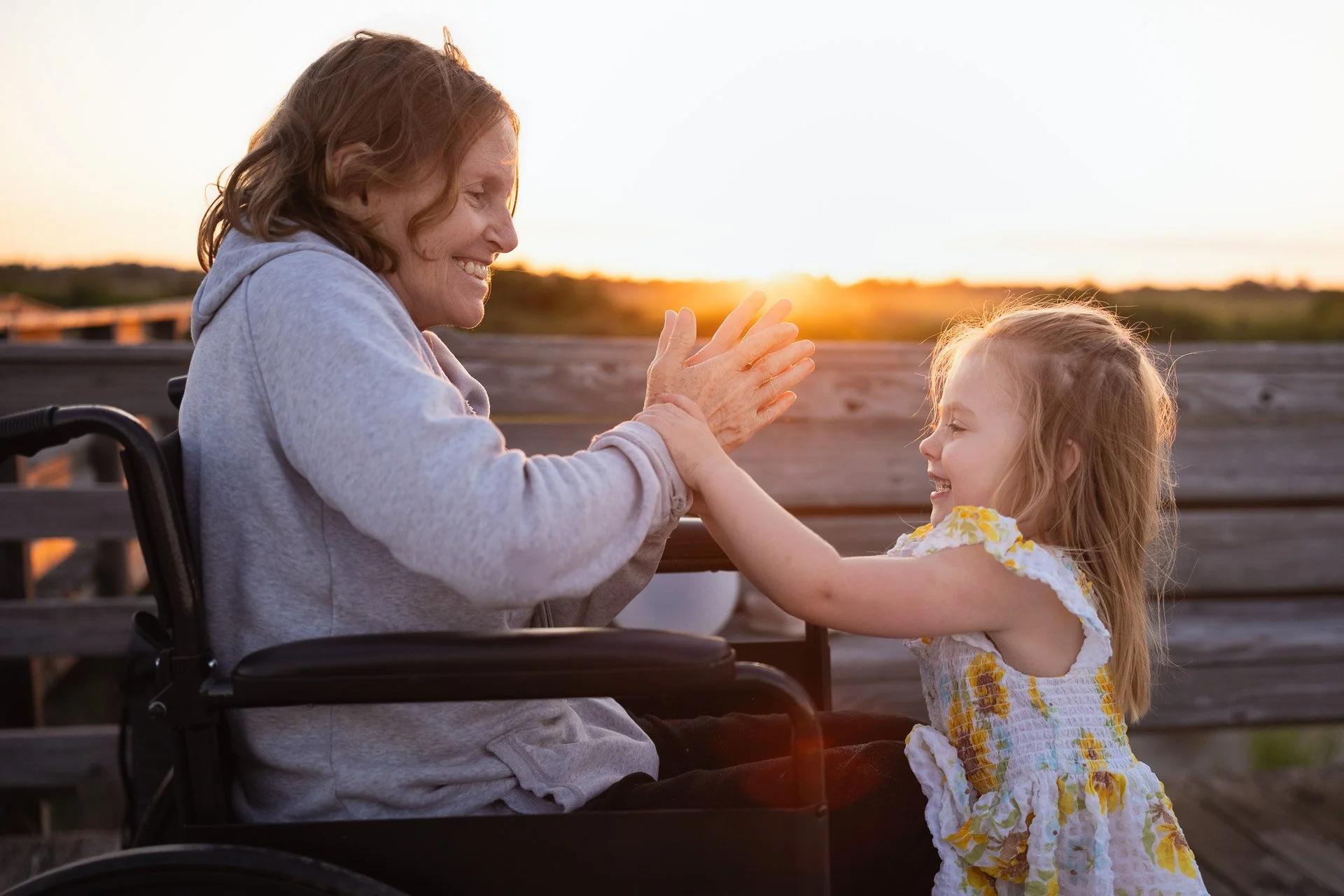
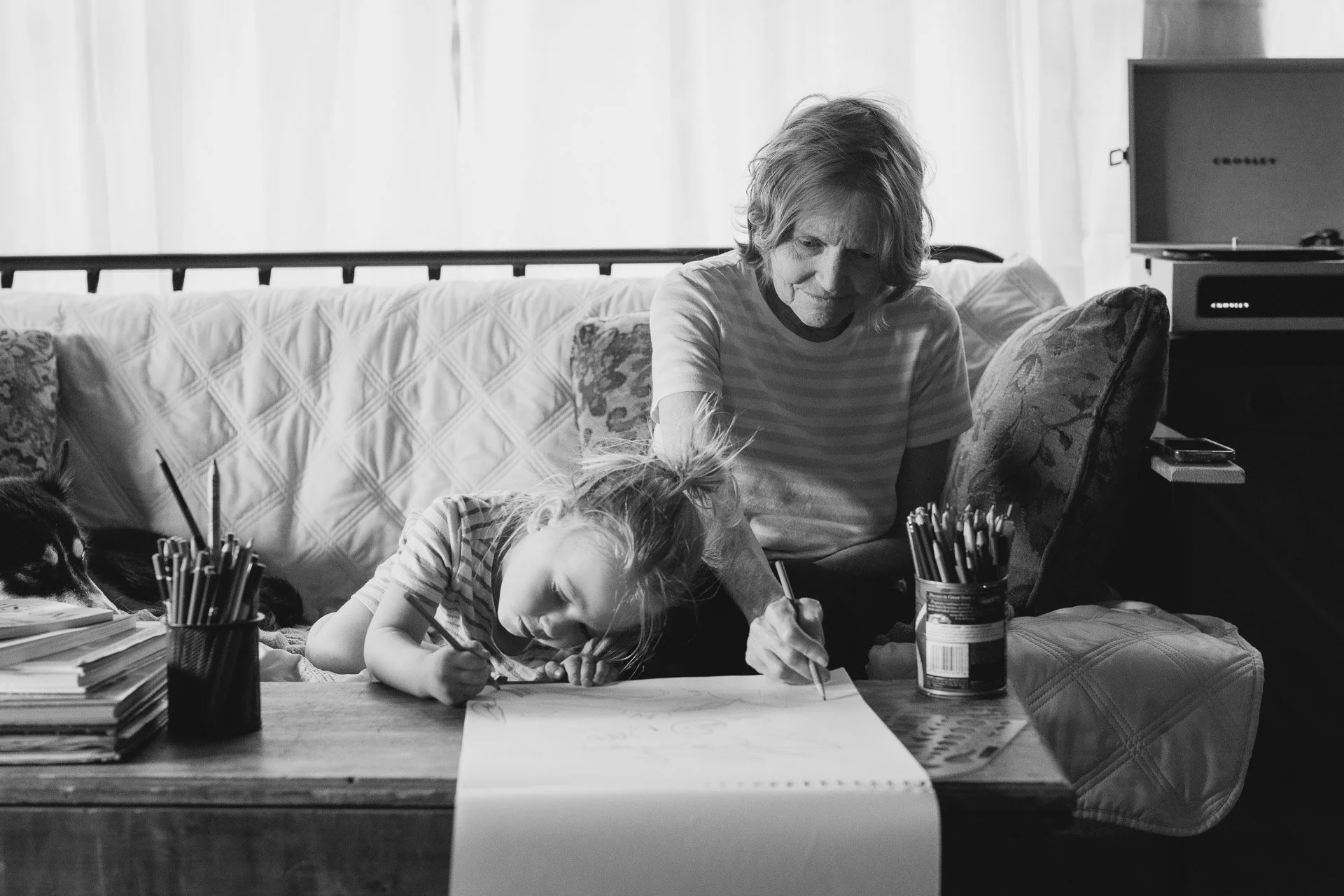
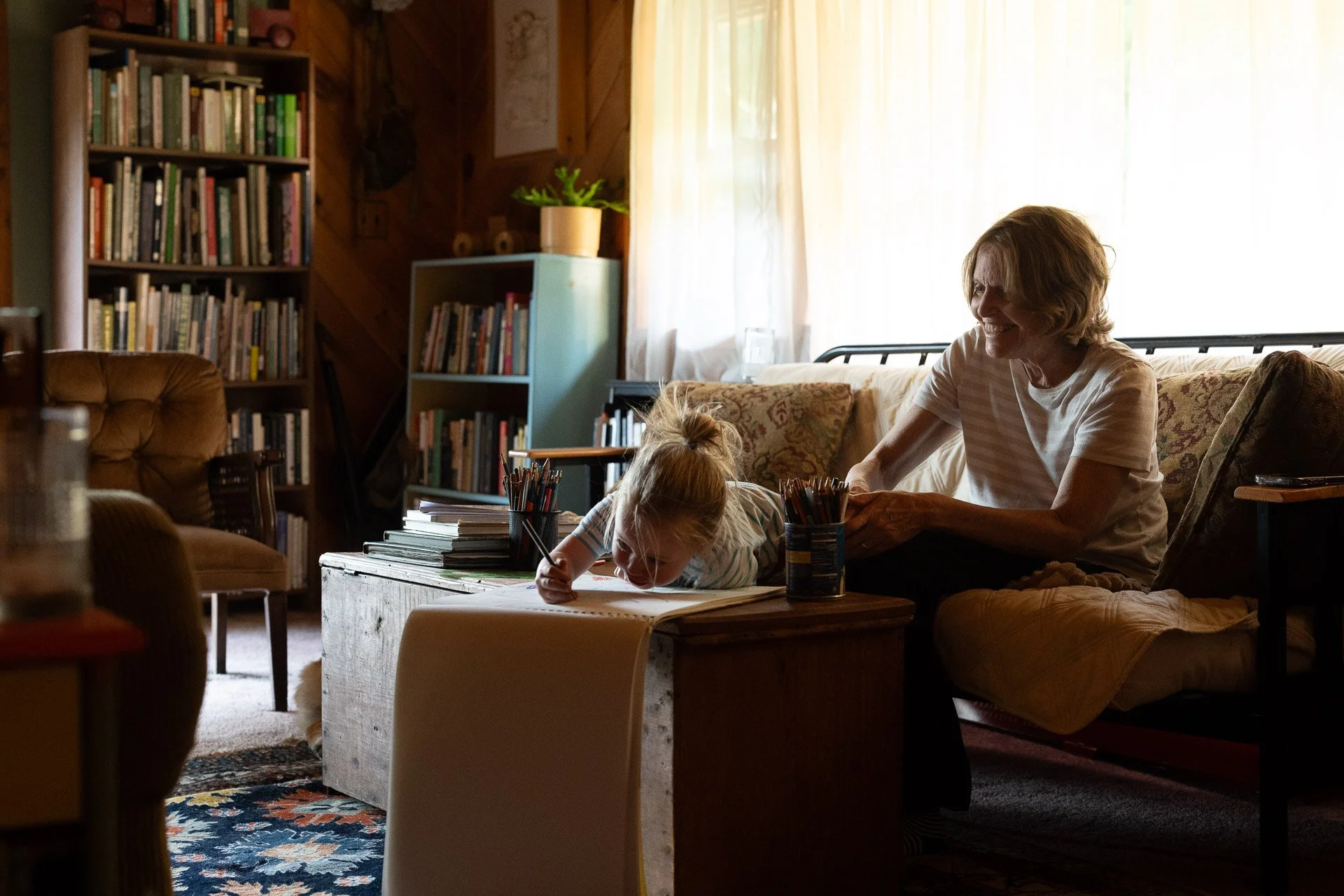
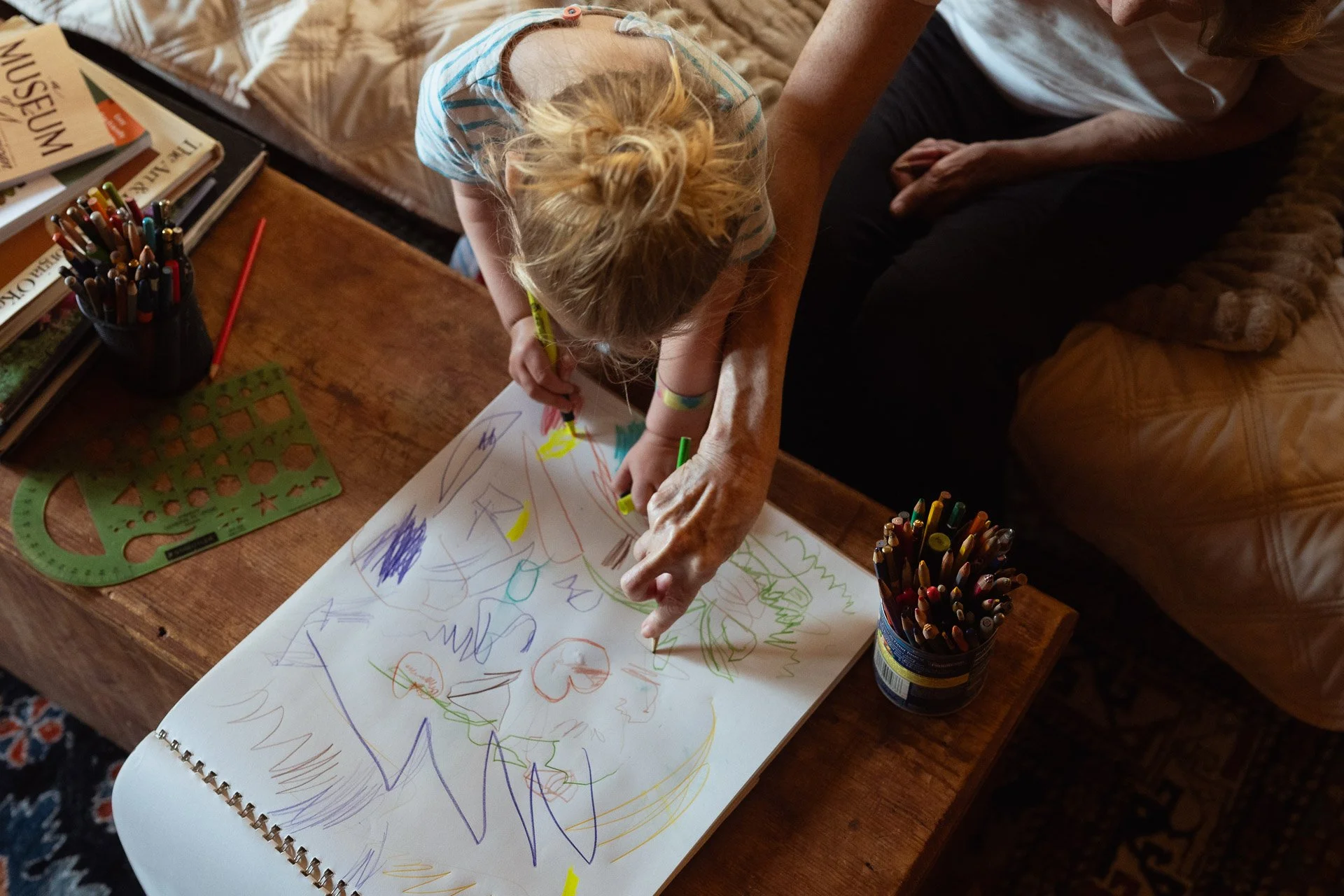
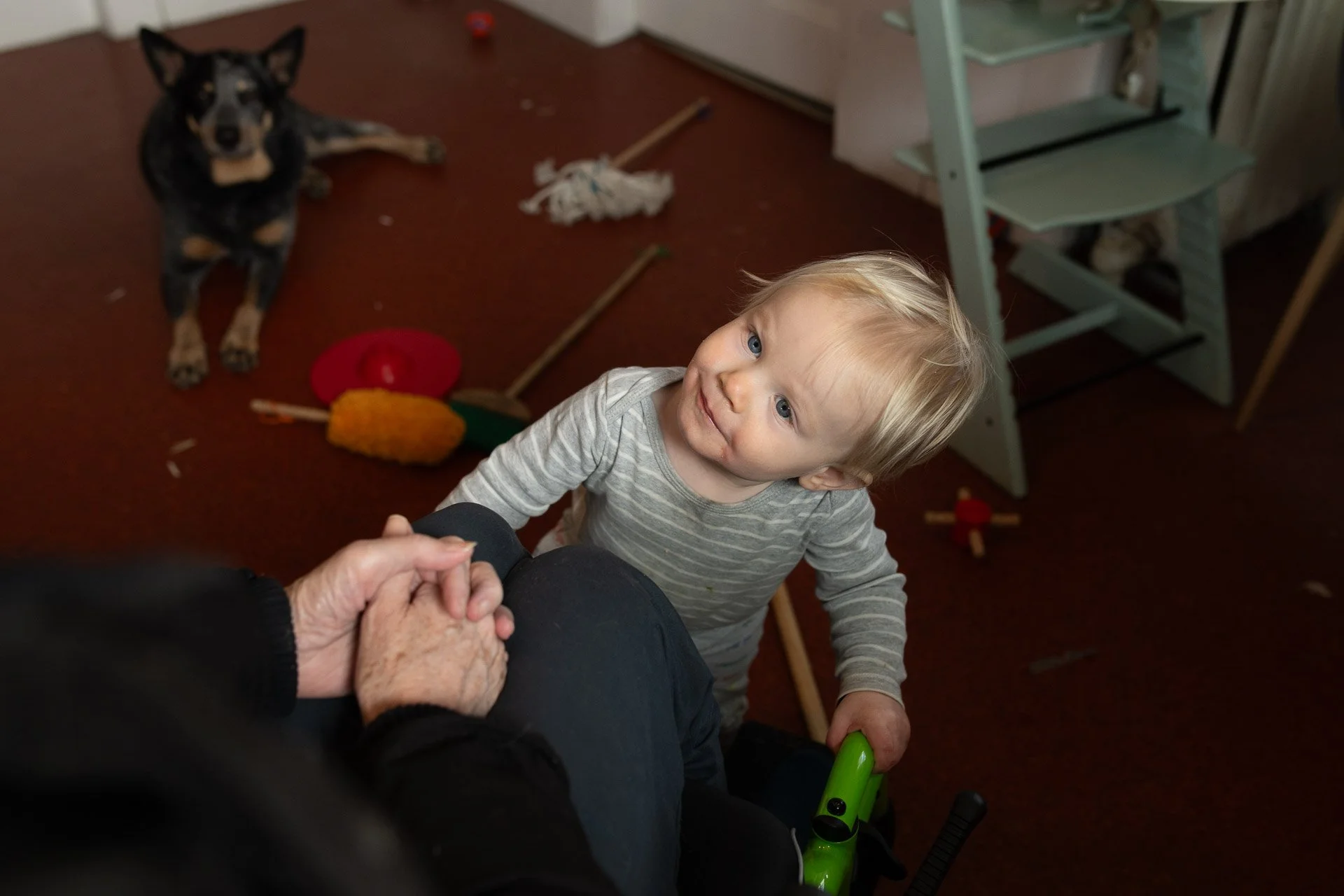
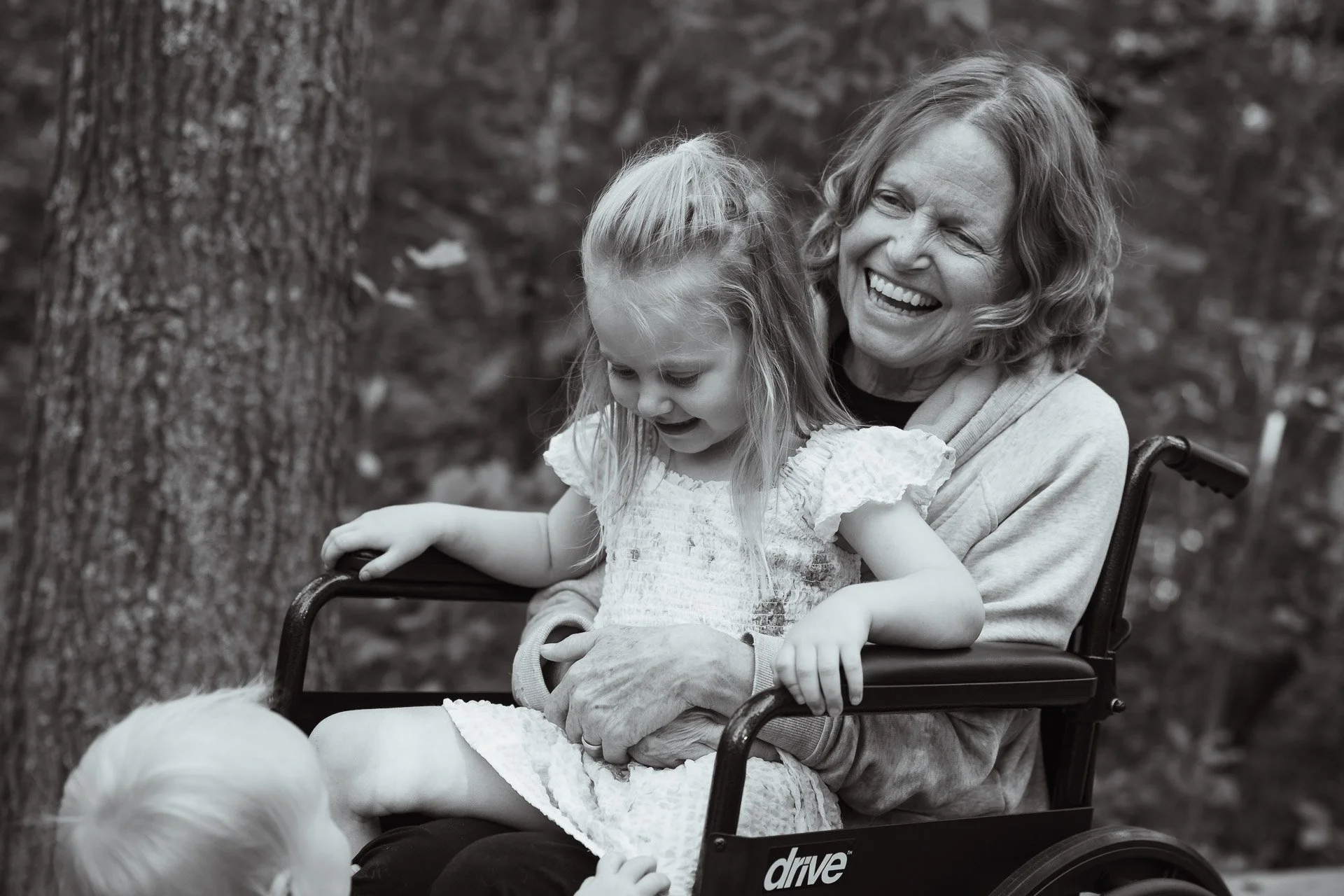
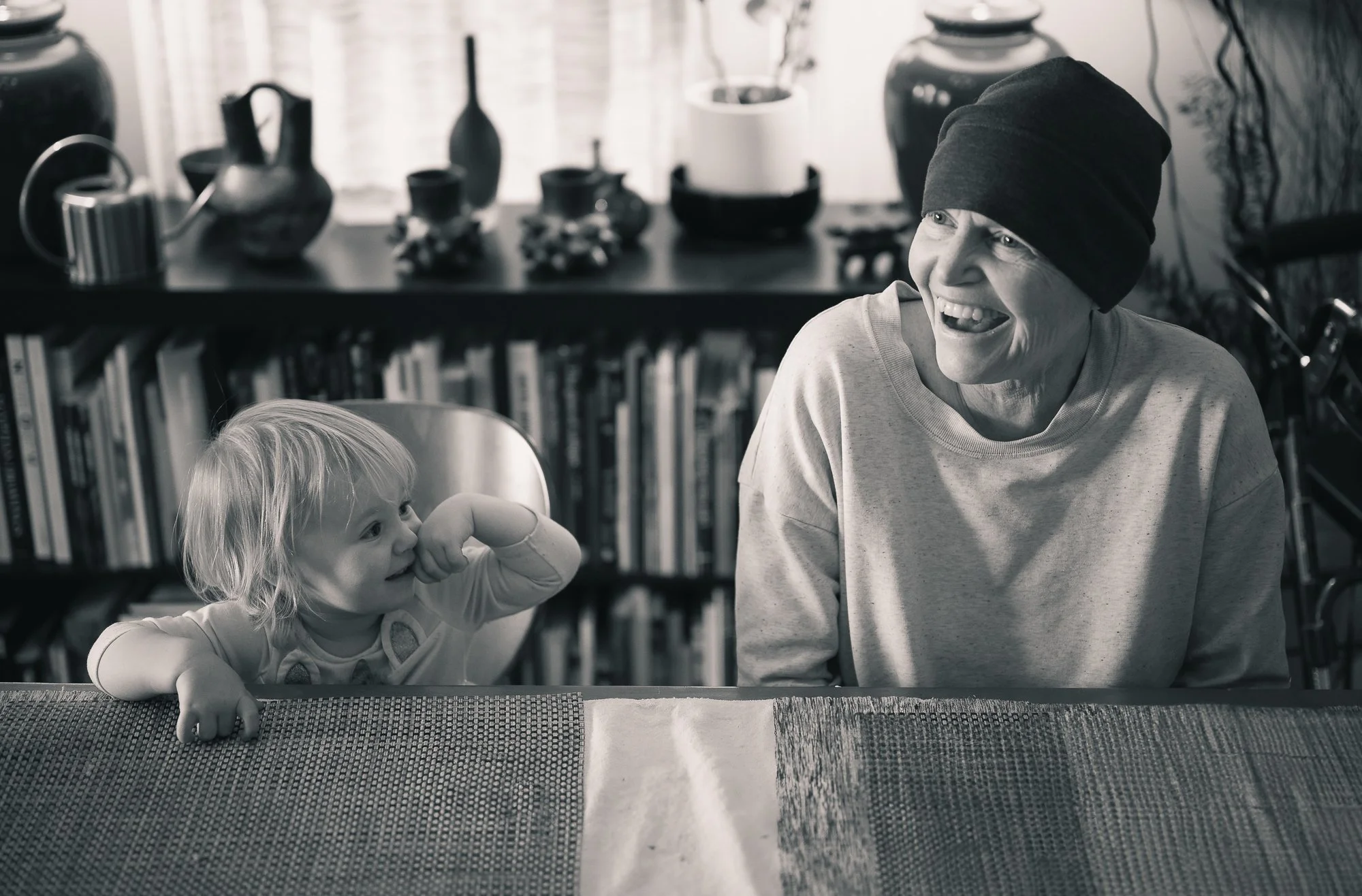
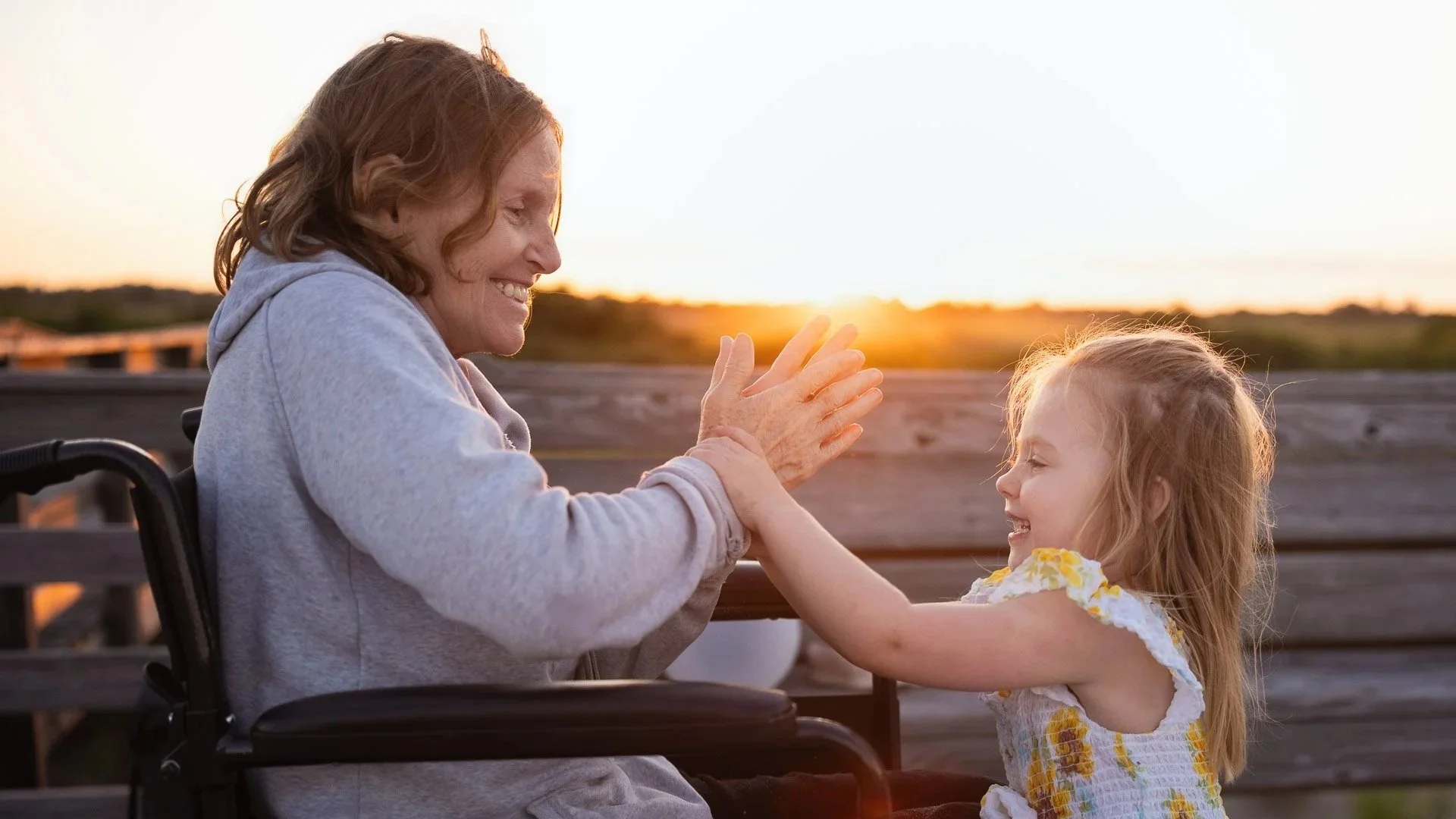
They draw together, side by side, coloured pencils everywhere. They play clapping games. They laugh at things that make no sense. Mae leans in and says something in Gammy's ear and her whole being lights up. My son toddles over, hands her a spatula or whatever he decided to give her, and grins up at her with eyes full of love.
No hesitation. No quiet calculation about who my mum used to be.
Just: Gammy.
We spend so much of our lives identifying with our bodies, our appearance, what we can and can't do, what we have or don't have. We confuse the costume for the soul. And when someone's costume changes dramatically, we forget that there is a person inside.
Kids haven't learned to do that yet. They don't see the wheelchair. They see the warmth. They see the attention, the laughter, the lap that's still the best seat in the room. They're relating to something that hasn't changed at all.
I think we all know, in our hearts, that the body isn't really who we are. That there's something deeper, some spirit or essence that's more true than any appearance or diagnosis. And I think we know that those spirits are all connected to each other in ways that are hard to see when we're locked into the surface of things.
Kids just seem to remember that more easily. Maybe because they’re closer to the place where we all come from.
My mum is still here. She is still everything she was before her illness.
And, if I pay attention, I can learn something ancient from these two teachers, neither of whom can properly wipe themselves.
You write about going into "fix-it mode" instead of just sitting with your mom. Did making photographs of her change that for you? Did the camera help you actually be present with her, or did it sometimes become another way to stay busy?
I learned photography through birds. That's not a metaphor for anything; it's just what happened. And birding has a particular requirement: you have to be still, quiet, and genuinely part of the environment, or you get nothing. You learn to wait. You learn to feel when the light is right, when the bird is about to turn. The viewfinder becomes a kind of anchor to the present moment.
So yes, picking up my camera with my mum has done that. It shifts something. The act of looking through a viewfinder has a way of narrowing my attention down to what's actually in front of me.
But my mind fought it, especially at first. I didn't want her to feel self-conscious. And underneath that, I think, was something harder: to be fully present means to fully accept things as they are. And I wasn't ready to do that for a while. The camera waits. It doesn't force anything. I had to get there first.
Your children see your mom without any filters. They do not notice the wheelchair or the changed speech. When you photograph her, whose eyes do you try to see through? Yours, or something closer to your children's?
My kids', I think. Or something like what they're doing, which isn't quite the same as their perspective.
What I'm after when I photograph her is the same thing they seem to access without trying: the person underneath the surface. The part that doesn't have an age or a diagnosis, that hasn't changed at all. That's what I think a good portrait actually does, at its best. It doesn't obscure the difficulty. The wheelchair is in the frame. The limitations are real. But somewhere inside all of that, the person is still there, and the photograph is an attempt to find them.
The joyful moment doesn't cancel out the hard one. They coexist. And I think the photographs that mean the most are the ones where you can feel both things at once.
Have you noticed the camera changes how people interact with her when you are photographing? Does it make things more honest or more awkward?
Honestly, I don't usually photograph her when other people are around. I took a few recently, and I think there's something in the act of someone pointing a camera at a person and saying, essentially, you're worth seeing — that can shift how others see them too. Whether that actually happened, I can't say for certain. But I suspect it's possible.
Did you photograph her before she got sick? If yes, how does it feel to look at those older pictures next to the ones you make now?
This is one of my real regrets. I didn't take proper photographs of my mum with our oldest, not with my actual camera. Just my phone. I think I assumed we had time. That's the thing about time: it doesn't announce when it's running out.
There are photos and videos of her from before, and yes, there is sadness in looking at them. She wanted to be the grandmother who takes the kids out for ice cream, who's actively involved, who helps out. Instead, she's the one being cared for. That gap is real, and the photos make it visible.
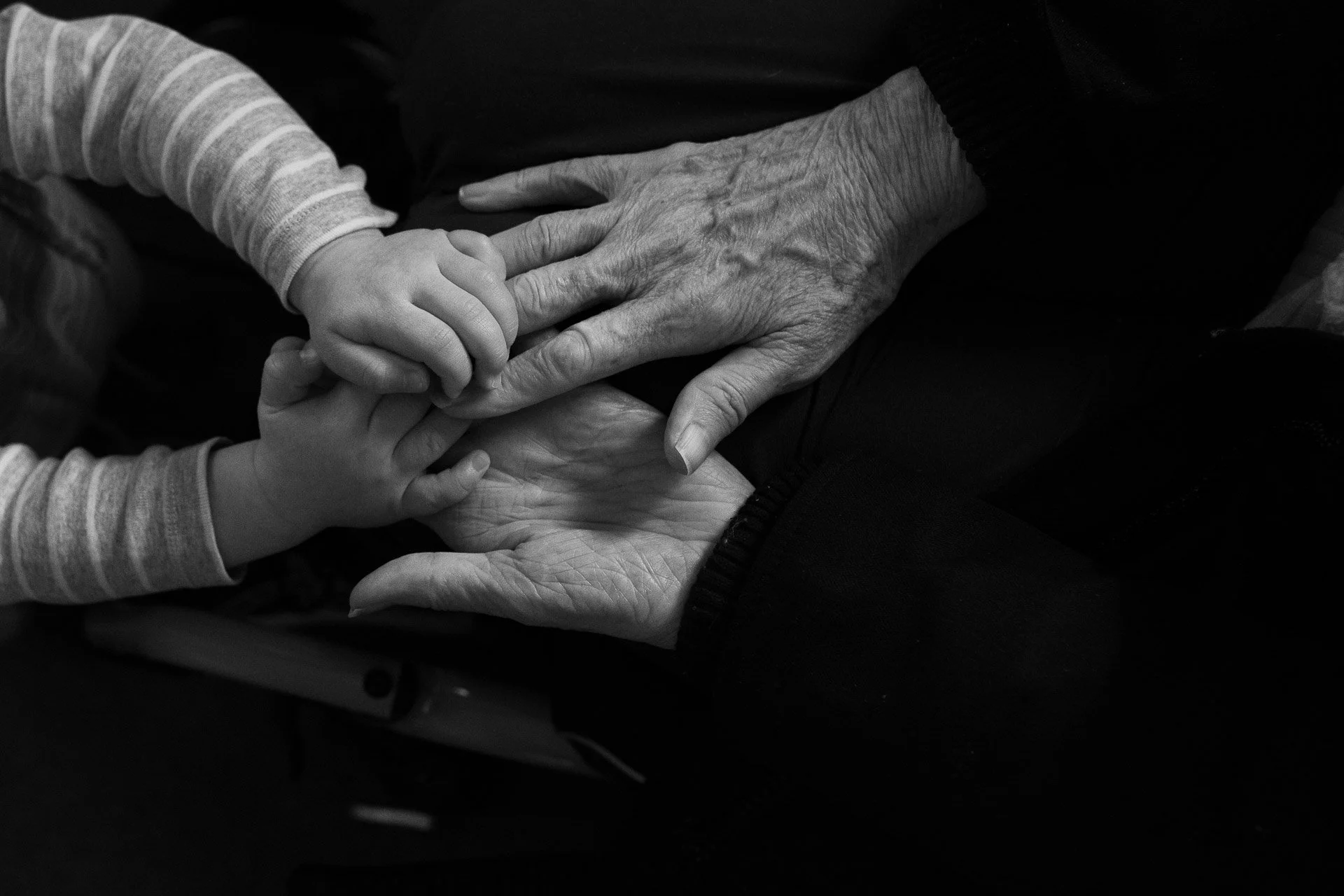
But they're also both photographs of the same person. The surface changed. The person inside didn't. And sometimes that's what I need the reminder of.
At the end of the essay you call your mom and your two young children your "teachers." What is one specific thing you have learned about photography from watching your kids be with her?
That seeing comes before the photograph. My kids don't perform their love for her. They don't think about what she used to be able to do. They just see her, completely and without qualification, and they go to her. And something in me knows that's what portrait photography is actually asking of me: to do the same thing. To see the whole person first, before I ever lift the camera, before I think about light or composition or any of it. The photograph, when it works, is just what happens when you've already done that part.
Michael Behlen photographed water that would not stay still. For three years, he returned to Millerton Lake in California’s Central Valley, making all the photographs during storms, when the reservoir became harder to read. Picture Story