A Visual Love Letter to Cuba. On a Given Day by Anneke Wambaugh & Claire Garoutte
Welcome to this edition of [book spotlight]. Today, we uncover the layers of 'Cuba. On a Given Day,' by Anneke Wambaugh & Claire Garoutte (published by Kehrer Verlag). We'd love to read your comments below about these insights and ideas behind the artist's work.
What does it take to truly see a country, without cliché?
Most people visit Cuba for a few days and take the same photos: old cars, crumbling buildings, and cigars. Claire Garoutte and Anneke Wambaugh did something different. They kept going back for 25 years. They walked the streets, stayed with friends, and photographed life as it happened, without staging or searching for drama. This book is the result of that long commitment. It shows a Cuba few people take the time to notice.
The title is Cuba. On a Given Day. That’s exactly the point.
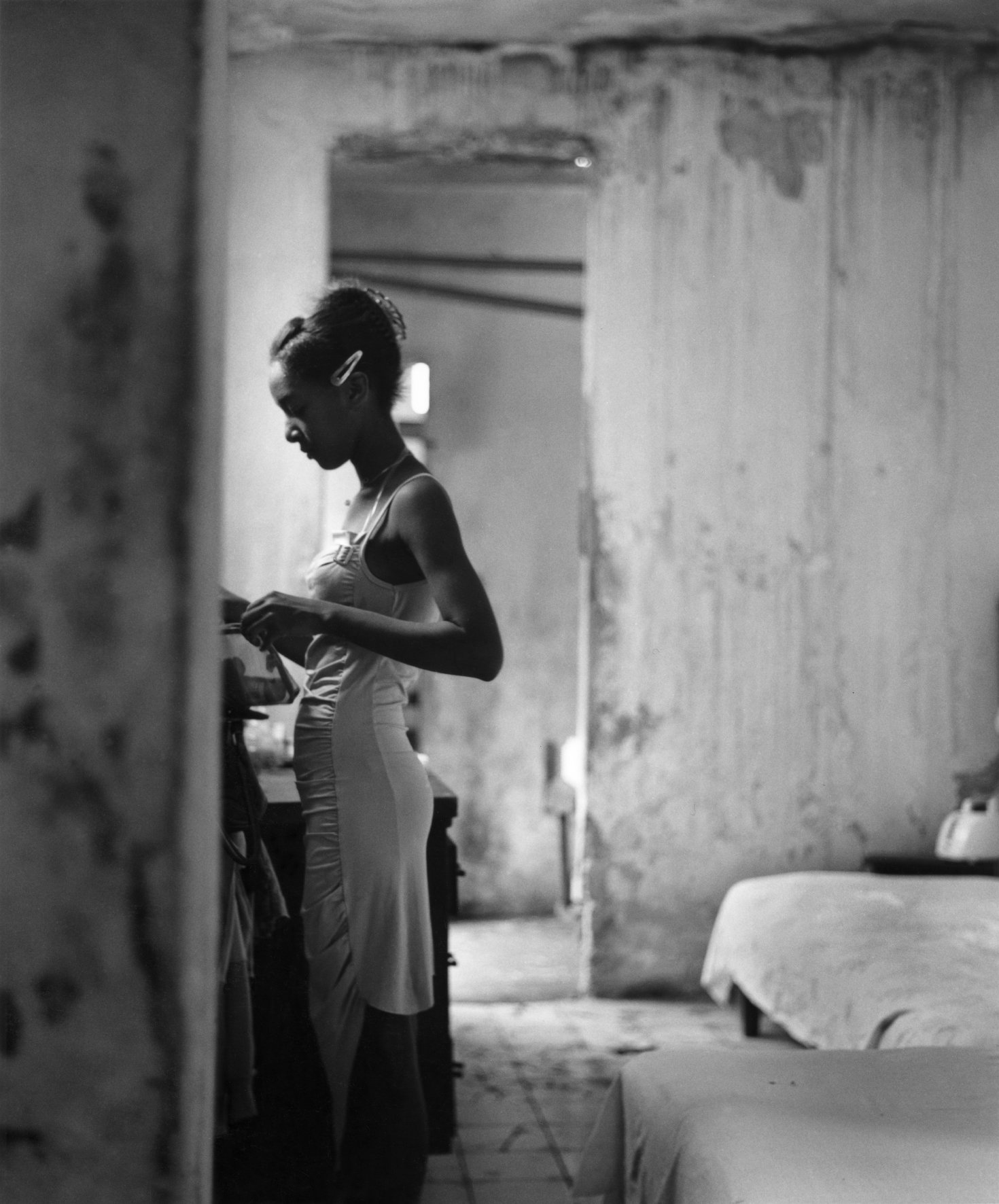
The photos are quiet, sometimes strange, often emotional, but always real. Shot entirely in black and white, they focus on gestures, body language, and everyday moments that don’t scream for attention. Over time, the photographers built close relationships and became familiar faces in the neighborhoods they returned to.
Sometimes it takes 25 years to photograph what matters.
About the Book
Cuba. On a Given Day is a black-and-white photography book by American photographers Anneke Wambaugh and Claire Garoutte. Created over the span of 25 years, it offers an honest and unpolished view of daily life in Cuba. Far from the usual tourist clichés.
The book collects candid, often quiet images made during many trips between 1996 and 2022. It reflects the photographers’ long-term connection to the country, shaped by friendship, familiarity, and years spent walking its streets. The images were made in Havana, Santiago de Cuba, and other towns and regions, showing scenes that range from poetic to surreal, intimate to ironic.
Published by Kehrer Verlag in 2025, the 112-page hardcover features 72 black-and-white photographs, with texts in English and Spanish, and an accompanying essay by Cuban artist Ruddy Fernández. Cuba. On a Given Day is not organized chronologically, it is a carefully sequenced journey into the layers of Cuban life, created by two outsiders who returned often enough to become familiar faces. (Kehrer Verlag, Amazon)
Overview of the project: What first drew you both to Cuba, and how did your collaboration evolve into the long-term commitment reflected in this book?
Our friendship and collaboration began in 1998 when Anneke travelled to Cuba for a photography workshop led by Claire. We already knew of each other and of each other’s work through our affiliation with the Photographic Center Northwest in Seattle. Claire, while teaching at the Photo Center, had been working on a project about Afro-Cuban religion that she had begun in 1994. Anneke had been working in Haiti from 1987 onward, documenting the traditional religion of Vodou. Our shared interest in Afro-Caribbean ritual practices ultimately led to an extended collaboration documenting a particular religious expert and his ritual family in Santiago de Cuba. This fieldwork resulted in the eventual publication of a book, “Crossing the Water, A Photographic Path to the Afro-Cuban Spirit World” (Duke University Press, 2007).
During the six years devoted to this documentary project, we spent months together in Santiago de Cuba and Havana as well as on the road exploring the rest of the island. Quite aside from the project itself, we photographed constantly—whatever was happening around us, whether in the homes of friends or out and about in the streets.
Upon completing “Crossing the Water,” we kept returning to Cuba to visit various people, many of whom we consider family, and to make photographs. About ten years ago, we started a conversation about how our other, non-ritually oriented mages might be edited into a book. We had thousands of photos to consider. Our subsequent trips to Cuba became increasingly focused on this undertaking.
Working as a duo: How do you navigate authorship and visual voice when working together, what have you learned from each other over the years?
Photographically, we have a great appreciation for each other’s work and, in some respects, are similar stylistically. Technically, we both shoot analog black and white images with rangefinder cameras and wide-angle lenses. Our previously mentioned first collaboration is a case in point. Photographing Afro-Cuban rituals often involved small, tightly packed (and incredibly hot) interior spaces where they unfolded over the course of many hours. Working together, we were better able to document these complex and often chaotic environments. Our partnership produced a more multi-dimensional result than either of us could have achieved alone, adding perspective and considerable depth of detail to the photo essays. We chose not to attribute specific authorship to the photographs—in fact, at times, we were not even certain who had taken a given image—or to the substantial text that accompanied them. In the case of Crossing the Water, our images were so intertwined in the ritual spaces in which we worked that it made no sense to attribute the individual photos. We were literally working elbow to elbow. As we edited those images, we chose the shots that best expressed the energy and spirit of these rituals.
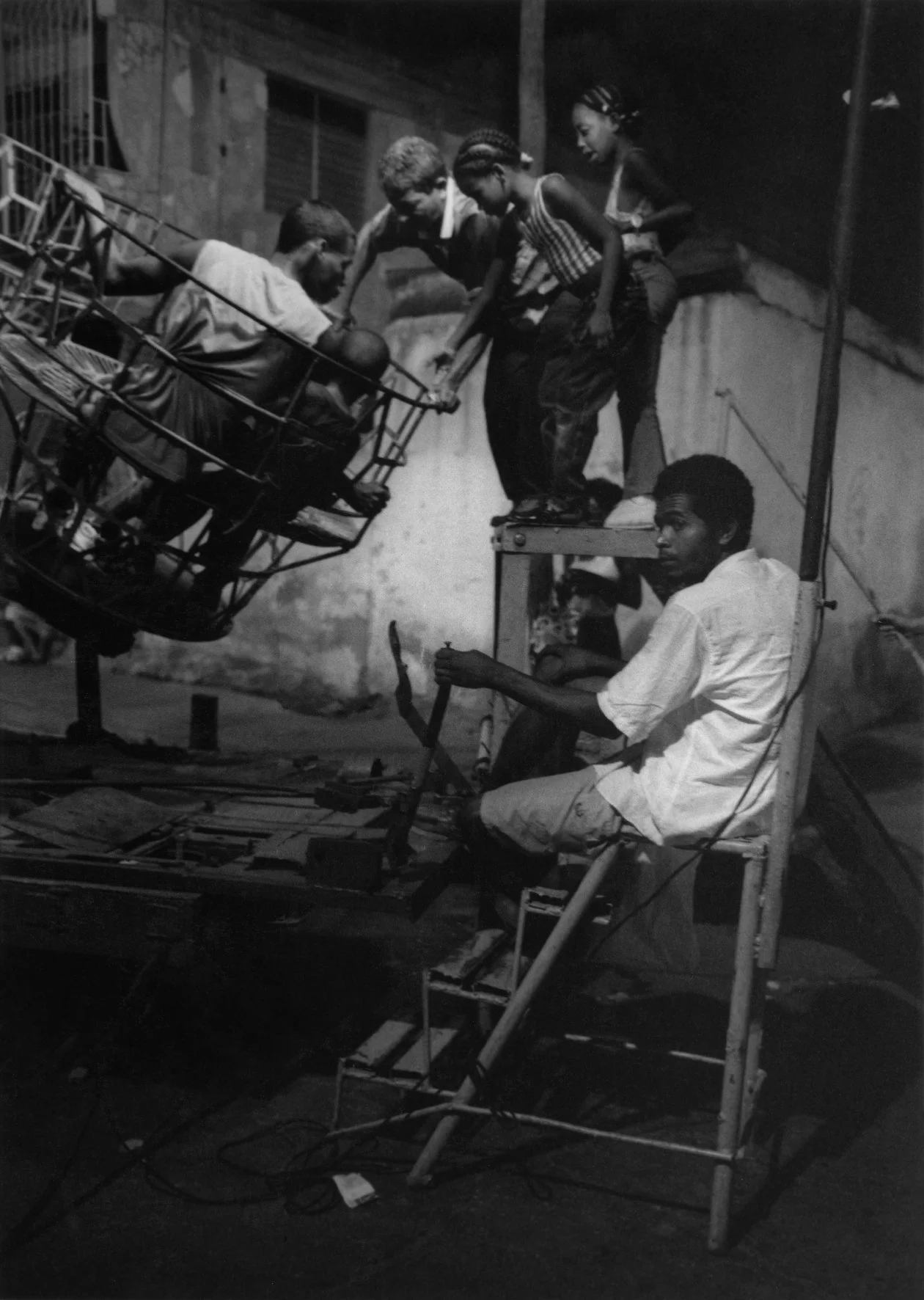
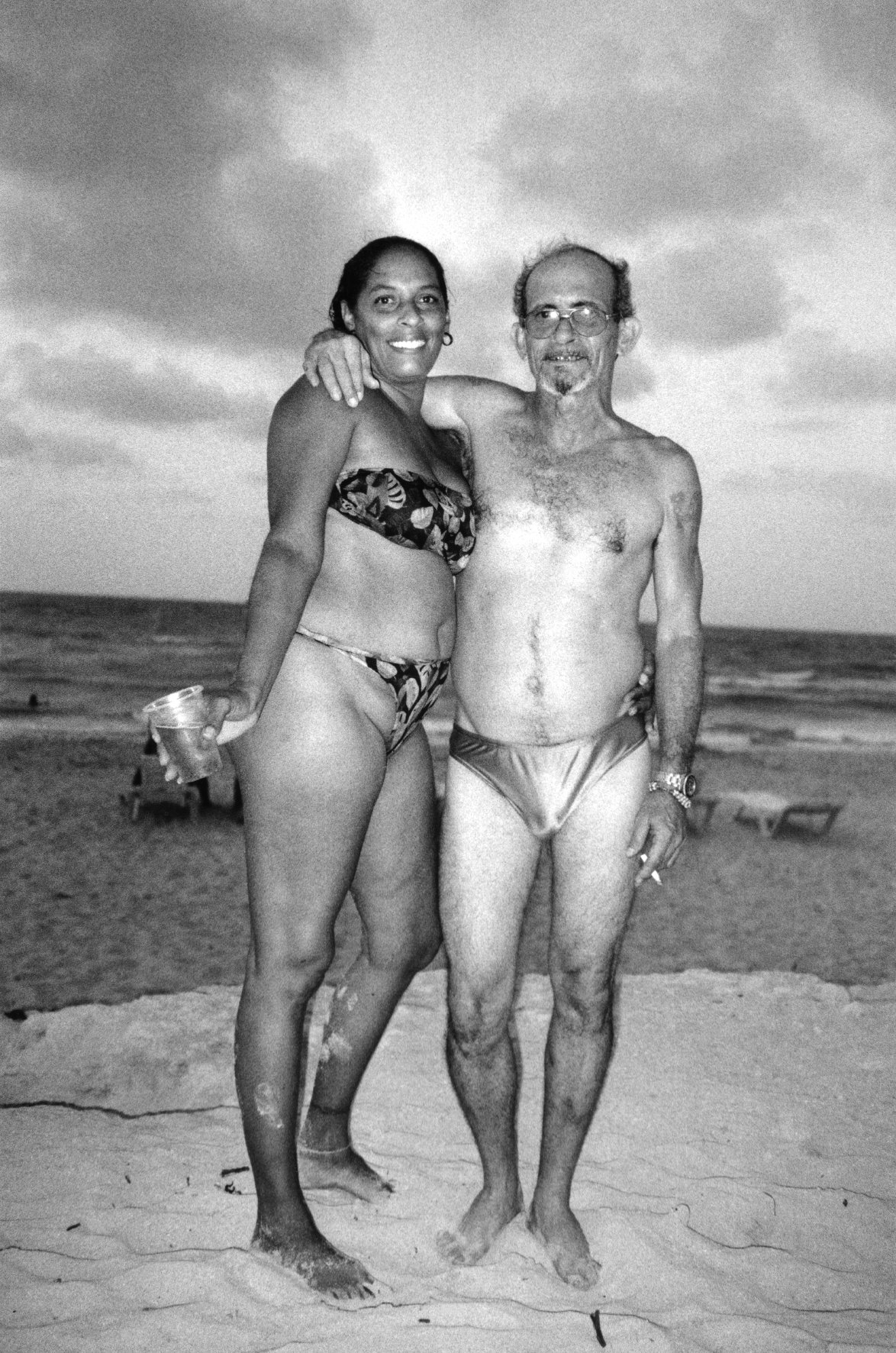
“Cuba on a Given Day” is the result of a different kind of synergy. Although there is considerable overlap in our aesthetic, this book testifies to individual tendencies and approaches. Anneke has a great sense of humour, and this is reflected in several of her images. She is also more inclined to capture intimate, evocative moments while spending time in people’s homes and courtyards. Claire tunes into ironic and sometimes confrontational scenes that invite multiple interpretations. As, strictly speaking, more of a street photographer, she gravitates toward complex compositions. Yet these differences are by no means absolute, and the images attest to this. We have definitely influenced each other over the years both in terms of how and what we shoot and how we edit the work.
Editing and sequencing the photographs in this book required us to step away, momentarily, from individual authorship and to consider how the photographs might coalesce into a thoughtful and intentional impression of Cuba. It took a few years to work out how our images might play off each other while preserving our individual voices. Unlike our first collaboration, we did attribute the images in this book. While we often worked together, we do so much more independently—each pursuing her own photographic perspective, aesthetic, and understanding of Cuba.
Between familiarity and distance: You describe yourselves as both insiders and outsiders in Cuba. How did that dual perspective shape the way you photographed the country and its people?
When photographers arrive in a new environment, they can be intoxicated by the novelty and immediately drawn to make images of what is unfamiliar. When first in Cuba, one’s photos tend towards scenes of once magnificent buildings now crumbling, billboards touting the Triumph of the Revolution, people smoking cigars, beautiful spandex-clad women, old cars from the 40s and 50s, and so on. This is a necessary step in the process of visually acclimating to a new place, and we both took many such photos during our early years. With time, however, our images became more intimate as we connected with people and became familiar with the cities and towns in which they lived. Life in Cuba occurs largely out in the streets with kids running around, itinerant vendors hawking produce, people talking, and folks sitting in their doorways to escape the relentless heat (and perhaps the mayhem of notoriously close quarters). Coming from the States where people spend more time in private spaces—their homes, cars, and backyards—it is energising in Cuba to feel surrounded by people going about their daily lives. That is certainly one reason we are both inclined toward street photography in Havana. Our attention, however, is often drawn to things that, for Cubans, may seem unremarkable.
The Cuban people are overall very open and willing to engage with outsiders. Their innate curiosity and our interactive way of being in the world have led to strong connections, many of them lasting and profound, in Havana and Santiago de Cuba. Initially, we often stayed in the home of our friends Emma and Ruddy in Santiago de las Vegas outside Havana. Later, while doing extensive research in Santiago de Cuba, we rented a tiny apartment in the Tivoli area for months on end. We became familiar faces and were welcomed into these diverse neighbourhoods.
The common expression in Cuba for foreigners, especially Americans from the U.S., is “yuma” (the term apparently, and somewhat ironically, adapted from the 1957 Western film “3:10 to Yuma”). No matter how many trips we take or how long we stay in Cuba, however, we will always be yuma. And of course, we ultimately return home to Seattle. There is a definite duality to our lives as spent between the two countries. When there, working as photographers, we are immersed in life and life only. When we leave, our lives shift to different concerns in the Pacific Northwest. We may know a great deal about Cuba and feel at home when we are there, but our relatively privileged circumstances will always set us apart.
Did that duality ever shape what you felt comfortable photographing or how you anticipated images would be perceived once shown abroad?
This question pertains to photographing people in general and there are ethical issues that we all need to consider. We both shy away from photos that we feel will objectify vulnerable communities, be that in Cuba or anywhere else.
Living in Cuba has its ups and downs. We’ve been fortunate to know older Cubans who experienced life before the revolution and who remained faithful to Cuban revolutionary ideas. As that generation ages and passes on, we’ve also watched their children reach middle age and their grandchildren are now adults. This multi-generational view has greatly informed our own perspectives about Cuba.
For many Cubans—especially those who don’t receive remittances from abroad—it is difficult to make ends meet. Ration books rarely provide enough staples and market-rate goods are ever more expensive. Many young people are especially disillusioned because they can’t get ahead and they are leaving in droves in the hopes of a better life.
Ultimately, we can’t control how our images will be understood because everyone brings their own life experience to the work. The history of America’s relationship with Cuba is contentious and complicated. We are aware that different audiences will interpret this work differently depending on which reality of the Cuban revolution they’ve experienced and which media sources they follow. Having said that, our own views about Cuba remain complex and ever-evolving. A bit of ambiguity is not a bad thing and, hopefully, that openness is present in this edit.
Black and white as a choice: Why did you choose to work entirely in black and white, and how does that decision influence the emotional and visual tone of the book?
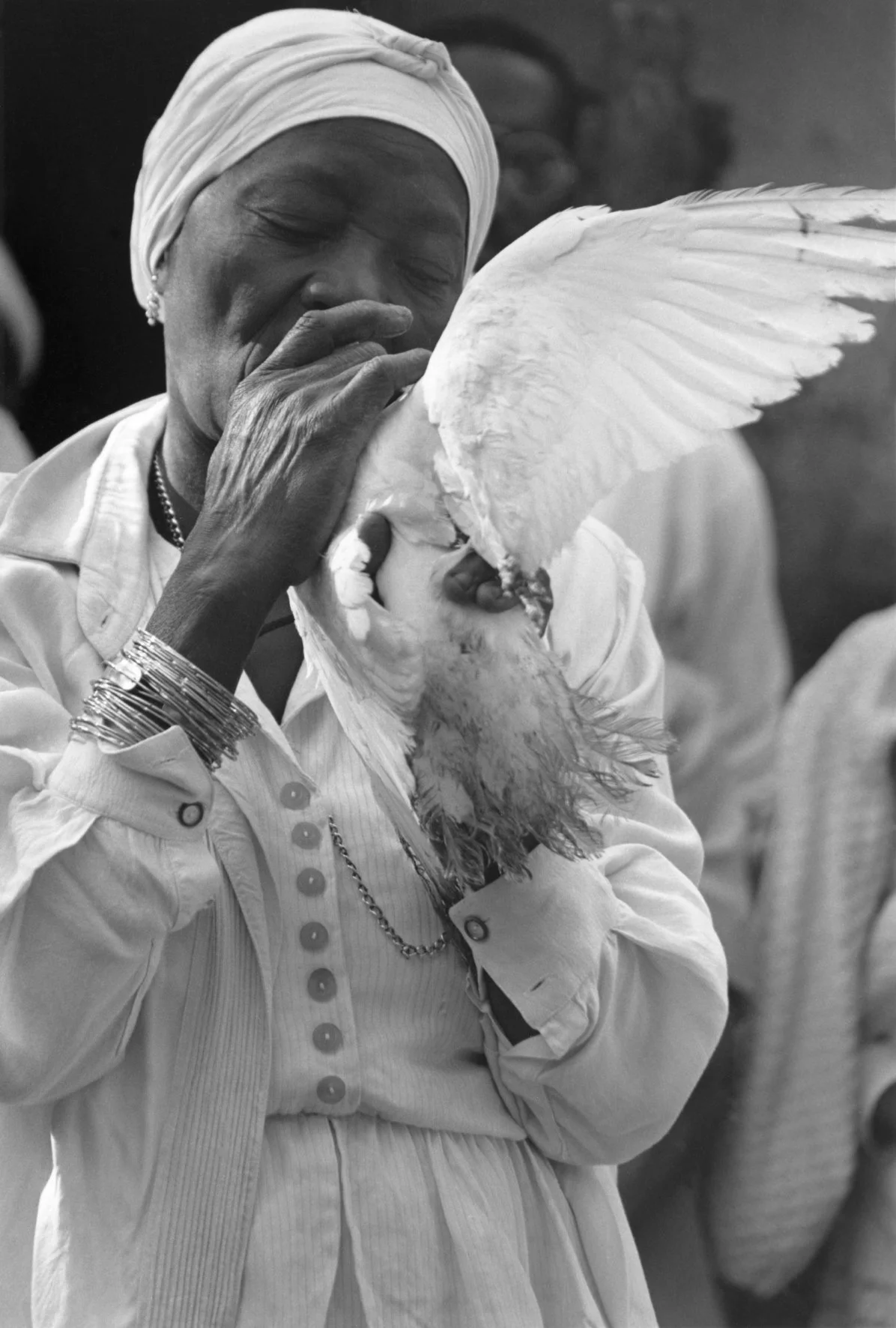
We both sometimes work with colour, primarily for documentary purposes. However, with a handful of exceptions (a few of Anneke’s early images were shot on colour film), the photos in this book were made from black and white negatives: the digital captures were also created with the intention of converting them to monochrome. Aesthetically, we are drawn to light and textures, and colour often distracts from these elements, at least to our way of thinking. Black and white also tends to focus the viewer on actions and expressions, centring the emotional content of the image. This is especially true of the portraits in the book, but it holds true for many of the photos depicting more complex human interactions. The expressions and body language of our subjects are more immediate and readable because we eliminated colour. The title of the book also implies that the focus of this work is on everyday moments that, ideally, everyone can relate to regardless of where they are from.
Advice for photographers documenting cultures not their own: What would you say to photographers who want to work in countries or communities they weren’t born into, how can they approach it with humility and care?
We both return to the same places time and time again. And this, in the truest sense, is what it takes. Being there over time not only allows one to gradually become more familiar with the complex and often contradictory realities of a given culture, but it provides the groundwork for the development of trusting relationships. Although speaking the language is obviously helpful, spending time and immersing oneself as fully and respectfully as possible in the country or community is essential. And lastly, never underestimate the importance of a sense of humour.
Capturing everyday poetry: The book focuses on quiet, surreal, or poetic moments. What guides your instinct when deciding which moments are worth capturing?
Often one’s instincts are affected by one’s mood on a given day. Sometimes hitting the streets to make photographs feels like work and it takes a while to get into the swing of really watching what’s going on. This is true of more intimate surroundings as well. Photographers can potentially make any moment worth capturing if the light, timing, and setting come together. Over the years, we’ve become more attuned to “photographic moments” and our images, therefore, more intentional. In the process of editing our photographs, we’ve recognised our stylistic tendencies and our attraction to certain types of scenes—the visually enigmatic and the quiet, surreal, or poetic.
Documenting over decades: Your photographs span more than 25 years. How did you approach sequencing such a long arc of time without making it strictly chronological?
Sequencing the photographs involved multiple strategies. On a formal level, we thought about how the tonalities and compositions of the images played off one another. We also considered the gestures and actions in the photos – looking at hands, body language, and expressions. And we wanted to move between visually active and more quiet scenes. It was fun to string a few humorous shots together followed by more poignant or confrontational images. We also considered when the subjects were acknowledging the camera (and therefore the viewer) and when they were not. These choices were designed to create both dynamic and more subtle shifts in energy as you move through the book. Finally, we were also aware of how symbols and words (such as the Cuban flag, images of Che or a reference to José Martí) would occasionally appear to reference a larger historical narrative.
Were there any older images that took on new meaning when seen next to more recent ones? How did time change your understanding of certain photographs?
The first step in making this book was a deep dive into our archives to find the strongest images. That was also the beginning of an ongoing discussion about how our work reflects on life in Cuba. As we continued to shoot, especially in 2015 and thereafter, we watched for opportunities to expand on various themes we recognised in our work and so the sequencing continuously evolved. The isolation and fragility of an old woman photographed in 1996 is emphasised when followed by a 2022 image depicting an animated group of young women sitting in front of a barbershop. Likewise, an image of Che, taken at a school in 2015 and representing Cuba’s revolutionary ideals, is juxtaposed with a 2022 photo of a group of hip but seemingly disaffected young men sitting on the steps of a Havana park.
Cuba beyond clichés: One of your aims was to move beyond the clichés often projected onto Cuba. What visual strategies helped you reveal a more complex reality?
Photography has a way of elevating the mundane. Scenes frozen and reduced to a singular moment tend to suggest narratives that extend beyond the frame. Although our images are obviously set in Cuba, we concentrated primarily on transient moments that could in theory happen anywhere. Our intention has never been to make statements about Cuba per se.
In editing this book, we first considered images that we felt were strong photographs, regardless of how they may or may not comment on Cuba. When we are walking the streets with our cameras, there are numerous factors at play. Chance or serendipity is certainly one of them, but the most important is an ability to anticipate and appreciate actions and moments as they unfold around us. This requires a good sense of timing and an awareness of place. At times, this simply involves stationing oneself somewhere and waiting for something to happen. These elements in street photography are cinematic in that they suggest narratives that may or may not be real.
Having said this, we are both very aware that this book does present our own take or perspective on Cuba based on our familiarity and personal experiences over the years.
What remains with you: After all these years of photographing Cuba, what have the people and places given you that still informs your photography or life today?
Before we started spending so much time in Cuba, neither of us had done much street photography. We both worked on specific documentary projects that often engaged us in years of shooting and/or researching. We now photograph wherever we find ourselves, whether abroad or in North America.
It’s interesting to note the arc of our stylistic development in street photography and how photographs made elsewhere share common traits with those in our book. While they may look different depending on the location, we still respond in similar ways to the people and activities around us.
To discover more about this intriguing body of work and how you can acquire your own copy, you can find and purchase the book here. (Kehrer Verlag, Amazon)
More photography books?
We'd love to read your comments below, sharing your thoughts and insights on the artist's work. Looking forward to welcoming you back for our next [book spotlight]. See you then!
Gosbert Gottmann wanted war photographs that resisted easy reading. In Freiheit Freedom Воля, he works with images connected to the war in Ukraine and changes them through abstraction, distortion and deformation. Photography Book Spotlight