How Marek Bartoš Used Documentary, Portraiture, and Studio Food Photography to Give God Is a Pickle Its Rhythm
Welcome to this edition of [book spotlight]. Today, we uncover the layers of 'God is a Pickle,' by Marek Bartoš (published by gestalten). We'd love to read your comments below about these insights and ideas behind the artist's work.
Three photographic languages gave this book its rhythm.
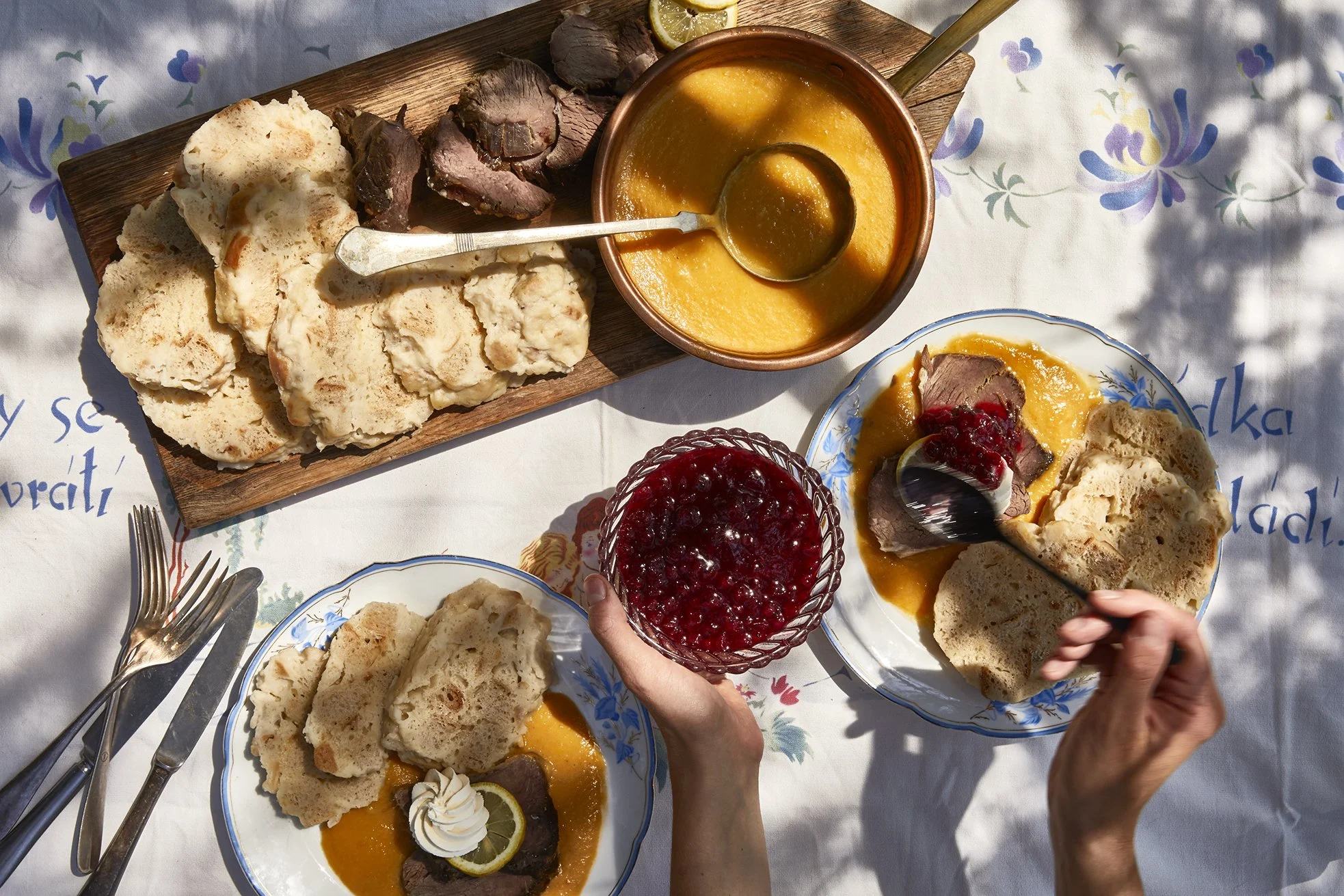
In God Is a Pickle, Marek Bartoš moves between studio food photography, location images, and documentary portraits. That mix gives the book its shape and energy, but it also helps him show preserving as more than food. It becomes a way to photograph memory, work, atmosphere, and the people behind each jar.
For Marek, this subject is also deeply personal.
He grew up around preserving, so the project comes not only from observation but also from lived experience and memory. That is why the book does not stop at finished dishes or clean compositions. It also stays close to hands, spaces, gestures, and the quiet labor hidden inside the process. The result feels rooted in real life, not just in style.
What makes this conversation especially interesting is that it shows how a book can become richer when one visual language is not enough.
Marek speaks very clearly about what each kind of image can do, and why rhythm matters when a project wants to hold both beauty and human presence. So even if this is not a how-to piece, it still offers a sharp look at how a strong book finds its form.
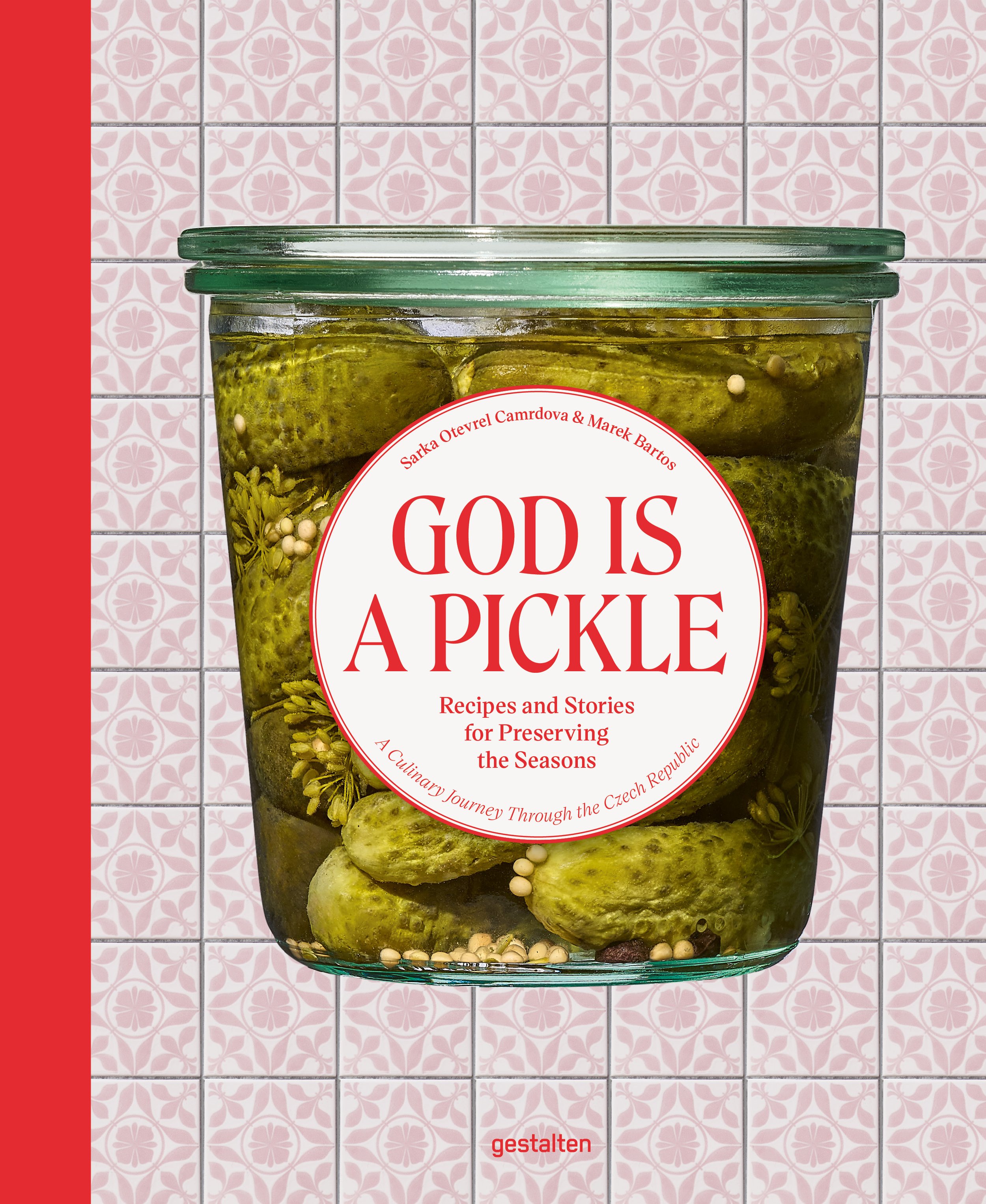
The Book
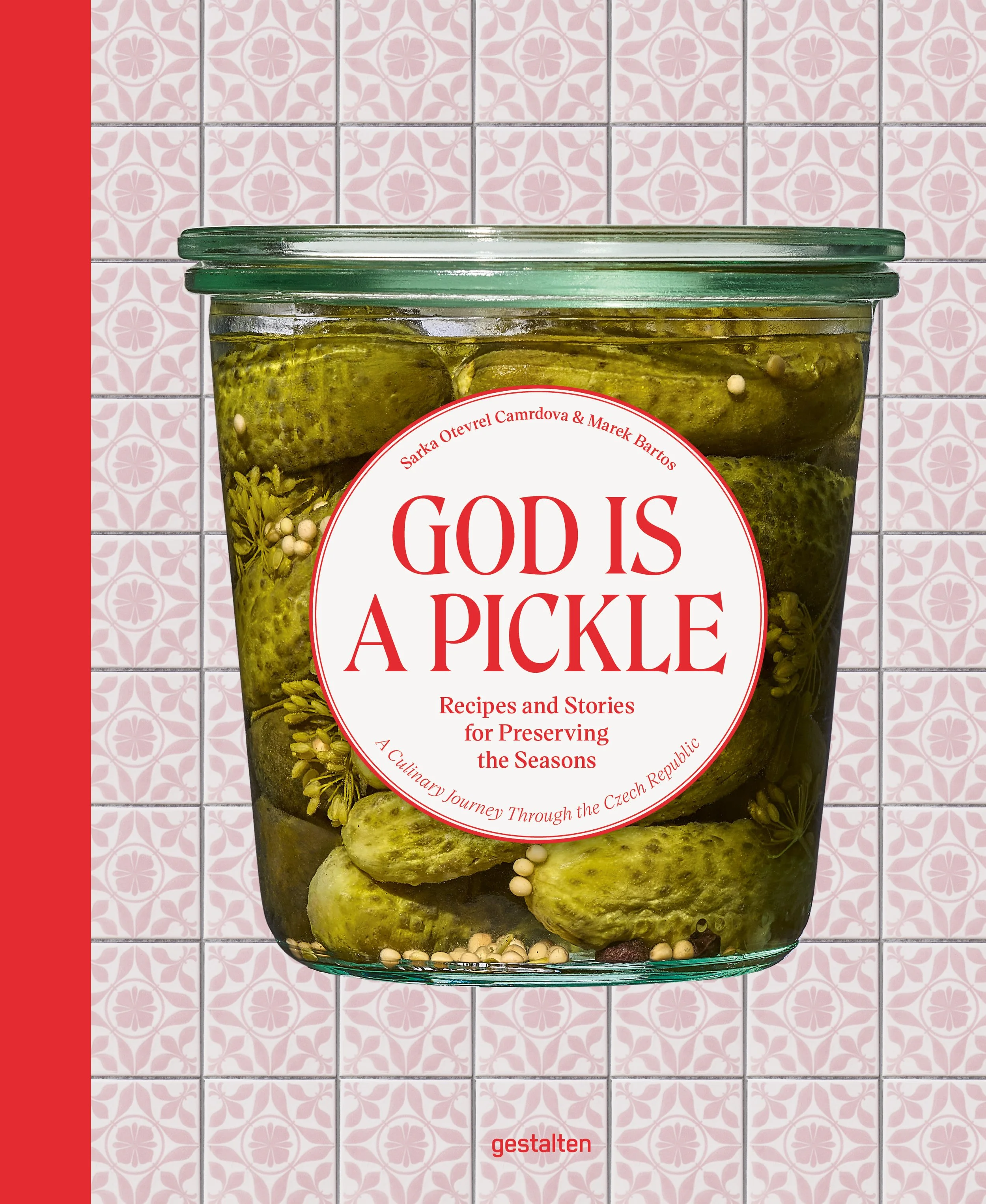
God Is a Pickle by Šárka Otévřelá Čamrdová, with photographs by Marek Bartoš, is a cookbook and visual journey through Czech preserving culture. Through seasonal recipes, personal stories, and atmospheric photographs, it presents pickling, fermenting, and canning as more than tradition. In this book, preserving becomes a way of thinking about memory, craft, family, and the quiet rituals of everyday life. Moving between food, people, and place, God Is a Pickle shows a world shaped by care, patience, and a strong connection to the seasons, while also giving this often humble subject a rich and tactile visual form. (gestalten, Amazon)
Project Beginning: What made you want to photograph Czech preserving traditions for this book when it's something you grew up seeing every day?
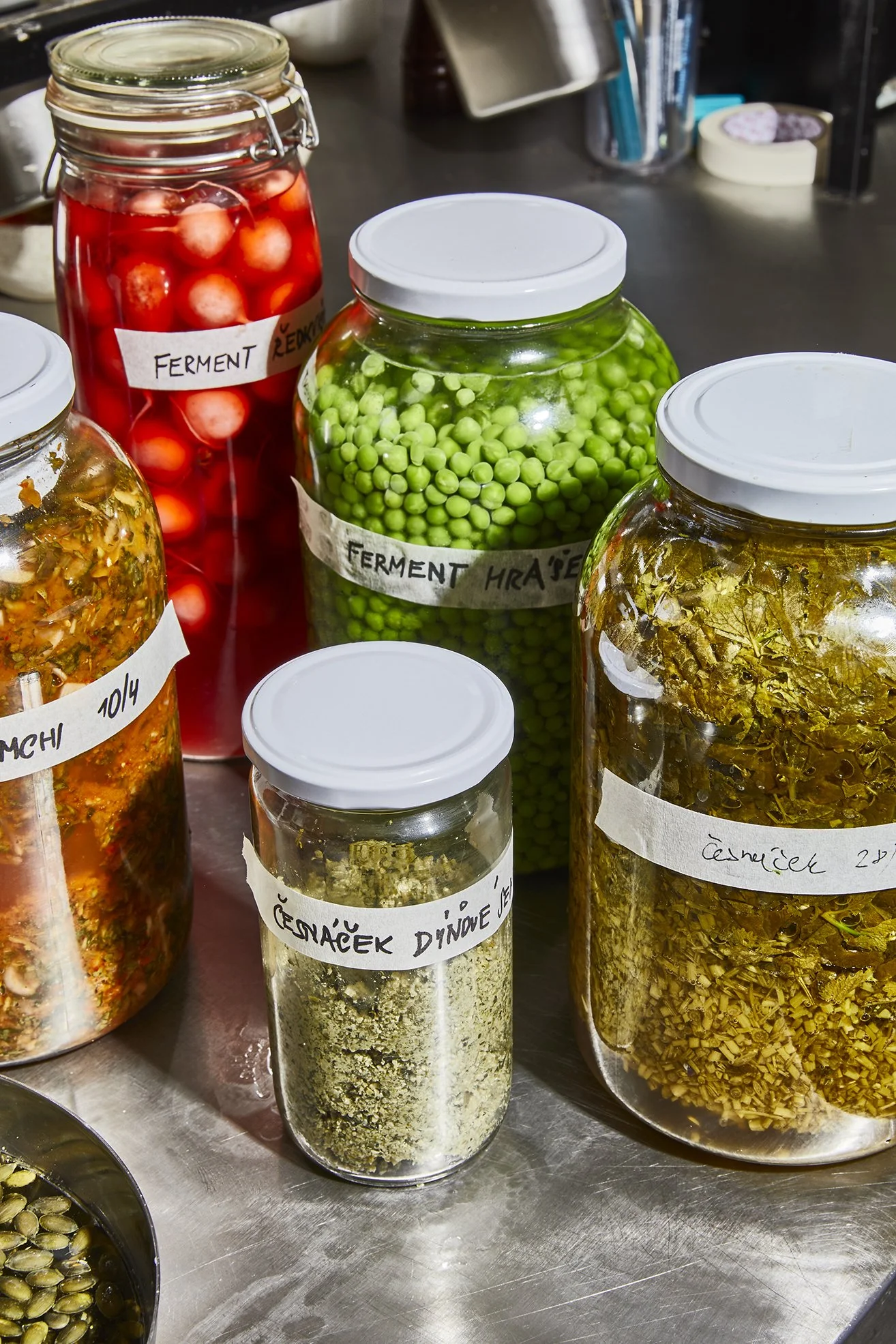
When Šárka approached me with the topic of preserving, I knew this was it. A topic I know so well and have been surrounded by my whole life, but never had the chance to grasp so comprehensively. For me, preserving isn't a trend or a romantic idea of tradition. It’s something I grew up with. Even as a child, I loved it – picking fruit in the garden, choosing ingredients at the market, and the subsequent processing in my grandmother's kitchen. Tasting still-hot things right from the pot and lining up the jars in the pantry. That made it all the more tempting to look at it differently – to stop, look at it through a photographer's eyes, and try to understand why it's so powerful for us. I knew I had a personal connection to it. Not just visual, but emotional too. When we started working on the book, I quickly realized that it was taking me back to places and feelings that had remained very much alive within me. I found my time machine.
Three Photography Styles: You mixed studio food photos, location shots, and documentary portraits in the book. How did you decide when to use each style?
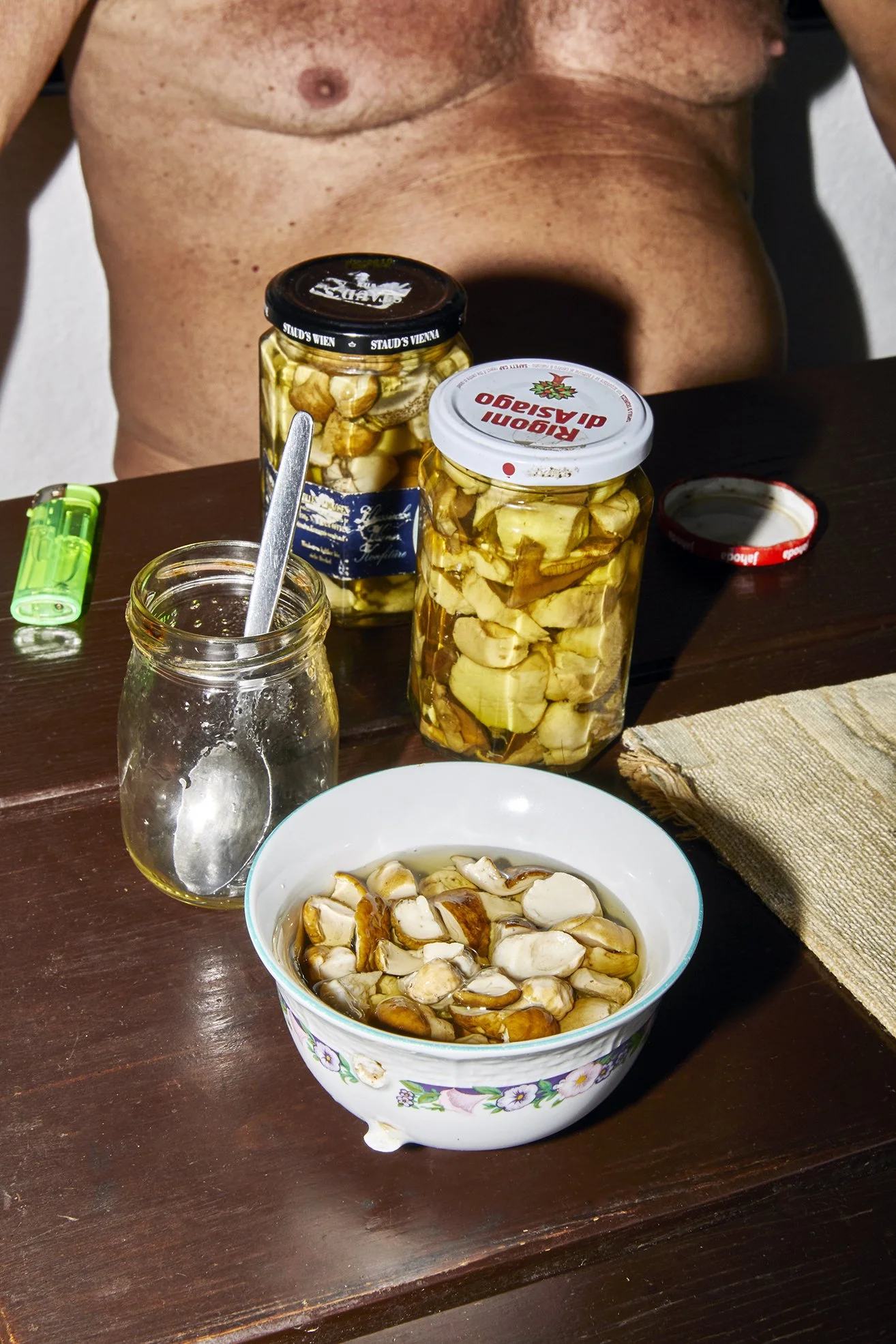
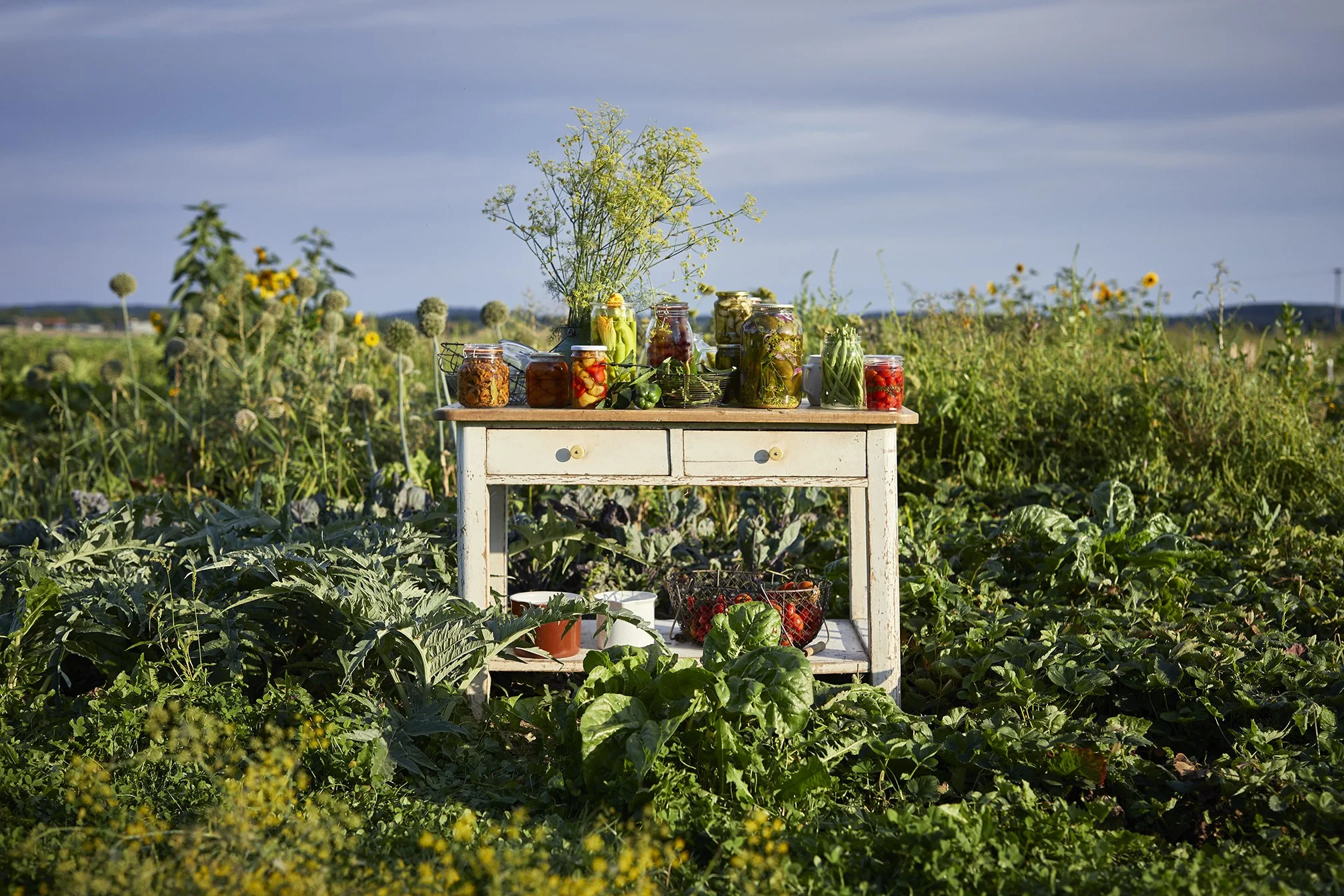
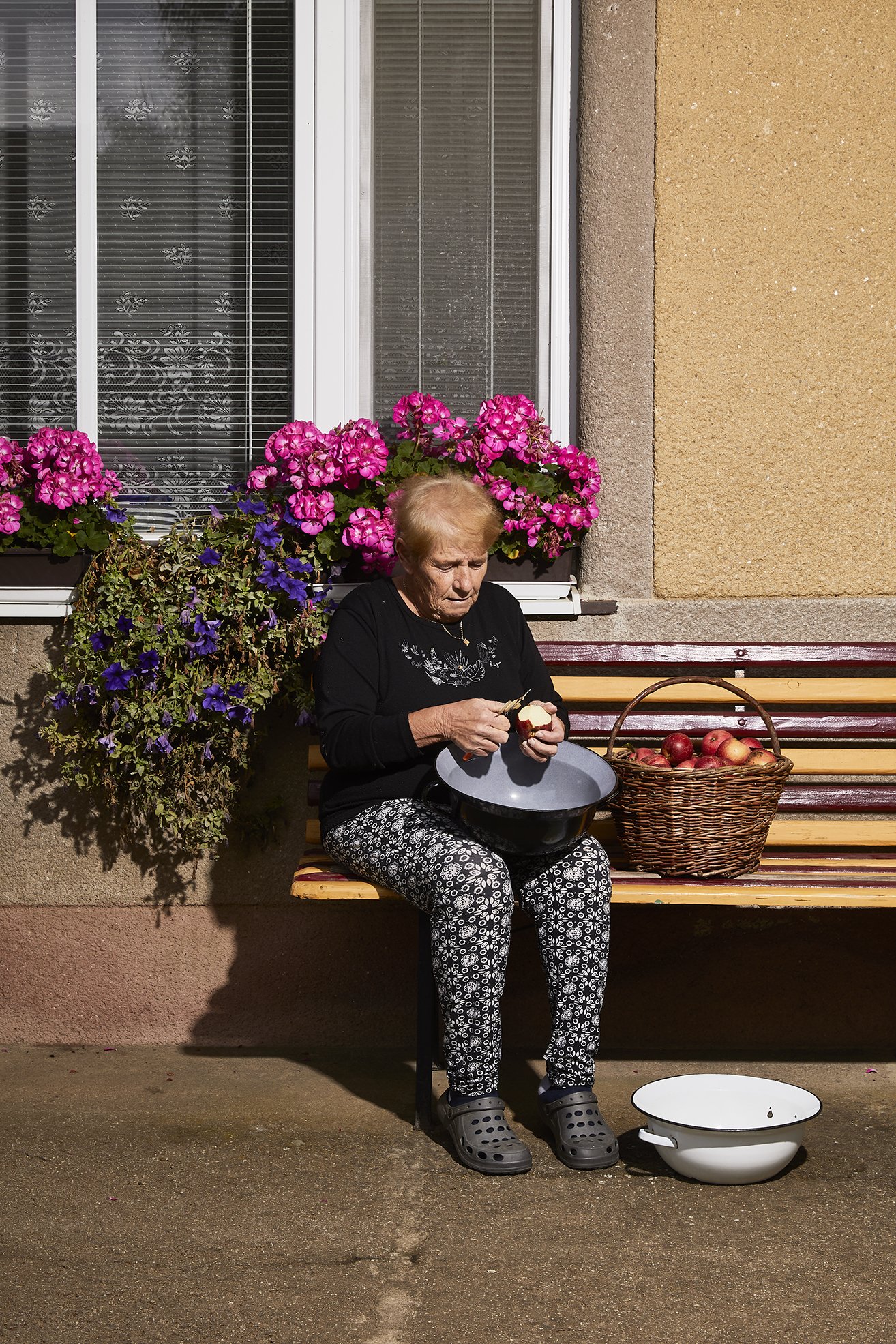
Actually, I didn't think of it as a conscious decision in the sense of strict rules. People and the preserving process itself naturally belonged in the documentary realm, while the finished product or the raw ingredient occasionally asked for that studio calmness and detail. I naturally alternate these styles in my work. I like it when the rhythm changes-when things don't get stuck in one position. However, I approach each style with a clear intention. In the studio, I like working with sharp, directional light and having control over every detail. Sometimes I try to transfer this principle to locations, if the situation allows. With documentaries, it's different. There, I try to be sensitive, collecting situations as they come, and interfering with reality as little as possible. I don't stage; I rather observe. The combination of these approaches makes sense to me-it creates tension and a rhythm that holds the book together.
Natural Light Choice: You wrote that you love working with light and believe nothing beats natural sunlight. How did you create that sunlight feeling in your studio food photographs?
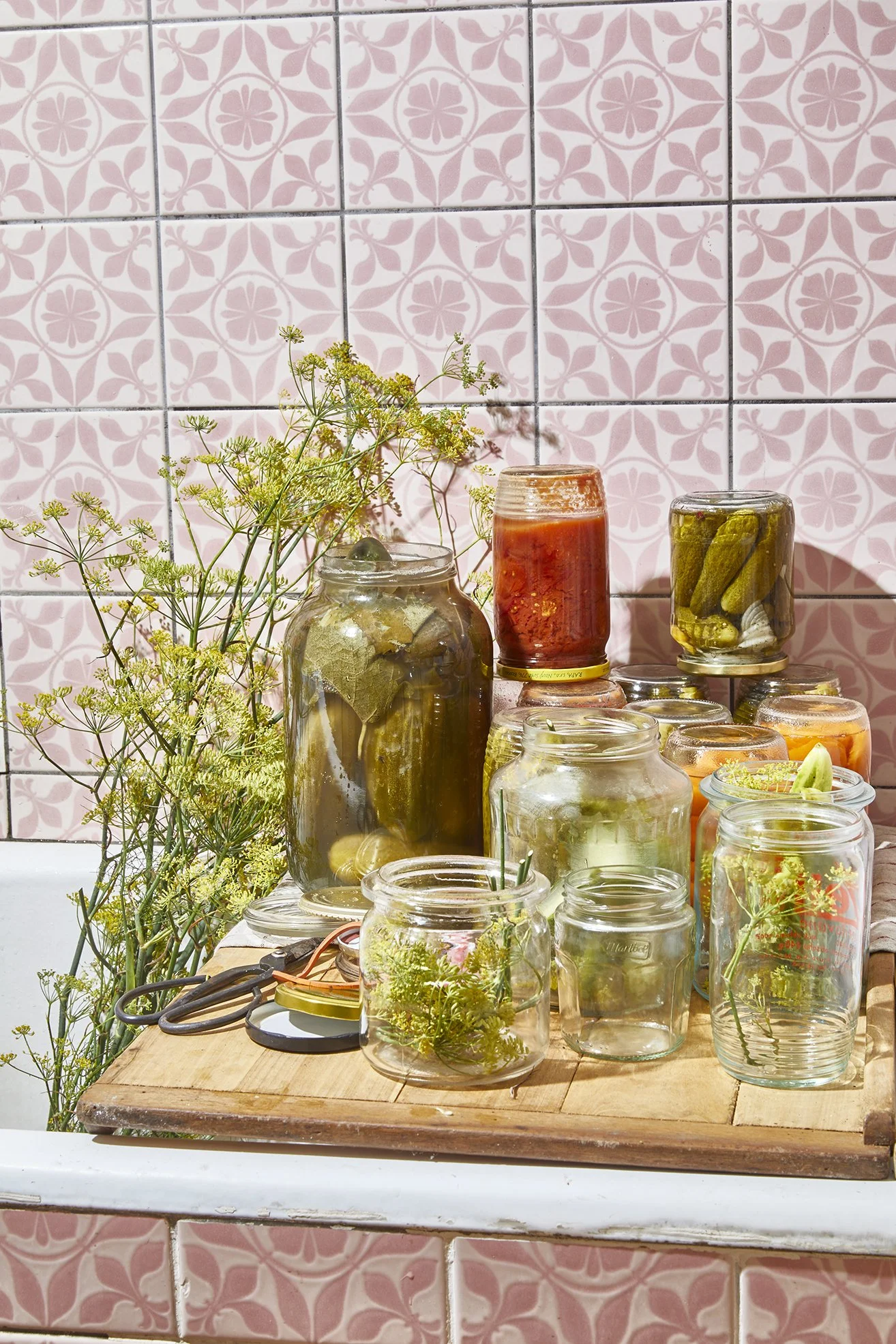
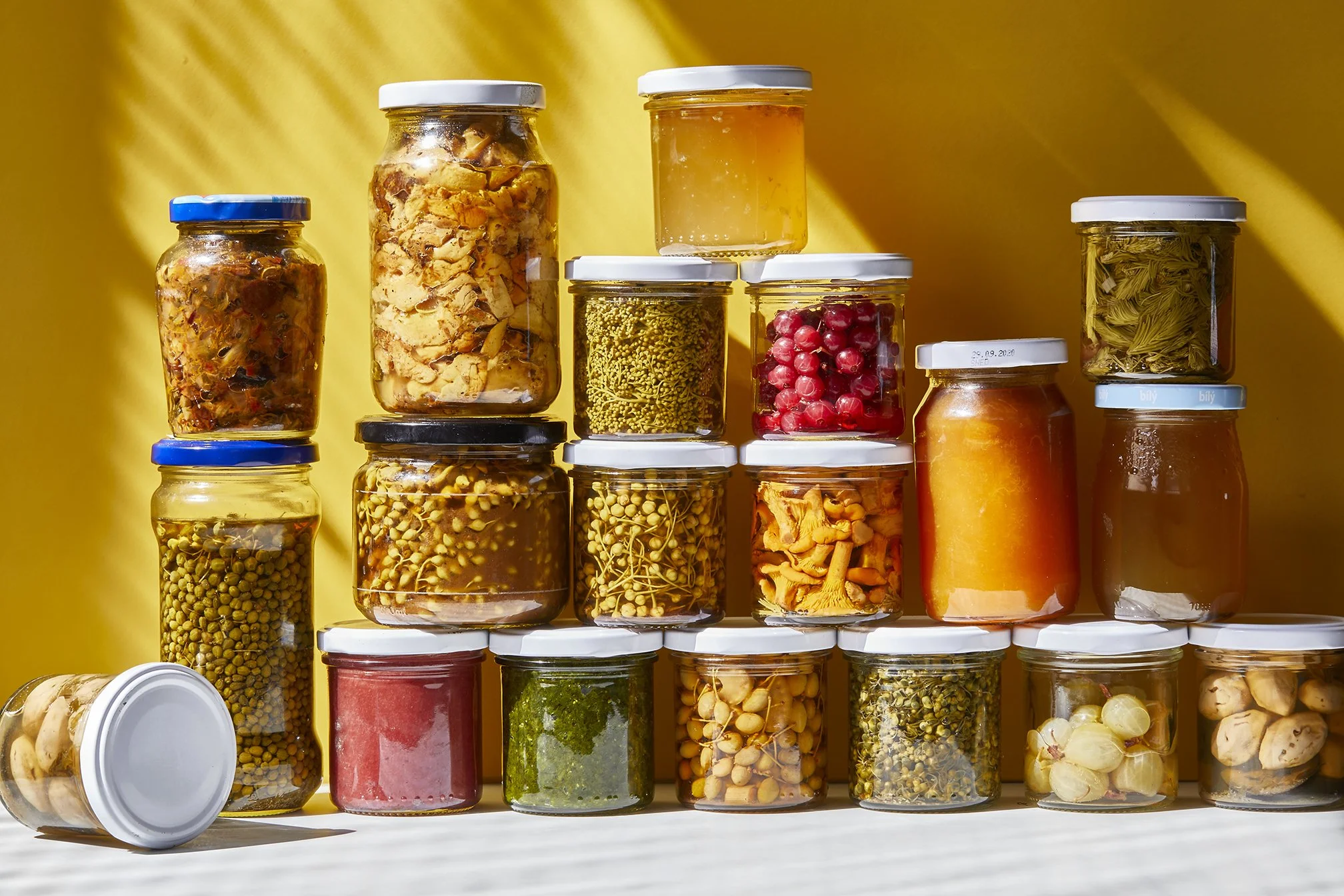
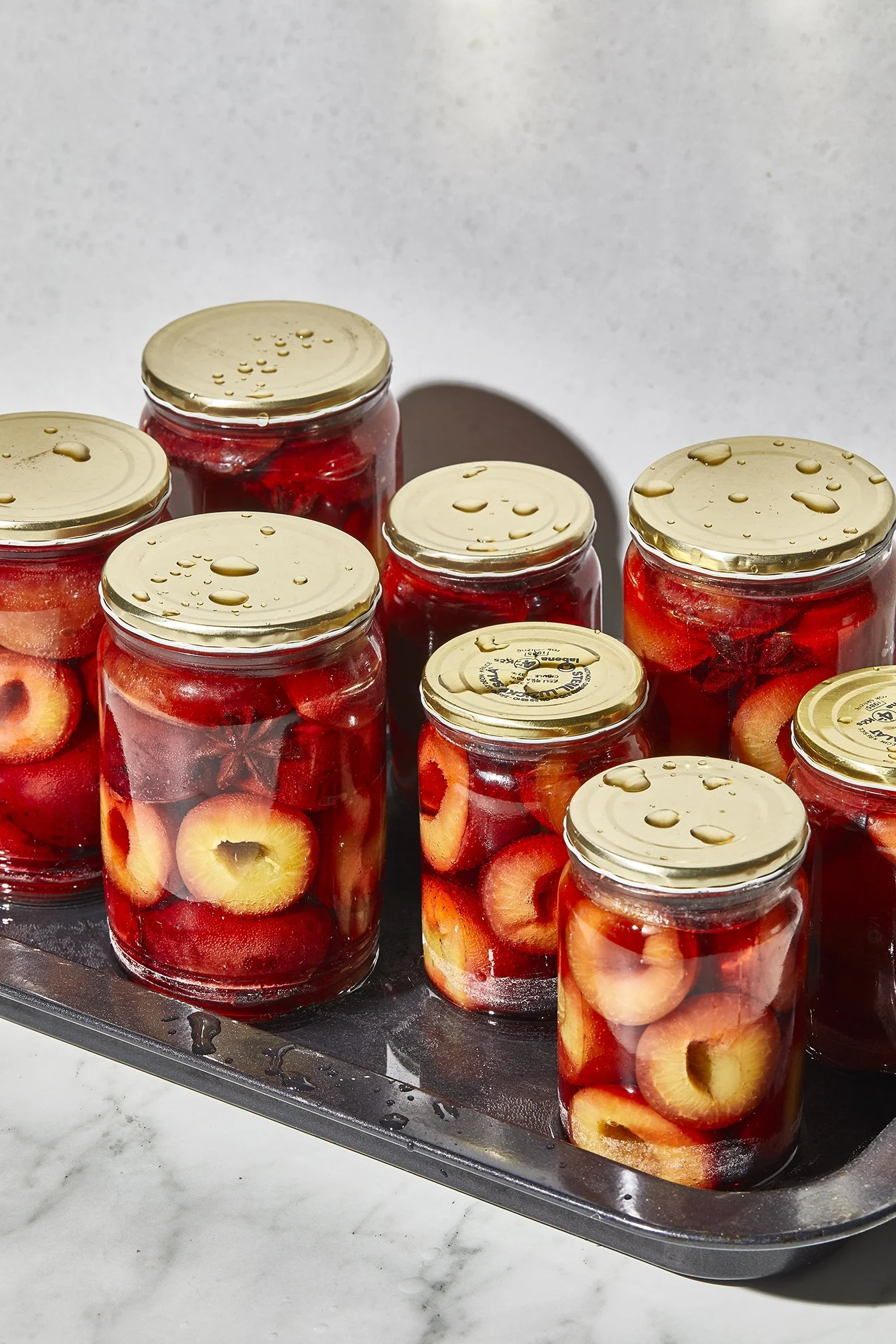
I have a daylight studio in Prague with windows facing three directions, so I can follow the sun from morning to evening. That’s an ideal situation for me – I see how the light changes throughout the day, how it hardens, softens, how it draws shadows. But the sun doesn't always shine, and it's not always available exactly the way I need it. But it's not about the technique itself. For me, it's important that the light can truly be felt. Sunlight has energy-it isn't neutral. It can be sharp, sometimes even merciless, but at the same time natural and truthful. In the context of this book, I wanted the food to feel alive, to be almost tangible. Therefore, in the studio, I play extensively with the position of the light source, the length and hardness of the shadow, and the contrasts between the food and its surroundings. I watch how the light "cuts," how it reflects on the glass, how it brings out the surface texture. Color temperature plays a huge role too-finding the right tone that won't be too cold or overly nostalgic. I work more from feeling than from tables. I think about what the sun means to me-how I remember it from summer, from the kitchen, from the garden-and I try to get that experience into the image. Technique is only the second layer. First comes light as an emotion.
Black and White Decision: What made you choose to photograph some portraits in black and white while keeping other images colorful?
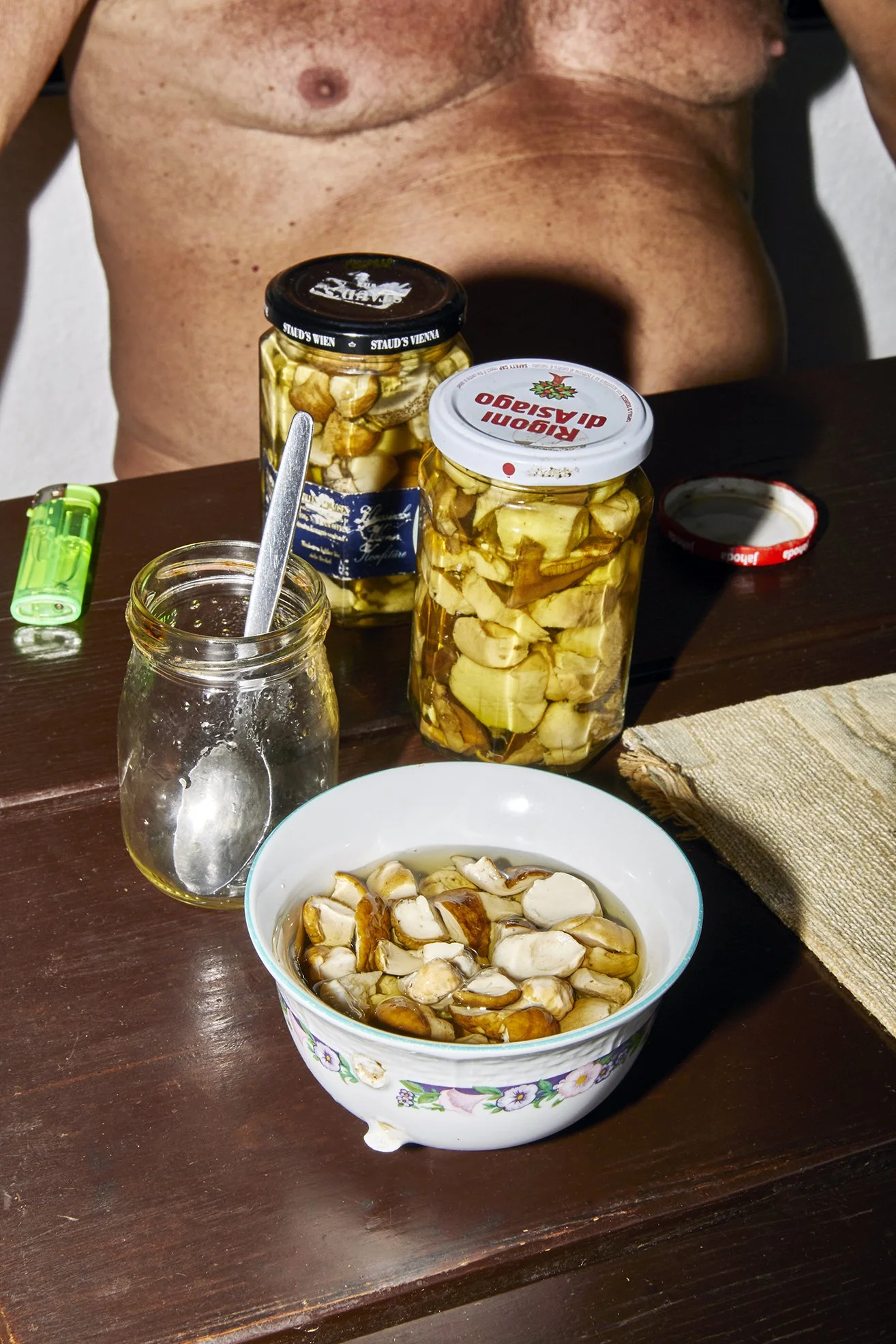
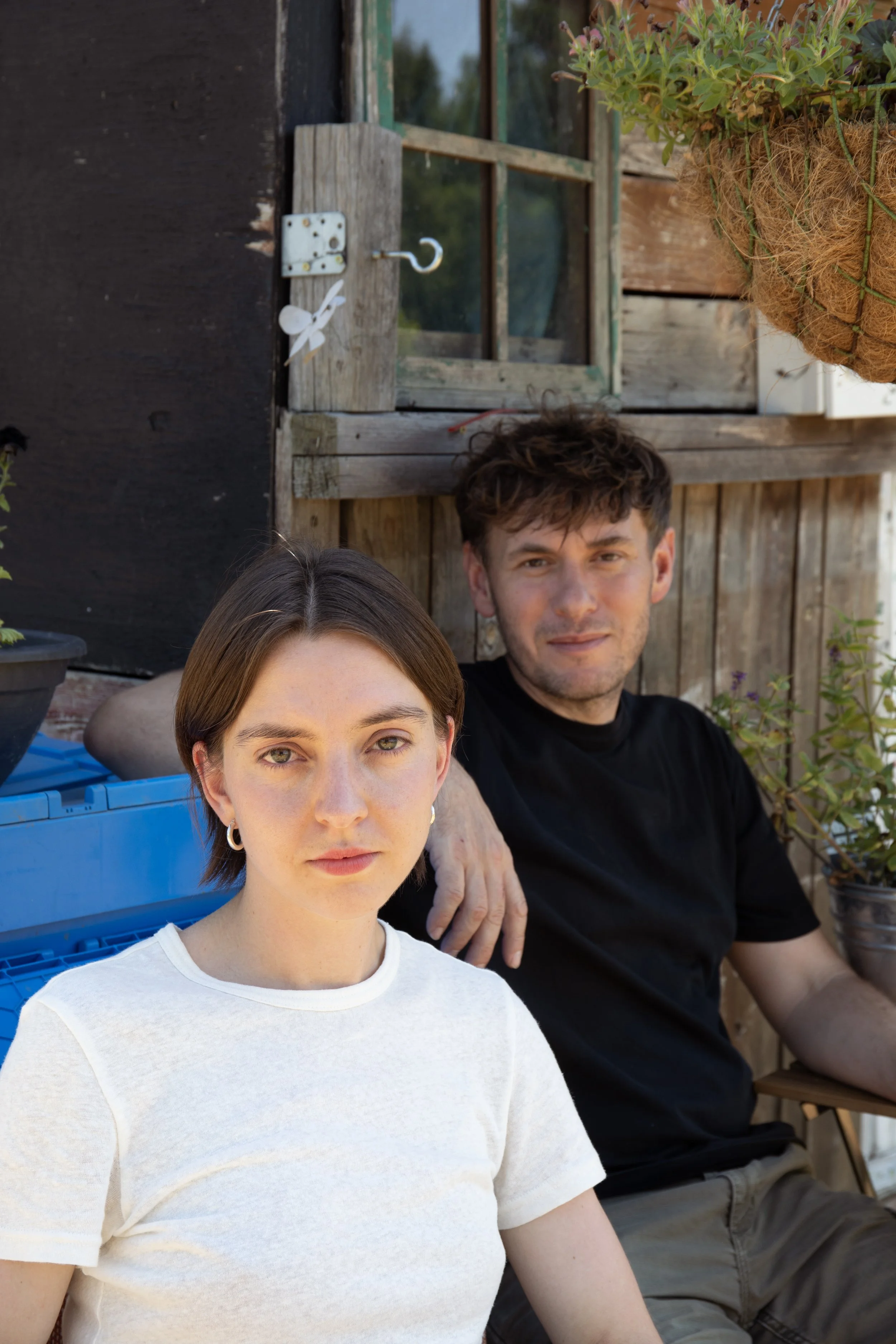
For me, it's mainly a question of rhythm and how I feel the story. Some situations simply ask for color, others don't. With some portraits, I felt that color was an unnecessary distraction. In black and white, I focus more on the person. Communication with the publisher also played a role. Originally, I had almost all the portraits prepared in black and white, but in the end, we left some in color. That ratio is important to me because it creates a natural alternation-a visual deep breath. I belong to a generation of photographers who still spent hours in the darkroom at school and shot on medium-format black and white film. Black and white photography is deeply rooted in me. I grew up on Sudek, Funke, Koudelka, and Kratochvíl. That stays with you. That's why I knew it had to have its place in this book.
Real Kitchen Atmosphere: When photographing in real kitchens and gardens instead of studios, what challenges did you face and how did you solve them?
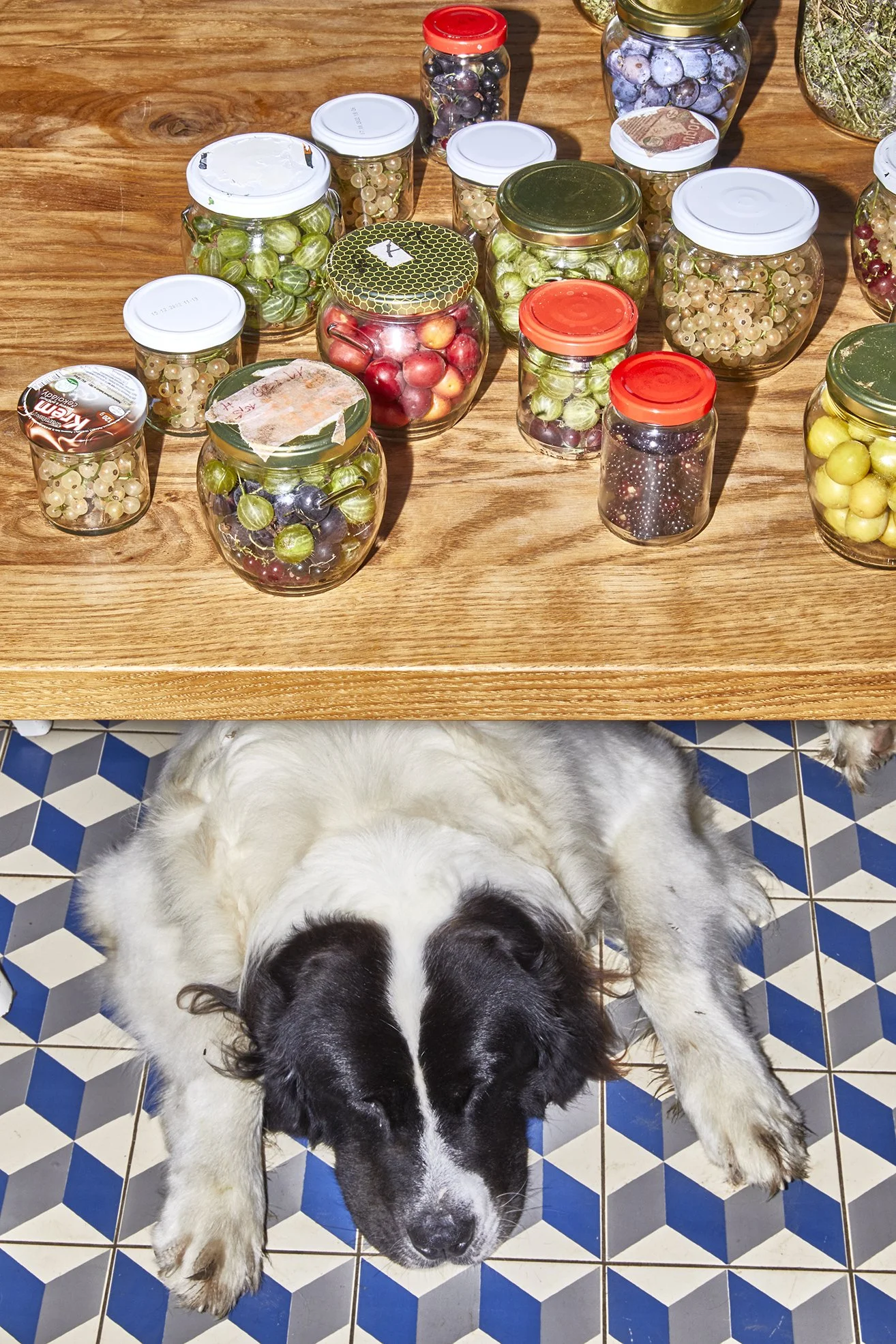
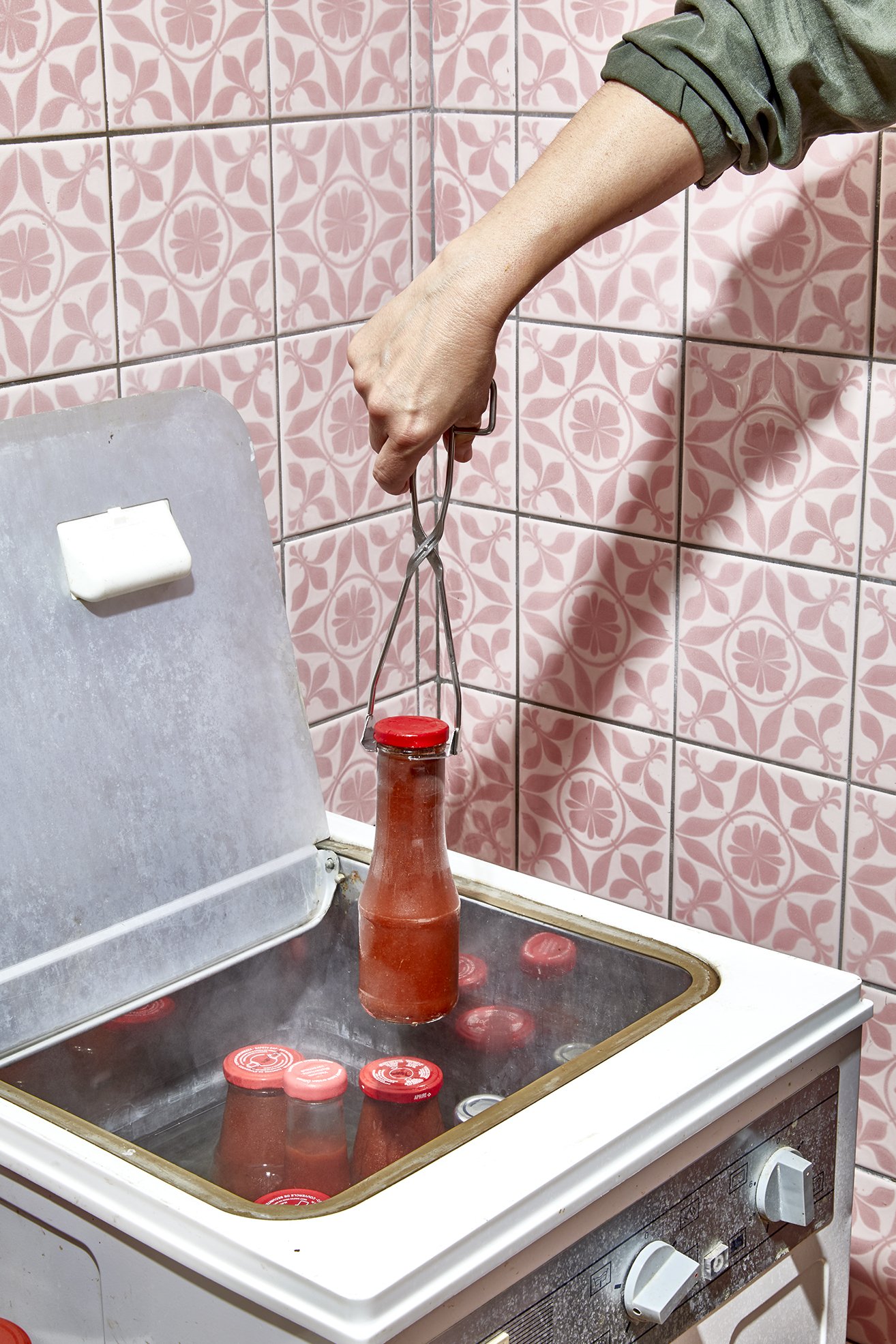
I feel right at home in a natural environment. Real kitchens and gardens inspire me rather than limit me. Every space is different and always surprises me with something. I love the little things-paper notes attached to the fridge with a magnet, boxes full of things from batteries to old bottle caps. I look at how people have laid out their space, what kind of curtains they have, whether they have flowers in the window or herbs in a pot. Do they have a microwave? Is there a bowl of fruit, salt and pepper, or a plate of cakes on the table? I imagine little stories behind everything. These details tell me a lot about the people who live there, and at the same time, they guide me while shooting. I don't want to stylize the space; I want to understand and respect it. The real challenge is more about time. I always have less of it than I'd like. I have to quickly sense what is essential and capture it before the situation changes.
Texture and Detail: The press materials mention your focus on texture and detail in the food shots. What camera settings or techniques help you capture these qualities best?
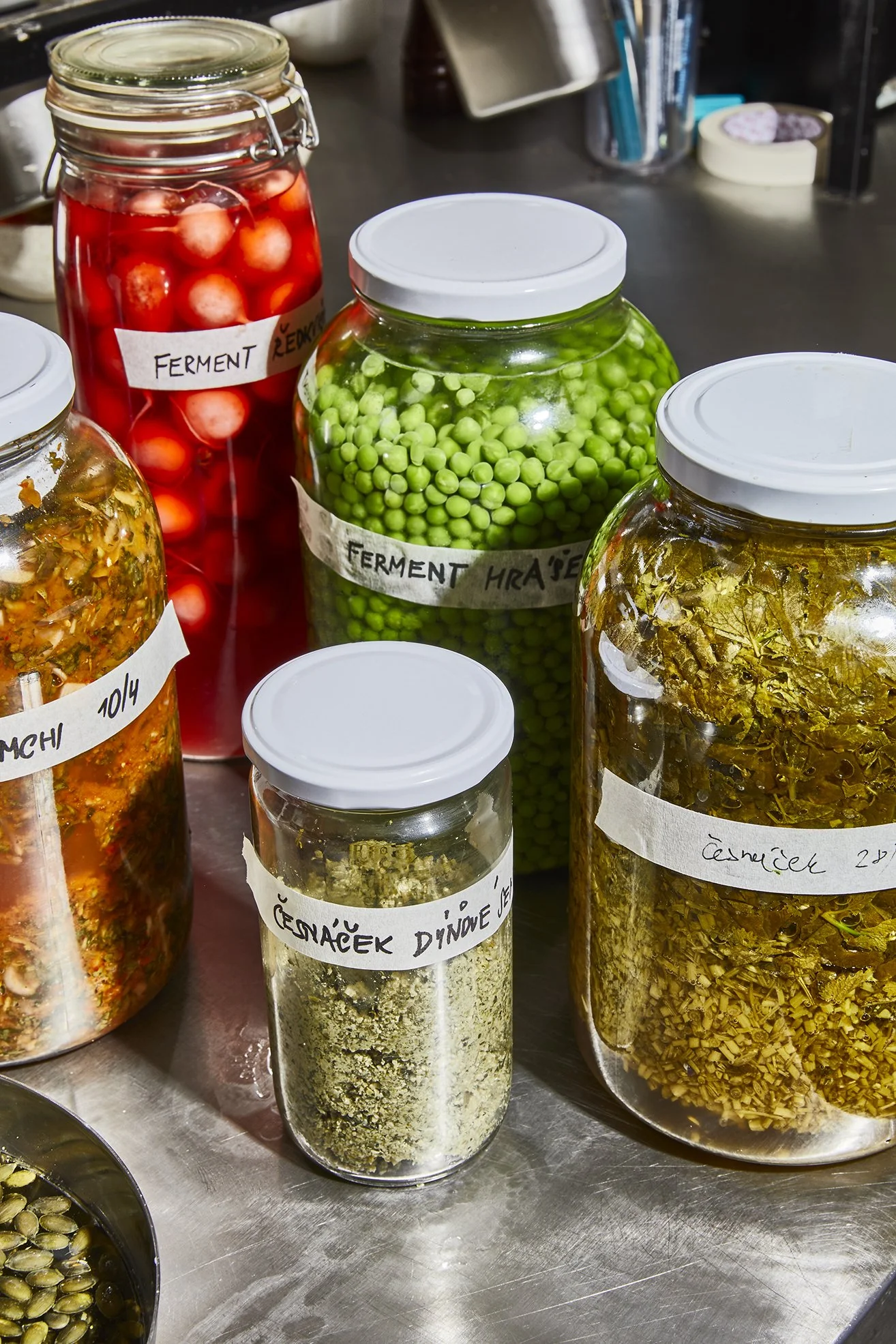
I've never been the type of photographer who treats technique as the main topic. It's a tool for me. I was raised on film, so I think simply-shutter speed, aperture, ISO. In the end, I adjust the color temperature based on my feeling anyway. What matters is that the image works. When I shoot finished food, I often use a tripod. I need precision and calmness. I'm not the type to shoot twenty versions and then pick one. I usually aim for one definitive shot. When it comes to texture and detail, I occasionally reach for a higher f-stop and get closer to the ingredient to pull the absolute maximum out of it, but more than camera settings, I am interested in the light. Where it comes from, what character it has, how it interacts with shadows, and how it highlights the surface. That is the foundation for me. I don't have one favorite type of light. Every object needs something different. Sometimes ordinary daylight is right, other times the studio. But I always start from what is right for that specific image.
Documentary Approach: You photograph the whole food process from farms to restaurants. How did this complete approach change the way you photographed the preserving stories?
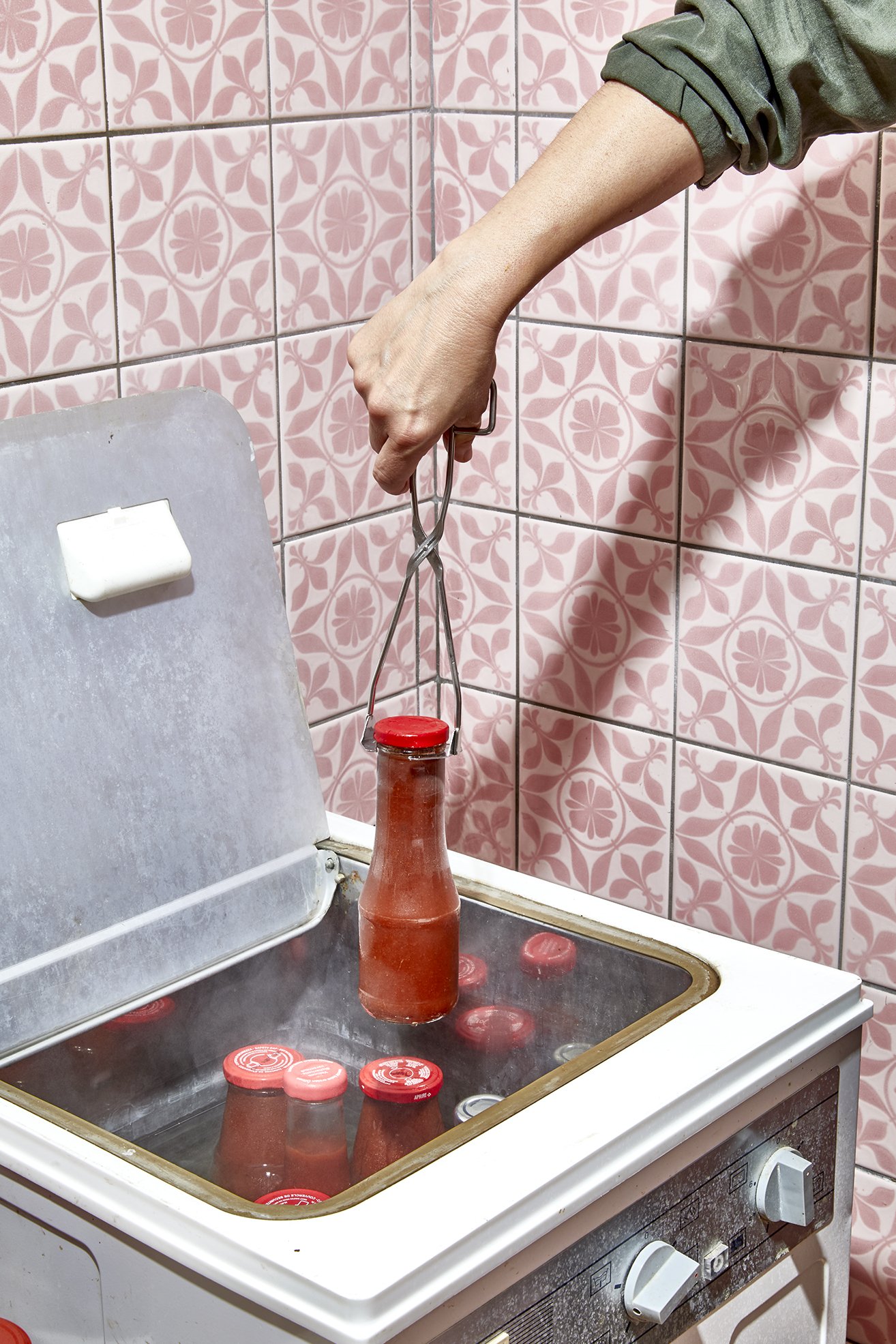
This is the path I've been on my entire career. Food is my main topic, but it interests me in its entirety-not just as a finished dish, but as a process. From the farm, field, or garden bed, through the pantry and fridge, to the final composition on the plate. I like the combination of documentary and stylization, and I try to project both into my work. I'm interested in who is behind the food-farmers, breeders, chefs. The people who grow and prepare it. With preserving, this approach made even more sense to me. I didn't want to just shoot recipes. I wanted to capture the journey-the journey of the ingredients, the journey of the people, the work, and the time hidden inside every jar. To me, it's natural. I can't imagine the book being built solely on finished dishes without context.
Childhood Connection: You spent time at family cottages before the Velvet Revolution watching food being preserved. Did these memories influence how you composed your photographs?
Strongly. These are my most vivid childhood memories. Summers at the cottage with my grandparents. Grandpa vacuuming his car in front of the house, and me walking around the garden with grandma, picking currants, gooseberries, strawberries, and other things that grew there. Then everything gets processed-steam rising above the pots, jars lined up on the counter. The path to the pantry and the cellar is tattooed in my mind. I remember where each jar stood, the crates with apples and potatoes. Those colors and smells influence me to this day. I often remember places specifically by their smells and light. And I wanted to get this into the book too. A feeling of slight timelessness. The fact that when you look at an onion, it almost stings your nose. When you see peaches, you can feel the sweet juice on your chin.
Visual Rhythm: How did you create rhythm in the book by mixing different types of images together so readers stay interested from beginning to end?
It might sound selfish, but when making selections, I think more about myself than the reader. First and foremost, I need it to work for me. Every image must be strong in some way. If a photograph needs explaining, something is wrong. There were multiple variants for each profile, and it was demanding to choose the right ones-also due to the limited number of pages. The selection process is just as important to me as the shooting itself. The rhythm then emerges naturally from alternation. Color and black-and-white photographs, detail and wider shots, calmness and energy. I didn't plan it as a scheme; rather, I watched for when the book needed to slow down and when it needed to take a breath.
More photography books?
We'd love to read your comments below, sharing your thoughts and insights on the artist's work. Looking forward to welcoming you back for our next [book spotlight]. See you then!
The past became visible once Richards learned where to look. For The Inner Passage, Virginia McGee Richards spent fifteen years photographing a waterway in the South Carolina Lowcountry. Photography Book Spotlight