A pub full of fans changed Mike Taylor’s eye.
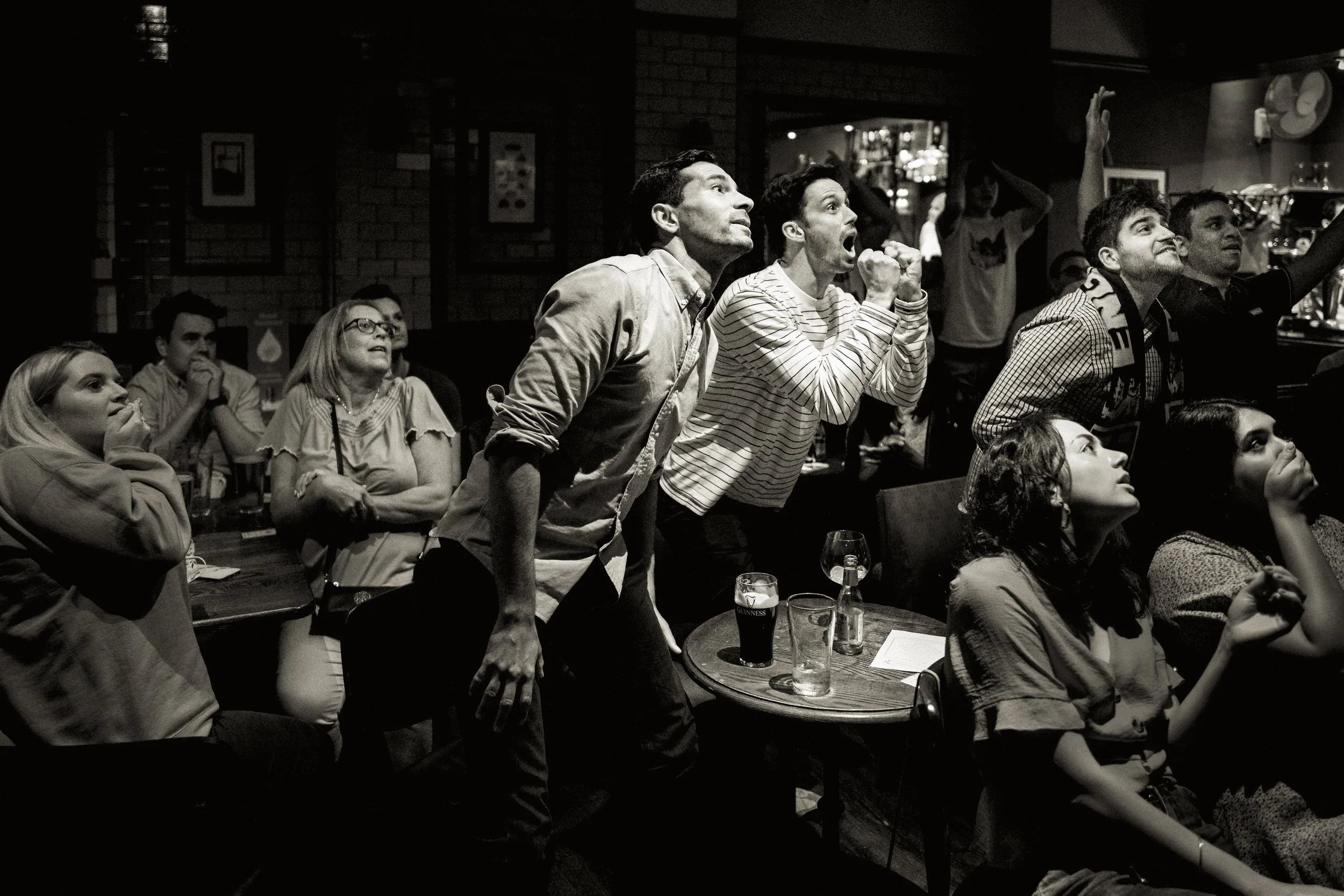
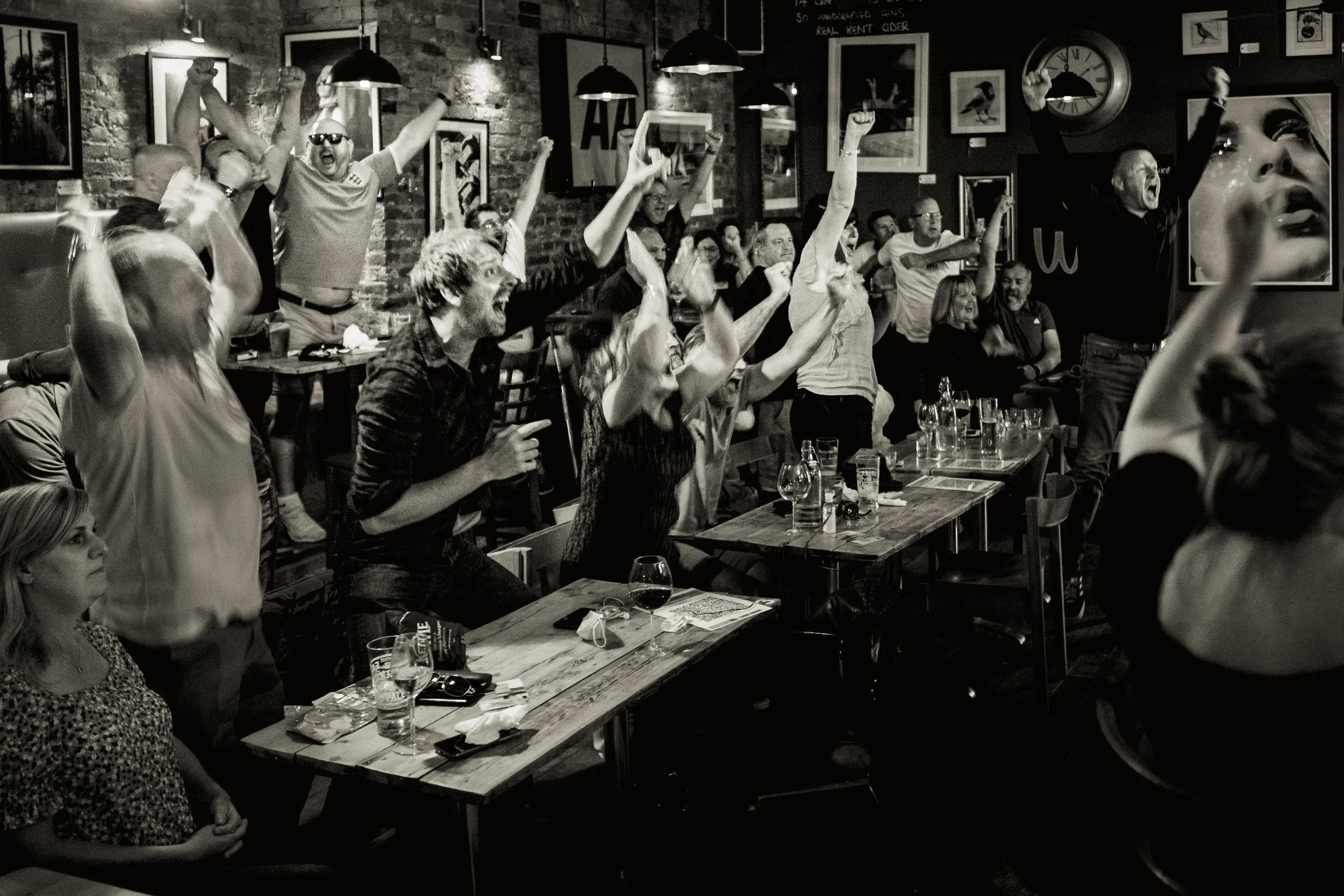
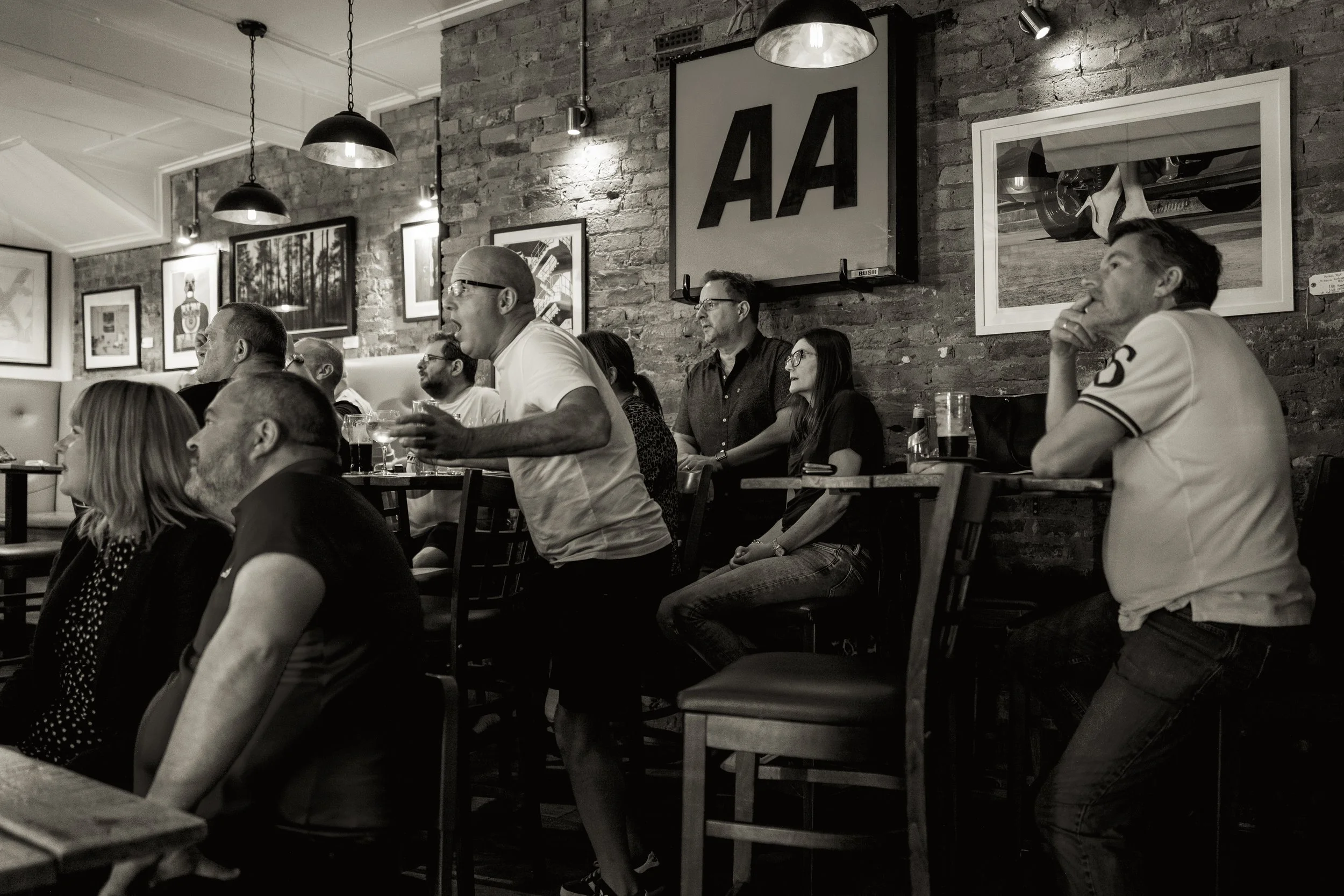
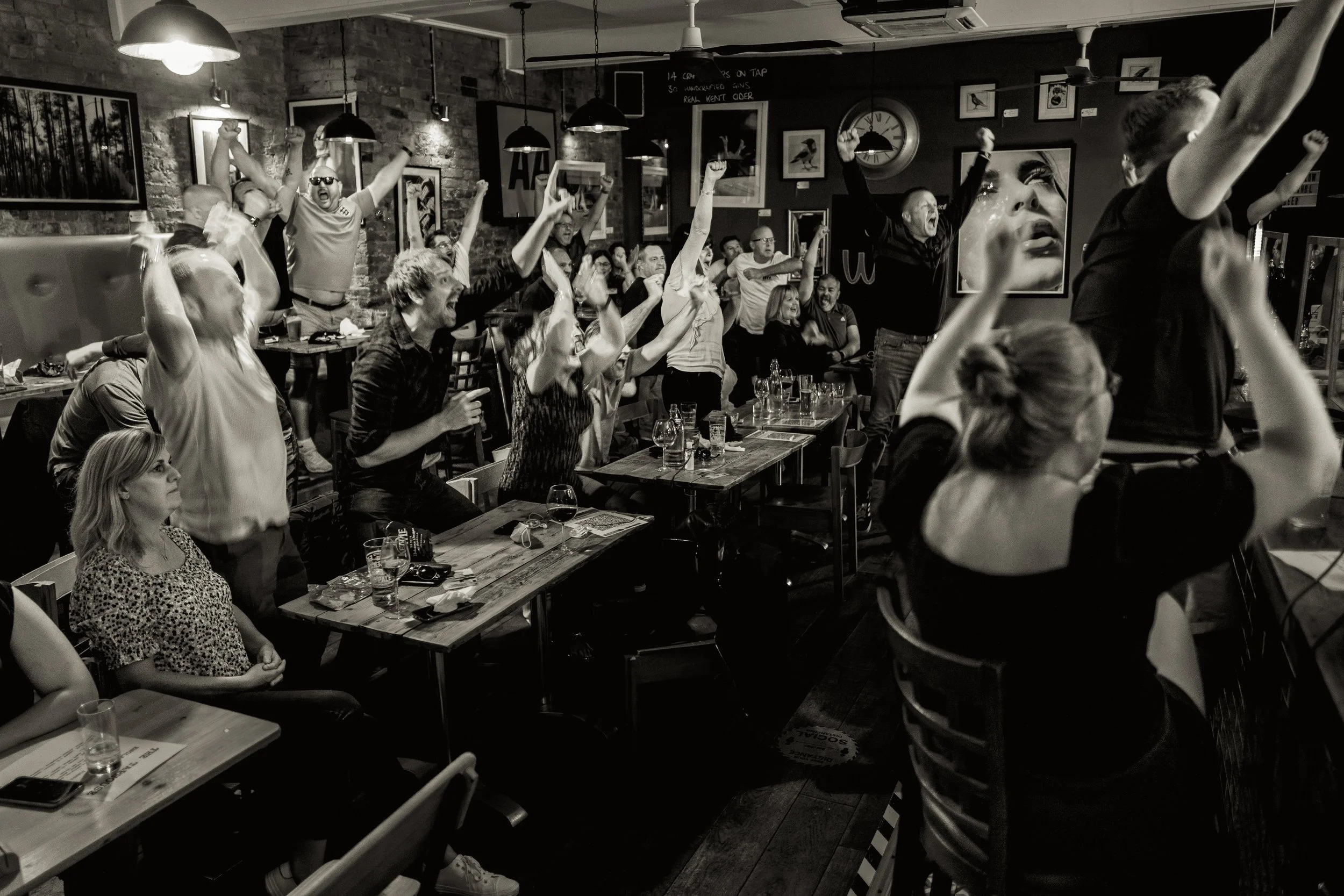
What began with an unexpected afternoon off on his 55th birthday during the 2018 World Cup became the start of a project that would stay with him for years. He was not drawn to the match itself, but to the strange intensity of the people watching it. Their faces, gestures, and moments of total absorption gave him something far more interesting to photograph.
But this is also a story about attention.
Mike Taylor found drama not on the screen, but in the people turned toward it, caught between hope, tension, and release. The project grew from one chance moment into a deeper way of looking, one shaped by repetition and a fascination with public emotion. In the conversation that follows, he reflects on why this subject took hold of him and why it still feels alive today.
The conversation also opens onto the way Mike thinks about photography more broadly.
He speaks about working with limits, staying close to his subject, and trusting emotion over polish. That gives the interview a second layer: not just the story of one project, but a clearer sense of what Mike looks for when he photographs.
The Project
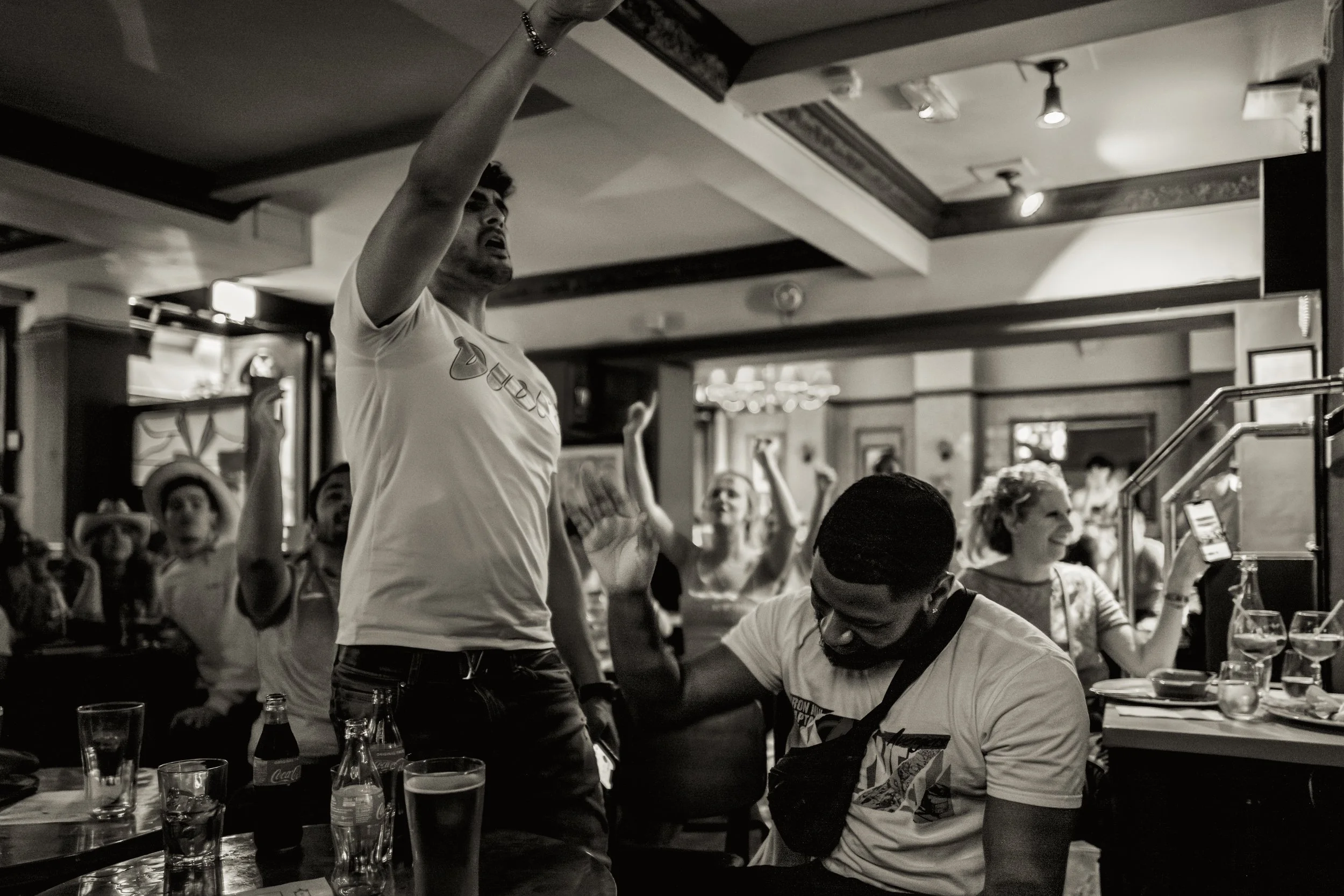
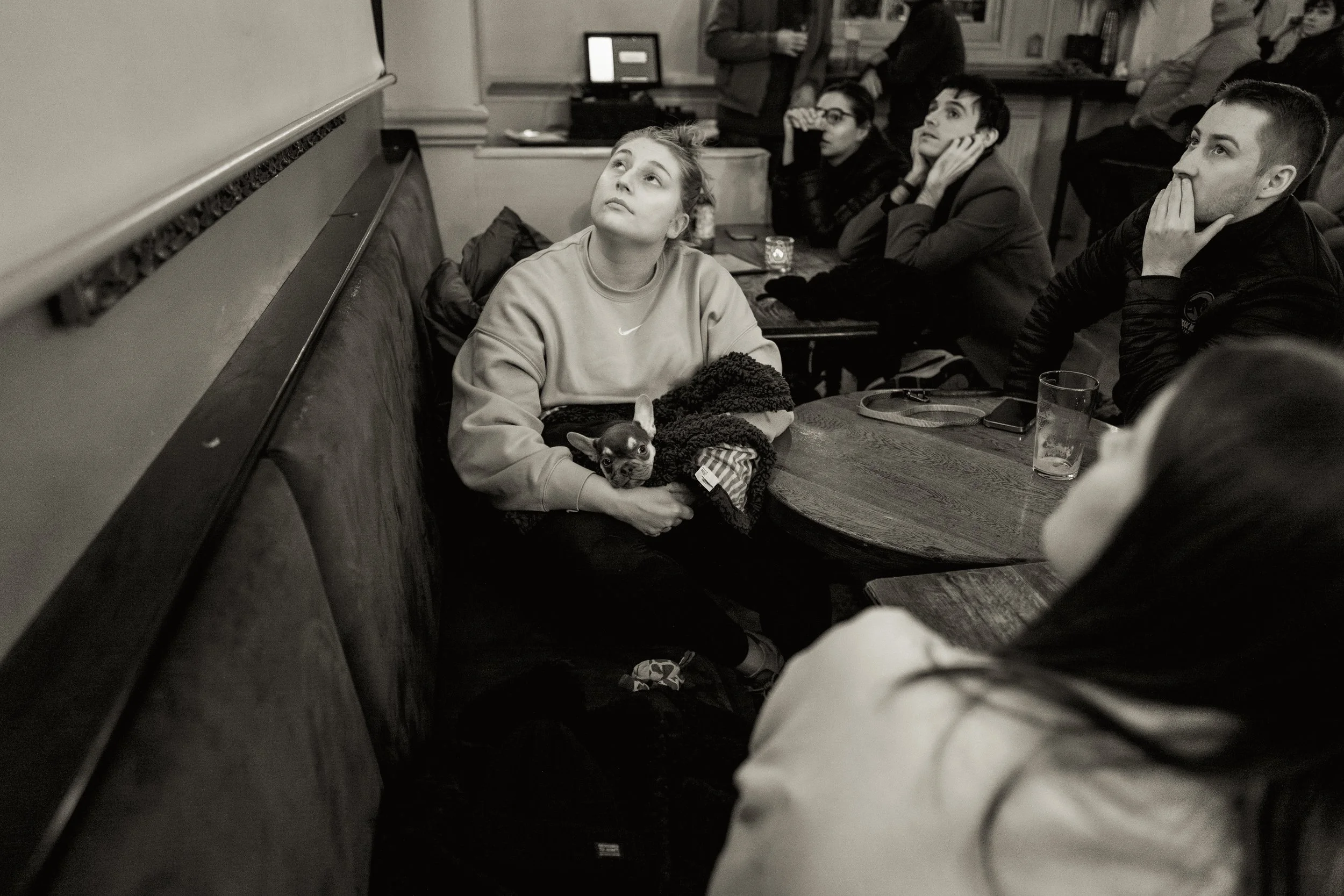
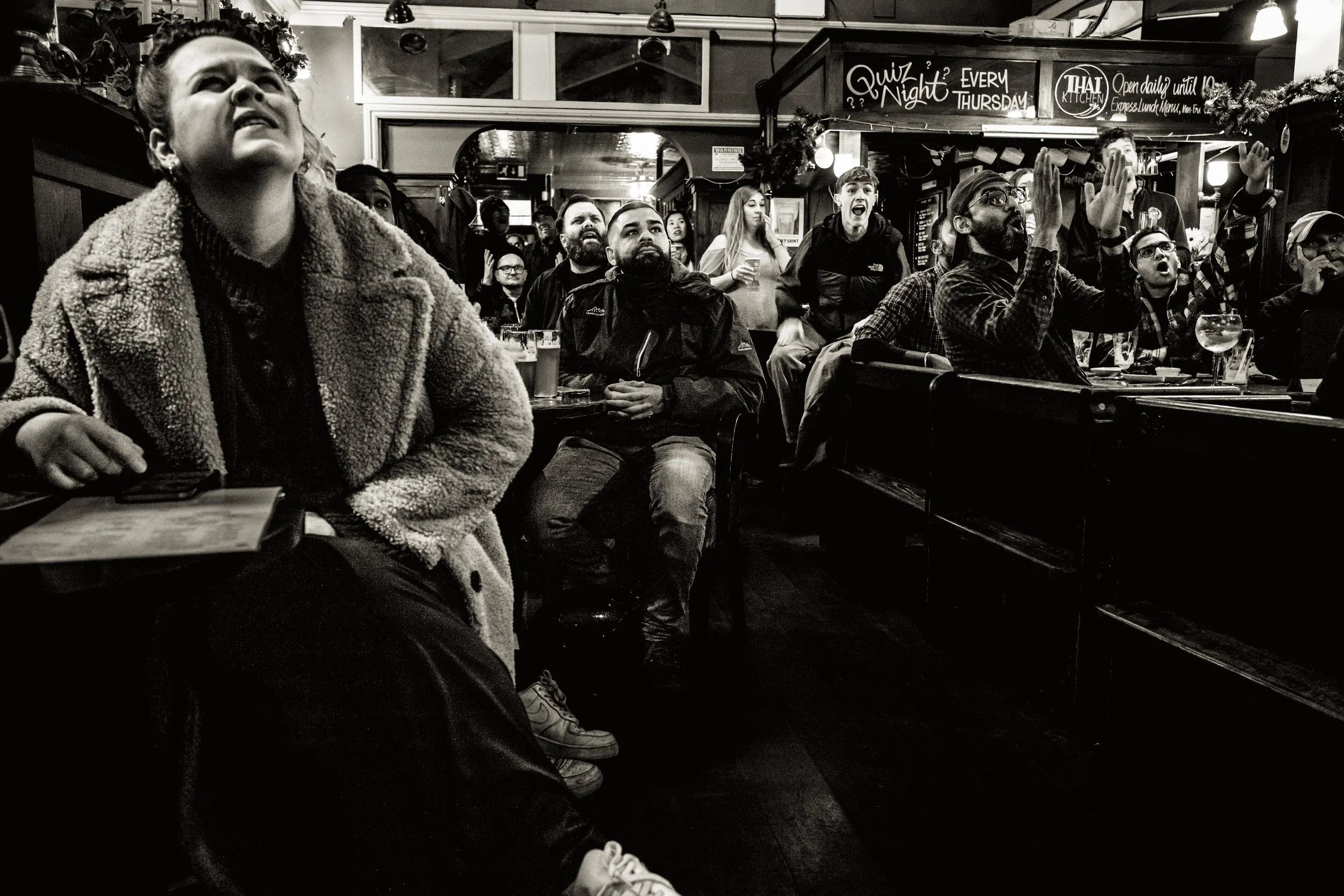
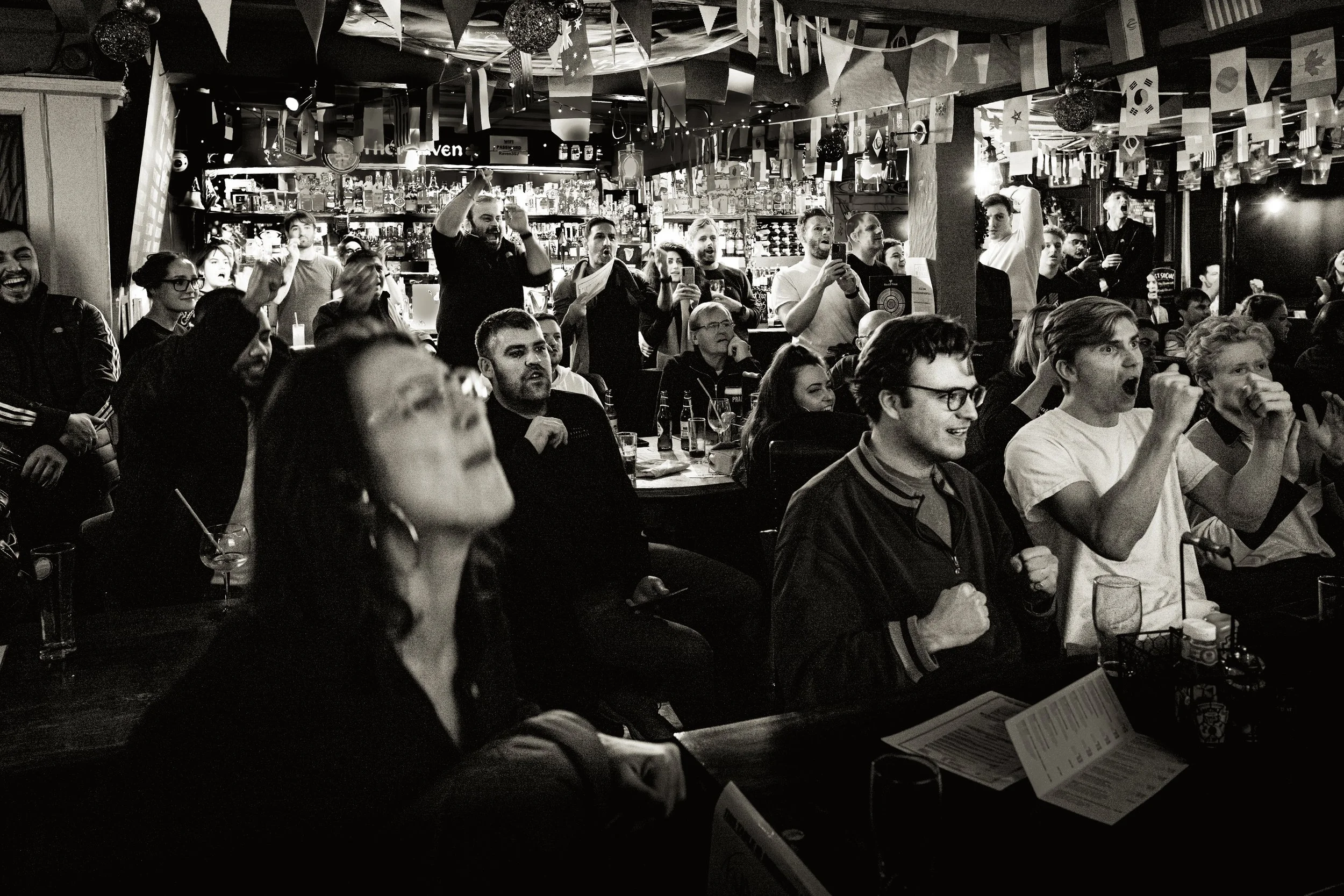
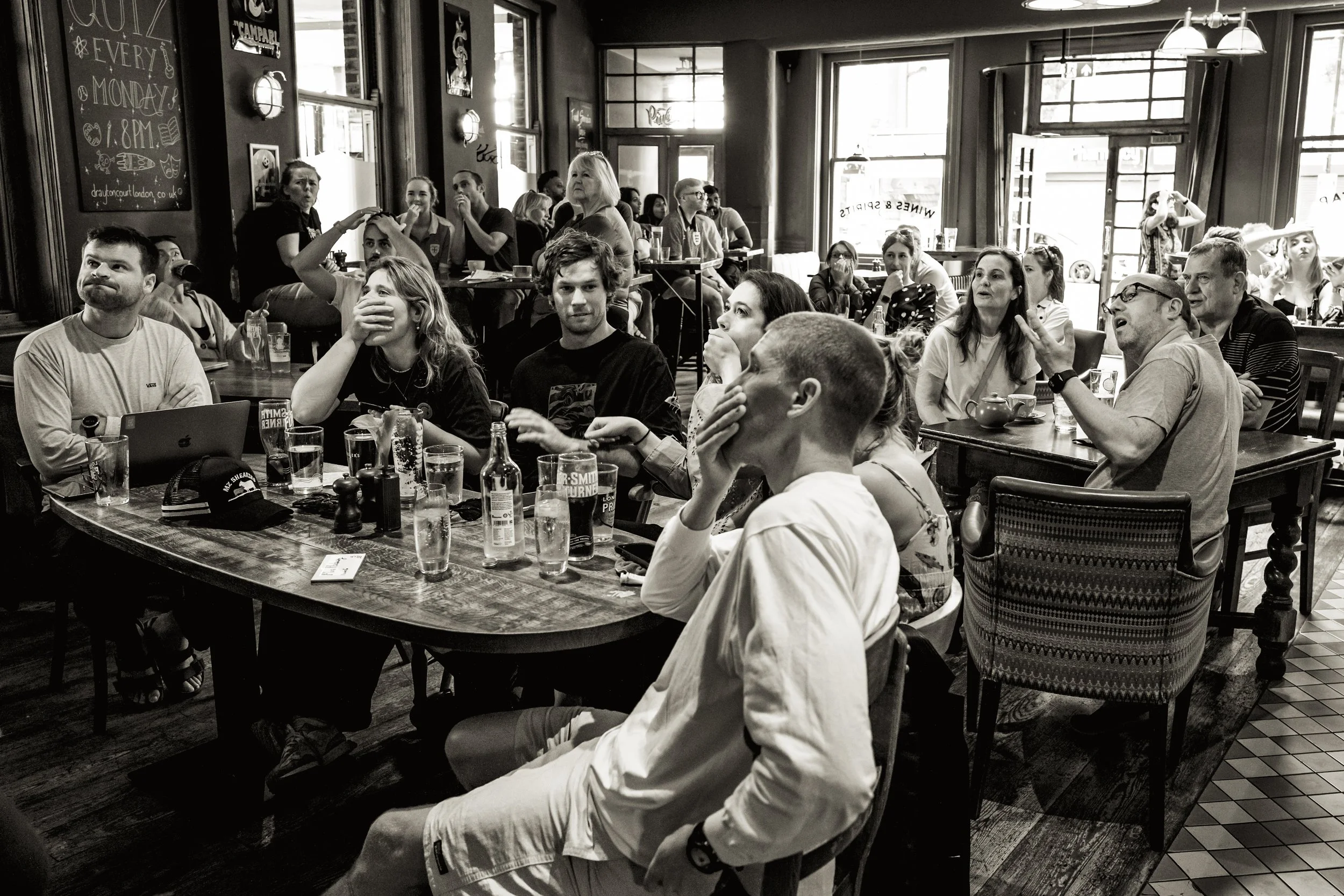
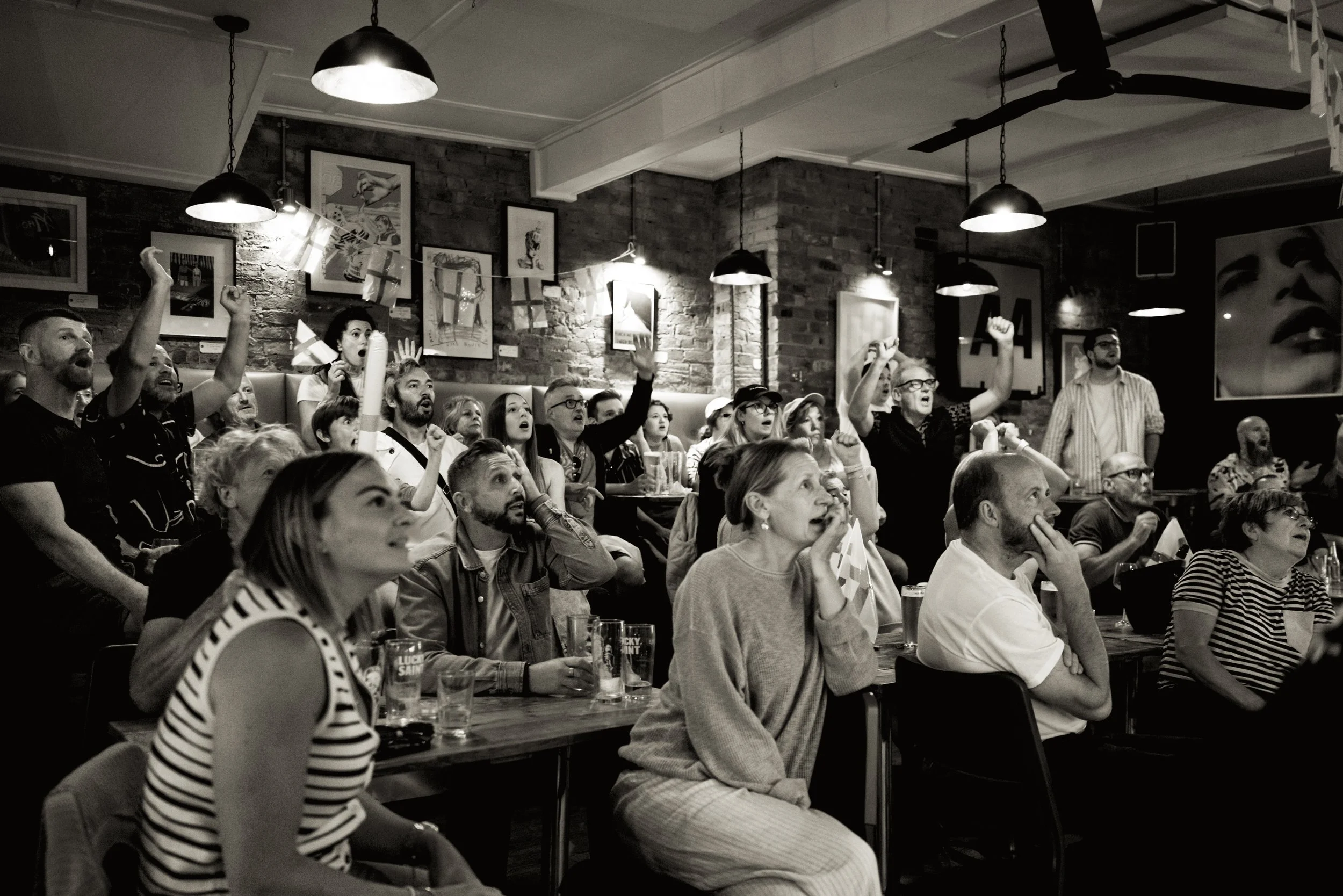
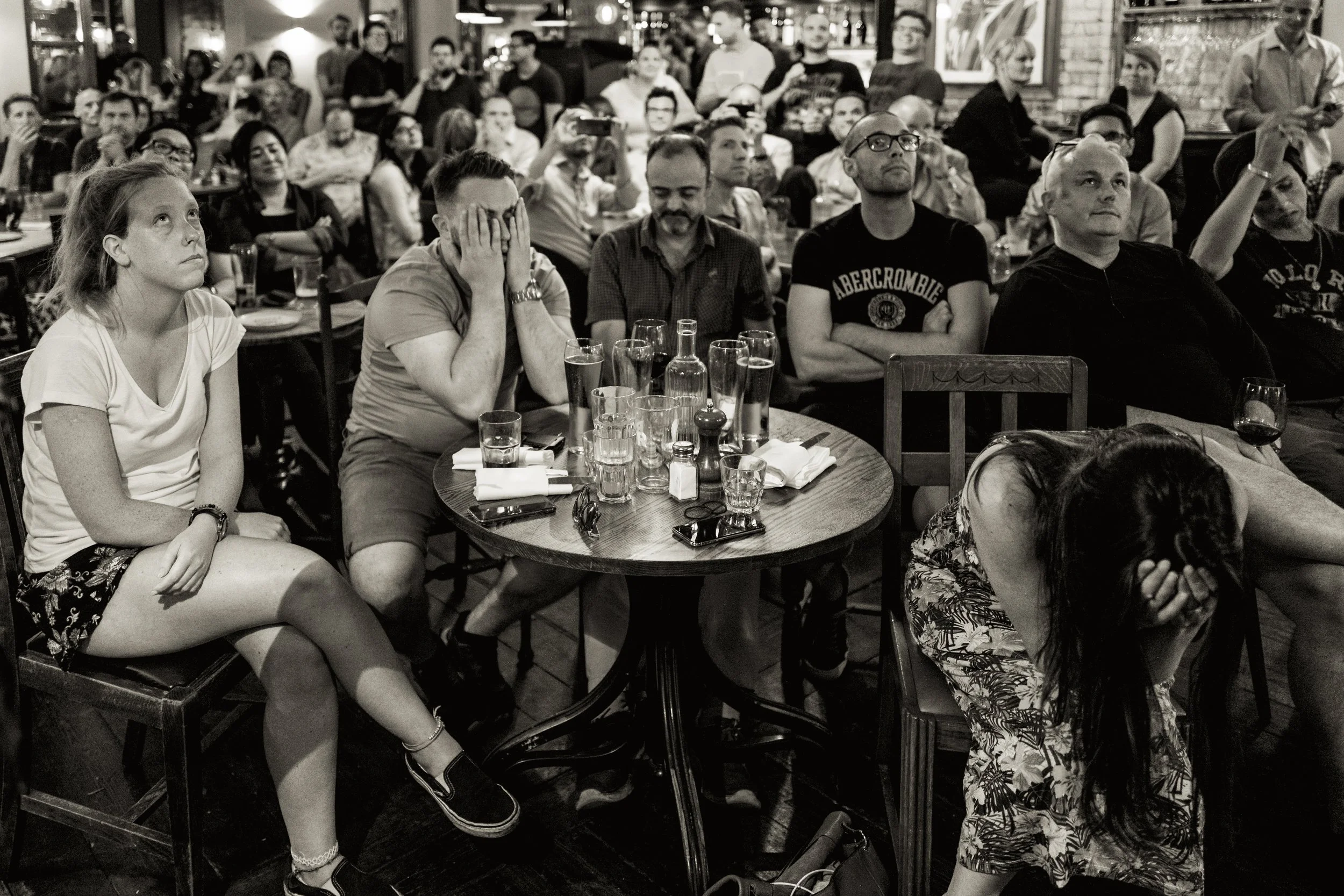
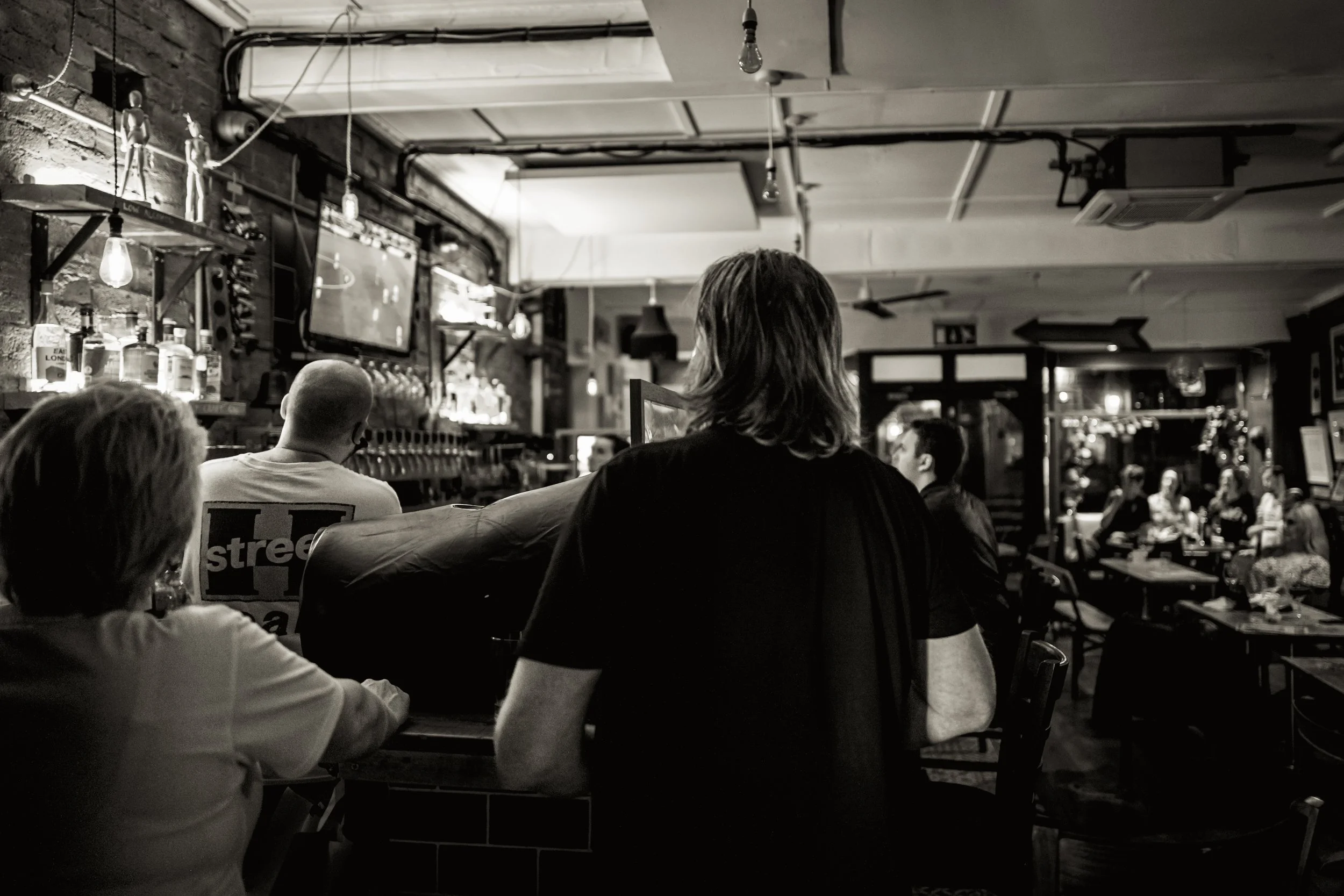
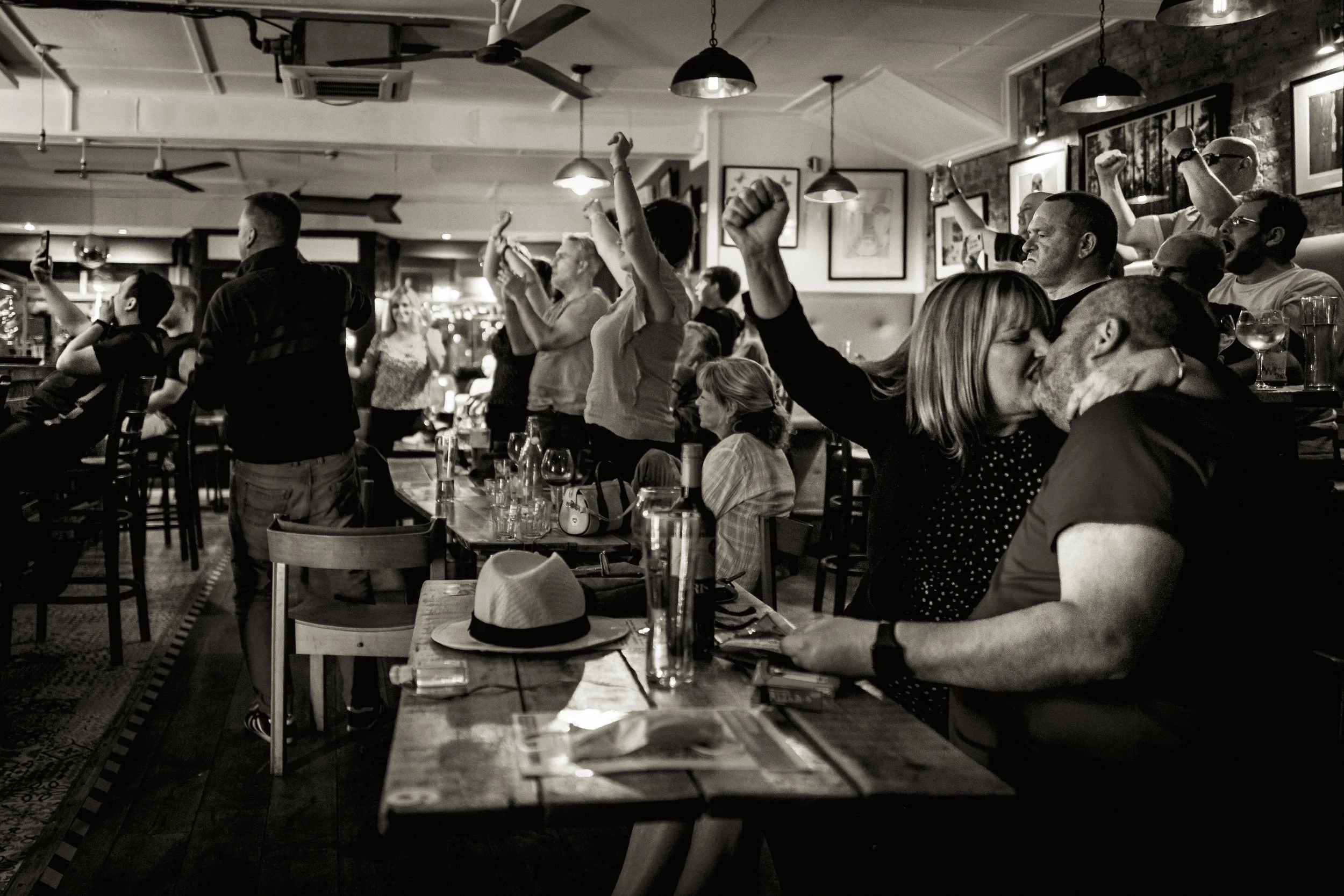
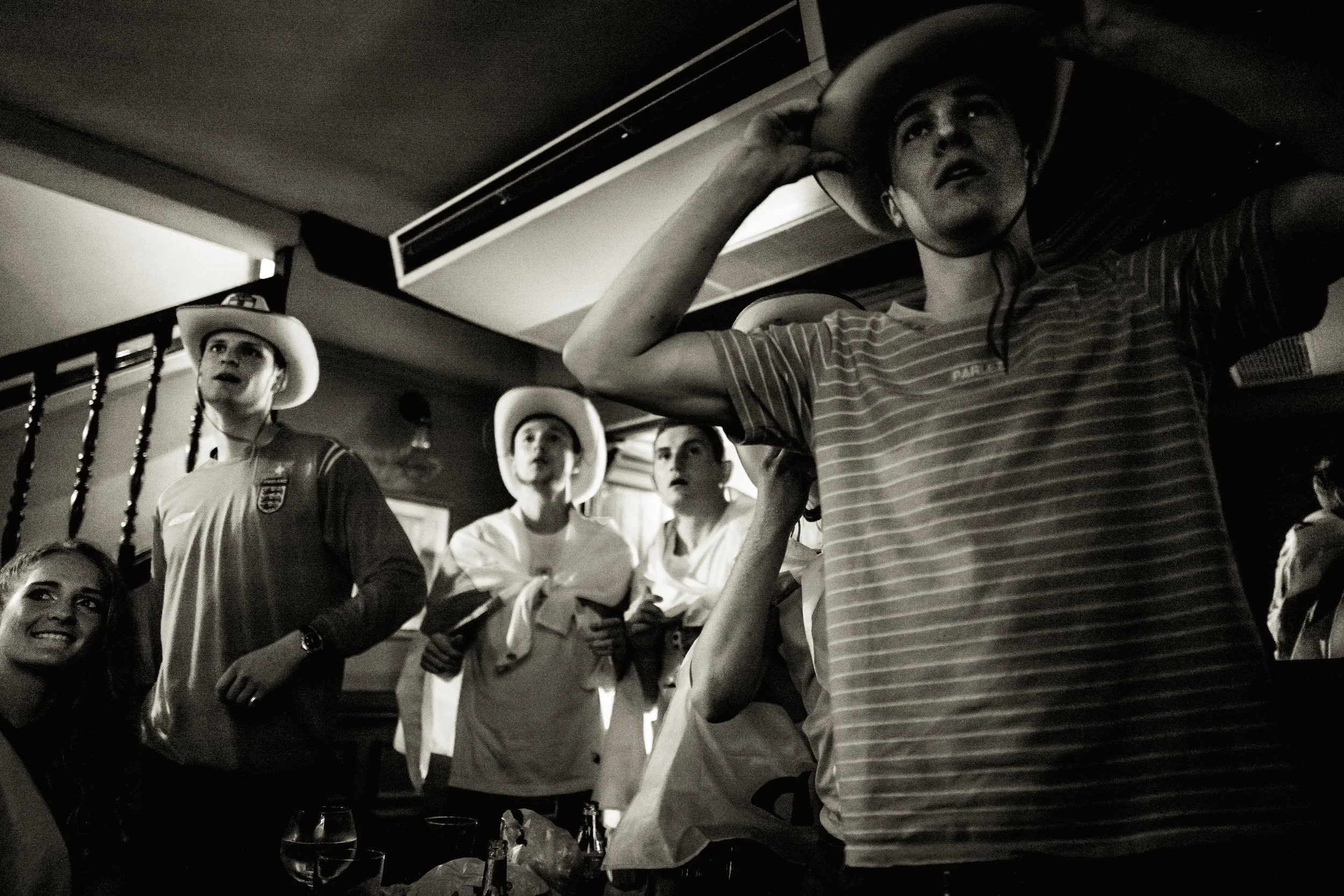
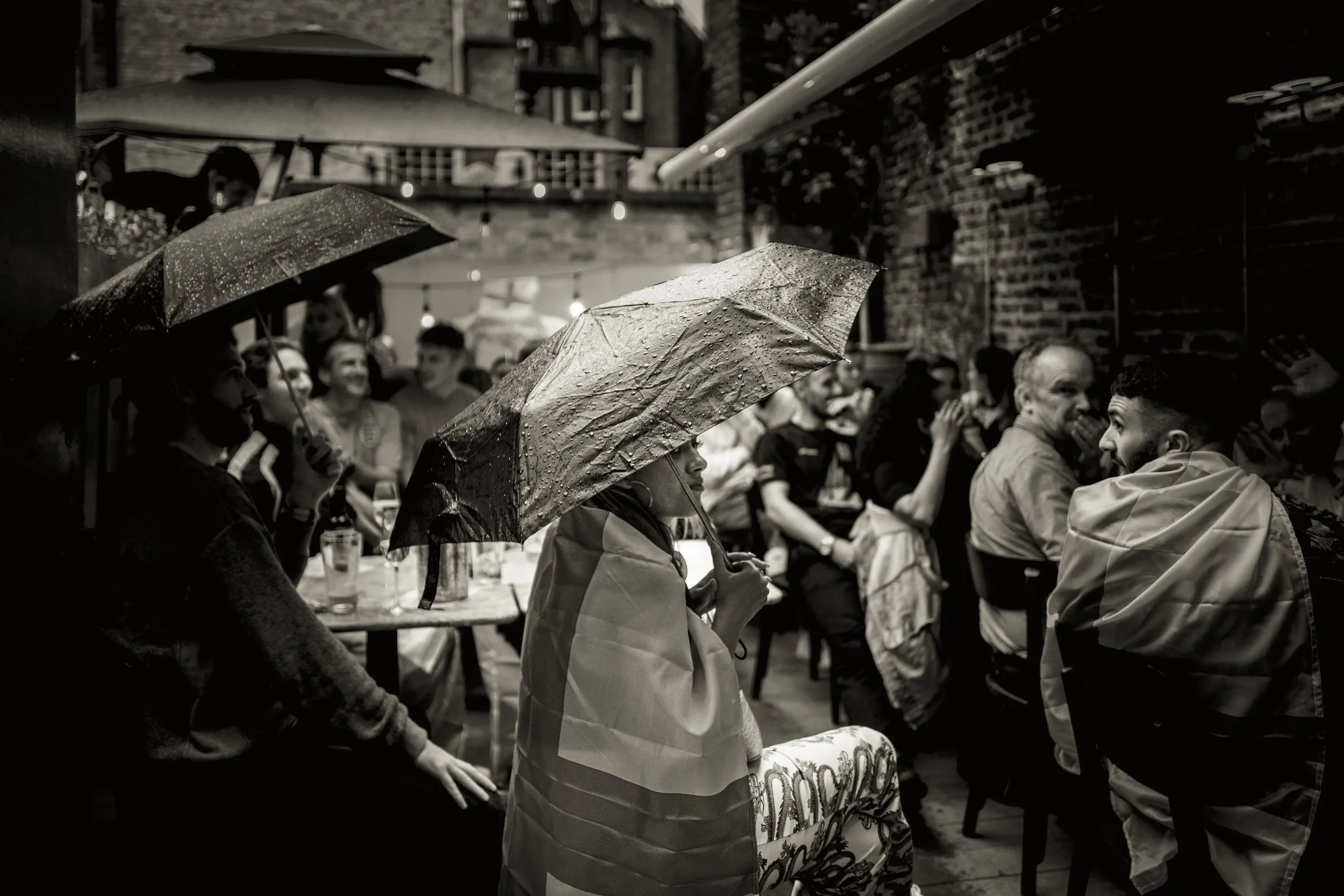
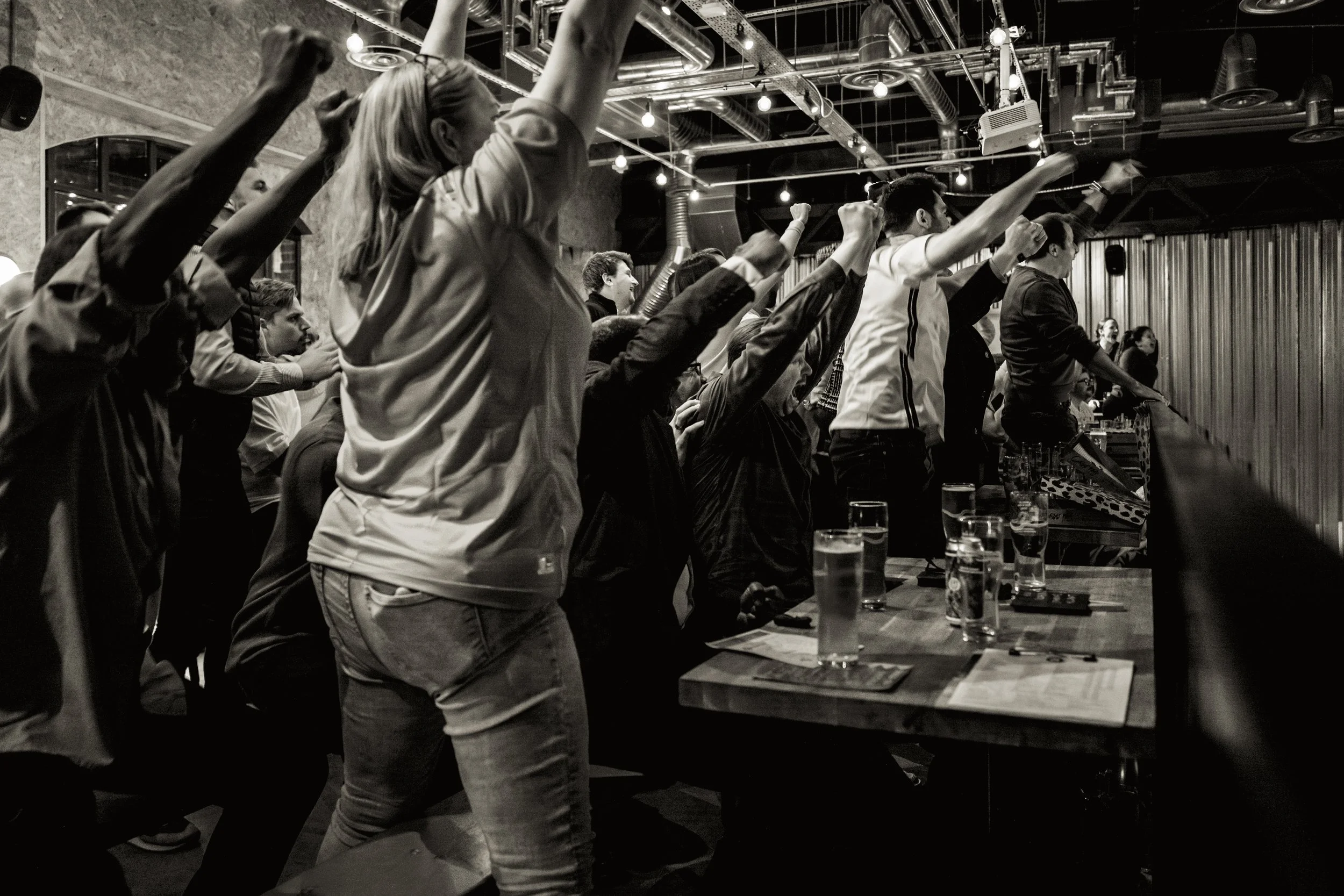
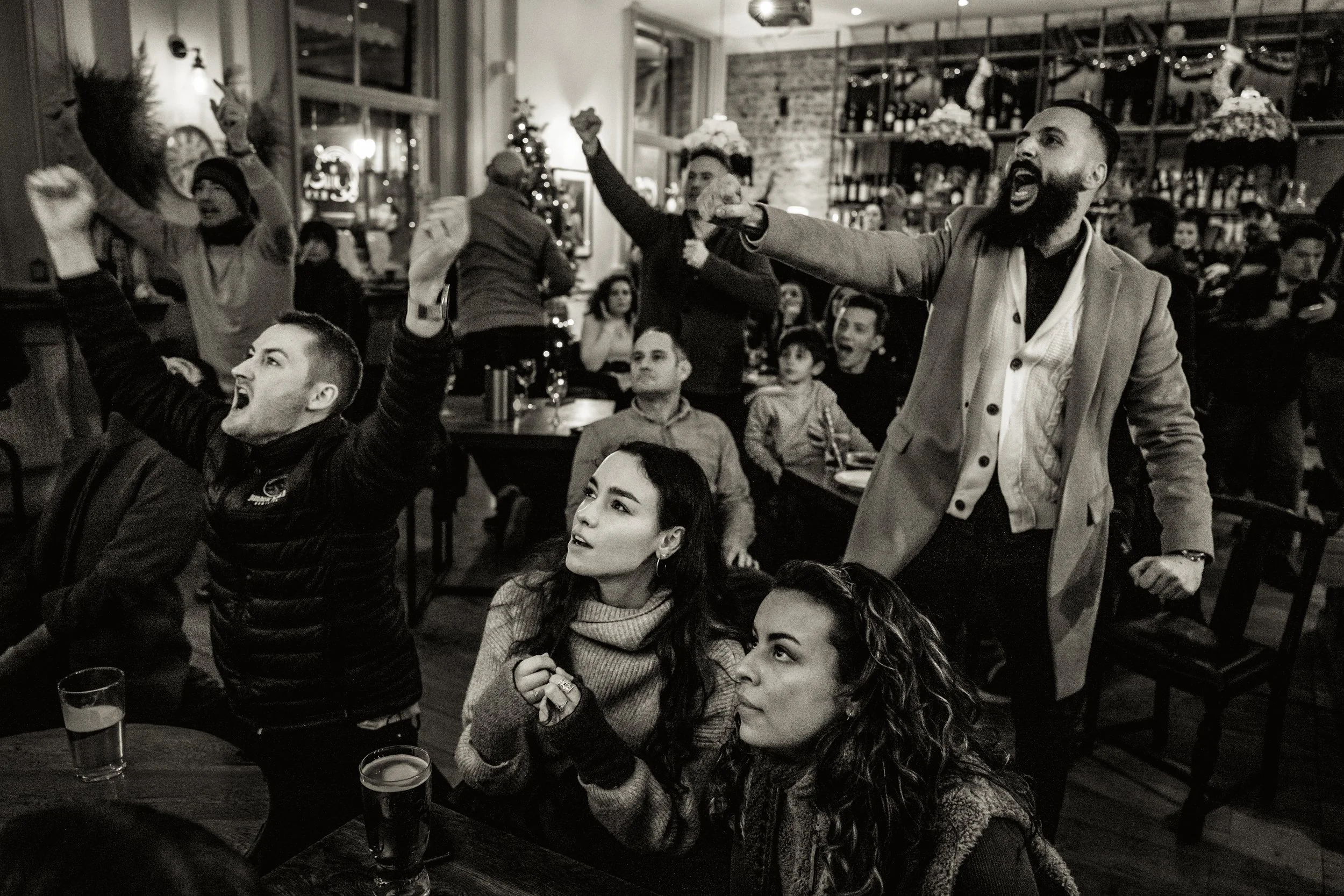
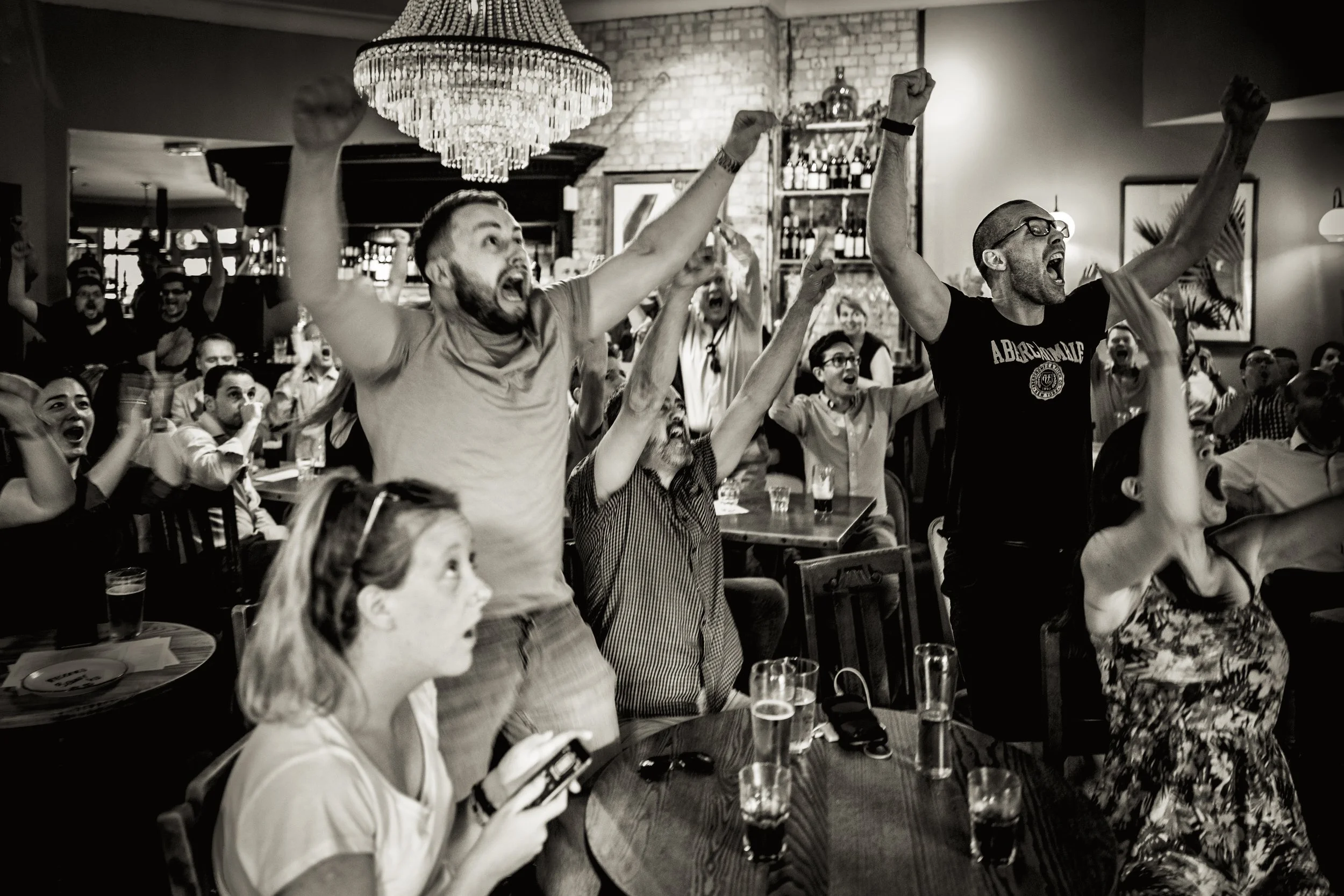
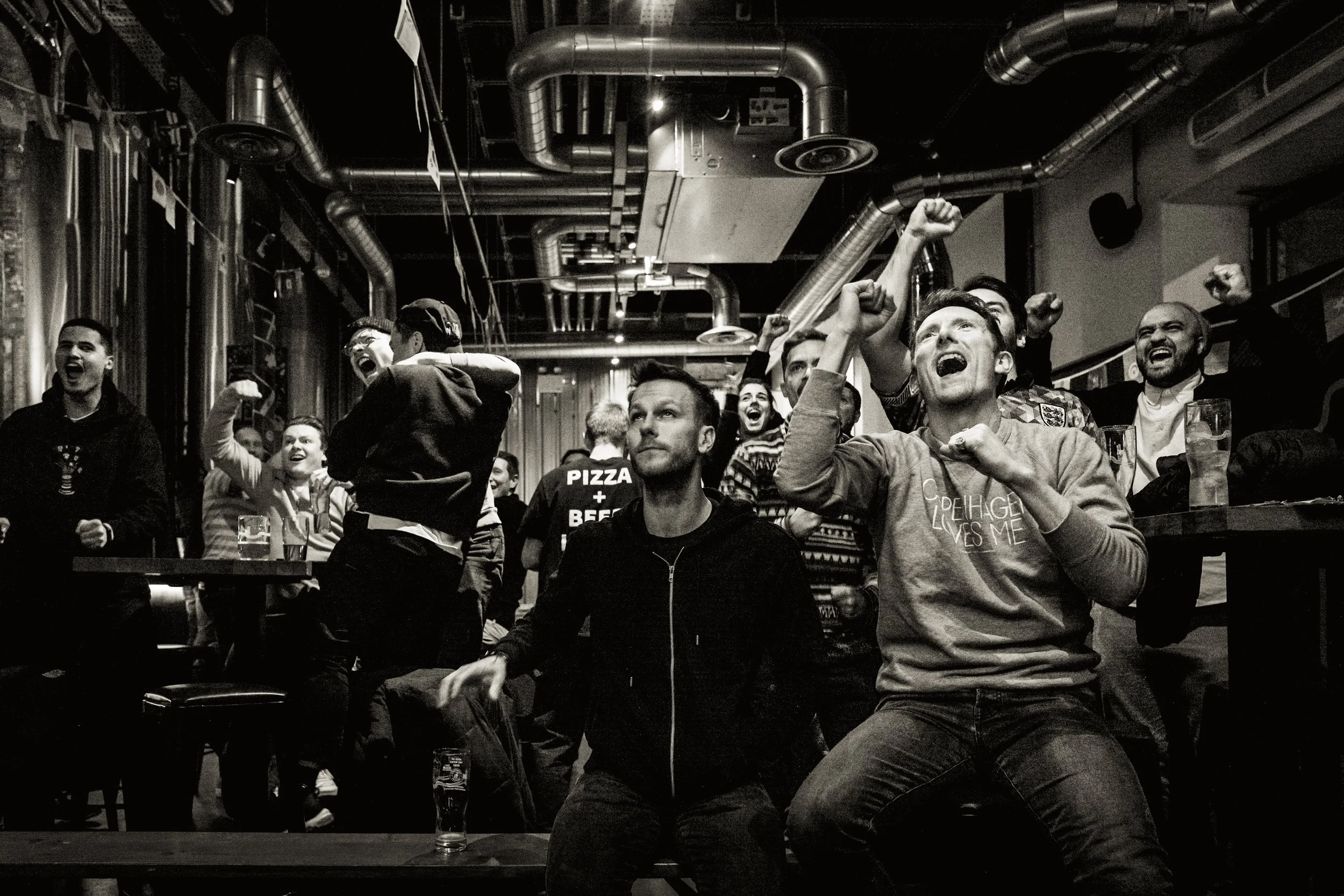
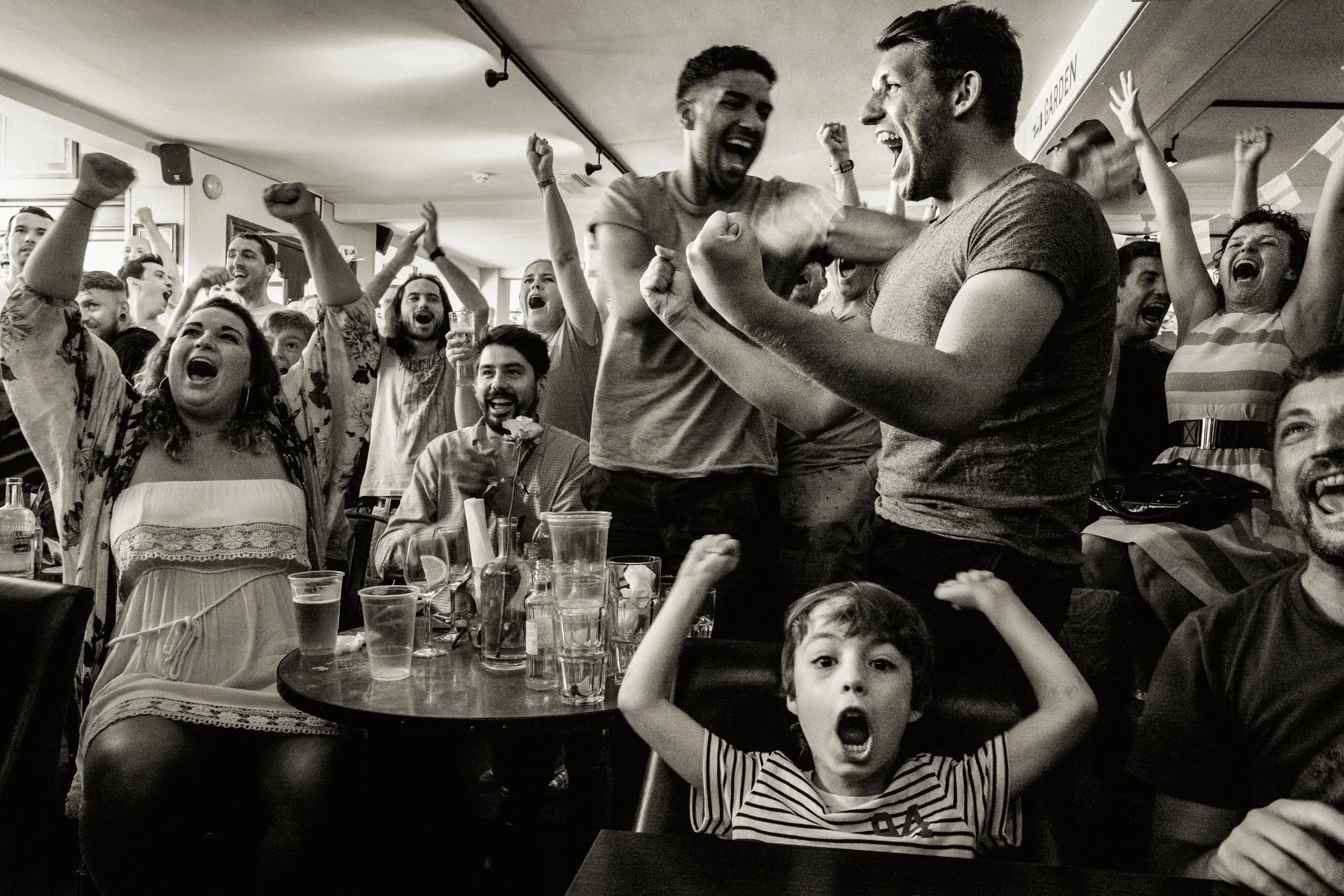
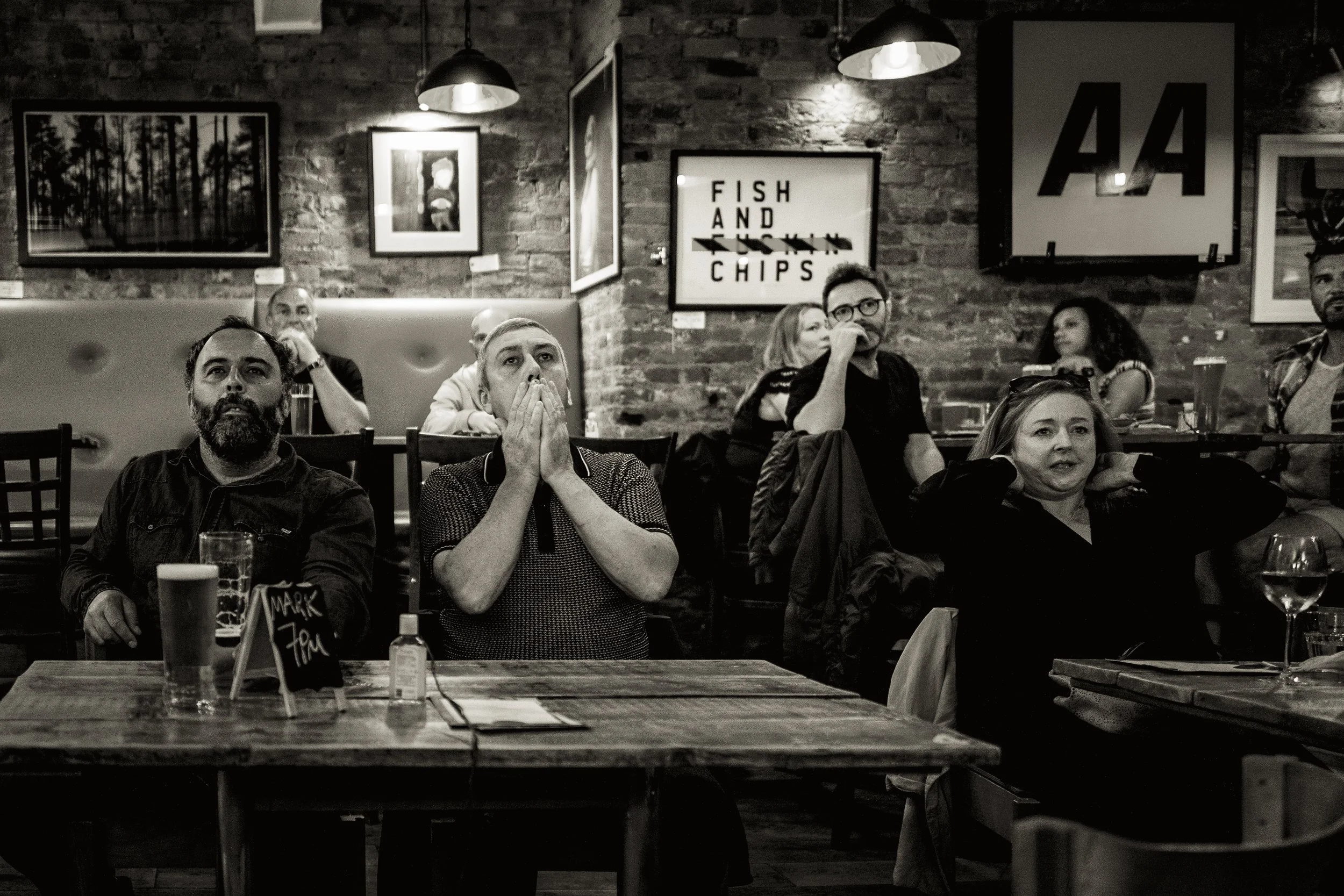
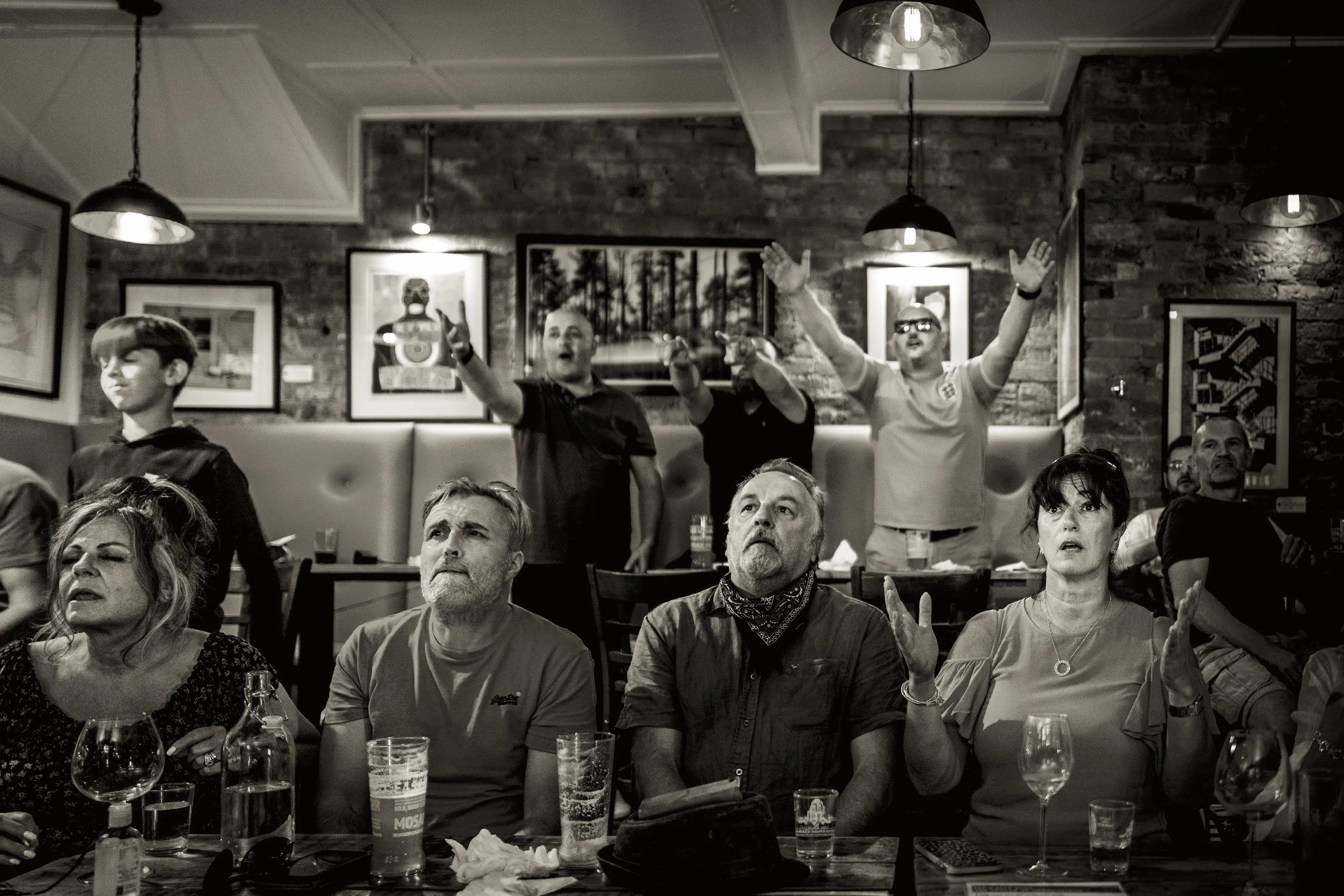
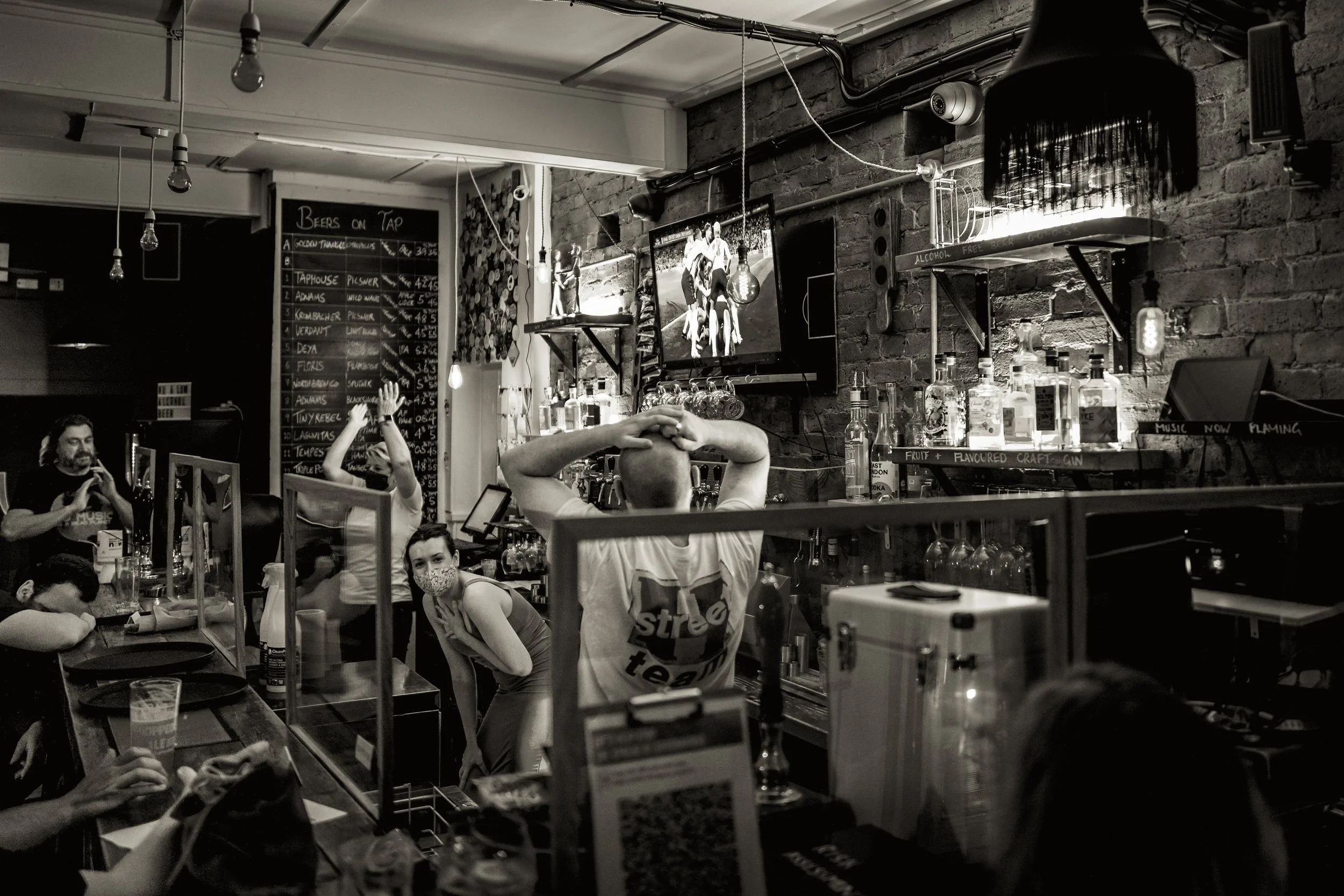
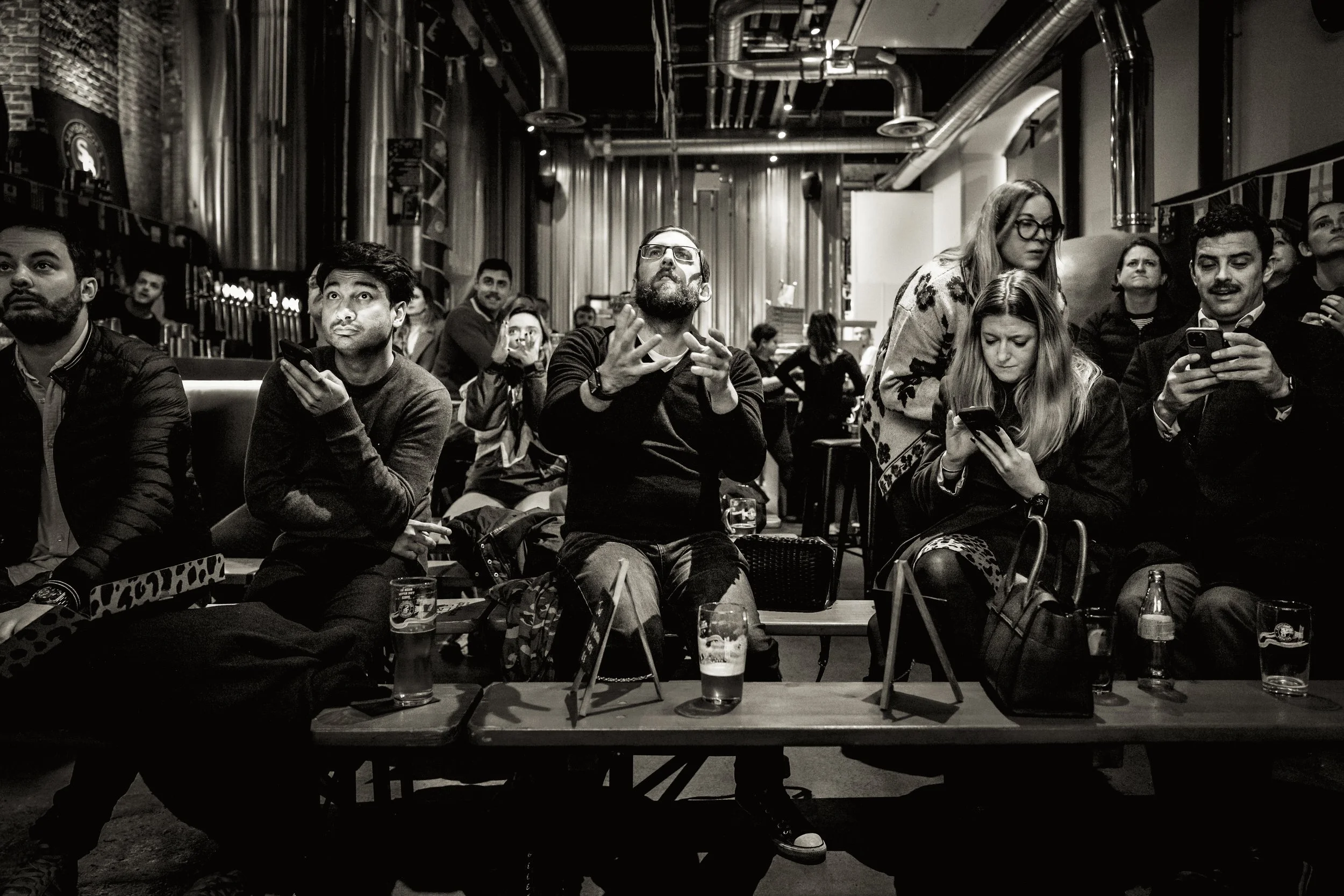
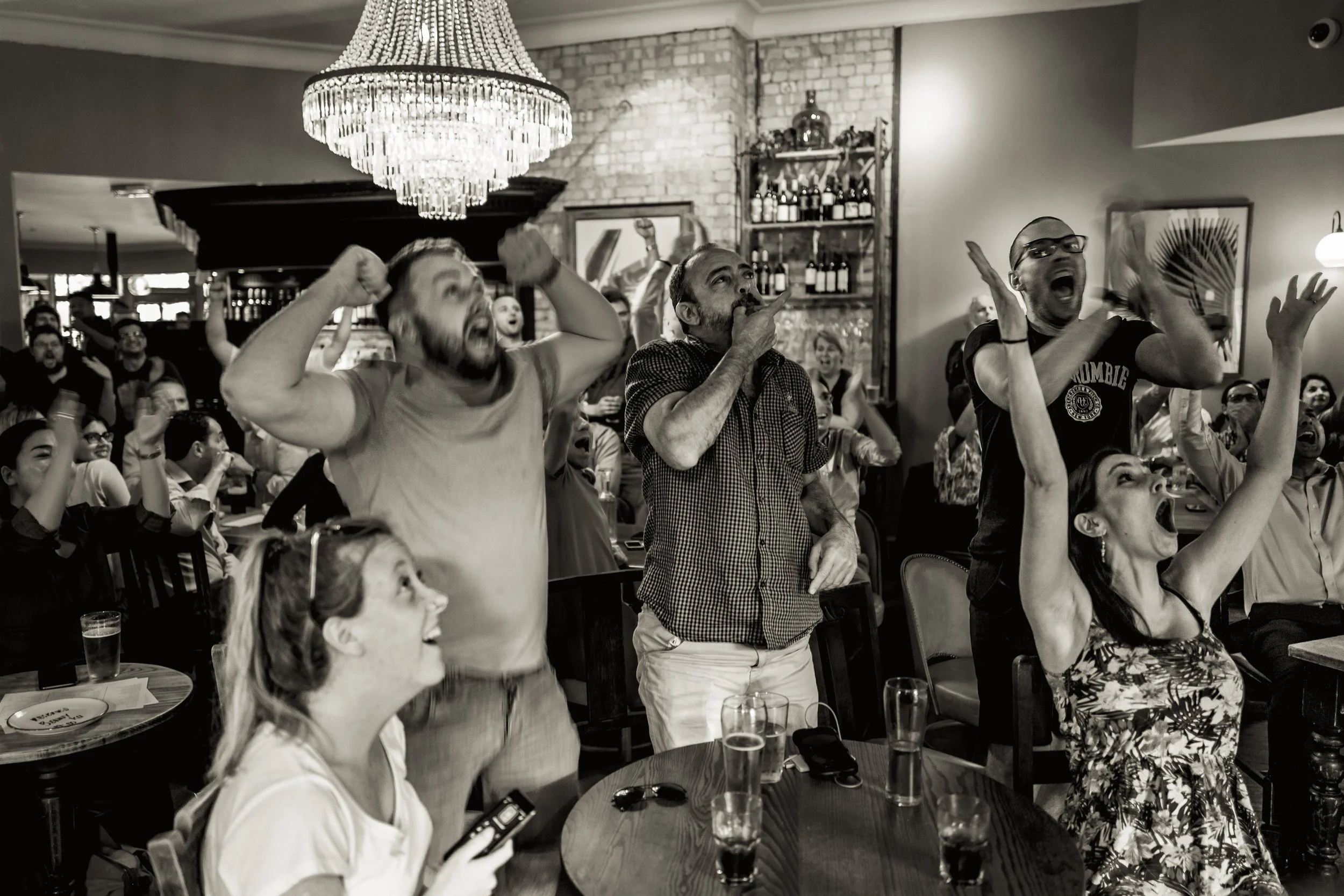
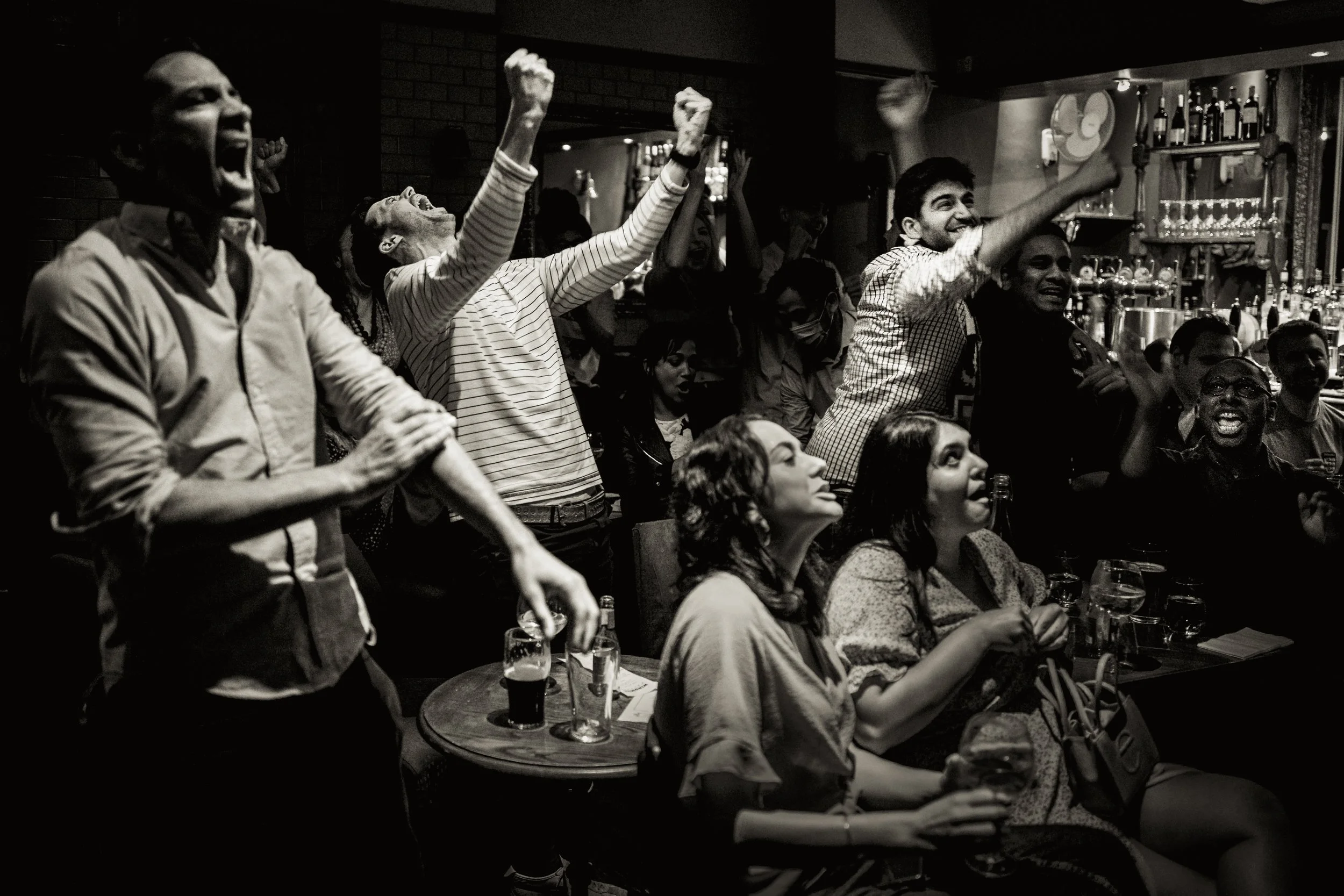
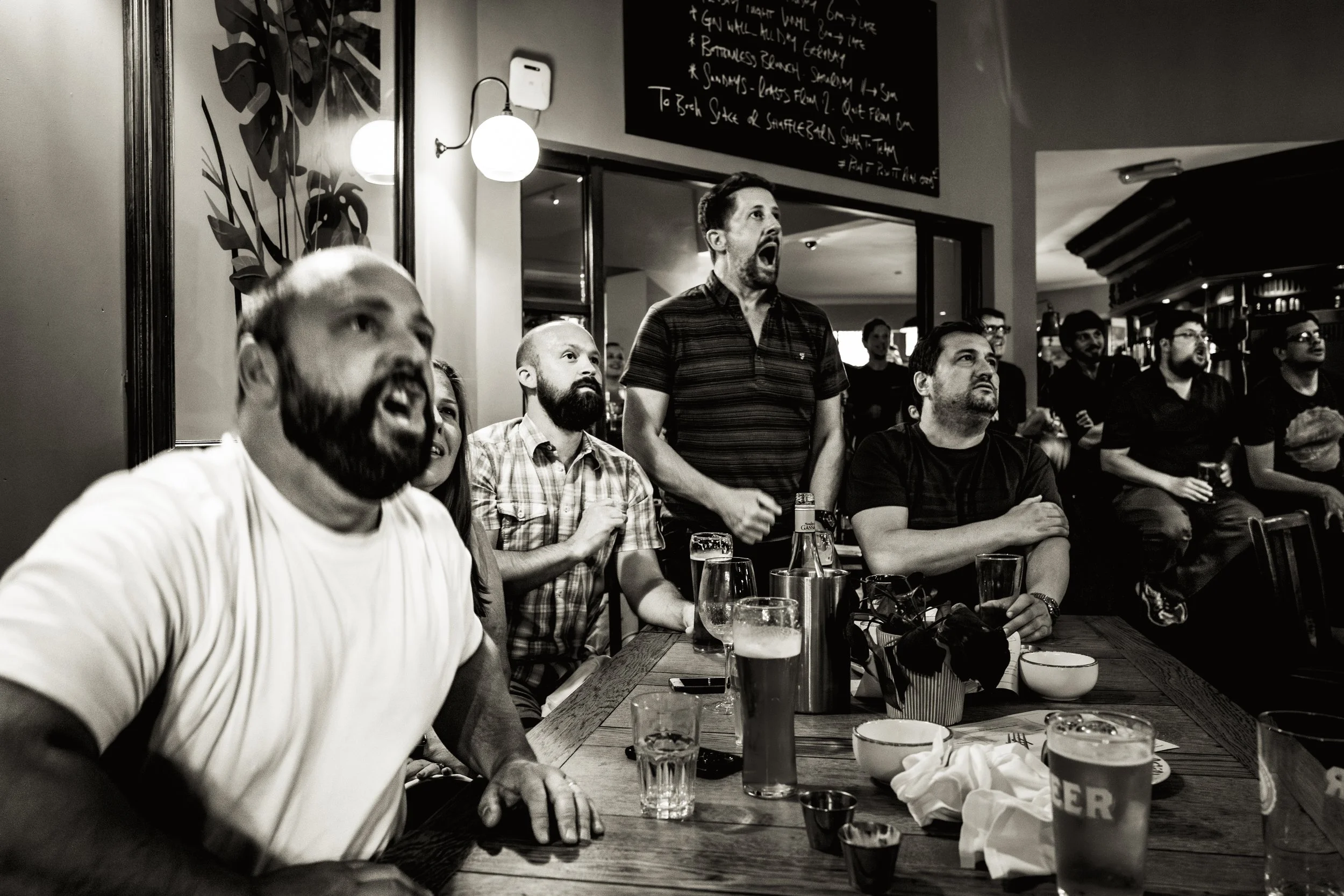
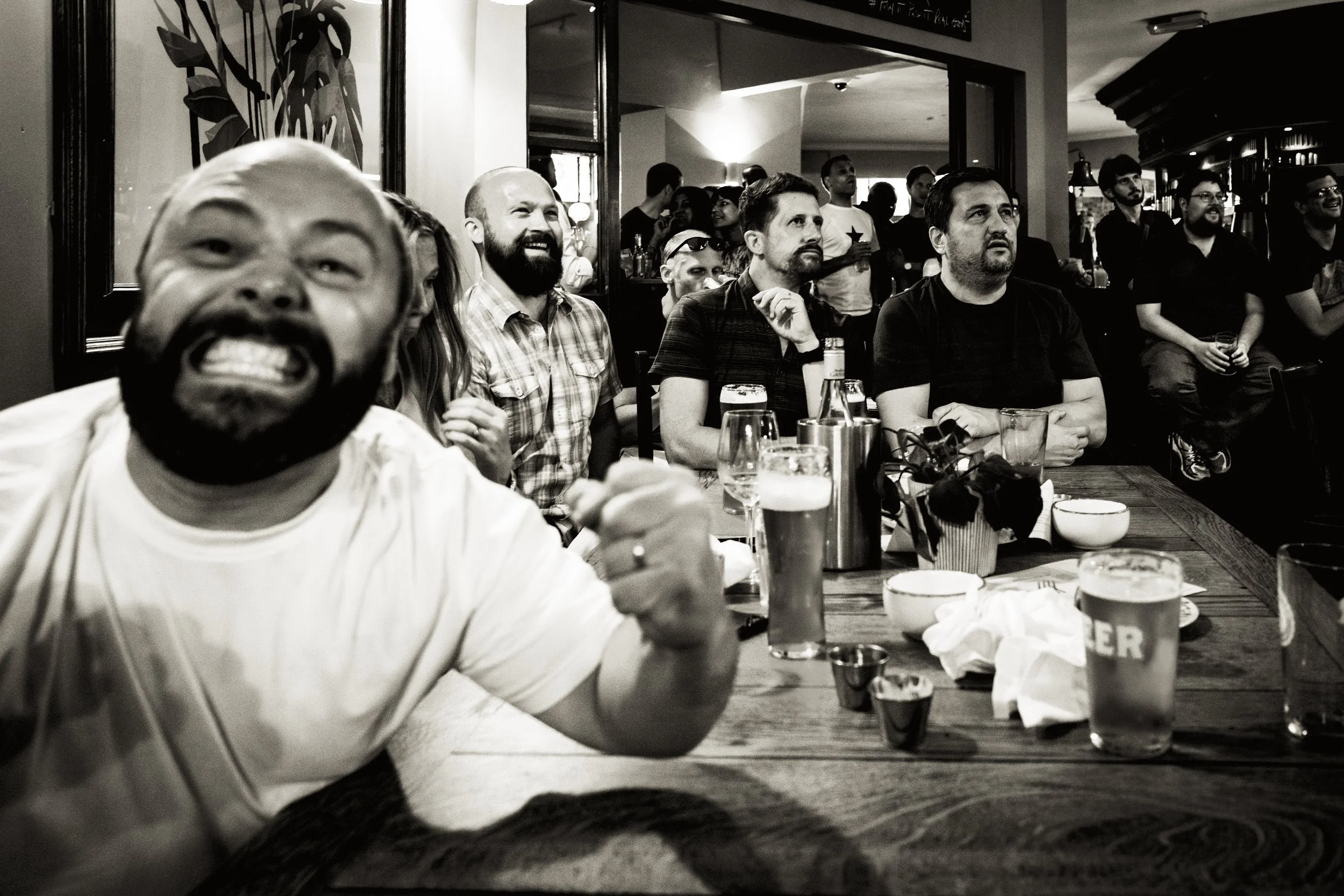
Mike Taylor’s pub football project started by accident during the 2018 World Cup, when he found himself in a packed pub and became fascinated not by the match, but by the people watching it. Their faces, gestures, and moments of total absorption gave him a subject that has stayed with him ever since. What began with one image, The Beautiful Game, grew into a long-term body of work focused on football as emotion, spectacle, and shared public experience.
Photographing with strict self-imposed limits, Taylor returns to these charged spaces to look for tension, release, and storytelling in the crowd. The project has evolved through exhibitions and photobooks, and it also led him to create Click!, his Kindle book about improving as a photographer through clarity, discipline, and creative restriction.
You say you started this project "by accident" in 2018. Can you tell us about that first day? What made you pick up your camera when you found yourself in a pub full of football fans?
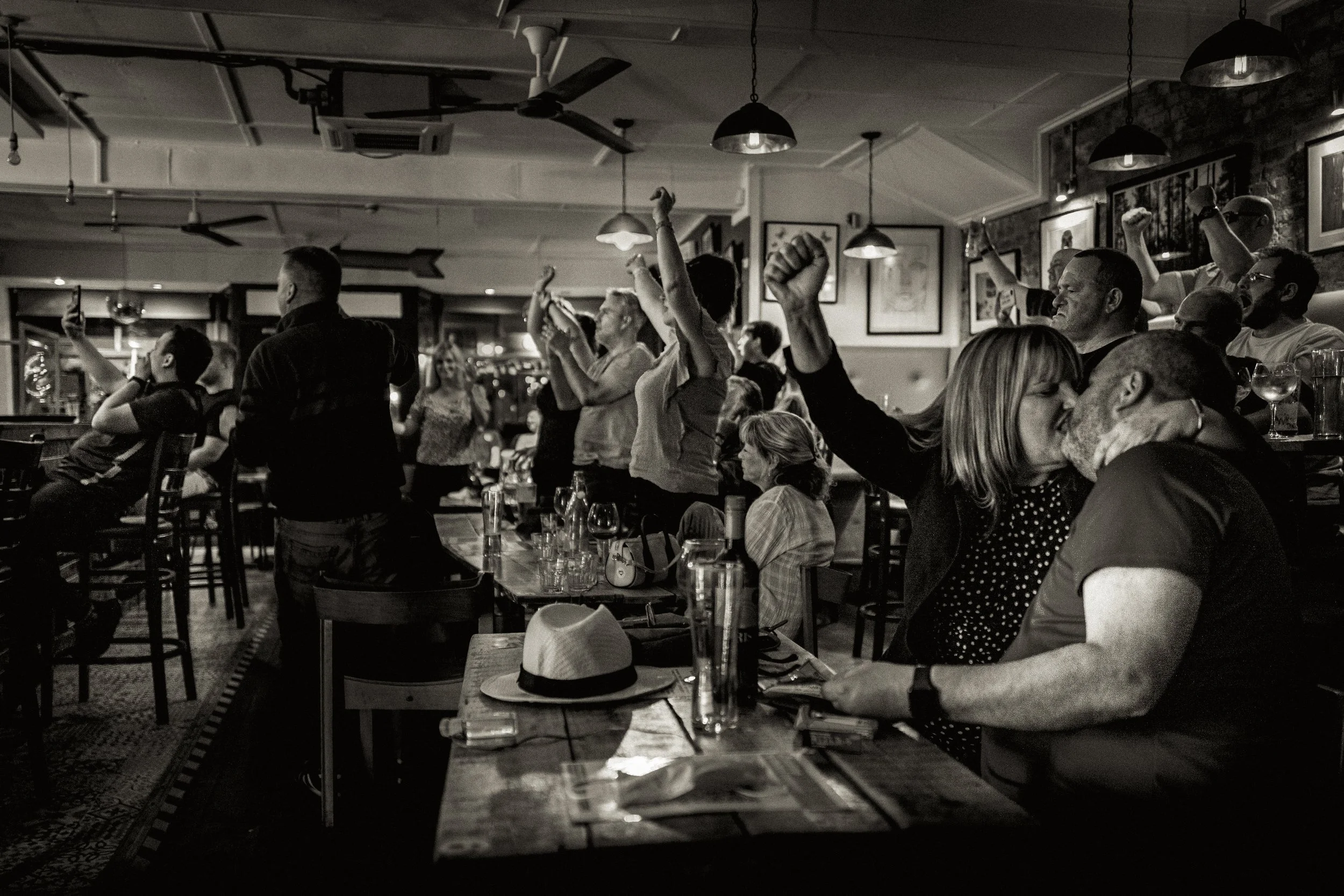
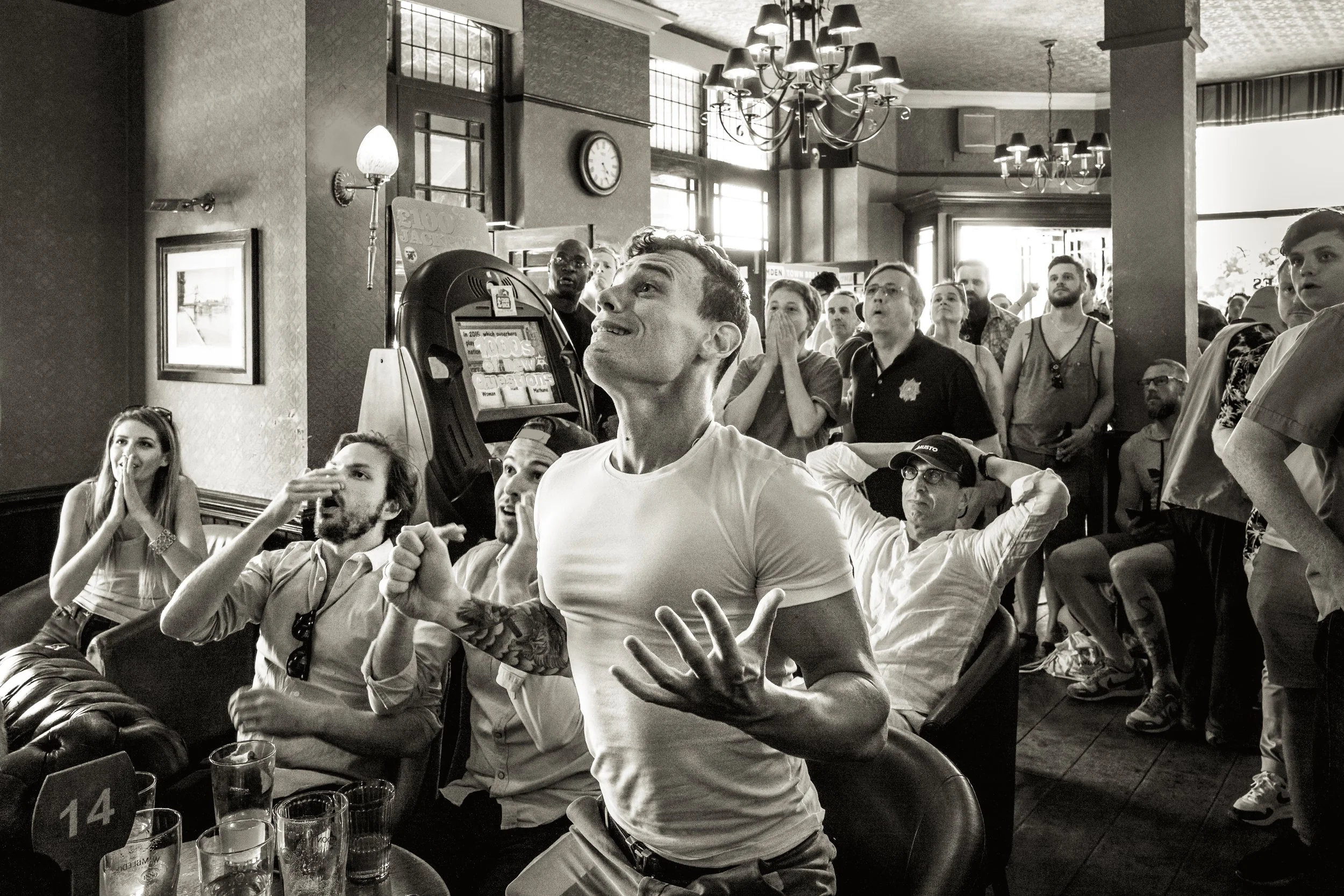
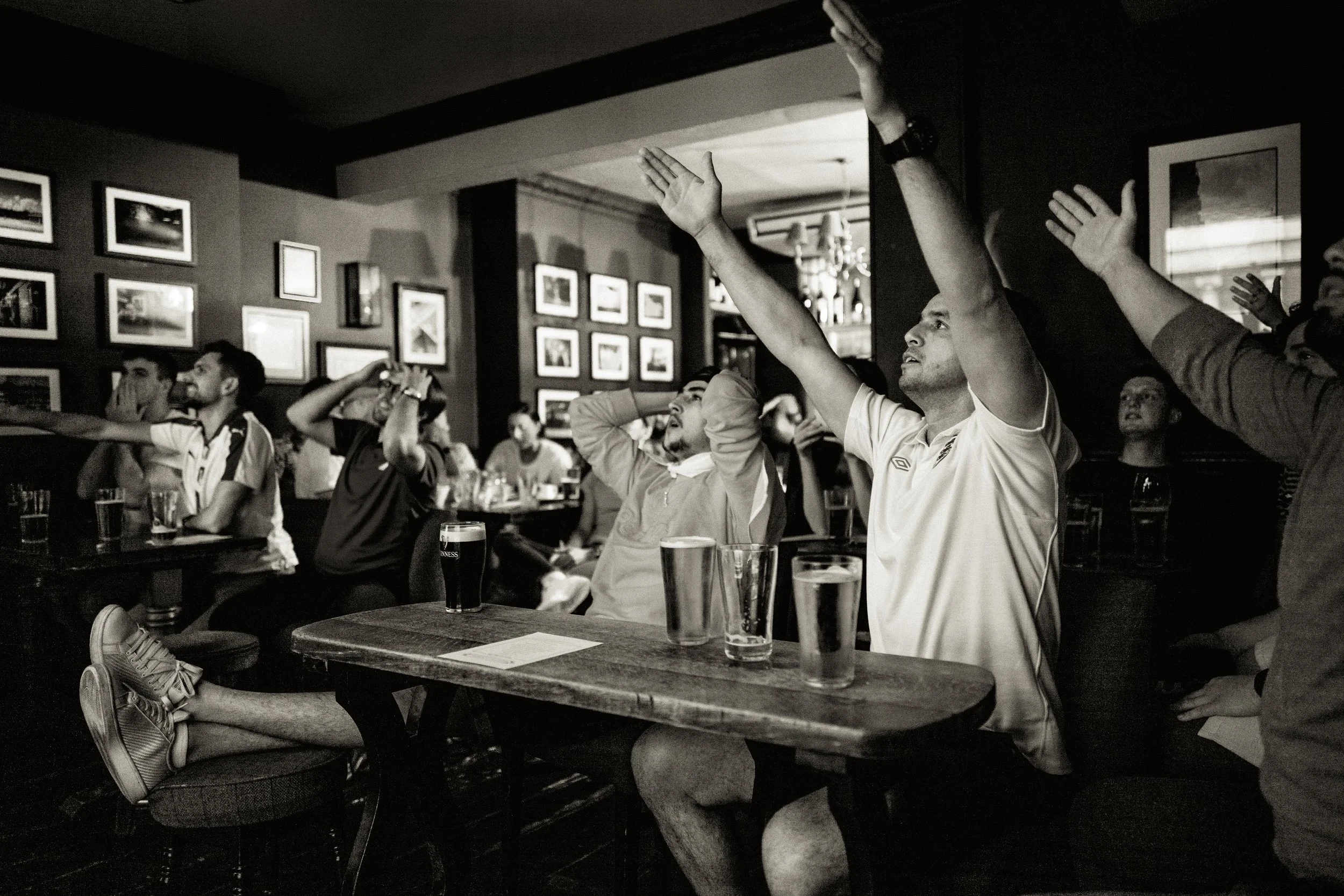
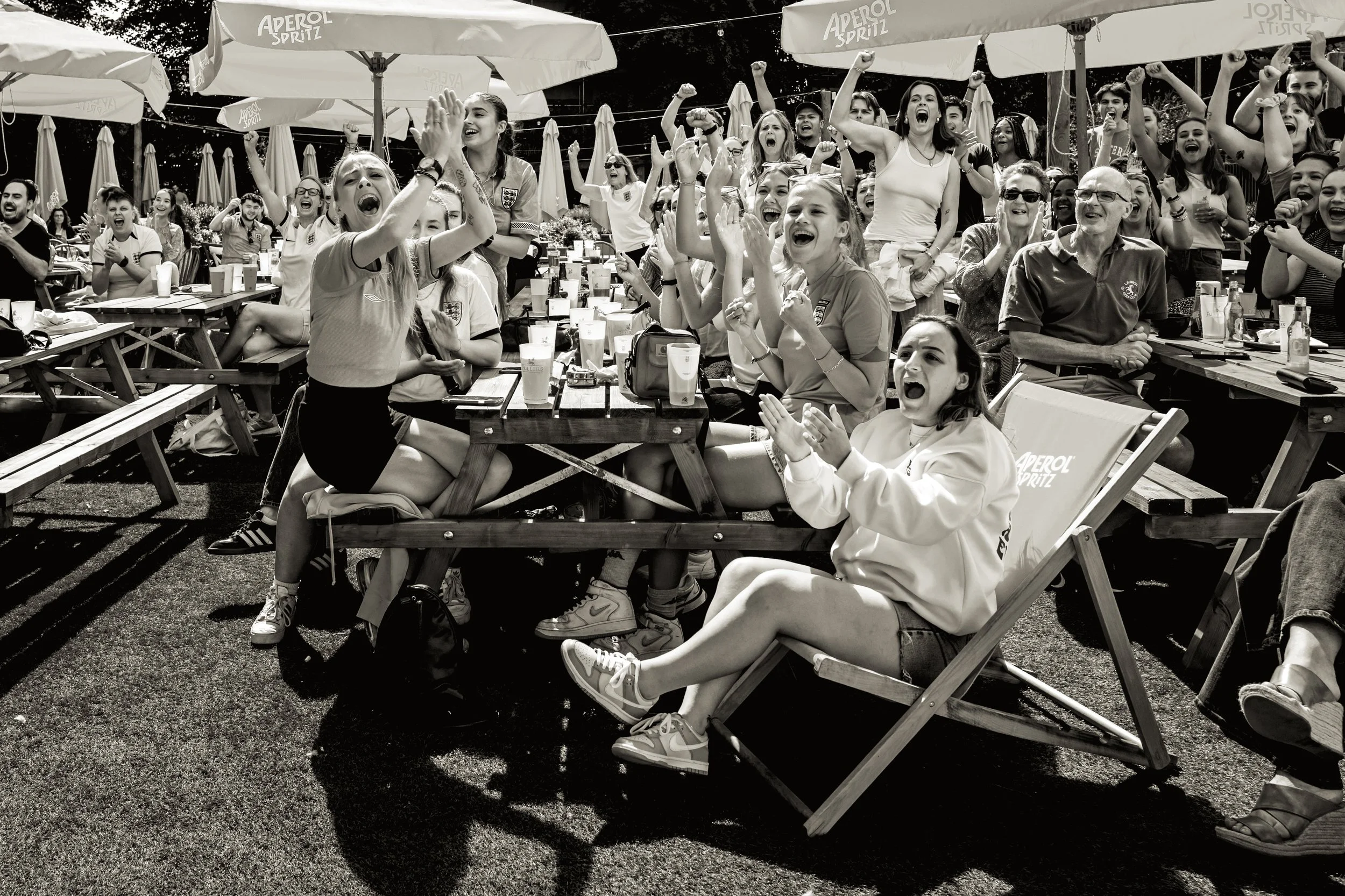
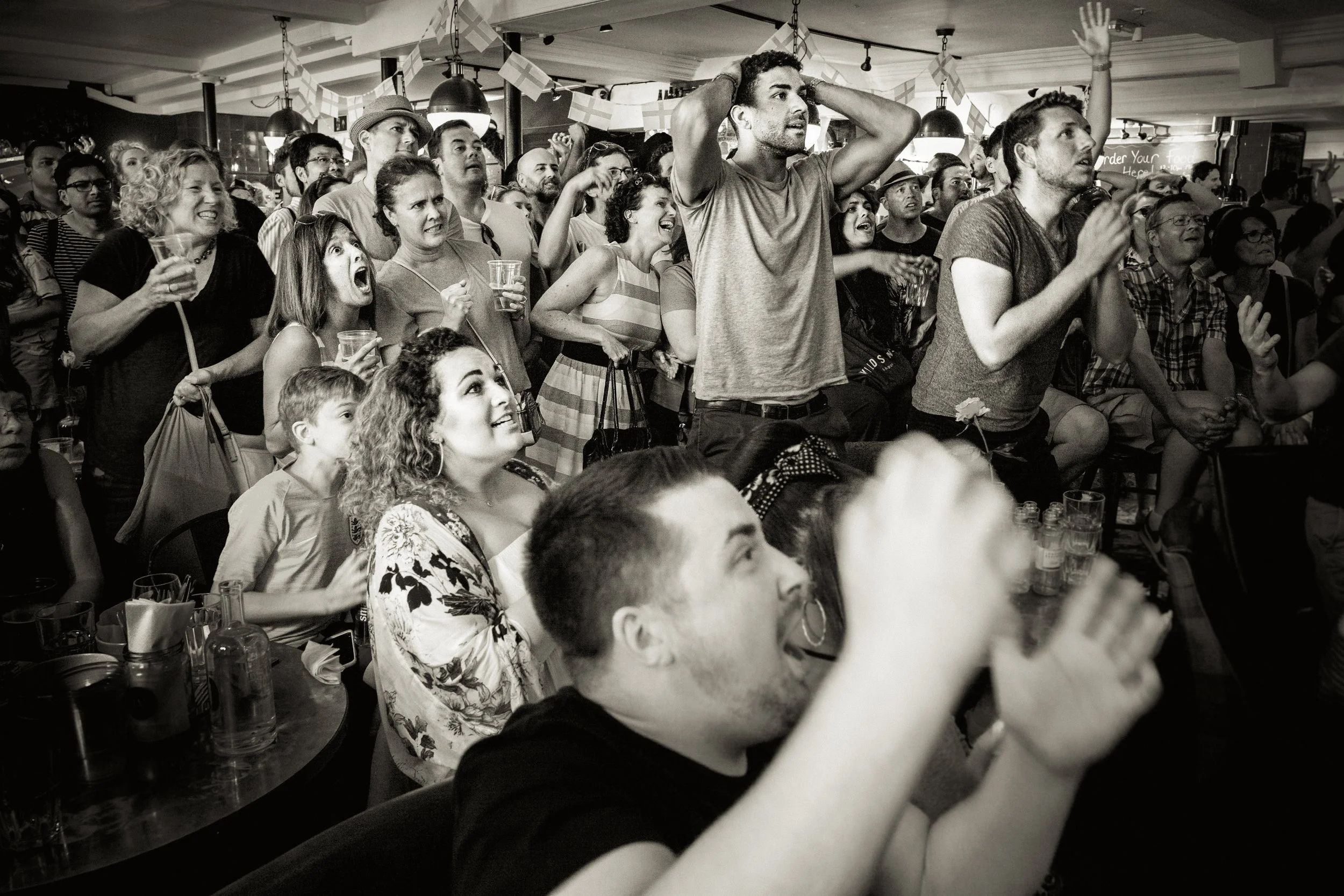
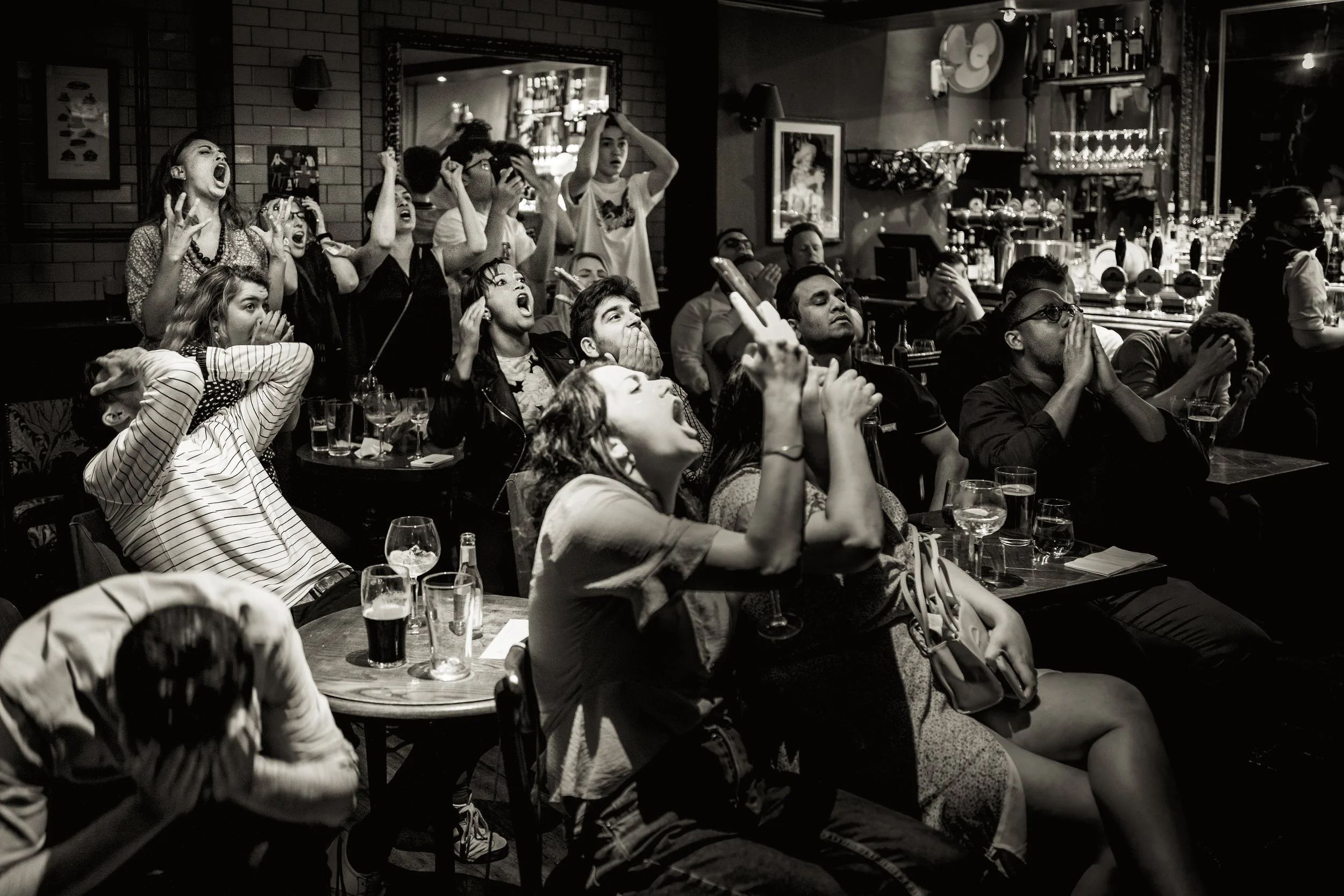
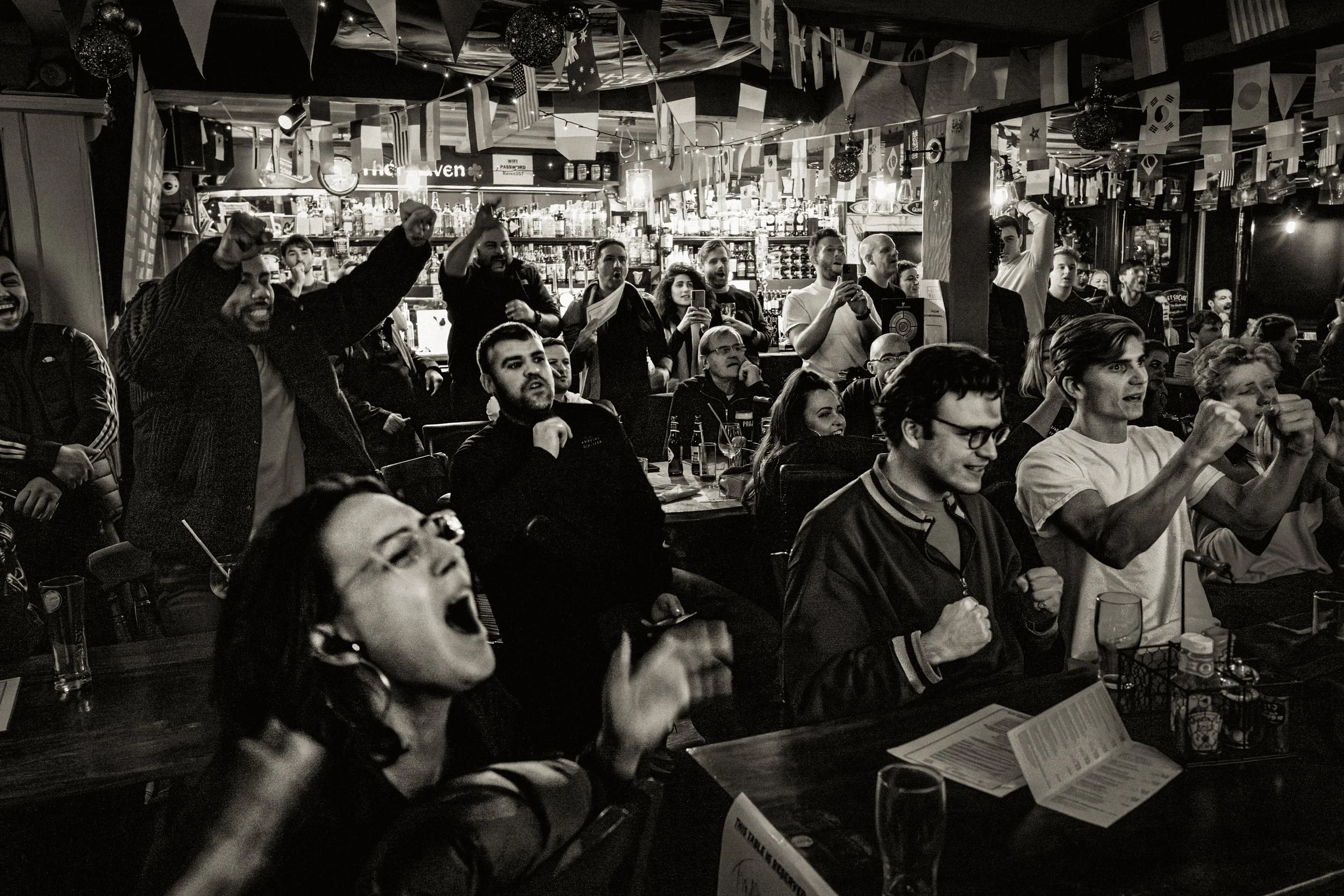
This image, ‘The Beautiful Game', is the first picture I shot of people watching football in pubs.
At that time, in the summer of June 2018, my wife and I were running a wine bar in West London and I was expecting to spend my 55th birthday washing and polishing glasses, chatting to customers and slinging wine. But a rota mix-up meant I was given an unexpected Saturday afternoon off.
So I grabbed the camera and went for a walk thinking I’d find a pub for a nice quiet birthday pint. But, not being a football fan, it took a while to dawn on me that the World Cup was in full swing, all the pubs would be showing it and they’d all be stuffed to the rafters with fans.
Walking past the Rutland Arms by the Thames in Hammersmith, I found it packed with French football fans lost in the match against Argentina. But I noticed there was one solitary seat that was empty and so I grabbed it. As I discovered on even the biggest World Cup match days, in any pub packed full of football supporters, you can always find an empty seat that doesn’t have a view of the TV…
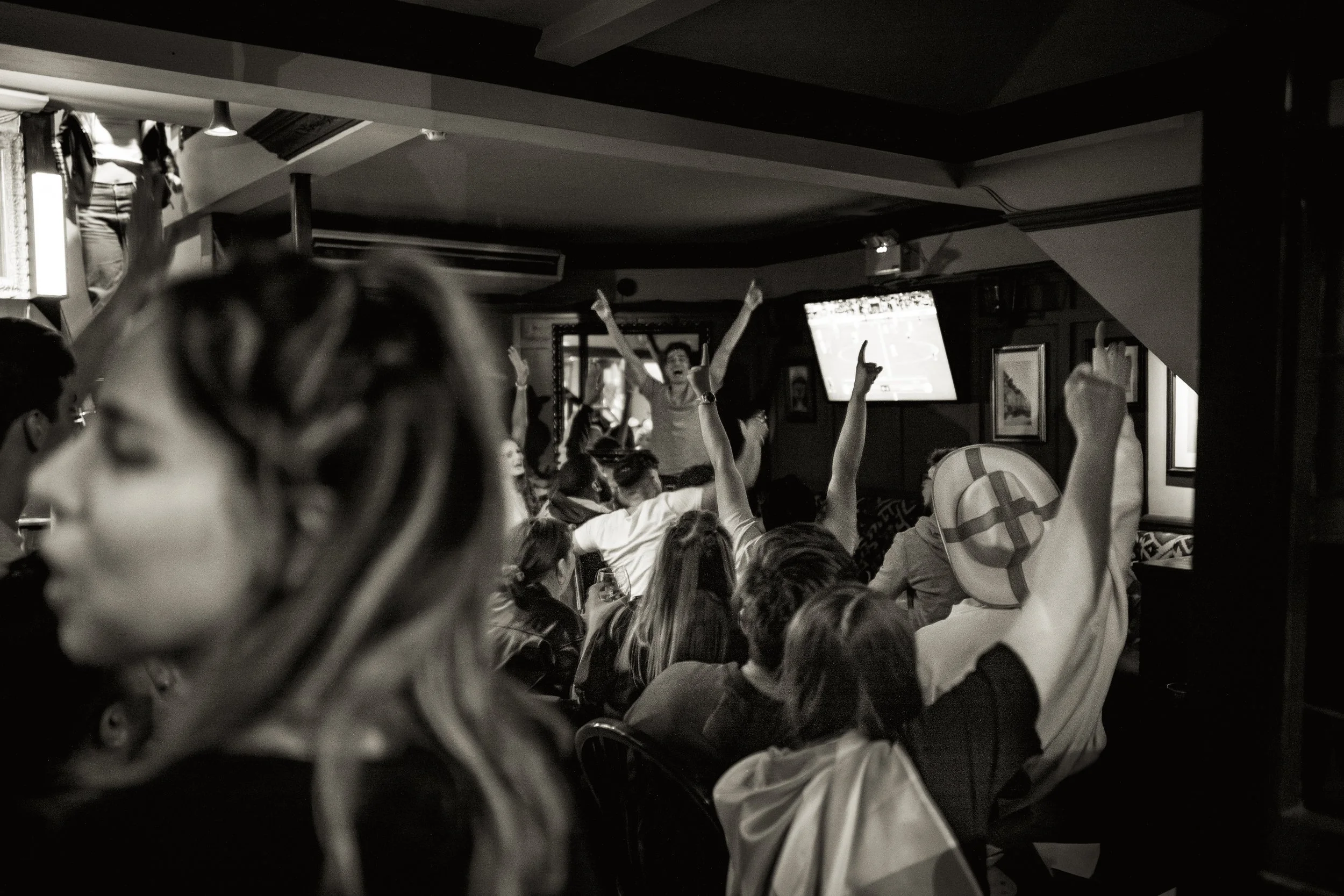
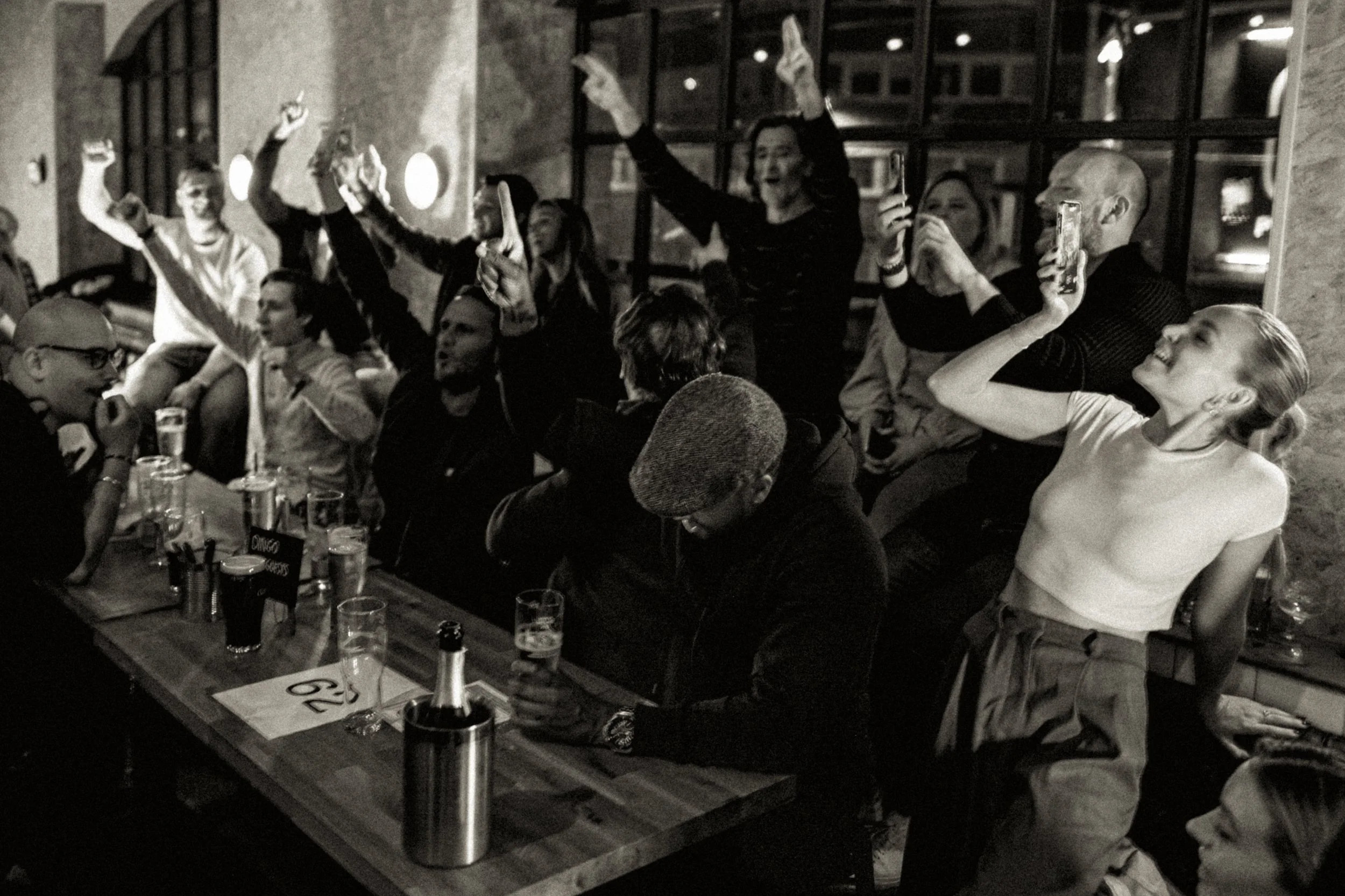
While the quiet birthday drink I’d planned didn’t happen, what I did stumble upon was the fact that people watching football in pubs are absolutely fantastic subjects to photograph. The beautiful game also offers any photographer a beautiful crowd to photograph.
To be completely honest, I don’t follow football and never actually have. I've lived most of my life without the beautiful game in it. It's just not in my DNA. I grew up in a house where we didn't watch or follow any sport (unless you count the wrestling that used to dominate British Saturday afternoon TV in the early 1970s). Also, I've always had major eye problems and been terribly short-sighted. At my very sporty comprehensive school, I was totally rubbish at ball games and the very last person ever to be picked (grudgingly) for any team.
But in August 2025, when the huge European photo print firm Cewe selected this image as the winner in the Street Photography category of its International Photo Award - the world's largest photography competition- I was (to coin a football phrase) “over the moon!” The Beautiful Game beat 49,000 other street images to be one of the ten category finalists chosen from more than 650,000 entries across the board. It was global recognition for an image that became a milestone in my photography journey, started me on a project I love shooting each year, and is a picture I see every day and am still very happy with.
In your photos, you are not watching the game. You are watching the people who watch the game. What is it about their faces and bodies that interests you more than the match itself?
I’ve always wanted to go and photograph those fantastic congregations in America’s Southern Baptist churches in the US where people get lost in the rapture of praising the Lord. But I’m a photographer living in East Kent and not South Carolina… and so I have realistic expectations for my projects.
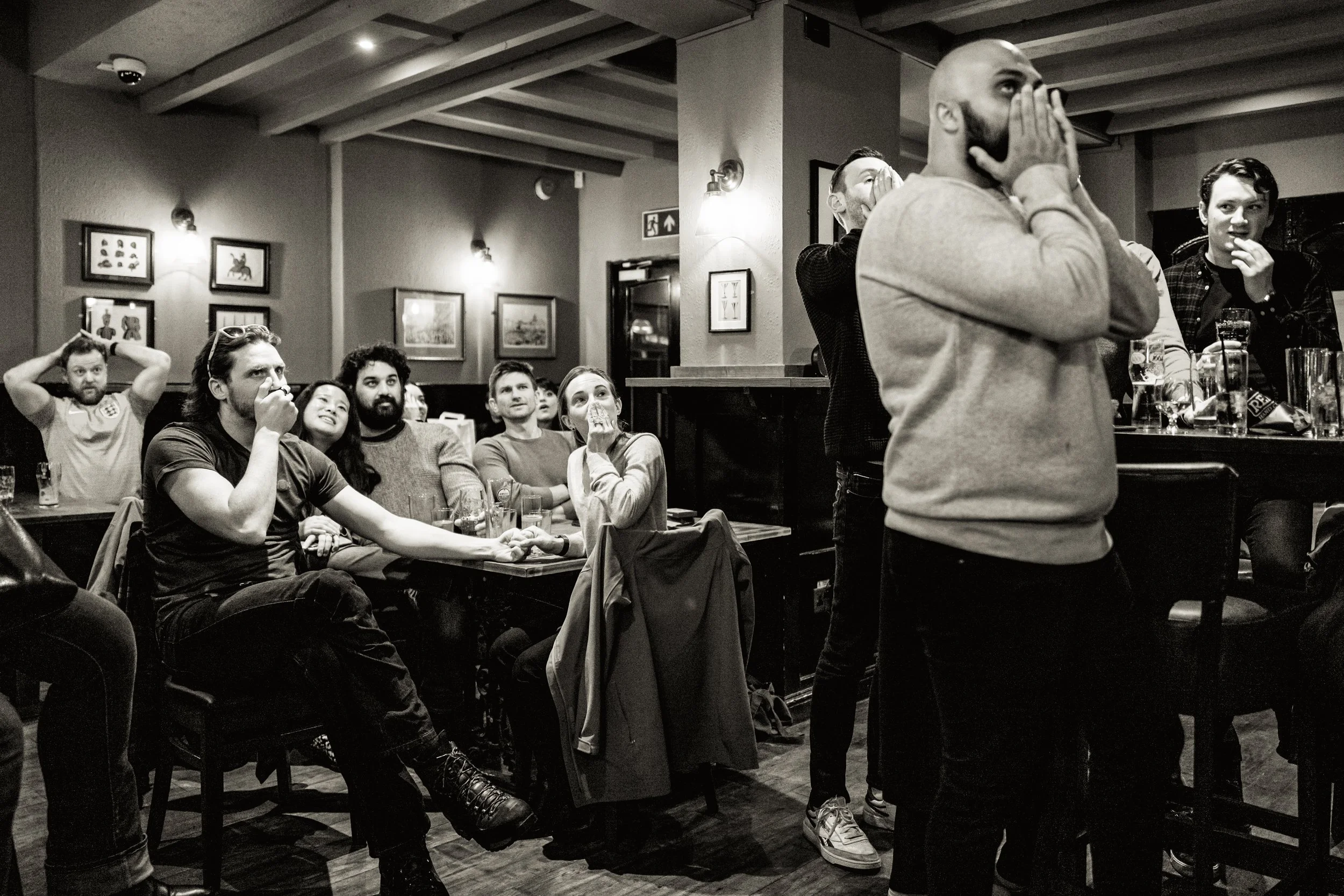
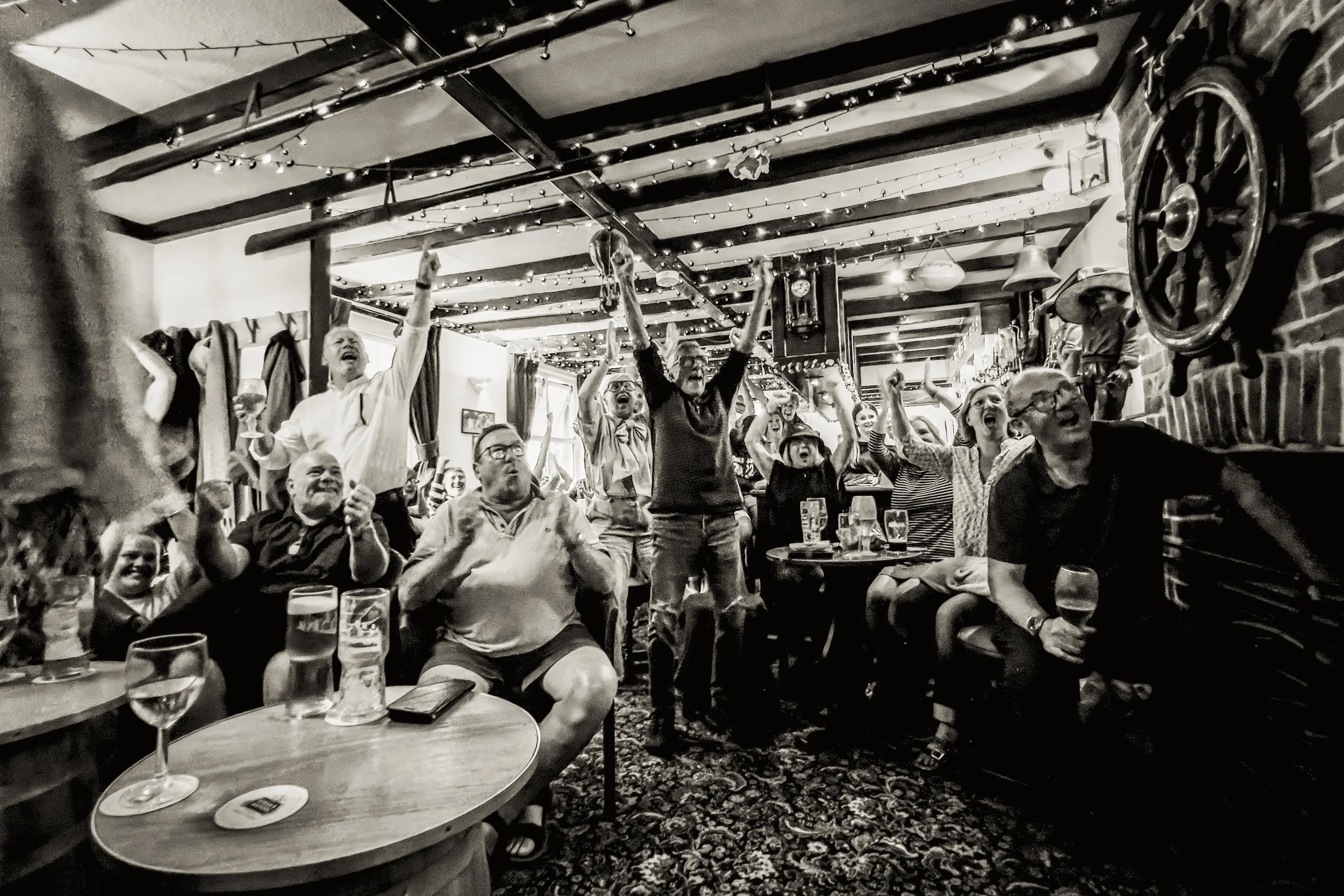
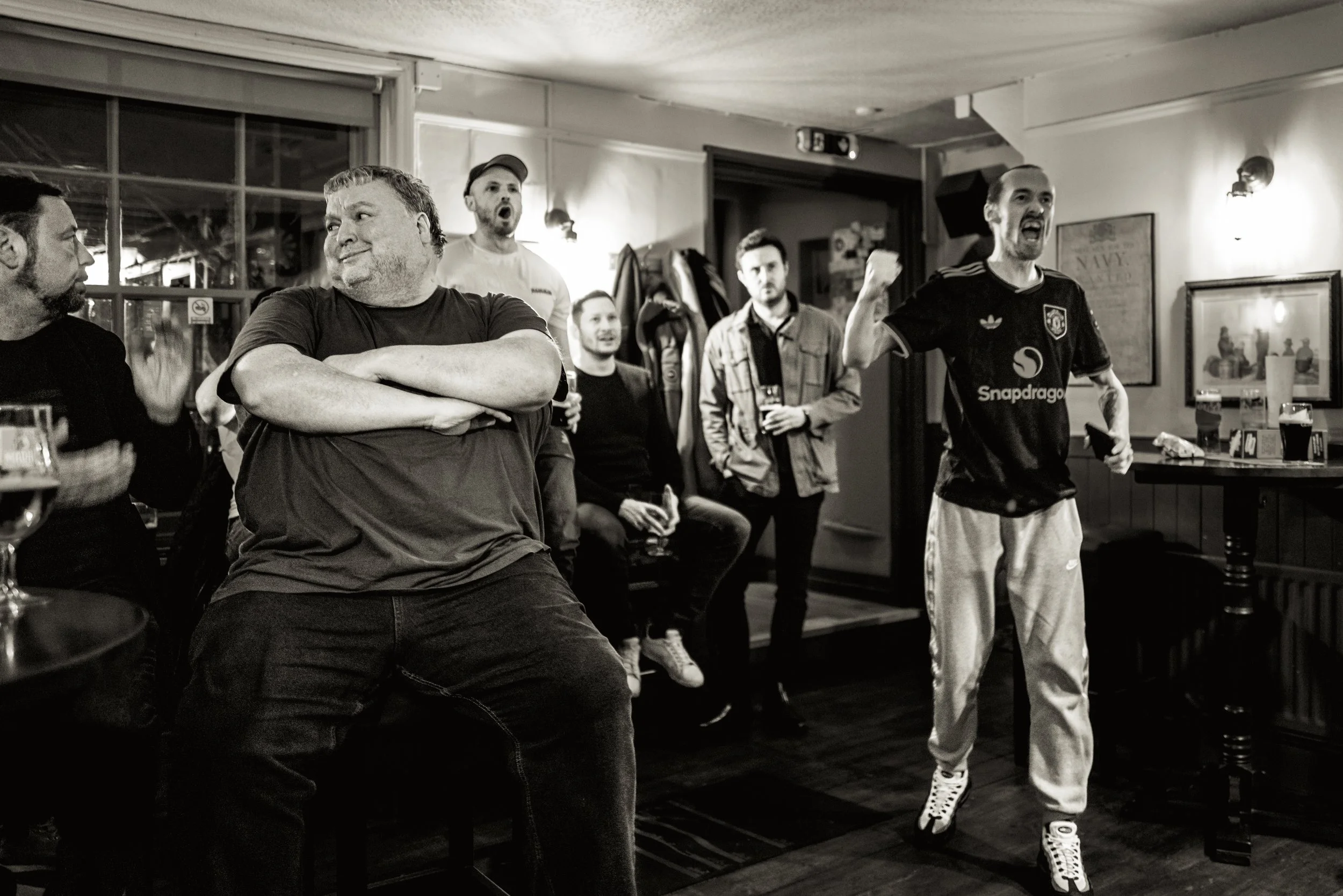
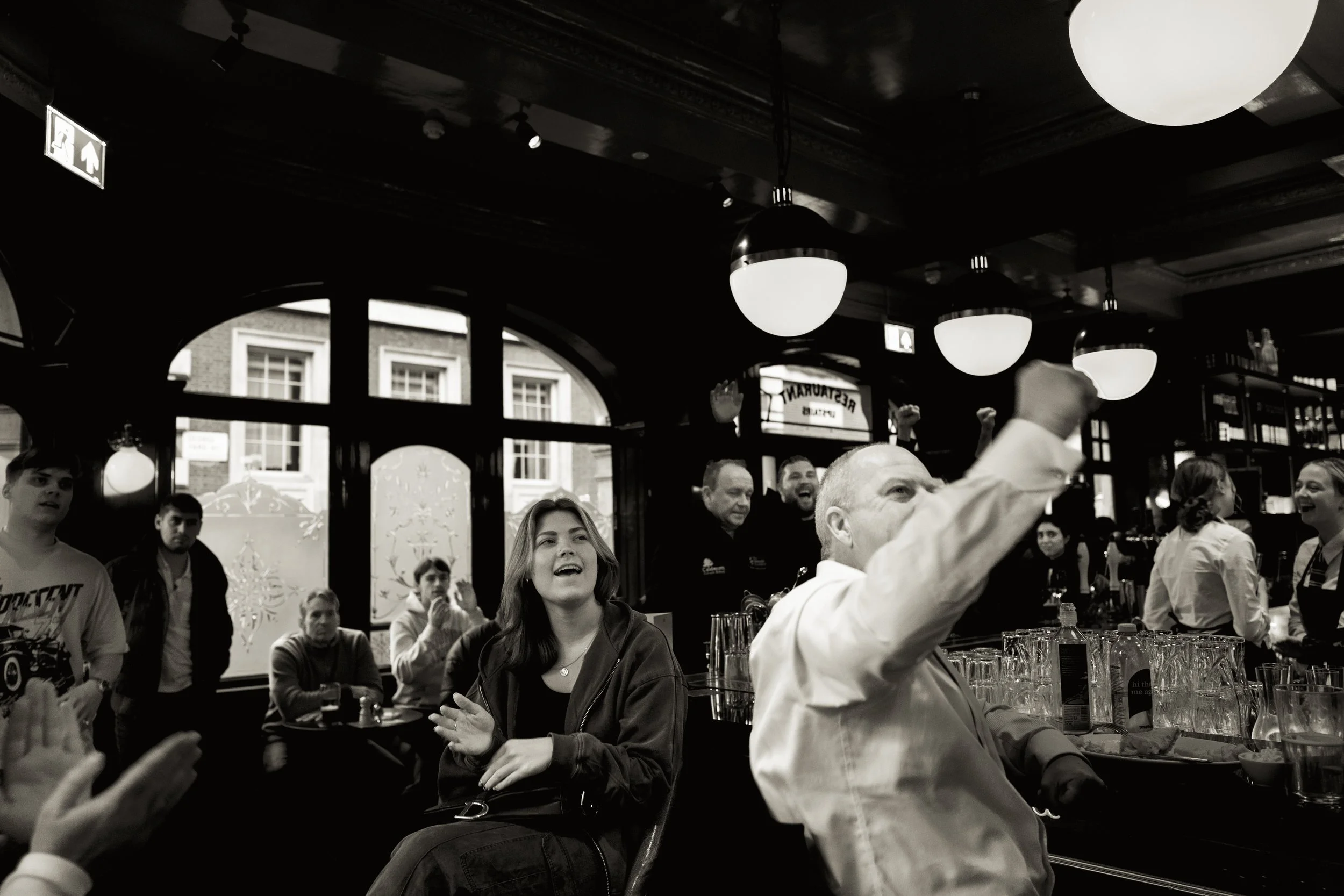
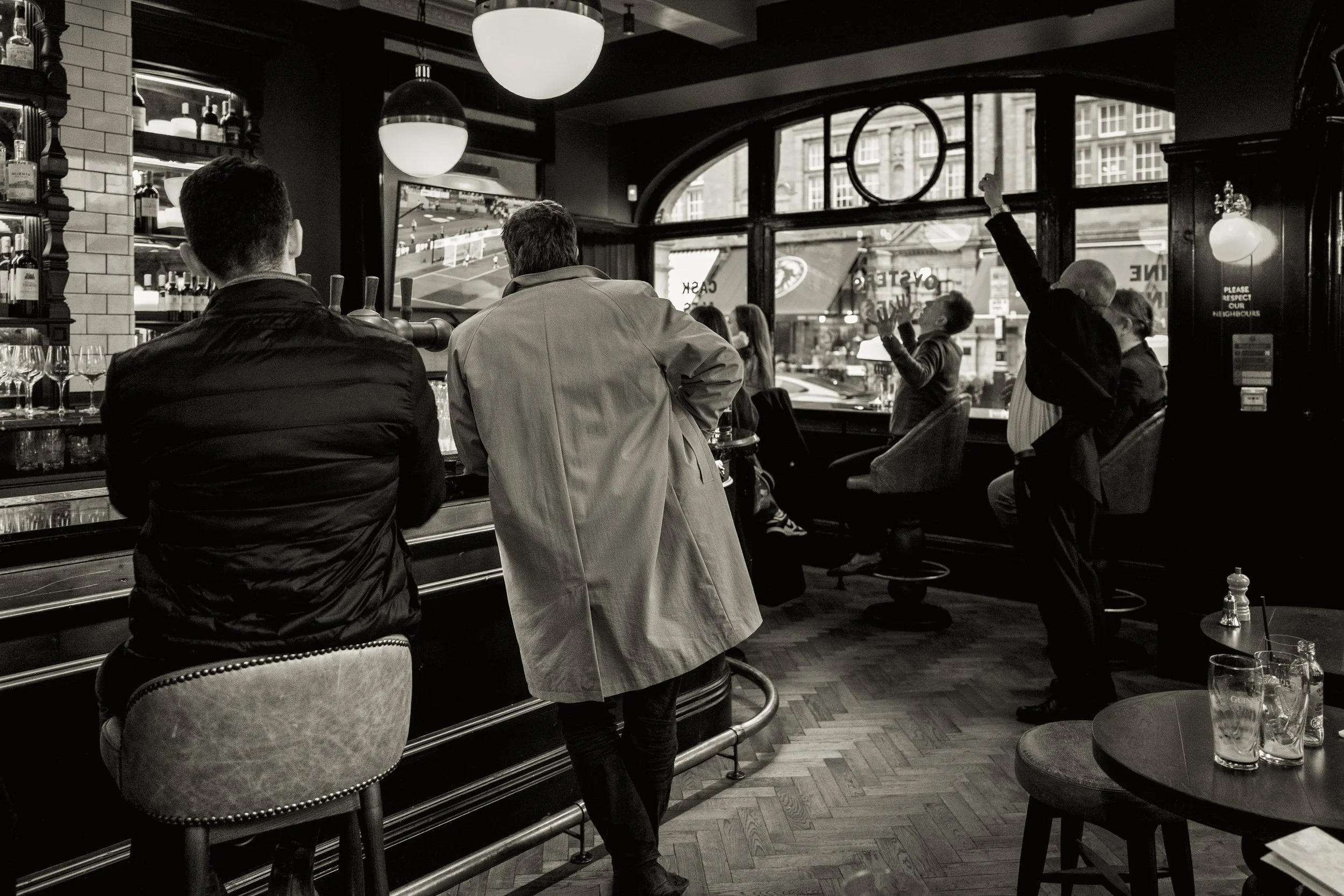
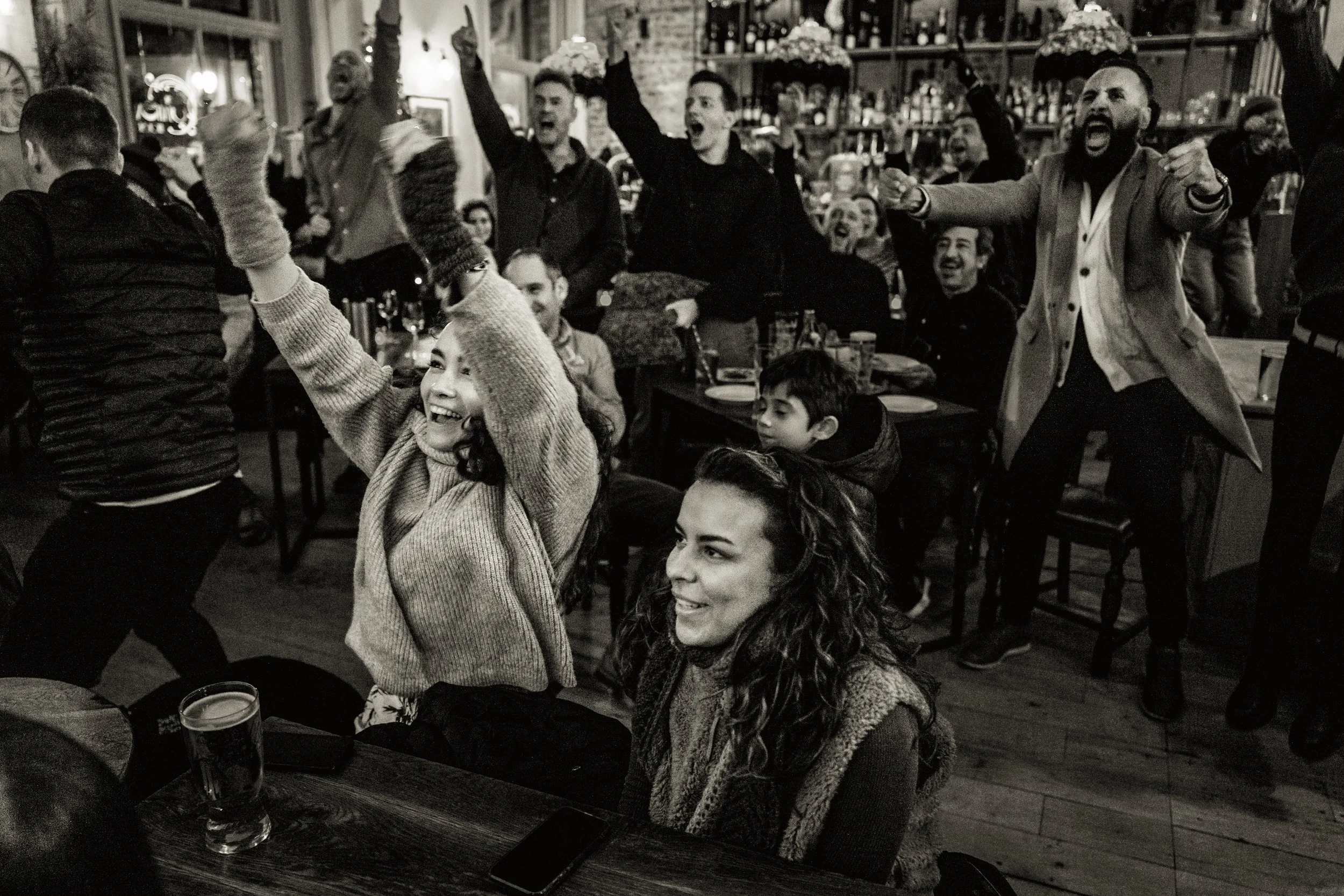
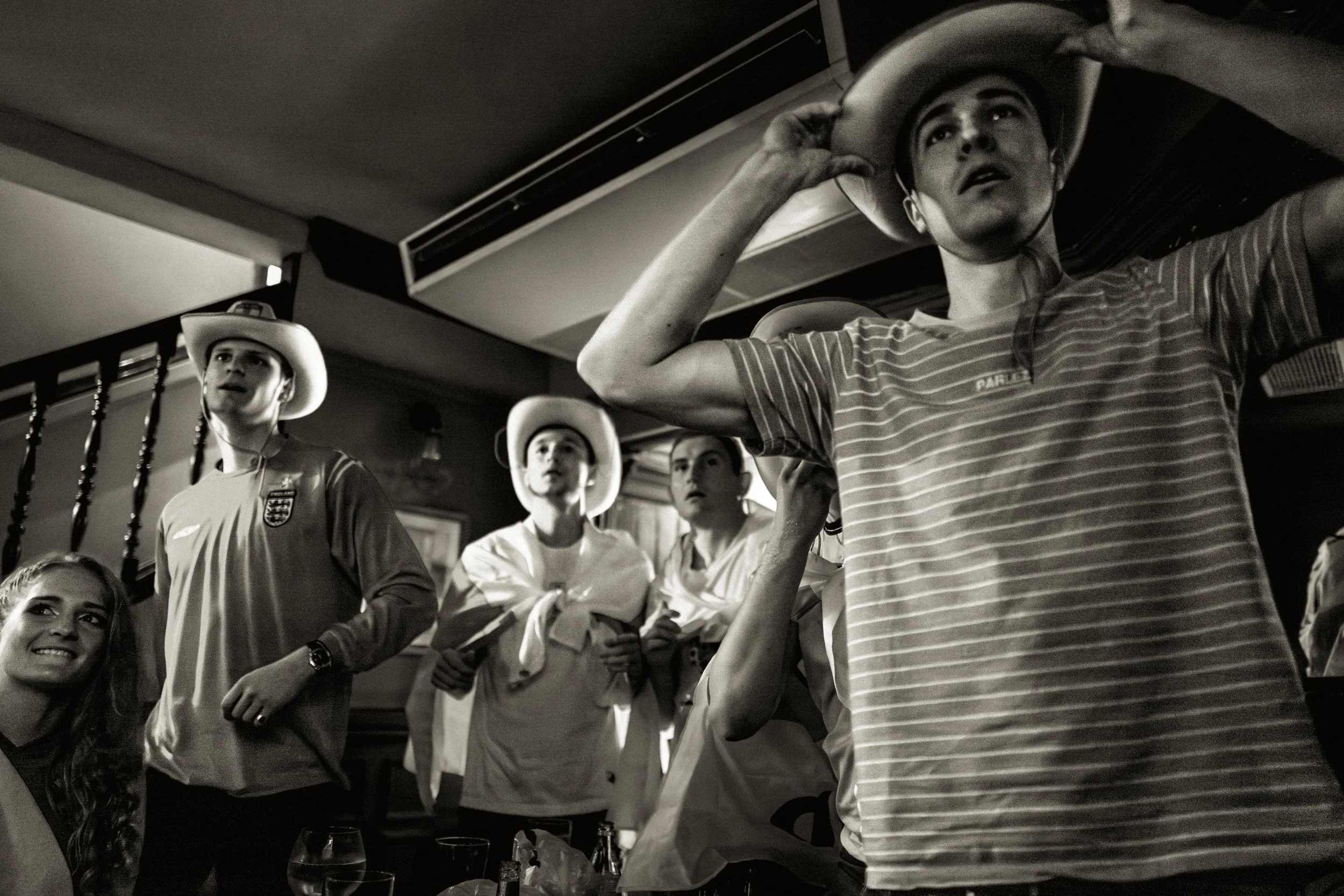
Watching and shooting people who are totally lost and absorbed in what’s going on is fascinating to me. And that’s exactly what people do in pubs when there are big international games on.
I do listen closely to the game’s commentators while I'm shooting as they give you warning that something's about to happen, but I’m never looking at the screen.
It’s definitely a benefit not to be interested in football if you want to shoot the fans. I’ve said several times over the years that if you’re in any way interested in the game, you’re not really focusing on the fans or their reactions. Not being sporty or a football fan means I’m not ever distracted by whatever’s happening on the pitch, even if I can see it.
How do people react when they notice you taking pictures? Do you ask them first, or do you try to stay invisible? Has anyone ever asked you to stop?
I always make sure the pub management/landlord is on my side and more than that - is actually keen for me to do it before I set out to shoot anything there.
Maybe I’m lucky that I know a lot of people who run pubs. But I always make sure they’ve both seen my work and are supportive of what I’m trying to do. I work hard to find the right pubs, get them onside and create a rapport before I start. I now never go in cold or without doing the groundwork.
Despite what you might think, I've never once been questioned, threatened or intimidated because I was there with a camera to photograph fans rather than watch the game. The nearest thing I've encountered is mild surprise (and a bit of good-natured ribbing) that anyone would actually want to spend time doing this rather than watching the match.
If and when people do ask about what I’m up to, I show them my work, say I’m there with the landlord's blessing and doing it for the good of the pub. Really, all people ever try to do is evangelise about football and share their passion for their team - at least until kick-off, and then I'm completely forgotten about and usually totally ignored. Which is exactly how it should be…
While some pubs are a flat “no” to me doing it, I've never once been asked to stop.
You have been doing this project for many years now. What keeps you going back to pubs during matches? Is there something you are still looking for in these moments?
I’ll be honest, I’m addicted to it now. I love doing it, and because the best matches are the big internationals- the World Cup or the Euros- I try to put aside those couple of weeks every year now that women’s football and England’s Lionesses in particular have become so popular.
Because The Beautiful Game has really taken off as an image, I’m always trying hard to shoot something better. I’m very tough on myself in terms of images that work, but these days I do have a much better idea of what I’m looking for.
So I tend to shoot bursts when something interesting happens. This keeps the number of pictures to an almost manageable level. A golden ticket for me is any big match that ends in penalties. It’s so much easier to judge the crowd’s reaction. And I don't like heavy cropping, so I have to be up close and right in front of the crowd. It’s not something every photographer would be comfortable with.
Afterwards, when I’m reviewing the images in Lightroom, I’m primarily looking for the raw emotion and storytelling. Technical considerations only come afterwards. I don’t really care too much about ISO or grain or noise these days.
If I walk away from any game with two or three pictures that are “keepers” from the hundreds I’ve shot, it’s been a great day, and I’m really very happy. I would say that 99.9% of the pictures I shoot are failures.
I also shoot all my work according to some pretty tough limitations I set myself back in 2018. I only use one camera (a Leica Q) and one lens (it’s fixed 28mm). I only shoot in landscape and only ever crop to an aspect ratio of 3x2. I also only use LrC as my software for digital asset management and editing.
Back in 2018, this really helped me concentrate on the images happening in front of me and shooting the best possible pictures I could, rather than thinking about all the possible photographic options that are available to me. I still use exactly the same practice today.
Your winning photo shows French fans watching France play Argentina. Does it matter to you which teams are playing, or is the emotion the same no matter who is on the screen?
It really doesn’t matter who is playing as long as the crowd is into it and right behind their team. I’ve tried shooting rugby fans and while they are totally engaged and lose themselves a bit, they just aren’t quite the same. Maybe it’s a bit of a class thing as they tend to be a more middle-class crowd than football fans (this is obviously a massive generalisation and based on no evidence whatsoever). But other sports really are very different.
Have you been able to exhibit these images as a body of work? If so, what was the reaction?
It's a living, breathing project that continues to grow and develop. I’ve done a couple of photobooks for myself and friends. I’ve also shown some pictures from it at the Northern Eye festival in their Saturday pechakucha session. This year some of the best images will be on display outside as part of the La Gacilly-Baden Festival in Austria from June to October. Obviously, The Beautiful Game won Cewe’s Street Photography category in their last World Photo Award and so they’ve been fantastically supportive and have shown it around the world at various events and exhibitions.
The response to the work has always been very positive. And The Beautiful Game was the first image I shot that told me the changes I’d made to my practice - the creative restrictions I’d put in place to cut down the number of photographic options I had- were the right thing to do for me. And it started me thinking about whether my experience might be of use to other photographers.
So last year (2025) I wrote a photography book called Click! Aimed at showing any photographer that it's possible for anyone to improve and become the very best photographer they can by working out their own mini manifesto, finding the limitations that work for them, and doing the work. And all this without buying more kit they just don’t need.
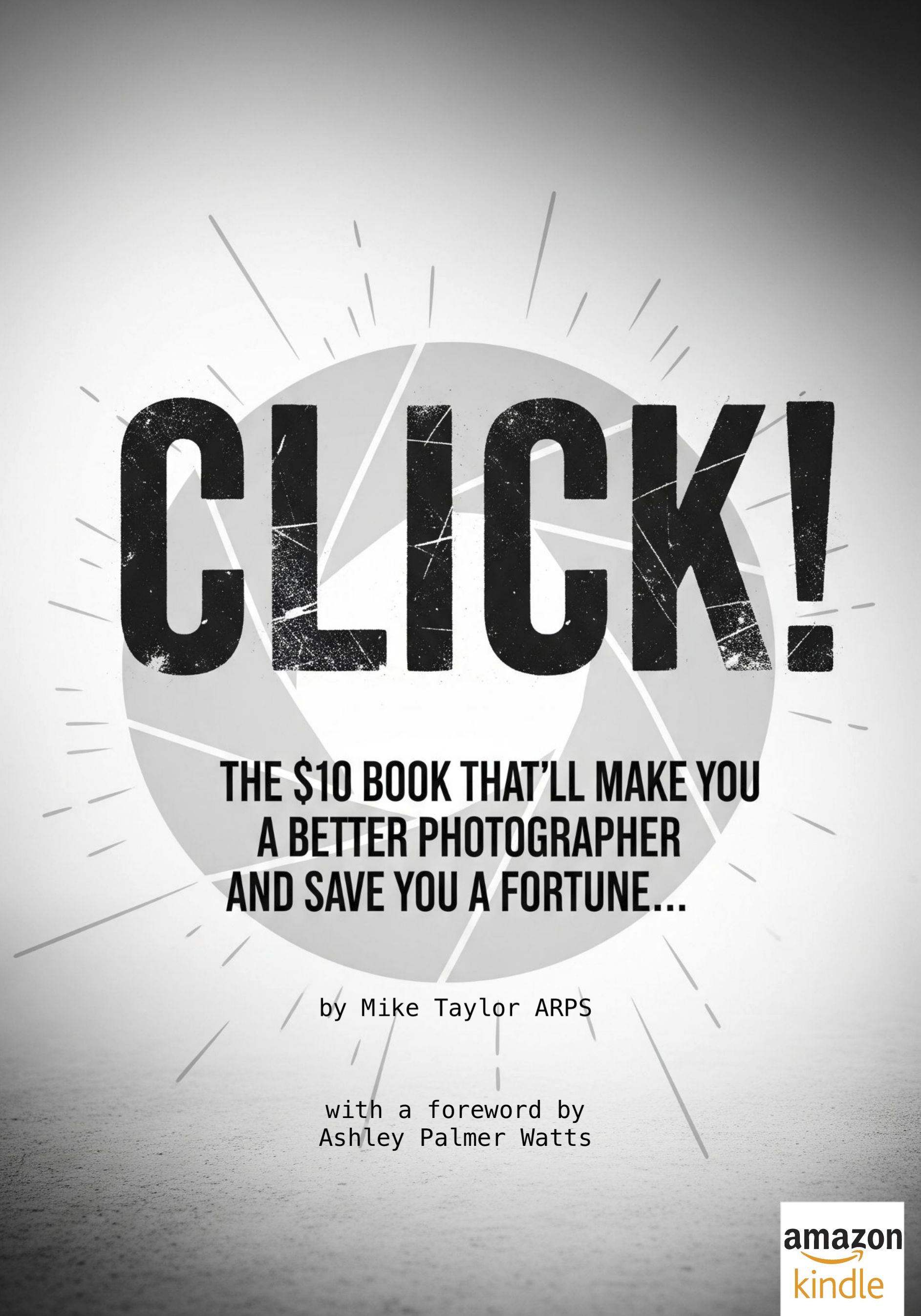
I wanted the book to be cheap, accessible, and small enough to fit in your camera bag - so I published it for $10 on the Kindle network and put a three-chapter preview and all the images online. (Book preview, Amazon)
More photography books and interviews?
We'd love to read your comments below, sharing your thoughts and insights on the artist's work. Looking forward to welcoming you back for our next [book spotlight]. See you then!
Catherine DeLattre’s photographs begin with something worth stopping for. Driving through Wayne County, Pennsylvania, she notices isolated houses, trees, and open fields. Photography Book Spotlight