Emily Shur Photographed the Same Blocks for Years, and the Small Changes Became the Story
Welcome to this edition of [book spotlight]. Today, we uncover the layers of 'Sunshine Terrace,' by Emily Shur (published by Deadbeat Club). We'd love to read your comments below about these insights and ideas behind the artist's work.
Emily Shur built a story by returning to 1 street.
This article is about her photobook Sunshine Terrace and what happens when you photograph the same place again and again. If you shoot street, daily life, or long-term projects, this is for you. Emily explains her simple process: how she noticed small changes, how she chose what to photograph, and how she later edited the work into a book.
Most photographers think you need new places to stay inspired.
Emily shows the opposite: repetition can make you see more, not less. In the interview, she talks about routines, distance, timing, and the kind of patience this project needed. She also breaks down how she sequenced the work so the book feels like a real story, not just a set of good images.
Can the same block stay interesting for years?
The Book
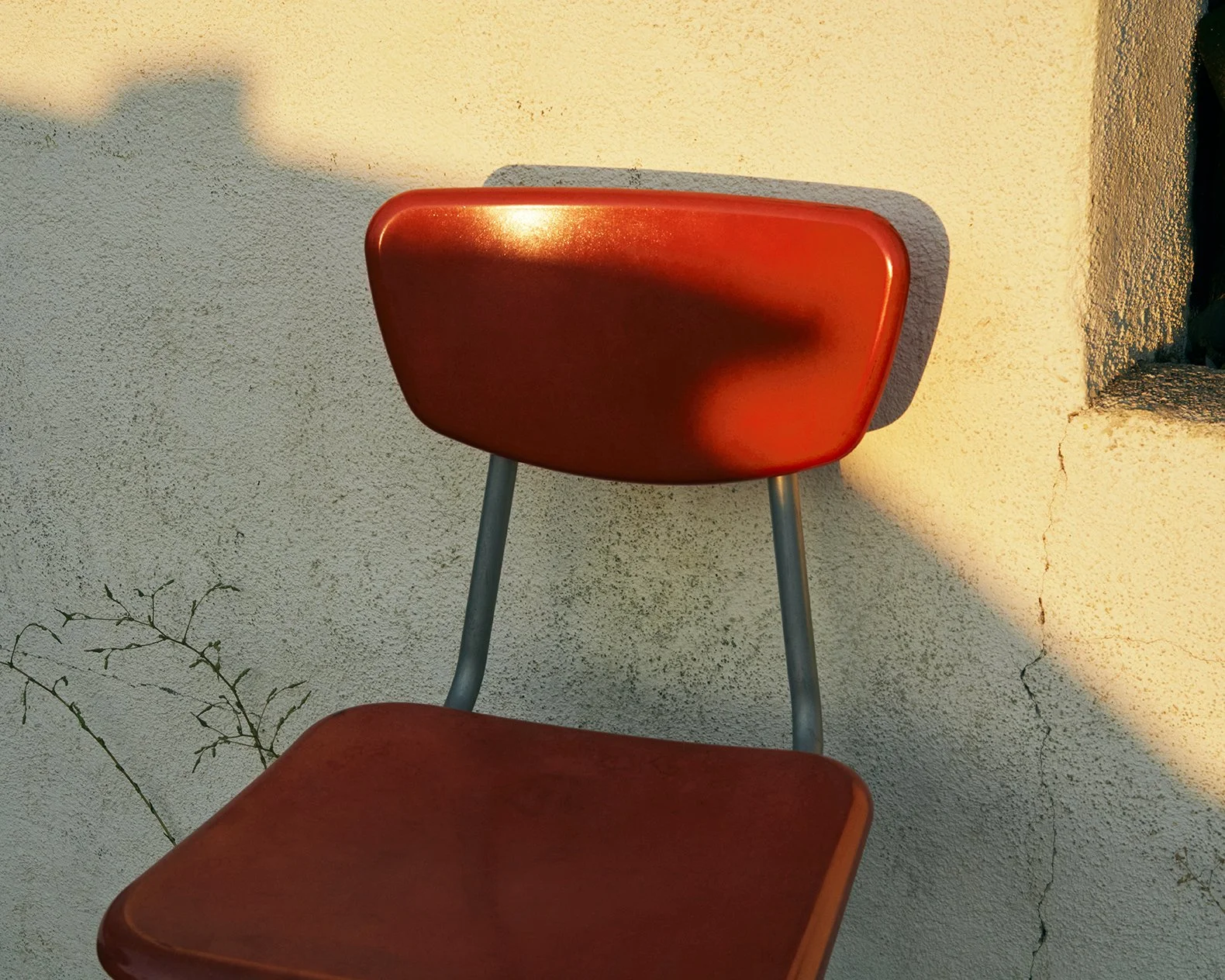
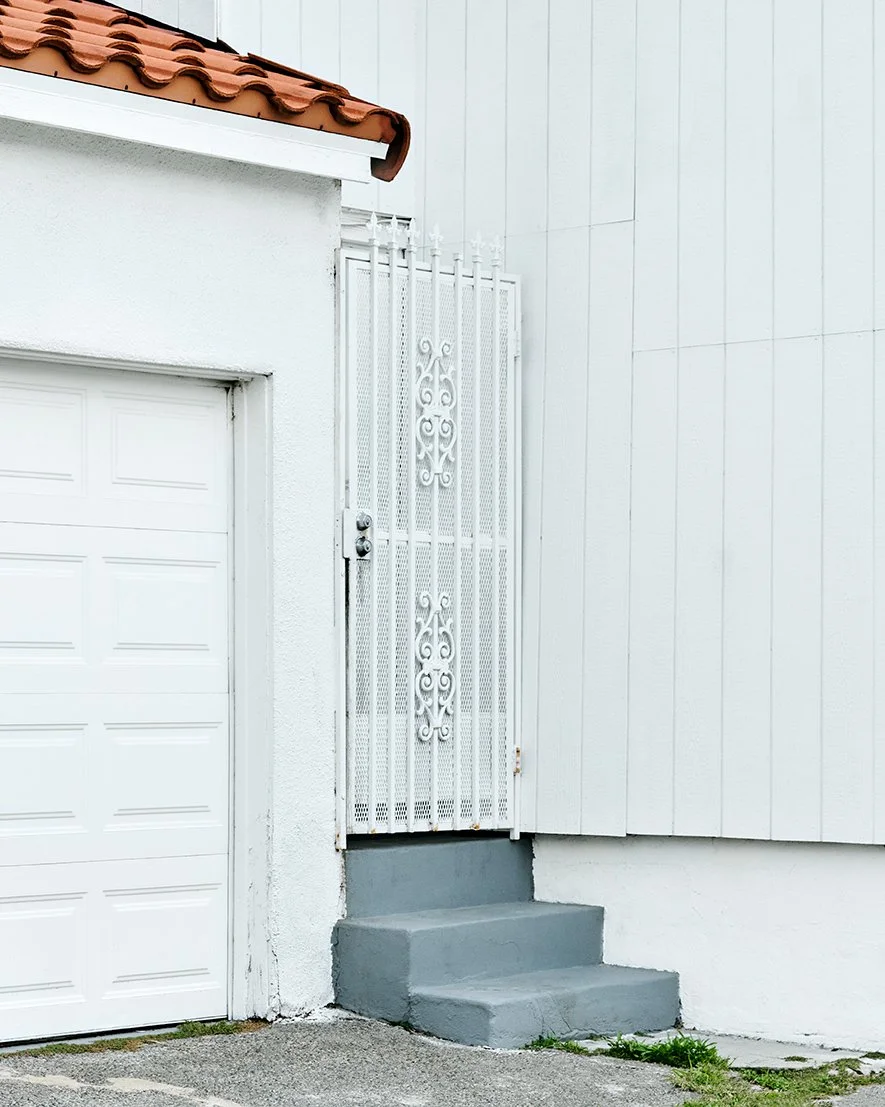
Sunshine Terrace by Emily Shur is a color photobook built from repeated walks through the same small neighborhood. Instead of chasing new places, she returns to the same blocks again and again, letting time do the work. Small changes, a moved object, a fresh coat of paint, a different shadow, start to feel like events.
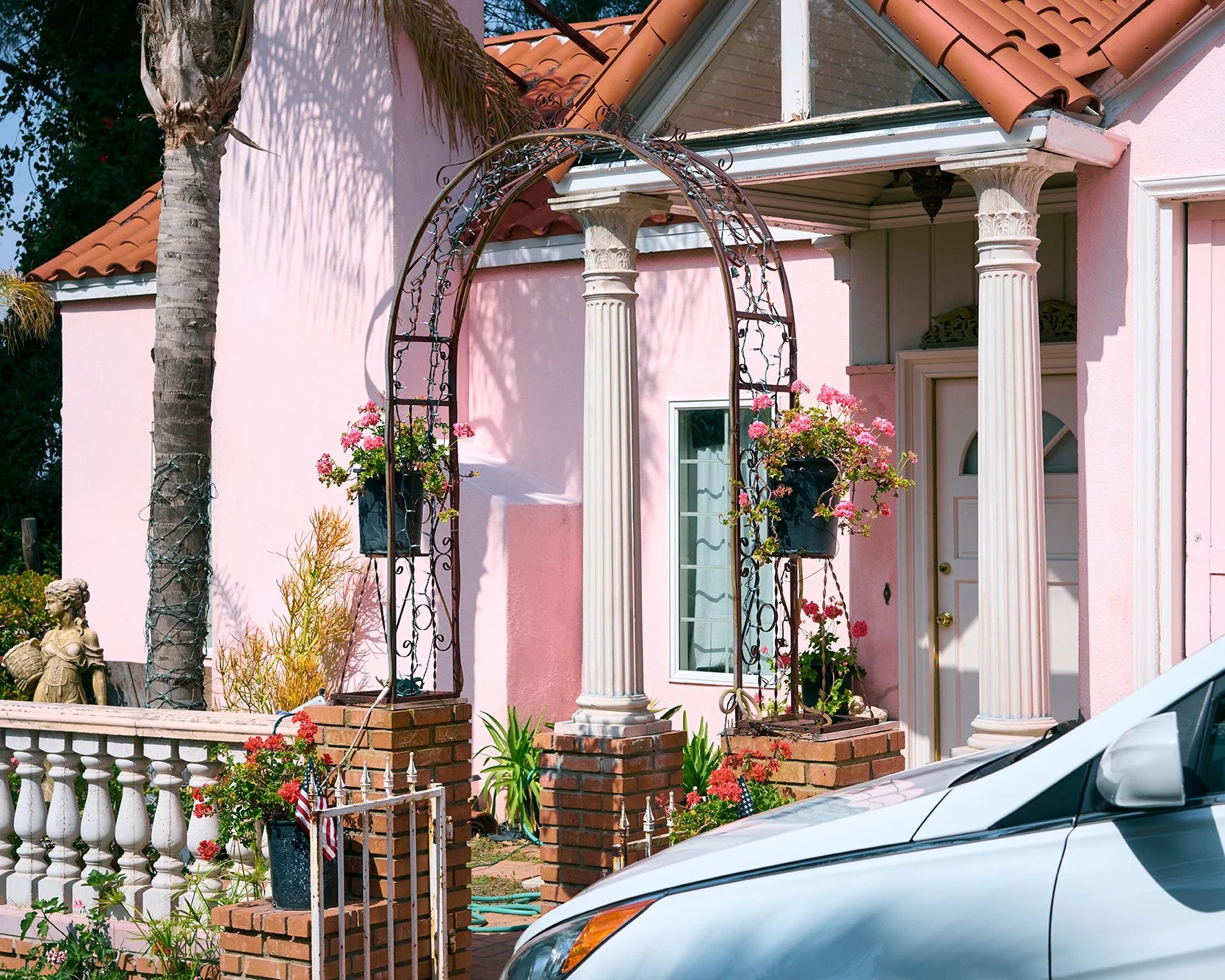
The pictures stay close to everyday surfaces and details, but the sequencing gives them a quiet narrative. Many images echo each other, like variations on the same scene, so the book reads less like a “best of” edit and more like a slow, focused study of looking.
At its core, Sunshine Terrace is about building meaning through repetition, and showing how one ordinary place can hold an endless amount of pictures if you commit to it. (Deadbeat Club, Amazon)
Project Genesis: What made you start photographing your own neighbourhood after years of travelling for commercial and editorial assignments?
I’ve had a personal photographic practice that predates my career as a photographer, and that practice has always been quite introspective and meditative. I’ve used the camera to quiet my mind, to get outside, and to really just concentrate on seeing. This particular project began sort of by force. Prior to Sunshine Terrace, I had been mostly photographing far away from home. The unfamiliar and new had generally yielded good results for me, and I always felt most inspired when I was seeing with fresh eyes. I trusted my gut reactions of how to photograph in those situations, and I had gotten into a rhythm. At the beginning of 2020, I had been photographing consistently in Japan for a little over 15 years. Being there had become the main outlet for my personal practice. Then the pandemic, obviously, changed my ability to travel there (or anywhere). I also wasn’t working much and, like most of us, found myself confined to my immediate surroundings for way more time than I ever imagined. In many ways, I welcomed the downtime as well as the challenge of how to maintain my engagement with photography without assignment work and without travel. I didn’t have a particular end result in mind. I was just doing what a photographer does, and the work evolved organically.
Walking Practice: How did walking the same streets regularly change what you noticed compared to when you just drove through them?
Generally speaking, walking allows me to focus on looking and seeing in ways I never would be able to while driving. It takes longer to move past things while walking, so my perspective shifts at a slower pace, which means I can take my time finding that sweet spot where all the elements align. With Sunshine Terrace specifically, it was the first time I made a decision to purposefully photograph a very concentrated area over and over again and see how that affected my pictures. It’s pretty much the opposite of what I described before— photographing the unfamiliar and new. This was about photographing the very, sometimes too, familiar and figuring out ways to keep myself engaged. The repetition and monotony of walking the same streets every day eventually became the bulk of what interested me the most. When there’s so much consistency, the subtle shifts become way more noticeable.
You said the repetition and monotony became what interested you most, and that subtle shifts became more noticeable. Can you give an example of one small change you noticed that led to a photograph you love?
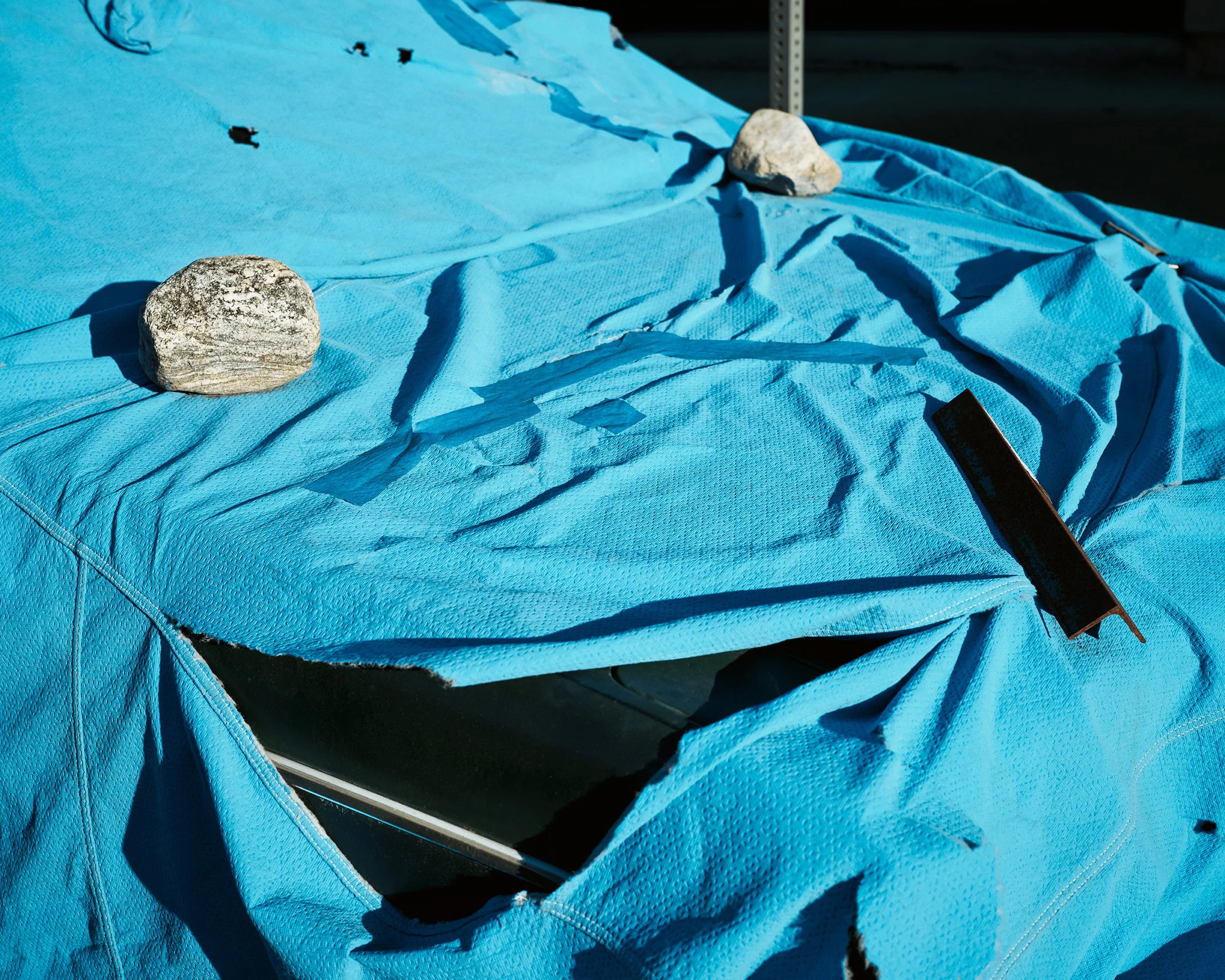
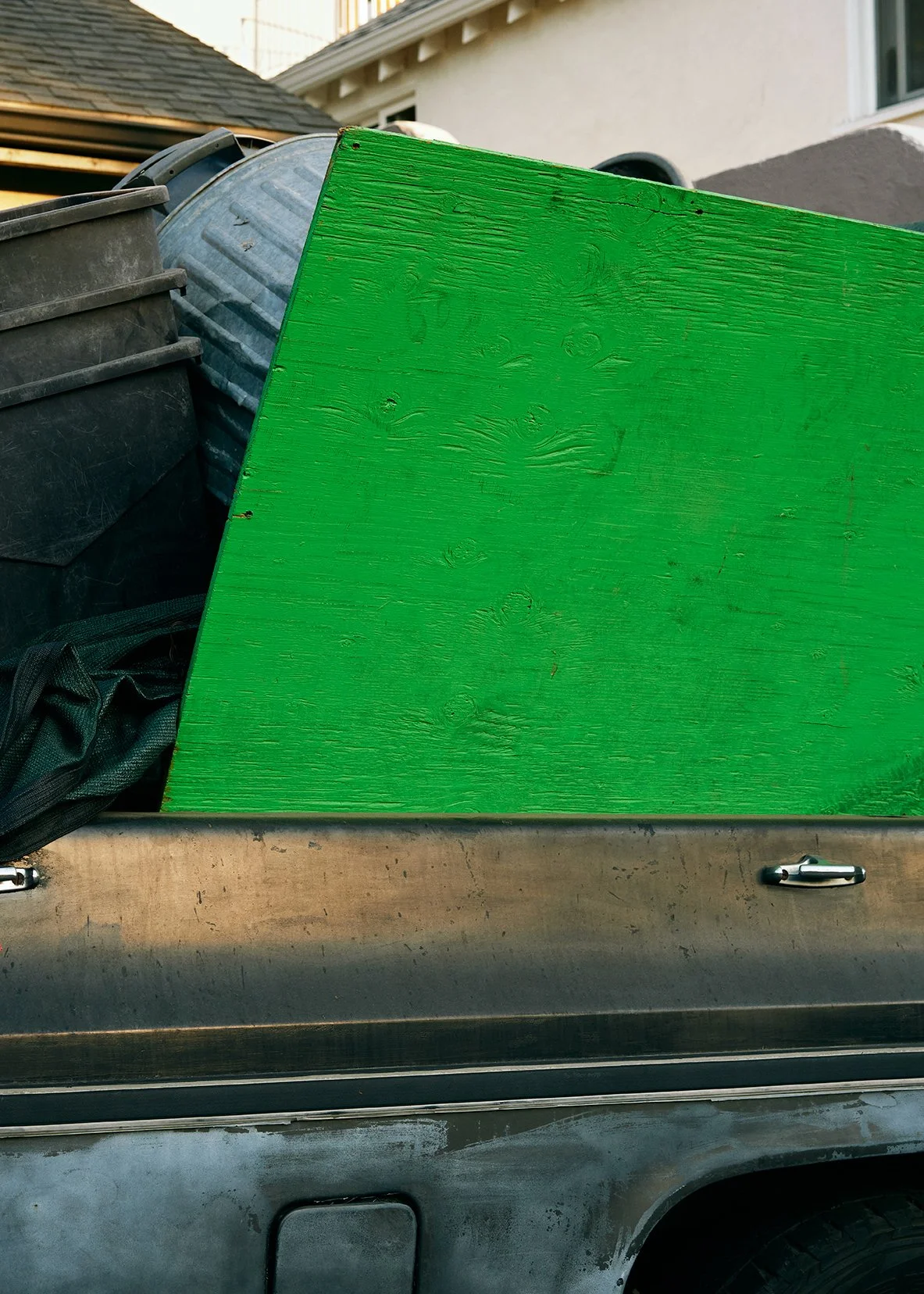
Yes. There are multiple photographs in the final edit that I made different versions of with varying amounts of time in between, sometimes days or weeks and sometimes months or years. The impermanence of everything was a very consistent theme in the photography. For example, the car with the torn blue cover (Farley, 2023) was permanently parked on my block, and I took pictures of its devolution over the years. The car’s owner is, to put it politely, a committed collector of discarded objects and pretty notorious around the neighbourhood. His property is in a constant state of chaos. Sometimes he would change out the items that held the cover down. The tears in the cover would move and grow to the point where it became comical how little of the car the cover was actually covering. So when I saw that “face” smiling at me, I was confident that was a picture worth taking. I also knew the car would probably look different the next time I saw it, so if something interested me, I didn’t second-guess or overthink it. I would just take the picture.
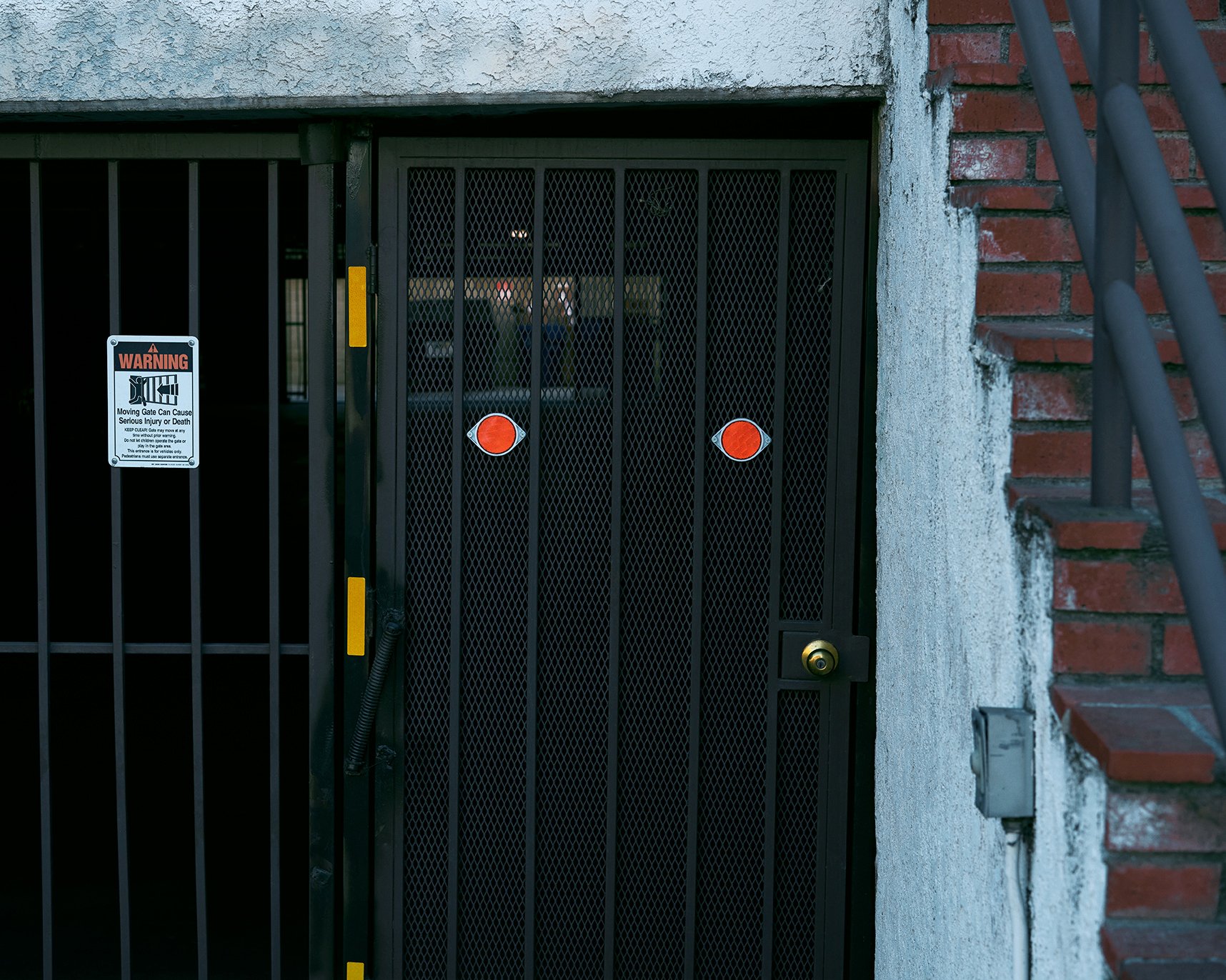
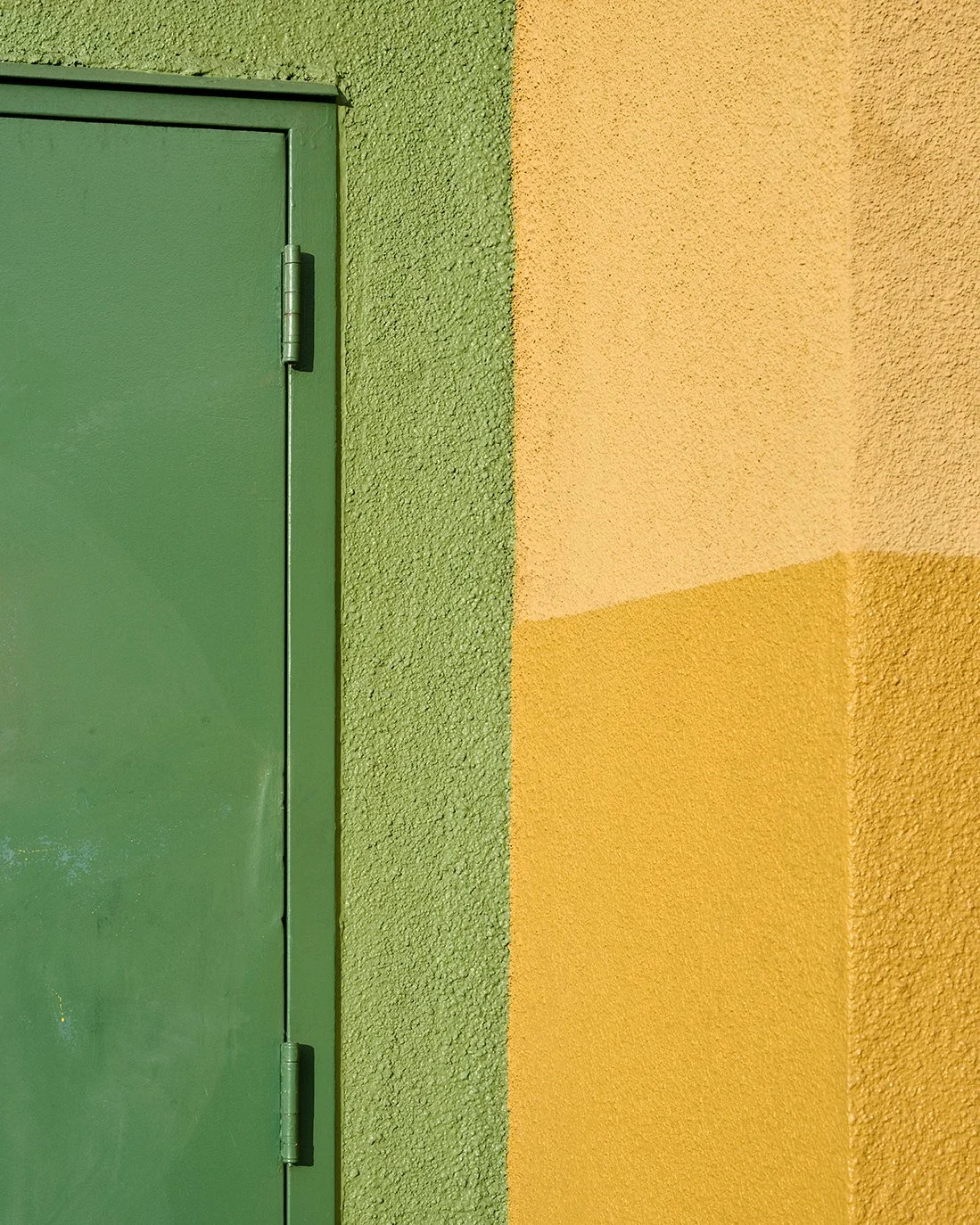
I learned that the hard way a couple of times with missed shots, and also grew to love some pictures more over time because of it. I initially made the image Fruitland, 2022 because I loved the colour story, the abstraction, and all the little imperfections in the surfaces. About six months after I took that picture, that building and door were painted the most boring light tan colour, and needless to say, it looks completely different. So I love that picture for even more reasons now.
Colour and Light: The saturated colours and strong shadows feel very LA. Do you enhance these in editing or is this how the place actually looks?
Yes and yes. The colour and post-work that I do is done to enhance the elements that led me to take the picture in the first place. My work is very grounded in formal fundamentals, composition, quality of light, use of colour. I don’t stray from what was actually there, but I also don’t have a problem using the available tools to best communicate why the scenario spoke to me. As photographers, we all choose what to include within or remove from the frame. I make those decisions when I take the picture and also afterwards in editing. I crop and rotate and skew and straighten to my heart’s content. Similarly, if the whole reason I took the picture in the first place was because of the colour story or the contrast between light and dark, and for whatever reason, those qualities didn’t translate as strongly in camera, I’ll use tools to articulate those elements. At the same time, it’s really all about the subtleties. I’m not changing the way things looked. I’m clarifying how I saw them.
Deadpan Humor: Objects like crooked trees and strange decorations feel both ordinary and absurd in your frames - how do you find this balance?
I don’t know if there’s an easy way to explain this, but the short answer would be, it’s just how I see the world. I’m definitely drawn to photographing the push and pull of the ordinary and the absurd (as you put it). During the years I was photographing for Sunshine Terrace, ordinary life seemed to become more and more absurd almost by the day. I’ve always been partial to humour as a coping mechanism, and I think when it’s properly utilised, it’s really effective and relatable. I enjoy photographs that acknowledge the ridiculousness of our shared experience. I’m not saying it’s an appropriate response at all times. Some moments absolutely call for a more serious tone, but I know who I am and who I’m not. I know that the most sincere version of myself wants that comedic relief, so I think that’s something I naturally gravitate towards in my work.
Framing Decisions: When you see something odd during a walk, what makes you stop and photograph it versus just noticing and moving on?
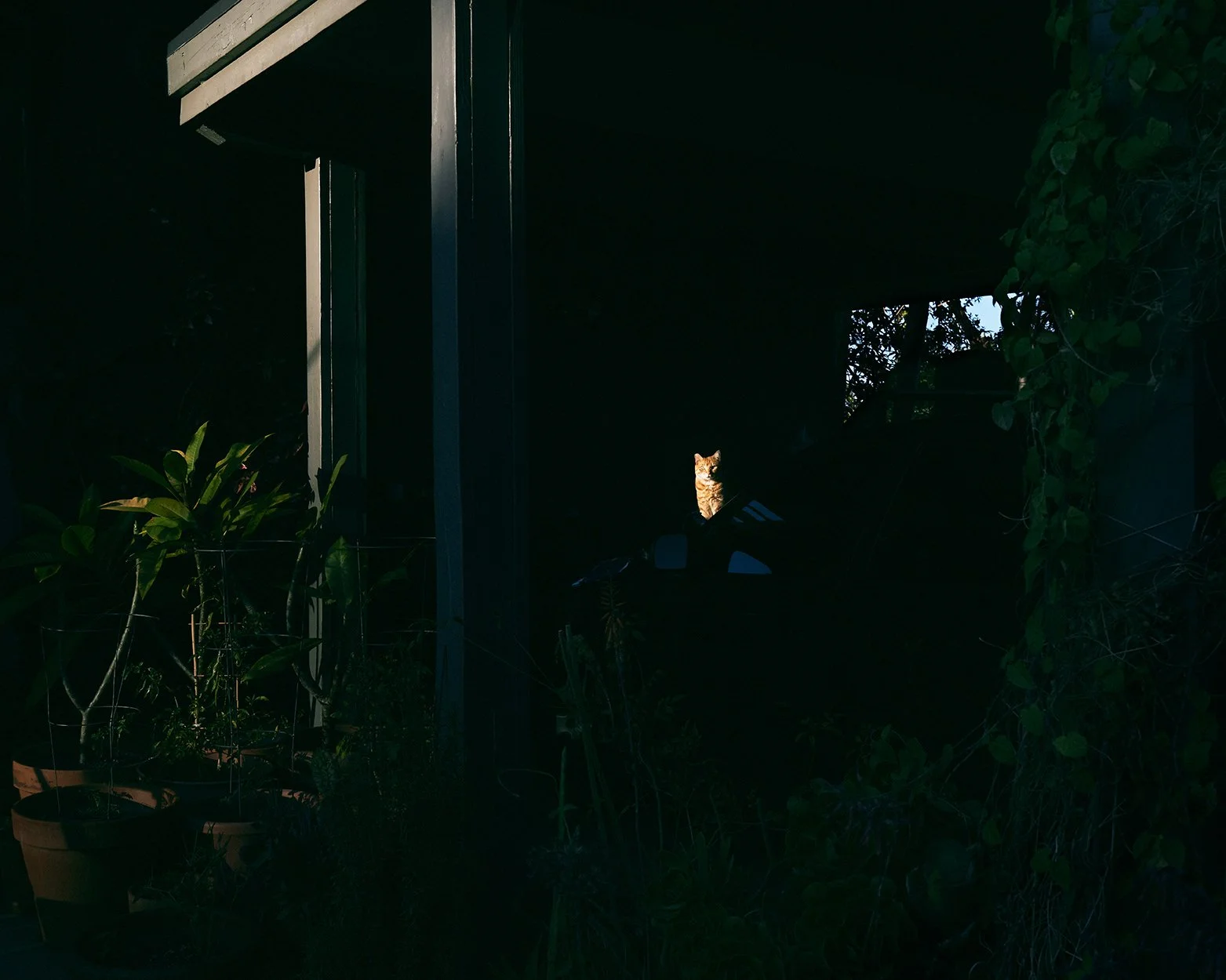
There needs to be a confluence of the aesthetic and the conceptual to make the picture worth taking. Something could be odd, but that doesn’t necessarily make it interesting. Something could be pretty, but that doesn’t mean I want to look at it forever.
Don’t get me wrong, I take a lot of pictures that aren’t really “worth taking”. They live quietly on contact sheets and hard drives, and I don’t really feel bad about that. There are lots of reasons to take pictures, even the ones we suspect won’t be great. You might regret not taking it or maybe there’s a chance it’ll turn out better than anticipated. Or maybe you just need to stay engaged with the act of photographing and it’s not any deeper than that. I think it’s most important to be discerning during editing and at that point we’ll see which images deserve our time and attention.
Technical Approach: Do you shoot these personal neighbourhood photos differently than your professional work, or use the same equipment and techniques?
Yes and no. Sunshine Terrace is the first series of personal work I’ve made with a digital camera. In years past, it’s been very important to me that I keep my relationship with film alive. It’s how I started, how I fell in love, how I learned and grew. When digital photography became more of the norm in the industry, I felt almost bullied to give it (film) up. So I clung to film in my personal work, where it was only up to me how I photographed. However, as I mentioned earlier, I began making the pictures for Sunshine Terrace at the beginning of the pandemic, which meant that labs were not open. So I began bringing the cameras that I use in my professional life on walks instead of what I might have brought under normal non-global pandemic circumstances. At that point, I had no grand plans for the work and wasn’t thinking too deeply about what type of camera I was using.
It was ultimately an interesting exercise because eventually my lab did re-open, and then I had a choice to make. Should I switch back to film and shoot the way I usually would within the umbrella category of making “art”? And if I did, would that disqualify the images I made digitally? And would I be okay losing those images? Because the majority of these pictures cannot be remade. Best case scenario, I’d get something similar but different, and worst case scenario, I wouldn’t even get that opportunity. So I made the decision to leave it as is and kept shooting with my digital cameras. I worked with the files the same way I do on jobs, first in Capture One and then in Photoshop. The main difference between this way of shooting and my professional work is how pared down my personal practice is. I walk around with one camera and one lens— no back-ups, no tripods, no lights, no crew. I photograph things in the moment as they are.
Editing Process: How did you select which images to include when you probably shot many similar suburban scenes over the months?
Once I had what felt like the beginning of a body of work, I asked my friends and publishers, Clint and Alex Woodside, if they would be willing to take a look. At that time, I’d probably been shooting for a year or two and had compiled about a couple hundred images into an overall edit. It was way too many images, and I knew that, but wanted to gauge their initial reactions to the work. That wound up being the first of many editing sessions— adding new pictures in and taking older ones out that no longer served the project— and I also continued shooting for at least another year.
As the idea of the book came more into focus, it became easier to edit with intention. I was mostly interested in the images that posed questions and communicated with one another. We removed the majority of place-specific pictures, meaning anything that told the viewer too much about where the images were taken. The work is not about my neighbourhood per se. It’s not about Los Angeles or anything related to a specific location. It was more important to retain a level of mystery within the edit and let the viewer relate to the work on their terms.
The editing and sequencing of Sunshine Terrace is, in my opinion, what makes the book. I love all of the individual photos, and they’re, of course, all included for a reason. But I think the book’s biggest strength is how the group functions as a whole— the connections and echoes amongst the images. I thought about the sequencing as if I was leaving little crumbs for the viewer down a windy path.
Now that the book is finished and you can travel again, do you still walk and photograph your neighbourhood the same way, or has this project changed how you see that familiar place?
This project definitely changed how I see my neighbourhood (and familiar places in general). I still take walks, but I don’t photograph the area in the same way anymore. A couple of months after Sunshine Terrace was published, our dog Momo died of cancer. She was with me when I took every single picture in the book, and Sunshine Terrace is dedicated to her. Her death, in combination with the publication of the book, felt like the definitive end of the project. Of course, I’ll still take a picture in my neighbourhood if something speaks to me, but I’m no longer photographing with the intention of creating another body of work in this space. That body of work is complete.
Separately, but on a similar note, I have been photographing in Japan now for over 20 years. In 2017, I published a book of work from Japan titled Super Extra Natural!, but unlike Sunshine Terrace, I’ve continued to photograph there after a book was published. And because of the amount of time I’ve spent there, what began as an unfamiliar place has turned into a familiar one. So there’s now that same challenge and question of whether or not I’m able to evolve there photographically. I guess we’ll see!
Intimacy and Distance: Does photographing your own daily environment feel more personal than shooting strangers and places for assignments, or strangely more detached?
Definitely more personal. As an artist, when you make work that’s quiet and introspective, you’re showing your cards. You’re giving the viewer a peek through the curtain at how your mind works. For a while, I worried that the work in Sunshine Terrace might be too bleak for people to enjoy. I associate a lot of the imagery and time during which it was made with sadness. Aside from what the world was dealing with on a macro level, I was going through my own stuff on a micro level. So I see a lot of disappointment in those pictures, but whenever someone brings up the vibrancy of the colour or the humour in the images, I’m reminded that we each see through our own individual lens. Something can be funny and sad and beautiful and ugly all at the same time.
You mentioned that during the pandemic you were dealing with personal difficulties beyond what the world was experiencing - how did those private struggles shape what you chose to photograph or not photograph during those walks?
During the time I photographed for Sunshine Terrace, I was recovering from surgery I had in early 2020, confused about the future of my career for a multitude of reasons, and my husband and I were dealing with Momo’s diagnosis and care. I was very grateful for all the good I had during that time. So many people were going through much worse, but it was still difficult. I’m not sure if those feelings shaped what I photographed, but I do think they made me want to escape and photograph more. And they likely did shape how I ultimately went about editing and sequencing the work— creating a conversation amongst the images where questions are asked but mostly left unanswered.
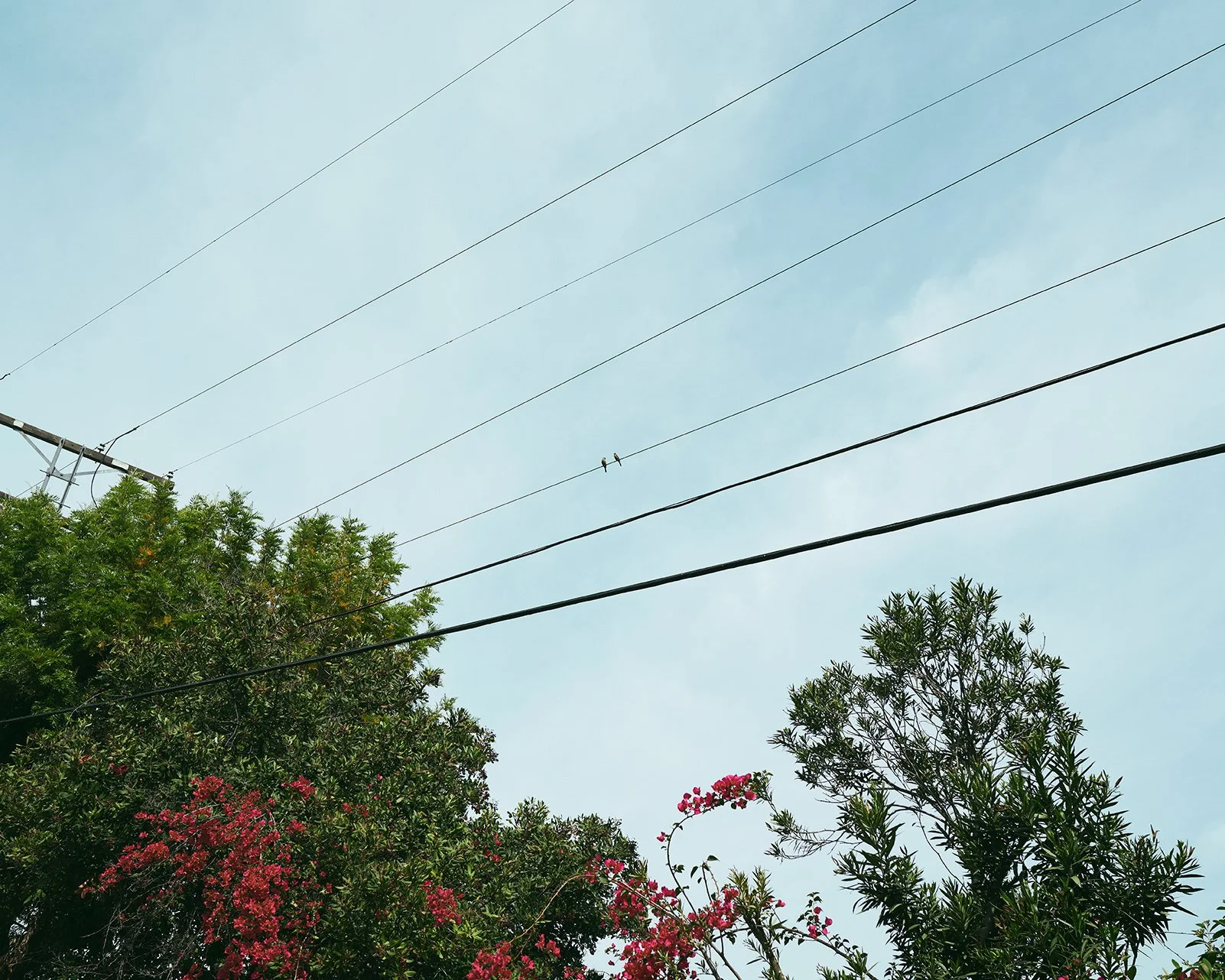
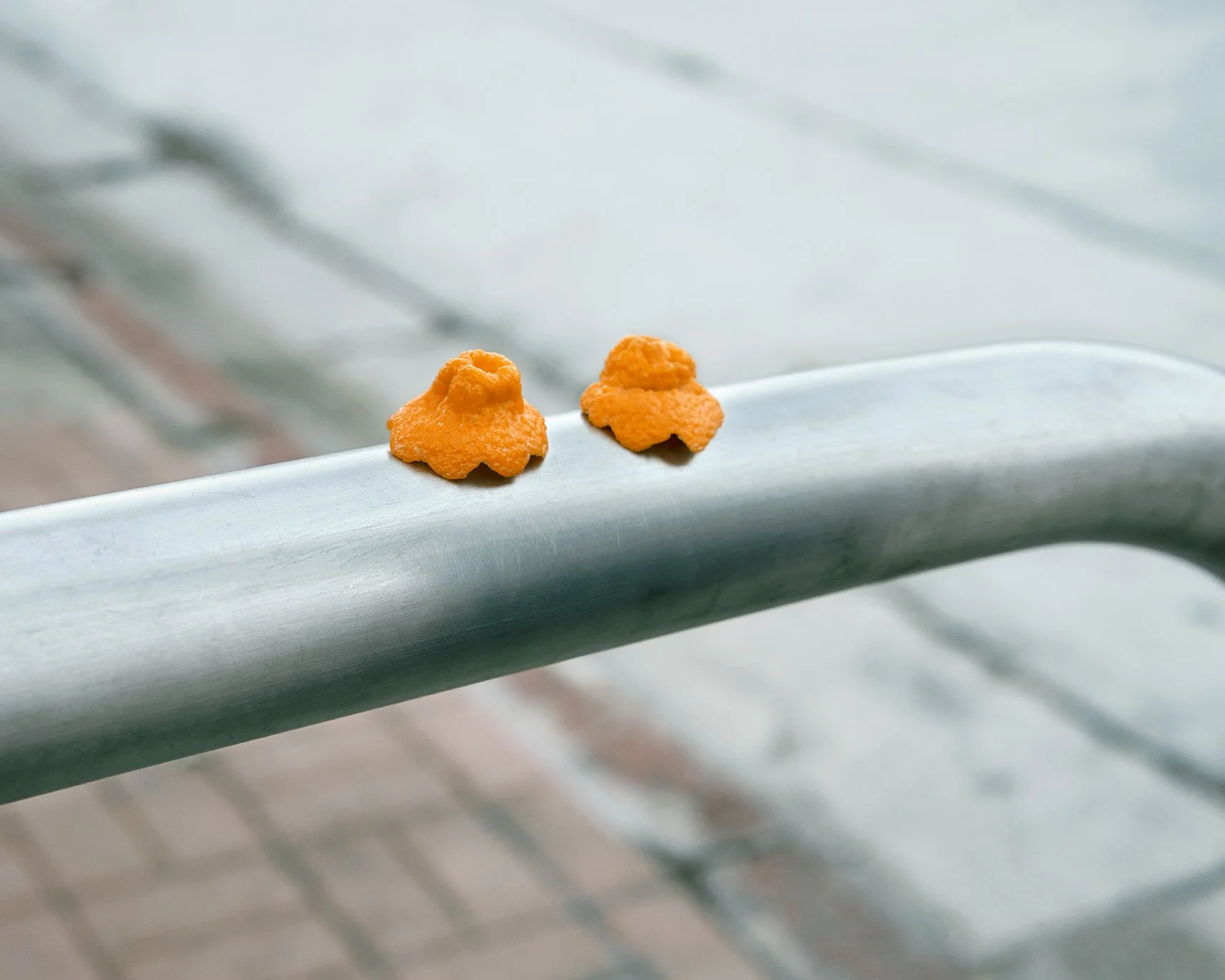
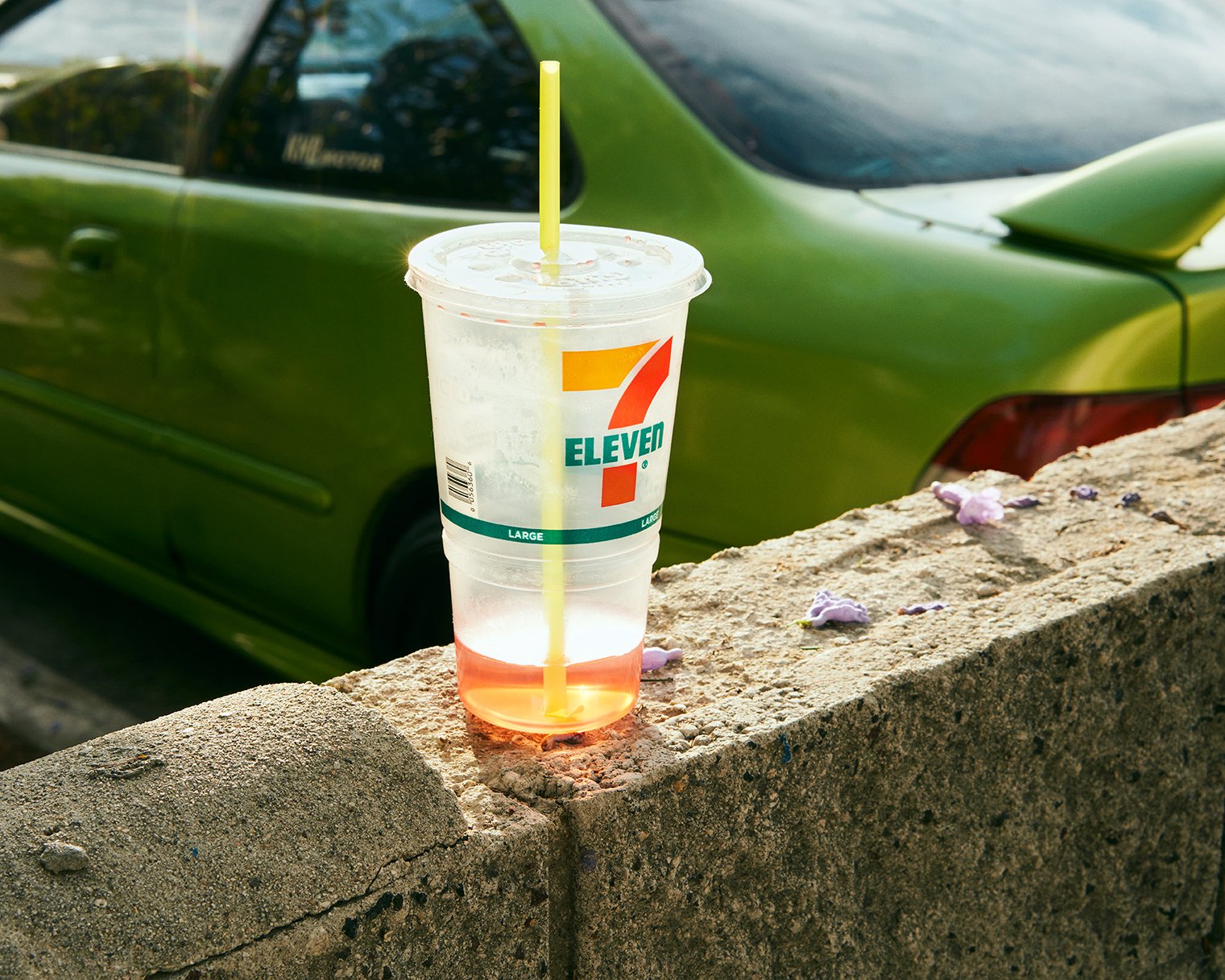
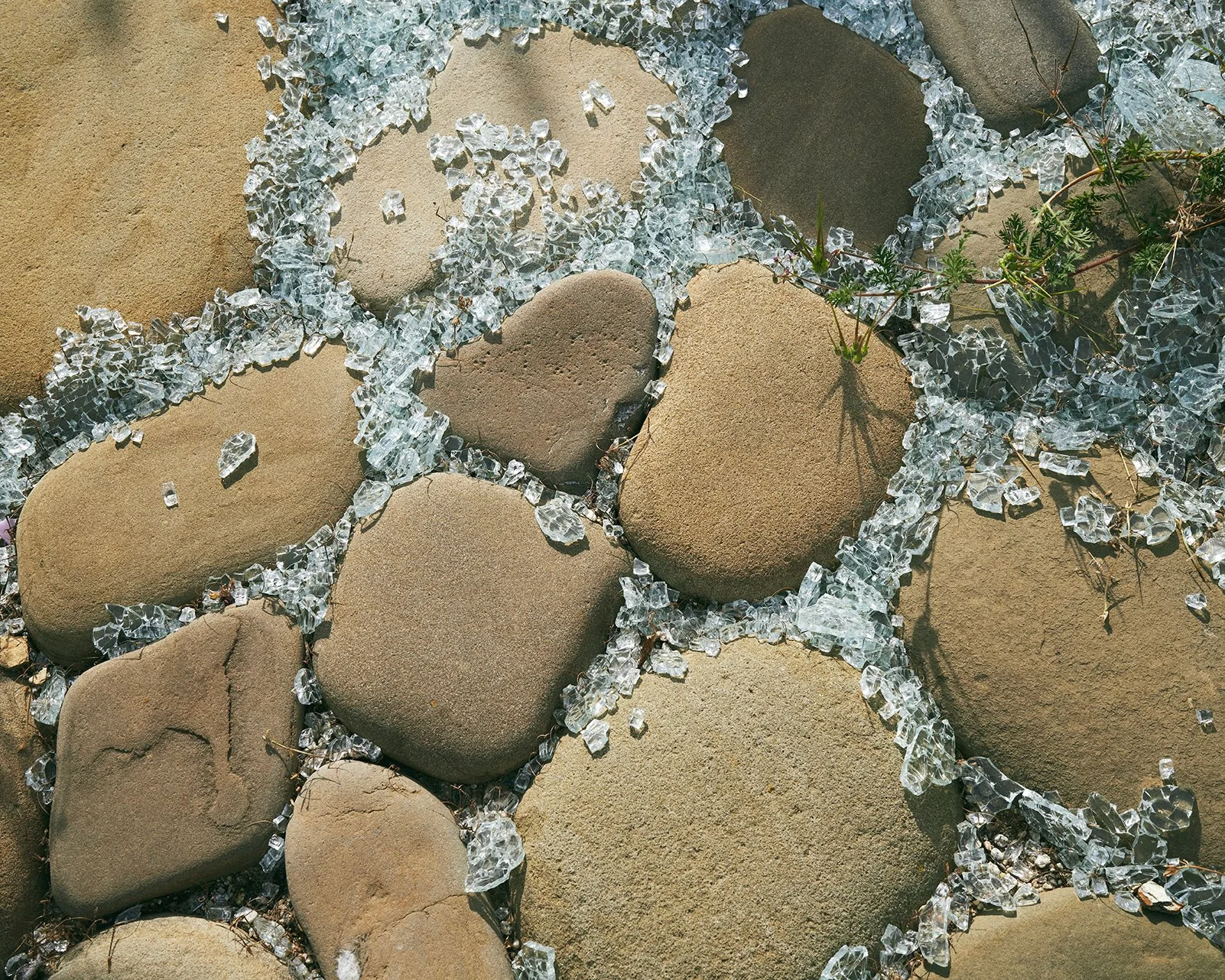
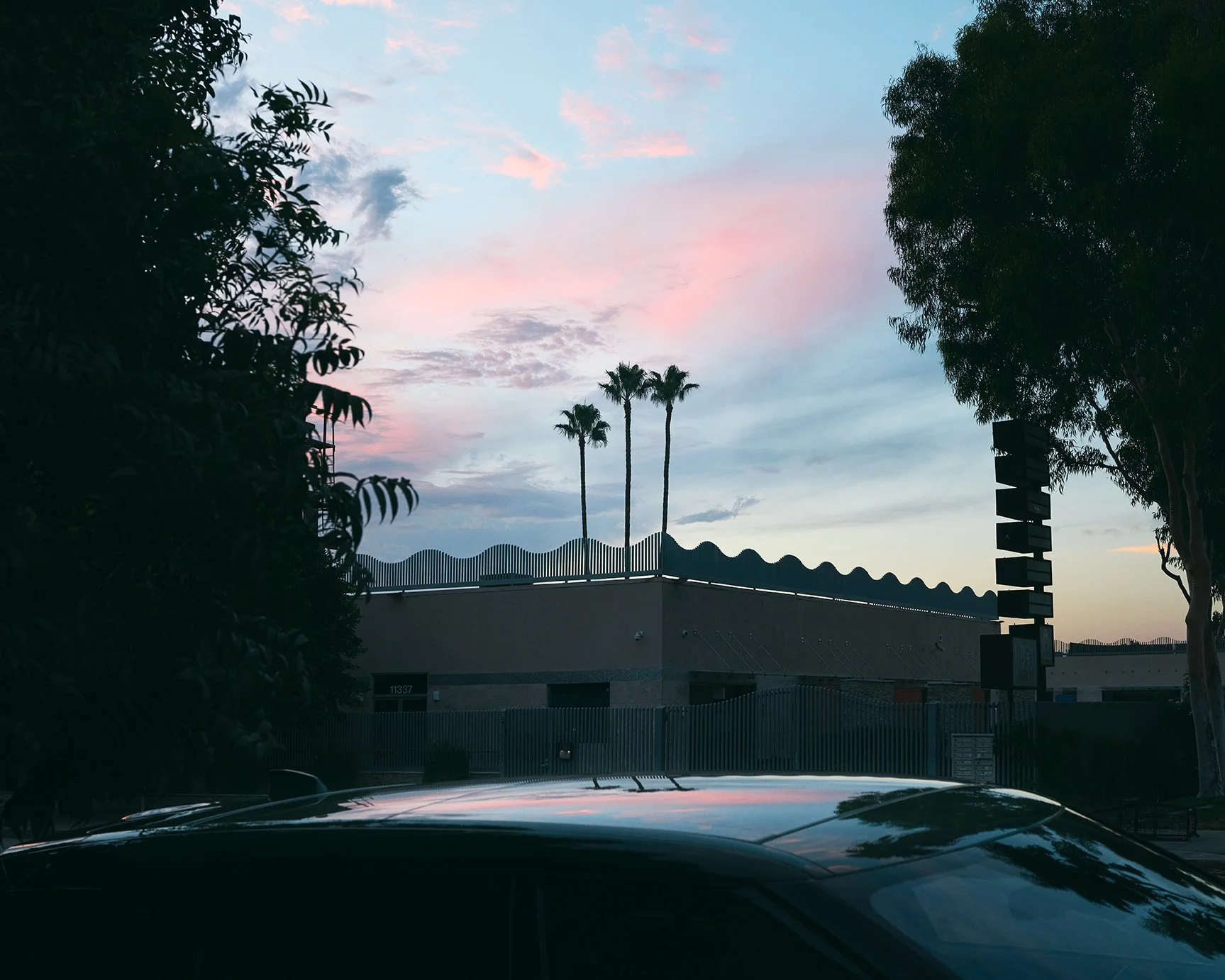
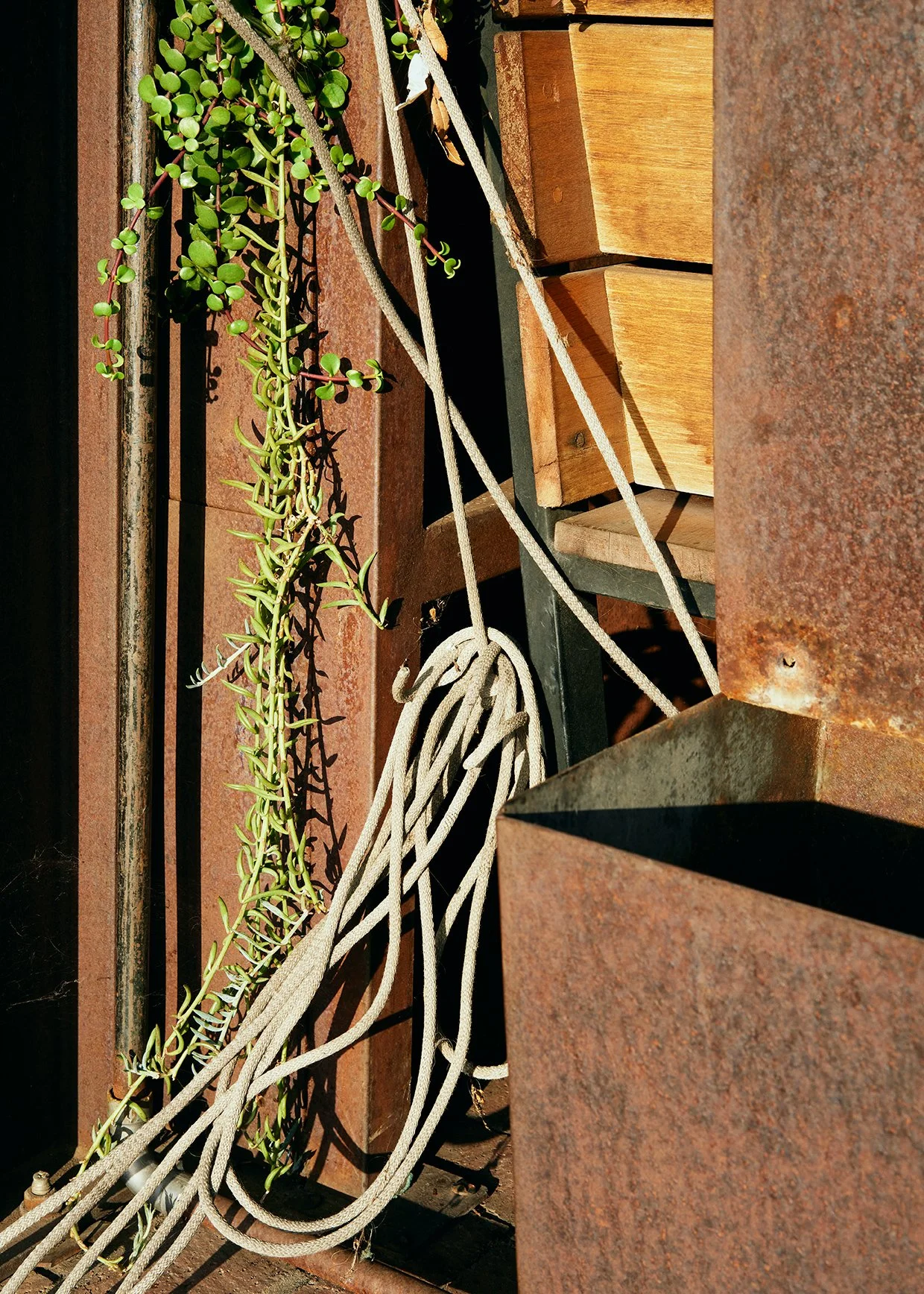
To discover more about this intriguing body of work and how you can acquire your own copy, you can find and purchase the book here. (Deadbeat Club, Amazon)
More photography books?
We'd love to read your comments below, sharing your thoughts and insights on the artist's work. Looking forward to welcoming you back for our next [book spotlight]. See you then!
Gosbert Gottmann wanted war photographs that resisted easy reading. In Freiheit Freedom Воля, he works with images connected to the war in Ukraine and changes them through abstraction, distortion and deformation. Photography Book Spotlight