The Last of Their Kind: Joachim Schmeisser’s Intimate Portraits of Animals We May Lose Forever
Welcome to this edition of [book spotlight]. Today, we uncover the layers of 'Last Of Their Kind,' by Joachim Schmeisser (published by teNeues Verlag). We'd love to read your comments below about these insights and ideas behind the artist's work.
Some animals disappear before we truly see them.
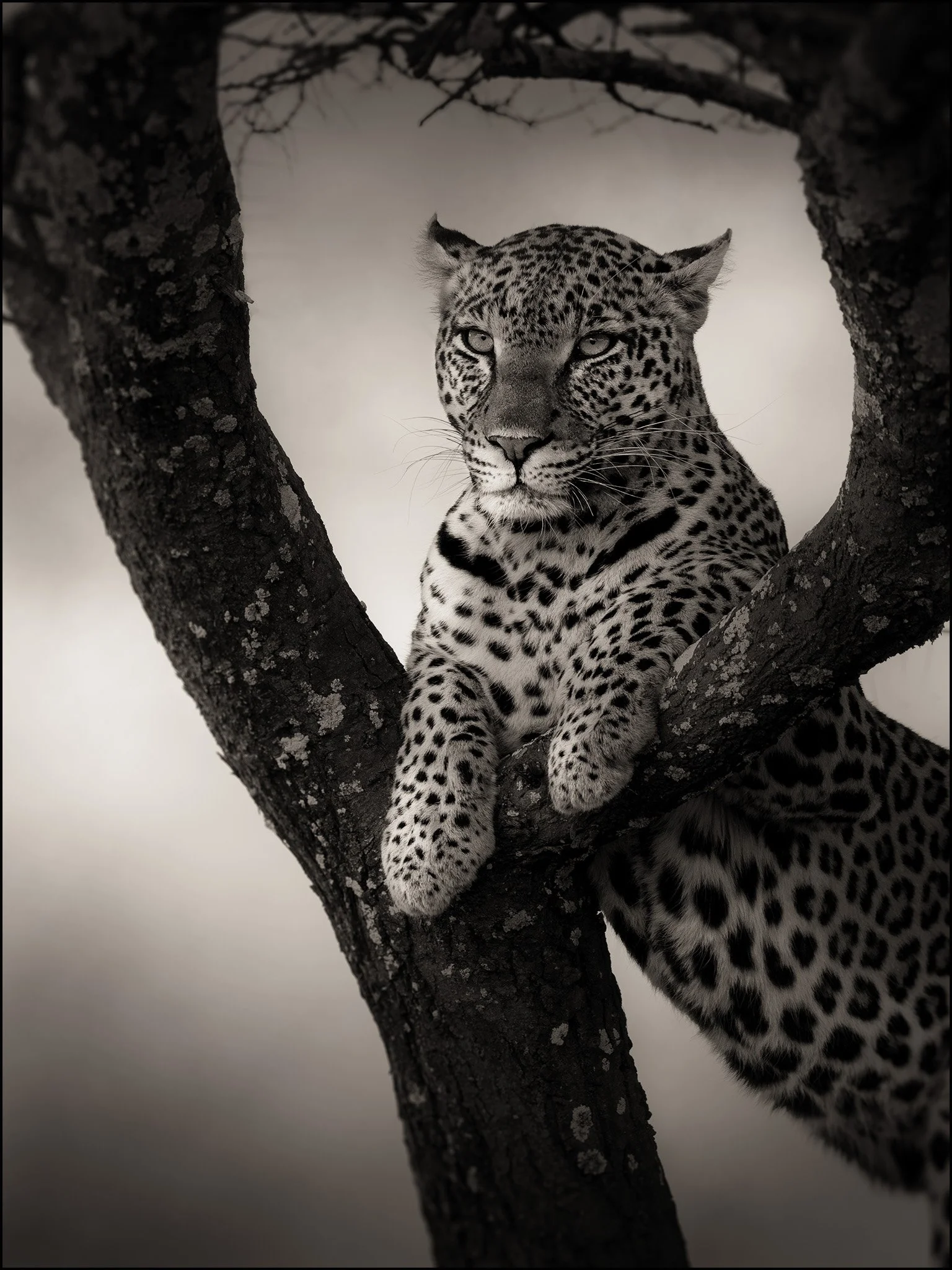
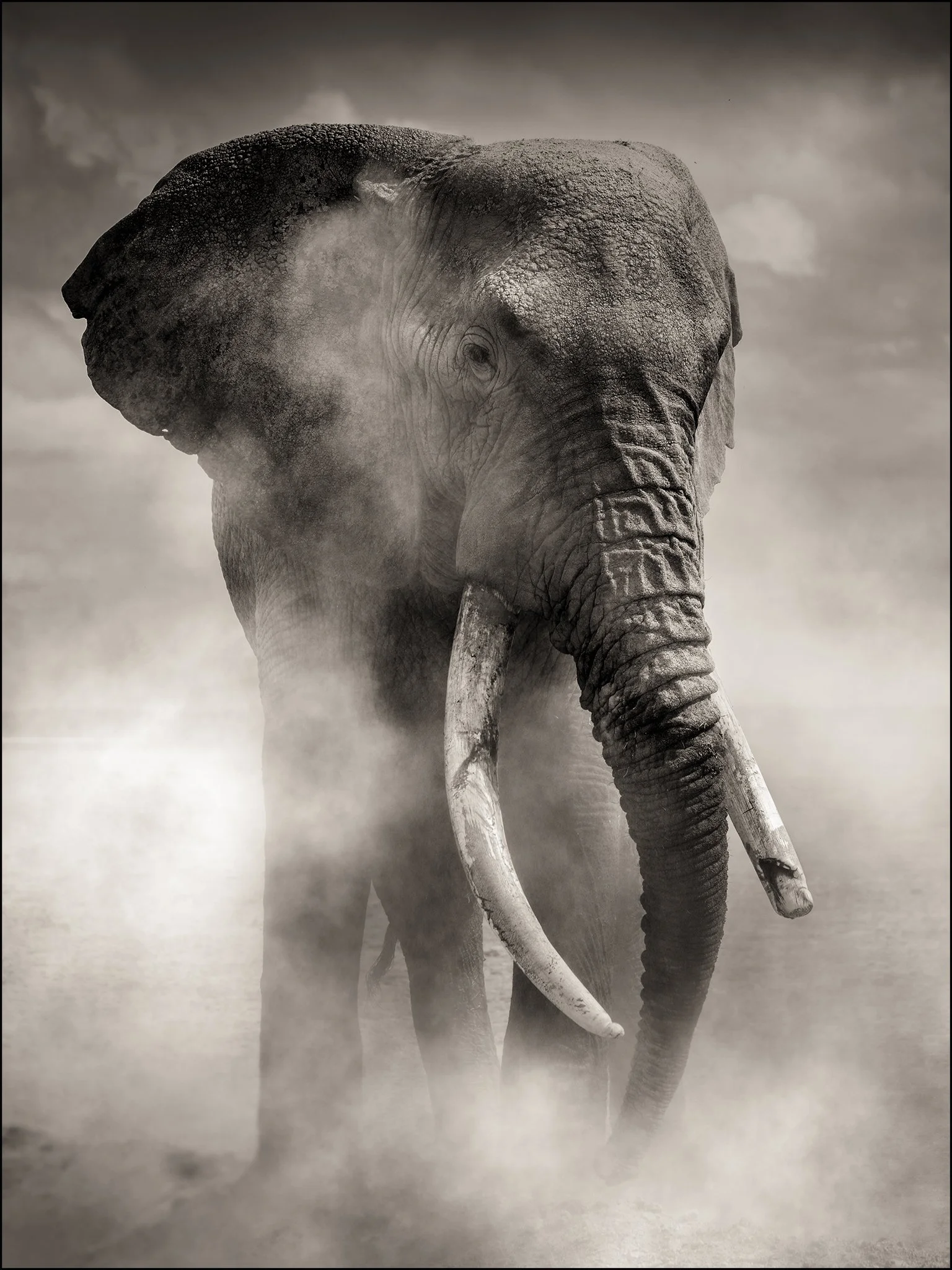
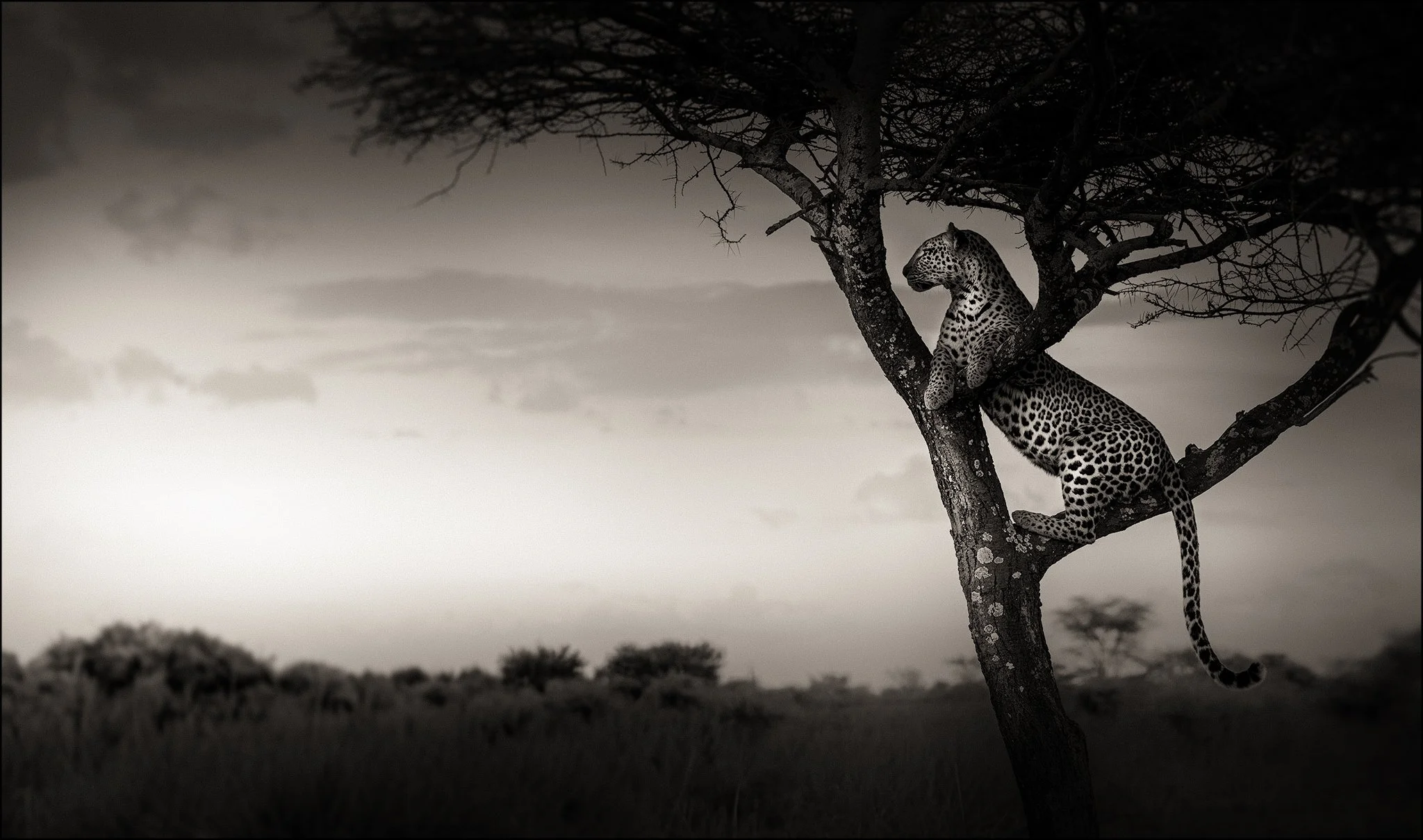
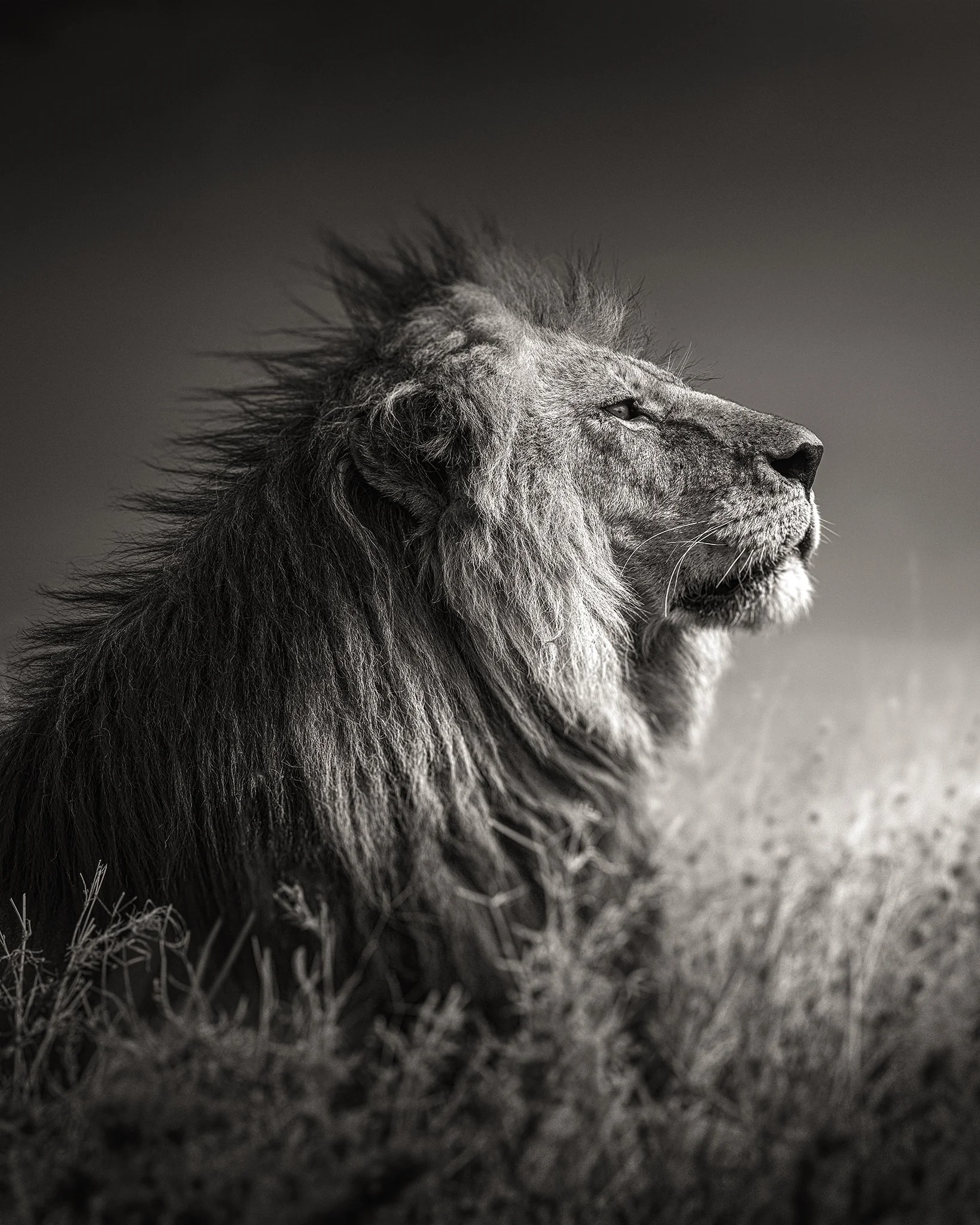
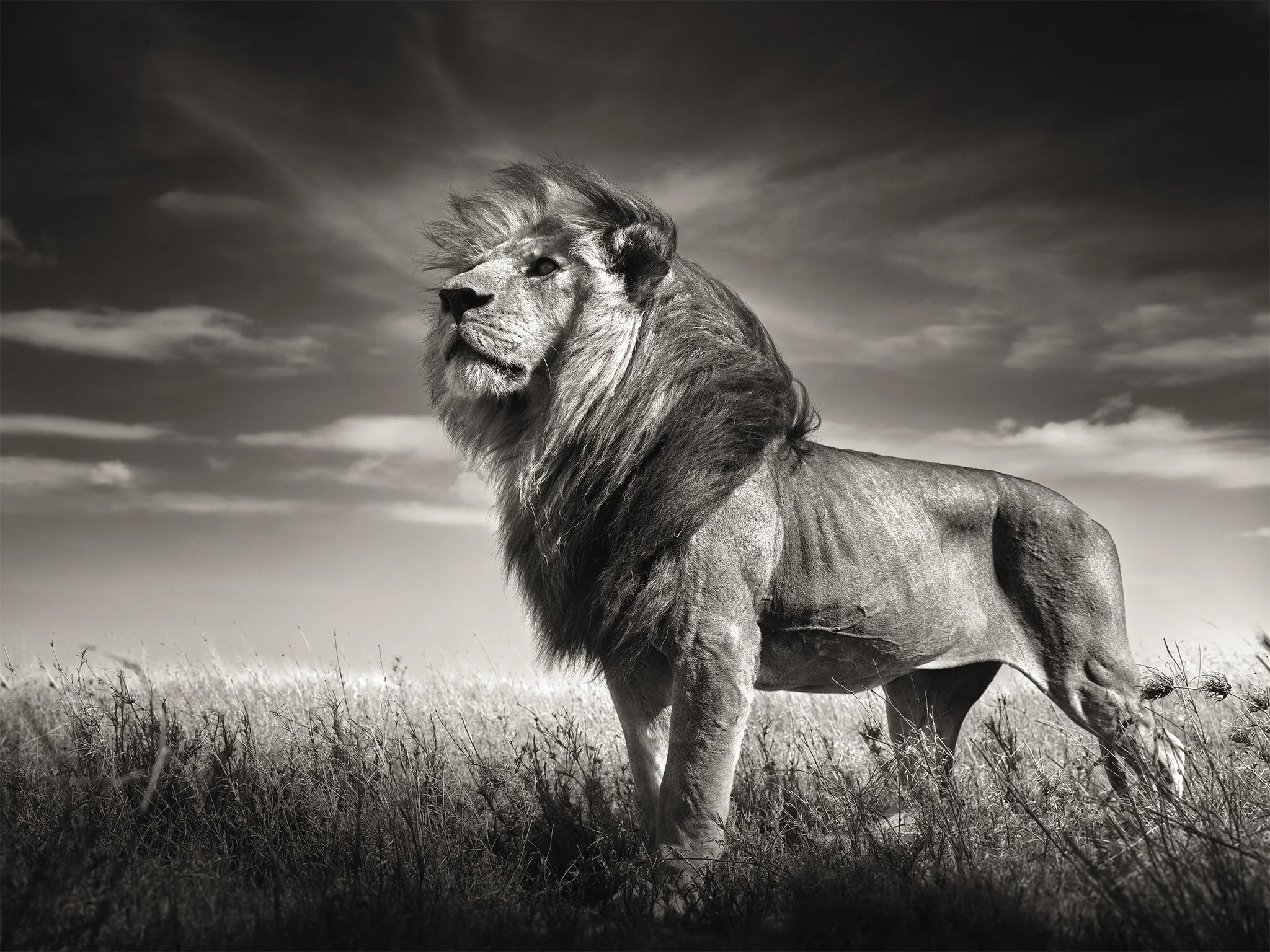
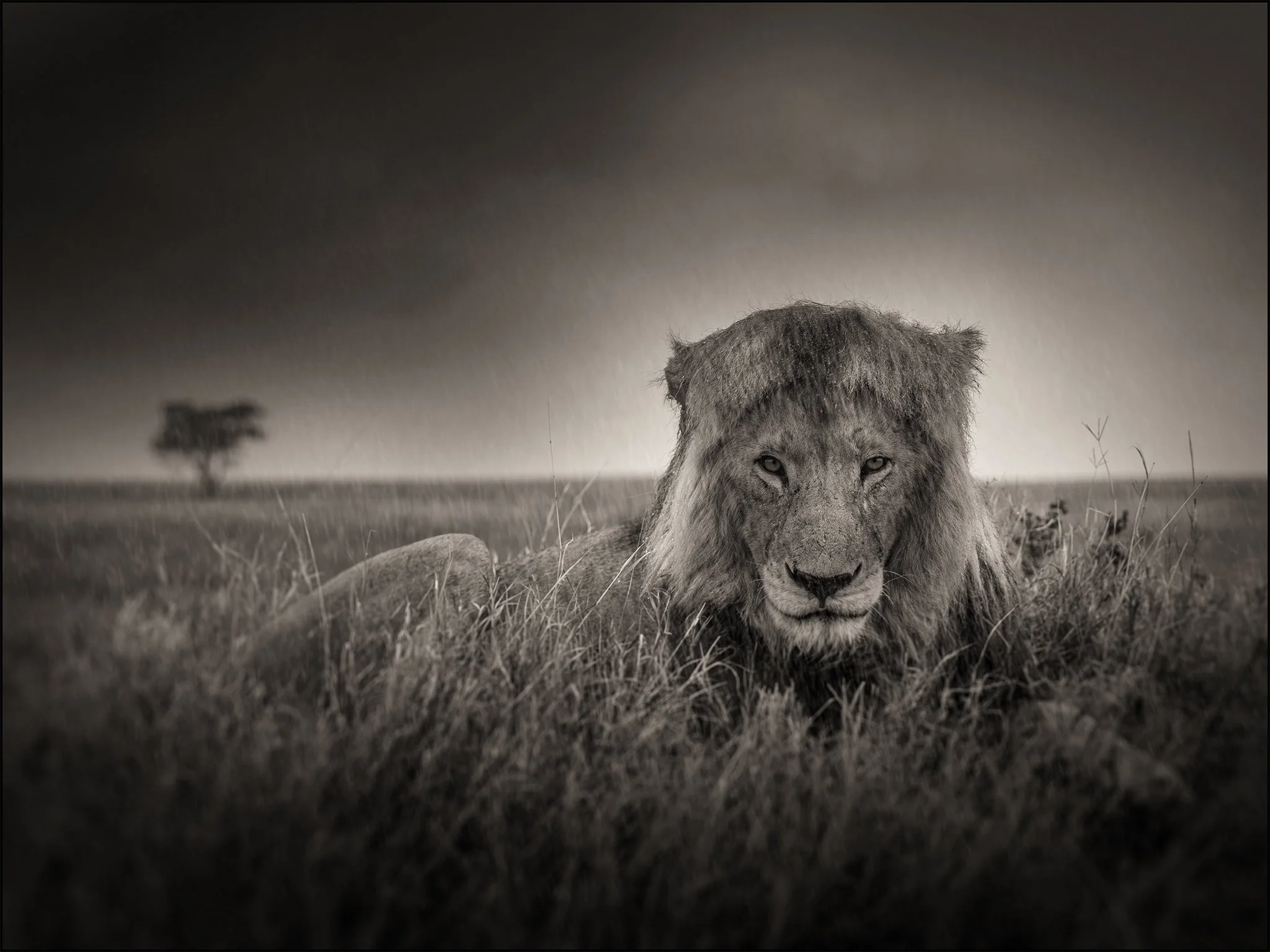
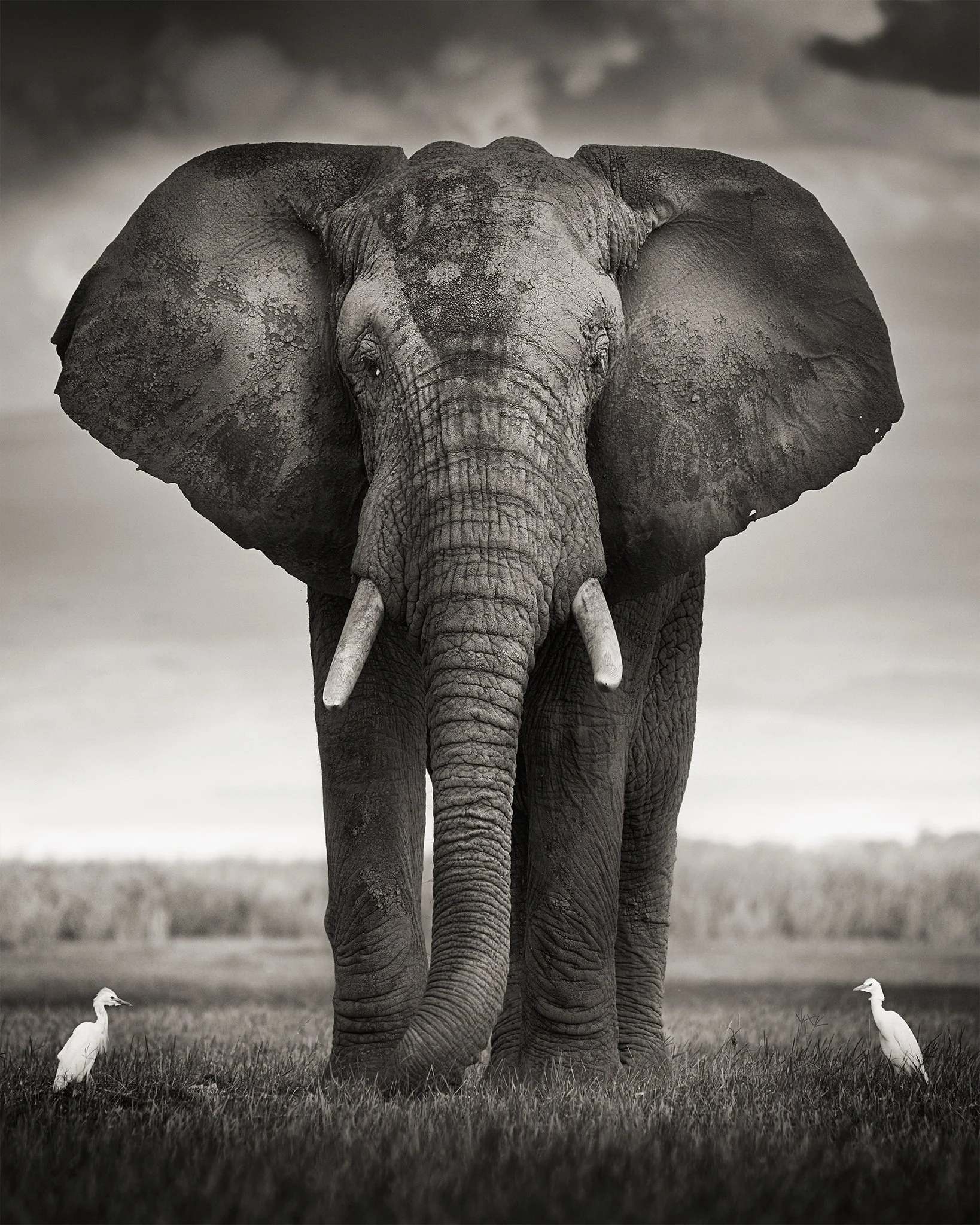
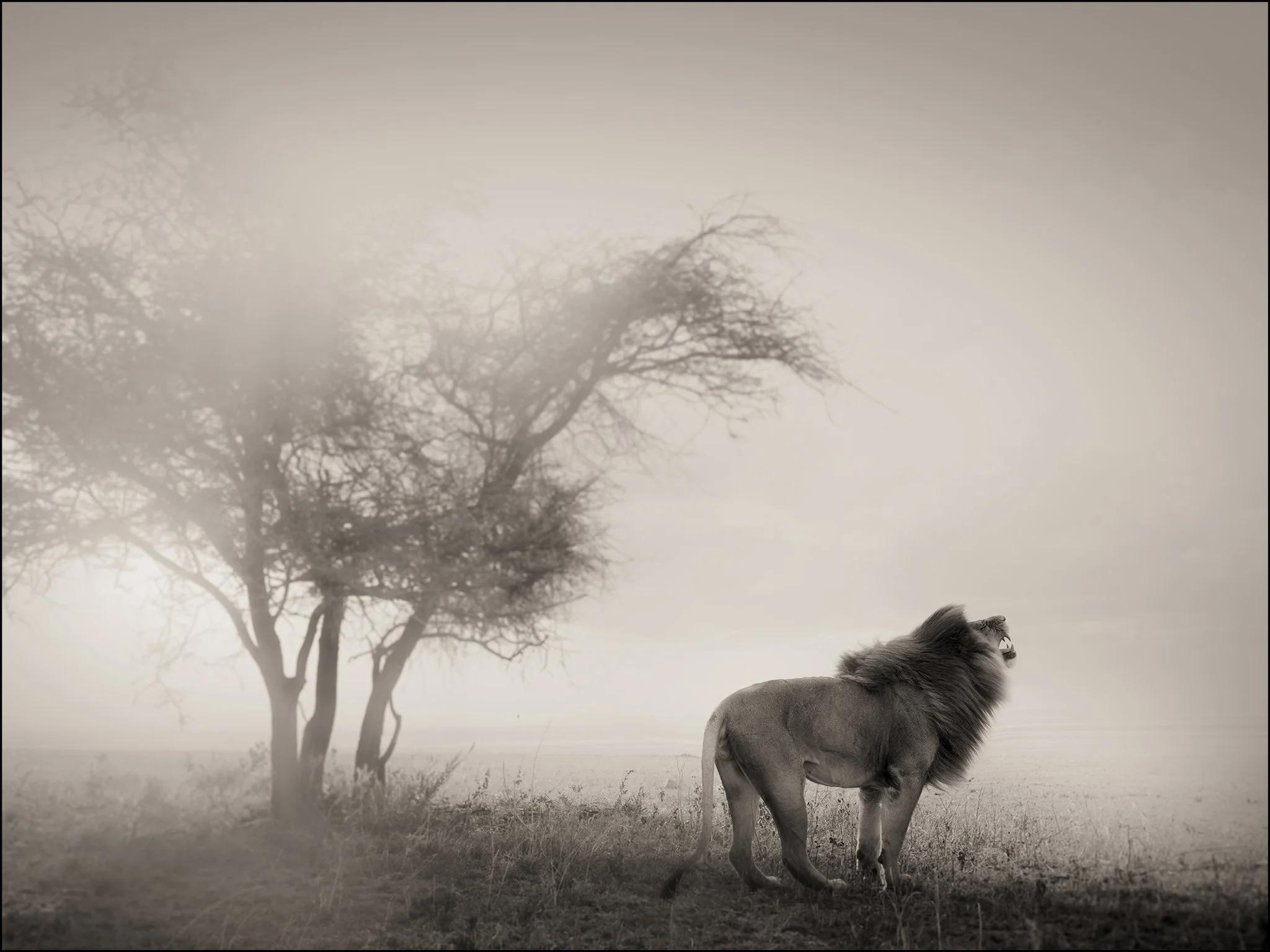
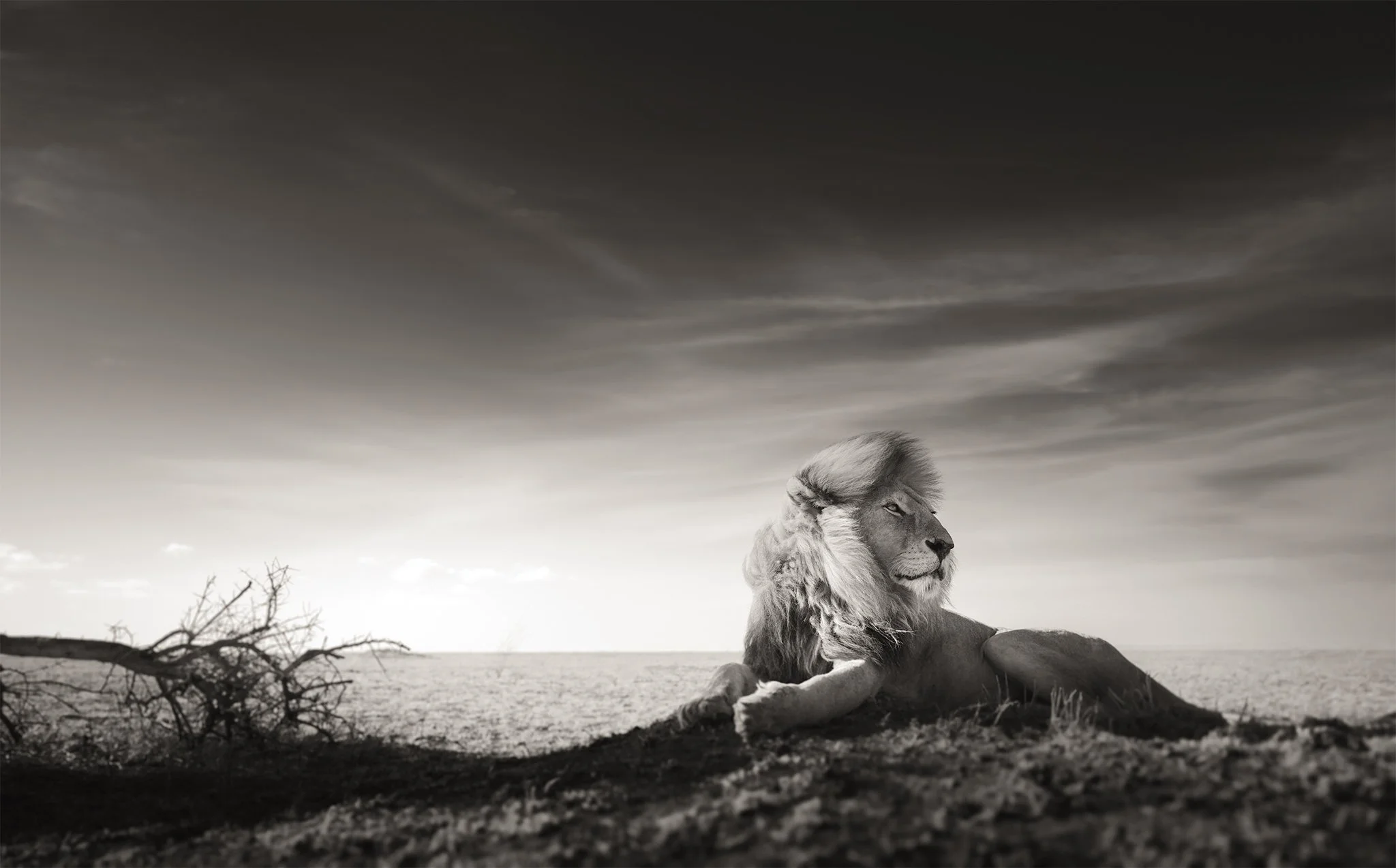
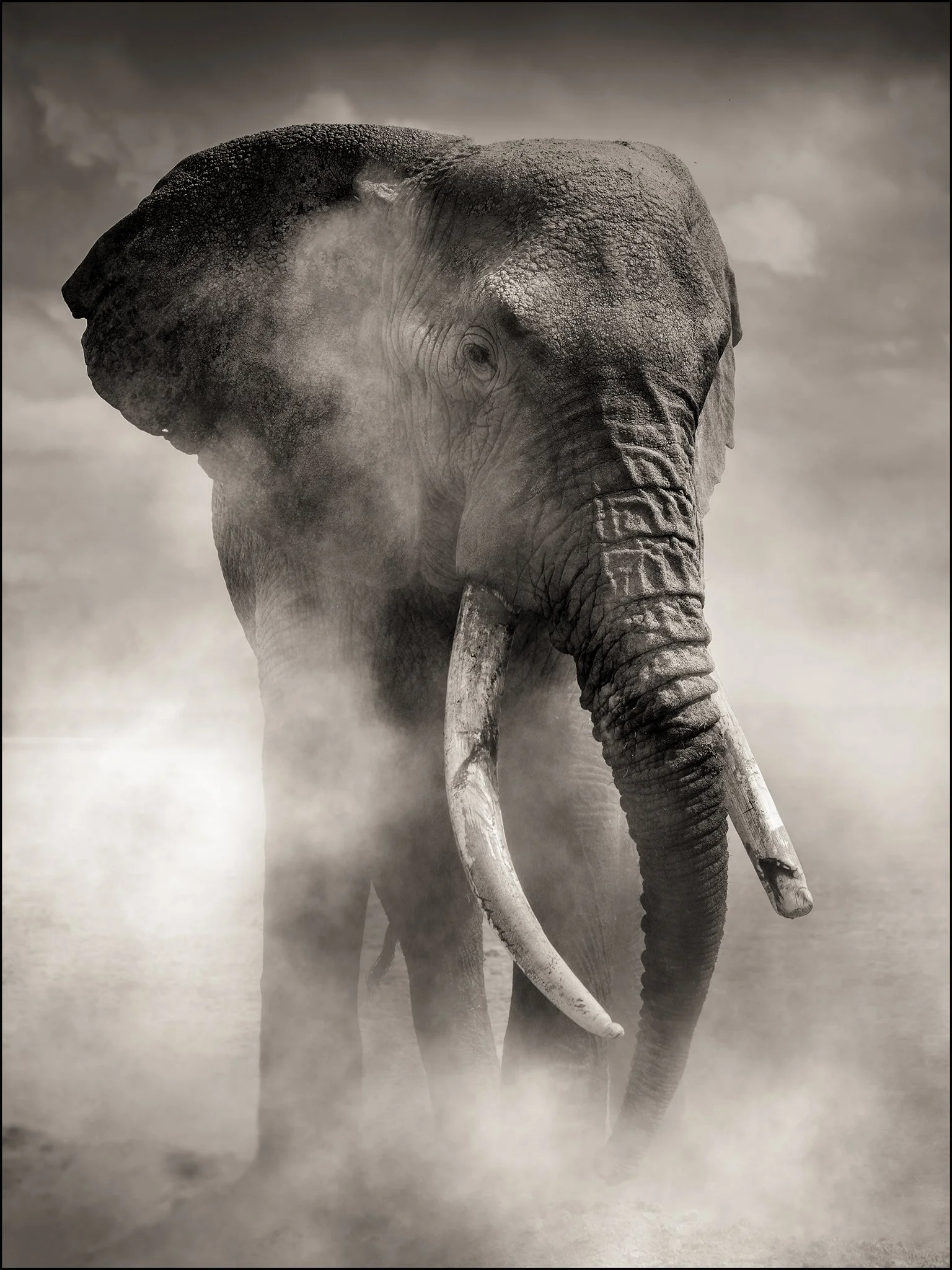
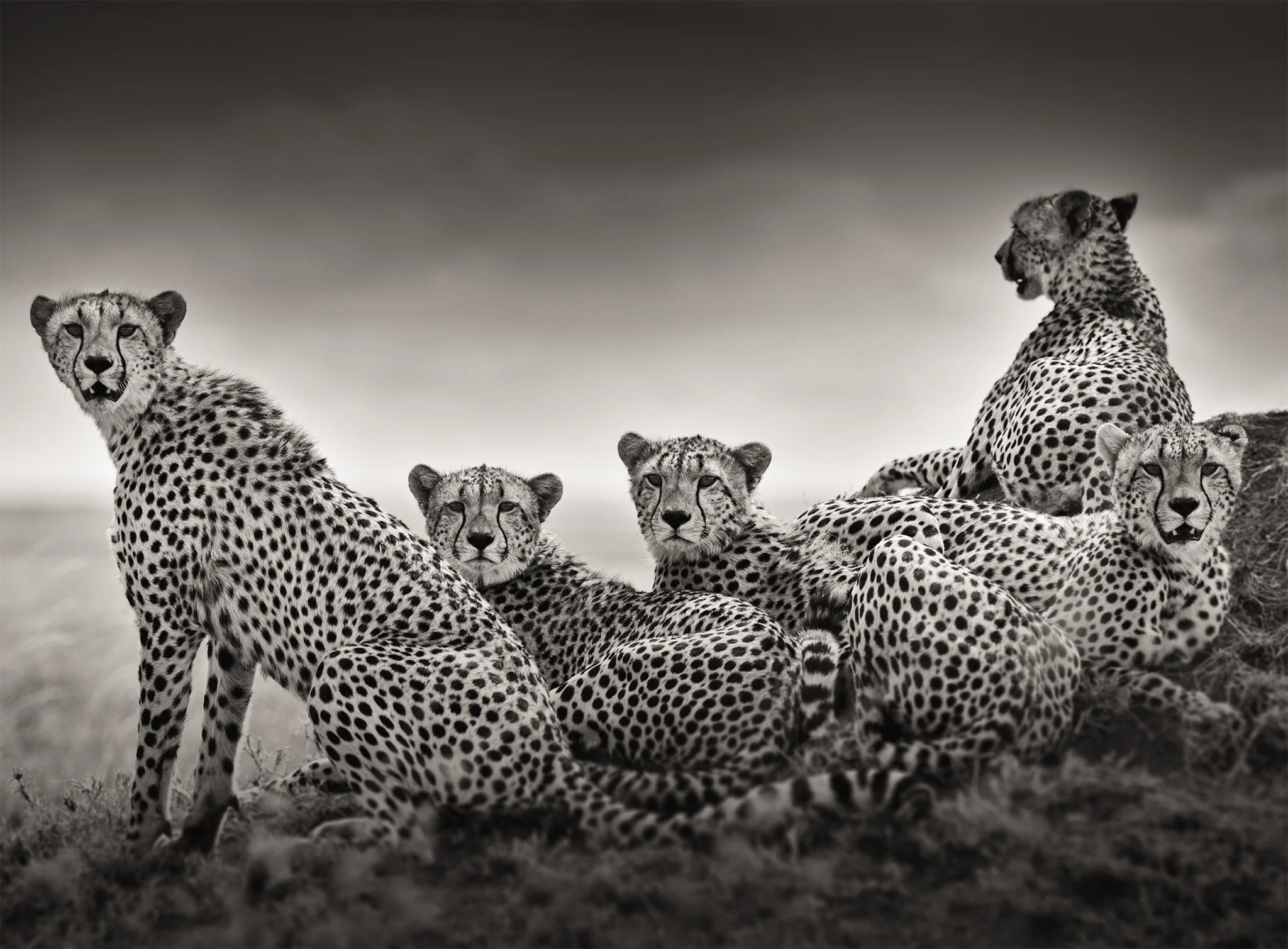
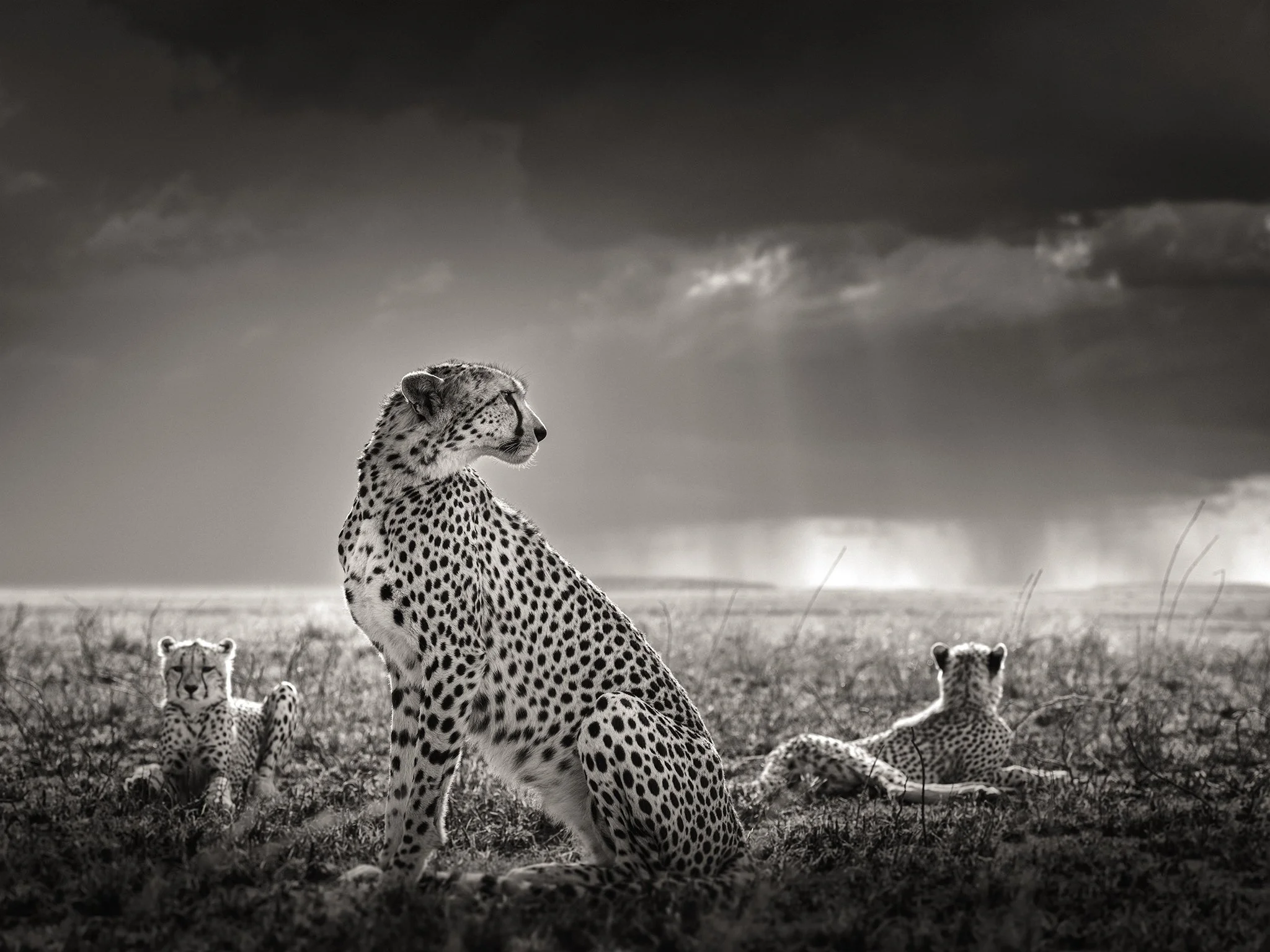
In Last of Their Kind, Joachim Schmeisser photographs endangered animals with rare closeness and calm. His portraits of elephants, rhinos, lions, gorillas, cheetahs, giraffes, and leopards are not made from a safe emotional distance. They show animals as individual beings, each with presence, character, and a life that feels painfully fragile.
Schmeisser did not arrive at this work through a simple idea.
In 2009, a short visit to the Sheldrick Wildlife Trust in Kenya brought him face to face with orphaned elephants, and the experience changed the direction of his photography. What began as one personal encounter slowly became a long meditation on beauty, extinction, and the responsibility of looking closely.
The Book
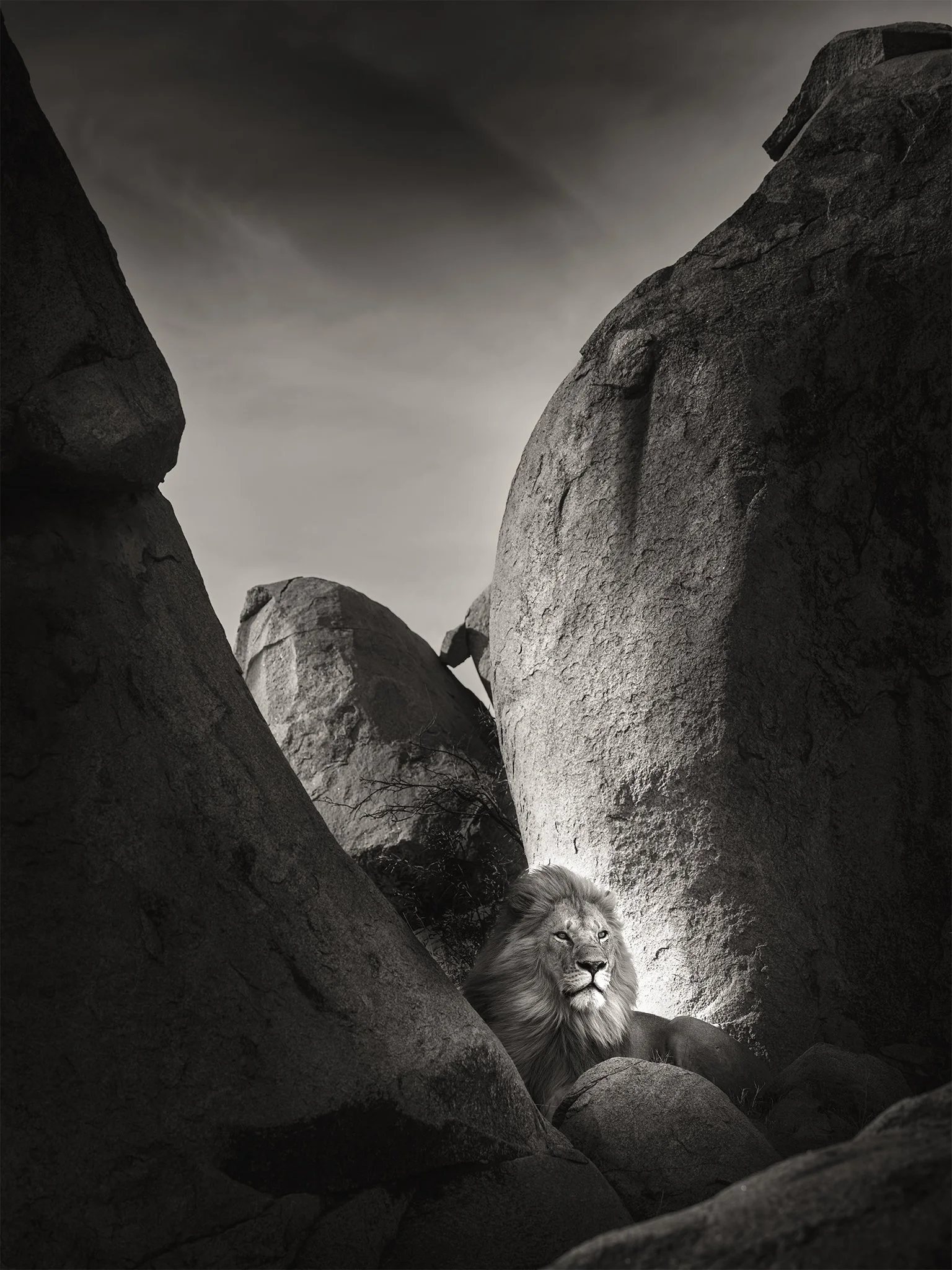
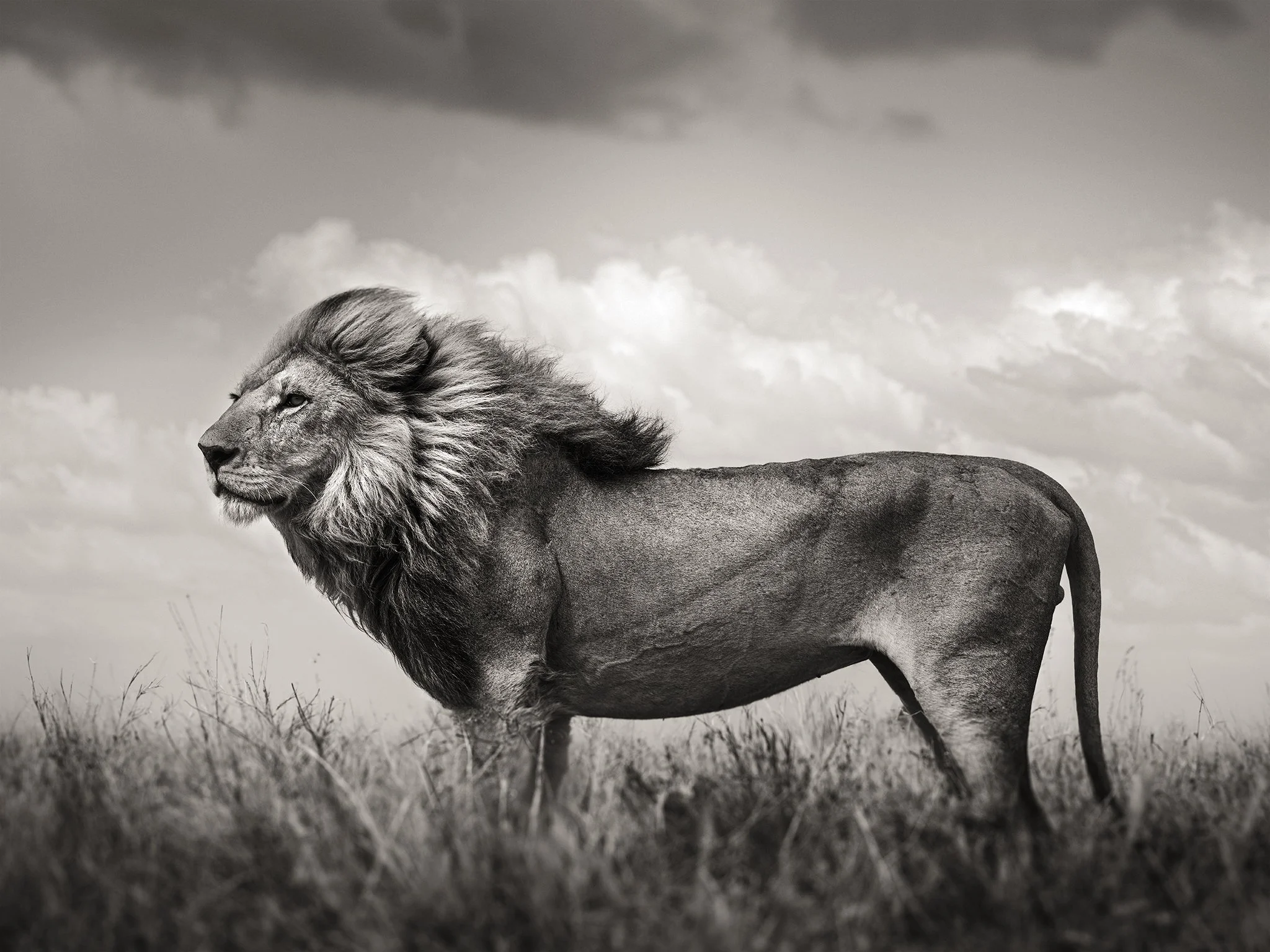
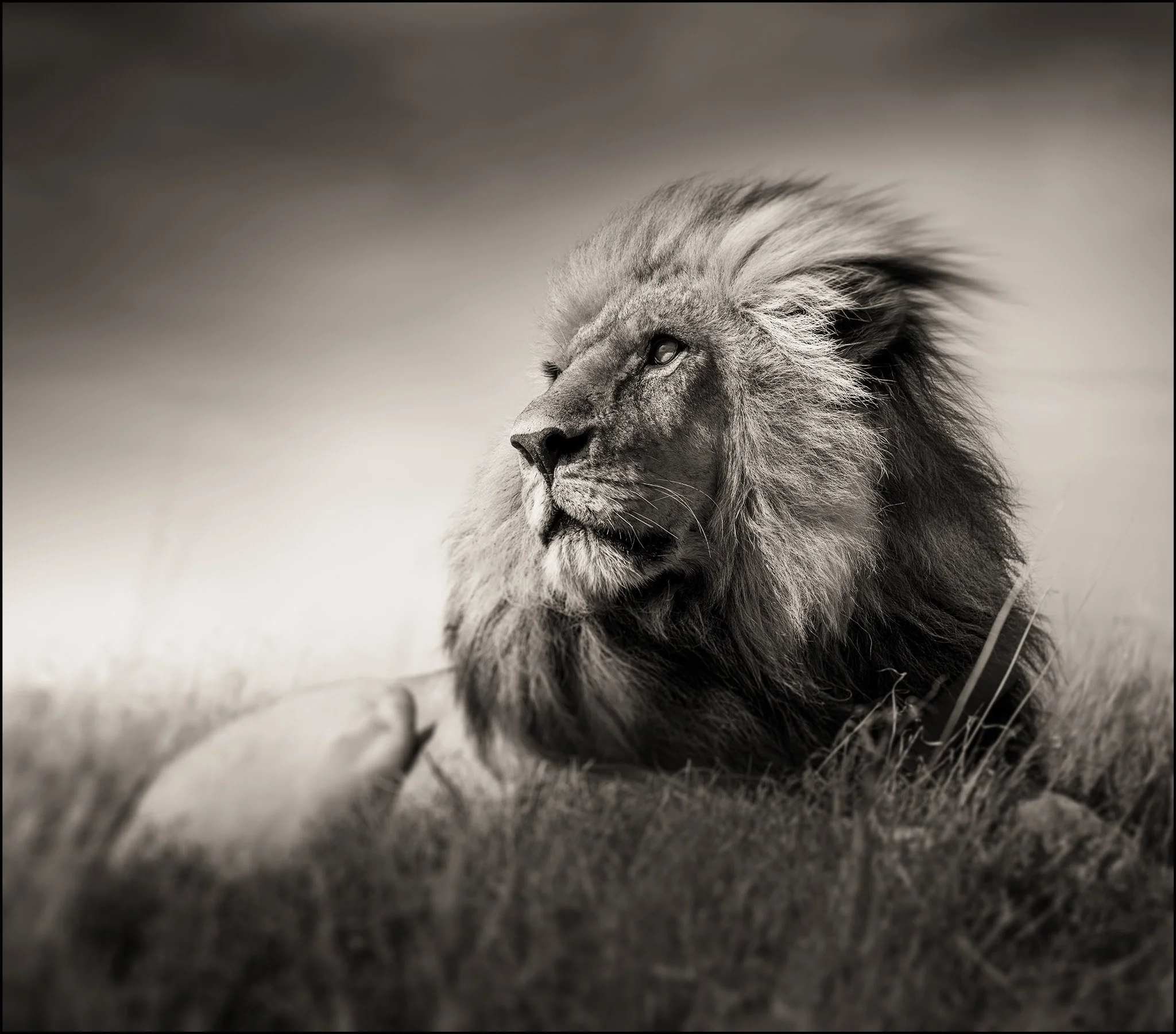
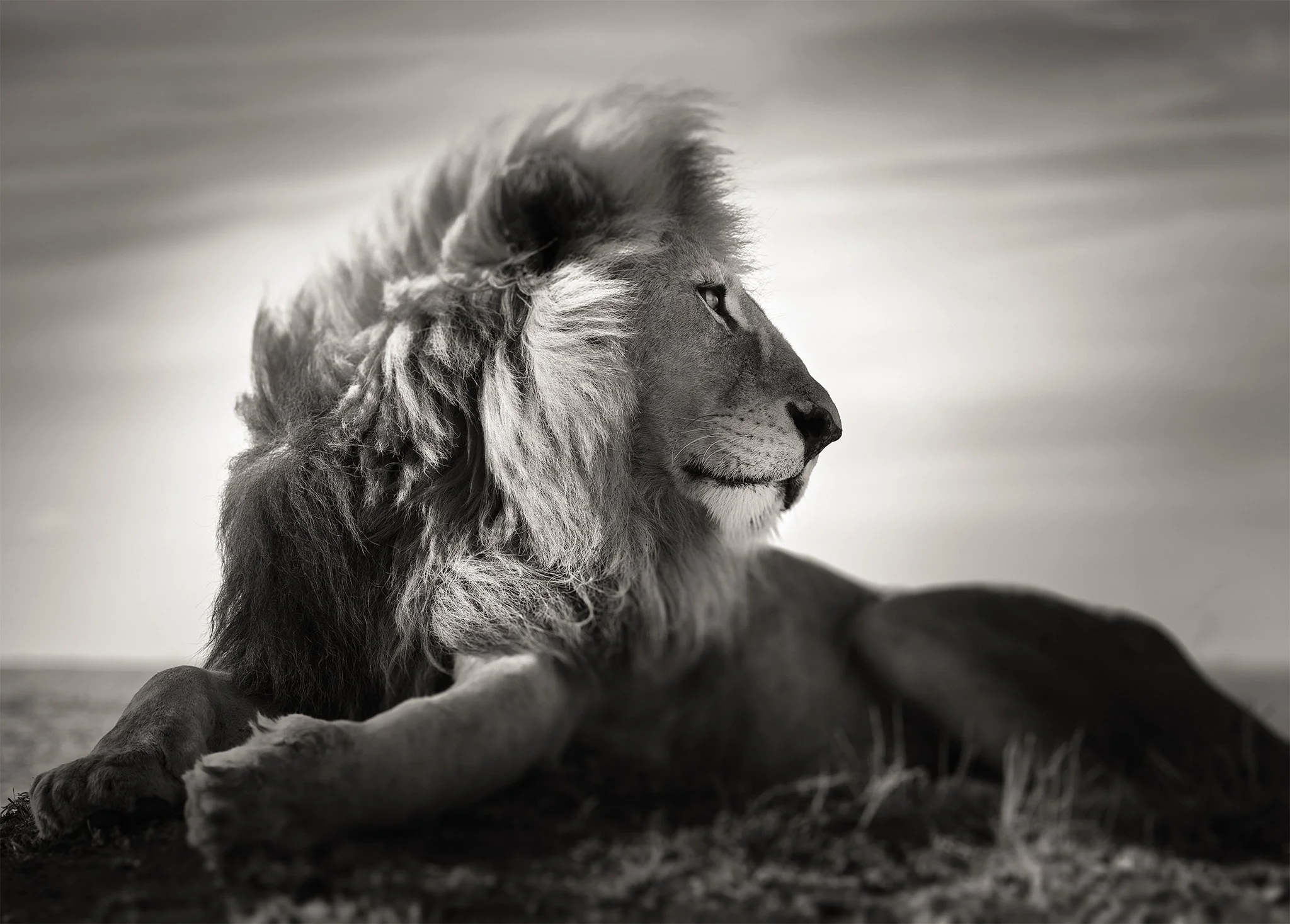
Last Of Their Kind by Joachim Schmeisser, published by teNeues, is a black-and-white photographic tribute to some of Africa’s most endangered animals. Across portraits of elephants, rhinos, giraffes, lions, cheetahs, leopards, and mountain gorillas, Schmeisser looks at these animals not as distant wildlife subjects, but as individual beings with dignity, presence, and vulnerability. The book brings together 111 photographs and includes a foreword by actor and WildAid Ambassador Djimon Hounsou. (Amazon)
Genesis: Your 2009 visit to the Sheldrick Wildlife Trust was meant to be a short stopover. What happened when you first found yourself surrounded by those orphaned elephants, and how did that moment eventually lead to “Last of Their Kind”?
My visit to the Sheldrick Wildlife Trust in 2009 was originally just a short stopover during a longer journey to Rwanda and Tanzania. At that time, I was already in the early stages of a personal and professional transition — moving away from over 30 years in commercial photography towards work that felt more meaningful and deeply connected to me.
The reason for the visit was quite personal: my wife had gifted our son the adoption of a one-year-old orphaned elephant named Kibo. I wanted to meet him — and photograph him. After some effort, we were granted a one-hour visit.
What happened during that hour completely changed me. I was not prepared for the emotional intensity of being surrounded by these orphaned elephants — each of them a survivor of trauma. In that moment, two things became very clear.
First, I became aware — in a very direct and visceral way — of the devastating reality facing elephants and many other species. Like most people, I had not fully understood the scale of it before.
Second, I realized that photographing these animals required a completely different approach. From the very beginning, I felt a need to portray them as individuals — as beings with presence, dignity, and personality. That first hour led to a long and deep relationship with the Trust, and eventually to my book Elephants in Heaven.
From there, the next step felt inevitable. Last of Their Kind was a continuation of that journey — and in many ways, it still is.
Approach: You describe your photography as being about closeness, not distance. How do you actually get that close to wild animals like lions or rhinos without using long lenses or remote cameras?
For me, there is a fundamental difference between working with long lenses and working with proximity.
A long lens creates distance — not just physically, but emotionally. It isolates the subject. That can be powerful, but it’s not how I want to work. My images are built on closeness — to the animal, but also to its environment.
Getting that close requires experience, patience, and a deep understanding of animal behavior, as well as the support of exceptional local guides.
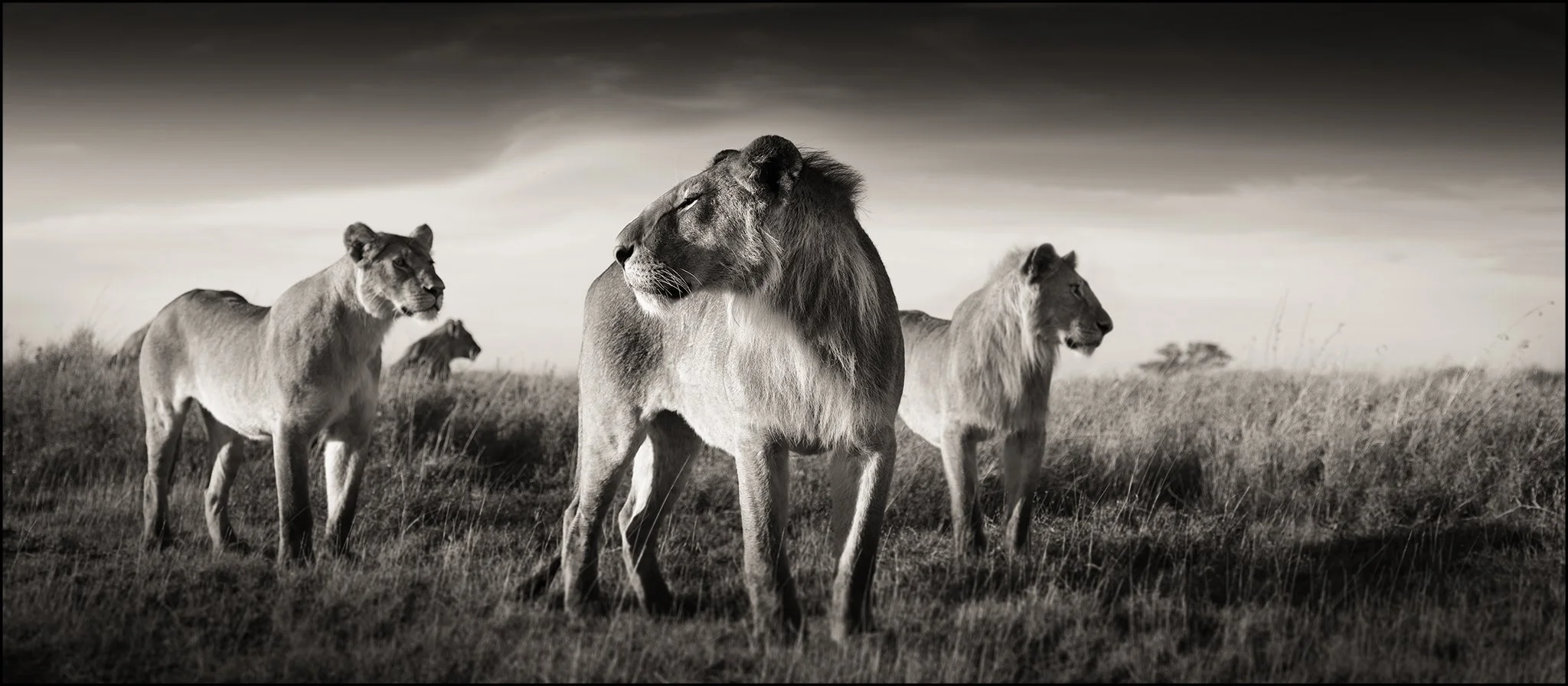
There have been moments where I was so close to lions I could have touched them. But it’s not about risk.
It’s about creating a space where the animal accepts your presence. That is where the image begins.
Black and white: Wildlife photography is usually shown in color. Why did you choose to photograph all of these animals in black and white, and what does it add to the images?
For me, black and white offers a much clearer visual language.
Color can often become too “talkative.” It introduces information that isn’t essential and can distract from the core of the image. By removing color, I can focus on light, form, texture, and presence. It allows the image to become more direct and more concentrated.
That said, I do use color when it plays an essential role — but always in a very controlled way.
Ultimately, my work is not about wildlife photography in the traditional sense. It is about creating portraits — and black and white allows me to approach these animals in a way that feels more timeless and more human.
Individuals: You say these animals are not subjects but individuals with personalities. How do you wait for or recognize that individual quality in front of your camera?
There is a fundamental difference between observing an animal from a distance and being present with it. When you are far away, you capture an image — but you are not part of the moment. When I work, I spend time in close proximity. And in that space, something shifts. The animal becomes aware of you — and you become aware of it.
It’s a quiet and subtle form of communication. I can feel when the animal begins to acknowledge me, and its behavior changes — often just slightly, but in a meaningful way. These are the moments I wait for.
Sometimes, it feels as if the image is being allowed to happen. But this cannot be forced. It requires patience, experience, and sensitivity. In the end, these portraits are not taken — they are given.
Equipment: You shoot with medium-format cameras at very close range. What does that format give you that a smaller camera would not, and what does it take away?
I’ve worked with medium format cameras for most of my life, originally in a studio environment. Technically, they offer advantages — larger format, dynamic range, and a distinct rendering of depth and detail.
But what interests me more is what they don’t do. They are not built for speed. They are slower, less forgiving.
In wildlife photography, that’s usually seen as a disadvantage. For me, it’s the opposite.
They force me to slow down — to be more precise, more deliberate, more present. I’m not chasing action. I’m waiting for presence. And when everything comes together, the level of detail and tonal depth allows the images to exist in large formats with a strong physical presence.
Amboseli: Much of this work was made in Amboseli National Park, where Maasai tribespeople and other organizations (such as the Amboseli Trust for Elephants) protect the animals. How did that relationship with the Maasai affect your access and your pictures?
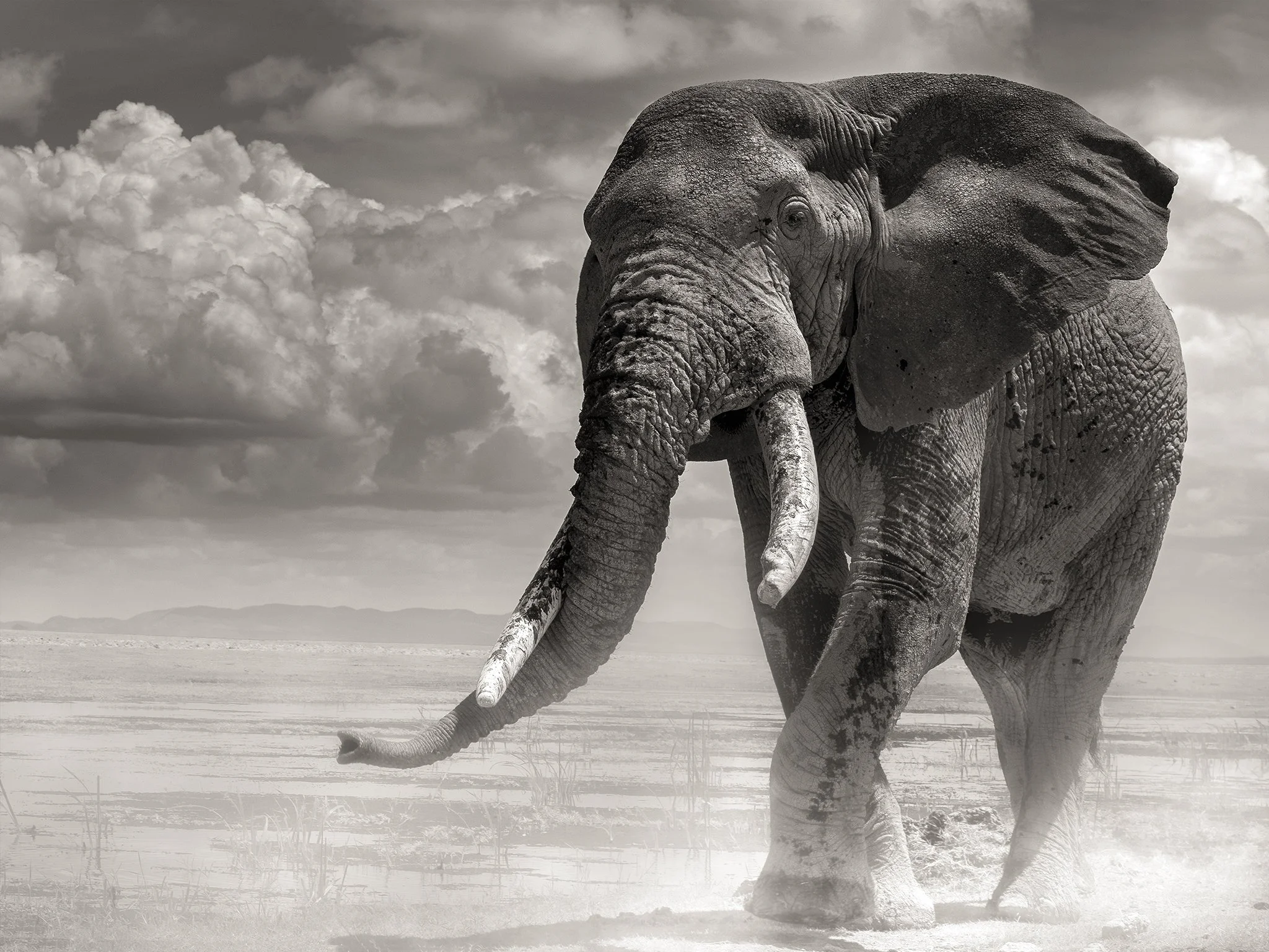
Amboseli is one of the most extraordinary places I’ve ever worked in. What makes it unique is the relationship between the animals and the people. The Maasai have lived alongside these animals for generations, and there is a deep mutual respect.The elephants feel that.
They are more relaxed, more present, less defensive than in many other places. That creates a completely different kind of access — not just physically, but emotionally. Over the years, I’ve been able to spend time very close to some of the great tuskers. That kind of proximity is only possible because of the environment of trust. And that trust becomes part of the image.
Extinction: There are only two northern white rhinos left in the world. How do you photograph an animal that is almost gone without making the image feel like a funeral?
The awareness of loss is always present in my work. When you spend time with these animals, you know that many of them may not exist in the future. But I don’t approach it as something mournful. I work in the space between beauty and transience. Through photography, I can give a moment a certain permanence — allowing it to be seen, remembered, and felt.
Over the years, I’ve photographed great tuskers like Craig, Primo, and Tim. They are no longer alive. But the images remain. And in that sense, they continue to exist.
Selection: The book covers seven different species, from gorillas to cheetahs. How did you decide which images belonged together in one book, and what did you leave out?
The selection of species was not random, even if it may seem intuitive.
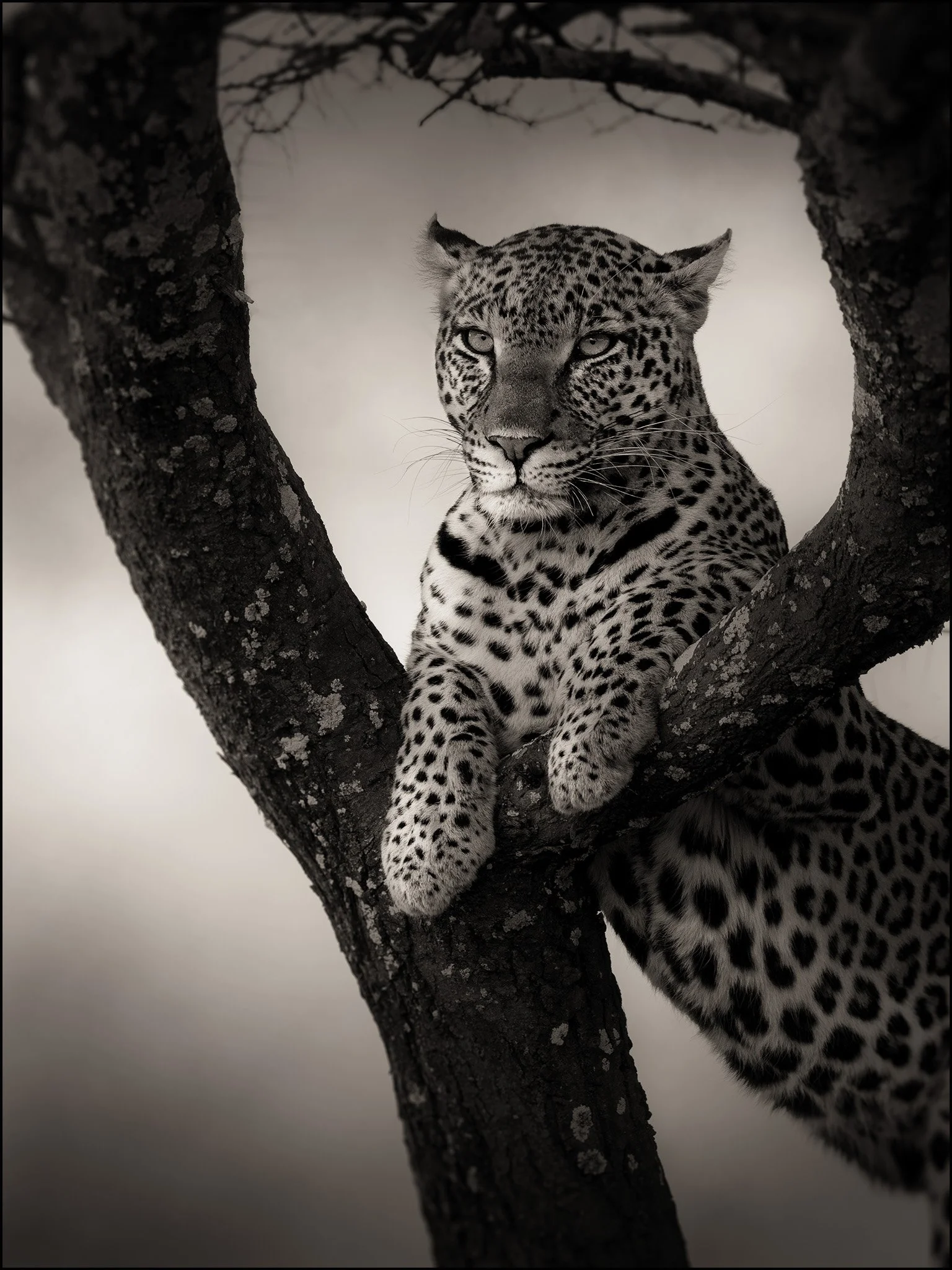
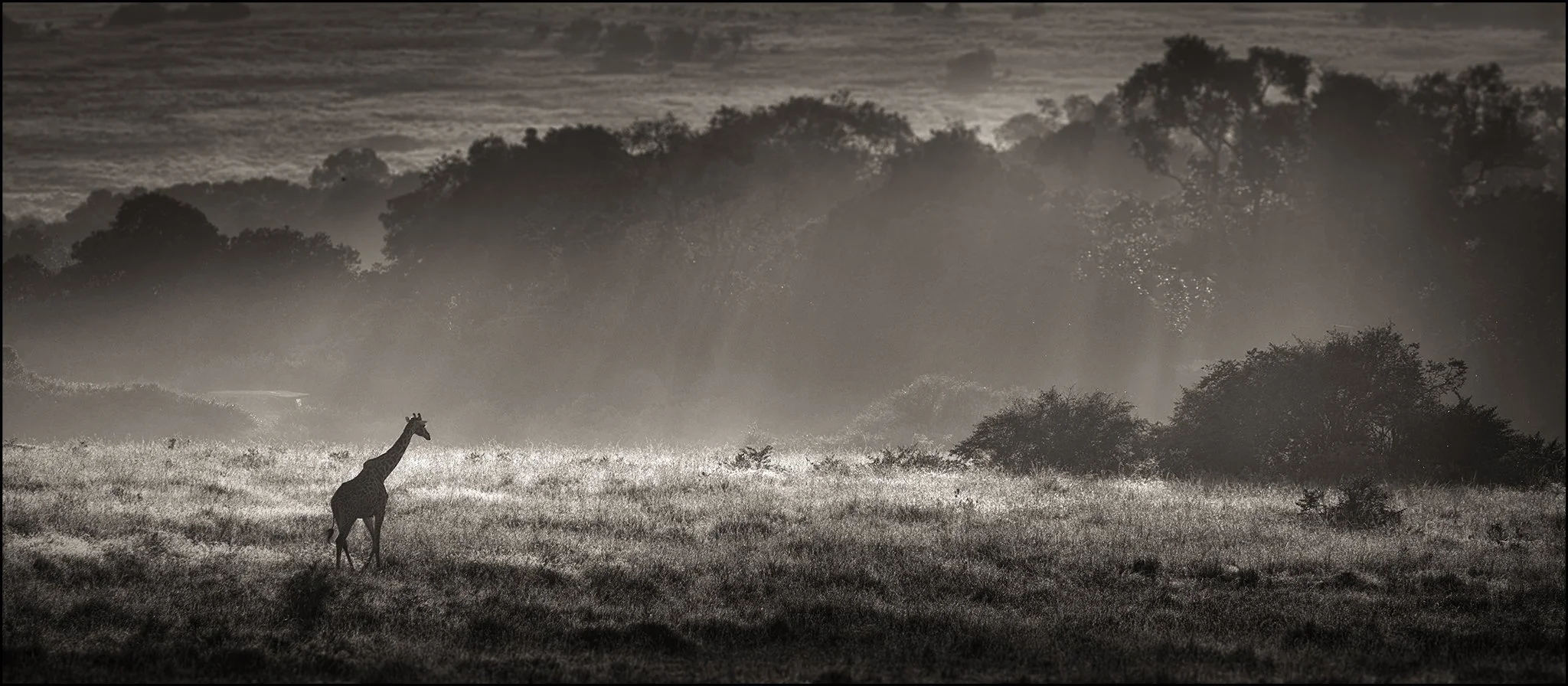
I’ve been drawn to a small group of animals — gorillas, elephants, rhinos, giraffes, lions, cheetahs, and leopards. On one level, they are among the most endangered species, which gives the work urgency. But on a deeper level, they carry a presence that resonates with us — strength, dignity, vulnerability.
The editing process follows the same principle. It’s not about showing everything, but about creating a coherent body of work — in rhythm, atmosphere, and emotional weight. Some images are strong on their own, but do not belong in that specific dialogue. And that means leaving out many images that might be powerful individually.
Beyond photography: Djimon Hounsou wrote the introduction to “Last of Their Kind.” What does it mean to you when a book like this moves beyond the photography world and reaches a wider audience?
When Djimon saw the images, he understood them immediately — not just visually, but in terms of what they represent. His preface goes far beyond photography. He speaks about responsibility, about humanity, about the fragile balance we are part of.
That is incredibly valuable to me. Because the intention behind my work has never been limited to photography itself. It is about creating awareness — about making people feel something, and perhaps shifting perspective.
If the work can move beyond the photographic world and reach people on a more human level, then it has fulfilled its purpose.
To discover more about this intriguing body of work and how you can acquire your own copy, you can find and purchase the book here. (Amazon)
More photography books?
We'd love to read your comments below, sharing your thoughts and insights on the artist's work. Looking forward to welcoming you back for our next [book spotlight]. See you then!
The past became visible once Richards learned where to look. For The Inner Passage, Virginia McGee Richards spent fifteen years photographing a waterway in the South Carolina Lowcountry. Photography Book Spotlight