How Corinne Botz Turned Hidden Lactation Rooms Into a Powerful Portrait of Modern Motherhood and Work
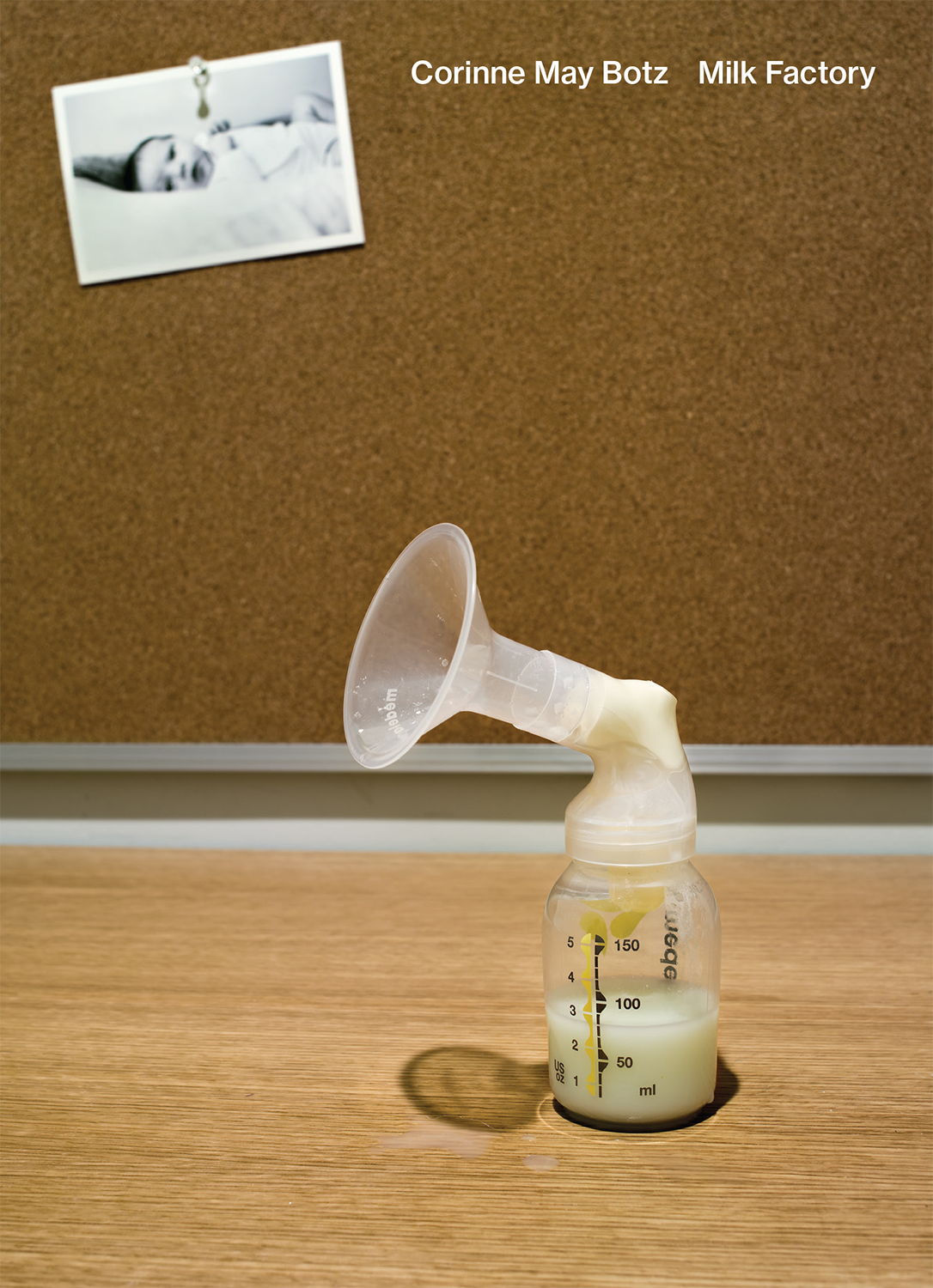
Welcome to this edition of [book spotlight]. Today, we uncover the layers of 'Milk Factory,' by Corinne Botz (published by Saint Lucy Books). We'd love to read your comments below about these insights and ideas behind the artist's work.
What does motherhood look like at work?
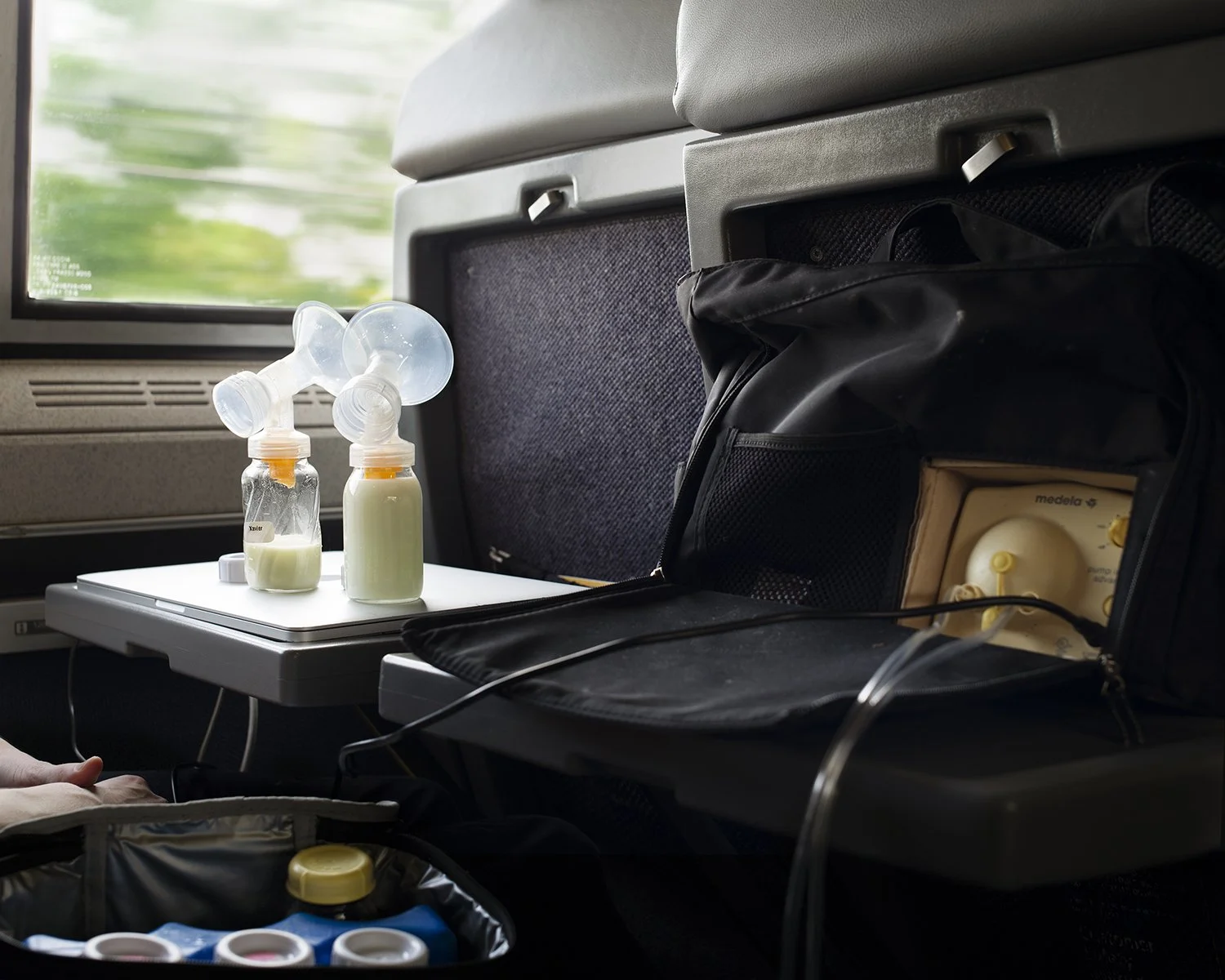
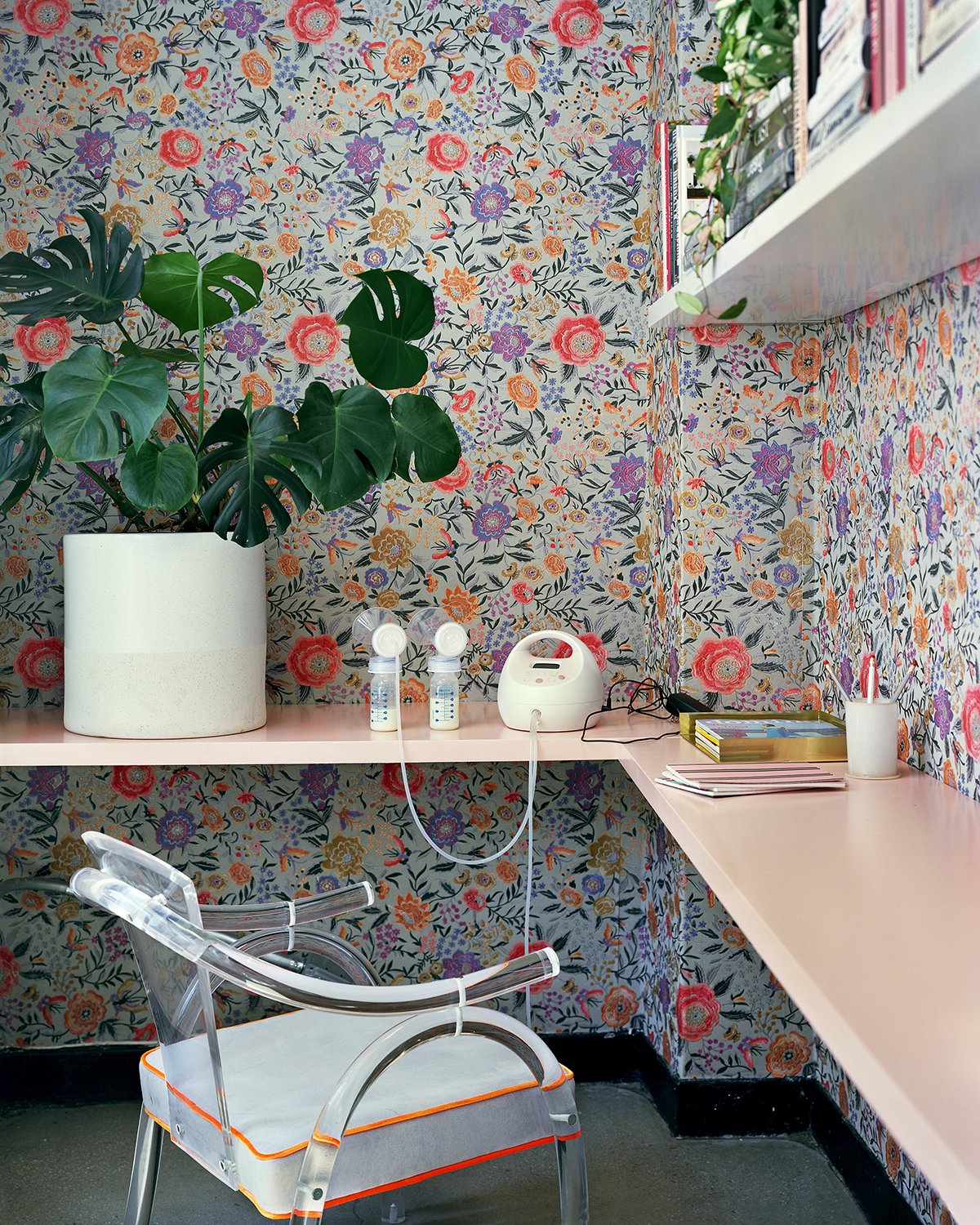
Corinne Botz looks at that question through lactation rooms, the hidden spaces where women pump milk during the workday. In Milk Factory, these rooms become quiet records of labour, care, pressure, and absence. The project is not only about private experience, but also about the systems that shape what motherhood looks like in public life. It shows that pumping is not a side detail of motherhood, but one of its clearest modern realities.
What do these empty rooms tell us that portraits cannot?
By photographing each space just after the mother left, Botz turns ordinary workplaces into powerful signs of effort, isolation, and endurance. In this interview, she explains why absence mattered, how she gained access to such different locations, and why pumping felt like a more honest image of parenthood today. It is a conversation about photography, but also about work, policy, and the hidden labour many people are asked to carry alone.
A lactation room can reveal an entire culture.
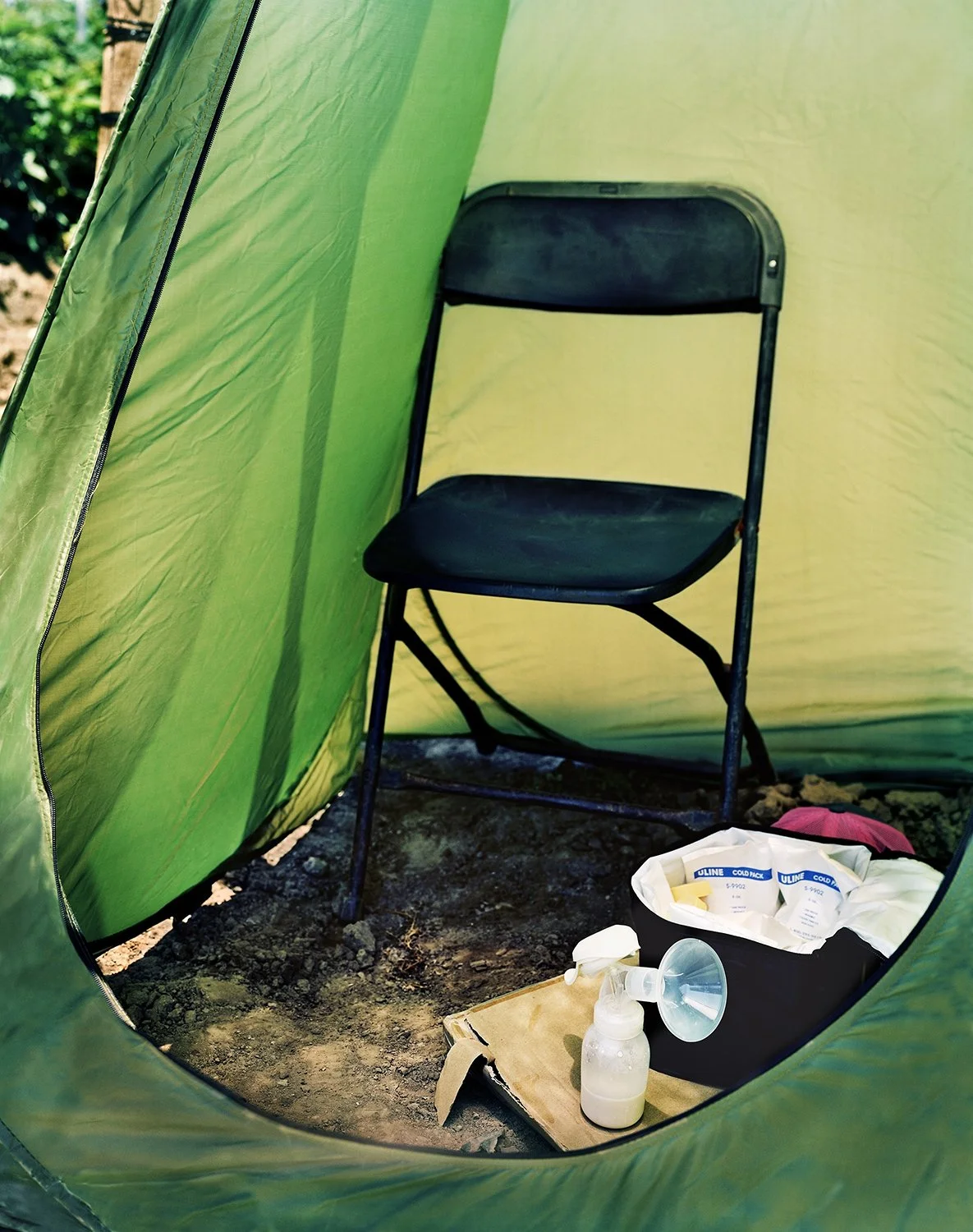
The Book
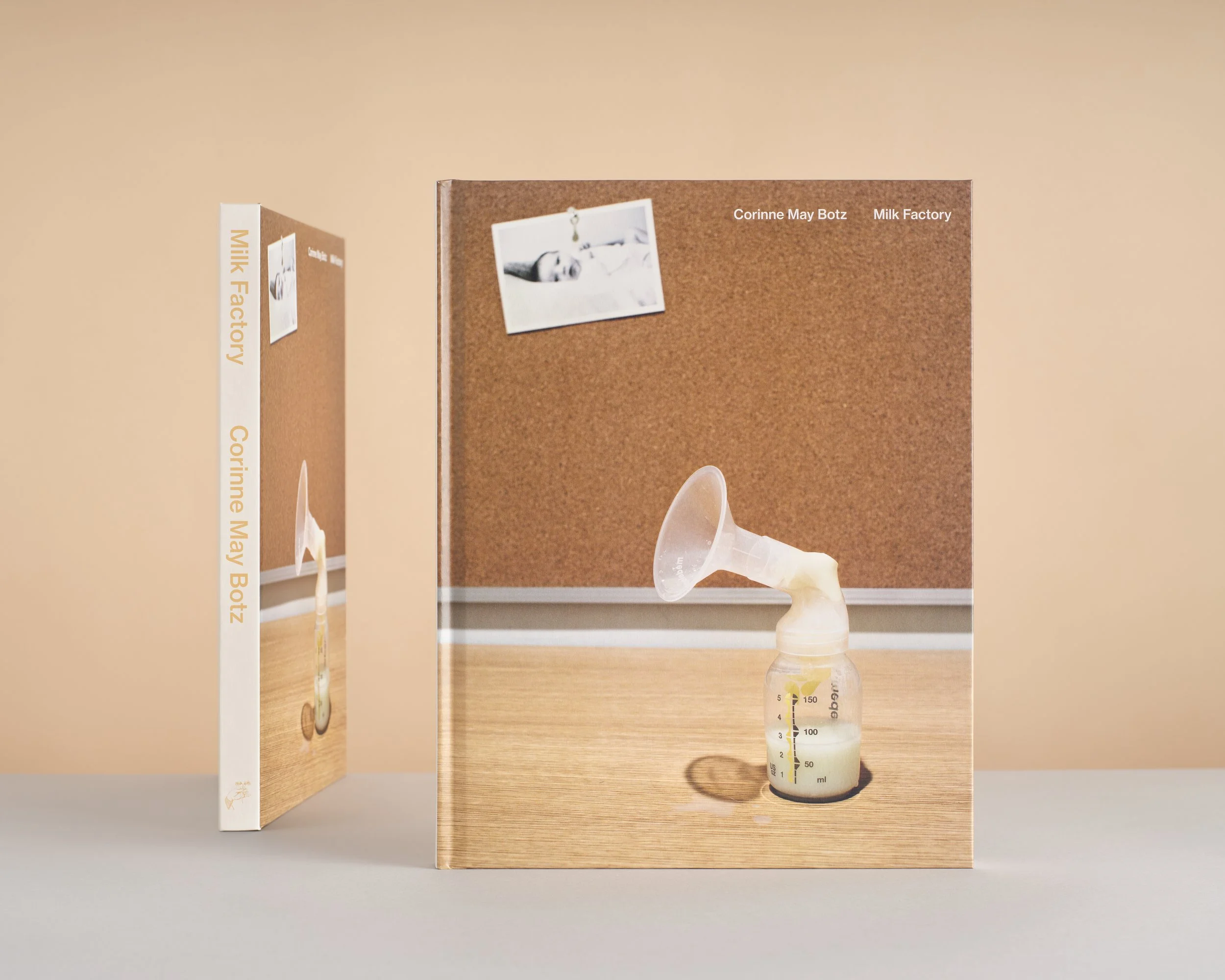
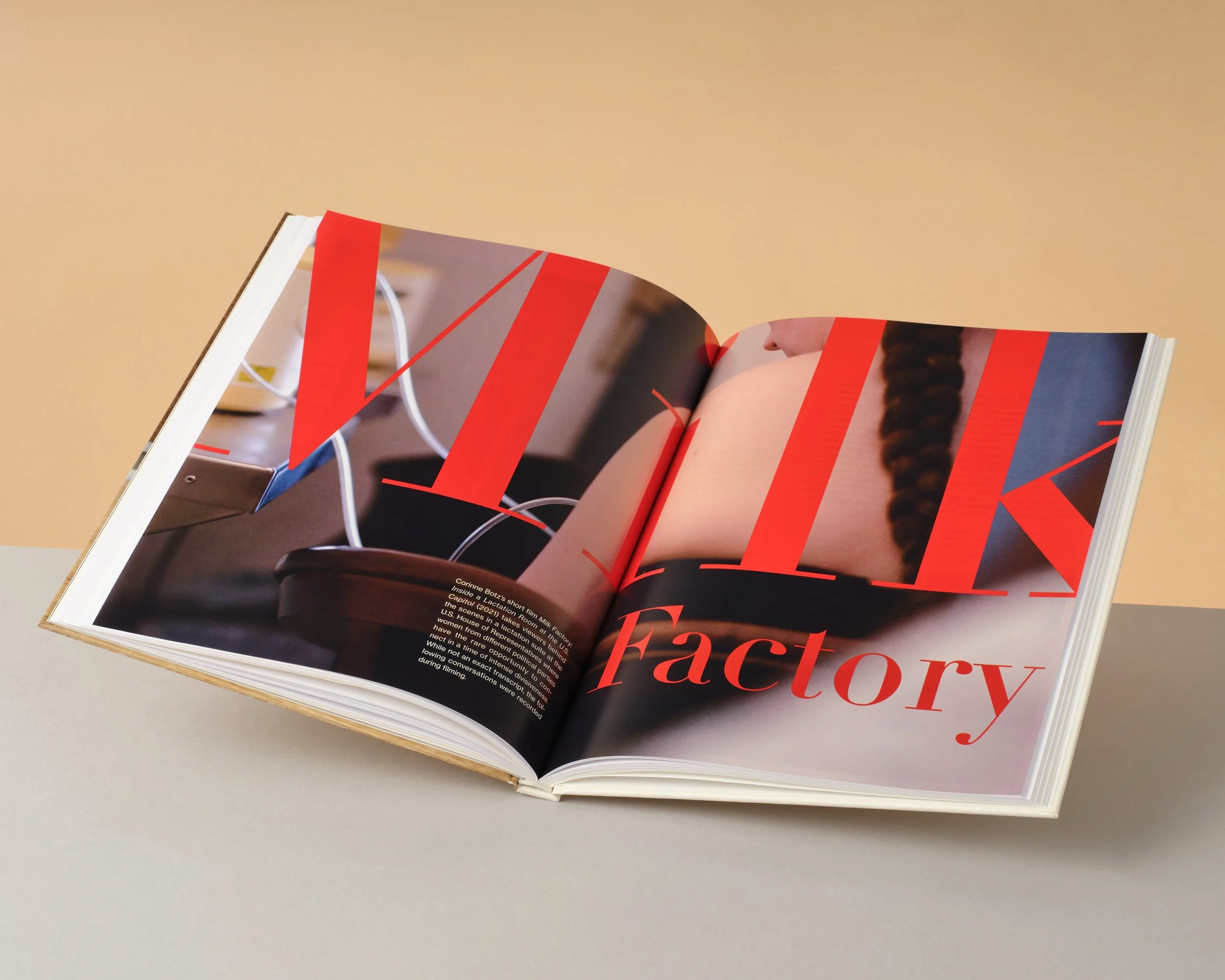
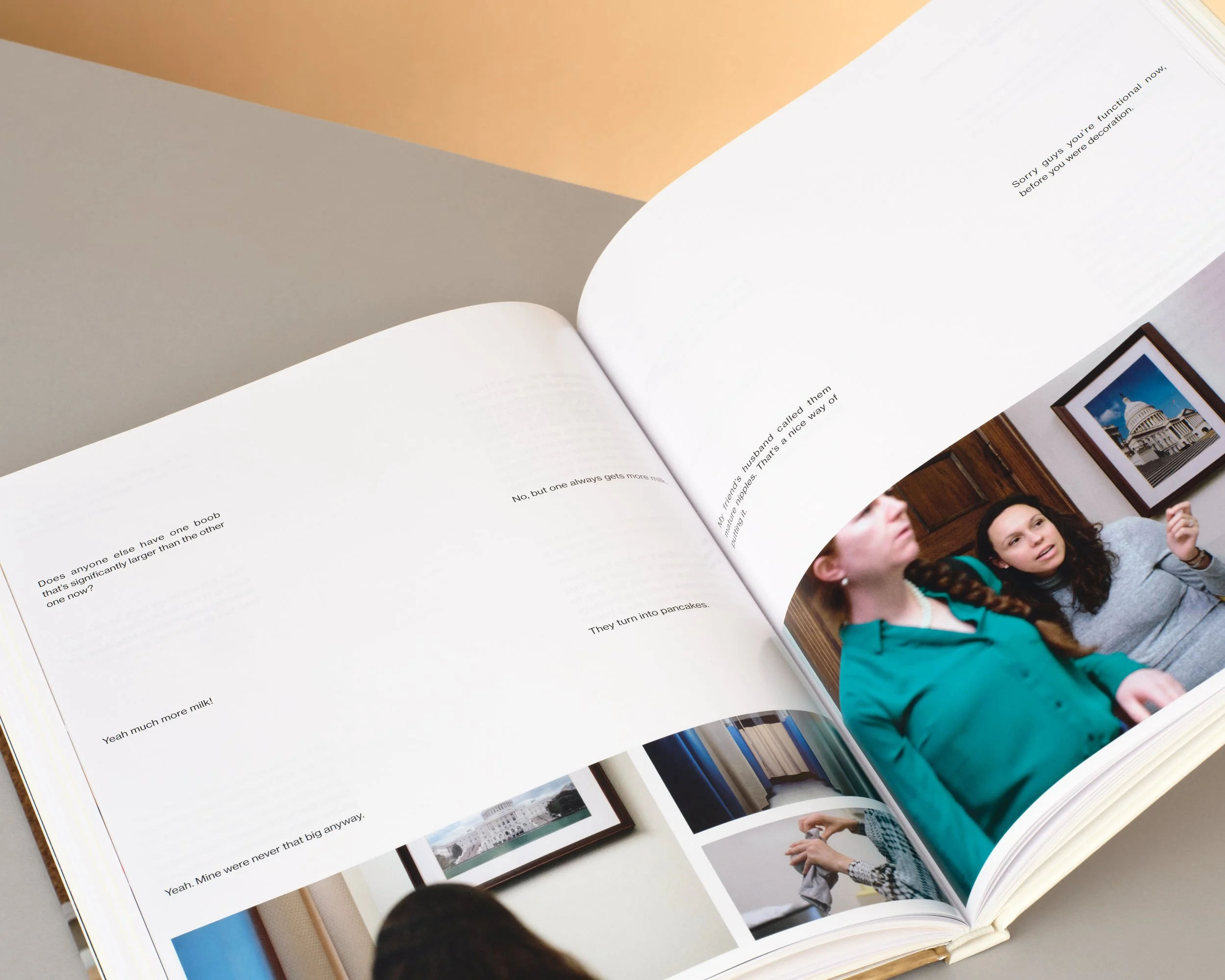
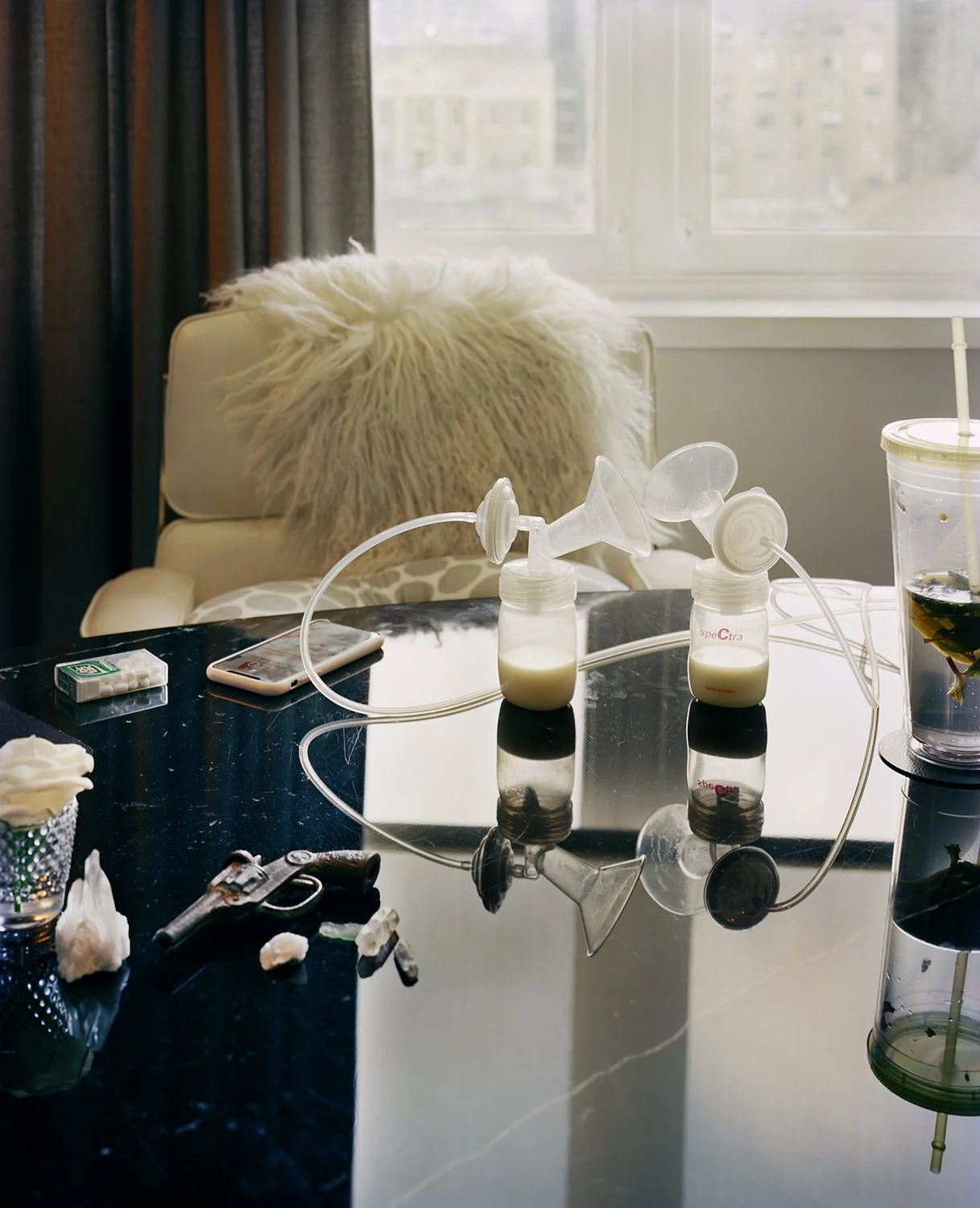
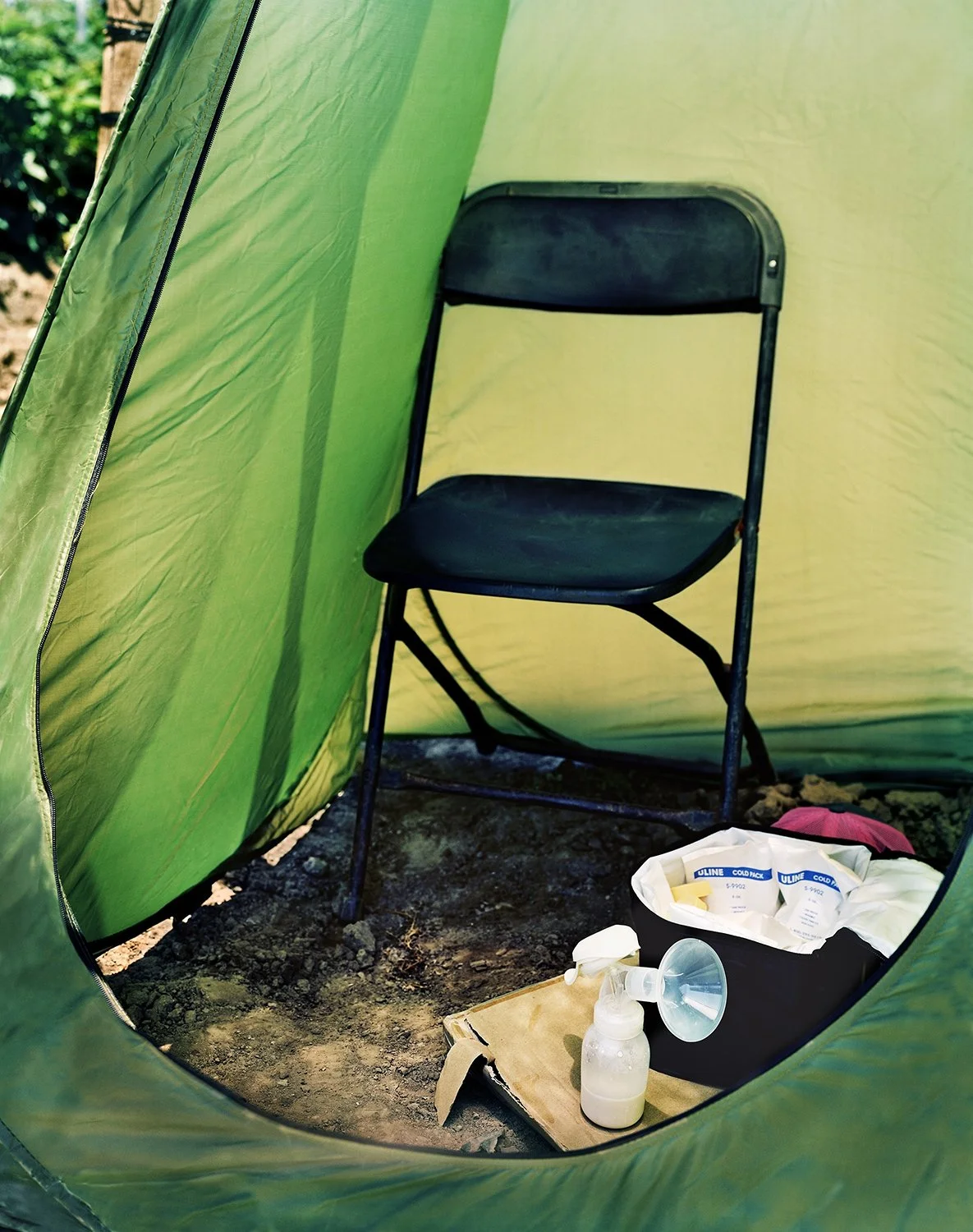
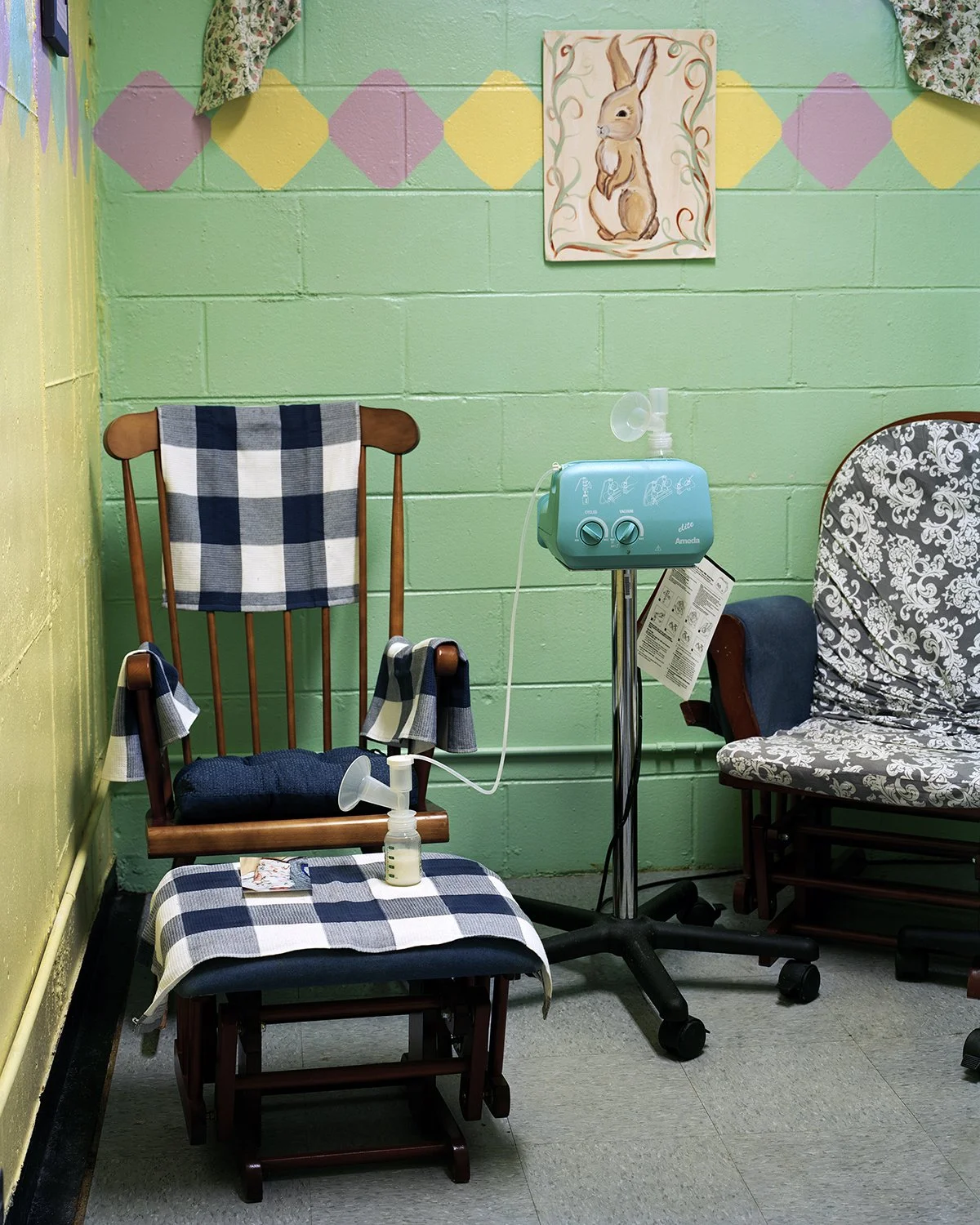
Milk Factory by Corinne Botz, published by Saint Lucy Books in 2025, is a photography book about the hidden spaces where working mothers pump milk during the day. Through photographs made in places as different as a prison, an airport, schools, a farm labourer’s tent, a banking firm, and the U.S. Capitol, the book records what Botz describes as the invisible labour inside America’s lactation rooms. Designed by Luminosity Lab, the 130-page hardcover combines photographs with additional texts and testimonies, expanding the project beyond documentation into a wider reflection on motherhood, work, care, and public policy. (Saint Lucy Books)
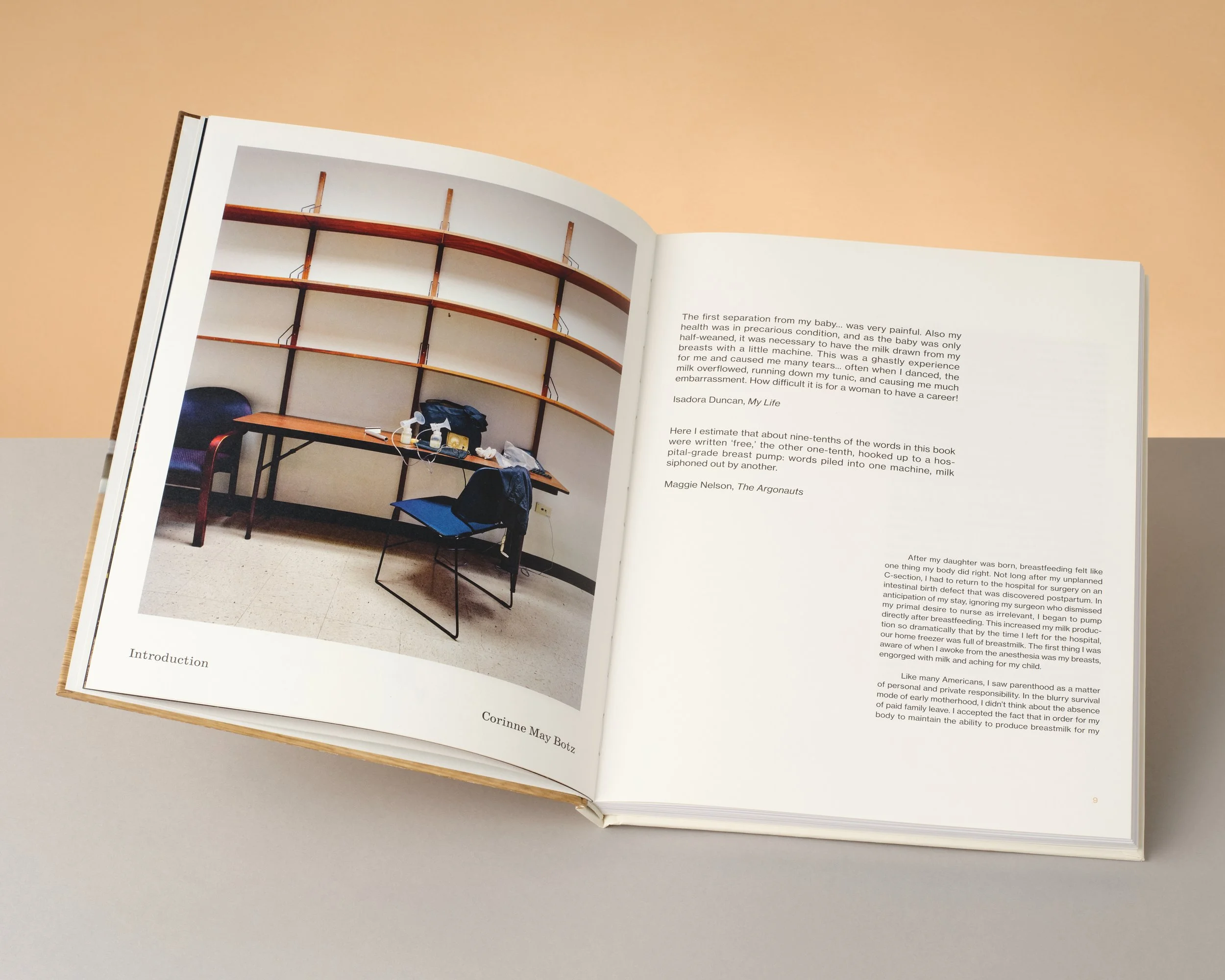
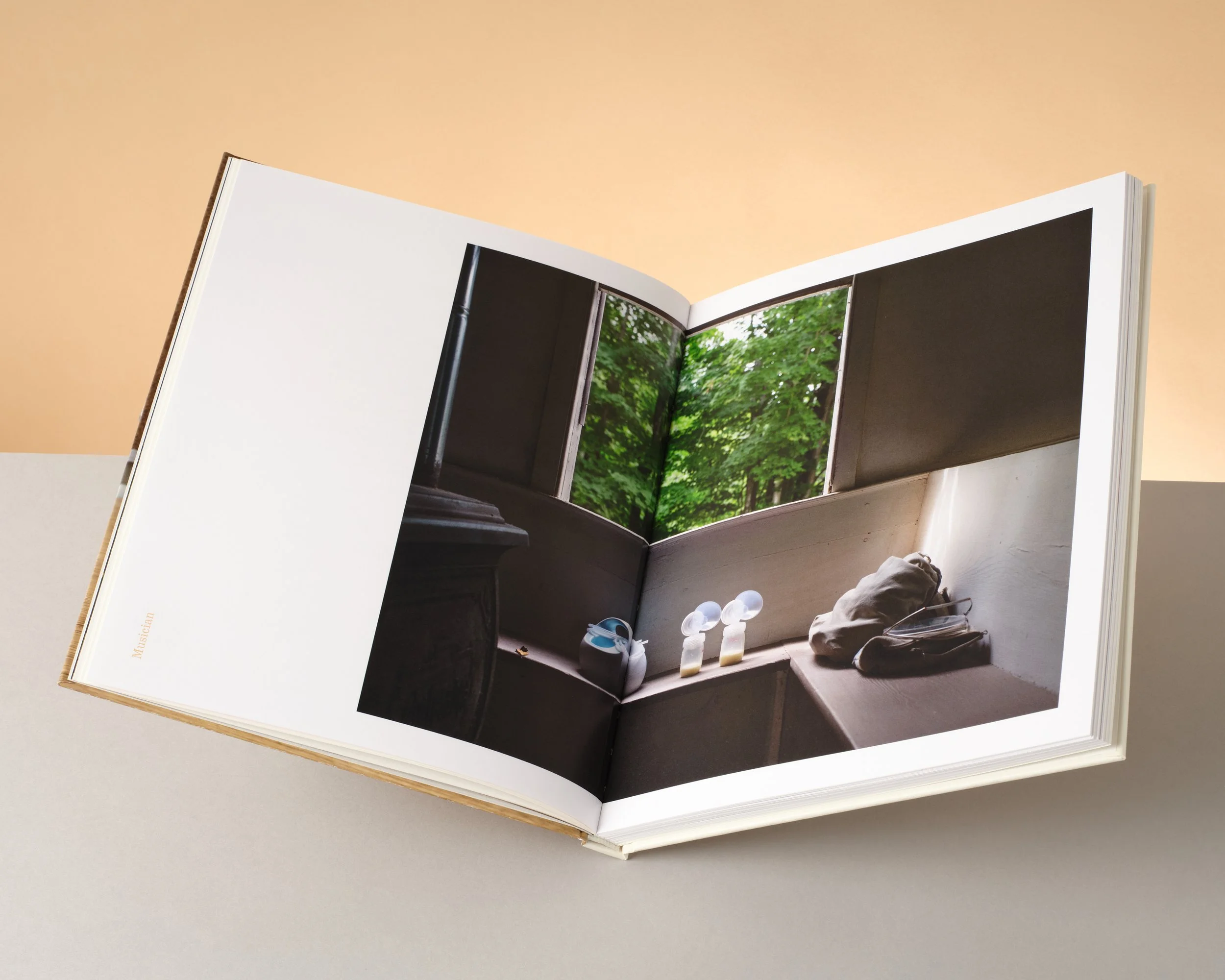
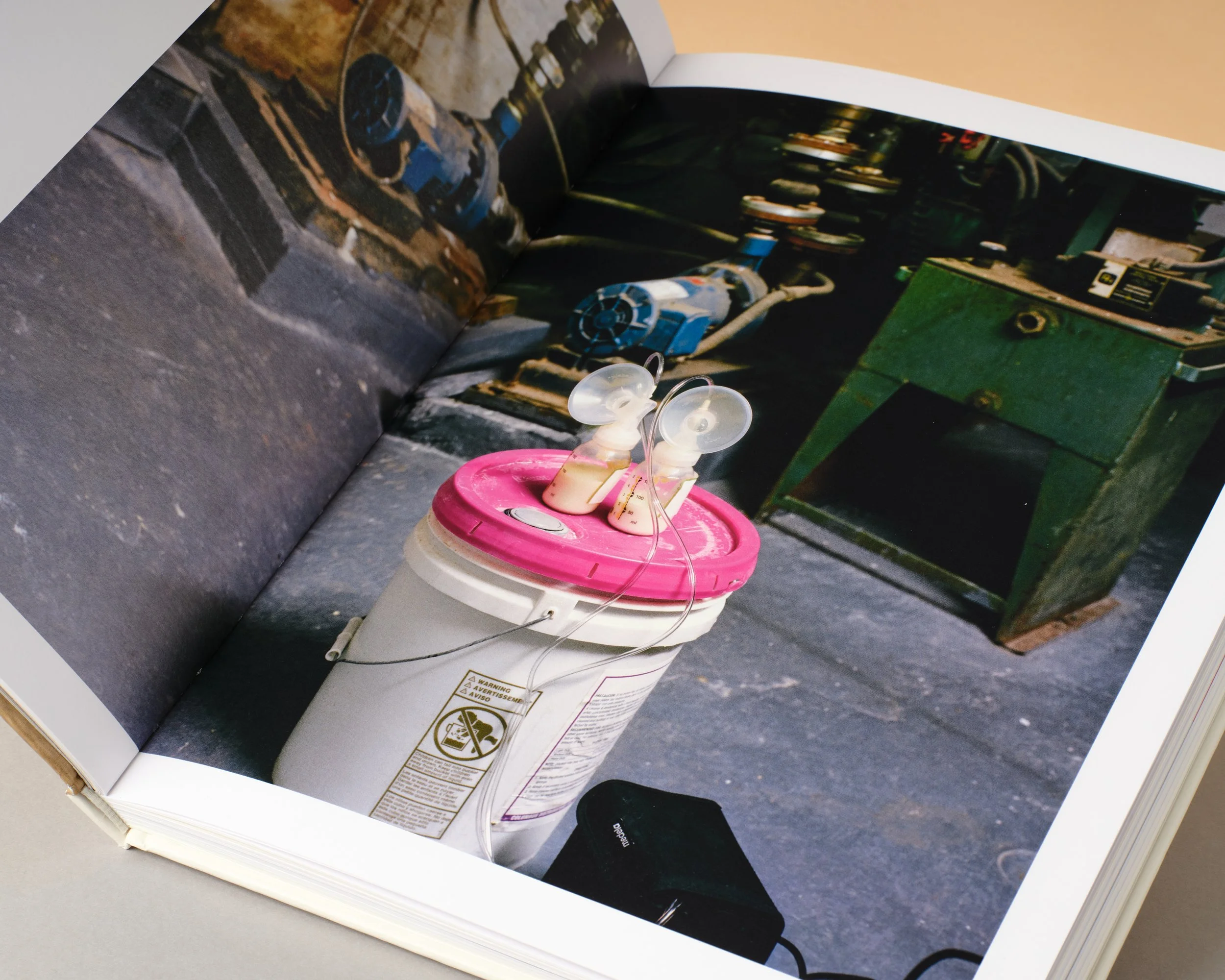
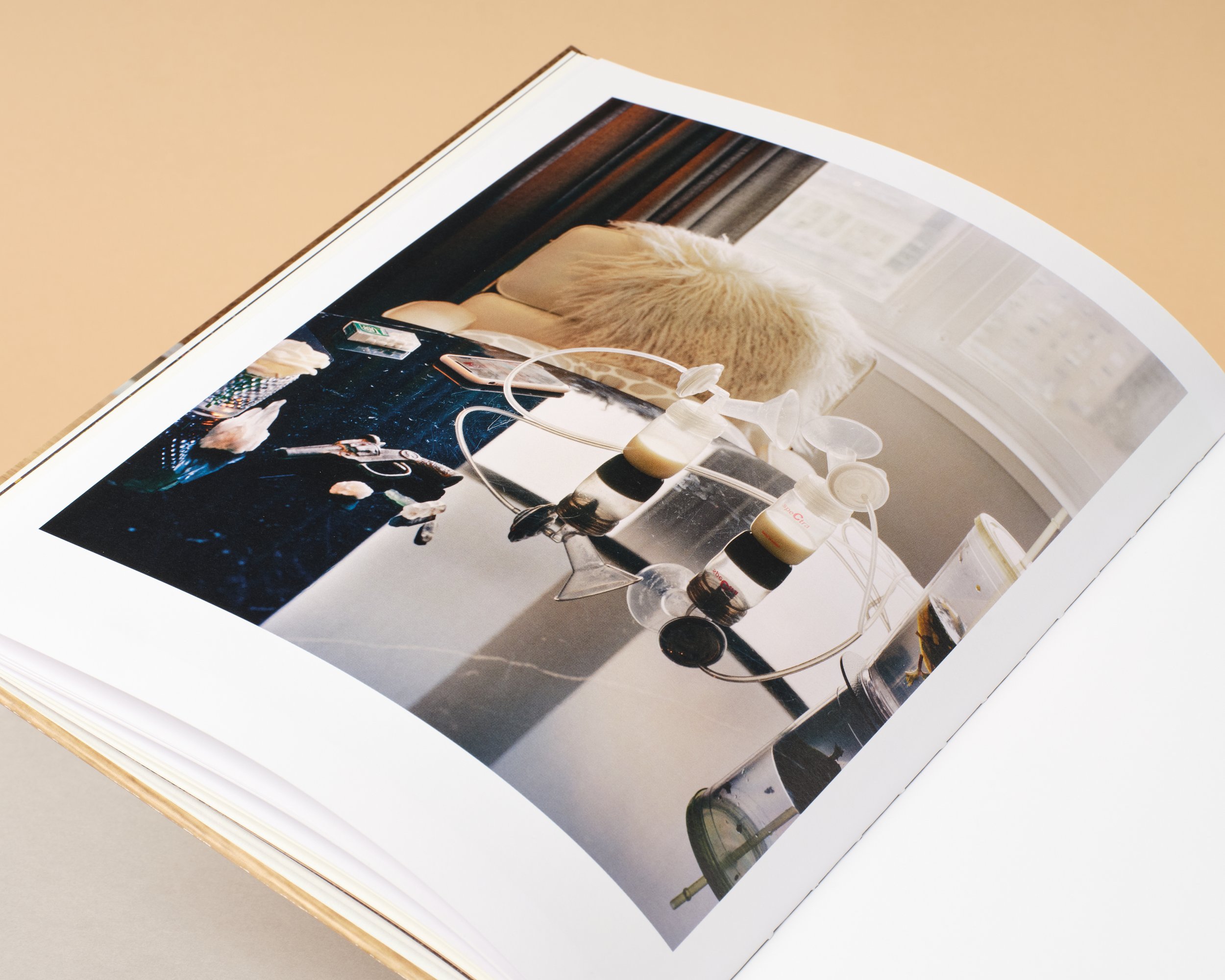
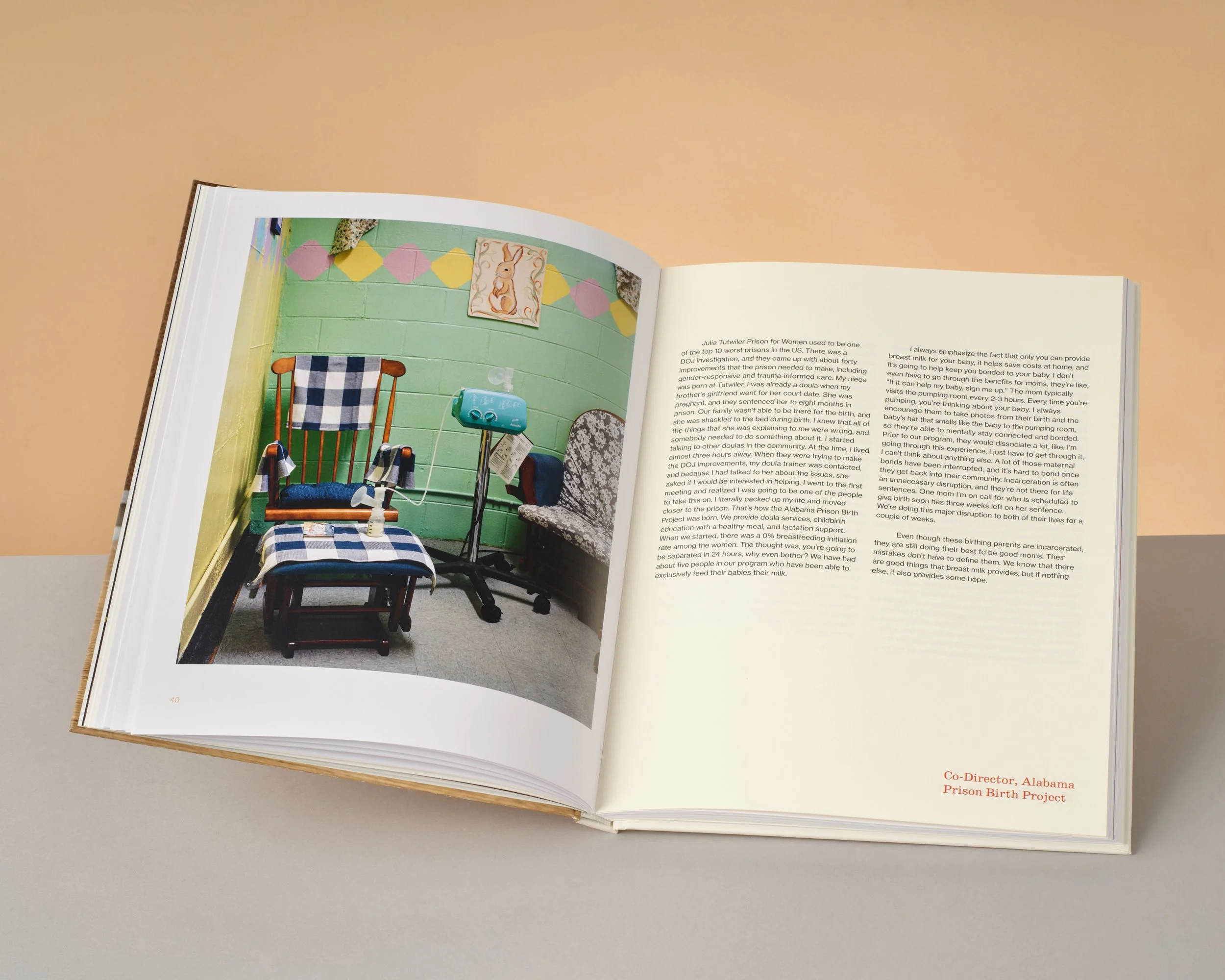
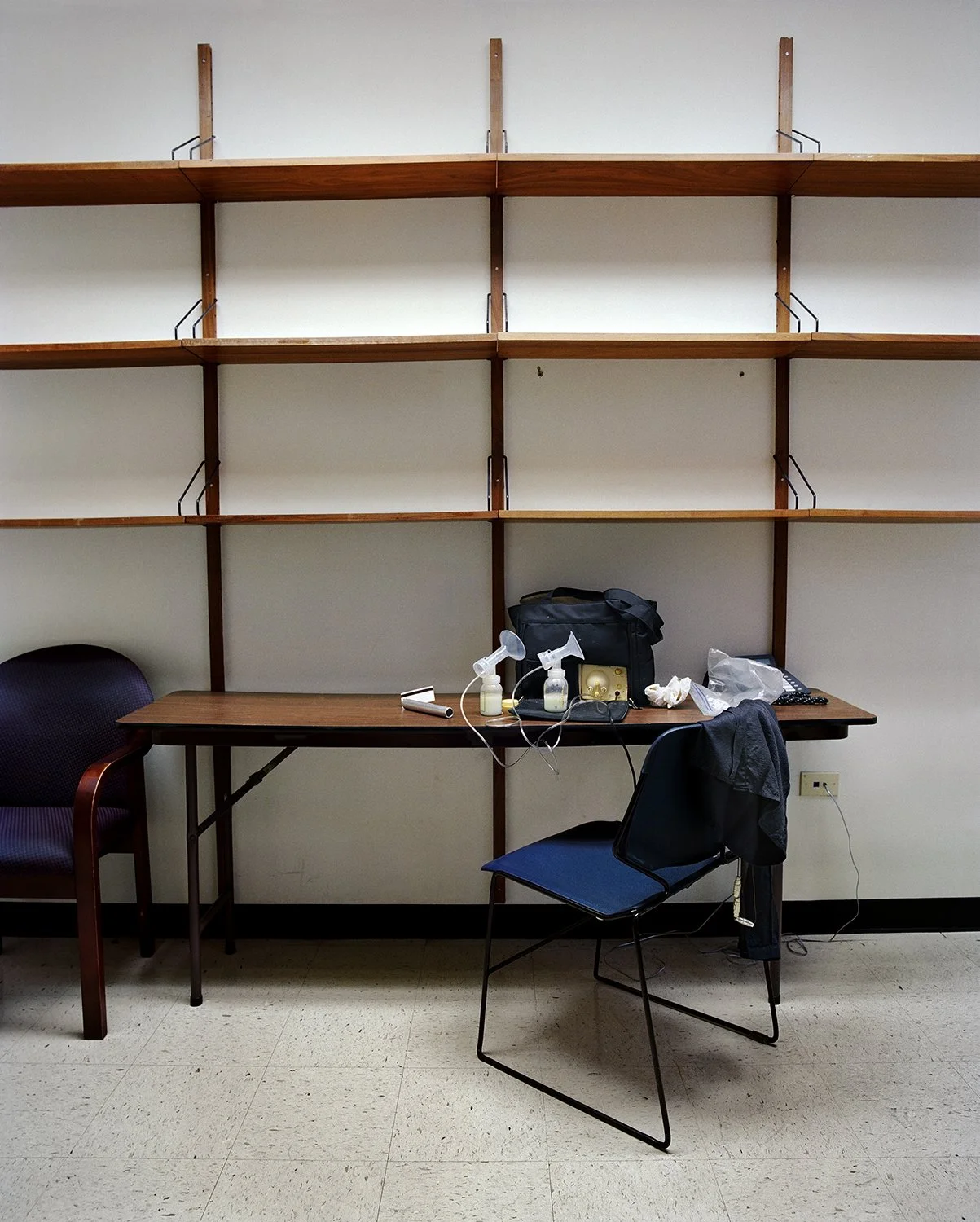
Project Genesis: You started this project by photographing the sparse pumping room at your own college after giving birth. What made you realise years later that this single image connected to your wider work and was worth expanding into a full project?
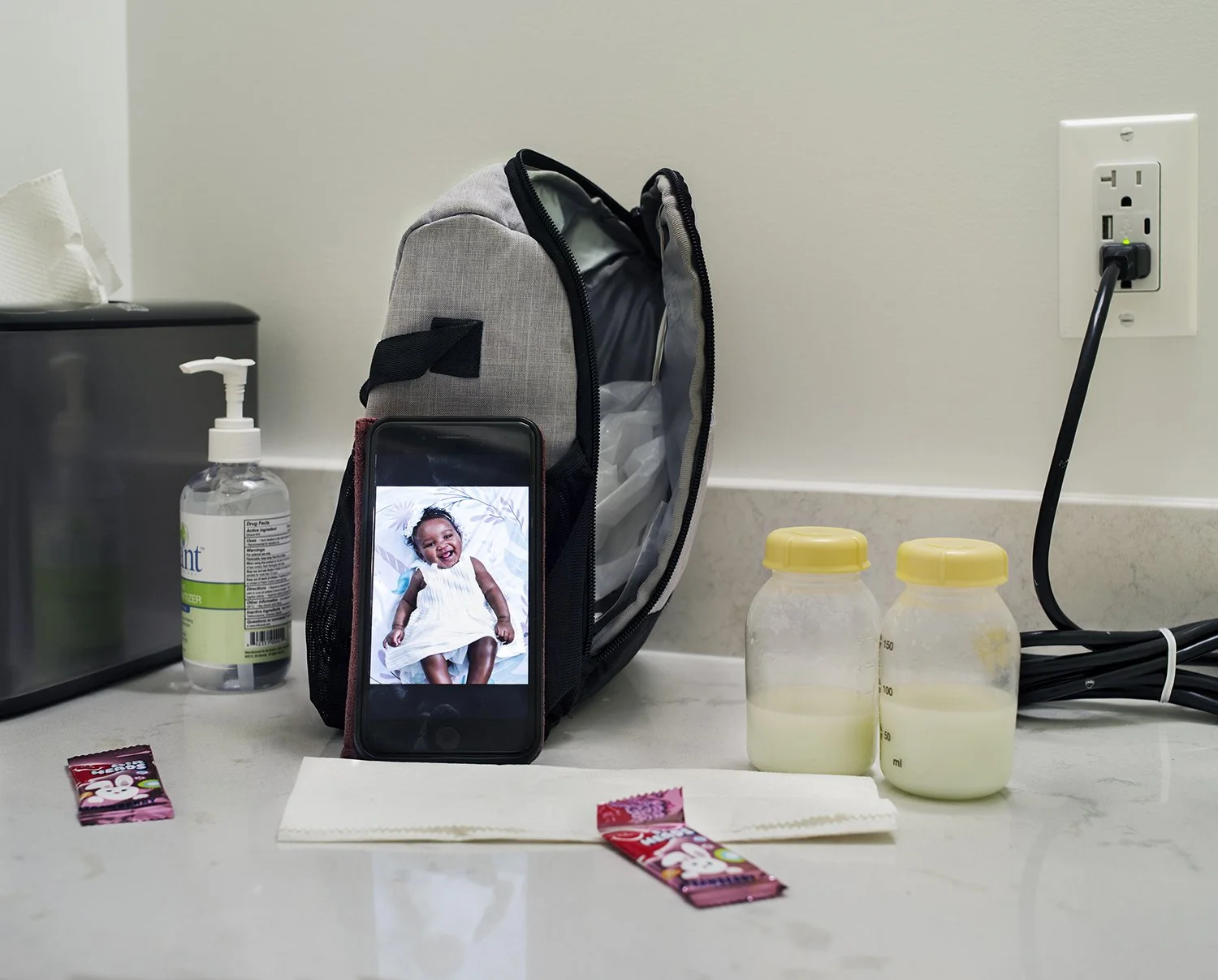
When I came across that photograph a few years later, I was able to see it as something beyond personal recordkeeping, an interesting image in its own right, with a clear connection to my larger practice. Lactation rooms had always fascinated me. They are simultaneously so personal and so political. I remember talking to friends about where they pumped at work, and feeling curious about these hidden spaces embedded in public life. I have always been interested in representations of motherhood, and I saw this project as a way to create an unconventional portrait of it, one that made space for the mother herself. Pumping speaks to a mother's autonomy while also reflecting societal expectations and the absence of meaningful policy support.
The social dimension of photography is an important part of my process, so I was eager to meet new mothers and hear their stories. Each participant was offered an 8x10 print of their lactation room. I wanted to give them a photographic record of their labour and of this particular time in their life.
Access: You photographed spaces as different as a prison, a farm labourer’s tent, and the U.S. Capitol. How did you get permission to enter such varied and sometimes restricted places?
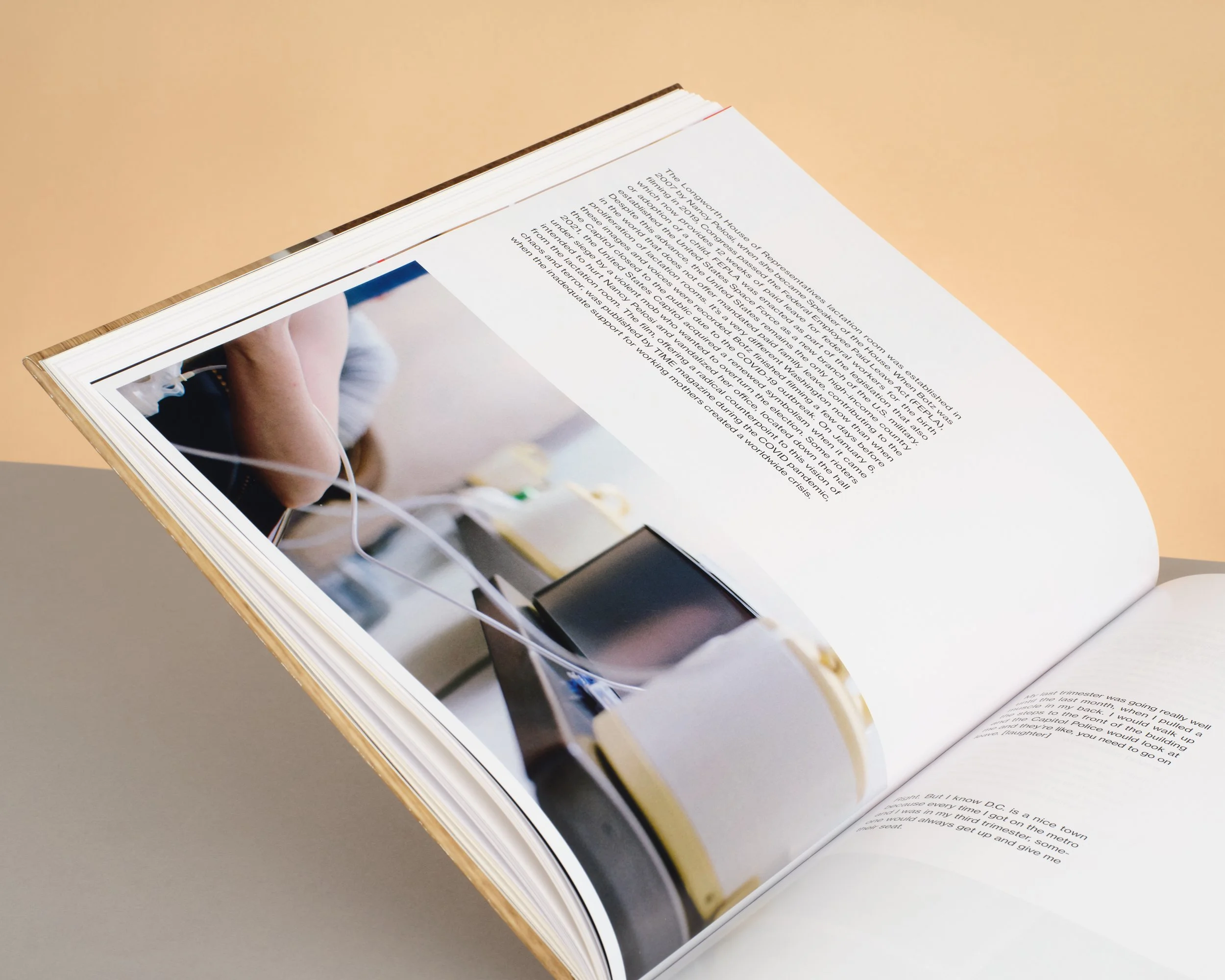
The majority of the time, the women who reached out to participate in the project arranged access directly with their workplace, sharing some information about me and my work. Companies often said yes because they wanted to support their employees. When I was trying to photograph the U.S. Capitol lactation suite, however, I learned I needed press credentials. I reached out to a friend who was an editor at TIME magazine at the time. He loved the project and wanted to support and publish it, which gave me the opportunity to get paid to make some photos, an absolute dream. They asked for a list of four or five images I wanted to make, the ones you mentioned among them, and TIME arranged those shoots.
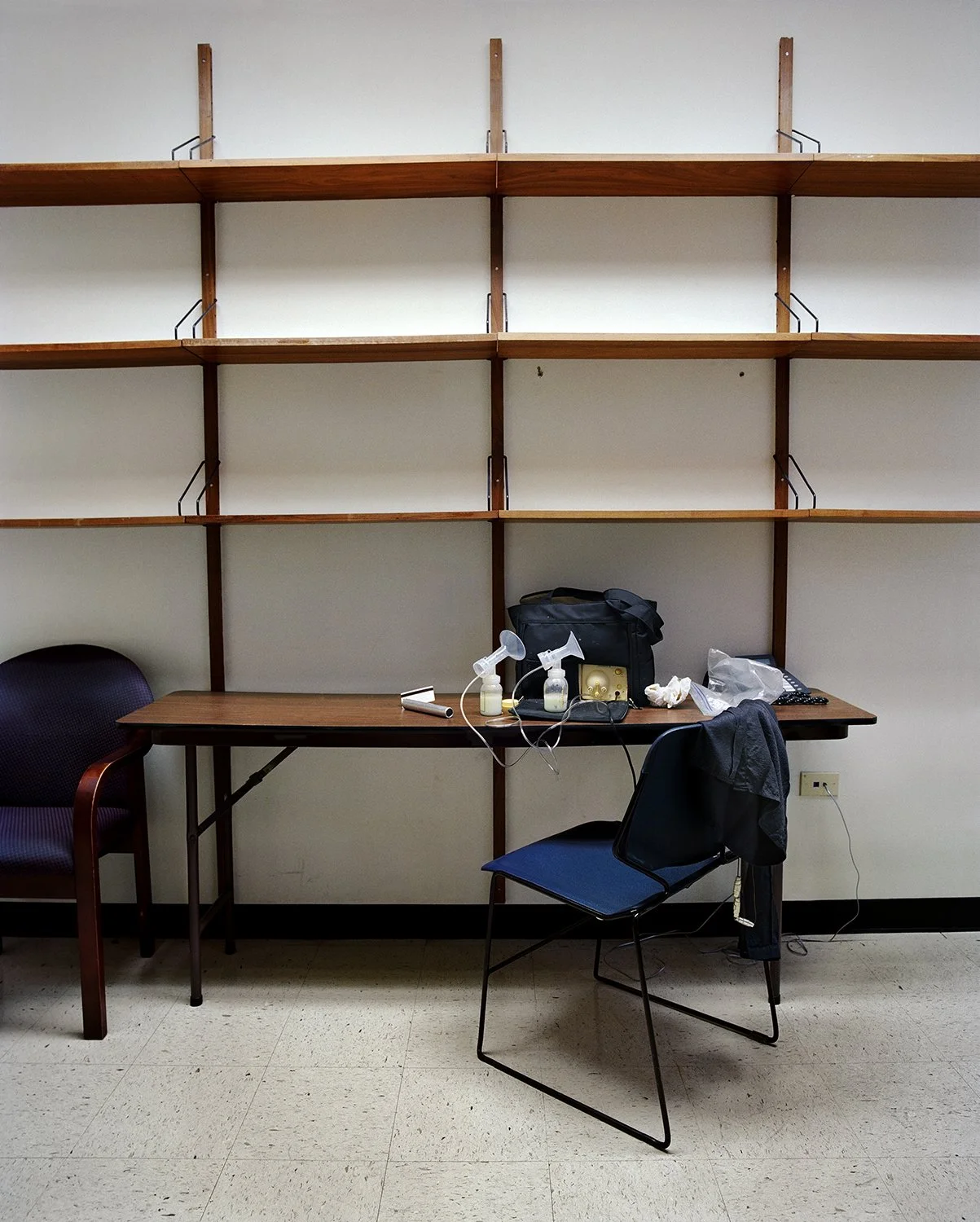
Absence: You photograph each room right after the woman leaves, asking her to keep everything as it is. Why did you choose to show the space without the person, and what do you feel that absence adds to the image?
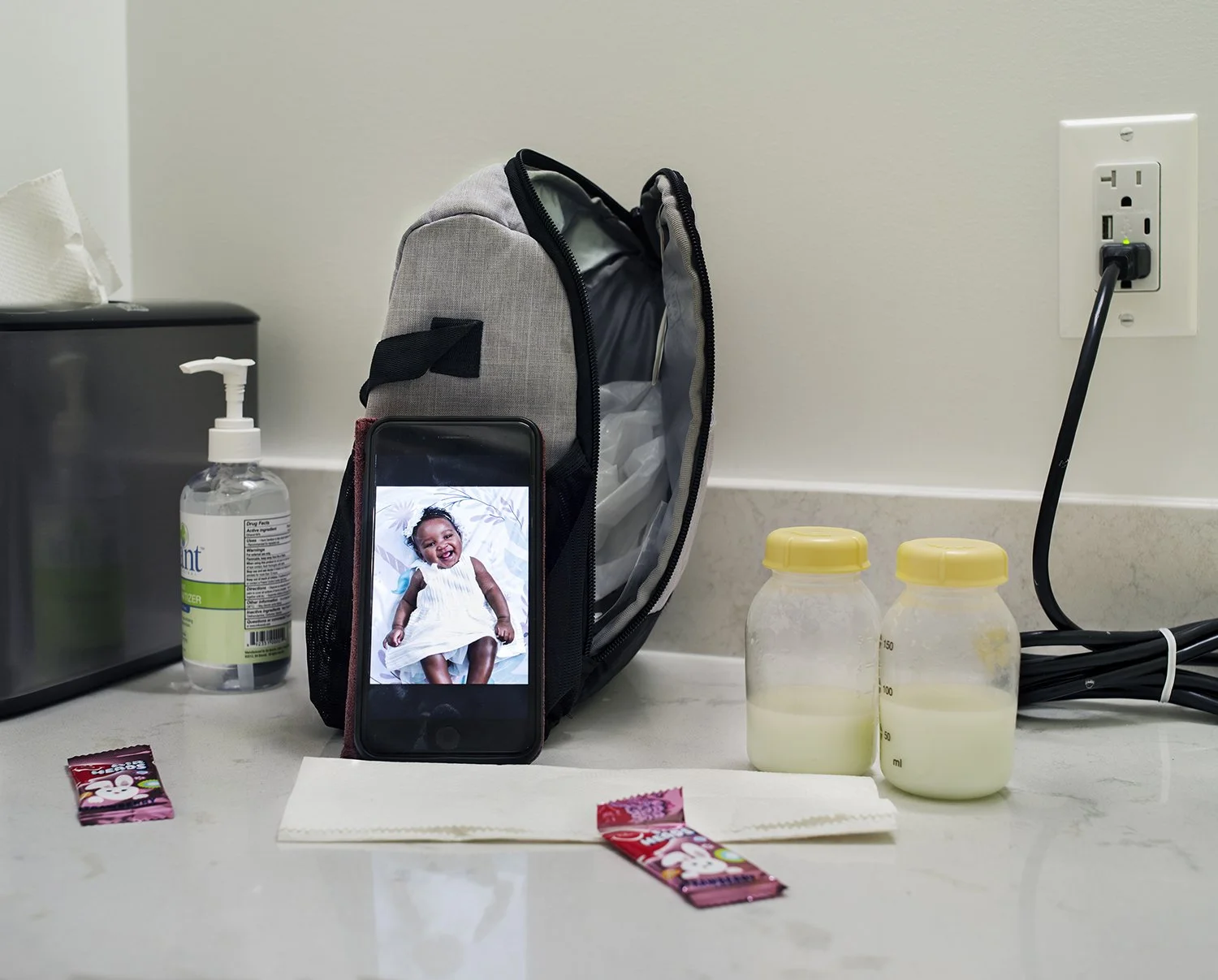
From the start, I knew I wanted the figure to be absent and to create conceptual portraits. In much of my work, I find that focusing on a space rather than a physical person can help the viewer enter the image and perhaps empathise more deeply. What you see is the view of the mother, her pumping space, her belongings, her milk, rather than presenting the maternal body for an outsider's gaze.
I also think this absence makes the project more universal. Caregiving and working life are universal experiences, yet in American culture they are often artificially separated. I am exploring that tension through the very specific form of lactation labour. As Diane Arbus said, "The more specific you are, the more general it'll be."
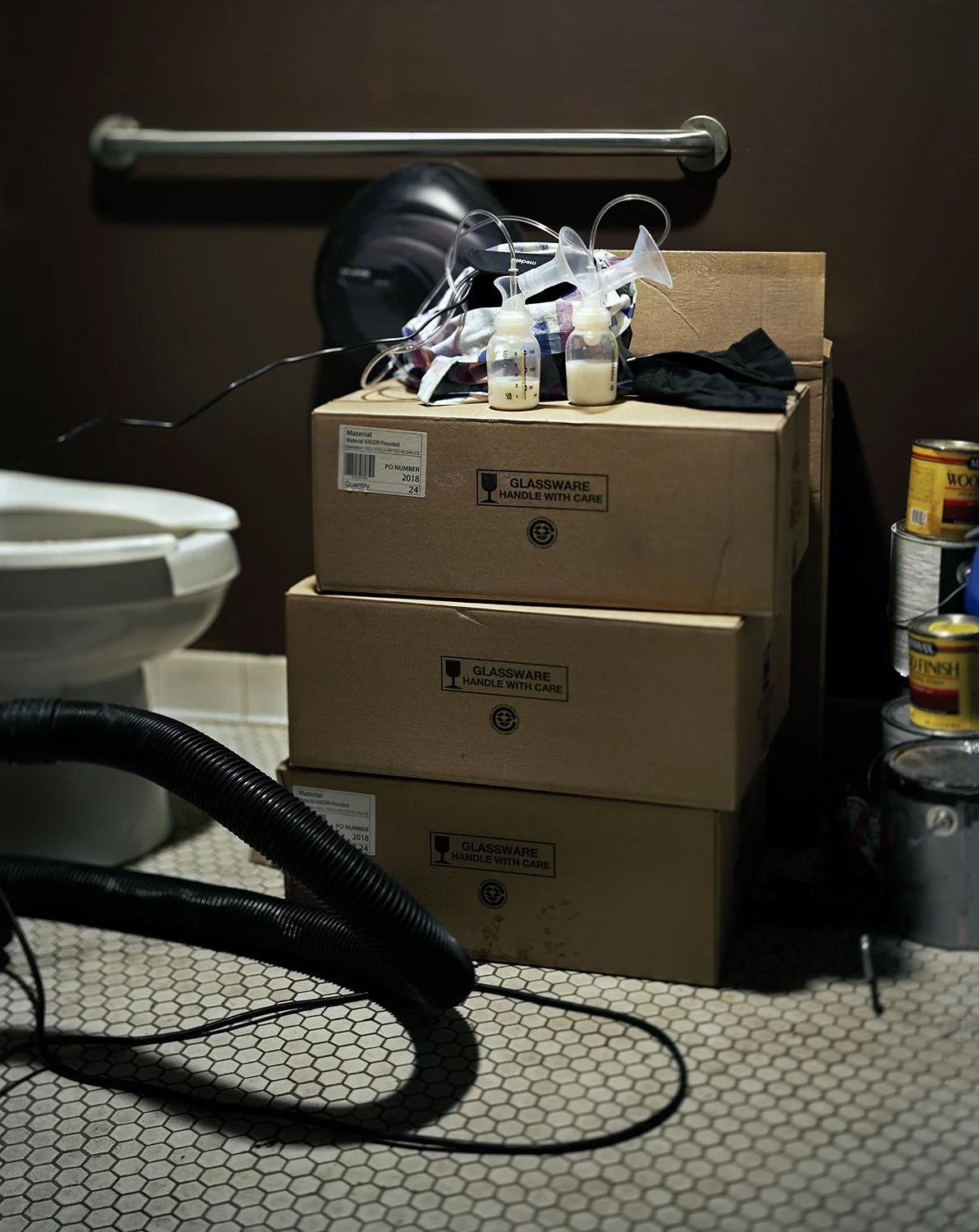
Equipment: You worked with a 4x5 film camera alongside a digital medium format system in rooms that were often tiny or makeshift. How did you manage such large equipment in those tight, improvised spaces?
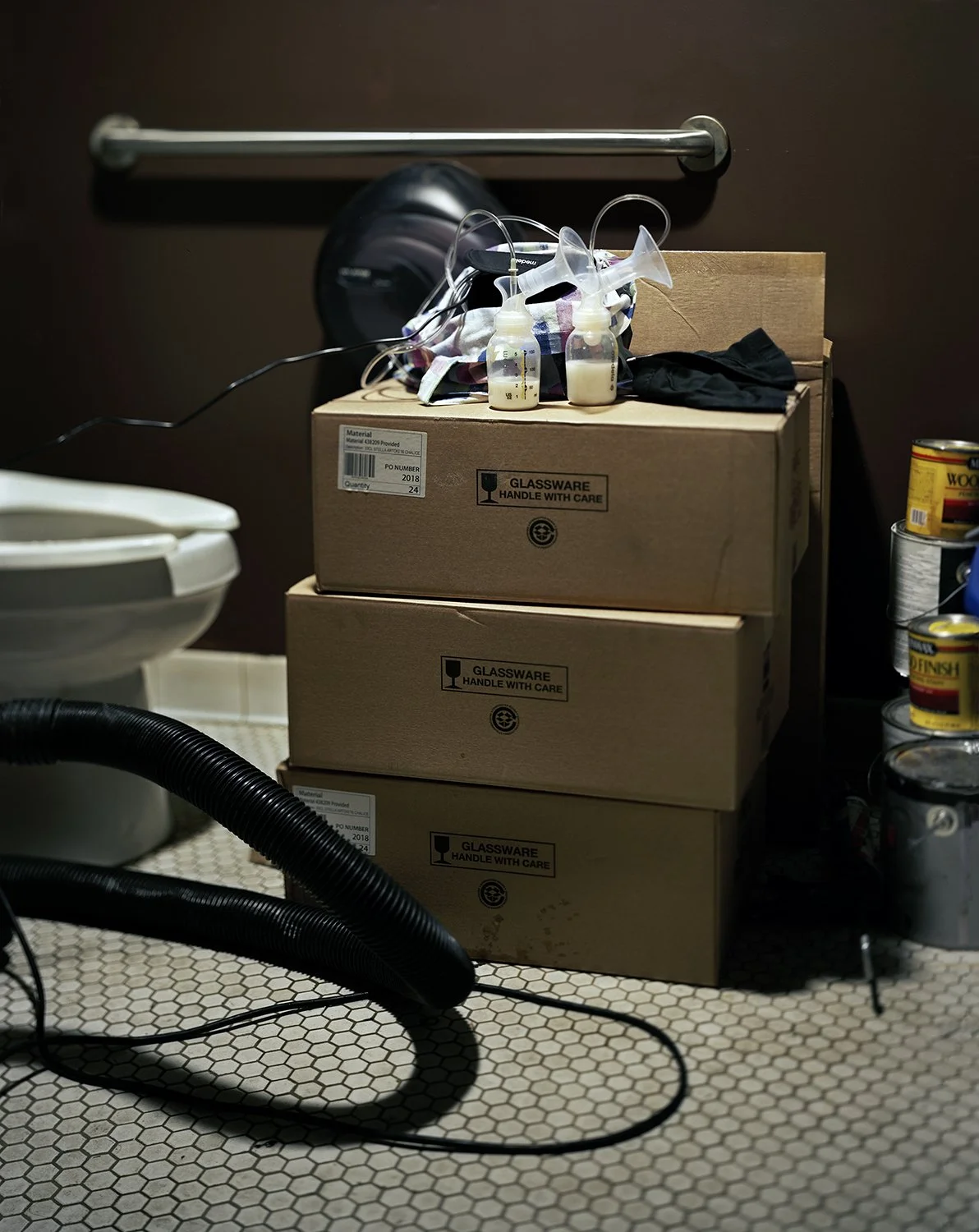
I photographed miniature crime scene models for seven years in a very small room, so I am fairly adept at wrangling a large-format camera and backing myself into corners. In many cases, I had to step outside into the hallway and photograph the space through the doorway. People walking by, mostly men, would stop, say they had always wondered what a lactation room looked like, and peer inside.
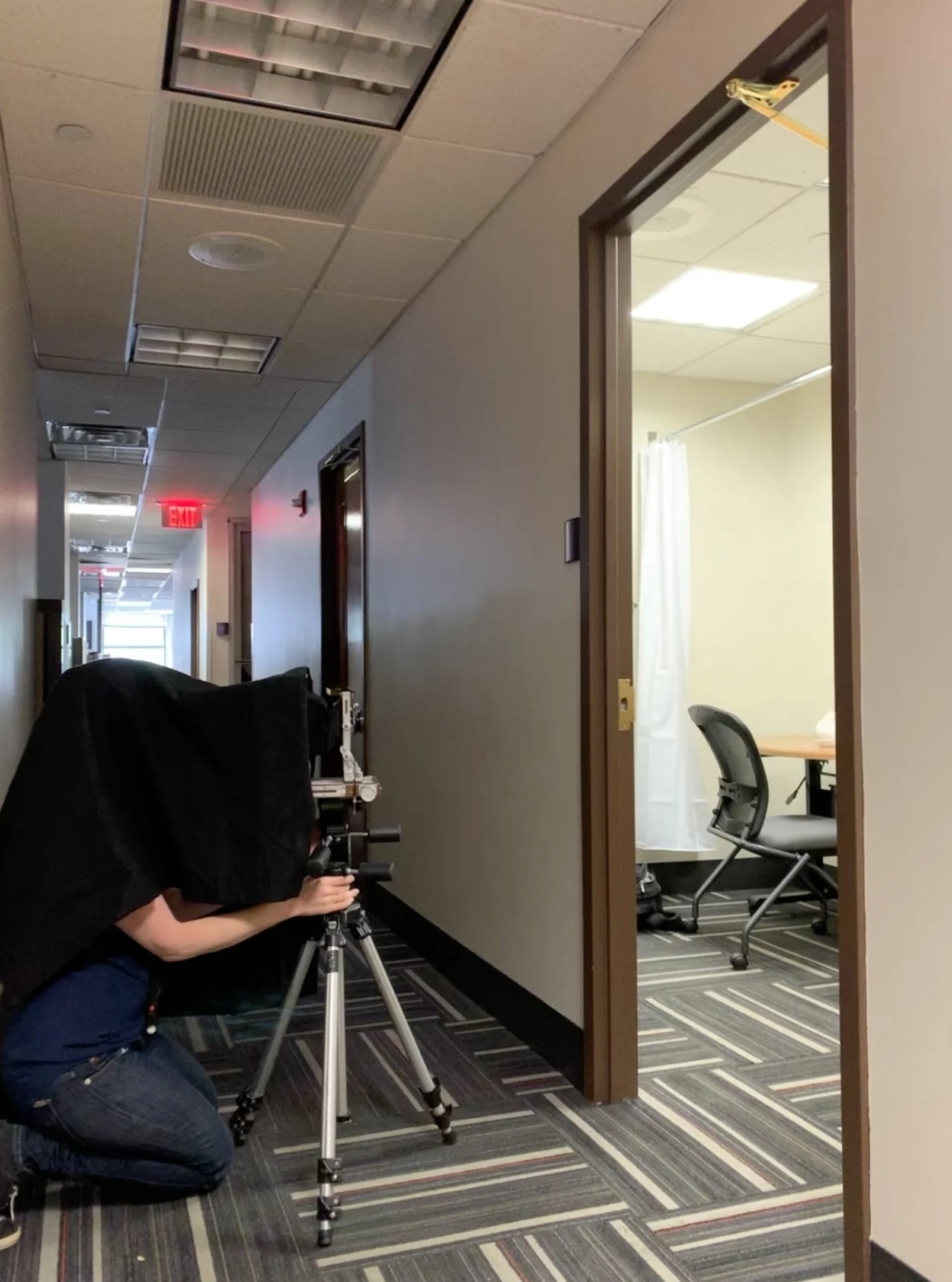
Naming: You titled each photograph after the woman's job or workplace rather than her name. How did that decision change the way you looked at and framed each space?
Because this project is fundamentally about labour, I wanted to emphasise that these women are being doubly productive, engaged in this nurturing activity while maintaining their role in the workplace. The titles felt like a natural extension of that framework, and they give viewers another entry point into the work. The series title, Milk Factory, implies that lactation is labour and should be supported, valued, and compensated as such. I was also thinking about the fascinating economy around breast milk, as women can buy, sell, or gift breast milk online, which adds yet another layer to the conversation.
Subject Choice: You say that pumping felt like a more honest picture of modern parenthood than breastfeeding. Can you explain what you mean by that, and how it shaped the mood you wanted the photographs to have?
We tend to hold an idealized image of a child at a mother's breast in our cultural imagination, but that is a privilege many people cannot afford. The American Academy of Pediatrics recommends exclusive breastfeeding for the first six months of life, and then alongside complementary foods for up to two years. There is enormous pressure to breastfeed, yet the United States is the only high-income country without government-mandated paid family leave, which forces parents back to work soon after a child's birth and makes pumping pervasive. Women are stealing minutes away at work, managing a physiological process through a machine.
In terms of mood, I worked with the limitations and reality of what was in front of me. When I began photographing for this project in upstate New York, I encountered more rooms with views and natural light, and those were aesthetically easier to work with. But I try to find something beautiful or surreal even in the most mundane setting. I want to honour this labour and draw viewers into the images.
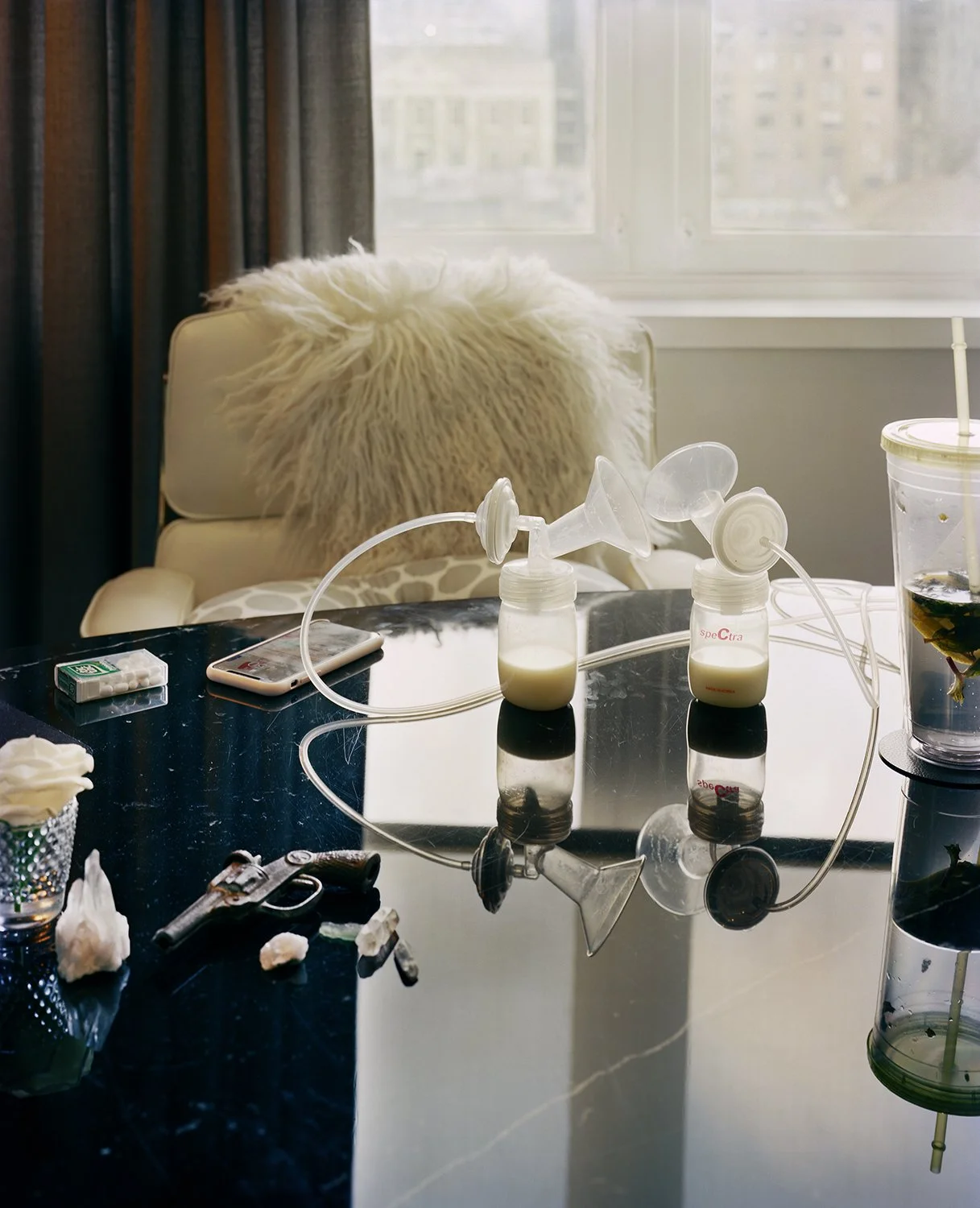
Accumulation: You have described these solitary rooms as gaining collective power through being shown together. How did you think about the sequence and rhythm of images when building the book?
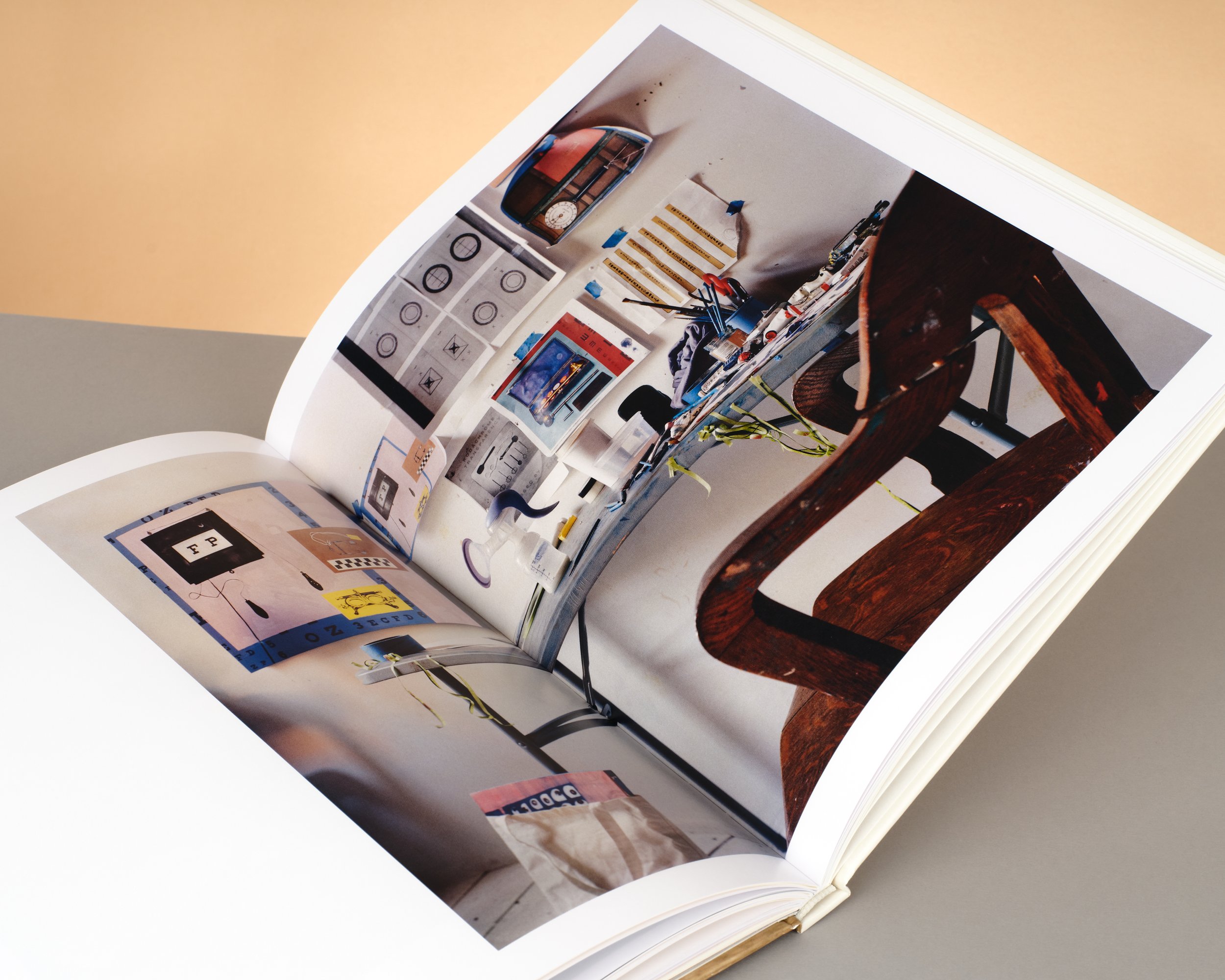
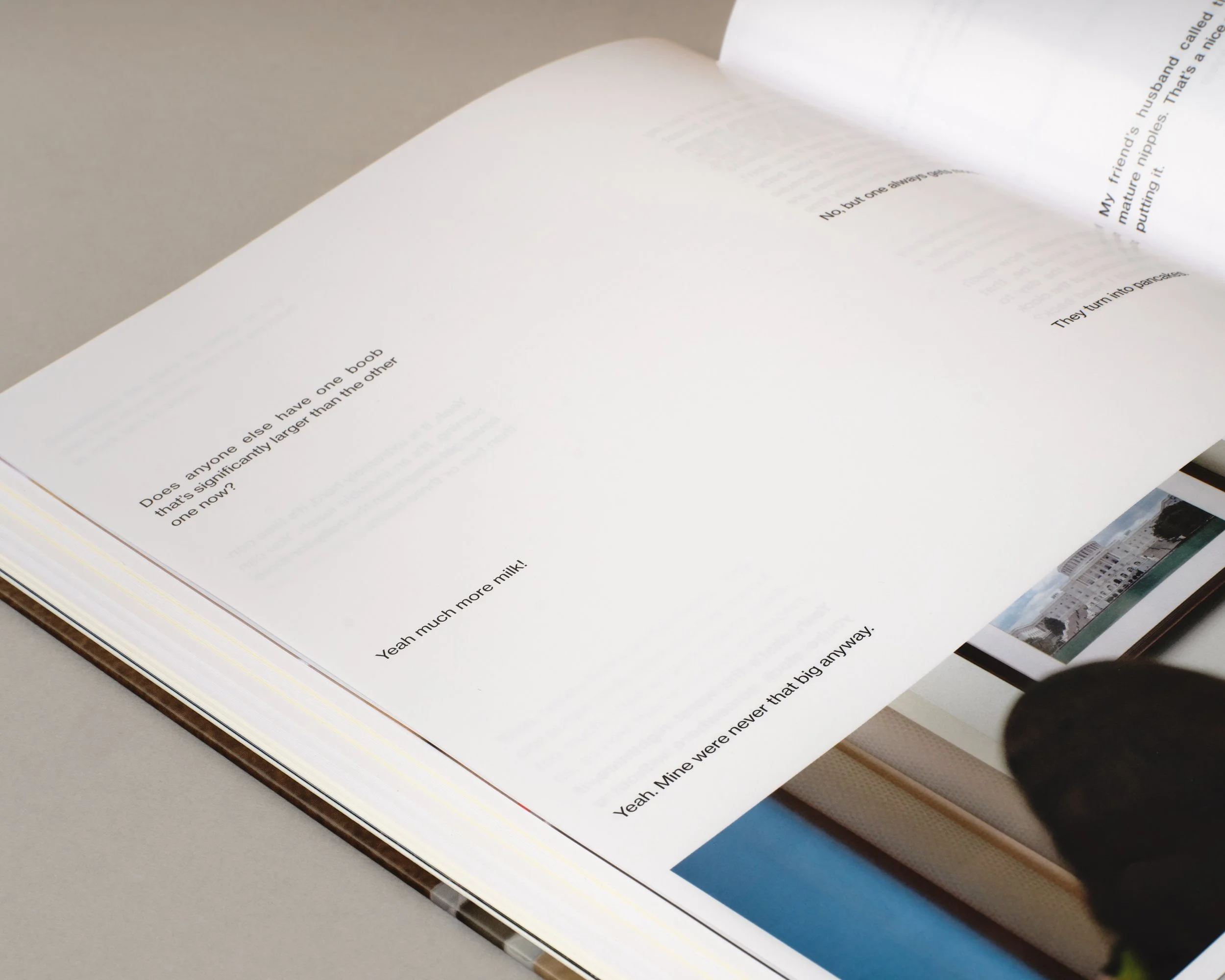
I worked very closely with designer Caleb Cain Marcus of Luminosity Lab and publisher Mark Alice Durant. Caleb created the initial layout, and from there it became a back-and-forth process of moving images around, finding interesting transitions, and building a rhythm. I was thinking about colour and content. In some sequences there is a connection between spaces, in others an interesting disparity. The pumping testimonies appear in four-page signatures on a different paper stock and are integrated throughout the images, so those sections create a structural framework to build around. There is also a significant amount of material to organise, including three essays and a poem. A magazine spread on lightweight glossy paper interrupts the flow at the midpoint and represents the film. It was a complicated book to design, and Caleb deserves a great deal of credit. He is a brilliant designer.
Text and Image: The book includes essays and first-hand stories from women across different backgrounds and jobs. How did you decide what the photographs alone could not say?
The first-hand stories were actually a late addition. A lawyer reached out and asked to share her experience, and I recorded it. Shortly after, a police officer contacted me through social media wanting to share her account of pumping in an unsupportive male-oriented workplace. Both accounts conveyed dimensions of lactation labour that simply cannot be accessed visually. A friend of mine who does not have children read the stories and told me they helped her enter the images and relate to them. That felt important, because this project is not only for women or for people who have children.
We understand the world through lived experience, and that knowledge is invaluable. The images and the text say different things, and it matters that both are part of this historic record.
Continuity: Your earlier books, Haunted Houses and The Nutshell Studies, also looked at spaces that carry hidden emotional weight. What do you look for inside a room that tells you a story is waiting there?
All spaces carry emotional weight. What matters is how you conceptualise or see them. I am drawn to spaces that hold marginalised or invisible histories, stories that I feel need to be seen.
To discover more about this intriguing body of work and how you can acquire your own copy, you can find and purchase the book here. (Saint Lucy Books, Amazon)
More photography books?
We'd love to read your comments below, sharing your thoughts and insights on the artist's work. Looking forward to welcoming you back for our next [book spotlight]. See you then!
The street is boring until you learn what to notice. Most of the time, nothing special is happening. Photography Book Spotlight