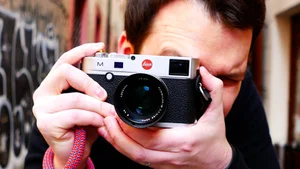
Ulysses Aoki: Street photography in Japan, Leica cameras, portraits, personal style, books and more
Hello fellow photographers. In this episode I am talking with Ulysses Aoki and we are talking his style, photography in Japan, where he takes inspiration from and much more. Make sure you are subscribed if you want to be notified when I post a new episode. If you like this content and you think other people might like it as well Feel free to take a screenshot and through it out on your instagram story or share it with your friends.
Ulysses is an award-winning candid/art photographer that is featured and exhibited globally. His commercial work expands into fashion/people, documentary and product photography, and has taught photography to schools and individuals all over the world.
Website: https://ulysses-aoki.com
Instagram: https://www.instagram.com/ulysses_aoki/
YouTube: https://www.youtube.com/channel/UC3GLpBtbhqVMta3h-1ugGsQ/
In case YOUR Podcast Directory is missing, please let me know in the comments bellow and I will add that. Thank you!
If you want to follow me on social media
INDEX:
0:00:00 - Hello there!
0:00:55 - Introduction
0:01:18 - Why is photography so popular in Japan?
0:04:18 - Why do you shoot in color?
0:07:59 - Portrait photography and transition to street photography
0:10:08 - Japanese people and street photography and overcaming fears
0:14:00 - Ulysses’s styles of street photography
0:15:50 - Is “in into-your-face” Style misunderstood? Drama about Tatsuo Suzuki’s style.
0:17:28 - Tatsuo Suzuki and drama about his style with FUJI
0:20:27 - What is your process after you come home
0:24:32 - Do you believe in personal style?
0:28:49 - Photo projects, dream photoproject
0:30:27 - Publishing Books, Zines
0:32:43 - Is it hard to prepare an exhibition? Exhibiting your work
0:38:46 - Inspiration - paintings, movies, anime
0:43:24 - Movies and anime
0:45:32 - Animation
0:49:59 - Experience with film photography, advantages of film
0:53:37 - Should you start photography with film photography
0:55:01 - Is Leica Q the best street photography camera?
0:57:05 - Why do you like Leica cameras?
1:04:38 - Tips for portrait photography
1:07:35 - Does appearance of camera matter?
1:10:15 - Asking about YouTube channel
1:14:40 - The hardest part on YouTube
1:17:37 - When are you going to make a video about Mastodon?
1:19:04 - Tattoos, Yakuza, Tattoos
1:26:15 - The end, Thank you for watching/listening!
When I was visiting Japan, I noticed something: a lot of people carrying cameras on the street, and big camera stores everywhere. That suggests there's real demand for cameras. Why do you think photography is so popular in Japan?
That's a good question. I think there's a worldwide perception that photography is popular here, but when you actually live here, it's not quite as popular as it might seem. A lot of what you're describing, those big camera stores, cater mostly to tourists. People visiting Japan are drawn to buying cameras here because most of the major manufacturers are Japanese: Fujifilm, Olympus, though that one's more or less gone now, and of course Nikon, Canon, and Sony, even if they don't actually manufacture most of their cameras in Japan anymore.
Photography is widely understood as a hobby here, but more on the casual and commercial end. I'm more of a candid photographer, and I'd consider myself an art photographer, whatever that means, but there are fewer people working that way. So it really depends on the genre and how you look at things.
From my point of view, it does seem like a lot of people are interested in it. Japan has so many famous photographers, maybe the most in the world per capita. And when I look at random Instagram accounts of Japanese photographers, they seem much more curated than what I'm used to. I can't speak for other countries, but definitely more than somewhere like the Czech Republic.
I've never thought of it in a per capita kind of way, so maybe you're right. At the same time, I think photography here occupies its own strange space. It's more of a storytelling tool than an art piece, less technical than people might expect, which is an interesting thing in itself.
You're currently based in Tokyo. When I think about the famous Japanese photographers who shot, or still shoot, in Tokyo, most of them work in black and white. So why did you choose color?
That's a great question, and people still shoot a lot of black and white here. The quick answer is that everyone else was shooting black and white, and I see things in color, so I thought I'd shoot in color. But the longer answer is that, especially in Tokyo, I realized after shooting for a while, though it took a few years to become obvious, that it's a genuinely noisy place. You've got ads everywhere, unsatisfying concrete colors, odd little patches of green, and people wearing whatever they want, in a good way. It's a diverse place, and it's very compact, everything smashed together. That creates a lot of noise, both in terms of color and in terms of the sheer number of elements within a frame.
I was talking to members of Void, a small street photography collective mostly based in Tokyo. One of them, Tatsuo Suzuki, is fairly well known these days, and another, Ash, is also very good. They both said something similar: that black and white, gritty, in your face for Suzuki, somewhat less so for Ash, works because there's so much noise in Tokyo that color just isn't pleasing. Shooting black and white helps them focus more on the subject. Part of that is also because they're more subject intensive as photographers. If you look at historically famous photographers in Japan, a lot of them shoot black and white and are extremely subject focused, documenting what's going on, saying "look at this." Black and white suits that approach.
So why did I choose color? I think I wanted to find out how I could shoot color well in this place. While I'm speaking English right now, and I look different, my father is American, and although I was born in Japan and have lived here most of my life, I think that gives me a kind of outsider perspective, a way of seeing and understanding what might work for me specifically. I was already heavily interested in color photography. The easy answer would be Saul Leiter, but for me it was more photographers like Ernst Haas and Gueorgui Pinkhassov who really inspired me with their color work. So I was thinking about what I could do within my own strengths, what color photography could be for me. I'm still exploring that, but that was the mentality behind focusing on color.
I was wondering if it might be connected to the fact that, before street photography, you also did portrait work. Environmental portraiture feels close to street photography, in a way, the subject within their environment. Was that part of what led you into street photography, or was it unrelated?
I'd say it's related. As I briefly mentioned earlier, I've been a fashion model here since I was a kid, for about twenty years now. I'm twenty eight. I'm not that active in it anymore, I still get the occasional gig, but I'm getting older. What actually brought me to the camera was fashion work. I had a bunch of friends at modeling agencies who all needed photographs, so I thought, I'll buy a camera and take photos of my friends. It could help them, and it could help me learn about photography and understand how I could portray myself from the other side of the lens.
But as I kept taking photos of friends, organizing shoots maybe once a week or so, I noticed that I actually liked taking photos, and honestly, I stopped caring whether I was in them. So I wanted to learn photography properly. First, I just wanted to shoot more, and the easiest way to do that was to stop organizing something every time. So I started just taking my camera and walking the streets to see what happened. That's how I fell into street photography.
As a foreigner, I noticed Japanese people can seem quite reserved in public. I was wondering how that squares with a more confrontational kind of street photography, since it can be confrontational at times. How does it feel, first of all, and how does it affect people being photographed? How was it for you as a photographer, having to overcome that?
That's a good question. A few years ago, especially when I was still learning photography and figuring out different approaches, I looked a lot at photographers like Bruce Gilden, and I tried out his way of shooting for a while. But as I came to understand more about what I wanted to photograph, and who I am, walking the streets for hours and miles almost every day, you start to understand yourself a little better in public situations. And what I learned is that I'm not a particularly confident person. I'd say I'm fairly timid.
That was both an excuse and an understanding of my own style. Even the photographs I like aren't really that confrontational. Sometimes there's a person very close in the frame, but honestly it's not about that person. It's more about what's happening in the scene, the feeling, the color, the patterns and the geometry. And I think that comes through when I shoot. People don't seem particularly confronted even when I photograph them up close, probably because of the mindset I have when I'm taking the photograph. I'm not pointing the camera at them thinking "got the shot." I'm looking at the whole scene, and in a way, sadly, using them as one element within the frame. That's also just a way of taking photos.
Do you think it might even be easier for photographers here, because people might hesitate to confront you, to say "hey, you took a photo of me," more than they would in other countries?
To an extent, yes. But what also complicates things is that I look different in Japan. I'm not fully Japanese, so people might feel less confronted and more puzzled, wondering what this guy is doing running around with a camera. It's more general puzzlement than people feeling confronted by me specifically, so that plays into it too. I can't speak for everyone, but generally, yes, people in Japan tend to be more reserved in public, so there's less confrontation.
On a scale of styles, where on one end you have something like fishing, standing at one point and waiting for a subject to enter the frame, like a mousetrap, and on the other end you have this in your face style of photography, where would you place yourself? Somewhere in the middle, or do you try everything?
I'd say I've tried both extremes heavily. I've shot with flash right up close on a twenty millimeter lens, but I've also used longer, zoom lenses, so right now I'm somewhere in between. In terms of fishing versus going after a specific subject, I think I still do both, honestly. What I learned, especially through the pandemic, is that these approaches are heavily dependent on the socioeconomic situation. As a candid photographer, you need to adapt to whatever the world gives you. If there's a pandemic and people are staying indoors, what's the point of waiting for an interesting subject on an empty street in New York? It's just not going to happen. So in that sense, it's not really about fishing anymore, you need to look at different subjects, not necessarily human ones, and focus on different elements. That's something I'm still learning, so it's hard to pin down exactly where I am right now. It depends on the situation, but generally, the middle.
Do you think this so called aggressive, in your face style is misunderstood by people who haven't practiced street photography themselves? You mentioned Tatsuo Suzuki earlier, and if I remember correctly, there was some drama around his work. When I thought about it, there are so many photographers who shoot that way, Bruce Gilden, or Eric Kim, for example. From the photographer's point of view, I can understand the artistic expression behind it, but from a pedestrian's point of view, I'd say it might be a little annoying, though two or three minutes later you'd probably forget about it. So maybe when people see a compilation of someone shooting in that in your face style, they get the wrong idea.
You mean it's misunderstood, or that you couldn't quite understand why the drama became drama?
Exactly. I thought, well, this is nothing. It might be a little annoying, but nothing I'd be too worried about, especially with someone acting as a brand ambassador or something like that.
That was a really complicated topic, with Fujifilm and Suzuki. There are so many layers to it, honestly, it's hard to unpack in a brief conversation. But I'd say it also has to do with how photography is perceived in Japan. Photography is popular here, but as I mentioned earlier, candid street photography specifically isn't that popular, or isn't well understood, especially when it comes to thinking of photography as an art form. It's not really considered that way. So when people see someone taking photos in an unconventional way, they react strongly.
There's also, to a degree, the fact that a lot of his photographs are of women, and whether or not that's objectifying is open to discussion, but if it seems that way, it will seem that way to the public. That's another layer to the issue. There were so many other factors too, the video itself was edited in a strange way. In person, Suzuki comes across as a nice guy. There's a video by a photographer named Samuel, from a channel called Street Life, an interview with Suzuki from a few years back, and I was genuinely surprised. He might take a photo of someone very close up, but he'd apologize afterward, say sorry, acknowledge that he'd interrupted that person's life for a brief moment, smile, that kind of thing. None of that came through in the promotional video that caused the controversy.
So it's complicated, you have to look at everything. If you're talking about someone like Bruce Gilden, his style is shaped by who he is, how he grew up, his personality, you have to factor that in too. There are just so many layers to this, it's hard to fully express. I don't personally have anything against those styles of shooting, but for me, personally, I connect a lot with the people I photograph. If I'm taking a photo of someone up close and I can sense that they're uncomfortable in any way, I feel it almost immediately. So that style just isn't for me, because it's not who I am. I'd be lying to myself if I tried to force it. That's something I learned on a personal level.
When you actually get home from a walk, what happens next? What's your process, whether you're shooting digital or film?
I've been shooting digital for the past year and a half or two years or so. Before that, I shot everything on film. Now it's almost all digital, though the mentality hasn't changed too much from my film days, I still leave my files alone for a while. Honestly, I'm not someone who gets very excited about my own photos, but I think that actually helps, it creates more objectivity around the photograph. The more time you spend away from it, the more objective you become about it. I think that's how I'm approaching my photographs, at least for now.
When I get home, I probably take a shower, and at some point I upload everything into Lightroom. In terms of the actual process, I look at the previews, the thumbnails, something I learned from Alex Webb, who does the same thing. In Lightroom you have that grid view with small thumbnails, and I look through those and start flagging a few photos that catch my eye. Then I might work on those specific images. Honestly, I don't do too much post processing. I do have something like a basic preset that I use on most of my photos, but really it's just a button that adjusts the black point and shadows, and that's it. I wouldn't even call it a preset, to me it's basically just making a nice JPEG.
I'd say for me, more of the editing happens in the selection. I'm able to get the exposure and everything else roughly right in camera at this point. My philosophy right now is, sure, you can revisit a photograph and change the colors however you want, and that's totally fine, but for me, I've taken enough photographs that I'd rather see what the world has to offer, compared to forcing my own ideals onto it. If I wanted a particular kind of photograph, I'd go take it. If I wanted, say, a blue sunset, I'd go photograph that blue sunset instead of pushing the colors toward it afterward in editing. That's just my theory for now. I think if you take enough photos, you can get what you want to a large extent without needing to force it in post. I'm not saying everyone should shoot JPEG only, I just like natural colors and seeing what the world actually has to offer. That's where I'm at right now.
Do you believe in personal style, in terms of the final outcome? When I look at Instagram, a lot of people seem to believe that posting in a single consistent style is the best approach. Is it important to you that your photos share, I wouldn't say a film imitation exactly, but some kind of consistency, so that no single photo looks completely different from your usual work?
I think the real question here is, are we talking specifically about social media, about Instagram, or are we talking about photography itself? Some photographers, Steve McCurry for example, clearly have a personal style, and so does Martin Parr, and I can hardly imagine either of them posting something wildly different from what they normally photograph.
I think what you're really asking might be more about subject matter, like, do I avoid photographing something because it's "not what Ulysses Aoki takes photos of." I don't think about it that way at all. If you look at my photos, I photograph almost anything. I might go to a mountain, take a photo there, and think it's a good photo. People might look at it as a wildlife or nature photograph, but to me, it's all just candid photography, it doesn't really matter.
What I've learned over time is that it's less about deliberately building a style and more about training your eye, learning what interests you as a person and as an artist, and being able to capture that. So someone like Steve McCurry is probably taking photos of what he's learned turns out to be good photographs, or what he personally likes. That selection is happening while he's actually taking the photo, not necessarily in post processing, and not necessarily when he's arranging his Instagram grid. I think a lot of the time, what we're looking at in good photographers is more of a natural selection than someone applying a heavy preset to every photograph and posting it. There are photographers who work that way, who choose subject matter and apply presets so everything looks consistently like "their" photograph, and that's a valid approach too. But my personal advice to anyone trying to get better at photography, and this is something I've been through myself, is to dive deeper into whatever genuinely interests you as a person. If you're thinking about Instagram, just post the photos you think are good. The more you shoot, the more concentrated your vision naturally becomes. People look at my photos and say I have a style, but for me it was never anything intentional.
So you're not deliberately trying to imprint your identity onto your pictures?
No, not at all. I'm just hoping the photo is a good photo, that's it for me. To some extent that's something I can judge myself, but to some extent it's also something the public judges. Whether it's a photo of a cute puppy or something with wild reflections, it doesn't matter, I just want it to be a good photo.
When it comes to a specific project, though, keeping some kind of consistent style might be a good idea. Do you have a dream project you'd like to do at some point?
I do have a few things I'd like to do, mostly outside Japan, honestly. Tokyo is a pretty good place to photograph, but when it comes to more intense color photography, it can be almost impossible to get exactly what you want here, especially with certain lighting situations. My aspiration is to go to places with better light and better color, to compare how light treats my photographs and how I respond to different environments. Nothing too dramatic. There is one specific place I want to go, though: Morocco, for a project. I meant to go last year, but that fell through.
Are you working on something at the moment?
Right now I'm compiling all my Tokyo work.
Are you thinking of turning it into a book?
Hopefully, at some point soon. I do have an exhibition coming up in Tokyo in a few months, which is nice. As for books, I do want to make one, but it's harder than people think. Maybe this is a personal preference, but I don't want it to just be another self published zine. I really want to make a good book, because a lot of the photographs I think are pretty good are already on Instagram, there are some I'm holding back, but not many. What's the value of a book these days if you're just publishing low quality, ordinary paper, mass produced zines? I have nothing against them, but that's not what I want to do. If I make a book, I want it to tell a good story, and I want it to be a visual and physical pleasure to handle. So that ambition also kind of holds me back, because it takes a lot of time, and you need a good publisher and a good book designer.
But I am always working on it. I have a bunch of prints at home that I fiddle with and sequence a lot, just for fun. My Tokyo work is compiled into a project as well. I have a project that was awarded last year by a Paris based international street photography organization, I forget the exact name, but there are quite a few of those. If I do make a book, it will likely be something close to that sequence of images.
You mentioned you have an exhibition coming up. Is it hard to prepare for something like that? How long does it take? Was there anything that surprised you? I wouldn't have thought it would be that difficult.
I've actually been pretty lucky these past few years, with people outside Japan wanting to exhibit my work, so it's been shown in a few places without too much effort on my end. This time, I've done a few small exhibitions in Japan, but this is the first one that's actually a solo exhibition in a proper gallery.
The trouble I'm figuring out right now, and this is a personal preference, is that I don't want to frame my images the conventional way. Framing turns out to be a big decision. I'm used to selling prints in wood frames, but what I'm learning is that the most common, basic way of framing photography seems to be the same frame throughout, an old black frame, white mat, same size, all the way through the gallery, I guess for consistency, or maybe it's just the stereotype of how photography is displayed compared to fine art. That's safe, and it looks fine, but I wanted to try different framing options. If you go to an art museum, you'll see all kinds of frames, huge ornate ones, completely different sizes and aspect ratios, all different from each other. So I was thinking, why can't I do that? But then you run into the problem of how to create consistency within that variety, and how to break away from what people expect a photography print to look like.
Does the gallery help with production, or do you have to bring your own frames?
The gallery does have some frames, but it's not like they'll suddenly hand you fifty options. This particular gallery isn't that big, so they have maybe twenty frames in two colors that I can choose from. If I want more variety, or want to frame things differently, I have to source my own frames.
Do you get any support for that, or is it more that they simply offer you the opportunity to exhibit, and you bring the prints yourself?
I'd say in most situations, unless you're a really, really famous photographer, you're pretty much on your own. I'm even lucky in the sense that I don't have to pay for the space, since they offered me the opportunity, and these days that's a fairly lucky position to be in.
Do you also pay commissions, or entrance fees, or something like that?
Entrance fees are more for large museums. If you're charging entrance fees as an independent exhibitor, you're doing quite well for yourself. I think in most cases, and this might differ by country, but in Japan you usually have to pay for everything: renting the space, printing, framing. It adds up to a lot of money, actually. This time, though, the gallery has been generous. They're offering me the space for about a week and a half, and offering frames too, which I'm politely declining, which is probably not the smartest financial decision.
If you do make any money from it, is that mostly from selling the prints on display?
Yes, usually. Sometimes the gallery takes a cut if they sell it for you, maybe five percent or so, I'm not entirely sure. In this case, I don't think that applies, I believe I'm free to sell my own work directly. Another way people try to recoup some money from exhibiting is by selling a book, a zine, or small prints, basically merchandise, at the entrance of the gallery.
That's interesting. It seems more like a matter of pride than of making money, isn't it? Something to put on your CV, your résumé.
Honestly, yes. And there's always that faint hope that someone with some level of recognition, I don't know, a gallerist or an art collector, walks into the gallery. That's generally what people hope for.
I wanted to ask where you take your inspiration from. Is it from other art forms, paintings, movies?
Great question. When I first started photography, I was only looking at other photographers, because I didn't really come from the art world. I'd done some modeling, and that was about it, so photography was my entry point into being a creator, into being an artist. But the more I shot, the more I started looking at other artists outside photography. I'm also a big music fan, and I've realized I draw inspiration from that too, maybe not directly, but there are parallels. Some artists I really like include Salvador Dalí, I like Dalí a lot, and Magritte. Monet, too, though that comes more from the color spectrum, how he saw things, while Dalí and Magritte are more about surrealism and symbolism.
Those surreal paintings are hard to imitate directly in photography, but it's funny, if you think about it, surrealism is actually what a lot of street photographers are chasing, it's just impossible to fully get there through the camera. There are no melting clocks, no people with apples for faces. You can get close through juxtaposition, though. It's funny, because street and candid photography is fundamentally about photographing what's actually in front of you, but there's such a big trend right now around juxtaposition and humor in street photography. If you think about it, we're aspiring to something otherworldly, but we've set ourselves the limitation of only using what's actually there in reality, without Photoshop, without staging anything. So it's funny, you want something out of this world, but you've boxed yourself into capturing it within reality.
I'm a candid photographer, but it's not impossible to draw inspiration from painters like that, because there's a lot you can learn from someone like Dalí, the layering, for instance. If you look at his work, there's an element in the foreground and an element behind it, maybe both still in focus, but layered with different meanings, symbolism, and lighting. There's stuff to learn there. Even something simpler, like a Magritte painting of shattered glass in a window, where the shattered pieces still show what's behind them, which is technically impossible but not actually impossible in photography, gives you a visual cue you can carry into your own work, if you're thinking like a surrealist photographer.
There's stuff you can learn from them, maybe not directly, but I also take inspiration from movies. There are so many famous movies and directors in Japan that you can learn a lot from, Akira Kurosawa, for example.
Do you personally take screenshots from movies, or reference them directly, something like that?
Not directly, I don't reference movie stills when I take photos, but I'm more invested in the idea behind a film. I'm a big fan of David Lynch, for example. Different films of his have different strengths, but his use of sound, and his use of images or clips that seem irrelevant to each other but somehow still flow, is something he does especially well. To me, it comes down to how he portrays storytelling and constructs a scene. It's not that direct, visual inspiration exactly, but cinema is great because it's a mixture of everything, images flowing, cuts flowing into each other, sound woven through it, there's more room to build mystery and tension there. I'd say that after starting my YouTube channel, I've studied cinema quite a bit, mostly because I feel like I'm more of a beginner in video than I am in photography, so I watch a lot of movies these days.
Those are more classical films, but Japanese anime is obviously a huge part of the culture here, and given how much more flexible the visual composition can be, is that something you draw inspiration from? When I think of masters like Hayao Miyazaki or Makoto Shinkai, I often catch myself pausing a frame and thinking, this composition is almost impossible in reality, but in the right kind of environment, I might be able to achieve something close to it. I find that really inspiring, personally.
There are a few comics, and some anime adaptations of them, that I really like, but in terms of visual inspiration, not so much. I think a lot of the images I take, they're not exactly dark, but they're a little less polished. Animators like Shinkai and Miyazaki are very polished, very bright, and very structured, extremely well structured. There's something to learn there, since it's such an idealized world, similar to how concept art usually starts with a painted scene, and everything expands from there.
There's stuff to learn, but my own images are different enough that I can't really imagine referencing them directly. One thing that strikes me about animation is that, with photography or cinema, there's a real limit to dynamic range and how light actually behaves. With animation, everything can be lit perfectly, however the artist wants. I joked with a friend once that the dynamic range on those cameras must be incredible, because everything is lit exactly right. It's a good example of ideal structure, but for photography and cinema, that's not really achievable, it's not like a painter would accidentally render the wrong exposure.
No, because even painters generally consider how light works and how shadows fall. But animation sometimes doesn't even follow that logic, it just becomes its own dream world, depending on whether the scene is meant to feel real or more dreamlike.
That's true, you're right. I don't know, I guess I just don't think about animation too much, though maybe I should.
It probably influences your eye anyway, since it influences almost everyone who grows up in Japan, or close to it.
That's true, I think. I actually learned that I'm a pretty terrible illustrator by trying to draw my favorite manga characters as a kid, toward the end of elementary school and into middle school. I had a friend who ended up becoming a genuinely famous illustrator and comic artist in Japan. We loved a lot of the same comic books, and we used to trade drawings, but his were always so much better than mine. I was just bad at it, I couldn't do it. That was probably my first failure as an artist. So in that sense, yes, we do grow up surrounded by it.
Let's get back to photography. You've shot more than a thousand rolls of film, I believe. What are the advantages of film, in your view? What do you like about it?
That's a good question, and there's a lot I still miss about it, actually, shooting digital is so different. It also depends on the film stock, but shooting color negative film, a good one like Portra, the obvious benefit is dynamic range, which is something digital usually doesn't offer in the same way. It's just different. I also think getting good color in mundane, ordinary situations comes down to something you could call micro contrast, and film handles that so much better than digital, not always, but from what I've seen, digital needs really good lighting and color contrast in reality to produce a genuinely good image. Film catches the nuances of light much better, I think.
Can you tell, if I showed you two photographs, one taken on film and one digital, whether you could identify which was which? Or do you think the outcome is roughly the same these days?
Apparently people can't always tell. When people look at my images, some assume they're film, they look back at some of my older work and ask if I shot it on a Q, when it was actually digital. So apparently some people can't tell. For me, I think I usually can, unless someone has edited their photos really well. It also depends on the stock, positive film behaves more like digital in the sense that you need to preserve highlights carefully to get good color, and the dynamic range is closer to digital than negative film is.
And the process is different too, since you have to wait much longer to see the actual images, right?
I guess, yes. Though it's funny, when I was shooting film, I'd send it off to a lab every week, maybe a dozen rolls at a time, and get them back and scan them fairly quickly, so the turnaround was maybe a week. Now, with digital, I sometimes let images sit on the SD card for a month before I even look at them. So it depends on your approach. For me, there isn't that much practical difference.
If you could give advice to your younger self starting out, would you still begin with film?
Yes, definitely, a hundred percent, I would.
Do you think someone starting out in photography today still needs to start with film?
I don't think they have to. It was important for me because it taught me control, understanding what I was doing, what the camera was doing in the scene, how a camera and lens interpret a scene. Things like how ISO on different stocks and specific shutter speeds affect how an image looks, those things I learned through film. Scanning thousands of rolls was also important for understanding color, what neutral, good color actually looks like. That's something I still carry into my digital work.
I watched a lot of your videos preparing for this interview, and one question I wanted to ask: is the Leica Q still the best street photography camera? I suppose I can say "best" since this is YouTube.
For me, I don't know. I've actually been going back and forth on that myself for a while. I think the social conditions of the pandemic have changed how people shoot, too. With a twenty eight millimeter lens, you need to get fairly close to people or to whatever subject you're photographing, but now everything feels so detached, physically and emotionally, that sometimes I think a wide angle isn't the right answer for the current moment. So I've been using a few zoom lenses recently, on different cameras, and honestly shooting with whatever I have.
Is it still a good camera? Absolutely, it's still really good. I have images I've taken with it that I still really like. But there are so many options now that it's hard to say any one is "the best." They're all good cameras these days, sometimes it's just a bit overcomplicated.
I'd agree. The Q seems really popular among street photographers, maybe because of its size.
Yeah, I find it really convenient, because you can actually carry it with you. With my M, I can't exactly have it on me twenty four seven, it's bigger, and more expensive, so I wouldn't say I babysit it, but I do feel like I can't just throw it in my bag and not think about it.
I agree. And I know you've owned several Leica cameras. You have a Q, I'm not sure if you still have the M6, and you also had an M9. What is it about M cameras that you like?
Honestly, right now, I like the cameras, but in terms of price point and what I want to do, they're not the answer to everything I want right now. The first one I got was an M6, and the idea behind that was, before it I'd been shooting with a Contax G2, which is kind of a rangefinder too, but I found it was a little too fast for me. I realized I wanted to learn to compose better, and to learn manual focusing, to have more control over what I was shooting. That process of simplification led me to the M6, because it answered a lot of the questions I had within my own photography at the time. I also liked the optical viewfinder a bit more.
With the Q, the idea was that the colors and rendition are really nice. I can't say it too confidently, but to me they produce nice colors and nice images. And again, it's about simplification, it's full frame but not too big, the whole system is a good package. It's funny, people think Leicas are expensive, which is true, but if you look at the Q right now, you can get it for around three or four thousand dollars, the Q2 is probably closer to four or five thousand. But if you look at other cameras these days, they're just as expensive, an A7 or a Sony body with a lens ends up being three or four thousand dollars anyway, so it's honestly about the same. It's expensive, but so is everything else these days.
I've noticed something similar here in Japan too. I've been stopped multiple times on the street with people telling me I have a nice camera. Maybe people in Japan are just more polite than elsewhere, but it's never happened to me anywhere else, being stopped by strangers because a camera is recognized, seemingly widely recognized among Japanese people. Or maybe they were just being polite because I was a foreigner carrying a camera.
I don't get stopped too much, but people do notice, I think people do recognize it. Sometimes it can be seen as a luxury object.
Yeah, which is funny, because I've never really thought of it that way.
For me it's just a tool for taking photos, and I beat my cameras up, so they last a long time too, which I'm pretty happy about. But after using one for years and years, and now shooting with other things too, I do appreciate how it looks, honestly. When you spend that much time with a tool, it kind of has to be something nice.
I agree, and it's also built really well.
That's one thing too. When I touch other cameras now, I can tell the difference in build quality. I also like clothes, nice clothes, whether or not they look good on me doesn't matter, I appreciate good craftsmanship. If I'm wearing nice clothes and carrying a shabby looking camera, it kind of ruins the whole thing. So in a way, something built well matters to me now. That wasn't the original reason I got into it, but I do appreciate it.
And maybe it's also because I haven't quite grown into that price point yet, but I wouldn't say I treasure my camera or babysit it too much. I was about to buy a lens the other day, and the seller showed me one that looked almost new, and another that was really worn and scratched up. He said he'd actually used that one, which is why it looked the way it did. When I look at my own lenses, they still look almost new, and I thought, yeah, I understand that. With these cameras, I actually feel more comfortable throwing one in my bag, thinking something might happen to it, but it's not that big a deal.
I think that's a smart way of doing it. I'm really bad at looking after my own cameras, so my Q has been acting up on me lately, which makes me think I should take better care of it.
People can get past that honeymoon phase eventually, and I feel like you can then enjoy the camera more, because you're using it more comfortably.
Definitely.
Yeah, that's something that really needs to happen with cameras and photography, you need to be comfortable using something, and you need to use it for a certain amount of time to understand it better. That's something I feel is a bit of a pitfall of photography YouTube, where people are constantly advised to buy a new camera every month. YouTube photographers switch cameras so often that it's hard to build any real consistency in what you're shooting or in your subject matter, because you're switching lenses, focal lengths, and systems so many times. So that's something I personally work on. If I have a camera, I try to spend years with it and see what I can get out of it.
Since you've also done portrait photography, can you tell me what's most important there, or maybe give some tips on what to look for when photographing someone, whether a stranger on the street or a friend? I know the basic rule, focus on the eyes, that kind of thing.
That's a hard question, because I do take a fair number of portraits, but my vision for them is still fairly close to how I look at candid photography. To me, it still has to be a good photo for it to be a good portrait, which complicates things a bit.
In terms of portraits specifically, especially for someone coming from street or candid photography, what I've learned is that street and candid photographers, not all of them, but a lot of them, when they start taking portraits, the way they see the model or subject can be a little off. In a street or candid photo, depending on who you are, a lot of the time you're not necessarily trying to portray the person as beautifully as possible. Maybe they're doing something funny, or making some gesture you found interesting, so the subject doesn't need to look beautiful in that context. That doesn't translate well into portraiture, where the subject needs to look beautiful or striking in their own way, whatever the scene or frame ends up being. But if it's a portrait, the person should look genuinely good.
So I think focusing on that first is a big step. Once you get that right, you can start bringing more of your own ego into the photograph. At least that's how it feels for me. I've had photos taken of me by different photographers for modeling work, and I can tell when someone understands how a person can or can't look good. Some photographers don't have that skill, and as the subject, that's not a pleasant experience.
There's a question from the audience about whether the appearance of the camera might affect the environment: is it possible to shoot candidly with something like a Canon 5D Mark IV and an 85mm f/1.4 lens, or does that kind of gear get spotted from a mile away and change how people react? I've been thinking about getting something smaller specifically for that.
I'd say yes, but let me reference a few examples. Someone like Saul Leiter did shoot that way, but his work was candid without being so in your face, he'd shoot from above, or from behind people, taking a photo of a subject in a way meant to portray them how he wanted, rather than confronting them directly. It also depends on your mindset and what kind of photos you're actually taking.
I also think society, especially urban life, has changed a lot. There are more people now, cities feel more crowded, and people are more aware of what a camera is, everyone knows what you're doing more readily now. That plays into it too. It's harder now than it was with big DSLRs before, but even with something smaller, you're not fooling anyone, you're still taking a photo with a camera, and even with a phone, people notice.
So I think a lot of it comes down to mindset, and how you approach photographing the scene you're in, because I know photographers who still use big DSLRs and are amazing candid photographers. My theory is that if you have an odd looking camera, you look more like a tourist, and that in a way makes you more stealthy, because people don't pay as much attention, they assume you're a hobbyist or someone with an old camera, rather than paying you close attention.
I also wanted to ask about your YouTube channel. You started taking photos when you were around twenty, but your channel came later. Did it evolve gradually, and was it strictly tied to photography, or do you think you'd have started a channel about something else if you hadn't been taking pictures?
That's a really good question, one I still ask myself. I was interested in having a YouTube channel way back, even ten years ago or so, when it was just starting to take off, I remember thinking I should do it. But honestly, I just didn't know how. I think I was a late bloomer, I really didn't know what was going on growing up. I think I've become a bit smarter as a person since then, regardless of what anyone thinks of me now compared to before, I've grown a lot. All those things combined made it impossible for me to coherently put a video together and upload it. It's also a matter of subject matter, what would an eighteen year old even talk about on YouTube? My life felt boring, I didn't think anyone would be interested.
But with photography, I think it gave me the confidence that I actually had something to share. So the start of my channel was largely driven by my photography, and to some extent by finally being somewhat happy, not fully satisfied, but somewhat happy, with how I'd progressed as a photographer. Teaching people through photography also led me toward making the channel, along with having a few friends already in the YouTube photography world who encouraged me to try it, even though it probably shouldn't have worked.
But now, honestly, after starting it, photography still comes first for me. With YouTube, I try not to let the videos influence who I am as an artist, what photographs I take, or what gear I buy or don't buy. I try not to let it shape my photography. If I'm not taking good photos, I probably won't make a video about it. Going forward, in terms of content, I'm pretty comfortable with it not always being about photography. I think I'm a fairly scattered person, not very organized, so making videos about whatever interests me at that moment makes the most sense for who I am. Always talking about photography starts to feel a bit corny, a bit boring, honestly, and not that interesting to me anymore. I still watch some photography channels, but much less than before, mostly because at this point I know what I'm doing and what I want out of photography, so I'm not learning as much from other channels. The same logic applies to my own content, if I don't find it interesting myself, it's hard to actually get the video out.
Is that how you picked your channel name, rather than something tied more directly to photography, so you wouldn't be locked into one specific type of content?
Maybe. Honestly, I don't fully remember what the idea was when I first made it, but I think I did consider that a bit.
What was the hardest part when you were starting out? Was there anything that surprised you? From my own experience, I did about a fifth take of my first video because my battery died and my mic was left on, and I froze constantly talking to the camera. My first video ended up chopped into a thousand pieces because I couldn't get through a single sentence in front of the camera. I usually sound natural talking to someone in person, but in front of a camera it felt completely different. I feel like no one who hasn't tried it can really understand that.
No, I agree. I knew going in that I'm not actually a great speaker, and I'm not great at conveying ideas, especially talking to a lens. So that was something I had to get used to, though it wasn't really a surprise. I expected it. I think that's actually been one of the genuine benefits of YouTube for me, it's helped my speaking ability. The more videos you make, the more confident you get in what you're saying, fewer ums, fewer likes, fewer of those verbal habits you notice once you're editing and hear yourself repeating things.
The other thing I'm genuinely happy about, something I'm glad I started YouTube for in the first place, is that even though I started the channel because of my ties to photography, I've been able to connect with people who are interested in things I'm interested in, even outside of photography. A lot of people who follow me on Instagram, for some reason, are into similar music, or into some of the same artists, or they recognize the clothes I'm wearing, which is wild. They'll say, I know those glasses are from this place, or those shoes are from this season, and I think, how do you even know that? For me, it's just interesting, and it's been nice, it feels like making a bunch of new friends, which I don't have many of otherwise. So it's been really nice.
One more question, and I think it's only fitting to ask since your channel is basically about photography, health, and metal music: are you ever going to make a video covering Mastodon?
Cover Mastodon? Oh man, I should have worn a Mastodon shirt for this. That's a hard one, though. The gear I have is a bit different from the really heavy stuff a band like Mastodon plays. But I hope I'm able to talk about music a little more on my channel going forward, somehow, I'm not sure how yet.
Is it maybe a dream project to shoot a metal band on tour or something like that?
Yeah, I've thought about that a bit. If I could go on tour with a band, or with someone I think is genuinely cool, I like musicians for different reasons, sometimes it's the music itself, sometimes it's more about who they are as a person. I like John Mayer, for instance, partly because of his music, but also because of who he is, the way he dresses, that sort of thing. If I could somehow connect my photography with music, that would be really nice. I guess that's a long term hope of mine.
Can I ask about your tattoos? Tattoos aren't unusual where I'm from, my brother has quite a few, but correct me if I'm wrong, in Japan it's less common, right?
Yeah, not that common. It's gotten a bit more accepted than before, when if you saw someone with a tattoo, it was almost taboo, tied to the Yakuza. But now it's a little more acknowledged.
I noticed you can't go to certain onsens with tattoos, is that still mostly the case, or has that loosened up too?
Still mostly the case, yes. Sometimes they'll give you a sticker to cover it, but if the tattoo is too big to cover, you're pretty much out anyway. The original point was never really about hiding the tattoo from other people, it was more about keeping certain people out of the onsen altogether.
Right, this goes back decades, or centuries, when only Yakuza members had tattoos.
Yeah, and for some reason those groups loved onsens, they'd gather there, sometimes even hold meetings there traditionally, maybe because it felt like a more private setting. That's obviously not really the case anymore.
So the idea behind banning tattoos was specifically targeting Japanese organized crime, keeping them out of onsens during those kinds of gatherings. When I stayed at a hotel in Tokyo with an onsen mainly used by tourists, nobody seemed to care if, say, Americans or Europeans showed up with tattoos.
Yeah, that's still fairly rare, I think, that kind of exception.
If you're comfortable talking about it, what are your tattoos about?
Oh man, it's funny, a friend asked me the same thing a few days ago. Every time someone asks, I kind of freeze up, because for me they have real meaning, but the moment I try to put that into words, it suddenly feels corny.
That's fine, you don't have to.
I don't think I've talked about it in my videos, actually. But I'll say, I have three right now, I'm not sure if that number will grow, but the first one I got, it's funny, until about a year and a half ago I worked a very white collar corporate job, at a big consulting firm, actually. I think the gap between that and trying to be an artist, trying to get better at photography and art in general, was both intriguing and, honestly, a little tearing for me mentally. I still do some corporate work occasionally, but it's different when you're doing an actual nine to five with overtime. Having those two sides of myself, and trying to live up to my art a bit more, really pushed me toward getting a tattoo.
It's also funny because my first album, when I was six or seven, was a Marilyn Manson album. The next one was Limp Bizkit, then Rage Against the Machine when I was eight or nine. Those bands were covered in tattoos, right? So when I showed my mother my first tattoo, she said something like, what happened to the kid who doesn't smoke, doesn't do drugs, no tattoos? And I thought, come on, give me a break, I've barely ever smoked, I don't do drugs, I barely drink, actually I don't drink at all anymore. At least let me have this. All the bands I love have tattoos too. So there's mental and emotional meaning behind it, but it's also just kind of who I am.
Your father is American, right? Does he have tattoos?
No, not at all. It's funny, growing up, my father was actually more against tattoos than my mother, it was never explicitly said, but from what I've gathered, he really wasn't a fan. He's mellowed out a bit more now, getting older, I suppose.
One more related question. Are Pacific Islander tattoo traditions connected to Japanese tattoo traditions, since historically Yakuza members kept their tattooed skin preserved as art pieces after death?
You're asking me, someone who probably knows more about it than I do? I don't know for certain, but visually they do look quite similar, don't they? And the way they're sometimes engraved, hand poked rather than with a modern tattoo machine, the method is similar in some cases too.
Did you get yours done the traditional way, with a bamboo stick, like some Japanese tattoos are?
No, I heard that really hurts. Mine was done by someone who trained in Australia and had his own studio there for a few years before coming back to Japan. He does surrealist style tattoos, one of a kind here in Japan. I go to him regularly.