How Nathalie Rubens Turned Menopause, Motherhood, and Her Daughter’s Coming of Age Into 1 Intimate Photobook
Welcome to this edition of [book spotlight]. Today, we uncover the layers of 'Seasons of Time,' by Nathalie Rubens (published by Kehrer Verlag). We'd love to read your comments below about these insights and ideas behind the artist's work.
What happens when you photograph yourself aging?
This conversation follows a photographer turning the camera on her own body. At the same time, she photographs her daughter moving into adulthood. Their lives unfold in parallel, but the emotions move in different directions. The result is a personal project about identity, time, and change.
But this work is also about what we choose to see.
Nathalie Rubens does not hide discomfort or uncertainty in her images. She looks at small details, physical changes, and quiet moments at home. The project grows from real life, not from an idea she planned in advance. In this interview, she explains how these images slowly became one story.
Strong images can come from small, everyday details.
She photographs things like hair in the shower or objects in a room. These details carry emotion without needing a bigger scene.
The Book
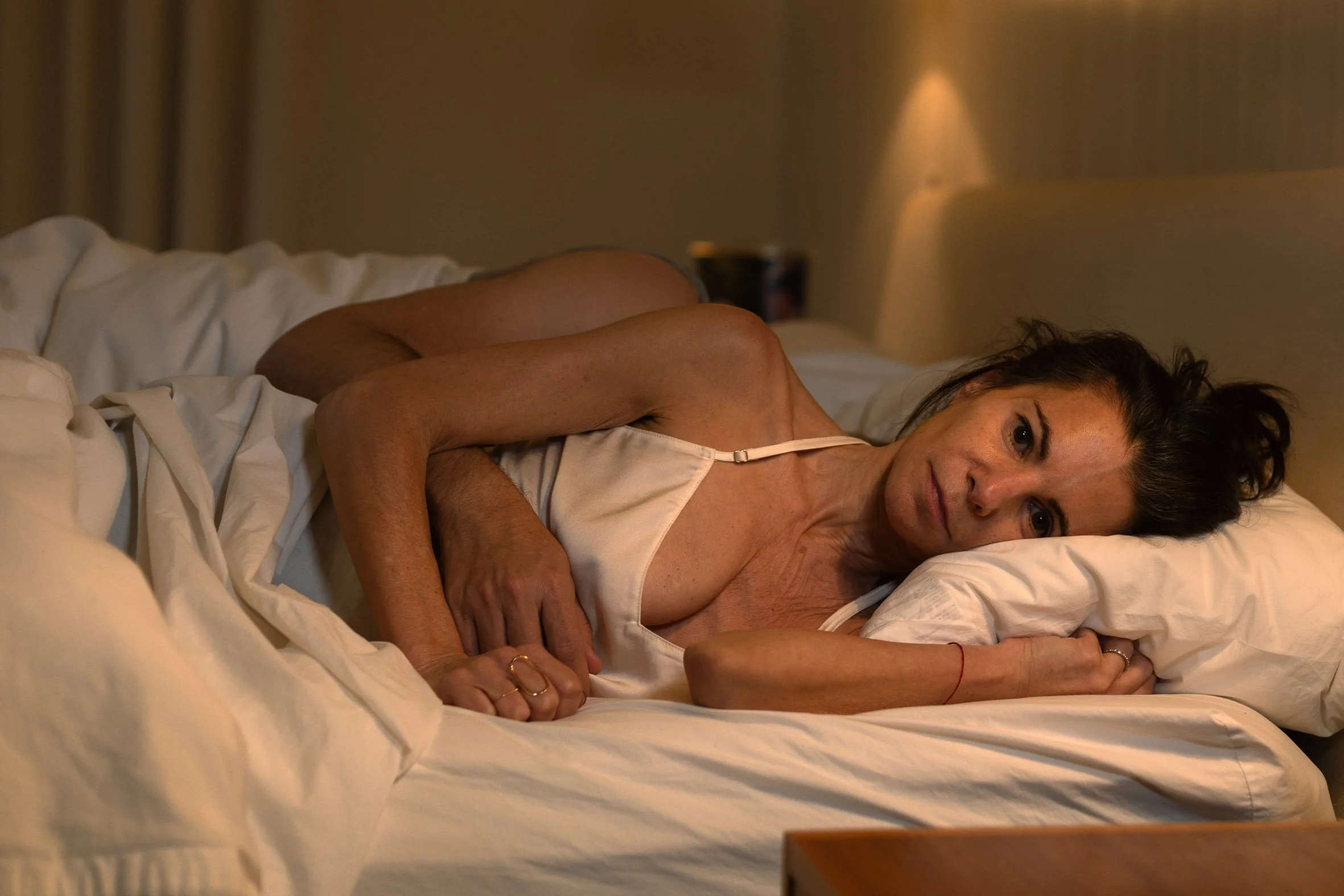
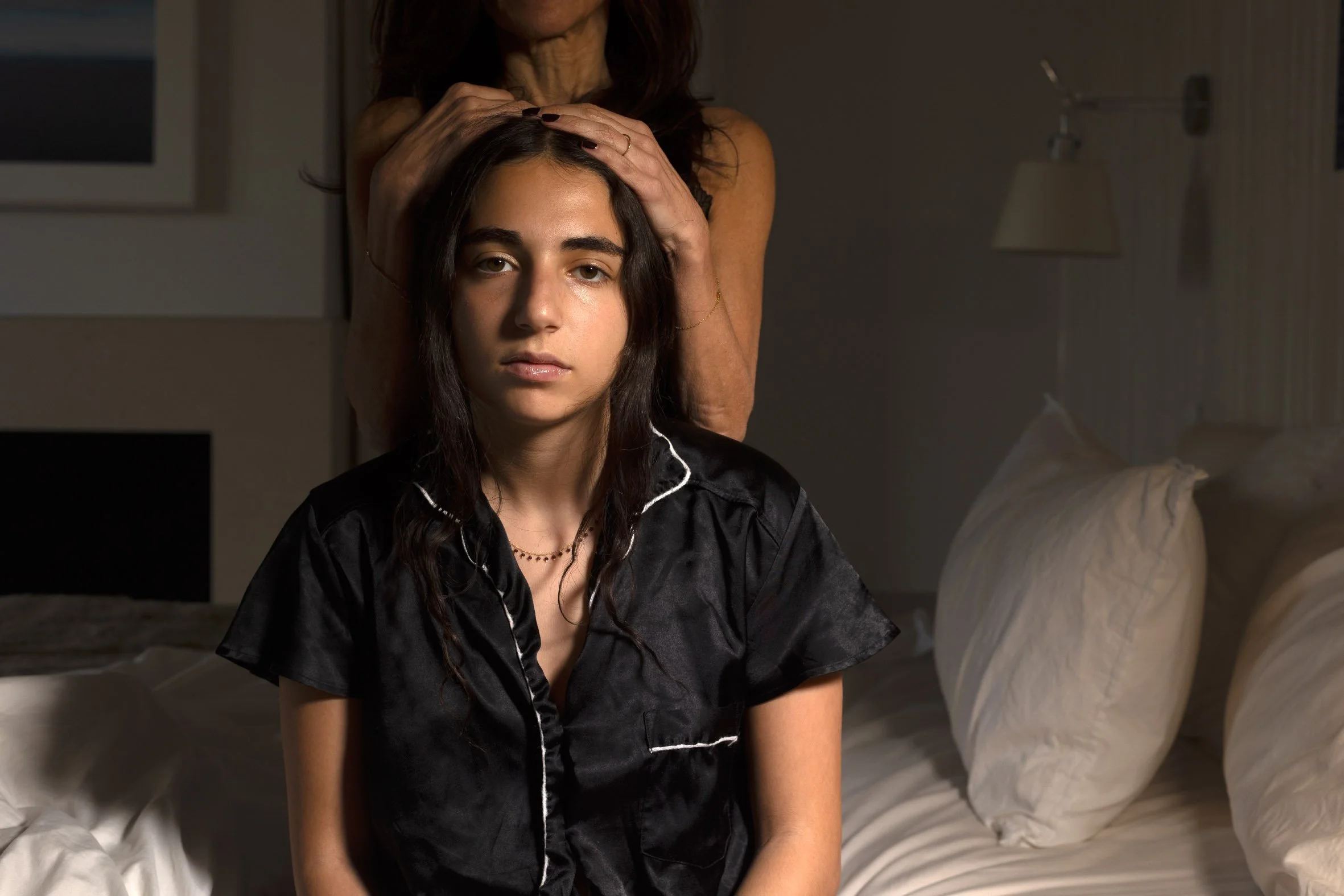
Seasons of Time by Nathalie Rubens, published by Kehrer Verlag, is a deeply personal photobook that explores two parallel transitions: a daughter entering adulthood and a mother moving through midlife and menopause. Through intimate photographs of herself and her daughter Ruby, Rubens reflects on identity, aging, and the shifting roles within a family.
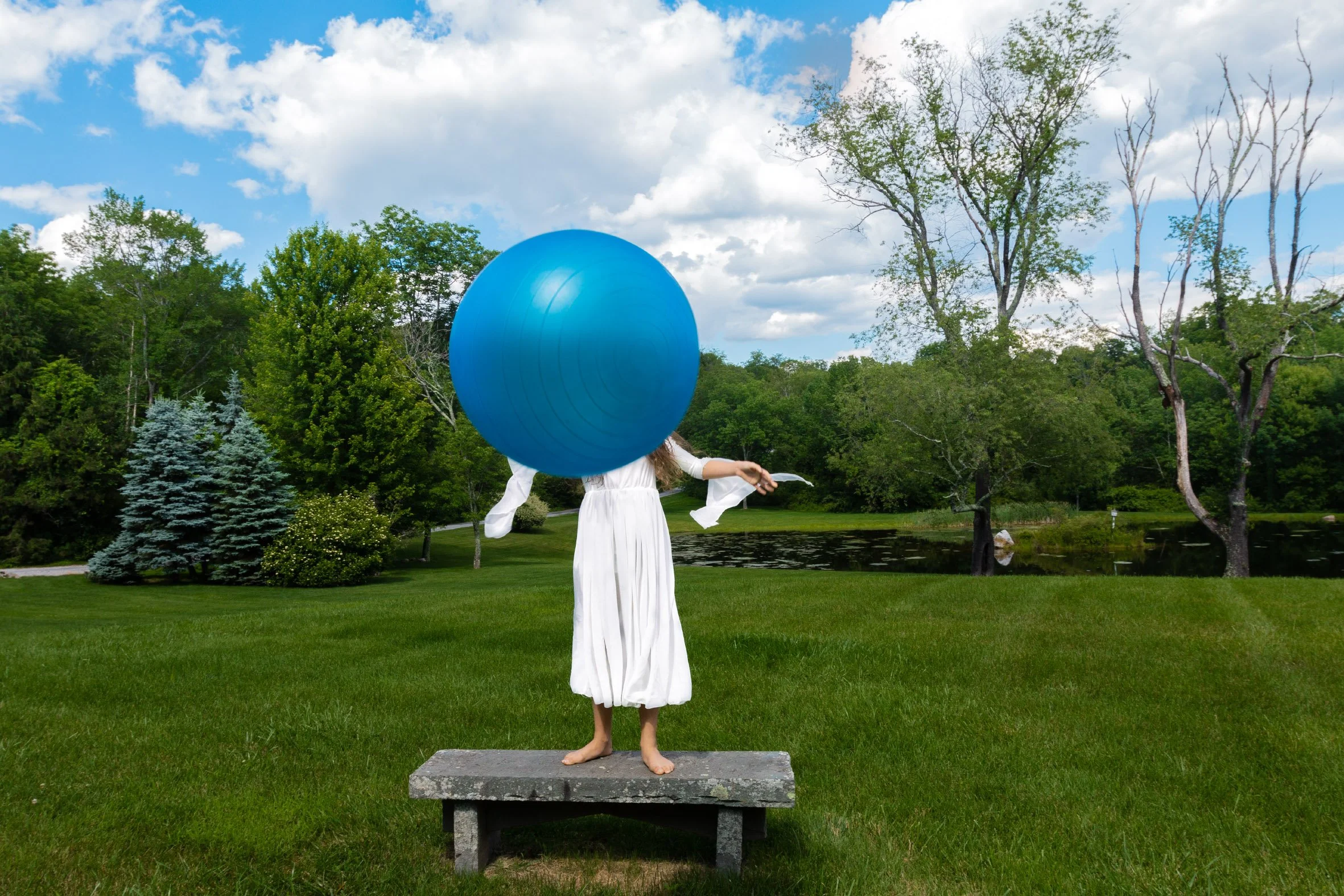
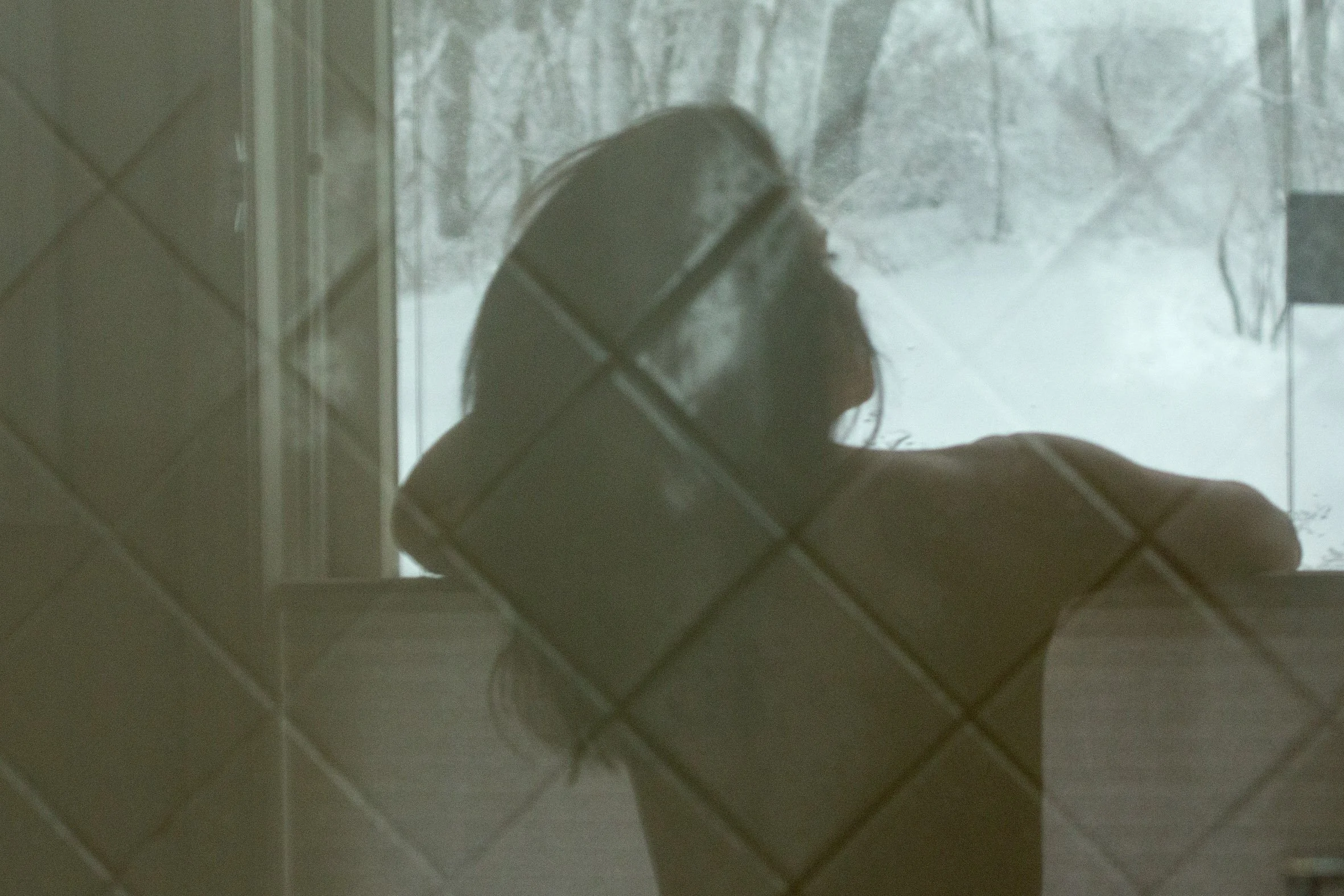
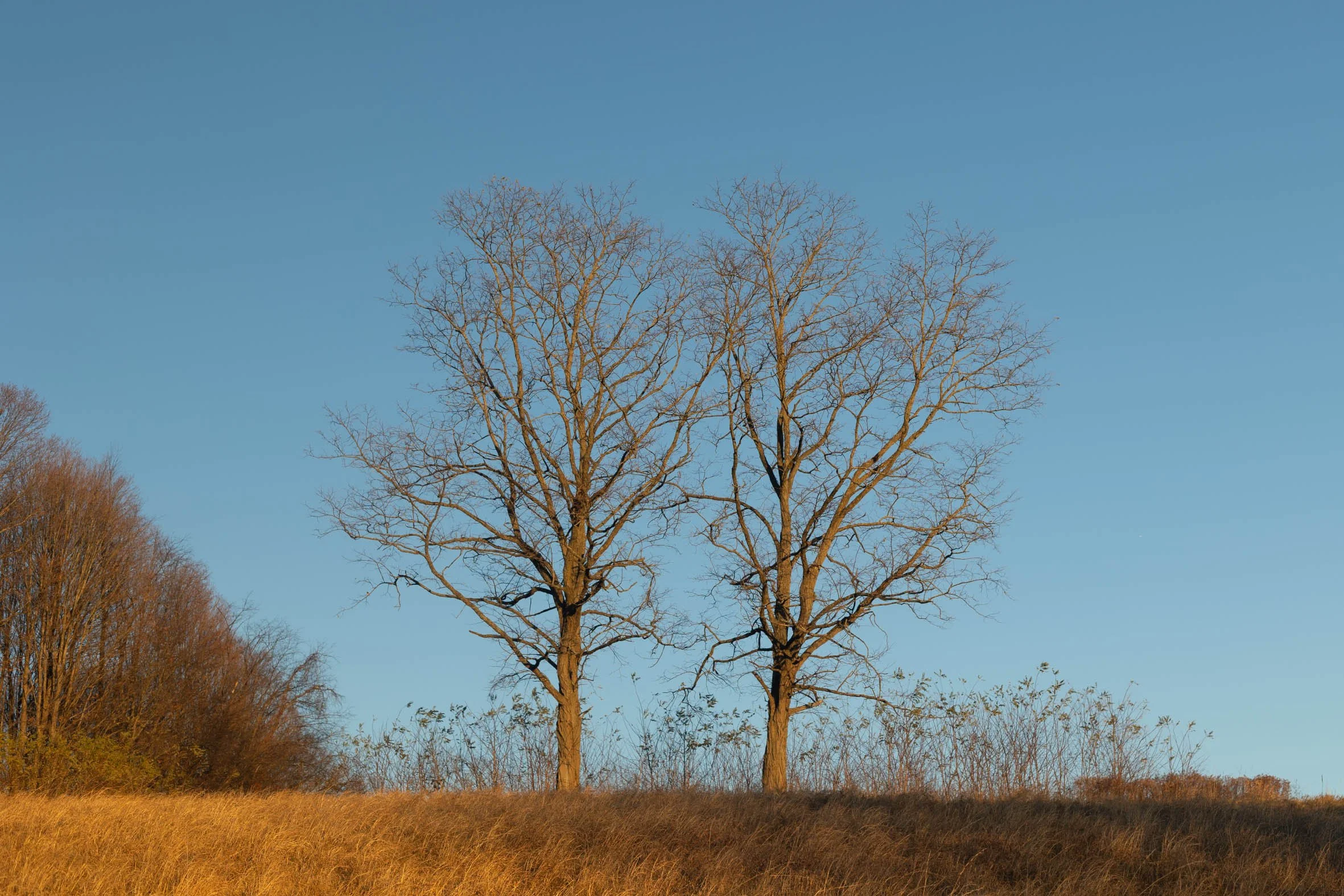
The work moves between quiet domestic scenes and sparse landscapes, using recurring motifs like mirrors, windows, and two trees standing side by side. These images create a visual rhythm that connects personal experience with the passage of time, showing both the tension and closeness between the two lives.
Rather than offering a clear narrative, the book builds meaning through small moments and repetition. It presents aging not as a single event, but as something gradual, complex, and often difficult to define, especially in a stage of life that is rarely shown so directly. (Kehrer Verlag, Amazon)
Project Genesis: What made you decide to photograph yourself and your daughter Ruby at the same time, and how did the idea for "Seasons of Time" come to life?
I started photographing my daughter Ruby when she was about 11 or 12, wanting to capture that liminal turning point between childhood and young adulthood. Not long after, I began turning the camera on myself as I moved into my midlife years.
Over time, I realised the two bodies of work were in conversation with each other. We were both moving through profound transitions, hers into adolescence and early adulthood, and mine into a new phase of midlife. While these shifts were visible physically, they were also deeply emotional and psychological.
Ruby was beginning to question how she fit into the world, while I was trying to understand my own changing identity as the mother of four children who were steadily gaining independence. Photographing us simultaneously became a way to explore these parallel transformations, and that dialogue ultimately evolved into Seasons of Time.
You started photographing Ruby separately from photographing yourself, and only gradually realised the two bodies of work were speaking to each other. At what point did you actually know you had one project, and what did that recognition feel like in practical terms?
I don’t know if there was a specific “aha” moment. As I started photographing myself, I was still drawn to photographing Ruby. Looking at the images of Ruby examining herself in the mirror, I kept asking myself, “What does she see? What is she looking for?” At the same time, I was using the camera (and mirrors!) to understand my own changing identity. That is when I realised that we are really undergoing parallel journeys, physically, emotionally, and psychologically, and that realisation revealed the work as a single project.
Personal Roots: Your father introduced you to photography when you were a teenager. How did that early experience shape the way you approach a deeply personal project like this one?
I never thought about that connection. My father was a stockbroker and then a small business owner, but he was always an aspiring artist. Today, in his 90s, he continues to pursue drawing and painting. He introduced me to photography when I was a sophomore in college, and taught me how to use an analogue film camera. I went abroad with the Nikon F3 he gifted me, and I photographed prolifically. I came back to college and started taking classes and spending enormous amounts of time in the darkroom.
My focus was mostly street and documentary photography. My subject matter became more personal when I became a mother and rediscovered photography in the digital age.
Journalism Background: You worked as a journalist before becoming a photographer. How does that storytelling training influence the way you build a narrative in a photobook?
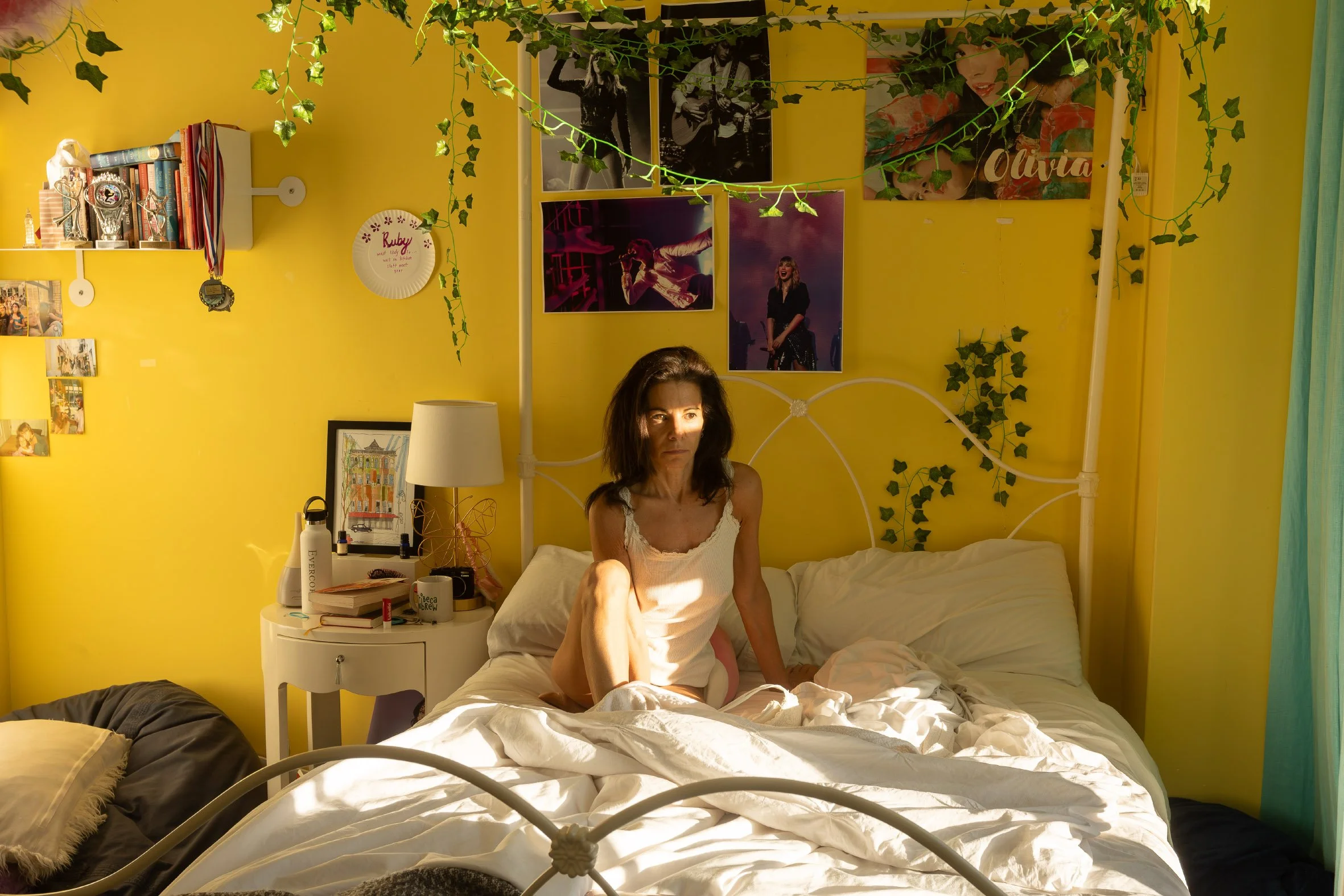
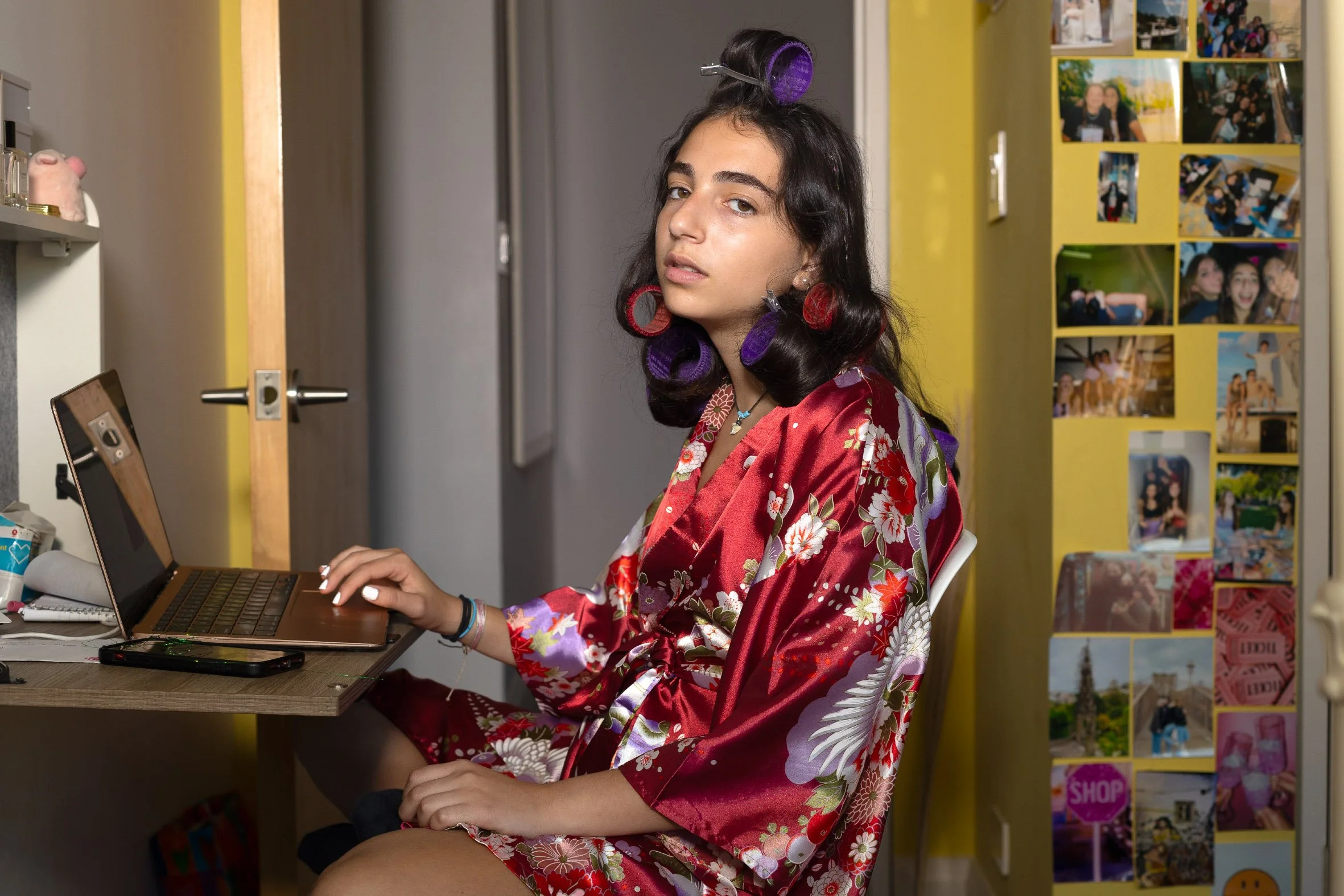
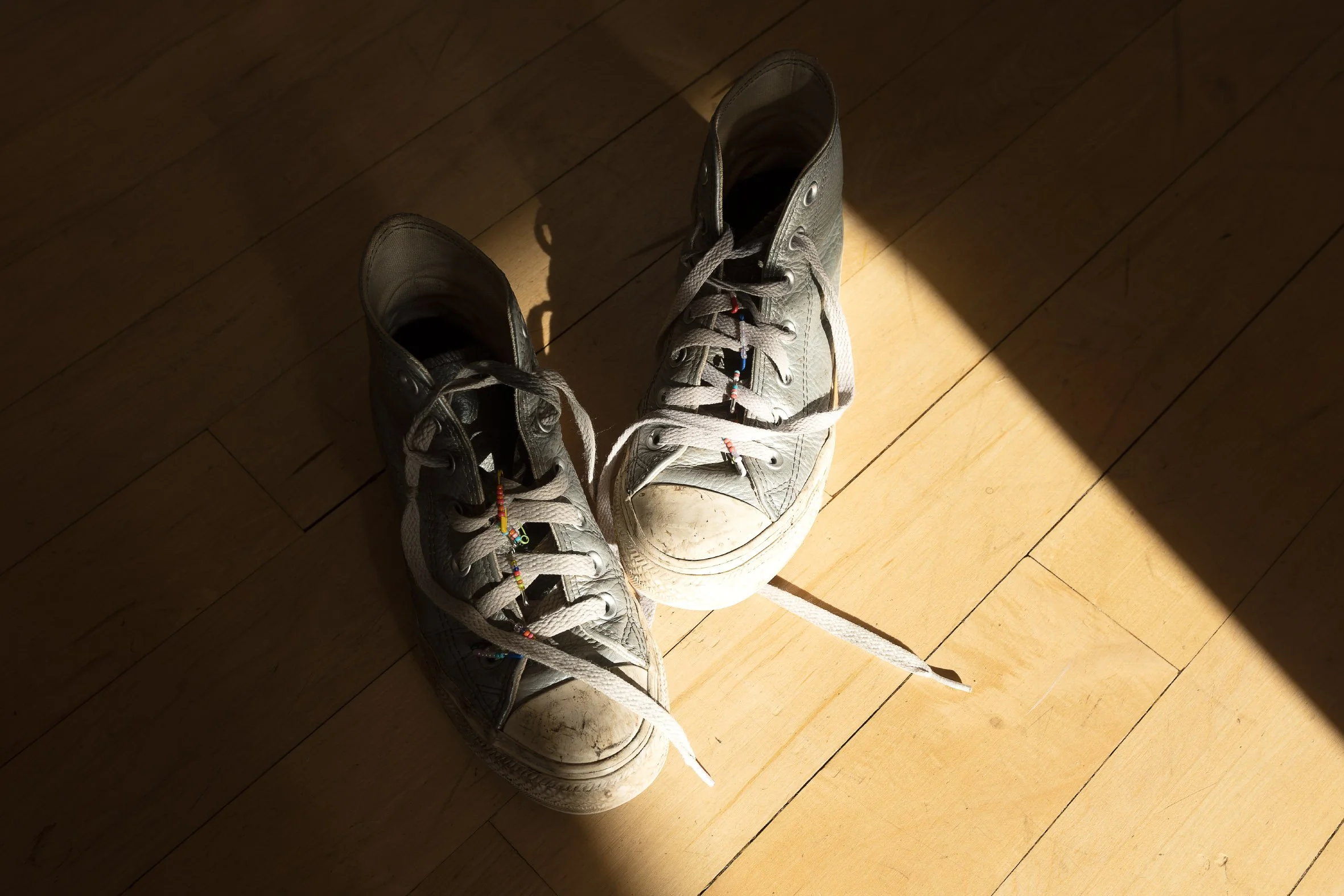
As a journalist, I learned that it’s not just the story itself that engages the reader, but the details that make it come alive. With this in mind, I wanted to focus on the small, often overlooked moments that get lost in the broader narratives about puberty and menopause, the strands of hair that accumulate in the shower, or the carefully chosen wall hangings in my daughter’s room. In Ruby’s room, there’s a catchall tray that reads, “It’s the little things,” which felt like an unexpected echo of that idea.
At the same time, my journalistic instincts make me reluctant to shy away from discomfort or to romanticise these life transitions. I want the work to hold both the tenderness and the unease that come with change.
You mention details like the strands of hair in the shower and the catchall tray in Ruby's room. How do you actually find those details during a shoot? Are you looking for them, or do they stop you?
My eye is instinctively drawn to details. Sometimes I understand the meaning immediately, as in the case of the strands of hair. Every time I dried my hair after a shower, I saw those clumps of hair accumulating, and I knew I had to photograph that particular kind of loss. Other times, something stops me, such as the catchall tray or the lonely pine tree, and I don’t realise the significance until I am in the editing process. Also, my support networks have been invaluable in helping me find direction in my work - especially my women’s critique collective led by Lesly Deschler Canossi and THE CORE led by Jason Langer. Often, my cohort will interpret images in ways that deeply resonate with my intentions, yet I had not consciously noticed.
Personal Story: You write that you felt "shock and unpreparedness" entering menopause while Ruby was just gaining her independence. How did it feel to turn the camera on yourself during such a difficult time?
It wasn’t easy. I was always behind the camera, never its subject. It was the photographer Elinor Carucci (who also contributed an essay to the book) who encouraged me to turn the camera on myself.
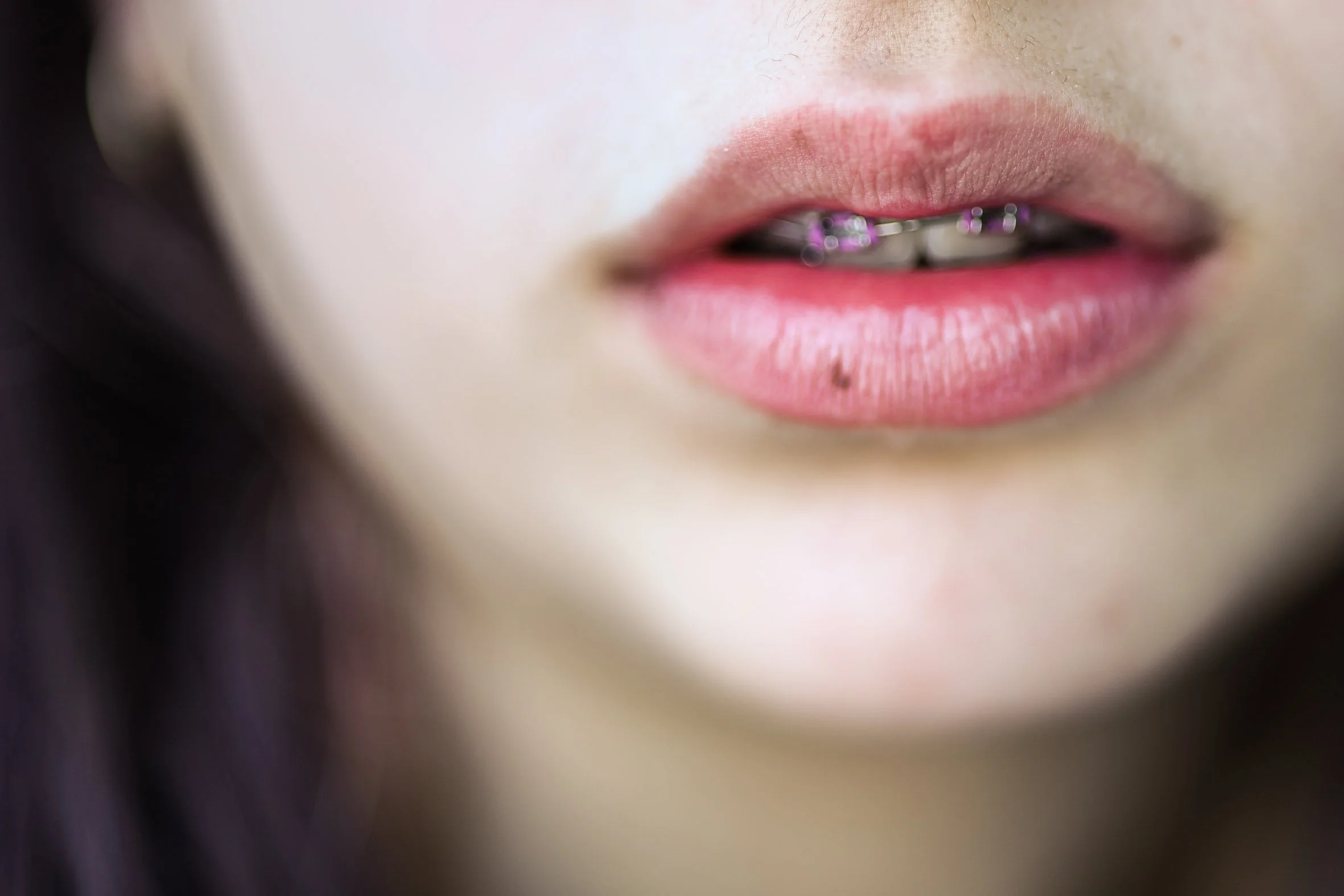
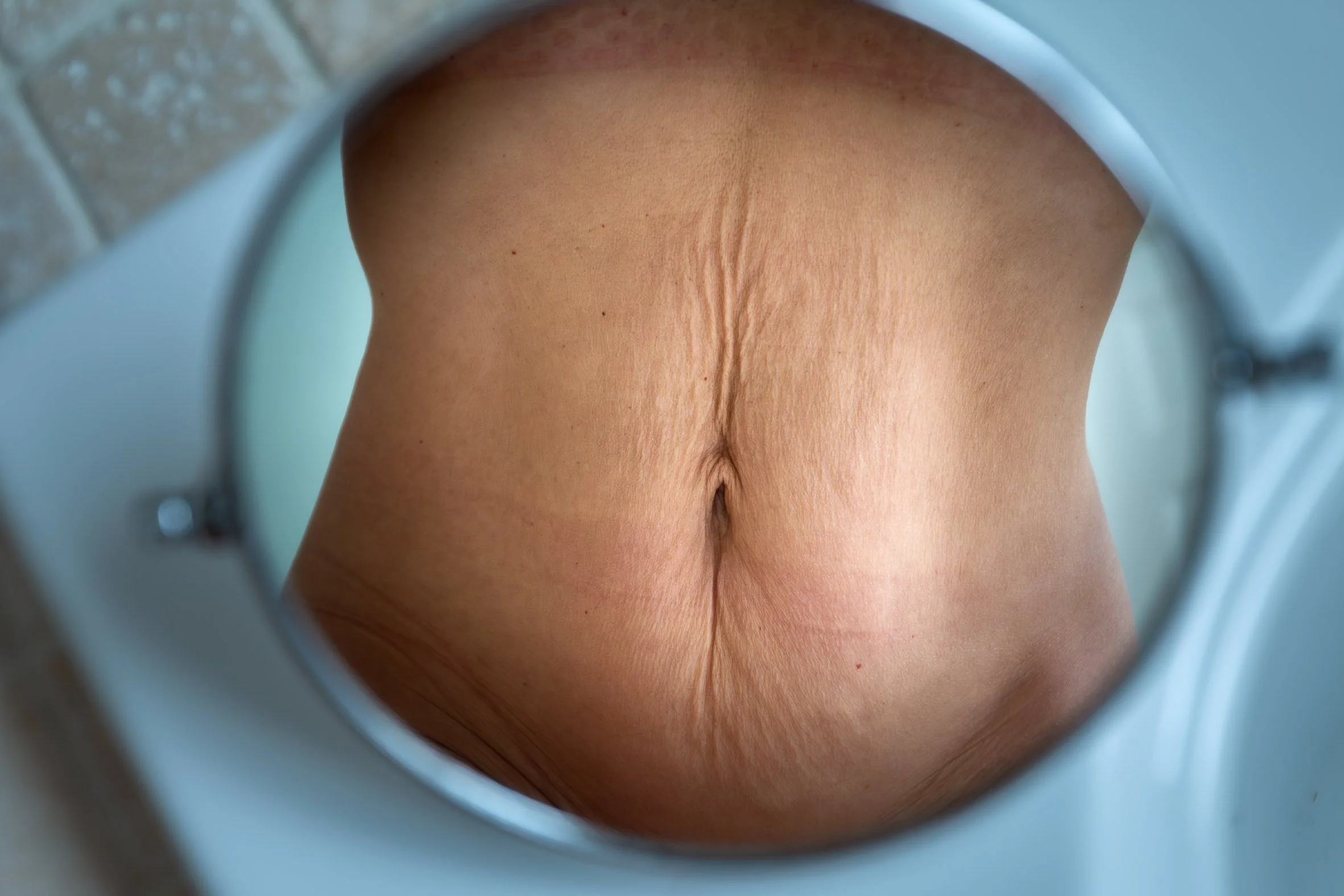
At first, I recoiled when I saw the insidious changes happening to my body, the fine lines, the sagging skin, the thinning lips. I much preferred photographing my daughter’s lush skin and thick tresses of hair. But gradually, I began to question these standards of beauty: what dictates what we find appealing? I forced myself to shift my perspective as I looked at the images and to take pride in what I saw.
I look at younger generations growing up with social media, carefully curating the image they project into the world. While I didn’t grow up with social media, I also cared deeply about how I was perceived by the anonymous world around me. Working on this project has helped me shed some of that protective armour around norms of beauty and allowed me to see, and show myself, with greater honesty and confidence.
Collaboration: How did you and Ruby work together during the shoots, and how did you build the trust needed to photograph such private moments?
Our photographic relationship evolved over time. Ruby was only 11 when I first began photographing her as part of a series about how middle school-aged girls were coming of age during a moment of major social change following the 2016 United States presidential election and the resurgence of a new protest era. Of course, I had no idea then how many other watershed moments that generation would soon face, from the COVID-19 pandemic to rising gun violence, but that’s another story.
Ruby proved to be a very willing and open subject. She allowed herself to be vulnerable in front of the camera. Perhaps that was partly because I’m her mother, but I also give her a lot of credit for how confidently she approached the sessions. I always tried to follow her lead. I would grab a few minutes whenever I could, and as soon as she said “enough,” I stopped. I also let her set the boundaries around what could and couldn’t be shown.
I think that spirit of collaboration created a level of intimacy that still persists today. There is a lot of mutual respect in our relationship, even beyond the photography, and I am so grateful for that.
Visual Metaphor: Two tall trees standing side by side appear as a recurring image throughout the book. How did you find that motif, and what does it represent for you?
I write in the book that I find the cyclicality of the seasons comforting. Even during the darkest and coldest days of winter, the promise of spring and warmer days is always on the horizon. Because of that, nature felt like an obvious element to weave into the series.
I photographed those two trees throughout the year, watching them shed their leaves in autumn and then blossom again in the spring. The cycles of nature hold this reassuring rhythm of loss and renewal. Aging, of course, feels much more linear; it doesn’t offer quite the same promise of rebirth, which made the contrast meaningful to me. Why these two trees specifically? I’m not entirely sure. I’ve been drawn to them since the first day I noticed them. Standing side by side, they also came to feel like a quiet echo of the relationship between Ruby and me.
Other recurring motifs in the series are circular shapes, mirrors, and windows. While I’m drawn to the structural role they play in framing an image, they also carry a psychological dimension for me: circles suggesting cycles and continuity, and mirrors and windows hinting at the tension between the image we project into the world and the one that looks back at us.
The trees, the circles, the mirrors, the windows: did you recognise those as motifs while shooting, or only later when editing? And how did you decide each one earned a structural role in the book rather than just being a recurring image?
The recurring motifs certainly did not become apparent to me until the editing process; they weren't something I was consciously constructing while shooting. As I was editing and sequencing my work, I began to see how naturally these elements accumulated, quietly linking the images together. I love how in “Echoes of Motherhood” the belly in the round mirror evokes the cycle of life and really creates a visual bridge between Ruby and me. I’ve long been drawn to windows across different art forms; because of their layered, almost meta dimension, suggesting both observation and self-reflection. All these elements earned a structural role in the book once I recognised how well they fit with a project so deeply concerned with perception and identity.
Untold Story: You mention that menopause is almost never discussed in popular culture. Did you feel nervous about making it so visible, and what reactions have surprised you?
I wanted this work to be part of a broader public conversation. When I turned fifty, I began to realise just how many unknowns there still were around this stage of life. Again and again, conversations with friends would circle back to the same refrain: “Nobody ever told me about that!” And we weren’t only talking about the physical changes of menopause. We were also talking about the emotional and social shifts that often arrive at the same time, the changing dynamics of marital relationships as children become independent, the disorientation of the proverbial “empty nest,” caring for ageing parents, and a growing awareness of mortality.
There are countless books and films devoted to coming of age as a young adult, but far fewer that explore the authentic experience of midlife. In the last few years, it does feel like the topic has begun to enter public conversation more openly, yet there is still so much more to say. I think Miranda July writes about it beautifully in her recent novel All Fours.
When you edited the project down to 66 images, what was the test you applied to decide whether a photograph stayed or went? Was there a question you found yourself asking, even informally?
The main question I asked is, am I proud of this image? It had to be up to my standards artistically and technically. Also, with only two main subjects, I was careful to avoid redundancies. Like many photographers, I find myself photographing the same things over and over, so I had many iterations of the same image. Finally, I drew on my cohorts and the wonderful Matthew Papa, who helped me with the final edit.
Advice: What would you tell a photographer who wants to make a long-term personal project about their own family?
I believe it’s always dangerous to undertake a photographic project with a preconceived notion of what it will become. As a photographer, I photograph what I am viscerally drawn to – what I simply cannot not photograph. Over time, you will see patterns, messages, cues as to how to develop the themes you have uncovered. So, start with what moves you, interests you, sparks curiosity, and then see what happens over the long term.
With regards to photographing one’s own family, a deeply personal and often private dimension of our lives, it is important to be open and vulnerable, because these photographs will likely reveal as much about the photographer as about the subjects themselves. Maybe, at first, the photographs are not for public viewership. They can exist first as a way of understanding your own relationships, experiences, and perspective.
Finally, it is essential to have buy-in from your subjects and to treat them as collaborators rather than simply subjects. When photographing one’s own family, the boundaries between personal life and artistic practice can easily blur, so trust and ongoing dialogue become fundamental. Over time, the project may affect how your family sees themselves and how they see you as a photographer. Allow them agency within the process, whether that means discussing what feels comfortable to photograph, inviting their perspectives, or acknowledging when something should remain private. In many ways, this collaborative approach can deepen the work, making the photographs not only about your family, but created with them.


To discover more about this intriguing body of work and how you can acquire your own copy, you can find and purchase the book here. (Kehrer Verlag, Amazon)
More photography books?
We'd love to read your comments below, sharing your thoughts and insights on the artist's work. Looking forward to welcoming you back for our next [book spotlight]. See you then!
Robin de Puy could no longer make this project alone. She first photographed Randy in Ely, Nevada, during a 2015 road trip and kept returning to him for more than ten years. Interviews