How The Drum Thing Captures 100 Drummers as Musicians, Personalities, and Living Pieces of Music History
Welcome to this edition of [book spotlight]. Today, we uncover the layers of 'The Drum Thing,' by Deirdre O’Callaghan (published by Prestel Publishing). We'd love to read your comments below about these insights and ideas behind the artist's work.
Most people hear drummers but never really see them.
The Drum Thing by Deirdre O’Callaghan focuses on changing that by bringing us into the private worlds of nearly 100 drummers. Instead of photographing them on stage, she meets them in their own spaces, bedrooms, studios, and basements, where their personality becomes visible. The project moves beyond music and starts to show how rhythm, identity, and environment are connected. It becomes not just a series of portraits, but a wider view of who these musicians are.
But the project is also about how a photographer gets close.
O’Callaghan spent years building access, returning again and again, and working in a way that feels more like collaboration than observation. In the interview, she talks about how the idea grew from a small assignment into a long-term project, and how persistence and curiosity shaped the final book. You start to see that the images are not only about drummers, but about time, trust, and the process behind them.
At the center of this conversation is a different way of looking.
You will take away how choosing the right environment can change a photograph, and why slowing down often leads to stronger work. It shows what happens when you stop chasing moments and start building them with intention.
8. Sly Dunbar, of Sly & Robbie / Peter Tosh / Grace Jones / No-Madd. Channel One Studios, Jamaica © Deirdre O’Callaghan
The Book
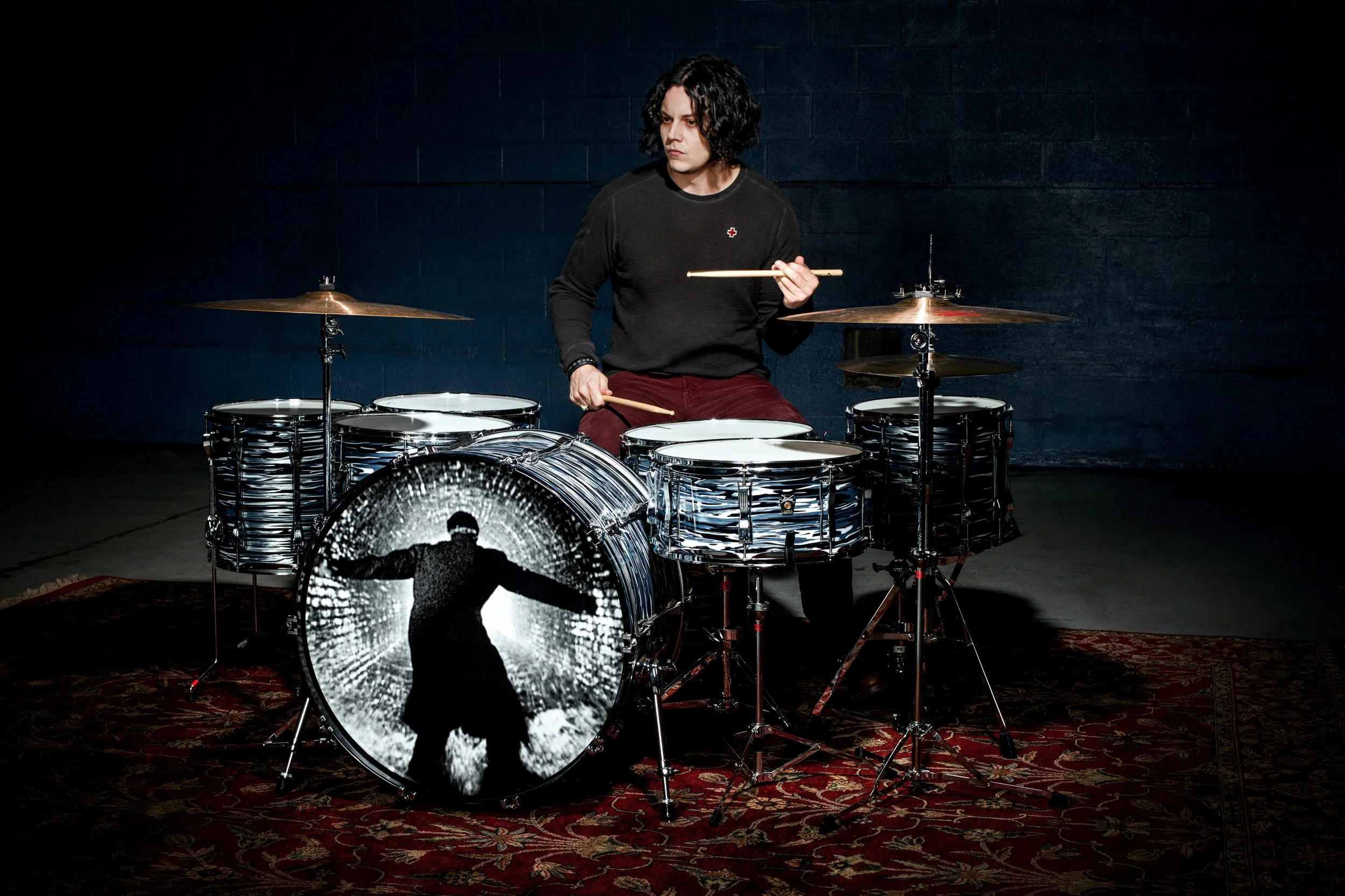
The Drum Thing by Deirdre O’Callaghan and published by Prestel is a photographic exploration of the people behind the rhythm. The book brings together portraits and conversations with nearly 100 drummers from across genres and generations, creating a wide-ranging view of music through those who shape its foundation.
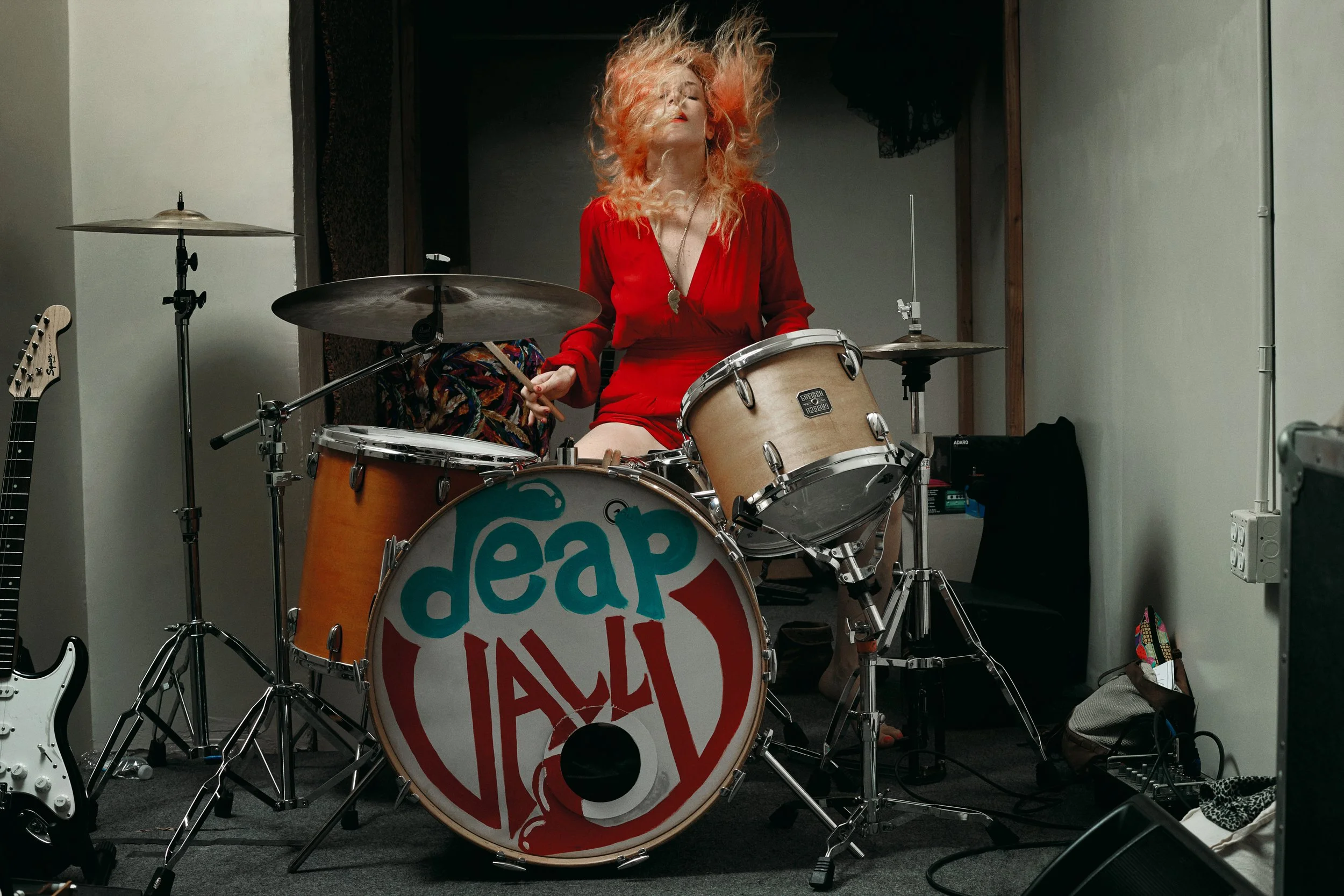
Photographed in their own environments rather than on stage, each drummer is shown in a space that reflects their personality and relationship to the instrument. These settings, from bedrooms and garages to professional studios, become an essential part of the story, revealing details that go beyond performance.
Alongside the images, O’Callaghan includes personal conversations with the musicians, offering insight into their lives, influences, and ways of thinking about music. The result is a book that moves between portrait, oral history, and cultural document, capturing drummers not only as performers, but as individuals connected by a shared language of rhythm. (Penguin Random House, Amazon)
Was photography something you always wanted to do, or did you kind of fall into it by accident?
When I was in school, I considered going to art college, but Ireland was a very different place then, and I decided to leave. After my final exams at eighteen, I was gone the very next day. I spent a year in Paris and then moved to London. It was only in my early twenties that I started getting seriously into photography. That's when I fell in with Rankin and the whole group of people around Dazed and Confused. They were coming out of their last year of college, and meeting them completely changed my direction. I was passionate about photography, and they gave me a world in which to pursue it.
You started your career at a music magazine called Dazed and Confused. What was that like for a young photographer? Did it feel like the right place for you?
It was fantastic. I don't know how any of us ate because there was no money, but it was genuinely exciting. Being part of that group meant I could combine my two great passions, photography and music, at a moment when London in the nineties felt like it was buzzing with possibility. I was working at the magazine and shooting as I went along.
But alongside all of that, I started developing personal projects on the side. How That Can, my first book, was completely different to the life I was living at the time. I never set out to make it a book. It started as a personal project, full stop. For me it was always important, no matter how busy commercial life gets, to have some project running in the background, whether long or short. It kept me grounded and gave me something that was entirely my own.
1. Ahmir ‘Questlove’ Thompson, of The Roots / D’Angelo / Elvis Costello / Al Green / Jay-Z, in New York © Deirdre O’Callaghan
Most photographers choose one thing, either music photography or documentary work. You've done both. Do you think of yourself as one type of photographer, or something else?
Honestly, I'm not sure where I fall. I didn't go down one particular path. But looking at the work I've made over the years, there's a common thread: communities within communities. Whether it's Arlington House, the Chelsea Hotel in New York, the drumming world, or Skid Row in Los Angeles, I've always been drawn to the stories that exist inside these contained worlds. That's what drives me.
Where did the idea for The Drum Thing come from? Was there one moment when you thought: I need to photograph drummers?
It basically started as a magazine feature. I shot eight drummers for the piece, but then it just took off from there. I decided I didn't want to publish yet. I wanted to keep working on it and see how far I could take it. There was another key moment when I was out for dinner with Sarah Lowe, who is the wife of Jim Sclavunos, the drummer for Nick Cave and the Bad Seeds. We sat there and started making a list, and I suppose I love a challenge, so that list became a kind of mission.
I spent a lot of time in the research phase, which I genuinely loved. After shooting the first eight to ten drummers, I knew it would make a great book. What I didn't know was how enormous a project it would become. It grew into something monstrous, in the best possible way.
From the beginning, I wanted it to tick a lot of boxes simultaneously: photography, music, social history, the environment each drummer inhabits. I wanted it to appeal to a wide audience, not just music fans. And of course, a number of the drummers I photographed have since passed away, so there's a real archival importance to the work. Representing a cross-section of ages and genres felt essential.
You photographed almost 100 drummers. That's a lot of people. How did you actually reach them and make them say yes?
That was the hardest part. Once you were in the room with someone, it was easy. Getting there was the challenge. I had contacts through the record labels, having worked for many of them over the years, both major and independent. But beyond that, it was pure perseverance. This was before social media had really taken off, so it meant going through management, following up endlessly, hitting a lot of walls. It would be much easier today in some respects. But back then it required patience and determination, and you had to know exactly where the line was between being persistent and being too much. Eventually, we got there.
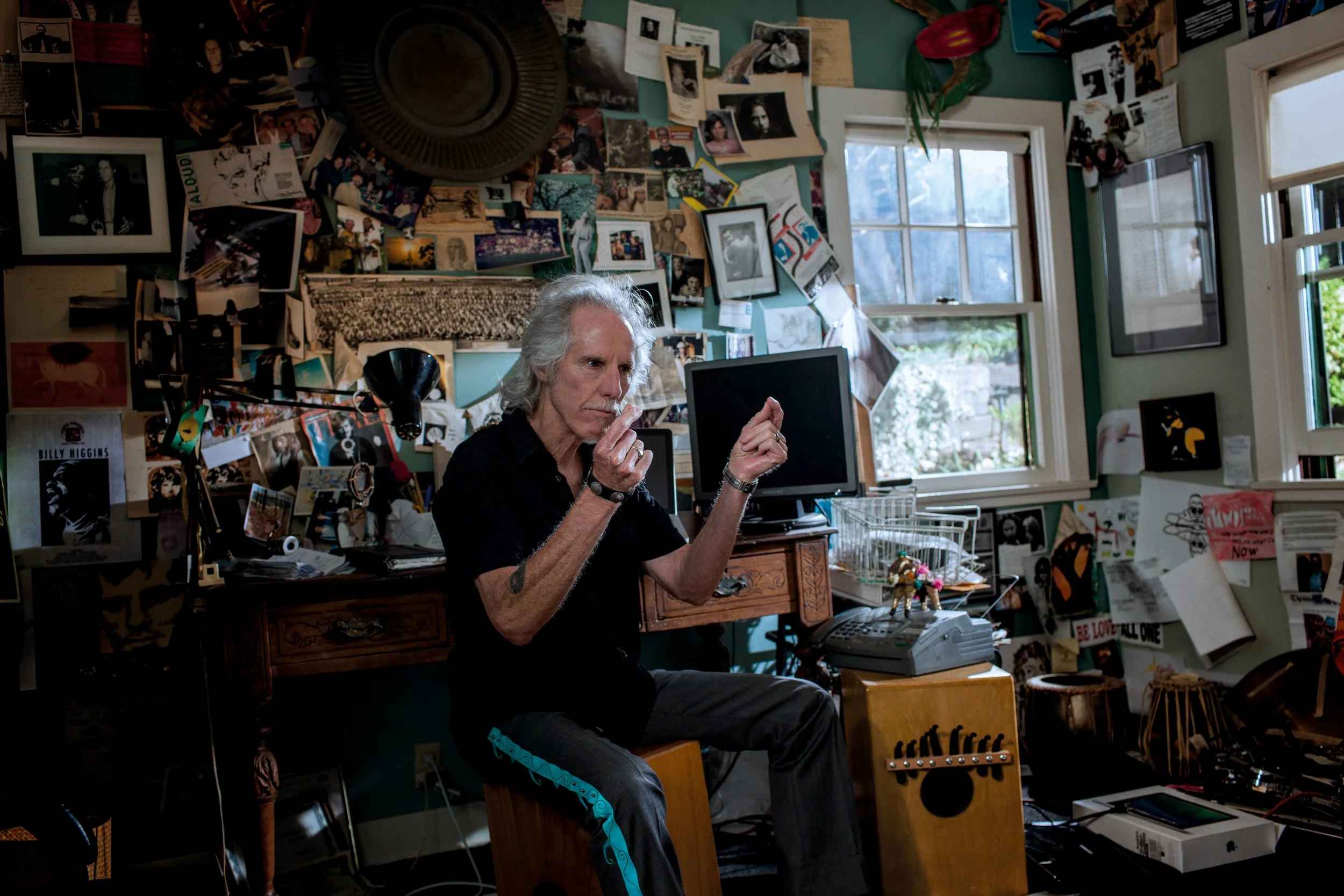
11. John Densmore, of The Doors, in California © Deirdre O’Callaghan
You chose to photograph everyone in their own private space, their bedroom, their basement, their garage. Why was that so important to you? What does that change in a photo?
At the start, I didn't do it that way, and the pictures weren't as interesting. Once I started going into their own environments, everything changed. With drummers especially, the question of where you keep your kit says everything. The space reflects the person's personality and their relationship to the instrument.
I also love detail shots, and the environments were full of them. Someone like Milford Graves, his whole space was like a wizard's lair. There was so much to discover. I find that the way a drummer walks into a room, the way they dress and speak, it all translates directly into how they play. The environment made that connection visible.
Some of these drummers are very famous, Ringo Starr, Lars Ulrich, Dave Grohl. Were those sessions different from photographing someone less well-known? Did you work differently with them?
Not really, no. Even when there were supposed to be time limits, they never held. The musicians genuinely seemed to enjoy the sessions. I approached every shoot the same way, with an assistant, with a plan, and with the same level of care and curiosity, regardless of who the subject was. Everyone in the book was exciting to photograph. I can't say I did anything differently for the famous ones.
The book also includes conversations you had with the drummers, not formal interviews, just personal conversations. How did talking to someone change the photos you made of them?
That side of things was genuinely hard work. The transcribing alone was a mountain. It was something I wanted to do myself, and I ended up doing a lot of it on flights, which helped. Over time it became easier, and I came to see those conversations as absolutely essential to the book. They weren't afterthoughts.
When it came to laying out the book, we never wanted one page of text per drummer. We wanted the whole thing to have a rhythm, a flow that matched the photographs. Deciding how to place the quotes, how much from each person, how to let the words breathe alongside the images, that was a lot of fun and a lot of work. But it was necessary. It made the book what it is.
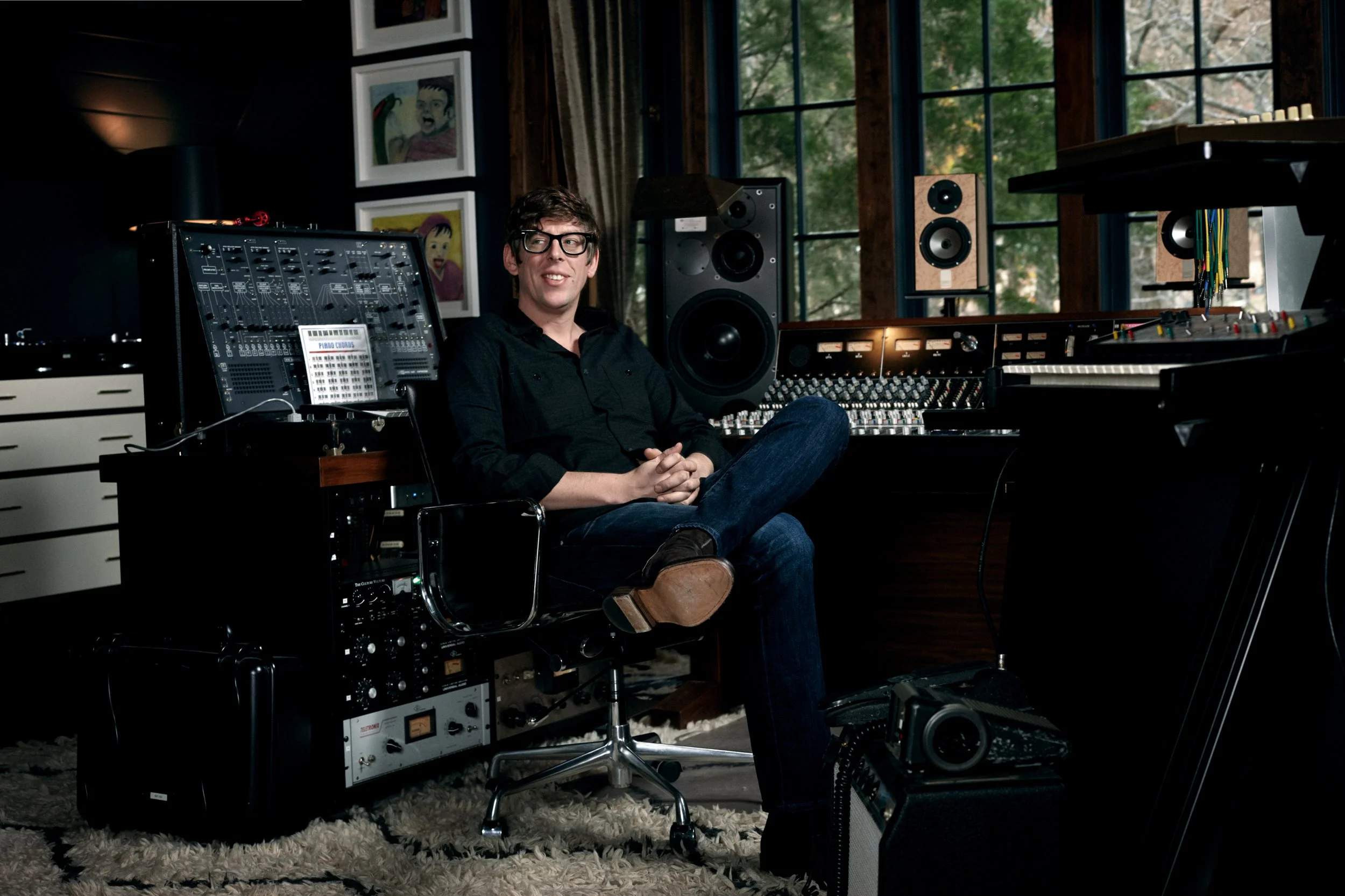
10. Patrick Carney, of The Black Keys, in his home studio, Tennessee © Deirdre O’Callaghan
The project took years to complete. Were there moments when you wanted to stop? What kept you going?
It was a monster project, and if I'm honest, I have no idea what kept me going. At some point I simply couldn't turn back. I had invested so much, time, money, energy, and I wanted it to be perfect. There was no acceptable version of not finishing it.
But beyond the personal investment, I believed in the project. It felt important to include the full range of people I had set out to reach, to make it something that spoke beyond the drumming community. And then there was the simple privilege of it: I was being given access to people's private spaces, sitting with these incredible musicians, hearing their stories. I was very lucky. That sense of luck kept me going too.
When you start a long project, like this one, or Hide That Can which took four years, how do you know at the beginning that the idea is strong enough to stay with for that long?
With Hide That Can, it was a story I needed to tell. I was genuinely shocked when I discovered Arlington House, and moved by what I found there. Many of the men living there had come to London in the fifties and sixties, some as young as thirteen or fourteen, many speaking only Irish at the time. They had sent money home to their families, worked hard, and then, through one thing or another, lost their way. They felt like a forgotten generation, and I felt driven to bear witness to that.
It's similar with the drumming project. I was simply passionate about it. There are moments from those years I will cherish forever, sitting with Jack DeJohnette as he played his grand piano on a beautiful afternoon in Woodstock, the sun going down over his house. These things stay with you.
With Hide That Can, I had no idea it was going to become a book. I just wanted to go back. I got to know people, had friends there who were waiting for me. That's the magical thing about photography: you can walk into a hostel in Camden, and through your camera you get to know people and their stories and eventually you get to tell them. It happened the same way on Skid Row in Los Angeles. The camera gave me access, and the access gave me relationships, and the relationships gave me a reason to keep going back. That's what it's really about, the access and the trust.
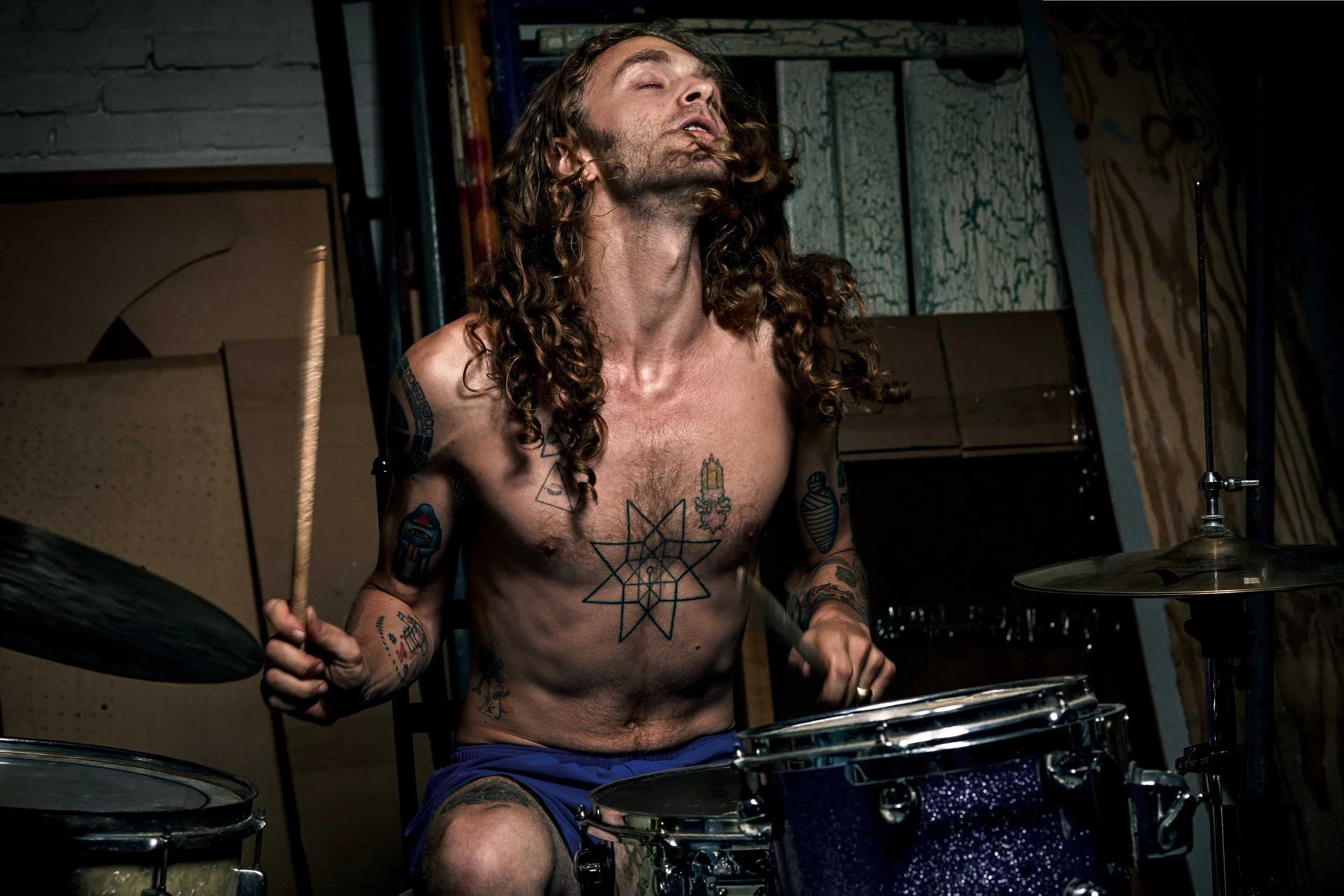
13. Greg Fox, of Guardian Alien / Liturgy / Teeth Mountain, in New York © Deirdre O’Callaghan
A lot of photographers take pictures of people but never really get close to them. You seem to do the opposite, you get very close before you even pick up the camera. Can you describe how you build that trust with a stranger?
My natural approach is always to set up rather than shoot on the fly. When I was working at Arlington House and would come in with my Mamiya 6x7 and a reflector and a big tripod, the men there would get such a kick out of it. Everyone knew I was there. There was no question of sneaking around corners grabbing shots. That's not my style.
For me, it's about finding or creating an environment that genuinely represents the person, discussing ideas with them, involving them in the process. I care deeply about the people I photograph, probably too much sometimes. At Arlington House, I had been given remarkable access to people who had lived through extraordinarily difficult things. I respected that enormously, and I didn't want to exploit it. So I was selective. Not because I was editing as I went along exactly, but because I cared too much to be indiscriminate. That takes more time, but that's just how I work. The respect comes first, and then the photographs come from that place.
A photographer you respected told you to shoot everything at Arlington House. You ignored that advice. Why?
It just felt like too much. A lot of the men were in very difficult states, and I think that's also where the interviews became so important. Photographing everything would have meant recording moments that I didn't feel were mine to take. Any one of those men could have been my father. That project broke my heart in the best possible way, and precisely because I cared so much, I knew I had to hold back.
It comes down to dignity. I wasn't going to overstep. I didn't snap away on the first or second visit. You get to know people slowly, over many visits, and then at some point, maybe, you photograph them. That's just how I work. The camera only comes out when the relationship has earned it.
And yet your presence was hardly subtle. A Mamiya, a reflector, a full tripod. Most documentary photographers aim to disappear. You did the opposite.
Well, I'm not a documentary photographer, not in the traditional sense. I don't work on the fly. In a way, it was a joint project. The men were part of it. I was there to represent their stories, and they knew that.
The way I ended up at Arlington House in the first place says a lot about how I work. I was in Camden one evening and I saw a man walk past in a three-piece suit. I was fascinated. I could tell he was Irish, and I followed him. It sounds strange, but it wasn't strange at the time. I was just intrigued. He walked into this enormous red brick building, and I followed him inside and asked to speak to whoever was in charge. That's how I met Alex McDonald, one of the social workers there. I told him I was a photographer. He gave me the background on the men, and I was completely captivated. He gave me permission to come in and shoot.
The first few times I turned up, I was terrified. The sounds in the building, the screaming in the background, the smells. It was overwhelming. But I kept going back. I was drawn to it. And once you commit to going back, you stop being a visitor and start being a presence. That changes everything.
15. Bobbye Hall, of Bob Dylan / Marvin Gaye / Stevie Wonder / Stevie Nicks / Carole King / Bruce Springsteen, in California © Deirdre O’Callaghan
When a project is finished and you are looking at all the photos together, how do you decide which ones stay and which ones go? What makes you cut a photo you love?
The first question is always: when is the project actually finished? That's the hard part when you don't have a deadline. But in practice it tends to become clear as you go. I always edit along the way, and then it's a matter of bringing everything together at the end.
For that final stage I always bring in outside help. I have an agent friend, Katie Niker, who is wonderful at editing. It really does need another set of eyes. It's very hard to edit your own work in isolation, especially when you've been living with it for years.
The other thing I notice is that editing on film, working with contact sheets, feels very different to editing digital. But regardless of the medium, most photographers edit as they go, and then go back and see it all differently again at the end.
Many photographers have a lot of pictures but struggle to turn them into something, a book, a series, a project with a real shape. What advice would you give to someone in that situation?
Just do it. I can't imagine a career where I only focused on commercial work. It would have felt quite empty, however necessary. I'm always restless, always had to be shooting something for myself. And I never set out to spend five or six years on a project. Nobody does. You just start, and you keep going, and one day you look up and it's become something.
Keep shooting. Keep developing projects. Often they are right in front of you. Spend time with them, but also know when to call it done. Edit it, complete it, and move on when it feels finished. Then keep developing your style, meeting new people, finding new places. That's the whole thing really.
2. Ahmir ‘Questlove’ Thompson, of The Roots / D’Angelo / Elvis Costello / Al Green / Jay-Z, in New York © Deirdre O’Callaghan
Does a project need to become a book or an exhibition to matter? Is publication the point?
Not necessarily a book or an exhibition. Websites give you a way to show projects that is genuinely exciting and accessible. It's about making your work more rounded, presenting it properly, giving it a life beyond the hard drive.
But getting the work done in the first place, getting the access, that's half of it. The Chelsea Hotel in New York took a long time. So many photographers had come through that place and started projects, and the people who lived there long-term were understandably skeptical of newcomers. At first I was staying at a friend's place nearby and coming over every day, and I realized fairly quickly that nobody was taking me seriously. I had to move in. I had to become part of the place.
That's often what it takes: real investment, going deep, building trust over time. Not just spending a bit of time there, but genuinely immersing yourself. Sometimes you do that, get the access you were after, and then discover the project isn't quite what you imagined. That's happened to me too. At least you know. The challenge of gaining access can sometimes be more compelling than what's behind the door.
If you could go back and tell your younger self one thing about how to build a serious body of work, something you had to learn the hard way, what would it be?
I think I worked from the heart, and I'm glad about that. I was true to myself, and it's genuinely nice to look back and feel that. Maybe I cared too much sometimes, agonised over things I didn't need to agonise over. Perhaps I could have been a bit more ruthless. But then I probably wouldn't have made the projects I did. So I'm not sure I'd change anything.



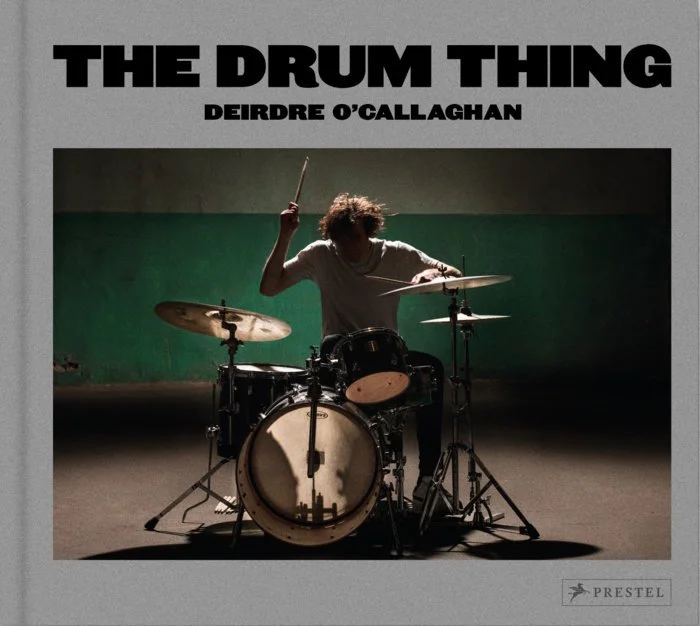
To discover more about this intriguing body of work and how you can acquire your own copy, you can find and purchase the book here. (Penguin Random House, Amazon)
More photography books?
We'd love to read your comments below, sharing your thoughts and insights on the artist's work. Looking forward to welcoming you back for our next [book spotlight]. See you then!
Gosbert Gottmann wanted war photographs that resisted easy reading. In Freiheit Freedom Воля, he works with images connected to the war in Ukraine and changes them through abstraction, distortion and deformation. Photography Book Spotlight