AT A GLANCE
- Known for
- Civil rights pictures made for SNCC, The Bikeriders (1968), The Destruction of Lower Manhattan (1969) and Conversations with the Dead (1971)
- Works in
- Black and white documentary photography in books, often with recorded interviews and letters, and films since 1969. He lives inside the worlds he photographs
- Also
- First staff photographer of the Student Nonviolent Coordinating Committee (SNCC) · member of the Chicago Outlaws motorcycle club · worked with Magnum Photos from 1967 · lives and works in New Mexico and New York
- Awards
- Guggenheim Fellowships (1969 and 1978), Missouri Honor Medal for Distinguished Service in Journalism (2011), Lucie Award (2015)
- Start with
- The Bikeriders (Aperture, 2014)
- Links
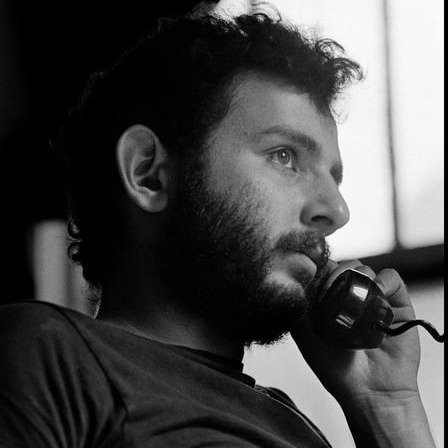
Danny Lyon (born 1942) is an American photographer and filmmaker. He was born in Brooklyn, New York. He is best known for his pictures of the civil rights movement, for The Bikeriders (1968), and for Conversations with the Dead (1971), a book about life inside Texas prisons. Lyon often joined the world he photographed. He also writes books and makes films.
The story
It was the summer of 1962. Danny Lyon had finished his third year at the University of Chicago, and his 650cc Triumph motorcycle was damaged. He was grounded and bored. A classmate had been arrested at civil rights protests in Cairo, Illinois. So Lyon put his 35 mm Nikon F into an old army bag, asked his sister-in-law to drive him to Route 66, and stuck out his thumb. “I thought I was just going on an adventure.”
He reached Cairo by bus that night. The next morning, in a small Black church, he listened to a local high school student speak. In the corner sat John Lewis, whom Lyon knew as a leader of the Freedom Rides. Lyon had been in few churches before, and never in a Black church.
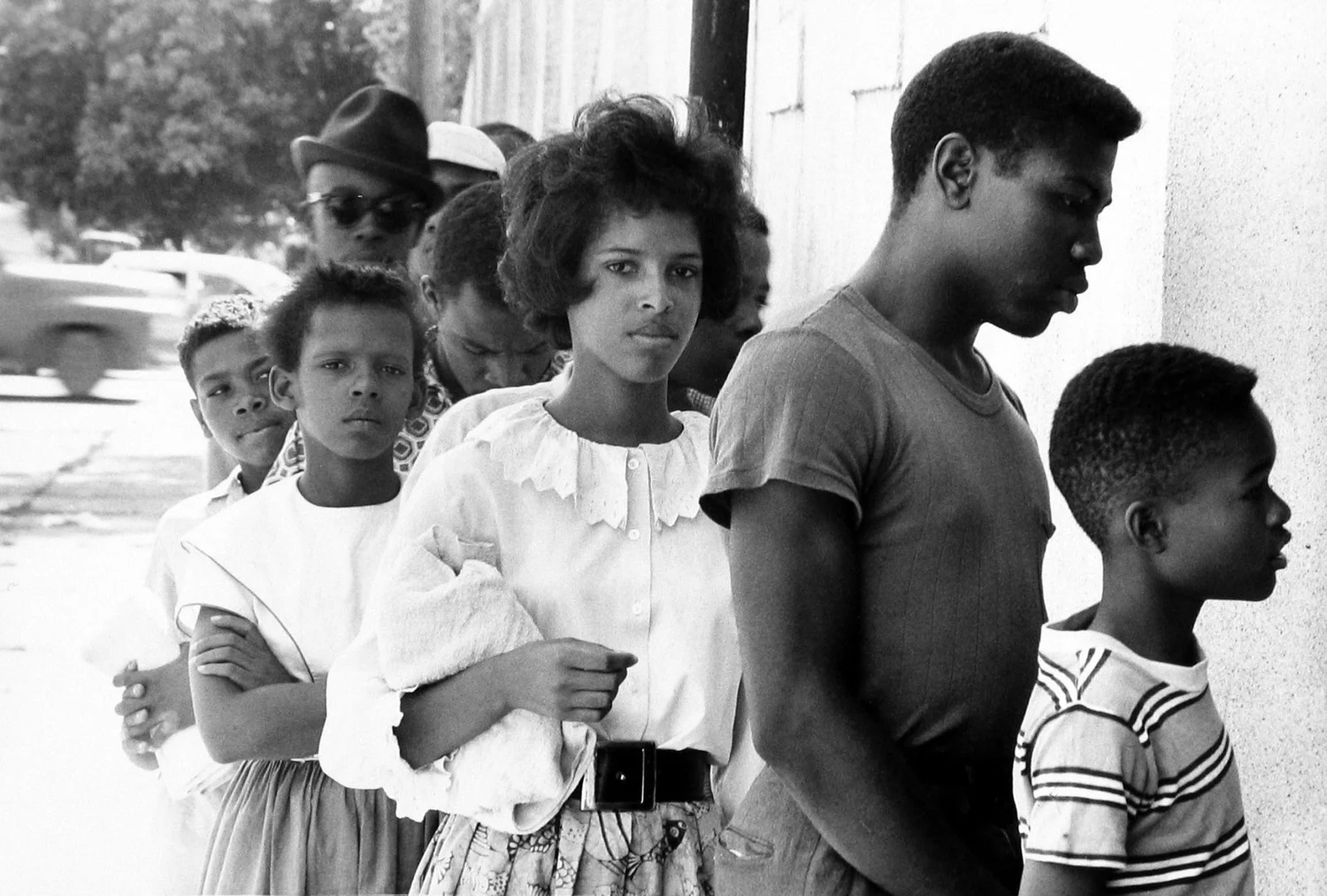
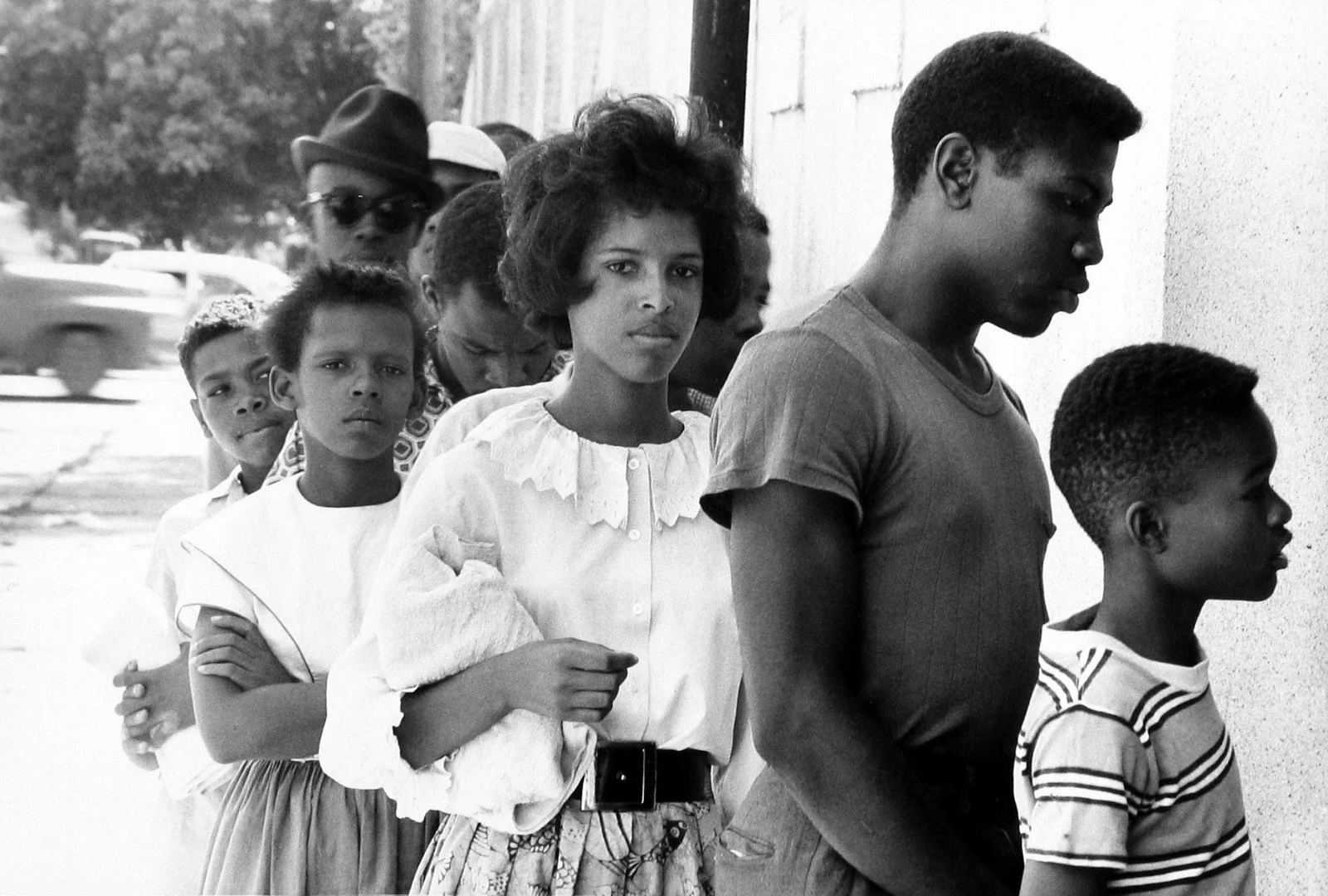
After the service, the group marched to a segregated swimming pool with a sign that said “Private Pool, Members Only.” Lyon made pictures outside it. In one, three demonstrators knelt and prayed. “It struck me as a sublimely beautiful moment: the grace of the three, the two men kneeling at each side, the child in the middle.” He knelt too. “Not only were John Lewis and the two other demonstrators kneeling, I was kneeling to make the picture.” The gallery shows another of his Cairo pictures from 1962, with young demonstrators standing in a line.
A year later the kneeling picture became a SNCC poster with the words “come let us build a new world together.” The V&A says 10,000 copies were printed.
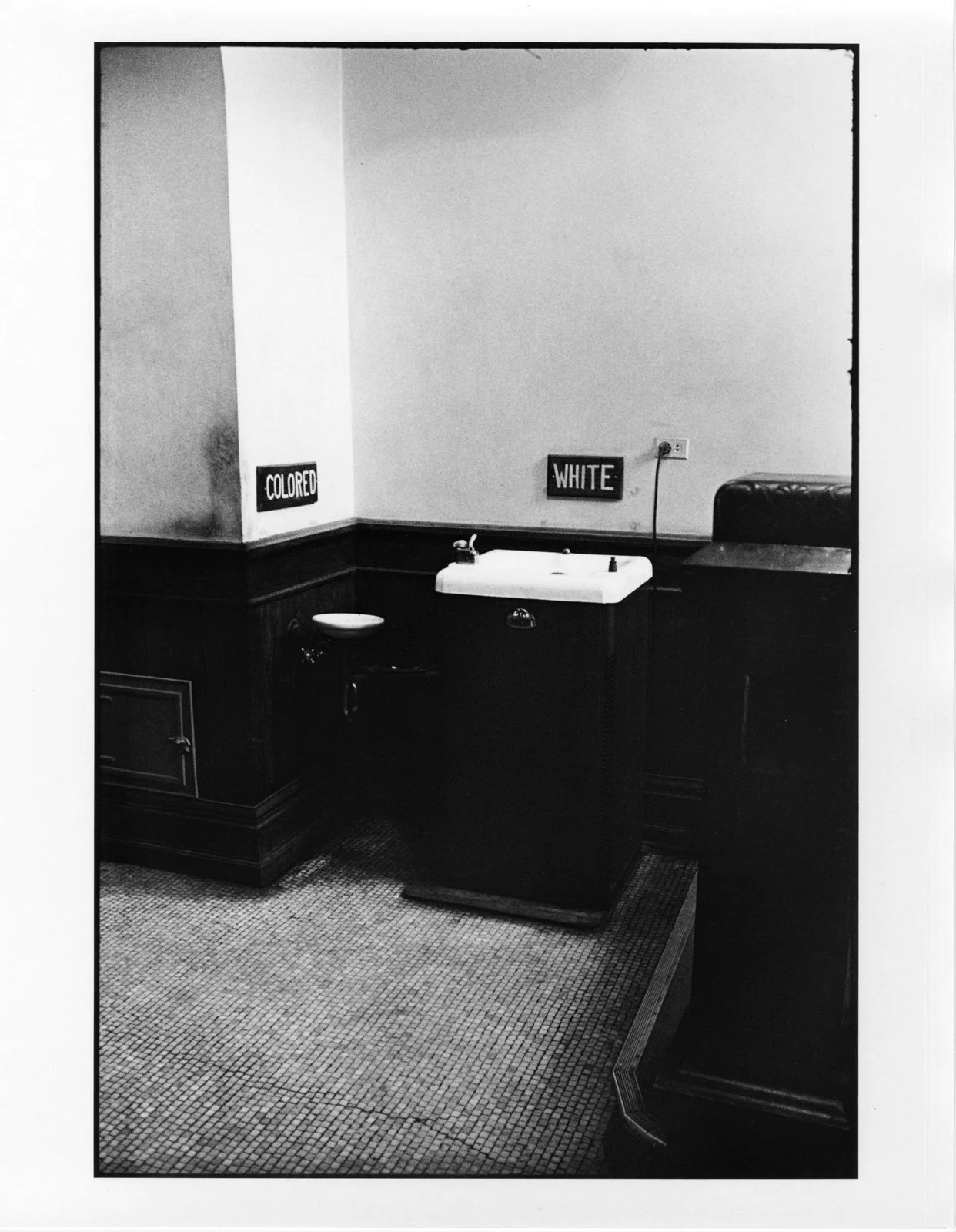
Lyon did not stay a visitor. A few days later, in Albany, Georgia, James Forman of SNCC saw his camera. “You got a camera,” Forman said. “Go inside the courthouse.” At the back hung a big water cooler for whites, and next to it a small bowl for Black people. Lyon remembered, “My heart was pounding as I leaned against the wall to make a time exposure, terrified that someone would appear.” The gallery picture Segregated Drinking Fountains, County Courthouse, Albany, Georgia, 1962 shows these fountains.
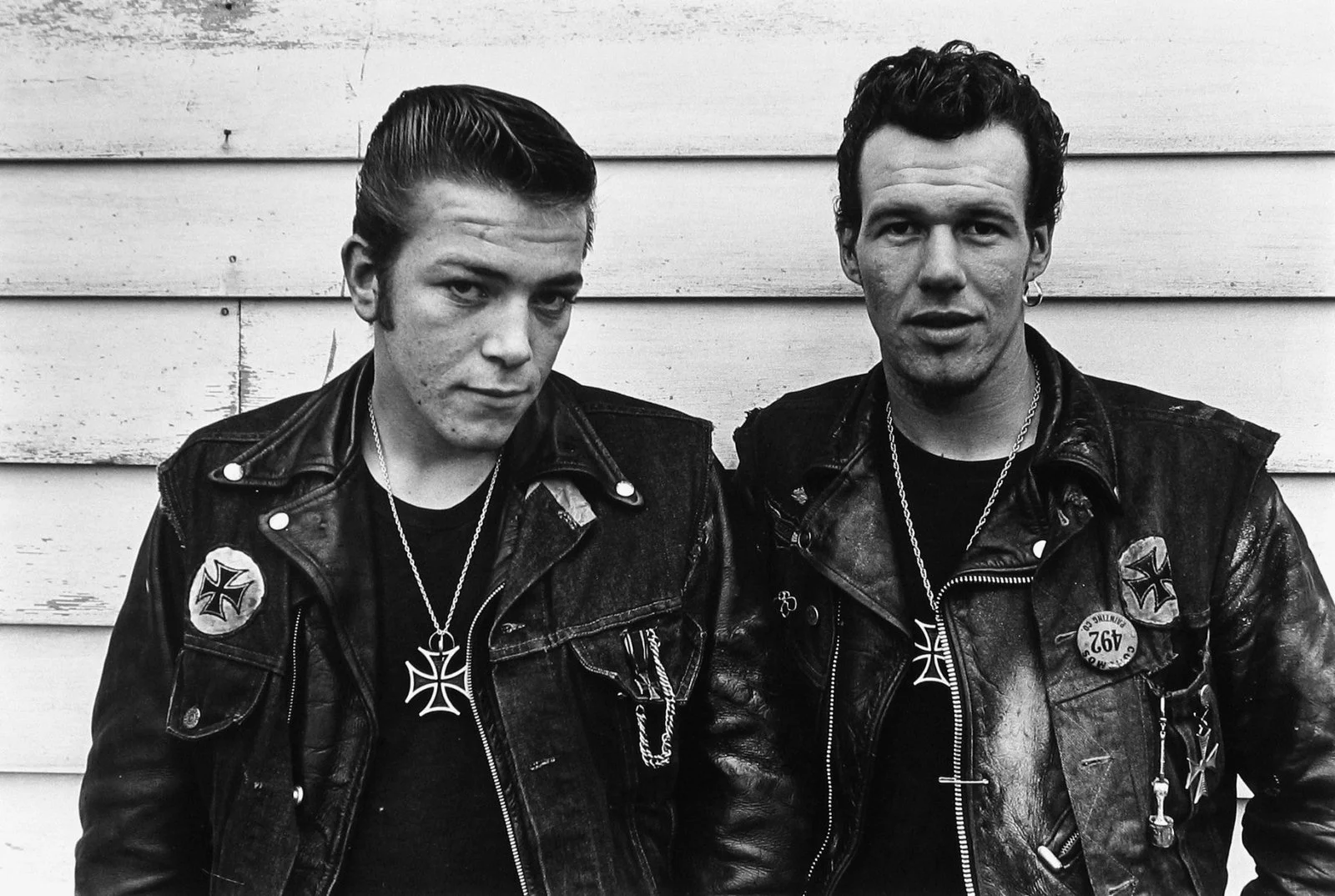
In June 1963 SNCC made him its first staff photographer, at 35 dollars a week. He left SNCC in the summer of 1964. Back in Chicago, he photographed a motorcycle club, the Chicago Outlaws, and then joined it. Hugh Edwards of the Art Institute of Chicago saw the pictures and suggested a book. It became The Bikeriders (1968). Sparky and Cowboy, Schereville, Indiana, from “The Bikeriders, 1963-1966”, 1965 is one of its pictures.
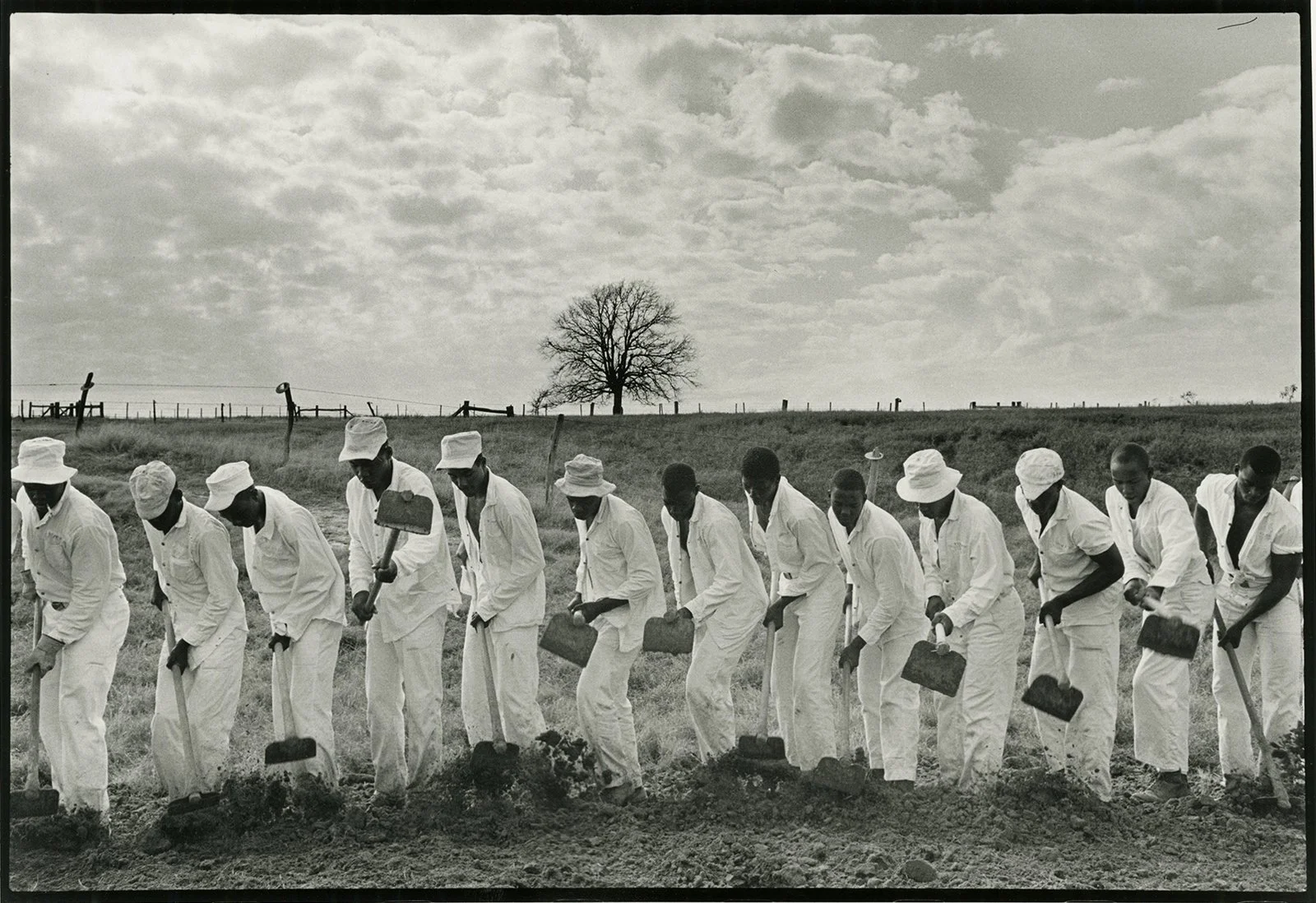
Then came Texas. In 1967 Lyon moved there to document the prison system. Over fourteen months he photographed inside six prisons. “They let me in a prison!” he said later. Ferguson Unit, the line, 1967 shows a row of men in white clothes swinging hoes under a wide sky. The book Conversations with the Dead (1971) put such pictures next to prison records, inmates’ writings and the letters of a prisoner named Billy McCune. Lyon wrote that he wanted “a picture of imprisonment as distressing as I knew it to be in reality.”
Films followed from 1969. Looking back at the early years of the civil rights movement, Lyon gave a plain reason for going. “I loved the adventure as much as anything.”
The work
Lyon began as a photographer of the civil rights movement. From 1962 to 1964 he photographed marches, sit-ins and meetings across the South for SNCC. His pictures were used on posters and in pamphlets, and in the book The Movement (1964), which has a text by Lorraine Hansberry. In 1964 he left SNCC, wanting to grow as an artist and not wanting to be part of a club or group.
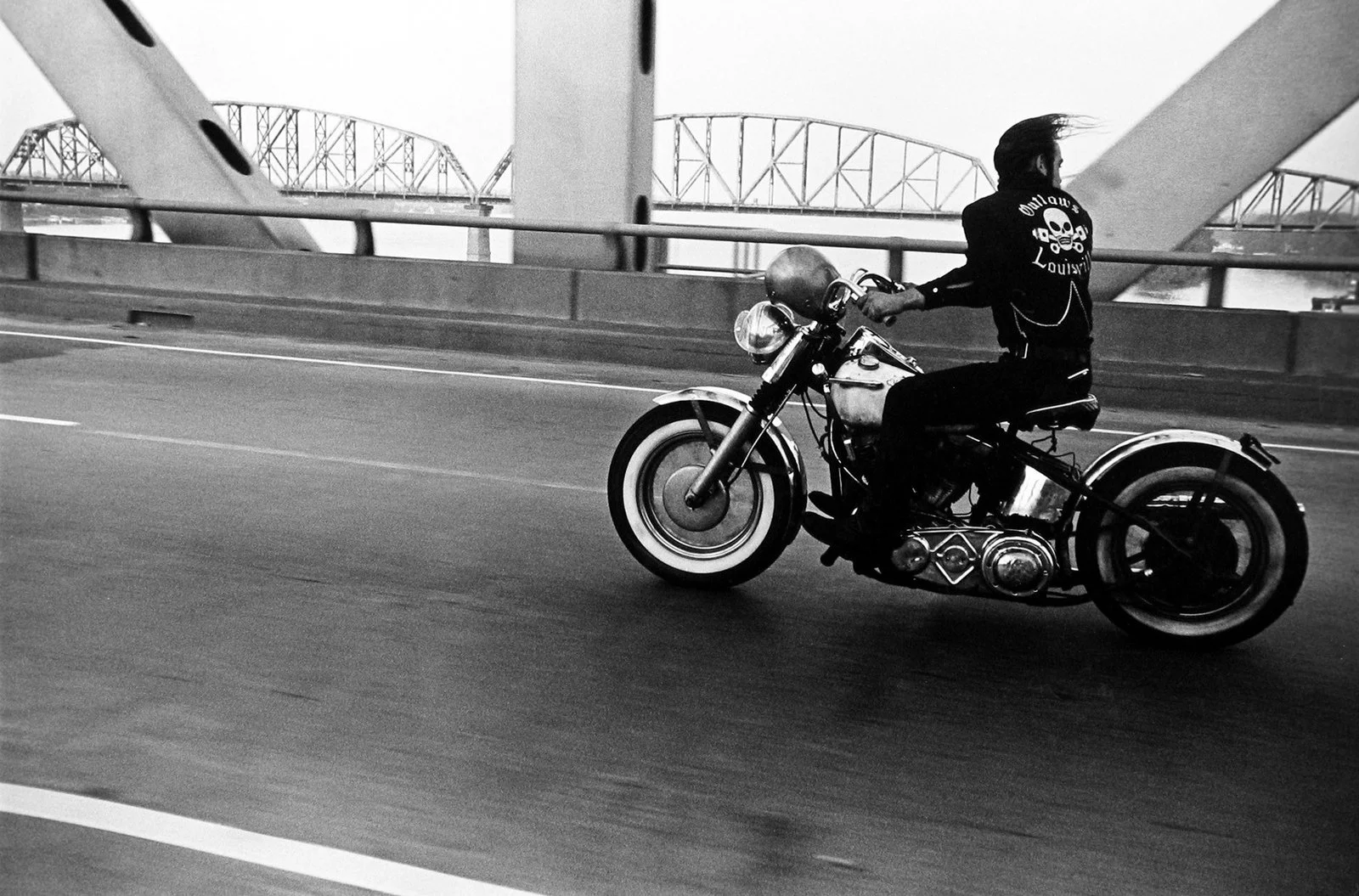
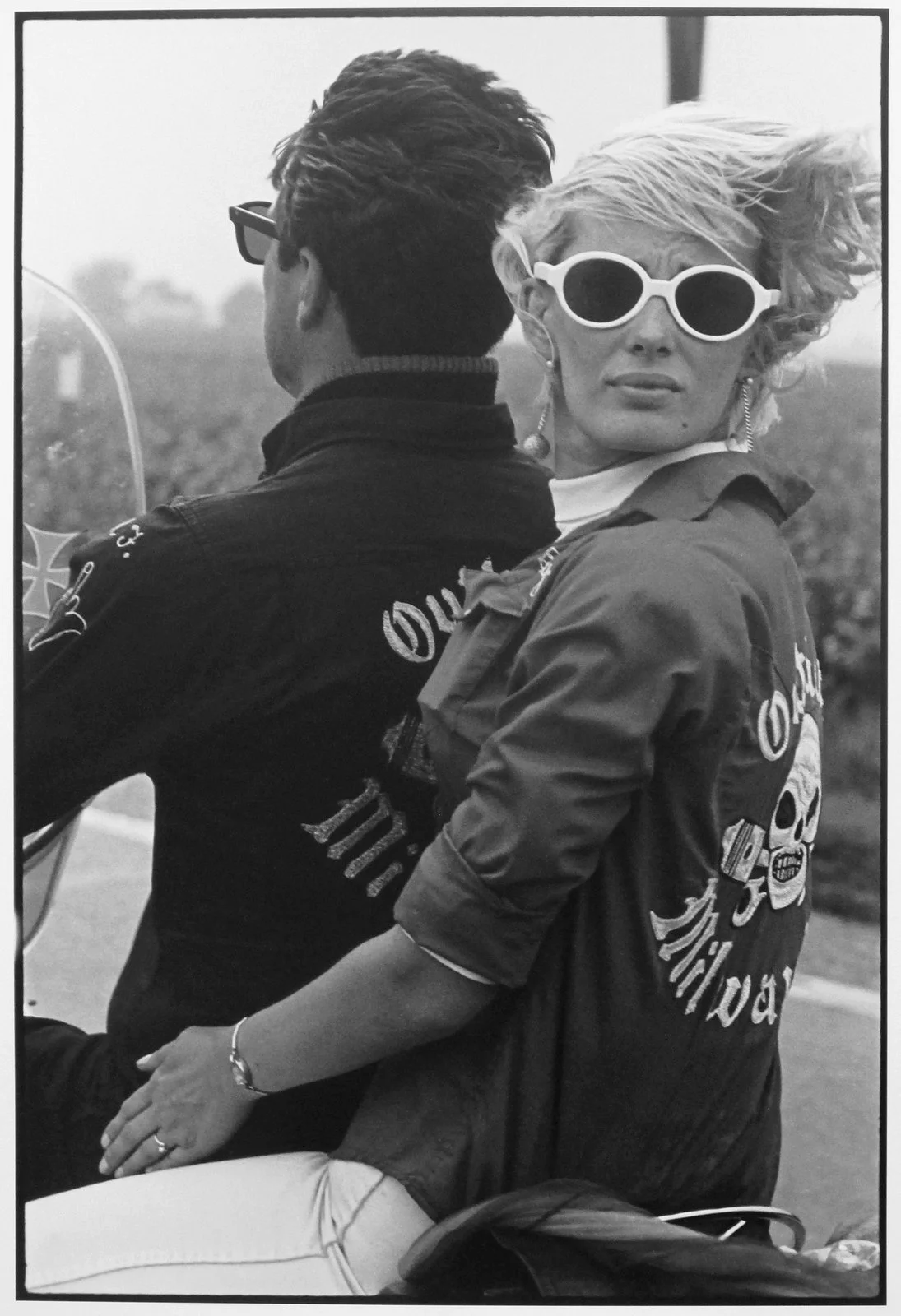
He called his next project an attempt to record and glorify the life of the American bikerider. Hunter S. Thompson wrote to warn him to get out of the club unless it was absolutely necessary for photo action. Lyon stayed, and Aperture says the book holds his photographs and transcribed interviews from 1963 to 1967. Memorial Day Run, Milwaukee, 1966 and Crossing the Ohio River, from Louisville, Kentucky, 1966 date from the same years. Etherton Gallery calls his way of working a personal form of documentary in which the photographer is immersed in the subject’s world.
In 1966 and 1967 he also photographed the demolition of old streets in Lower Manhattan, published by Macmillan in 1969. After Texas he lived with the photographer and filmmaker Robert Frank in New York, and they formed a company, Sweeney Films. His first film, Social Sciences 127 (1969), follows a Houston tattoo artist named Bill Sanders. In 1970 he moved to New Mexico, where he met a boy named Willie Jaramillo in 1971 and filmed him over many years. The retrospective Danny Lyon: Message to the Future opened at the Whitney Museum in 2016. In December 2025 Howard Greenberg Gallery showed his Texas prison photographs.
- 1942Born in Brooklyn, New York
- 1959Buys his first camera, an Exa, in Munich
- 1962Hitchhikes to Cairo, Illinois, and photographs civil rights demonstrators
- 1963Becomes the first staff photographer of SNCC
- 1967Moves to Texas to photograph the prison system
- 1968Publishes The Bikeriders
- 1971Publishes Conversations with the Dead
- 2016Danny Lyon: Message to the Future opens at the Whitney Museum in New York
- 2025Howard Greenberg Gallery shows his Texas prison photographs
In his words
“Not only were John Lewis and the two other demonstrators kneeling, I was kneeling to make the picture.”
“I loved the adventure as much as anything.”
“Great photographers do not publish mediocre pictures.”
“a picture of imprisonment as distressing as I knew it to be in reality”
“an attempt to record and glorify the life of the American bikerider”
Photography, Reconsidered follows questions like this through the work of other photographers.
Gear
Lyon has told his story in many interviews, but only two pieces of gear are clearly documented in more than one source.
Nikon 35 mm cameras: In 1962 Lyon carried a 35 mm Nikon F in an army bag to Cairo. Blind Magazine says he worked in Texas prisons with two loaded Nikons.
Exa single lens reflex: He bought his first camera, a single lens reflex called an Exa, in Munich in 1959. It was made in East Germany.
Books
The Bikeriders (Aperture, 2014). Aperture published this facsimile of the 1968 edition. Photographs and transcribed interviews by Lyon show the Chicago Outlaws Motorcycle Club in the years 1963 to 1967. It is a small, journal-size book. It is for readers who want to see how the outlaw biker image began.
Conversations with the Dead (Phaidon, 2015). Phaidon reissued the 1971 book about six Texas prisons. Lyon combines his photographs with prison records, inmates’ writings, and the letters and drawings of Billy McCune. It is for anyone who wants to see how photographs and texts can work together on a hard subject.
The Movement: Documentary of a Struggle for Equality (Simon & Schuster, 1964). This book has photographs by Danny Lyon and a text by the playwright Lorraine Hansberry. It was made with SNCC and shows the civil rights movement in the South. It is for readers who want to see Lyon’s earliest important work.
The Destruction of Lower Manhattan (powerHouse Books, 2005). The book has 83 tritone photographs of old buildings in Lower Manhattan that were about to be torn down in 1966 and 1967. It first appeared with Macmillan in 1969 and later became a collector’s item. It is for readers who like city history and quiet, careful pictures.



Tarik Ahmet is a London photographer and the photography half of Oh Brother Creative, a team he runs with his brother.