AT A GLANCE
- Known for
- Black-and-white portraits of stars and supermodels, and fashion pictures for Versace, Armani and Calvin Klein
- Worked in
- Mostly black and white
- Camera
- 35mm and medium format, usually loaded with Kodak Tri-X film
- Also
- Directed music videos, including Madonna’s “Cherish” and Chris Isaak’s “Wicked Game”
- Start with
- Herb Ritts: L.A. Style (Getty Publications, 2012)
- Links
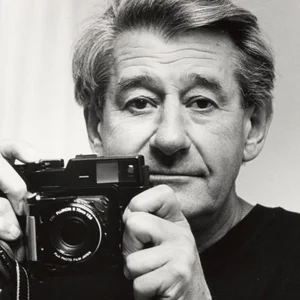
Herb Ritts (1952–2002) was an American photographer from Los Angeles. He made black-and-white portraits of film stars, musicians and supermodels, and fashion pictures for Versace, Armani and Calvin Klein. He loved natural light, open spaces and strong, simple forms.
The story
In 1977 Herb Ritts was selling furniture for his parents’ company in Los Angeles. One day a friend, the actress Penny, was supposed to come to his house for a head shot. She never showed up, but her boyfriend did. He was a young actor named Richard Gere. Gere was shy and at first refused to be photographed, but in the end he agreed.
About a week later they were driving around in Penny’s car when a tire went flat. They ended up at a gas station in the desert near San Bernardino. Ritts took more pictures there. He crouched down to get the sky behind Gere’s head. “I realized instinctively, even then, you have to go for that moment you’re in,” he said later.
Gere told his new publicist about the film, so Ritts sent the negatives and forgot about them. “What did I know? I wasn’t a photographer,” he said. Three months later the pictures ran in American Vogue, Esquire and Mademoiselle. Then Mademoiselle asked him to photograph Brooke Shields. He said yes. “I didn’t say I wasn’t a photographer.”
Ritts had studied economics at Bard College, never photography. To learn, he walked to a garage at the end of his street because it had a certain feeling, or a particular light. “For me, the most important thing I learned was just honing my eye,” he said.
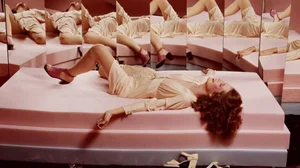
Soon he quit his sales job and shot for Italian magazines and designers. Fashion alone did not satisfy him, though. In 1984 a magazine sent raincoats he hated, so he swapped them for vintage jeans and overalls and shot at a greasy gas station. The story was a hit. From then on he kept certain days for pictures of his own.
Open space and daylight stayed at the center of his work. In 1990 he took Christy Turlington and a Versace gown to El Mirage, a dry lake bed in the Mojave Desert. His crew tied the corners of the fabric to weighted light stands. A gust of wind filled it, and Ritts made the picture.
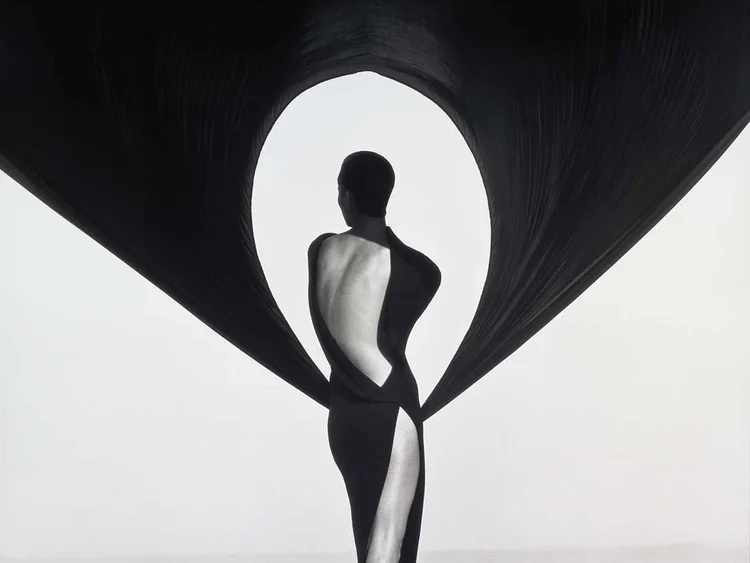
It had all started with a flat tire and a friend who did not want his picture taken. Years later, Ritts explained what he was really doing each time he pressed the shutter. “You’re trying to get to one moment with one frame that eventually may speak for your generation.”
The work


- 1952Born in Los Angeles on August 13
- 1975Graduates from Bard College in economics
- 1977Photographs Richard Gere at a desert gas station
- 1984Makes his “Body Shop” story at a gas station for Per Lui
- 1988Publishes his first book, Pictures
- 1989Directs Madonna’s “Cherish” video
- 1990Shoots Versace gowns at El Mirage dry lake
- 1996Retrospective at the Museum of Fine Arts, Boston
- 2002Dies in Los Angeles on December 26, aged 50
Lessons
Train your eye, not just your technique. Ritts never went to photo school. He learned by photographing friends in places near home where the light felt right.
Make pictures for yourself. After 1984 he kept days for his own work. He also often shot for himself after an assignment, while the crew was still there.
Keep it simple. Daylight, plain backgrounds and big open spaces like deserts and beaches. He said he liked form, shape and strength in pictures.
Try this: after your next shoot, take ten more minutes just for yourself. Use only daylight and a plain background, and look for one strong shape.
Gear
Ritts used basic equipment and said he shied away from strobes and lights when he started. He had his own lab and printers, and edited his contact sheets carefully.
Box camera: his father gave him a Kodak Brownie for his bar mitzvah.
35mm SLR: in 1976 he bought his first 35mm camera, a Miranda DX-3.
Medium-format camera: in his career he moved between 35mm and medium format, usually with Kodak Tri-X black-and-white film.
Books
Herb Ritts: L.A. Style (Getty Publications, 2012). Made for the 2012 exhibition at the Getty Center, after the Herb Ritts Foundation gave the museum 69 of his photographs. Its 224 pages hold 165 pictures, mixing famous images with many that had never been published. The two essays are by curators Paul Martineau of the Getty and James Crump. A good first book if you want to see his best-known work and some surprises in one place.
Herb Ritts: Work (Bulfinch Press / Little, Brown, 1996). Published with his retrospective at the Museum of Fine Arts, Boston, which drew more than 250,000 visitors. The main essay is by Trevor Fairbrother, with writings by Richard Martin, Steven Meisel and Ingrid Sischy. Over about 400 pages it covers the full range of his work: portraits, nudes, fashion and his pictures from Africa. The book to look for if you want to see how wide his work really was.
Africa (Bulfinch Press / Little, Brown, 1994). A large oblong book with 75 black-and-white photographs made on his travels in Africa, including pictures of the Maasai people. Ritts loved the first trip so much that he went back six months later just to take pictures. Here there are no stars, only landscapes and people. A good choice for readers who know him only for celebrity portraits.
Duo (Twin Palms, 1991). A book about the bodybuilder Bob Paris and his partner, who asked Ritts to photograph them as a couple. The pictures were made in his studio and at a deserted spot in Cabo San Lucas, Mexico. Ritts saw it as a tribute to two people of the same sex who were together. All royalties went to the American Foundation for AIDS Research. For readers interested in the body and in his personal projects.