AT A GLANCE
- Known for
- Staged photographs in which she plays every character herself, from the Untitled Film Stills (1977–80) to today
- Works in
- Black and white in the Film Stills, then mostly color
- Camera
- Brands not documented. Film at first, digital now, with a mirror next to the camera
- Also
- Hasselblad Award 1999. The Museum of Modern Art owns the complete Untitled Film Stills
- Start with
- Cindy Sherman: The Complete Untitled Film Stills (The Museum of Modern Art, 2003)
- Links
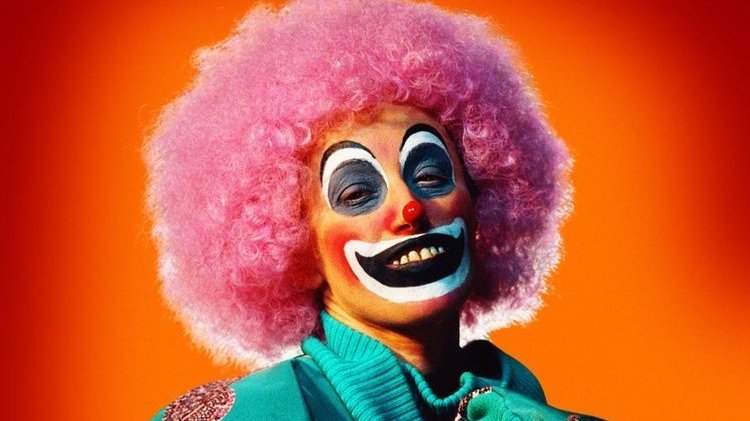
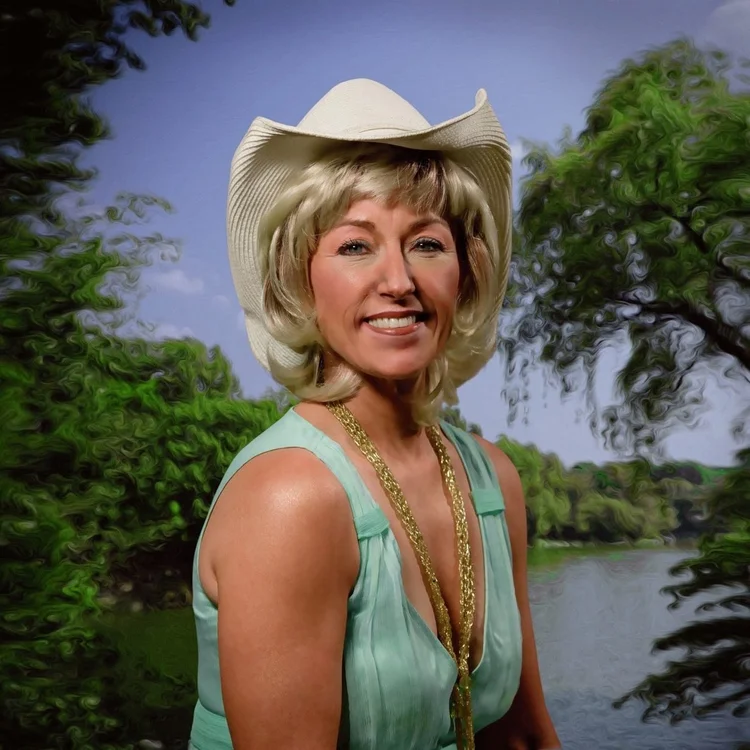
Cindy Sherman (born 1954) is an American artist from New Jersey who works with photography. For about fifty years she has been the only model in her own pictures. She invents a character, dresses as her and photographs herself, alone in the studio.
The story
In the summer of 1977 Cindy Sherman moved to New York with the artist Robert Longo. The city was a shock to her, and she was afraid to leave the house. One day the two of them stopped by the studio of the painter David Salle. He worked for a magazine that used photographs like a storyboard. The pictures were “cheesecakey things,” she later wrote, “and it was hard to figure out what was going on in any of them.”
That was exactly what she liked. A picture like that could hint at a story, and at other people outside the frame, without showing them. Dressing up was not new to her. As an art student in Buffalo she made costumes from thrift-store clothes. Sometimes she made up a character in her studio and went to a party in character. Now she had a way to turn that game into photographs.
In the fall of 1977 she shot the first roll of what became the Untitled Film Stills, in her apartment, in the bathroom and the hallway. Money was short. “I couldn’t afford film so I would only take six shots of each one of those,” she said. Later Longo drove her around the city in his van, and she changed wigs and outfits between stops. Some characters had models. Still #13, the young woman in the library, was influenced by Brigitte Bardot.
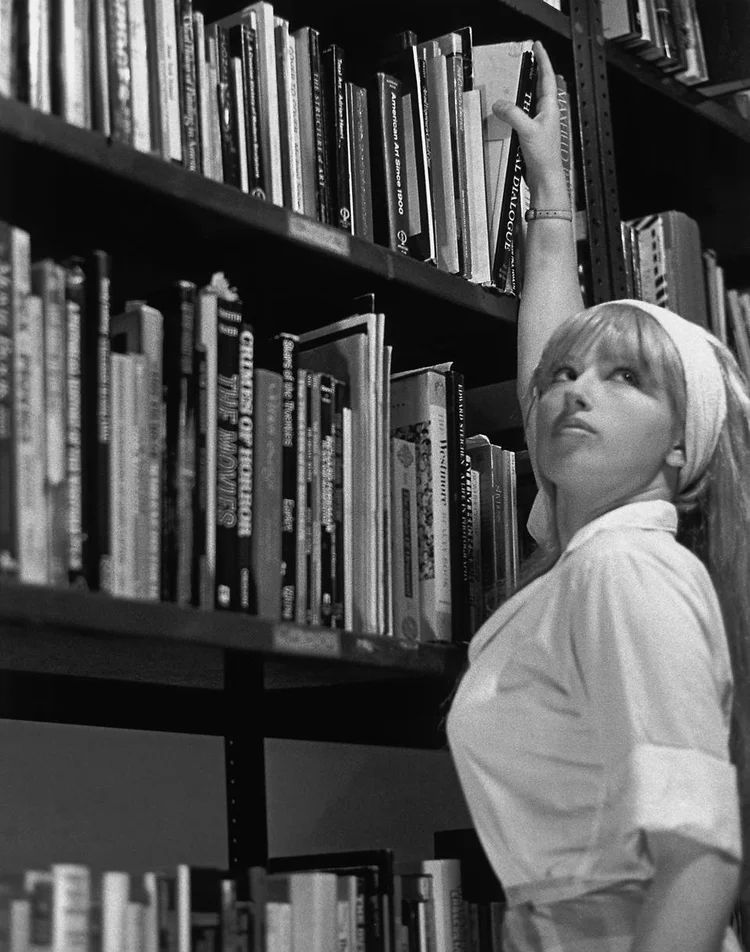
She kept the faces calm. A character who looked too happy or too scared, she felt, would look campy. The prints were meant to feel cheap, as if they “cost fifty cents.” By 1980 she had run out of clichés and stopped. In December 1995 The Museum of Modern Art bought all sixty-nine pictures. One more was added later, so the series now has seventy.
In 1981 she moved to color. Artforum asked her for a series in the long format of a magazine centerfold. The magazine did not use it, but the pictures were shown that year and praised. In one of them a frightened girl in a school skirt looks up from the floor.
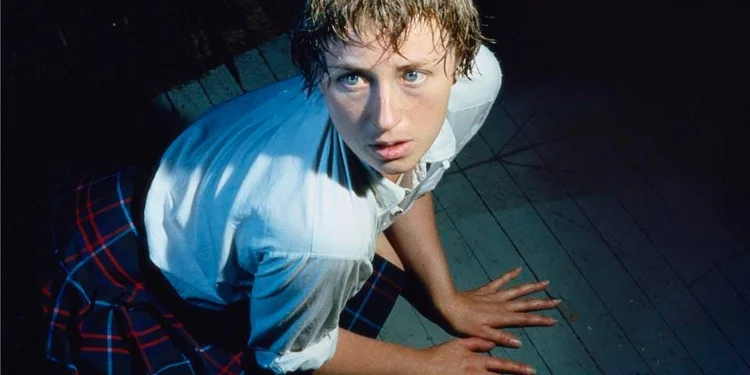
The young woman who was afraid to go out in a new city found her work by staying in and becoming other people. She still works that way today. “It’s just me, and a mirror and a camera and a backdrop, and that’s about it,” she said in 2019.
The work


- 1954Born in Glen Ridge, New Jersey
- 1972Starts studying painting at Buffalo State College
- 1977Moves to New York and begins the Untitled Film Stills
- 1981Makes the Centerfolds series, first shown that year
- 1995MoMA acquires all Film Stills; MacArthur Fellowship
- 1999Wins the Hasselblad Award
- 2012Retrospective at the Museum of Modern Art
- 2019Retrospective at the National Portrait Gallery, London
- 2026Shows the new Fabric Matrons series in London
Lessons
Borrow a format. She took the look of cheap movie publicity photos and filled it with characters of her own.
Leave the story open. Calm faces and people only hinted at outside the frame let the viewer imagine the rest.
Find the setup that frees you. She works with no one around. She says that lets her take chances and try foolish things.
Try this: find an old film still or magazine photo you like. Dress as a character who could be in it, put the camera on a timer and make only six frames. Keep your face calm.
Gear
Sherman rarely talks about camera brands, so we list only what she has described in interviews.
Film camera with a shutter cord: she shot the Film Stills on black-and-white film, six frames per character. In some older pictures you can see the cord she used to fire the camera.
Mirror: she has a mirror set up next to the camera, so she can see the character while she shoots, and a small hand mirror for makeup.
Digital camera: today she shoots digital. She can see each frame at once and fix the makeup, instead of waiting for the lab.
Green screen: her studio has a green screen and studio lights, next to wigs, costumes and prosthetics.
Phone apps: for her Instagram pictures she has used Facetune and Perfect365, often to distort her face rather than smooth it.
Books
Cindy Sherman: The Complete Untitled Film Stills (The Museum of Modern Art, 2003). All seventy black-and-white Film Stills from 1977 to 1980, reproduced in one book. The best part is Sherman’s own introduction. She tells how she dressed up in Buffalo, how a visit to David Salle’s studio gave her the idea, and how she shot the first roll in her apartment. She also comments on single pictures and on the cheap look she wanted. It is the book to start with, for anyone who wants to understand how the series was made.
Cindy Sherman (The Museum of Modern Art, 2012). The catalogue of her retrospective at MoMA in New York, which then traveled until 2013. Curator Eva Respini wrote the main essay, with another essay by Johanna Burton and a conversation between Sherman and the filmmaker John Waters. The 264 pages, mostly in color, cover her whole career up to the society portraits of 2008. A good overview for readers who already know the Film Stills and want to see the rest.
Cindy Sherman (National Portrait Gallery, London, 2019). Made for her large exhibition in London. Paul Moorhouse wrote the main text, with contributions by Erika Balsom, Magda Keaney and Rochelle Steiner. It has 256 pages and about 250 pictures, from her early work to recent series. The book looks at her work as portraiture and shows the films, magazines, fashion and old paintings she draws on.
Cindy Sherman: Retrospective (Thames and Hudson, 1997). Published with the Museum of Contemporary Art in Chicago and the Museum of Contemporary Art in Los Angeles. Texts by Amada Cruz, Elizabeth A. T. Smith and Amelia Jones. More than 200 images cover the Film Stills, Centerfolds, Fashion, Disasters, Fairy Tales and History Portraits. It also shows notebook pages, contact sheets and Polaroid studies, which makes it useful for photographers curious about her working process.
In her words
“I’m trying to erase myself more than identify myself or reveal myself.”
“I’m having fun when I’m working, even when I’m doing really dark subjects.”
“Everybody knows it’s not real anyway.”