AT A GLANCE
- Known for
- Deep, wide-field mosaics of nebulae and galaxies, and the faint dust clouds most images miss
- Works in
- Color; deep-sky images through telescopes, and nightscapes with a DSLR
- Camera
- SBIG STL11k CCD cameras on Takahashi FSQ106EDX telescopes
- Also
- Former software engineer at Netscape and eBay; author of Mastering PixInsight; featured more than 80 times on NASA's Astronomy Picture of the Day
- Start with
- Deep Sky Colors (Deep Sky Colors, 2016)
- Links
Rogelio Bernal Andreo (born 1969) is an astrophotographer from Murcia, Spain, who lives and works in California. He is known for deep, wide views of nebulae, galaxies and faint clouds of dust. His images have been chosen more than 80 times for NASA's Astronomy Picture of the Day.
The story
In September 2007, a family was driving down the Pacific Coast Highway, south of Big Sur in California. The man at the wheel saw only the road in his headlights. Then his wife opened the moonroof, looked up and screamed: “You have to pull over, you have to see this!” He stopped the car. Well into his thirties, Rogelio Bernal Andreo was looking at the Milky Way for the first time in his life.
He had a camera and a tripod with him, so he tried to photograph it. “It was a complete disaster,” he remembers. It did not matter. The family stayed at the turnout for a couple of hours, just watching the sky. The next day he went online to learn how people photograph galaxies and nebulae.
He was not a photographer. Born in Murcia, he had moved to Boston at 20, studied computer science and worked as a software engineer at Netscape and eBay. But that background helped. Most people processed their sky images in Photoshop. In 2007 he found PixInsight, a program made in Spain just for astronomical images. Its multi-scale tools work on large and small structures separately. Soon his wide, deep mosaics were winning prizes, including the Deep Space category of Astronomy Photographer of the Year in 2010.
One picture from that year changed his direction. It showed a nebula made of dust that shines only with the faint light of our own galaxy. It is so faint that it is missing from most sky images. It made him curious about this kind of dust. Years later, in 2016, Sean Walker of Sky & Telescope showed him faint red structures near the Andromeda Galaxy. Andreo collected many hours of data and found clouds glowing in front of one of the most photographed objects in the sky.
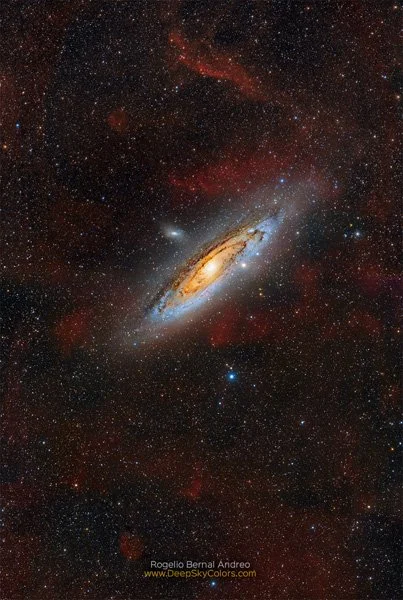
The man who had never seen the Milky Way now shows people parts of the sky they have never seen. “I love trying to unveil a part of our universe that is rarely depicted in images,” he says.
The work


- 1969Born in Murcia, Spain
- 1995Earns a degree in computer science in Boston
- 2007Sees the Milky Way near Big Sur and starts deep-sky imaging
- 2009His Orion Deep Wide Field goes on show at the Rubin Museum in New York
- 2010Wins the Deep Space category of Astronomy Photographer of the Year
- 2014Photographs six Hawaiian islands for Hawai'i Nights
- 2016Publishes Deep Sky Colors, with a foreword by Phil Plait
- 2018Photographs Elon Musk's Tesla Roadster moving through space
- 2020Publishes Mastering PixInsight
Lessons
Spend on the mount first. For beginners, he says the mount matters more than the telescope or the camera. Good tracking makes everything else possible.
Find your own vision. He tells more experienced imagers to stop making pictures that look like someone else's. Work on what you want to show.
Look where others do not. Much of his best work shows faint dust and gas that most images leave out, even around famous objects like Andromeda.
Try this: choose a subject that everyone photographs, like a famous building or the moon. Look at ten pictures of it first. Then find one thing that none of them show, and make that your photo.
Gear
Andreo keeps a full gear list on his website and has talked about his setup in interviews. In 2014 he said his CCD camera was more than ten years old, and that most of his progress came from processing, not new hardware.
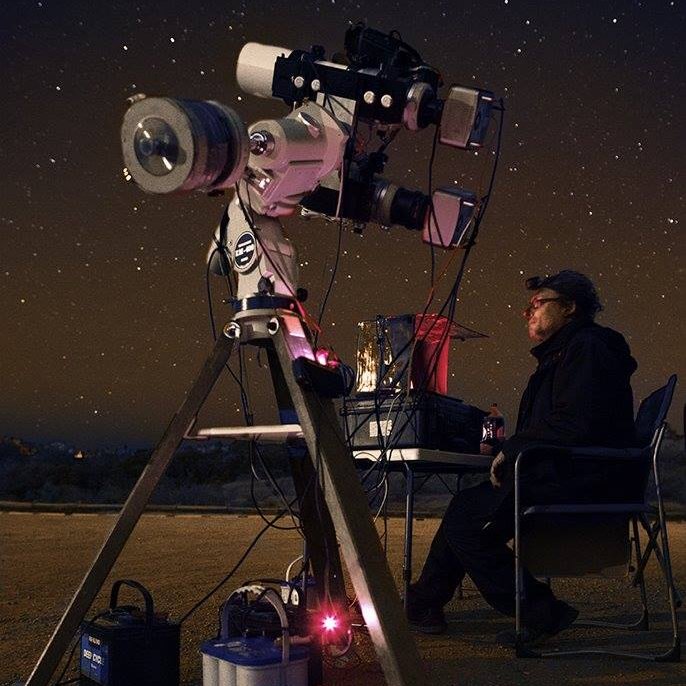
Takahashi FSQ106EDX: a small refractor telescope. In 2018 he used two of them side by side to photograph the Tesla Roadster in space.
SBIG STL11k: a cooled monochrome CCD astronomy camera, one on each telescope.
Takahashi EM-400: the equatorial mount that carries both telescopes and follows the sky.
DSLR, lenses and tripod: his kit for nightscapes, like the photographs he took across Hawaii.
PixInsight: the image processing software he has used since 2007. He also writes his own tools for it.
Books
Deep Sky Colors (Deep Sky Colors, 2016). A hardcover book of about 30 of his best deep-sky images: galaxies, nebulae, gas, dust and star fields. The foreword is by astronomer Phil Plait, who chose Andreo's Orion mosaic as the top astronomy picture of 2010 on his blog. Andreo writes about how each image was made and about the faint high galactic clouds he loves to capture. In his own words, it is not a manual, a storybook or a science book, but it has a bit of each. A good first book for anyone who wants to see his deep-sky work in one place.
Hawai'i Nights (Deep Sky Colors, 2014). A photographic tour of the night sky over the six publicly accessible inhabited islands of Hawaii: Kauai, Oahu, Hawaii, Maui, Lanai and Molokai. He made the images in 27 days and nights, with Milky Way arches over beaches, volcanoes at night, moonbows, sea cliffs and abandoned resorts. The book was funded on Kickstarter, and he produced it himself. Text and pictures tell the story of the trip together. For anyone who loves night landscapes more than telescopes.
Mastering PixInsight (Deep Sky Colors, 2020). His large guide to PixInsight, the software used by many astrophotographers. The print edition comes as a manual with complete workflows and a separate reference guide to the processes in the program. It starts with installing the software and moves on to preprocessing, narrowband, mosaics, HDR and gradients, using his own tips from many years of work. A 2nd edition of the reference guide followed in 2026. For people who already shoot the night sky and want to process their images better.