AT A GLANCE
- Known for
- The first true-color photographs of faint nebulae and galaxies, and the discovery of the giant galaxy Malin 1
- Works in
- Color built from three black-and-white plates; also black and white and platinum/palladium prints
- Camera
- 3.9-metre Anglo-Australian Telescope and 1.2-metre UK Schmidt Telescope, on glass photographic plates
- Also
- Trained chemist and microscopist; asteroid 4766 Malin is named after him
- Start with
- The Invisible Universe (Bulfinch Press, 1999)
- Links
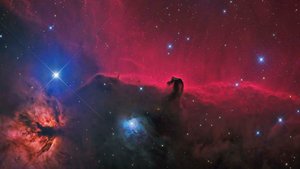
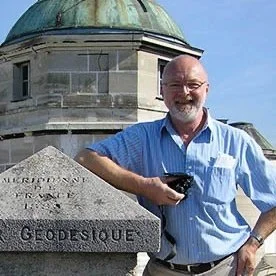
David Malin (born 1941) is a British-Australian astronomer and photographer. At the Anglo-Australian Observatory he invented new ways to pull faint detail and true color out of photographic plates. His pictures of nebulae and galaxies have appeared on hundreds of book and magazine covers.
The story
In the 1960s, a young lab worker at a large chemical company in the north of England was caught making photographic prints in company time. He was not fired. Instead, he was asked to photograph crystals through a microscope. For David Malin, a hobby had just become a job.
The hobby had started long before. As a boy, he found an old box camera at his grandparents’ home. It threw an upside-down color image onto tissue paper, and he was fascinated. In 1958 he took his first real photographs. “In Paris, in 1958. I was 17 and on my first overseas trip,” he remembered. The camera was borrowed and the film was black and white, because color cost too much. Colleagues at the lab taught him to develop and print. Later his small section grew into a lab with optical and electron microscopes and X-ray equipment. Photography connected all of it.
But in August 1975 he moved to Sydney to join the new Anglo-Australian Observatory as its photographic scientist. “I was 35 years old when I joined the AAO in Australia,” he said. Most plates there were for science. Astronomers photographed stars in blue light and in green light to measure their colors and temperatures. Malin worked on this method. Then he realised that if he had a red-light photograph as well, “I could make an RGB true-picture.”
So he combined three black-and-white plates, taken through red, green and blue filters, in the darkroom. He made about 150 of these color images, mostly with the Anglo-Australian Telescope and the UK Schmidt Telescope. He also found ways to bring out very faint detail. With them he discovered the faint shells around some galaxies and the huge spiral galaxy Malin 1. One of the hardest subjects, he said, was the Orion Nebula.
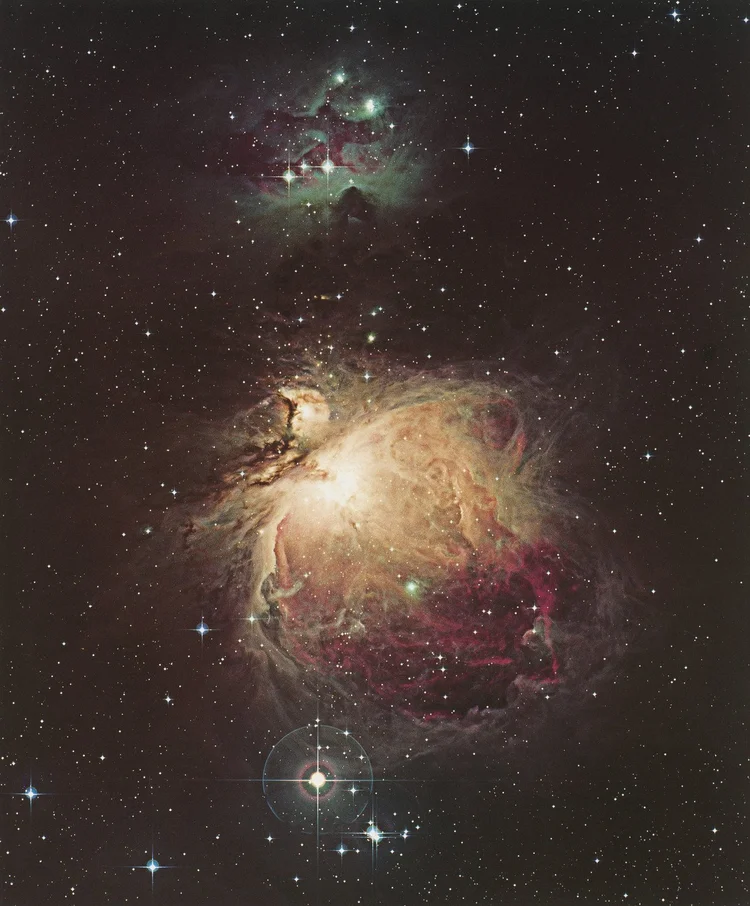
The color he first saw on a piece of tissue paper was there in the night sky too. The eye just cannot see it in faint light. Malin came to astronomy late, but he came to the right sky. “It has to be said that the southern hemisphere is much more spectacular than the northern.”
The work


- 1941Born in Bury, Lancashire, England
- 1958Takes his first photographs in Paris, aged 17
- 1975Joins the Anglo-Australian Observatory in Sydney as photographic scientist
- 1983Elected Fellow of the Royal Photographic Society
- 1987Discovery of Malin 1, a giant, very faint spiral galaxy
- 1990Receives the Rodman Medal of the Royal Photographic Society
- 1999Publishes The Invisible Universe
- 2000Receives the Lennart Nilsson Award
- 2001Retires from the observatory and runs David Malin Images
Lessons
Follow the side door. Being caught printing at work led him to photograph crystals, and that skill later took him to an observatory.
Learn black and white first. He advises beginners to master detail and tone in black and white before they move on to color.
Keep it natural. He thinks far too many images are over-processed. Subtle colors and textures should stay subtle.
Try this: photograph the same still subject three times in black and white, through a red, a green and a blue filter. Combine the three frames as color channels and see the color appear.
Gear
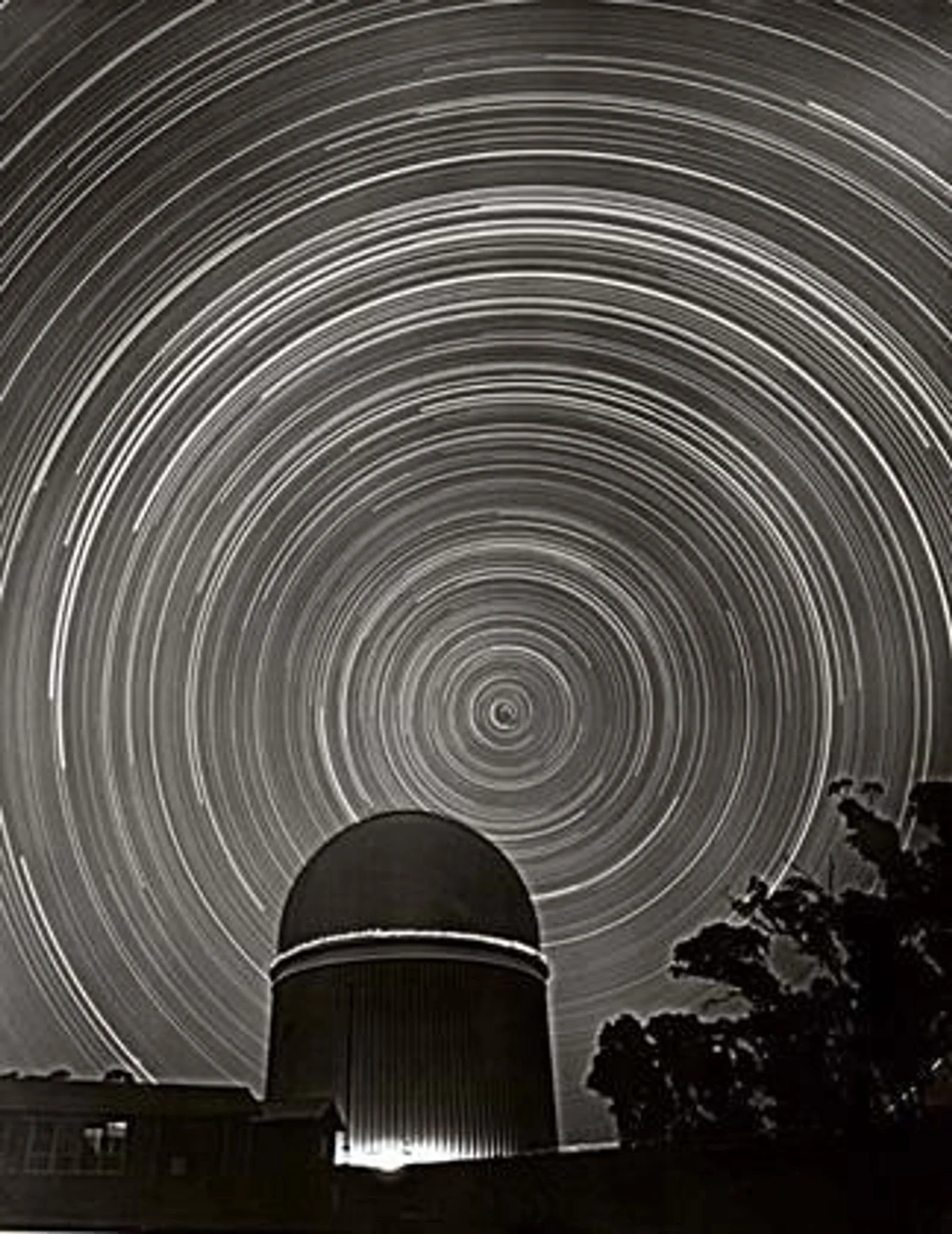
Anglo-Australian Telescope: a 3.9-metre telescope, equal to a lens of 12.7 metres focal length at f/3.3. He used it for most of his close-up color images, with exposures that could last hours.
UK Schmidt Telescope: a 1.2-metre wide-field camera that records a 6.6 x 6.6 degree field on glass plates 356 mm square.
Photographic plates and filters: special black-and-white emulsions, exposed through red, green and blue filters, up to 90 minutes per color for the faintest objects. He developed hypersensitising methods to make them faster.
In his last years at the observatory he also used CCD cameras on the Anglo-Australian Telescope.
Books
The Invisible Universe (Bulfinch Press / Little, Brown, 1999). A very large book, 34 x 41 cm, with a foreword by Timothy Ferris and an introduction by Malin. It has 112 plates, 52 in color and 60 in black and white, arranged by regions of the sky: Orion and Monoceros, Argo Navis, the South Celestial Pole, Ophiuchus, Sagittarius, and Centaurus to Coma Berenices. A cosmic primer, a glossary and a note on astronomical color photography help new readers. The best single book for seeing his work at full size.
Ancient Light: A Portrait of the Universe (Phaidon, 2009). A 128-page hardcover of star clusters, galaxies and nebulae shown as platinum prints, the warm-toned process he uses for his fine-art work. It is organised in nine sections by constellation, each with an introduction and a sky map. Captions of about 100 words explain each object and its mythology, and an opening essay tells the history of photographing the night sky. For readers who love photography as much as astronomy.
Treasures of the Southern Sky (Springer, 2011). Written with the astrophotographer Robert Gendler and the science communicator Lars Lindberg Christensen. A 220-page coffee-table book with 148 color photographs of famous southern objects, such as the Magellanic Clouds, the Tarantula Nebula and the Toby Jug Nebula. After a chapter on the discovery of the southern sky, it moves through the four southern seasons. Good for anyone who wants to know what the southern sky holds.
In his words
“Far too many images are over-processed.”