AT A GLANCE
- Known for
- Carnival Strippers, the Nicaraguan revolution of 1978 and 1979, and a visual history of the Kurds
- Works in
- Black and white and color film; books, films, archives and community projects
- Camera
- A handheld Leica for Carnival Strippers, plus medium format for the portraits
- Agency
- Magnum Photos since 1976, full member four years later · President of the Magnum Foundation since 2007
- Awards
- Robert Capa Gold Medal (1979) · MacArthur Fellowship (1992) · Hasselblad Foundation prize (1994) · Deutsche Börse Photography Foundation Prize (2019)
- Start with
- Nicaragua (Aperture, 2025)
- Links
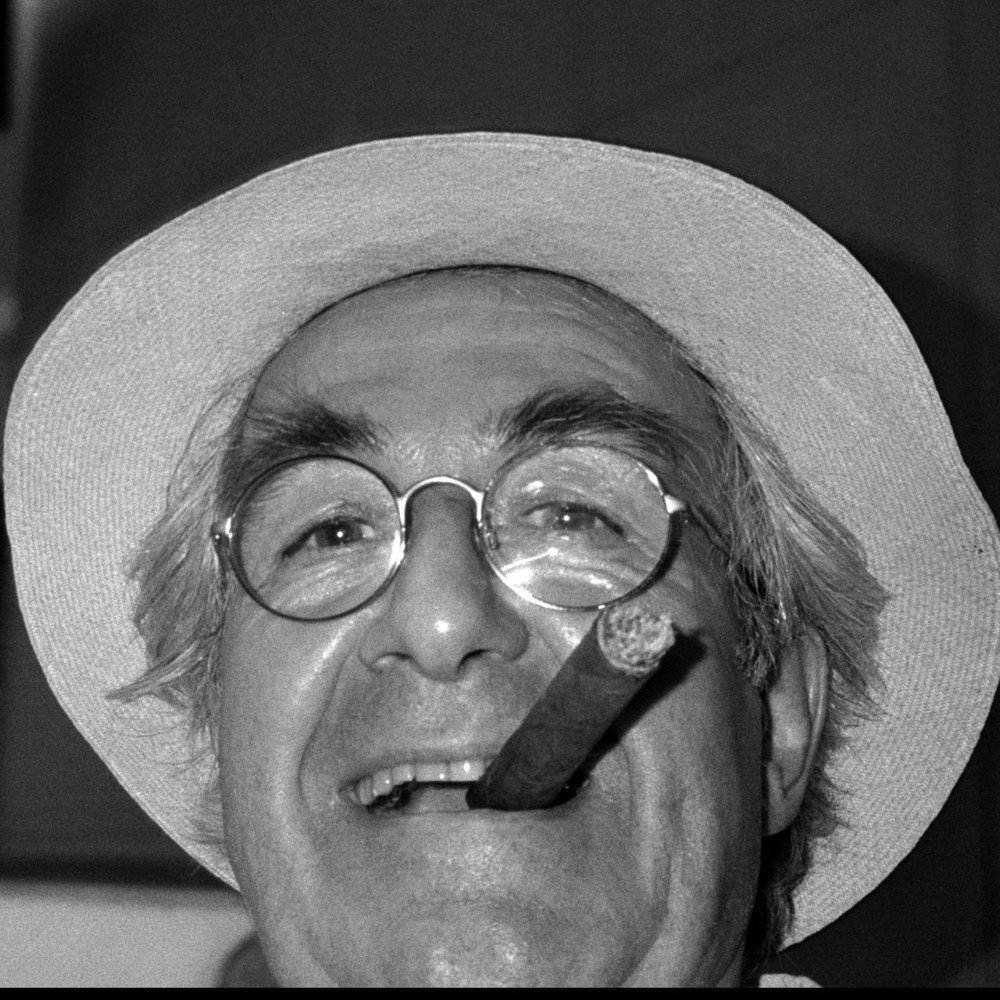
Susan Meiselas (born 1948) is an American documentary photographer and a member of Magnum Photos. She became known for Carnival Strippers, a book about women who danced in traveling girl shows, and for her color pictures of the revolution in Nicaragua. Later she built a visual history of the Kurdish people. Again and again she gives the people in her pictures a voice of their own.
The story
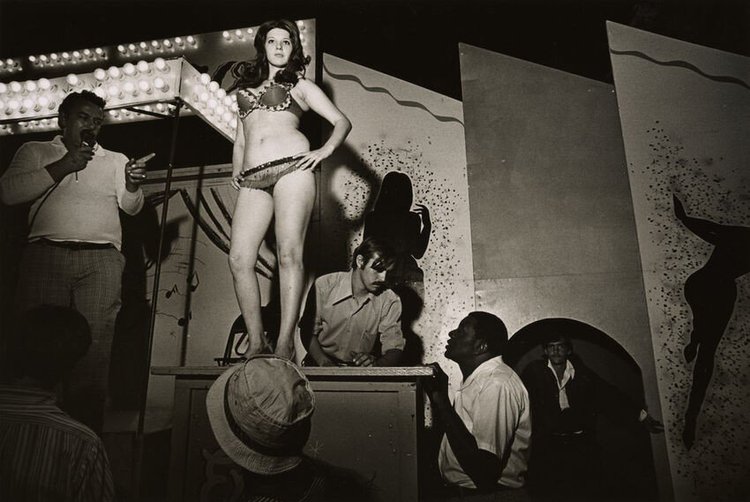
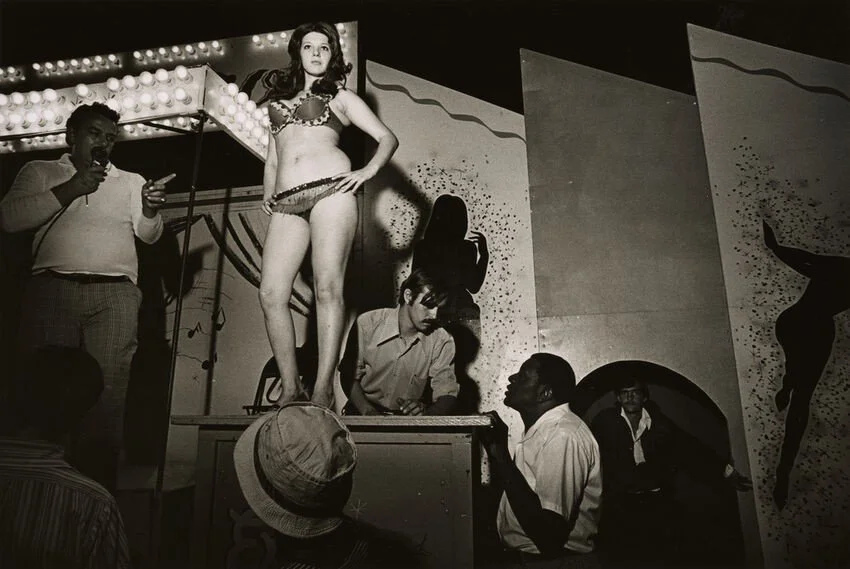
In the summer of 1972, Susan Meiselas and her partner Dick wanted a road trip. They followed small circuses in the Midwest. Then they ended up at state fairs and carnivals in New England. “I wasn’t looking for the girl shows, until I found them,” she later wrote. At that time she was teaching photography in New York public schools.
That first summer she only watched from the fairgrounds, like everyone else walking by. But she came back the next summer and followed the whole route of the show, starting in Maine. Slowly the dancers trusted her. Through their invitations, the managers let her into the dressing rooms. She worked with a handheld Leica, with no flash. Every week she processed her film and brought the contact sheets back. The women saw everything she had shot. They marked the pictures they wanted with an initial.
One of them was Lena. Meiselas met her on her very first day, when Lena came to get a job at the girl show near her home town in Maine. Lena was open, articulate and defiant, and Meiselas wanted her pictures to show all of that. Lena also had words of her own: “Being a stripper is as close to being in a man’s world as you can be,” she said. Meiselas put such voices next to her pictures. Carnival Strippers came out as a book in 1976. The same year she joined Magnum Photos.
Then, in January 1978, she read a full-page article in the New York Times. It was about the murder of Pedro Joaquín Chamorro, the editor of the Nicaraguan newspaper La Prensa. She wanted to go there with a British writer, Peter Pringle. But he kept putting the trip off. One day at Magnum the photographer Richard Kalvar asked her: “What do you need him for? You’re going to take the pictures.” In June 1978 she went to Nicaragua alone. “I didn’t speak Spanish. I didn’t even know where I would stay,” she remembers.
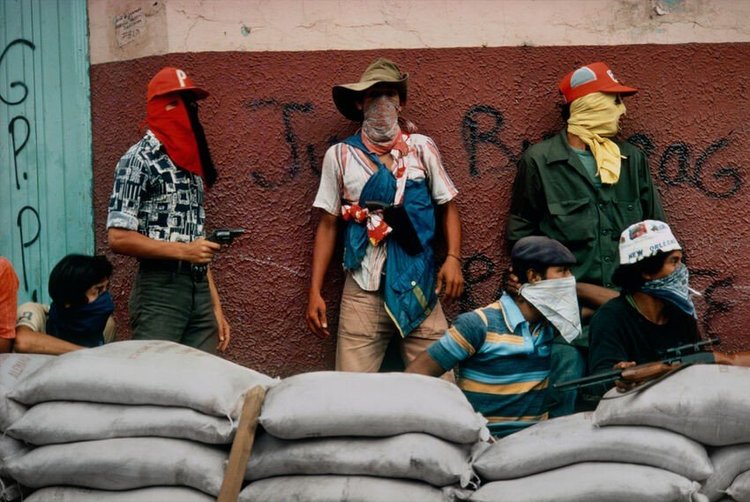
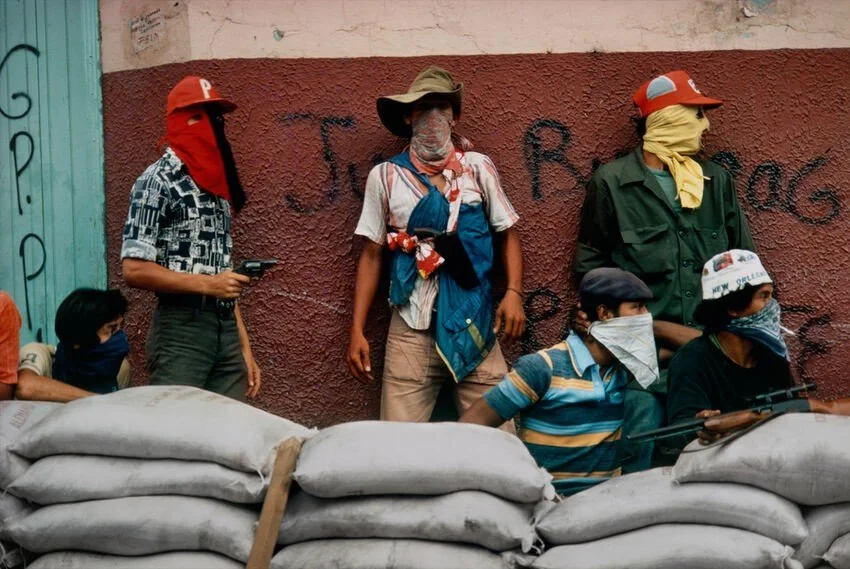
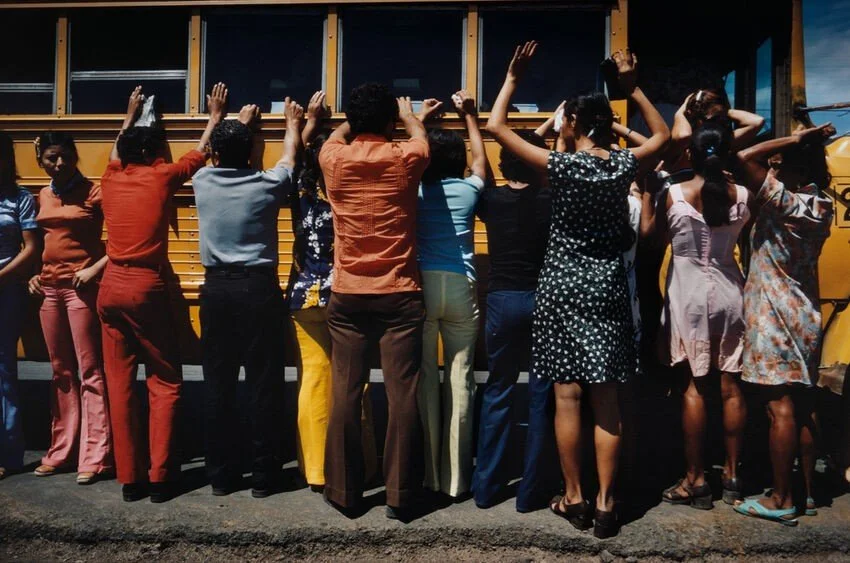
On her first day she went to La Prensa. There she met Carlos Fernando Chamorro, the son of the murdered editor, and the young photographer Margarita Montealegre. She carried two cameras, one with black and white film and one with color. Slowly, color won. In August 1978 the insurrection began, and for the first time she was in the middle of a war. In Matagalpa she photographed young fighters, the muchachos, waiting for the National Guard to strike back.
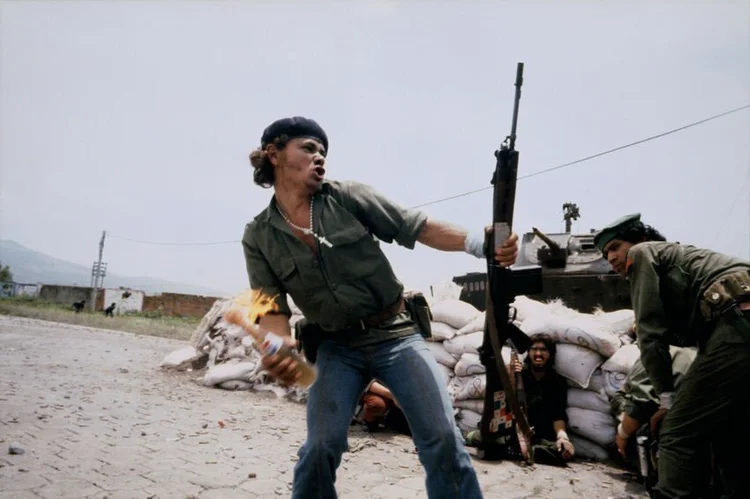
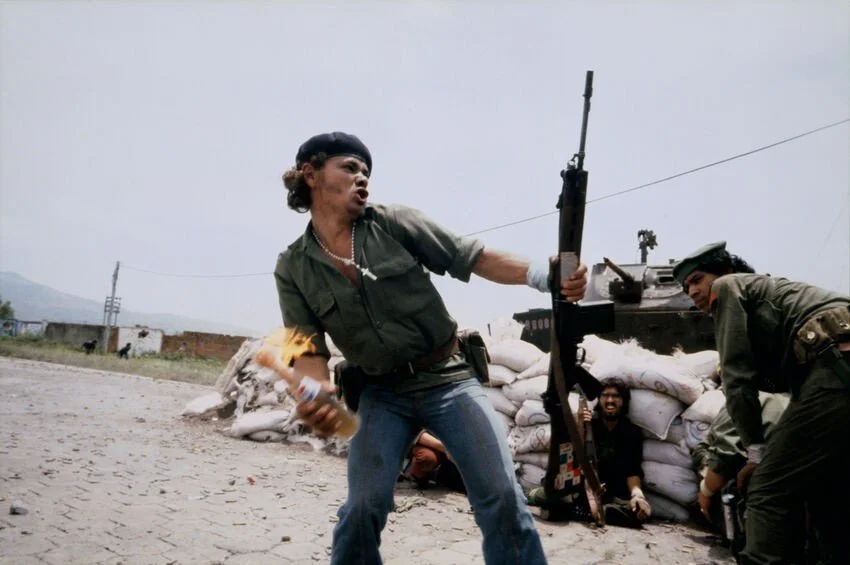
On 16 July 1979, in Estelí, Sandinista fighters stood at the walls of the National Guard headquarters, one of the last strongholds of the government. Meiselas photographed one of them, Pablo Aráuz, known as Bareta, as he threw a Molotov cocktail made from a Pepsi bottle. The picture became known as Molotov Man. After the revolution it was printed on posters, stamps and matchboxes, and painted on walls. It had a life of its own.
So she kept going back. In 1991 she made the film Pictures from a Revolution, in which she searched for the people in her photographs. In 2004 she hung large prints of her pictures in the places where they were taken. Years earlier, in a film made with Marc Karlin, she had already put the limits of her work into one line: “I have pictures; they have a revolution.”
The work
Meiselas thinks of a photograph as the start of a relationship, not the end. She shows people the pictures she makes of them and asks how they see themselves. She has said that the picture is “merely the starting point.” Her first book, Carnival Strippers, mixed photographs with the recorded words of the dancers, their managers and their customers.
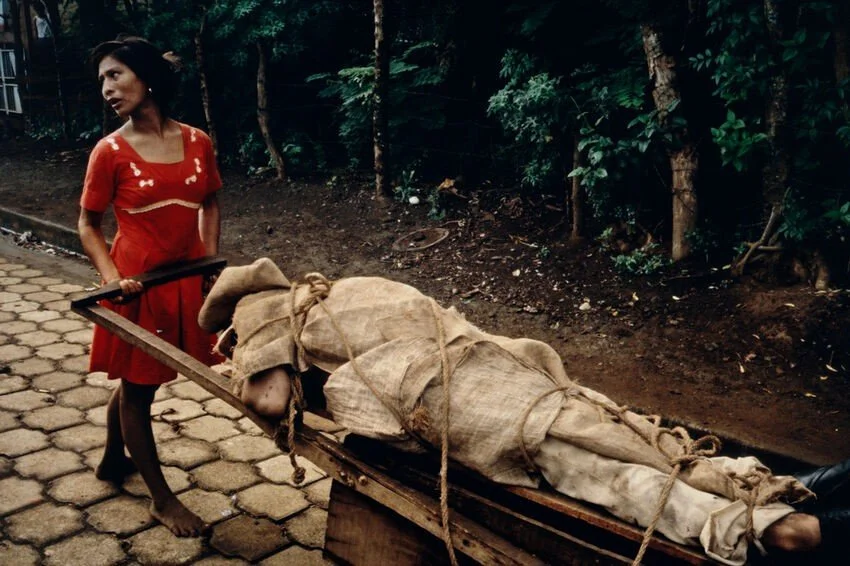
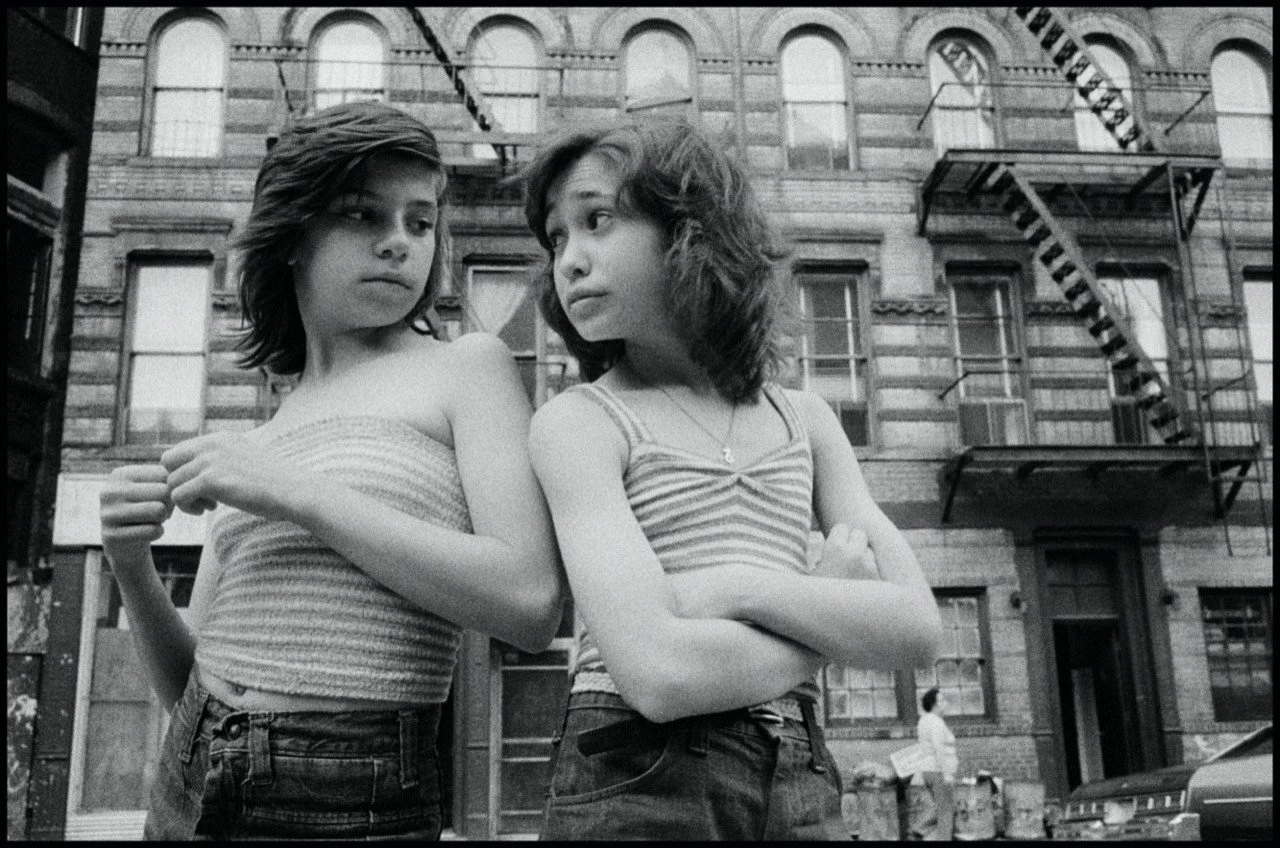
Close to home, she made Prince Street Girls. In 1974 she moved to Mott Street in Little Italy, New York. One day, as she was cycling home, a group of girls flashed sunlight into her eyes with a mirror. She went to get her camera. For years she photographed the girls growing up, as in Dee and Lisa on Mott Street. In Nicaragua her color pictures showed the war and the people in it, from fighters to a woman carrying her dead husband home in Masaya.
After 1991 she worked in Kurdistan. She photographed the graves left by Saddam Hussein’s campaign against the Kurds. Then she did something new. With Kurdish scholars and families she collected old photographs from archives and family albums. The result was the book Kurdistan: In the Shadow of History (1997) and the website akaKURDISTAN. Some Magnum members did not understand at first why she showed pictures by other people. Today the project is seen as a model for collaborative and archival work. Since 2007 she has been President of the Magnum Foundation, which supports diversity and creativity in documentary photography.
- 1948Born in Baltimore, Maryland
- 1976Publishes Carnival Strippers and joins Magnum Photos
- 1978Travels alone to Nicaragua in June
- 1979Photographs Molotov Man in Estelí and wins the Robert Capa Gold Medal
- 1981Publishes the book Nicaragua
- 1992Named a MacArthur Fellow
- 1997Publishes Kurdistan: In the Shadow of History
- 2007Becomes President of the new Magnum Foundation
- 2019Wins the Deutsche Börse Photography Foundation Prize
Lessons
Show people your pictures. Meiselas brought her contact sheets back to the carnival every week. The dancers saw all she shot and chose the pictures they wanted.
Let people speak. In Carnival Strippers the words of the dancers stand next to the photographs. Their voices tell what a picture alone cannot.
Go back. Ten years after the revolution she returned to Nicaragua to find the people in her pictures. In 2004 she brought the pictures back to the places where she made them.
Try this: choose one person or group you can visit several times. Photograph them, then bring the prints back on your next visit. Ask which picture they like most and why, and write down their words. Show the picture and the words side by side.
Gear
Meiselas rarely talks about equipment. What the sources say is short.
Leica rangefinder: she made the backstage pictures of Carnival Strippers with a handheld Leica, no flash, using a long shutter speed and a wide-open lens.
Medium format camera: she began to shoot formal medium format portraits because the dancers mostly chose portraits from her contact sheets. The model is not documented.
Color and black and white film: in Nicaragua she carried two cameras, one loaded with black and white film and one with color, and color slowly took over.
Books
Carnival Strippers (Farrar, Straus and Giroux, 1976). Her first book, made over three summers on the New England carnival circuit. Meiselas took the photographs and recorded the words of the dancers, their managers and their customers, and the book sets these voices next to the pictures. It is an honest look at work, money and independence in small-town America of the 1970s. A good book for anyone interested in documentary work built on trust.
Nicaragua (Aperture, 2025). First published in 1981, this is the third edition from Aperture. The color pictures follow the end of the Somoza regime and the revolution of 1978 and 1979. The book also has interviews, letters and poems, and a new conversation between Meiselas and Kristen Lubben of the Magnum Foundation. For readers who want to understand both the revolution and the life of its images.
Kurdistan: In the Shadow of History (University of Chicago Press, 2008). First published by Random House in 1997, with a new edition in 2008. Meiselas built it over six years from her own photographs and from old pictures, letters and documents found in archives and family albums. A New York Times reviewer called it a family album of a forsaken people. For readers interested in history, archives and new ways of telling a story with photographs.
On the Frontline (Aperture, 2017). In this book Meiselas writes about her own career: her ideas, her methods and her decisions. It covers Carnival Strippers, Nicaragua, Kurdistan and many other projects, with 113 images on 256 pages. It also tells of her years at Magnum as one of its early women members. Best for photographers who want to learn how she thinks.
In her words
“The camera is an excuse to be someplace you otherwise don't belong. It gives me both a point of connection and a point of separation.”
“The subject has to want me to be there for me to feel that I can be there.”
“The women brought me in, and the book later brought a hidden world to public attention, sharing a complex story from the inside out.”
“I worked in color because I was responding to what I was seeing, and maybe feeling.”