Exile in Blue: How Cyanotype Postcards Capture Moscow’s Fractured Love and Loss
Welcome to another captivating photo essay, this time by Ida Anderson. We'd love to hear your thoughts. Feel free to comment below and, if you're interested, share your photo essay with us. Your perspectives add valuable dimensions to our collective exploration.
What happens when home becomes a memory instead of a place?
For thousands of Russians who left their country after February 24, 2022, this question is not philosophical but deeply personal. They carry with them fragments of a Moscow that exists now only in their minds, a city frozen in time before everything changed. The weight of this displacement creates a particular kind of grief that has no easy remedy.
Artist Anna Komissarova understands this pain intimately.
Working under the pseudonym Ida Anderson, she has created "Blue Valentines," a series of cyanotype postcards that capture Moscow in shades of melancholic blue. Each image tells a story of fractured love for a homeland that feels both familiar and forever altered. The postcards are meant to travel, connecting scattered communities of Russian emigrants who share this same sense of loss and longing for what they left behind.
Blue Valentines by Ida Anderson
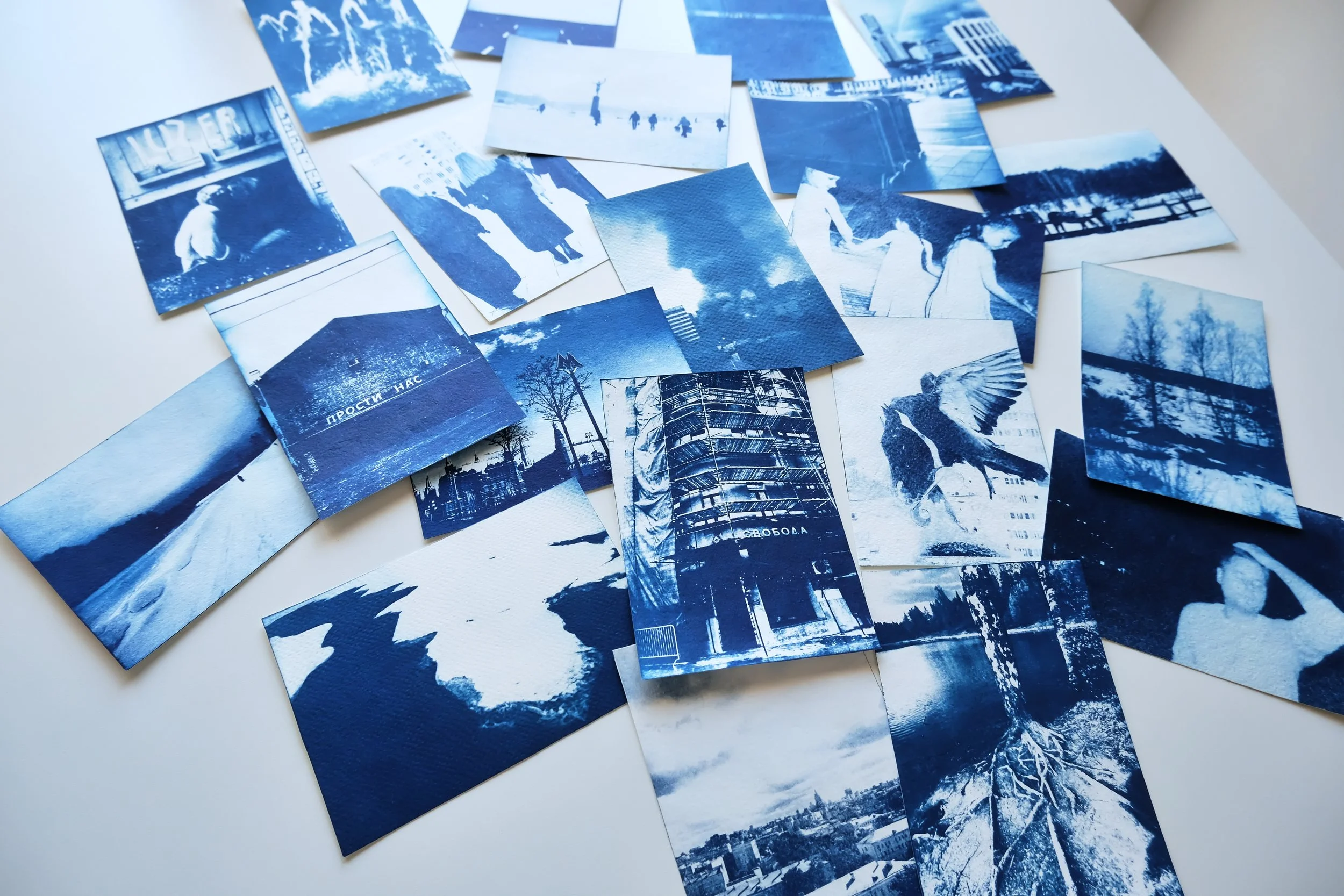
Blue Valentines is a special set of photographic postcards created using the cyanotype process, a historic technique known for its deep, melancholic blue hues.
These images, tinged with both tenderness and sorrow, act as intimate yet piercing reminders of a fractured love, for one’s native city, for one’s homeland. They reflect a longing that is both personal and political, evoking a sense of exile not just from a place, but from a time and a way of life that now feel irretrievably lost.
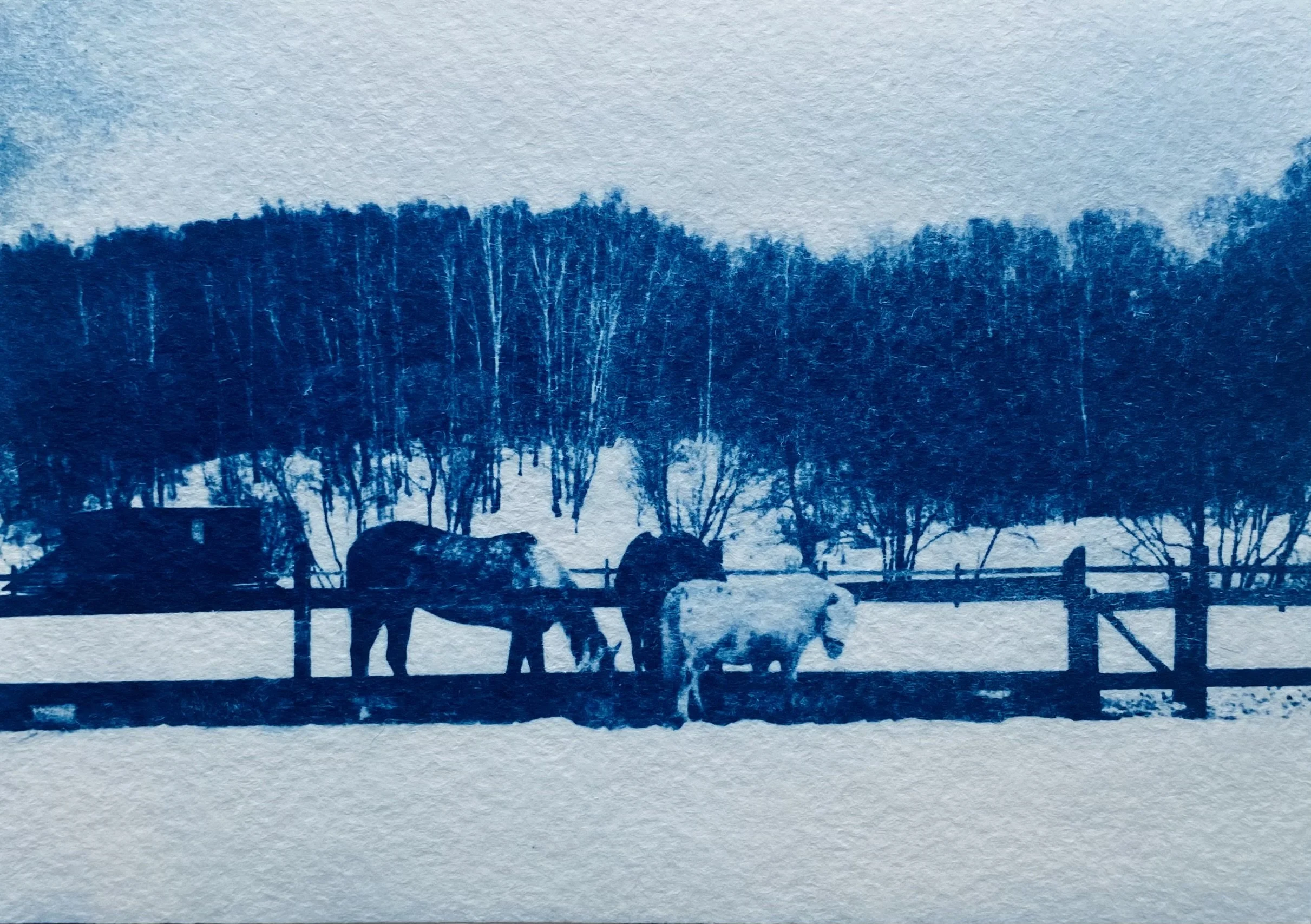
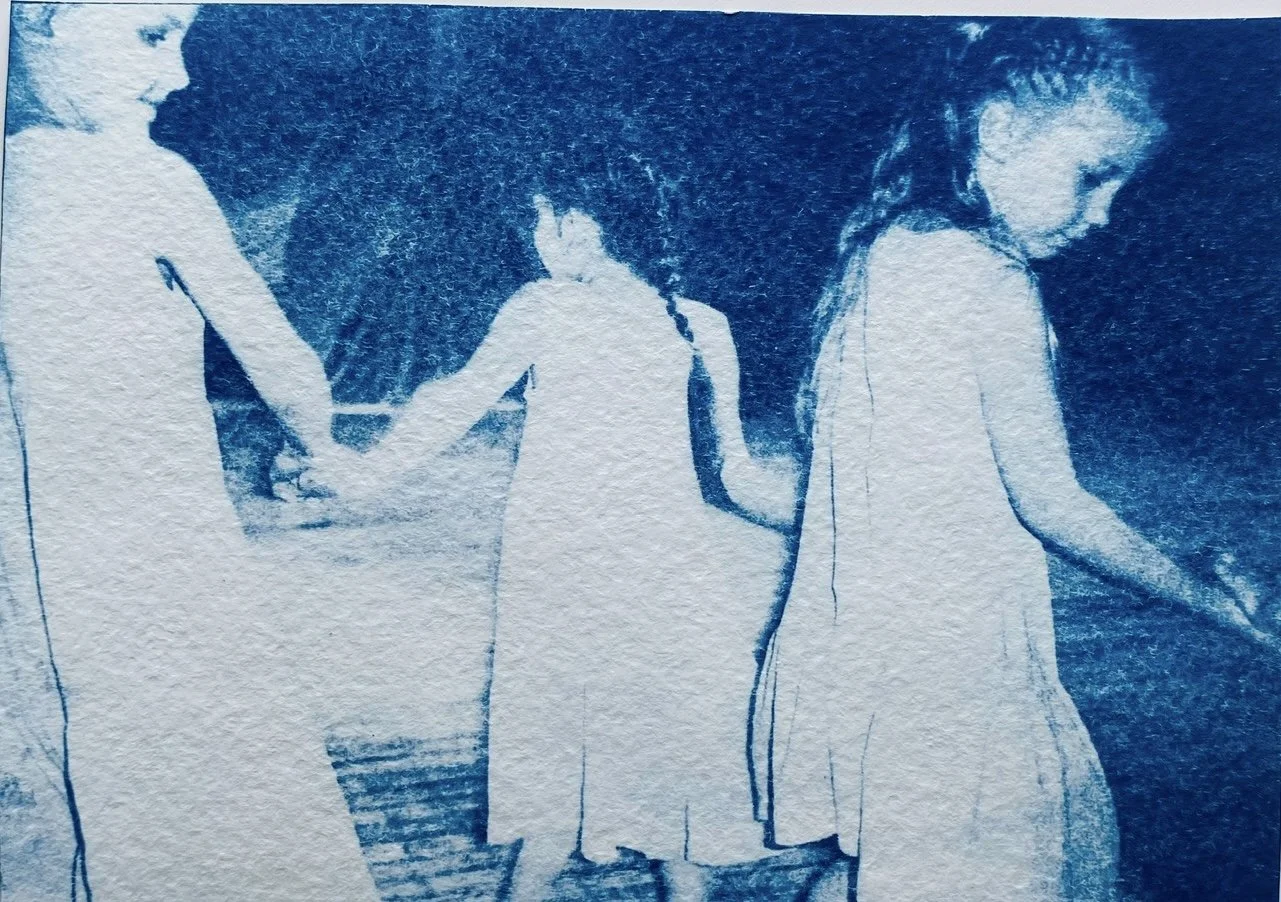
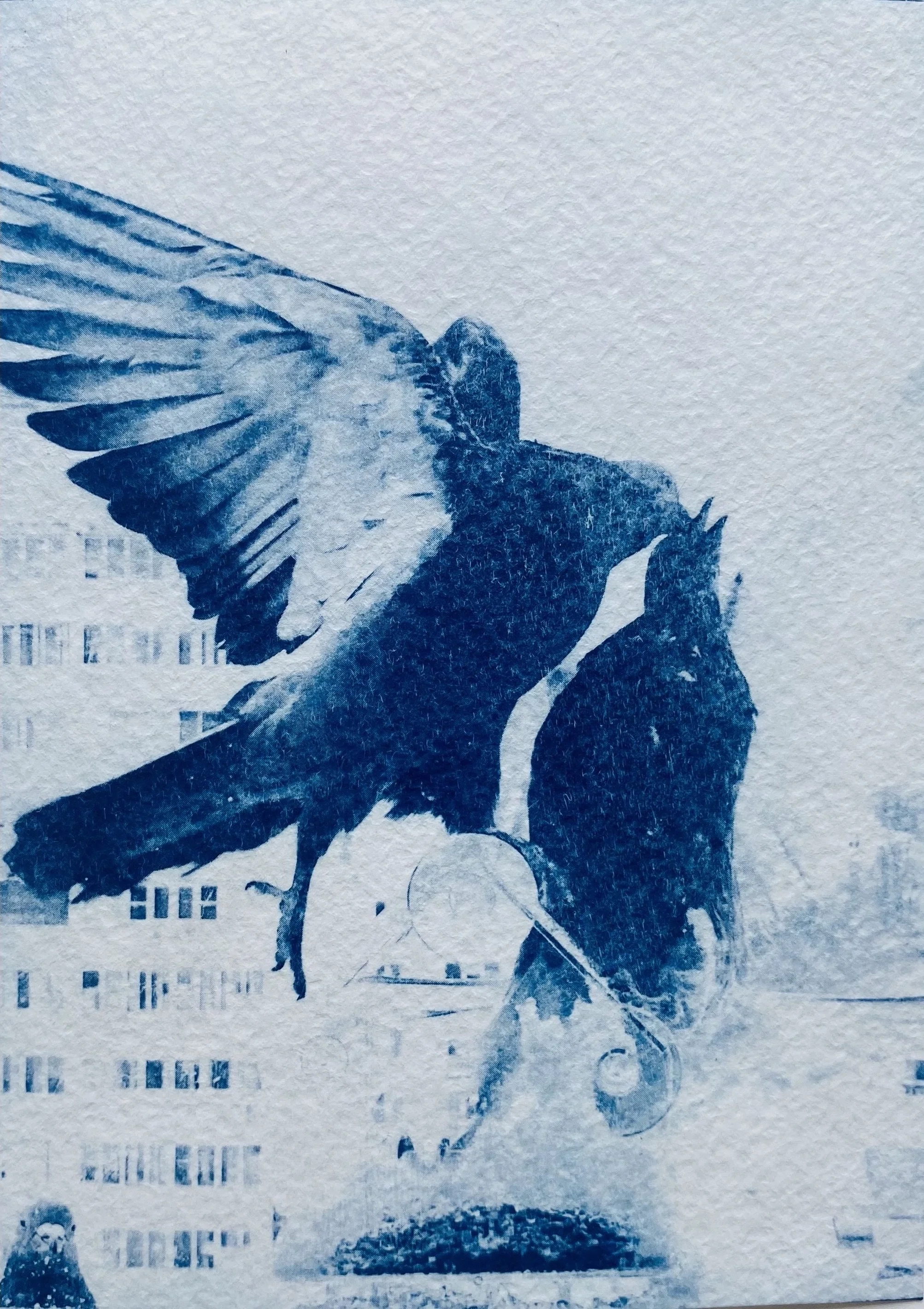
In this series, idyllic views of Moscow are juxtaposed with more unsettling scenes: police barricades, solitary women, brawling pigeons, a shuttered bar named “Svoboda” («Freedom» – eng.) undergoing reconstruction, and a plume of smoke rising from a fire. These symbols, subtle and stark, capture the emotional texture of a turbulent era.
As in the Tom Waits song that gives the project its name, Blue Valentines speaks to a grief that lingers, impossible to shake. The sense of loss resonates among those who oppose the war, whether they remain in Moscow or have found themselves in faraway cities like Buenos Aires. In this shared sense of displacement, Blue Valentines creates space for collective memory and the possibility of healing across ruptured ties.
Ultimately, this project is a kind of photographic blues, a visual elegy, for Russian émigrés who left their country in the wake of the full-scale invasion of Ukraine on February 24, 2022.
The postcards are designed to be mailed: intimate fragments of experience sent across borders, connecting friends and loved ones in a scattered yet enduring community.
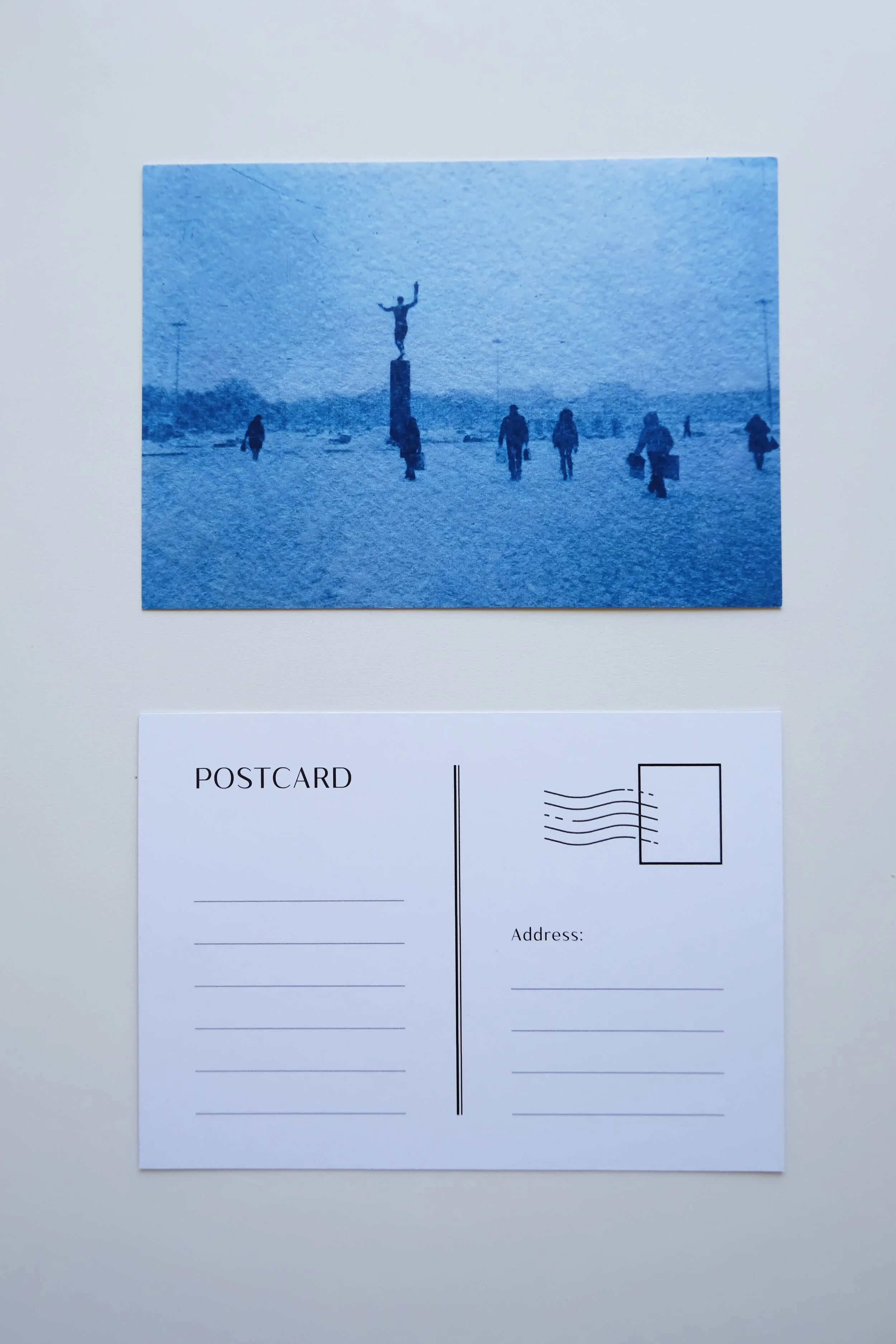
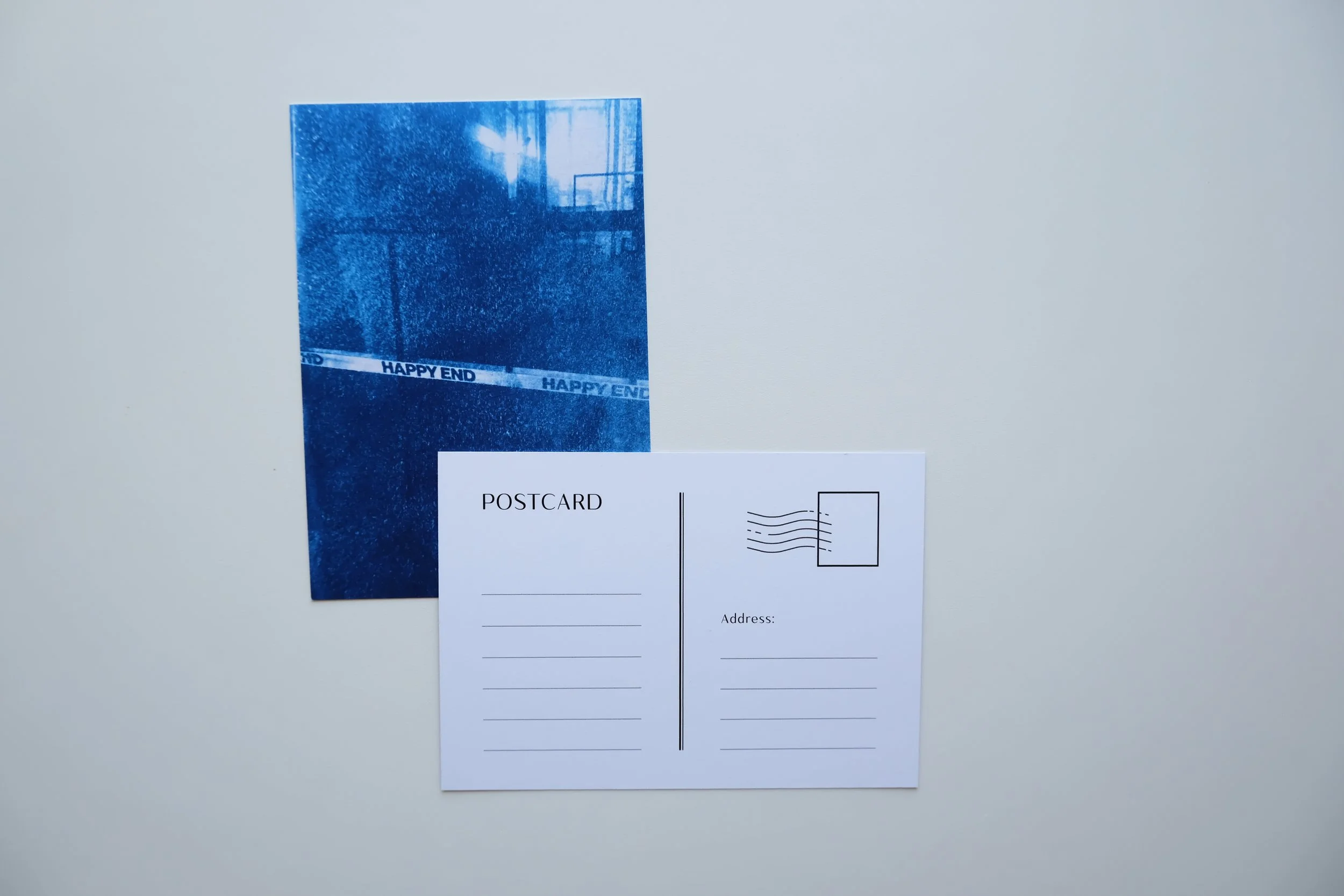
How does the tactile, analog nature of the cyanotype process influence the emotional resonance of these images, and what role does the physical act of creating these prints play in your processing of exile and loss?
The cyanotype process is simple yet tactile; it requires a physical, human presence. That touch, that trace of the hand, is what draws me to it. Each print carries a sense of intimacy and embodiment, making the photograph deeply personal. By creating handmade cyanotype postcards, I symbolically scatter myself across the world. It’s a way to be present, physically, emotionally, in many places at once, to weave myself into the everyday lives of friends who are now far away. Omnipresence is a luxury unavailable to humans, yet it’s a natural quality of photography. This act of sending postcards has become my way of coping with separation and the growing fragility of human connection in a time of distance and displacement.
You mention that these postcards are "designed to be mailed" to connect scattered communities. Have you received responses from recipients, and how do these intimate exchanges across borders shape or complete the artistic dialogue you've initiated?
I sent these postcards to friends and colleagues who had moved to different cities across the globe; I counted twelve countries in total. Some thanked me in a message, others taped the cards to their fridges, a few responded with a photograph of their own. Despite being connected through our phones, I believe that digital communication rarely allows for the full expression of feeling. These handmade postcards, on the other hand, serve as tactile memory artifacts, captured and shared moments of history.
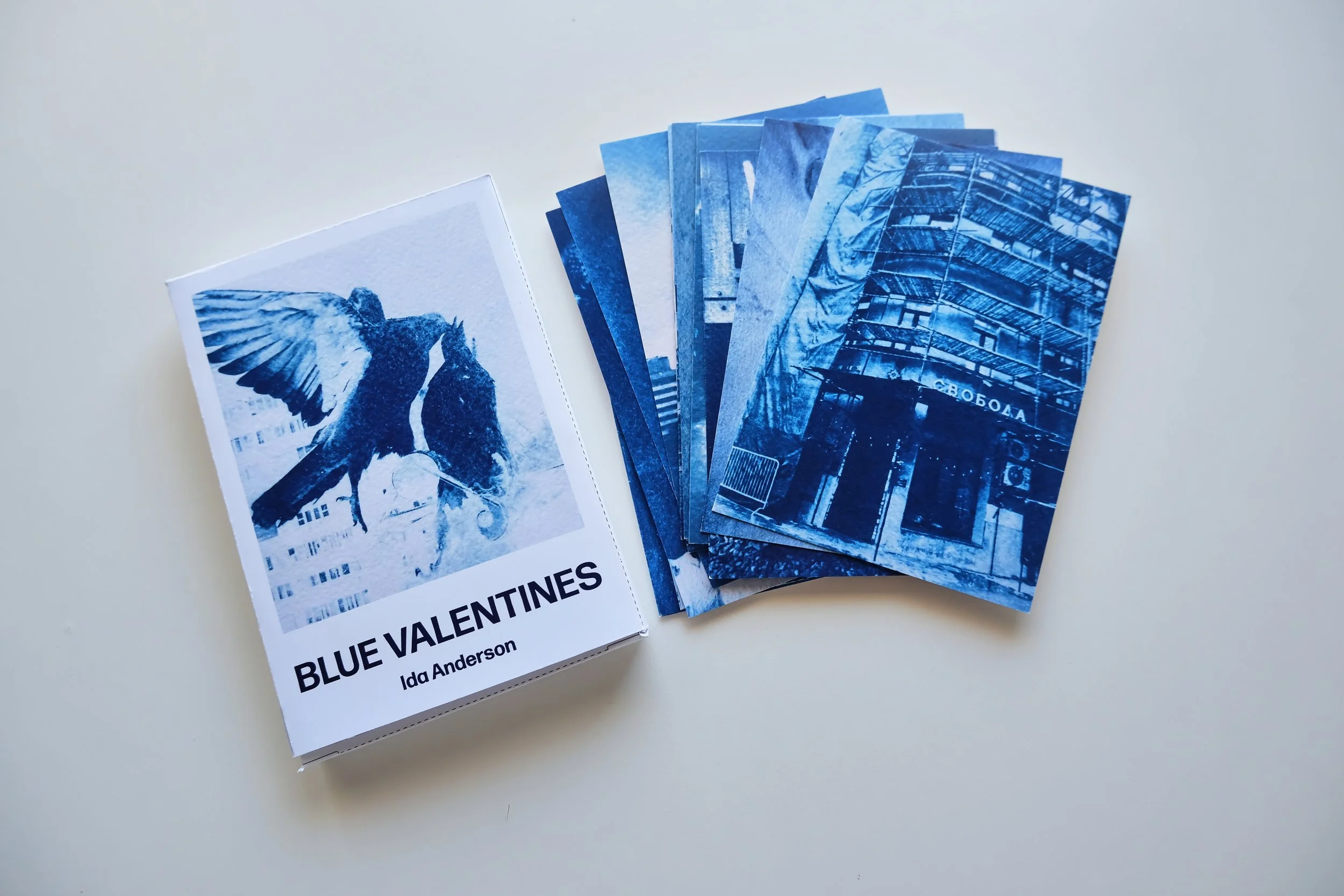
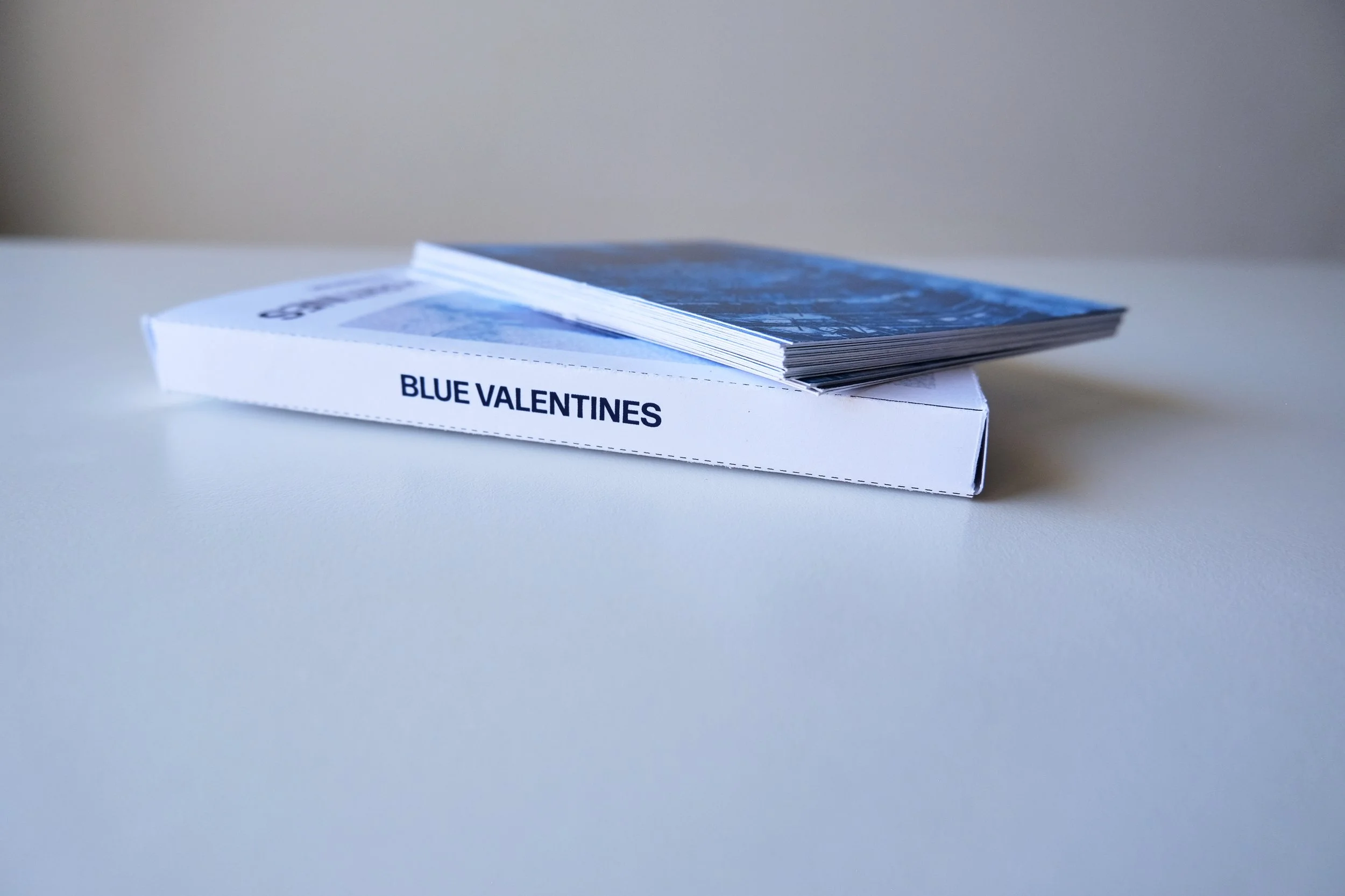
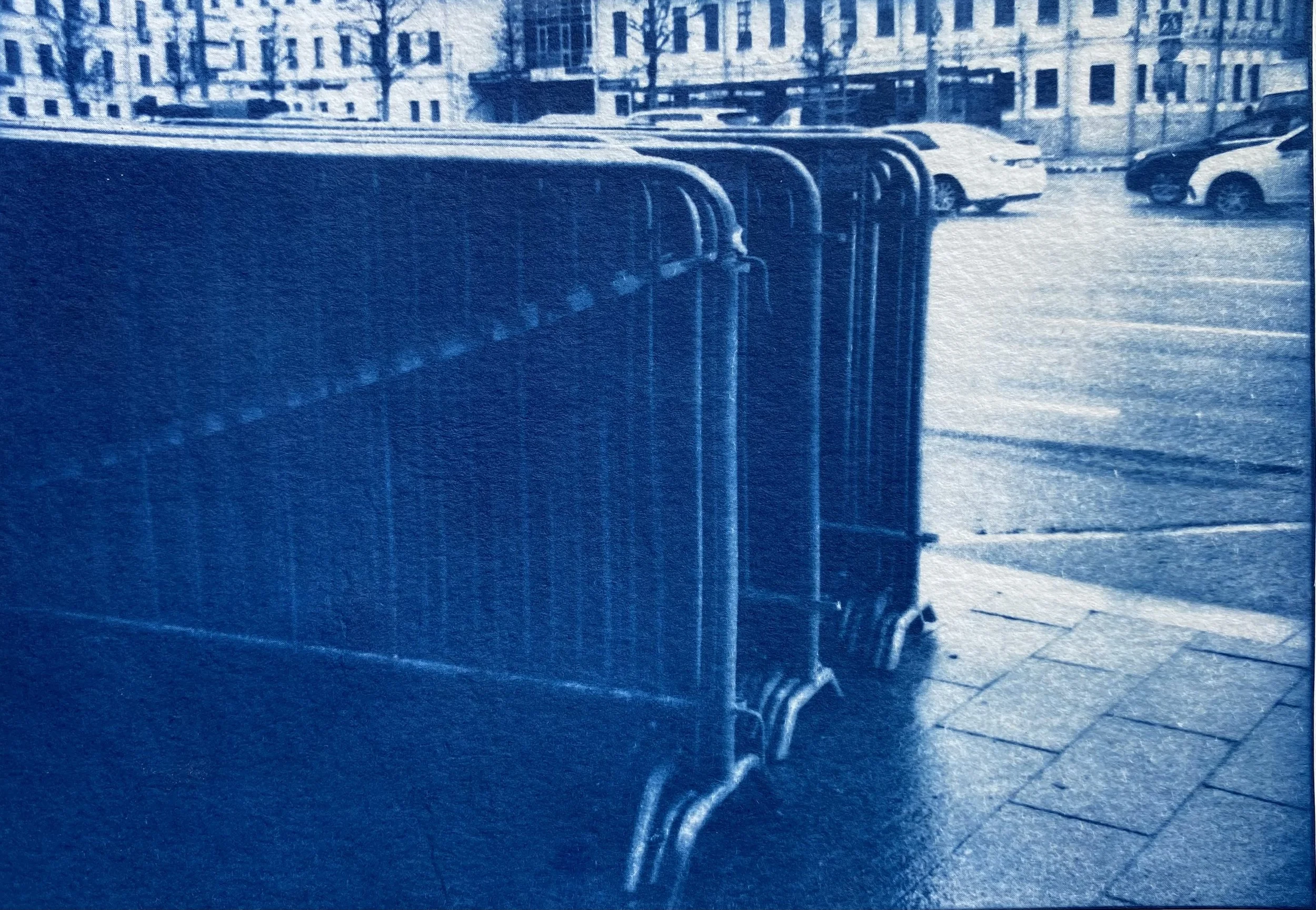
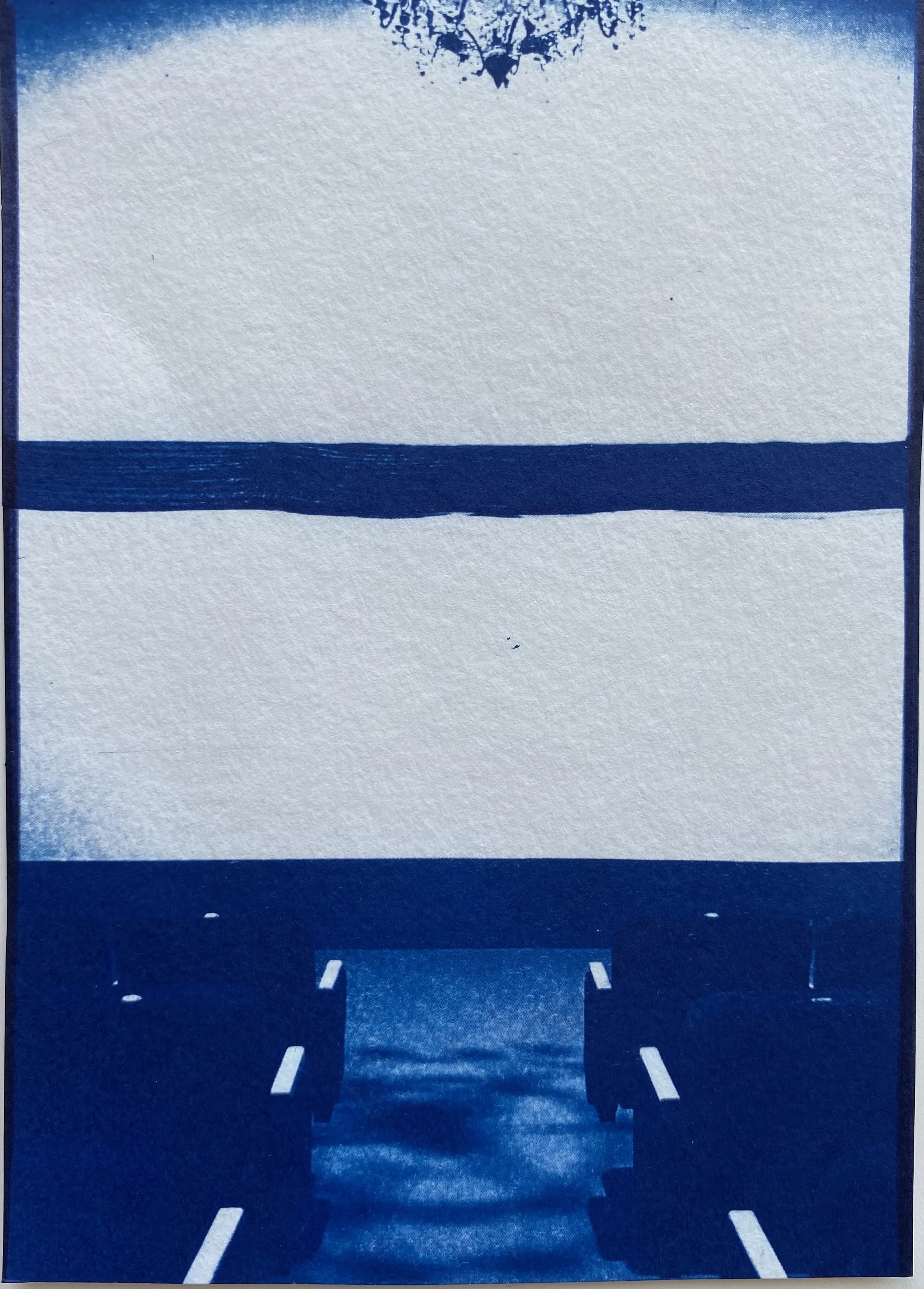
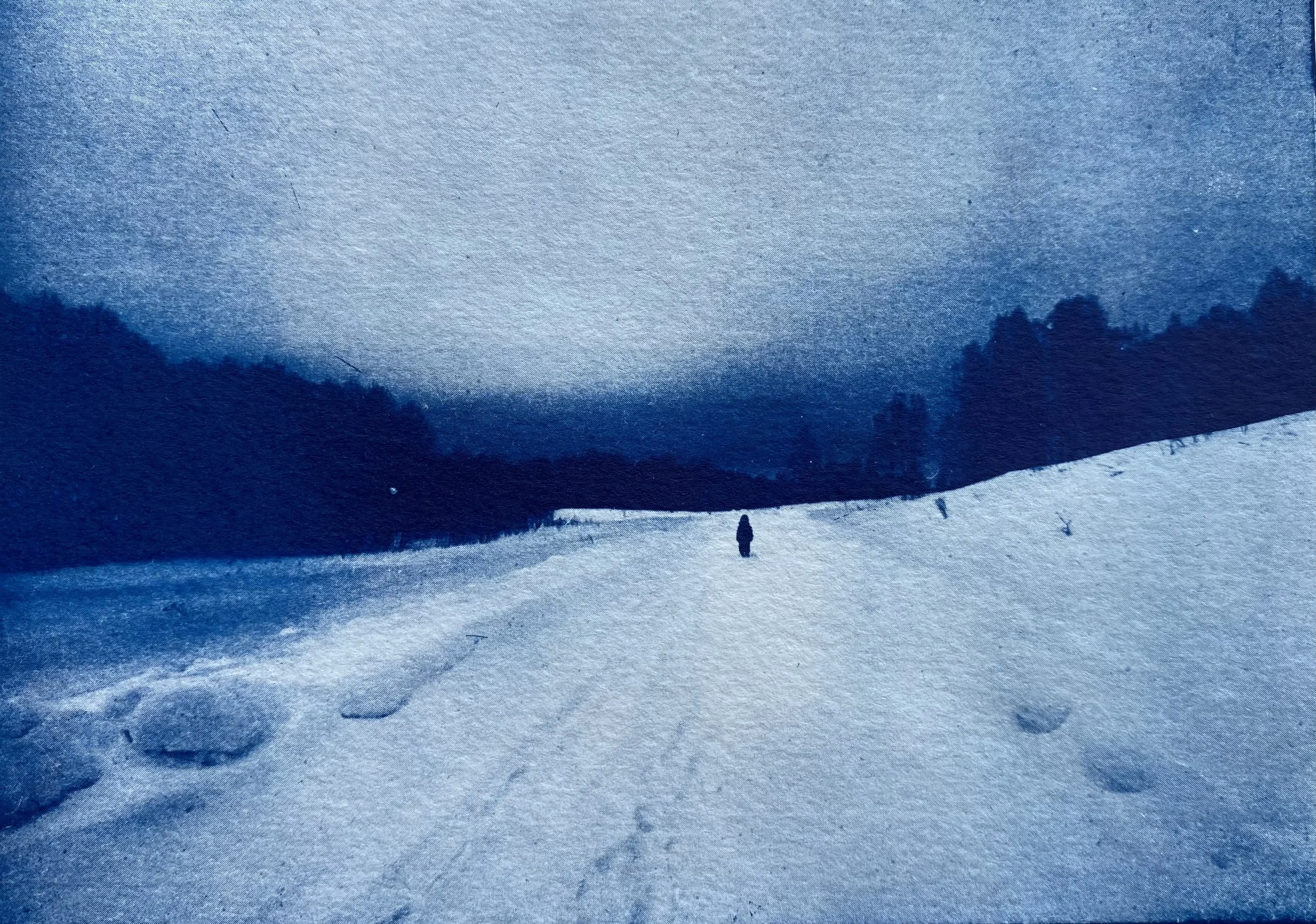
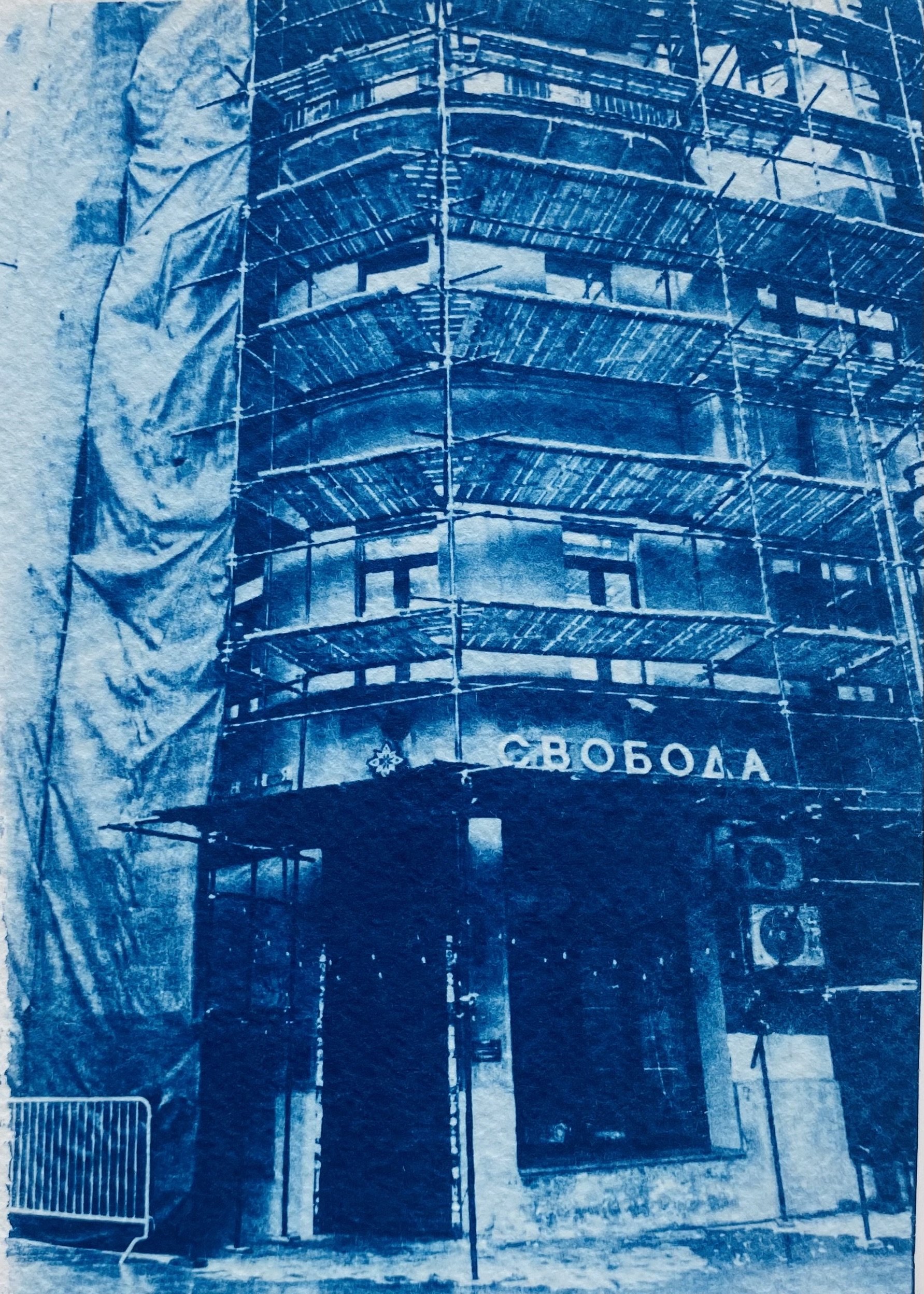
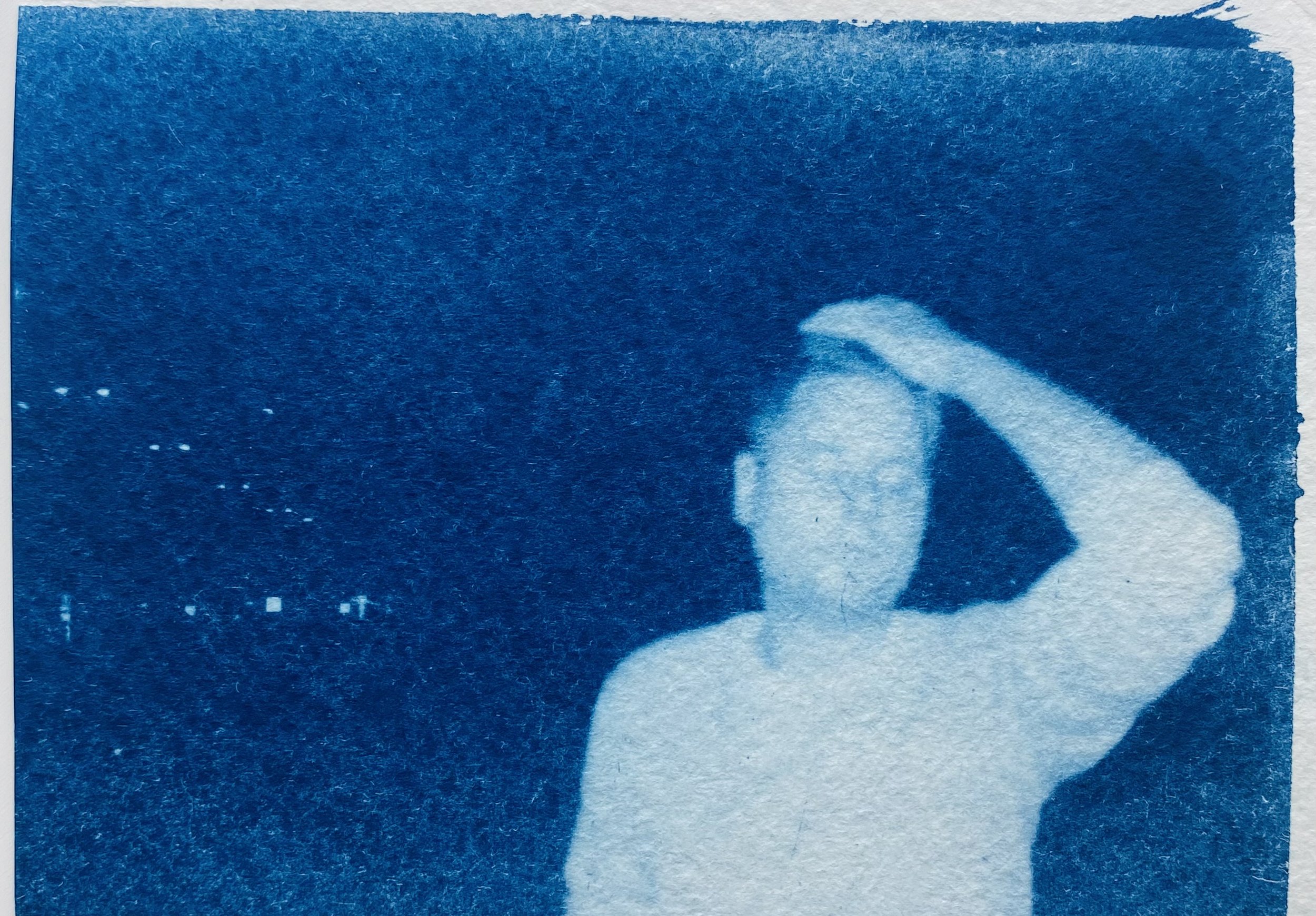
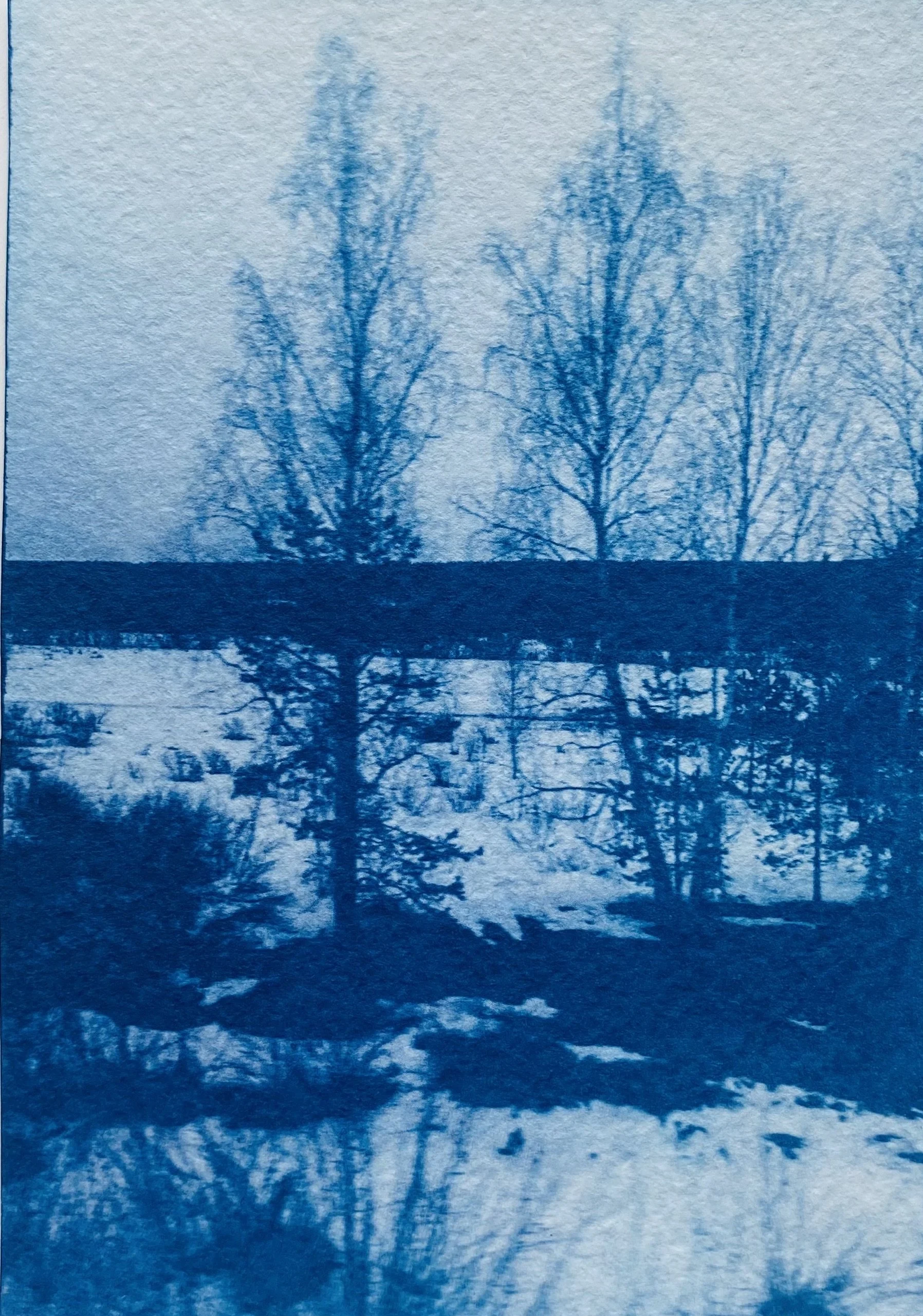
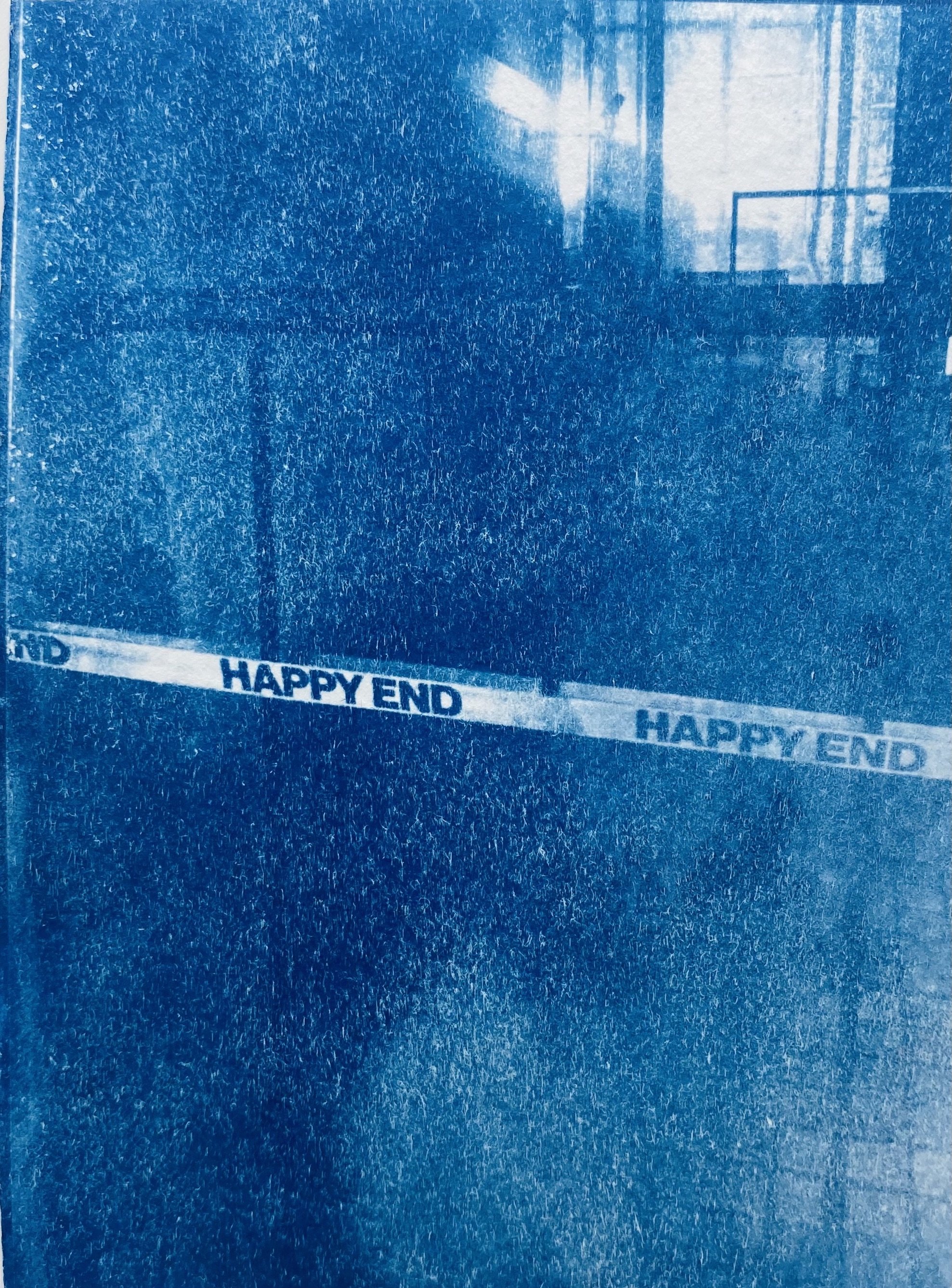
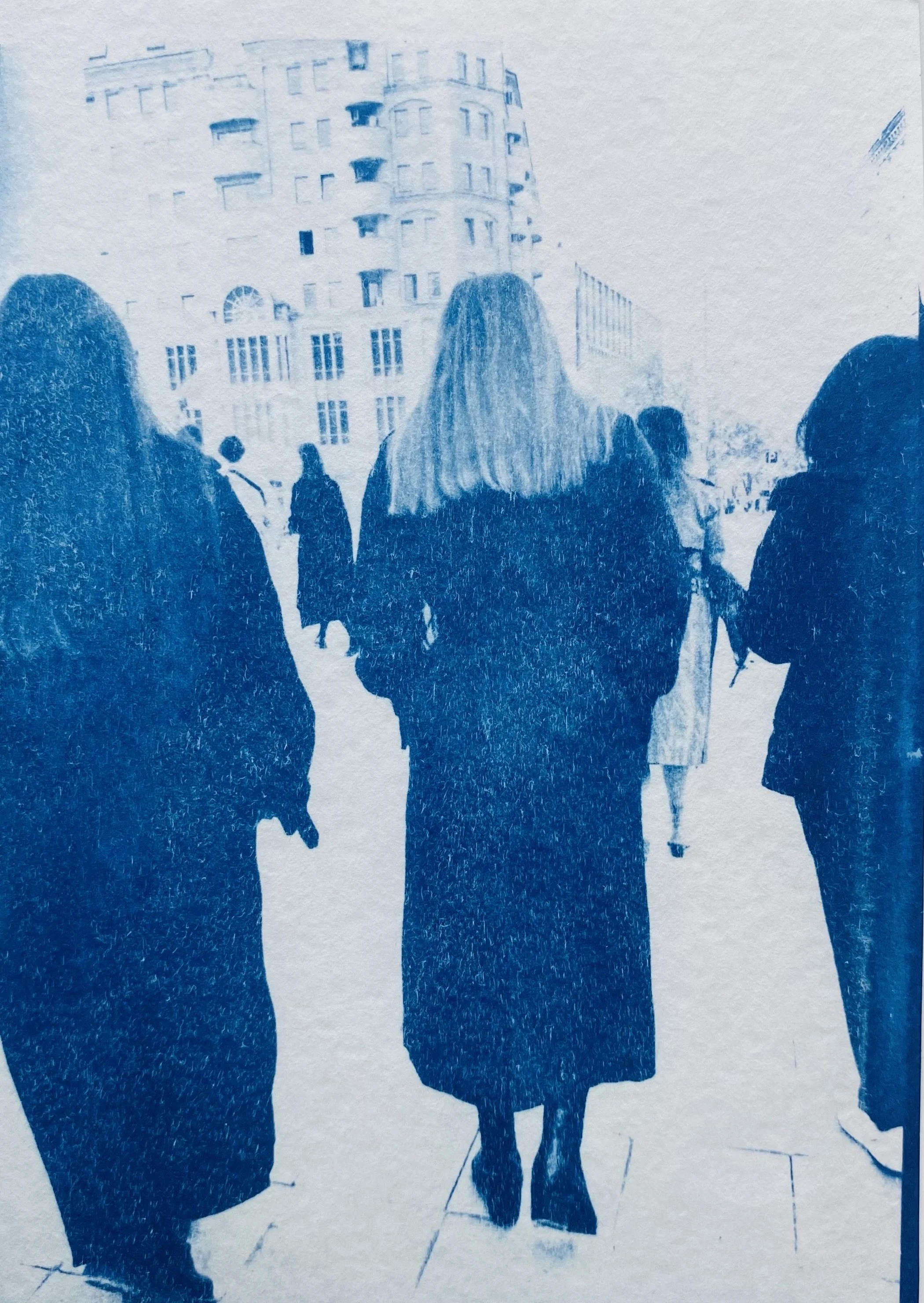
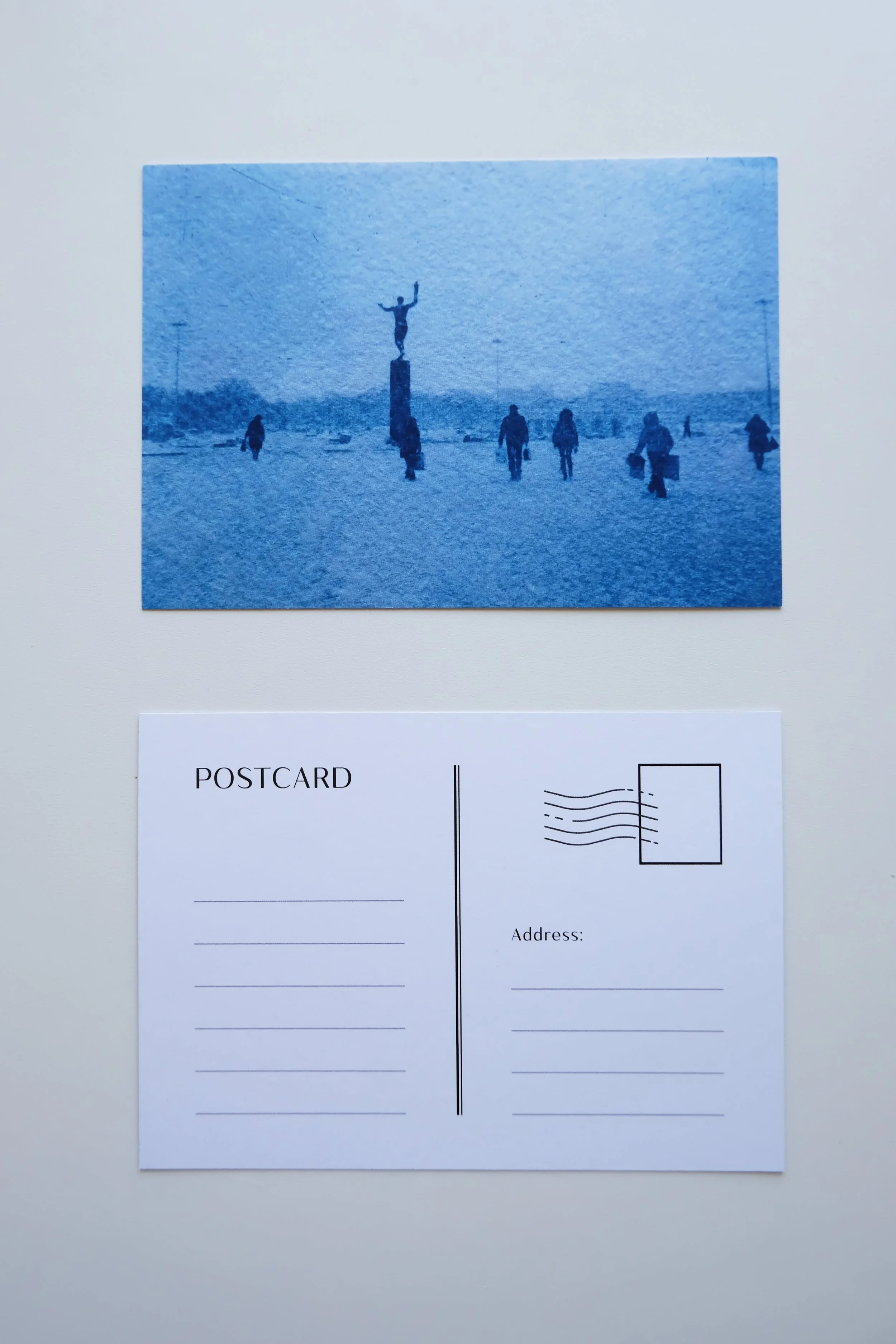
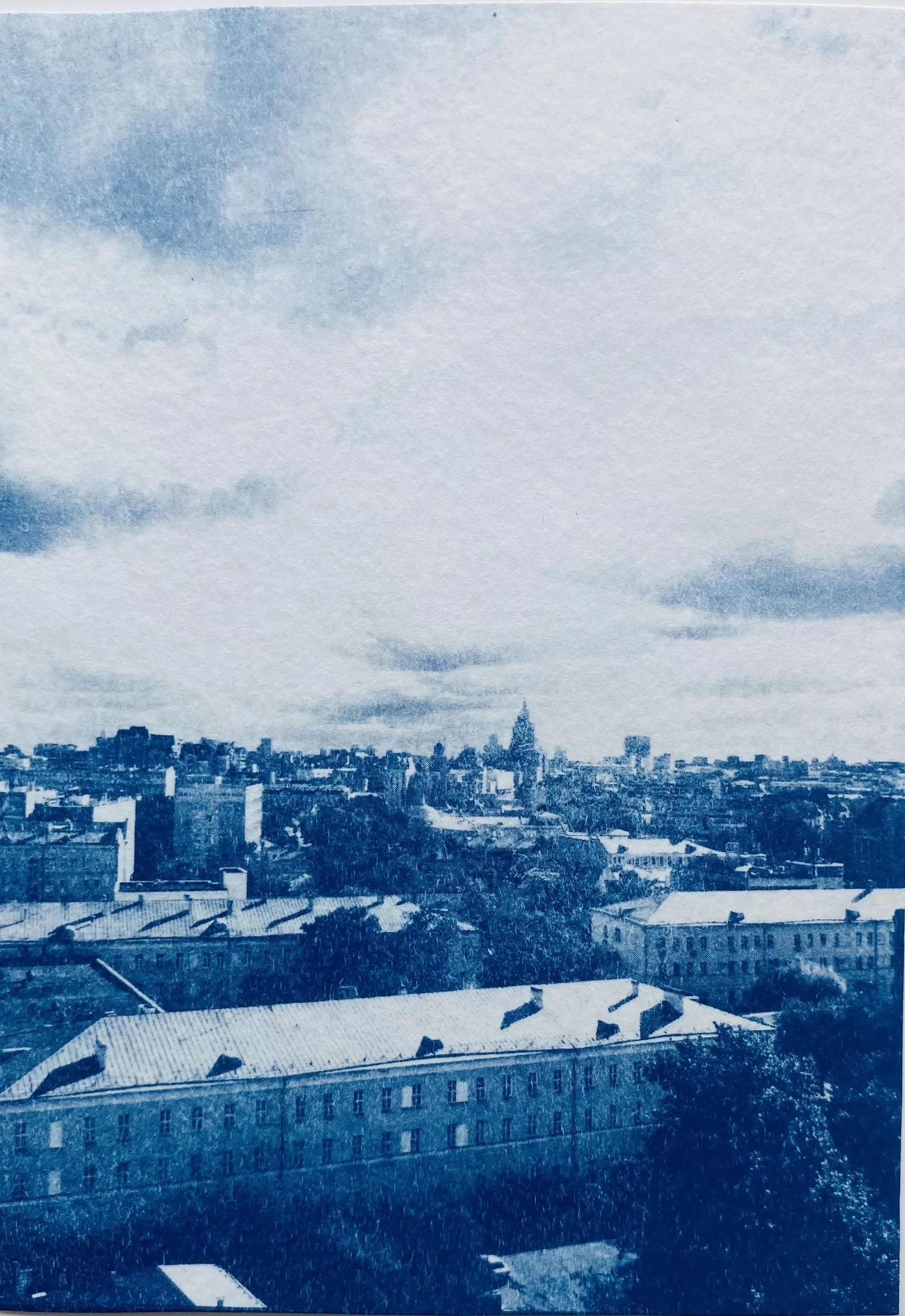
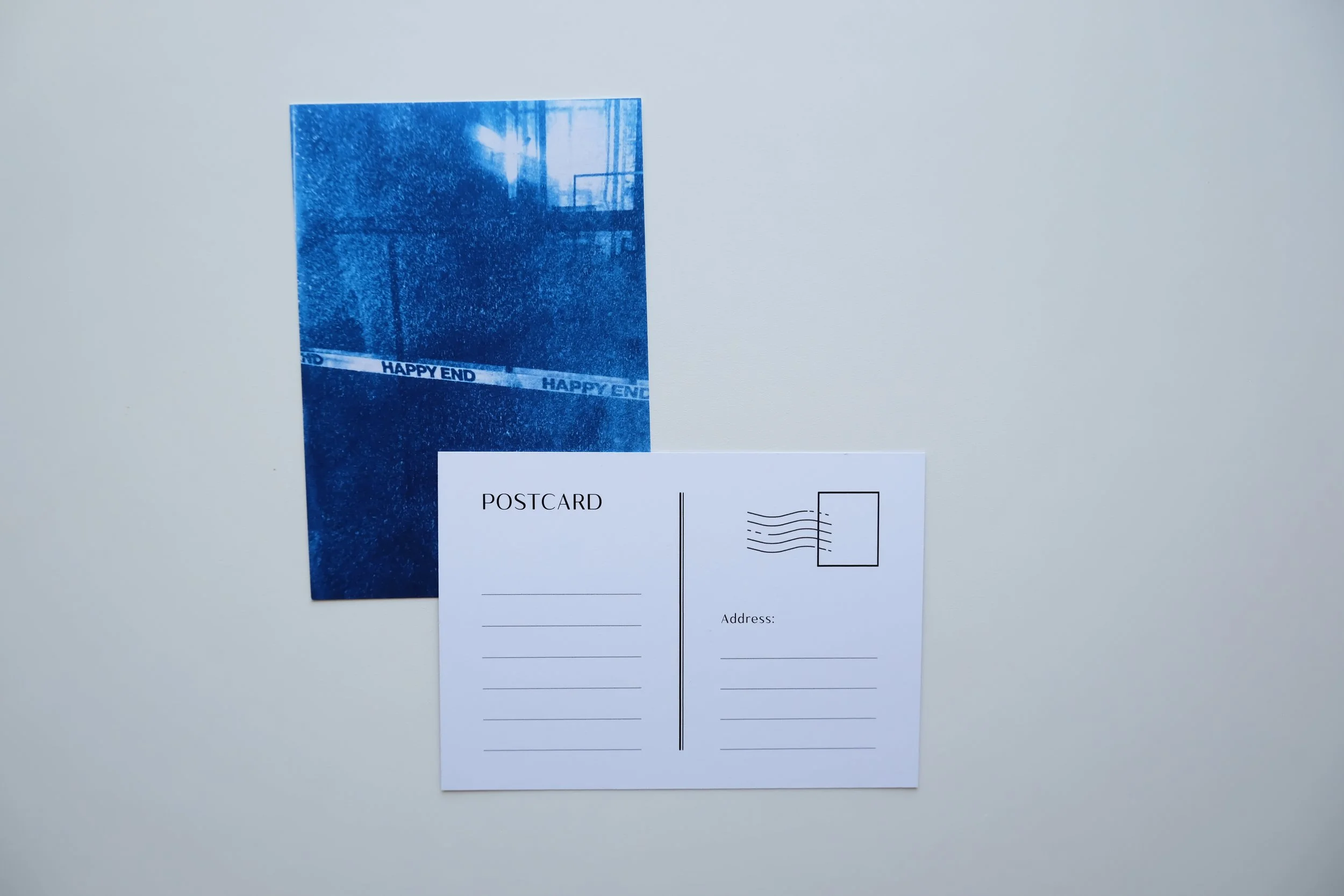
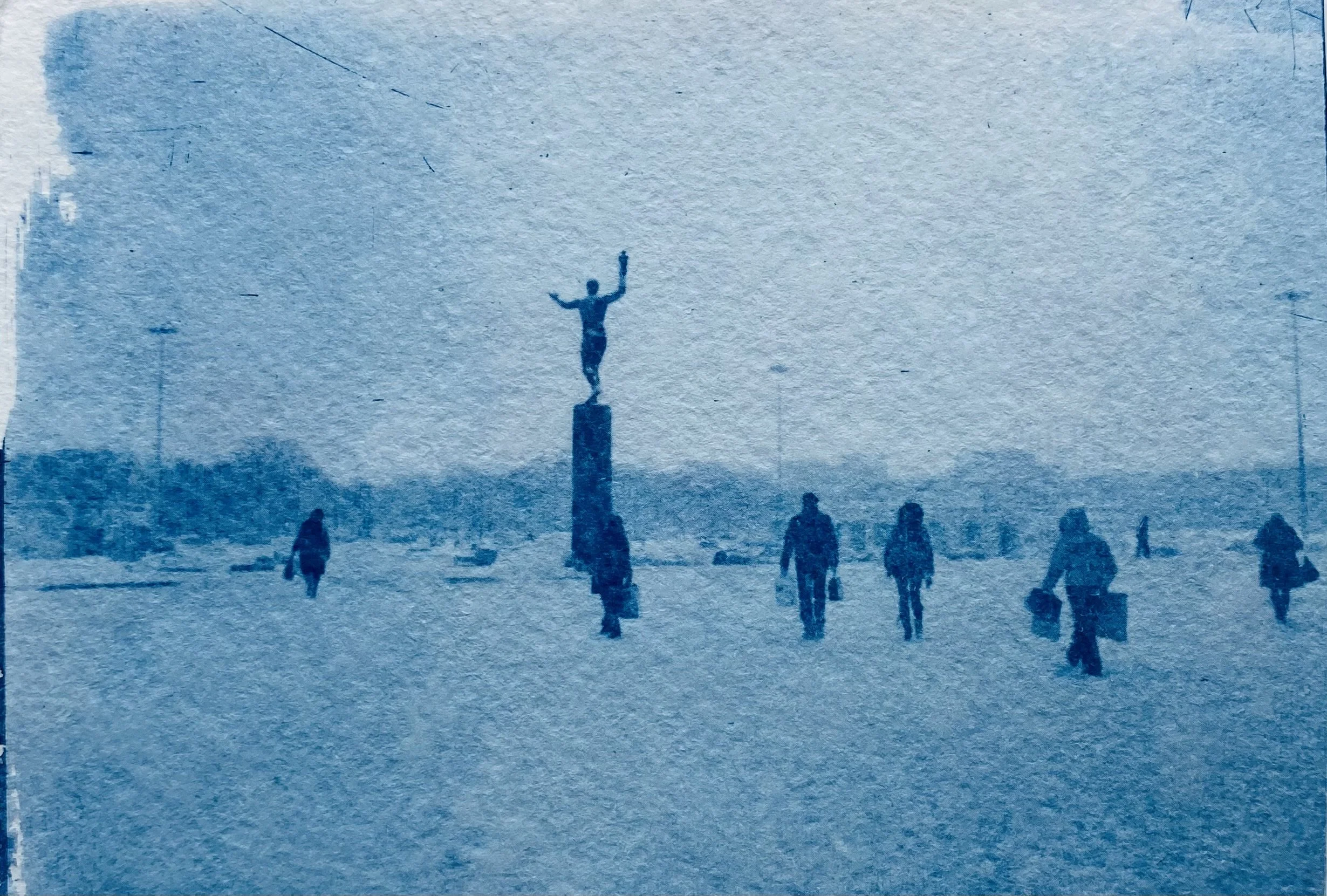
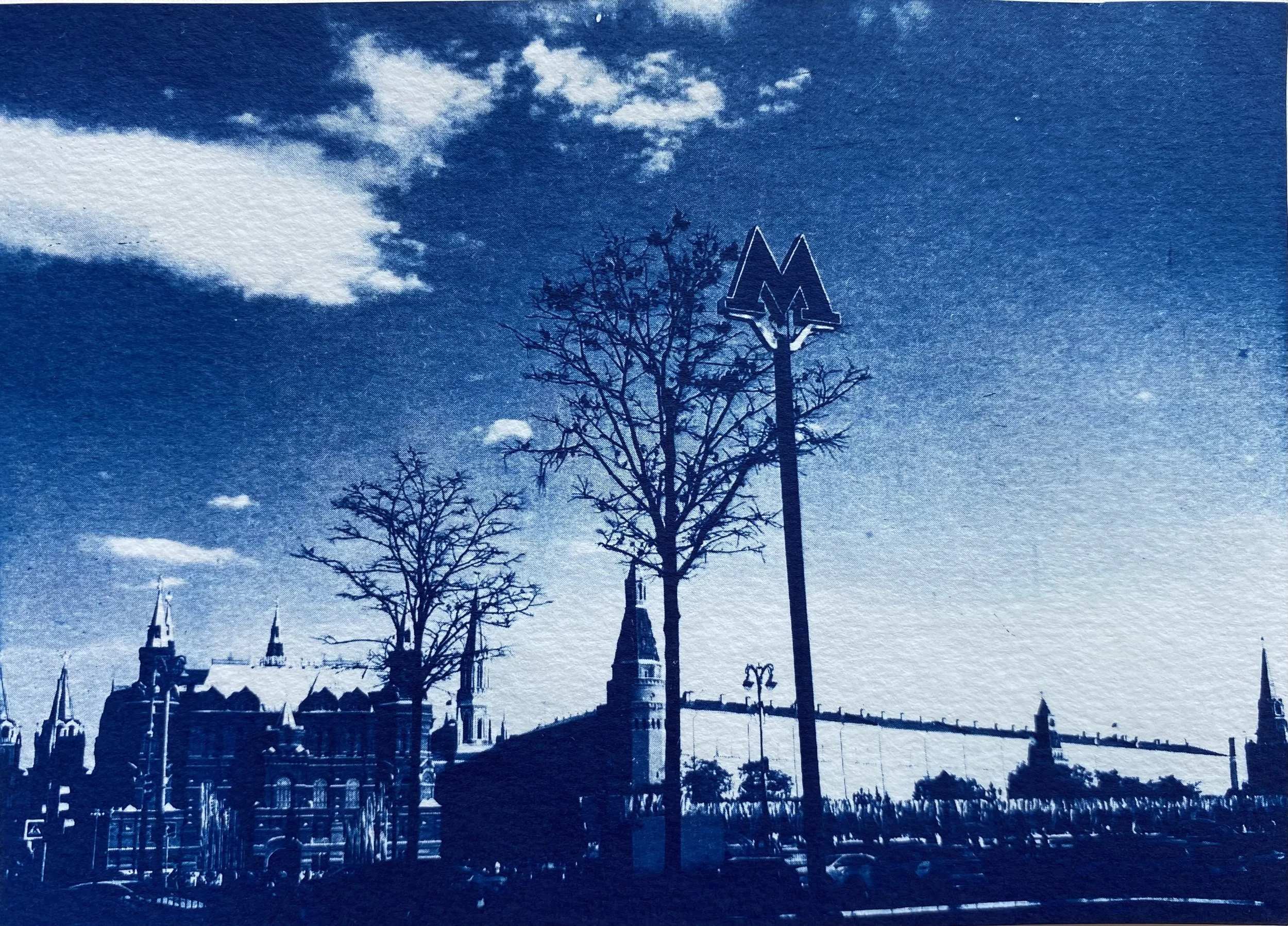
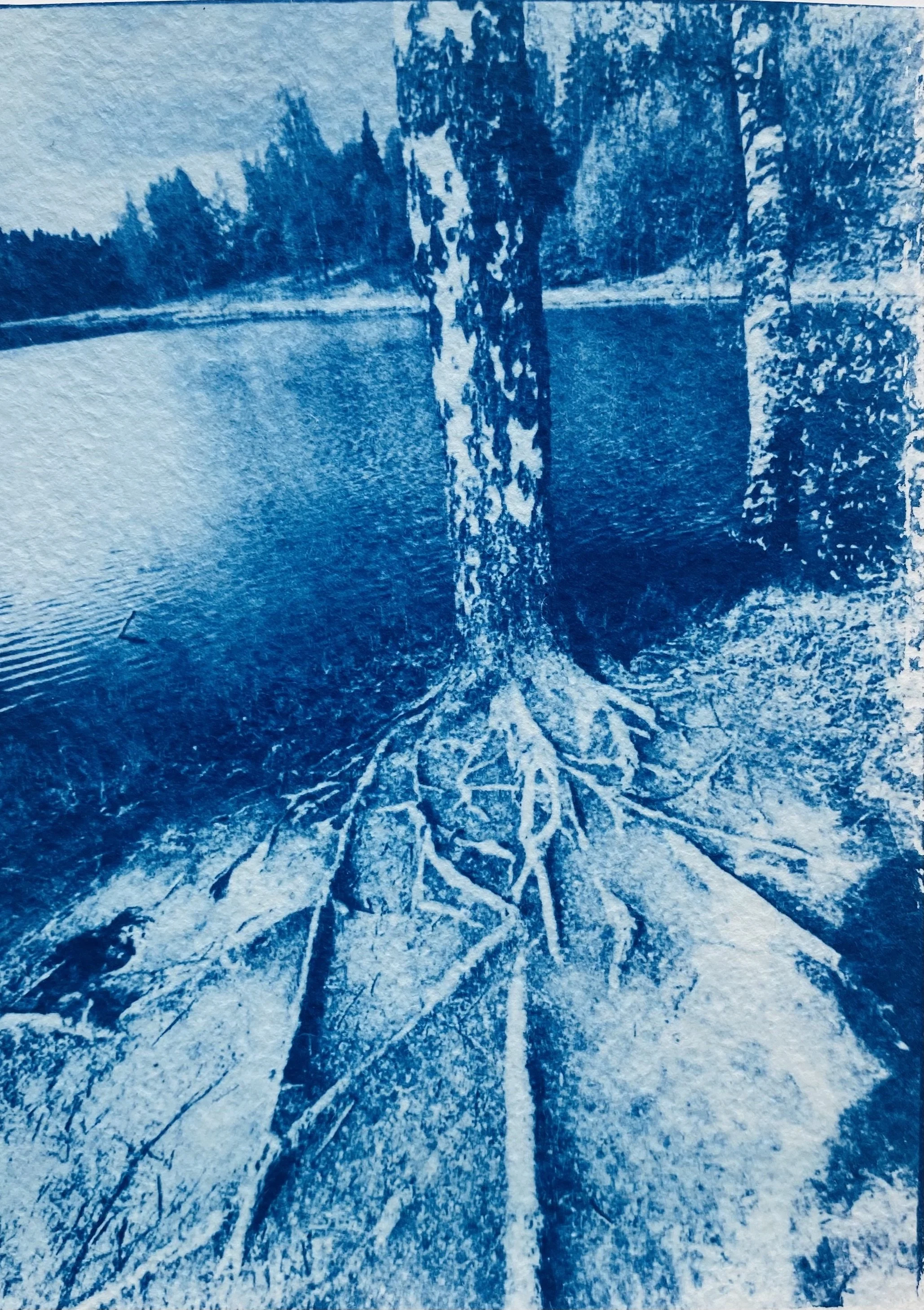
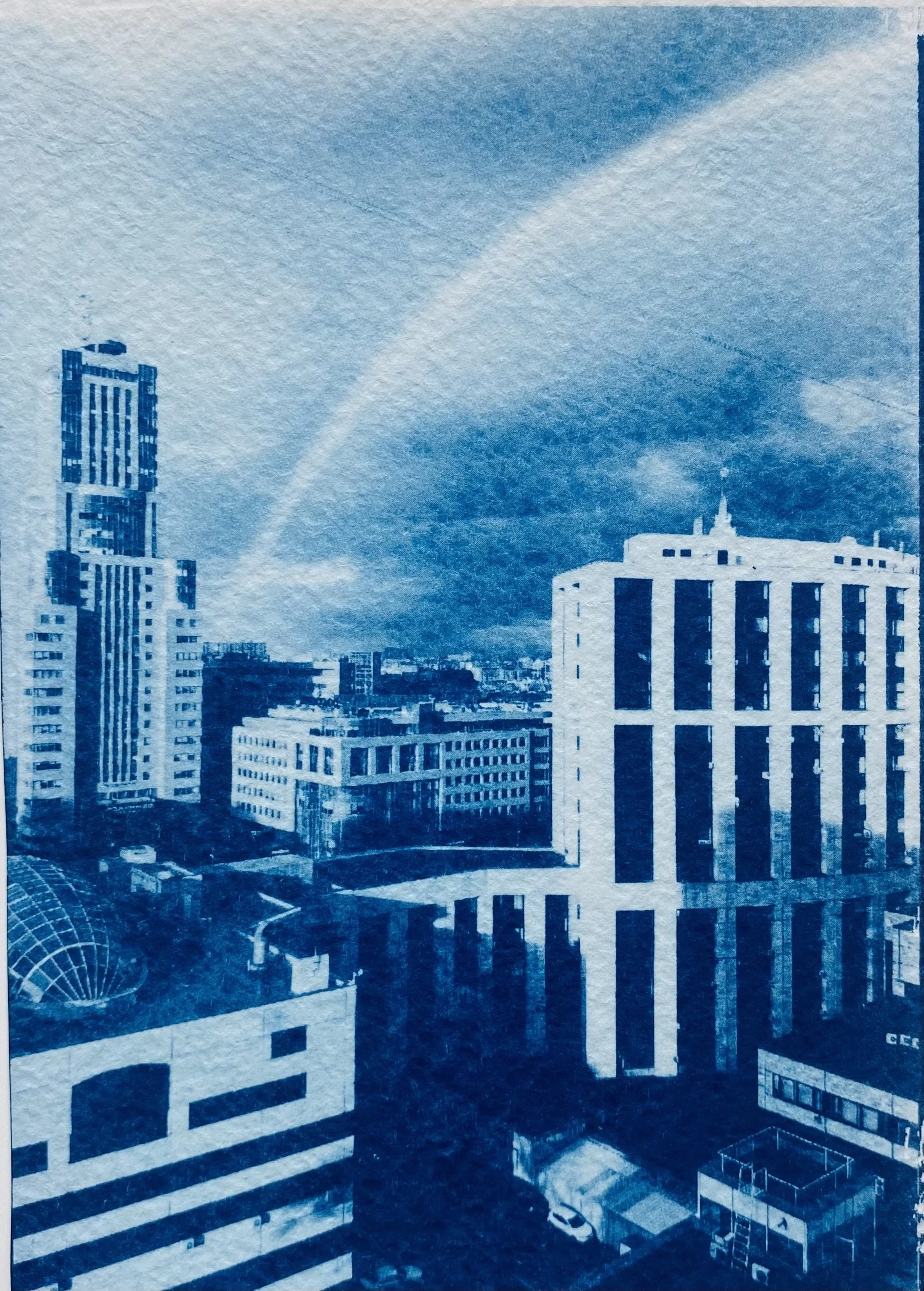
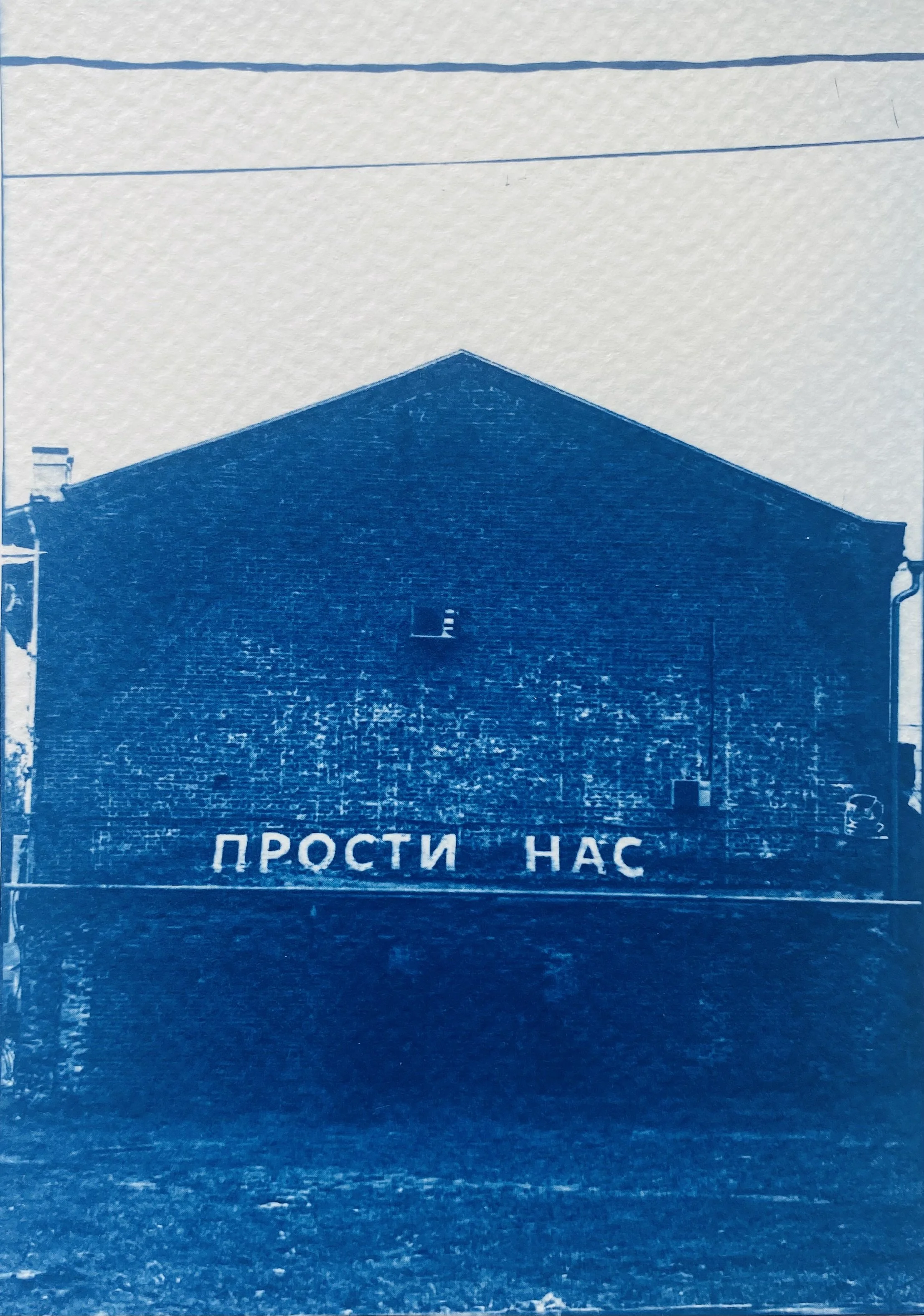
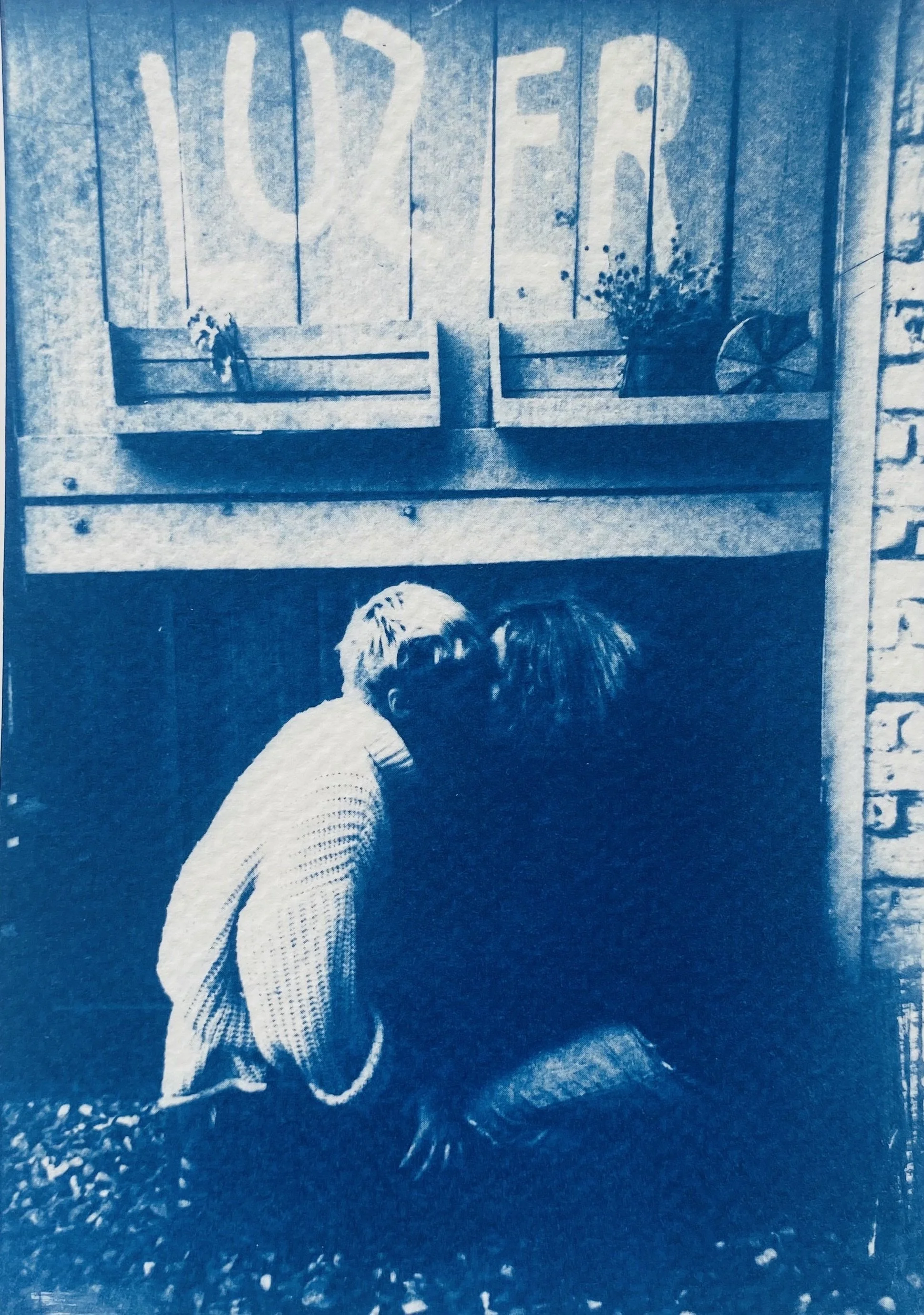
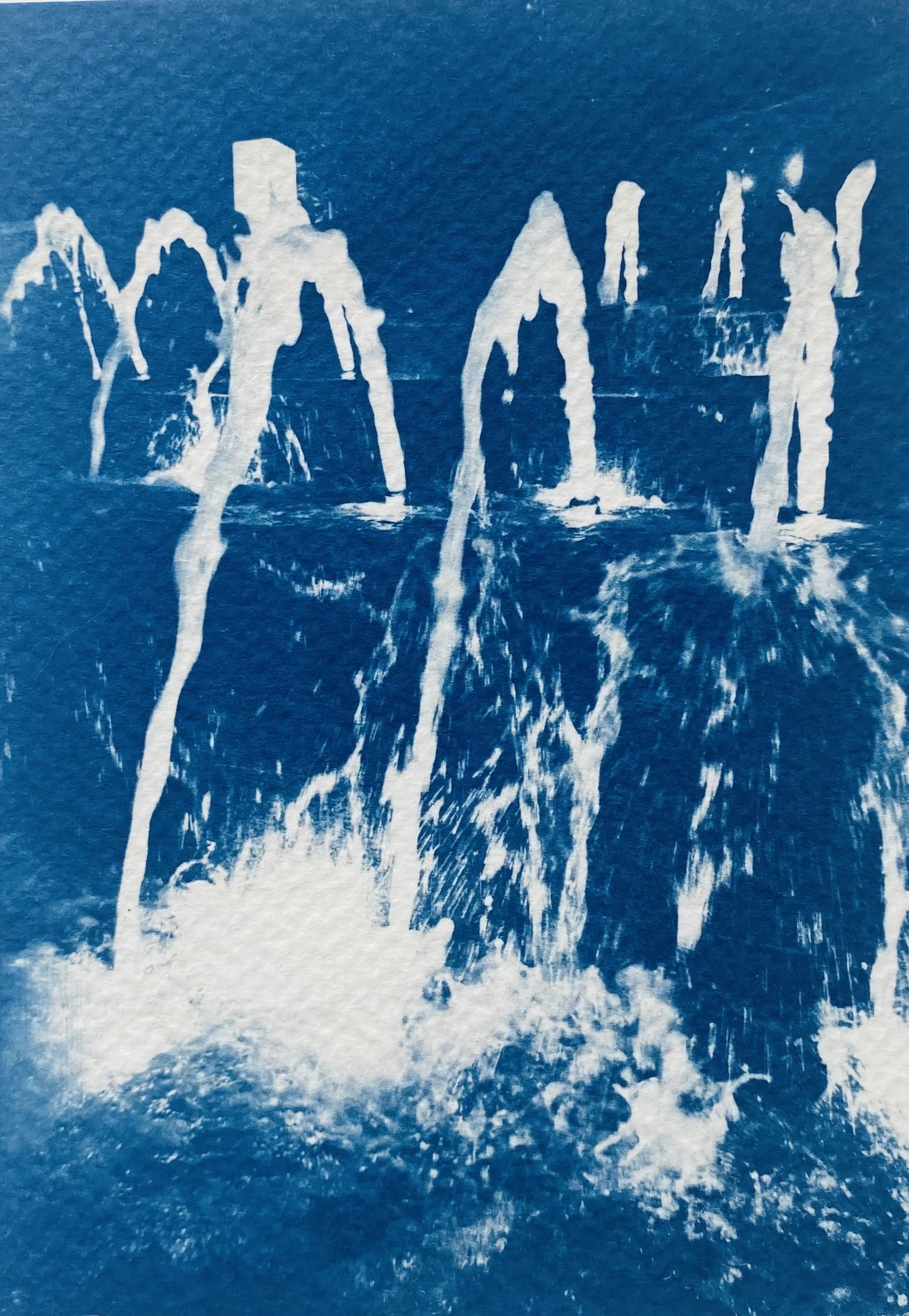
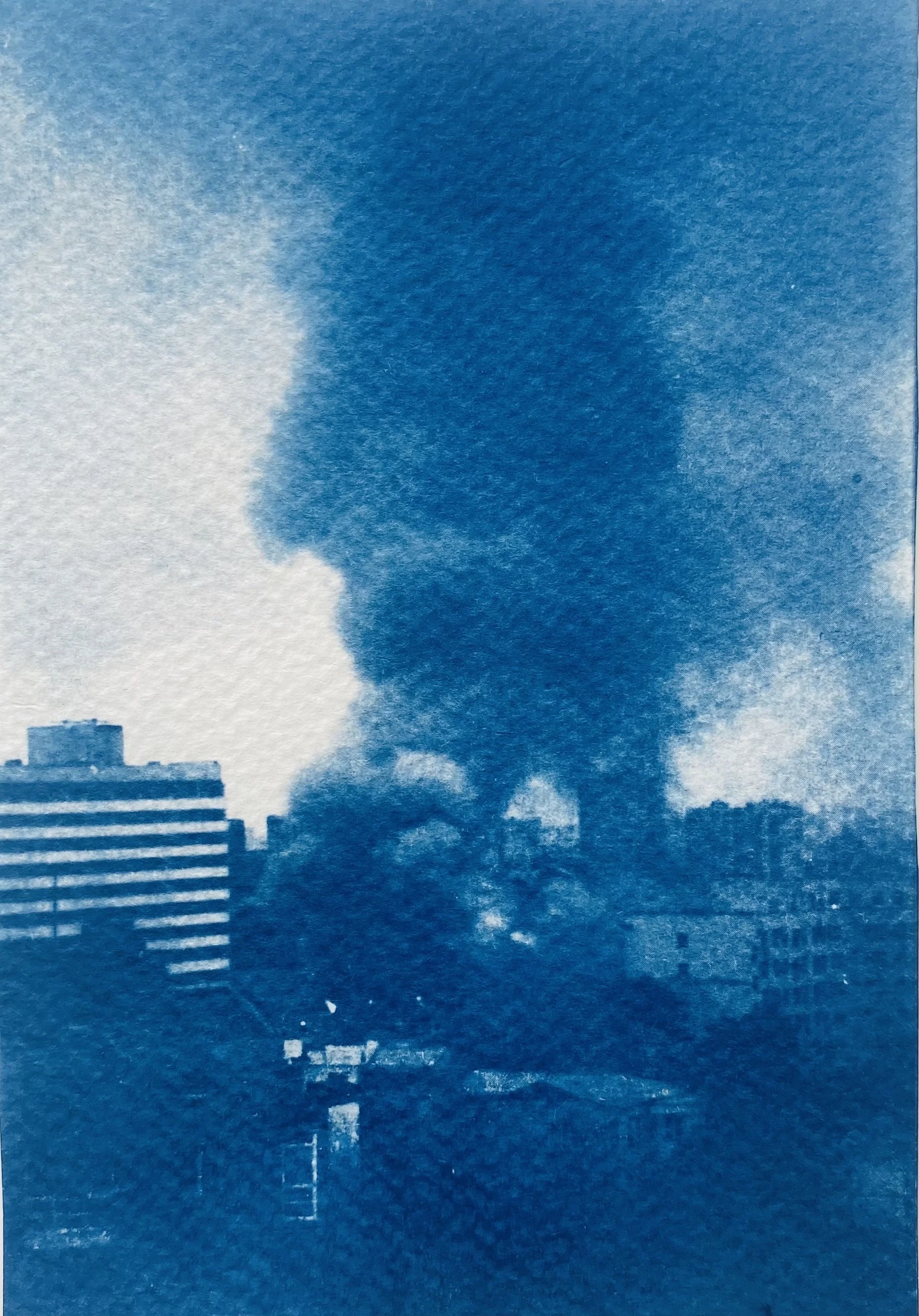
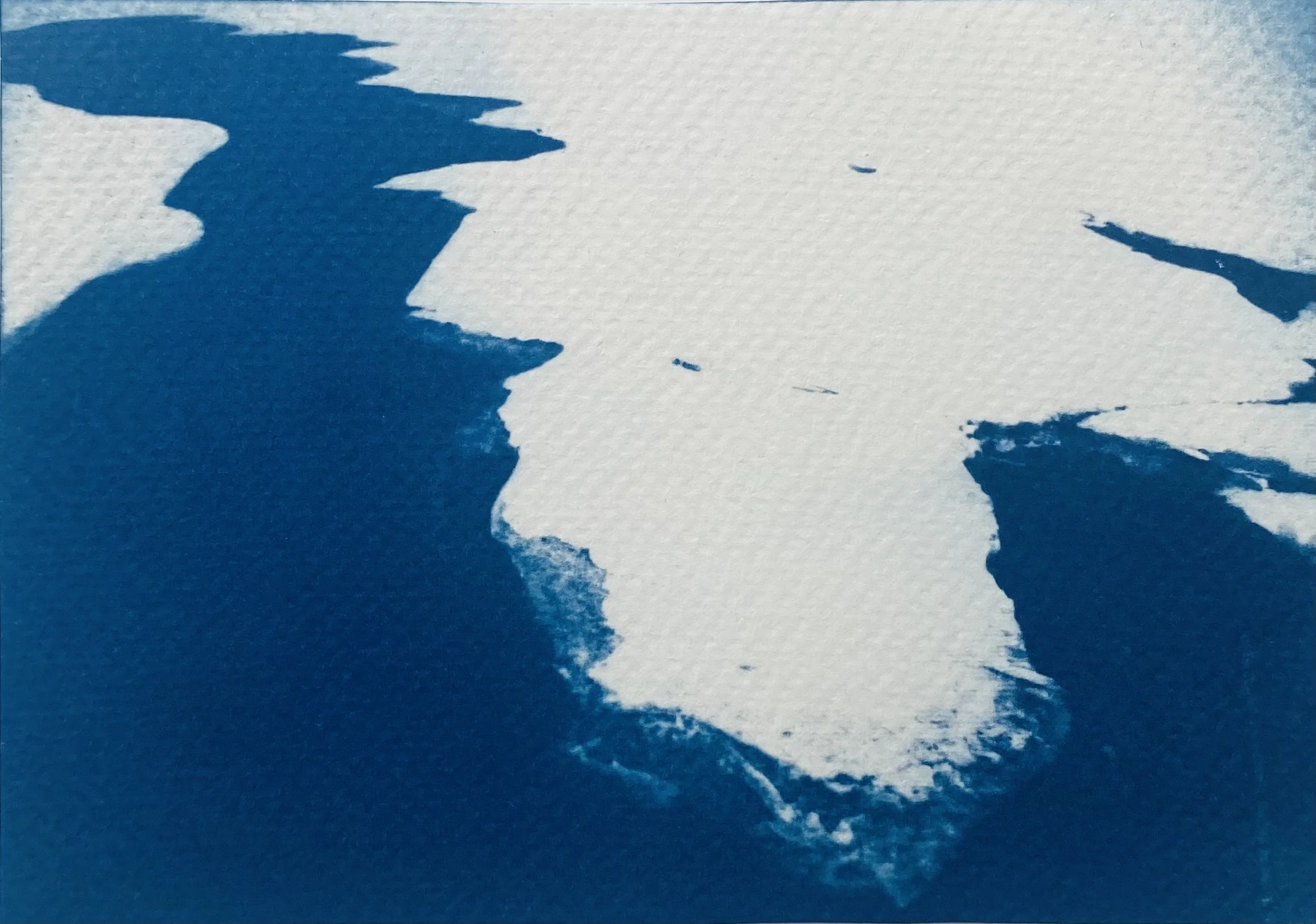
The juxtaposition between "idyllic views" and "unsettling scenes" creates a complex emotional landscape. Can you walk us through your process of selecting and pairing these contrasting images? What guided your decisions about which moments of beauty to preserve alongside which symbols of fracture?
These photographs document my routes and movements from the beginning of the war up until my own departure from Moscow. I was torn apart by the need to say goodbye to a city I loved deeply. The images printed on these postcards reflect an emotional duality, the experience of loving your country while being unable to ignore what it is doing. The scenes symbolically represent these shifts: the "Svoboda" ("Freedom") bar under renovation; police barricades, now part of the everyday landscape of Moscow, silencing any form of dissent. Solitary women whose partners have either left Russia to avoid fighting or have gone to war. Horses, the symbolic Troika-Rus, stand motionless in the Manege, frozen in place, like a country that has chosen a path with no future. An awkward line of children dancing recalls the “Dance of the Little Swans”, a symbol often associated with change in Russia. As many know, this ballet has been broadcast on television during moments of national crisis and historical tragedy. And there are many more layers of meaning embedded within these images. At the same time, I wanted to capture the beauty of Moscow, the city I loved and that will forever live in the memories of those who left. Memory, as we know, tends to idealise what has been lost. In this project, I aimed to show that while the city may appear unchanged on the surface, something essential within it has shifted. And it is impossible to look away.

Michael Behlen photographed water that would not stay still. For three years, he returned to Millerton Lake in California’s Central Valley, making all the photographs during storms, when the reservoir became harder to read. Picture Story