The 3-Part Formula Dotan Saguy Uses to Turn Street Chaos Into Strong PhotographS
oday, we uncover the layers of Dotan Saguy’s photography. We'd love to read your comments below about these insights and ideas behind the artist's work.
Street photography isn't about luck; it's about method.
Most photographers walk the streets hoping something interesting will happen in front of their camera. They come home with hundreds of random shots and maybe one keeper if they're lucky. But Dotan Saguy, who has spent decades documenting Venice Beach and teaching workshops worldwide, operates differently. He uses a systematic approach that turns street chaos into compelling photographs every single time.
This isn't another "feel the moment" photography article.
What you're about to learn is a practical three-part formula that Saguy has refined through years of shooting and teaching over 500 workshop students. His method breaks down every potential street photograph into three measurable elements: design, information, and moment. When you understand how these work together, you stop relying on chance and start creating photographs with intention.
Street photography has this romantic myth of being free from rules. What is your take on that?
A lot of things are going on right now in terms of what people think of street photography. There are people coming to it in the age of AI now. There are people coming to it from a long time ago who have the perspective from the 1960s, 70s, and 80s in terms of what street photography was at the time, which was really more like photojournalism and documentary. So there's a whole range of perceptions of what street photography is. I encounter this on a regular basis with my students at workshops, and different people have different perceptions of what's okay to do and what's not okay to do.
In my case, I believe that street photography is born from photojournalism and documentary, that whole genre. And as such, it inherits the same rules, which means that you shouldn't be altering the scene. It shouldn't be posed or staged. And it shouldn't be altered in post either in terms of removing anything from the scene in Photoshop or adding anything to the scene. So it should be purely describing what was there. Now, of course, there's some leeway in terms of cropping and toning the photograph and maybe altering the colors a little bit to make them look more pleasing or strengthening the contrast if it's black and white. Those are totally allowed, but they were allowed also in photojournalism and documentary, so it's consistent with that.
In terms of another aspect of the rules of street photography, a lot of people think they'll just go down the stairs to their street and start shooting to see if they find anything interesting. And I find that it's much more productive if you want to make great photographs consistently. It's much more productive to put a little more planning and methodology into it.
I’ve always thought street photography was an intuitive process of expressing oneself without rules. But do you have a system or guidelines that can improve the quality of your street photography, such as the number of keepers or the overall quality of the photos?
Yes, absolutely. It all depends on what your goals are. I think different people doing street photography have different goals, and one should be respectful of that. Some people simply love being in the street, no matter what they shoot or how well they shoot it. They just love the experience of being in the street and observing the street. For them, that's the most important thing, and maybe they're not that interested in taking the most beautiful photographs.
Other people are really about the gear. They love trying new cameras and experimenting with different lenses and geeking out on that with friends, and that's totally understandable. Yet other people love to go shoot together. It's like a hobby, an activity that they do together, and for them it's more of a social thing. It doesn't really matter how great the photographs are; they just enjoy their time together.
So I think all these are perfectly legitimate ways of doing street photography as long as it gives you pleasure, as long as it makes you happy. I think that's the main point. Now, for those who want to have consistently better results in terms of the quality of the photographs, which is my case, when I really got serious about this, I had some expectations about the quality of the work I wanted to produce and the consistency with which I wanted to produce it. So in that case, yes, I do absolutely have a set of guidelines, but more than that, I have a method that I teach in my workshops, which is all about that. It's all about giving you the ability to make great photographs in a more consistent fashion. That's really the goal.
So for that, I have two different aspects of this methodology. One is really centered around finding the right scene and finding the right subjects. And the other one is more about when you're in the street and you're not sure what to photograph. Like what is actually interesting? What should I focus on, no pun intended, with my camera?
There are two main ways of going about this typically, and that's the strategy to find a scene. One is to find someone, basically a character that you find interesting, and follow them. Following them could mean many different things. It could mean following them without them seeing you. It could be approaching them and asking for permission to follow them and documenting their experience in the street in a candid way. So that's the first scenario: to follow somebody that you find interesting, which I would call a character.
The second one is to find a scene that's really interesting. It could be a mural, it could be just a setup in the street where there are different people that you find make a nice background, but there's not necessarily a subject yet, and you wait for the subject to enter the scene. So this is called fishing because you're like fishing; you're waiting for the fish to come through the pond. But you've got your pond identified, you've got your framing, and you're just waiting for that subject or that character to walk into the frame to complete the photograph.
So those are the two main ways that I typically find a subject. Then there's a whole other part of this methodology, which is about figuring out how to actually approach the scene for the best photograph possible. So it's about how to actually work that scene and how to also make sure that it's a good enough scene for a photograph that is worth your time working on.
When I'm judging whether a photograph is worth working on or not, I personally look for whether I can get the right design. First of all, design is the first element. Can I get the right light? Can I get the right framing? Is my subject clear enough in the photograph? Can I make the subject clear enough? Can I make the subject pop over the background enough? All these design elements that go into making the photograph: are they feasible? Are they possible? So that's the first question I'm asking myself.
Second is whether I can represent the information of what's happening in a way that's clear enough for the viewer to understand what's happening in the scene or to make a story about what's happening in the scene. So it can't be too confusing, and there have to be enough clues in the photograph, or in the potential photograph, for the future viewer to latch onto. Again, design was the first element. Information: can I make this clear enough for a viewer to understand?
And then the third one, which is the cherry on top of the cake, is: is there a moment, or will there be a moment? Is it likely that there will be an interesting, strong moment to capture on top of the design and the information? So those are the things I'm looking for when I'm making a photograph and when I'm judging whether a scene has the potential for a great photograph.
Can we discuss or show me examples of each element, perhaps from your photos, especially the one with a strong design, information, or moment?
So here, the elements of design: first of all, I've got a bit of a composition thing where I have two subjects on either end of the photo that are creating some tension. One of them is almost at the third; that's the man making this bubble. And the other one is a child entering who was about to pop the bubble.
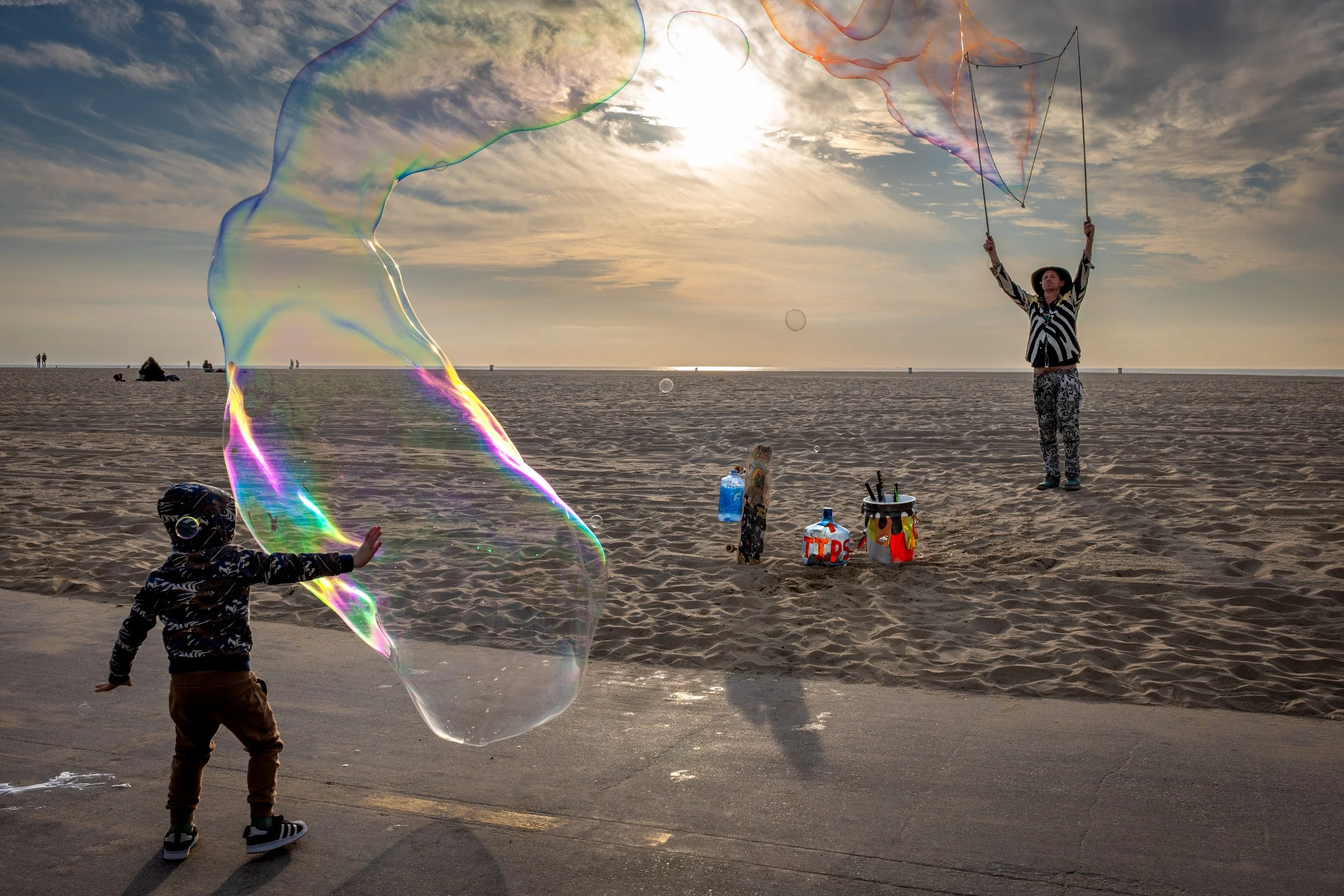
There's a strong element of design sense. I carefully placed all the elements, and I also was going for a very simple color scheme where the buckets with the soap liquid are in those very colorful buckets, so it's easy to see them. The bubble also had very interesting color hues that were reflecting the sun. So there were quite a few elements of design that I approached this with, and I positioned myself in a way where I could separate everything. So if you can see here, the bubble is not overlapping with the buckets.
Everything is clearly laid out for the viewer to read. And so that's where the design meets the information. I designed this in a way that was pleasant, but also in a way where the information is easily understandable. You can easily understand that there is someone making a bubble, and you can see the bubble going all the way through the frame. And you can see the child, who's also a very clear silhouette, about to pop the bubble. You can see the hand very clearly.
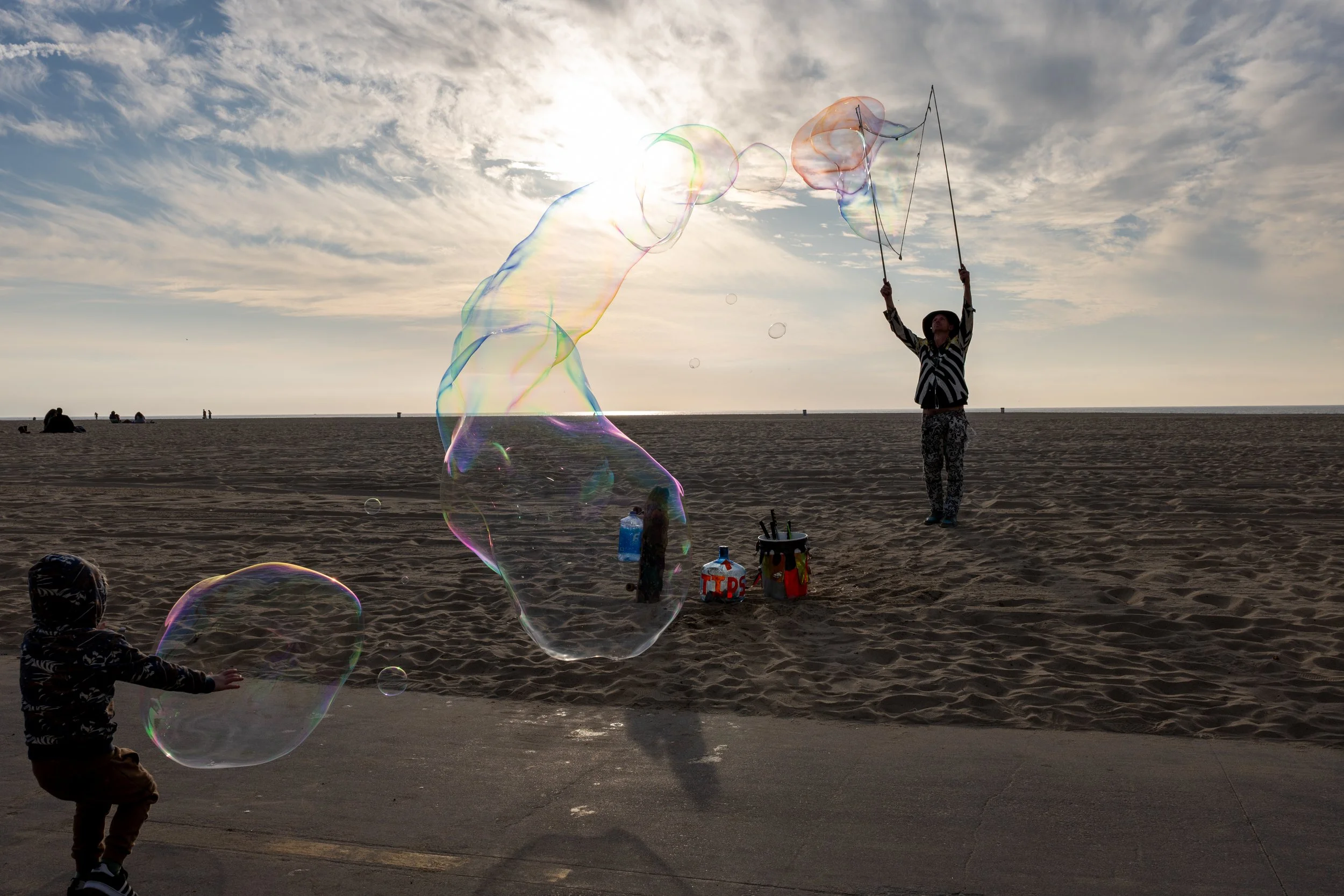
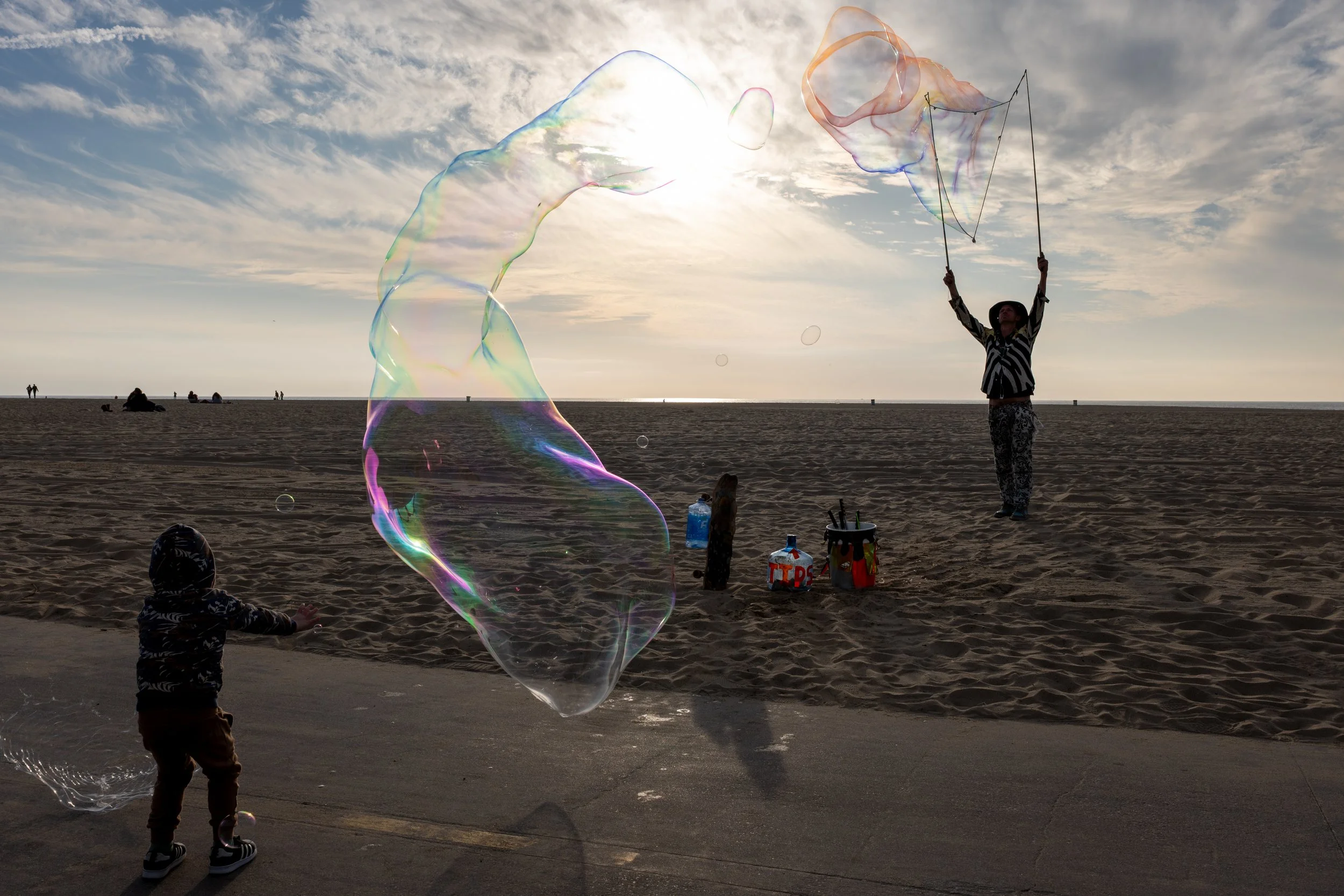
I had other versions of this where the silhouette of the child was not as clear to the eye. Maybe his arm was alongside his body, so it was a little bit harder to read his body. So essentially, it's also about when I take the photo, but also when I choose the photo in my editing. I really go for easy-to-read information where the viewer can very easily interpret the frame.
And then on top of the design and this information that's very clear, we have a moment where the hand is about to pop the bubble. This is a very strong moment; there's strong tension in that moment. Half a second later, the bubble was popped, so there was no more moment. And right before, his hand was not quite on the bubble yet. So we're really at a peak moment. And it's the intersection of those three things, the design, the information, and the moment, that makes this photo work.
Perfect, let’s take a look at another one.
So in this case, this was a fishing experiment, based on what I was saying earlier. You can either find your character and follow them, or you can find a pond or scene or background that you like and just fish. So you're more or less in the same spot, and you're trying different things as your characters enter the scene or move around the scene.
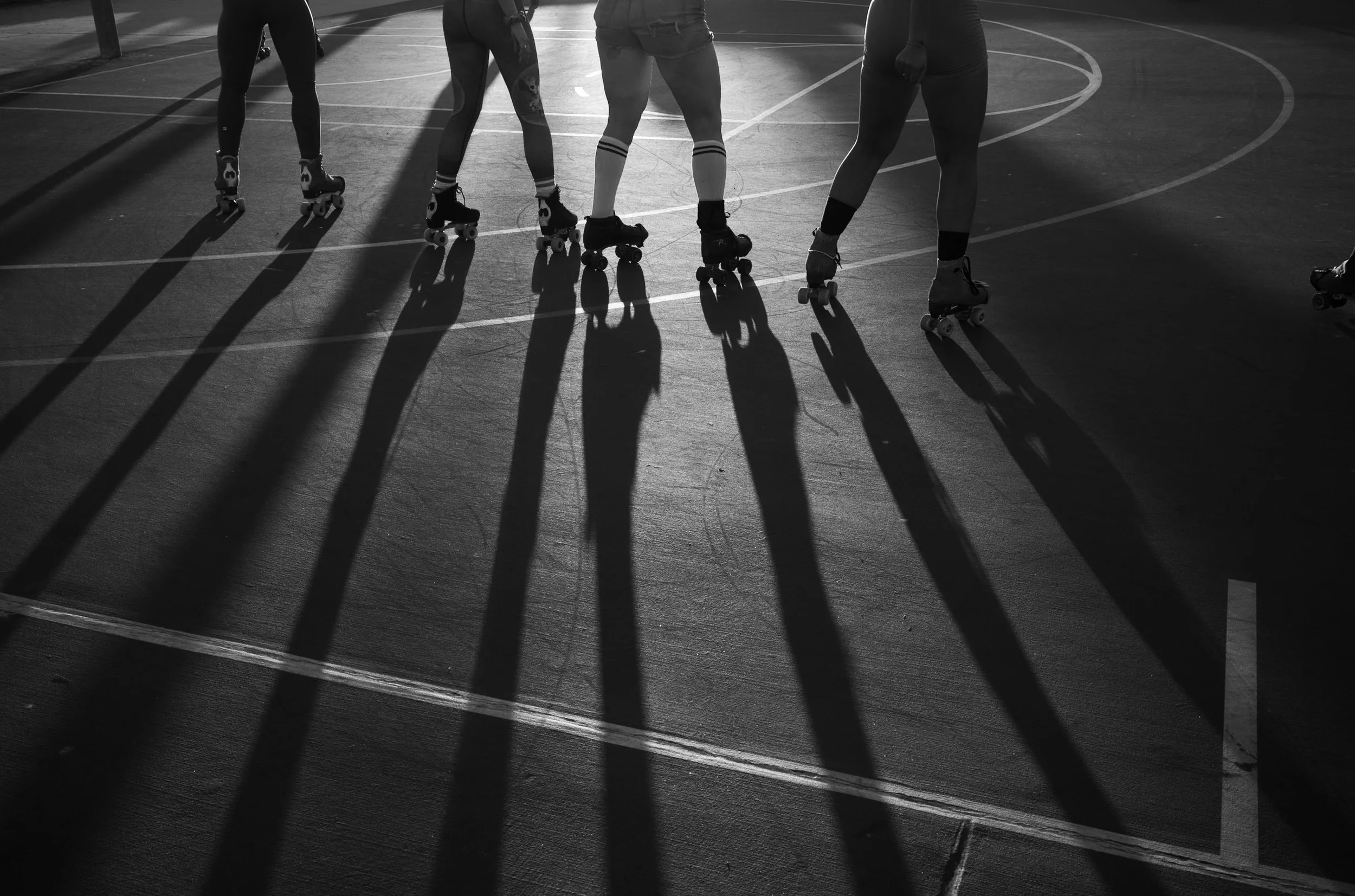
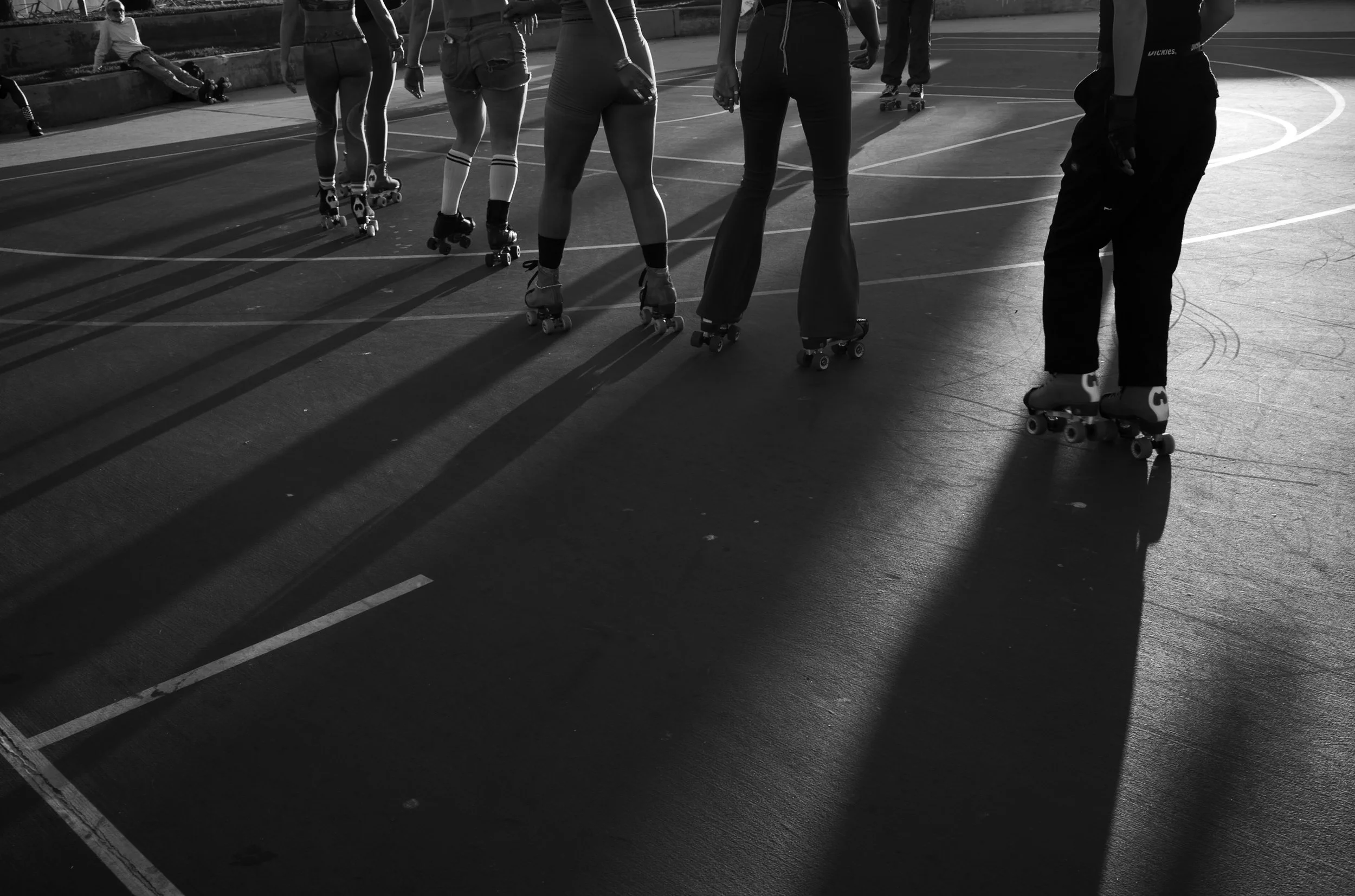
So in this case, this was the roller skating rink, which actually was a basketball court being used for roller skating that day. And I liked the light coming from behind them. So I was trying to play with that light. My idea was to play with that light and not necessarily have a photo of a whole person, but to just have the shadows and the feet and make it into something a little more poetic in terms of my composition, my design.
I tried different approaches, and there's one that I really liked. It's a composition where everything remains detached, and you can see the long shadows. There's enough information to know this is about roller skating, but it's not what I'd call deadpan. It's not so obvious that it becomes boring. There's a nice design to it, with enough information for viewers to understand the picture.
There's also a bit of a moment. What makes the moment is that everything is detached. It's order in the chaos at that particular second, because even the roller skater in the back is still separated, positioned right between the four in the front.
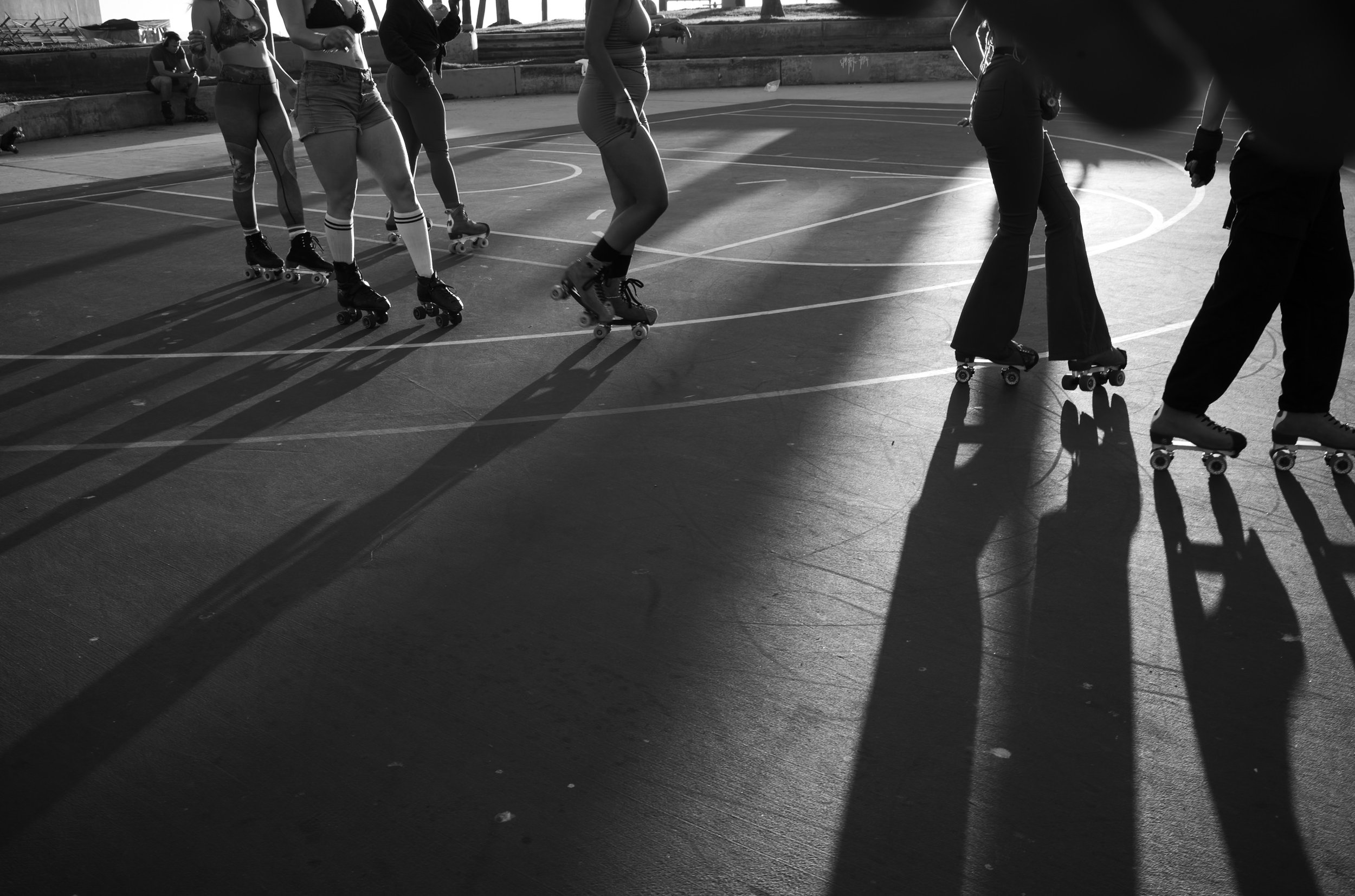
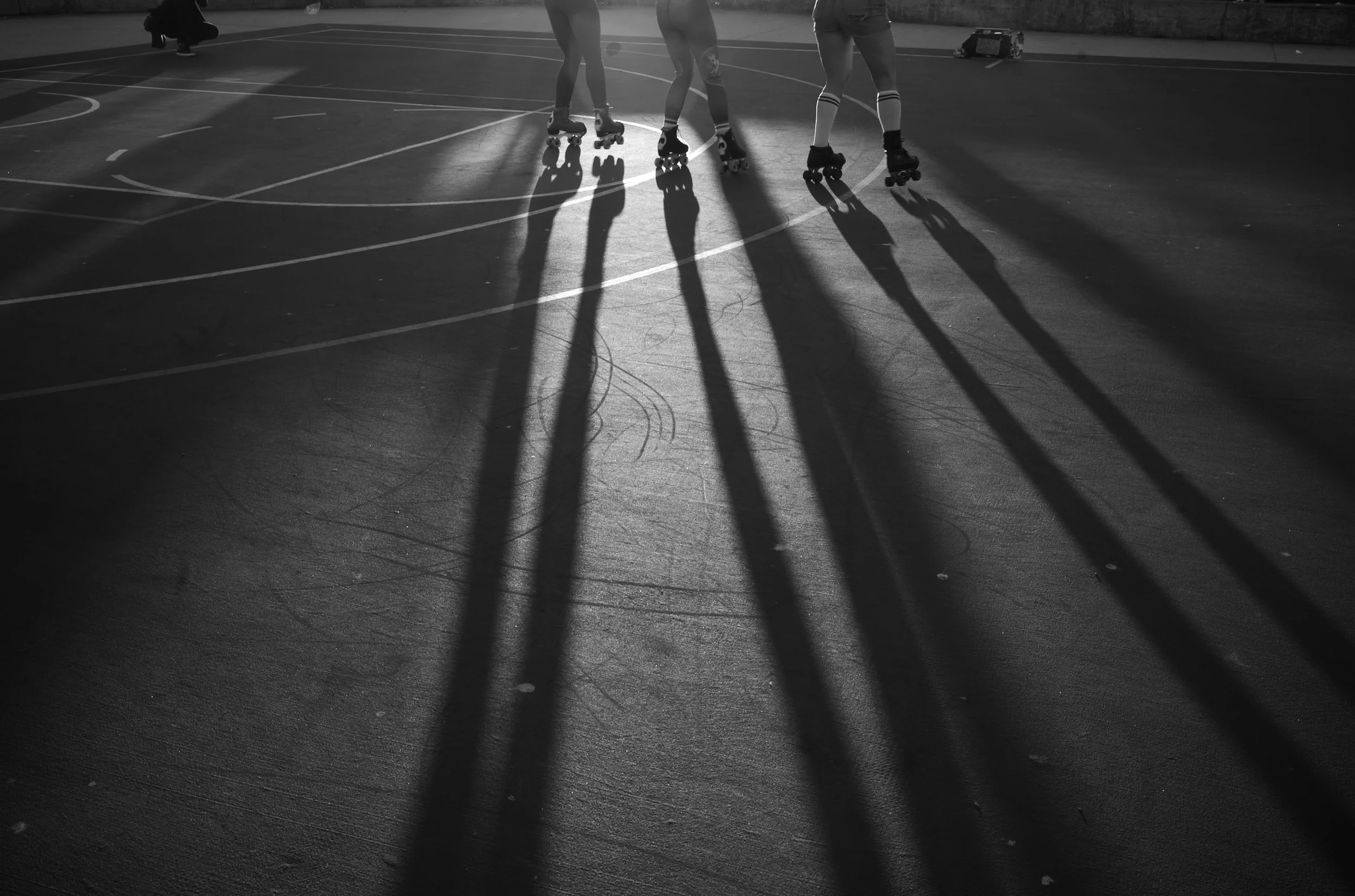
That was my concept, and I kept shooting, trying different approaches from the same spot. Then I suddenly realized the sun was setting, and I could work with silhouettes. I noticed this character with long hair, tossing it as she roller skated.
I started working on that, but quickly realized you couldn't see the roller skates clearly enough. It was also very difficult to separate people from the palm trees. There was constant overlap, making it hard to clean up the scene. I kept shooting and slightly adjusted my position, moving my camera lower and repositioning to detach the silhouettes from the palm trees. I also waited for people to move into positions where they were separated from the trees. That became the game I was playing.
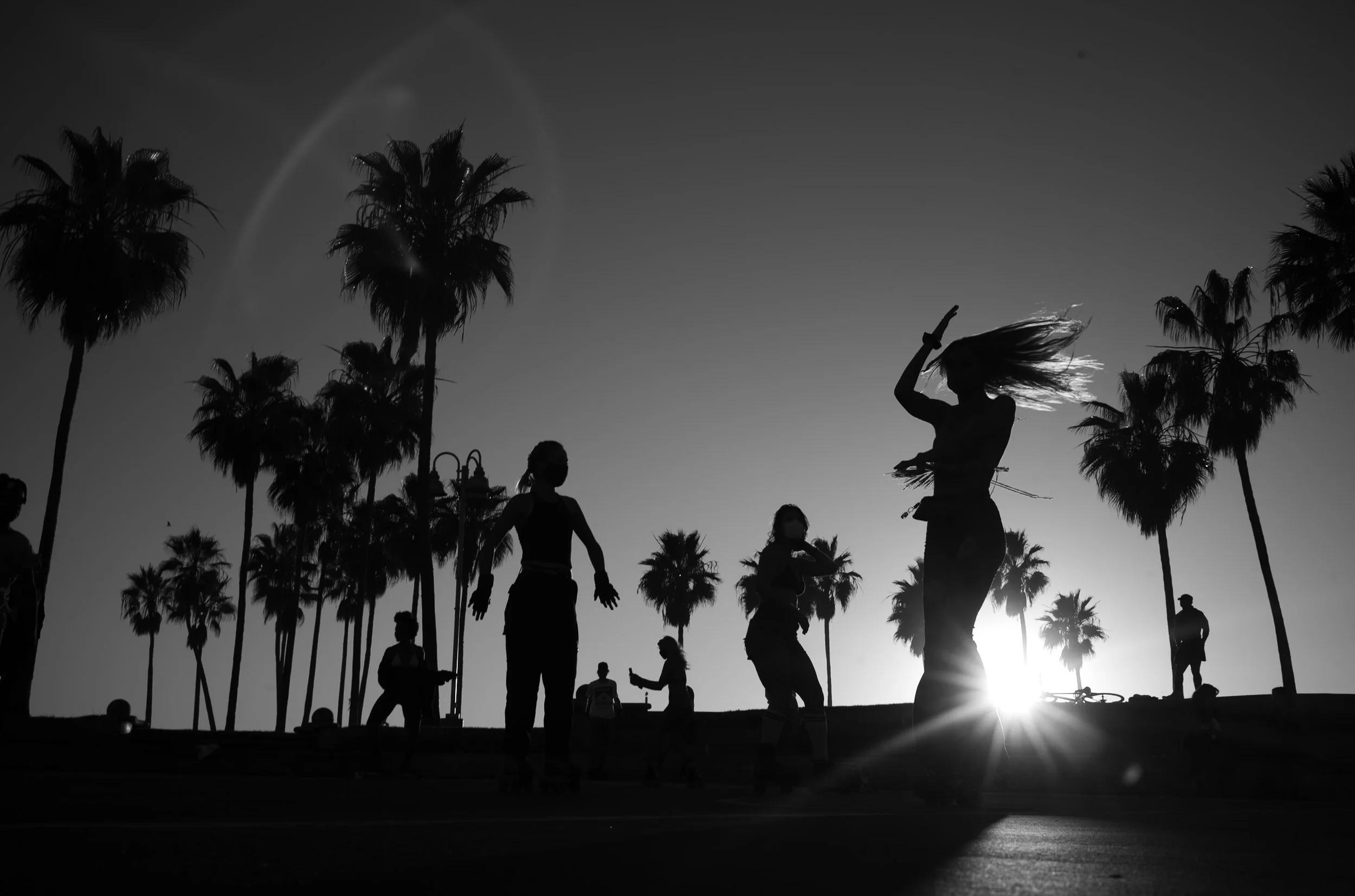
What I was aiming for was a strong moment with one skater, juxtaposed with moments from the other skaters behind them. This was a really good attempt, but there's something odd happening here. I don't love that there's something, maybe a belt or accessory, that appears to connect into the palm tree. And she's also slightly overlapping the palm tree, so it's not completely detached.
I do like the fingers in the air and the hair toss, but it's not fully there. I kept going, and then this photo came out the cleanest. Now the belt is separated from the palm tree, and there's a counter moment with the hand here while she has her hand in the air. The hair is tossed, and she's much better detached from the palm tree. There's even a third person in the background, this guy over the hill. That one worked much better for me than the other attempts.
Then I cropped it slightly to make it even cleaner. That was the one that stuck. This is the uncropped version, the completely uncropped version. There are different ways I could have cropped it, and I could have left it as is. I think it still works this way, but I preferred it cropped a bit tighter.
I kept shooting though. Just because I thought I got it didn't mean I was finished. As long as that character was there with the hair toss and everything, I was going to keep shooting. I think after that she must have left, because I stopped the scene. Maybe the song ended and she went off to do something else.
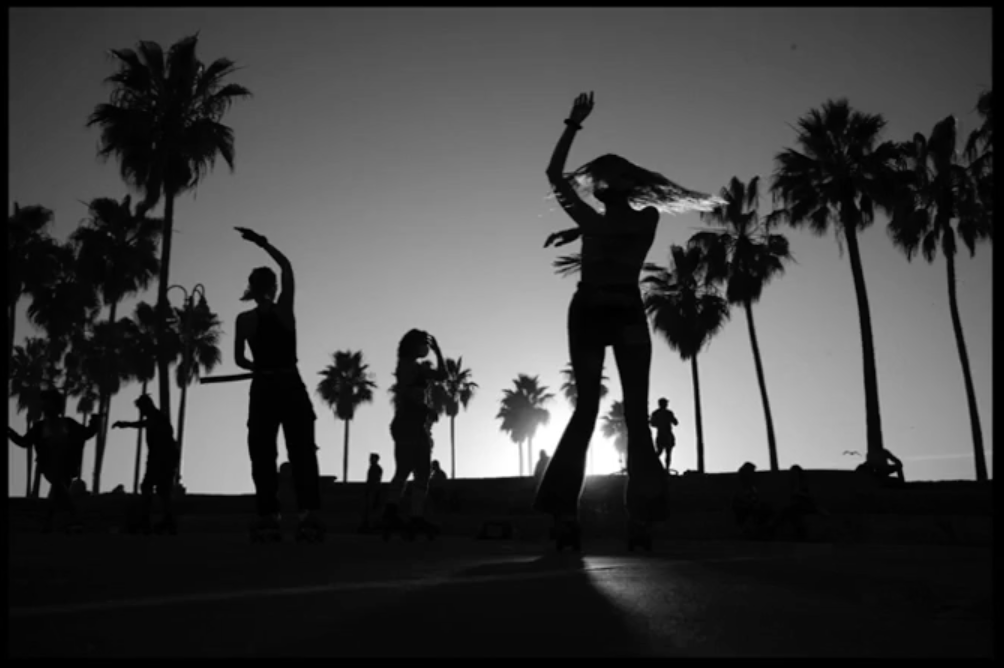
But I ended up with one that I really liked, which was this one. The reason it works is that the design, the information, and the moment all come together. In this case, there are a couple of juxtaposed moments happening simultaneously.
Do you see these elements as a checklist or more like a balance that shifts depending on the picture? I don't know if we already maybe talked about it.
I would say yes, it's a checklist, but not in the sense that I'm standing there with a notepad checking things off as I go. These three elements (design, information, and moment) are embedded in my subconscious when I shoot at this point. It's like learning to drive. In the beginning, you have to consciously think about putting on the blinker and checking your rearview mirror, but the more you practice, the more it becomes second nature.
At this point, it's second nature for me. I'm no longer consciously thinking "put on the blinker, check the mirror." I just know where to place myself because I'm looking for the right design and thinking about whether the information is clear, so I need to move slightly this way or that. All these things happen automatically in my head. But when I teach them to people, we make them much more explicit, and students go through them almost out loud as they learn to take them into account.
This checklist isn't just for working the scene. I use it multiple times in my workflow. Design, information, and moment are crucial because they help me with three things.
First, it helps me assess a scene and decide whether to work it. When I encounter a scene, I use this checklist to determine if it's worth staying and shooting. It's a yes or no decision: whether to invest time in the scene or move on to the next one.
Second, once I've decided yes, I'm going to spend time working this scene, the same criteria guide me in shooting and working it. They tell me where I need to position myself, whether the camera needs to shoot up or down, and what settings to use. Should I use an aperture of f/2.8 or f/8? How much of the scene do I want sharp versus blurry? What shutter speed? Design, information, and moment dictate many of the technical decisions and approaches I take with the scene.
Finally, the third time this framework appears in my workflow is during editing. Once I'm back at my computer and I've uploaded the pictures, I need to decide which image is the strongest. Again, I use it as a filter, a criterion for choosing the strongest image in an objective way. We're often not objective when looking at our own work, so it really helps to have this design, information, and moment filter to decide objectively which image is best.
Those are the three times in my workflow that I use this checklist.
Is there a hierarchy? Like one of the three is non-negotiable or can be a strong photograph sometimes just by itself?
Some people prefer photographs that focus solely on design, lacking much context, narrative, or emotional impact. For instance, the famous black and white photograph of a pepper showcases its beautifully toned design, but it doesn't convey any additional information or evoke a particular moment. This type of photograph is purely about the visual elements.
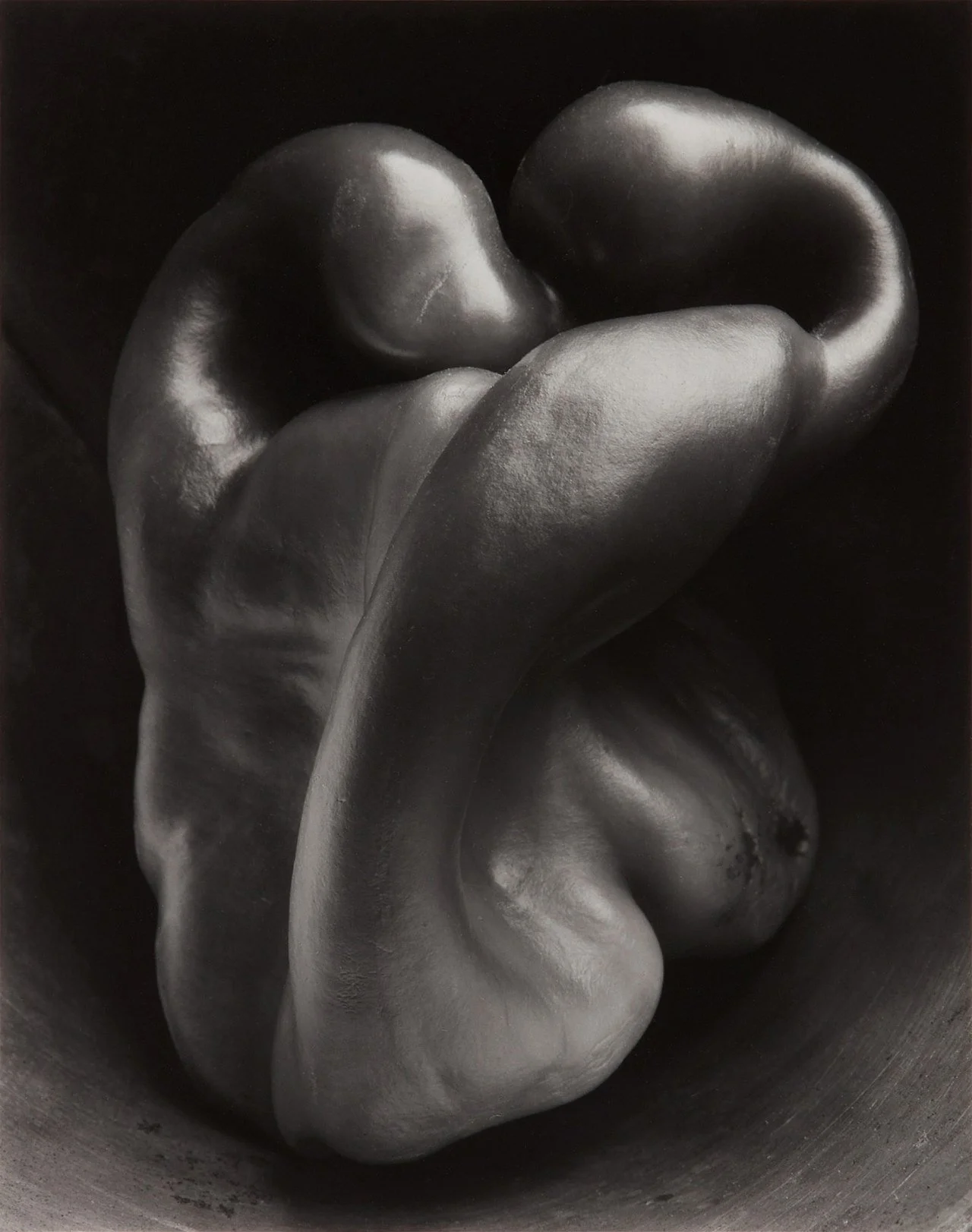
Pepper No. 30 by Edward Weston
It's possible to make photographs that are just about design. I personally feel like for street photographs, the strongest ones are the ones that are beautiful to look at, where you can make a story for yourself. Everybody can make their own story of what's happening in the picture. And on top of that, there's a strong moment that really makes the picture exciting. So for me, it's best when there's all three.
You could argue there could be only design, or there could be only design and information with maybe no moment. That would still be an interesting picture. So it's not like there's no picture if all three aren't there. You can make pictures with just design. The question you have to ask yourself, and I think it's a personal preference thing, is what are you satisfied with? What makes you happy? What kind of pictures make you happy? What do you personally gravitate towards? When I looked at images before I was making my own images, when I looked at photographers I loved and their work, the pictures that spoke to me the most were the pictures that had all three of these things.
What is your advice for photographers starting out? How can they train themselves to recognise design information and moment while shooting?
When starting out, remember all these things as you do them, not just subconsciously. Think about them and ask yourself if the design works, if the information is clear, and if there's a potential moment. If not, consider whether it's worth spending the time.
When I teach workshops and accompany people on shoots, we discuss these things as we encounter challenges. This helps solidify their understanding. The more they repeat this process, the more it becomes second nature.
Martin: Thank you very much for sharing your system with me and with the readers.
Dotan: You’re welcome! I’m glad you found it helpful.
More photography books and interviews?
We'd love to read your comments below, sharing your thoughts and insights on the artist's work. Looking forward to welcoming you back for our next [book spotlight]. See you then!
Wesley Verhoeve photographs first and finds the story later. His Notice books began with learning to slow down during lockdown in Vancouver. Photography Book Spotlight