What Happens When You Photograph Climate Change Using the Thing That’s Disappearing? Tristan Duke Explains Glacial Optics
Welcome to this edition of [book spotlight]. Today, we uncover the layers of ',Glacial Optics' by Tristan Duke (published by Radius Books). We'd love to read your comments below about these insights and ideas behind the artist's work.
What happens when climate change becomes the camera lens itself?
Instead of photographing climate change in a traditional way, he uses melting glacier ice as the actual camera lens. The project connects photography, process, and climate reality in a very physical and direct way.
Tristan Duke is not trying to make perfect or beautiful climate images.
He is trying to slow people down and make them curious about what they are really looking at. In this interview, he explains how ice lenses work, why uncertainty and blur are important, and why process cannot be separated from meaning. He also talks about working in the Arctic, photographing wildfires, and carrying heavy analog equipment into extreme places. This interview shows how Glacial Optics turns photography into a way of bearing witness, not just recording evidence.
The Book
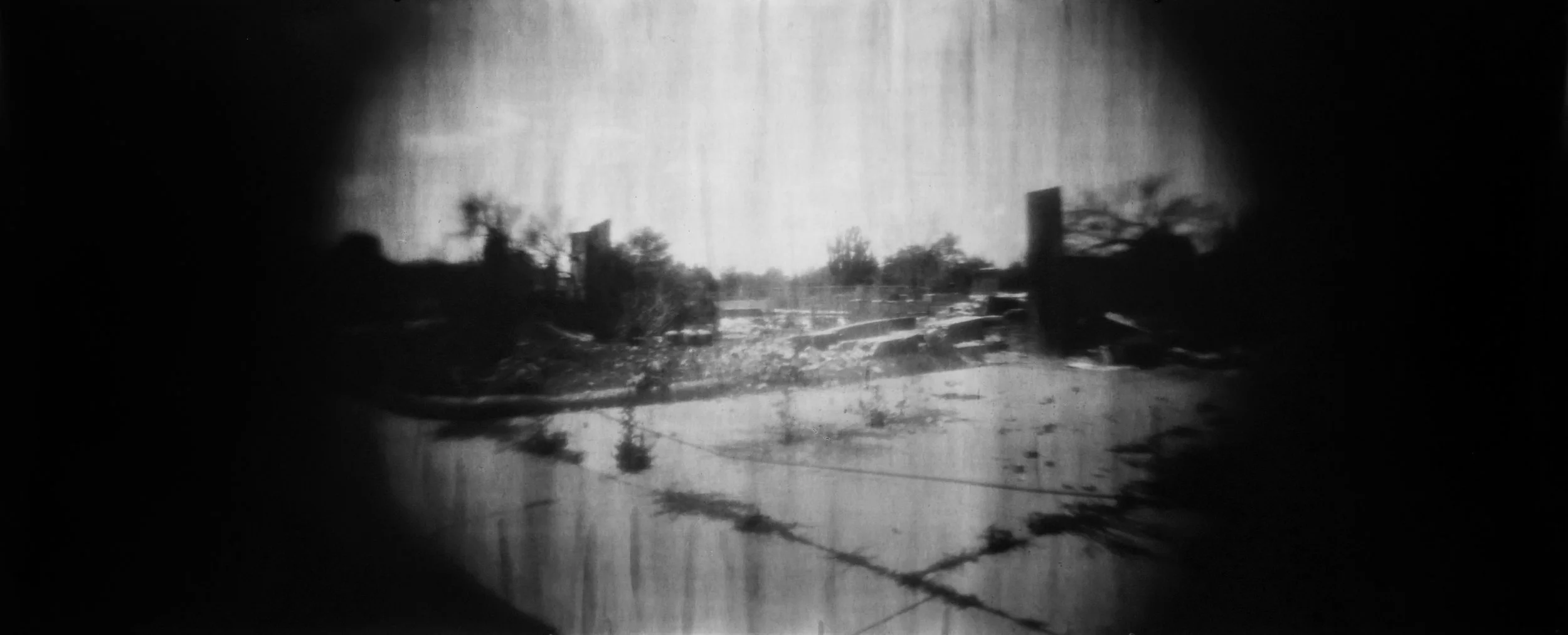
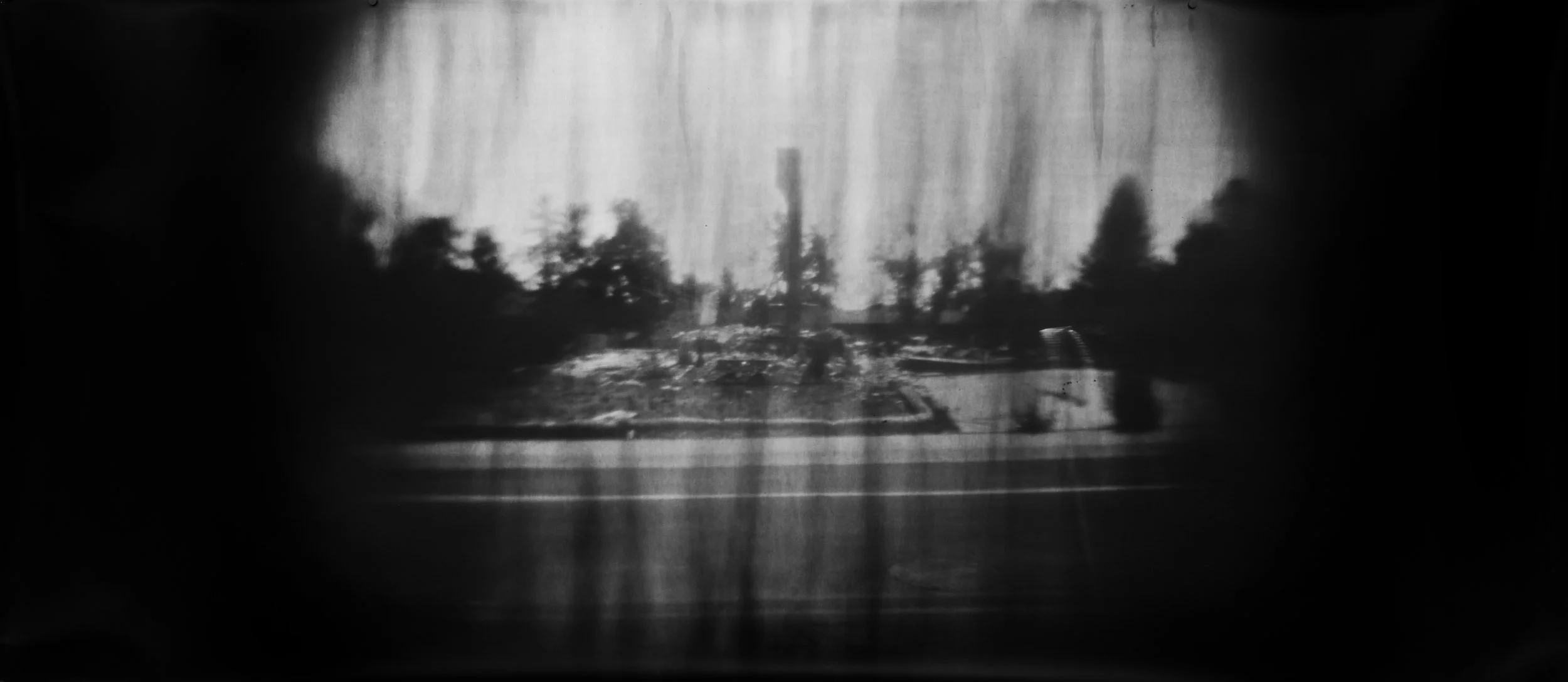
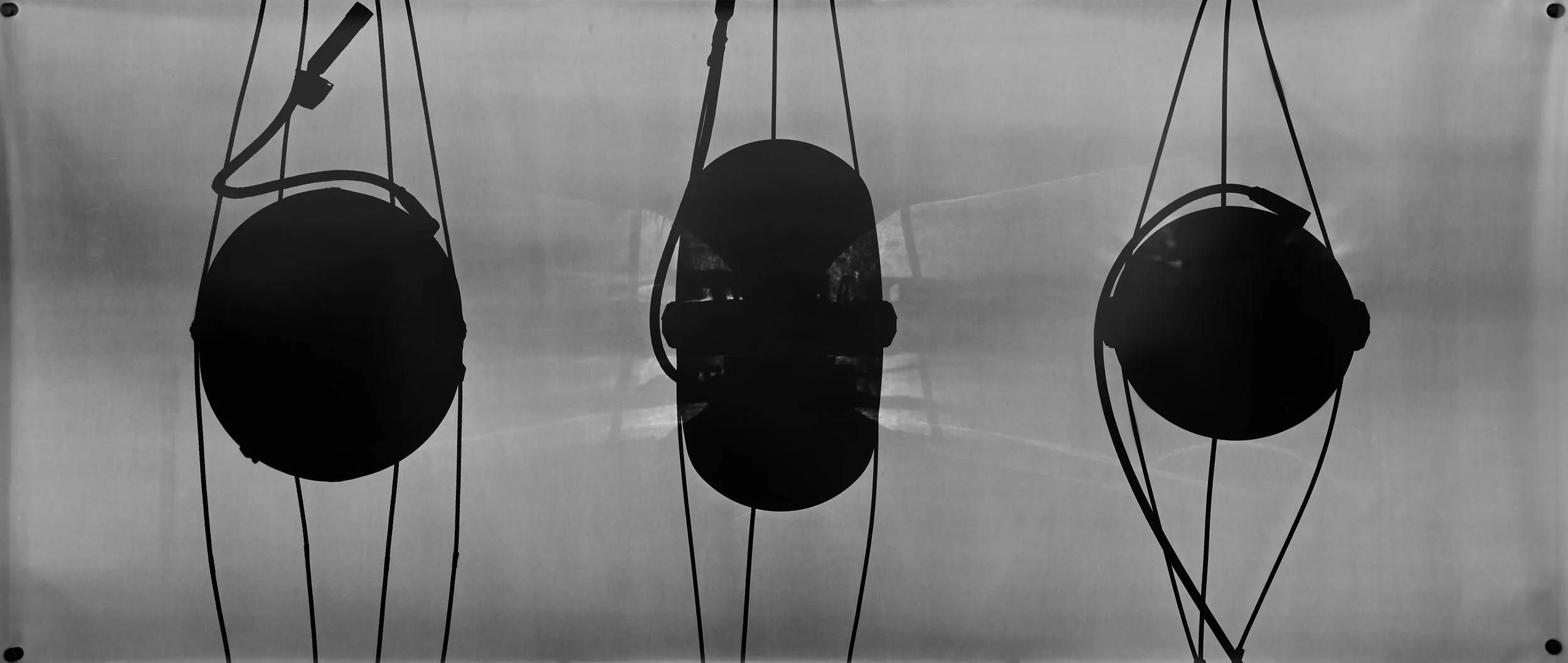
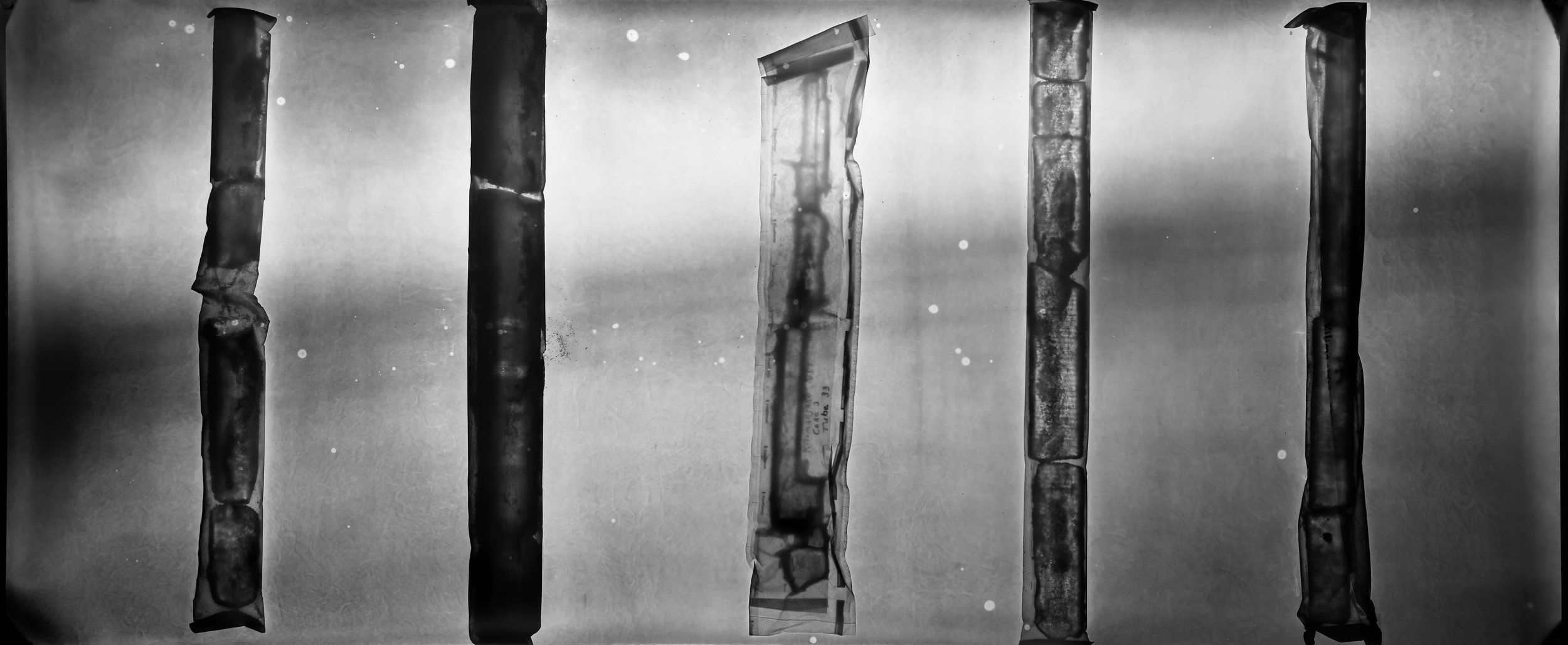
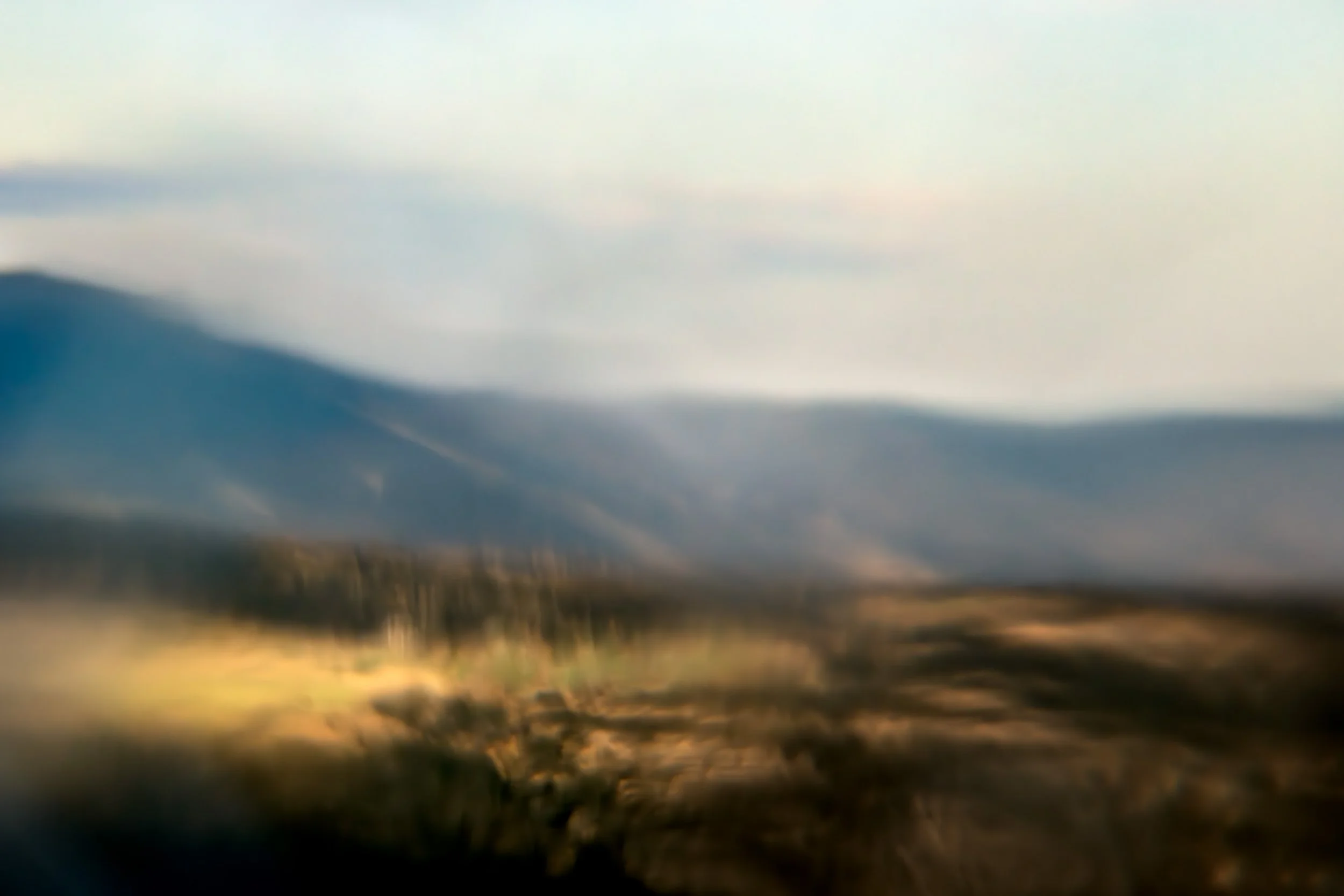
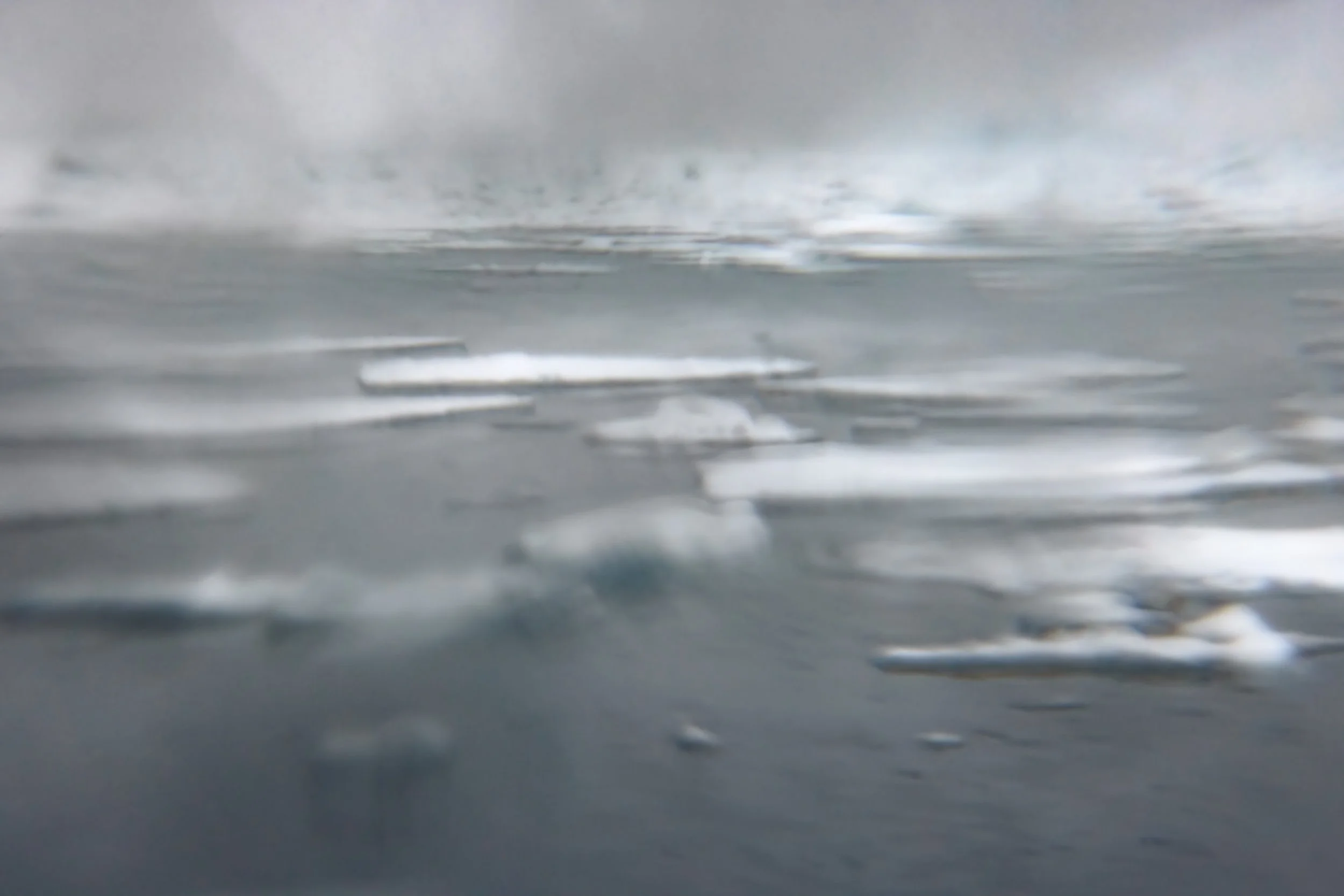
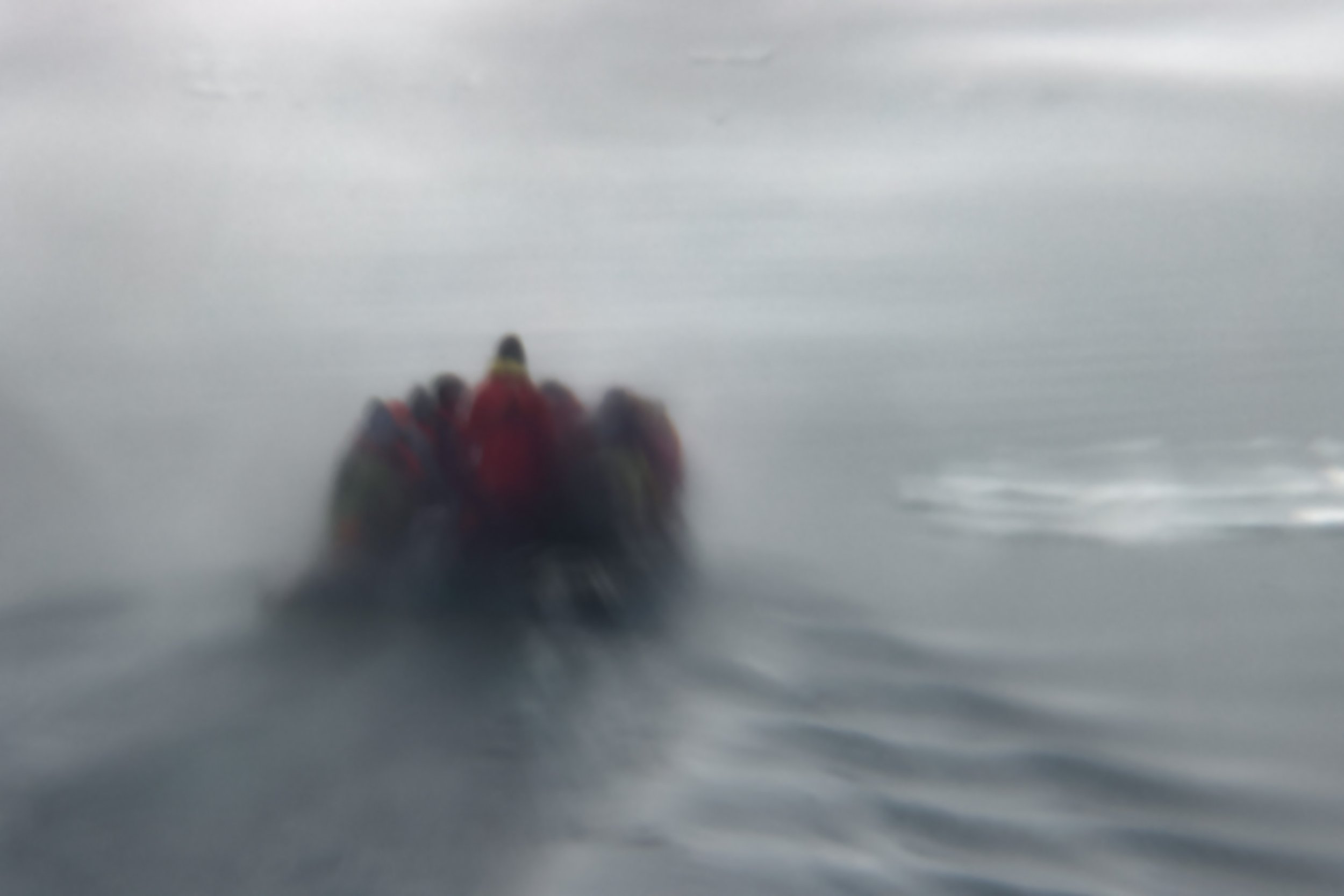
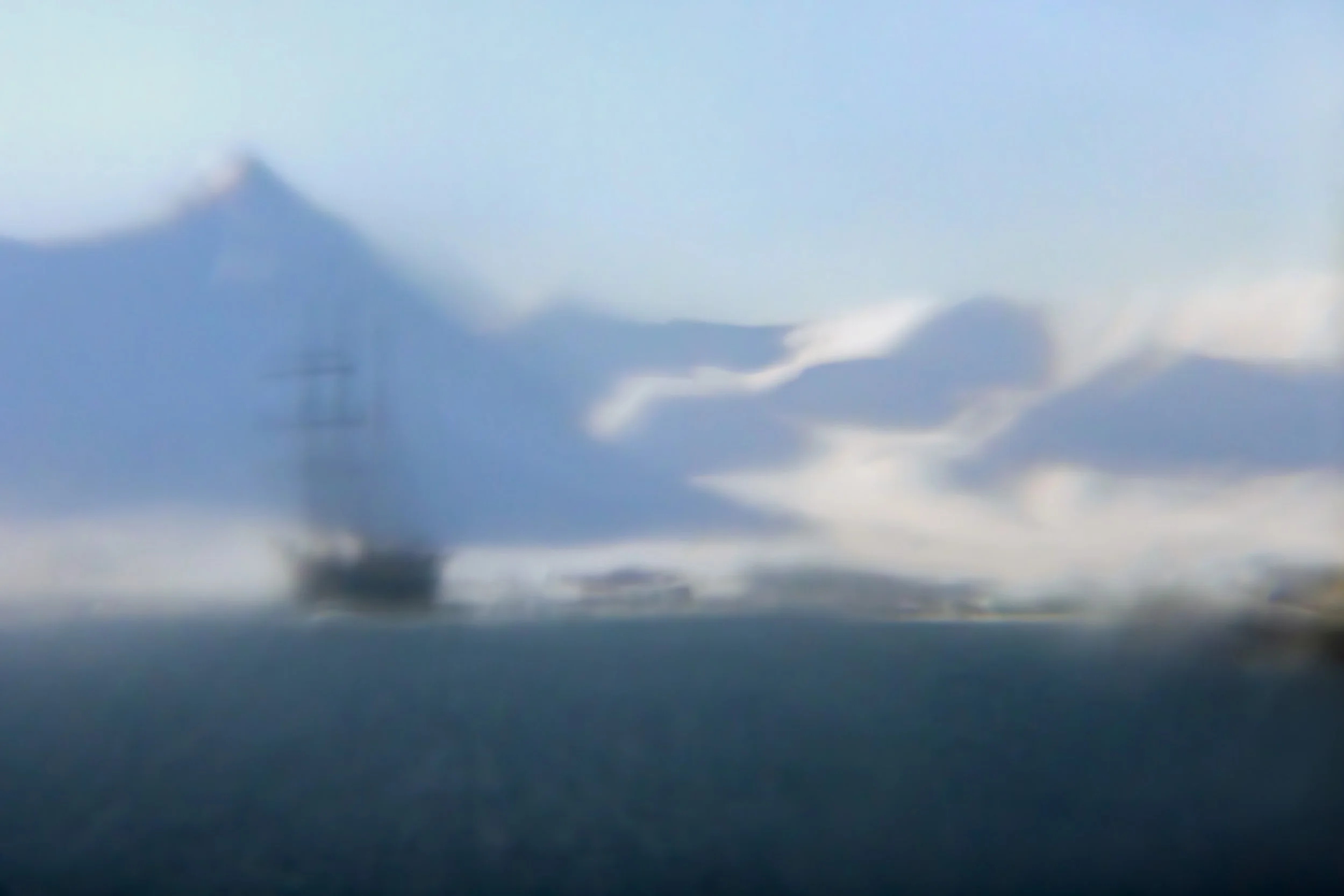
Glacial Optics is a photography book by Tristan Duke that explores climate change through experimental photographic processes. Instead of using traditional glass lenses, Duke photographs glaciers and wildfire landscapes with lenses made from melting glacier ice. The images are shaped by time, temperature, and instability, making the process part of the meaning.
The book brings together large-scale analog photographs, digital works, and process-based experiments made in the Arctic, in the American West, and inside scientific research facilities. Glacial Optics is not only about what is photographed, but how and why it is photographed, turning photography into a physical act of witnessing a changing climate. (Amazon, Radius Books)
How did you first get into photography and what made you interested in it?
My first exposure to photography was actually in high school. We had a pretty nice dark room set up, which was unusual for a high school, and I had some experience there. But I wasn't really deeply into photography until college.
A lot of my interest is in light and perception, specifically the way that we see the world and how we make meaning through the visual process. The camera ends up being a very useful tool for exploring both of those things. Light, and the perceiving mind. In a way, the camera becomes like a model of the viewer.
When did it flip from being a hobby into a major part of what you're doing, not just something you do on vacation?
I've never really been the kind of photographer who takes vacation pictures, actually. A lot of my work is very experimental. Much of what drives me is getting deeper into the process. I'm often building my own cameras, coating my own emulsions, or mixing my own chemistries in different ways.
From the very beginning, I've always wanted to dig deeper into the process. A lot of that has to do with this spirit of invention that's part of my creative practice. I really like to see what kind of new perspectives I can invent and what kind of new ways of understanding might emerge from creating different tools for seeing and understanding the world.
You already mentioned building your own cameras, but you also work with holograms, right? When did you start making your own tools instead of just using normal cameras?
The Kodak slogan from the 19th century for the Brownie was "you press the button, we do the rest." I've never been interested in just pressing the button. I always wanted to go deeper. Even in high school, I started making pinhole cameras. The optics and the mechanics of how the camera works, the way that light moves, that's always been my primary interest in photography.
Holography was a natural extension of that interest because once you start looking into holography, it requires an understanding of the wave dynamics of light. Holography uses essentially the same film as photography, just a higher resolution film, but it's recording the image using wave interference. It's an interference image. That fascinated me, delving deeper into the wave properties of light.
But it also triggered a lot of thinking about the structure of how an image is recorded, how an image is encoded on the surface. It's really fascinating that holography uses essentially the same film we use in photography, but it's able to record a three-dimensional image just because of the way the image is encoded on the surface. It's an interference pattern versus a lens-focused image. That really prompted me to think more structurally about how an image is made.
What made you interested in glaciers and climate change?
This project, Glacial Optics, really emerged out of a sense of climate urgency around the climate crisis. I think that in our lifetimes, we are witnessing a historic transition where the climate crisis is something we're seeing in our everyday lives. More and more, this is not something projected for the future. It's not theoretical. It's happening now. I wanted to do my part to contribute to the dialogue around this.
In one aspect, this project was about a personal need to look the climate crisis straight in the eye, to bear witness to what's happening and try to understand it. But as an artist, I take very seriously my role in bringing some kind of view or perspective to a wider audience. Part of the experiment of the Glacial Optics Project was to see if I might be able to use art to stimulate more curiosity and create a little bit of space for some new perspective to emerge in the cultural sphere around climate change.
The issue has become unfortunately very politicized and can be polarizing. One of the things I noticed really early on in this project is that if you show people more documentarian type images showing climate destruction, tragic images of climate devastation, it tends to make people go to their comfort zone. If you already believe that climate change is a hoax, you might turn away and say this is just propagandistic imagery. If you're already sympathetic to the idea of climate change, you might feel this is terrible and you don't really want to look because it makes you sad. Both of those positions are closing our eyes. People are rather desensitized to the kind of images we see.
Part of the experiment with glacial optics is that very early on, I noticed that as soon as I say I'm making lenses out of glacier ice, people immediately light up and they get curious and want to know more. In a way, this project is about trying to invite people to get curious about this situation. I strongly believe that if we fail in this climate challenge we're facing, it will be a failure of imagination. It will be a failure of creativity. We need to get curious. We need to get creative. That's a lot of what this project is about, starting to look at the situation and trying to do it in a way that invites some creativity and curiosity.
Can you explain your ice lens idea? What is it and how did you come up with it?
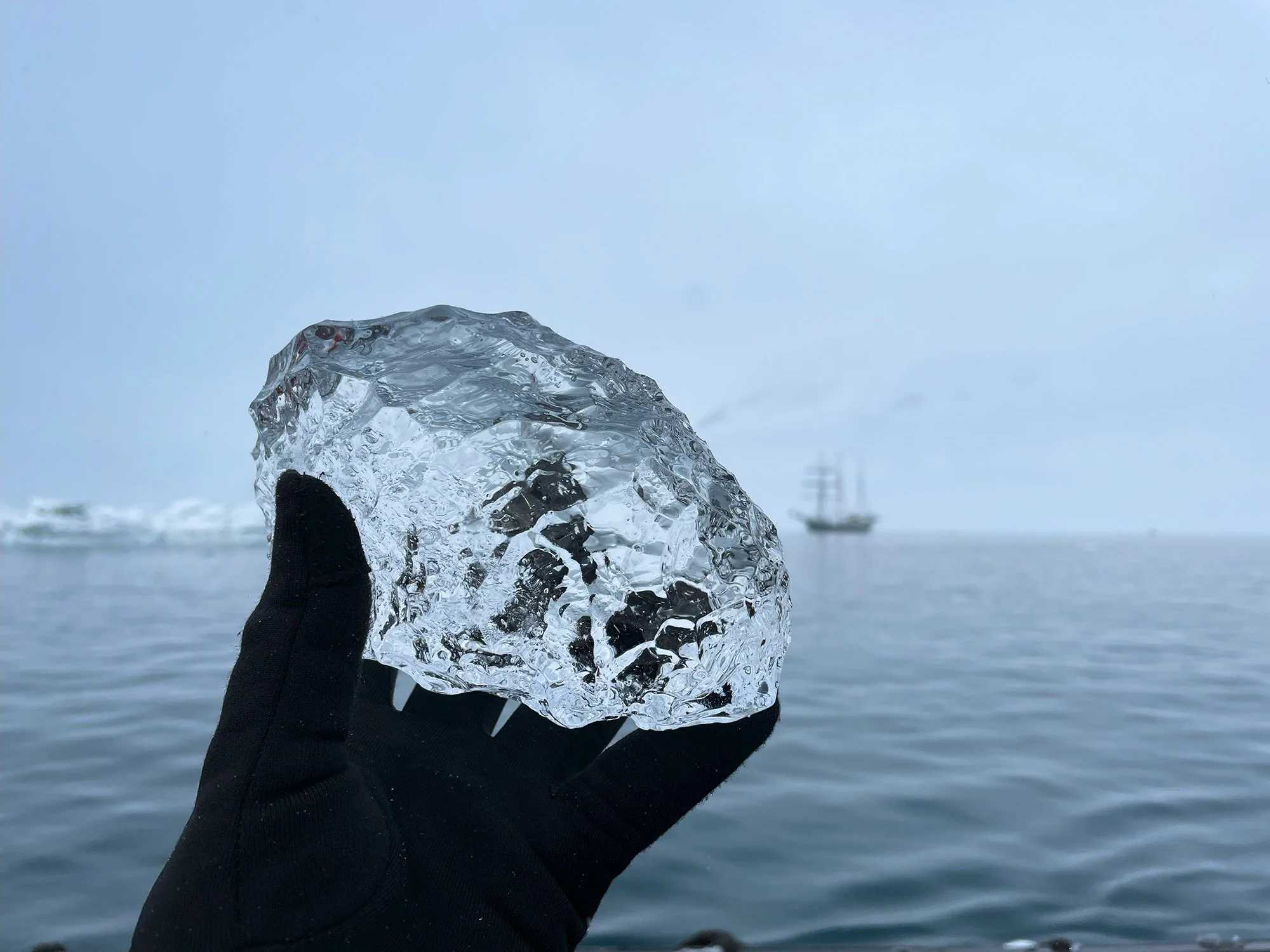
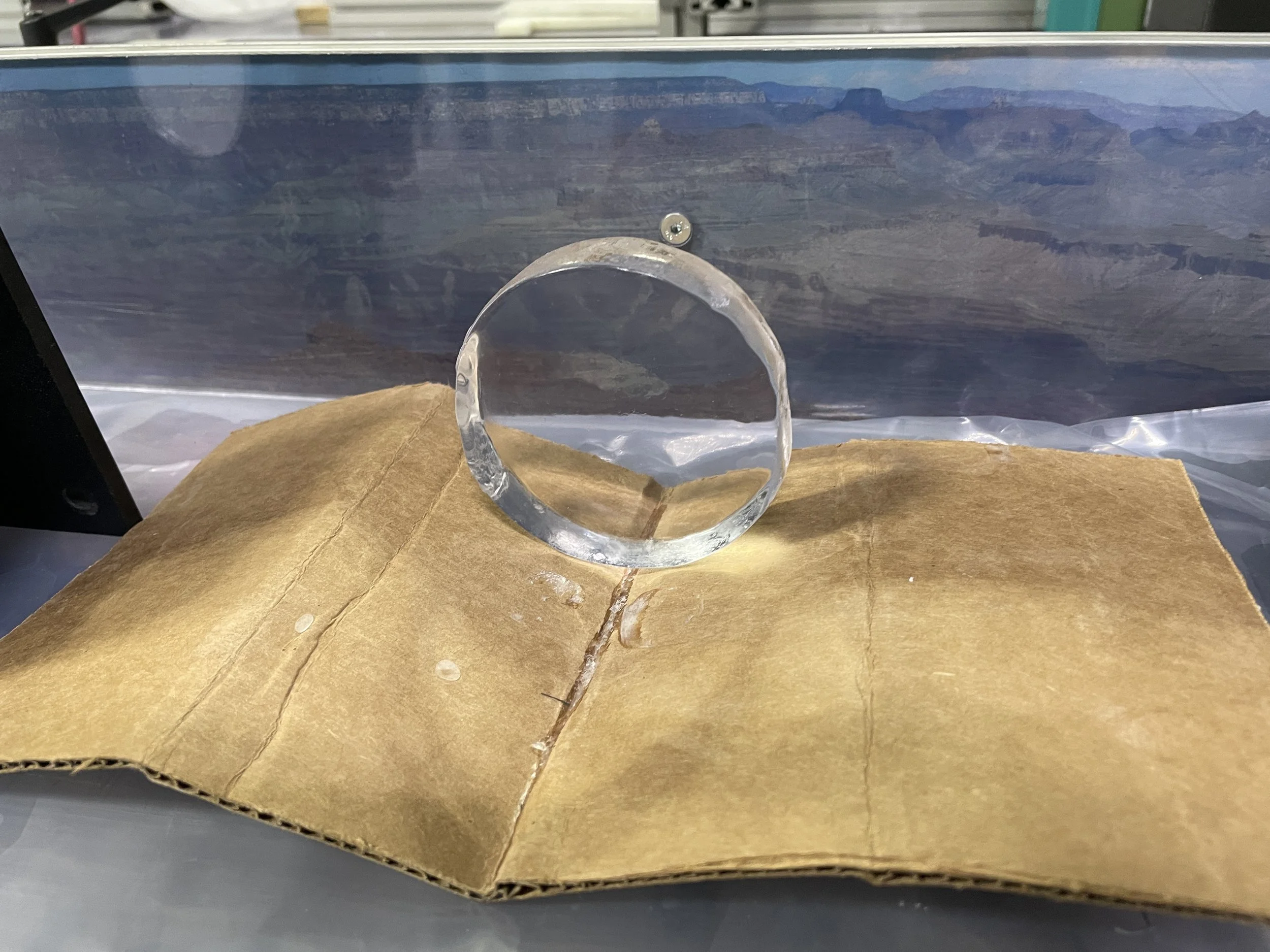
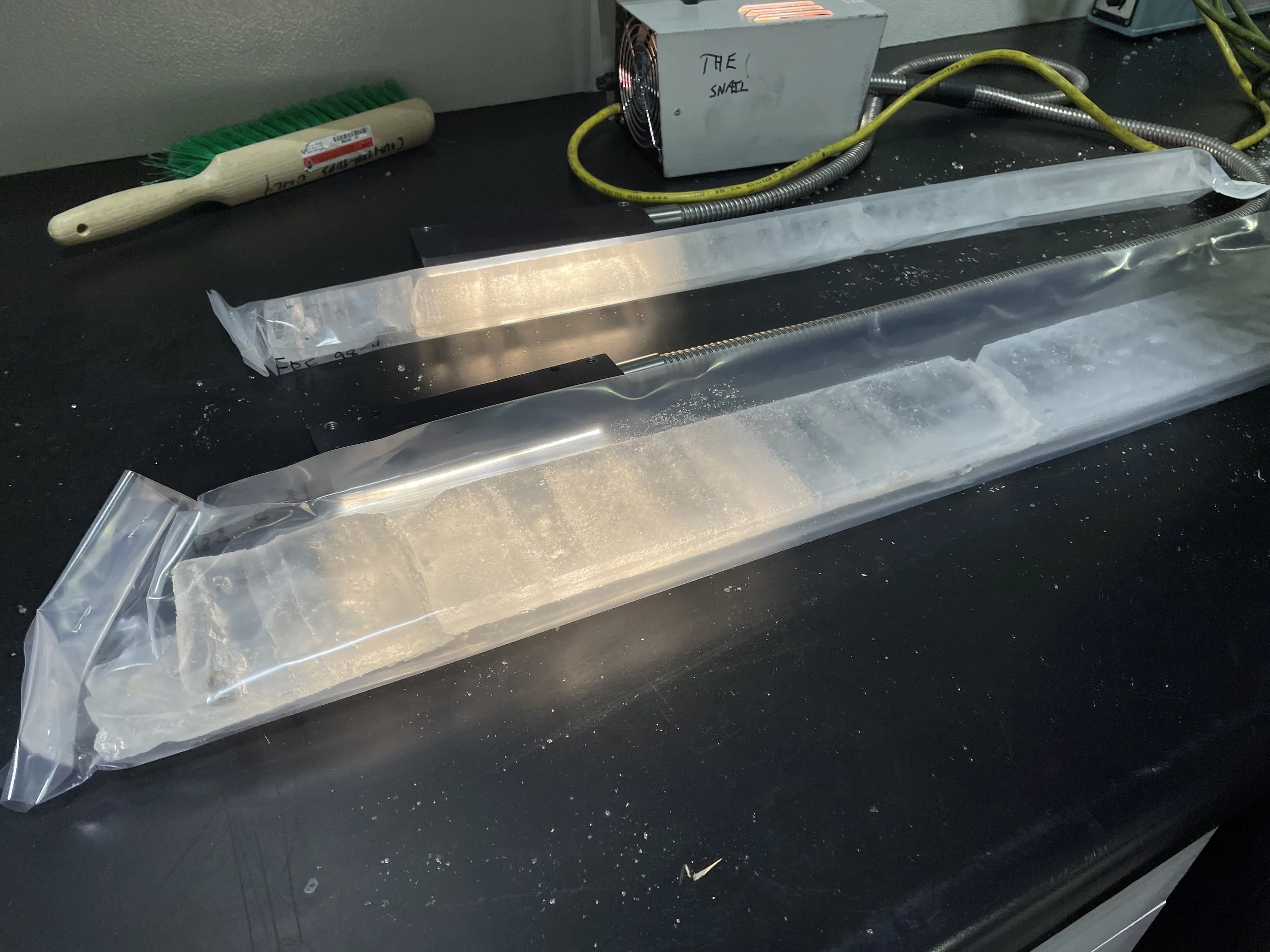
To make the ice lenses, I created these metal molds. You could call them molds, but they don't work the way you would expect a mold to work. I'm not pouring liquid water into a form and then freezing it. Rather, these are a reductive mold. These metal parts have the curvatures of different lens shapes machined into them. Each surface has a different curve machined onto it.
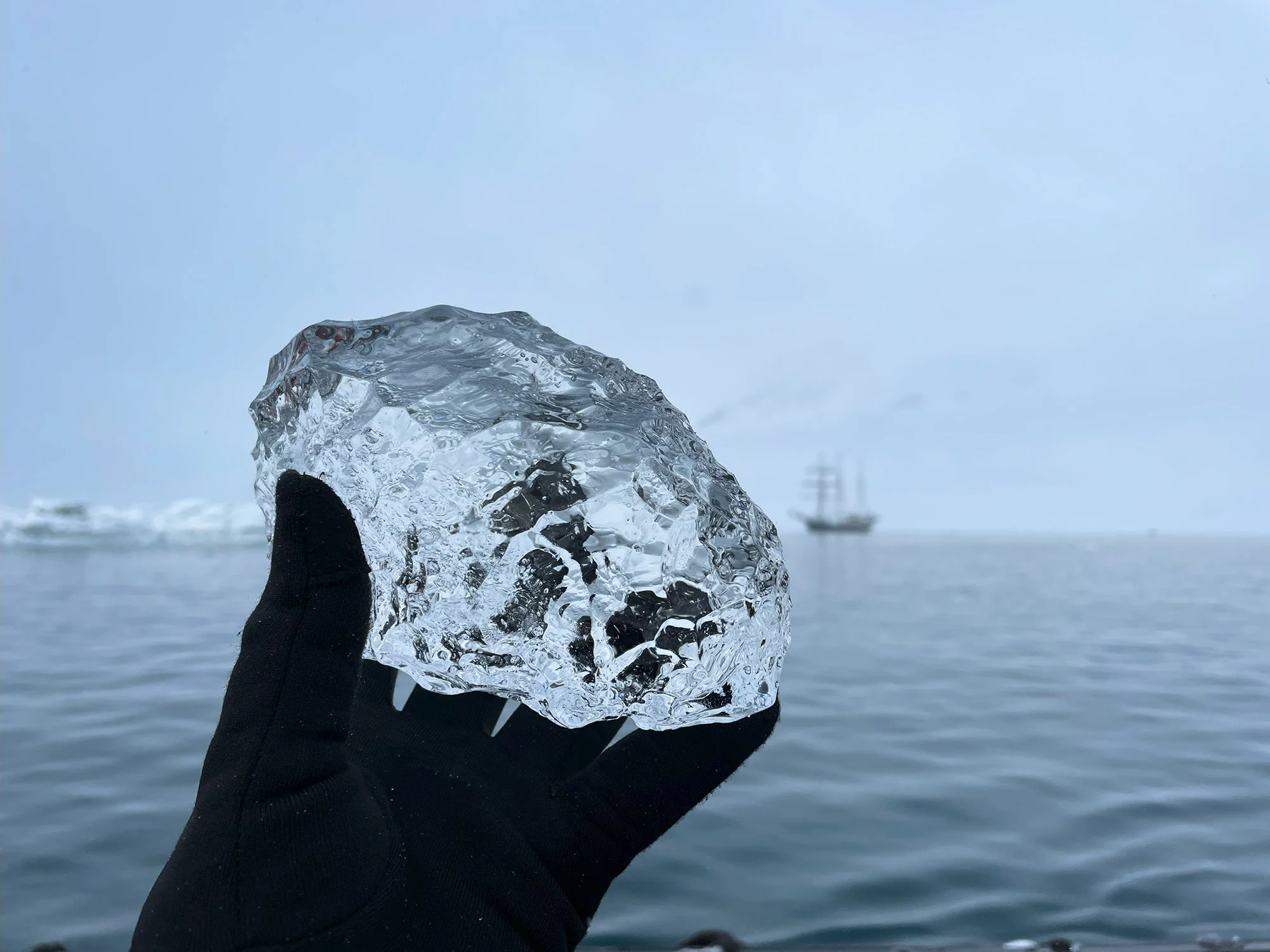
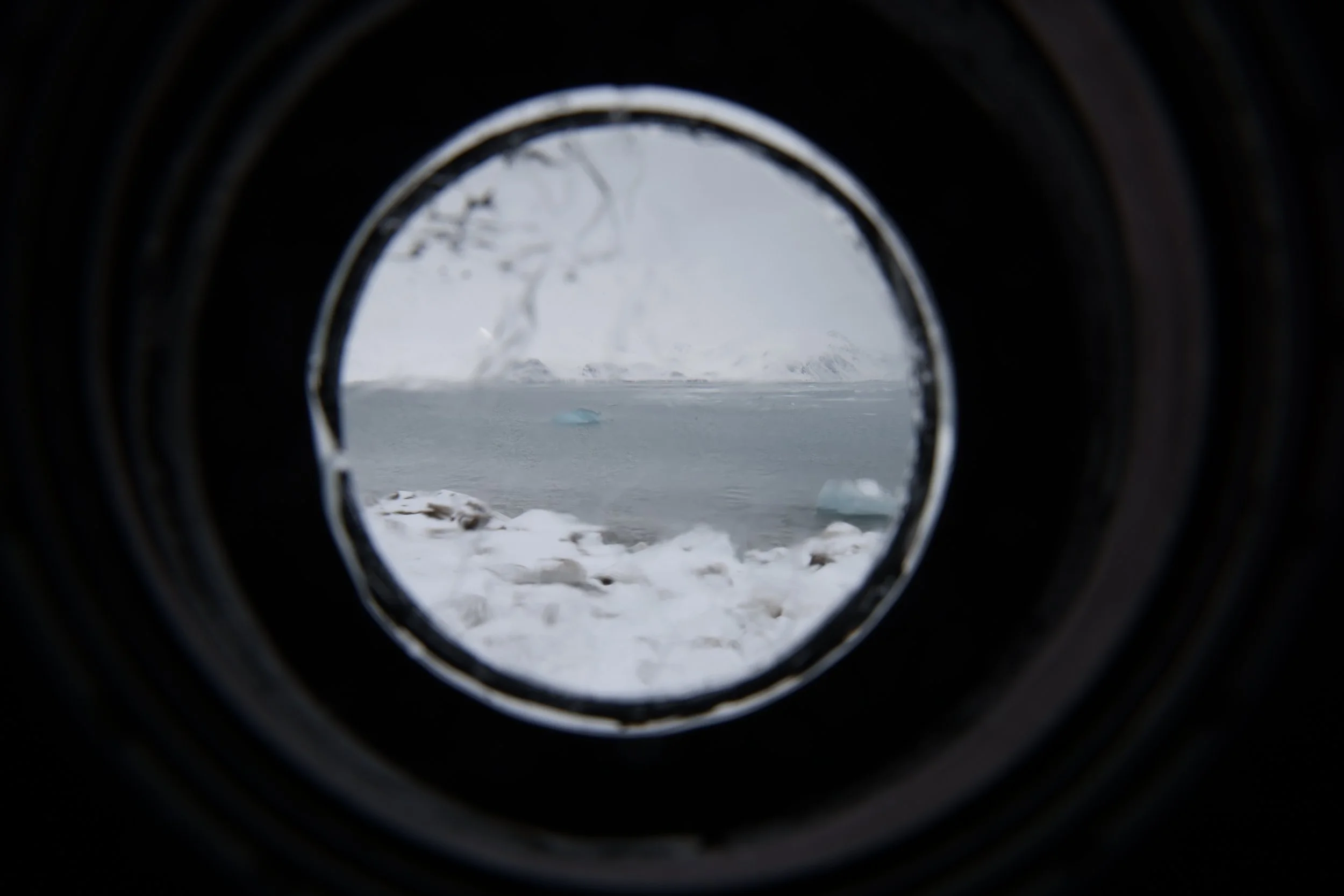
These metal elements are warmed up. I heat them in a bath of hot water, and then I put a chunk of ice in between them. The pieces melt together, melting the ice into the shape of the lens. This is how I'm able to collect some clear glacier ice in the field, put it into this special ice press, and melt it down into the shape of an ice lens. I can use this ancient glacier ice to actually make a lens.
Then you take the parts and build a lens, putting it into some kind of setup. How does it work?
I have special fixtures that I've designed to hold the ice lens and attach it to different cameras. Sometimes I'm working with my digital camera and I have a custom fixture that allows me to attach the ice lens. There's no other optical element involved. It's literally just a piece of ice shaped into a lens in front of the camera sensor.
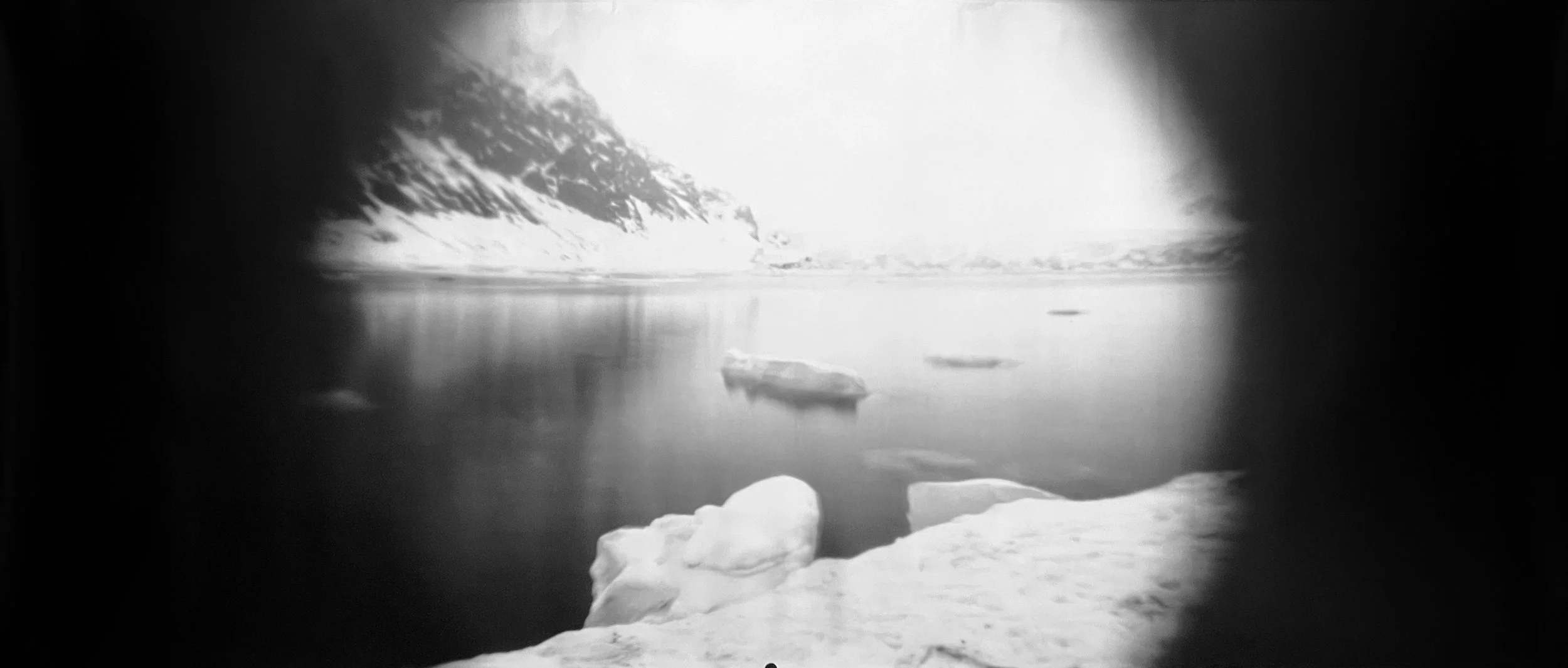
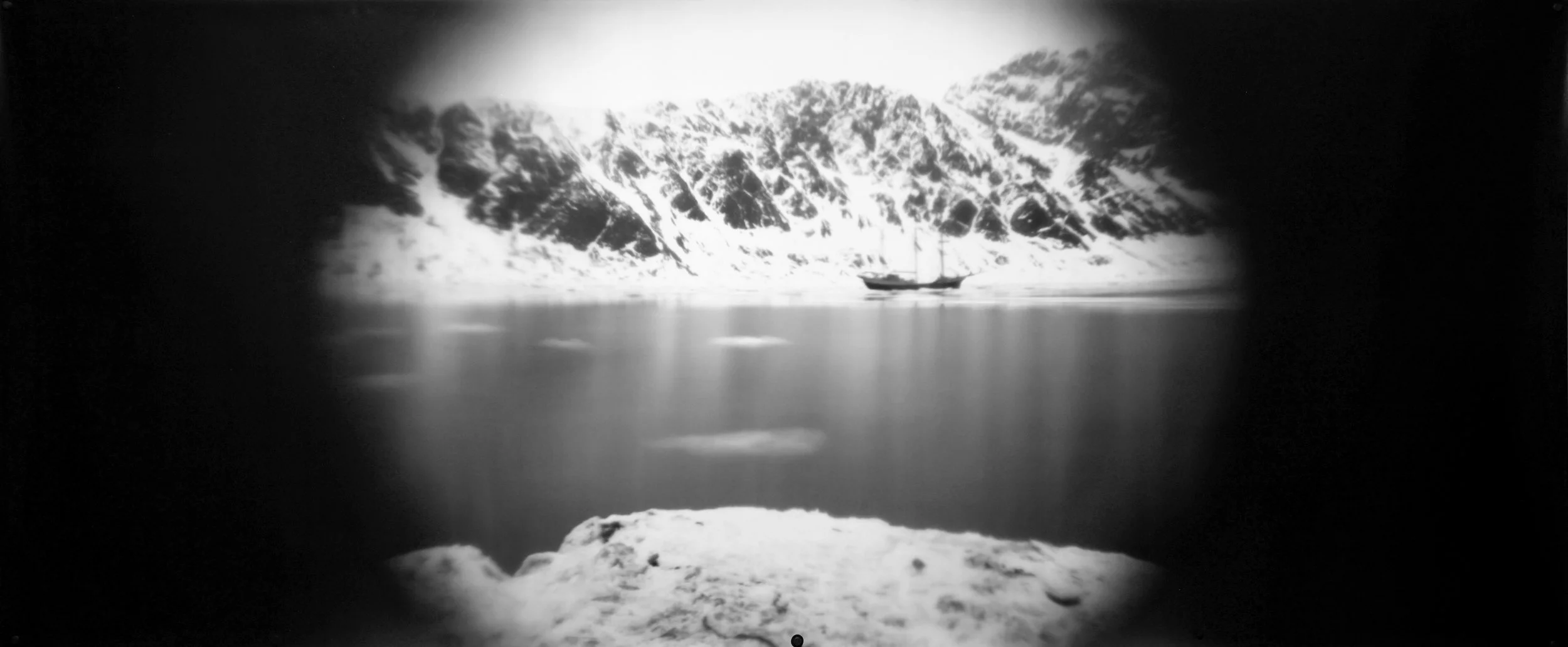
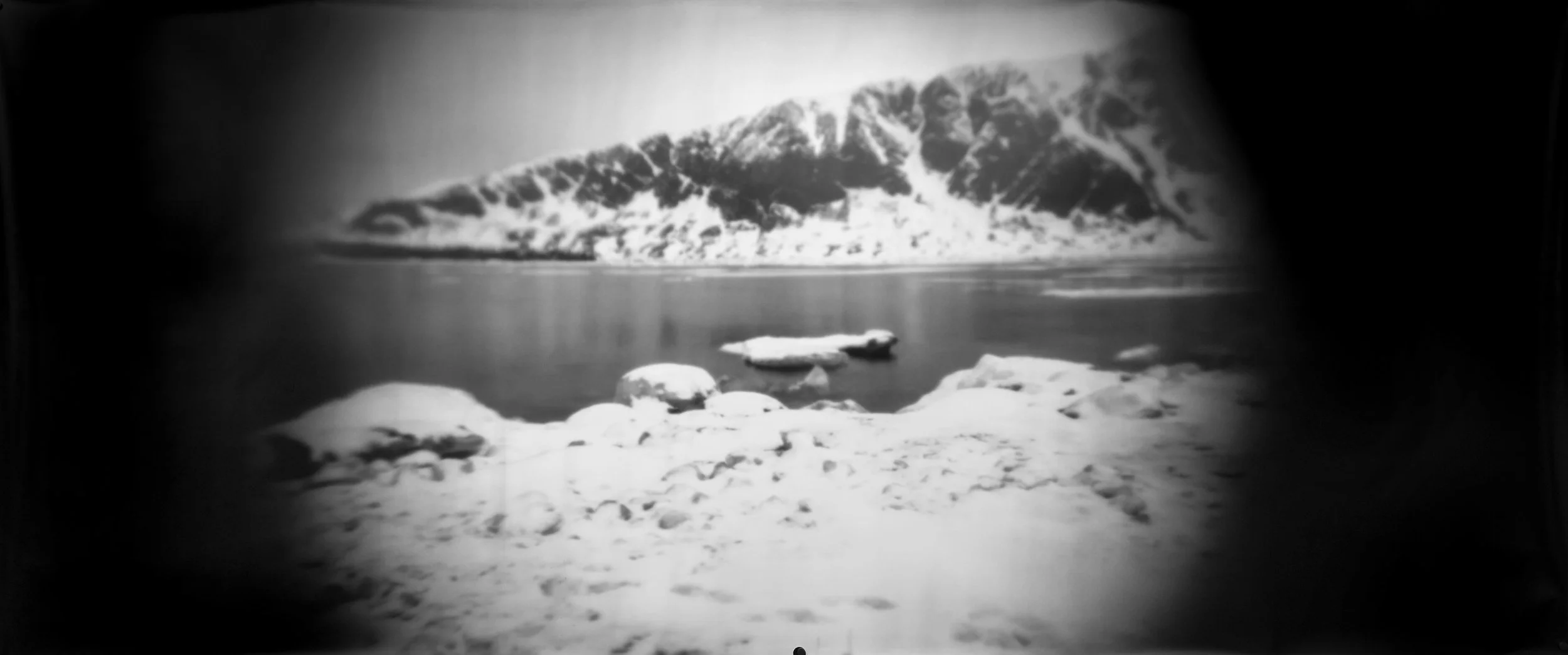
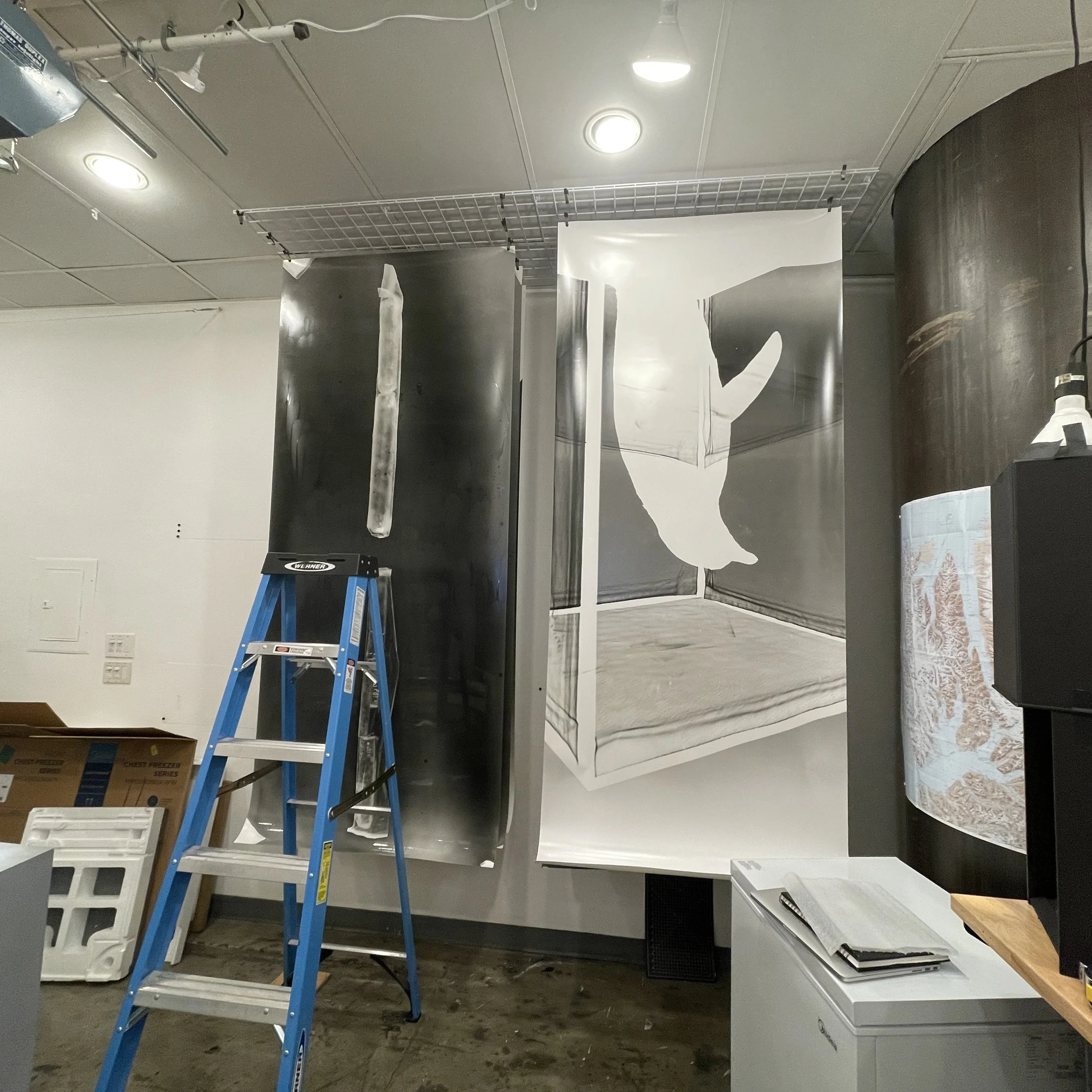
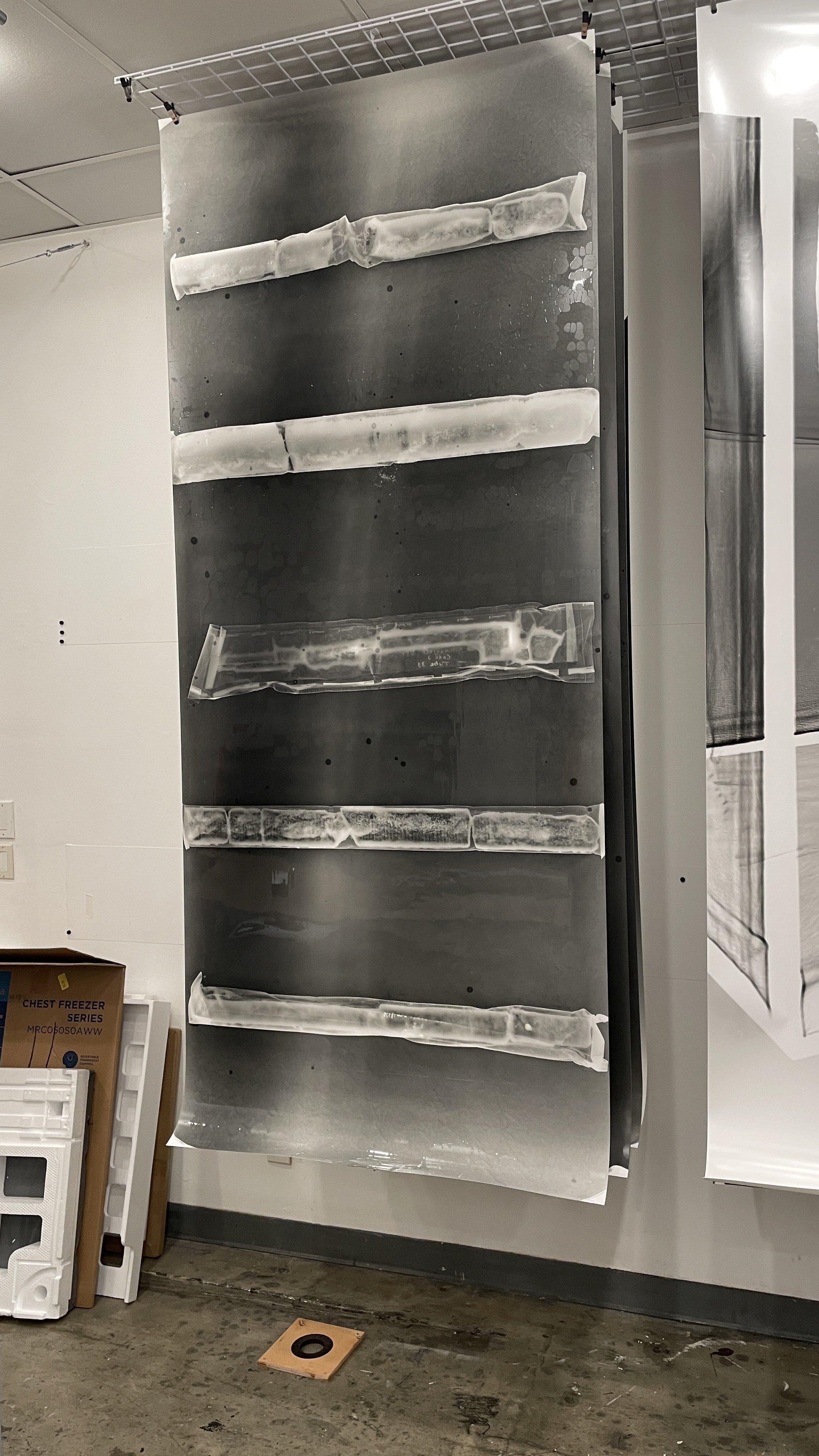
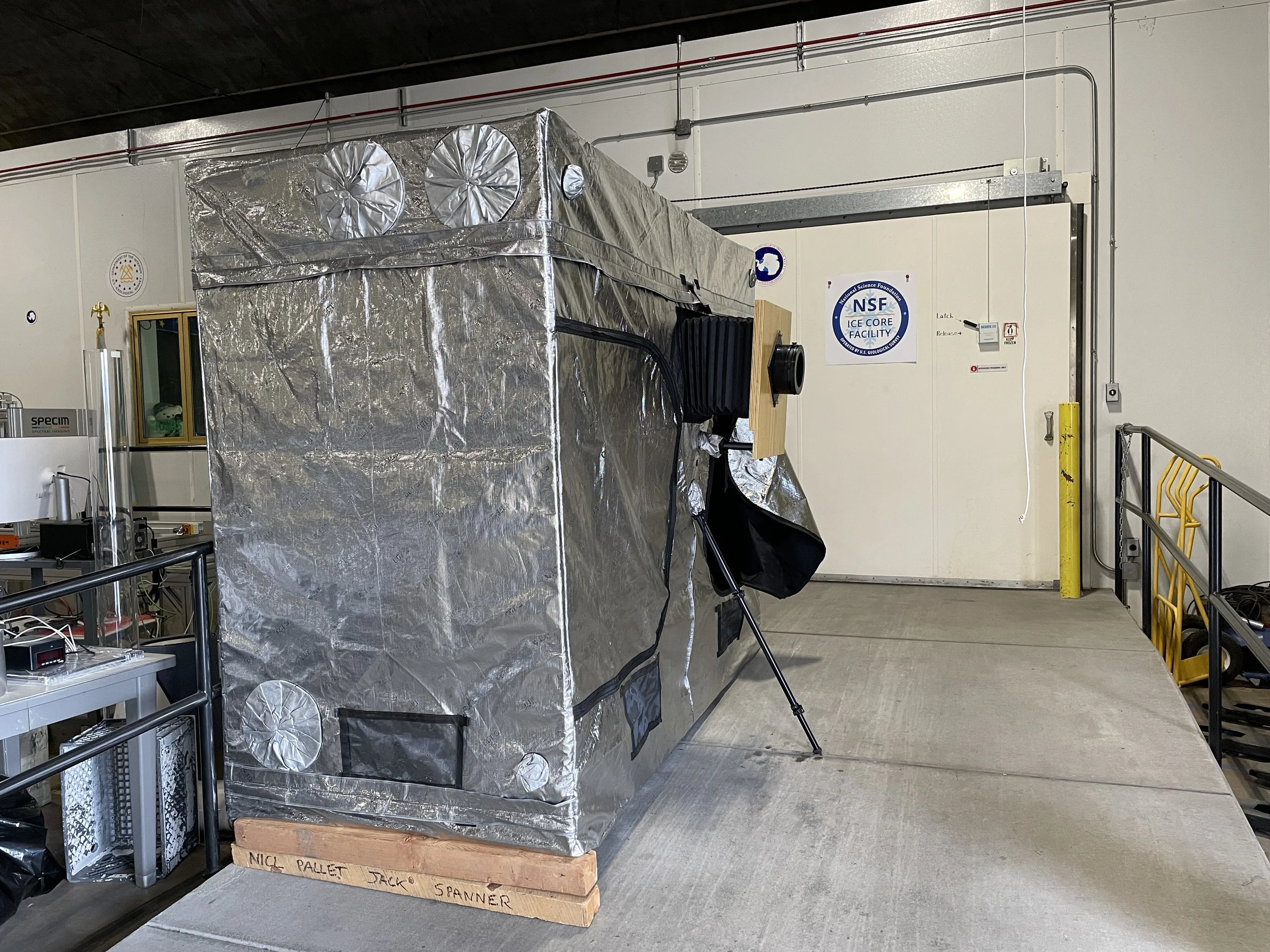
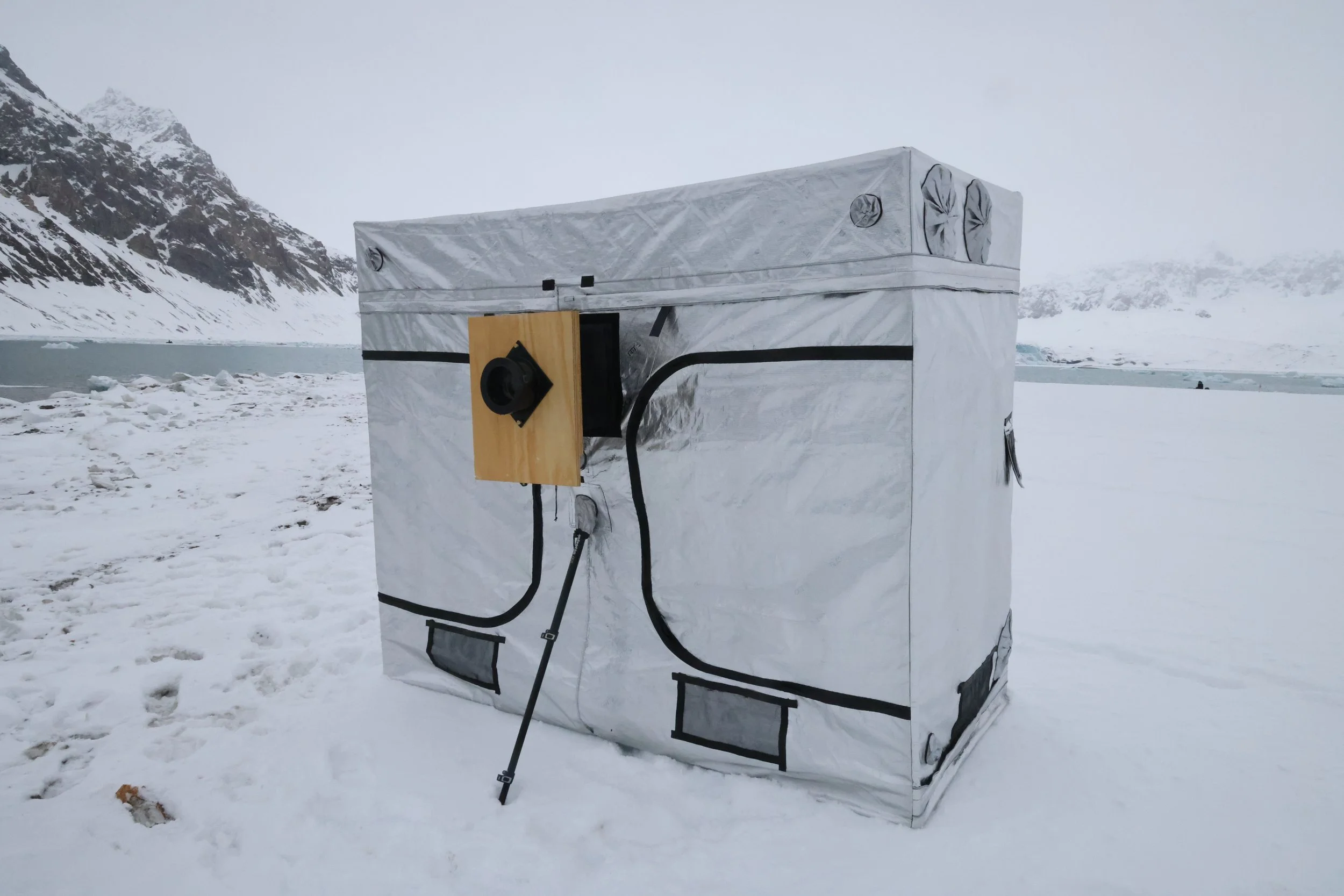
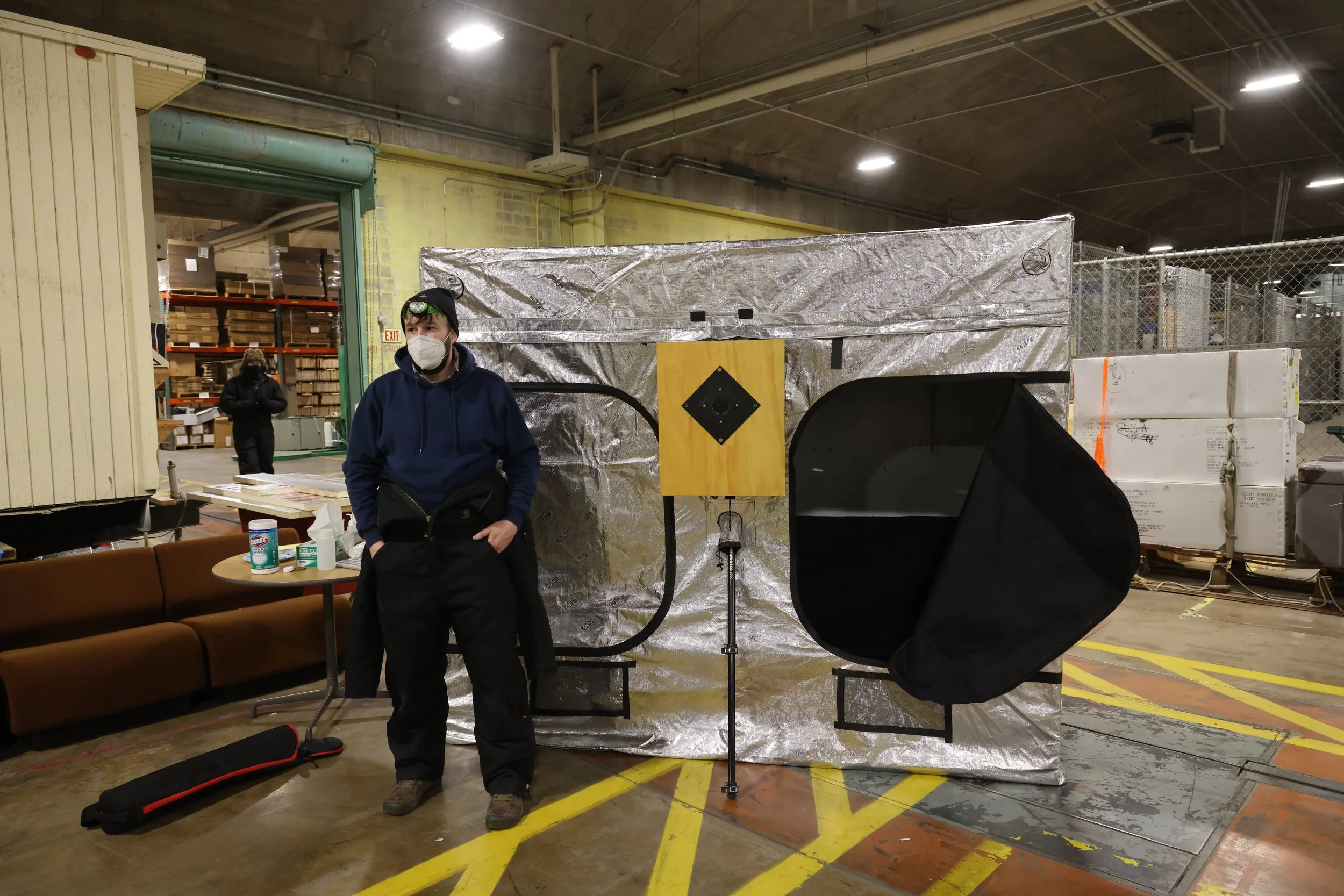
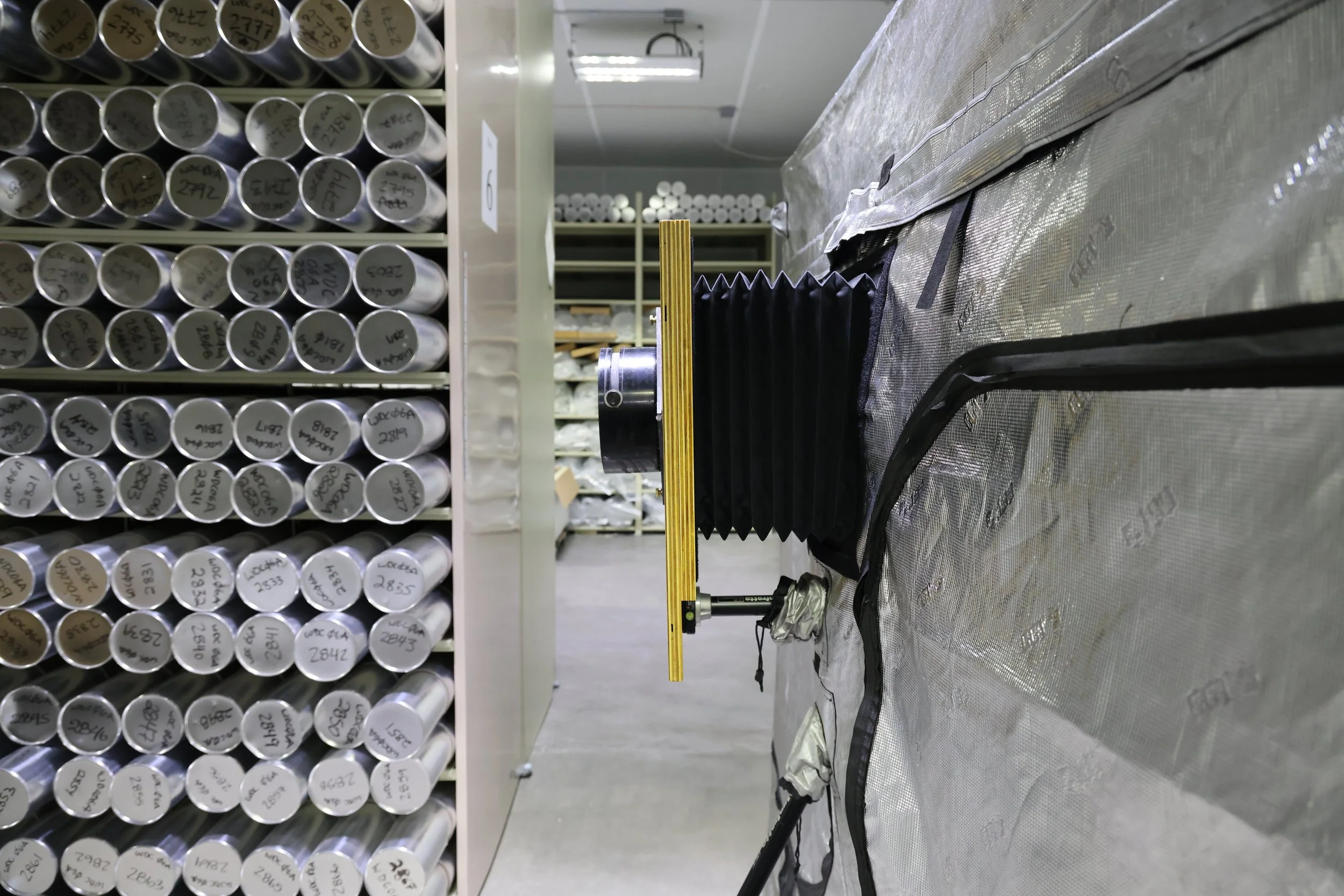
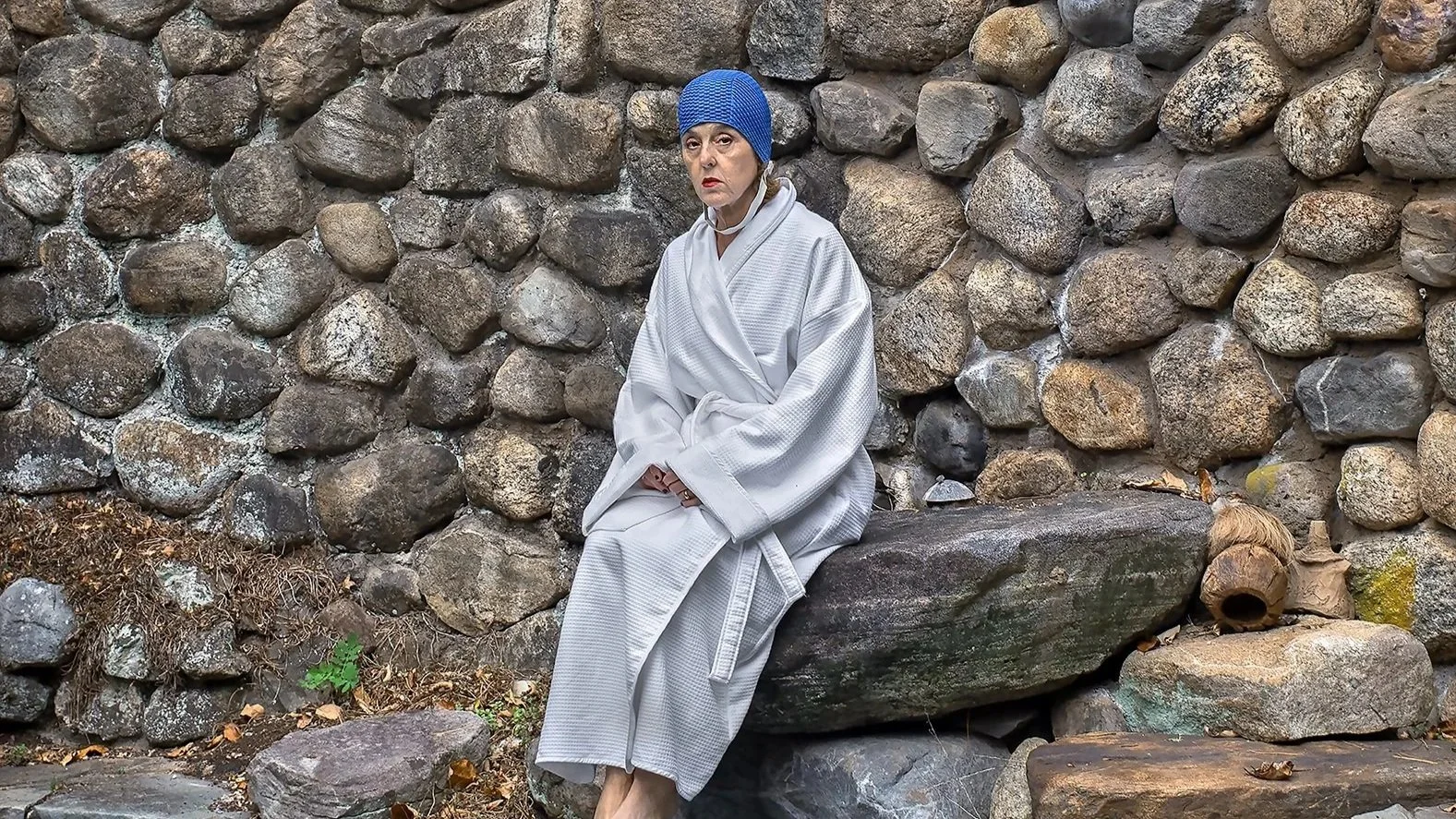
For other projects, like these photographs you see behind me, I'm actually working with a giant tent camera. This functions somewhat like a camera obscura. I assemble this tent and then go inside of it to operate it. This tent camera records one meter by two and a half meter paper negatives. I can then process those and contact print them to create these large prints.
When you first told people you wanted to make a camera lens from ice, what did they say?
Early in this project, the first thing I noticed was just the reaction people would have when I started experimenting with making ice lenses. There was this sense that people would really light up when I told them I was making lenses out of ice, and they immediately wanted to know more. I saw this as potentially an opening for being able to invite people into a dialogue about the climate situation with curiosity and excitement and wonder.
Most photographers want sharp, perfect photos. You made a lens that melts and creates blurry images. Why was that important?
It seems like in my work, I'm always introducing some kind of wildness, some kind of chaos into the photographic process. If you think about it, so much of photography is about controlling variables. We're always looking for repeatable results, some kind of perfect lens, some kind of precision shutter, controlled developing times to have these repeatable results.
In my work, I'm often interested in introducing some amount of chaos into that process. When you work this way, it can be very challenging, but also sometimes these surprises happen that are better than anything you could have planned.
For example, with working with the ice, each chunk of ice that I find in the field is going to be totally different depending on the impurities in the ice and how it naturally formed. Then even any single ice lens, as I'm working with it, is melting. It's changing over time. In a lot of ways, I find that very exciting, introducing those natural chaotic forces into the photographic process. Sometimes really surprising results emerge.
I believe you also said that a photo of a glacier taken through an ice lens is more true than a photo taken with a perfect glass lens. Why is that?
I don't know that it's necessarily more true, but it certainly has maybe another layer of indexicality. The ice lens photograph is almost like a double exposure in a sense. It's referencing the glacier in the optical image that's formed, but it's also referencing the glacier in the lens itself.
These ice lens photographs I make are as much a photograph of the scene, the landscape, whatever I'm photographing, as they are also a portrait of the lens itself. Each lens is different, even from moment to moment. You could almost think of them as double exposures or double signifiers. These images refer to the glacier on multiple levels, which I think is a very interesting symbolic or semiotic position for these photographs to occupy.
You went to Svalbard in the Arctic. What was the hardest part of working there?
In 2022 I sailed to the Arctic archipelago of Spitsbergen, the island of Svalbard. Literally everything about that trip was incredibly challenging. Anyone who has worked in polar conditions will tell you that plans always change and everything is completely dependent on the elements, on the weather, what you can do, when you can do it. You have to be very flexible working in that environment.
What I was doing, perhaps had I known how difficult it would be, I don't know that I even would have undertaken the project in the beginning. The challenges of hauling over 200 pounds of equipment with my giant rolls of photographic paper and my tent camera, trying to assemble this tent camera in polar conditions, it was very daunting.
To make matters worse, this was early 2022 and our entire expedition got COVID. Almost everybody on the ship got sick. I was in bed for like five days. It was a very challenging trip all around.
Let's go back to your tent camera, which is like a camera obscura. What was the idea behind it? Why did you decide to use this setup?
In envisioning this project, I really wanted to lean into the sense of bearing witness. Part of this project, the physicality of what it took to get this giant negative to the Arctic, to put up this tent and shape this chunk of ice and put it in front of the film as a lens, that in itself is an artist gesture, an artist action. On another level, this project is really about recording this ritual or performance of bearing witness that took place.
These photographs are in some ways a record of this thing that happened. That's something talked about a lot in photography, this sense of indexicality or the documentary aspect of photography. The photographs provide evidence or bear testimony that something happened. That's part of what really interests me about working with these ultra-large analogue processes in a time that's increasingly digital, in a time that's increasingly deep fake and AI-generated. It feels important to me to really emphasise the here and now, the thusness of being a human on the planet at this particular moment.
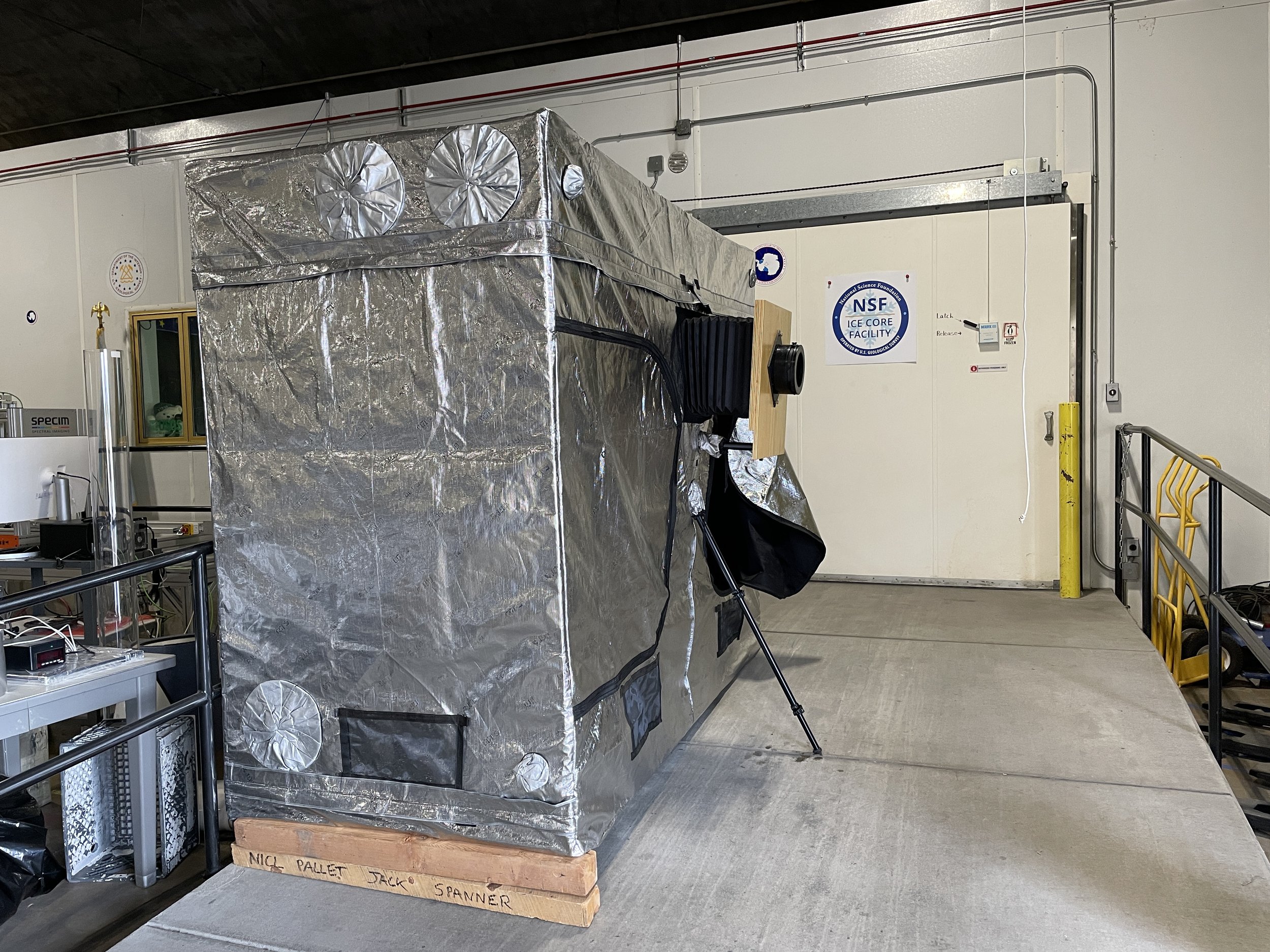
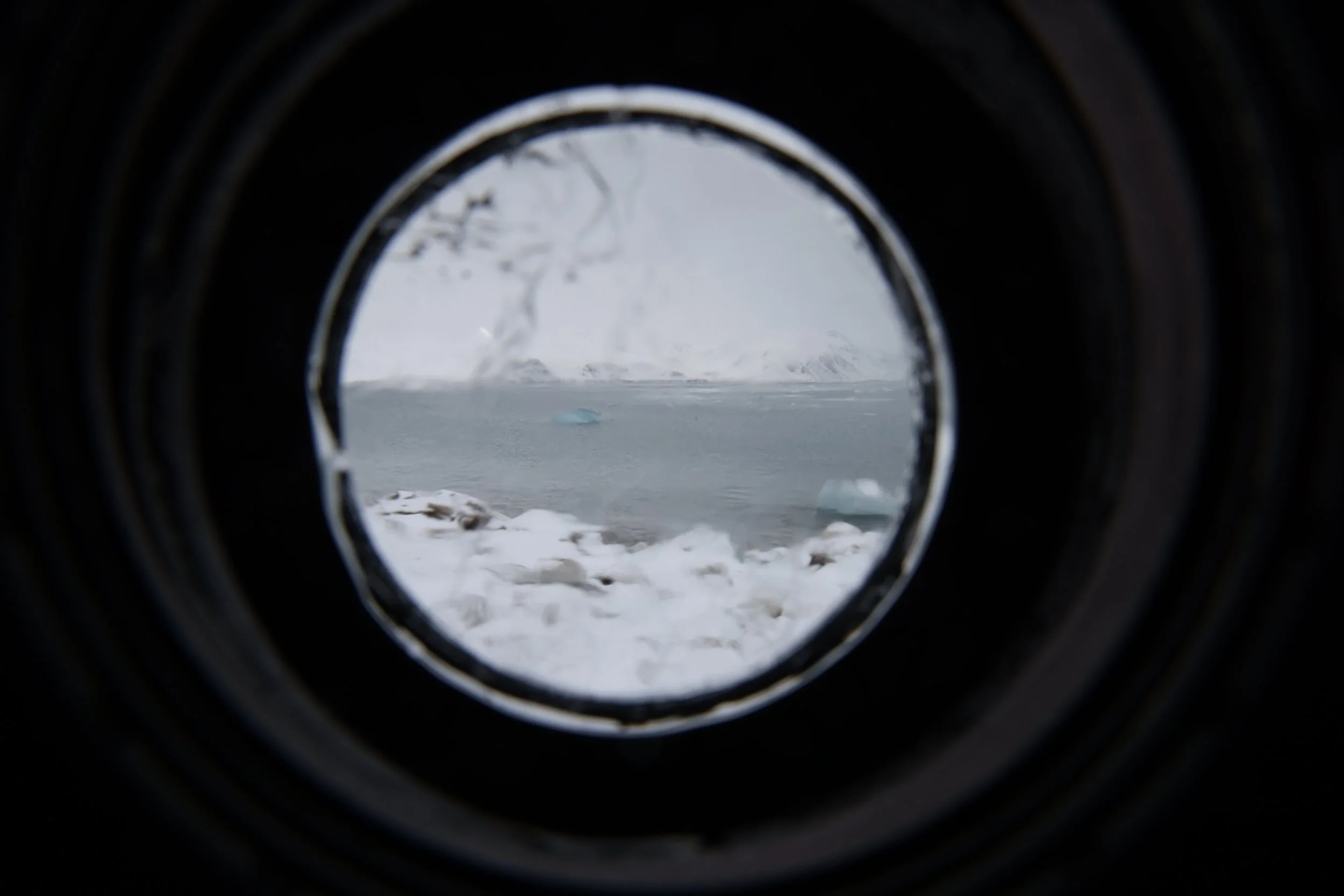
This is where process gets forgotten. Process is very important. People are so used to thinking about photography through this illusion of progress. I've even had people ask me what advantages the ice lens gives you or what advantage you get from working with this large tent camera. These questions confused me at first, but then I realized people are so used to thinking about photography in terms of this notion of progress. Better lenses, faster lenses, more resolution. We're always thinking about improving, getting better technology, more clear, more precise. Somehow embedded in that is this idea that that's more real.
I'm doing something different, which is calling attention to the process. Instead of focusing on the end result, it's about how you get there. The process is integral to the meaning of these photographs. It completely changes the meaning once you understand that this large photograph you're looking at was not only focused through a lens made out of ice, but the paper was actually rolled up and carried to the Arctic and put up inside of a large tent. It speaks very much to the adventure and the current moment of where we are today.
The process seems so difficult. Would you say there are actually any advantages, or is it just about the process? Are there technical advantages, something you're getting that you wouldn't be able to do with normal gear?
I do seem to like to make things difficult for myself. But in all seriousness, there are opportunities that present themselves with any process, and the images that result are a direct result of that process.
For example, these large negatives, working in the tent camera in these conditions, there are light leaks in the tent, all sorts of things happening. Some snow even gets on the negatives and creates some disturbance to the surface. This all gives a texture where each layer is another layer bearing witness to the process. These images are fundamentally different than what you would get if you simply did this with a smaller camera or a digital camera.
But to answer your question more directly, one really interesting property or advantage that I discovered of the ice lens is that as the ice lens melts, it actually changes focal length. When I first started this project, I imagined that I would shape the ice lens and then maybe it would work for like a minute, maybe even just 30 seconds. Then very quickly it would start melting and become too distorted and no longer work as an ice lens. That's what I predicted.
But what actually happens is that as the ice lens melts, the whole thing shrinks. As it shrinks, the curvature of the lens becomes tighter, and when you have a tighter curvature, that means the focal length is getting shorter. It was only through experimentation that I started to notice this was happening.
The first thing I noticed was that this is really great because I can continue to use the ice lens all the way until it's completely melted. It functions as a lens all the way through. I can form a single ice lens, and in an environment like Los Angeles, it might take 30 minutes or more for the lens to completely melt. I can be working with it for half an hour, even in warm conditions.
But this unusual property made me start thinking, what would happen if I set my camera up on a tripod and just shot a series of stills, like a time lapse, through this melting ice lens to see what it's doing to the image? What I found was really exciting.
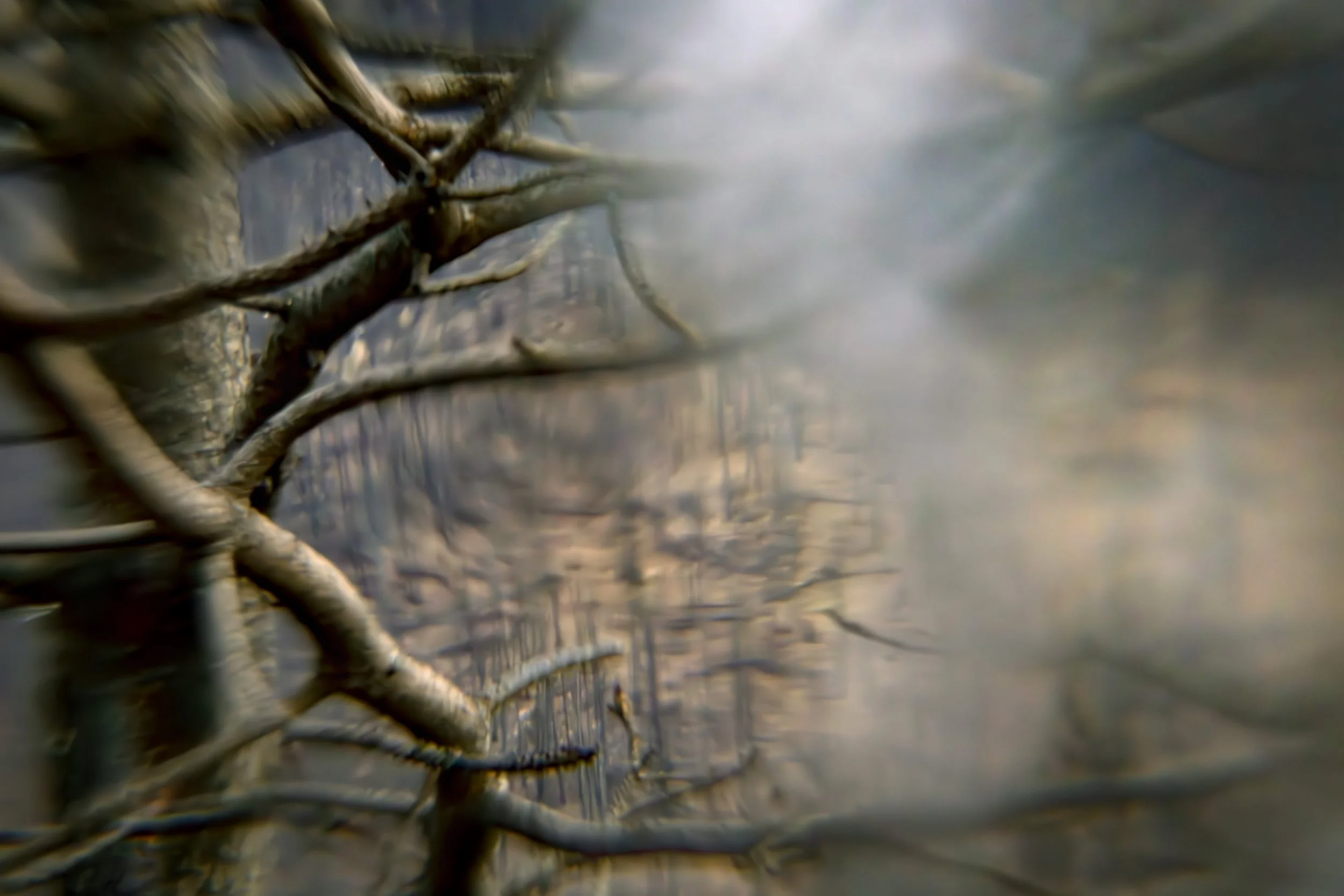
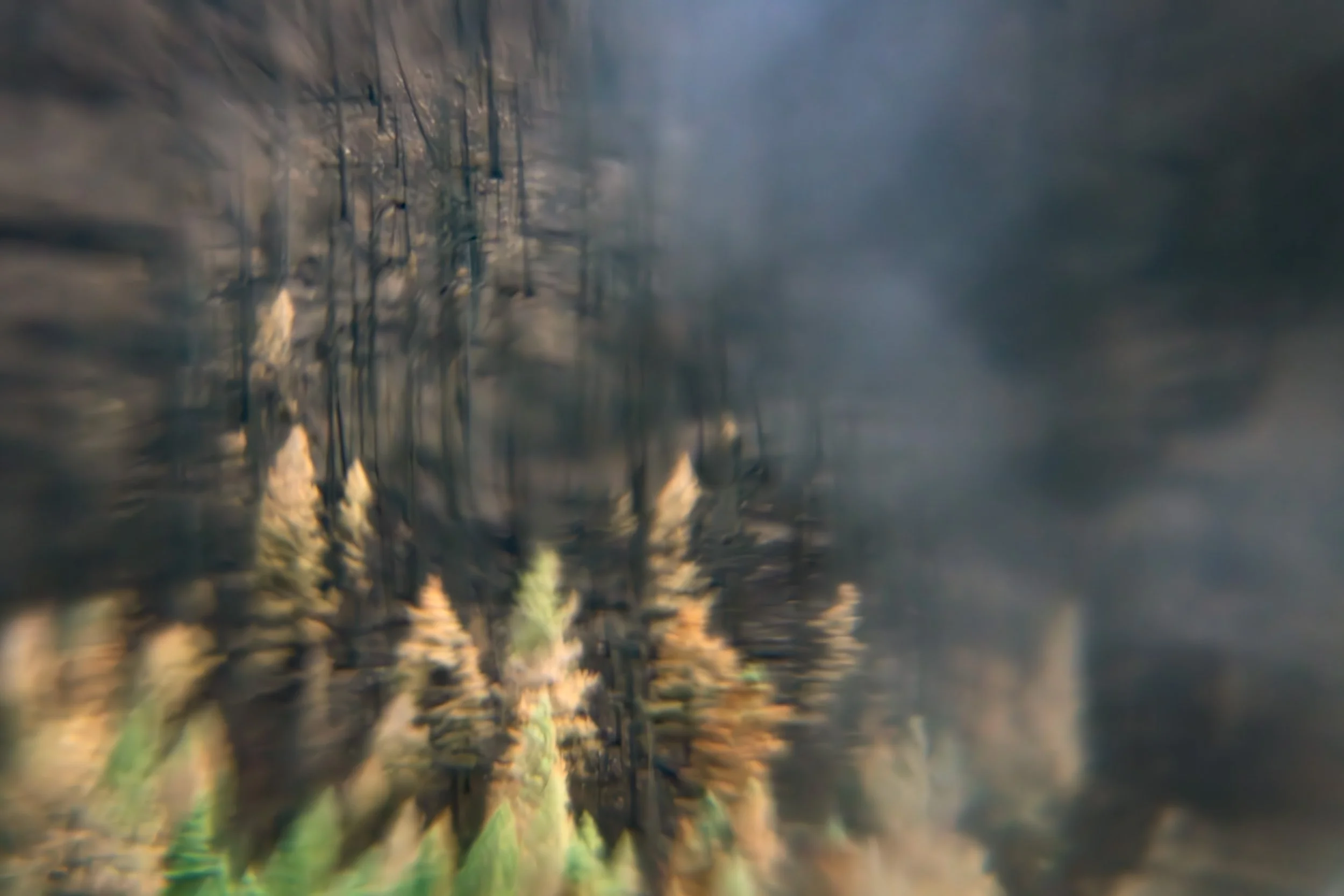
It turns out that because the focal length is getting shorter, you get this natural rack focus where as the lens melts, for example, I did a time lapse where I set the camera up in a burn scar, the aftermath of a wildfire. The image starts off with the entire forest in focus. You can see deep back into the forest. But then as the lens melts, the view becomes increasingly myopic so that by the end of it, you can only see little twigs and branches that were right in front of the lens in focus. Things in the foreground that in the beginning you couldn't see at all start to come into focus as it melts.
You get this depth of field that starts cutting through the visual plane and moving back towards the camera. I find this really interesting. This was something I never could have predicted. This is a property, an optical effect of a lens that no other lens can do. When you work experimentally like this, these are the kinds of discoveries I love to find, these unexpected surprises.
So you first photographed the glaciers with the glaciers, and then you took it to photograph the wildfires in America. I understand the first choice. Why did you decide to use it for wildfires? Was it that you invested so much time into developing this that you thought you'd put it to more use to find a different meaning for it?
Actually, the idea for documenting the wildfires was inspired by this sense on returning from Svalbard that I didn't want this project to just reinforce some notion that the climate crisis is something happening in a faraway place, in some distant, remote location. I really wanted to explore the effects of this climate crisis closer to home.
I also wanted to explore the extremes, the two ends of the spectrum of global temperature. From the record heat waves and droughts in the American West with these unprecedented wildfires that are burning hotter, burning bigger than ever before, and connecting that to the melting glaciers.
If people have to pause for a second and wonder, wait a minute, what do wildfires in the American West have to do with melting glaciers, that's exactly what I wanted to stimulate. We do still tend to separate things, and I think that's one of the challenges we face in dealing with the climate situation. It requires this holistic systems thinking, this big picture thinking.
In a lot of ways, back to the scale of the negatives I'm working with and this scope of moving from glaciers to wildfires, it really is about literally and figuratively making a big picture image. Trying to capture the big picture of the climate crisis.
Thank you very much for your time and for sharing your story.
Thanks for taking the time to talk to me.
To discover more about this intriguing body of work and how you can acquire your own copy, you can find and purchase the book here. (Amazon, Radius Books)
More photography books?
We'd love to read your comments below, sharing your thoughts and insights on the artist's work. Looking forward to welcoming you back for our next [book spotlight]. See you then!
Ian Bates found his wildfire story after the fire. In 2014, he saw his first wildfire while visiting a friend in Eastern Washington. Photography Book Spotlight