How Jamel Shabazz Turned Prospect Park Into 45 Years of Healing, History, and Hope
Welcome to this edition of [book spotlight]. Today, we uncover the layers of 'Prospect Park,' by Jamel Shabazz (published by Prestel Publishing). We'd love to read your comments below about these insights and ideas behind the artist's work.
Brooklyn's Prospect Park became Jamel Shabazz's classroom, refuge, and legacy.
Most photographers chase subjects across cities, but Shabazz found everything he needed in 580 acres of green space. For 45 years, this legendary street photographer used one park to document culture, heal from trauma, and build trust with communities that rarely trust outsiders. His approach turned photography into what he calls "visual medicine" that healed both himself and his subjects.
Every photo tells two stories: the subject's and the photographer's.
Shabazz carried his camera to work every day at Rikers Island, one of America's largest jail systems. The violence and tragedy he witnessed there could have destroyed him like it did many of his colleagues who turned to drugs and alcohol. Instead, he used Prospect Park as his antidote, photographing joy and hope to balance the darkness of his day job. This strategy didn't just save his mental health, it created a body of work that shows how photography can be both personal therapy and social documentation.
Can 45 years of photographs show us how to heal?
About the Book
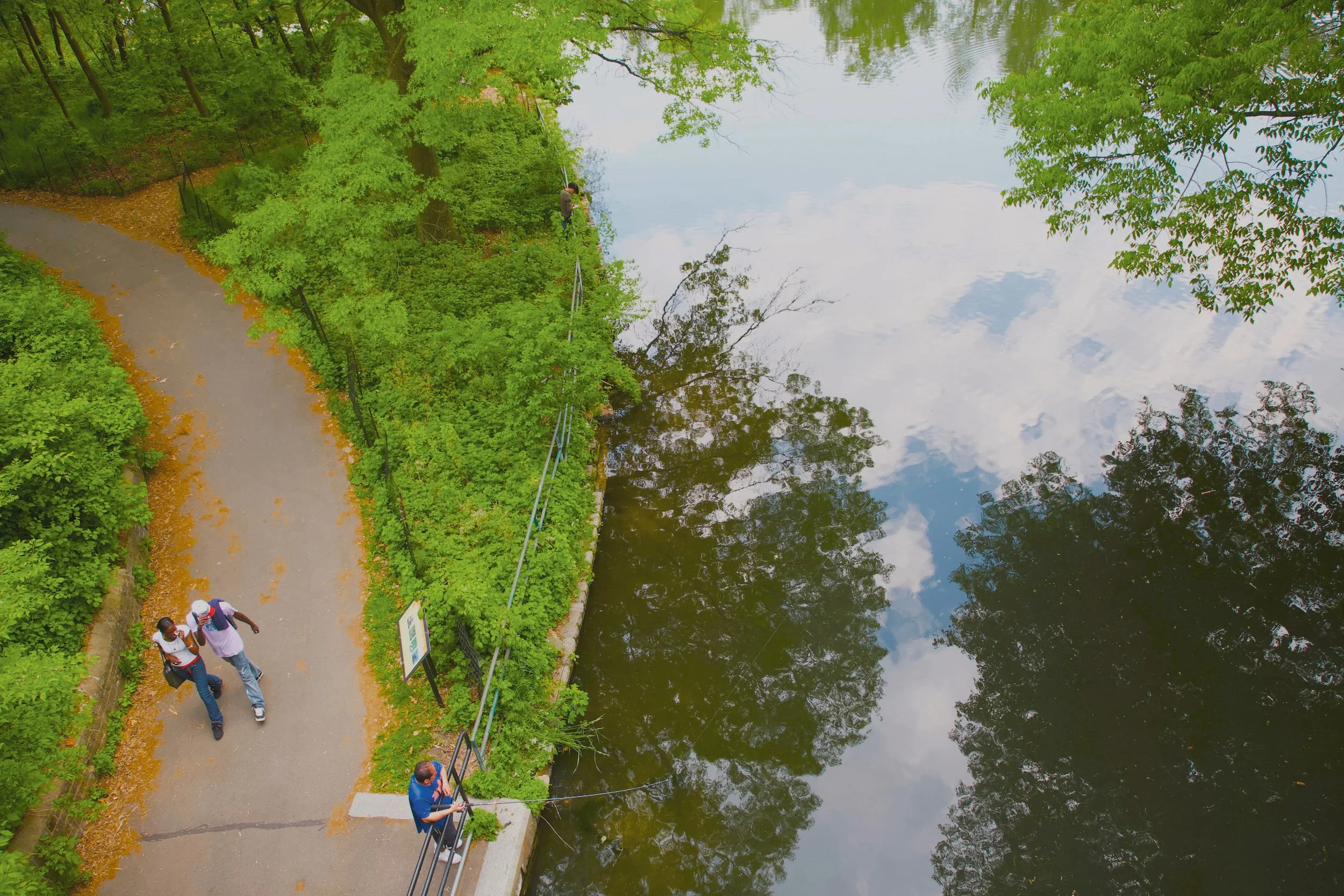
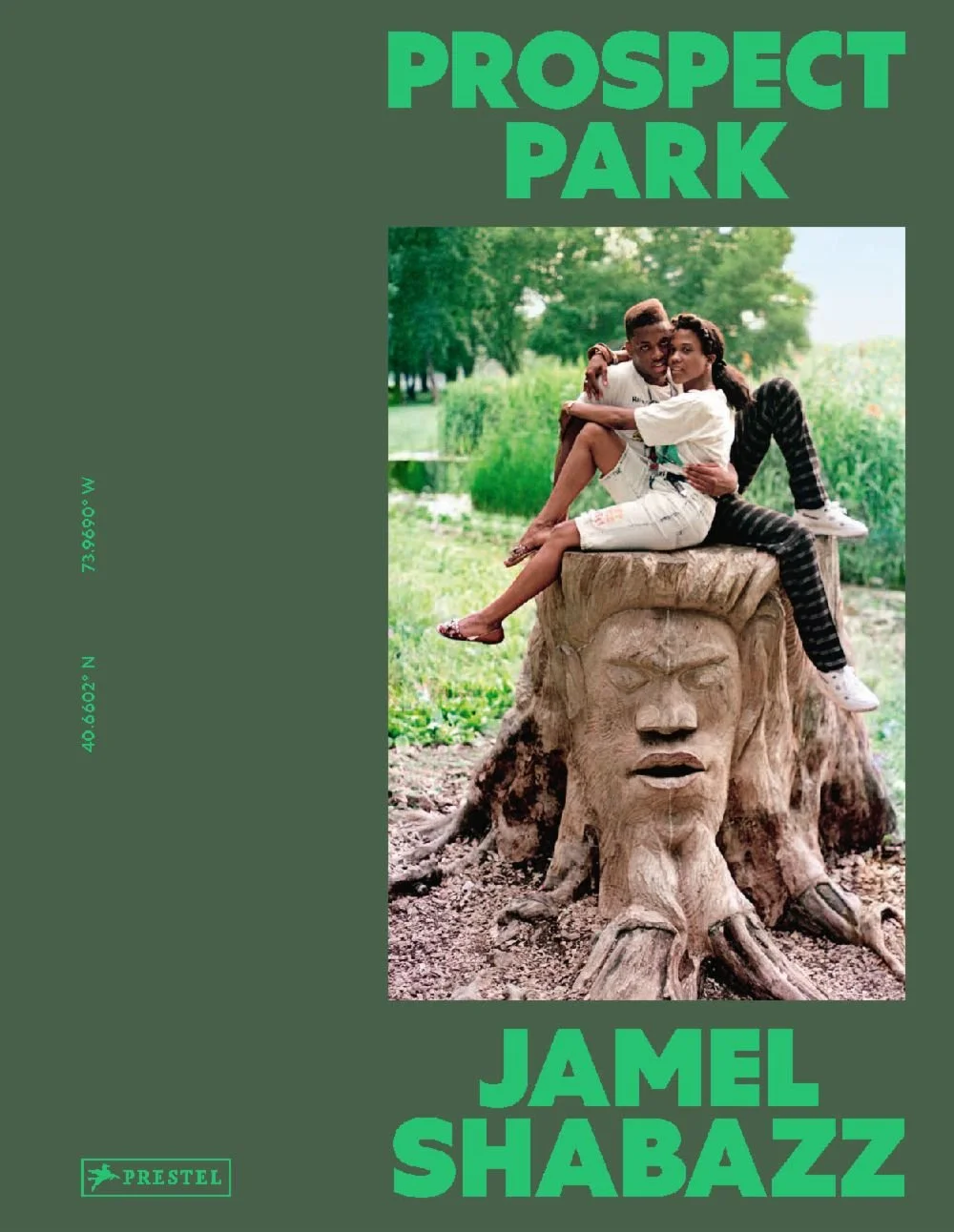
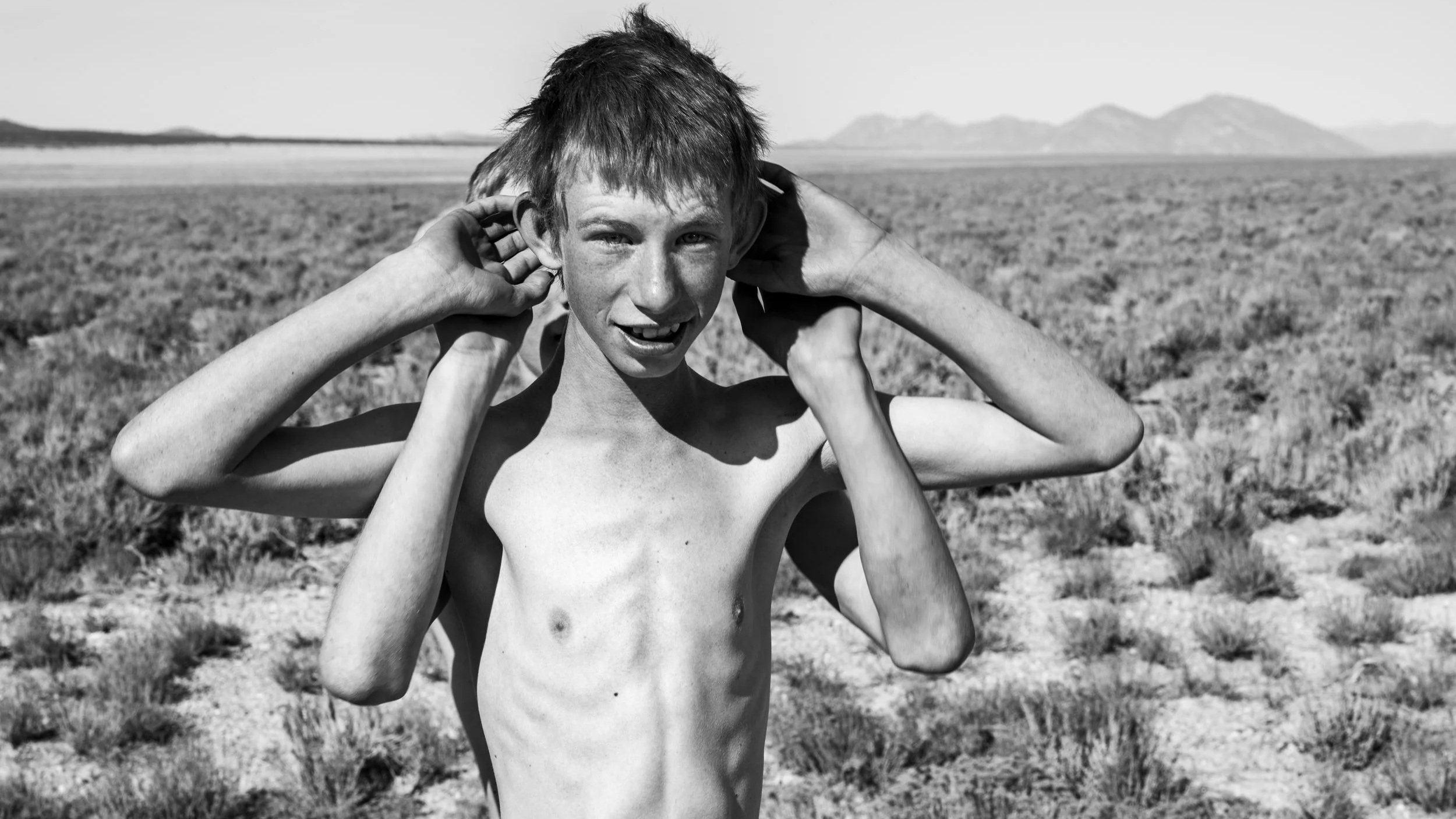
Prospect Park: Photographs of a Brooklyn Oasis, 1980 to 2025 captures nearly half a century of Shabazz's work in the 580-acre park that shaped his career. Published by Prestel in October 2025, the 176-page hardcover contains 60 color and 60 black-and-white photographs spanning from his early days as a returning Army veteran to his current status as one of America's most important documentary photographers.
The book combines Shabazz's signature street portraits with landscape photography and documentary images that show how one location became both personal sanctuary and cultural archive. Contributors include documentary photographer Laylah Amatullah Barrayn, Vietnam veteran and activist Richard E. Green, and New Yorker senior photo editor Noelle Théard, each offering perspectives on how Shabazz's work connects photography, healing, and community.
This collection represents what Shabazz calls a "full circle moment" in his 50-year career. The same park where he learned to see beauty after witnessing daily violence at Rikers Island now serves as evidence of how photography can preserve culture while healing both the photographer and the photographed. (Prestel Publishing, Amazon)
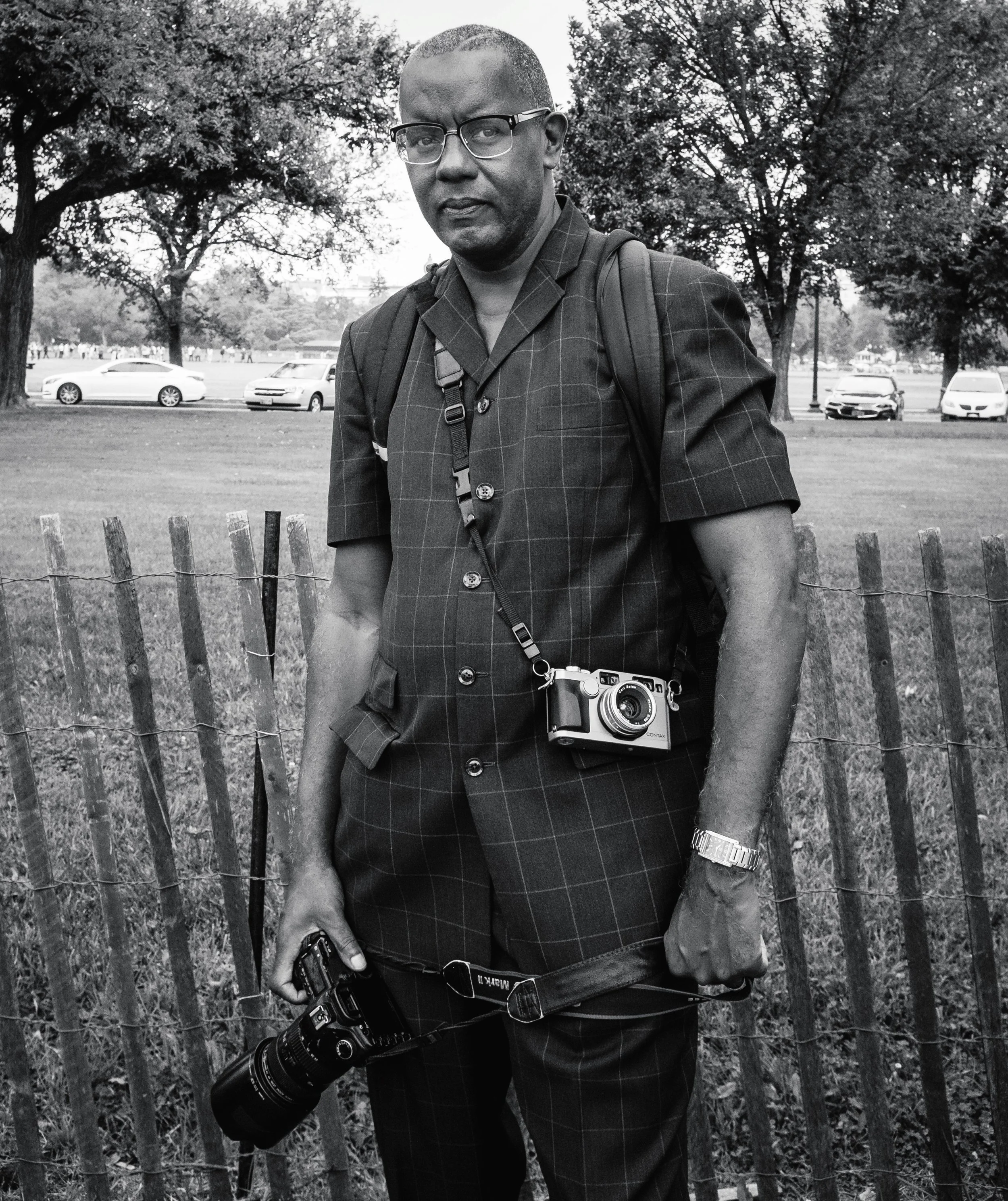
Martin: How did you first get into photography? And what was your first camera?
Jamel: My inspiration for getting into photography really came from my father and my relatives. My father was a professional photographer who served in the United States Navy, and photography was his profession. So I would see him with his cameras every day going out there shooting. He converted our home into a studio where he would photograph friends and family. So I grew up studying my father and how he was operating, and that really inspired me.
In addition to looking at the family photo albums that were set on our coffee table, it's through that experience that I developed a great appreciation for photography. A few years later when I was about 15 years old, I borrowed my mother's camera. She was a novice and she had a couple of Instamatic cameras lying around the house that she wasn't using. So at the age of 15, I decided to take those cameras out and start photographing my friends. So it's through that practice that I developed a really deeper love for photography. And it wasn't until the later years where I got a more advanced camera that I took it to another level.
Your father served in the Navy, and you joined the army for three years before returning to Brooklyn. How did this affect your view of your neighbourhood?
Yes, he was in the Navy, in the United States Navy. It was an interesting change because I left in the 70s and came back in 1980, and there was a transformation. It wasn't that drastic, but what was very interesting to me was a lot of the young kids that I knew prior to going in, now they had grown up and they had become young men. And there was a lot of tension going on. Something happened drastically when I was away, and there was a lot of conflict amongst young people. So one of the first things that I noticed was a lot of tension amongst young people. And that really bothered me because it wasn't like that prior to me leaving.
So that kind of inspired my photography because I used that situation to approach them to kind of get a sense of what was going on. I acted as a mediator and I used photography as a language that allowed me to get their attention to let them know that I see them. And I would photograph groups that had opposition with each other, and both of them respected me as an elder. So that's the main thing that I noticed. In terms of the visual of the neighbourhood, it looked the same. But it's just the tension that existed amongst young people that I found most troubling.


Why did you choose Prospect Park as the first place to take photos?
Because it was local. It was about maybe ten minutes from my home. When I first came back from the Army, I used to run a lot. So to go to Prospect Park to run was an ideal space because it reminded me of Germany. So I started running there first. And then during my runs, I started to see the beauty of the park in a way that I never saw it before. I started to see the diversity of the people. I saw the beauty of the landscape. So when seeing that, I decided that, after I finished my run, let me come back and let me photograph because it was such a vast place, over 580 acres.
And that place allowed me to do a lot of things. It allowed me to meditate, it allowed me to run, exercise, and at the same time photograph. So I could do so much in one space throughout the course of a day. Everything I've ever decided to do was all in Prospect Park. So there was no need to really go anywhere else. I could spend the whole entire day there because it was so full. It had a zoo. You know, it had a series of lakes and hills. Everything was there. That's why I refer to it as my oasis because it was so full of life.
That sounds awesome. Do you miss those times?
I do. I miss them a lot. Because I used to go every Sunday, and that was my ritual. And when I worked throughout my career, I went for 45 years. So that was my place to go to debrief. So I do miss it, but the beautiful thing about it now is I have photographs. So if I ever want to revisit it, I can look at my photographs and go back over and over again and enjoy those moments. So I'm very grateful that I had the insight to photograph these things that moved me because through photography, I could constantly revisit Prospect Park.


In your photos, people look straight at the camera very often and seem very confident. How do you make people trust you so quickly?
It's about being respectful and communicating with people. My style of photography is very different from a lot of other people. A lot of photographers just take photographs. I'm about developing a relationship with you first. I want to connect with you, communicate with you. One of the things that helped me over the years was the fact that I always carried a portfolio with me. So in having a portfolio of work, I would see people I want to photograph, and I would introduce myself. I always carried a business card.
And then I would show them work within my portfolio to let them know that I'm sincere. I explained my intentions, because in most cases, people thought it was about money. They thought I wanted money from them. I didn't. All I wanted to do was preserve history and culture. So I explained my intentions thoroughly. I gave them my card. I told them I would see you later on and I'll give you a copy of the photograph. And that process worked. And once I started to do that, you know, the word started to spread that I was a very genuine person, and people just opened up to me.
But it was about engagement first. Sometimes you might talk to a person for ten, fifteen minutes before you take the photograph. I was actually more concerned with knowing about the person than the photograph. The photograph became evidence of the conversation later on, but I was concerned with the individual. I was concerned with the climate and what was going on in the city at that time, the violence, and I wanted to get answers. So again, the photograph became evidence of the conversation. And I always made it a point that I would give the person a copy of that photograph over time.
And in doing that, the word definitely spread and I didn't want anything in return. So that allowed me to build friendship. But it was always about first developing trust with the person. Having them hear what it is you wanted to do, having them see what you're trying to do and just show them that you're legitimate. That business card sealed it as well because they realised that I was a legitimate photographer and my intentions were genuine.
And did you also collect some of the stories or did you just talk to each other?
I collected stories too. One of the things I learned in college was the importance of journalism. So I always kept a notepad with me and a pen. And when there was a moment of pause, I would transcribe some of the exchanges that I had with certain people. Because I met some very interesting people in life. And I strongly believe that everybody I met in life, I met for a reason, and everybody had a story. So in my conversations with people, if it was a really profound story, I would make note of it. And as I revisit my archive today, I'm finding so many incredible stories of people I photographed some 30, 40 years ago.
You seemed very organised and serious about this project. When did you decide to focus on it as seriously as you did?
I think that switch happened pretty much when I started really working in the jail. As you know, I spent 20 years working in one of the largest jail systems in America. And it's in that process during the crack and AIDS epidemic that I saw a lot of tragedy. I saw social issues. I saw a lot of pain. And I needed a strategy to navigate in that world. So I decided that I would bring my camera into the jail because I carry my camera everywhere I went.
And I documented my experience with my coworkers, with those that were detained. And then I started to realise that photography was therapy for me. Actually working in such a very negative, hostile environment every day, I needed to go find joy and love and hope. So I would go to Prospect Park. And I started photographing joy to balance out the negativity in which I was seeing, because I was seeing so much every day.
So it started pretty much in 1983 when I became an officer that I would really take it seriously. And then what I would also do, I would photograph different situations in the street and bring those photographs into the jail. And I realised then that those images for a lot of young men who may not be ever coming home, it meant a lot for them. It even made a lot of them start to think. Because if you're a young man 16 years old and you're facing 25 years in prison, some of the things I'm showing you, you may never see again in life. Like something as simple as a train or a city street. You may never see that again. Or you might come upon a photograph of a person whose life you took.
And now you have a chance to reflect on it. So I've used it as a strategy to have conversations with those that were incarcerated. And it was very amazing. In addition to my coworkers, because I photographed them just as much as I photographed the detainees. But it's during my 20 years in the Department of Corrections that I really saw the value of photography, mainly to help me too, because I needed that balance. A lot of my coworkers fell victim to drug and alcohol abuse because of the trauma they were experiencing.
But for me, having my camera, it gave me another option. And I would carry my camera every day and just document my world. And that gave me a sense of purpose.
Is that why you call photography visual medicine that helps heal people?
Yes. First of all, it helps me. You know, as I've gotten older and I look back at my work today and I look at the world that we are living in, when I go back into my photographs, it helps to heal me from the different things I've encountered throughout my entire life. Because at this stage, I've seen a lot of violence, a lot of negativity, a lot of love, a lot of peace. I've seen a lot of protests. So when I'm able to go back, to have the ability to time travel back 20, 30, 40 years ago and revisit your life and look at all the people that you've seen and touched and inspired, that's very healing and uplifting to me because there are times in my life that I might question what I was doing to say that maybe I didn't do enough.
But when I look at my photographs, I look at people smiling in the camera and showing me love and it warms my heart. But more so today than ever because of social media, because now through Instagram, I could share a photograph and reconnect with people. And they could tell me what that photograph means to them. And they could tell me how I inspired them. Because it was about inspiration too. It just wasn't about capturing a beautiful photograph. It was about engaging young people about having goals and objectives.
So a lot of young people write to me and say, “I'll never forget the conversation that we had.” It might have only been for ten minutes, but you encouraged me to get my life together. You encouraged me to go back to school. You encouraged me to become a photographer. You know, so those are the things that are very rewarding to me now as I look back at my life, when I realise that I've had a good life, because through my work, as I call it, under the umbrella of all of my work, is called pieces of a man. Every photograph represents a piece of my life and somebody I touched.
Going back to people looking into the camera, they're looking into the camera because we're having a conversation with each other. They trust me. So when I look at those photographs, I'm able to look back at all the people I touched. Because practically everybody I had a conversation with, I always tried to leave them with some inspiration and a handshake or an embrace. So I have thousands upon thousands of pictures and I'm satisfied to know that I was able to really touch the lives of so many people throughout my life.
And looking back at fifty years of your work, how has your photography changed?
I think today one of the biggest changes is I don't engage people as much because we live in a very different time. Back then, there weren't a lot of photographers on the street. So if you saw someone with a camera, they were either a professional photographer or a tourist. Today, everyone has a camera or the ability to make an image through cell phone photography. So I find today that people are not that trusting. People are distracted because back in the days, we didn't have the cell phones, we didn't have the technology that we have today.
Today you might see people you want to photograph, but they're on their phones. So you can't get their attention because they're distracted. So what I've done, and at the same time they might say to you, “Why do I need you to take my picture?” Well, I could take my own picture. I don't need you to take my picture. So I find there's a little bit of opposition right now. So what I do now, my work is more geared towards documentary photography. I use a wide-angle lens, and it's less engaging.
I don't engage people like I once did before. You look at my new work, it's totally different. It's a lot of just documentary photography, you know, streets, you know, byways and highways and things of that nature, sunsets and sunrises and oceans and things of that nature. So my style has changed drastically, and I'm not even out in the streets like I was back in the days. I don't really feel at this point that I need to be out there like I once was because I've accumulated so much work right now.
I'm now focusing on what I have already versus going out there and building up a new body of work. So I'm not out in the street, you know, I'm home most of the time, but I still step out with my camera, but I'm not as determined as I once was some 20 years ago when I was out there with a clear focus on wanting to build up a body of work. I created so many different bodies of work. Because one of the things that my father gave me early on was to work on themes. So I have so many themes: twins, fathers, mothers, daughters, black and white, colour, animals. I've shot so many things right now.
I'm working on my 15th book right now. And what moves me most today is to do books, to take the work that I've accumulated and put it in a book form or put work in exhibitions where the work could be shown to a larger population.


You have been photographing some of the same families for many years. Have you learned something from this?
I've learned a lot, you know, and every story is different. There's no one story that's the same. What I find most moving to me is the fact that some of the families I photograph, some of the people in the photographs now have become photographers based off me. That really touches my heart when I reconnect with people to realise that the time that I spent with these families over time, them seeing me with my camera and seeing the beauty of photography has inspired a new generation to pick up the camera and photograph.
What I also find to be very interesting and it happens all too often is the fact that a lot of people have died. So I might have a family photograph. Like just recently the other day, I posted a picture on my Instagram page of four children and they might've all been under ten years old. And the mother and sister wrote to me and said that that's my son, that's my brother. And they're both gone. They're both gone. So through social media, people write to me and tell me, they update me on some of the photographs of what has happened over time.
And I find that very interesting because in most cases, I was the only one who photographed them back in the days. So a lot of people who I photographed over the many years, they come to my Instagram page looking for their photograph or their loved ones. And sometimes to their surprise, they see things they had no idea that I took and they give commentary about that. And I find that to be interesting.
What I am trying to do today also is revisit a lot of people I photographed, particularly in the 1980s and do a series called Then and Now to see where they're at now and learn more about where they were at back then. You know, what was going on during that time when I took your photograph and where are you at right now. So I am working on a project called Back Stories, where I'm actually going back to get the stories of people back in the 80s and compare it to where they're at today.
I can see you have an appreciation for other famous photographers just like right behind you. Is that like James Van Der Zee’s photos from Harlem?
Yes, that's the iconic James Van Der Zee image and then the other photographer of John Coltrane by the great jazz photographer Chuck Stewart. I'm a collector, you know what I mean? I have a great appreciation for photography. I grew up looking at so many images. Now at this stage in my life, I like to have images that inspire me to surround me, where I get my motivation from. So I love jazz. I've been documenting Harlem for many years. So I drew great inspiration from James Van Der Zee over time.
So a lot of his practices really inspired mine. One of my largest bodies of work is from Harlem. And I hope to one day do an entire book on Harlem, greatly inspired by James Van Der Zee. And yes, I'm really into jazz too. You know, jazz is like the soundtrack to many of my photographs, something that people really don't know.
What advice would you give to young photographers who want to document their own communities?
I would say to study the greats, to draw inspiration from them, be respectful, engage people that you want to have a conversation with, carry your camera everywhere you go, and just build relationships with people. Just don't be about taking. I'm a firm believer in giving back. So if you're going to engage somebody and want to take their photograph, be respectful and at least try to get a copy for them. Well, in this day and time, it's even easier because what I do, and I tell my students the same thing, and it produces a bond to say, look.
You have a cell phone camera, let me hold your cell phone camera and take a picture of you with that, so now you have the photograph in real time. But the key is to be respectful. Just don't be out there wanting to get pictures. You know what I mean? It's about really engagement and building that trust and then capturing the photograph. You know? So that's what I tell them. Carry your camera everywhere you go and be respectful.



What do you want people to learn from your Prospect Park book?
I want them to see the beauty of things that exist within their own backyard. I want them to have developed an appreciation of nature. I want people to look at it as an option to the concrete street where we can get away from the noise and the busyness of street life and find a serene place where we can go and decompress. So I want people to understand that. A lot of folks who even live in Brooklyn may not go to Prospect Park, but it's a place of serenity. So I want people to go there and just see beauty.
You know, take your children. I used to encourage a lot of young people, who would date each other. The guys might complain they may not have money to take their girlfriend out to the movies or just to eat. I said, take her to Prospect Park. It doesn't cost you anything. You can go there and watch the sunrise, the sunset, take pictures or just breathe in nature. But we need to slow down some and we need to embrace our parks and develop an appreciation for them. And also, you know, it teaches you just about beauty. A place that we have as an escape is clean and positive and we need to see that sometimes because city life could be very traumatic.
And for me, Prospect Park was a place I could go and just decompress and slow down. And a lot of us don't do that. So I want people to know that that's a place you can go to just escape for a few minutes. You don't have to take a vacation out of the country, out of the city. You can go right to Prospect Park, one of the largest parks in the city and enjoy life in the same manner that someone can enjoy in a different area.
Martin: Alright, thank you very much for sharing your story.
Jamel: You're so welcome, Martin. Thank you for having an interest in my story.
To discover more about this intriguing body of work and how you can acquire your own copy, you can find and purchase the book here.(Prestel Publishing, Amazon)
More photography books?
We'd love to read your comments below, sharing your thoughts and insights on the artist's work. Looking forward to welcoming you back for our next [book spotlight]. See you then!
Color entered Janelle Lynch’s photographs through painting. In Another Way of Looking at Love, she photographed plants and trees on her property in the Catskills. Photography Book Spotlight