Two photographers prove there's no single path into art.
Sandra Cattaneo Adorno picked up her first camera at 60. Gulnara Samoilova fell in love with photography at 15 in Soviet Russia. Both women now show their work in galleries across New York and Venice. Their friendship shows that talent has no expiration date.
Sandra started as a complete beginner with zero technical knowledge.
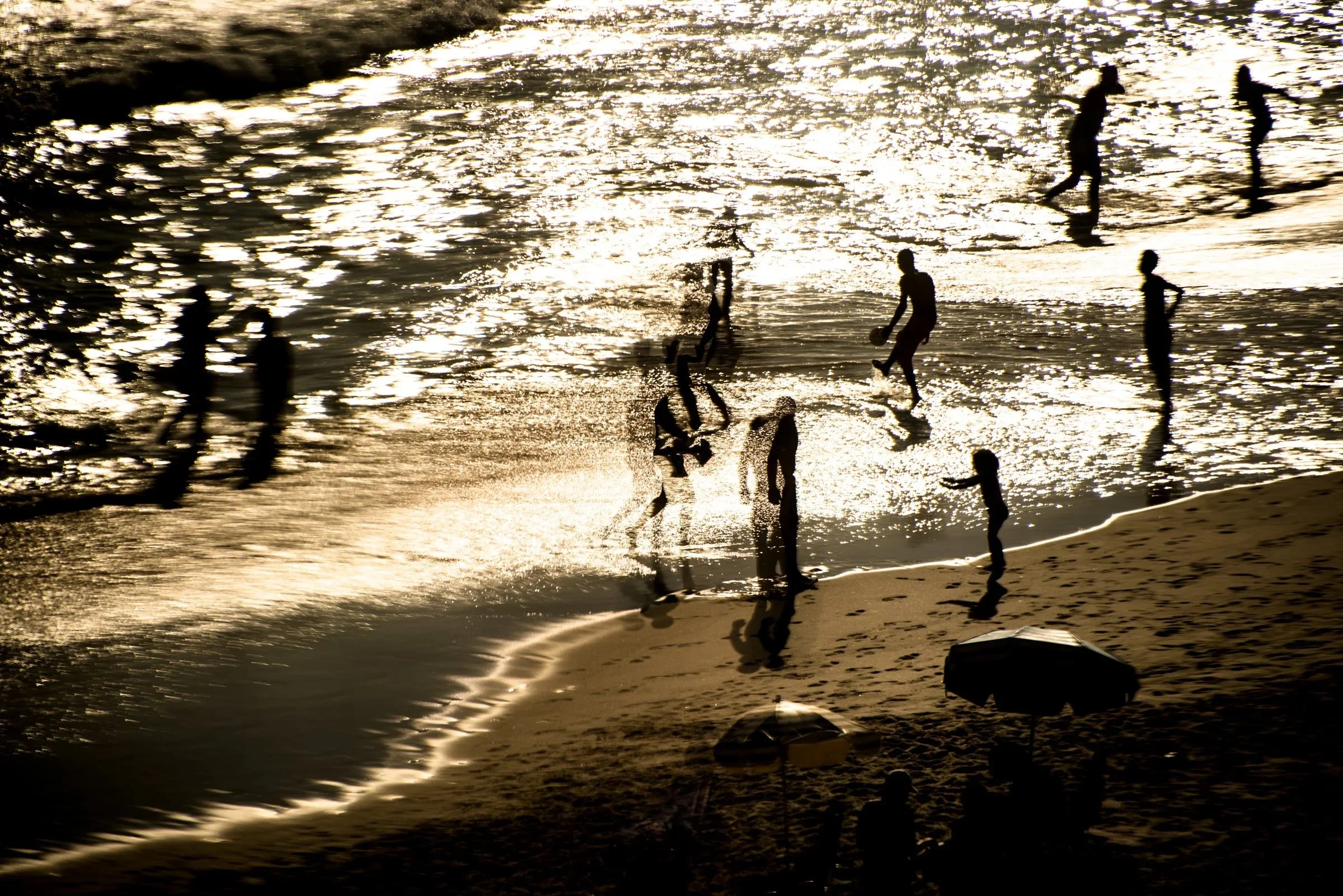
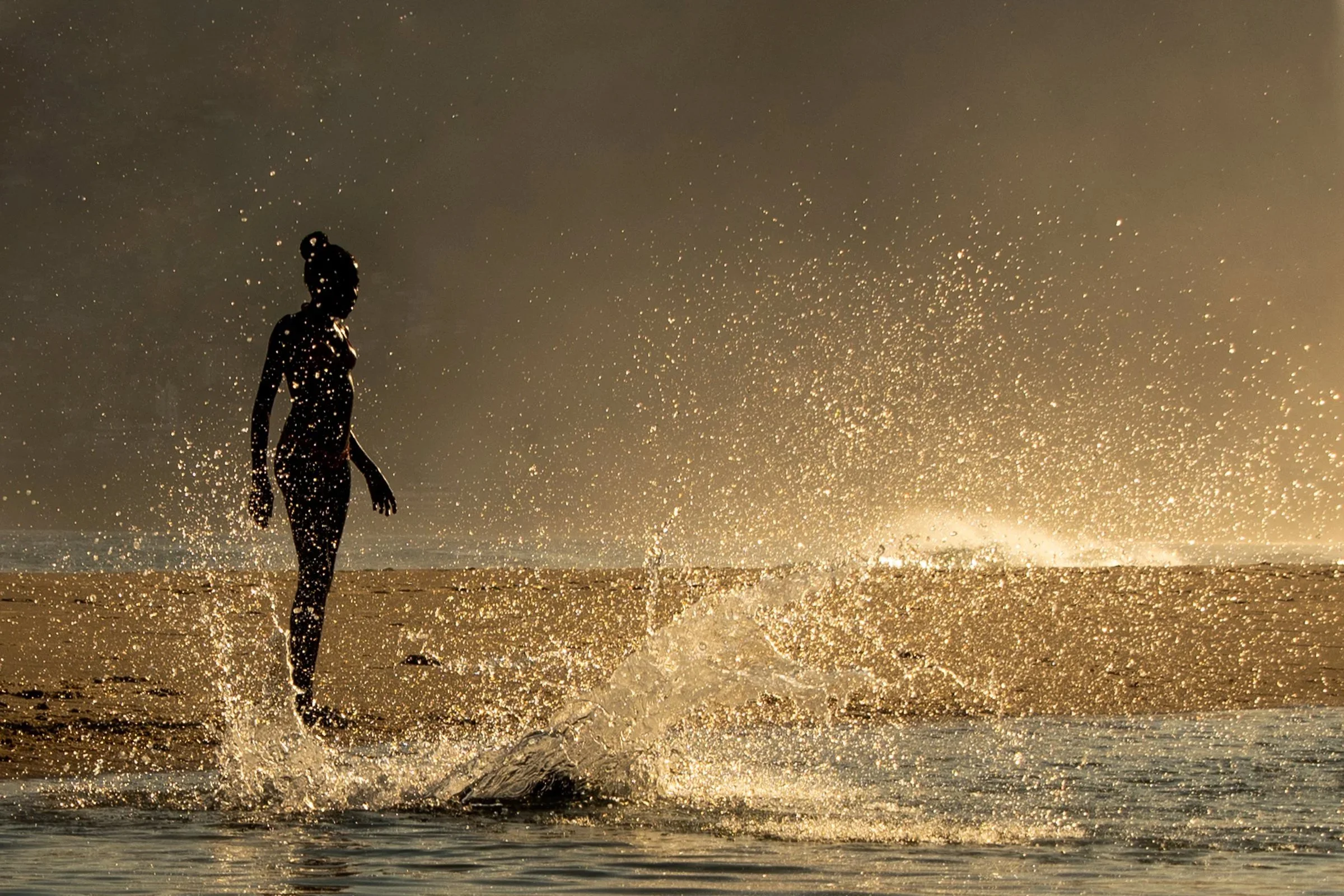
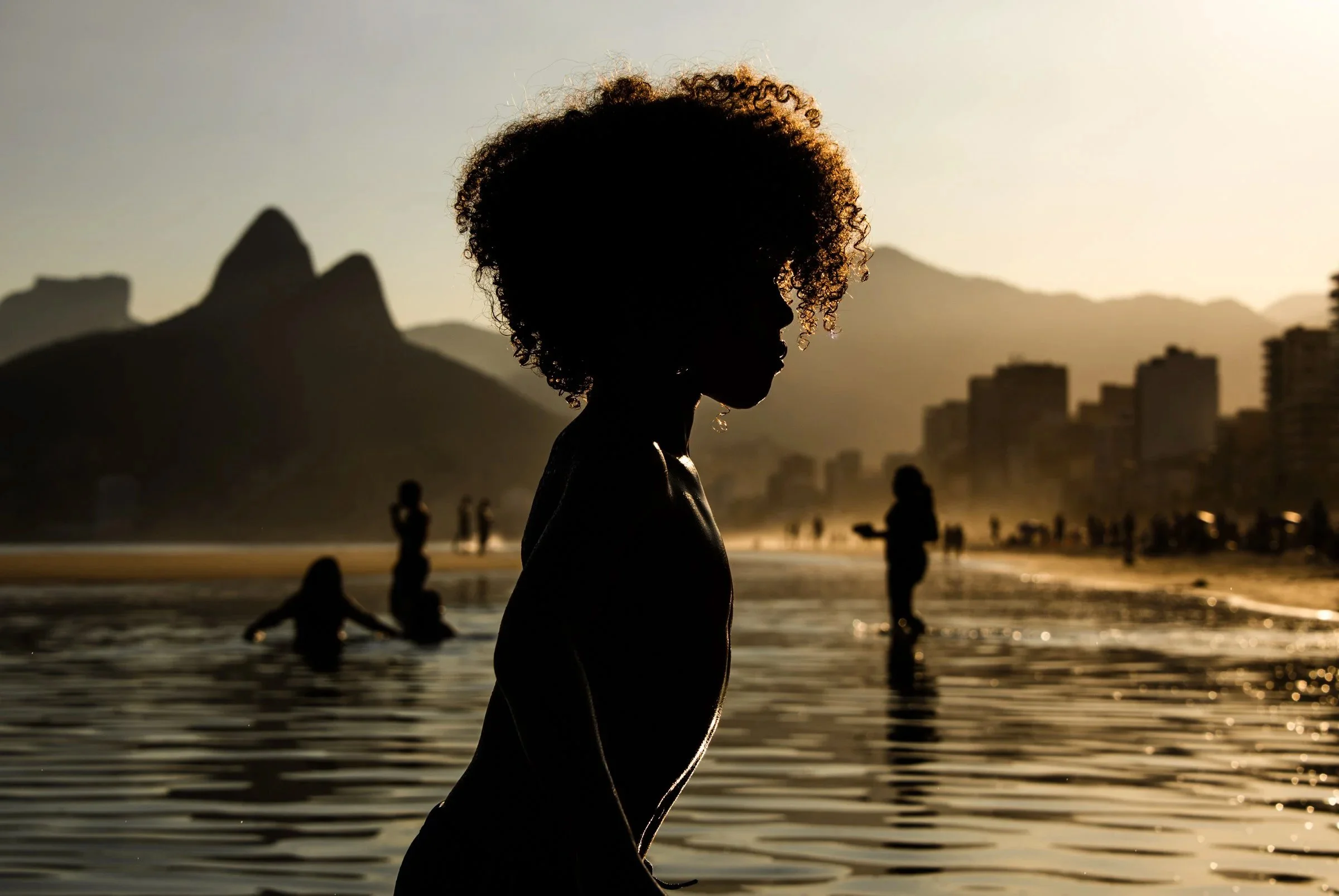
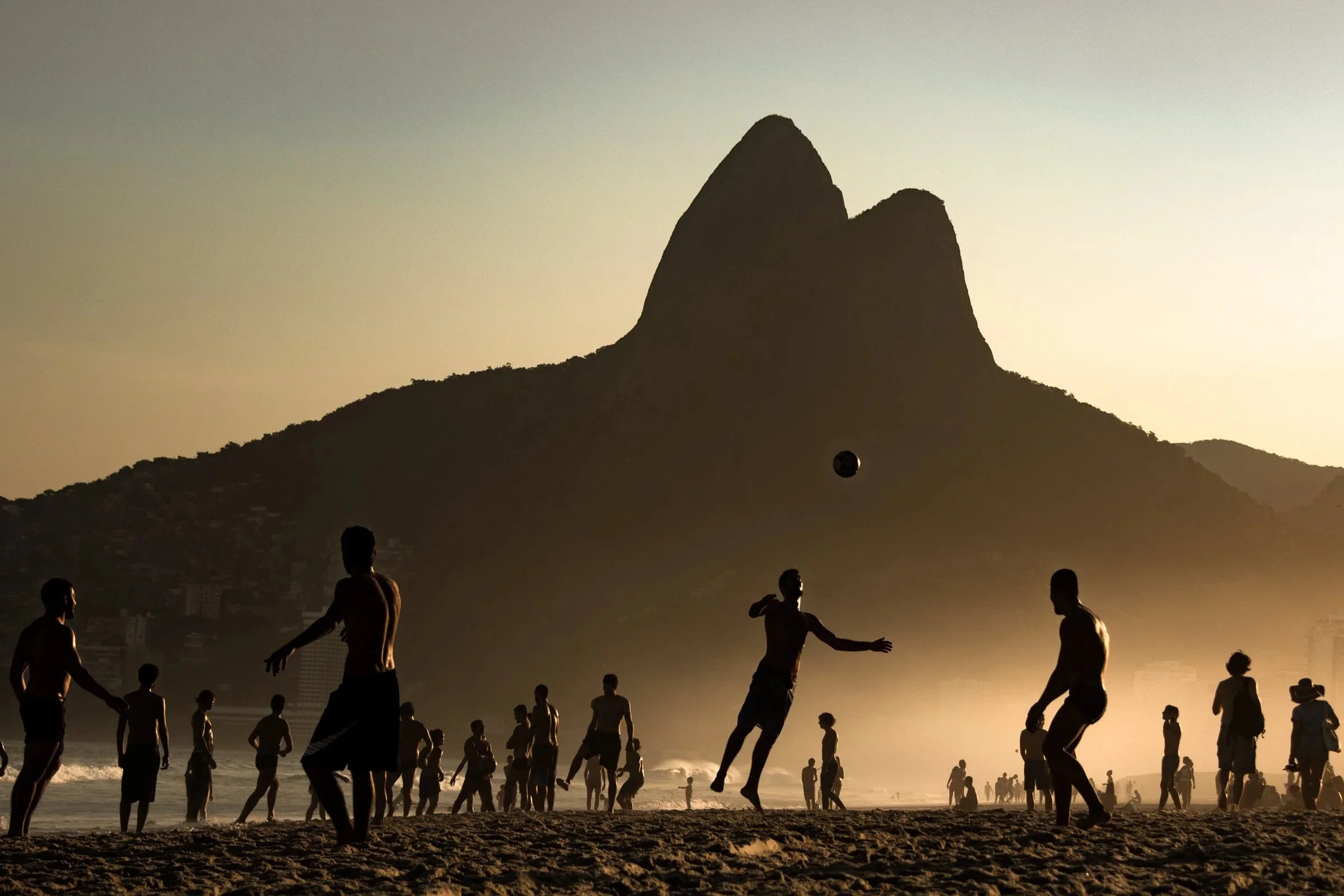
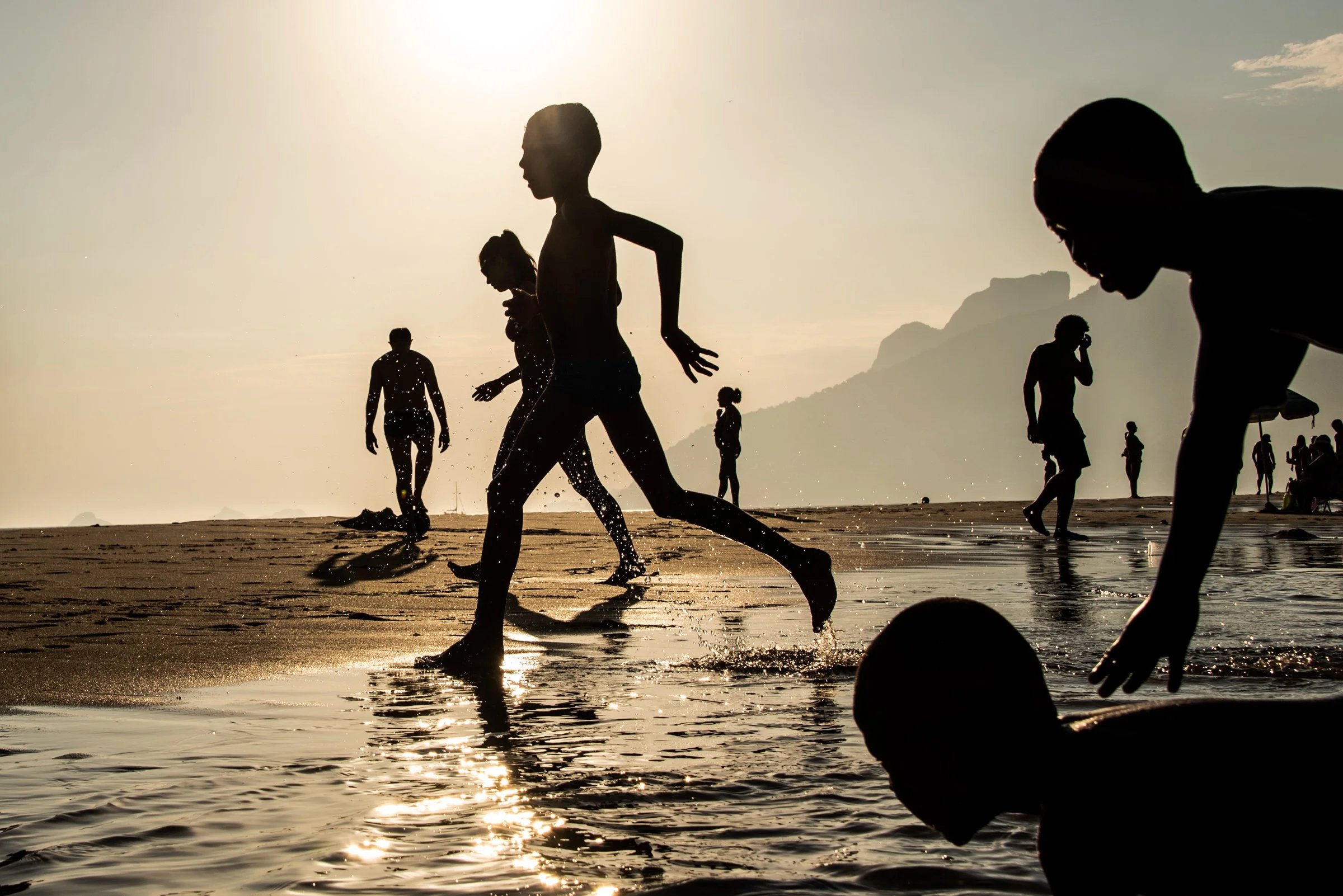
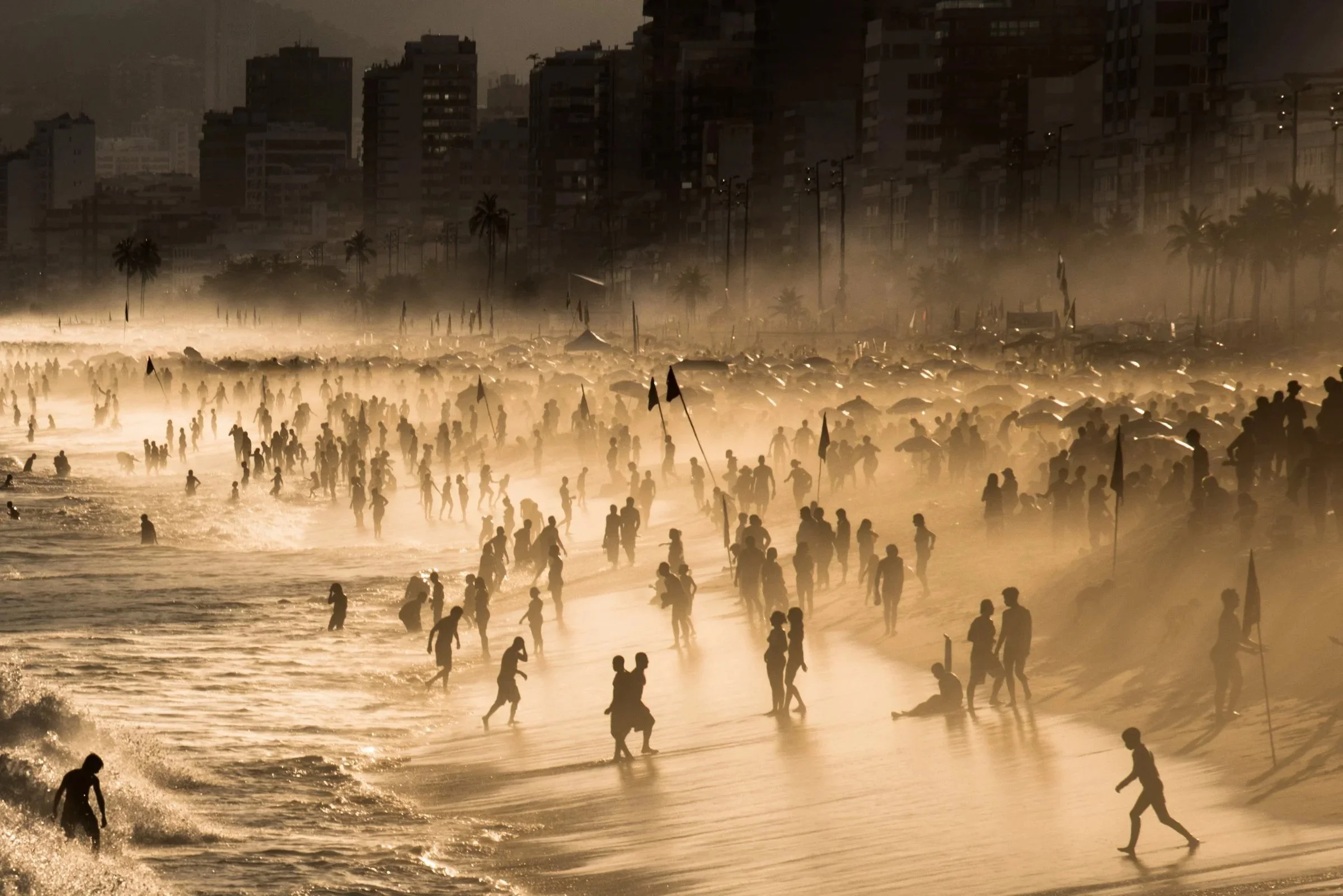
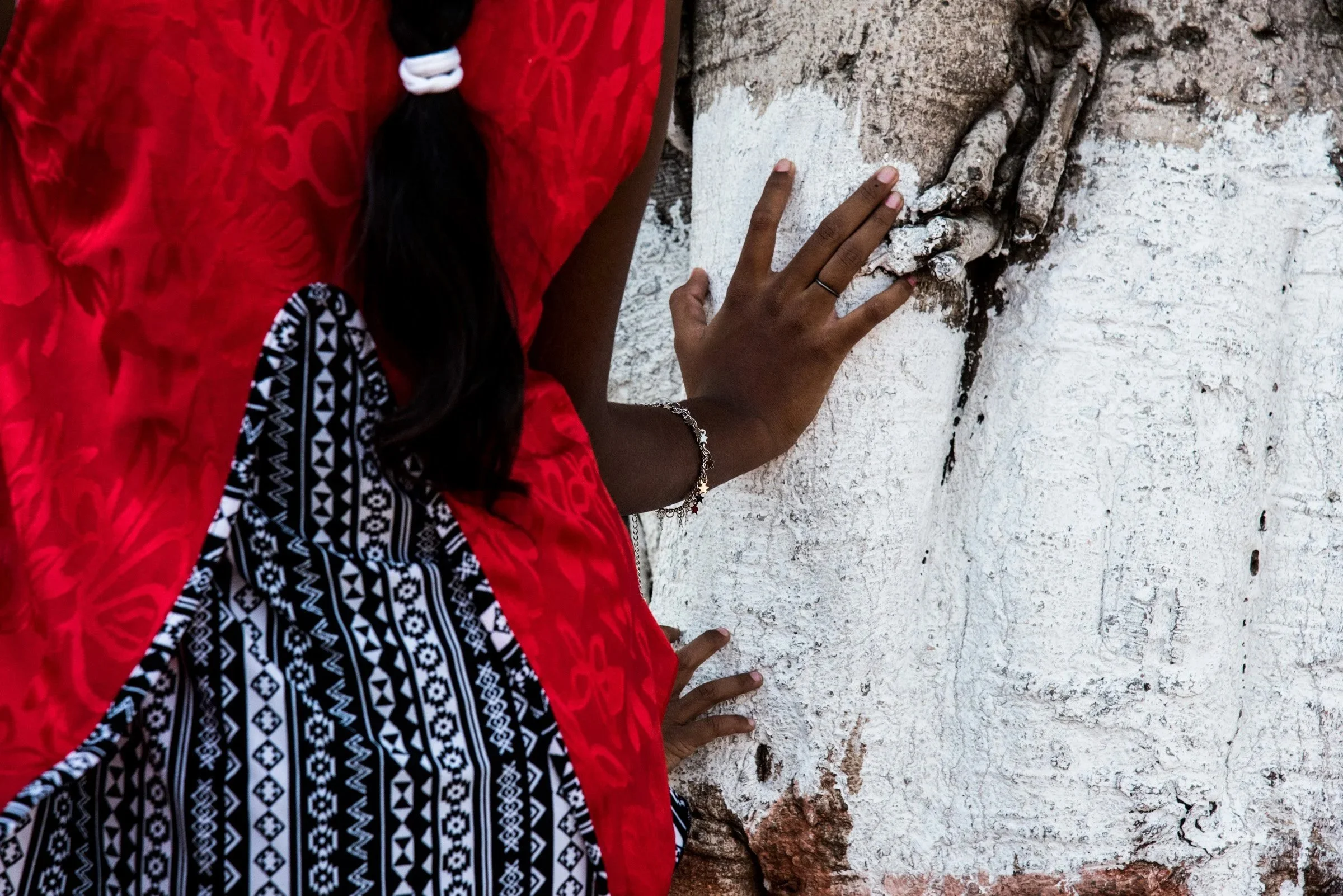
She wanted something fun to do and discovered she had natural instinct for composition. Her street photography captures Rio's golden light and chaotic energy in ways that surprise even veteran photographers. Age became her advantage, not her limitation. She shoots without the pressure younger photographers feel to build careers.
Their conversation covers the reality of street photography in dangerous places. Sandra shares stories about negotiating with armed robbers for her memory cards and throwing cameras into food stands to avoid theft. Gulnara talks about documenting 9/11 from four blocks away and losing her hearing when the towers collapsed. She also founded Women Street Photographers after Trump's 2016 election to give female voices equal space in exhibitions and festivals. They explain how they approach strangers differently and why age changes how people react to your camera.
Martin: How did you two meet each other?
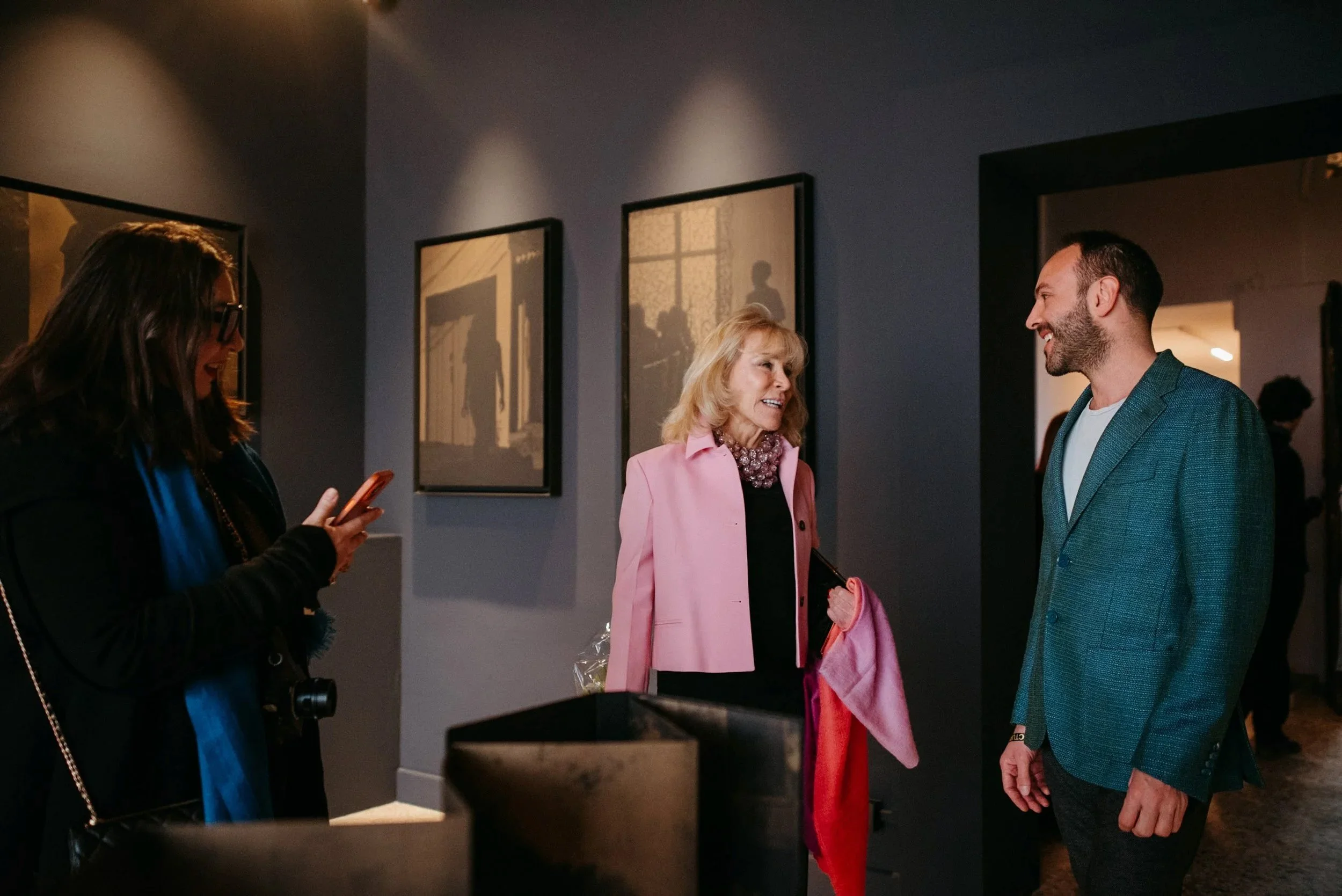
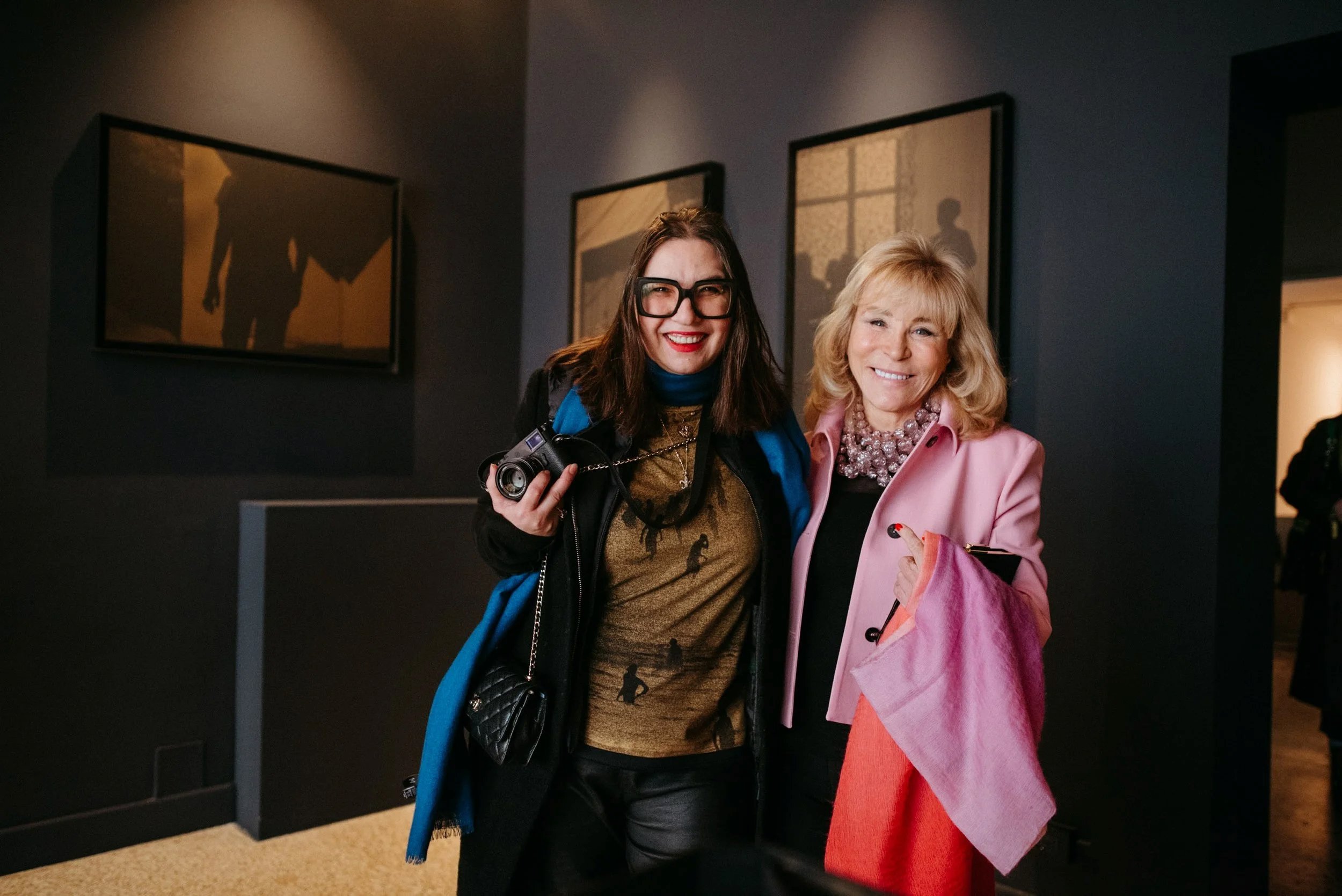
Gulnara: I'm the founder of Women's Street Photographers, and in 2018 I announced an open call for a group exhibition in New York City. Sandra submitted her work, and I was immediately struck by her vibrant and stunning photography. She was selected as one of 75 women street photographers to be featured in the exhibition. We communicated during the preparation process when I asked all the participants to send higher resolution files. Then we met in person at the Miami Street Photography Festival.
Sandra: Niki told me, "Let's have lunch with Gulnara." Remember, Niki?
Gulnara: Yes, Niki Lioudi, a Greek photographer. We met for lunch and just clicked immediately. I loved her energy, and we discovered we had so much in common. We're both dreamers.
Martin: Was that the exhibition you later curated for Sandra?
Gulnara: No, that was the group exhibition I curated for Women's Street Photographers in 2018. Sandra's solo exhibitions came later. She asked if I'd be interested in curating her work, and I was honored to do so.
Martin: And you also curated exhibitions for her in 2022, correct?
Sandra: Twice, actually. In Venice, New York, and at the consulate.
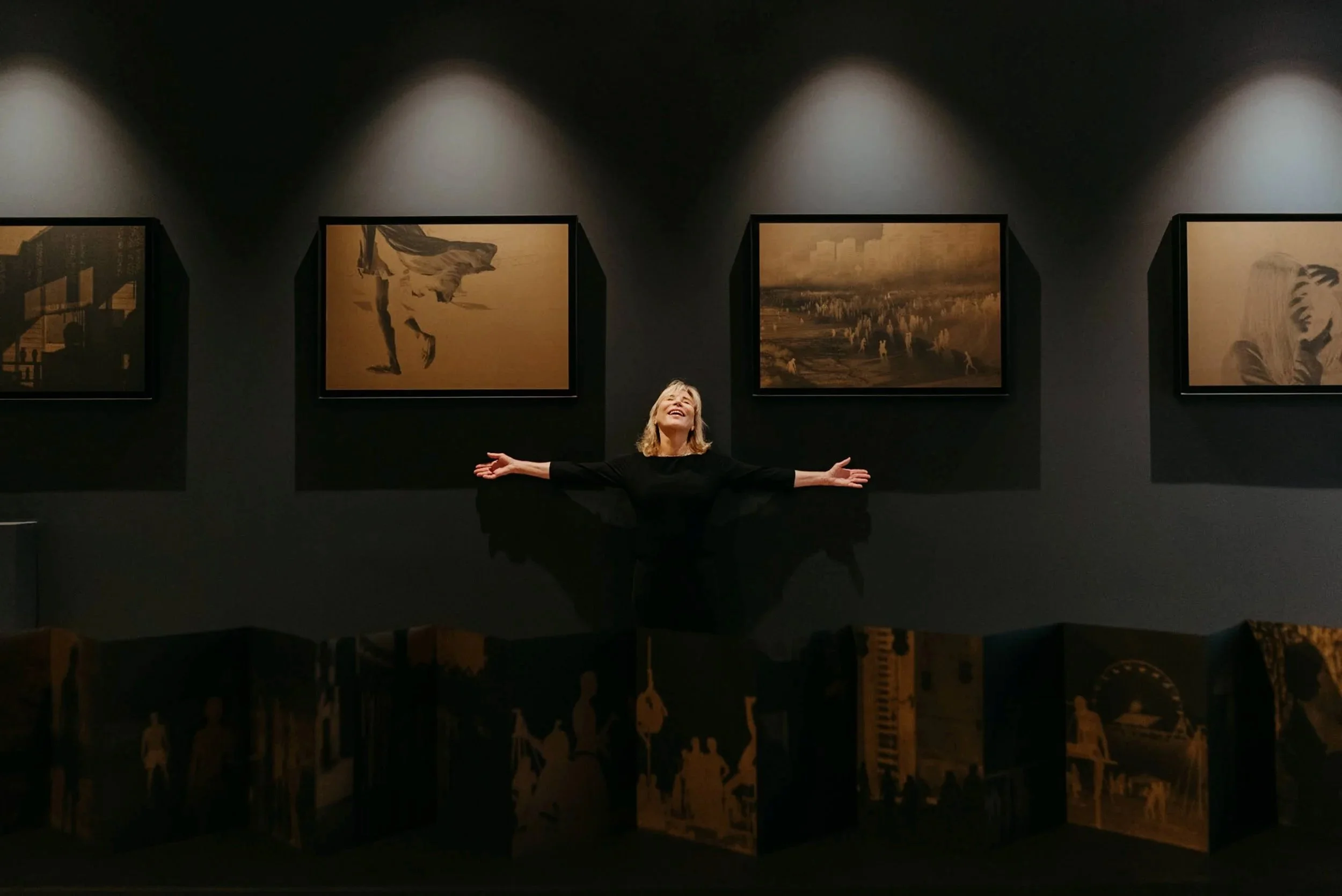
Gulnara: Yes, thank you for reminding me. I curated her show in Venice, which was a wonderful exhibition where she presented two beautiful projects. Then I curated her show in New York, which was much larger. We made very large-scale prints for that one. Throughout all of this, we've remained close friends, connecting between projects and exhibitions.
Martin: I know age can be a sensitive topic, but you each started photography at very different stages of life. Gulnara, you began at 15, and Sandra, you started at 60. Have you ever discussed how this might shape the way you each perceive photography?
Sandra: I learn so much from her, that's the thing. I have a lot of catching up to do.
Martin: Have you ever discussed how your different experiences might influence your perspective on photography?
Gulnara: We've had many discussions about this. What I appreciate and admire about Sandra's work is her drive. Besides being incredibly talented, she has exceptional taste and a remarkable eye. From the very beginning, she was creating beautifully composed, perfectly lit photographs with genuine moments, movement, and vibrant color. I think talent can be innate. I don't like to use the word "luck," but she had the opportunity to take a workshop where she discovered her natural gift for photography.
Sandra: I'm not a technical person because I never formally studied photography. I don't understand all the technical aspects and techniques. I simply see something and capture what I see in that moment. It's straightforward for me. Photography is about having fun, and I genuinely enjoy it. We went out shooting together the other day here in Rio, and it was wonderful. She photographed a man while I photographed a woman. It's fascinating how each of us sees something different. It's really special.
Gulnara: That was actually the first time we went out shooting together. I was impressed watching Sandra work her magic. She's very subtle in her approach, and I can't wait to see the photos.
Sandra: I still need time to edit them.
Gulnara: It doesn't matter that we have completely different styles in photography. I appreciate beautiful, multi-layered work, and that's exactly what Sandra creates. Her photographs have layer upon layer of visual complexity. She also captures these perfect moments, which adds yet another dimension to her photography.
Martin: What's your approach to curating Sandra's exhibitions? What do you focus on, and how does it feel?
Gulnara: To curate someone's work, you must genuinely love it. If you're not excited about the work, the curation feels forced and doesn't succeed. With Sandra, I wouldn't say it was easy, but it was deeply pleasant. Curation has its own methodology, you need to understand how the images work together, how they flow from one photograph to the next. What made it particularly interesting was that her work is so different from mine. My photography is more confrontational, I get close to people, I interact with them. It borders on documentary photojournalism. Sandra's work, on the other hand, is poetic, deep, and beautiful. You want to lose yourself in it.
Gulnara Lyabib Samoilova
Martin: Tell me about the Women Street Photographers Project.
Gulnara: It's become an incredible community. That's how I met Sandra and so many other amazing women. Wherever we travel around the world, we connect and get together. It's a truly supportive network.
Sandra: It's wonderful. Many photographers who've never published a book contact me with questions about printers and processes. When someone has doubts or needs advice, for instance, when a friend visits Rio, they reach out. The community thrives because everyone genuinely helps each other. It's invaluable.
Martin: You founded it in 2017, correct? What made you realize this platform was needed?
Gulnara: Honestly, I didn't initially realize a platform was needed. After Trump's first election, I felt this urgent desire to empower female voices. I kept asking myself, what can I do to support women? That election energized me, and that's when I started developing the idea for the exhibition. I didn't fully grasp how needed or important it would become. I certainly didn't expect it to last this long, though there are still many issues to address. Women street photographers aren't well represented. I have no problem with male photographers, they do excellent work, but we also deserve to be shown. More than that, we need representation in judging panels, as workshop leaders, and as festival speakers. We simply want equal opportunities in these spaces.
Martin: Has street photography been traditionally male-dominated? Are there specific barriers women face in this field?
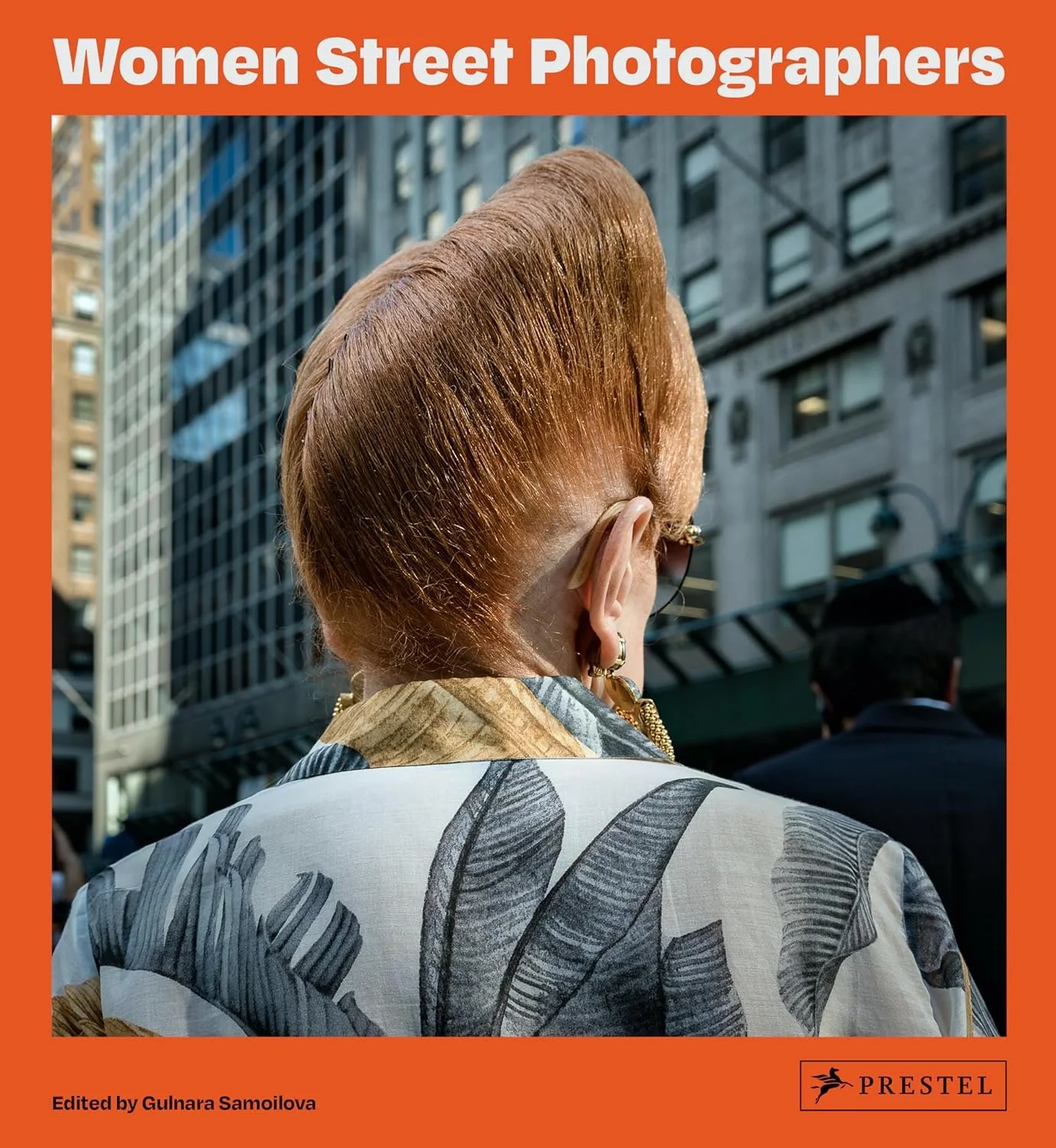
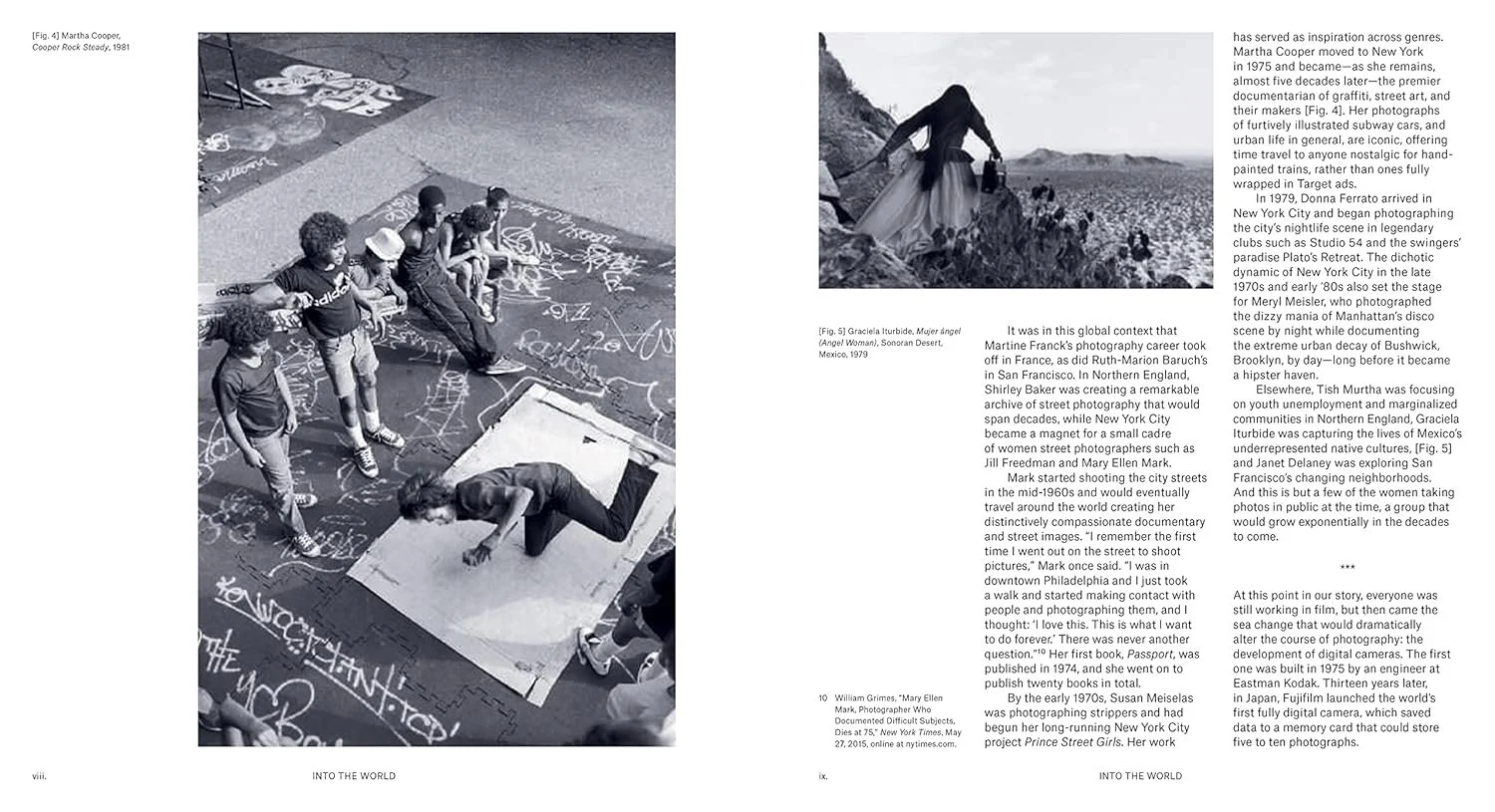
Gulnara: We could spend hours discussing this. It's the entire field of photography, really. It's not surprising when you consider that photography is relatively young as an art form. It was a very male-centric profession, heavy cameras, bulky equipment, and historically, women were expected to be homemakers. However, we're now discovering that many historical photographs were actually taken by photographers' wives, which is remarkable. Women have loved photography from the very beginning. When I published the book Women's Street Photographers, Melissa Breyer wrote an excellent essay on this history. Reading it was eye-opening. I hadn't fully realized that women have been claiming our space in street photography since the very beginning.
Martin: Have you seen any changes since you started Women Street Photographers in 2017?
Gulnara: Absolutely. Just look at Sandra and the other women in the community. They're achieving incredible success. I think it's due to increased exposure, not necessarily just from WSP itself, but because the platform has connected us all. This connection has given us more confidence to show our work, to talk about our work, and to claim our rightful space in the field.
Sandra: Gulnara also runs a remarkable mentorship program. She gives opportunities to photographers who normally wouldn't have access, people from India or Africa who've never traveled before. They come to New York for a week and receive mentorship from her. The impact on these individuals is enormous, and they often go on to influence entire communities back home. It's an amazing accomplishment.
Martin: Do you have advice for women who might be afraid to approach strangers on the street or hesitant about street photography?
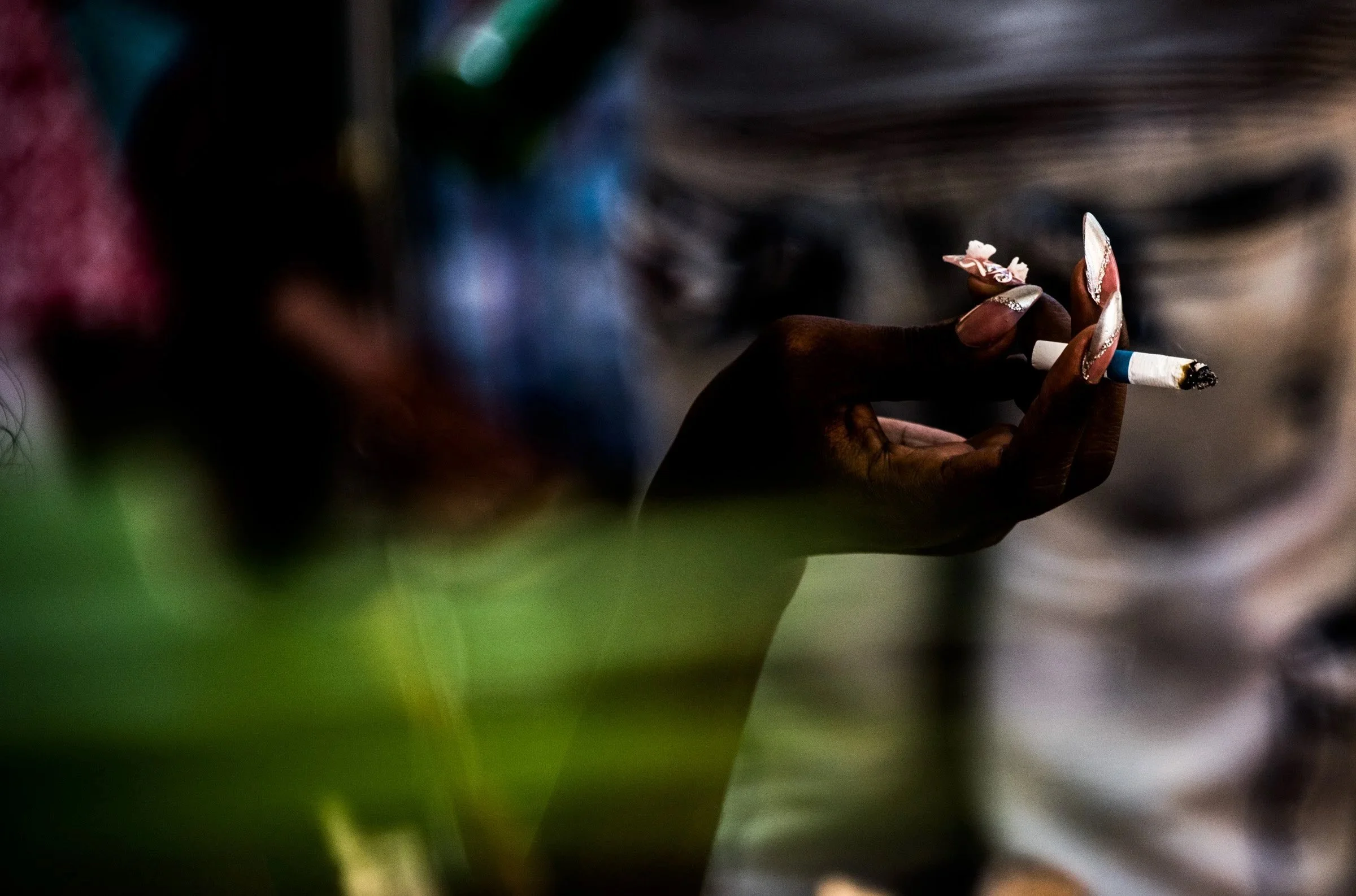
Sandra: We have completely different approaches. Gulnara is much more polite than I am. She approaches people directly. The other day, without speaking a single word of Portuguese, she gestured to ask someone if she could take their picture, and they were delighted. I don't do that at all. I simply take the photograph. If someone objects afterward, I delete it immediately. I show them, "Look, it's here. Do you want me to keep it or delete it?" She's far more courteous in her approach.
Gulnara: I don't always ask permission, but when I'm in a new country, and I'm currently in Brazil, I try to sense the atmosphere first. What's the vibe? How do people react to cameras? But typically, I ask for permission with a smile. If someone smiles back, I take that as a yes.
Sandra: You create an interaction with your subjects. I don't engage that way. I take the picture and move on immediately. It's just a different method.
Sandra Cattaneo Adorno
Gulnara Lyabib Samoilova
Gulnara: I prefer to spend more time with my subjects. I take a picture, smile, and seek silent permission through eye contact while gesturing with my camera. I always approach with my camera visible near my face so people know I'm about to photograph them. I never lift my camera at the last second to take a picture, that's when people get upset. When I approach, the camera is already there, they can see I'm a photographer. I smile. I usually wear colorful clothing. I don't look threatening. Once they give me that silent permission, I feel comfortable spending more time with them. Then I work on my composition, moving around to find the right angle. Afterward, I often ask for their phone and take a picture for them so they have their own memory of the moment.
Sandra: I don't do any of that. I try to capture people without them even noticing. Even though I have a large camera, and Gulnara uses a smaller one, I still try to photograph them discreetly. It's a completely different approach. I want them to be as natural as possible. That said, people have been incredibly kind to me, especially in potentially dangerous situations. They've warned me, "Those people are going to try to steal your camera, come sit with us." They've been wonderfully helpful and protective.
Sandra Cattaneo Adorno
Gulnara: Sandra, you have to tell them about the pancake vendor story.
Sandra: I have so many stories. Here in Rio, camera theft is incredibly common. My camera has a large 35 to 300mm lens, so it's very visible when I'm photographing. Once, I was on the sidewalk and noticed a group of guys approaching. When you're from here, you develop an instinct for these situations. They move in packs. I immediately thought, "There goes my camera again." There was a street vendor nearby making pancakes on the sidewalk, and I just threw my camera right into his pan.
Gulnara: Into the pancakes!
Sandra: Yes, right into the pan. I knew I was about to lose it, there was no other option. The vendor was hilarious. He said, "It's warm, but it still works." Then he told me, "Those guys are from this neighborhood. They absolutely would have stolen your camera." So my instinct was correct. They've stolen several cameras from me over the years. This wasn't the first time.
Gulnara: When you told me that story, I was amazed. Such quick thinking.
Sandra: Another time on the beach, I often photograph near the water because everyone's attention is on the ocean, which offers me some protection. A thief approached to grab my camera, so I ran straight into the water with it held high. People sitting nearby started shouting, "Pega ladrão, pega ladrão!" Catch the thief! And he ran off.
Sandra Cattaneo Adorno
Martin: So you're not afraid?
Sandra: No, but I'm not reckless either. There are certain areas I avoid. For example, I don't go to the favelas. Gulnara has photographed there, and I've been there for work in the past, but I wouldn't go to photograph. If you capture the wrong person, there can be serious consequences. I try to be careful, but I'm generally fine. Apart from losing cameras, of course. Once, I even negotiated with a robber. My husband was astonished. The man had taken my camera, but I asked if I could keep the memory card. He asked why it was so important, and I told him it only had family photos, nothing valuable to him. He said it must be precious if I wanted it that badly. I showed him the images, and he agreed to let me keep the card. My husband couldn't believe I was negotiating with an armed robber, but I stayed calm. Here in Rio, they all carry guns.
Gulnara: He had a gun?
Sandra: Gulnara, they all have guns. It's completely normal here.
Gulnara: Sandra is absolutely fearless.
Sandra: You have to stay calm with them. Let them take what they want. Never react. Nothing is more precious than your life. If he hadn't agreed to give me the memory card, I would have accepted it. I simply tried to negotiate, and fortunately, he was reasonable. At least I didn't lose that day's photographs.
Sandra Cattaneo Adorno
Martin: Do you think your age gives you any advantage in certain situations?
Sandra: It's an enormous advantage. Photography wasn't my primary career. I did other things before this. It started as a hobby and evolved into something more serious over time. I don't have the pressure that a 20-year-old faces when trying to build a photography career. There are so many talented photographers competing for work, and the pay is often terrible. It's incredibly difficult. But I don't face that pressure. I'm extraordinarily fortunate in that regard. I can approach photography with a relaxed mindset. If things go well today, wonderful. If not, there's always tomorrow. I don't have deadlines hanging over me or clients expecting deliverables. That freedom is invaluable. It transforms photography into something joyful rather than stressful. Without financial pressure or the burden of it being my primary income, I can simply enjoy the creative process. That perspective makes all the difference.
Martin: Would you recommend others start photography later in life?
Sandra: Absolutely. Photography is uniquely accessible compared to other artistic pursuits. If you're a sculptor or painter, you need studios and materials. But with photography, you simply take a camera anywhere in the world and opportunities appear before you. It's remarkably portable. More importantly, it transforms how you experience places. You're no longer just a tourist. You understand a city on a completely different level. What's the point of visiting Paris five times as a tourist? Go once to see the sights, but return as a photographer and you'll discover so much more. This applies beyond photography, really. Everyone should find something they genuinely love to pursue later in life. My husband plays music for enjoyment, and it brings him tremendous joy.
Sandra Cattaneo Adorno
Martin: You've experimented with incorporating QR codes in your book to link to your husband's music. How did you decide to combine photography with music?
Sandra: I was at a concert with my husband in California when the idea suddenly came to me. Mid-concert, I turned to him and said, "I want to use your music in my book." He asked why, and that's when the QR code concept crystallized. I'm not entirely sure how it occurred to me. I think we were using QR codes constantly during COVID for restaurant menus and contactless interactions, so the technology was fresh in my mind. I selected one of his compositions to accompany the work.
Martin: What was his reaction?
Sandra: He loved it. It was playful and meaningful. He became part of my project, which felt special. He even offered to perform live at the exhibition. I told him, "No, you don't need to do that, or you'll be standing there playing all day for spare change."
Martin: When you're photographing, what draws your eye to a scene? Is it the light, the people, or something else?
Sandra: Light, primarily. I'm constantly chasing light. Everything else follows.
Gulnara: When we walked together, you kept commenting on the golden light, how beautiful the quality was. That's clearly what captivates you.
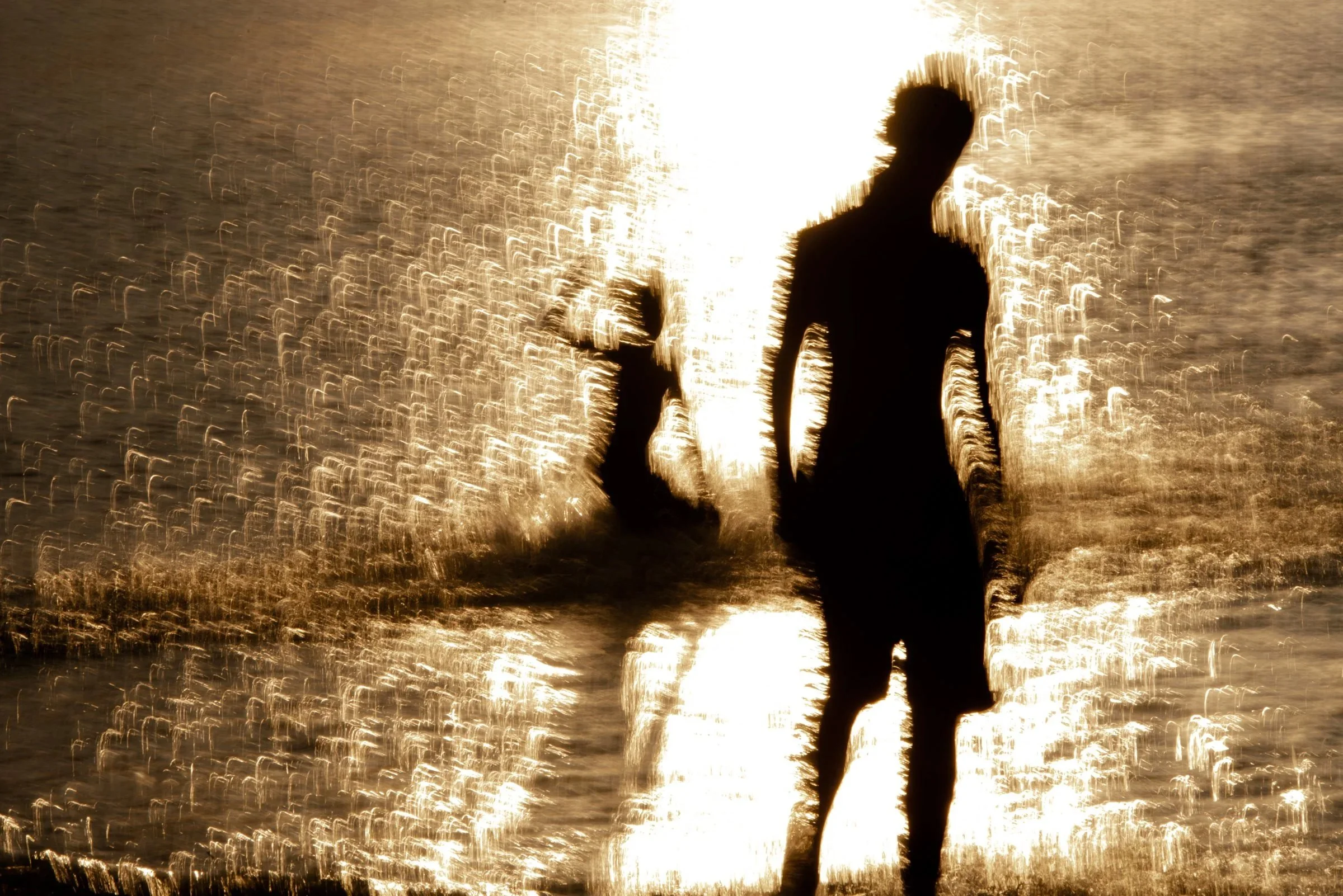
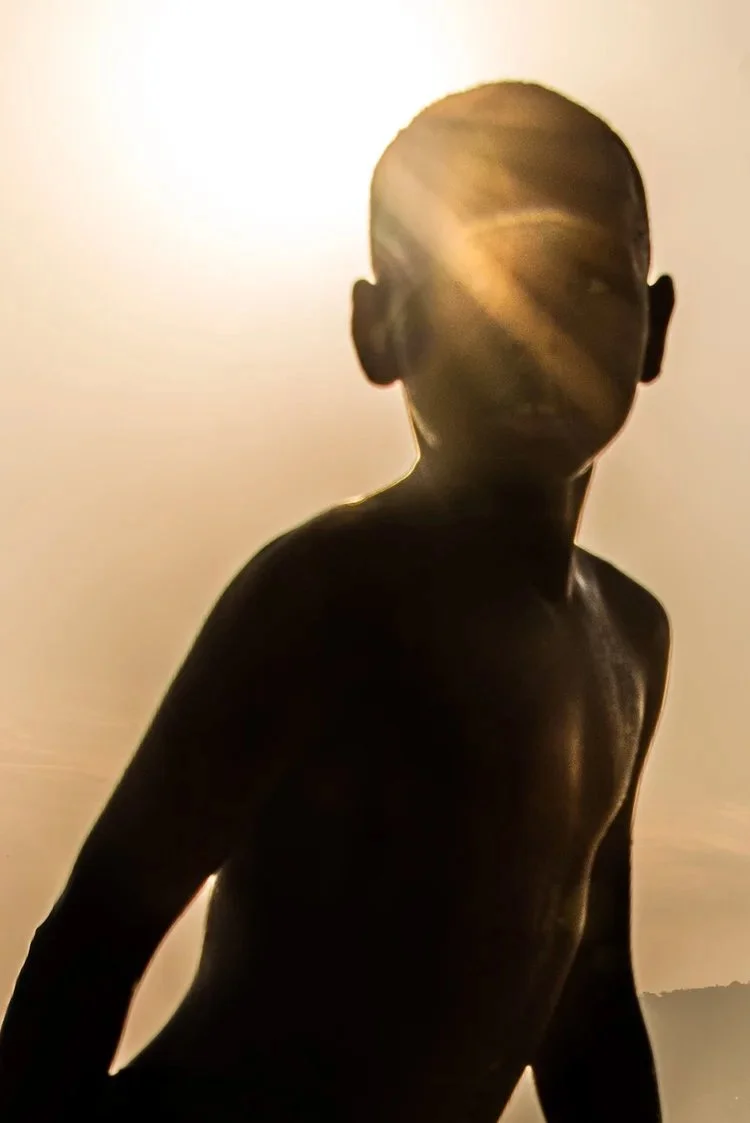
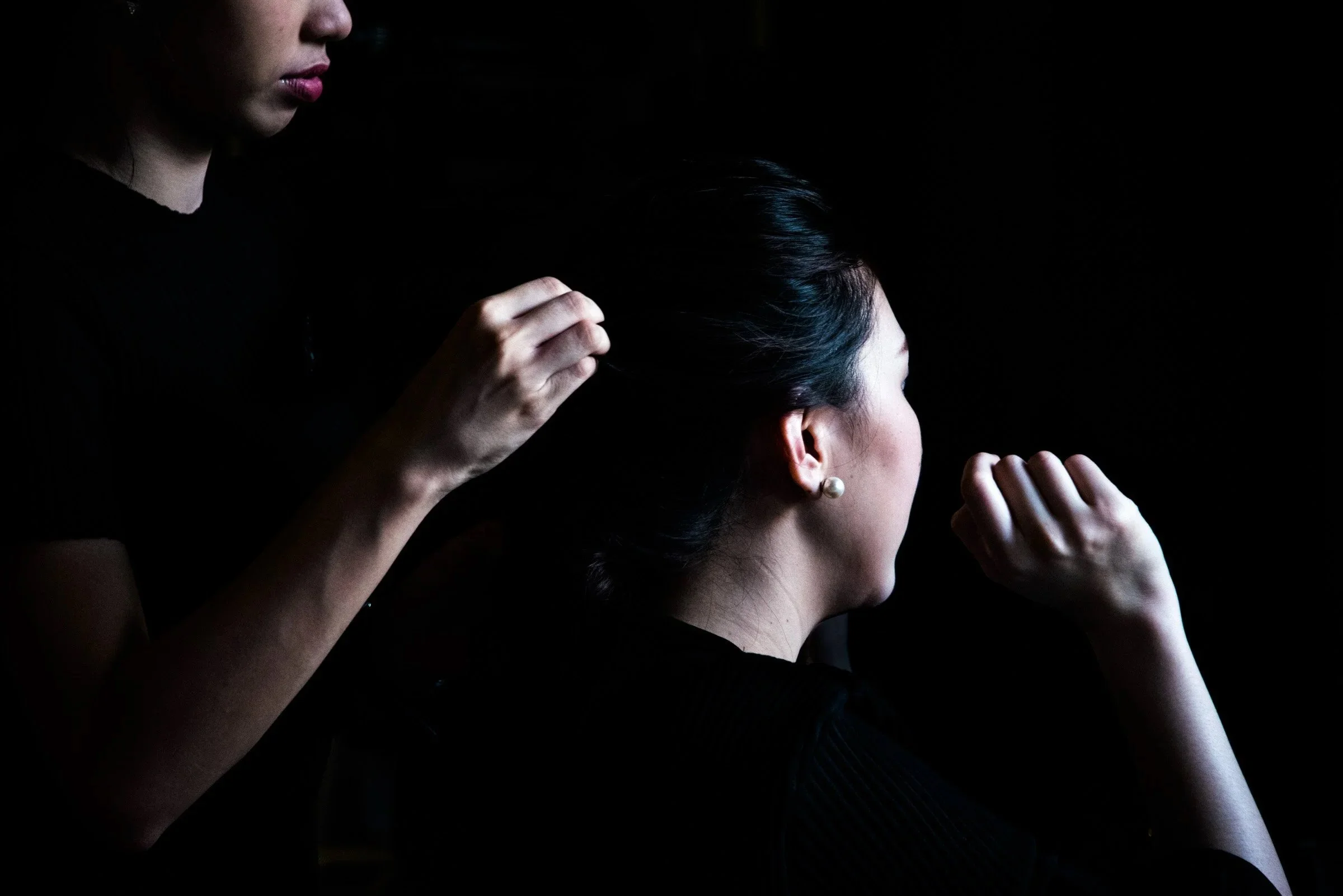
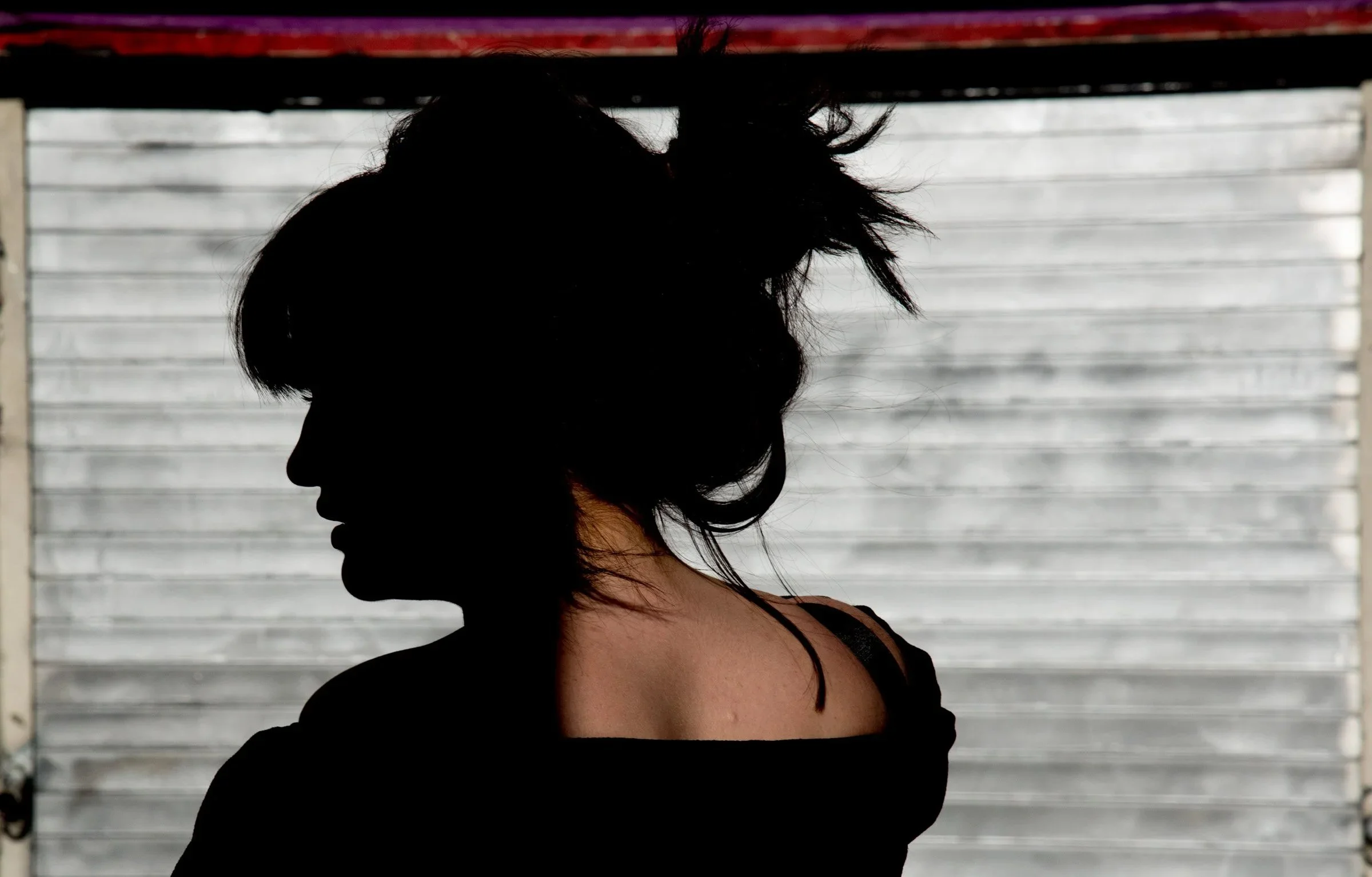
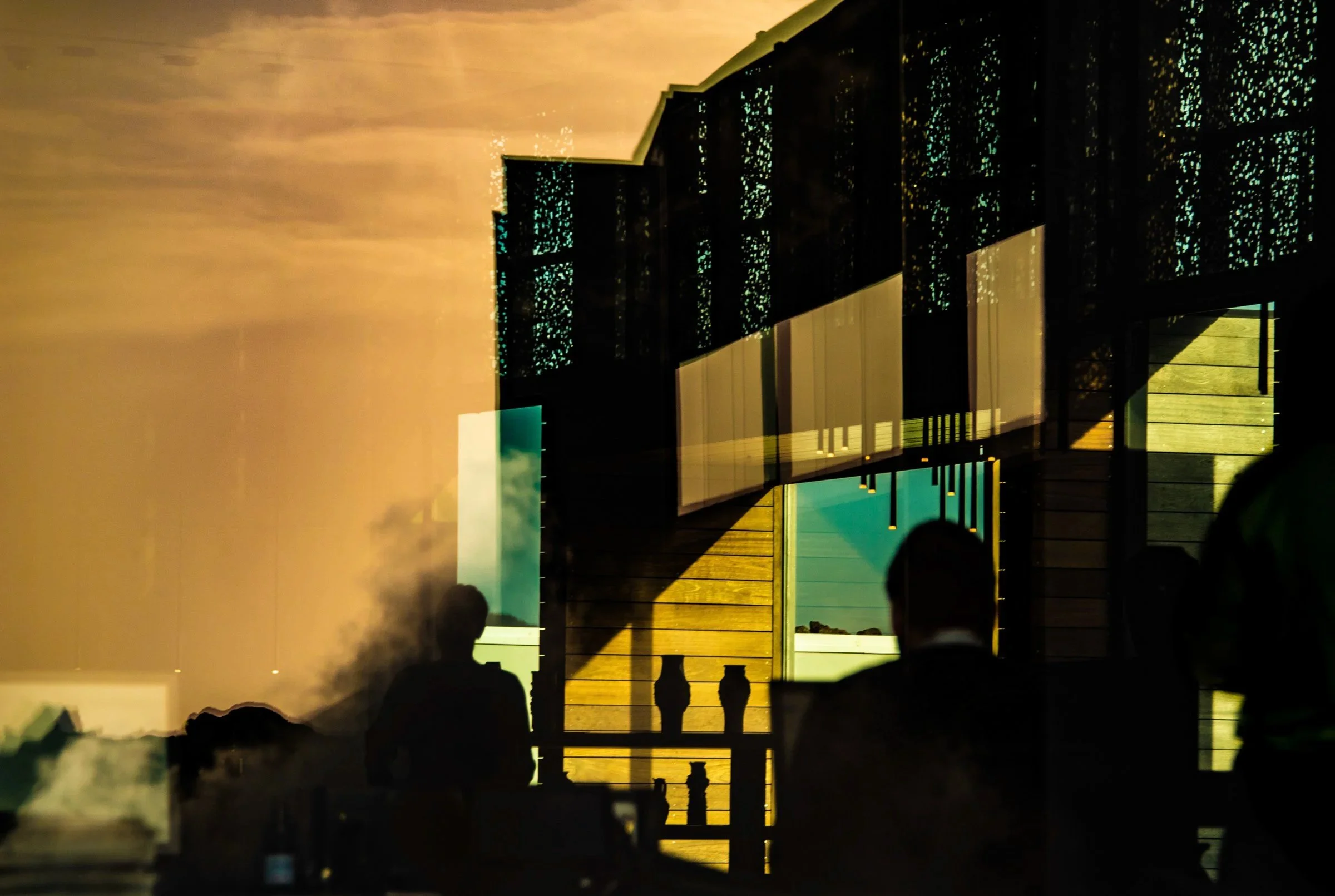
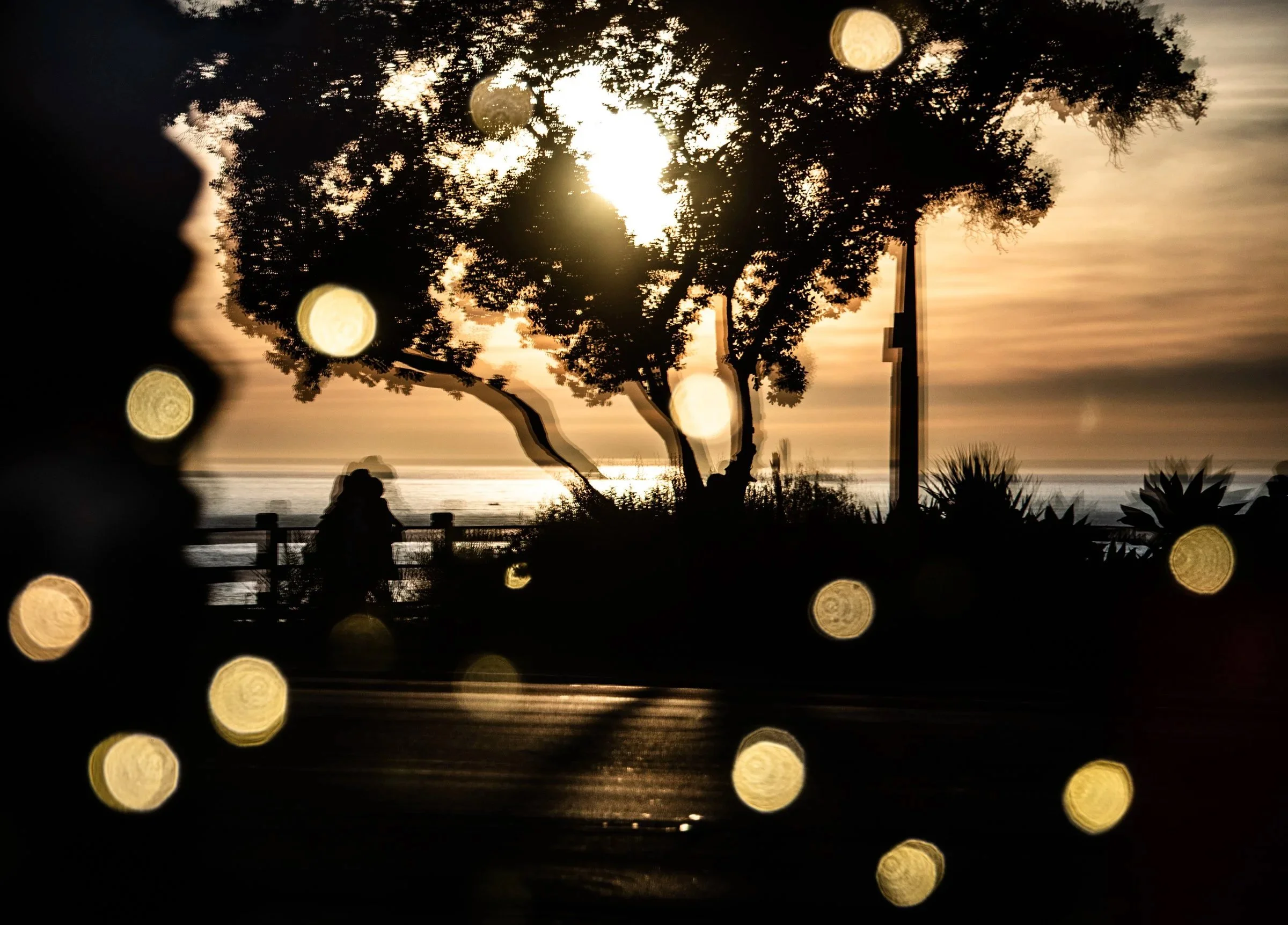
Sandra: Exactly. I want to see what emerges in that beautiful light. It's fascinating because even from that single walk, the photographs varied dramatically depending on where I positioned myself. Some images show only silhouettes, while others reveal intricate details, hair streaked with gold. The light transformed everything. It was a remarkable outing.
Sandra Cattaneo Adorno
Gulnara: Sandra, I wanted to ask you about your new project for the next Biennale. You're working in black and white now, correct?
Sandra: Yes, for the 2026 Venice Biennale. It's actually silver and black rather than traditional black and white. This is a completely different project. The 2026 theme is "Foreigners," which relates to minimalism. The concept is to strip away all excess. I thought, remove all the color and reduce the image to its essential bones. That's how I'm interpreting what they want for this Biennale.
Martin: So it's monochrome?
Gulnara: From what little I've seen, it looks excellent. Very unique. That's what I appreciate about you, Sandra. Your mind works differently. You always develop these distinctive concepts for your exhibitions.
Sandra: I enjoy the creative process. Thinking through these ideas is fun for me.
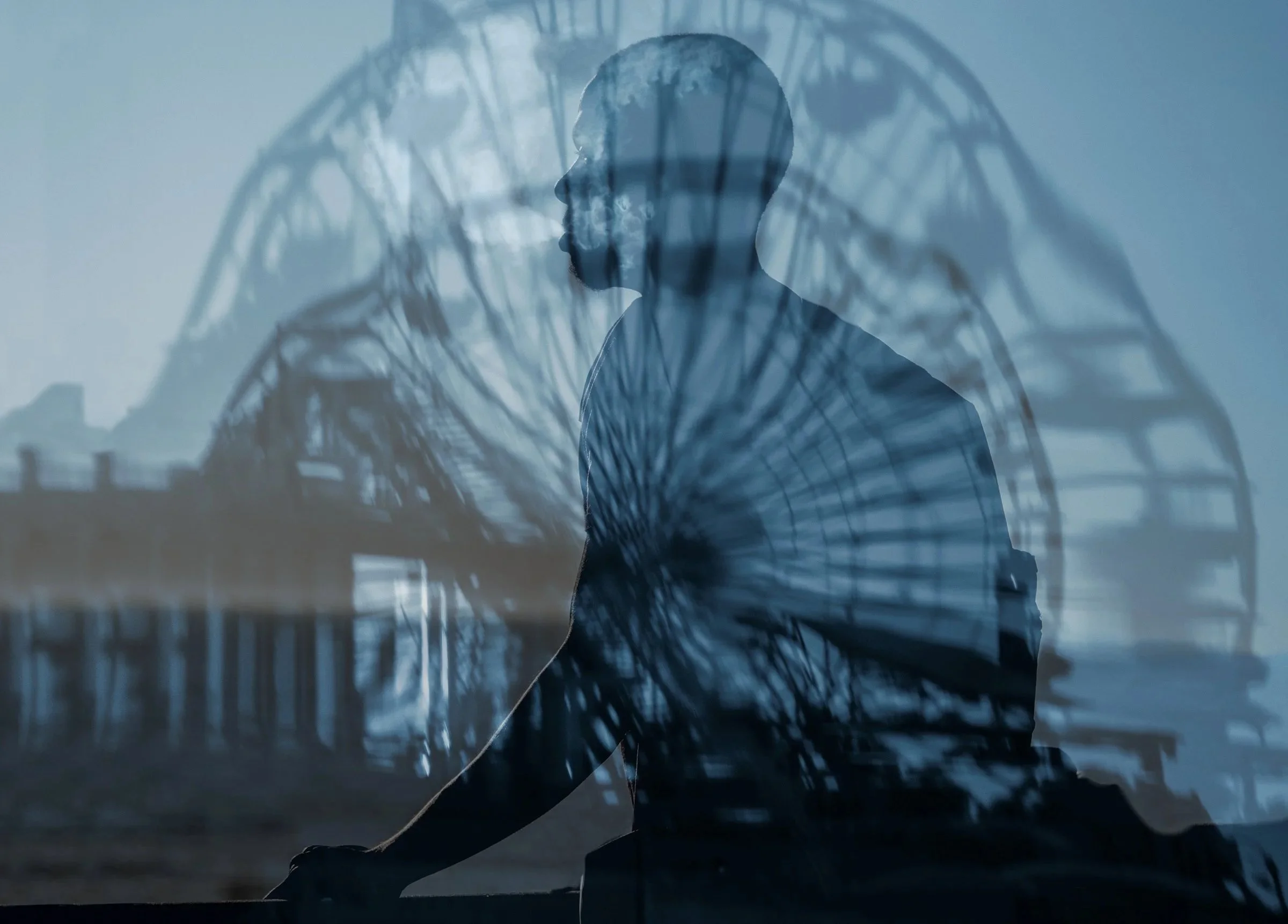
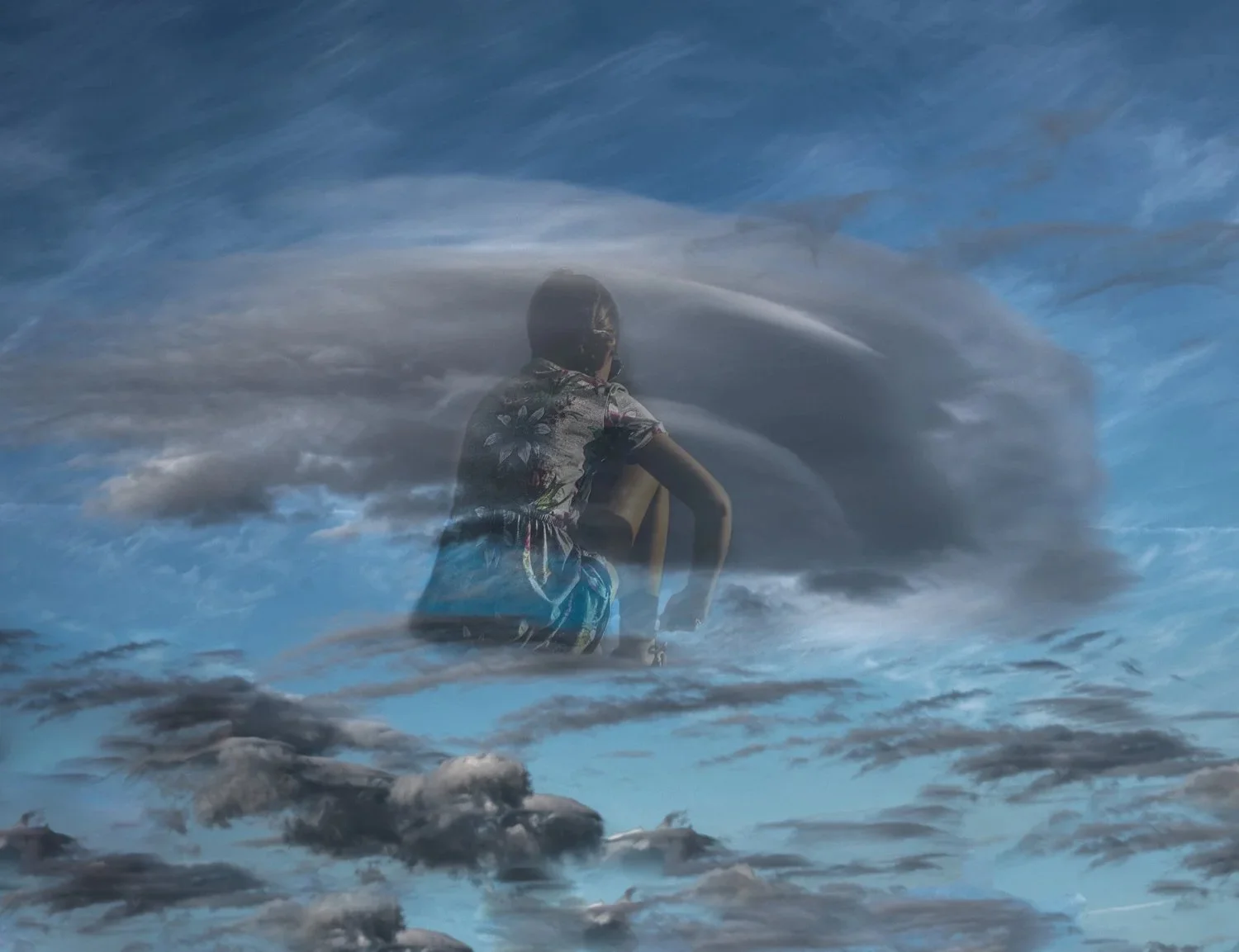
Martin: Sandra, you experiment extensively with reflections, shooting through various surfaces. What makes a great reflection photograph?
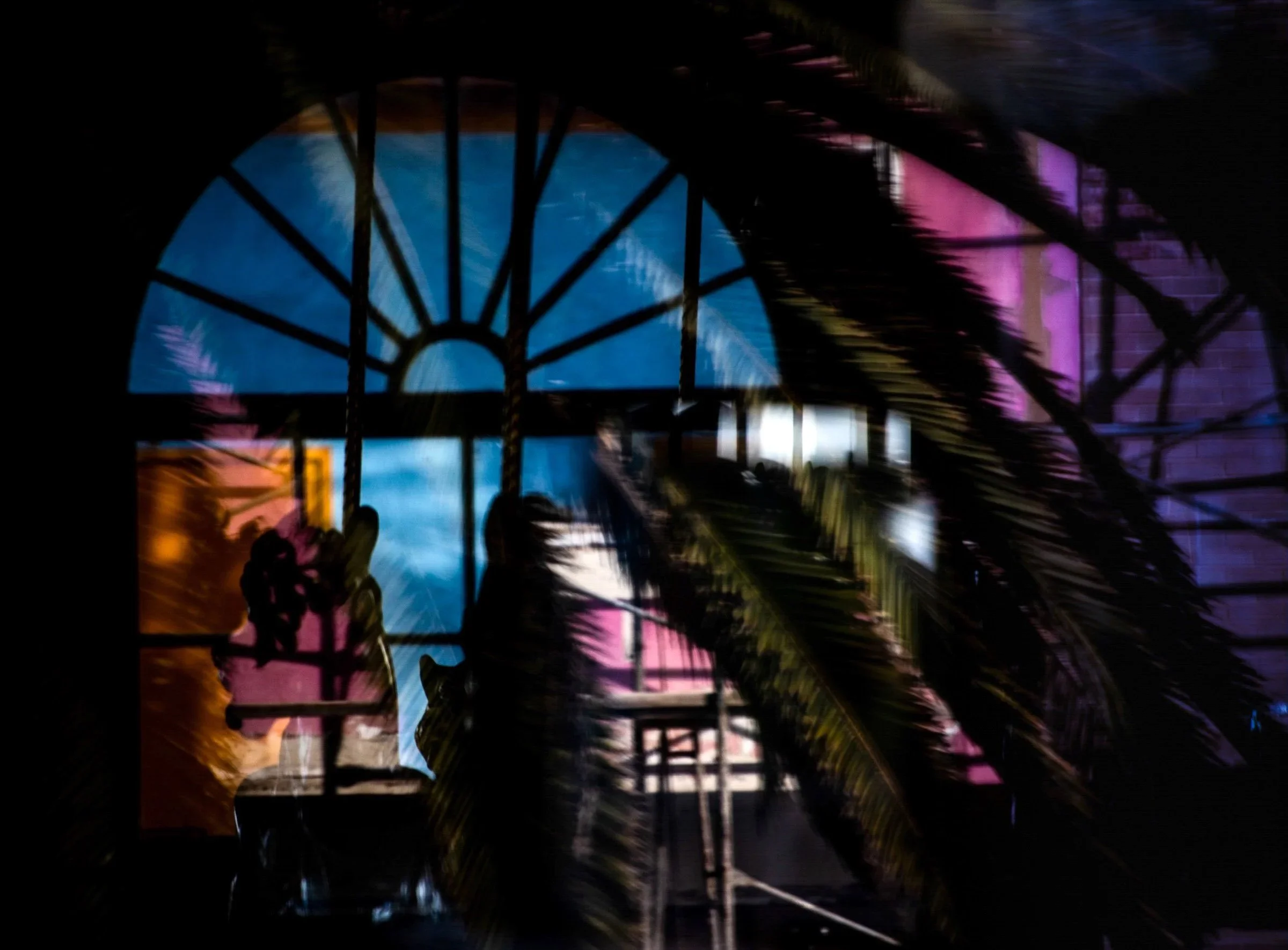
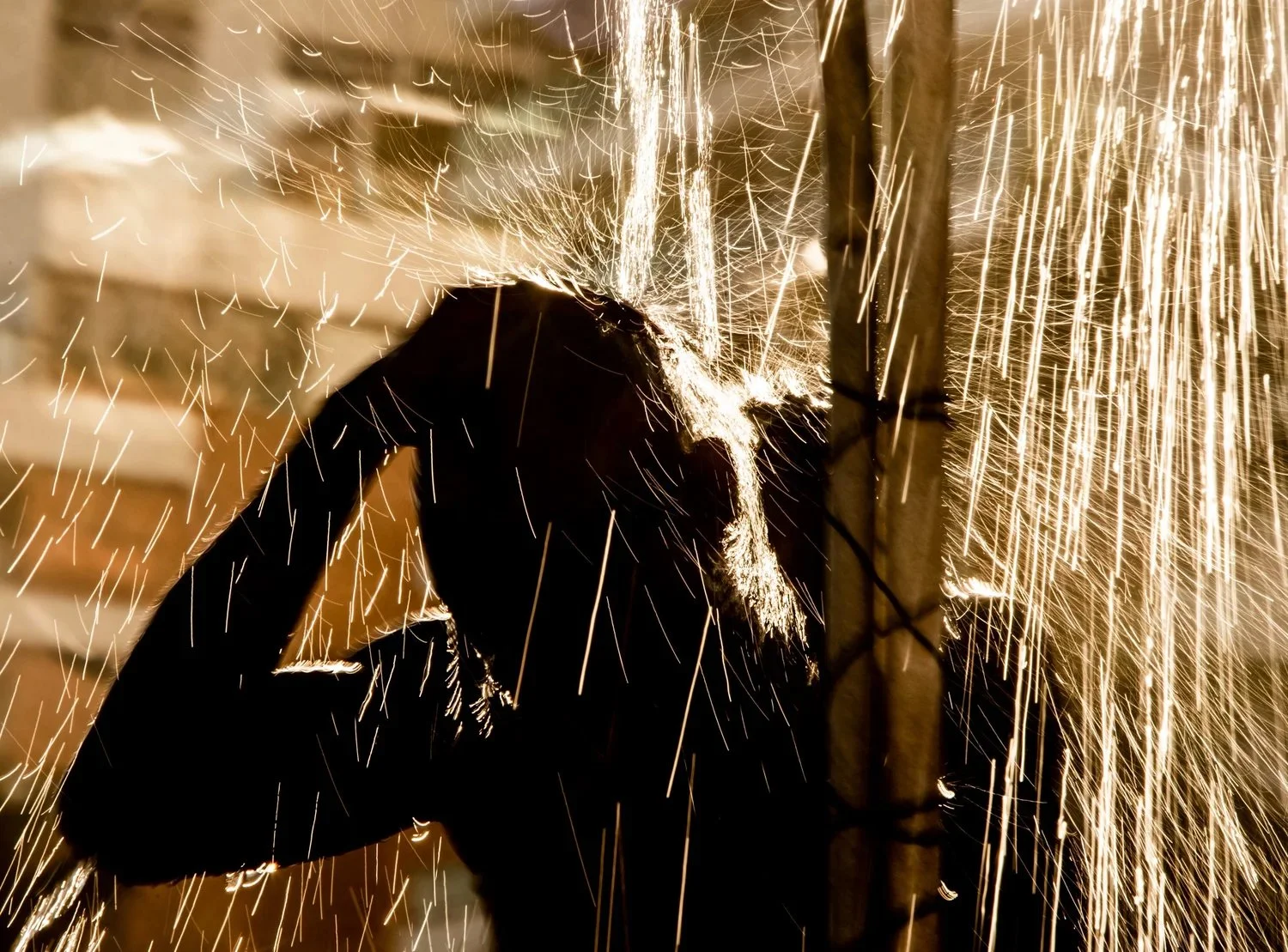
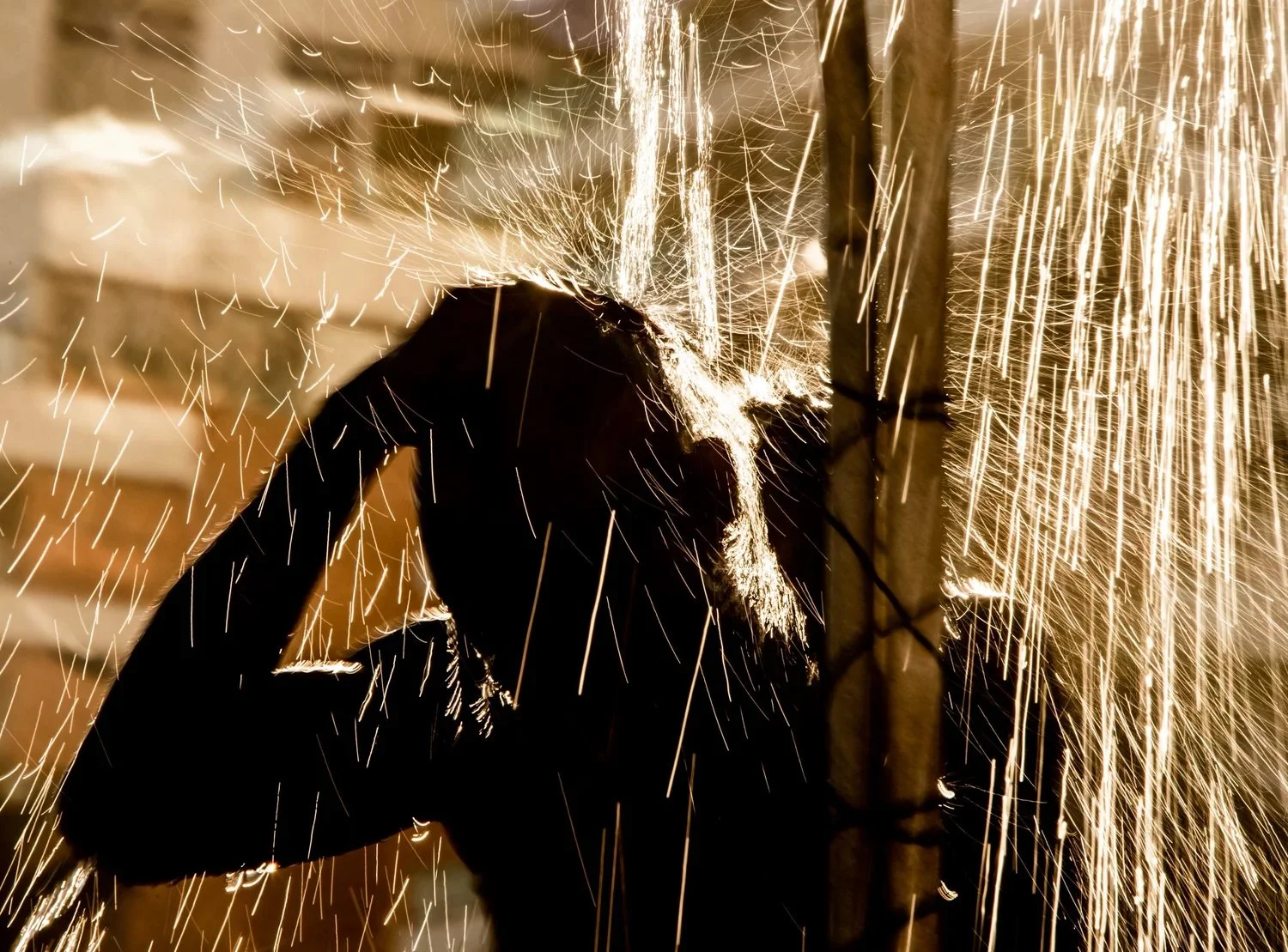
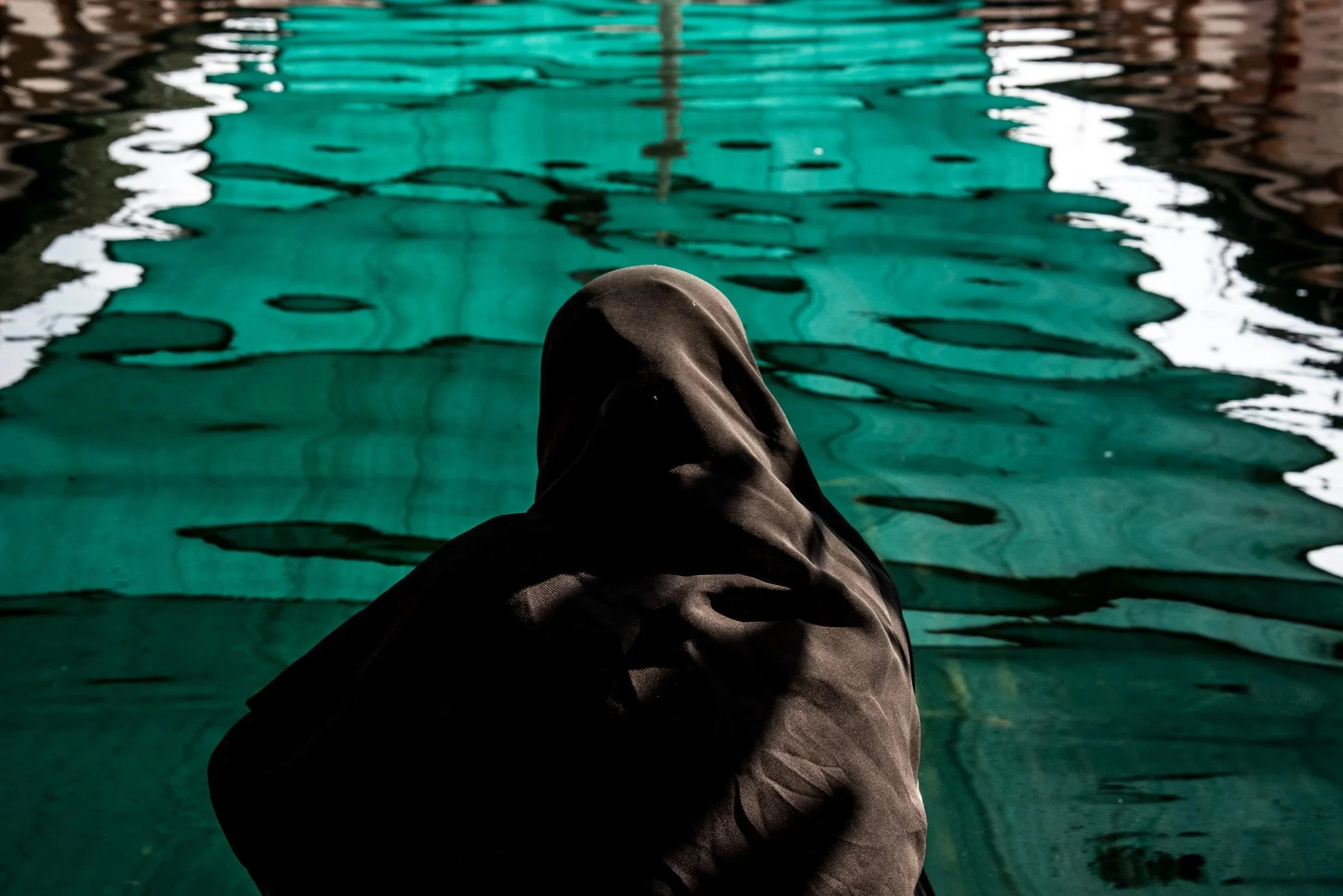
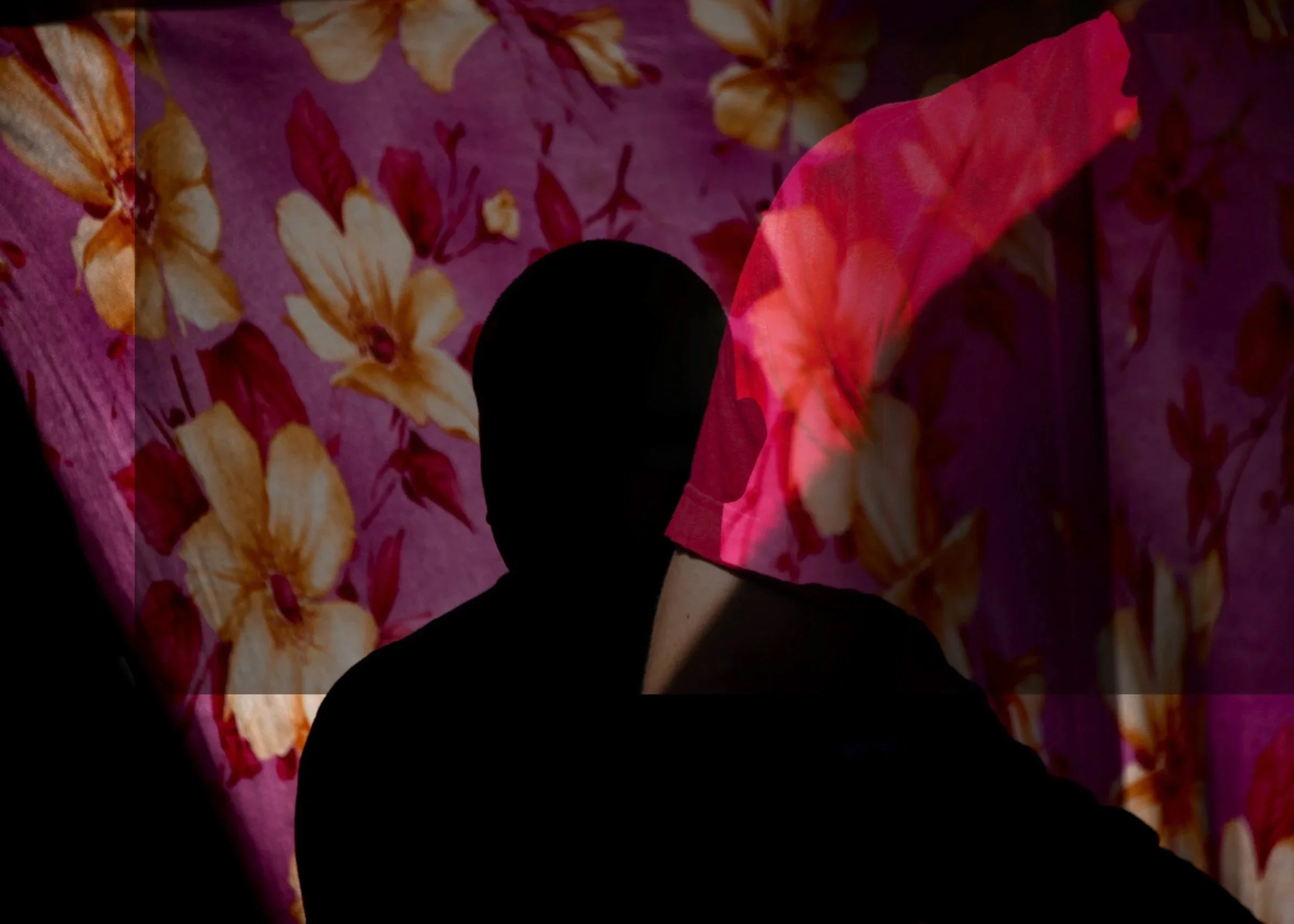
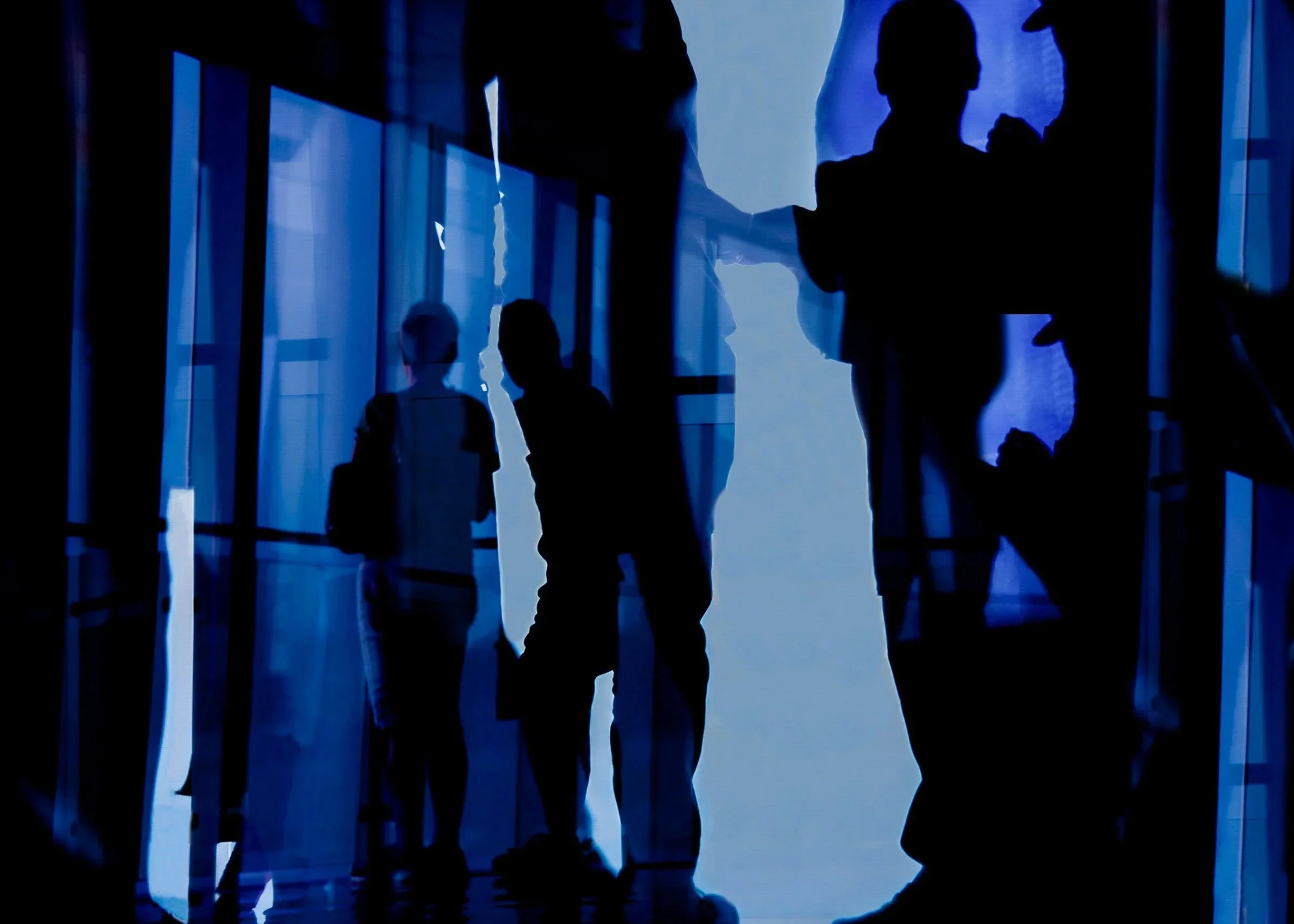
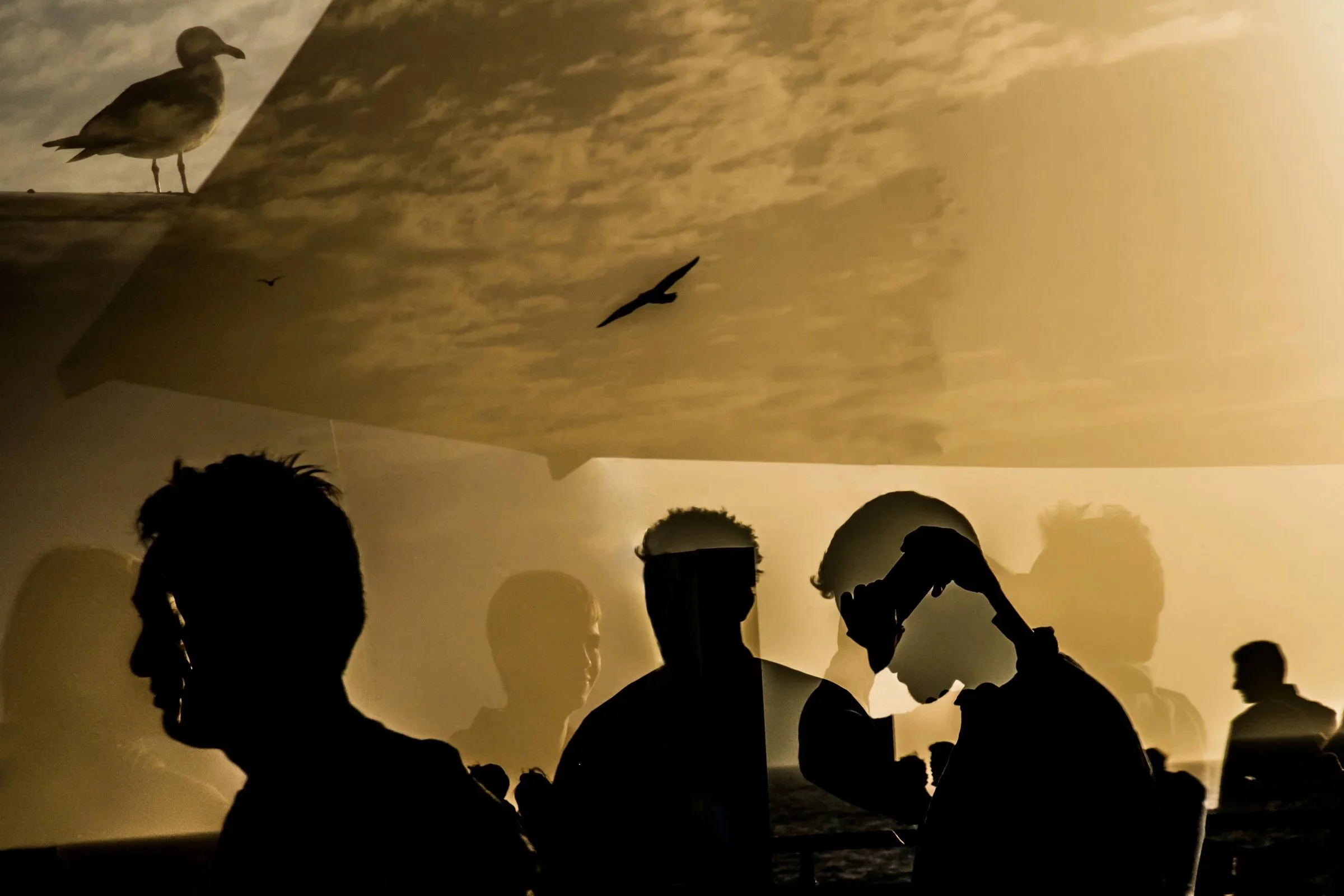
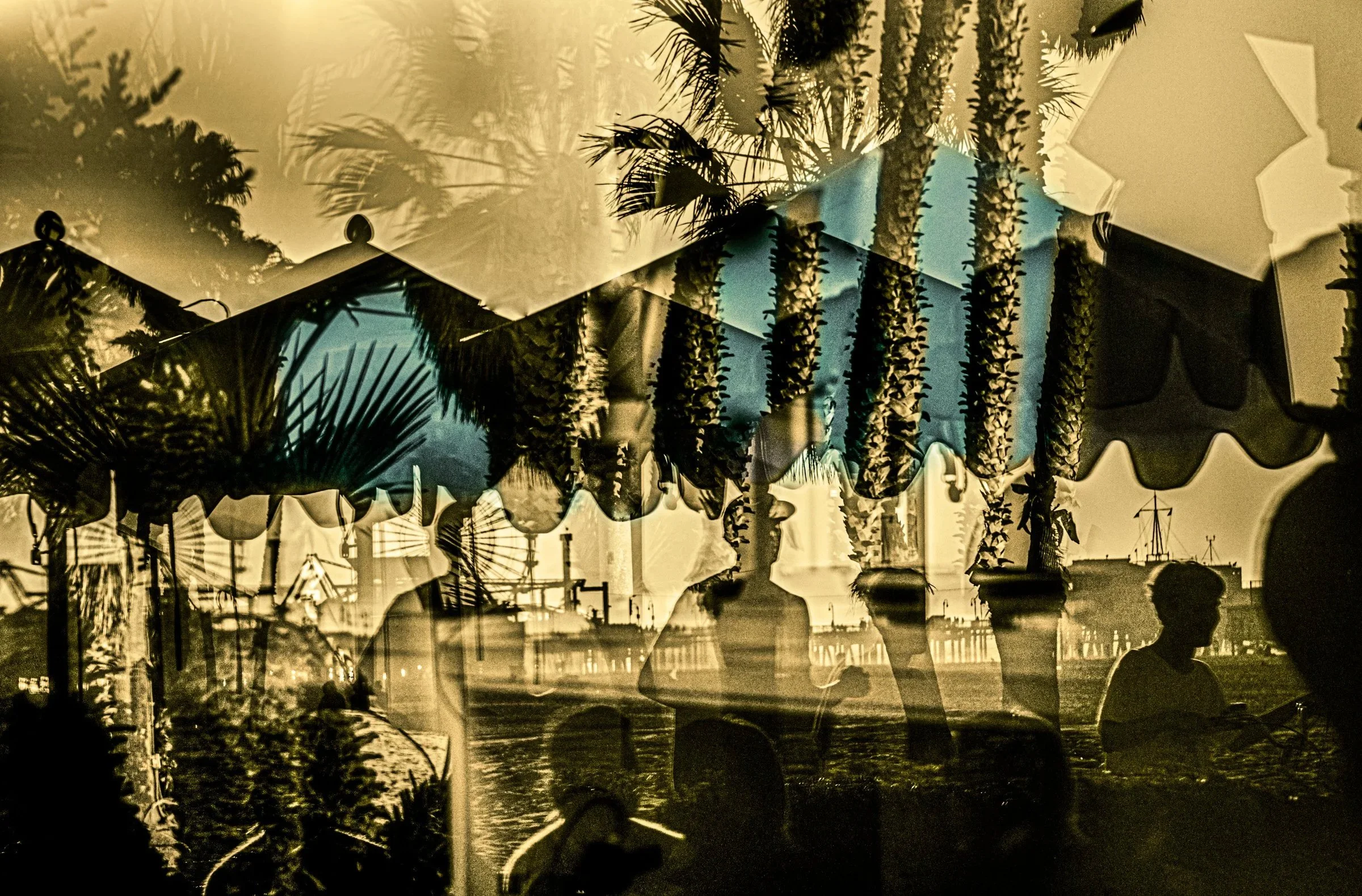
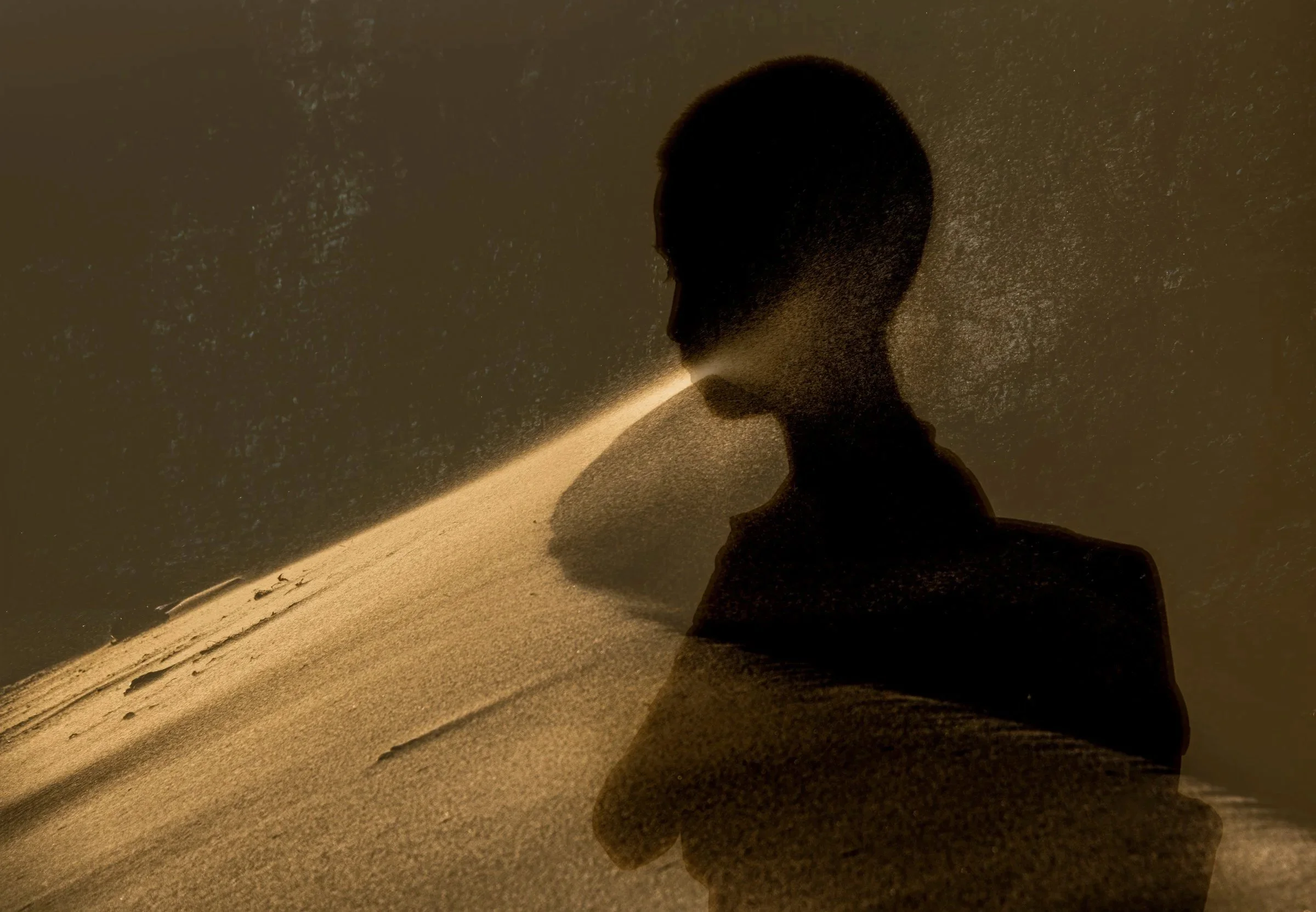
Sandra: It creates another dimension of reality. It's not purely reality, it's reality merged with dream. I love that ambiguous feeling, that sense of not quite understanding what's happening. It's a dreamlike world that fascinates me. Whenever I see glass, mirrors, or reflective surfaces, I'm drawn to them. Distorted reflections are what I prefer most. Those warped plastics that create bizarre distortions, that's what excites me. I want viewers to puzzle over the image. What is this? Is it human? Does it have two heads? That's the effect I'm after. My husband thinks I'm mad when I do this.
Gulnara: You're not mad at all.
Martin: Sandra, how do you feel about Gulnara's photography?
Sandra: I love her work. I own several of her photographs, including one large piece and some smaller ones. What fascinates me isn't just the images themselves, but Gulnara's entire story. She comes from Bashkortostan, a region rich with history, and that background permeates her work. Her photographs are remarkably distinctive. She creates family portraits and collages that are absolutely fabulous and utterly unique. When you see her work, you know immediately it's Gulnara. Nobody else creates images like hers. It's deeply connected to her heritage. She's Tatar, descended from warriors, and that strength comes through in everything she does.
Martin: You were born in Ufa, and fell in love with photography at 15. Did you know immediately that you wanted to become a photographer?
Gulnara: Absolutely. Growing up in the Soviet Union was challenging as a child. When I discovered photography, I enrolled in a photography class at a school where I would later teach. In that first class, the teacher was working in a darkroom with red light. He exposed a print and placed it in the developer. As the image emerged, I was transfixed. It felt like pure magic. I'd never witnessed anything like it. I was literally watching magic unfold. We were gathered around the tray, several of us watching, and I said aloud, "I want to be a photographer." That was it. For the last 45 years, this is what I've been doing.
Sandra: That's wonderful.
Gulnara: Photography became my escape. I built a darkroom in our bathroom at home. It was my private world where I could create my own community.
Sandra: Your wonderful world. Then you moved to New York, which must have transformed your photography entirely.
Gulnara: Yes, I moved to New York in 1992, 33 years ago. I was fortunate to find work immediately at a school, and then I built a career in photojournalism. I've had a fascinating photography career. I feel incredibly lucky and privileged to have spent my entire life doing something I'm passionate about.
Gulnara Lyabib Samoilova
Sandra: Gulnara took those powerful photographs of 9/11.
Martin: What was it like to photograph such a tragedy?
Gulnara: I didn't fully grasp the danger. I arrived so quickly that I didn't understand what kind of planes had hit or how dangerous the situation was. It never occurred to me that the buildings would collapse. I lived only four blocks away, so I reached the scene almost immediately. I was simply doing my job, photographing. The camera helped me separate myself from the tragedy, from the reality of what was happening. Viewing everything through the viewfinder helped me focus on the work. When the building collapsed, I was standing across the street. I thought I had died. I captured one frame of the building collapsing, and then everything went dark. I lost my hearing from the collapse. I couldn't hear or see anything. I genuinely believed I was buried alive. Then I began to see emergency lights, and my hearing gradually returned. When I realized I was still alive, I continued photographing. Afterward, I went home, mixed the chemicals, developed the film, and walked back to Associated Press.
Martin: What was going through your mind as you made decisions about what to photograph during such chaos?
Gulnara: I've photographed people my entire life, so I focused on people. When I first arrived, I went inside the World Trade Center. Then I came back out to keep the buildings in my frame. A triage area had been established, so I gravitated there and photographed the injured. My focus remained on people throughout.
Martin: Did you know at the time that you were capturing historically significant images, or were you responding purely instinctively?
Gulnara: I knew it was important. When police tried to clear us from the area, one officer asked me, "How can you photograph?" I told him, "This is for history." So yes, I understood the importance of documenting what was happening. What I didn't know was that my photographs would become iconic. I had no idea. The next day, September 12th, I could barely move. I was incredibly sore from running, falling, and the stress. My boss kept calling, insisting I come to the office. I kept saying I couldn't, that I was in pain. He finally said, "Please, just get to the office." When I arrived, he showed me newspaper after newspaper. Every major publication had run my work. I was stunned. I never imagined my photographs would appear on front pages around the world.
Martin: Did working for Associated Press provide any framework or training for covering breaking news of this magnitude?
Gulnara: No, actually. I wasn't a staff photographer at the time. I was a staff photo editor working on special projects like exhibitions, contests, and books. I worked extensively with the AP archives, restoring historical images. When 9/11 happened, I simply thought that since I was the closest AP person to the World Trade Center, I should grab my camera and go. I assumed no other AP photographers were nearby. So no, I had no training for this. Perhaps growing up in the Soviet Union helped me handle chaos. What was truly difficult came afterward. For a year, I had to review every frame taken that day by staff photographers and freelancers. I saw photographs that no one else saw. That's what really affected me. The distress of that year was profound.
Sandra: I like to compare your photographs with the one Alex Webb took from Brooklyn. His image shows people having a picnic with 9/11 in the background. Two completely different perspectives on the same event. I think they work powerfully together.

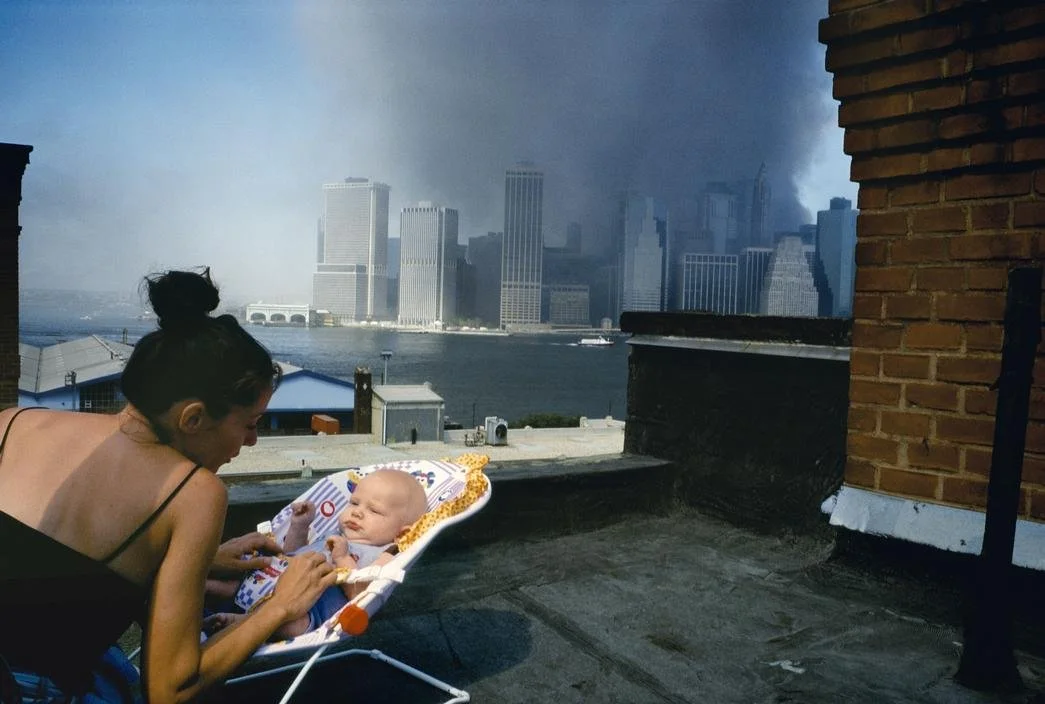
Gulnara: Yes, his photograph is equally surreal.
Martin: What was the most difficult image you took that day? Is there one that still haunts you?
Gulnara: They haunt me equally. I have varying emotional attachments to different photographs, some with vivid memories attached, others with none whatsoever. My photograph that won World Press Photo, I have absolutely no recollection of taking it. I was completely blacked out.
Gulnara Lyabib Samoilova
Sandra: It was pure chaos.
Martin: Were there photographs you decided not to publish?
Gulnara: There are many unpublished photographs, but it wasn't my decision. AP selected 14 images from the roughly 100 frames I shot that day on two rolls of film. Those 14 went out on the wire, and the rest were never published.
Martin: Why not?
Gulnara: I suppose they simply weren't interested. Years later, for the 20th anniversary, the Wall Street Journal interviewed me and wanted to see the unpublished images. They found this vertical photograph of a fire truck with firefighters and a burning building in the background. They ran it as a full-page image on the front page. It was gratifying to finally see it published.
Martin: Some photographs are in black and white. Did you shoot on film, or was it a deliberate choice? Or was everything simply covered in dust?
Gulnara: I was primarily a black and white photographer. I had black and white film loaded, which is what I typically shot. That day, I didn't realize I also had a roll of Ektachrome slide film in my bag. In the shock of the moment, I just grabbed a canister and loaded it into the camera. That's why you see black and white initially. When that roll ended, I loaded the color film. I captured one frame in color of the building collapsing, the final frame on that roll. Then I changed film in complete darkness, surrounded by dust. I also changed lenses from 85mm to 35mm. I have no memory of changing either the film or the lens. After the collapse, I have periods of complete blackout. That's why there's color. When I got home and started developing, I almost processed it as black and white, but then I noticed the red and yellow canister. Later that day, I had the color film developed at the Time Life Lab.
Martin: Did you rush to develop the images to send them to AP?
Gulnara: I developed the black and white film in my kitchen first. Then I went to the office and walked across the street to the Time Life lab. They developed my color film because AP no longer had development machines.
Martin: Looking at all the images taken that day, is there one of yours that captured something no one else got?
Gulnara: That's an interesting question nobody's asked before. I think the photograph of the building collapse itself might be unique. The very beginning of the collapse. Most images show the buildings already collapsed or collapsing further along in the process.
Martin: Have you ever reflected on entering the building? You mentioned going inside, and then it collapsed...
Gulnara: I try not to think about it. Fortunately, among all the journalists there that day, only one photographer was killed. There were so many photographers present, including numerous Magnum photographers from around the world who had gathered there. It was a massive convergence of photojournalists.
Martin: Final question about this project. How did people react to you having a camera? Were they angry, grateful, or did they even notice?
Gulnara: One policeman did ask, "How can you photograph?" I told him it was for history. But honestly, the camera was the least of anyone's concerns. People were injured. Police and medical personnel were focused on helping them. I didn't feel any anger directed at me. No one said anything negative. I also wasn't intrusive. I was very discreet.
Martin: Sandra, what do you think about this work?
Sandra: It's extraordinary. It's historically significant. Your photographs are in the Smithsonian, aren't they?
Gulnara: They're in many institutions. I've honestly lost count. Right now, there's a major exhibition at the New York Public Library called "Treasures." It's a permanent exhibition they spent over 10 years developing. They have thousands upon thousands of works in their collection spanning more than a century. They're displaying only about 200 works in this permanent collection, and they selected two of my 9/11 photographs. They're the only 9/11 images in that important exhibition. Both are the black and white prints.
Martin: My final question for both of you: are there still things that surprise you about photography?
Sandra: Always. Different perspectives surprise me. Different projects surprise me. The way other people's minds see the world, it's endlessly fascinating. That's the beauty of photography: you never stop learning. Every time you look at a photograph, whether in a magazine or anywhere else, you're encountering countless images and interacting with eyes that see things completely differently than yours. I love that. I'm constantly in awe.
Martin: What advice would you give your younger self when you first started photography?
Sandra: I started late in life, so my perspective is different. But honestly, I wouldn't change anything I did. I was incredibly fortunate. I did everything I wanted to do. I met wonderful people. So many people helped me along the way. I'm genuinely happy with how everything unfolded. I had opportunities, and I seized them. The timing was right, and it's been wonderful.
Gulnara: I would tell my younger self not to listen to everyone. When you're young, especially, you're influenced by so many outside voices, and that affected me deeply. There were times I nearly quit photography because of what people said to me. Looking back, I'm grateful I listened to my instinct and my own voice, but there were some difficult moments. My advice would be to trust one or two people for a second opinion. If someone tells you you're terrible at photography, that you have no talent, that your place is in the kitchen, you need someone you trust to talk through those concerns with. A mentor, a coach, a teacher, a trusted friend. Because as you succeed, or when you go against the flow, which I realize now I was doing, I was so far ahead of my time. The experiments I did, the projects I worked on in the early '90s, nobody understood what I was doing. They thought it was terrible. Now, looking back, I see how unique it was for that era. It's vital to trust your own voice. That's the most important thing. Trust your instinct, continue with your passion, continue doing what you love. Because when you do what you love, everything else follows. The success and visibility that young people crave, it comes naturally. My advice is simple: stay strong, trust your instincts, and find one trusted person who can give you honest feedback when you need it.



Martin: Thank you all for taking the time to meet with me today.
Gulnara: Thank you for inviting us.
Sandra: Thank you Martin
Women Street Photographers
Women Street Photographers (WSP) is an online and in-person community founded in 2017 by photographer Gulnara Lyabib Samoilova that provides support and amplifies the work of women artists from all races, ethnicities, creeds, generations, abilities, and sexual and gender identities around the world. The organization adopts an inclusive, non-traditional approach to expand commonly held notions of street photography, providing platforms that include an Instagram feed @WomenStreetPhotographers, website, traveling exhibitions, artist residency, inspirational film series, and a photography book "Women Street Photographers." With over 45 years of combined experience as a documentary photographer, artist, and former Associated Press photojournalist, Samoilova uses her expertise to create visibility for women street photographers and empower them to follow their passion. (Website, Instagram)
More photography books and interviews?
We'd love to read your comments below, sharing your thoughts and insights on the artist's work. Looking forward to welcoming you back for our next [book spotlight]. See you then!
Most photographers wait for the right light or moment. But sometimes, the best moments appear when you least expect them. They happen in the corner of your eye, in a reflection, in a second you almost missed. Sandra Cattaneo Adorno knows this feeling well. Story Behind The Photograph