The Story Behind ‘Chicken Girl’: How Steve McCoy Captured a Defining Portrait of Skelmersdale
(This is the story behind the photograph, a glimpse into the moment, the process, and the vision that brought it to life.)
‘Chicken Girl’ vanished, resurfaced, and became a record cover.
Steve McCoy took the photograph in Skelmersdale in the 1980s, working with people in their everyday spaces. It was carefully composed on a 5x4 camera, with attention to light, background, and the girl’s posture. For years, the image was unseen, until it reappeared decades later on a music album cover. The story shows how one simple portrait can travel through time and touch unexpected lives.
A second angle:
The girl in the photograph had no memory of being photographed. McCoy found her name and tracked her down years later to get permission for the album. The photograph captures a strange mix of rural and urban, a chicken in the middle of concrete streets. Its journey from a quiet backyard to an album cover highlights the photograph’s unusual life. This story reveals the surprising ways an image can resurface and gain new meaning over time.
The Chicken Girl
In the early 1980s, the town of Skelmersdale in northwest England was a difficult place to photograph. Built in the 1960s as one of Britain’s “new towns,” it had promised modern housing and fresh opportunity. But by the time Steve McCoy arrived with his camera, much of that promise had collapsed. Skelmersdale had become a maze of brick houses, concrete walkways, empty roads, and roundabouts. It was an urban experiment already showing signs of failure.
McCoy, then a young photographer, walked these streets searching for moments that carried both the human and the environmental story. He wasn’t looking only at people, and he wasn’t looking only at places. His portraits were always both.
One of those portraits, made in 1983, would later become known as The Chicken Girl.
“So this is a portrait from Skelmersdale and we called it the Chicken Girl for some reason. Chicken Girl. She’s holding one of her father’s chickens.”
The image came from a tip. While McCoy was photographing in the town, one of his students mentioned that a friend’s father kept chickens. Chickens in Skelmersdale were unusual, this was a town of brick walls, not farmyards. Curious, McCoy followed the suggestion.
He remembers the surprise when he entered the garden.
“A father had this peaking black chicken in his backyard. So that was quite interesting. And I think with this particular photograph, it’s that mixture of it was like almost like a rural sort of farmyard look with the chicken and the chicken wire and the little pen and the enclosure within this kind of very urban space. And that’s what kind of interested me.”
The portrait was made with a large 5x4 camera. It was not quick or spontaneous. McCoy worked slowly, setting the tripod, checking the exposure, and waiting for everything to fall into place.
“Yeah, yeah, it was 5’4”, on the tripod, know, just everything sort of very carefully composed, like meter readings.”
Film was expensive, and each negative was precious. He could not afford mistakes.
“Just the one shot. I didn’t have enough money to be able to bracket.”
The photograph was shown only once, in a small exhibition at Skelmersdale Library. Then, for many years, it disappeared into boxes and drawers, remembered only by McCoy.
Decades later, the image would unexpectedly return.
“And it was only exhibited once in Skelmersdale Library, never seen again for years. And then about nine years ago, Stephanie and I were approached by a pop group. One of the members used to live in Skelmersdale. He was called Simon Tong and he was a bass player at The Verve… They said, we want to use a photograph of the chicken girl on the cover of the LP. That’s the full page of the LP.”
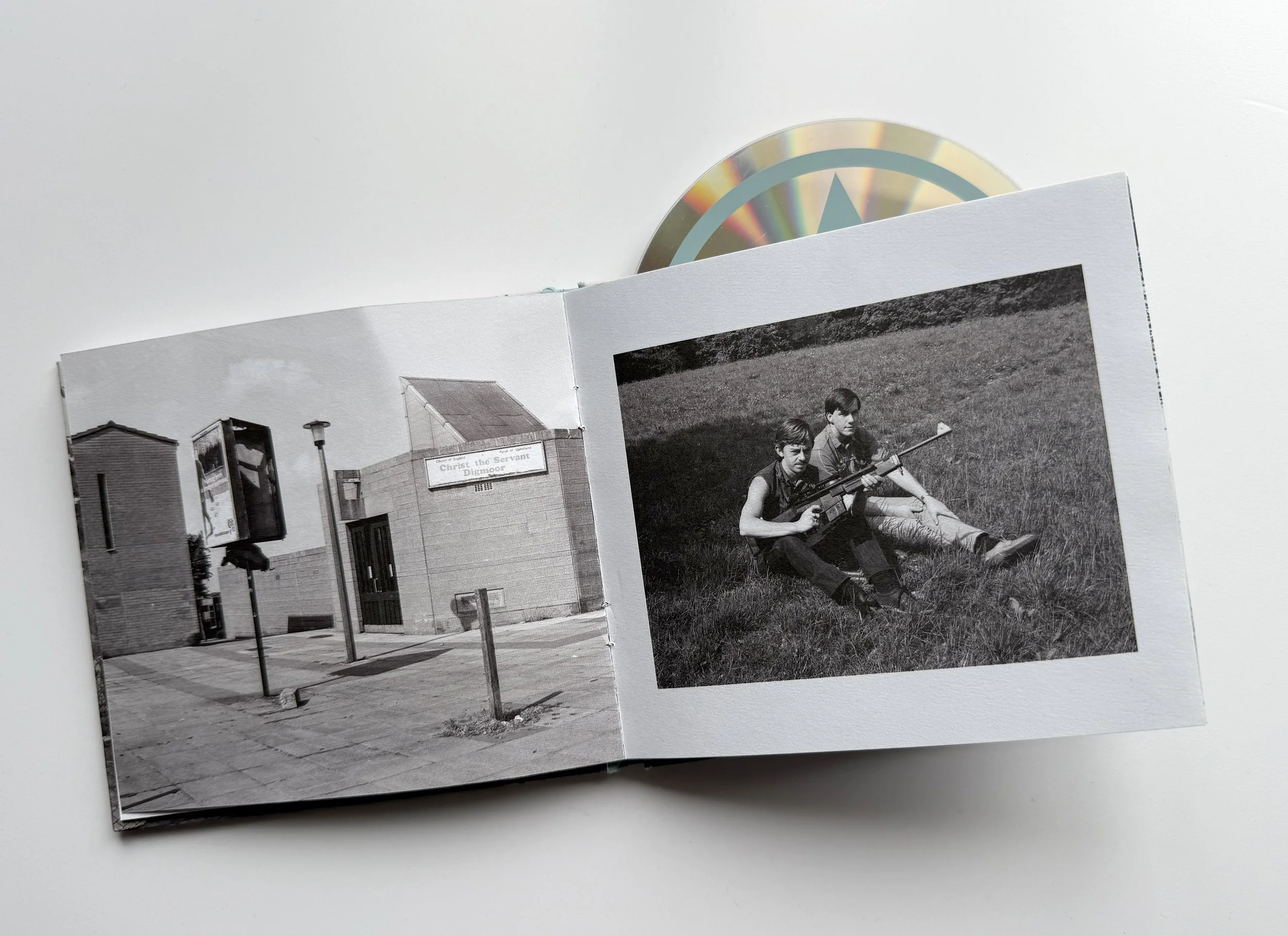
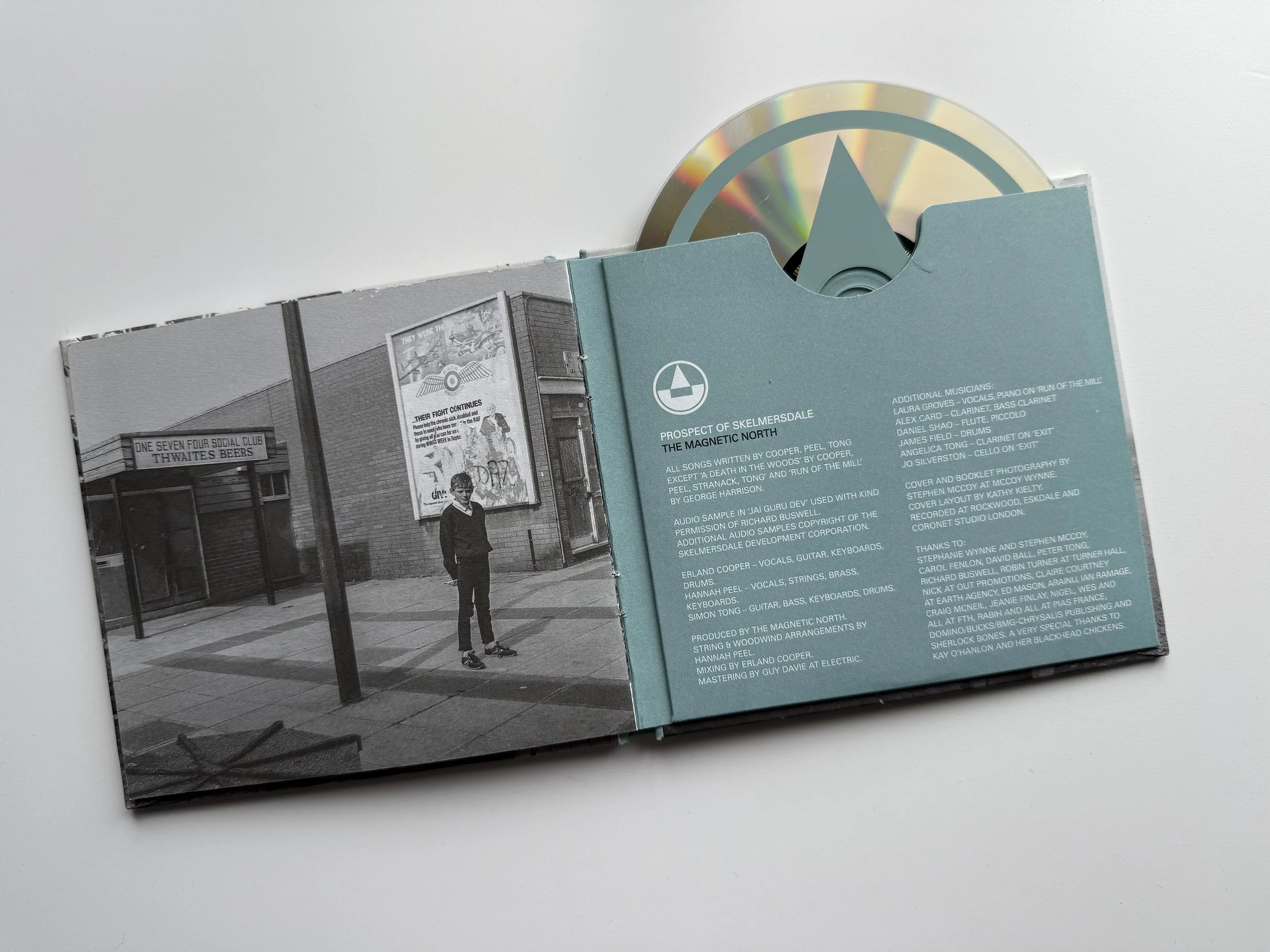
The band wanted permission to use the photograph. McCoy had only a first name written in his notes. A search revealed that the woman was now living in North Wales. When contacted, she admitted she had no memory of the moment.
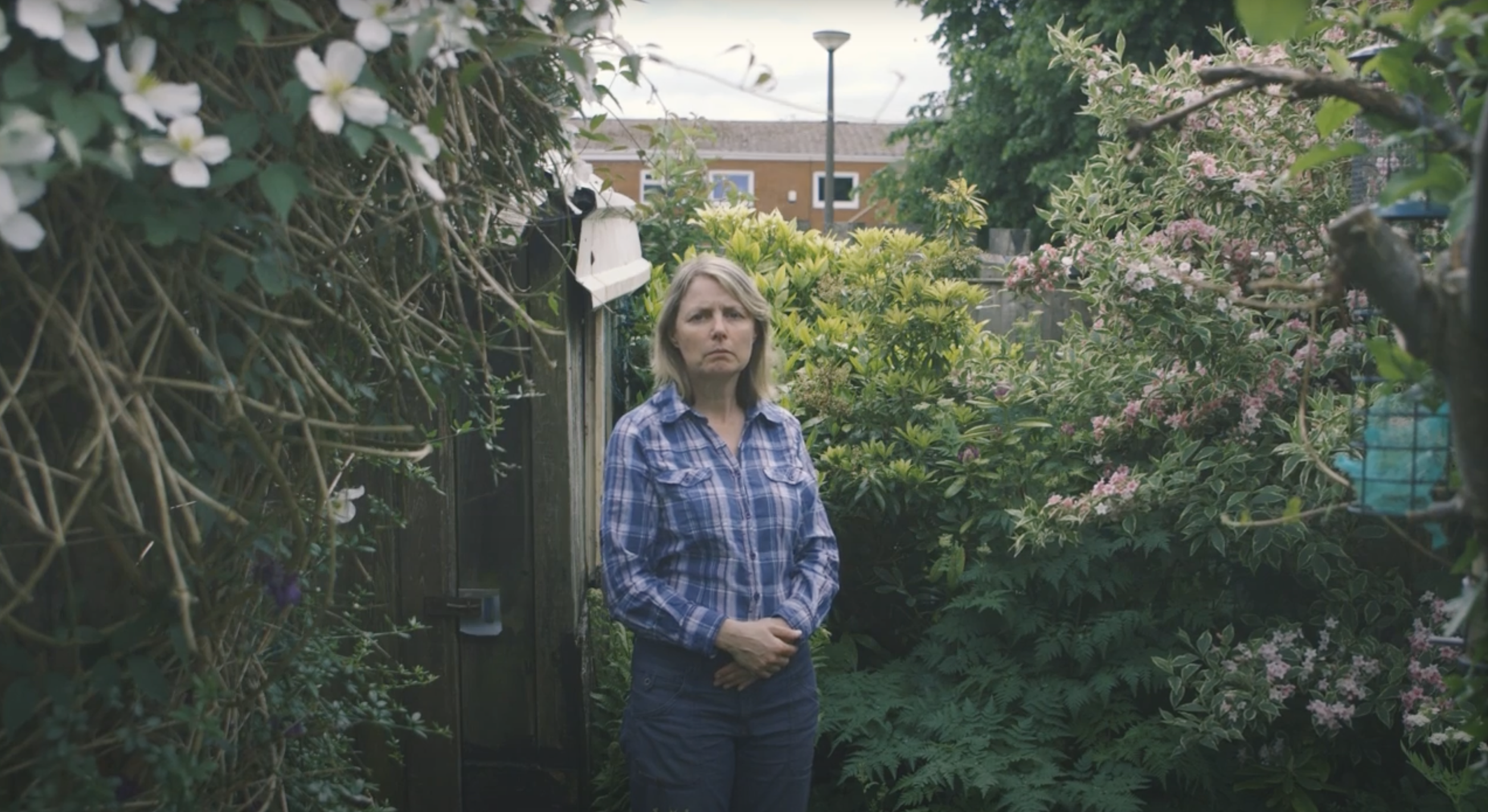
The Magnetic North - Ballad of Skelmersdale - YouTube
“And they contacted her and explained the whole situation and they wanted to use the photograph on the LP and, you know, what they were doing. And she had no recollection at all, no recollection at all of being photographed. She couldn’t remember at all.”
The irony was striking. For McCoy, the image had become iconic, a central memory of his work in Skelmersdale. For the woman, it was a blank, something she could not place at all.
“Anyway, so, you know, it’s quite a funny story. And obviously we’re kind of worried about, she’s going to be sort of upset about this, and then she won’t give her permission. And the fact that she couldn’t even be remembered, I can’t remember being photographed. I think it’s quite a funny story.”
In the photograph, the young girl stands with her father’s chicken in a wire pen, caught between two worlds. Behind her is Skelmersdale, the concrete housing, the walkways, the urban plan. In her arms is something completely different: a glimpse of a rural life that didn’t belong there, a fragment of countryside hidden in the middle of the town.
For McCoy, that tension was the essence of the picture.
“I think a lot of the portraits in Skelmersdale were that mixture of the two. It was the person within that kind of environment.”
The decisive moment came with only a single frame. One exposure, one chance, carefully measured. The risks of working in film meant there was no easy correction, no second attempt.
Looking back, McCoy sees The Chicken Girl as both ordinary and extraordinary. Ordinary in the sense that it was one of many portraits he made in those years. Extraordinary in the way it has carried a second life, disappearing, resurfacing, and even finding its way onto the cover of a record decades later.
It is a photograph about memory, about place, and about the strange collisions that make photography so powerful. The subject herself cannot recall it, but the image remains. It has outlived the moment, carrying its own meaning forward.
A portrait of a girl holding a chicken in a forgotten town has become something larger: a reminder that photographs often know more than the people inside them.
Sometimes the best project begins when the first idea fails. You arrive with a plan, but what you find does not fit it. Story Behind The Photograph