AT A GLANCE
- Known for
- Social Graces: flash-lit parties of New York society next to the family life of his rural neighbors in Pennsylvania
- Works in
- Black and white film, silver prints, a handheld flash
- Camera
- Square 6x6 medium format camera; Leica cameras for other formats
- Taught
- Bard College from 1988; also Yale, Cooper Union, Parsons and NYU
- Awards
- Guggenheim Fellowships (1976, 1979) · two NEA fellowships · ICP Infinity Award (2015) · Lucie Awards (2015, 2017)
- Start with
- Social Graces (powerHouse Books, 2001)
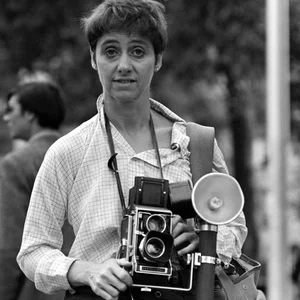
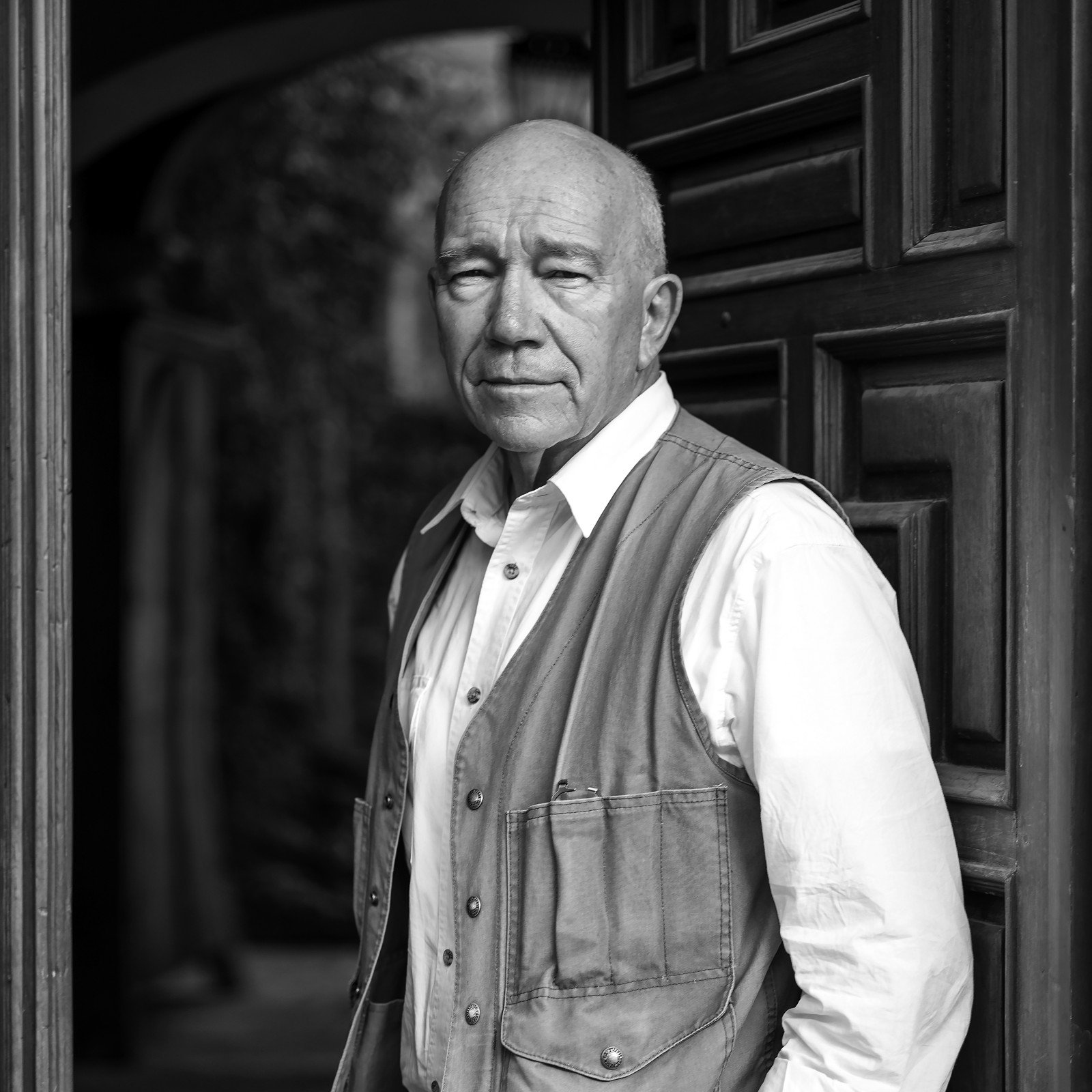
Larry Fink was an American photographer, born in Brooklyn in 1941. For about six decades he photographed people together: at balls, birthday parties, boxing gyms, fashion shows and Hollywood parties. His best known series, Social Graces, set the rich of New York next to a working family from rural Pennsylvania. A flash held away from the camera gave his black and white pictures their bright, close look. He taught for many years at Bard College and died at his farm in Martins Creek, Pennsylvania, in 2023.
The story
The drive took hours. In the 1970s, Larry Fink lived on a farm in Martins Creek, Pennsylvania, but many of his nights ended in Manhattan. He drove his truck to high society parties in New York. At the bar he drank gin and tonics until he felt at ease. Then he drove all the way back home and developed his film right away.
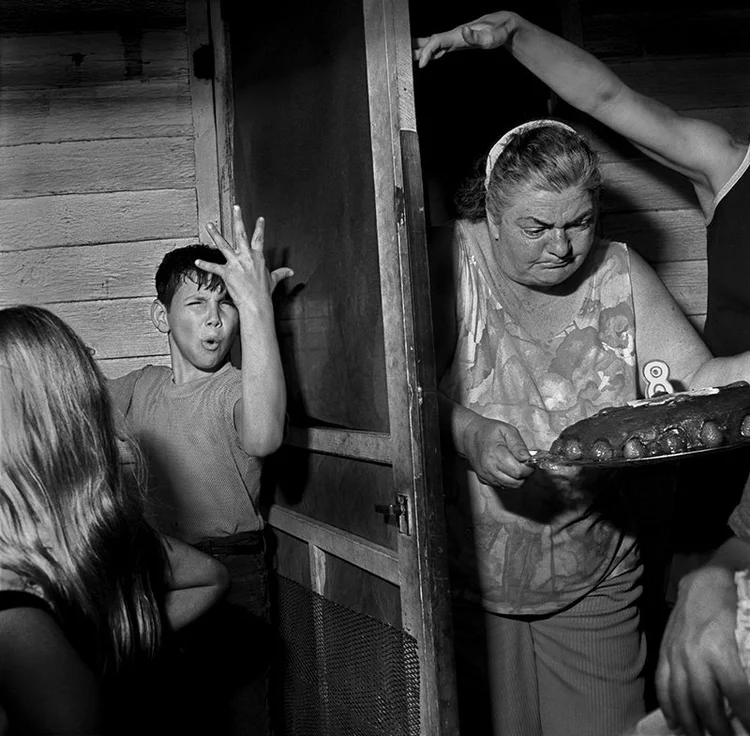
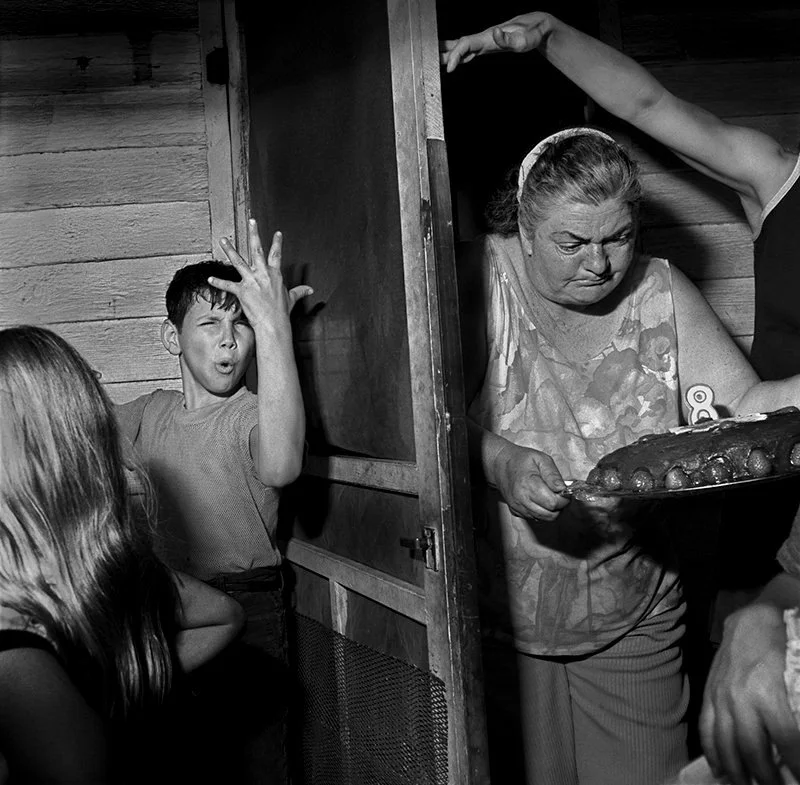
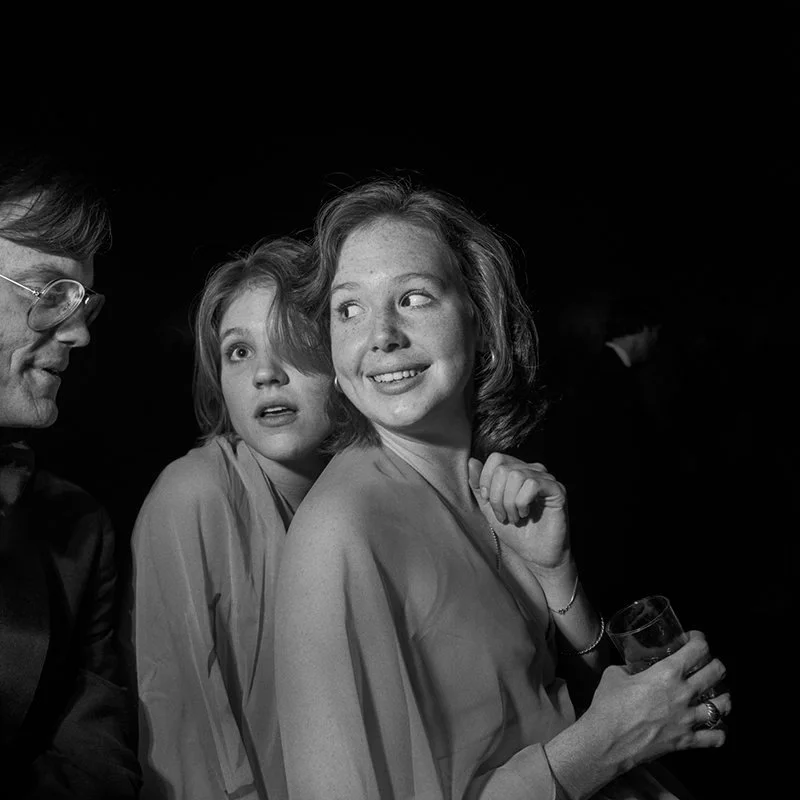
Near the farm lived the Sabatines, a working family. Fink photographed their ordinary days: birthday parties, graduations, Christmas at home. One of these pictures is Pat Sabatine's Eighth Birthday Party, made in April 1977. Its people are close, crowded and caught in the middle of a move.
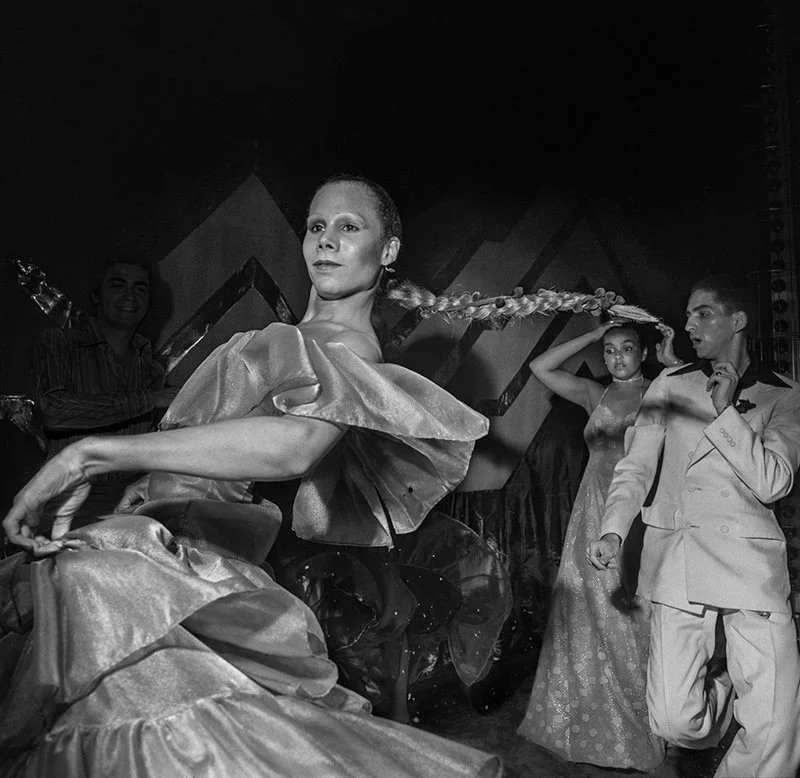
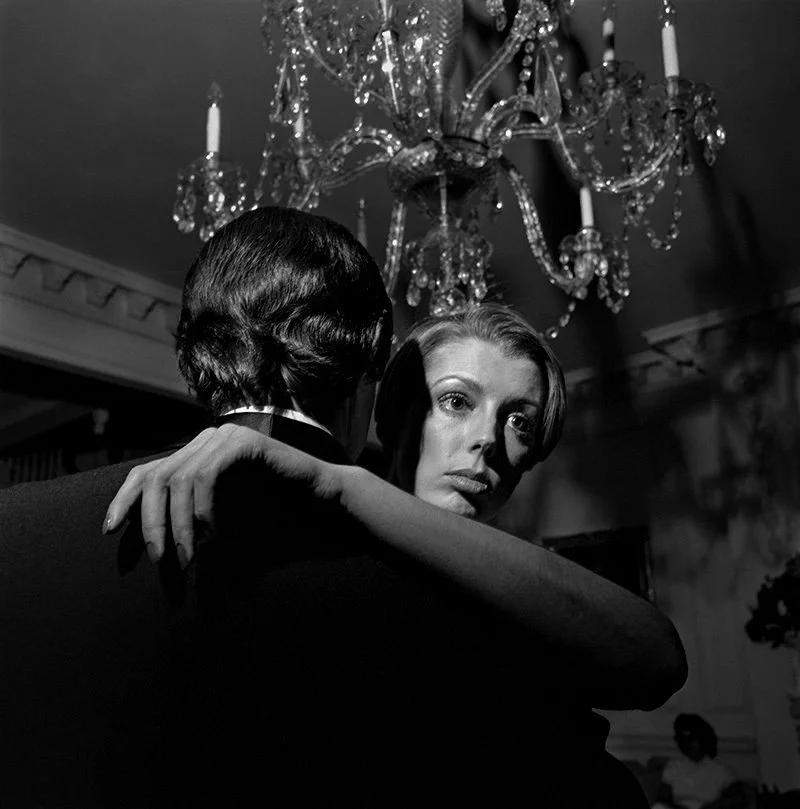
In New York the crowd looked very different. Fink photographed debutante balls, the English Speaking Union in December 1975, Studio 54 in May 1977 and an opening for Peter Beard at the International Center of Photography in November 1977.
But he did not keep the two worlds apart. Side by side, the farm parties and the city balls became one series, Social Graces. The Museum of Modern Art gave it a solo show in 1979. Aperture published it in 1984 as his first book.
The idea came from his own family. His mother was, as he described her, both a bourgeois woman and a Marxist. Of that mix he said: “That set of contradictions embellished my politics and aesthetics.”
Many years later, he put the aim of the work into a few short lines: “The work was meant to be political, not polemical. It turned out to be not necessarily kind, but certainly honest. And not cruel.”
The work
Fink was born in Brooklyn in 1941 and grew up in New York, partly on Long Island. His father was a lawyer and his mother a political activist. He began making pictures in his early teens. Lisette Model, the street photographer, became his teacher and later his friend. In 1958, at 18, he photographed artists and writers of the Beat movement and travelled with them to Texas, Ohio and Mexico. In the early 1960s he moved to Greenwich Village, and in the mid 1960s he photographed people around Andy Warhol.
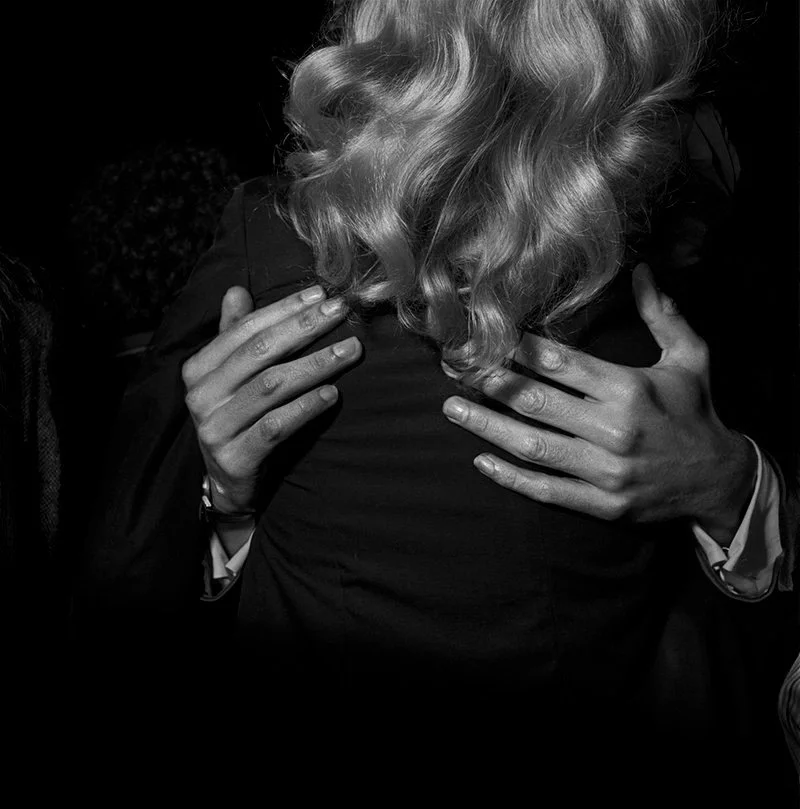
His style is easy to spot. He held the flash in his hand, away from the camera, and used it like a spotlight. This lit one face or one gesture and let the rest of the room fall into darkness. Most of the time he worked with a square medium format camera. The Second Hungarian Ball of February 1978 shows how close he came to his subjects.
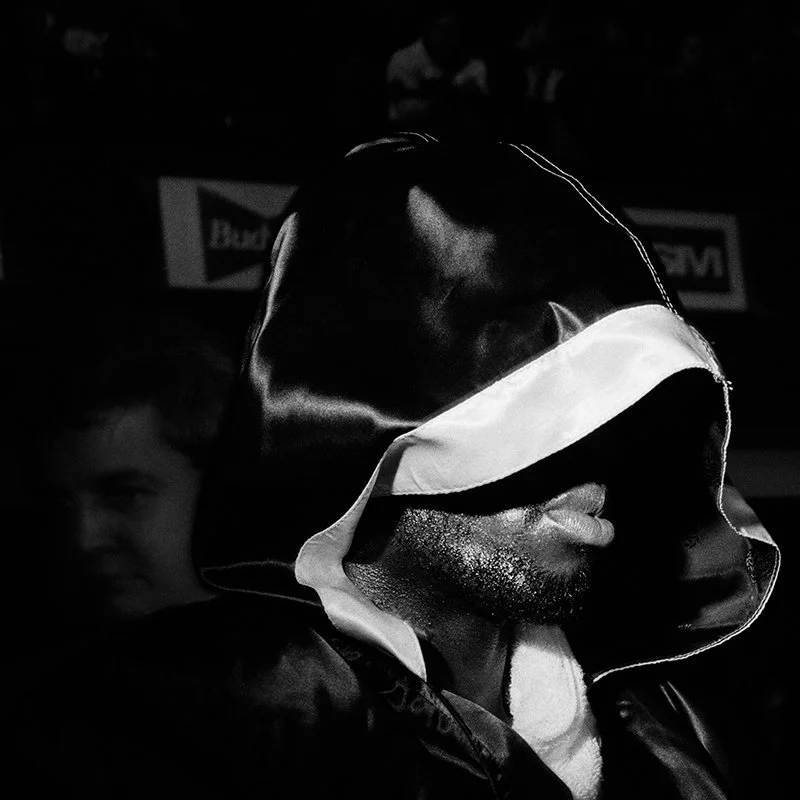
After Social Graces he kept looking at power and the body. In boxing gyms in Pennsylvania and New York he photographed young fighters and their trainers, as in Blue Horizon, Philadelphia, Pennsylvania, from December 1994. The book Boxing followed in 1997. He also photographed loggers in Washington State, fashion shows for the book Runway, and for about a decade the Hollywood parties of Vanity Fair, collected in The Vanities in 2011. In his last years he photographed the landscape around his farm.
Teaching was a second life. Fink taught for more than half a century, at Bard College from 1988 and also at Yale, Cooper Union, Parsons and New York University. He received two Guggenheim Fellowships, two National Endowment for the Arts fellowships, the ICP Infinity Award in 2015 and Lucie Awards in 2015 and 2017. His work is held by the Museum of Modern Art, the Metropolitan Museum of Art and the International Center of Photography.
- 1941Born in Brooklyn, New York
- 1958Photographs artists and writers of the Beat movement
- 1976Wins the first of two Guggenheim Fellowships
- 1979Social Graces is shown at the Museum of Modern Art
- 1984Aperture publishes Social Graces, his first book
- 1988Starts teaching photography at Bard College
- 1997powerHouse Books publishes Boxing
- 2015Receives the ICP Infinity Award
- 2023Dies in Martins Creek, Pennsylvania
Lessons
Photograph your neighbors. Half of Social Graces was made a short walk from his farm, at the birthday parties and graduations of the Sabatine family.
Move the light, not only the camera. Fink held his flash in one hand, away from the camera. It worked like a spotlight and pulled one face or one hand out of a dark room.
Look at two worlds at once. His pictures of society balls mean more next to the pictures of a family kitchen. Putting them side by side turned single photos into a statement about class.
Try this: take one small light, a flash on a cord or even a strong torch, to a family dinner or a party. Hold it at arm's length to one side, not on top of the camera. Make twelve frames where the light falls on one person only. Then make twelve more at a very different kind of event and put the best pictures side by side.
Gear
Fink did not talk much about equipment, but a few things are documented.
6x6 medium format camera: he mainly worked with a square medium format camera, together with flash.
Leica camera: he used Leica cameras when he wanted to leave the square frame.
Handheld off-camera flash: the flash was held apart from the camera, so he could place the light where he wanted and isolate people in space.
Books
Social Graces (powerHouse Books, 2001). Aperture first published Social Graces in 1984. powerHouse Books reissued it in 2001 as a clothbound book with 92 duotone photographs and an essay by the critic Max Kozloff. It puts the parties of the Sabatine family in Martins Creek next to the balls and clubs of New York society. Start here if you want to understand Fink, flash at night, or how pictures can talk about class.
Boxing (powerHouse Books, 1997). Boxing shows young fighters and their trainers in local gyms in Pennsylvania and New York; a young Mike Tyson appears in it. The boxing writer Bert Sugar wrote a history of the sport for the book, and Yolanda Cuomo designed it. It was printed in duotone in Italy. A good book for anyone who likes sports pictures with a human, close up view.
Runway (powerHouse Books, 2000). Runway collects 65 duotone photographs from behind the scenes of fashion shows in Milan, New York and Paris. The fashion writer Guy Trebay wrote the introduction. Fink had front row and backstage access, and he shows models, designers and helpers at work. It suits readers interested in fashion photography that is not a glossy advertisement.
In his words
“The work was meant to be political, not polemical. It turned out to be not necessarily kind, but certainly honest. And not cruel.”
“That set of contradictions embellished my politics and aesthetics.”
“When I was photographing they were deeply part of my own selfhood, my personality, my reason, my politics, everything.”
“I was just doing the work and putting it in a box. And only much later in my life did I decide to open the box.”
“It’s American exceptionalism; the exceptional body and mind.”