Inside the White House: A Photographer’s Battle to Make the Shot Trump Refused to Pose For
(This is the story behind the photograph, a glimpse into the moment, the process, and the vision that brought it to life.)
What happens when the President won’t pose for the cover?
It sounds like a small problem, but in the White House it becomes a battle. A photographer’s career, the trust of Time magazine, and the chance to capture history all hang in the balance. When Donald Trump turned his back and refused to sit in the chair, Benjamin Rasmussen had only seconds to decide what to do. The moment that could have ended in failure instead gave him one of the most important photographs of his career.
This is not just a story about Trump.
It is a story about power, history, and what photography can reveal when plans collapse. Rasmussen’s picture of Trump walking away tells us something deeper than a staged portrait ever could. It shows how leaders try to control their image, and how sometimes truth slips out in the shadows. Inside the White House, with Secret Service watching and pressure rising, one photographer made the shot nobody expected.
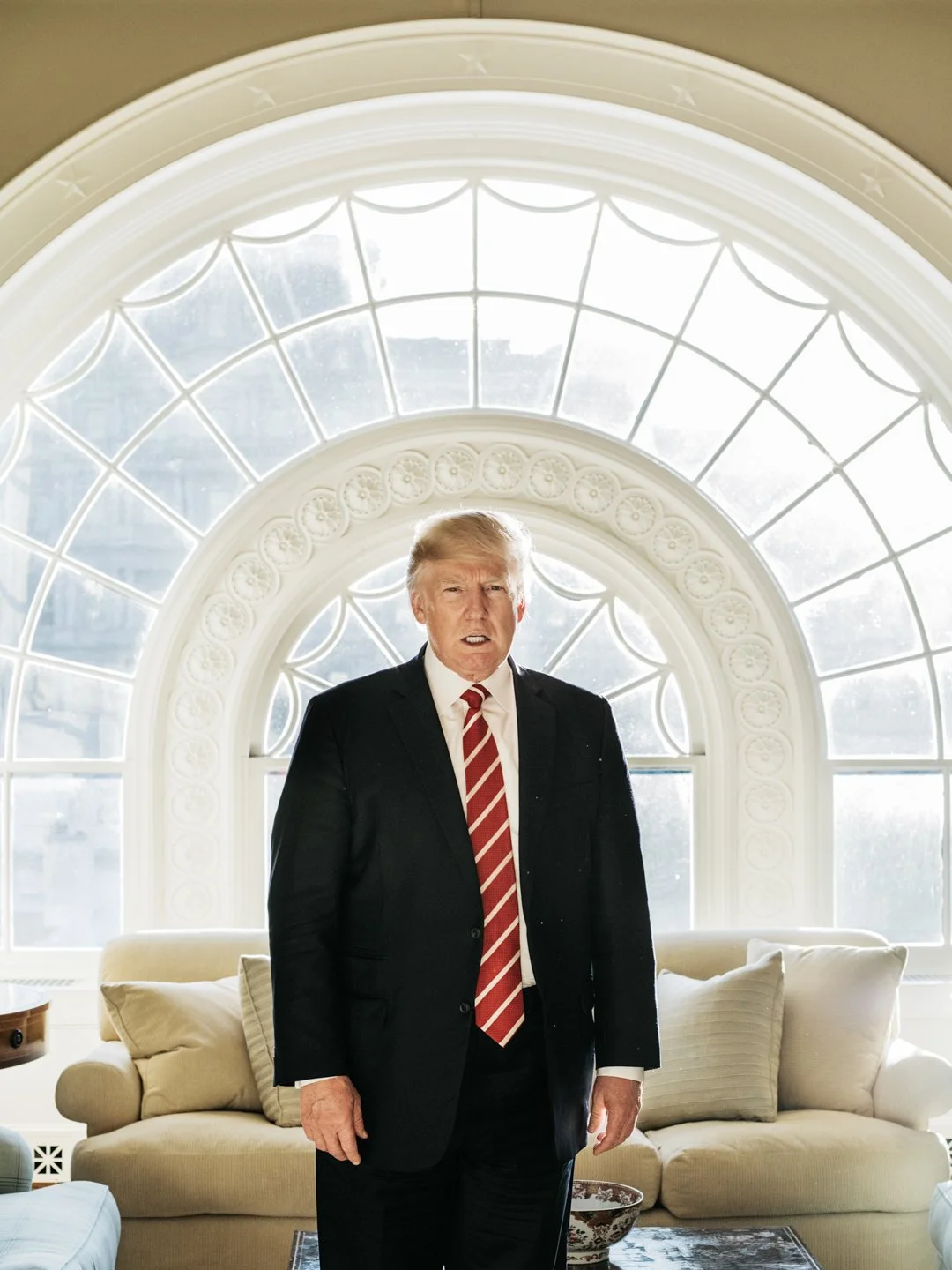
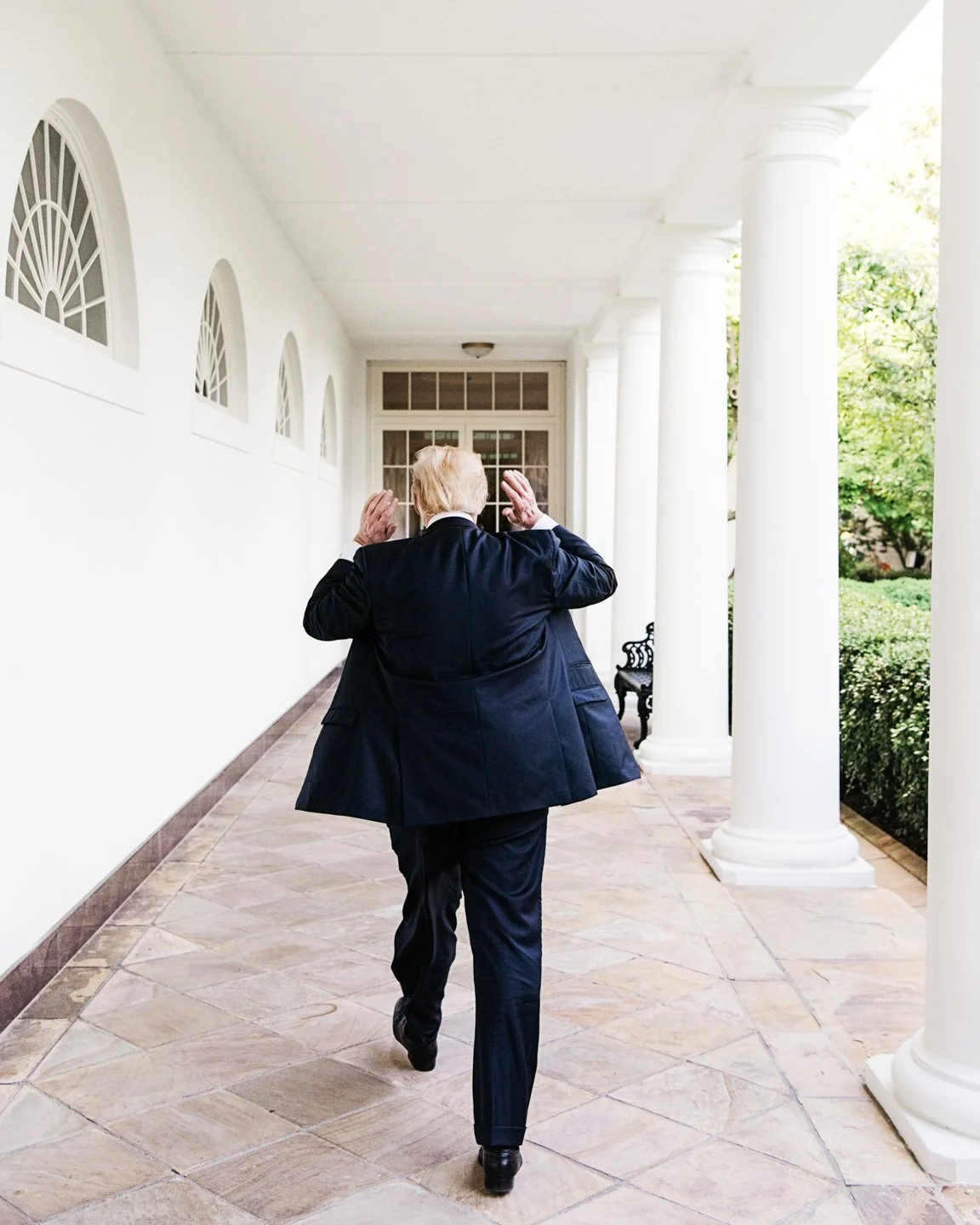
The President Turns Away
In the spring of 2017, Washington was caught in the uneasy early months of Donald Trump’s presidency. The country was deeply divided. Airports filled with protesters against the Muslim ban. Cable news repeated images of rallies where chants about the wall filled the air. For many, this was a break from American tradition. For Benjamin Rasmussen, who had spent years researching citizenship, migration, and belonging, it was something else. It was the return of a much older story.
“I knew that Trump needed to be a part of this because it was being talked about as something un-American. But from my research, I realised it was actually very connected to the past and was just representational of this sort of cycle coming back around.”
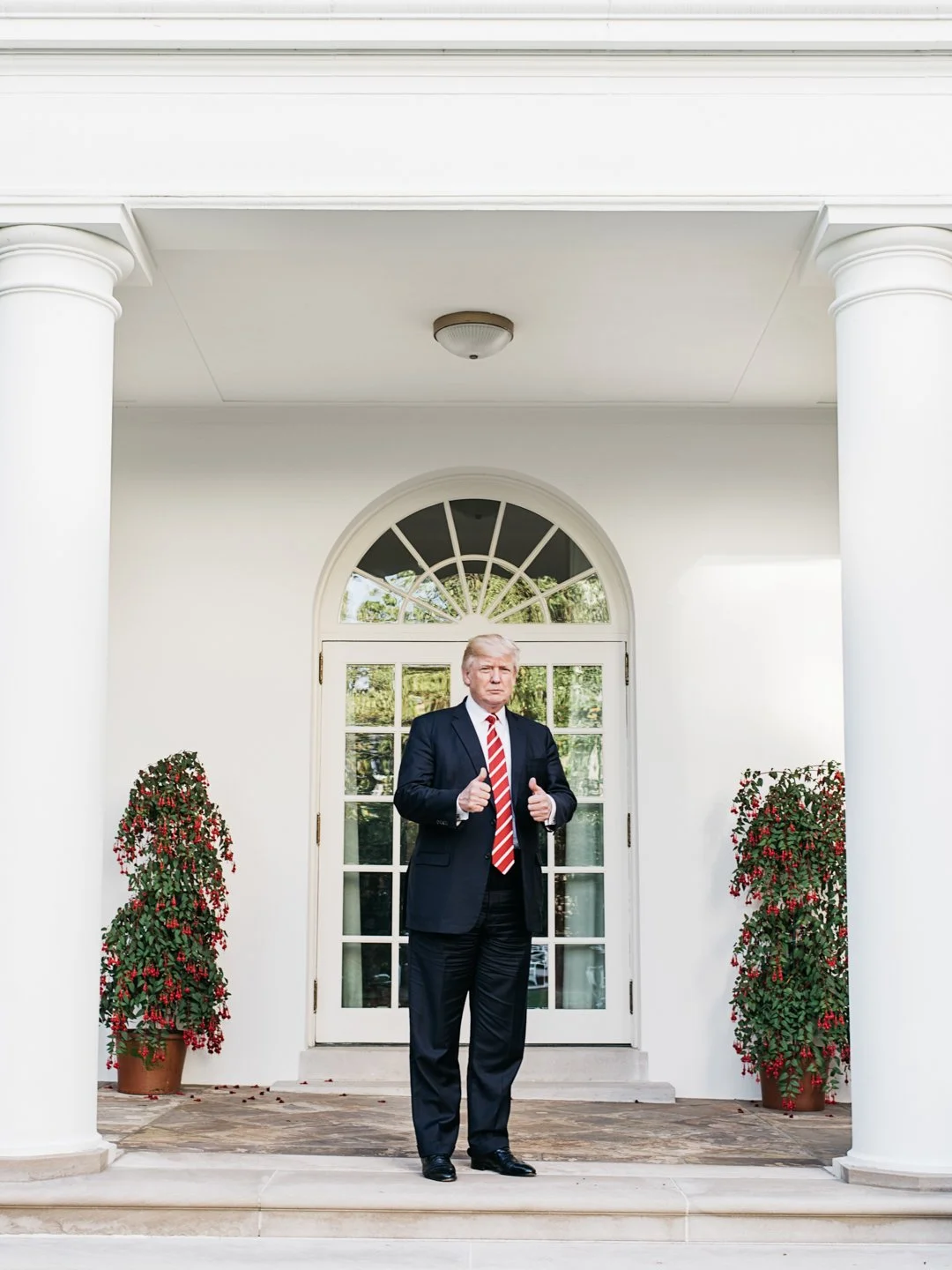
The call came from Time magazine: a rare invitation to photograph the president inside the White House, alone, for a cover story. Rasmussen understood what was at stake. He had already photographed rallies, watched the crowds, seen Trump on stage. But this was different. Here was the possibility of a quieter, more revealing image, one that might tie the present moment back to the echoes of history.
The plan seemed straightforward. The White House had agreed that the portrait would be made in the residence. Trump would sit in a chair by a window, light streaming in, the stage set. Time had even mocked up a cover with that imagined frame. Rasmussen had prepared himself by reading Hannah Arendt’s Eichmann in Jerusalem, where the phrase “the banality of evil” first appeared. He wanted to look past spectacle and capture the ordinary surface of power, the men in suits making decisions with extraordinary consequences.
“I was really fascinated by the idea that these things that are happening have massive impacts on people’s lives. But at its core, they’re just sort of dudes in suits walking around. As opposed to focusing on the drama, I thought the banality of it was fascinating.”
On the day of the shoot, Rasmussen entered the White House without assistants, without lights, carrying only his camera. The atmosphere was tense but also strangely casual. Mike Pence, the vice president, became his unexpected companion in the hallways, assuring him how historic the moment was. The plan, however, began to unravel the moment Trump entered the room.
Rasmussen asked the president to take his seat. Trump refused.
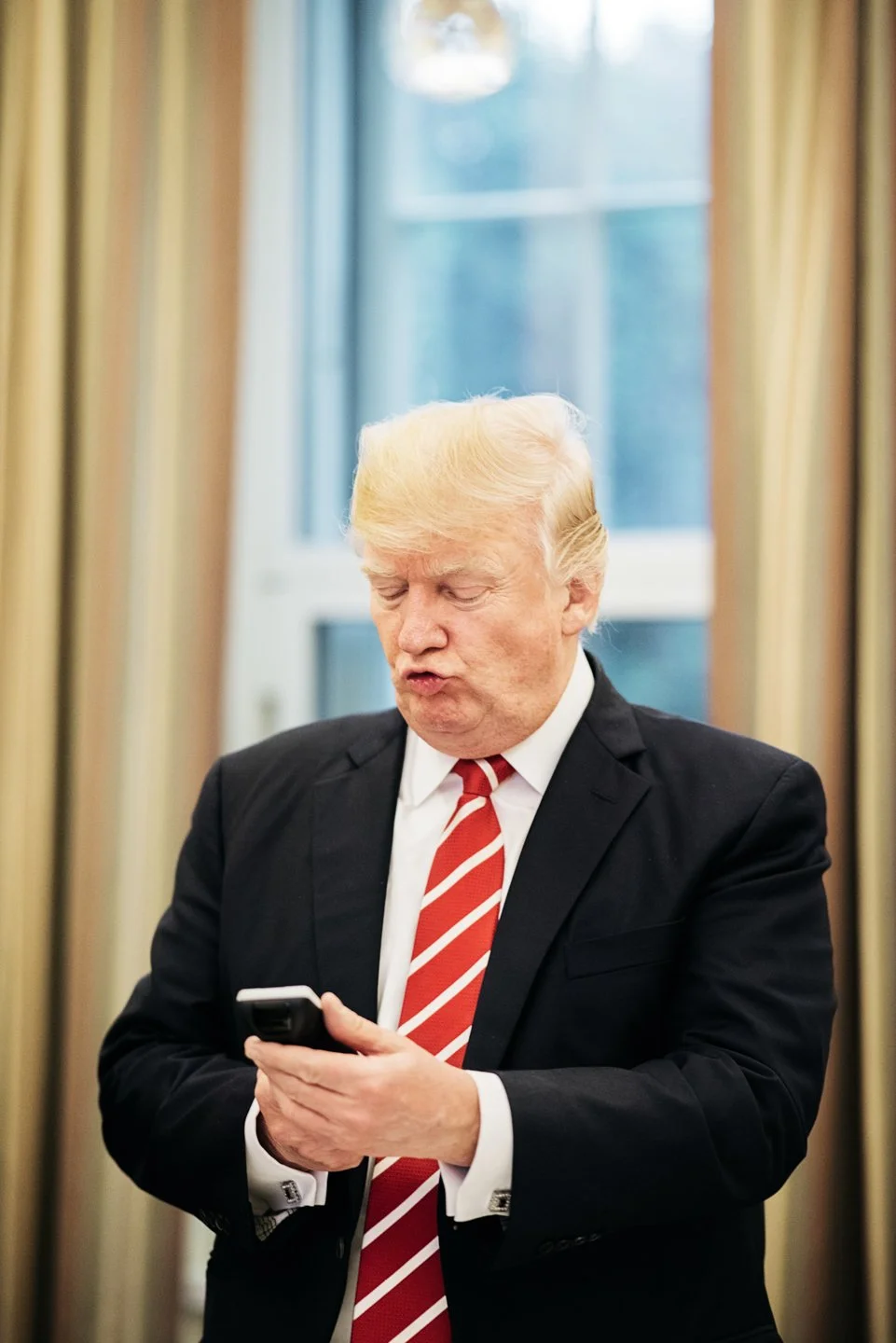
“I was like, okay, well, this is what everyone agreed to. This is what’s going to be the cover. And he said no. I saw my whole career flash before my eyes. I kept saying, Mr. President, if you don’t do this, it won’t be a cover. And he just kept walking away from me.”
As Trump moved toward his private living room, Rasmussen followed with his camera, still pressing the shutter. The president’s back filled the frame, his reflection caught faintly in glass, a dark shadow stretching beside him. The image was accidental, but it held a strange power.
“That image is him walking into his private living room to get away from me. It ended up being the depiction I was looking for. I’m not so interested in the policies of Trump. I’m interested in how they echo things that have been repeated throughout American history.”
The White House staff was furious. Rasmussen and Time’s photo director, Kira Pollack, were barred from joining the dinner that followed. While others ate with Trump’s inner circle, the two of them sat in the next room under the watch of a Secret Service escort. Still, the photograph had been made.
Looking at the frame, Rasmussen saw something beyond a president in a moment of irritation. He saw a man avoiding the lens, turning his back on an agreement, retreating into private space. The messy hair, the rumpled jacket, the uneasy posture, all combined with the heavy shadow to suggest something darker than a traditional portrait.
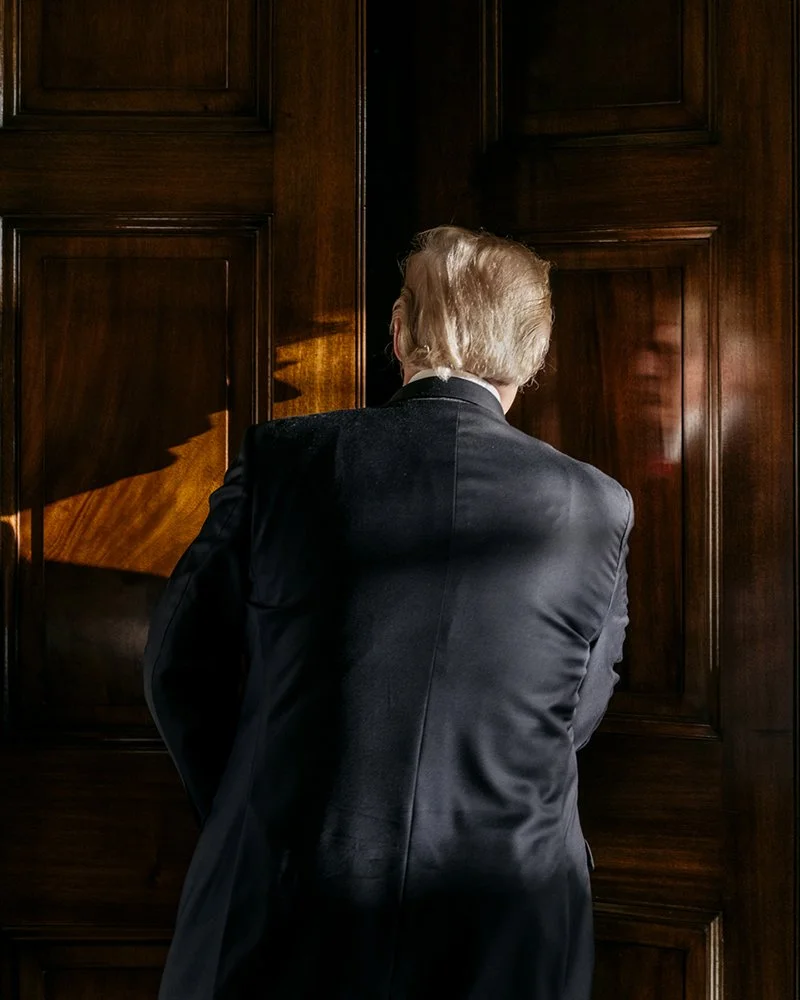
“It wasn’t about making him central or heroic. It was about showing that the current moment was just a repetition of things that have been built into the power structure of American society.”
The image did not scream with spectacle. It whispered. It suggested the weight of history in the shape of a man walking away. For Rasmussen, that restraint was the point. By refusing the cover pose, Trump had given him something better: a picture that showed not performance, but evasion.
The power of the photograph lies in what it withholds. Like the writers and thinkers Rasmussen admires, he sought not to overwhelm viewers with drama but to leave space for them to reflect, to connect past and present. In that quiet frame of a president turning away, Rasmussen found a visual metaphor for America itself, still struggling with shadows it cannot escape.
Sometimes the best project begins when the first idea fails. You arrive with a plan, but what you find does not fit it. Story Behind The Photograph