Jason Gardner Spent 3 Hours in a Paris Forest Using Only Natural Light. His Double Exposure Technique Makes Faces Disappear Into Nature
(This is the story behind the photograph, a glimpse into the moment, the process, and the vision that brought it to life.)
Can a camera capture someone's soul merging with nature?
For most photographers, this sounds impossible. But Jason Gardner spent 15 years documenting Carnival masks around the world, watching people transform into ancient spirits. He learned that the right technique can show the invisible connection between humans and the natural world. This is exactly what happened during three hours in a small forest outside Paris.
Double exposure photography is making a comeback in our digital age.
This captivating technique involves combining two different images directly on your camera's sensor using modern digital SLRs. Gardner uses this digital method to blend human faces with trees, moss, and forest landscapes until they become one magical image. Most people think you need expensive computer software to create this effect, but your digital camera can do it naturally in-camera. This story shows you exactly how Gardner creates forest spirits with nothing but natural light and patience.
The spring of 2021 was a strange time in France. After months of lockdown, people were slowly coming back to life. In a small forest just outside Paris, not a real deep forest, but more like a city park with trees, photographer Jason Gardner was meeting with musician Cory Seznec. The air was fresh and quiet. Both men needed something different after the hard months of being stuck inside.
Gardner had been taking pictures of musicians and famous people for 20 years. But this day felt special. The musician wanted photos that showed "Deep of Time," something thoughtful, poetic, and connected to nature. "This was a direct result of seeing his moodboard," Gardner remembers, looking at the pictures Seznec had shared to show what he wanted.
The forest around them was green and alive. Spring leaves were growing on the trees. Light came through the branches in soft rays. It felt like a dream world, far from the busy city nearby.
"I've been photographing musicians, personalities, and people in general for about 20 years now. I'm always trying to find and show something different about them. I think every person is a universe, and their portrait session usually reflects that," Gardner explains as he sets up his camera.
The photographer had his Nikon D850 ready. He chose a 24-70mm lens, nothing fancy, but it gave him room to work. He wanted to try something he had been thinking about: double exposure. This means combining two photos directly on the camera's sensor, so they blend together into one magical imageThis means taking two photos on the same piece of film, so they mix together into one image.
First, Gardner took some normal photos of Seznec. The musician stood among the trees, looking thoughtful. But Gardner wanted more. He wanted to show how people and nature are connected, how we are part of the forest, and the forest is part of us.
"As this was a conceptual shoot, and right after Covid confinement in France, we had to get in the right contemplative mood, and have long philosophical discussions to get him more in a thoughtful vibe, and that comes out in the photos," Gardner recalls.
The two men talked about deep things, about time, about being human, about what it means to be alive. The musician's face became more serious, more thoughtful. His eyes looked far away, like he was thinking about big questions.
Then came the tricky part. Gardner positioned Seznec carefully. The musician wore a simple white shirt and brown vest, clothes that looked old-fashioned, like from long ago. Gardner looked through his camera and took the first photo: Seznec's face and body, serious and still.
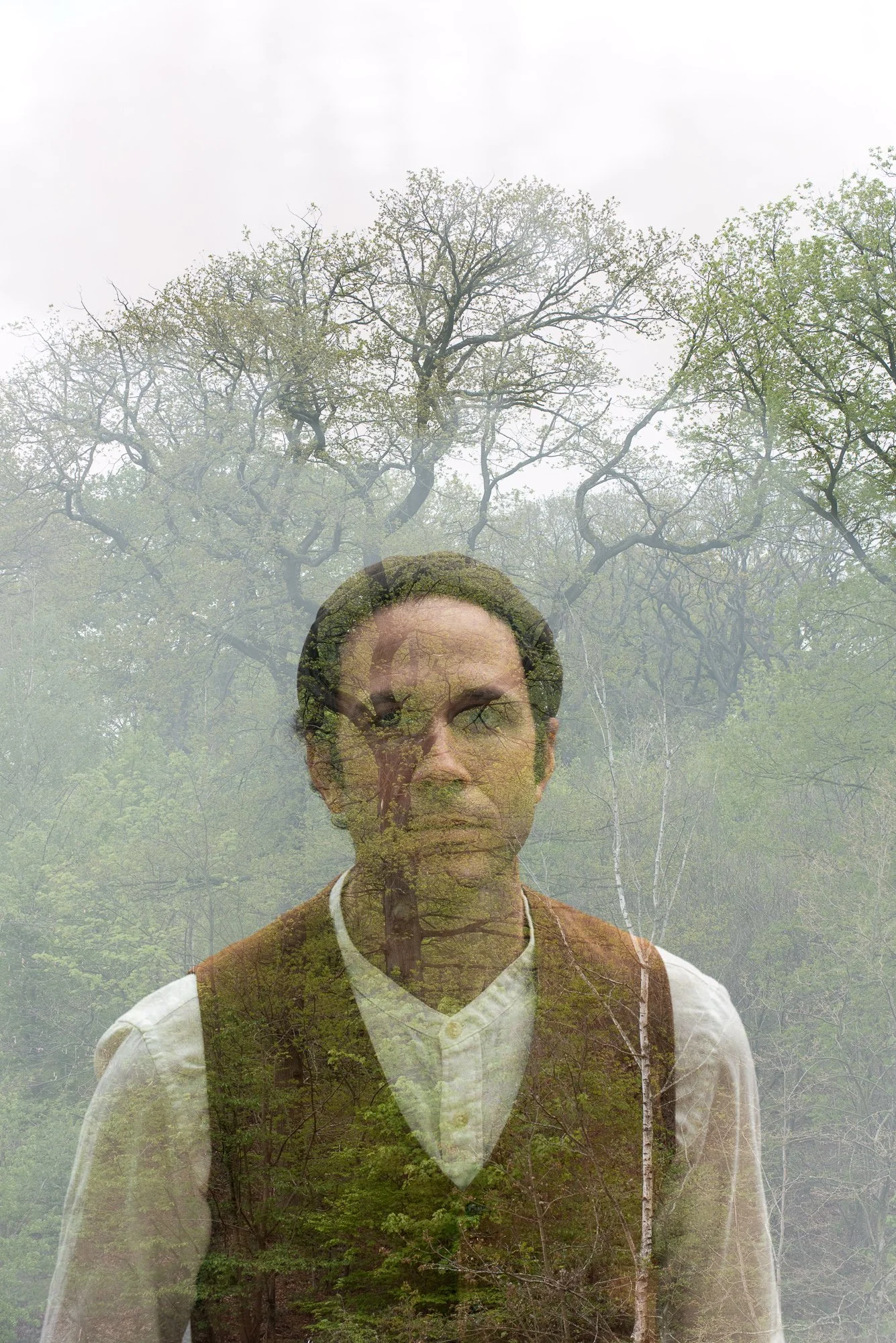
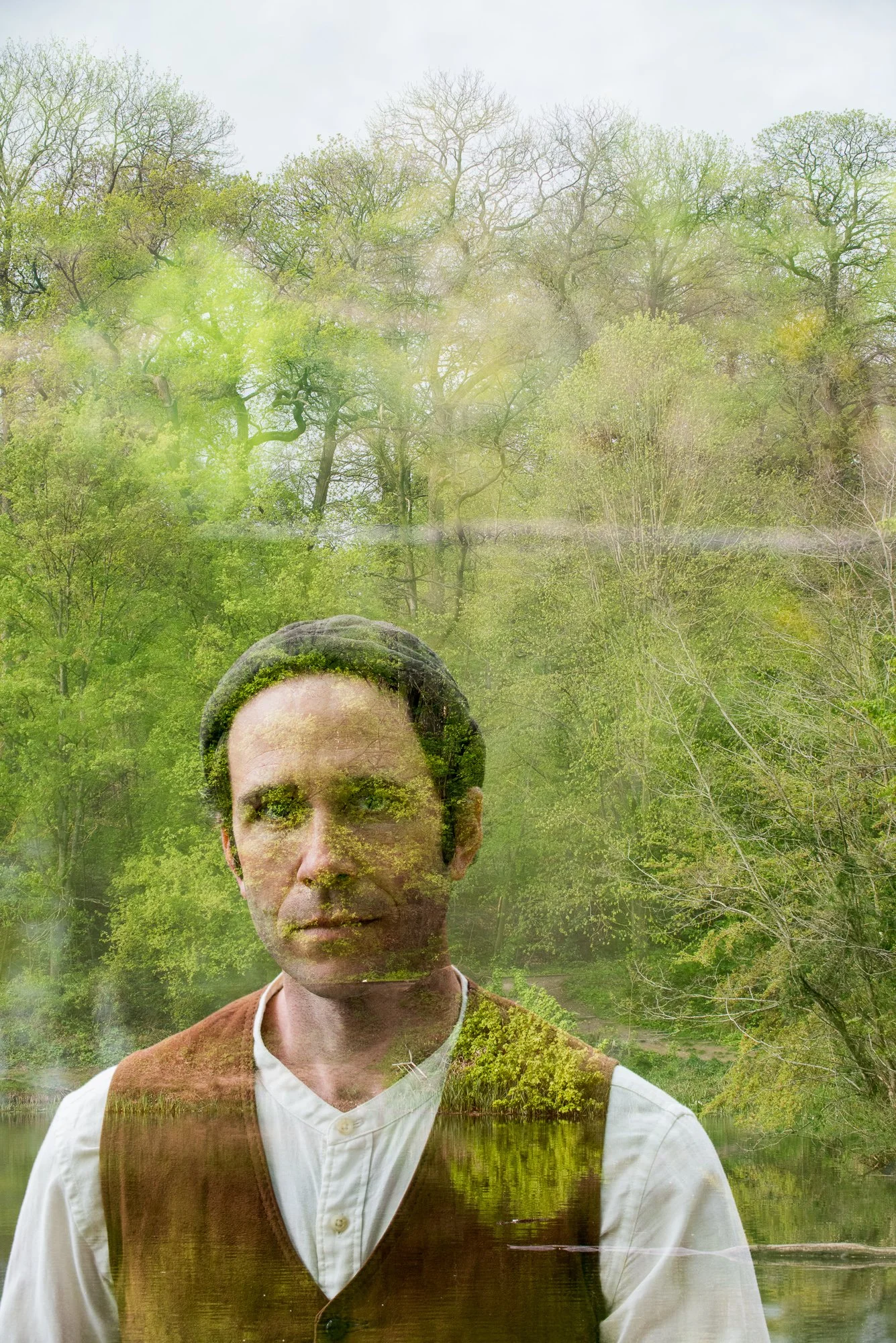
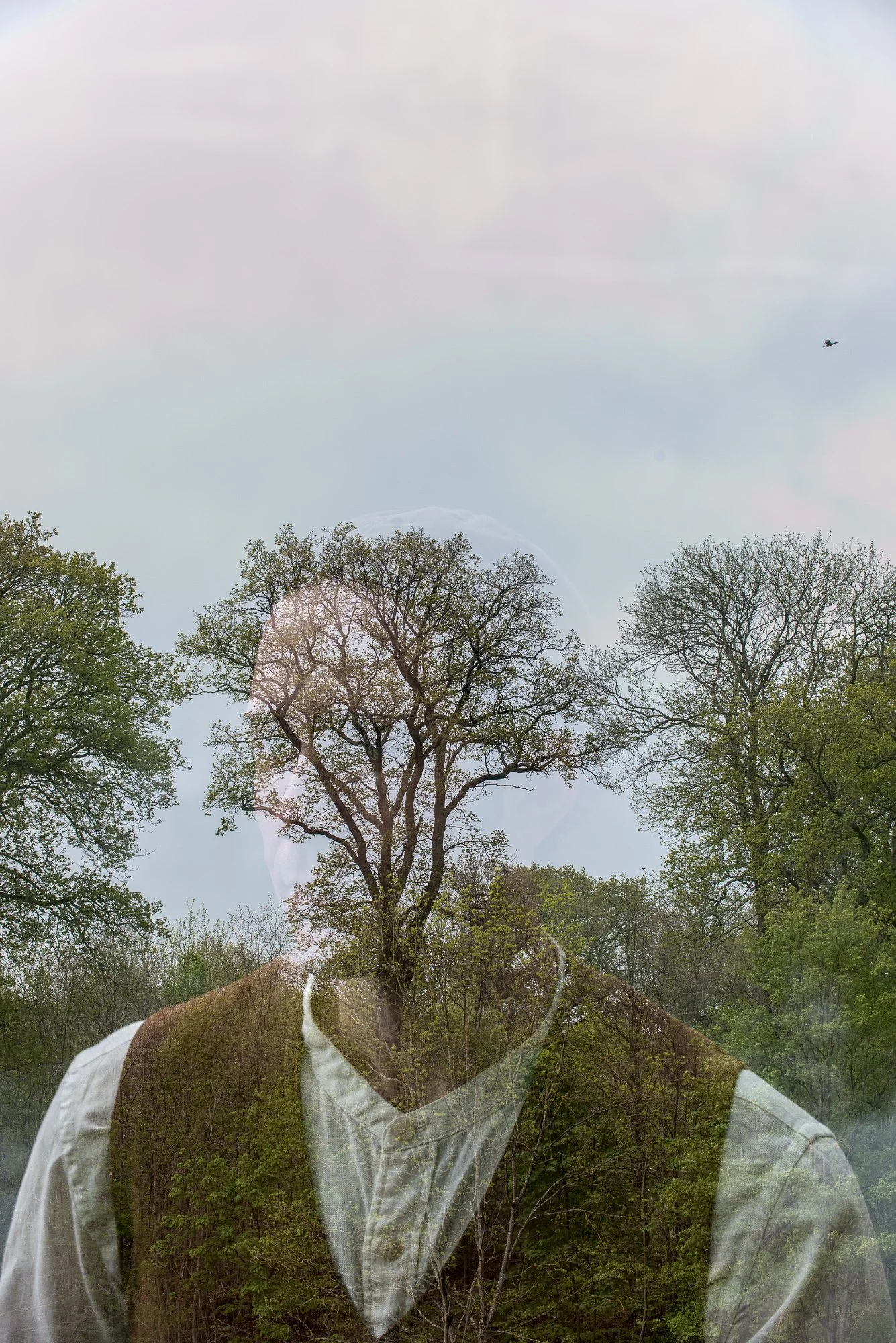
Without moving the camera or changing his camera settings, Gardner took a second photo of the same spot, but this time, just the trees and forest behind where the musician had been standing.
"Double exposures are tricky, you have to experiment a lot, so it wasn't quite a 'decisive moment' more like a flow of possibilities," Gardner explains.
The magic happened inside the camera's sensor. The two images mixed together digitally. Seznec's face became see-through, and the green trees and moss seemed to grow through his skin. His eyes looked out from a face made of leaves and branches. The forest became part of him, and he became part of the forest.
It was not easy work. "With double exposure, metering is key but also bracketing, but it's never quite formulaic how the two images will 'merge' in the double exposure, so having a few options is good; however, it's a bit more difficult than a fixed image because the subject (or the photographer) moves ever so slightly in between the two (or three) doubly exposed frames."
Gardner had to be very careful about light. Too much light would make the photo too bright. Too little would make it too dark. And because he was taking two photos in one, the light from both had to work together perfectly.
The photographer and musician tried many different poses and angles. Some photos didn't work; the face and trees didn't line up right. Sometimes Seznec moved a little bit between the two shots, making everything blurry. But slowly, they found the right combinations.
"This was shot in a small forest outside of Paris; it was more like an urban preserve than an actual deep forest, but we made it work. It felt truly like we were travelling and escaping and entering into a dream state."
The final images were beautiful and strange. In one photo, Seznec looks like a forest spirit; his face is there, but so are the trees, growing through his features like he has become one with nature. The green moss and leaves cover parts of his skin. His white shirt seems to fade into mist and light.
In another image, his whole head is made of trees and forest. You can see his eyes and face, but they are mixed with branches and leaves. It looks like he is becoming the forest, or the forest is becoming him.
For Gardner, these photos meant something important. "A nice extension of my personal work as I explore dual identities; I'm in the beginning of a new long-term artistic project on that, and this was earlier work that provided a base and some early proto-thinking about it and experimentation to get me a bit more experience with this technique."
The session took only two or three hours, but both men felt like they had travelled somewhere far away. They had escaped the busy world and found a quiet, magical place where humans and nature could become one.
"It was a nice photo session for both photographer and musician; we took only 2-3 hours and did many different setups, and he got a lot of usable images for his website and social media; as well, he used it in multiple different flyers and promos. For me, a nice balance of commercial and personal work."
Looking back, Gardner learned something important that day. "As this was just outside Paris, for me it illustrated how you can create many things from just a slightly different environment, that gets you out of your comfort zone."
The photos show us that we don't need to travel far to find magic. Sometimes, the most amazing pictures come from simple places, like a small forest near the city, when we look at them with fresh eyes and an open heart.
"After 20 years, photography still has the power to surprise, delight, and show something a bit different to anybody!" Gardner reflects.
In those double-exposure images, time seems to stop. Past and present mix together. The ancient forest and the modern musician become one person, one story. It's like looking at a dream where anything is possible, where we can be both human and nature, both real and magical, both ourselves and something bigger than ourselves.
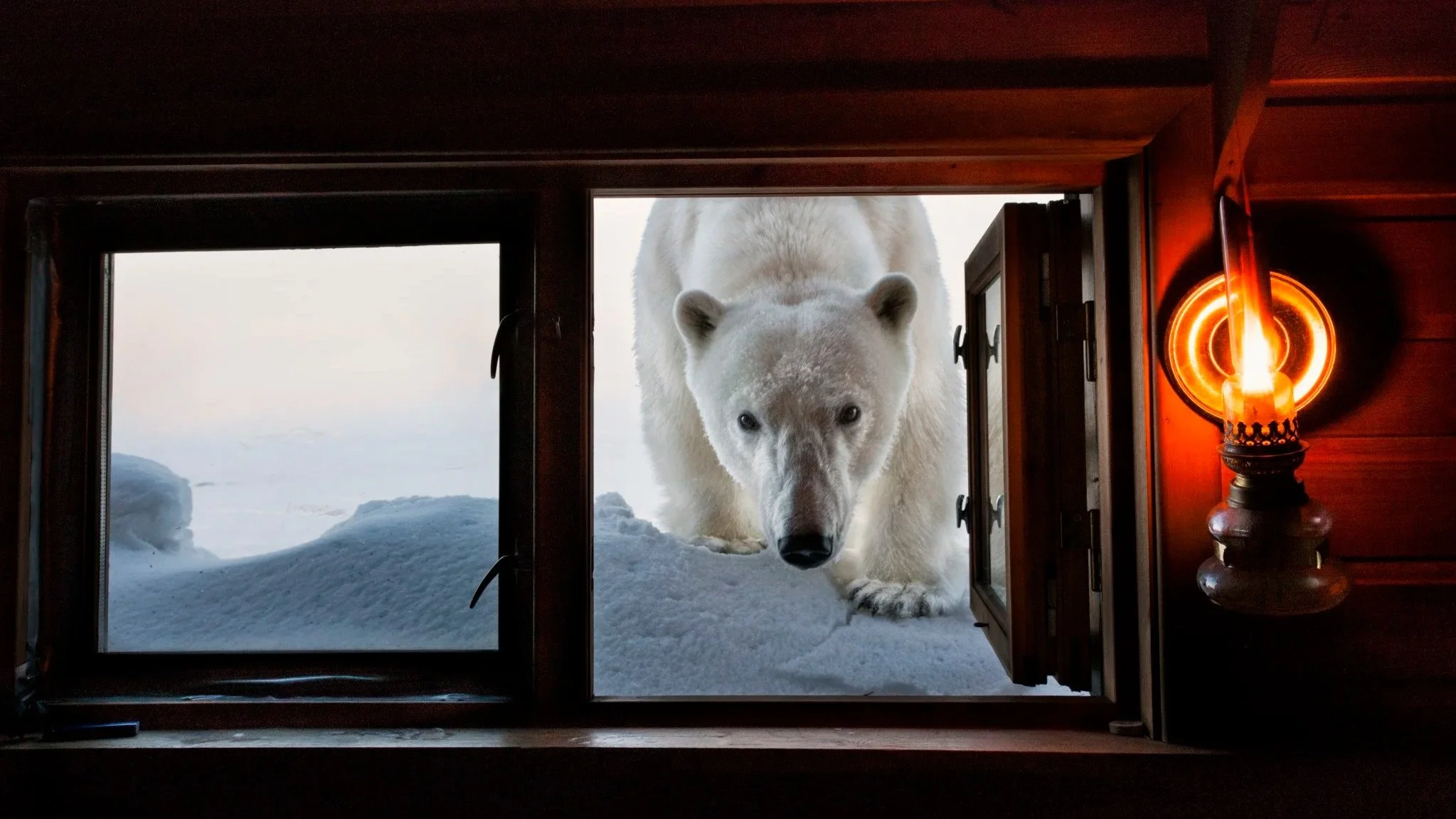
The final photo.
Sometimes the best project begins when the first idea fails. You arrive with a plan, but what you find does not fit it. Story Behind The Photograph